

Intolerance of uncertainty predicts fear extinction in amygdala-ventromedial prefrontal cortical circuitry
Open accessThe DOI matches its Crossref record; 48 of the 49 references it cites were found in a registry or an index.
Abstract
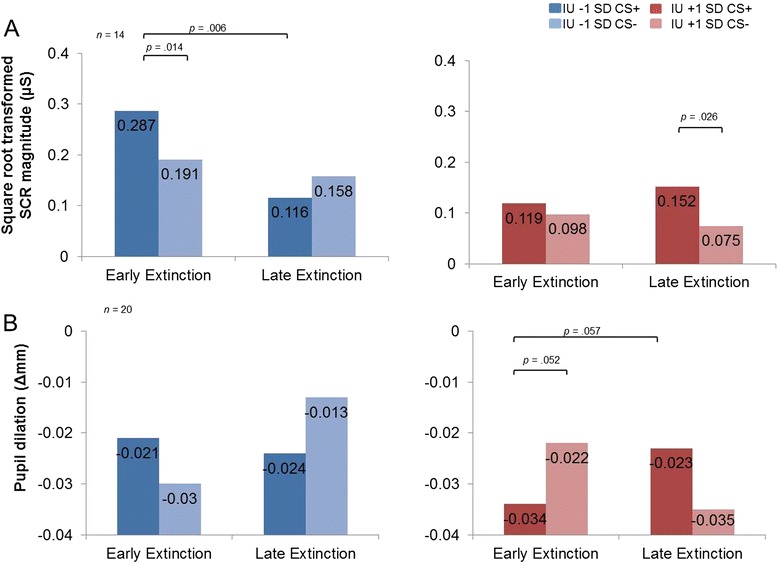
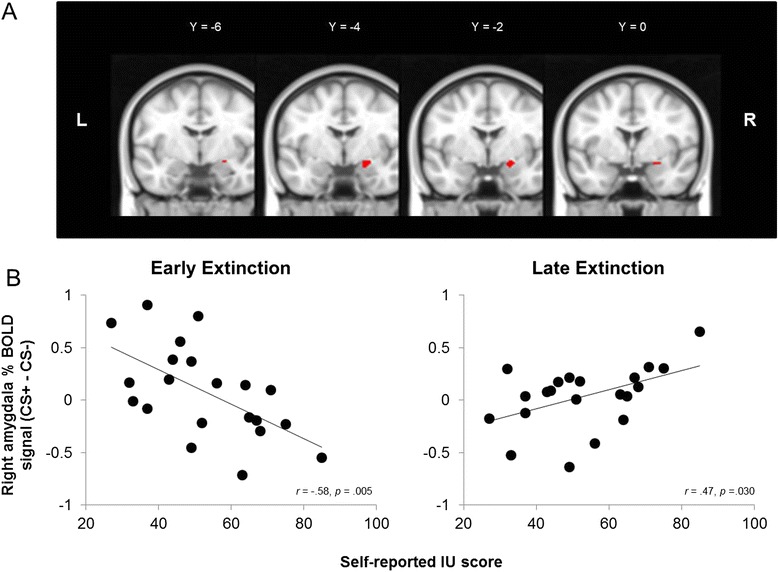
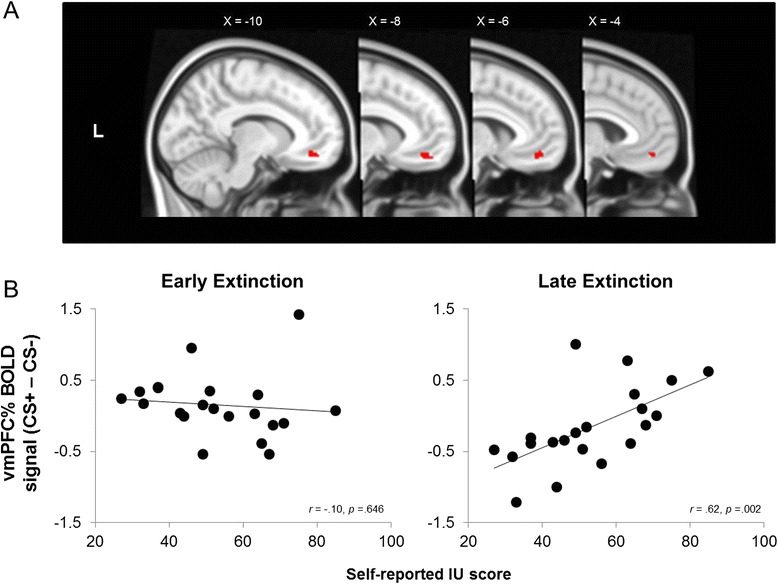
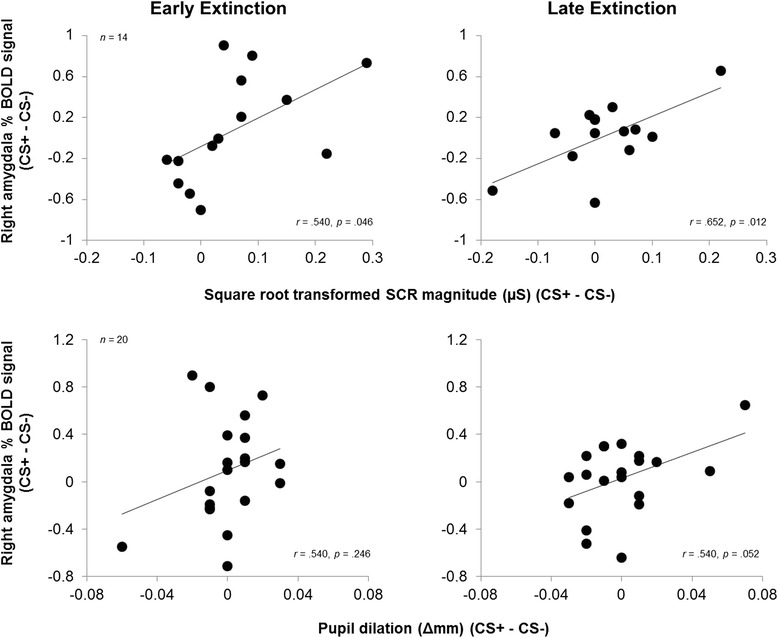
BACKGROUND: Coordination of activity between the amygdala and ventromedial prefrontal cortex (vmPFC) is important for fear-extinction learning. Aberrant recruitment of this circuitry is associated with anxiety disorders. Here, we sought to determine if individual differences in future threat uncertainty sensitivity, a potential risk factor for anxiety disorders, underly compromised recruitment of fear extinction circuitry. Twenty-two healthy subjects completed a cued fear conditioning task with acquisition and extinction phases. During the task, pupil dilation, skin conductance response, and functional magnetic resonance imaging were acquired. We assessed the temporality of fear extinction learning by splitting the extinction phase into early and late extinction. Threat uncertainty sensitivity was measured using self-reported intolerance of uncertainty (IU). RESULTS: During early extinction learning, we found low IU scores to be associated with larger skin conductance responses and right amygdala activity to learned threat vs. safety cues, whereas high IU scores were associated with no skin conductance discrimination and greater activity within the right amygdala to previously learned safety cues. In late extinction learning, low IU scores were associated with successful inhibition of previously learned threat, reflected in comparable skin conductance response and right amgydala activity to learned threat vs. safety cues, whilst high IU scores were associated with continued fear expression to learned threat, indexed by larger skin conductance and amygdala activity to threat vs. safety cues. In addition, high IU scores were associated with greater vmPFC activity to threat vs. safety cues in late extinction. Similar patterns of IU and extinction learning were found for pupil dilation. The results were specific for IU and did not generalize to self-reported trait anxiety. CONCLUSIONS: Overall, the neural and psychophysiological patterns observed here suggest high IU individuals to disproportionately generalize threat during times of uncertainty, which subsequently compromises fear extinction learning. More broadly, these findings highlight the potential of intolerance of uncertainty-based mechanisms to help understand pathological fear in anxiety disorders and inform potential treatment targets.
Overview
The claims and statistics of this paper haven’t been checked yet.
Free: it reads the open-access text and checks the first 5 claims that cite a source we can check. Create a free account to check every claim.
Integrity signals
Registry
Cites
Statistics
Figures
Verification
Claims the paper makes
The claims and statistics of this paper haven’t been checked yet.
Free: it reads the open-access text and checks the first 5 claims that cite a source we can check. Create a free account to check every claim.
Claims other papers make about this one
Each is checked against this paper’s own text: does it say what the citing paper says it does?
The source backs part of the claim, not all of it — or backs it for a different population, condition or comparison.
In the citing paper
“The majority of studies have found specificity of IU over other self-reported anxiety measures in predicting 1) differences in SCR to both learned threat and safety during early trials, 2) greater SCR to learned threat cues versus safety cues during late trials (36,37), or 3) greater SCR to learned threat cues across all trials (15,35).”
From I Doubt It Is Safe: A Meta-analysis of Self-reported Intolerance of Uncertainty and Threat Extinction Training (2021) · cites this paper as [36]
Experimental — accuracy not yet measuredThe cited source says what the claim attributes to it.
In the citing paper
“The generalization of threat to safety cues among those high in intolerance of uncertainty compared to those low in intolerance of uncertainty is also characterized by greater activity in the amygdala (Morriss, Christakou, & van Reekum, 2015), which is a key brain structure involved in fear conditioning and extinction (Davis, 1992; Etkin & Wager, 2007; Myers & Davis, 2007; Phillips & Ledoux, 1992)”
From Enhancing Inhibitory Learning: The Utility of Variability in Exposure (2019) · cites this paper as Morriss, Christakou, & van Reekum, 2015
The cited source says what the claim attributes to it.
In the citing paper
“Interestingly, IU has been shown to predict impaired fear extinction in non-psychiatric volunteers [48]”
From Toward a neurocircuit-based taxonomy to guide treatment of obsessive-compulsive disorder (2021) · cites this paper as [48]
The cited source says what the claim attributes to it.
In the citing paper
“In previous research, a few studies observed differences in SCR to both learned threat and safety cues during the early trials of threat extinction training (36,37).”
From I Doubt It Is Safe: A Meta-analysis of Self-reported Intolerance of Uncertainty and Threat Extinction Training (2021) · cites this paper as [36]
The cited source says what the claim attributes to it.
In the citing paper
“Notably, the original studies that found a relationship between IU and early extinction used a 100% reinforcement rate during acquisition (36,37), where the change in contingencies between acquisition and extinction are more obvious.”
From I Doubt It Is Safe: A Meta-analysis of Self-reported Intolerance of Uncertainty and Threat Extinction Training (2021) · cites this paper as [36]
7 more claims about this paper
Create a free account to see every claim other papers make about this one.
Self-check
Percentages, sums and reported differences re-computed from the paper’s own numbers.
The self-check needs the paper’s full text.
Citations
Cites
Development and validation of brief measures of positive and negative affect: The PANAS scales.
Watson, D., Clark, L. A., & Tellegen, A. (1988) · Journal of Personality and Social Psychology · doi:10.1037/0022-3514.54.6.1063 · Cited by 32,433 · cited 1×
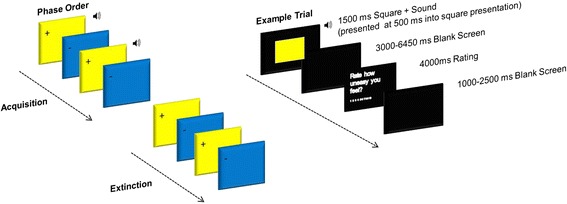
“To assess emotional disposition, we presented the following six questionnaires on a computer: two versions of the Positive and Negative Affect Scales (PANAS-NOW; PANAS-GEN) [42], Spielberger State-Trait Anxiety Inventory, Trait Version (STAIX-2) [39], PSWQ [40], IU [43] and the Barratt Impulsiveness Scale (BIS-11) [44…”
Desikan, R. S., Ségonne, F., Fischl, B., Quinn, B. T., Dickerson, B. C., Blacker, D., Buckner, R. L., Dale, A. M., Maguire, R. P., Hyman, B. T., et al. (2006) · NeuroImage · doi:10.1016/j.neuroimage.2006.01.021 · Cited by 13,324 · cited 1×
“We used anatomically defined masks from the Harvard-Oxford cortical and subcortical structural atlases in FSL [47].”
Jenkinson, M., Bannister, P., Brady, M., & Smith, S. (2002) · NeuroImage · doi:10.1006/nimg.2002.1132 · Cited by 11,888 · cited 3×
“All contrasts were normalized and registered to MNI standard space using FLIRT [46].”
Fast robust automated brain extraction
Smith, S. M. (2002) · Human Brain Mapping · doi:10.1002/hbm.10062 · Cited by 10,496 · cited 1×
“Brains were extracted from their respective T1 images by using the FSL brain extraction tool (BET) [45].”
Development and validation of the Penn State Worry Questionnaire
Meyer, T. J., Miller, M. L., Metzger, R. L., & Borkovec, T. D. (1990) · Behaviour Research and Therapy · doi:10.1016/0005-7967(90)90135-6 · Cited by 5,099 · cited 11×
“We tested the specificity of the involvement of IU by comparing it with broader measures of anxiety, such as Spielberger State-Trait Anxiety Inventory, Trait Version (STAIX-2) [39] and Penn State Worry Questionnaire (PSWQ) [40].”
InfluentialDomingos da Silveira da Luz, A. C., Pereira Dias, G., do Nascimento Bevilaqua, M. C., Cocks, G., Gardino, P. F., Thuret, S., & Nardi, A. E. (2013) · Neuropsychobiology · doi:10.1159/000353269 · Cited by 3,995
Etkin, A., & Wager, T. D. (2007) · American Journal of Psychiatry · doi:10.1176/appi.ajp.2007.07030504 · Cited by 3,391 · cited 1×
“resistance to fear extinction (for reviews see, [3, 14, 15]).”
Uncertainty and anticipation in anxiety: an integrated neurobiological and psychological perspective
Grupe, D. W., & Nitschke, J. B. (2013) · Nature Reviews Neuroscience · doi:10.1038/nrn3524 · Cited by 2,007
Neurons in medial prefrontal cortex signal memory for fear extinction
Milad, M. R., & Quirk, G. J. (2002) · Nature · doi:10.1038/nature01138 · Cited by 1,836 · cited 1×
“reduces responsiveness of amygdala neurons and defensive freezing behavior to conditioned tones [10].”
Phelps, E. A., Delgado, M. R., Nearing, K. I., & LeDoux, J. E. (2004) · Neuron · doi:10.1016/j.neuron.2004.08.042 · Cited by 1,753
Effects of an expanding-spaced vs massed exposure schedule on fear reduction and return of fear
Rowe, M. K., & Craske, M. G. (1998) · Behaviour Research and Therapy · doi:10.1016/s0005-7967(97)10016-x · Cited by 1,676
Affective style and affective disorders: Perspectives from affective neuroscience
Davidson, R. J. (1998) · Cognition & Emotion · doi:10.1080/026999398379628 · Cited by 1,496 · cited 1×
“The modulation of affective responses to cues based on their current contextual relevance is crucial for preserving health and protecting against psychopathology [1 – 3].”
Fear Extinction as a Model for Translational Neuroscience: Ten Years of Progress
Milad, M. R., & Quirk, G. J. (2012) · Annual Review of Psychology · doi:10.1146/annurev.psych.121208.131631 · Cited by 1,466 · cited 3×
“resistance to fear extinction (for reviews see, [3, 14, 15]).”
LaBar, K. S., Gatenby, J. C., Gore, J. C., LeDoux, J. E., & Phelps, E. A. (1998) · Neuron · doi:10.1016/s0896-6273(00)80475-4 · Cited by 1,402 · cited 3×
“Subsequent extinction training, which involves repeated presentations of the CS+ without the aversive outcome, results in reduced amygdala and skin conductance responsivity over time [5, 9, 7].”
The intolerance of uncertainty scale: psychometric properties of the English version
Buhr, K., & Dugas, M. J. (2002) · Behaviour Research and Therapy · doi:10.1016/s0005-7967(01)00092-4 · Cited by 1,391 · cited 1×
“To assess emotional disposition, we presented the following six questionnaires on a computer: two versions of the Positive and Negative Affect Scales (PANAS-NOW; PANAS-GEN) [42], Spielberger State-Trait Anxiety Inventory, Trait Version (STAIX-2) [39], PSWQ [40], IU [43] and the Barratt Impulsiveness Scale (BIS-11) [44…”
Genetic variant BDNF (Val66Met) polymorphism alters anxiety-related behavior
Chen, Z.-Y., Jing, D., Bath, K. G., Ieraci, A., Khan, T., Siao, C.-J., Herrera, D. G., Toth, M., Yang, C., McEwen, B. S., et al. (2006) · Science · doi:10.1126/science.1129663 · Cited by 1,340
Neurobiological Basis of Failure to Recall Extinction Memory in Posttraumatic Stress Disorder
Milad, M. R., Pitman, R. K., Ellis, C. B., Gold, A. L., Shin, L. M., Lasko, N. B., Zeidan, M. A., Handwerger, K., Orr, S. P., & Rauch, S. L. (2009) · Biological Psychiatry · doi:10.1016/j.biopsych.2009.06.026 · Cited by 1,339 · cited 5×
“reported in the fear extinction literature [30, 11, 6, 13].”
InfluentialMilad, M. R., Wright, C. I., Orr, S. P., Pitman, R. K., Quirk, G. J., & Rauch, S. L. (2007) · Biological Psychiatry · doi:10.1016/j.biopsych.2006.10.011 · Cited by 1,197 · cited 5×
“reported in the fear extinction literature [30, 11, 6, 13].”
InfluentialJohnstone, T., van Reekum, C. M., Urry, H. L., Kalin, N. H., & Davidson, R. J. (2007) · The Journal of Neuroscience · doi:10.1523/jneurosci.2063-07.2007 · Cited by 1,051 · cited 1×
“Whilst this pattern was not predicted, it is similar to previous studies that report hyperactivity of the prefrontal cortex during fear extinction for trait anxious individuals [19] and during emotion regulation tasks for depressed patients [48].”
ResultClassical fear-conditioning in the anxiety disorders: a meta-analysis
Lissek, S., Powers, A. S., McClure, E. B., Phelps, E. A., Woldehawariat, G., Grillon, C., & Pine, D. S. (2005) · Behaviour Research and Therapy · doi:10.1016/j.brat.2004.10.007 · Cited by 1,034 · cited 1×
“Furthermore, both the phenotypic and genetic results in mice and humans appear to be specific to fear extinction learning rather than fear acquisition [19, 26, 20, 27, 21–24, 28], but see [27, 9], suggesting that individuals prone to developing an anxiety disorder have difficulty inhibiting learned threat cues and hav…”
Brain systems mediating aversive conditioning: an event-related fMRI study
Büchel, C., Morris, J., Dolan, R. J., & Friston, K. J. (1998) · Neuron · doi:10.1016/s0896-6273(00)80476-6 · Cited by 951 · cited 2×
“Likely because we had a large individual variation in response patterns during extinction, our whole-brain analyses did not yield significant BOLD differences in our a priori brain regions of interest often reported in the extinction literature [4, 5, 13, 6].”
Neural circuitry underlying the regulation of conditioned fear and its relation to extinction
Delgado, M. R., Nearing, K. I., LeDoux, J. E., & Phelps, E. A. (2008) · Neuron · doi:10.1016/j.neuron.2008.06.029 · Cited by 716 · cited 1×
“We used an aversive sound as an unconditioned stimulus and visual shapes as conditioned stimuli, as in previous conditioning research [36, 13, 37, 19, 38, 4].”
A Genetic Variant BDNF Polymorphism Alters Extinction Learning in Both Mouse and Human
Soliman, F., Glatt, C. E., Bath, K. G., Levita, L., Jones, R. M., Pattwell, S. S., Jing, D., Tottenham, N., Amso, D., Somerville, L. H., et al. (2010) · Science · doi:10.1126/science.1181886 · Cited by 585 · cited 3×
“Given that fear extinction paradigms are temporally sensitive [5, 13, 3, 21, 9, 20], we expected this effect to be indexed by the following: (1) larger responses in high IU individuals to both learned threat and safety cues in early fear extinction, across our physiological and behavioral measurements, including relat…”
Presence and acquired origin of reduced recall for fear extinction in PTSD: Results of a twin study
Milad, M. R., Orr, S. P., Lasko, N. B., Chang, Y., Rauch, S. L., & Pitman, R. K. (2008) · Journal of Psychiatric Research · doi:10.1016/j.jpsychires.2008.01.017 · Cited by 512 · cited 1×
“For example, compared to healthy controls, anxiety patients show elevated autonomic nervous system and amygdala responding and reduced recruitment of the vmPFC to both threat and safety cues at the start of extinction and to threat cues across fear extinction learning [16, 11, 17, 18].”
Kalisch, R., Korenfeld, E., Stephan, K. E., Weiskopf, N., Seymour, B., & Dolan, R. J. (2006) · The Journal of Neuroscience · doi:10.1523/jneurosci.2021-06.2006 · Cited by 493 · cited 1×
“few days after initial fear acquisition [12, 13].”
Blechert, J., Michael, T., Vriends, N., Margraf, J., & Wilhelm, F. H. (2007) · Behaviour Research and Therapy · doi:10.1016/j.brat.2007.02.012 · Cited by 479 · cited 1×
“For example, compared to healthy controls, anxiety patients show elevated autonomic nervous system and amygdala responding and reduced recruitment of the vmPFC to both threat and safety cues at the start of extinction and to threat cues across fear extinction learning [16, 11, 17, 18].”
McEvoy, P. M., & Mahoney, A. E. J. (2012) · Behavior Therapy · doi:10.1016/j.beth.2011.02.007 · Cited by 468 · cited 1×
“We show that self-reported IU, a personality trait implicated in the maintenance of anxiety and depressive disorders [32, 33, 31], predicts psychophysiological and neural recruitment during fear extinction learning.”
The Study of Fear Extinction: Implications for Anxiety Disorders
Graham, B. M., & Milad, M. R. (2011) · American Journal of Psychiatry · doi:10.1176/appi.ajp.2011.11040557 · Cited by 387
Fear-Conditioning Mechanisms Associated with Trait Vulnerability to Anxiety in Humans
Indovina, I., Robbins, T. W., Núñez-Elizalde, A. O., Dunn, B. D., & Bishop, S. J. (2011) · Neuron · doi:10.1016/j.neuron.2010.12.034 · Cited by 309 · cited 2×
“Furthermore, both the phenotypic and genetic results in mice and humans appear to be specific to fear extinction learning rather than fear acquisition [19, 26, 20, 27, 21–24, 28], but see [27, 9], suggesting that individuals prone to developing an anxiety disorder have difficulty inhibiting learned threat cues and hav…”
Extinction during reconsolidation of threat memory diminishes prefrontal cortex involvement
Schiller, D., Kanen, J. W., LeDoux, J. E., Monfils, M.-H., & Phelps, E. A. (2013) · Proceedings of the National Academy of Sciences · doi:10.1073/pnas.1320322110 · Cited by 304 · cited 1×
“We used an aversive sound as an unconditioned stimulus and visual shapes as conditioned stimuli, as in previous conditioning research [36, 13, 37, 19, 38, 4].”
van der Heiden, C., Muris, P., & van der Molen, H. T. (2012) · Behaviour Research and Therapy · doi:10.1016/j.brat.2011.12.005 · Cited by 265
Amygdala and hippocampal activity during acquisition and extinction of human fear conditioning
Knight, D. C., Smith, C. N., Cheng, D. T., Stein, E. A., & Helmstetter, F. J. (2004) · Cognitive, Affective, & Behavioral Neuroscience · doi:10.3758/cabn.4.3.317 · Cited by 249 · cited 1×
“Subsequent extinction training, which involves repeated presentations of the CS+ without the aversive outcome, results in reduced amygdala and skin conductance responsivity over time [5, 9, 7].”
Fear conditioning in panic disorder: Enhanced resistance to extinction
Michael, T., Blechert, J., Vriends, N., Margraf, J., & Wilhelm, F. H. (2007) · Journal of Abnormal Psychology · doi:10.1037/0021-843x.116.3.612 · Cited by 210 · cited 1×
“For example, compared to healthy controls, anxiety patients show elevated autonomic nervous system and amygdala responding and reduced recruitment of the vmPFC to both threat and safety cues at the start of extinction and to threat cues across fear extinction learning [16, 11, 17, 18].”
Whalen, P. J. (2007) · Trends in Cognitive Sciences · doi:10.1016/j.tics.2007.08.016 · Cited by 198 · cited 1×
“We show that self-reported IU, a personality trait implicated in the maintenance of anxiety and depressive disorders [32, 33, 31], predicts psychophysiological and neural recruitment during fear extinction learning.”
Deficient safety learning characterizes high trait anxious individuals
Gazendam, F. J., Kamphuis, J. H., & Kindt, M. (2012) · Biological Psychology · doi:10.1016/j.biopsycho.2012.11.006 · Cited by 186 · cited 6×
“Despite this, the majority of fear extinction studies have focused predominantly on self-reported trait anxiety [20, 19, 9] rather than self-reported intolerance of uncertainty (IU) [30]), a key transdiagnostic factor in maintaining and mediating anxiety and depression [31–34].”
InfluentialDunsmoor, J. E., Campese, V. D., Ceceli, A. O., LeDoux, J. E., & Phelps, E. A. (2015) · Biological Psychiatry · doi:10.1016/j.biopsych.2014.12.008 · Cited by 165 · cited 4×
“Understanding associations between IU and fear extinction learning could help characterize IU-based maintenance of anxiety, with implications for targeted treatment [35, 34, 30].”
InfluentialNeural correlates of trait anxiety in fear extinction
Sehlmeyer, C., Dannlowski, U., Schöning, S., Kugel, H., Pyka, M., Pfleiderer, B., Zwitserlood, P., Schiffbauer, H., Heindel, W., Arolt, V., et al. (2011) · Psychological Medicine · doi:10.1017/s0033291710001248 · Cited by 165 · cited 3×
“Given that fear extinction paradigms are temporally sensitive [5, 13, 3, 21, 9, 20], we expected this effect to be indexed by the following: (1) larger responses in high IU individuals to both learned threat and safety cues in early fear extinction, across our physiological and behavioral measurements, including relat…”
PTSD risk is associated with BDNF Val66Met and BDNF overexpression
Zhang, L., Benedek, D. M., Fullerton, C. S., Forsten, R. D., Naifeh, J. A., Li, X., Hu, X.-Z., Li, H., Jia, M., Xing, G., et al. (2013) · Molecular Psychiatry · doi:10.1038/mp.2012.180 · Cited by 155
Felmingham, K. L., Dobson-Stone, C., Schofield, P. R., Quirk, G. J., & Bryant, R. A. (2013) · Biological Psychiatry · doi:10.1016/j.biopsych.2012.10.033 · Cited by 153 · cited 1×
“Genetic evidence also points to similar temporal patterns of delayed fear extinction learning and increased risk for anxiety in both homozygote and heterozygote Met allele carriers of the brain-derived neurotrophic factor (BDNF) Val66Met genotype in mice [21–23] and humans [24, 21, 25].”
Variant BDNF Val66Met Polymorphism Affects Extinction of Conditioned Aversive Memory
Yu, H., Wang, Y., Pattwell, S., Jing, D., Liu, T., Zhang, Y., Bath, K. G., Lee, F. S., & Chen, Z.-Y. (2009) · The Journal of Neuroscience · doi:10.1523/jneurosci.5539-08.2009 · Cited by 149 · cited 2×
“Furthermore, both the phenotypic and genetic results in mice and humans appear to be specific to fear extinction learning rather than fear acquisition [19, 26, 20, 27, 21–24, 28], but see [27, 9], suggesting that individuals prone to developing an anxiety disorder have difficulty inhibiting learned threat cues and hav…”
No effect of trait anxiety on differential fear conditioning or fear generalization
Torrents‐Rodas, D., Fullana, M. A., Bonillo, A., Caseras, X., Andión, Ó., & Torrúbia, R. (2012) · Biological Psychology · doi:10.1016/j.biopsycho.2012.10.006 · Cited by 134 · cited 1×
“Expanding previous research on individual differences in trait anxiety [21, 19, 20, 9, 28, 27] and IU [30], high IU was associated with fear expression to both learned threat and safety cues in early extinction, indexed by indiscriminate SCR magnitude.”
Neumann, D. L., & Waters, A. M. (2006) · Biological Psychology · doi:10.1016/j.biopsycho.2006.03.004 · Cited by 129 · cited 1×
“We used an aversive sound as an unconditioned stimulus and visual shapes as conditioned stimuli, as in previous conditioning research [36, 13, 37, 19, 38, 4].”
Cognitive Behavioral Treatment for Generalized Anxiety Disorder: From Science to Practice
Robichaud, M., Koerner, N., & Dugas, M. J. (2019) · doi:10.4324/9781315709741 · Cited by 97
Barrett, J., & Armony, J. L. (2009) · Psychological Medicine · doi:10.1017/s0033291708003516 · Cited by 84 · cited 4×
“Whilst this pattern was not predicted, it is similar to previous studies that report hyperactivity of the prefrontal cortex during fear extinction for trait anxious individuals [19] and during emotion regulation tasks for depressed patients [48].”
InfluentialNeumann, D. L., Waters, A. M., & Westbury, H. R. (2008) · Behavior Research Methods · doi:10.3758/brm.40.2.622 · Cited by 59 · cited 1×
“During fear acquisition, heightened amygdala activity and increased skin conductance have been observed in response to previously neutral cues that, through conditioning, come to be associated with aversive outcomes (conditioned stimulus, CS+, e.g. shock or tone) [4, 7, 8].”
Psychological Treatment of Generalized Anxiety Disorder
Robichaud, M., & Dugas, M. J. (2008) · Oxford Handbooks Online · doi:10.1093/oxfordhb/9780195307030.013.0027 · Cited by 28
Neurocognitive Mechanisms of Fear Conditioning and Vulnerability to Anxiety
Dunsmoor, J. E., Åhs, F., & LaBar, K. S. (2011) · Frontiers in Human Neuroscience · doi:10.3389/fnhum.2011.00035 · Cited by 17 · cited 1×
“Furthermore, both the phenotypic and genetic results in mice and humans appear to be specific to fear extinction learning rather than fear acquisition [19, 26, 20, 27, 21–24, 28], but see [27, 9], suggesting that individuals prone to developing an anxiety disorder have difficulty inhibiting learned threat cues and hav…”
Factor structure of the Barratt impulsiveness scale
Patton, J. H., Stanford, M. S., & Barratt, E. S. (1995) · Journal of Clinical Psychology · doi:10.1002/1097-4679(199511)51:6<768::aid-jclp2270510607>3.0.co;2-1
Research works printed but not linked: 3
- Frijda NH The emotions 1986 Cambridge Cambridge University Press
- Spielberger CD, Gorsuch RL, Lushene R, Vagg P, Jacobs G. Consulting Psychologists Press, Inc. 2». Palo Alto (CA). 1983.
- Bradley MM Lang PJ The international affective digitized sounds (2nd edition; IADS-2): affective ratings of sounds and instruction manual. Technical report B-3 2007 Gainesville, Florida Florida University
Cited by
Lonsdorf, T. B., Menz, M. M., Andreatta, M., Fullana, M. A., Golkar, A., Haaker, J., Heitland, I., Hermann, A., Kuhn, M., Kruse, O., et al. (2017) · Neuroscience & Biobehavioral Reviews · doi:10.1016/j.neubiorev.2017.02.026 · Cited by 837
Fear extinction in the human brain: A meta-analysis of fMRI studies in healthy participants
Fullana, M. A., Albajes-Eizagirre, A., Soriano-Mas, C., Vervliet, B., Cardoner, N., Benet, O., Radua, J., & Harrison, B. J. (2018) · Neuroscience & Biobehavioral Reviews · doi:10.1016/j.neubiorev.2018.03.002 · Cited by 308
Toward a neurocircuit-based taxonomy to guide treatment of obsessive-compulsive disorder
Shephard, E., Stern, E. R., van den Heuvel, O. A., Costa, D. L. C., Batistuzzo, M. C., Godoy, P. B. G., Lopes, A. C., Brunoni, A. R., Hoexter, M. Q., Shavitt, R. G., et al. (2021) · Molecular Psychiatry · doi:10.1038/s41380-020-01007-8 · Cited by 250
Lonsdorf, T. B., & Merz, C. J. (2017) · Neuroscience & Biobehavioral Reviews · doi:10.1016/j.neubiorev.2017.07.007 · Cited by 231
“, 2015), whereas ratings of uneasiness generally seem less sensitive to the impact of IU (Morriss et al., 2016a,b; Morriss et al., 2015).”
BackgroundResultInfluentialTanovic, E., Gee, D. G., & Joormann, J. (2018) · Clinical Psychology Review · doi:10.1016/j.cpr.2018.01.001 · Cited by 214
“…stimuli is also evidence of disruptions in safety learning, which is further supported by the fact that high IU individuals continued to exhibit elevated SCRs to stimuli that formerly signaled threat in the late extinction period (Morriss et al., 2015; Morriss, Christakou, et al., 2016).”
BackgroundResultInfluential
Metadata
- Authors
- Morriss, J., Christakou, A., & van Reekum, C. M.
- Affiliations
- University of Reading (GB)
- Venue
- Biology of Mood & Anxiety Disorders
- Published
- 2015-07-10
- Volume
- 5
- Issue
- 1
- Pages
- 4-4
- ISSN
- 2045-5380 (ISSN-L)
- PMC
- PMC4496864
- OpenAlex
- W2155777664
- Cited by
- 106
- References
- 49
- Citations by year
- 2026: 6 · 2025: 6 · 2024: 5 · 2023: 6 · 2022: 20 · 2021: 16 · 2020: 9 · 2019: 13 · 2018: 8 · 2017: 10 · 2016: 5 · 2015: 1
- FWCI
- 4.81
- Type
- journal article
- Language
- en
- Open access
- hybrid
- doi.org
- Locations
- Biology of Mood & Anxiety Disorders (publishedVersion, cc-by)
- Europe PMC (PubMed Central) (publishedVersion, cc-by)
- PubMed Central (publishedVersion, cc-by)
- PubMed (publishedVersion)
- CentAUR (University of Reading) (acceptedVersion)
- ePrints Soton (University of Southampton) (submittedVersion)
- Funders
- University of Reading
- Medical Research Council (MR/J003980/1)
- Topics
- Life Sciences › Neuroscience › Cognitive Neuroscience › Memory and Neural Mechanisms
- Social Sciences › Psychology › Experimental and Cognitive Psychology › Anxiety, Depression, Psychometrics, Treatment, Cognitive Processes
- Life Sciences › Neuroscience › Cognitive Neuroscience › Neural and Behavioral Psychology Studies
- Keywords
- intolerance of uncertainty, fear extinction, amygdala, ventromedial prefrontal cortex, fear conditioning, anxiety disorders, skin conductance response, pupil dilation, threat generalization, individual differences
About these checks
Registry, retraction, Cites and statistics results are computed, not judged, with one exception: a printed reference that no index lists is read once by a model before it counts as a citation error. Claims are extracted by a model and kept only when their quote appears verbatim in the text; each cited source is then checked, with a model’s help, for whether it says what the claim relies on. Those verdicts can be wrong — read the claim’s quote and the cited source before relying on one.
Statistics and arithmetic are recomputed, not judged.
Confidence bands are shown only for fields calibrated on our annotated test set. None is calibrated yet, so no band is shown.
What counts as a claim ›How we measure confidence ›How we check this ›
Are you an author, or do you see a problem with this page? Request a review
Data sources
Bibliographic data: Semantic Scholar, OpenAlex, Crossref.
Contains information from the Semantic Scholar Academic Graph Datasets, made available under the ODC Attribution License (ODC-BY 1.0).
Semantic Scholar’s data is described in: Kinney, R., et al. (2023). The Semantic Scholar Open Data Platform. arXiv:2301.10140.
