

‘We don’t talk about that around here’: an interpretative phenomenological analysis (IPA) of South Asian male survivors’ experiences of childhood sexual abuse in the UK
Open accessPublished version of a preprint
The DOI matches its Crossref record; 82 of the 82 references it cites were found in a registry or an index; 43 of the 93 sources its claims cite were checked for support.
Abstract
Qualitative study of 11 South Asian male survivors in the UK examining cultural norms, disclosure, and help-seeking.
Overview
CoChat Summary
TL;DR
This IPA study explored how South Asian cultural norms shape disclosure and help seeking among 11 South Asian male survivors of childhood sexual abuse in the UK. It identifies familial honour pressures, cultural taboos around sex and mental health, and systemic barriers to justice and care as interconnected obstacles to recovery.
Key findings
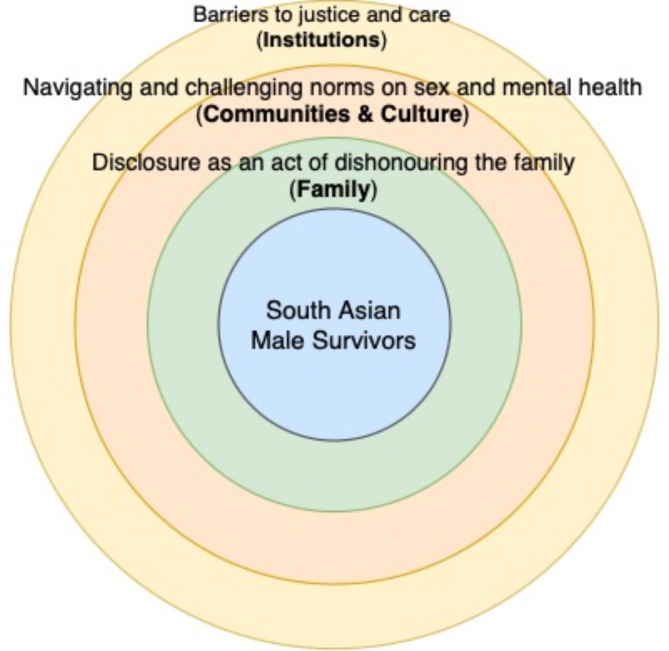
- Three group experiential themes were identified: disclosure as an act of dishonouring the family; navigating and challenging norms on sex and mental health; and barriers to justice and care.
- Familial reputational pressures made survivors reluctant to disclose, and many received dismissive or minimising reactions; some were told to forgive the abuser and “move on” to protect family honour.
- Cultural taboos about sex and mental health meant survivors struggled to recognise their experiences and needs; professional support barriers included stigma and lack of cultural understanding, while distrust of systems discouraged justice-seeking.
- Of the 11 participants, 7 had accessed support and 8 had reported to the police; those who reported described poor police communication, regret, and feeling failed by the criminal justice system.
Methods
- Interpretative phenomenological analysis (IPA) with purposive sampling of 11 South Asian male survivors of childhood sexual violence currently living in the UK, recruited through specialist support organisations.
- One-to-one semi-structured online interviews lasting on average 1 h (range 30 min to 2 h), covering experiences of sexual violence, cultural/religious factors, disclosure barriers/facilitators, and access to therapeutic care and police reporting.
- Analysis followed Smith et al.’s IPA stages: reading, exploratory notes, experiential statements, personal experiential themes, and grouping into group experiential themes, with collaborative validity checks.
Limitations
- Stated: the sample size, while appropriate for qualitative phenomenological inquiry, means findings may not generalise within South Asian communities; participants were primarily Pakistani and Indian, with Bangladeshi and Sri Lankan ethnicities underrepresented.
- Stated: reliance on self-selected volunteers raises possible selection bias; survivors who did not disclose or report to police were underrepresented, and most participants identified as heterosexual, so sexual minority men’s voices were not captured.
- Stated: most participants experienced abuse between ages 3 and 16, so adult males who experienced violence after age 16 are critically underrepresented; evident from the recruitment approach, participants were recruited through support organisations, which may overrepresent those already engaged with services.
Model-written summary. Check it against the paper before relying on it.
Integrity signals
Registry
Cites
Statistics
Figures
Verification
Claims the paper makes
31 Valid · 6 Not valid · 34 Not checked · 146 Own results and interpretations
The cited sources support only part of this claim — read each source’s verdict below.
In the paper
“Children are more likely to disclose abuse when supported by a validating caregiver [51]”
§ ‘We don’t talk about that around here’: an interpretative phenomenological analysis (IPA) of South Asian male survivors’ experiences of childhood sexual abuse in the UK > Discussion
What the sources say
- Partly supportedcites [51] Grandgenett HM, Pittenger SL, Dworkin ER, Hansen DJ. Telling a trusted adult: factors associated with the likelihood of disclosing child sexual abuse prior to and during a forensic interview. Child Abuse Negl. 2021;116:104193. 31561907 PMC7089833 sourceExperimental — accuracy not yet measured
The Discussion (page not supplied) reports that youth presenting to child advocacy centers were more likely to disclose during a forensic interview when their caregiver indicated belief in the abuse allegation. The claim extends that finding to disclosure generally and uses broader caregiver validation in place of the measured caregiver belief. (LLM, conf=0.82)
hedgedstates an association- Asserted: passes — The authors put it forward as true.
- Checkable: passes — It can be checked against evidence.
- Load-bearing: unclear — It is unclear whether the paper’s conclusions depend on it.
- Based: passes — The paper gives a reason why it holds.
- Partly supported
The cited sources support only part of this claim — read each source’s verdict below.
In the paper
“Traditional gender values are well-documented as shaping victim-blaming attitudes and rape myths for both female and male survivors [60, 61].”
§ ‘We don’t talk about that around here’: an interpretative phenomenological analysis (IPA) of South Asian male survivors’ experiences of childhood sexual abuse in the UK > Discussion
What the sources say
- Supportedcites [60] Willmott D, Widanaralalage BK. Male rape Myths: examining the role of victim empathy and socio-demographics in a cross-sectional sample of UK adults. Int J Law Crime Justice. 2024;76:100645. source
Section 1.1 (p. 3) links myths about male survivors to masculine stereotypes and describes rape myths about female survivors in a patriarchal context. Section 1.2 (p. 4) reports that both female and male rape myth acceptance correlate with sexism, supporting the broader statement about traditional gender values. (LLM, conf=0.87)
- Partly supportedcites [61] Willmott D, Rafique A, Widanaralalage BK, Agneswaran A. Investigating the role of psychopathic personality traits, gender, and ethnicity in Rape Myth Acceptance. 2024 Jan 18 [cited 2024 Jan 23]; Available from: https://repository.lboro.ac.uk/articles/journal_contribution/Investigating_the_role_of_psychopathic_personality_traits_gender_and_ethnicity_in_Rape_Myth_Acceptance/25013060/1 PMC12123939 40454379 sourceExperimental — accuracy not yet measured
The Discussion (page unavailable) reports that adherence to traditional gender-role stereotypes explains variance in rape myth acceptance. The Introduction (page unavailable) describes myths that blame female survivors and deny that ‘real men’ can be raped. The paper does not establish that traditional gender values shape victim-blaming attitudes and rape myths for both female and male survivors. (LLM, conf=0.84)
boostedstates a cause- Asserted: passes — The authors put it forward as true.
- Checkable: passes — It can be checked against evidence.
- Load-bearing: unclear — It is unclear whether the paper’s conclusions depend on it.
- Based: passes — The paper gives a reason why it holds.
- Supported
Every source the paper cites for this claim was checked and supports it.
In the paper
“Suppressing trauma is linked to poorer mental health outcomes [59], leaving South Asian male survivors particularly vulnerable.”
§ ‘We don’t talk about that around here’: an interpretative phenomenological analysis (IPA) of South Asian male survivors’ experiences of childhood sexual abuse in the UK > Discussion
What the sources say
- Supportedcites [59] Amstadter AB, Vernon LL. A preliminary examination of thought suppression, emotion regulation, and coping in a Trauma-Exposed sample. J Aggress Maltreatment Trauma. 2008;17(3):279–95. PMC2800361 20046535 source
The Discussion reports that thought suppression in a trauma-exposed sample was positively related to PTSD, anxiety, and depression symptoms. The study describes an association, not a causal effect. The sentence’s separate inference about South Asian male survivors is not attributed to this source. (LLM, conf=0.93)
plainstates an association- Asserted: passes — The authors put it forward as true.
- Checkable: passes — It can be checked against evidence.
- Load-bearing: unclear — It is unclear whether the paper’s conclusions depend on it.
- Based: passes — The paper gives a reason why it holds.
- Supported
Every source the paper cites for this claim was checked and supports it.
In the paper
“Relatedly, sharam acts as a powerful deterrent against seeking help, especially for sensitive issues like sexual violence and abuse [30].”
§ ‘We don’t talk about that around here’: an interpretative phenomenological analysis (IPA) of South Asian male survivors’ experiences of childhood sexual abuse in the UK > Background > South Asian male victims of sexual violence
What the sources say
- Supportedcites [30] Gill AK, Harrison K. I am talking about it because I want to stop it’: child sexual abuse and sexual violence against women in British South Asian communities. Br J Criminol. 2019;59(3):511–29. source
In “The perils of disclosing SV/CSA” (page unavailable), the paper says stigma led eleven of thirteen interviewees to try to handle abuse alone or believe they had no other option, rather than seek help that would reveal it. The Conclusion (page unavailable) identifies shame and concern for family honour as major reasons British South Asian women and girls remained silent about sexual abuse and violence. This supports the claim’s use of sharam in the sense of shame within the communities studied. (LLM, conf=0.91)
boostedstates a cause- Asserted: passes — The authors put it forward as true.
- Checkable: passes — It can be checked against evidence.
- Load-bearing: passes — The paper’s conclusions depend on it.
- Based: passes — The paper gives a reason why it holds.
- Supported
Every source the paper cites for this claim was checked and supports it.
In the paper
“In line with this research, strict prohibitions on open discussions of sexuality meant many survivors in this study struggled to disclose their experiences and access support [36].”
§ ‘We don’t talk about that around here’: an interpretative phenomenological analysis (IPA) of South Asian male survivors’ experiences of childhood sexual abuse in the UK > Discussion
What the sources say
- Supportedcites [36] Gilligan P, Akhtar S. Cultural barriers to the disclosure of child sexual abuse in Asian communities: listening to what women say. Br J Soc Work. 2006;36(8):1361–77. source
In “Woman H12 responded to Alia’s story by saying” (page unavailable), the paper reports that telling children not to talk about anything sexual can prevent them from speaking about sexual abuse. In “What did women say?” (page unavailable), participants describe how reluctance to discuss abuse also makes it difficult to seek help from services. The citation supports the stated mechanism; “survivors in this study” refers to the citing authors’ own study. (LLM, conf=0.88)
plainstates a cause- Asserted: passes — The authors put it forward as true.
- Checkable: passes — It can be checked against evidence.
- Load-bearing: passes — The paper’s conclusions depend on it.
- Based: passes — The paper gives a reason why it holds.
- Supported
111 more claims · 11 with their cited sources checked
Create a free account to see all 217 claims and to verify the 3 references still open.
- It may state two separate claims as one. 60
- Probably not a substantial claim. 50
Self-check
Percentages, sums and reported differences re-computed from the paper’s own numbers.
Each contradiction between two passages listed here was confirmed by an independent check.
Rated minor: it would not touch a result — a value no result rests on, a p-value that stays on the same side of the significance level, or a conflict that is clerical, resolved elsewhere in the paper, or outside its own findings.
In the paper
§ ‘We don’t talk about that around here’: an interpretative phenomenological analysis (IPA) of South Asian male survivors’ experiences of childhood sexual abuse in the UK > Methods > IPA
“The analysis followed the stages of IPA described by Smith et al. [42]”
§ ‘We don’t talk about that around here’: an interpretative phenomenological analysis (IPA) of South Asian male survivors’ experiences of childhood sexual abuse in the UK > References
“42. Easton SD. Disclosure of child sexual abuse among adult male survivors. Clin Soc Work J. 2013;41(4):344–55.”
Citations
Cites
Hegemonic Masculinity: Rethinking the Concept
Connell, R. W., & Messerschmidt, J. W. (2005) · Gender & Society · doi:10.1177/0891243205278639 · Cited by 9,367
Men, masculinity, and the contexts of help seeking
Addis, M. E., & Mahalik, J. R. (2003) · American Psychologist · doi:10.1037/0003-066x.58.1.5 · Cited by 2,761 · cited 1×
“It is evident how norms attached to male resilience, independence and strength [73] may be further enhanced for adult males from ethnic minority backgrounds as evidenced by survivors in this study who still displayed substantial levels of shame and embarrassment around disclosing their childhood…”
Dilemmas in qualitative health research
Yardley, L. (2000) · Psychology & Health · doi:10.1080/08870440008400302 · Cited by 2,310 · cited 1×
“Three guidelines were used to ensure that the methods employed were appropriate and coherent to the research questions: four principles for good qualitative research [44], Smith’s assessment tool for quality in IPA studies [45], and four quality indicators for IPA research [46].”
Issues of validity and reliability in qualitative research
Noble, H., & Smith, J. (2015) · Evidence Based Nursing · doi:10.1136/eb-2015-102054 · Cited by 1,758 · cited 1×
“Enhancing attributes of rigour and credibility has been a longstanding area of priority within qualitative research [43].”
(2014) · Czasopismo Psychologiczne Psychological Journal · doi:10.14691/cppj.20.1.7 · Cited by 1,647 · cited 1×
“Purposive sampling aligns with the theoretical underpinnings of IPA, designed to achieve a broadly homogenous sample and place focus on common patterns of experiences, whilst examining the uniqueness of each individual account [38].”
Evaluating the contribution of interpretative phenomenological analysis
Smith, J. A. (2011) · Health Psychology Review · doi:10.1080/17437199.2010.510659 · Cited by 1,635 · cited 1×
“Three guidelines were used to ensure that the methods employed were appropriate and coherent to the research questions: four principles for good qualitative research [44], Smith’s assessment tool for quality in IPA studies [45], and four quality indicators for IPA research [46].”
Hegemonic Masculinity: Rethinking the Concept
كونيل, ر. و., & ميسِرشميت, ج. و. (2020) · Cited by 1,265
Long-Term Consequences of Childhood Sexual Abuse by Gender of Victim
DUBE, S., ANDA, R., WHITFIELD, C., BROWN, D., FELITTI, V, DONG, M., & GILES, W. (2005) · American Journal of Preventive Medicine · doi:10.1016/j.amepre.2005.01.015 · Cited by 915
Smith, C. P., & Freyd, J. J. (2014) · American Psychologist · doi:10.1037/a0037564 · Cited by 849 · cited 1×
“While entering the criminal justice system often represents a gateway to specialist support [66], frustration and regret reported by participants reflected evidence of institutional betrayal trauma [67] often reported by service organisation who support men with lived experiences of abuse [50].”
Achieving excellence in interpretative phenomenological analysis (IPA): Four markers of high quality
Nizza, I. E., Farr, J., & Smith, J. A. (2021) · Qualitative Research in Psychology · doi:10.1080/14780887.2020.1854404 · Cited by 399
A Review of Research on Masculinity Ideologies Using the Male Role Norms Inventory
Levant, R. F., & Richmond, K. (2008) · The Journal of Men’s Studies · doi:10.3149/jms.1502.130 · Cited by 356
Peterson, Z. D., Voller, E. K., Polusny, M. A., & Murdoch, M. (2011) · Clinical Psychology Review · doi:10.1016/j.cpr.2010.08.006 · Cited by 277
Gateway to Justice: Police and Prosecutorial Response to Sexual Assaults against Women
Kerstetter, W. A. (1990) · The Journal of Criminal Law and Criminology (1973-) · doi:10.2307/1143908 · Cited by 272 · cited 1×
“While entering the criminal justice system often represents a gateway to specialist support [66], frustration and regret reported by participants reflected evidence of institutional betrayal trauma [67] often reported by service organisation who support men with lived experiences of abuse [50].”
Choy, B., Arunachalam, K., S, G., Taylor, M., & Lee, A. (2021) · Public Health in Practice · doi:10.1016/j.puhip.2020.100069 · Cited by 267
Male Sexual Victimization: Examining Men’s Experiences of Rape and Sexual Assault
Weiss, K. G. (2010) · Men and Masculinities · doi:10.1177/1097184x08322632 · Cited by 247
Cultural Competence and Ethnic Diversity in Healthcare
Nair, L., & Adetayo, O. A. (2019) · Plastic and Reconstructive Surgery - Global Open · doi:10.1097/gox.0000000000002219 · Cited by 241 · cited 1×
“Conversely, when providers failed to understand familial and cultural pressures, survivors reported feelings of stigma, distrust, and further trauma, reinforcing negative experiences of rape and CSA [69].”
Measurement of masculinity ideologies: A (critical) review.
Thompson, E. H., & Bennett, K. M. (2015) · Psychology of Men & Masculinity · doi:10.1037/a0038609 · Cited by 227
"I keep that hush-hush": Male survivors of sexual abuse and the challenges of disclosure.
Sorsoli, L., Kia-Keating, M., & Grossman, F. K. (2008) · Journal of Counseling Psychology · doi:10.1037/0022-0167.55.3.333 · Cited by 201
Purdah: Separate Worlds and Symbolic Shelter
Papanek, H. (1973) · Comparative Studies in Society and History · doi:10.1017/s001041750000712x · Cited by 198 · cited 1×
“However, gendered differences in scrutiny remain: while women are judged on purity and marriage-ability [57, 58], male survivors described fear around appearing weak or unmanly, reinforcing the intersection of masculinity norms and sexual violence stigma [12].”
Male victims of sexual assault: phenomenology, psychology, physiology.
Bullock, C. M., & Beckson, M. (2011) · PubMed · Cited by 187
Gilbert, P., Gilbert, J., & Sanghera, J. (2004) · Mental Health, Religion & Culture · doi:10.1080/13674670310001602418 · Cited by 183 · cited 4×
“These cultural factors impact on how individuals navigate and disclose their experiences [28–30, 36, 37].”
InfluentialRizo, C. F., & Macy, R. J. (2011) · Aggression and Violent Behavior · doi:10.1016/j.avb.2011.03.004 · Cited by 181
Disclosure of Child Sexual Abuse Among Adult Male Survivors
Easton, S. D. (2013) · Clinical Social Work Journal · doi:10.1007/s10615-012-0420-3 · Cited by 172 · cited 2×
“Disclosing abuse is a crucial step for survivors of all genders, as it is often made to individuals they trust and share intimacy with [33, 42, 49].”
Gilligan, P., & Akhtar, S. (2005) · British Journal of Social Work · doi:10.1093/bjsw/bch309 · Cited by 170 · cited 2×
“These cultural factors impact on how individuals navigate and disclose their experiences [28–30, 36, 37].”
Male Victims of Sexual Assault: A Review of the Literature
Thomas, J. C., & Kopel, J. J. (2023) · Behavioral Sciences · doi:10.3390/bs13040304 · Cited by 149 · cited 2×
“Mindful of the ‘hidden’ nature and enhanced stigma encountered by this group [17], the research team adopted a multiphase approach to recruitment.”
The Disclosure Experiences of Male Child Sexual Abuse Survivors
Gagnier, C., & Collin-Vézina, D. (2016) · Journal of Child Sexual Abuse · doi:10.1080/10538712.2016.1124308 · Cited by 144 · cited 1×
“Despite these established prevalence rates, it is crucial to recognise that significant underreporting, particularly among male survivors of CSA, continues to obscure the true scale of the issue [22, 23].”
Bhattacharya, G., & Schoppelrey, S. L. (2004) · Journal of Immigrant Health · doi:10.1023/b:joih.0000019168.75062.36 · Cited by 133 · cited 1×
“This pressure is amplified in immigrant families, where success is tied to family hon-our and social mobility [53, 54].”
Gay men as victims of nonconsensual sex
Hickson, F. C. I., Davies, P. M., Hunt, A. J., Weatherburn, P., McManus, T. J., & Coxon, A. P. M. (1994) · Archives of Sexual Behavior · doi:10.1007/bf01541564 · Cited by 124 · cited 1×
“Furthermore, men identifying as gay, bisexual, or those who engage in sexual activities with other men are frequently at higher risk [16, 19, 20].”
Chang, J., Natsuaki, M. N., & Chen, C.-N. (2013) · Cultural Diversity & Ethnic Minority Psychology · doi:10.1037/a0032901 · Cited by 111
Asian and Non-Asian Attitudes Toward Rape, Sexual Harassment, and Sexuality
Kennedy, M. A., & Gorzalka, B. B. (2002) · Sex Roles · doi:10.1023/a:1020145815129 · Cited by 109 · cited 2×
“This pressure is amplified in immigrant families, where success is tied to family hon-our and social mobility [53, 54].”
An overview of the literature on female-perpetrated adult male sexual victimization
Fisher, N. L., & Pina, A. (2013) · Aggression and Violent Behavior · doi:10.1016/j.avb.2012.10.001 · Cited by 109
Asnaani, A., & Hofmann, S. G. (2012) · Journal of Clinical Psychology · doi:10.1002/jclp.21829 · Cited by 106
The scope of male rape: A selective review of research, policy and practice
Lowe, M., & Rogers, P. (2017) · Aggression and Violent Behavior · doi:10.1016/j.avb.2017.06.007 · Cited by 93
Amstadter, A. B., & Vernon, L. L. (2008) · Journal of Aggression, Maltreatment & Trauma · doi:10.1080/10926770802403236 · Cited by 90 · cited 1×
“Suppressing trauma is linked to poorer mental health outcomes [59], leaving South Asian male survivors particularly vulnerable.”
Femi-Ajao, O., Kendal, S., & Lovell, K. (2018) · Ethnicity and Health · doi:10.1080/13557858.2018.1447652 · Cited by 90 · cited 1×
“Indeed, recent studies have highlighted the prevalence of such violence and victimisation among ethnic minority women [13, 14] and men [15, 16] and how cultural identities and values of minoritised eth-nicities in Western society may exacerbate well-known challenges for male survivors of rape and…”
Effects of male rape on psychological functioning
Walker, J., Archer, J., & Davies, M. (2005) · British Journal of Clinical Psychology · doi:10.1348/014466505x52750 · Cited by 84
Principles for research on ethnicity and health: the Leeds Consensus Statement
Mir, G., Salway, S., Kai, J., Karlsen, S., Bhopal, R., Ellison, G. T., & Sheikh, A. (2013) · The European Journal of Public Health · doi:10.1093/eurpub/cks028 · Cited by 79 · cited 1×
“Accordingly, this study consulted the ethical principles for ethnic health research laid out by the Leeds Consensus Statement [47], in addition to updated governmental standards on ethnicity data in research [48].”
South Asian migration and settlement in Great Britain, 1951–2001
Peach, C. (2006) · Contemporary South Asia · doi:10.1080/09584930600955234 · Cited by 78
Disclosure, discrimination and desire: experiences of Black and South Asian gay men in Britain
McKeown, E., Nelson, S., Anderson, J., Low, N., & Elford, J. (2010) · Culture, Health & Sexuality · doi:10.1080/13691058.2010.499963 · Cited by 75 · cited 1×
“Research indicates that Black and South Asian gay men in Britain face compounded barriers to disclosure due to fear of reinforcing negative stereotypes about their sexual orientation or experiencing additional stigma from their own communities [72].”
Stoicism: Its Relation to Gender, Attitudes Toward Poverty, and Reactions to Emotive Material
Wagstaff, G. F., & Rowledge, A. M. (1995) · The Journal of Social Psychology · doi:10.1080/00224545.1995.9711421 · Cited by 72 · cited 1×
“Additionally, cultural expectations of masculine resilience and stoicism [63, 64] were observed in this study, leading to the dismissal and stigmatisation of survivors’ mental health needs.”
Widanaralalage, B. K., Hine, B. A., Murphy, A. D., & Murji, K. (2022) · Victims & Offenders · doi:10.1080/15564886.2022.2069898 · Cited by 68 · cited 10×
“Questions and conflict around self-protections and duty towards potential future victims resonated with the accounts of many male rape survivors [2], emphasising the disempowerment felt by survivors in pursuing justice.”
InfluentialSelf-citationChild sexual abuse reported by an English national sample: characteristics and demography
Bebbington, P. E., Jonas, S., Brugha, T., Meltzer, H., Jenkins, R., Cooper, C., King, M., & McManus, S. (2011) · Social Psychiatry and Psychiatric Epidemiology · doi:10.1007/s00127-010-0245-8 · Cited by 66 · cited 2×
“Indeed, limited and mixed evidence exists regarding the prevalence of sexual violence amongst ethnic minority men in the UK in general, with rates ranging between 5 and 6% [24, 25].”
The Effects of Income on Happiness in East and South Asia: Societal Values Matter?
Lim, H.-E., Shaw, D., Liao, P.-S., & Duan, H. (2020) · Journal of Happiness Studies · doi:10.1007/s10902-019-00088-9 · Cited by 65 · cited 2×
“Moreover, the limited availability of gender-sensitive mental health interventions, coupled with the risk of disbelief or insensitivity from professionals, deters survivors from seeking help, perpetuating a cycle of untreated psychological harm [2, 32].”
An examination of Interpretative Phenomenological Analysis (IPA)
Oxley, L. (2016) · Educational and Child Psychology · doi:10.53841/bpsecp.2016.33.3.55 · Cited by 64 · cited 1×
“As such, IPA is suitable to access hidden voices from seldom-heard groups by “met-aphorically shining a light” [40].”
Bhuyan, R., & Senturia, K. (2005) · Journal of Interpersonal Violence · doi:10.1177/0886260505277676 · Cited by 63
An Investigation of the Specialist Police Service Provided to Male Rape Survivors
Jamel, J., Bull, R., & Sheridan, L. (2008) · International Journal of Police Science & Management · doi:10.1350/ijps.2008.10.4.101 · Cited by 61
Male Sexual Assault and Rape: Who Seeks Counseling?
Monk‐Turner, E., & Light, D. (2010) · Sexual Abuse · doi:10.1177/1079063210366271 · Cited by 56
Cockbain, E., Ashby, M., & Brayley, H. (2017) · Sexual Abuse · doi:10.1177/1079063215616817 · Cited by 55 · cited 2×
“This stigma reinforces doubts about masculinity, fears of being judged based on sexual orientation, and anxiety over societal perceptions [25–27], further compounding psychological distress.”
Chynoweth, S. K., Buscher, D., Martin, S., & Zwi, A. B. (2020) · Conflict and Health · doi:10.1186/s13031-020-00288-8 · Cited by 52
Regional cooperation in South Asia in the field of mental health.
(2007) · PubMed Central · Cited by 49
Weare, S. (2018) · Journal of Interpersonal Violence · doi:10.1177/0886260518820815 · Cited by 44 · cited 2×
“Researchers have highlighted how men navigate and make sense of their experiences of sexual violence [1, 2] amid substantial social and institutional barriers to accessing mental health and criminal justice services [3–5].”
Gill, A. K., & Harrison, K. (2019) · The British Journal of Criminology · doi:10.1093/bjc/azy059 · Cited by 43 · cited 7×
“These cultural factors impact on how individuals navigate and disclose their experiences [28–30, 36, 37].”
InfluentialEaston, S. D. (2012) · Journal of Prevention & Intervention in the Community · doi:10.1080/10852352.2012.707446 · Cited by 43
Prevalence of Sexual Assault Victimization Among College Men, Aged 18–24: A Review
Forsman, R. L. (2017) · Journal of Evidence-Informed Social Work · doi:10.1080/23761407.2017.1369204 · Cited by 42 · cited 1×
“Notably, certain demographics are disproportionately affected; for instance, research shows that men aged 18 to 24 attending university are five times more likely to face sexual assault compared to their peers who are not in higher education [18].”
Szymanski, D. M., & Sung, M. R. (2013) · Journal of LGBT Issues in Counseling · doi:10.1080/15538605.2013.812930 · Cited by 40 · cited 1×
“These values have been linked to internalised heterosexism and reluctance to disclose sexual orientation [62].”
Buckingham, S. L., & Brodsky, A. E. (2015) · Journal of Latina/o Psychology · doi:10.1037/lat0000042 · Cited by 39
Willmott, D., & Widanaralalage, B. K. (2024) · International Journal of Law, Crime and Justice · doi:10.1016/j.ijlcj.2023.100645 · Cited by 37 · cited 1×
“Traditional gender values are well-documented as shaping victim-blaming attitudes and rape myths for both female and male survivors [60, 61].”
Self-citationOn Honour, Culture and Violence Against Women in Black and Minority Ethnic Communities
Gill, A. K., & Walker, S. (2020) · Emerald Group Publishing Limited eBooks · doi:10.1108/978-1-78769-955-720201014 · Cited by 33 · cited 1×
“Indeed, recent studies have highlighted the prevalence of such violence and victimisation among ethnic minority women [13, 14] and men [15, 16] and how cultural identities and values of minoritised eth-nicities in Western society may exacerbate well-known challenges for male survivors of rape and…”
Embodied shame and gendered demeanours in young women in Sri Lanka
Abeyasekera, A. L., & Marecek, J. (2019) · Feminism & Psychology · doi:10.1177/0959353518803976 · Cited by 31 · cited 1×
“However, gendered differences in scrutiny remain: while women are judged on purity and marriage-ability [57, 58], male survivors described fear around appearing weak or unmanly, reinforcing the intersection of masculinity norms and sexual violence stigma [12].”
Isaacs, S., Valaitis, R., Newbold, K. B., Black, M., & Sargeant, J. (2013) · Primary Health Care Research & Development · doi:10.1017/s1463423612000254 · Cited by 27 · cited 1×
“While recognising the diversity within ethnic minority communities, many survivors shared a sense of common identity and values associated with Asian communities, underscoring the importance of culturally competent services [68].”
Morrow, M., Bryson, S., Lal, R., Hoong, P., Jiang, C., Jordan, S., Patel, N. B., & Guruge, S. (2020) · International Journal of Mental Health and Addiction · doi:10.1007/s11469-019-00140-y · Cited by 27 · cited 1×
“Expectations of masculinity and the traditional role of men as providers and protectors have been found to contribute to the reluctance to admit vulnerability or seek help for mental health concerns [35].”
Challenges to identity integration amongst sexual minority British Muslim South Asian men
Mitha, K., Ali, S., & Koc, Y. (2021) · Journal of Community & Applied Social Psychology · doi:10.1002/casp.2527 · Cited by 26 · cited 1×
“Beyond a socio-cultural stigma around male sexual victimisation, taboos and secrecy around one’s sexual activities and orientation within South Asian communities can create additional barriers for disclosure, with men fearing losing familial and social support [26].”
Disclosure of victimization experiences of Chinese male survivors of intimate partner abuse
Simon, C. T., & Wallace, T. W. (2018) · Qualitative Social Work · doi:10.1177/1473325017694080 · Cited by 25
Shame, Family Honor, and Dating Abuse: Lessons From an Exploratory Study of South Asian Muslims
Couture-Carron, A. (2020) · Violence Against Women · doi:10.1177/1077801219895115 · Cited by 25 · cited 1×
“Fear of being perceived as a failure deters male survivors from disclosing, mirroring concerns among South Asian female survivors, for whom family honour and ostracisation are key barriers [55, 56].”
Steinfeldt, J. A., Clay, S. L., & Priester, P. E. (2020) · Substance Abuse Treatment, Prevention, and Policy · doi:10.1186/s13011-020-00318-x · Cited by 23 · cited 1×
“However, ethnic matching is a complex approach, as seen in substance misuse literature for ethnic minorities [70].”
Widanaralalage, B. K., Hine, B. A., Murphy, A. D., & Murji, K. (2023) · Violence and Victims · doi:10.1891/vv-2022-0084 · Cited by 23 · cited 4×
“Shame and stigma are known barriers for male rape survivors, often preventing them from recognizing their victimisation [2, 50].”
InfluentialSelf-citationWidanaralalage, B. K., Jennings, S., Dando, C., & Mackenzie, J.-M. (2024) · Trauma, Violence, & Abuse · doi:10.1177/15248380241246217 · Cited by 22 · cited 3×
“…prevalence estimates vary, research from different cultural settings emphasizes the importance of understanding how cultural identities shape the lived experiences of male survivors of sexual violence, influencing their sense-making, recognition, disclosure, and help seeking behaviours [12].”
Self-citationHelp-Seeking Behaviors of Male Survivors of Intimate Partner Violence in Kenya
Tenkorang, E. Y., Zaami, M., Kimuna, S., Owusu, A. Y., & Rohn, E. (2023) · Journal of Family Issues · doi:10.1177/0192513x211042847 · Cited by 20
Harrison, K., & Gill, A. K. (2018) · The British Journal of Criminology · doi:10.1093/bjc/azx027 · Cited by 19 · cited 2×
“Conversely, concerns about dishonour-ing and shaming often lead families to cover up incidents of sexual violence against female members, fearing that it may tarnish their status in the community [29, 30].”
Jaspal, R., Lopes, B., Jamal, Z., Paccoud, I., & Sekhon, P. (2017) · Mental Health Religion & Culture · doi:10.1080/13674676.2017.1414170 · Cited by 19
Grandgenett, H. M., Pittenger, S. L., Dworkin, E. R., & Hansen, D. J. (2021) · Child Abuse & Neglect · doi:10.1016/j.chiabu.2019.104193 · Cited by 17 · cited 1×
“Children are more likely to disclose abuse when supported by a validating caregiver [51], whereas those lacking support– as often the case in this study - delay disclosure until adulthood, navigating entrenched familial and cultural barriers.”
Willmott, D., Rafique, A., Widanaralalage, B. K., & Agneswaran, A. (2025) · Psychiatry, Psychology and Law · doi:10.1080/13218719.2024.2314000 · Cited by 17 · cited 1×
“Traditional gender values are well-documented as shaping victim-blaming attitudes and rape myths for both female and male survivors [60, 61].”
Self-citationHine, B. A., Murphy, A. D., Yesberg, J. A., Wunsch, D., Charleton, B., & Widanaralalage Don, B. K. S. (2021) · Police Practice and Research · doi:10.1080/15614263.2020.1843458 · Cited by 16 · cited 2×
“Researchers have highlighted how men navigate and make sense of their experiences of sexual violence [1, 2] amid substantial social and institutional barriers to accessing mental health and criminal justice services [3–5].”
A man never cries: barriers to holistic care for male survivors of sexual violence in eastern DRC
Alexandre, A. B., Rutega, B., Byamungu, P. A., Notia, C. A., & Alldén, S. (2022) · Medicine, Conflict and Survival · doi:10.1080/13623699.2022.2056211 · Cited by 14 · cited 1×
“A growing body of research on violence against men and boys is emerging from different global contexts [6–10], challenging the traditional perception of sexual violence as exclusively a ‘female issue’ [11].”
Gill, A. K., & Begum, H. (2023) · The British Journal of Criminology · doi:10.1093/bjc/azac097 · Cited by 14 · cited 4×
“Traditional gender roles may exacerbate these pressures, as young males might be expected to demonstrate strength, control, and success in their personal and professional lives [15].”
InfluentialAnalysis of Effect and Timing of Fillers in Natural Turn-Taking
Lala, D., Nakamura, S., & Kawahara, T. (2019) · Interspeech (USB) · doi:10.21437/interspeech.2019-1527 · Cited by 13 · cited 1×
“The interviews were transcribed verbatim to stay as close to the participants’ natural conversations as possible, including pauses and hesitations [41].”
Baloch, S., Hameed, M., & Hegarty, K. (2023) · Trauma, Violence, & Abuse · doi:10.1177/15248380211043829 · Cited by 12 · cited 1×
“Fear of being perceived as a failure deters male survivors from disclosing, mirroring concerns among South Asian female survivors, for whom family honour and ostracisation are key barriers [55, 56].”
Morrison, J., Basnet, M., & Sharma, N. (2023) · PLOS ONE · doi:10.1371/journal.pone.0290405 · Cited by 11 · cited 2×
“The cumulative impact of stigma, shame, and inadequate support contributes to high rates of suicidal ideation and self-harm [31].”
Male Victims of Sexual Violence and Their Welfare in the Criminal Justice System
Widanaralalage, B. K., Hine, B. A., & Murphy, A. D. (2022) · Men and Welfare · doi:10.4324/9781003178811-14 · Cited by 9
Self-citationChinese male survivors of intimate partner violence: living in and transforming stigma
Tsang, W. H. W., Chan, T. M. S., Shen, A. C.-T., & Chen, J.-S. (2024) · Journal of Social Work Practice · doi:10.1080/02650533.2023.2234630 · Cited by 5 · cited 1×
“A growing body of research on violence against men and boys is emerging from different global contexts [6–10], challenging the traditional perception of sexual violence as exclusively a ‘female issue’ [11].”
Male Rape: Prevalence, Consequences, and Myths
Widanaralalage, B. K. (2024) · Sexual Crime · doi:10.1007/978-3-031-46626-7_4 · Cited by 4
Self-citationSultana, R., Husain, N., Allen, O., & Taylor, P. (2026) · Families in Society: The Journal of Contemporary Social Services · doi:10.1177/10443894241272176 · Cited by 4 · cited 1×
“Similar barriers have been identified among South Asian female survivors, particularly their mistrust of formal institutions and reliance on informal, community-based support [65].”
Research works printed but not linked: 1
- Smith JA, Flowers P, Larkin M. Interpretative Phenomenological Analysis: Theory, Method and Research. Second edition. Los Angeles London New Delhi Singapor Washingtin DC: SAGE Publications Ltd; 2021. 240 p.
Cited by
Ahmed, W., Mahmood, R., & Mahmood, S. (2026) · Journal of Sexual Aggression · doi:10.1080/13552600.2026.2630702 · Cited by 1
Seid, A., Thai, H. M., & Olorunnisola, T. S. (2026) · Journal of Child & Adolescent Trauma · doi:10.1007/s40653-026-00936-w
Abdelrahman, S. R., & Alketbi, S. K. (2026) · Forensic Science Medicine and Pathology · doi:10.1007/s12024-026-01342-2 · Cited by 1
Pilkington, V., Rice, S., Seidler, Z. E., & Bendall, S. (2026) · Psychology and Psychotherapy Theory Research and Practice · doi:10.1111/papt.70108
Ike, T. J., Jidong, D. E., Ayobi, E. E., Ike, M. L., Dada, S. O., Ike, P. R., Doghor, R. F., & Mahmood, T. (2026) · American Journal of Men s Health · doi:10.1177/15579883261418920 · Cited by 1
Metadata
- Authors
- Widanaralalage, B. K., Jennings, S., Dando, C. J., & Mackenzie, J.-M.
- Affiliations
- King's College London (GB)
- University of Westminster (GB)
- Corresponding author
- Widanaralalage, B. Kennath
- Dando, Coral J.
- Venue
- BMC Psychology
- Published
- 2025-08-13
- Volume
- 13
- Issue
- 1
- Pages
- 910-910
- ISSN
- 2050-7283 (ISSN-L)
- PMC
- PMC12345098
- OpenAlex
- W4413117121
- Cited by
- 6
- References
- 70
- Citations by year
- 2026: 6
- FWCI
- 10.77
- Type
- journal article
- Language
- en
- Open access
- gold
- doi.org
- Licence
- cc-by
- creativecommons.org/licenses/by/4.0 (tdm)
- creativecommons.org/licenses/by/4.0 (vor)
- Locations
- BMC Psychology (publishedVersion, cc-by)
- Research Square (acceptedVersion, cc-by)
- Europe PMC (PubMed Central) (publishedVersion, cc-by)
- PubMed Central (publishedVersion, cc-by)
- PubMed (publishedVersion)
- DOAJ (DOAJ: Directory of Open Access Journals) (submittedVersion, cc-by-sa)
- Research Portal (King's College London) (submittedVersion, cc-by)
- Funders
- British Academy (SRG22\220635)
- Topics
- Social Sciences › Gender Studies › Sexual Assault and Victimization Studies
- Social Sciences › Psychology › Clinical Psychology › Child Abuse and Trauma
- Social Sciences › Health › Intimate Partner and Family Violence
- Keywords
- child sexual abuse, male survivors, South Asian men, disclosure, help-seeking, family honor, cultural taboos, stigma, masculinity, justice-seeking, barriers to support
- MeSH terms
- Help-Seeking Behavior, Southeast Asian People, Adult, Child, Child Abuse, Sexual, United Kingdom, Humans, Male, Middle Aged, Patient Acceptance of Health Care, Disclosure, Qualitative Research, Adult Survivors of Child Abuse, Young Adult, Social Stigma
About these checks
Registry, retraction, Cites and statistics results are computed, not judged, with one exception: a printed reference that no index lists is read once by a model before it counts as a citation error. Claims are extracted by a model and kept only when their quote appears verbatim in the text; each cited source is then checked, with a model’s help, for whether it says what the claim relies on. Those verdicts can be wrong — read the claim’s quote and the cited source before relying on one.
The claim verdicts this report counts are experimental: their accuracy is not yet measured.
A language model drew the claims from the paper on 2026-10-10, under version 3 of the claim definition (model deepseek-v4.1-flash, prompt extract-v3).
A second model labelled each claim on 2026-10-10 (model jev-1.13-20260917, definition revision gold-guideline-v0.2).
Cited sources are checked with a language model’s help (gpt-6-sol).
Statistics and arithmetic are recomputed, not judged.
Confidence bands are shown only for fields calibrated on our annotated test set. None is calibrated yet, so no band is shown.
What counts as a claim ›How we measure confidence ›How we check this ›
Are you an author, or do you see a problem with this page? Request a review
Data sources
Bibliographic data: Semantic Scholar, OpenAlex, Crossref.
Contains information from the Semantic Scholar Academic Graph Datasets, made available under the ODC Attribution License (ODC-BY 1.0).
Semantic Scholar’s data is described in: Kinney, R., et al. (2023). The Semantic Scholar Open Data Platform. arXiv:2301.10140.
