

A meta systematic review of artificial intelligence in higher education: a call for increased ethics, collaboration, and rigour
Open accessThe DOI matches its Crossref record; 147 of the 148 references it cites were found in a registry or an index, and 1 are not checked yet; 46 of the 95 sources its claims cite were checked for support.
Abstract
Although the field of Artificial Intelligence in Education (AIEd) has a substantial history as a research domain, never before has the rapid evolution of AI applications in education sparked such prominent public discourse. Given the already rapidly growing AIEd literature base in higher education, now is the time to ensure that the field has a solid research and conceptual grounding. This review of reviews is the first comprehensive meta review to explore the scope and nature of AIEd in higher education (AIHEd) research, by synthesising secondary research (e.g., systematic reviews), indexed in the Web of Science, Scopus, ERIC, EBSCOHost, IEEE Xplore, ScienceDirect and ACM Digital Library, or captured through snowballing in OpenAlex, ResearchGate and Google Scholar. Reviews were included if they synthesised applications of AI solely in formal higher or continuing education, were published in English between 2018 and July 2023, were journal articles or full conference papers, and if they had a method section 66 publications were included for data extraction and synthesis in EPPI Reviewer, which were predominantly systematic reviews (66.7%), published by authors from North America (27.3%), conducted in teams (89.4%) in mostly domestic-only collaborations (71.2%). Findings show that these reviews mostly focused on AIHEd generally (47.0%) or Profiling and Prediction (28.8%) as thematic foci, however key findings indicated a predominance of the use of Adaptive Systems and Personalisation in higher education. Research gaps identified suggest a need for greater ethical, methodological, and contextual considerations within future research, alongside interdisciplinary approaches to AIHEd application. Suggestions are provided to guide future primary and secondary research.
Verified 2026-11-25 · 1 reference not checked yet
Overview
CoChat Summary
TL;DR
This tertiary review synthesises 66 secondary studies on artificial intelligence in higher education (AIHEd) published 2018–July 2023, mapping review types, authorship, quality, applications, benefits, challenges, and gaps. It finds adaptive systems and personalisation dominate key findings, while ethics, collaboration, and methodological rigour remain major gaps.
Key findings
- Of 66 included evidence syntheses, 66.7% were systematic literature reviews; 89.4% were team-authored, but 71.2% were domestic-only collaborations, and North America accounted for 27.3% of authorship.
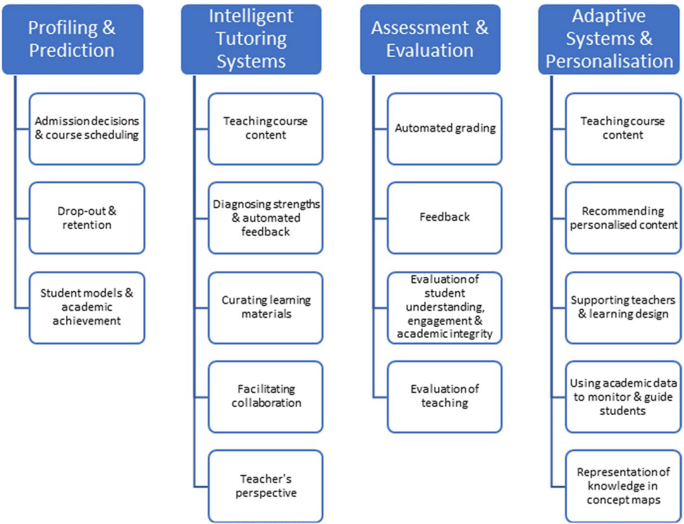
- Review focus was mostly General AIEd (47.0%) or Profiling and Prediction (28.8%); key findings most often discussed Adaptive Systems and Personalisation (54.5%), then Profiling and Prediction (48.5%), Assessment and Evaluation (39.4%), and Intelligent Tutoring Systems (21.2%).
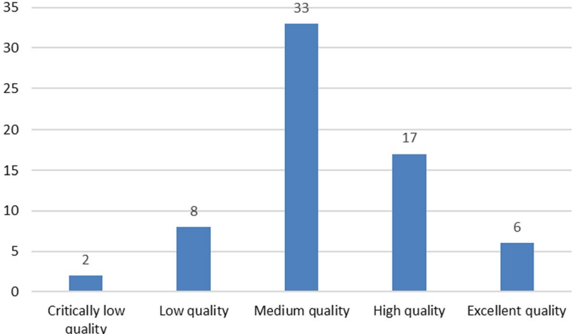
- Quality averaged 6.57/10; 45.5% did not undertake any quality assessment, 31.8% searched only one or two databases, 24.2% provided their exact data extraction coding scheme, and 34.8% did not reflect on review limitations; 65% were critically low to medium quality.
- Top research gaps were ethics (40.9%), methodological rigour (36.4%), wider stakeholders (21.2%), disciplines (16.7%), and countries (15.2%); the top challenge was lack of ethical consideration (29.0%).
Methods
- Tertiary review/review of reviews guided by PRISMA; searched Web of Science, Scopus, ERIC, EBSCOHost, IEEE Xplore, ScienceDirect, ACM Digital Library, OpenAlex, and Google Scholar (first 500 records), plus snowballing/manual additions; initial search 13 October 2022, updated to 18 July 2023.
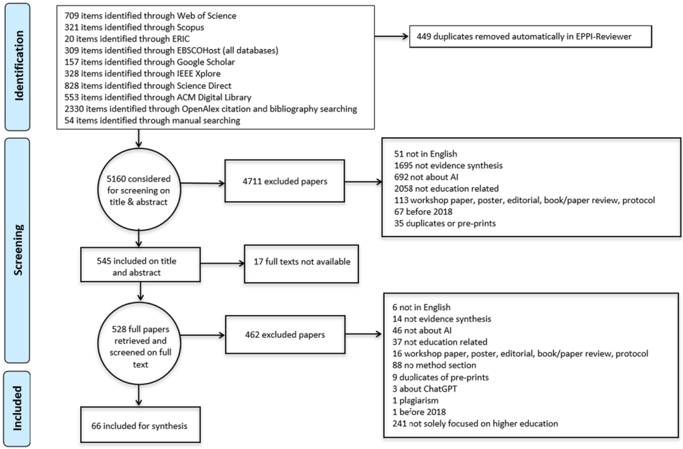
- Included secondary research with a method section on AI applications in formal higher or continuing education, published in English January 2018–18 July 2023 as journal articles or full conference papers; from 5,609 records and 5,160 title/abstract screened, 66 reviews solely focused on higher/continuing education were synthesised.
- Data extracted in EPPI Reviewer; quality assessed with 10 criteria adapted from DARE, AMSTAR 2, and Buntins et al.; narrative synthesis and interactive evidence/gap maps.
Limitations
- Stated: the protocol was not pre-registered in an official repository such as PROSPERO; only the first 500 Google Scholar records were considered versus the 1000 recommended; additional journals and non-English literature could have been searched to reduce language bias; the quality assessment tool is imperfect and yes/no/partly distances cannot be assumed equal.
- Stated/design: generative AI and ChatGPT reviews were excluded; 32 reviews that included higher education but combined it with other levels were excluded to keep results higher-education-specific.
- Evident from the text: English-language and 2018–July 2023 restrictions, plus reliance on available databases and snowballing, may limit coverage; the authors note future work will explore the full 307 AIEd evidence syntheses across educational levels.
Model-written summary. Check it against the paper before relying on it.
Integrity signals
Registry
Cites
Statistics
Figures
Verification
Claims the paper makes
36 Valid · 0 Not valid · 28 Not checked · 127 Own results and interpretations
Every source the paper cites for this claim was checked and supports it.
In the paper
“This can occur when researchers do not give enough consideration to work that has already been published, costing valuable time, effort, and money”
§ A meta systematic review of artificial intelligence in higher education: a call for increased ethics, collaboration, and rigour > Contribution of this review
What the sources say
- Supportedcites Robinson et al., 2021 matched to “Evidence-Based Research Series-Paper 1: What Evidence-Based Research is and why is it important?” (2021) source
The “Need for Evidence-Based Research” section says that failing to consider prior research has led to unnecessary trials over many years and limited funding for important research. The “Limitations” section also describes the opportunity cost of research waste. Together, these support the claim about wasted time, effort, and money. (LLM, conf=0.90)
plainstates a cause- Asserted: passes — The authors put it forward as true.
- Checkable: passes — It can be checked against evidence.
- Load-bearing: passes — The paper’s conclusions depend on it.
- Based: passes — The paper gives a reason why it holds.
- Supported
Every source the paper cites for this claim was checked and supports it.
In the paper
“However, issues of quality when undertaking evidence synthesis persist.”
§ A meta systematic review of artificial intelligence in higher education: a call for increased ethics, collaboration, and rigour > Evidence synthesis quality
What the sources say
- Supportedcites Chalmers et al., 2023 matched to “Topics, publication patterns, and reporting quality in systematic reviews in language education. Lessons from the international database of education systematic reviews (IDESR)” (2024) source
Section 4.5 (Quality over time) says reporting quality in language-education systematic reviews has remained fairly stable and relatively incomplete. This supports the claim that quality issues persist in the evidence syntheses studied. (LLM, conf=0.92)
- Supportedcites Gough et al., 2012 matched to “Clarifying differences between review designs and methods” (2012) source
In “Aggregative and configurative reviews” (page unavailable), the paper says there is less consensus about quality assessment in configurative reviews and describes differing approaches to it. The “Clarifying the nature of variation in reviews” section also identifies unresolved questions about quality assurance and critical appraisal, supporting the broad claim that quality issues persist in evidence synthesis. (LLM, conf=0.88)
plain- Asserted: passes — The authors put it forward as true.
- Checkable: passes — It can be checked against evidence.
- Load-bearing: passes — The paper’s conclusions depend on it.
- Based: passes — The paper gives a reason why it holds.
- Supported
The sources with a verdict support this claim; the rest weren’t checked yet, have no full text we could read, or their verdicts aren’t rated yet.
In the paper
“this tertiary review was conducted using explicit, predefined criteria and transparent methods of searching, analysis and reporting”
§ A meta systematic review of artificial intelligence in higher education: a call for increased ethics, collaboration, and rigour > Method
What the sources say
- Supportedcites Gough et al., 2012 matched to “Clarifying differences between review designs and methods” (2012) source
The Background section describes systematic reviews as using explicit, accountable methods, and the section on aggregative and configurative reviews describes predefined methods and inclusion criteria. The paper supports the methodological approach invoked here; whether the citing authors followed those methods in their own tertiary review is their claim, not a finding attributed to this source. (LLM, conf=0.85)
- Not checked — no full text of the sourcecites Zawacki-Richter et al., 2020 matched to “Systematic Reviews in Educational Research: Methodology, Perspectives and Application” (2020) source
plain- Asserted: passes — The authors put it forward as true.
- Checkable: passes — It can be checked against evidence.
- Load-bearing: passes — The paper’s conclusions depend on it.
- Based: passes — The paper gives a reason why it holds.
- Supported
The cited sources support only part of this claim — read each source’s verdict below.
In the paper
“Prior AIHEd tertiary syntheses have so far also taken place within secondary research (e.g., systematic reviews), rather than as standalone reviews of reviews such as this one.”
§ A meta systematic review of artificial intelligence in higher education: a call for increased ethics, collaboration, and rigour > Prior AIEd syntheses in higher education
What the sources say
- Not checked — no full text of the sourcecites Saghiri et al. (2022) matched to “Scoping review of artificial intelligence and immersive digital tools in dental education” (2022) source
- Not checked — no full text of the sourcecites de Oliveira et al. (2021) matched to “An Overview on the Use of Educational Data Mining for Constructing Recommendation Systems to Mitigate Retention in Higher Education” (2021) source
- Partly supportedcites Sapci and Sapci (2020) matched to “Artificial Intelligence Education and Tools for Medical and Health Informatics Students: Systematic Review” (2020) sourceExperimental — accuracy not yet measured
The Methods describe this paper as a systematic review of AI in medical and health informatics education and list review papers among the eligible publication types. That supports its use as an example of secondary research open to reviews, but the cited passages do not establish that it actually synthesized prior reviews—a tertiary synthesis—or that prior tertiary syntheses generally lacked standalone reviews of reviews. (LLM, conf=0.78)
plain- Asserted: passes — The authors put it forward as true.
- Checkable: passes — It can be checked against evidence.
- Load-bearing: passes — The paper’s conclusions depend on it.
- Based: passes — The paper gives a reason why it holds.
Every source the paper cites for this claim was checked and supports it.
In the paper
“Zawacki-Richter et al. (2019) found three studies (2.1%) that discussed this function, which relate to the presentation of personalised learning materials to students”
§ A meta systematic review of artificial intelligence in higher education: a call for increased ethics, collaboration, and rigour > Intelligent tutoring systems (ITS)
What the sources say
- Supportedcites Zawacki-Richter et al., 2019 matched to “Systematic review of research on artificial intelligence applications in higher education – where are the educators?” (2019) source
The “Intelligent tutoring systems” section identifies two studies focused on curating learning materials based on student needs and a third that mentions the function descriptively. It describes personalised recommendations for reading materials and exercises; the review includes 146 articles, making three approximately 2.1%. (LLM, conf=0.91)
plain- Asserted: passes — The authors put it forward as true.
- Checkable: passes — It can be checked against evidence.
- Load-bearing: unclear — It is unclear whether the paper’s conclusions depend on it.
- Based: passes — The paper gives a reason why it holds.
- Supported
100 more claims · 6 with their cited sources checked
Create a free account to see all 191 claims and to verify the 4 references still open.
- It may state two separate claims as one. 70
- Probably not a substantial claim. 25
Claims other papers make about this one
Each is checked against this paper’s own text: does it say what the citing paper says it does?
The source backs part of the claim, not all of it — or backs it for a different population, condition or comparison.
In the citing paper
“However, the existing body of research predominantly focuses on adult learners in higher education, leaving a significant gap in understanding AI's impact on younger learners in K-12 settings, particularly in the English as a Foreign Language (EFL) context.”
From AI-Integrated Scaffolding to Enhance Agency and Creativity in K-12 English Language Learners: A Systematic Review (2025) · cites this paper as [12]
Experimental — accuracy not yet measuredThe source backs part of the claim, not all of it — or backs it for a different population, condition or comparison.
In the citing paper
“En instituciones como la UNAM (México) y la Universidad de Chile, plataformas con IA han logrado automatizar hasta el 70% de las evaluaciones formativas [13], aunque persisten desafíos en la retroalimentación de competencias creativas [5, 9].”
From Avances, Retos Éticos y Perspectivas de la Inteligencia Artificial (IA) en la Educación de América Latina (2025) · cites this paper as [9]
Experimental — accuracy not yet measuredThe source backs part of the claim, not all of it — or backs it for a different population, condition or comparison.
In the citing paper
“Bond (2024) llevó a cabo una revisión de revisiones sobre IA en la educación superior, sintetizando hallazgos de 50 resúmenes sistemáticos y resaltando la necesidad de estudios empíricos que evalúen el impacto pedagógico de las tecnologías [9].”
From Avances, Retos Éticos y Perspectivas de la Inteligencia Artificial (IA) en la Educación de América Latina (2025) · cites this paper as [9]
Experimental — accuracy not yet measuredThe source backs part of the claim, not all of it — or backs it for a different population, condition or comparison.
In the citing paper
“Las revisiones sistemáticas globales disponibles arrojan una escasa producción de datos desde Latinoamérica (Bond et al., 2024)”
From Percepciones de estudiantes latinoamericanos sobre el uso de la inteligencia artificial en la educación superior (2024) · cites this paper as Bond et al., 2024
Experimental — accuracy not yet measuredThe cited source says what the claim attributes to it.
In the citing paper
“Although every attempt was made to conduct this systematic review as transparently and rigorously as possible, according to previously established quality criteria (Bond et al., 2024), there are some limitations that must be acknowledged.”
From Unpacking student engagement in higher education learning analytics: a systematic review (2024) · cites this paper as Bond et al., 2024
10 more claims about this paper
Create a free account to see every claim other papers make about this one.
Self-check
Percentages, sums and reported differences re-computed from the paper’s own numbers.
Each contradiction between two passages listed here was confirmed by an independent check.
Rated major: it would touch a result — a value a result rests on, reported and recomputed p-values on opposite sides of the significance level, two passages that conflict with no sign which is right, or a cited work retracted before this paper was published.
In the paper
§ A meta systematic review of artificial intelligence in higher education: a call for increased ethics, collaboration, and rigour > AIHEd evidence synthesis quality
“51.5% did not report anything about inter-rater reliability or how screening and coding decisions were decided between review teams”
§ A meta systematic review of artificial intelligence in higher education: a call for increased ethics, collaboration, and rigour > A call for increased collaboration
“less than half of the reviews in this corpus (43.9%, n = 29) did not report any inter-rater agreement processes”
Rated minor: it would not touch a result — a value no result rests on, a p-value that stays on the same side of the significance level, or a conflict that is clerical, resolved elsewhere in the paper, or outside its own findings.
In the paper
§ A meta systematic review of artificial intelligence in higher education: a call for increased ethics, collaboration, and rigour > General publication characteristics
“only 67.6% are available open access.”
§ A meta systematic review of artificial intelligence in higher education: a call for increased ethics, collaboration, and rigour > Discussion
“only 67.7% of evidence synthesis in this sample were published open access”
Rated minor: it would not touch a result — a value no result rests on, a p-value that stays on the same side of the significance level, or a conflict that is clerical, resolved elsewhere in the paper, or outside its own findings.
In the paper
§ A meta systematic review of artificial intelligence in higher education: a call for increased ethics, collaboration, and rigour > Discussion
“the top six most productive countries from six different continents”
§ A meta systematic review of artificial intelligence in higher education: a call for increased ethics, collaboration, and rigour > Conclusion
“| 1 | United States | 11 | 16.7 | | 2 | Canada | 9 | 13.6 |”
Rated minor: it would not touch a result — a value no result rests on, a p-value that stays on the same side of the significance level, or a conflict that is clerical, resolved elsewhere in the paper, or outside its own findings.
In the paper
§ A meta systematic review of artificial intelligence in higher education: a call for increased ethics, collaboration, and rigour > Data extraction
“An initial five studies were coded by all authors, to ensure agreement on the coding scheme”
§ A meta systematic review of artificial intelligence in higher education: a call for increased ethics, collaboration, and rigour > Contribution
“All authors except GS were involved in data extraction.”
Rated minor: it would not touch a result — a value no result rests on, a p-value that stays on the same side of the significance level, or a conflict that is clerical, resolved elsewhere in the paper, or outside its own findings.
In the paper
“After the two disagreements were reconciled, the remaining 5060 items were screened on title and abstract by the same authors, resulting in 4711 items excluded.To continue ensuring inter-rater reliability at the screening on full text stage of 545 studies”
§ A meta systematic review of artificial intelligence in higher education: a call for increased ethics, collaboration, and rigour > Inclusion/exclusion criteria and screening
Reported 545 · recomputed 449
Citations
Cites
The PRISMA 2020 statement: An updated guideline for reporting systematic reviews
Page, M. J., McKenzie, J. E., Bossuyt, P. M., Boutron, I., Hoffmann, T. C., Mulrow, C. D., Shamseer, L., Tetzlaff, J. M., Akl, E. A., Brennan, S. E., et al. (2021) · BMJ · doi:10.1136/bmj.n71 · Cited by 108,283
Preferred Reporting Items for Systematic Reviews and Meta-Analyses: the PRISMA statement
Moher, D., Liberati, A., Tetzlaff, J., Altman, D. G., & for the PRISMA Group (2009) · BMJ · doi:10.1136/bmj.b2535 · Cited by 83,823
PRISMA Extension for Scoping Reviews (PRISMA-ScR): Checklist and Explanation
Tricco, A. C., Lillie, E., Zarin, W., O'Brien, K. K., Colquhoun, H., Levac, D., Moher, D., Peters, M. D. J., Horsley, T., Weeks, L., et al. (2018) · Annals of Internal Medicine · doi:10.7326/m18-0850 · Cited by 43,565 · cited 4×
“Overcoming resistance to change and solving various challenges, including those of an ethical and administrative nature, was identified as pivotal for successful AIHEd integration (Sourani, 2019).”
BackgroundMethodInfluentialScoping studies: towards a methodological framework
Arksey, H., & O'Malley, L. (2005) · International Journal of Social Research Methodology · doi:10.1080/1364557032000119616 · Cited by 36,742
PRISMA-P Group, Moher, D., Shamseer, L., Clarke, M., Ghersi, D., Liberati, A., Petticrew, M., Shekelle, P., & Stewart, L. A. (2015) · Systematic Reviews · doi:10.1186/2046-4053-4-1 · Cited by 26,223 · cited 2×
“…in the field of Applied Linguistics against the Preferred Reporting Items for Systematic Review and Meta-Analysis Protocols (PRISMA-P) guidelines (Shamseer et al., 2015), and found that most of the information expected in any research report were present; background, rationale, objectives and a…”
MethodInfluentialInterrater reliability: The kappa statistic
McHugh, M. L. (2012) · Biochemia Medica · doi:10.11613/bm.2012.031 · Cited by 19,877 · cited 2×
“…reliability between members of the research team, following lengthy discussion and agreement on the inclusion and exclusion criteria by all authors, two members of the team (MB and PP) double screened the first 100 items, resulting in almost perfect agreement (Cohen’s k = 0.89) (McHugh, 2012).”
BackgroundInfluentialPreferred Reporting Items for Systematic Reviews and Meta-Analyses: The PRISMA Statement
Moher, D., Liberati, A., Tetzlaff, J., & Altman, D. G. (2009) · Journal of Clinical Epidemiology · doi:10.1016/j.jclinepi.2009.06.005 · Cited by 19,575
Liberati, A., Altman, D. G., Tetzlaff, J., Mulrow, C., Gotzsche, P. C., Ioannidis, J. P. A., Clarke, M., Devereaux, P. J., Kleijnen, J., & Moher, D. (2009) · BMJ · doi:10.1136/bmj.b2700 · Cited by 17,648
Shamseer, L., Moher, D., Clarke, M., Ghersi, D., Liberati, A., Petticrew, M., Shekelle, P., Stewart, L. A., & the PRISMA-P Group (2015) · BMJ · doi:10.1136/bmj.g7647 · Cited by 13,120 · cited 1×
“…in the field of Applied Linguistics against the Preferred Reporting Items for Systematic Review and Meta-Analysis Protocols (PRISMA-P) guidelines (Shamseer et al., 2015), and found that most of the information expected in any research report were present; background, rationale, objectives and a…”
MethodShea, B. J., Reeves, B. C., Wells, G., Thuku, M., Hamel, C., Moran, J., Moher, D., Tugwell, P., Welch, V., Kristjansson, E., et al. (2017) · BMJ · doi:10.1136/bmj.j4008 · Cited by 10,636 · cited 2×
“Although the authors acknowledge the AMSTAR 2 tool as an effective quality assessment tool for systematic reviews (Shea et al., 2017), the present review includes any kind of evidence synthesis, as long as it has a method section.”
Method
Research works printed but not linked: 6
- 2. Algabri, H. K., Kharade, K. G., & Kamat, R. K. (2021). Promise, threats, and personalization in higher education with artificial intelligence. Webology, 18(6), 2129-2139.
- 26. Chen, X., Zou, D., Xie, H., Cheng, G., & Liu, C. (2022). Two decades of artificial intelligence in education: Contributors, collaborations, research topics, challenges, and future directions. Educational Technology and Society, 25(1), 28-47. https:// doi. org/ 10. 2307/ 48647 028 · doi:10.2307/48647028
- 28. Chu, H.-C., Hwang, G.-H., Tu, Y.-F., & Yang, K.-H. (2022). Roles and research trends of artificial intelligence in higher educa- tion: A systematic review of the top 50 most-cited articles. Australasian Journal of Educational Technology, 38(3), 22-42. https:// doi. org/ 10. 14742/ ajet. 7526 · doi:10.14742/ajet.7526
- 83. Mahmood, A., Sarwar, Q., & Gordon, C. (2022). A Systematic Review on Artificial Intelligence in Education (AIE) with a focus on Ethics and Ethical Constraints. Pakistan Journal of Multidisciplinary Research, 3(1). https:// pjmr. org/ pjmr/ artic le/ view/ 245 *
- 103. Priem, J., Piwowar, H., & Orr, R. (2022). OpenAlex: A fully-open index of scholarly works, authors, venues, institutions, and concepts. ArXiv. https:// arxiv. org/ abs/ 2205. 01833
- 137. Zawacki-Richter, O. (2023). Umbrella Review in ODDE. Herbsttagung der Sektion Medienpädagogik (DGfE), 22 September 2023.
Cited by
The promise and challenges of generative AI in education
Giannakos, M., Azevedo, R., Brusilovsky, P., Cukurova, M., Dimitriadis, Y., Hernandez-Leo, D., Järvelä, S., Mavrikis, M., & Rienties, B. (2025) · Behaviour & Information Technology · doi:10.1080/0144929x.2024.2394886 · Cited by 543
“In recent years, AI has significantly impacted the way humans learn and the way the respective institutions operate (Bond et al. 2024).”
In search of artificial intelligence (AI) literacy in teacher education: A scoping review
Sperling, K., Stenberg, C.-J., McGrath, C., Åkerfeldt, A., Heintz, F., & Stenliden, L. (2024) · Computers and Education Open · doi:10.1016/j.caeo.2024.100169 · Cited by 498
Wang, C., Wang, H., Li, Y., Dai, J., Gu, X., & Yu, T. (2025) · International Journal of Human–Computer Interaction · doi:10.1080/10447318.2024.2383033 · Cited by 353
“…et al., 2023), programming (Jing et al., 2024; Yilmaz & Yilmaz, 2023b), online learning (Hwang et al., 2021), intelligent learning (Chen et al., 2021), medical education (Winkler-Schwartz et al., 2019; Zhang et al., 2024), higher education (Bond et al., 2024), and e-learning (Tang et al., 2023).”
Feedback sources in essay writing: peer-generated or AI-generated feedback?
Banihashem, S. K., Kerman, N. T., Noroozi, O., Moon, J., & Drachsler, H. (2024) · International Journal of Educational Technology in Higher Education · doi:10.1186/s41239-024-00455-4 · Cited by 282
“This tool’s introduction has initiated discussions on the considerable ways AI can support educational endeavors (Bond et al., 2024; Darvishi et al., 2024).”
BackgroundGenerative AI for Customizable Learning Experiences
Pesovski, I., Santos, R., Henriques, R., & Trajkovik, V. (2024) · Sustainability · doi:10.3390/su16073034 · Cited by 274
“Furthermore, Bond et al. [29], in the recent systematic review of artificial intelligence in higher education, stated that available literature on how AI is used at the postgraduate level remains limited, besides the fast development of AI models, tools, and solutions.”
BackgroundBatista, J., Mesquita, A., & Carnaz, G. (2024) · Information · doi:10.3390/info15110676 · Cited by 256
A Systematic Review of Generative AI for Teaching and Learning Practice
Ogunleye, B., Zakariyyah, K. I., Ajao, O., Olayinka, O., & Sharma, H. (2024) · Education Sciences · doi:10.3390/educsci14060636 · Cited by 251
“Cohen’s kappa coefficient depicts the value for the degree of consistency among the raters, that is the extent to which their measures are the same, based on the number of codes in the coding scheme and the value obtained [31].”
BackgroundMustafa, M. Y., Tlili, A., Lampropoulos, G., Huang, R., Jandrić, P., Zhao, J., Salha, S., Xu, L., Panda, S., Kinshuk, et al. (2024) · Smart Learning Environments · doi:10.1186/s40561-024-00350-5 · Cited by 235
“On the other hand, the meta-review by Bond et al. (2024) limited its scope to higher education and its temporal range to the last 5 years.”
InfluentialCrawford, J., Allen, K.-A., Pani, B., & Cowling, M. (2024) · Studies in Higher Education · doi:10.1080/03075079.2024.2326956 · Cited by 224
“Despite its rapid integration into higher education, most research has focused on the academic costs and bene fi ts of the AI in education from a learner and academic achievement perspective (Bond et al., 2024; Perkins 2023).”
BackgroundMah, D.-K., & Groß, N. (2024) · International Journal of Educational Technology in Higher Education · doi:10.1186/s41239-024-00490-1 · Cited by 218
“However, the integration of educational and AI-based technologies into teaching and learning is not without its challenges, the main ones being curriculum development, infrastructure, and a lack of ethical consideration and teachers’ technical knowledge (Bond et al., 2023).”
InfluentialFu, Y., & Weng, Z. (2024) · Computers and Education Artificial Intelligence · doi:10.1016/j.caeai.2024.100306 · Cited by 195
Generative AI in education and research: A systematic mapping review
Yusuf, A., Pervin, N., Román‐González, M., & Noor, N. M. (2024) · Review of Education · doi:10.1002/rev3.3489 · Cited by 182
Pedagogical Applications of Generative AI in Higher Education: A Systematic Review of the Field
Qian, Y. (2025) · TechTrends · doi:10.1007/s11528-025-01100-1 · Cited by 206
“Addressing these challenges requires comprehensive training for educators and students to recognize and mitigate GenAI’s limitations, alongside strong ethical frameworks to guide responsible use (Bond et al., 2024; Francis et al., 2025; Yan et al., 2024).”
Generative AI in Education: Pedagogical, Theoretical, and Methodological Perspectives
Noroozi, O., Soleimani, S., Farrokhnia, M., & Banihashem, S. K. (2024) · International Journal of Technology in Education · doi:10.46328/ijte.845 · Cited by 165
“This is supported by findings from ethical studies by Bond et al. (2024) and Holmes et al. (2022) who stress the importance of developing robust ethical frameworks for AI use in education, and by Akgun & Greenhow (2022) that underscore the potential privacy risks associated with AI in educational…”
Design and assessment of AI-based learning tools in higher education: a systematic review
Luo, J., Zheng, C., Yin, J., & Teo, H. (2025) · International Journal of Educational Technology in Higher Education · doi:10.1186/s41239-025-00540-2 · Cited by 352
“However, existing studies in this field have largely overlooked these critical design aspects of AI-based learning tools (Bond et al., 2024; Crompton & Burke, 2023; Ouyang et al., 2022; Zawacki-Richter et al., 2019).”
Yue Yim, I. H. (2024) · Computers and Education: Artificial Intelligence · doi:10.1016/j.caeai.2024.100319 · Cited by 125
Unpacking student engagement in higher education learning analytics: a systematic review
Bergdahl, N., Bond, M., Sjöberg, J., Dougherty, M., & Oxley, E. (2024) · International Journal of Educational Technology in Higher Education · doi:10.1186/s41239-024-00493-y · Cited by 138
Self-citationKnoth, N., Decker, M., Laupichler, M. C., Pinski, M., Buchholtz, N., Bata, K., & Schultz, B. (2024) · Computers and Education Open · doi:10.1016/j.caeo.2024.100177 · Cited by 117
“Domain-specific AI literacy is underexplored in current research, but important insights could be gained from the literature dealing with the design of AI education [18,30,147,151].”
Teachers and AI: Understanding the factors influencing AI integration in K-12 education
Filiz, O., Kaya, M. H., & Adıgüzel, T. (2025) · Education and Information Technologies · doi:10.1007/s10639-025-13463-2 · Cited by 277
“Although AI has been present since the 1960s, its practical application in education, particularly with the early development of intelligent tutoring systems, has evolved into a significant area of research (Bond et al., 2024).”
Artificial intelligence in educational leadership: a comprehensive taxonomy and future directions
Sposato, M. (2025) · International Journal of Educational Technology in Higher Education · doi:10.1186/s41239-025-00517-1 · Cited by 271
“The process began with a comprehensive examination of existing taxonomies and frameworks, particularly those presented in the meta-systematic review by Bond et al. (2024).”
InfluentialKhairullah, S. A., Harris, S., Hadi, H. J., Sandhu, R. A., Ahmad, N., & Alshara, M. A. (2025) · Frontiers in Education · doi:10.3389/feduc.2025.1548104 · Cited by 211
Artificial intelligence in multimodal learning analytics: a systematic literature review
Mohammadi, M., Tajik, E., Martinez-Maldonado, R., Sadiq, S., Tomaszewski, W., & Khosravi, H. (2025) · Computers and Education: Artificial Intelligence · doi:10.1016/j.caeai.2025.100426 · Cited by 85
Self-citationBanihashem, S. K., Bond, M., Bergdahl, N., Khosravi, H., & Noroozi, O. (2025) · International Journal of Educational Technology in Higher Education · doi:10.1186/s41239-025-00548-8 · Cited by 82
“…using transparent and explicit methods (Gough et al., 2012; Zawacki-Richter et al., 2020), with the reporting here guided by the Preferred Reporting Items for Systematic Reviews and Meta-Analyses (PRISMA; Page et al., 2021) and the Quality of Evidence Synthesis Tool (QuEST; Bond et al., 2024).”
InfluentialSelf-citationAttitudes, perceptions and AI self-efficacy in K-12 education
Bergdahl, N., & Sjöberg, J. (2025) · Computers and Education: Artificial Intelligence · doi:10.1016/j.caeai.2024.100358 · Cited by 86
Self-citationSynthesis Methods and Reporting Tool (SMART) for Research Syntheses in Applied Linguistics
Chong, S. W. (2025) · Research Synthesis in Applied Linguistics · doi:10.1080/29984475.2025.2456880 · Cited by 94
Self-citationYu-peng, L., & Yu, Z. (2024) · International Journal of Human-Computer Interaction · doi:10.1080/10447318.2024.2359222 · Cited by 103
“Ethical concerns about artificial intelligence were prevalent in recent publications (eg, Nguyen et al., 2023; Bond et al., 2024).”
Intelligent educational technologies in individual learning: a systematic literature review
Kerimbayev, N., Akramova, А., Shadiev, R., & Altınay, Z. (2025) · Smart Learning Environments · doi:10.1186/s40561-024-00360-3 · Cited by 143
Kamali, J., Alpat, M. F., & Bozkurt, A. (2024) · International Journal of Educational Technology in Higher Education · doi:10.1186/s41239-024-00496-9 · Cited by 150
“Bond et al. (2024) called for “an enhanced focus on ethics in AIED [AI in Education] future research” (p. 33) arguing that the rapid integration of AI into education presents unique ethical challenges, which educators may not be fully equipped to address without a more robust framework for ethical…”
InfluentialA scoping review of empirical studies on generative artificial intelligence in language education
Wang, Y., Zhang, T., Yao, L., & Seedhouse, P. (2025) · Innovation in Language Learning and Teaching · doi:10.1080/17501229.2025.2509759 · Cited by 159
Bodur, G., Çakır, H., Turan, S., Seren, A. K. H., & Göktaş, P. (2025) · BMC Nursing · doi:10.1186/s12912-025-03775-6 · Cited by 121
“Future research should address ethical, methodological, and contextual considerations, emphasizing interdisciplinary approaches to AI applications in nursing [29].”
Students-generative AI interaction patterns and its impact on academic writing
Kim, J., Lee, S.-S., Detrick, R., Wang, J., & Li, N. (2026) · Journal of Computing in Higher Education · doi:10.1007/s12528-025-09444-6 · Cited by 74
“The confidence level in utilizing these devices can significantly influence how information systems incorporating AI algorithms are perceived and used (Bond et al., 2024 ; Delcker et al., 2024 ).”
Wang, P., Jing, Y., & Shen, S. (2025) · The Internet and Higher Education · doi:10.1016/j.iheduc.2025.100996 · Cited by 123
Examining AI Use in Educational Contexts: A Scoping Meta-Review and Bibliometric Analysis
Fu, Y., Weng, Z., & Wang, J. (2025) · International Journal of Artificial Intelligence in Education · doi:10.1007/s40593-024-00442-w · Cited by 57
Leading the AI transformation in schools: it starts with a digital mindset
Pietsch, M., & Mah, D.-K. (2024) · Educational Technology Research and Development · doi:10.1007/s11423-024-10439-w · Cited by 138
“The benefits of AI in education are manifold, including personalized learning, greater insight into student understanding, positive impact on learning outcomes, and reduced planning and administrative time for teachers as key opportunities (Bond et al., 2023; Kasneci et al., 2023).”
Mulaudzi, L. V., & Hamilton, J. (2025) · Journal of Academic Ethics · doi:10.1007/s10805-025-09615-1 · Cited by 56
“Moving forward, higher education institutions must prioritise ethical guidelines, comprehensive training, and innovative yet secure assessment practices (Bond et al., 2024).”
Artificial Intelligence Across Industries: A Comprehensive Review With a Focus on Education
Yadav, U., & Shrawankar, U. N. (2024) · Advances in educational marketing, administration, and leadership book series · doi:10.4018/979-8-3693-5443-8.ch010 · Cited by 91
León, C. E. Y., Lipuma, J. M., & Torres, X. O. (2025) · Frontiers in Education · doi:10.3389/feduc.2025.1619888 · Cited by 92
Stone, B. W. (2025) · Teaching of Psychology · doi:10.1177/00986283241305398 · Cited by 54
“…provide individualized instruction and tutoring, summarize and synthesize research, save instructors prep time (e.g., generating a bank of practice questions), and prepare students for an AI-enhanced workforce (Bond et al., 2024; Capraro et al., 2024; Cotton et al., 2023; Kasneci et al., 2023).”
A Social Perspective on AI in the Higher Education System: A Semisystematic Literature Review
Alshahrani, B. T., Pileggi, S. F., & Karimi, F. (2024) · Electronics · doi:10.3390/electronics13081572 · Cited by 95
Tlili, A., Saqer, K., Salha, S. H., & Huang, R. (2025) · Information Development · doi:10.1177/02666669241304407 · Cited by 122
“Additionally, Bond et al. (2024) suggested the need for contextual considerations of future research discussing AIEd.”
Prilop, C. N., Mah, D.-K., Jacobsen, L. J., Hansen, R. R., Weber, K. E., & Hoya, F. (2025) · Computers and Education Artificial Intelligence · doi:10.1016/j.caeai.2025.100471 · Cited by 149
Evaluating LLMs for Automated Scoring in Formative Assessments
Mendonça, P. C., Quintal, F., & Mendonça, F. (2025) · Applied Sciences · doi:10.3390/app15052787 · Cited by 70
Valdivieso, T., & González, O. (2025) · Education Sciences · doi:10.3390/educsci15020214 · Cited by 49
Large language models meet user interfaces: The case of provisioning feedback
Pozdniakov, S., Brazil, J., Abdi, S., Bakharia, A., Sadiq, S., Gašević, D., Denny, P., & Khosravi, H. (2024) · Computers and Education: Artificial Intelligence · doi:10.1016/j.caeai.2024.100289 · Cited by 43
Self-citationUse of generative AI in research: ethical considerations and emotional experiences
Farangi, M. R., Nejadghanbar, H., & Hu, G. (2024) · Ethics & Behavior · doi:10.1080/10508422.2024.2420133 · Cited by 57
“Bond et al. (2024) highlighted in their systematic review that ethical considerations are a recurring theme in discourse on GenAI, encompassing issues such as plagiarism, authorship, data collection, and privacy.”
Inteligencia artificial generativa en la educación superior: usos y opiniones de los profesores
Vega, J. E. P., Rodríguez, J. A. S., & Román-Méndez, A. D. (2024) · European Public & Social Innovation Review · doi:10.31637/epsir-2024-593 · Cited by 141
The Impact of Generative AI on Student Engagement and Ethics in Higher Education
Zaidy, A. A. (2024) · Journal of Information Technology Cybersecurity and Artificial Intelligence · doi:10.70715/jitcai.2024.v1.i1.004 · Cited by 83
Li, M., & Wilson, J. (2025) · Information · doi:10.3390/info16070519 · Cited by 49
Nikolovski, V., Trajanov, D., & Chorbev, I. (2025) · Algorithms · doi:10.3390/a18030144 · Cited by 64
Development and validation of the Artificial Intelligence Literacy Scale for Teachers (AILST)
Ning, Y., Zhang, W., Yao, D., Fang, B., Xu, B., & Wijaya, T. T. (2025) · Education and Information Technologies · doi:10.1007/s10639-025-13347-5 · Cited by 80
“Furthermore, teachers are obligated to assume responsibility for AI security, imple - menting necessary measures to ensure the safety of AI systems and mitigate infor - mation leakage or security risks stemming from technical vulnerabilities or errors (Bond et al., 2024).”
Determinants of student adoption of artificial intelligence applications in higher education
Alshammarı, S. H., Alrashidi, M. E., Alshammari, M. H., Alshammari, A. E. A., & Alkhwaldi, A. F. (2025) · Scientific Reports · doi:10.1038/s41598-025-19851-5 · Cited by 62
Adopting AI in education: optimizing human resource management considering teacher perceptions
Gârdan, I. P., Manu, M. B., Gârdan, D. A., Negoiţă, L., Paștiu, C. A., Ghiță, E., & Zaharia, A. (2025) · Frontiers in Education · doi:10.3389/feduc.2025.1488147 · Cited by 68
The Digital Transformation of Higher Education in the Context of an AI-Driven Future
Nazyrova, A., Miłosz, M., Bekmanova, G., Omarbekova, A., Aimicheva, G., & Kadyr, Y. (2025) · Sustainability · doi:10.3390/su17229927 · Cited by 104
Emotional artificial intelligence in education: a systematic review and meta-analysis
Zhang, H., Liu, Y., Jiang, M., Chen, J., Wang, M., & Paas, F. (2025) · Educational Psychology Review · doi:10.1007/s10648-025-10086-4 · Cited by 42
“For example, a meta-systematic review by Bond et al. (2024) indicated a predominant use of AI-supported adaptive systems for personalized learning in higher education.”
Cabellos, B., de Aldama, C., & Pozo, J.-I. (2024) · Frontiers in Psychology · doi:10.3389/fpsyg.2024.1468900 · Cited by 35
Ríos Hernández, I. N., Mateus, J. C., Rivera Rogel, D., & Ávila Meléndez, L. R. (2024) · Austral Comunicación · doi:10.26422/aucom.2024.1301.rio · Cited by 36
“…están disponibles y apoyadas por IA. Las revisiones sistemáticas globales disponibles arrojan una escasa producción de datos desde Latinoamérica (Bond et al., 2024) y los estudios precedentes aún no recogen la percepción de los estudiantes, sino que se centran en los campos de la gestión y…”
InfluentialMariyono, D., & Hd, A. N. A. (2025) · Quality Education for All · doi:10.1108/qea-08-2024-0071 · Cited by 96
Kotsis, K. Τ. (2024) · European Journal of Contemporary Education and E-Learning · doi:10.59324/ejceel.2024.2(3).04 · Cited by 44
Tsakeni, M., Nwafor, S. C., Mosia, M. S., & Egara, F. O. (2025) · Journal of Intelligence · doi:10.3390/jintelligence13110148 · Cited by 86
Vendrell, M., & Johnston, S.-K. (2026) · Computers and Education: Artificial Intelligence · doi:10.1016/j.caeai.2026.100572 · Cited by 43
“A recent meta-review by Bond et al. (2024) reinforces this point, identifying persistent barriers to AI adoption in higher education.”
Lin, Y., Luo, Z., Ye, Z., Zhong, N., Zhao, L., Zhang, L., Li, X., Chen, Z., & Chen, Y. (2025) · JMIR Medical Education · doi:10.2196/71125 · Cited by 58
“Specifically at the resource layer, clinicians and educators must oversee the development of educational resources (eg, clinical cases) to balance efficiency, ethics, and clinical authenticity [174,175].”
Imagining the future of artificial intelligence in education: a review of social science fiction
Gidiotis, I., & Hrastinski, S. (2024) · Learning Media and Technology · doi:10.1080/17439884.2024.2365829 · Cited by 58
“Recent articles have stressed the need to recalibrate our efforts to imagine the future of AIED (Bond et al. 2024; Chaudhry and Kazim 2022), and speculative storytelling opens up possibilities for ‘reorienting us to ever more complex understandings of our interrelatedness in the present ’ (Tomin…”
Who is Helping Whom? Student Concerns about AI-Teacher Collaboration in Higher Education Classrooms
Han, B., Coghlan, S., Buchanan, G., & McKay, D. (2025) · Proceedings of the ACM on Human-Computer Interaction · doi:10.1145/3711104 · Cited by 31
“O en lacking is an examination of the potential or actual impacts on students [114], especially the unintended consequences and a broader range of ethical risks associated with AIEd adoption [23].”
From prompt to polished: Exploring student-chatbot interactions for academic writing assistance
Usher, M., & Amzalag, M. (2025) · Education Sciences · doi:10.3390/educsci15030329 · Cited by 31
What distance learning students want from an AI Digital Assistant
Rienties, B., Domingue, J., Duttaroy, S., Herodotou, C., Tessarolo, F. M., & Whitelock, D. M. (2024) · Distance Education · doi:10.1080/01587919.2024.2338717 · Cited by 59
“Specifically with the Bloom dream of providing one-to-one personalized learning opportunities to increase student attainment using Gen AI, there are a lot of expectations around AI providing appropriate personalized learning at scale in the near future (Bond et al., 2024; D’Mello & Graesser, 2023).”
InfluentialAcosta-Enriquez, B. G., Ballesteros, M. A. A., Pérez, C. R. V., Jordan, O. H., Vergara, J. A. M., Acosta, R. M., Várgas, C. G. A. P., & Castillo, J. C. A. (2025) · Social Sciences & Humanities Open · doi:10.1016/j.ssaho.2025.101274 · Cited by 67
Setälä, M., Heilala, V., Sikström, P., & Kärkkäinen, T. (2025) · ACM Symposium on Applied Computing · doi:10.1145/3672608.3707817 · Cited by 63
Temper, M., Tjoa, S., & David, L. (2025) · Frontiers in Education · doi:10.3389/feduc.2025.1505370 · Cited by 71
Qu, Y., & Wang, J. (2025) · Journal of Academic Ethics · doi:10.1007/s10805-025-09643-x · Cited by 29
“Empirical evidence supports these distinctions, with GenAI more maturely integrated into STEM curricula while humanities and social sciences demonstrate less frequent GenAI use (Bond et al., 2024).”
AI adoption in Chinese universities: Insights, challenges, and opportunities from academic leaders
Wang, X., Zhao, S., Xu, X., Zhang, H., & Lei, V. N.-L. (2025) · Acta Psychologica · doi:10.1016/j.actpsy.2025.105160 · Cited by 53
Hassan, M., Kabir, M. E., Jusoh, M., An, H. K., Negnevitsky, M., & Li, C. (2025) · IEEE Access · doi:10.1109/access.2025.3589319 · Cited by 51
Tan, X., Cheng, G., & Ling, M. H. (2025) · Computers and Education: Artificial Intelligence · doi:10.1016/j.caeai.2025.100461 · Cited by 27
Wang, S., & Zhang, H. (2026) · International Journal of Educational Technology in Higher Education · doi:10.1186/s41239-026-00585-x · Cited by 38
Research trends in the use of artificial intelligence in higher education
Akhmadieva, R. S., Александровна, К. Н., Belova, T. V., Prokopyev, A. I., Molodozhnikova, N. M., & Spichak, V. Y. (2024) · Frontiers in Education · doi:10.3389/feduc.2024.1438715 · Cited by 57
Alghamdi, L. H., & Alghizzi, T. M. (2025) · Frontiers in Education · doi:10.3389/feduc.2025.1704820 · Cited by 54
Technology Acceptance Model in Artificial Intelligence in Education: A Meta-Analysis
Xue, L., Mahat, J., & Ghazali, N. (2026) · SAGE Open · doi:10.1177/21582440251409441 · Cited by 95
“Our systematic search strategy incorporated terms and synonyms aligned with the focus concepts of the study, derived from prior systematic reviews on TAM (Granic´ & Marangunic´, 2019), AI (Bond et al., 2024; Labadze et al., 2023), and educational themes (Labadze et al., 2023).”
Mobile language app learners’ self-efficacy increases after using generative AI
Kittredge, A. K., Hopman, E. W. M., Reuveni, B., Dionne, D., Freeman, C., & Jiang, X. (2025) · Frontiers in Education · doi:10.3389/feduc.2025.1499497 · Cited by 29
Eltaiba, N., Hosseini, S., & OKOYE, K. O. (2025) · Global Transitions · doi:10.1016/j.glt.2025.06.004 · Cited by 47
Silvola, A., Kajamaa, A., Merikko, J., & Muukkonen, H. (2025) · British Journal of Educational Technology · doi:10.1111/bjet.13606 · Cited by 24
Artificial Intelligence in Physical Education: A Review
Miller, J. C., Miranda, J. P. P., & Tolentino, J. C. G. (2024) · Advances in educational technologies and instructional design book series · doi:10.4018/979-8-3693-3952-7.ch002 · Cited by 44
Ronksley‐Pavia, M., Nguyen, L., Wheeley, E., Rose, J., Neumann, M. M., Bigum, C., & Neumann, D. L. (2025) · Computers and Education Artificial Intelligence · doi:10.1016/j.caeai.2025.100437 · Cited by 53
Renta‐Davids, A., Camarero‐Figuerola, M., & Camacho, M. (2025) · Review of Education · doi:10.1002/rev3.70101 · Cited by 68
A Comprehensive Review on Automated Grading Systems in STEM Using AI Techniques
Tan, L. Y., Hu, S., Yeo, D. J. S., & Cheong, K. H. (2025) · Mathematics · doi:10.3390/math13172828 · Cited by 45
Mah, D.-K., Knoth, N., & Egloffstein, M. (2025) · Frontiers in Education · doi:10.3389/feduc.2025.1484904 · Cited by 46
Generative AI Governance Model in Educational Research
de Pinho, I. G., Costa, A. P., & Pinho, C. S. B. (2025) · Frontiers in Education · doi:10.3389/feduc.2025.1594343 · Cited by 47
Generative artificial intelligence in education: analysis of trends and prospects
Андреевна, П. Е., Леонидович, О. П., Gorlacheva, E. N., & Faizullin, R. V. (2024) · Vocational education and labour market · doi:10.52944/port.2024.58.3.001 · Cited by 55
Mindset matters: Fostering teachers’ responsible AI use through professional development
Huynh, L., Le, T. H., Dang, B., An, B. T., Vu, C. T., & Nguyen, A. (2025) · Journal of New Approaches in Educational Research · doi:10.1007/s44322-025-00043-y · Cited by 22
“Moreover, limited self-efficacy and elevated anxiety, driven by concerns about misuse and job displacement, further impede adoption (Bond et al., 2024; Masry Herzallah & Makaldy, 2025).”
O’Connor, A. M., Clark, J., Thomas, J., Spijker, R., Kusa, W., Walker, V. R., & Bond, M. (2024) · Systematic Reviews · doi:10.1186/s13643-024-02666-2 · Cited by 21
Self-citationZawacki‐Richter, O., Cefa, B., & Bai, J. Y. H. (2025) · Review of Education · doi:10.1002/rev3.70031 · Cited by 47
Grab, M. Ö. (2025) · Innovative Higher Education · doi:10.1007/s10755-025-09801-4 · Cited by 29
Novoa-Echaurren, Á., Pavez, I., & Anabalón, M. E. (2025) · Education Sciences · doi:10.3390/educsci15060643 · Cited by 56
“The infrastructural requirements for student equitable access, alongside the gaps in technical proficiency among educators, have been highlighted by scholars in the field (Bond et al., 2024).”
McPhee, S., & Jerowsky, M. (2025) · Frontiers in Education · doi:10.3389/feduc.2025.1593278 · Cited by 47
Usher, M., Barak, M., & Erduran, S. (2025) · International Journal of STEM Education · doi:10.1186/s40594-025-00567-x · Cited by 21
“These reviews emphasize the need for qualitative approaches that can capture the depth and complexity of student perspectives (Bond et al., 2024; Crompton & Burke, 2023).”
InfluentialFromm, Y. M., Martin, F., Gezer, T., & Ifenthaler, D. (2025) · Technology Knowledge and Learning · doi:10.1007/s10758-025-09819-9 · Cited by 43
“However, two recent meta systematic reviews on educational technology and artificial intelligence in education revealed that a substantial amount of research syntheses did not reveal technology usage in their manuscripts (Bond et al., 2023, 2024).”
Ethical Use of Generative Artificial Intelligence Among Ecuadorian University Students
Buele, J., García, Á. R. S., Sabando-García, B. J., & Yánez-Rueda, H. (2025) · Sustainability · doi:10.3390/su17104435 · Cited by 52
Muringa, T. P. (2025) · Frontiers in Education · doi:10.3389/feduc.2025.1628019 · Cited by 37
Alfaleh, M. (2026) · Sustainability · doi:10.3390/su18020785 · Cited by 58
Liu, Z., & Zhang, W. (2024) · Scientific Reports · doi:10.1038/s41598-024-65226-7 · Cited by 40
Segbenya, M., Senyametor, F., Aheto, S.-P. K., Agormedah, E. K., Nkrumah, K., & Kaedabi‐Donkor, R. (2024) · Cogent Education · doi:10.1080/2331186x.2024.2387943 · Cited by 37
“Meanwhile, AI in academia is often engulfed with myths and concerns about its ability to replace lecturers or pre-cipitate staff redundancies (Bond et al., 2024; Jadagu, 2023).”
Bećirović, S., & Mattoš, B. (2024) · Emerald Group Publishing Limited eBooks · doi:10.1108/978-1-83549-480-620241002 · Cited by 30
Metadata
- Authors
- Bond, M., Khosravi, H., De Laat, M., Bergdahl, N., Negrea, V., Oxley, E., Pham, P., Chong, S. W., & Siemens, G.
- Affiliations
- University College London (GB)
- The University of Queensland (AU)
- Stockholm University (SE)
- University of South Australia (AU)
- University of St Andrews (GB)
- Corresponding author
- Bond, Melissa
- ORCID
- Venue
- International Journal of Educational Technology in Higher Education
- Published
- 2024-01-19
- Volume
- 21
- Issue
- 1
- ISSN
- 2365-9440 (ISSN-L)
- OpenAlex
- W4391006361
- Semantic Scholar
- c8cc6ca886011e63c64bc9ac03b5a7798734fcec
- Cited by
- 852
- References
- 135
- Citations by year
- 2026: 474 · 2025: 279 · 2024: 99
- FWCI
- 48.93
- Type
- journal article
- Language
- en
- Open access
- diamond
- doi.org
- Licence
- cc-by
- creativecommons.org/licenses/by/4.0 (tdm)
- creativecommons.org/licenses/by/4.0 (vor)
- Locations
- International Journal of Educational Technology in Higher Education (publishedVersion, cc-by)
- Hogskolan Ihalmstad (Halmstad University) (submittedVersion, other-oa)
- ENLIGHTEN (Jurnal Bimbingan dan Konseling Islam) (submittedVersion, other-oa)
- UCL Discovery (University College London) (submittedVersion, cc-by)
- St Andrews Research Repository (St Andrews Research Repository) (submittedVersion, cc-by)
- UniSA Research Outputs Repository (University of South Australia) (submittedVersion, cc-by)
- Adelaide Research & Scholarship (AR&S) (University of Adelaide) (submittedVersion, cc-by)
- DOAJ (DOAJ: Directory of Open Access Journals) (submittedVersion, cc-by-sa)
- Funders
- University of South Australia
- Topics
- Social Sciences › Education › Artificial Intelligence in Education
- Physical Sciences › Computer Science › Artificial Intelligence › Intelligent Tutoring Systems and Adaptive Learning
- Physical Sciences › Computer Science › Computer Science Applications › Online Learning and Analytics
- Keywords
- artificial intelligence in higher education, AI in education research, research ethics, research collaboration, scientific rigor, adaptive learning systems, personalization, research gaps, interdisciplinary approach
About these checks
Registry, retraction, Cites and statistics results are computed, not judged, with one exception: a printed reference that no index lists is read once by a model before it counts as a citation error. Claims are extracted by a model and kept only when their quote appears verbatim in the text; each cited source is then checked, with a model’s help, for whether it says what the claim relies on. Those verdicts can be wrong — read the claim’s quote and the cited source before relying on one.
The claim verdicts this report counts are experimental: their accuracy is not yet measured.
A language model drew the claims from the paper on 2026-10-16, under version 3 of the claim definition (model deepseek-v4.1-flash, prompt extract-v3).
A second model labelled each claim on 2026-10-16 (model jev-1.13-20260917, definition revision gold-guideline-v0.2).
Cited sources are checked with a language model’s help (gpt-6-sol).
Statistics and arithmetic are recomputed, not judged.
Confidence bands are shown only for fields calibrated on our annotated test set. None is calibrated yet, so no band is shown.
What counts as a claim ›How we measure confidence ›How we check this ›
Are you an author, or do you see a problem with this page? Request a review
Data sources
Bibliographic data: Semantic Scholar, OpenAlex, Crossref.
Contains information from the Semantic Scholar Academic Graph Datasets, made available under the ODC Attribution License (ODC-BY 1.0).
Semantic Scholar’s data is described in: Kinney, R., et al. (2023). The Semantic Scholar Open Data Platform. arXiv:2301.10140.
