

Correction: Through Ageing, and Beyond: Gut Microbiota and Inflammatory Status in Seniors and Centenarians
Open accessThe DOI matches its Crossref record; 53 of the 53 references it cites were found in a registry or an index.
Abstract
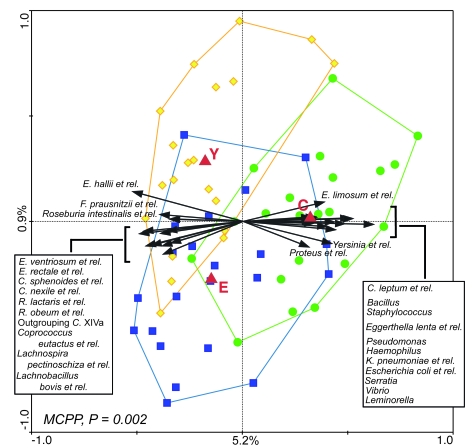
Background: Age-related physiological changes in the gastrointestinal tract, as well as modifications in lifestyle, nutritional behaviour, and functionality of the host immune system, inevitably affect the gut microbiota, resulting in a greater susceptibility to infections.Methodology/Principal Findings: By using the Human Intestinal Tract Chip (HITChip) and quantitative PCR of 16S rRNA genes of Bacteria and Archaea, we explored the age-related differences in the gut microbiota composition among young adults, elderly, and centenarians, i.e subjects who reached the extreme limits of the human lifespan, living for over 100 years.We observed that the microbial composition and diversity of the gut ecosystem of young adults and seventy-years old people is highly similar but differs significantly from that of the centenarians.After 100 years of symbiotic association with the human host, the microbiota is characterized by a rearrangement in the Firmicutes population and an enrichment in facultative anaerobes, notably pathobionts.The presence of such a compromised microbiota in the centenarians is associated with an increased inflammatory status, also known as inflammageing, as determined by a range of peripheral blood inflammatory markers.This may be explained by a remodelling of the centenarians' microbiota, with a marked decrease in Faecalibacterium prauznitzii and relatives, symbiotic species with reported anti-inflammatory properties.As signature bacteria of the long life we identified specifically Eubacterium limosum and relatives that were more than ten-fold increased in the centenarians. Conclusions/Significance:We provide evidence for the fact that the ageing process deeply affects the structure of the human gut microbiota, as well as its homeostasis with the host's immune system.Because of its crucial role in the host physiology and health status, age-related differences in the gut microbiota composition may be related to the progression of diseases and frailty in the elderly population.
Overview
The claims and statistics of this paper haven’t been checked yet.
Free: it reads the open-access text and checks the first 5 claims that cite a source we can check. Create a free account to check every claim.
Integrity signals
Registry
Cites
Statistics
Figures
Verification
Claims the paper makes
The claims and statistics of this paper haven’t been checked yet.
Free: it reads the open-access text and checks the first 5 claims that cite a source we can check. Create a free account to check every claim.
Claims other papers make about this one
Each is checked against this paper’s own text: does it say what the citing paper says it does?
The cited source doesn’t support the claim as written.
In the citing paper
“Healthy, active older subjects, including centenarians, show a microbiota composition resembling that of adult subjects, with limited features of dysbiosis [45,46].”
From Gut Microbiota, Muscle Mass and Function in Aging: A Focus on Physical Frailty and Sarcopenia (2019) · cites this paper as [46]
Checked by a reasoning model — may be wrong.
Experimental — accuracy not yet measuredIn the citing paper
“Frailty and mobility-disability are in fact associated with different degrees of dysbiosis, while individuals with successful aging, such as centenarians, exhibit a fecal microbiota composition that matches the one of healthy adults [46,128,129].”
From Gut Microbiota, Muscle Mass and Function in Aging: A Focus on Physical Frailty and Sarcopenia (2019) · cites this paper as [46]
In the citing paper
“during old age, the bacteria that produce butyrate (which influence colon motility, immunity maintenance, and anti-inflammatory properties) decrease, while the bacteria belonging to Proteobacteria phylum increase [14,15,16].”
From Novel Insights on Intake of Fish and Prevention of Sarcopenia: All Reasons for an Adequate Consumption (2020) · cites this paper as [16]
Self-check
Percentages, sums and reported differences re-computed from the paper’s own numbers.
The self-check needs the paper’s full text.
Citations
Cites
Non‐parametric multivariate analyses of changes in community structure
CLARKE, K. R. (1993) · Australian Journal of Ecology · doi:10.1111/j.1442-9993.1993.tb00438.x · Cited by 14,128
Inflamm‐aging: An Evolutionary Perspective on Immunosenescence
FRANCESCHI, C., BONAFÈ, M., VALENSIN, S., OLIVIERI, F., DE LUCA, M., OTTAVIANI, E., & DE BENEDICTIS, G. (2000) · Annals of the New York Academy of Sciences · doi:10.1111/j.1749-6632.2000.tb06651.x · Cited by 5,358
Self-citationThe gut microbiota shapes intestinal immune responses during health and disease
Round, J. L., & Mazmanian, S. K. (2009) · Nature Reviews Immunology · doi:10.1038/nri2515 · Cited by 5,029
Sokol, H., Pigneur, B., Watterlot, L., Lakhdari, O., Bermúdez-Humarán, L. G., Gratadoux, J.-J., Blugeon, S., Bridonneau, C., Furet, J.-P., Corthier, G., et al. (2008) · Proceedings of the National Academy of Sciences · doi:10.1073/pnas.0804812105 · Cited by 4,413
Louis, P., & Flint, H. J. (2009) · FEMS Microbiology Letters · doi:10.1111/j.1574-6968.2009.01514.x · Cited by 2,179
Review and re-analysis of domain-specific 16S primers
Baker, G. C., Smith, J. J., & Cowan, D. A. (2003) · Journal of Microbiological Methods · doi:10.1016/j.mimet.2003.08.009 · Cited by 1,865
The Firmicutes/Bacteroidetes ratio of the human microbiota changes with age
Mariat, D., Firmesse, O., Levenez, F., Guimarăes, V., Sokol, H., Doré, J., Corthier, G., & Furet, J.-P. (2009) · BMC Microbiology · doi:10.1186/1471-2180-9-123 · Cited by 1,755
Microbes in Gastrointestinal Health and Disease
Neish, A. S. (2009) · Gastroenterology · doi:10.1053/j.gastro.2008.10.080 · Cited by 1,386
The microbiology of butyrate formation in the human colon
Pryde, S. E., Duncan, S. H., Hold, G. L., Stewart, C. S., & Flint, H. J. (2002) · FEMS Microbiology Letters · doi:10.1111/j.1574-6968.2002.tb11467.x · Cited by 1,320
Low counts of Faecalibacterium prausnitzii in colitis microbiota
Sokol, H., Seksik, P., Furet, J. P., Firmesse, O., Nion-Larmurier, I., Beaugerie, L., Cosnes, J., Corthier, G., Marteau, P., & Doré, J. (2009) · Inflammatory Bowel Diseases · doi:10.1002/ibd.20903 · Cited by 1,275
Research works printed but not linked: 1
- Lane DJ (1991) 16S/23S Sequencing. In: Stackebrandt E, Goodfellow M, eds. Nucleic acids techniques in bacterial systematics. Chichester, UK: Wiley&Sons. pp 115-175.
Cited by
Inflammaging: a new immune–metabolic viewpoint for age-related diseases
Franceschi, C., Garagnani, P., Parini, P., Giuliani, C., & Santoro, A. (2018) · Nature Reviews Endocrinology · doi:10.1038/s41574-018-0059-4 · Cited by 3,586
Self-citationOdamaki, T., Kato, K., Sugahara, H., Hashikura, N., Takahashi, S., Xiao, J.-Z., Abe, F., & Osawa, R. (2016) · BMC Microbiology · doi:10.1186/s12866-016-0708-5 · Cited by 1,521
The composition of the gut microbiota throughout life, with an emphasis on early life
Rodríguez, J. M., Murphy, K., Stanton, C., Ross, R. P., Kober, O. I., Juge, N., Avershina, E., Rudi, K., Narbad, A., Jenmalm, M. C., et al. (2015) · Microbial Ecology in Health & Disease · doi:10.3402/mehd.v26.26050 · Cited by 1,318
Microbiota and neurodevelopmental windows: implications for brain disorders
Borre, Y. E., O’Keeffe, G. W., Clarke, G., Stanton, C., Dinan, T. G., & Cryan, J. F. (2014) · Trends in Molecular Medicine · doi:10.1016/j.molmed.2014.05.002 · Cited by 1,089
Franceschi, C., Garagnani, P., Vitale, G., Capri, M., & Salvioli, S. (2017) · Trends in Endocrinology & Metabolism · doi:10.1016/j.tem.2016.09.005 · Cited by 997
Self-citationHigh-Fat, Western-Style Diet, Systemic Inflammation, and Gut Microbiota: A Narrative Review
Malesza, I. J., Malesza, M., Walkowiak, J., Mussin, N., Walkowiak, D., Aringazina, R., Bartkowiak-Wieczorek, J., & Mądry, E. (2021) · Cells · doi:10.3390/cells10113164 · Cited by 782
Malnutrition in Older Adults—Recent Advances and Remaining Challenges
Norman, K., Haß, U., & Pirlich, M. (2021) · Nutrients · doi:10.3390/nu13082764 · Cited by 768
Our gut microbiome: The evolving inner self
Kundu, P., Blacher, E., Elinav, E., & Pettersson, S. (2017) · Cell · doi:10.1016/j.cell.2017.11.024 · Cited by 633
Kasai, C., Sugimoto, K., Moritani, I., Tanaka, J., Oya, Y., Inoue, H., Tameda, M., Shiraki, K., Ito, M., Takei, Y., et al. (2015) · BMC Gastroenterology · doi:10.1186/s12876-015-0330-2 · Cited by 581
Liu, R. T., Walsh, R. F. L., & Sheehan, A. E. (2019) · Neuroscience & Biobehavioral Reviews · doi:10.1016/j.neubiorev.2019.03.023 · Cited by 564
Inflammation: the link between comorbidities, genetics, and Alzheimer’s disease
Newcombe, E. A., Camats-Perna, J., Silva, M. L., Valmas, N., Huat, T. J., & Medeiros, R. (2018) · Journal of Neuroinflammation · doi:10.1186/s12974-018-1313-3 · Cited by 532
Wiertsema, S. P., van Bergenhenegouwen, J., Garssen, J., & Knippels, L. M. J. (2021) · Nutrients · doi:10.3390/nu13030886 · Cited by 512
Bifidobacteria and Their Health-Promoting Effects
Hidalgo-Cantabrana, C., Delgado, S., Ruiz, L., Ruas-Madiedo, P., Sánchez, B., & Margolles, A. (2017) · Microbiology Spectrum · doi:10.1128/microbiolspec.bad-0010-2016 · Cited by 490
Akkermansia muciniphila in the Human Gastrointestinal Tract: When, Where, and How?
Geerlings, S. Y., Kostopoulos, I., De Vos, W. M., & Belzer, C. (2018) · Microorganisms · doi:10.3390/microorganisms6030075 · Cited by 446
Interleukin-6 and C-reactive protein, successful aging, and mortality: the PolSenior study
Puzianowska-Kuźnicka, M., Owczarz, M., Wieczorowska-Tobis, K., Nadrowski, P., Chudek, J., Slusarczyk, P., Skalska, A., Jonas, M., Franek, E., & Mossakowska, M. (2016) · Immunity & Ageing · doi:10.1186/s12979-016-0076-x · Cited by 445
Signatures of early frailty in the gut microbiota
Jackson, M. A., Jeffery, I. B., Beaumont, M., Bell, J. T., Clark, A. G., Ley, R. E., O’Toole, P. W., Spector, T. D., & Steves, C. J. (2016) · Genome Medicine · doi:10.1186/s13073-016-0262-7 · Cited by 436
Fecal Microbiota Transplantation in Neurological Disorders
Vendrik, K. E. W., Ooijevaar, R. E., de Jong, P. R. C., Laman, J. D., van Oosten, B. W., van Hilten, J. J., Ducarmon, Q. R., Keller, J. J., Kuijper, E. J., & Contarino, M. F. (2020) · Frontiers in Cellular and Infection Microbiology · doi:10.3389/fcimb.2020.00098 · Cited by 413
Gut Microbiota, Muscle Mass and Function in Aging: A Focus on Physical Frailty and Sarcopenia
Ticinesi, A., Nouvenne, A., Cerundolo, N., Catania, P., Prati, B., Tana, C., & Meschi, T. (2019) · Nutrients · doi:10.3390/nu11071633 · Cited by 418
Structure and function of the healthy pre-adolescent pediatric gut microbiome
Hollister, E. B., Riehle, K., Luna, R. A., Weidler, E. M., Rubio-Gonzales, M., Mistretta, T.-A., Raza, S., Doddapaneni, H. V., Metcalf, G. A., Muzny, D. M., et al. (2015) · Microbiome · doi:10.1186/s40168-015-0101-x · Cited by 406
Ticinesi, A., Lauretani, F., Milani, C., Nouvenne, A., Tana, C., Del Rio, D., Maggio, M., Ventura, M., & Meschi, T. (2017) · Nutrients · doi:10.3390/nu9121303 · Cited by 401
Precision Nutrition and the Microbiome, Part I: Current State of the Science
Mills, S., Stanton, C., Lane, J., Smith, G., & Ross, R. (2019) · Nutrients · doi:10.3390/nu11040923 · Cited by 399
Inflammaging decreases adaptive and innate immune responses in mice and humans
Frasca, D., & Blomberg, B. B. (2016) · Biogerontology · doi:10.1007/s10522-015-9578-8 · Cited by 357
“…bacteria (Bifidobacteria) have been reported to decrease (Mueller et al. 2006; Woodmansey et al. 2004), whereas facultative anaerobes, including Streptococci , Staphylococci, Enterococci and Enterobacteria , increase in the gut with age (Biagi et al. 2010; Rajilic-Stojanovic et al. 2009).”
Modern-day environmental factors in the pathogenesis of osteoarthritis
Berenbaum, F., Wallace, I. J., Lieberman, D. E., & Felson, D. T. (2018) · Nature Reviews Rheumatology · doi:10.1038/s41584-018-0073-x · Cited by 323
Impact of the gut microbiota on the development of obesity and type 2 diabetes mellitus
Moreno-Indias, I., Cardona, F., Tinahones, F. J., & Queipo-Ortuño, M. I. (2014) · Frontiers in Microbiology · doi:10.3389/fmicb.2014.00190 · Cited by 310
Nutrition and Frailty: Opportunities for Prevention and Treatment
Ni Lochlainn, M., Cox, N. J., Wilson, T., Hayhoe, R. P. G., Ramsay, S. E., Granic, A., Isanejad, M., Roberts, H. C., Wilson, D., Welch, C., et al. (2021) · Nutrients · doi:10.3390/nu13072349 · Cited by 280
The gut microbiota: A treasure for human health
Li, D., Wang, P., Wang, P., Hu, X., & Chen, F. (2016) · Biotechnology Advances · doi:10.1016/j.biotechadv.2016.08.003 · Cited by 261
Liu, R. T., Rowan-Nash, A. D., Sheehan, A. E., Walsh, R. F. L., Sanzari, C. M., Korry, B. J., & Belenky, P. (2020) · Brain, Behavior, and Immunity · doi:10.1016/j.bbi.2020.03.026 · Cited by 242
Effects of the gut microbiota on bone mass
Ohlsson, C., & Sjögren, K. (2015) · Trends in Endocrinology & Metabolism · doi:10.1016/j.tem.2014.11.004 · Cited by 233
Pan, F., Zhang, L., Li, M., Hu, Y., Zeng, B., Yuan, H., Zhao, L., & Zhang, C. (2018) · Microbiome · doi:10.1186/s40168-018-0440-5 · Cited by 232
Salazar, N., Arboleya, S., Fernández-Navarro, T., de los Reyes-Gavilán, C. G., Gonzalez, S., & Gueimonde, M. (2019) · Nutrients · doi:10.3390/nu11081765 · Cited by 225
van der Lugt, B., van Beek, A. A., Aalvink, S., Meijer, B., Sovran, B., Vermeij, W. P., Brandt, R. M. C., de Vos, W. M., Savelkoul, H. F. J., Steegenga, W. T., et al. (2019) · Immunity & Ageing · doi:10.1186/s12979-019-0145-z · Cited by 217
McClain, J. L., Grubišić, V., Fried, D., Gomez-Suarez, R. A., Leinninger, G. M., Sévigny, J., Parpura, V., & Gulbransen, B. D. (2014) · Gastroenterology · doi:10.1053/j.gastro.2013.10.061 · Cited by 223
Synthetic Ecology of Microbes: Mathematical Models and Applications
Zomorrodi, A. R., & Segrè, D. (2016) · Journal of Molecular Biology · doi:10.1016/j.jmb.2015.10.019 · Cited by 217
Aging, Frailty, and the Microbiome—How Dysbiosis Influences Human Aging and Disease
Haran, J. P., & McCormick, B. A. (2021) · Gastroenterology · doi:10.1053/j.gastro.2020.09.060 · Cited by 216
Gut microbiota composition is associated with polypharmacy in elderly hospitalized patients
Ticinesi, A., Milani, C., Lauretani, F., Nouvenne, A., Mancabelli, L., Lugli, G. A., Turroni, F., Duranti, S., Mangifesta, M., Viappiani, A., et al. (2017) · Scientific Reports · doi:10.1038/s41598-017-10734-y · Cited by 211
Intestinal microbiota is a plastic factor responding to environmental changes
Candela, M., Biagi, E., Maccaferri, S., Turroni, S., & Brigidi, P. (2012) · Trends in Microbiology · doi:10.1016/j.tim.2012.05.003 · Cited by 206
Self-citationAge-Associated Changes in the Immune System and Blood–Brain Barrier Functions
Erickson, M. A., & Banks, W. A. (2019) · International Journal of Molecular Sciences · doi:10.3390/ijms20071632 · Cited by 198
Lee, K.-E., Kim, J.-K., Han, S.-K., Lee, D. Y., Lee, H.-J., Yim, S.-V., & Kim, D.-H. (2020) · Microbiome · doi:10.1186/s40168-020-00881-2 · Cited by 188
Short Chain Fatty Acid Metabolism in Relation to Gut Microbiota and Genetic Variability
Ramos Meyers, G., Samouda, H., & Bohn, T. (2022) · Nutrients · doi:10.3390/nu14245361 · Cited by 184
Beneficial Effect of Intestinal Fermentation of Natural Polysaccharides
Zhang, T., Yang, Y., Liang, Y., Jiao, X., & Zhao, C. (2018) · Nutrients · doi:10.3390/nu10081055 · Cited by 184
Biver, E., Berenbaum, F., Valdes, A. M., Araujo de Carvalho, I., Bindels, L. B., Brandi, M. L., Calder, P. C., Castronovo, V., Cavalier, E., Cherubini, A., et al. (2019) · Ageing Research Reviews · doi:10.1016/j.arr.2019.100946 · Cited by 183
“IL-8, and the enrichment in bacteria belonging to Proteobacteria phylum or the decrease in the amount of bacteria belonging to Firmicutes phylum (butyrate-producing bacteria, in particular clostridial clusters) (Biagi et al., 2010).”
BackgroundSelf-citationStrasser, B., Wolters, M., Weyh, C., Krüger, K., & Ticinesi, A. (2021) · Nutrients · doi:10.3390/nu13062045 · Cited by 176
Harsch, I. A., & Konturek, P. C. (2018) · Medical Sciences · doi:10.3390/medsci6020032 · Cited by 165
Amenyogbe, E., Chen, G., Wang, Z., Huang, J., Huang, B., & Li, H. (2020) · Aquaculture International · doi:10.1007/s10499-020-00509-0 · Cited by 159
“Moreover, the physiological modifications of the gastrointestinal tract, coupled with the changes in the gut microbiome associated with the stage, alongside the modifications in dietary behaviours, caused vicissitudes to the immune system (Biagi et al. 2010).”
BackgroundCustodero, C., Mankowski, R. T., Lee, S. A., Chen, Z., Wu, S., Manini, T. M., Hincapie Echeverri, J., Sabbà, C., Beavers, D. P., Cauley, J. A., et al. (2018) · Ageing Research Reviews · doi:10.1016/j.arr.2018.05.004 · Cited by 158
Pacinella, G., Ciaccio, A. M., & Tuttolomondo, A. (2022) · International Journal of Molecular Sciences · doi:10.3390/ijms232415722 · Cited by 202
Evolution of the Human Diet and Its Impact on Gut Microbiota, Immune Responses, and Brain Health
Olmo, B. M. G., Butler, M. J., & Barrientos, R. M. (2021) · Nutrients · doi:10.3390/nu13010196 · Cited by 180
Dietary Protein and Muscle in Aging People: The Potential Role of the Gut Microbiome
Ni Lochlainn, M., Bowyer, R. C. E., & Steves, C. J. (2018) · Nutrients · doi:10.3390/nu10070929 · Cited by 138
Dietary Protein and Muscle in Aging People: The Potential Role of the Gut Microbiome
Ni Lochlainn, M., Bowyer, R. C. E., & Steves, C. J. (2018) · doi:10.20944/preprints201806.0152.v1 · Cited by 138
Diet, the intestinal microbiota, and immune health in aging
Clements, S. J., & R. Carding, S. (2018) · Critical Reviews in Food Science and Nutrition · doi:10.1080/10408398.2016.1211086 · Cited by 134
The Interaction of the Gut Microbiota with the Mucus Barrier in Health and Disease in Human
Corfield, A. P. (2018) · Microorganisms · doi:10.3390/microorganisms6030078 · Cited by 133
Alessandro de, S. I. R. E., de Sire, R., Curci, C., Castiglione, F., & Wahli, W. (2022) · Cells · doi:10.3390/cells11040743 · Cited by 159
Omics technologies and the study of human ageing
Valdes, A. M., Glass, D., & Spector, T. D. (2013) · Nature Reviews Genetics · doi:10.1038/nrg3553 · Cited by 131
Immunomodulatory effects of probiotics: Can they be used to treat allergies and autoimmune diseases?
Dargahi, N., Johnson, J., Donkor, O., Vasiljevic, T., & Apostolopoulos, V. (2019) · Maturitas · doi:10.1016/j.maturitas.2018.11.002 · Cited by 119
van Soest, A. P. M., Hermes, G. D. A., Berendsen, A. A. M., van de Rest, O., Zoetendal, E. G., Fuentes, S., Santoro, A., Franceschi, C., de Groot, L. C. P. G. M., & de Vos, W. M. (2020) · Nutrients · doi:10.3390/nu12113471 · Cited by 118
Self-citationInactivity and Skeletal Muscle Metabolism: A Vicious Cycle in Old Age
Rezuş, E., Burlui, A., Cardoneanu, A., Rezuş, C., Codreanu, C., Pârvu, M., Rusu Zota, G., & Tamba, B. I. (2020) · International Journal of Molecular Sciences · doi:10.3390/ijms21020592 · Cited by 116
Dysbiosis and Alzheimer’s Disease: A Role for Chronic Stress?
Sharma, V., Singh, T. G., Garg, N., Dhiman, S., Gupta, S., Rahman, M. H., Najda, A., Walasek-Janusz, M., Kamel, M. S., Albadrani, G. M., et al. (2021) · Biomolecules · doi:10.3390/biom11050678 · Cited by 117
Longevity extension in Drosophila through gut-brain communication
Westfall, S., Lomis, N., & Prakash, S. (2018) · Scientific Reports · doi:10.1038/s41598-018-25382-z · Cited by 110
Oxidative stress, aging, antioxidant supplementation and their impact on human health: An overview
Martemucci, G., Portincasa, P., Ciaula, A. D., Mariano, M., Centonze, V., & D‘Alessandro, A. G. (2022) · Mechanisms of Ageing and Development · doi:10.1016/j.mad.2022.111707 · Cited by 120
Cui, B., Su, D., Li, W., She, X., Zhang, M., Wang, R., & Zhai, Q. (2018) · Journal of Neuroinflammation · doi:10.1186/s12974-018-1223-4 · Cited by 104
Alessandro de, S. I. R. E., de Sire, R., Petito, V., Masi, L., Cisari, C., Gasbarrini, A., Scaldaferri, F., & Invernizzi, M. (2020) · Nutrients · doi:10.3390/nu12020574 · Cited by 125
Gut Microbiota Interaction with the Central Nervous System throughout Life
Ojeda, J., Ávila, A., & Vidal, P. M. (2021) · Journal of Clinical Medicine · doi:10.3390/jcm10061299 · Cited by 103
The gut microbiome in Parkinson's disease: A culprit or a bystander?
(2020) · Progress in Brain Research · doi:10.1016/bs.pbr.2020.01.004 · Cited by 103
Biomarkers of Physical Frailty and Sarcopenia: Coming up to the Place?
Picca, A., Calvani, R., Cesari, M., Landi, F., Bernabei, R., Coelho-Júnior, H. J., & Marzetti, E. (2020) · International Journal of Molecular Sciences · doi:10.3390/ijms21165635 · Cited by 100
Capsaicin and Gut Microbiota in Health and Disease
Roşca, A. E., Ieșanu, M. I., Zahiu, C. D. M., Voiculescu, S. E., Paslaru, A. C., & Zăgrean, A. (2020) · Molecules · doi:10.3390/molecules25235681 · Cited by 116
Microbiota and Diabetes Mellitus: Role of Lipid Mediators
Salazar, J. J., Angarita, L., Morillo, V., Navarro, C., Martínez, M. S., Chacín, M., Torres, W., Rajotia, A., Rojas, M., Cano, C., et al. (2020) · Nutrients · doi:10.3390/nu12103039 · Cited by 108
Olvera-Rosales, L.-B., Cruz-Guerrero, A.-E., Ramírez-Moreno, E., Quintero-Lira, A., Contreras-López, E., Jaimez-Ordaz, J., Castañeda-Ovando, A., Añorve-Morga, J., Calderón-Ramos, Z.-G., Arias-Rico, J., et al. (2021) · Foods · doi:10.3390/foods10061261 · Cited by 94
The Intestinal Barrier Dysfunction as Driving Factor of Inflammaging
Untersmayr, E., Brandt, A., Koidl, L., & Bergheim, I. (2022) · Nutrients · doi:10.3390/nu14050949 · Cited by 113
Compositional dynamics of the human intestinal microbiota with aging: Implications for health
Lakshminarayanan, B., Stanton, C., O'Toole, P. W., & Ross, R. P. (2014) · The Journal of nutrition, health and aging · doi:10.1007/s12603-014-0549-6 · Cited by 89
Interventions on Gut Microbiota for Healthy Aging
Zeppa, S. D., Agostini, D., Ferrini, F., Gervasi, M., Barbieri, E., Bartolacci, A., Piccoli, G., Saltarelli, R., Sestili, P., & Stocchi, V. (2022) · Cells · doi:10.3390/cells12010034 · Cited by 116
Bartley, J. M., Zhou, X., Kuchel, G. A., Weinstock, G. M., & Haynes, L. (2017) · Frontiers in Immunology · doi:10.3389/fimmu.2017.01164 · Cited by 87
Recent Advances in Understanding the Structure and Function of the Human Microbiome
Mousa, W. K., Chehadeh, F., & Husband, S. (2022) · Frontiers in Microbiology · doi:10.3389/fmicb.2022.825338 · Cited by 100
Zhao, J., Hu, Y., Qian, C., Hussain, M., Liu, S., Zhang, A., He, R., & Sun, P. (2023) · Biology · doi:10.3390/biology12010122 · Cited by 102
A probiotics-containing biscuit modulates the intestinal microbiota in the elderly
Rampelli, S., Candela, M., Severgnini, M., Biagi, E., Turroni, S., Roselli, M., Carnevali, P., Donini, L., & Brigidi, P. (2013) · The Journal of nutrition, health and aging · doi:10.1007/s12603-012-0372-x · Cited by 85
Self-citationVemuri, R., Gundamaraju, R., Shinde, T., Perera, A. P., Basheer, W., Southam, B., Gondalia, S. V., Karpe, A. V., Beale, D. J., Tristram, S., et al. (2019) · Nutrients · doi:10.3390/nu11061297 · Cited by 82
Theelen, M. J. P., Luiken, R. E. C., Wagenaar, J. A., van Oldruitenborgh-Oosterbaan, M. M. S., Rossen, J. W. A., & Zomer, A. (2021) · Animals · doi:10.3390/ani11061762 · Cited by 105
Long-term human spaceflight and inflammaging: Does it promote aging?
Capri, M., Conte, M., Ciurca, E., Pirazzini, C., Garagnani, P., Santoro, A., Longo, F., Salvioli, S., Lau, P., Moeller, R., et al. (2023) · Ageing Research Reviews · doi:10.1016/j.arr.2023.101909 · Cited by 98
Self-citationGut Microbiome Composition is Associated with Age and Memory Performance in Pet Dogs
Kubinyi, E., Rhali, S. B., Sándor, S., Szabó, A., & Felföldi, T. (2020) · Animals · doi:10.3390/ani10091488 · Cited by 92
Janiak, M. C., Montague, M. J., Villamil, C. I., Stock, M. K., Trujillo, A. E., DePasquale, A. N., Orkin, J. D., Bauman, S. E., González, O., Platt, M. L., et al. (2021) · Microbiome · doi:10.1186/s40168-021-01009-w · Cited by 87
The Influence of Gut Microbiota on Neurogenesis: Evidence and Hopes
Sarubbo, F., Cavallucci, V., & Pani, G. (2022) · Cells · doi:10.3390/cells11030382 · Cited by 81
Frailty – From concept to clinical practice
Sieber, C. C. (2016) · Experimental Gerontology · doi:10.1016/j.exger.2016.05.004 · Cited by 109
Anthocyanins, Microbiome and Health Benefits in Aging
Hair, R., Sakaki, J. R., & Chun, O. K. (2021) · Molecules · doi:10.3390/molecules26030537 · Cited by 95
How Microbiomes Affect Skin Aging: The Updated Evidence and Current Perspectives
Ratanapokasatit, Y., Laisuan, W., Rattananukrom, T., Petchlorlian, A., Thaipisuttikul, I., & Sompornrattanaphan, M. (2022) · Life · doi:10.3390/life12070936 · Cited by 105
Shen, X., Miao, J., Wan, Q., Wang, S., Li, M., Pu, F., Wang, G., Qian, W., Yu, Q., Marotta, F., et al. (2018) · Gut Pathogens · doi:10.1186/s13099-018-0231-3 · Cited by 79
Salivary microbial profiles in relation to age, periodontal, and systemic diseases
Lira-Junior, R., Åkerman, S., Klinge, B., Boström, E. A., & Gustafsson, A. (2018) · PLOS ONE · doi:10.1371/journal.pone.0189374 · Cited by 78
Vemuri, R., Shinde, T., Gundamaraju, R., Gondalia, S. V., Karpe, A. V., Beale, D. J., Martoni, C. J., & Eri, R. (2018) · Nutrients · doi:10.3390/nu10091255 · Cited by 79
Cancello, R., Turroni, S., Rampelli, S., Cattaldo, S., Candela, M., Cattani, L., Mai, S., Vietti, R., Scacchi, M., Brigidi, P., et al. (2019) · Nutrients · doi:10.3390/nu11123011 · Cited by 89
Self-citationImprovement of Colonic Immune Function with Soy Isoflavones in High-Fat Diet-Induced Obese Rats
Luo, Q., Cheng, D., Huang, C., Li, Y., Lao, C., Xia, Y., Liu, W., Gong, X., Hu, D., Ли, Б., et al. (2019) · Molecules · doi:10.3390/molecules24061139 · Cited by 84
Ramos, C., Gibson, G. R., Walton, G., Magistro, D., Kinnear, W., & Hunter, K. A. (2022) · Nutrients · doi:10.3390/nu14030674 · Cited by 91
Cardiovascular Inflammaging: Mechanisms and Translational Aspects
Barcena, M. L., Aslam, M., Pozdniakova, S., Norman, K., & Ladilov, Y. V. (2022) · Cells · doi:10.3390/cells11061010 · Cited by 95
Understanding gut microbiota in elderly's health will enable intervention through probiotics
Pérez Martínez, G., Bäuerl, C., & Collado, M. C. (2014) · Beneficial Microbes · doi:10.3920/bm2013.0079 · Cited by 76
Nutrition and Healthy Aging: Prevention and Treatment of Gastrointestinal Diseases
Cristina, N. M., & D’Alba, L. (2021) · Nutrients · doi:10.3390/nu13124337 · Cited by 108
Ross, C. L., Spinler, J. K., & Savidge, T. (2016) · Anaerobe · doi:10.1016/j.anaerobe.2016.05.006 · Cited by 87
Neyrinck, A., Taminiau, B., Walgrave, H., Daube, G., Cani, P., Bindels, L., & Delzenne, N. (2017) · Nutrients · doi:10.3390/nu9060633 · Cited by 75
Age-Related Hearing Loss: The Link between Inflammaging, Immunosenescence, and Gut Dysbiosis
Kociszewska, D., & Vlajkovic, S. M. (2022) · International Journal of Molecular Sciences · doi:10.3390/ijms23137348 · Cited by 88
Negative Binomial Mixed Models for Analyzing Longitudinal Microbiome Data
Zhang, X., Pei, Y., Zhang, L., Guo, B., Pendegraft, A. H., Zhuang, W., & Yi, N. (2018) · Frontiers in Microbiology · doi:10.3389/fmicb.2018.01683 · Cited by 82
Zeb, F., Osaili, T. M. I., Obaid, R. S., Naja, F., Radwan, H. M., Ismail, L. C., Hasan, H. A., Hashim, M. S., Alam, I., Sehar, B., et al. (2023) · Nutrients · doi:10.3390/nu15020259 · Cited by 80
Towards a Liquid Self: How Time, Geography, and Life Experiences Reshape the Biological Identity
Grignolio, A., Mishto, M., Faria, A. M. C., Garagnani, P., Franceschi, C., & Tieri, P. (2014) · Frontiers in Immunology · doi:10.3389/fimmu.2014.00153 · Cited by 73
Self-citationGut microbiota and aging-A focus on centenarians
Cӑtoi, A. F., Corina, A., Katsiki, N., Vodnar, D. C., Andreicuț, A. D., Stoian, A. P., Rizzo, M., & Pérez-Martínez, P. (2020) · Biochimica et Biophysica Acta (BBA) - Molecular Basis of Disease · doi:10.1016/j.bbadis.2020.165765 · Cited by 70
Can prebiotics and probiotics improve therapeutic outcomes for undernourished individuals?
Sheridan, P. O., Bindels, L. B., Saulnier, D. M. A., Reid, G., Nova, E., Holmgren, K., O’Toole, P. W., Bunn, J., Delzenne, N. M., & Scott, K. P. (2013) · Gut Microbes · doi:10.4161/gmic.27252 · Cited by 87
Metadata
- Authors
- Biagi, E., Nylund, L., Candela, M., Ostan, R., Bucci, L., Pini, E., Nikkïla, J., Monti, D., Satokari, R., Franceschi, C., Brigidi, P., & De Vos, W.
- Affiliations
- University of Bologna (IT)
- University of Helsinki (FI)
- University of Florence (IT)
- University of Turku (FI)
- Corresponding author
- Biagi, Elena
- ORCID
- Venue
- PLoS ONE
- Publisher
- Public Library of Science (PLoS)
- Published
- 2010-06-08
- Volume
- 5
- Issue
- 6
- ISSN
- 1932-6203 (ISSN-L)
- PMC
- PMC2884025
- OpenAlex
- W2054543134
- Cited by
- 345
- References
- 50
- Citations by year
- 2026: 8 · 2025: 27 · 2024: 34 · 2023: 34 · 2022: 49 · 2021: 52 · 2020: 36 · 2019: 30 · 2018: 23 · 2017: 9 · 2016: 12 · 2015: 8 · 2014: 10 · 2013: 8 · 2012: 4
- Type
- journal article
- Language
- en
- Open access
- gold
- doi.org
- Locations
- PLoS ONE (publishedVersion, cc-by)
- PubMed Central (publishedVersion, cc-by)
- DOAJ (DOAJ: Directory of Open Access Journals) (submittedVersion, cc-by-sa)
- Funders
- Università di Bologna
- Topics
- Life Sciences › Biochemistry, Genetics and Molecular Biology › Molecular Biology › Gut microbiota and health
- Health Sciences › Dentistry › Periodontics › Oral microbiology and periodontitis research
- Life Sciences › Agricultural and Biological Sciences › Food Science › Probiotics and Fermented Foods
- Keywords
- gut microbiota, aging, centenarians, inflammaging, older adults, Firmicutes, Eubacterium limosum, pathobionts, inflammatory markers, microbial diversity, frailty
About these checks
Registry, retraction, Cites and statistics results are computed, not judged, with one exception: a printed reference that no index lists is read once by a model before it counts as a citation error. Claims are extracted by a model and kept only when their quote appears verbatim in the text; each cited source is then checked, with a model’s help, for whether it says what the claim relies on. Those verdicts can be wrong — read the claim’s quote and the cited source before relying on one.
Statistics and arithmetic are recomputed, not judged.
Confidence bands are shown only for fields calibrated on our annotated test set. None is calibrated yet, so no band is shown.
What counts as a claim ›How we measure confidence ›How we check this ›
Are you an author, or do you see a problem with this page? Request a review
Data sources
Bibliographic data: Semantic Scholar, OpenAlex, Crossref.
Contains information from the Semantic Scholar Academic Graph Datasets, made available under the ODC Attribution License (ODC-BY 1.0).
Semantic Scholar’s data is described in: Kinney, R., et al. (2023). The Semantic Scholar Open Data Platform. arXiv:2301.10140.
