

Revised Estimates for the Number of Human and Bacteria Cells in the Body
Open accessPublished version of a preprint
The DOI matches its Crossref record; 86 of the 88 references it cites were found in a registry or an index.
Abstract
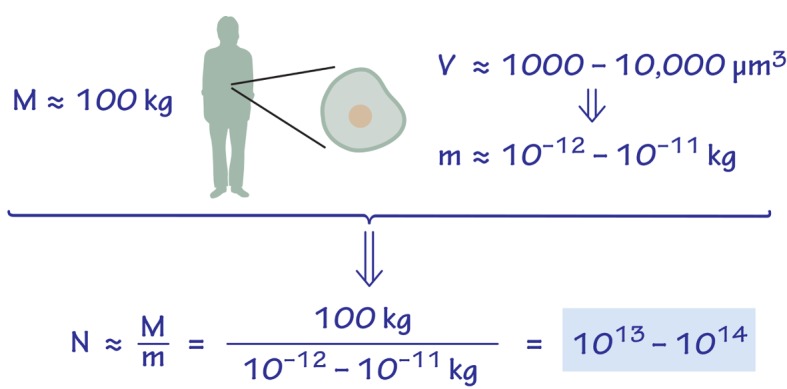
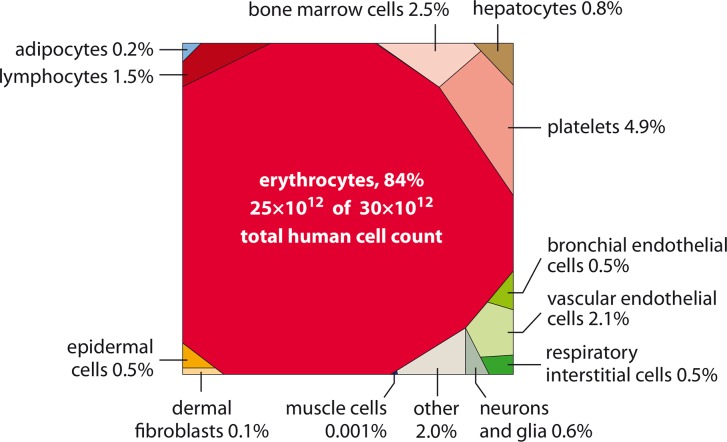
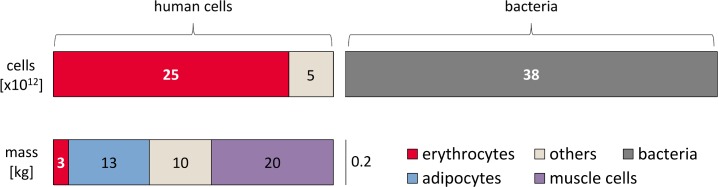
Reported values in the literature on the number of cells in the body differ by orders of magnitude and are very seldom supported by any measurements or calculations. Here, we integrate the most up-to-date information on the number of human and bacterial cells in the body. We estimate the total number of bacteria in the 70 kg "reference man" to be 3.8·1013. For human cells, we identify the dominant role of the hematopoietic lineage to the total count (≈90%) and revise past estimates to 3.0·1013 human cells. Our analysis also updates the widely-cited 10:1 ratio, showing that the number of bacteria in the body is actually of the same order as the number of human cells, and their total mass is about 0.2 kg.
Overview
The claims and statistics of this paper haven’t been checked yet.
Free: it reads the open-access text and checks the first 5 claims that cite a source we can check. Create a free account to check every claim.
Integrity signals
Registry
Cites
Statistics
Figures
Verification
Claims the paper makes
The claims and statistics of this paper haven’t been checked yet.
Free: it reads the open-access text and checks the first 5 claims that cite a source we can check. Create a free account to check every claim.
Claims other papers make about this one
Each is checked against this paper’s own text: does it say what the citing paper says it does?
The cited source doesn’t support the claim as written.
In the citing paper
“these microbes typically account for less than half of the weight of faecal solids 10 .”
From Human microbiome myths and misconceptions (2023) · cites this paper as [10]
Checked by a reasoning model — may be wrong.
Experimental — accuracy not yet measuredThe source backs part of the claim, not all of it — or backs it for a different population, condition or comparison.
In the citing paper
“Endotoxin is a lipopolysaccharide (LPS), constituting much of the outer membrane of gram-negative bacteria, present at high concentrations in gut, gums and skin and in other tissue during bacterial infection.”
From The endotoxin hypothesis of neurodegeneration (2019) · cites this paper as [6]
Experimental — accuracy not yet measuredThe source backs part of the claim, not all of it — or backs it for a different population, condition or comparison.
In the citing paper
“their gene count that exceeds the human genome’s gene count by ~100-fold and enables diverse metabolic programming”
From The microbiome and human cancer (2021) · cites this paper as [27]
Experimental — accuracy not yet measuredThe source backs part of the claim, not all of it — or backs it for a different population, condition or comparison.
In the citing paper
“The human gut microbiome contains ~3 × 10 13 bacteria, most of which are commensals (5).”
From The microbiome in cancer immunotherapy: Diagnostic tools and therapeutic strategies (2018) · cites this paper as [5]
Experimental — accuracy not yet measuredThe source backs part of the claim, not all of it — or backs it for a different population, condition or comparison.
In the citing paper
“there are trillions of microbes as numerous as human cells, that interact with the host constantly at numerous sites”
From The Influence of the Gut Microbiome on Cancer, Immunity, and Cancer Immunotherapy (2018) · cites this paper as Sender et al., 2016
Experimental — accuracy not yet measured
10 more claims about this paper
Create a free account to see every claim other papers make about this one.
Self-check
Percentages, sums and reported differences re-computed from the paper’s own numbers.
The self-check needs the paper’s full text.
Citations
Cites
A human gut microbial gene catalogue established by metagenomic sequencing
MetaHIT Consortium, Qin, J., Li, R., Raes, J., Arumugam, M., Burgdorf, K. S., Manichanh, C., Nielsen, T., Pons, N., Levenez, F., et al. (2010) · Nature · doi:10.1038/nature08821 · Cited by 11,624 · cited 1×
“Bacteria overwhelmingly outnumber eukaryotes and archaea in the human microbiome by 2–3 orders of magnitude [7,8].”
BackgroundHuman gut microbiome viewed across age and geography
Yatsunenko, T., Rey, F. E., Manary, M. J., Trehan, I., Dominguez-Bello, M. G., Contreras, M., Magris, M., Hidalgo, G., Baldassano, R. N., Anokhin, A. P., et al. (2012) · Nature · doi:10.1038/nature11053 · Cited by 7,815 · cited 1×
“Bacteria overwhelmingly outnumber eukaryotes and archaea in the human microbiome by 2–3 orders of magnitude [7,8].”
BackgroundAlberts, B., Johnson, A., Lewis, J., Morgan, D., Raff, M., Roberts, K., & Walter, P. (2017) · W.W. Norton eBooks · doi:10.1201/9781315735368 · Cited by 6,365
Turnbaugh, P. J., Ley, R. E., Hamady, M., Fraser-Liggett, C. M., Knight, R., & Gordon, J. I. (2007) · Nature · doi:10.1038/nature06244 · Cited by 6,091 · cited 1×
“One of the most fundamental and commonly cited figures in this growing field is the estimate that bacteria residing in the human body outnumber human cells by a factor of 10 or more (Bäckhed et al., 2005; Gill et al., 2006; Round and Mazmanian, 2010; Turnbaugh et al., 2007).”
BackgroundHost-Bacterial Mutualism in the Human Intestine
Bäckhed, F., Ley, R. E., Sonnenburg, J. L., Peterson, D. A., & Gordon, J. I. (2005) · Science · doi:10.1126/science.1104816 · Cited by 5,277
Metagenomic Analysis of the Human Distal Gut Microbiome
Gill, S. R., Pop, M., DeBoy, R. T., Eckburg, P. B., Turnbaugh, P. J., Samuel, B. S., Gordon, J. I., Relman, D. A., Fraser-Liggett, C. M., & Nelson, K. E. (2006) · Science · doi:10.1126/science.1124234 · Cited by 4,699 · cited 1×
“One of the most fundamental and commonly cited figures in this growing field is the estimate that bacteria residing in the human body outnumber human cells by a factor of 10 or more (Bäckhed et al., 2005; Gill et al., 2006; Round and Mazmanian, 2010; Turnbaugh et al., 2007).”
BackgroundCellular Scaling Rules for the Brains of Marsupials: Not as “Primitive” as Expected
Dos Santos, S. E., Porfirio, J., da Cunha, F. B., Manger, P. R., Tavares, W., Pessoa, L., Raghanti, M. A., Sherwood, C. C., & Herculano-Houzel, S. (2017) · Brain, Behavior and Evolution · doi:10.1159/000452856 · Cited by 2,642
MICROBIAL ECOLOGY OF THE GASTROINTESTINAL TRACT
Savage, D. C. (1977) · Annual Review of Microbiology · doi:10.1146/annurev.mi.31.100177.000543 · Cited by 2,436 · cited 5×
“Interestingly, those who read the original paper (Savage, 1977) find that it actually cites another paper for his estimate (Luckey, 1972).”
BackgroundInfluentialAzevedo, F. A. C., Carvalho, L. R. B., Grinberg, L. T., Farfel, J. M., Ferretti, R. E. L., Leite, R. E. P., Filho, W. J., Lent, R., & Herculano‐Houzel, S. (2009) · Journal of Comparative Neurology · doi:10.1002/cne.21974 · Cited by 2,337 · cited 1×
“However, a recent analysis [28] revisits this value and, after analyzing the variation across brain regions, concludes that the ratio is close to 1:1.”
BackgroundRound, J. L., & Mazmanian, S. K. (2010) · Proceedings of the National Academy of Sciences · doi:10.1073/pnas.0909122107 · Cited by 2,233 · cited 1×
“One of the most fundamental and commonly cited figures in this growing field is the estimate that bacteria residing in the human body outnumber human cells by a factor of 10 or more (Bäckhed et al., 2005; Gill et al., 2006; Round and Mazmanian, 2010; Turnbaugh et al., 2007).”
Background
Cited by
Items 601–700 of 1,042
Small Intestinal Bacterial Overgrowth in Children: A State-Of-The-Art Review
Avelar Rodriguez, D., Ryan, P. M., Toro Monjaraz, E. M., Ramirez Mayans, J. A., & Quigley, E. M. (2019) · Frontiers in Pediatrics · doi:10.3389/fped.2019.00363 · Cited by 91
“3% of the overall host body weight (34).”
BackgroundXiao, Q., Shu, R., Wu, C., Tong, Y., Xiong, Z., Zhou, J., Yu, C., Xie, X., & Fu, Z. (2020) · Journal of Affective Disorders · doi:10.1016/j.jad.2020.07.041 · Cited by 98
The role of the microbiome in diabetes mellitus
Zhang, S., Cai, Y., Meng, C., Ding, X., Huang, J., Luo, X., Cao, Y., Gao, F., & Zou, M. (2020) · Diabetes Research and Clinical Practice · doi:10.1016/j.diabres.2020.108645 · Cited by 109
Endothelial Cells in Emerging Viral Infections
Fosse, J. H., Haraldsen, G., Falk, K., & Edelmann, R. J. (2021) · Frontiers in Cardiovascular Medicine · doi:10.3389/fcvm.2021.619690 · Cited by 105
“of nucleated cells (20), we propose that viral amplification in endothelial cells deserves further study.”
BackgroundThe Quest for a Universal Theory of Life: Searching for Life As We Don't Know It
Cleland, C. E. (2019) · Cambridge University Press eBooks · doi:10.1017/9781139046893 · Cited by 94
Bacterial Chat: Intestinal Metabolites and Signals in Host-Microbiota-Pathogen Interactions
Lustri, B. C., Sperandio, V., & Moreira, C. G. (2017) · Infection and Immunity · doi:10.1128/iai.00476-17 · Cited by 105
The connection between microbiome and schizophrenia
Golofast, B., & Vales, K. (2020) · Neuroscience & Biobehavioral Reviews · doi:10.1016/j.neubiorev.2019.12.011 · Cited by 92
Microbiota–drug interactions: Impact on metabolism and efficacy of therapeutics
Wilkinson, E. M., Ilhan, Z. E., & Herbst‐Kralovetz, M. M. (2018) · Maturitas · doi:10.1016/j.maturitas.2018.03.012 · Cited by 102
Interactions Between Food and Gut Microbiota: Impact on Human Health
Wu, Y., Wan, J., Choe, U., Pham, Q., Schoene, N. W., He, Q., Li, B., Yu, L. L., & Wang, T. T. Y. (2019) · Annual Review of Food Science and Technology · doi:10.1146/annurev-food-032818-121303 · Cited by 103
Human gastric microbiota transplantation recapitulates premalignant lesions in germ-free mice
Kwon, S.-K., Park, J. C., Kim, K. H., Yoon, J., Cho, Y., Lee, B., Lee, J.-J., Jeong, H., Oh, Y., Kim, S., et al. (2021) · Gut · doi:10.1136/gutjnl-2021-324489 · Cited by 101
Establishing a conceptual framework for holistic cell states and state transitions
Rafelski, S. M., & Theriot, J. A. (2024) · Cell · doi:10.1016/j.cell.2024.04.035 · Cited by 91
The human microbiome: an emerging tool in forensics
Hampton‐Marcell, J., Lopez, J. V., & Gilbert, J. A. (2017) · Microbial Biotechnology · doi:10.1111/1751-7915.12699 · Cited by 93
Antibiotics, gut microbiome and obesity
Leong, K. S. W., Derraik, J. G. B., Hofman, P. L., & Cutfield, W. S. (2017) · Clinical Endocrinology · doi:10.1111/cen.13495 · Cited by 108
Dissecting the Physiology and Pathophysiology of Glucagon-Like Peptide-1
Paternoster, S., & Falasca, M. (2018) · Frontiers in Endocrinology · doi:10.3389/fendo.2018.00584 · Cited by 91
“Animals’ GI tract is known to host a population of hundreds of different species of bacteria (386), viruses and fungi, estimated to equal in number the cells that constitute the human body (387).”
BackgroundGut bacterial phospholipase Ds support disease-associated metabolism by generating choline
Chittim, C. L., Campo, A. M.-D., & Balskus, E. P. (2018) · Nature Microbiology · doi:10.1038/s41564-018-0294-4 · Cited by 110
Interactions between Host PPARs and Gut Microbiota in Health and Disease
Hasan, A. U., Rahman, A., & Kobori, H. (2019) · International Journal of Molecular Sciences · doi:10.3390/ijms20020387 · Cited by 101
“As the amount of bacteria is more than 1000-fold lower in the small intestine, the counts of intestinal bacteria mentioned above mostly represent bacteria in the large intestine [22].”
BackgroundLung Microbiome in Asthma: Current Perspectives
Loverdos, K., Bellos, G., Kokolatou, L., Vasileiadis, I., Giamarellos‐Bourboulis, E. J., Pecchiari, M., Koulouris, N. G., Koutsoukou, A., & Rovina, N. (2019) · Journal of Clinical Medicine · doi:10.3390/jcm8111967 · Cited by 94
“8 × 10¹³ bacteria, probably marginally outnumbering human cells (3 × 10¹³ for the standard age and somatotype) [25,26].”
BackgroundLi, S., Hua, D., Wang, Q., Yang, L., Wang, X., Luo, A., & Yang, C. (2019) · The International Journal of Neuropsychopharmacology · doi:10.1093/ijnp/pyz061 · Cited by 99
Carcinogenic microbiota and its role in colorectal cancer development
Karpiński, T. M. M., Ożarowski, M., & Stasiewicz, M. (2022) · Seminars in Cancer Biology · doi:10.1016/j.semcancer.2022.01.004 · Cited by 108
The Next Generation Fecal Microbiota Transplantation: To Transplant Bacteria or Virome
Yu, Y., Wang, W., & Zhang, F. (2023) · Advanced Science · doi:10.1002/advs.202301097 · Cited by 113
Gut microbiota and metabolic biomarkers in metabolic dysfunction–associated steatotic liver disease
Long, Q., Luo, F., Li, B., Li, Z., Guo, Z., Chen, Z., Wu, W., & Hu, M. (2024) · Hepatology Communications · doi:10.1097/hc9.0000000000000310 · Cited by 113
“[37] Next-generation sequencing provides a high-throughput approach to reveal changes in the structure of gut microbiota.”
BackgroundThe Human Microbiome and the Missing Heritability Problem
Sandoval-Motta, S., Aldana, M., Martínez-Romero, E., & Frank, A. (2017) · Frontiers in Genetics · doi:10.3389/fgene.2017.00080 · Cited by 90
Our (Mother’s) Mitochondria and Our Mind
Krämer, P., & Bressan, P. (2017) · Perspectives on Psychological Science · doi:10.1177/1745691617718356 · Cited by 101
Functions of the Microbiota for the Physiology of Animal Metaorganisms
Esser, D., Lange, J., Μαρίνος, Γ., Sieber, M., Best, L., Prasse, D., Bathia, J., Rühlemann, M. C., Boersch, K., Jaspers, C., et al. (2018) · Journal of Innate Immunity · doi:10.1159/000495115 · Cited by 98
O'Sullivan, J. N., O’Connor, P. M., Rea, M. C., O’Sullivan, Ó., Walsh, C. J., Healy, B., Mathur, H., Field, D., Hill, C., & Ross, R. P. (2019) · Journal of Bacteriology · doi:10.1128/jb.00639-19 · Cited by 104
“The human skin microbiome is home to 1012 bacteria (1), and interest in the potential of skin bacteria to produce antimicrobials is growing, given the spread of antibiotic resistance (AR).”
BackgroundShining Light on Human Gut Bacteriophages
Guerin, E., & Hill, C. (2020) · Frontiers in Cellular and Infection Microbiology · doi:10.3389/fcimb.2020.00481 · Cited by 90
“A major fraction of these microorganisms reside in the gastrointestinal tract (GIT) where they partake in essential metabolic and physiological processes that impact human biology (Turnbaugh et al., 2007; Sender et al., 2016).”
BackgroundCui, Y., Zhu, L., Li, Y., Jiang, S.-L., Sun, Q., Xie, E., Chen, H., Zhao, Z., Qiao, W., Xu, J., et al. (2020) · Carbohydrate Polymers · doi:10.1016/j.carbpol.2020.117389 · Cited by 103
Zádori, Z., Király, K. P., Al‐Khrasani, M., & Gyires, K. (2022) · Pharmacology & Therapeutics · doi:10.1016/j.pharmthera.2022.108327 · Cited by 102
Dahlgren, D., & Lennernäs, H. (2023) · Biomedicine & Pharmacotherapy · doi:10.1016/j.biopha.2023.114644 · Cited by 101
Interactions between the microbiota and enteric nervous system during gut-brain disorders
Fried, S. G., Wemelle, E., Cani, P. D., & Knauf, C. (2021) · Neuropharmacology · doi:10.1016/j.neuropharm.2021.108721 · Cited by 102
Cosgrove, J., Hustin, L., de Boer, R. J., & Perié, L. (2021) · Trends in Immunology · doi:10.1016/j.it.2021.10.006 · Cited by 123
Bifidobacterium animalis subsp. lactis HN019 Effects on Gut Health: A Review
Cheng, J., Laitila, A., & Ouwehand, A. C. (2021) · Frontiers in Nutrition · doi:10.3389/fnut.2021.790561 · Cited by 103
The human microbiome and cancer: a diagnostic and therapeutic perspective
Kandalai, S., Li, H., Zhang, N., Peng, H., & Zheng, Q. (2023) · Cancer Biology & Therapy · doi:10.1080/15384047.2023.2240084 · Cited by 101
“It has been estimated that the humanassociated bacteria alone outnumber human cells in the body.(1) While the majority of these microbes may not directly harm humans, they can have significant effects on human health.”
BackgroundHelminth–Bacterial Interactions: Cause and Consequence
Rapin, A., & Harris, N. L. (2018) · Trends in Immunology · doi:10.1016/j.it.2018.06.002 · Cited by 98
Region-Specific Proteome Changes of the Intestinal Epithelium during Aging and Dietary Restriction
Gebert, N., Cheng, C.-W., Kirkpatrick, J. M., Di Fraia, D., Yun, J., Schädel, P., Pace, S., Garside, G. B., Werz, O., Rudolph, K. L., et al. (2020) · Cell Reports · doi:10.1016/j.celrep.2020.107565 · Cited by 88
“Two of such examples are the drastic increase of bacterial load that characterizes the more distal part of the SI (Sender et al., 2016) and the gradient of basal Wnt activity along the intestinal tract (Leedham et al.”
BackgroundDietary Habits and Intestinal Immunity: From Food Intake to CD4+ TH Cells
Siracusa, F., Schaltenberg, N., Villablanca, E. J., Huber, S., & Gagliani, N. (2019) · Frontiers in Immunology · doi:10.3389/fimmu.2018.03177 · Cited by 98
Carthey, A. J. R., Blumstein, D. T., Gallagher, R. V., Tetu, S. G., & Gillings, M. R. (2020) · Functional Ecology · doi:10.1111/1365-2435.13504 · Cited by 107
The microbiota-gut-brain axis: Focus on the fundamental communication pathways
(2020) · Progress in Molecular Biology and Translational Science · doi:10.1016/bs.pmbts.2020.08.012 · Cited by 88
Santacroce, L., Man, A., Charitos, I. A., Haxhirexha, K., & Topi, S. (2021) · Frontiers in Bioscience-Landmark · doi:10.52586/4930 · Cited by 96
Dry eye syndrome: comprehensive etiologies and recent clinical trials
Huang, R., Su, C., Fang, L., Lü, J., Chen, J., & Ding, Y. (2022) · International Ophthalmology · doi:10.1007/s10792-022-02320-7 · Cited by 129
Bacterial polysaccharides—A big source for prebiotics and therapeutics
Khan, R., Shah, M. D., Shah, L., Lee, P.-C., & Khan, I. (2022) · Frontiers in Nutrition · doi:10.3389/fnut.2022.1031935 · Cited by 97
“For instance, around 1011 bacteria are present in 1 gram of stool (162), 108 cells inhabit each gram of soil (163), and about 105 cells per ml of surface seawater (164).”
BackgroundThe impact of storage buffer, DNA extraction method, and polymerase on microbial analysis
Hallmaier–Wacker, L. K., Lueert, S., Roos, C., & Knauf, S. (2018) · Scientific Reports · doi:10.1038/s41598-018-24573-y · Cited by 100
Is it possible to reconstruct an accurate cell lineage using CRISPR recorders?
Salvador-Martínez, I., Grillo, M., Averof, M., & Telford, M. J. (2019) · eLife · doi:10.7554/elife.40292 · Cited by 85
Butler, M., Mörkl, S., Sandhu, K. V., Cryan, J. F., & Dinan, T. G. (2019) · The Canadian Journal of Psychiatry · doi:10.1177/0706743719874168 · Cited by 121
“8 10(13), slightly in excess of the total number of human cells.(1) The collective genome of these bacterial cells, the gut microbiome, vastly exceeds the amount of human DNA present in the body, such that, for every one human gene, we have over 100 bacterial genes.”
BackgroundB vitamin acquisition by gut commensal bacteria
Putnam, E. E., & Goodman, A. L. (2020) · PLoS Pathogens · doi:10.1371/journal.ppat.1008208 · Cited by 97
“The mammalian gut microbiome is one of the densest known microbial communities [1].”
BackgroundPotential beneficial role of probiotics on the outcome of COVID-19 patients: An evolving perspective
Santacroce, L., Inchingolo, F., Topi, S., Prete, R. D., Cosola, M. D., Charitos, I. A., & Montagnani, M. (2021) · Diabetes & Metabolic Syndrome Clinical Research & Reviews · doi:10.1016/j.dsx.2020.12.040 · Cited by 105
“Hence, microbiome has its own biological importance and should be studied as a part of the entire human genome [1,2].”
Venturing into new realms? Microorganisms in space
Moissl‐Eichinger, C., Cockell, C. S., & Rettberg, P. (2016) · FEMS Microbiology Reviews · doi:10.1093/femsre/fuw015 · Cited by 92
Pang, S., Gao, Y., & Choi, S. (2017) · Advanced Energy Materials · doi:10.1002/aenm.201702261 · Cited by 89
Probiotics: Current Landscape and Future Horizons
Day, R. L., Harper, A. J., Woods, R. M., Davies, O. G., & Heaney, L. M. (2019) · Future Science OA · doi:10.4155/fsoa-2019-0004 · Cited by 106
“The total number of bacterial cells present within the human body has been estimated at 1013, a value similar to that of the number of host cells [25].”
BackgroundPrebiotics: tools to manipulate the gut microbiome and metabolome
Enam, F., & Mansell, T. J. (2019) · Journal of Industrial Microbiology & Biotechnology · doi:10.1007/s10295-019-02203-4 · Cited by 96
“The human gastrointestinal tract hosts an enormous population of microorganisms, bacteria, archaea, and eukarya [5], roughly 40 trillion cells [132, 133].”
BackgroundNew approach methodologies for exposure science
Wambaugh, J. F., Bare, J., Carignan, C. C., Dionisio, K. L., Dodson, R. E., Jolliet, O., Liu, X., Meyer, D. E., Newton, S., Phillips, K. A., et al. (2019) · Current Opinion in Toxicology · doi:10.1016/j.cotox.2019.07.001 · Cited by 90
Periodontal connection with intestinal inflammation: Microbiological and immunological mechanisms
Kitamoto, S., & Kamada, N. (2022) · Periodontology 2000 · doi:10.1111/prd.12424 · Cited by 98
Fecal microbiota responses to rice RS3 are specific to amylose molecular structure
Gu, F., Li, C., Hamaker, B. R., Gilbert, R. G., & Zhang, X. (2020) · Carbohydrate Polymers · doi:10.1016/j.carbpol.2020.116475 · Cited by 88
Gut and vaginal microbiomes on steroids: implications for women’s health
Graham, M. E., Herbert, W. G., Song, S., Raman, H. N., Zhu, J. E., Gonzalez, P. E., Walther-Antonio, M. R. S., & Tetel, M. J. (2021) · Trends in Endocrinology and Metabolism · doi:10.1016/j.tem.2021.04.014 · Cited by 99
“Microbiota refers to the microorganisms that inhabit the body, including bacteria, viruses, archaea, protozoa, and fungi [1].”
BackgroundEmerging strategies in developing multifunctional nanomaterials for cancer nanotheranostics
Ang, M. J. Y., Chan, S. Y., Goh, Y. Y., Luo, Z., Lau, J. W., & Liu, X. (2021) · Advanced Drug Delivery Reviews · doi:10.1016/j.addr.2021.113907 · Cited by 91
Endometrial microbiota is more diverse in people with endometriosis than symptomatic controls
Wessels, J. M., Domínguez, M. A., Leyland, N. A., Agarwal, S. K., & Foster, W. G. (2021) · Scientific Reports · doi:10.1038/s41598-021-98380-3 · Cited by 99
Gut Microbiota and Acute Central Nervous System Injury: A New Target for Therapeutic Intervention
Yuan, B., Lu, X., & Wu, Q. (2021) · Frontiers in Immunology · doi:10.3389/fimmu.2021.800796 · Cited by 97
“Gut microbiota refers to the assemblage of bacteria, archaea, viruses, and eukaryotic microbes that colonize in the digestive tract (8) .”
BackgroundEnteroendocrine cell regulation of the gut-brain axis
Barton, J. R., Londregan, A., Alexander, T. D., Entezari, A. A., Covarrubias, M., & Waldman, S. A. (2023) · Frontiers in Neuroscience · doi:10.3389/fnins.2023.1272955 · Cited by 103
“The human intestine harbors an estimated 38 trillion microorganisms, compared to the 30 trillion cells in the human body and meaning we are comprised of about 50% human cells and 50% microbial cells (Sender et al., 2016).”
BackgroundLombardi, V. C., Meirleir, K. L. D., Subramanian, K., Nourani, S. M., Dagda, R. K., Delaney, S. L., & Palotás, A. (2018) · The Journal of Nutritional Biochemistry · doi:10.1016/j.jnutbio.2018.04.004 · Cited by 103
Biochemical Features of Beneficial Microbes: Foundations for Therapeutic Microbiology
Engevik, M. A., & Versalovic, J. A. (2017) · Microbiology Spectrum · doi:10.1128/microbiolspec.bad-0012-2016 · Cited by 99
Volatile metabolites in breath strongly correlate with gut microbiome in CD patients
Smolinska, A., Tedjo, D. I., Blanchet, L., Bodelier, A. G. L., Pierik, M. J., Masclee, A., Dallinga, J. W., Savelkoul, P. H. M., Jonkers, D. M. A. E., Penders, J., et al. (2018) · Analytica Chimica Acta · doi:10.1016/j.aca.2018.03.046 · Cited by 95
Moles, L., & Otaegui, D. (2020) · Nutrients · doi:10.3390/nu12061654 · Cited by 112
Targeting gut barrier dysfunction with phytotherapies: Effective strategy against chronic diseases
Dey, P. (2020) · Pharmacological Research · doi:10.1016/j.phrs.2020.105135 · Cited by 88
Tian, X., Hellman, J., Horswill, A. R., Crosby, H. A., Francis, K. P., & Prakash, A. (2019) · Frontiers in Microbiology · doi:10.3389/fmicb.2019.00159 · Cited by 90
“The human body coexists with a vast commensal microbiome that is increasingly recognized to play important roles in human health, physiology, and disease (Cho and Blaser, 2012; Shreiner et al., 2015; Sender et al., 2016; Alverdy and Krezalek, 2017; Young, 2017).”
BackgroundWelch, C. B., Ryman, V. E., Pringle, T. D., & Lourenco, J. M. (2022) · Microorganisms · doi:10.3390/microorganisms10071391 · Cited by 113
“The symbiotic relationship existing between microorganisms colonizing the GIT and the host is mainly mutualistic in nature [12].”
BackgroundKalinkovich, A., & Livshits, G. (2019) · Seminars in Arthritis and Rheumatism · doi:10.1016/j.semarthrit.2019.05.007 · Cited by 94
Farràs, M., Martínez-Gili, L., Portune, K. J., Arranz, S., Frost, G. S., Tondo, M., & Blanco‐Vaca, F. (2020) · Nutrients · doi:10.3390/nu12082200 · Cited by 93
“Microorganism abundance and diversity across the human gastrointestinal tract increase longitudinally from the stomach to the colon [19,20], with more than 1000 different species of bacteria in the human intestinal tract and around 38 trillion bacteria resident in the colon [21].”
BackgroundAssociation of dietary patterns with the gut microbiota in older, community-dwelling men
Shikany, J. M., Demmer, R. T., Johnson, A. J., Fino, N. F., Meyer, K., Ensrud, K. E., Lane, N. E., Orwoll, E. S., Kado, D. M., Zmuda, J. M., et al. (2019) · The American Journal of Clinical Nutrition · doi:10.1093/ajcn/nqz174 · Cited by 83
“The number of microbes in a healthy human adult is substantial, equaling or surpassing the number of human cells (1).”
BackgroundAdjuvant Probiotics and the Intestinal Microbiome: Enhancing Vaccines and Immunotherapy Outcomes
Vitetta, L., Saltzman, E., Thomsen, M., Nikov, T., & Hall, S. (2017) · Vaccines · doi:10.3390/vaccines5040050 · Cited by 88
“The intestines of humans is the anatomical site for the most complex and extensive collection of microscopic entities, that includes, bacteria, archaea, microbial eukaryotes and viruses, collectively termed as the microbiome [8].”
BackgroundThe microbiome in preterm birth
Chu, D. M., Seferovic, M. D., Pace, R. M., & Aagaard, K. M. (2018) · Best Practice & Research Clinical Obstetrics & Gynaecology · doi:10.1016/j.bpobgyn.2018.03.006 · Cited by 92
Kosumi, K., Hamada, T., Koh, H., Borowsky, J., Bullman, S., Twombly, T. S., Nevo, D., Masugi, Y., Liu, L., da Silva, A., et al. (2018) · American Journal Of Pathology · doi:10.1016/j.ajpath.2018.08.015 · Cited by 91
Knox, N., Forbes, J. D., Peterson, C.-L., Domselaar, G. V., & Bernstein, C. N. (2019) · The American Journal of Gastroenterology · doi:10.14309/ajg.0000000000000305 · Cited by 95
Therapies to modulate gut microbiota: Past, present and future
Gupta, A., Saha, S., & Khanna, S. (2020) · World Journal of Gastroenterology · doi:10.3748/wjg.v26.i8.777 · Cited by 94
The gut microbiome and thromboembolism
Hasan, R. A., Koh, A. Y., & Zia, A. N. (2020) · Thrombosis Research · doi:10.1016/j.thromres.2020.03.003 · Cited by 90
The influence of gut microbiota alteration on age-related neuroinflammation and cognitive decline
Shah, Z., & Alsegiani, A. S. (2022) · Neural Regeneration Research · doi:10.4103/1673-5374.335837 · Cited by 95
“An enormous number of different microbes colonize in the mammalian intestine, and the concentration of these microbiomes increases gradually from the ileum to the colon (Sender et al., 2016).”
BackgroundPignatelli, P., Romei, F. M., Bondi, D., Giuliani, M., Piattelli, A., & Curia, M. C. (2022) · International Journal of Molecular Sciences · doi:10.3390/ijms23158323 · Cited by 100
“The number of bacteria in the mouth is less than 1% of the colon bacteria number; however, bacterial concentrations in the saliva and dental plaque are high (about 109 and 1011, bacteria per mL content, respectively) [2].”
BackgroundThe microbiome: an integral player in immune homeostasis and inflammation in the respiratory tract
Perdijk, O., Azzoni, R., & Marsland, B. J. (2023) · Physiological Reviews · doi:10.1152/physrev.00020.2023 · Cited by 105
Dong, Y., Xu, M., Chen, L., & Bhochhibhoya, A. (2019) · Annals of Nutrition and Metabolism · doi:10.1159/000499028 · Cited by 82
Health-Improving Effects of Polyphenols on the Human Intestinal Microbiota: A Review
Nemzer, B. V., Al-Taher, F., Kalita, D., Yashin, A. Y., & Yashin, Y. I. (2025) · International Journal of Molecular Sciences · doi:10.3390/ijms26031335 · Cited by 104
Nogacka, A. M., Gómez‐Martín, M., Suárez, A., González‐Bernardo, Ó., Reyes‐Gavilán, C. G. D. L., & González, S. (2019) · International Journal of Molecular Sciences · doi:10.3390/ijms20082051 · Cited by 88
“Metagenomic studies estimate that the total bacteria in our body exceeds approximately 10 times the number of nucleated eukaryotic cells [20], harbouring a genetic potential 100-fold larger than that of the whole human genome [21].”
BackgroundFidelle, M., Yonekura, S., Picard, M., Cogdill, A., Hollebecque, A., Roberti, M. P., & Zitvogel, L. (2020) · Frontiers in Immunology · doi:10.3389/fimmu.2020.600886 · Cited by 81
The Role of Autophagy in Inflammatory Bowel Disease
Shao, B., Yao, Y., Zhai, J., Zhu, J.-H., Li, J., & Wu, K. (2021) · Frontiers in Physiology · doi:10.3389/fphys.2021.621132 · Cited by 88
Predicting drug-microbiome interactions with machine learning
McCoubrey, L. E., Gaisford, S., Orlu, M., & Basit, A. W. (2022) · Biotechnology Advances · doi:10.1016/j.biotechadv.2021.107797 · Cited by 79
Dziedzic, A., Maciak, K., Bliźniewska-Kowalska, K. M., Gałecka, M., Kobierecka, W., & Saluk, J. (2024) · Nutrients · doi:10.3390/nu16071054 · Cited by 108
Human Microbe-Disease Association Prediction Based on Adaptive Boosting
Peng, L., Yin, J., Zhou, L., Liu, M.-X., & Zhao, Y. F. (2018) · Frontiers in Microbiology · doi:10.3389/fmicb.2018.02440 · Cited by 86
“There was also evidence that toxins produced by microbes such as Streptococcus and Staphylococcus aureus had been shown to be a new class of allergens that could induce or even aggravate inflammatory skin diseases (Skov and Baadsgaard, 2000).”
BackgroundEffects of Dietary Yogurt on the Healthy Human Gastrointestinal (GI) Microbiome
Lisko, D., Johnston, G., & Johnston, C. (2017) · Microorganisms · doi:10.3390/microorganisms5010006 · Cited by 80
Okerblom, J., & Varki, A. (2017) · ChemBioChem · doi:10.1002/cbic.201700077 · Cited by 79
Antibiotics and specialized metabolites from the human microbiota
Mousa, W. K., Athar, B., Merwin, N. J., & Magarvey, N. A. (2017) · Natural Product Reports · doi:10.1039/c7np00021a · Cited by 87
Impact of the Microbiome on the Immune System
Lambring, C. B., Siraj, S., Patel, K. J., Sankpal, U. T., Mathew, S. O., & Basha, R. M. (2019) · Critical Reviews in Immunology · doi:10.1615/critrevimmunol.2019033233 · Cited by 90
Gut-brain axis: A matter of concern in neuropsychiatric disorders…!
Naveed, M., Zhou, Q.-G., Chu, X., Taleb, A., Meng, F. J., Ahmed, B., Zhang, Y., Fukunaga, K., & Han, F. (2020) · Progress in Neuro-Psychopharmacology and Biological Psychiatry · doi:10.1016/j.pnpbp.2020.110051 · Cited by 106
Why do intestinal epithelial cells express MHC class II?
Heuberger, C., Pott, J., & Maloy, K. J. (2020) · Immunology · doi:10.1111/imm.13270 · Cited by 94
Dash, H. R., & Das, S. (2020) · Applied Microbiology and Biotechnology · doi:10.1007/s00253-020-10922-3 · Cited by 94
“The highest bacterial concentration is observed in the saliva due to its smaller volume, whereas, human colon harbors the highest total microbial load of a human body (Sender et al. 2016).”
BackgroundBacterial associations in the healthy human gut microbiome across populations
Loftus, M. G., Hassouneh, S. A.-D., & Yooseph, S. (2021) · Scientific Reports · doi:10.1038/s41598-021-82449-0 · Cited by 86
The emerging role of microbiota-derived short-chain fatty acids in immunometabolism
Jasim, S. A., Opulencia, M. J. C., Ramírez‐Coronel, A. A., Abdelbasset, W. K., Abed, M. H., Markov, A. A., Al‐Awsi, G. R. L., Shamsiev, J. A., Hammid, A. T., Shalaby, M. N., et al. (2022) · International Immunopharmacology · doi:10.1016/j.intimp.2022.108983 · Cited by 97
The Endotoxin Hypothesis of Parkinson's Disease
Brown, G. C., Camacho, M., & Williams‐Gray, C. H. (2023) · Movement Disorders · doi:10.1002/mds.29432 · Cited by 90
“Within the human body, the main sources of LPS are bacteria in the gut, skin, gums, lungs, or other epithelial surfaces, which may be increased by bacterial infections.(6,7,12) The major source of endotoxin in healthy humans is gut-resident Gram-negative bacteria, including Bacteroides fragilis and Escherichia coli.”
BackgroundThe Extended Genotype: Microbially Mediated Olfactory Communication
Carthey, A. J. R., Gillings, M. R., & Blumstein, D. T. (2018) · Trends in Ecology & Evolution · doi:10.1016/j.tree.2018.08.010 · Cited by 90
Re-thinking the Etiological Framework of Neurodegeneration
Castillo, X., Castro-Obregón, S., Gutiérrez-Becker, B., Gutiérrez-Ospina, G., Karalis, N., Khalil, A. A., Lopez-Noguerola, J. S., Rodríguez, L. L., Martínez-Martínez, E., Perez-Cruz, C., et al. (2019) · Frontiers in Neuroscience · doi:10.3389/fnins.2019.00728 · Cited by 79
3D bioengineered tissue model of the large intestine to study inflammatory bowel disease
Roh, T. T., Chen, Y., Paul, H. T., Guo, C., & Kaplan, D. L. (2019) · Biomaterials · doi:10.1016/j.biomaterials.2019.119517 · Cited by 84
Moelling, K., & Broecker, F. (2020) · Journal of Environmental and Public Health · doi:10.1155/2020/1646943 · Cited by 90
“It should be noted that humans carry 10(12) microorganisms on their skin and 4×10(13) in their digestive tract [72] and are the dominant sources of bioaerosols in indoor environments [73–75].”
BackgroundDurmusoglu, D., Al’Abri, I. S., Collins, S. P., Cheng, J., Eroglu, A., Beisel, C. L., & Crook, N. (2021) · ACS Synthetic Biology · doi:10.1021/acssynbio.0c00562 · Cited by 88
Metadata
- Authors
- Sender, R., Fuchs, S., & Milo, R.
- Affiliations
- Weizmann Institute of Science (IL)
- Corresponding author
- Fuchs, Shai
- Milo, Ron
- Venue
- PLOS Biology
- Publisher
- Public Library of Science (PLoS)
- Published
- 2016-08-19
- Volume
- 14
- Issue
- 8
- Pages
- e1002533
- ISSN
- 1544-9173 (ISSN-L)
- 1545-7885
- PMC
- PMC4991899
- OpenAlex
- W2952564192
- Cited by
- 5,425
- References
- 88
- Citations by year
- 2026: 411 · 2025: 533 · 2024: 655 · 2023: 696 · 2022: 659 · 2021: 645 · 2020: 597 · 2019: 514 · 2018: 394 · 2017: 252 · 2016: 66
- FWCI
- 212.46
- Type
- journal article
- Language
- en
- Open access
- gold
- doi.org
- Licence
- Locations
- PLoS Biology (publishedVersion, cc-by)
- bioRxiv (Cold Spring Harbor Laboratory) (acceptedVersion, cc-by-nc-nd)
- Europe PMC (PubMed Central) (publishedVersion, cc-by)
- PubMed Central (publishedVersion, cc-by)
- PubMed (publishedVersion)
- DOAJ (DOAJ: Directory of Open Access Journals) (submittedVersion)
- Figshare (submittedVersion, cc-by)
- Funders
- Leona M. and Harry B. Helmsley Charitable Trust
- H2020 European Research Council (646827)
- Topics
- Life Sciences › Biochemistry, Genetics and Molecular Biology › Molecular Biology › Gut microbiota and health
- Physical Sciences › Environmental Science › Ecology › Microbial Community Ecology and Physiology
- Health Sciences › Dentistry › Periodontics › Oral microbiology and periodontitis research
- Keywords
- bacterial counts, human microbiome, hematopoietic lineage, reference man, microbial biomass, body cell mass
- MeSH terms
- Adult, Bacteria, Body Weights and Measures, Cell Count, Humans, Male, Organ Specificity, Bacterial Load, Microbiota
About these checks
Registry, retraction, Cites and statistics results are computed, not judged, with one exception: a printed reference that no index lists is read once by a model before it counts as a citation error. Claims are extracted by a model and kept only when their quote appears verbatim in the text; each cited source is then checked, with a model’s help, for whether it says what the claim relies on. Those verdicts can be wrong — read the claim’s quote and the cited source before relying on one.
Statistics and arithmetic are recomputed, not judged.
Confidence bands are shown only for fields calibrated on our annotated test set. None is calibrated yet, so no band is shown.
What counts as a claim ›How we measure confidence ›How we check this ›
Are you an author, or do you see a problem with this page? Request a review
Data sources
Bibliographic data: Semantic Scholar, OpenAlex, Crossref.
Contains information from the Semantic Scholar Academic Graph Datasets, made available under the ODC Attribution License (ODC-BY 1.0).
Semantic Scholar’s data is described in: Kinney, R., et al. (2023). The Semantic Scholar Open Data Platform. arXiv:2301.10140.
