

Revised Estimates for the Number of Human and Bacteria Cells in the Body
Open accessPublished version of a preprint
The DOI matches its Crossref record; 86 of the 88 references it cites were found in a registry or an index.
Abstract
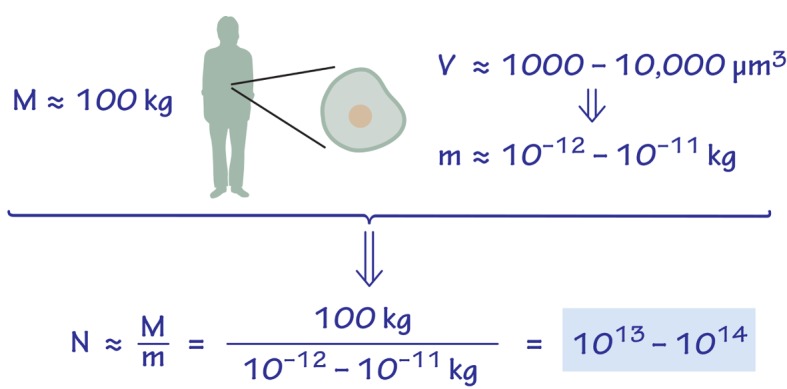
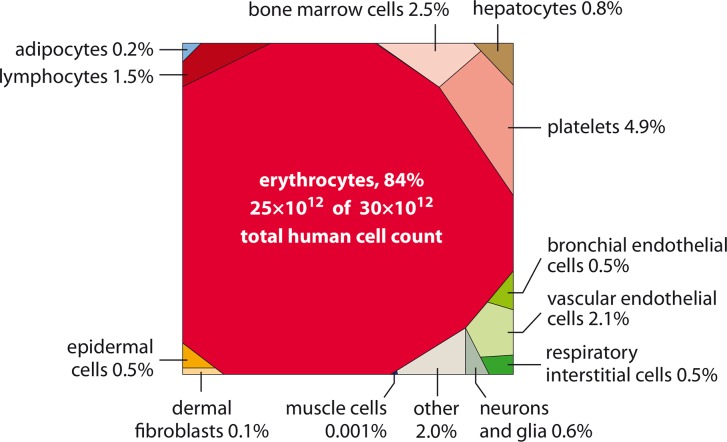
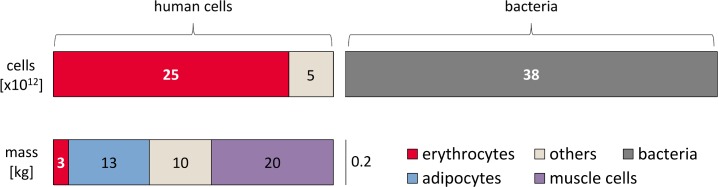
Reported values in the literature on the number of cells in the body differ by orders of magnitude and are very seldom supported by any measurements or calculations. Here, we integrate the most up-to-date information on the number of human and bacterial cells in the body. We estimate the total number of bacteria in the 70 kg "reference man" to be 3.8·1013. For human cells, we identify the dominant role of the hematopoietic lineage to the total count (≈90%) and revise past estimates to 3.0·1013 human cells. Our analysis also updates the widely-cited 10:1 ratio, showing that the number of bacteria in the body is actually of the same order as the number of human cells, and their total mass is about 0.2 kg.
Overview
The claims and statistics of this paper haven’t been checked yet.
Free: it reads the open-access text and checks the first 5 claims that cite a source we can check. Create a free account to check every claim.
Integrity signals
Registry
Cites
Statistics
Figures
Verification
Claims the paper makes
The claims and statistics of this paper haven’t been checked yet.
Free: it reads the open-access text and checks the first 5 claims that cite a source we can check. Create a free account to check every claim.
Claims other papers make about this one
Each is checked against this paper’s own text: does it say what the citing paper says it does?
The cited source doesn’t support the claim as written.
In the citing paper
“these microbes typically account for less than half of the weight of faecal solids 10 .”
From Human microbiome myths and misconceptions (2023) · cites this paper as [10]
Checked by a reasoning model — may be wrong.
Experimental — accuracy not yet measuredThe source backs part of the claim, not all of it — or backs it for a different population, condition or comparison.
In the citing paper
“Endotoxin is a lipopolysaccharide (LPS), constituting much of the outer membrane of gram-negative bacteria, present at high concentrations in gut, gums and skin and in other tissue during bacterial infection.”
From The endotoxin hypothesis of neurodegeneration (2019) · cites this paper as [6]
Experimental — accuracy not yet measuredThe source backs part of the claim, not all of it — or backs it for a different population, condition or comparison.
In the citing paper
“their gene count that exceeds the human genome’s gene count by ~100-fold and enables diverse metabolic programming”
From The microbiome and human cancer (2021) · cites this paper as [27]
Experimental — accuracy not yet measuredThe source backs part of the claim, not all of it — or backs it for a different population, condition or comparison.
In the citing paper
“The human gut microbiome contains ~3 × 10 13 bacteria, most of which are commensals (5).”
From The microbiome in cancer immunotherapy: Diagnostic tools and therapeutic strategies (2018) · cites this paper as [5]
Experimental — accuracy not yet measuredThe source backs part of the claim, not all of it — or backs it for a different population, condition or comparison.
In the citing paper
“there are trillions of microbes as numerous as human cells, that interact with the host constantly at numerous sites”
From The Influence of the Gut Microbiome on Cancer, Immunity, and Cancer Immunotherapy (2018) · cites this paper as Sender et al., 2016
Experimental — accuracy not yet measured
10 more claims about this paper
Create a free account to see every claim other papers make about this one.
Self-check
Percentages, sums and reported differences re-computed from the paper’s own numbers.
The self-check needs the paper’s full text.
Citations
Cites
A human gut microbial gene catalogue established by metagenomic sequencing
MetaHIT Consortium, Qin, J., Li, R., Raes, J., Arumugam, M., Burgdorf, K. S., Manichanh, C., Nielsen, T., Pons, N., Levenez, F., et al. (2010) · Nature · doi:10.1038/nature08821 · Cited by 11,624 · cited 1×
“Bacteria overwhelmingly outnumber eukaryotes and archaea in the human microbiome by 2–3 orders of magnitude [7,8].”
BackgroundHuman gut microbiome viewed across age and geography
Yatsunenko, T., Rey, F. E., Manary, M. J., Trehan, I., Dominguez-Bello, M. G., Contreras, M., Magris, M., Hidalgo, G., Baldassano, R. N., Anokhin, A. P., et al. (2012) · Nature · doi:10.1038/nature11053 · Cited by 7,815 · cited 1×
“Bacteria overwhelmingly outnumber eukaryotes and archaea in the human microbiome by 2–3 orders of magnitude [7,8].”
BackgroundAlberts, B., Johnson, A., Lewis, J., Morgan, D., Raff, M., Roberts, K., & Walter, P. (2017) · W.W. Norton eBooks · doi:10.1201/9781315735368 · Cited by 6,365
Turnbaugh, P. J., Ley, R. E., Hamady, M., Fraser-Liggett, C. M., Knight, R., & Gordon, J. I. (2007) · Nature · doi:10.1038/nature06244 · Cited by 6,091 · cited 1×
“One of the most fundamental and commonly cited figures in this growing field is the estimate that bacteria residing in the human body outnumber human cells by a factor of 10 or more (Bäckhed et al., 2005; Gill et al., 2006; Round and Mazmanian, 2010; Turnbaugh et al., 2007).”
BackgroundHost-Bacterial Mutualism in the Human Intestine
Bäckhed, F., Ley, R. E., Sonnenburg, J. L., Peterson, D. A., & Gordon, J. I. (2005) · Science · doi:10.1126/science.1104816 · Cited by 5,277
Metagenomic Analysis of the Human Distal Gut Microbiome
Gill, S. R., Pop, M., DeBoy, R. T., Eckburg, P. B., Turnbaugh, P. J., Samuel, B. S., Gordon, J. I., Relman, D. A., Fraser-Liggett, C. M., & Nelson, K. E. (2006) · Science · doi:10.1126/science.1124234 · Cited by 4,699 · cited 1×
“One of the most fundamental and commonly cited figures in this growing field is the estimate that bacteria residing in the human body outnumber human cells by a factor of 10 or more (Bäckhed et al., 2005; Gill et al., 2006; Round and Mazmanian, 2010; Turnbaugh et al., 2007).”
BackgroundCellular Scaling Rules for the Brains of Marsupials: Not as “Primitive” as Expected
Dos Santos, S. E., Porfirio, J., da Cunha, F. B., Manger, P. R., Tavares, W., Pessoa, L., Raghanti, M. A., Sherwood, C. C., & Herculano-Houzel, S. (2017) · Brain, Behavior and Evolution · doi:10.1159/000452856 · Cited by 2,642
MICROBIAL ECOLOGY OF THE GASTROINTESTINAL TRACT
Savage, D. C. (1977) · Annual Review of Microbiology · doi:10.1146/annurev.mi.31.100177.000543 · Cited by 2,436 · cited 5×
“Interestingly, those who read the original paper (Savage, 1977) find that it actually cites another paper for his estimate (Luckey, 1972).”
BackgroundInfluentialAzevedo, F. A. C., Carvalho, L. R. B., Grinberg, L. T., Farfel, J. M., Ferretti, R. E. L., Leite, R. E. P., Filho, W. J., Lent, R., & Herculano‐Houzel, S. (2009) · Journal of Comparative Neurology · doi:10.1002/cne.21974 · Cited by 2,337 · cited 1×
“However, a recent analysis [28] revisits this value and, after analyzing the variation across brain regions, concludes that the ratio is close to 1:1.”
BackgroundRound, J. L., & Mazmanian, S. K. (2010) · Proceedings of the National Academy of Sciences · doi:10.1073/pnas.0909122107 · Cited by 2,233 · cited 1×
“One of the most fundamental and commonly cited figures in this growing field is the estimate that bacteria residing in the human body outnumber human cells by a factor of 10 or more (Bäckhed et al., 2005; Gill et al., 2006; Round and Mazmanian, 2010; Turnbaugh et al., 2007).”
Background
Cited by
Items 301–400 of 1,042
The Gut Microbiome in Hypertension: Recent Advances and Future Perspectives
Avery, E. G., Bartolomaeus, H., Maifeld, A., Marko, L., Wiig, H., Wilck, N., Rosshart, S. P., Forslund, S. K., & Müller, D. N. (2021) · Circulation Research · doi:10.1161/circresaha.121.318065 · Cited by 168
Stereotypes About Enterotype: The Old and New Ideas
Cheng, M., & Ning, K. (2019) · Genomics, Proteomics & Bioinformatics · doi:10.1016/j.gpb.2018.02.004 · Cited by 167
The microbial landscape of colorectal cancer
White, M. T., & Sears, C. L. (2024) · Nature Reviews Microbiology · doi:10.1038/s41579-023-00973-4 · Cited by 161
“The human colon harbours approximately 38 trillion bacteria, orders of magnitude greater than any other body site, and thus constitutes the major interface between our bodies and microbial life 3 .”
Bacterial Signaling to the Nervous System through Toxins and Metabolites
Yang, N. J., & Chiu, I. M. (2017) · Journal of Molecular Biology · doi:10.1016/j.jmb.2016.12.023 · Cited by 165
“Mammals host an incredibly complex community of commensal bacteria, with an estimated 10 trillion organisms resident in an adult human gut [1].”
BackgroundMetagenomic Approaches for Understanding New Concepts in Microbial Science
Alves, L. D. F., Westmann, C. A., Lovate, G. L., de Siqueira, G. M. V., Borelli, T. C., & Guazzaroni, M.-E. (2018) · International Journal of Genomics · doi:10.1155/2018/2312987 · Cited by 165
“7 meters tall) contains on average about 30 trillion human cells and 39 trillion bacteria [123] and emits bacteria at rates of over a million biological particles per hour [124].”
BackgroundGori, S., Inno, A., Belluomini, L., Bocus, P., Bisoffi, Z., Russo, A., & Arcaro, G. (2019) · Critical Reviews in Oncology/Hematology · doi:10.1016/j.critrevonc.2019.09.003 · Cited by 165
Phytochemicals as modifiers of gut microbial communities
Dingeo, G., Brito, A., Samouda, H., Iddir, M., La Frano, M. R., & Bohn, T. (2020) · Food & Function · doi:10.1039/d0fo01483d · Cited by 164
Lessons from the Environmental Antibiotic Resistome
Surette, M. D., & Wright, G. D. (2017) · Annual Review of Microbiology · doi:10.1146/annurev-micro-090816-093420 · Cited by 164
Cross-Domain and Viral Interactions in the Microbiome
Rowan-Nash, A. D., Korry, B. J., Mylonakis, E., & Belenky, P. (2019) · Microbiology and Molecular Biology Reviews · doi:10.1128/mmbr.00044-18 · Cited by 163
“roles in digestion and immune function (24).”
The infant gut microbiome as a microbial organ influencing host well-being
Turroni, F., Milani, C., Duranti, S., Lugli, G. A., Bernasconi, S., Margolles, A., Di Pierro, F., van Sinderen, D., & Ventura, M. (2020) · Italian Journal of Pediatrics · doi:10.1186/s13052-020-0781-0 · Cited by 163
“Collectively, the number of bacterial cells residing in the human intestine was previously thought to be 10 times larger than the total number of human cells [14], yet has recently been re-examined and considerably reduced, revealing a 1:1 ratio [15].”
BackgroundGut Microbiota, Probiotics and Physical Performance in Athletes and Physically Active Individuals
Marttinen, M., Ala-Jaakkola, R., Laitila, A., & Lehtinen, M. J. (2020) · Nutrients · doi:10.3390/nu12102936 · Cited by 162
“The human gastrointestinal (GI) tract harbors a vast number of microbial cells (1014), which surpasses the number of cells that make up the human body [1].”
BackgroundNew View on Dietary Fiber Selection for Predictable Shifts in Gut Microbiota
Cantu-Jungles, T. M., & Hamaker, B. R. (2020) · mBio · doi:10.1128/mbio.02179-19 · Cited by 161
“Using a fungal insoluble -(1-3)-linked glucan, a genus of butyrate-producing bacteria (Anaerostipes) was specifically stimulated in an in vitro human fecal fermentation, increasing abundance in 24 h from 0.”
BackgroundThe gut microbiome of nonhuman primates: Lessons in ecology and evolution
Clayton, J. B., Gomez, A., Amato, K., Knights, D., Travis, D. A., Blekhman, R., Knight, R., Leigh, S., Stumpf, R., Wolf, T., et al. (2018) · American Journal of Primatology · doi:10.1002/ajp.22867 · Cited by 162
Human gut bacteria contain acquired interbacterial defence systems
Ross, B. D., Verster, A. J., Radey, M. C., Schmidtke, D. T., Pope, C. E., Hoffman, L. R., Hajjar, A. M., Peterson, S. B., Borenstein, E., & Mougous, J. D. (2019) · Nature · doi:10.1038/s41586-019-1708-z · Cited by 162
Liu, Q., Tian, X., Maruyama, D., Arjomandi, M., & Prakash, A. (2021) · American Journal of Physiology-Lung Cellular and Molecular Physiology · doi:10.1152/ajplung.00421.2020 · Cited by 161
Gut Microbiota in Colorectal Cancer: Biological Role and Therapeutic Opportunities
Pandey, H., Tang, D. W. T., Wong, S. H., & Lal, D. (2023) · Cancers · doi:10.3390/cancers15030866 · Cited by 159
“The number of microorganisms in the human gut is about three times greater than the total number of cells in the human body [12].”
BackgroundThe gut microbiome and mental health: implications for anxiety- and trauma-related disorders
Malan-Muller, S., Valles-Colomer, M., Raes, J., Lowry, C. A., Seedat, S., & Hemmings, S. M. J. (2018) · OMICS: A Journal of Integrative Biology · doi:10.1089/omi.2017.0077 · Cited by 161
“The numbers of bacterial and human cells are estimated to be close to equal, with about 3.9 · 10 13 bacterial cells and 3.0 · 10 13 human cells (Sender et al., 2016).”
InfluentialCommensal Gut Bacteria Convert the Immunosuppressant Tacrolimus to Less Potent Metabolites
Guo, Y., Crnkovic, C. M., Won, K., Yang, X., Lee, J. R., Orjala, J., Lee, H., & Jeong, H. (2018) · Drug Metabolism and Disposition · doi:10.1124/dmd.118.084772 · Cited by 178
“The value of 4 10(10) cells was used as the total number of bacteria in the small intestine (Sender et al., 2016), and 3.”
MethodAge and the aging process significantly alter the small bowel microbiome
Leite, G., Pimentel, M., Barlow, G. M., Chang, C., Hosseini, A., Wang, J., Parodi, G., Sedighi, R., Rezaie, A., & Mathur, R. (2021) · Cell Reports · doi:10.1016/j.celrep.2021.109765 · Cited by 158
The Influence of Gut Dysbiosis in the Pathogenesis and Management of Ischemic Stroke
Chidambaram, S. B., Rathipriya, A. G., Mahalakshmi, A. M., Sharma, S., Hediyal, T. A., Ray, B., Sunanda, T., Rungratanawanich, W., Kashyap, R. S., Qoronfleh, M. W., et al. (2022) · Cells · doi:10.3390/cells11071239 · Cited by 160
“Microbes residing in the GI tract are commonly termed gut microbiota and, combined with their functional characteristics and genetic materials, are termed the gut microbiome [16,33,34].”
BackgroundNSAID–Gut Microbiota Interactions
Maseda, D., & Ricciotti, E. (2020) · Frontiers in Pharmacology · doi:10.3389/fphar.2020.01153 · Cited by 159
“The number of microbes in the intestinal tract increases from the stomach to the colon, ranging approximately from 10(1)–10(4) to 10(10)–10(12) microbes per gram of luminal content, respectively (Sender et al., 2016).”
BackgroundCommensal Bacteria: An Emerging Player in Defense Against Respiratory Pathogens
Khan, R., Petersen, F. C., & Shekhar, S. (2019) · Frontiers in Immunology · doi:10.3389/fimmu.2019.01203 · Cited by 159
“However, it is difficult to assess the specific contributions of the lung and gut microbiota to protective immunity to respiratory pathogens, mainly due to three reasons: (1) the gut microbiota is the largest and most diverse community of commensals that significantly influences the outcome of immunity in the lungs as…”
BackgroundGutted! Unraveling the Role of the Microbiome in Major Depressive Disorder
Bastiaanssen, T. F. S., Cussotto, S., Claesson, M. J., Clarke, G., Dinan, T. G., & Cryan, J. F. (2020) · Harvard Review of Psychiatry · doi:10.1097/hrp.0000000000000243 · Cited by 159
Oral microbiome and pregnancy: A bidirectional relationship
Saadaoui, M., Singh, P., & Khodor, S. A. (2021) · Journal of Reproductive Immunology · doi:10.1016/j.jri.2021.103293 · Cited by 227
Nardone, O. M., de Sire, R., Petito, V., Testa, A., Villani, G., Scaldaferri, F., & Castiglione, F. (2021) · Frontiers in Immunology · doi:10.3389/fimmu.2021.694217 · Cited by 180
Oral microbiota in human health and disease: A perspective
Santacroce, L., Passarelli, P. C., Azzolino, D., Bottalico, L., Charitos, I. A., Cazzolla, A. P., Colella, M., Topi, S., Godoy, F. G., & D’Addona, A. (2023) · Experimental Biology and Medicine · doi:10.1177/15353702231187645 · Cited by 198
Psychological comorbidity in gastrointestinal diseases: Update on the brain-gut-microbiome axis
Person, H., & Keefer, L. (2021) · Progress in Neuro-Psychopharmacology and Biological Psychiatry · doi:10.1016/j.pnpbp.2020.110209 · Cited by 158
Impact of Different Types of Diet on Gut Microbiota Profiles and Cancer Prevention and Treatment
Klement, R., & Pazienza, V. (2019) · Medicina · doi:10.3390/medicina55040084 · Cited by 158
“8 kg in weight [2] and includes at least 1000 different species of known bacteria with more than 3 million genes involved in several vital functions such as digestion of carbohydrates, suppression of harmful microbes (by competitive exclusion), vitamin synthesis, immune system activity, and drug metabolism [3,4].”
BackgroundRojo, D., Méndez-García, C., Raczkowska, B. A., Bargiela, R., Moya, A., Ferrer, M., & Barbas, C. (2017) · FEMS Microbiology Reviews · doi:10.1093/femsre/fuw046 · Cited by 157
Neutrophils—From Bone Marrow to First-Line Defense of the Innate Immune System
Kraus, R. F., & Gruber, M. A. (2021) · Frontiers in Immunology · doi:10.3389/fimmu.2021.767175 · Cited by 195
“The amount of PMNs released and renewed daily constitutes about 1% of all nucleated cells (approximately 10(13)) of the human body (8, 9).”
BackgroundPhage Therapy with a Focus on the Human Microbiota
Ganeshan, S. D., & Hosseinidoust, Z. (2019) · Antibiotics · doi:10.3390/antibiotics8030131 · Cited by 144
“This plethora of cells come from all three domains of life (archaea, bacteria, eukarya), with the number of bacteria in the body approximately the same order as that of eukaryotic-human cells, and phage outnumbering the bacterial population by a factor of 10 [125,126].”
BackgroundGut Microbiota in Anxiety and Depression: Unveiling the Relationships and Management Options
Kumar, A., Pramanik, J., Goyal, N., Chauhan, D., Sivamaruthi, B. S., Prajapati, B. G., & Chaiyasut, C. (2023) · Pharmaceuticals · doi:10.3390/ph16040565 · Cited by 154
“8 × 10¹³ bacteria exist in the human gut microbiota [36].”
BackgroundGut microbiota shapes cancer immunotherapy responses
Lei, W., Zhou, K., Lei, Y., Li, Q., & Zhu, H. (2025) · npj Biofilms and Microbiomes · doi:10.1038/s41522-025-00786-8 · Cited by 196
Extracellular Metabolism Sets the Table for Microbial Cross-Feeding
Fritts, R. K., McCully, A. L., & McKinlay, J. B. (2021) · Microbiology and Molecular Biology Reviews · doi:10.1128/mmbr.00135-20 · Cited by 174
“For the human colon, these numbers translate to about 1011 cells per ml (11).”
BackgroundA New Approach to Polycystic Ovary Syndrome: The Gut Microbiota
Yurtdaş, G., & Akdevelioğlu, Y. (2020) · Journal of the American College of Nutrition · doi:10.1080/07315724.2019.1657515 · Cited by 153
“) living in different parts of the human body such as skin, mouth, respiratory system, gastrointestinal system, and vagina are called “microbiota” (26, 27).”
BackgroundImpact of Microbial Metabolites on Microbiota–Gut–Brain Axis in Inflammatory Bowel Disease
Banfi, D., Moro, E., Bosi, A., Bistoletti, M., Cerantola, S., Crema, F., Maggi, F., Giron, M. C., Giaroni, C., & Baj, A. (2021) · International Journal of Molecular Sciences · doi:10.3390/ijms22041623 · Cited by 174
“The gut microbiota is composed of a rich and dynamic population of saprophytic microorganisms mainly composed of Bacteria, represented by 3.8 × 10¹³ cells, 2–4 million genes, more than 1000 species, and 7000 strains, but comprising also Viruses, Archaea, Fungi, and Protozoa [29,30].”
InfluentialInflammatory pathways in Alzheimer’s disease mediated by gut microbiota
Qian, X.-H., Song, X.-X., Liu, X.-L., Chen, S.-D., & Tang, H.-D. (2021) · Ageing Research Reviews · doi:10.1016/j.arr.2021.101317 · Cited by 153
Lee, P., Yacyshyn, B. R., & Yacyshyn, M. B. (2019) · Diabetes, Obesity and Metabolism · doi:10.1111/dom.13561 · Cited by 151
Recent Advances in Exosome-Based Drug Delivery for Cancer Therapy
Kim, H., Jang, H., Cho, H., Choi, J., Hwang, K. Y., Choi, Y., Kim, S. H., & Yang, Y. (2021) · Cancers · doi:10.3390/cancers13174435 · Cited by 152
“(2) Considering a relatively large amount of RBC (~1012 cells/L) exists in each blood unit [74], the risk of unexpected in vitro mutations that may occur during cell culture can be reduced.”
BackgroundHow the microbiome challenges our concept of self
Rees, T., Bosch, T. C. G., & Douglas, A. E. (2018) · PLoS Biology · doi:10.1371/journal.pbio.2005358 · Cited by 188
The “Leaky Gut”: Tight Junctions but Loose Associations?
Hollander, D., & Kaunitz, J. D. (2019) · Digestive Diseases and Sciences · doi:10.1007/s10620-019-05777-2 · Cited by 165
The Epigenetic Connection Between the Gut Microbiome in Obesity and Diabetes
Sharma, M., Li, Y., Stoll, M. L., & Tollefsbol, T. O. (2020) · Frontiers in Genetics · doi:10.3389/fgene.2019.01329 · Cited by 152
Durant, L. R., Stentz, R., Noble, A., Brooks, J., Gicheva, N., Reddi, D., O’Connor, M. J., Hoyles, L., McCartney, A. L., Man, R., et al. (2020) · Microbiome · doi:10.1186/s40168-020-00868-z · Cited by 165
siRNA based drug design, quality, delivery and clinical translation
Subhan, M. A., & Torchilin, V. (2020) · Nanomedicine: Nanotechnology, Biology and Medicine · doi:10.1016/j.nano.2020.102239 · Cited by 151
Senescent cell turnover slows with age providing an explanation for the Gompertz law
Karin, O., Agrawal, A., Porat, Z., Krizhanovsky, V., & Alon, U. (2019) · Nature Communications · doi:10.1038/s41467-019-13192-4 · Cited by 151
Role of the Microbiota in the Modulation of Vaccine Immune Responses
Ciabattini, A., Olivieri, R., Lazzeri, E., & Medaglini, D. (2019) · Frontiers in Microbiology · doi:10.3389/fmicb.2019.01305 · Cited by 177
“This approach allows for a global picture of microbial population, producing an unbiased representation of the complete set of microbial genes (Sharpton, 2014; Aguiar-Pulido et al., 2016).”
BackgroundLinks between Natural Variation in the Microbiome and Host Fitness in Wild Mammals
Suzuki, T. A. (2017) · Integrative and Comparative Biology · doi:10.1093/icb/icx104 · Cited by 165
Liver–Microbiome Axis in Health and Disease
Adolph, T. E., Grander, C., Moschen, A. R., & Tilg, H. (2018) · Trends in Immunology · doi:10.1016/j.it.2018.05.002 · Cited by 150
Gut microbiota and Hashimoto’s thyroiditis
Virili, C., Fallahi, P., Antonelli, A., Benvenga, S., & Centanni, M. (2018) · Reviews in Endocrine and Metabolic Disorders · doi:10.1007/s11154-018-9467-y · Cited by 182
Understanding bacterial pathogenicity: a closer look at the journey of harmful microbes
Soni, J., Sinha, S., & Pandey, R. (2024) · Frontiers in Microbiology · doi:10.3389/fmicb.2024.1370818 · Cited by 210
“Other bacteria can be found everywhere in the host body, such as Staphylococcus aureus found in most of the tissues from skin to the bloodstream and in various organs (Sender et al., 2016).”
BackgroundMicrobiota and Neurological Disorders: A Gut Feeling
Moos, W. H., Faller, D. V., Harpp, D. N., Kanara, I., Pernokas, J., Powers, W. R., & Steliou, K. (2016) · BioResearch Open Access · doi:10.1089/biores.2016.0010 · Cited by 149
Functional gastrointestinal disorders and gut-brain axis: What does the future hold?
Mukhtar, K., Nawaz, H., & Abid, S. (2019) · World Journal of Gastroenterology · doi:10.3748/wjg.v25.i5.552 · Cited by 149
Insights from 100 years of research with probiotic E. coli
Wassenaar, T. M. (2016) · European Journal of Microbiology and Immunology · doi:10.1556/1886.2016.00029 · Cited by 145
Linking Gut Microbiota to Colorectal Cancer
Raskov, H., Burcharth, J., & Pommergaard, H.-C. (2017) · Journal of Cancer · doi:10.7150/jca.20497 · Cited by 146
Microbiota‐gut‐brain axis as a regulator of reward processes
García‐Cabrerizo, R., Carbia, C., O´Riordan, K. J., Schellekens, H., & Cryan, J. F. (2021) · Journal of Neurochemistry · doi:10.1111/jnc.15284 · Cited by 144
“The human body harbours about 100 billions microbes, outnumbering the human cells in the body by a ratio of 1.3 to 1 (Sender et al., 2016).”
BackgroundInfluentialFeng, P., Ye, Z., Kakade, A., Virk, A. K., Li, X., & Liu, P. (2018) · Nutrients · doi:10.3390/nu11010022 · Cited by 144
Chiba, A., Bawaneh, A., Velazquez, C., Clear, K. Y. J., Wilson, A. S., Howard-McNatt, M., Levine, E. A., Levi-Polyachenko, N., Yates-Alston, S. A., Diggle, S. P., et al. (2020) · Molecular Cancer Research · doi:10.1158/1541-7786.mcr-19-0451 · Cited by 144
“3 bacterial cells to each human cell in the body), according to new estimates refuting the previously estimated 10:1 ratio established in the 1970s (13).”
BackgroundRoles and Mechanisms of Gut Microbiota in Patients With Alzheimer’s Disease
Wu, S., Liu, X., Jiang, R., Yan, X., & Ling, Z. (2021) · Frontiers in Aging Neuroscience · doi:10.3389/fnagi.2021.650047 · Cited by 143
Gut dysbiosis: Ecological causes and causative effects on human disease
Winter, S., & Bäumler, A. J. (2023) · Proceedings of the National Academy of Sciences · doi:10.1073/pnas.2316579120 · Cited by 181
“The human colon harbors a microbial community (microbiota) that is 100 - fold larger than any other bacterial consortium inhabiting our body (1).”
BackgroundLarge-scale association analyses identify host factors influencing human gut microbiome composition
Kurilshikov, A., Medina-Gomez, C., Bacigalupe, R., Radjabzadeh, D., Wang, J., Demirkan, A., Roy, C. I. L., Raygoza Garay, J. A., Finnicum, C. T., Liu, X., et al. (2020) · bioRxiv (Cold Spring Harbor Laboratory) · doi:10.1101/2020.06.26.173724 · Cited by 145
“We focused on two groups of phenotypes: (1) diseases, including autoimmune, cardiovascular, metabolic and psychiatric diseases and (2) nutritional phenotypes.”
Roles of the gut in the metabolic syndrome: an overview
Fändriks, L. (2017) · Journal of Internal Medicine · doi:10.1111/joim.12584 · Cited by 144
Metabolic labelling of the carbohydrate core in bacterial peptidoglycan and its applications
Liang, H., DeMeester, K. E., Hou, C.-W., Parent, M. A., Caplan, J. L., & Grimes, C. L. (2017) · Nature Communications · doi:10.1038/ncomms15015 · Cited by 141
Hiippala, K., Kainulainen, V., Suutarinen, M., Heini, T., Bowers, J. R., Jasso-Selles, D., Lemmer, D., Valentine, M., Barnes, R., Engelthaler, D. M., et al. (2020) · Nutrients · doi:10.3390/nu12040935 · Cited by 141
“The abundance of Bacteroidetes in a healthy microbiota has a lot of inter-individual variance, but in general it is up to 30% in feces and the bacterial content in the stool is approximately 1011/g of feces [30].”
BackgroundClonal dynamics in early human embryogenesis inferred from somatic mutation
Park, S., Mali, N. M., Kim, R., Choi, J.-W., Lee, J., Lim, J., Park, J. M., Park, J. W., Kim, D., Kim, T., et al. (2021) · Nature · doi:10.1038/s41586-021-03786-8 · Cited by 141
“This model assumes that (1) a cell has 1,000 copies of mtDNA, and (2) they are partitioned to two daughter cells with an equal amount (500 for each daughter cell), after which (3) all the mtDNA are doubled to reach 1,000 copies of mtDNA in a daughter cells, (4) f% of mtDNA in a fertilized egg has the same variant (MT-…”
BackgroundMethodInfluentialEffect of Plant-Based Diets on Gut Microbiota: A Systematic Review of Interventional Studies
Sidhu, S. R. K., Kok, C. W., Kunasegaran, T., & Ramadas, A. (2023) · Nutrients · doi:10.3390/nu15061510 · Cited by 186
“An estimated three trillion microbes comprise each individual’s gut microbiota profile [7].”
BackgroundThe microbiome–systemic diseases connection
van der Meulen, T. A., Harmsen, H., Bootsma, H., Spijkervet, F., Kroese, F., & Vissink, A. (2016) · Oral Diseases · doi:10.1111/odi.12472 · Cited by 151
Potential Benefits of Probiotics and Prebiotics for Coronary Heart Disease and Stroke
Wu, H., & Chiou, J. (2021) · Nutrients · doi:10.3390/nu13082878 · Cited by 141
Population Genetics in the Human Microbiome
Garud, N. R., & Pollard, K. S. (2020) · Trends in Genetics · doi:10.1016/j.tig.2019.10.010 · Cited by 141
“However, short microbial generation times [18], large population sizes [19], and high mutation rates [20] mean that microbes have the potential to accumulate genetic modifications so rapidly that they could impact simulta-”
BackgroundInflammation-Modulating Effect of Butyrate in the Prevention of Colon Cancer by Dietary Fiber
Chen, J., & Vitetta, L. (2018) · Clinical Colorectal Cancer · doi:10.1016/j.clcc.2018.05.001 · Cited by 140
Indoxyl Sulfate, a Uremic Endotheliotoxin
Lano, G., Burtey, S., & Sallée, M. (2020) · Toxins · doi:10.3390/toxins12040229 · Cited by 160
“5% of total body cells) [3] covering an area of 740 m2.”
BackgroundChemotherapeutics-Induced Intestinal Mucositis: Pathophysiology and Potential Treatment Strategies
Dahlgren, D., Sjöblom, M., Hellström, P. M., & Lennernäs, H. (2021) · Frontiers in Pharmacology · doi:10.3389/fphar.2021.681417 · Cited by 164
Carpi, R. Z., Barbalho, S. M., Sloan, K. P., Laurindo, L. F., Gonzaga, H. F., Grippa, P. C., Zutin, T. L. M., Gírio, R. J. S., Repetti, C. S. F., Detregiachi, C. R. P., et al. (2022) · International Journal of Molecular Sciences · doi:10.3390/ijms23158805 · Cited by 155
“More than 30 trillion microorganisms are part of this ecosystem [44].”
BackgroundUnlocking the power of postbiotics: A revolutionary approach to nutrition for humans and animals
Zhao, X., Liu, S., Li, S., Jiang, W., Wang, J., Xiao, J., Chen, T., Ma, J., Khan, M. Z., Wang, W., et al. (2024) · Cell Metabolism · doi:10.1016/j.cmet.2024.03.004 · Cited by 161
Gut microbiome, prebiotics, intestinal permeability and diabetes complications
Snelson, M., de Pasquale, C., Ekinci, E. I., & Coughlan, M. T. (2021) · Best Practice & Research Clinical Endocrinology & Metabolism · doi:10.1016/j.beem.2021.101507 · Cited by 154
Gawalko, M. M., Agbaedeng, T. A., Saljic, A., Müller, D. N., Wilck, N., Schnabel, R. B., Penders, J., Rienstra, M., Gelder, I. C. V., Jespersen, T., et al. (2021) · Cardiovascular Research · doi:10.1093/cvr/cvab292 · Cited by 159
Antibiotic-induced collateral damage to the microbiota and associated infections
de Nies, L., Kobras, C. M., & Stracy, M. (2023) · Nature Reviews Microbiology · doi:10.1038/s41579-023-00936-9 · Cited by 169
Soy and Gut Microbiota: Interaction and Implication for Human Health
Huang, H., Krishnan, H. B., Pham, Q., Yu, L. L., & Wang, T. T. Y. (2016) · Journal of Agricultural and Food Chemistry · doi:10.1021/acs.jafc.6b03725 · Cited by 138
Metformin and gut microbiota: their interactions and their impact on diabetes
Vallianou, N. G., Stratigou, T., & Tsagarakis, S. (2019) · Hormones · doi:10.1007/s42000-019-00093-w · Cited by 138
Q&A: What are pathogens, and what have they done to and for us?
Balloux, F., & van Dorp, L. (2017) · BMC Biology · doi:10.1186/s12915-017-0433-z · Cited by 187
Leite, G. G. S., Weitsman, S., Parodi, G., Celly, S., Sedighi, R., Sanchez, M., Morales, W., Villanueva-Millan, M. J., Barlow, G. M., Mathur, R., et al. (2020) · Digestive Diseases and Sciences · doi:10.1007/s10620-020-06173-x · Cited by 137
“The small bowel is a low microbial biomass environment, in contrast to the high microbial biomass of stool [3, 12], and the open aspiration catheters traditionally used for aspirating fluid are associated with a high risk of oral contamination, which is extremely problematic for microbiome analysis [13, 14].”
BackgroundMetabolism of hydrogen gases and bile acids in the gut microbiome
Hylemon, P. B., Harris, S. C., & Ridlon, J. M. (2018) · FEBS Letters · doi:10.1002/1873-3468.13064 · Cited by 136
Microbial forensics: new breakthroughs and future prospects
Oliveira, M. T. D. S., & Amorim, A. (2018) · Applied Microbiology and Biotechnology · doi:10.1007/s00253-018-9414-6 · Cited by 159
“%) and a total mass is about 0.2 kg (Sender et al. 2016a, b).”
BackgroundInfluentialThe microbiome and breast cancer: a review
Chen, J. H., Douglass, J., Prasath, V., Neace, M., Atrchian, S., Manjili, M. H., Shokouhi, S., & Habibi, M. (2019) · Breast Cancer Research and Treatment · doi:10.1007/s10549-019-05407-5 · Cited by 156
Kuraji, R., Sekino, S., Kapila, Y. L., & Numabe, Y. (2021) · Periodontology 2000 · doi:10.1111/prd.12387 · Cited by 160
Kumar, H., Gupta, N., Jain, R., Madhunapantula, S. V., Babu, C. S., Kesharwani, S. S., Dey, S., & Jain, V. K. (2023) · Journal of Advanced Research · doi:10.1016/j.jare.2023.02.005 · Cited by 153
“The ratio of microbial cells to human cells is reported to be 1.3:2.5 [231].”
BackgroundInfluentialFriends or Foes—Microbial Interactions in Nature
Weiland‐Bräuer, N. (2021) · Biology · doi:10.3390/biology10060496 · Cited by 175
“The evidence is increasing that commensal bacteria, which reside in the human gut and airways, profoundly affect the regulation of immunophysiological functions, including metabolism, ontogeny, and pathogen defense [8,9].”
BackgroundThe gut microbiome-joint connection: implications in osteoarthritis
Favazzo, L. J., Hendesi, H., Villani, D. A., Soniwala, S., Dar, Q.-A., Schott, E. M., Gill, S. R., & Zuscik, M. J. (2019) · Current Opinion in Rheumatology · doi:10.1097/bor.0000000000000681 · Cited by 166
“The number of bacterial cells in the human microbiome likely exceeds the number of host cells, with this ratio ranging anywhere from 1 : 1 up to estimates that bacterial cells outnumber human cells by a factor of 100 [20,21].”
BackgroundBushyhead, D. W., & Quigley, E. M. M. (2022) · Gastroenterology · doi:10.1053/j.gastro.2022.04.002 · Cited by 161
Population-level impacts of antibiotic usage on the human gut microbiome
Lee, K., Raguideau, S., Sirén, K., Asnicar, F., Cumbo, F., Hildebrand, F., Segata, N., Cha, C., & Quince, C. (2023) · Nature Communications · doi:10.1038/s41467-023-36633-7 · Cited by 162
Gut Microbiome and Osteoporosis
Ding, K., Hua, F., & Ding, W. (2020) · Aging and disease · doi:10.14336/ad.2019.0523 · Cited by 134
“The number of gut microbes is huge, which is more than the total number of cells in the human body [3].”
BackgroundInfluence of Microbiota on Intestinal Immune System in Ulcerative Colitis and Its Intervention
Zhang, S.-L., Wang, S., & Miao, C. (2017) · Frontiers in Immunology · doi:10.3389/fimmu.2017.01674 · Cited by 151
The mechanistic link between health and gut microbiota diversity
Larsen, O. F. A., & Claassen, E. (2018) · Scientific Reports · doi:10.1038/s41598-018-20141-6 · Cited by 133
Gethings-Behncke, C., Coleman, H. G., Jordão, H. W. T., Longley, D. B., Crawford, N., Murray, L., & Kunzmann, A. T. (2020) · Cancer Epidemiology Biomarkers & Prevention · doi:10.1158/1055-9965.epi-18-1295 · Cited by 153
“Introduction The human gut has been estimated to contain over 3 trillion microbial cells which is approximately as many as the number of eukaryotic cells that comprise the human body (1), andmay include as many as a 1,000 distinct bacterial species (2).”
BackgroundThe endotoxin hypothesis of Alzheimer’s disease
Brown, G. C., & Heneka, M. T. (2024) · Molecular Neurodegeneration · doi:10.1186/s13024-024-00722-y · Cited by 158
“And this is much lower than the amount of endotoxin found in the gut: roughly 1g in the Gram-negative bacteria of the gut lumen (Sender et al. 2016).”
BackgroundSnellings, D. A., Gallione, C. J., Clark, D. S., Vozoris, N. T., Faughnan, M. E., & Marchuk, D. A. (2019) · The American Journal of Human Genetics · doi:10.1016/j.ajhg.2019.09.010 · Cited by 133
Widespread sex dimorphism in aging and age-related diseases
Sampathkumar, N. K., Bravo, J. I., Chen, Y., Danthi, P. S., Donahue, E. K., Lai, R. W., Lu, R., Randall, L. T., Vinson, N., & Benayoun, B. A. (2020) · Human Genetics · doi:10.1007/s00439-019-02082-w · Cited by 131
Host-associated microbiomes are predicted by immune system complexity and climate
Woodhams, D. C., Bletz, M. C., Becker, C. G., Bender, H. A., Buitrago-Rosas, D., Diebboll, H., Huynh, R., Kearns, P. J., Kueneman, J. G., Kurosawa, E., et al. (2020) · Genome biology · doi:10.1186/s13059-019-1908-8 · Cited by 167
Intestinal bacteria and colorectal cancer: etiology and treatment
Dougherty, M. W., & Jobin, C. (2023) · Gut Microbes · doi:10.1080/19490976.2023.2185028 · Cited by 160
“The human colon is colonized by a symbiotic community of microbes containing an estimated 10(14) bacteria, similar to the total number of mammalian cells.(1) Under healthy conditions, these commensal bacteria promote intestinal homeostasis by facilitating digestion, metabolic outputs, immune tolerance, and epithelial…”
BackgroundOrgan, C. L., Li, Z., Sharp, T. E., Polhemus, D. J., Gupta, N., Goodchild, T. T., Tang, W. H. W., Hazen, S. L., & Lefer, D. J. (2020) · Journal of the American Heart Association · doi:10.1161/jaha.119.016223 · Cited by 136
“44 Iodomethylcholine was designed as a suicide substrate inhibitor with several key features: (1) Iodomethylcholine is initially nonreactive and can be transported into the intact gut microbe; (2) iodomethylcholine is nonlethal to the microbe; and (3) iodomethylcholine possesses a structure that, when cleaved, generat…”
BackgroundMicrobial Peer Pressure: The Role of the Gut Microbiota in Hypertension and Its Complications
Muralitharan, R. R., Jama, H. A., Xie, L., Peh, A., Snelson, M., & Marques, F. Z. (2020) · Hypertension · doi:10.1161/hypertensionaha.120.14473 · Cited by 144
Metadata
- Authors
- Sender, R., Fuchs, S., & Milo, R.
- Affiliations
- Weizmann Institute of Science (IL)
- Corresponding author
- Fuchs, Shai
- Milo, Ron
- Venue
- PLOS Biology
- Publisher
- Public Library of Science (PLoS)
- Published
- 2016-08-19
- Volume
- 14
- Issue
- 8
- Pages
- e1002533
- ISSN
- 1544-9173 (ISSN-L)
- 1545-7885
- PMC
- PMC4991899
- OpenAlex
- W2952564192
- Cited by
- 5,425
- References
- 88
- Citations by year
- 2026: 411 · 2025: 533 · 2024: 655 · 2023: 696 · 2022: 659 · 2021: 645 · 2020: 597 · 2019: 514 · 2018: 394 · 2017: 252 · 2016: 66
- FWCI
- 212.46
- Type
- journal article
- Language
- en
- Open access
- gold
- doi.org
- Licence
- Locations
- PLoS Biology (publishedVersion, cc-by)
- bioRxiv (Cold Spring Harbor Laboratory) (acceptedVersion, cc-by-nc-nd)
- Europe PMC (PubMed Central) (publishedVersion, cc-by)
- PubMed Central (publishedVersion, cc-by)
- PubMed (publishedVersion)
- DOAJ (DOAJ: Directory of Open Access Journals) (submittedVersion)
- Figshare (submittedVersion, cc-by)
- Funders
- Leona M. and Harry B. Helmsley Charitable Trust
- H2020 European Research Council (646827)
- Topics
- Life Sciences › Biochemistry, Genetics and Molecular Biology › Molecular Biology › Gut microbiota and health
- Physical Sciences › Environmental Science › Ecology › Microbial Community Ecology and Physiology
- Health Sciences › Dentistry › Periodontics › Oral microbiology and periodontitis research
- Keywords
- bacterial counts, human microbiome, hematopoietic lineage, reference man, microbial biomass, body cell mass
- MeSH terms
- Adult, Bacteria, Body Weights and Measures, Cell Count, Humans, Male, Organ Specificity, Bacterial Load, Microbiota
About these checks
Registry, retraction, Cites and statistics results are computed, not judged, with one exception: a printed reference that no index lists is read once by a model before it counts as a citation error. Claims are extracted by a model and kept only when their quote appears verbatim in the text; each cited source is then checked, with a model’s help, for whether it says what the claim relies on. Those verdicts can be wrong — read the claim’s quote and the cited source before relying on one.
Statistics and arithmetic are recomputed, not judged.
Confidence bands are shown only for fields calibrated on our annotated test set. None is calibrated yet, so no band is shown.
What counts as a claim ›How we measure confidence ›How we check this ›
Are you an author, or do you see a problem with this page? Request a review
Data sources
Bibliographic data: Semantic Scholar, OpenAlex, Crossref.
Contains information from the Semantic Scholar Academic Graph Datasets, made available under the ODC Attribution License (ODC-BY 1.0).
Semantic Scholar’s data is described in: Kinney, R., et al. (2023). The Semantic Scholar Open Data Platform. arXiv:2301.10140.
