

Revised Estimates for the Number of Human and Bacteria Cells in the Body
Open accessPublished version of a preprint
The DOI matches its Crossref record; 86 of the 88 references it cites were found in a registry or an index.
Abstract
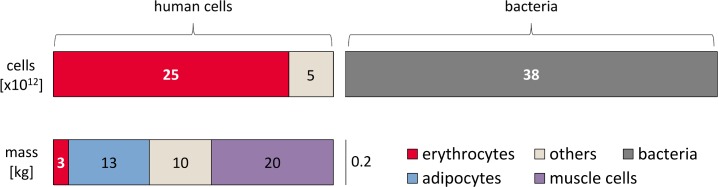
Reported values in the literature on the number of cells in the body differ by orders of magnitude and are very seldom supported by any measurements or calculations. Here, we integrate the most up-to-date information on the number of human and bacterial cells in the body. We estimate the total number of bacteria in the 70 kg "reference man" to be 3.8·1013. For human cells, we identify the dominant role of the hematopoietic lineage to the total count (≈90%) and revise past estimates to 3.0·1013 human cells. Our analysis also updates the widely-cited 10:1 ratio, showing that the number of bacteria in the body is actually of the same order as the number of human cells, and their total mass is about 0.2 kg.
Overview
The claims and statistics of this paper haven’t been checked yet.
Free: it reads the open-access text and checks the first 5 claims that cite a source we can check. Create a free account to check every claim.
Integrity signals
Registry
Cites
Statistics
Figures
Verification
Claims the paper makes
The claims and statistics of this paper haven’t been checked yet.
Free: it reads the open-access text and checks the first 5 claims that cite a source we can check. Create a free account to check every claim.
Claims other papers make about this one
Each is checked against this paper’s own text: does it say what the citing paper says it does?
The cited source doesn’t support the claim as written.
In the citing paper
“these microbes typically account for less than half of the weight of faecal solids 10 .”
From Human microbiome myths and misconceptions (2023) · cites this paper as [10]
Checked by a reasoning model — may be wrong.
Experimental — accuracy not yet measuredThe source backs part of the claim, not all of it — or backs it for a different population, condition or comparison.
In the citing paper
“Endotoxin is a lipopolysaccharide (LPS), constituting much of the outer membrane of gram-negative bacteria, present at high concentrations in gut, gums and skin and in other tissue during bacterial infection.”
From The endotoxin hypothesis of neurodegeneration (2019) · cites this paper as [6]
Experimental — accuracy not yet measuredThe source backs part of the claim, not all of it — or backs it for a different population, condition or comparison.
In the citing paper
“their gene count that exceeds the human genome’s gene count by ~100-fold and enables diverse metabolic programming”
From The microbiome and human cancer (2021) · cites this paper as [27]
Experimental — accuracy not yet measuredThe source backs part of the claim, not all of it — or backs it for a different population, condition or comparison.
In the citing paper
“The human gut microbiome contains ~3 × 10 13 bacteria, most of which are commensals (5).”
From The microbiome in cancer immunotherapy: Diagnostic tools and therapeutic strategies (2018) · cites this paper as [5]
Experimental — accuracy not yet measuredThe source backs part of the claim, not all of it — or backs it for a different population, condition or comparison.
In the citing paper
“there are trillions of microbes as numerous as human cells, that interact with the host constantly at numerous sites”
From The Influence of the Gut Microbiome on Cancer, Immunity, and Cancer Immunotherapy (2018) · cites this paper as Sender et al., 2016
Experimental — accuracy not yet measured
10 more claims about this paper
Create a free account to see every claim other papers make about this one.
Self-check
Percentages, sums and reported differences re-computed from the paper’s own numbers.
The self-check needs the paper’s full text.
Citations
Cites
A human gut microbial gene catalogue established by metagenomic sequencing
MetaHIT Consortium, Qin, J., Li, R., Raes, J., Arumugam, M., Burgdorf, K. S., Manichanh, C., Nielsen, T., Pons, N., Levenez, F., et al. (2010) · Nature · doi:10.1038/nature08821 · Cited by 11,624 · cited 1×
“Bacteria overwhelmingly outnumber eukaryotes and archaea in the human microbiome by 2–3 orders of magnitude [7,8].”
BackgroundHuman gut microbiome viewed across age and geography
Yatsunenko, T., Rey, F. E., Manary, M. J., Trehan, I., Dominguez-Bello, M. G., Contreras, M., Magris, M., Hidalgo, G., Baldassano, R. N., Anokhin, A. P., et al. (2012) · Nature · doi:10.1038/nature11053 · Cited by 7,815 · cited 1×
“Bacteria overwhelmingly outnumber eukaryotes and archaea in the human microbiome by 2–3 orders of magnitude [7,8].”
BackgroundAlberts, B., Johnson, A., Lewis, J., Morgan, D., Raff, M., Roberts, K., & Walter, P. (2017) · W.W. Norton eBooks · doi:10.1201/9781315735368 · Cited by 6,365
Turnbaugh, P. J., Ley, R. E., Hamady, M., Fraser-Liggett, C. M., Knight, R., & Gordon, J. I. (2007) · Nature · doi:10.1038/nature06244 · Cited by 6,091 · cited 1×
“One of the most fundamental and commonly cited figures in this growing field is the estimate that bacteria residing in the human body outnumber human cells by a factor of 10 or more (Bäckhed et al., 2005; Gill et al., 2006; Round and Mazmanian, 2010; Turnbaugh et al., 2007).”
BackgroundHost-Bacterial Mutualism in the Human Intestine
Bäckhed, F., Ley, R. E., Sonnenburg, J. L., Peterson, D. A., & Gordon, J. I. (2005) · Science · doi:10.1126/science.1104816 · Cited by 5,277
Metagenomic Analysis of the Human Distal Gut Microbiome
Gill, S. R., Pop, M., DeBoy, R. T., Eckburg, P. B., Turnbaugh, P. J., Samuel, B. S., Gordon, J. I., Relman, D. A., Fraser-Liggett, C. M., & Nelson, K. E. (2006) · Science · doi:10.1126/science.1124234 · Cited by 4,699 · cited 1×
“One of the most fundamental and commonly cited figures in this growing field is the estimate that bacteria residing in the human body outnumber human cells by a factor of 10 or more (Bäckhed et al., 2005; Gill et al., 2006; Round and Mazmanian, 2010; Turnbaugh et al., 2007).”
BackgroundCellular Scaling Rules for the Brains of Marsupials: Not as “Primitive” as Expected
Dos Santos, S. E., Porfirio, J., da Cunha, F. B., Manger, P. R., Tavares, W., Pessoa, L., Raghanti, M. A., Sherwood, C. C., & Herculano-Houzel, S. (2017) · Brain, Behavior and Evolution · doi:10.1159/000452856 · Cited by 2,642
MICROBIAL ECOLOGY OF THE GASTROINTESTINAL TRACT
Savage, D. C. (1977) · Annual Review of Microbiology · doi:10.1146/annurev.mi.31.100177.000543 · Cited by 2,436 · cited 5×
“Interestingly, those who read the original paper (Savage, 1977) find that it actually cites another paper for his estimate (Luckey, 1972).”
BackgroundInfluentialAzevedo, F. A. C., Carvalho, L. R. B., Grinberg, L. T., Farfel, J. M., Ferretti, R. E. L., Leite, R. E. P., Filho, W. J., Lent, R., & Herculano‐Houzel, S. (2009) · Journal of Comparative Neurology · doi:10.1002/cne.21974 · Cited by 2,337 · cited 1×
“However, a recent analysis [28] revisits this value and, after analyzing the variation across brain regions, concludes that the ratio is close to 1:1.”
BackgroundRound, J. L., & Mazmanian, S. K. (2010) · Proceedings of the National Academy of Sciences · doi:10.1073/pnas.0909122107 · Cited by 2,233 · cited 1×
“One of the most fundamental and commonly cited figures in this growing field is the estimate that bacteria residing in the human body outnumber human cells by a factor of 10 or more (Bäckhed et al., 2005; Gill et al., 2006; Round and Mazmanian, 2010; Turnbaugh et al., 2007).”
Background
Cited by
Items 101–200 of 1,042
Modeling microbial abundances and dysbiosis with beta-binomial regression
Martin, B. D., Witten, D., & Willis, A. D. (2020) · The Annals of Applied Statistics · doi:10.1214/19-aoas1283 · Cited by 376
Cui, X., Ye, L., Li, J., Jin, L., Wang, W., Li, S., Bao, M., Wu, S., Li, L., Geng, B., et al. (2018) · Scientific Reports · doi:10.1038/s41598-017-18756-2 · Cited by 374
Diet and the human gut microbiome: An international review
Wilson, A. S., Koller, K. R., Ramaboli, M. C., Nesengani, L. T., Ocvirk, S., Chen, C., Flanagan, C. A., Sapp, F. R., Merritt, Z. T., Bhatti, F., et al. (2020) · Digestive Diseases and Sciences · doi:10.1007/s10620-020-06112-w · Cited by 369
Review of the relationships among polysaccharides, gut microbiota, and human health
Song, Q., Wang, Y., Huang, L., Shen, M., Yu, Y., Yu, Q., Chen, Y., & Xie, J. (2021) · Food Research International · doi:10.1016/j.foodres.2020.109858 · Cited by 357
Role of the gut microbiota in anticancer therapy: from molecular mechanisms to clinical applications
Zhao, L.-Y., Mei, J.-X., Yu, G., Lei, L., Zhang, W.-H., Liu, K., Chen, X.-L., Kołat, D., Yang, K., & Hu, J.-K. (2023) · Signal Transduction and Targeted Therapy · doi:10.1038/s41392-023-01406-7 · Cited by 359
Madison, A., & Kiecolt-Glaser, J. K. (2019) · Current Opinion in Behavioral Sciences · doi:10.1016/j.cobeha.2019.01.011 · Cited by 352
Gut Microbiota and Intestinal Trans-Epithelial Permeability
Allam-Ndoul, B., Castonguay-Paradis, S., & Veilleux, A. (2020) · International Journal of Molecular Sciences · doi:10.3390/ijms21176402 · Cited by 351
“Adult gut microbiota harbors approximately 1013 bacterial cells [7] from more than 250 different species of bacteria as well as fungi, viruses and archaea.”
BackgroundMicrobiome and colorectal cancer: Roles in carcinogenesis and clinical potential
Saus, E., Iraola-Guzmán, S., Willis, J. R., Brunet-Vega, A., & Gabaldón, T. (2019) · Molecular Aspects of Medicine · doi:10.1016/j.mam.2019.05.001 · Cited by 350
Interactions between Intestinal Microbiota and Host Immune Response in Inflammatory Bowel Disease
Zhang, M., Sun, K., Wu, Y., Yang, Y., Tso, P., & Wu, Z. (2017) · Frontiers in Immunology · doi:10.3389/fimmu.2017.00942 · Cited by 347
Understanding dental caries as a non-communicable disease
Pitts, N. B., Twetman, S., Fisher, J., & Marsh, P. D. (2021) · British Dental Journal · doi:10.1038/s41415-021-3775-4 · Cited by 346
The Association between Early-Life Gut Microbiota and Long-Term Health and Diseases
Sarkar, A., Yoo, J. Y., Valeria Ozorio Dutra, S., Morgan, K. H., & Groer, M. (2021) · Journal of Clinical Medicine · doi:10.3390/jcm10030459 · Cited by 342
“3 [18] and is believed to affect the host’s health throughout life .”
BackgroundThe Oral Microbiome and Cancer
Irfan, M., Delgado, R. Z. R., & Frias-Lopez, J. (2020) · Frontiers in Immunology · doi:10.3389/fimmu.2020.591088 · Cited by 341
“That is around one bacterium for each cell in the human body (1).”
BackgroundGut Microbiome Dysbiosis and Immunometabolism: New Frontiers for Treatment of Metabolic Diseases
Belizário, J. E., Faintuch, J., & Garay-Malpartida, M. (2018) · Mediators of Inflammation · doi:10.1155/2018/2037838 · Cited by 341
“A collection of 100-400× 10(12) of bacteria inhabits and lives in mutualistic relationships in the human GI tract [3].”
BackgroundAdvancing functional and translational microbiome research using meta-omics approaches
Zhang, X., Li, L., Butcher, J., Stintzi, A., & Figeys, D. (2019) · Microbiome · doi:10.1186/s40168-019-0767-6 · Cited by 340
“Altogether, this community of microorganisms, termed the gut microbiota, has a similar cell number to that of human cells [2] and 450-fold more genes than the human genome [3].”
BackgroundSoluble Dietary Fiber, One of the Most Important Nutrients for the Gut Microbiota
Guan, Z.-W., Yu, E.-Z., & Feng, Q. (2021) · Molecules · doi:10.3390/molecules26226802 · Cited by 336
“They are closely related to human health and the gut is their most densely populated habitat [54].”
BackgroundHuman microbiome: an academic update on human body site specific surveillance and its possible role
Dekaboruah, E., Suryavanshi, M. V., Chettri, D., & Verma, A. K. (2020) · Archives of Microbiology · doi:10.1007/s00203-020-01931-x · Cited by 336
Probiotics and the microbiota-gut-brain axis: Focus on psychiatry
Mörkl, S., Butler, M. I., Holl, A., Cryan, J. F., & Dinan, T. G. (2020) · Current Nutrition Reports · doi:10.1007/s13668-020-00313-5 · Cited by 337
“Table 1 Mechanisms of psychobiotic action Mechanisms of psychobiotic action Hypothalamic-pituitary-adrenal axis (HPA) modification [27] Neurotransmitter synthesis (such as gamma aminobutyric acid, serotonin, dopamine, noradrenaline, melatonin, histamine and acetylcholine) [28–30] Modulation of brain-derived neurotroph…”
InfluentialClinical Application and Potential of Fecal Microbiota Transplantation
Ooijevaar, R. E., Terveer, E. M., Verspaget, H. W., Kuijper, E. J., & Keller, J. J. (2019) · Annual Review of Medicine · doi:10.1146/annurev-med-111717-122956 · Cited by 336
“2 kg) that provide essential metabolic and biological functions such as extracting energy, producing growth factors, stimulating the immune system, and creating colonization resistance (5).”
BackgroundGlutamatergic Signaling Along The Microbiota-Gut-Brain Axis
Baj, A., Moro, E., Bistoletti, M., Orlandi, V., Crema, F., & Giaroni, C. (2019) · International Journal of Molecular Sciences · doi:10.3390/ijms20061482 · Cited by 331
“8 × 10¹³ bacterial cells belonging to approximately 2000 species, and other microorganisms, such as, virus, archaea, fungi and protozoa, representing the most abundant microbial population in the human body [15,16].”
BackgroundThe gut microbiota and its biogeography
McCallum, G., & Tropini, C. (2024) · Nature Reviews Microbiology · doi:10.1038/s41579-023-00969-0 · Cited by 329
“32) (or 10 7 –10 11 CFU total 33 ) of bacteria in healthy humans.”
Neugent, M. L., Hulyalkar, N. V., Nguyen, V. H., Zimmern, P. E., & De Nisco, N. J. (2020) · mBio · doi:10.1128/mbio.00218-20 · Cited by 326
“Today, recent studies have estimated that the female and male human bodies are colonized by 44 1012 and 38 1012 individual microbial cells, respectively (51).”
BackgroundCatalkaya, G., Venema, K., Lucini, L., Rocchetti, G., Delmas, D., Daglia, M., De Filippis, A., Xiao, H., Quiles, J. L., Xiao, J., et al. (2020) · Food Frontiers · doi:10.1002/fft2.25 · Cited by 328
Viruses as Winners in the Game of Life
Cobián Güemes, A. G., Youle, M., Cantú, V. A., Felts, B., Nulton, J., & Rohwer, F. (2016) · Annual Review of Virology · doi:10.1146/annurev-virology-100114-054952 · Cited by 319
Crosstalk Between Gut Microbiota and Innate Immunity and Its Implication in Autoimmune Diseases
Jiao, Y., Wu, L., Huntington, N. D., & Zhang, X. (2020) · Frontiers in Immunology · doi:10.3389/fimmu.2020.00282 · Cited by 321
“The total number could reach 1014–1015, which is ∼10–100 times larger than the scale of human body cell number (26).”
BackgroundPenesyan, A., Paulsen, I. T., Kjelleberg, S., & Gillings, M. R. (2021) · npj Biofilms and Microbiomes · doi:10.1038/s41522-021-00251-2 · Cited by 318
Gut reactions: Breaking down xenobiotic–microbiome interactions
Clarke, G., Sandhu, K. V., Griffin, B. T., Dinan, T. G., Cryan, J. F., & Hyland, N. P. (2019) · Pharmacological Reviews · doi:10.1124/pr.118.015768 · Cited by 319
“The bacterial division of this consortium is best studied and reaches the highest density in the large intestine, with recent estimates of 10 13 bacterial cells in the human colon (Sender et al., 2016a,b).”
BackgroundExploring the emerging role of the microbiome in cancer immunotherapy
Fessler, J., Matson, V., & Gajewski, T. F. (2019) · Journal for ImmunoTherapy of Cancer · doi:10.1186/s40425-019-0574-4 · Cited by 319
Microbiome 101: Studying, Analyzing, and Interpreting Gut Microbiome Data for Clinicians
Allaband, C., McDonald, D., Vázquez-Baeza, Y., Minich, J. J., Tripathi, A., Brenner, D. A., Loomba, R., Smarr, L., Sandborn, W. J., Schnabl, B., et al. (2019) · Clinical Gastroenterology and Hepatology · doi:10.1016/j.cgh.2018.09.017 · Cited by 318
“figure being much closer to 1:1, with the balance slightly in favor of the microbes.(18) Therefore, it is fascinating to consider that one can tip the balance in an individual’s body from having more microbial cells to having more human cells by simply administering the bowel preparation for a colonoscopy.”
BackgroundVallianou, N., Stratigou, T., Christodoulatos, G. S., & Dalamaga, M. (2019) · Current Obesity Reports · doi:10.1007/s13679-019-00352-2 · Cited by 316
MICOM: Metagenome-Scale Modeling To Infer Metabolic Interactions in the Gut Microbiota
Diener, C., Gibbons, S. M., & Resendis-Antonio, O. (2020) · mSystems · doi:10.1128/msystems.00606-19 · Cited by 309
“Assuming a total microbiota biomass of 200 g and a representative bacterial cell weight (dry weight) of 2 pg (60), this corresponds to a maximum import or export of more than 100,000 molecules per cell per s.”
BackgroundOn the length, weight and GC content of the human genome
Piovesan, A., Pelleri, M. C., Antonaros, F., Strippoli, P., Caracausi, M., & Vitale, L. (2019) · BMC Research Notes · doi:10.1186/s13104-019-4137-z · Cited by 283
Probiotics as an alternative antimicrobial therapy: Current reality and future directions
Silva, D. R., Sardi, J. D. C. O., Pitangui, N. D. S., Roque, S. M., Silva, A. C. B. D., & Rosalen, P. L. (2020) · Journal of Functional Foods · doi:10.1016/j.jff.2020.104080 · Cited by 311
Navigating Challenges and Opportunities in Multi-Omics Integration for Personalized Healthcare
Mohr, A. E., Ortega-Santos, C. P., Whisner, C. M., Klein-Seetharaman, J., & Jasbi, P. (2024) · Biomedicines · doi:10.3390/biomedicines12071496 · Cited by 311
“Focusing on the gut microbiome (GM), with a combined biomass of only ~200 g [34], it has been estimated that approximately half of all metabolites in the body have been synthesized or modified by gastrointestinal microbes [39].”
BackgroundNot all animals need a microbiome
Hammer, T. J., Sanders, J. G., & Fierer, N. (2019) · FEMS Microbiology Letters · doi:10.1093/femsle/fnz117 · Cited by 307
Microbiome and Allergic Diseases
Pascal, M., Perez-Gordo, M., Caballero, T., Escribese, M. M., Lopez Longo, M. N., Luengo, O., Manso, L., Matheu, V., Seoane, E., Zamorano, M., et al. (2018) · Frontiers in Immunology · doi:10.3389/fimmu.2018.01584 · Cited by 295
A bacterial bile acid metabolite modulates Treg activity through the nuclear hormone receptor NR4A1
Li, W., Hang, S., Fang, Y., Bae, S., Zhang, Y., Zhang, M., Wang, G., McCurry, M. D., Bae, M., Paik, D., et al. (2021) · Cell Host & Microbe · doi:10.1016/j.chom.2021.07.013 · Cited by 306
Roles of Sex Hormones and Gender in the Gut Microbiota
Yoon, K., & Kim, N. (2021) · Journal of Neurogastroenterology and Motility · doi:10.5056/jnm20208 · Cited by 299
Shou, Y., Huang, Y., Zhu, X., Liu, C., Hu, Y., & Wang, H. (2019) · Ecotoxicology and Environmental Safety · doi:10.1016/j.ecoenv.2019.02.086 · Cited by 303
Pharmacomicrobiomics: exploiting the drug-microbiota interactions in anticancer therapies
Panebianco, C., Andriulli, A., & Pazienza, V. (2018) · Microbiome · doi:10.1186/s40168-018-0483-7 · Cited by 298
“8 kg, collectively named as gut microbiota, which are now widely recognized to maintain host physiology and health by exerting fundamental functions, spanning from metabolic to immunomodulatory properties [1, 2].”
BackgroundGaudino, S. J., & Kumar, P. (2019) · Frontiers in Immunology · doi:10.3389/fimmu.2019.00360 · Cited by 298
Are There 10 31 Virus Particles on Earth, or More, or Fewer?
Mushegian, A. R. (2020) · Journal of Bacteriology · doi:10.1128/jb.00052-20 · Cited by 291
“8 1013 (22), which, for the entire Earth population of 7.”
BackgroundInvestigating Colonization of the Healthy Adult Gastrointestinal Tract by Fungi
Auchtung, T. A., Fofanova, T. Y., Stewart, C. J., Nash, A. K., Wong, M. C., Gesell, J. R., Auchtung, J. M., Ajami, N. J., & Petrosino, J. F. (2018) · mSphere · doi:10.1128/msphere.00092-18 · Cited by 290
“1% of metagenomic reads from adult stool samples have mapped to fungal species (8, 9) and that fungal genomes are ~3 to 10 times larger than bacterial genomes, it is possible to estimate that of the 1013 microorganisms in the GI tract (10), about a billion compose what is often referred to as the gut mycobiota or myco…”
BackgroundLordan, C., Thapa, D., Ross, R. P., & Cotter, P. D. (2020) · Gut Microbes · doi:10.1080/19490976.2019.1613124 · Cited by 289
“The human gut is estimated to contain approximately 10(14) bacteria comprising more than 1000 species.(1,2) Intestinal commensal bacteria, as well as their metabolic products, have long been recognized as important contributors to host health, including nutrition/energy homeostasis, pathogen resistance, the regulation…”
BackgroundBacteroides fragilis Lipopolysaccharide and Inflammatory Signaling in Alzheimer’s Disease
Lukiw, W. J. (2016) · Frontiers in Microbiology · doi:10.3389/fmicb.2016.01544 · Cited by 288
The microbiota-gut-brain axis in sleep disorders
Wang, Z., Wang, Z., Lu, T., Chen, W., Yan, W., Yuan, K., Shi, L., Liu, X., Zhou, X., Shi, J., et al. (2022) · Sleep Medicine Reviews · doi:10.1016/j.smrv.2022.101691 · Cited by 285
“As the second genome of the human body, about 3.8 (cid:1) 10 13 microorganisms colonize the intestine [10].”
InfluentialGut Microbiota beyond Bacteria—Mycobiome, Virome, Archaeome, and Eukaryotic Parasites in IBD
Matijašić, M., Meštrović, T., Čipčić Paljetak, H., Perić, M., Barešić, A., & Verbanac, D. (2020) · International Journal of Molecular Sciences · doi:10.3390/ijms21082668 · Cited by 284
“Fungi account for a relatively small percentage of the human microbiota, with 105 to 106 fungal cells per gram of fecal matter (compared to 1011 bacterial cells per gram) [11] and only 0.”
BackgroundInterplay Between Exercise and Gut Microbiome in the Context of Human Health and Performance
Clauss, M., Gérard, P., Mosca, A., & Leclerc, M. (2021) · Frontiers in Nutrition · doi:10.3389/fnut.2021.637010 · Cited by 280
“After a first estimate that the human microbiota contains up to 1013-1014 bacterial cells, 10 times more than cells in the human body (11), a recent update established a 1:1 ratio between the bacterial cells and the human body cells (12).”
BackgroundRamakrishna, C., Kujawski, M., Chu, H., Li, L., Mazmanian, S. K., & Cantin, E. M. (2019) · Nature Communications · doi:10.1038/s41467-019-09884-6 · Cited by 284
Biochemistry of complex glycan depolymerisation by the human gut microbiota
Ndeh, D., & Gilbert, H. J. (2018) · FEMS Microbiology Reviews · doi:10.1093/femsre/fuy002 · Cited by 284
High-throughput, single-microbe genomics with strain resolution, applied to a human gut microbiome
Zheng, W., Zhao, S., Yin, Y., Zhang, H., Needham, D. M., Evans, E. D., Dai, C. L., Lu, P. J., Alm, E. J., & Weitz, D. A. (2022) · Science · doi:10.1126/science.abm1483 · Cited by 283
“Comprising trillions of microbes in the gastrointestinal tract (5), this microbiome has substantial associations with human health and disease, including metabolic syndromes, cognitive disorders, and autoimmune diseases (6, 7).”
BackgroundThe bovine milk microbiota: insights and perspectives from -omics studies
Addis, M. F., Tanca, A., Uzzau, S., Oikonomou, G., Bicalho, R. C., & Moroni, P. (2016) · Molecular BioSystems · doi:10.1039/c6mb00217j · Cited by 281
Intestinal epithelial cells: At the interface of the microbiota and mucosal immunity
Soderholm, A. T., & Pedicord, V. A. (2019) · Immunology · doi:10.1111/imm.13117 · Cited by 281
Dohlman, A. B., Arguijo Mendoza, D., Ding, S., Gao, M., Dressman, H., Iliev, I. D., Lipkin, S. M., & Shen, X. (2021) · Cell Host & Microbe · doi:10.1016/j.chom.2020.12.001 · Cited by 277
“The human body supports an ecosystem of 10–100 trillion microorganisms (Luckey, 1972; Sender et al., 2016), representing 500–1,000 unique species per individual (Human Microbiome Project Consortium, 2012; Qin et al.”
BackgroundAntimicrobial resistance in the next 30 years, humankind, bugs and drugs: a visionary approach
Bassetti, M., Poulakou, G., Ruppe, E., Bouza, E., Van Hal, S. J., & Brink, A. (2017) · Intensive Care Medicine · doi:10.1007/s00134-017-4878-x · Cited by 277
Co-evolution and Co-speciation of Host-Gut Bacteria Systems
Groussin, M., Mazel, F., & Alm, E. J. (2020) · Cell Host & Microbe · doi:10.1016/j.chom.2020.06.013 · Cited by 275
Microbiota–host communications: Bacterial extracellular vesicles as a common language
Ñahui Palomino, R. A., Vanpouille, C., Costantini, P. E., & Margolis, L. (2021) · PLOS Pathogens · doi:10.1371/journal.ppat.1009508 · Cited by 274
“The human body, and in particular human mucosae, are colonized by trillions of different bacterial strains [78].”
BackgroundCancer pharmacomicrobiomics: targeting microbiota to optimise cancer therapy outcomes
Ting, N. L.-N., Lau, H. C.-H., & Yu, J. (2022) · Gut · doi:10.1136/gutjnl-2021-326264 · Cited by 274
The total number and mass of SARS-CoV-2 virions
Sender, R., Bar-On, Y. M., Gleizer, S., Bernshtein, B., Flamholz, A., Phillips, R., & Milo, R. (2021) · Proceedings of the National Academy of Sciences · doi:10.1073/pnas.2024815118 · Cited by 275
“For example, a human body comprises ≈3 × 10(13) cells (3).”
Self-citationChen, Y., Cui, W., Li, X., & Yang, H. (2021) · Frontiers in Immunology · doi:10.3389/fimmu.2021.761981 · Cited by 271
“The gastrointestinal tract provides 150-200 m(2) of surface area for microorganisms (18), and about 10(13) bacteria are colonized, which is comparable to the number of human cells (19).”
BackgroundWestern diets, gut dysbiosis, and metabolic diseases: Are they linked?
Martinez, K. B., Leone, V., & Chang, E. B. (2017) · Gut Microbes · doi:10.1080/19490976.2016.1270811 · Cited by 271
Cross talk: the microbiota and neurodevelopmental disorders
Kelly, J. R., Minuto, C., Cryan, J. F., Clarke, G., & Dinan, T. G. (2017) · Frontiers in Neuroscience · doi:10.3389/fnins.2017.00490 · Cited by 271
Adaptive immune education by gut microbiota antigens
Zhao, Q., & Elson, C. O. (2018) · Immunology · doi:10.1111/imm.12896 · Cited by 268
Revisit gut microbiota and its impact on human health and disease
Ding, R.-X., Goh, W.-R., Wu, R.-N., Yue, X.-Q., Luo, X., Khine, W. W. T., Wu, J.-R., & Lee, Y.-K. (2019) · Journal of Food and Drug Analysis · doi:10.1016/j.jfda.2018.12.012 · Cited by 268
Gut microbiota in COVID-19: key microbial changes, potential mechanisms and clinical applications
Zhang, F., Lau, R. I., Liu, Q., Su, Q., Chan, F. K. L., & Ng, S. C. (2023) · Nature Reviews Gastroenterology & Hepatology · doi:10.1038/s41575-022-00698-4 · Cited by 267
Unhealthy gut, unhealthy brain: The role of the intestinal microbiota in neurodegenerative diseases
Spielman, L. J., Gibson, D. L., & Klegeris, A. (2018) · Neurochemistry International · doi:10.1016/j.neuint.2018.08.005 · Cited by 266
“It has been calculated that the dynamic population of bacterial cells living on and within the human body, termed the human microbiota, is at least equal in number to the human cells (Luckey, 1972; Sender et al., 2016).”
Ma, Z., Zuo, T., Frey, N., & Rangrez, A. Y. (2024) · Signal Transduction and Targeted Therapy · doi:10.1038/s41392-024-01946-6 · Cited by 259
“…data of the microbiome were obtained from the Human Microbiome Project, 62,657 supplemented by modi fi ed data from Ron Sender et al. 658,659 example, although sampling dif fi culties exist, a study on healthy humans con fi rmed the presence of microbial community in the gallbladder which…”
MethodSystematic review: human gut dysbiosis induced by non-antibiotic prescription medications
Le Bastard, Q., Al‐Ghalith, G. A., Grégoire, M., Chapelet, G., Javaudin, F., Dailly, E., Batard, E., Knights, D., & Montassier, E. (2018) · Alimentary Pharmacology & Therapeutics · doi:10.1111/apt.14451 · Cited by 263
“The gut microbiome, mainly composed of bacteria which outnumber human cells, is a key contributor to human health.(61) Indeed, dysbiosis in the microbiome was identified and associated with predisposition to numerous human diseases.”
Emerging Functions of Regulatory T Cells in Tissue Homeostasis
Sharma, A., & Rudra, D. (2018) · Frontiers in Immunology · doi:10.3389/fimmu.2018.00883 · Cited by 262
Gut microbiota of aquatic organisms: A key endpoint for ecotoxicological studies
Evariste, L., Barret, M., Mottier, A., Mouchet, F., Gauthier, L., & Pinelli, E. (2019) · Environmental Pollution · doi:10.1016/j.envpol.2019.02.101 · Cited by 262
Belizário, J. E., & Faintuch, J. (2018) · Experientia Supplementum · doi:10.1007/978-3-319-74932-7_13 · Cited by 255
Theis, K. R., Romero, R., Winters, A. D., Greenberg, J. M., Gomez-Lopez, N., Alhousseini, A., Bieda, J., Maymon, E., Pacora, P., Fettweis, J. M., et al. (2019) · American Journal of Obstetrics and Gynecology · doi:10.1016/j.ajog.2018.10.018 · Cited by 258
Intratumoural microbiota: a new frontier in cancer development and therapy
Cao, Y., Xia, H., Tan, X., Shi, C., Ma, Y., Meng, D., Zhou, M., Lv, Z., Wang, S., & Jin, Y. (2024) · Signal Transduction and Targeted Therapy · doi:10.1038/s41392-023-01693-0 · Cited by 253
“205 Furthermore, in both in vivo and in vitro trials, the fungal community of PDAC tissue stimulated the expression of cancer-cell-speci fi c IL-33, which leads to the recruitment and activation of Th2 cells and innate lymphoid cells 2, consequently promoting tumour progression.”
BackgroundGut microbiome and cancer immunotherapy
Li, W., Deng, Y., Chu, Q., & Zhang, P. (2019) · Cancer Letters · doi:10.1016/j.canlet.2019.01.015 · Cited by 253
Proton pump inhibitors and dysbiosis: current knowledge and aspects to be clarified
Bruno, G., Zaccari, P., Rocco, G., Scalese, G., Panetta, C., Porowska, B., Pontone, S., & Severi, C. (2019) · World Journal of Gastroenterology · doi:10.3748/wjg.v25.i22.2706 · Cited by 258
Control and dysregulation of redox signalling in the gastrointestinal tract
Campbell, E. L., & Colgan, S. P. (2019) · Nature Reviews Gastroenterology & Hepatology · doi:10.1038/s41575-018-0079-5 · Cited by 251
The NF-κB Signaling Pathway, the Microbiota, and Gastrointestinal Tumorigenesis: Recent Advances
Peng, C., Ouyang, Y., Lu, N., & Li, N. (2020) · Frontiers in Immunology · doi:10.3389/fimmu.2020.01387 · Cited by 249
“Approximately 100 trillion of microorganisms exist in the human gastrointestinal tract (5, 6).”
BackgroundMicrobiome as a therapeutic target in alcohol-related liver disease
Sarin, S. K., Pande, A., & Schnabl, B. (2019) · Journal of Hepatology · doi:10.1016/j.jhep.2018.10.019 · Cited by 253
Microbiome in Colorectal Cancer: How to Get from Meta-omics to Mechanism?
Ternes, D., Karta, J., Tsenkova, M., Wilmes, P., Haan, S., & Letellier, E. (2020) · Trends in Microbiology · doi:10.1016/j.tim.2020.01.001 · Cited by 251
Xiao, W., Su, J., Gao, X., Yang, H., Weng, R., Ni, W., & Gu, Y. (2022) · Microbiome · doi:10.1186/s40168-022-01255-6 · Cited by 252
“Abundant commensal microbes inhabit the gastrointestinal lumen [23] and signal to the host’s immune and endocrine systems by secreting metabolites such as short-chain fatty acids (SCFAs), polyamines, and amino acids [24, 25].”
BackgroundLocoregional Effects of Microbiota in a Preclinical Model of Colon Carcinogenesis
Tomkovich, S., Yang, Y., Winglee, K., Gauthier, J., Mühlbauer, M., Sun, X., Mohamadzadeh, M., Liu, X., Martin, P., Wang, G. P., et al. (2017) · Cancer Research · doi:10.1158/0008-5472.can-16-3472 · Cited by 252
Evolutionary Biology Needs Wild Microbiomes
Hird, S. M. (2017) · Frontiers in Microbiology · doi:10.3389/fmicb.2017.00725 · Cited by 252
“There are an estimated near equal number of microbial and human cells on the human body (Sender et al., 2016) and microbial genes may outnumber a host’s genes by orders of magnitude (Hooper and Gordon, 2001; Qin et al., 2010).”
BackgroundStull, V. J., Finer, E., Bergmans, R. S., Febvre, H. P., Longhurst, C., Manter, D. K., Patz, J. A., & Weir, T. L. (2018) · Scientific Reports · doi:10.1038/s41598-018-29032-2 · Cited by 249
Tulkens, J., De Wever, O., & Hendrix, A. (2020) · Nature Protocols · doi:10.1038/s41596-019-0236-5 · Cited by 245
Factors Affecting Gastrointestinal Microbiome Development in Neonates
Chong, C., Bloomfield, F., & O’Sullivan, J. (2018) · Nutrients · doi:10.3390/nu10030274 · Cited by 247
“The large intestine is the greatest single human reservoir of microbes, containing at least 30 identified genera and as many as 500 different species [2,6,7].”
BackgroundBacteroides and related species: The keystone taxa of the human gut microbiota
Shin, J. H., Tillotson, G., MacKenzie, T. N., Warren, C. A., Wexler, H. M., & Goldstein, E. J. C. (2024) · Anaerobe · doi:10.1016/j.anaerobe.2024.102819 · Cited by 242
Benedé-Ubieto, R., Cubero, F. J., & Nevzorova, Y. A. (2024) · Gut Microbes · doi:10.1080/19490976.2024.2331460 · Cited by 242
“54,55 The intestinal microbiota increases in density from the small intestine to the colon, where it reaches approximately 10 trillion cells per gram of colonic content.”
BackgroundThomson, P., Medina, D. A., & Garrido, D. (2018) · Food Microbiology · doi:10.1016/j.fm.2017.09.001 · Cited by 241
Urinary Microbiome: Yin and Yang of the Urinary Tract
Perez-Carrasco, V., Soriano-Lerma, A., Soriano, M., Gutiérrez-Fernández, J., & Garcia-Salcedo, J. A. (2021) · Frontiers in Cellular and Infection Microbiology · doi:10.3389/fcimb.2021.617002 · Cited by 241
“3:1, considering nucleated and enucleated cells (Sender et al., 2016).”
Impacts of microbiome metabolites on immune regulation and autoimmunity
Haase, S., Haghikia, A., Wilck, N., Müller, D. N., & Linker, R. A. (2018) · Immunology · doi:10.1111/imm.12933 · Cited by 239
Tailoring plant-associated microbial inoculants in agriculture: a roadmap for successful application
Saad, M. M., Eida, A. A., & Hirt, H. (2020) · Journal of Experimental Botany · doi:10.1093/jxb/eraa111 · Cited by 238
“The advent of next-generation sequencing (NGS) opened up possibilities to study these close interactions between a host—human, animal, or plant—and its associated microbial community (Bosch and Miller, 2016; Greer et al., 2016; Sender et al., 2016).”
BackgroundOral microbiota and cancer development
Tuominen, H., & Rautava, J. (2021) · Pathobiology · doi:10.1159/000510979 · Cited by 238
Yan, X., Jin, J., Su, X., Yin, X., Gao, J., Wang, X., Zhang, S., Bu, P., Wang, M., Zhang, Y., et al. (2020) · Circulation Research · doi:10.1161/circresaha.119.316394 · Cited by 235
Role of gut microbiota in infectious and inflammatory diseases
Maciel-Fiuza, M. F., Muller, G. C., Campos, D. M. S., do Socorro Silva Costa, P., Peruzzo, J., Bonamigo, R. R., Veit, T., & Vianna, F. S. L. (2023) · Frontiers in Microbiology · doi:10.3389/fmicb.2023.1098386 · Cited by 233
Microbiome Dependent Regulation of Tregs and Th17 Cells in Mucosa
Pandiyan, P., Bhaskaran, N., Zou, M., Schneider, E., Jayaraman, S., & Huehn, J. (2019) · Frontiers in Immunology · doi:10.3389/fimmu.2019.00426 · Cited by 236
“They include: (1) directly competing for shared metabolites, (2) expression of inhibitory bacteriocins, (3) induction of protective mucus layer, and (4) priming of protective immune responses (208, 209).”
BackgroundImpact of Fecal Microbiota Transplantation on Obesity and Metabolic Syndrome—A Systematic Review
Zhang, Z., Mocanu, V., Cai, C., Dang, J., Slater, L., Deehan, E. C., Walter, J., & Madsen, K. L. (2019) · Nutrients · doi:10.3390/nu11102291 · Cited by 232
Healthy Human Gastrointestinal Microbiome: Composition and Function After a Decade of Exploration
Ruan, W., Engevik, M. A., Spinler, J. K., & Versalovic, J. (2020) · Digestive Diseases and Sciences · doi:10.1007/s10620-020-06118-4 · Cited by 233
“The healthy human microbiome consists of 30-plus trillion microorganisms per person including mostly bacteria, viruses (bacteriophages and human viruses), and yeast [1].”
BackgroundSteadyCom: Predicting microbial abundances while ensuring community stability
Chan, S. H. J., Simons, M. N., & Maranas, C. D. (2017) · PLOS Computational Biology · doi:10.1371/journal.pcbi.1005539 · Cited by 231
Multimodal interactions of drugs, natural compounds and pollutants with the gut microbiota
Lindell, A. E., Zimmermann-Kogadeeva, M., & Patil, K. R. (2022) · Nature Reviews Microbiology · doi:10.1038/s41579-022-00681-5 · Cited by 228
“The compounds are grouped into four classes: (1) antibiotics, (2) host- targeted drugs, (3) natural food compounds and food additives, and (4) environmental pollutants and chemicals.”
BackgroundNew insights into intestinal phages
Sausset, R., Petit, M. A., Gaboriau-Routhiau, V., & De Paepe, M. (2020) · Mucosal Immunology · doi:10.1038/s41385-019-0250-5 · Cited by 230
The Role of Prebiotics in Modulating Gut Microbiota: Implications for Human Health
Yoo, S., Jung, S.-C., Kwak, K., & Kim, J.-S. (2024) · International Journal of Molecular Sciences · doi:10.3390/ijms25094834 · Cited by 226
“Moreover, the gut microbiome contains 600,000 genes [5,6].”
Background
Metadata
- Authors
- Sender, R., Fuchs, S., & Milo, R.
- Affiliations
- Weizmann Institute of Science (IL)
- Corresponding author
- Fuchs, Shai
- Milo, Ron
- Venue
- PLOS Biology
- Publisher
- Public Library of Science (PLoS)
- Published
- 2016-08-19
- Volume
- 14
- Issue
- 8
- Pages
- e1002533
- ISSN
- 1544-9173 (ISSN-L)
- 1545-7885
- PMC
- PMC4991899
- OpenAlex
- W2952564192
- Cited by
- 5,425
- References
- 88
- Citations by year
- 2026: 411 · 2025: 533 · 2024: 655 · 2023: 696 · 2022: 659 · 2021: 645 · 2020: 597 · 2019: 514 · 2018: 394 · 2017: 252 · 2016: 66
- FWCI
- 212.46
- Type
- journal article
- Language
- en
- Open access
- gold
- doi.org
- Licence
- Locations
- PLoS Biology (publishedVersion, cc-by)
- bioRxiv (Cold Spring Harbor Laboratory) (acceptedVersion, cc-by-nc-nd)
- Europe PMC (PubMed Central) (publishedVersion, cc-by)
- PubMed Central (publishedVersion, cc-by)
- PubMed (publishedVersion)
- DOAJ (DOAJ: Directory of Open Access Journals) (submittedVersion)
- Figshare (submittedVersion, cc-by)
- Funders
- Leona M. and Harry B. Helmsley Charitable Trust
- H2020 European Research Council (646827)
- Topics
- Life Sciences › Biochemistry, Genetics and Molecular Biology › Molecular Biology › Gut microbiota and health
- Physical Sciences › Environmental Science › Ecology › Microbial Community Ecology and Physiology
- Health Sciences › Dentistry › Periodontics › Oral microbiology and periodontitis research
- Keywords
- bacterial counts, human microbiome, hematopoietic lineage, reference man, microbial biomass, body cell mass
- MeSH terms
- Adult, Bacteria, Body Weights and Measures, Cell Count, Humans, Male, Organ Specificity, Bacterial Load, Microbiota
About these checks
Registry, retraction, Cites and statistics results are computed, not judged, with one exception: a printed reference that no index lists is read once by a model before it counts as a citation error. Claims are extracted by a model and kept only when their quote appears verbatim in the text; each cited source is then checked, with a model’s help, for whether it says what the claim relies on. Those verdicts can be wrong — read the claim’s quote and the cited source before relying on one.
Statistics and arithmetic are recomputed, not judged.
Confidence bands are shown only for fields calibrated on our annotated test set. None is calibrated yet, so no band is shown.
What counts as a claim ›How we measure confidence ›How we check this ›
Are you an author, or do you see a problem with this page? Request a review
Data sources
Bibliographic data: Semantic Scholar, OpenAlex, Crossref.
Contains information from the Semantic Scholar Academic Graph Datasets, made available under the ODC Attribution License (ODC-BY 1.0).
Semantic Scholar’s data is described in: Kinney, R., et al. (2023). The Semantic Scholar Open Data Platform. arXiv:2301.10140.
