

Revised Estimates for the Number of Human and Bacteria Cells in the Body
Open accessPublished version of a preprint
The DOI matches its Crossref record; 86 of the 88 references it cites were found in a registry or an index.
Abstract
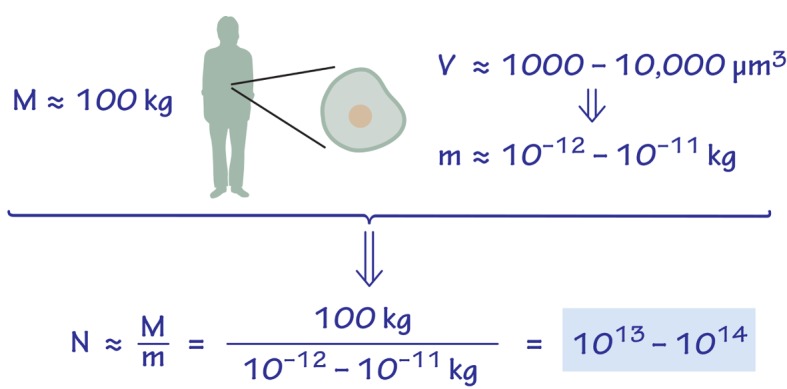
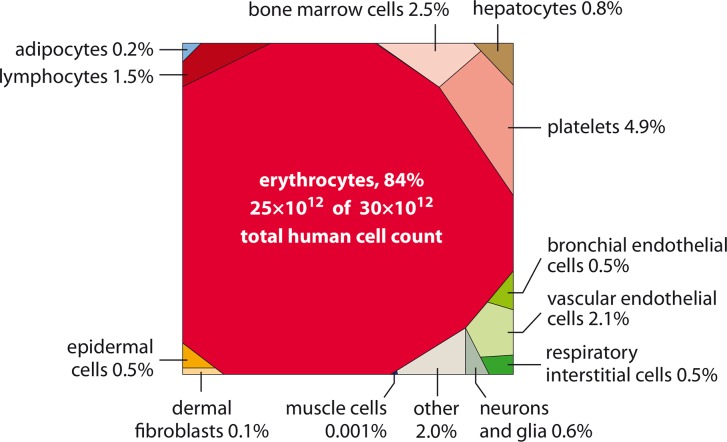
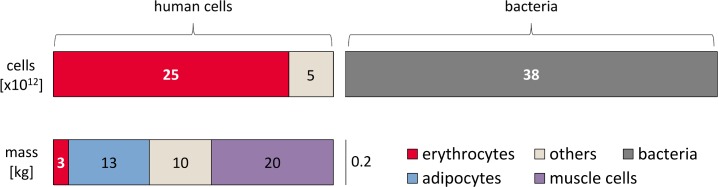
Reported values in the literature on the number of cells in the body differ by orders of magnitude and are very seldom supported by any measurements or calculations. Here, we integrate the most up-to-date information on the number of human and bacterial cells in the body. We estimate the total number of bacteria in the 70 kg "reference man" to be 3.8·1013. For human cells, we identify the dominant role of the hematopoietic lineage to the total count (≈90%) and revise past estimates to 3.0·1013 human cells. Our analysis also updates the widely-cited 10:1 ratio, showing that the number of bacteria in the body is actually of the same order as the number of human cells, and their total mass is about 0.2 kg.
Overview
The claims and statistics of this paper haven’t been checked yet.
Free: it reads the open-access text and checks the first 5 claims that cite a source we can check. Create a free account to check every claim.
Integrity signals
Registry
Cites
Statistics
Figures
Verification
Claims the paper makes
The claims and statistics of this paper haven’t been checked yet.
Free: it reads the open-access text and checks the first 5 claims that cite a source we can check. Create a free account to check every claim.
Claims other papers make about this one
Each is checked against this paper’s own text: does it say what the citing paper says it does?
The cited source doesn’t support the claim as written.
In the citing paper
“these microbes typically account for less than half of the weight of faecal solids 10 .”
From Human microbiome myths and misconceptions (2023) · cites this paper as [10]
Checked by a reasoning model — may be wrong.
Experimental — accuracy not yet measuredThe source backs part of the claim, not all of it — or backs it for a different population, condition or comparison.
In the citing paper
“Endotoxin is a lipopolysaccharide (LPS), constituting much of the outer membrane of gram-negative bacteria, present at high concentrations in gut, gums and skin and in other tissue during bacterial infection.”
From The endotoxin hypothesis of neurodegeneration (2019) · cites this paper as [6]
Experimental — accuracy not yet measuredThe source backs part of the claim, not all of it — or backs it for a different population, condition or comparison.
In the citing paper
“their gene count that exceeds the human genome’s gene count by ~100-fold and enables diverse metabolic programming”
From The microbiome and human cancer (2021) · cites this paper as [27]
Experimental — accuracy not yet measuredThe source backs part of the claim, not all of it — or backs it for a different population, condition or comparison.
In the citing paper
“The human gut microbiome contains ~3 × 10 13 bacteria, most of which are commensals (5).”
From The microbiome in cancer immunotherapy: Diagnostic tools and therapeutic strategies (2018) · cites this paper as [5]
Experimental — accuracy not yet measuredThe source backs part of the claim, not all of it — or backs it for a different population, condition or comparison.
In the citing paper
“there are trillions of microbes as numerous as human cells, that interact with the host constantly at numerous sites”
From The Influence of the Gut Microbiome on Cancer, Immunity, and Cancer Immunotherapy (2018) · cites this paper as Sender et al., 2016
Experimental — accuracy not yet measured
10 more claims about this paper
Create a free account to see every claim other papers make about this one.
Self-check
Percentages, sums and reported differences re-computed from the paper’s own numbers.
The self-check needs the paper’s full text.
Citations
Cites
A human gut microbial gene catalogue established by metagenomic sequencing
MetaHIT Consortium, Qin, J., Li, R., Raes, J., Arumugam, M., Burgdorf, K. S., Manichanh, C., Nielsen, T., Pons, N., Levenez, F., et al. (2010) · Nature · doi:10.1038/nature08821 · Cited by 11,624 · cited 1×
“Bacteria overwhelmingly outnumber eukaryotes and archaea in the human microbiome by 2–3 orders of magnitude [7,8].”
BackgroundHuman gut microbiome viewed across age and geography
Yatsunenko, T., Rey, F. E., Manary, M. J., Trehan, I., Dominguez-Bello, M. G., Contreras, M., Magris, M., Hidalgo, G., Baldassano, R. N., Anokhin, A. P., et al. (2012) · Nature · doi:10.1038/nature11053 · Cited by 7,815 · cited 1×
“Bacteria overwhelmingly outnumber eukaryotes and archaea in the human microbiome by 2–3 orders of magnitude [7,8].”
BackgroundAlberts, B., Johnson, A., Lewis, J., Morgan, D., Raff, M., Roberts, K., & Walter, P. (2017) · W.W. Norton eBooks · doi:10.1201/9781315735368 · Cited by 6,365
Turnbaugh, P. J., Ley, R. E., Hamady, M., Fraser-Liggett, C. M., Knight, R., & Gordon, J. I. (2007) · Nature · doi:10.1038/nature06244 · Cited by 6,091 · cited 1×
“One of the most fundamental and commonly cited figures in this growing field is the estimate that bacteria residing in the human body outnumber human cells by a factor of 10 or more (Bäckhed et al., 2005; Gill et al., 2006; Round and Mazmanian, 2010; Turnbaugh et al., 2007).”
BackgroundHost-Bacterial Mutualism in the Human Intestine
Bäckhed, F., Ley, R. E., Sonnenburg, J. L., Peterson, D. A., & Gordon, J. I. (2005) · Science · doi:10.1126/science.1104816 · Cited by 5,277
Metagenomic Analysis of the Human Distal Gut Microbiome
Gill, S. R., Pop, M., DeBoy, R. T., Eckburg, P. B., Turnbaugh, P. J., Samuel, B. S., Gordon, J. I., Relman, D. A., Fraser-Liggett, C. M., & Nelson, K. E. (2006) · Science · doi:10.1126/science.1124234 · Cited by 4,699 · cited 1×
“One of the most fundamental and commonly cited figures in this growing field is the estimate that bacteria residing in the human body outnumber human cells by a factor of 10 or more (Bäckhed et al., 2005; Gill et al., 2006; Round and Mazmanian, 2010; Turnbaugh et al., 2007).”
BackgroundCellular Scaling Rules for the Brains of Marsupials: Not as “Primitive” as Expected
Dos Santos, S. E., Porfirio, J., da Cunha, F. B., Manger, P. R., Tavares, W., Pessoa, L., Raghanti, M. A., Sherwood, C. C., & Herculano-Houzel, S. (2017) · Brain, Behavior and Evolution · doi:10.1159/000452856 · Cited by 2,642
MICROBIAL ECOLOGY OF THE GASTROINTESTINAL TRACT
Savage, D. C. (1977) · Annual Review of Microbiology · doi:10.1146/annurev.mi.31.100177.000543 · Cited by 2,436 · cited 5×
“Interestingly, those who read the original paper (Savage, 1977) find that it actually cites another paper for his estimate (Luckey, 1972).”
BackgroundInfluentialAzevedo, F. A. C., Carvalho, L. R. B., Grinberg, L. T., Farfel, J. M., Ferretti, R. E. L., Leite, R. E. P., Filho, W. J., Lent, R., & Herculano‐Houzel, S. (2009) · Journal of Comparative Neurology · doi:10.1002/cne.21974 · Cited by 2,337 · cited 1×
“However, a recent analysis [28] revisits this value and, after analyzing the variation across brain regions, concludes that the ratio is close to 1:1.”
BackgroundRound, J. L., & Mazmanian, S. K. (2010) · Proceedings of the National Academy of Sciences · doi:10.1073/pnas.0909122107 · Cited by 2,233 · cited 1×
“One of the most fundamental and commonly cited figures in this growing field is the estimate that bacteria residing in the human body outnumber human cells by a factor of 10 or more (Bäckhed et al., 2005; Gill et al., 2006; Round and Mazmanian, 2010; Turnbaugh et al., 2007).”
Background
Cited by
Items 701–800 of 1,042
Tudela, H., Claus, S. P., & Saleh, M. (2021) · Frontiers in Cell and Developmental Biology · doi:10.3389/fcell.2021.719072 · Cited by 88
Li, Y., Shao, L., Mou, Y., Zhang, Y., & Ping, Y. (2021) · Gut Microbes · doi:10.1080/19490976.2021.1957407 · Cited by 87
“The human body harbors a large variety of microorganism communities which intensively interact with host and each other through direct contacts or metabolites.(2) It has long been postulated that human gut microbiota (GM), the collection of all microorganism communities in the human digestive tract, holds great signif…”
BackgroundPadhi, P., Worth, C., Zenitsky, G. D., Jin, H., Sambamurti, K., Anantharam, V., Kanthasamy, A., & Kanthasamy, A. G. (2022) · Frontiers in Neuroscience · doi:10.3389/fnins.2022.836605 · Cited by 87
Recent Advances in Lipases and Their Applications in the Food and Nutraceutical Industry
Reyes-Reyes, A. L., Valero, F., & Sandoval, G. (2022) · Catalysts · doi:10.3390/catal12090960 · Cited by 92
Genetically engineered bacterium: Principles, practices, and prospects
Liu, Y., Feng, J., Pan, H., Zhang, X., & Zhang, Y. (2022) · Frontiers in Microbiology · doi:10.3389/fmicb.2022.997587 · Cited by 92
“, 2015), nutrient enrichment, and flora diversity, which greatly affect GEB activity when orally administered (Sender et al., 2016).”
BackgroundEpigenetic effects of short-chain fatty acids from the large intestine on host cells
Stein, R. A., & Riber, L. (2023) · microLife · doi:10.1093/femsml/uqad032 · Cited by 97
“Various studies estimated the ratio betw een eukary otic and bacterial cells in the human body to be 1:10 (Sav a ge 1977 , Bull and Plummer 2014 ), 1:2–3 (Gilbert 2015 ), or closer to 1:1 (Sender et al. 2016 , Sender et al. 2016 ).”
BackgroundSivaprakasam, S., Bhutia, Y., Ramachandran, S., & Ganapathy, V. (2017) · Nutrients · doi:10.3390/nu9080856 · Cited by 79
Surgical site infections and the microbiome: An updated perspective
Wenzel, R. P. (2019) · Infection Control and Hospital Epidemiology · doi:10.1017/ice.2018.363 · Cited by 88
Microbiota: a novel regulator of pain
Defaye, M., Gervason, S., Altier, C., Berthon, J., Ardid, D., Filaire, E., & Carvalho, F. A. (2019) · Journal of Neural Transmission · doi:10.1007/s00702-019-02083-z · Cited by 88
“Current estimates suggest that approximately ~ 1014 microbes live on or in the human body with the number of microbial cells outnumbering the human cells (Sender et al. 2016).”
BackgroundEngevik, M. A., Banks, L. D., Engevik, K. A., Chang‐Graham, A. L., Perry, J. L., Hutchinson, D. S., Ajami, N. J., Petrosino, J. F., & Hyser, J. M. (2020) · Gut Microbes · doi:10.1080/19490976.2020.1754714 · Cited by 87
Sharma, R. (2022) · Probiotics and Antimicrobial Proteins · doi:10.1007/s12602-021-09903-3 · Cited by 75
“Human beings are considered “metaorganisms” due to our close symbiotic relationship with microorganisms which account for at least half the number of total cells in our body [1].”
BackgroundFakharian, F., Asgari, B., Nabavi-Rad, A., Sadeghi, A., Soleimani, N., Yadegar, A., & Zali, M. R. (2022) · Frontiers in Cellular and Infection Microbiology · doi:10.3389/fcimb.2022.953718 · Cited by 87
“4 The intestinal microbiota The colon has the largest community of bacteria in the human digestive system, with a nearly 10(7)-fold increase in population compared to the stomach (Sender et al., 2016).”
BackgroundThe Athlete Gut Microbiome and its Relevance to Health and Performance: A Review
O’Brien, M., O’Sullivan, Ó., Claesson, M. J., & Cotter, P. D. (2022) · Sports Medicine · doi:10.1007/s40279-022-01785-x · Cited by 98
“The gut microbiome consists of approximately 40 trillion microbial cells [1] and, thanks to insights provided by high throughput sequencing and culture independent technologies, there is now evidence to suggest that the human gut microbiome plays an important role in immunomodulation, digestion, vitamin metabolism, mo…”
McCord, B. R., Gauthier, Q. T., Cho, S., Roig, M. N., Gibson-Daw, G., Young, B. A., Taglia, F., Zapico, S. C., Mariot, R. F., Lee, S. B., et al. (2018) · Analytical Chemistry · doi:10.1021/acs.analchem.8b05318 · Cited by 86
Escudeiro, P., Pothier, J. F., Dionísio, F., & Nogueira, T. (2019) · mSphere · doi:10.1128/msphere.00135-19 · Cited by 92
“8 1013 bacterial cells (2) spanning thousands of taxa and colonizing our body’s surfaces and biofluids, Citation Escudeiro P, Pothier J, Dionisio F, Nogueira T.”
BackgroundNecrotizing Enterocolitis and the Preterm Infant Microbiome
Baranowski, J. R., & Claud, E. C. (2019) · Advances in experimental medicine and biology · doi:10.1007/5584_2018_313 · Cited by 87
Pyrethroid exposure alters internal and cuticle surface bacterial communities in Anopheles albimanus
Dada, N., Lol, J. C., Benedict, A. C., López, F., Sheth, M., Dzuris, N., Padilla, N., & Lenhart, A. E. (2019) · The ISME Journal · doi:10.1038/s41396-019-0445-5 · Cited by 84
“Human skin surface is comprised of less diverse bacterial communities compared to the internal organs (collectively) [74].”
BackgroundPellegrini, M., Ippolito, M., Monge, T., Violi, R., Cappello, P., Ferrocino, I., Cocolin, L. S., De Francesco, A., Bo, S., & Finocchiaro, C. (2020) · Nutrition · doi:10.1016/j.nut.2020.110749 · Cited by 77
The role of CD71+ erythroid cells in the regulation of the immune response
Grzywa, T. M., Nowis, D., & Gołąb, J. (2021) · Pharmacology & Therapeutics · doi:10.1016/j.pharmthera.2021.107927 · Cited by 87
The Effects and Mechanisms of Flavonoids on Cancer Prevention and Therapy: Focus on Gut Microbiota
Wang, M., Yu, F., Zhang, Y., Chang, W., & Zhou, M. (2022) · International Journal of Biological Sciences · doi:10.7150/ijbs.68170 · Cited by 85
“The number of gut microbial cells is comparable to that of our own cells [13].”
BackgroundMitochondrial ATP Production is Required for Endothelial Cell Control of Vascular Tone
Wilson, C., Lee, M. D., Buckley, C., Zhang, X., & McCarron, J. G. (2022) · Function · doi:10.1093/function/zqac063 · Cited by 94
“71 Three observations exclude a role for ROS in the control of vascular tone by the mitochondrial ATP synthase: (1) oligomycin does not increase superoxide production in native ECs; (2) endothelial Ca2+ activity is insensitive to global or mitochondrial-targeted scavenging of ROS39; and (3) endothe-”
BackgroundInfluentialRodríguez-Daza, M.-C., & de Vos, W. M. (2022) · International Journal of Molecular Sciences · doi:10.3390/ijms24010045 · Cited by 98
“The human gut houses trillions of microbes, including viruses, fungi, archaea, and bacteria, the latter being the major representative [1,2].”
BackgroundDistribution and roles of Ligilactobacillus murinus in hosts
Chuandong, Z., Hu, J., Li, J., Wu, Y., Wu, C., Lai, G., Shen, H., Wu, F., Tao, C., Liu, S., et al. (2024) · Microbiological Research · doi:10.1016/j.micres.2024.127648 · Cited by 90
Gut microbiota: a hidden player in polycystic ovary syndrome
Senthilkumar, H., & Arumugam, M. (2025) · Journal of Translational Medicine · doi:10.1186/s12967-025-06315-7 · Cited by 102
“It is generally known that the amount of bacteria in the body is about equal to the number of human cells [11], and that the quantity of genetic information present in these microorganisms is at least 150-fold more than that in the human genome [12].”
An approach to gut microbiota profile in children with autism spectrum disorder
Andreo‐Martínez, P., García-Martínez, N., Sánchez‐Samper, E. P., & Martínez‐González, A. E. (2019) · Environmental Microbiology Reports · doi:10.1111/1758-2229.12810 · Cited by 81
“Gut microbiota abundance ranges from about 108 bacteria/g measured in ileum to ~1011 bacteria/g measured in stool (Sender et al., 2016), with Bacteroidetes, Firmicutes, Proteobacteria, Actinobacteria, and Fusobacteria being the major bacterial phyla in the mammalian gastro-intestinal (GI) tract…”
BackgroundJo, J., Oh, J., & Park, C. (2020) · The Journal of Microbiology · doi:10.1007/s12275-020-9525-5 · Cited by 92
Bifidobacterium animalis subsp. lactis 420 for Metabolic Health: Review of the Research
Uusitupa, H., Rasinkangas, P., Lehtinen, M. J., Mäkelä, S. M., Airaksinen, K., Anglenius, H., Ouwehand, A. C., & Maukonen, J. (2020) · Nutrients · doi:10.3390/nu12040892 · Cited by 90
“The gastrointestinal tract harbors a vast number of bacteria (1013), which roughly equals the number of cells that make up the human body [2].”
BackgroundDeschamps, C., Fournier, E., Uriot, O., Lajoie, F., Verdier, C., Comtet-Marre, S., Thomas, M., Kapel, N., Cherbuy, C., Alric, M., et al. (2020) · Applied Microbiology and Biotechnology · doi:10.1007/s00253-020-10959-4 · Cited by 82
Alterations in the gut microbiota and metabolite profiles in the context of neuropathic pain
Chen, P., Wang, C., Ren, Y.-N., Ye, Z., Jiang, C. Q., & Wu, Z. (2021) · Molecular Brain · doi:10.1186/s13041-021-00765-y · Cited by 87
Review: The Role of Intestinal Dysbiosis in Parkinson’s Disease
Huang, Y., Liao, J., Liu, X., Zhong, Y., Cai, X., & Long, L. (2021) · Frontiers in Cellular and Infection Microbiology · doi:10.3389/fcimb.2021.615075 · Cited by 75
Emerging applications of bacteria as antitumor agents
Kalia, V. C., Patel, S. K. S., Cho, B., Wood, T. K., & Lee, J.-K. (2021) · Seminars in Cancer Biology · doi:10.1016/j.semcancer.2021.05.012 · Cited by 81
The role of the microbiome in gastrointestinal inflammation
Sanders, D. J., Inniss, S., Sebepos‐Rogers, G., Rahman, F. Z., & Smith, A. M. (2021) · Bioscience Reports · doi:10.1042/bsr20203850 · Cited by 91
“(3), however archaea, viruses, and single-cell eukaryotes (e.”
BackgroundThe gut microbiome and efficacy of cancer immunotherapy
Roviello, G., Iannone, L. F., Bersanelli, M., Mini, E., & Catalano, M. (2021) · Pharmacology & Therapeutics · doi:10.1016/j.pharmthera.2021.107973 · Cited by 84
Mucins Dynamics in Physiological and Pathological Conditions
Melhem, H., Regan-Komito, D., & Niess, J. H. (2021) · International Journal of Molecular Sciences · doi:10.3390/ijms222413642 · Cited by 86
“These include gut commensal bacteria, pathogens and food antigens [1].”
BackgroundDefining Cell Identity with Single‐Cell Omics
Mincarelli, L., Lister, A., Lipscombe, J., & Macaulay, I. C. (2018) · PROTEOMICS · doi:10.1002/pmic.201700312 · Cited by 82
The interplay between microbes and the immune response in inflammatory bowel disease
Goethel, A., Croitoru, K., & Philpott, D. J. (2018) · The Journal of Physiology · doi:10.1113/jp275396 · Cited by 83
“The alimentary tract runs from mouth to anus, and while microbial colonization does exist in the mouth and stomach, the majority of the gut microbiota live in the small and large intestine (Sender et al. 2016).”
BackgroundThe intestinal microbiome and Alzheimer's disease: A review
Li, Z., Zhu, H., Zhang, L., & Qin, C. (2018) · Animal Models and Experimental Medicine · doi:10.1002/ame2.12033 · Cited by 83
“and jejunum, 10(3)‐10(8)/mL in the ileum and 10(12)/mL in the colon.(9,17) Almost the entire gut intestinal microbiome is composed of species”
BackgroundDavoren, M. J., Liu, J., Castellanos, J., Rodríguez-Malavé, N. I., & Schiestl, R. H. (2019) · Gut Microbes · doi:10.1080/19490976.2018.1547612 · Cited by 76
“8 × 10(13) bacteria make their home in the average human, with most of those in the gut.(35) Of these, approximately 10(11) cells are shed with every gram of feces.”
BackgroundDietary Gluten as a Conditioning Factor of the Gut Microbiota in Celiac Disease
Bascuñán, K. A., Araya, M., Roncoroni, L., Doneda, L., & Elli, L. (2019) · Advances in Nutrition · doi:10.1093/advances/nmz080 · Cited by 89
Maini Rekdal, V., Nol Bernadino, P., Luescher, M. U., Kiamehr, S., Le, C., Bisanz, J. E., Turnbaugh, P. J., Bess, E. N., & Balskus, E. P. (2020) · eLife · doi:10.7554/elife.50845 · Cited by 75
“36 Possessing 150-fold more genes than the human genome, the trillions of organisms that make up 37 this community (the human gut microbiota) harbor metabolic capabilities that expand the range of 38 chemistry taking place in the body (1-3).”
BackgroundThe crosstalk between microbiome and asthma: Exploring associations and challenges
Abdel‐Aziz, M. I., Vijverberg, S. J. H., Neerincx, A. H., Kraneveld, A. D., & Maitland‐van der Zee, A. H. (2019) · Clinical & Experimental Allergy · doi:10.1111/cea.13444 · Cited by 75
Transgenerational epigenetic inheritance: from phenomena to molecular mechanisms
Liberman, N., Wang, S. Y., & Greer, E. L. (2019) · Current Opinion in Neurobiology · doi:10.1016/j.conb.2019.09.012 · Cited by 85
“The vast majority of the human microbiota is present in the gut which harbors an estimated 10(13) microbes [270].”
BackgroundOgden, H. B., Child, R. B., Fallowfield, J. L., Delves, S. K., Westwood, C. S., & Layden, J. D. (2020) · Nutrients · doi:10.3390/nu12020537 · Cited by 84
“The GI microbiota has an estimated size circa 1014 cells, which is estimated 1- to 10-fold greater than the total number of cells of the human body [39].”
BackgroundBacterial Peptidoglycan Fragments Differentially Regulate Innate Immune Signaling
Bersch, K. L., DeMeester, K. E., Zagani, R., Chen, S., Wodzanowski, K. A., Liu, S., Mashayekh, S., Reinecker, H., & Grimes, C. L. (2021) · ACS Central Science · doi:10.1021/acscentsci.1c00200 · Cited by 90
Méndez-García, L. A., Bueno-Hernández, N., Cid-Soto, M. A., León, K. L. D., Mendoza-Martínez, V. M., Espinosa-Flores, A. J., Carrero-Aguirre, M., Esquivel‐Velázquez, M., León-Hernández, M., Viurcos-Sanabria, R., et al. (2022) · Microorganisms · doi:10.3390/microorganisms10020434 · Cited by 90
“In humans, the gut microbiome is composed of over 3 × 10¹³ bacteria [16], among which the phylum Firmicutes appear to play a central role in the metabolism of glucose and insulin [17].”
BackgroundHow Dietary Fibre, Acting via the Gut Microbiome, Lowers Blood Pressure
Xu, C., & Marques, F. Z. (2022) · Current Hypertension Reports · doi:10.1007/s11906-022-01216-2 · Cited by 85
Freijy, T. M., Cribb, L., Oliver, G., Metri, N., Opie, R., Jacka, F. N., Hawrelak, J. A., Rucklidge, J. J., Ng, C. H., & Sarris, J. J. (2023) · Frontiers in Neuroscience · doi:10.3389/fnins.2022.1097278 · Cited by 101
“The human gut microbiota refers to the microbial population living within the gastrointestinal tract, which consists of over 38 trillion bacterial cells (Sender et al., 2016) and a relatively minor amount of archaea, eukaryotes and viruses (Qin et al.”
BackgroundKiriyama, Y., & Nochi, H. (2023) · Microorganisms · doi:10.3390/microorganisms11112730 · Cited by 79
“In addition, the total mass of bacteria in the human body is estimated to be approximately 0.2 kg [1].”
BackgroundInfluentialChatzinikolaou, P. N., Margaritelis, N. V., Paschalis, V., Theodorou, A. A., Vrabas, I. S., Kyparos, A., D’Alessandro, A., & Nikolaidis, M. G. (2024) · Acta Physiologica · doi:10.1111/apha.14081 · Cited by 89
“…2.5–3.0 × 10 8 molecules/cell [298] Haemoglobin content per cell 23.5 ± 1.0 pg per cell [348] Erythrocytes (total number) ≈ 2.5 × 10 13 cells [186,349] Erythrocyte/total cells ≈ 84 % [186,349] Erythrocyte concentration ≈ 4.5–5 of 2,3-BPG bound to haemoglobin, which fluctuates as erythrocytes…”
BackgroundInfluentialInferring human microbial dynamics from temporal metagenomics data: Pitfalls and lessons
Cao, H., Gibson, T. E., Bashan, A., & Liu, Y. (2017) · BioEssays · doi:10.1002/bies.201600188 · Cited by 75
Irritable Bowel Syndrome and Stress-Related Psychiatric Co-morbidities: Focus on Early Life Stress
O’Mahony, S. M., Clarke, G. A., Dinan, T. G., & Cryan, J. F. (2017) · Handbook of experimental pharmacology · doi:10.1007/164_2016_128 · Cited by 88
Impact of genistein on the gut microbiome of humanized mice and its role in breast tumor inhibition
Paul, B., Royston, K. J., Li, Y., Stoll, M. L., Skibola, C. F., Wilson, L. S., Barnes, S., Morrow, C. D., & Tollefsbol, T. O. (2017) · PLOS ONE · doi:10.1371/journal.pone.0189756 · Cited by 74
“However, a recent paper has stated that the ratio may be closer to 1:1 [16].”
BackgroundA preliminary study of gut microbiome variation and HPA axis reactivity in healthy infants
Rosin, S., Xia, K., Azcarate-Peril, M. A., Carlson, A. L., Propper, C. B., Thompson, A. L., Grewen, K., & Knickmeyer, R. C. (2021) · Psychoneuroendocrinology · doi:10.1016/j.psyneuen.2020.105046 · Cited by 74
“Most of these microbial cells are bacteria and most reside in the colon (Sender et al., 2016).”
BackgroundMicrobiome: Effects of Ageing and Diet
Salazar, N., González, S., Nogacka, A. M., Ríos-Covián, D., Arboleya, S., Gueimonde, M., & Reyes‐Gavilán, C. G. D. L. (2019) · Current Issues in Molecular Biology · doi:10.21775/cimb.036.033 · Cited by 83
Shamoon, M., Martin, N. M., & O'Brien, C. L. (2019) · Pharmacological Research · doi:10.1016/j.phrs.2019.104344 · Cited by 78
Chandra, H., Sharma, K. K., Tuovinen, O. H., Sun, X., & Shukla, P. (2021) · Gut Microbes · doi:10.1080/19490976.2021.1979882 · Cited by 88
“A human body in average carries about 10(14) microbial cells comprising fungi, protozoans, other eukaryotes, and prokaryotes.(1) Majority of these microbes are present in the gastrointestinal (GI) tract, constituting about 10 times the number of host cells and harboring at least 1000 different microbial species.”
BackgroundRole of the Microbiome in Gut-Heart-Kidney Cross Talk
Glorieux, G., Nigám, S. K., Vanholder, R. C., & Verbeke, F. (2023) · Circulation Research · doi:10.1161/circresaha.123.321763 · Cited by 83
Unraveling the Role of the Human Gut Microbiome in Health and Diseases
Khalil, M., Ciaula, A. D., Mahdi, L., Jaber, N., Palo, D. M. D., Graziani, A., Baffy, G., & Portincasa, P. (2024) · Microorganisms · doi:10.3390/microorganisms12112333 · Cited by 114
“The gut–intestinal microbiome appears to be involved in the evolution of T2DM [13,301], due to the strong interplay of diet, caloric intake, obesity, gut microbiome, and the onset of T2DM [302].”
A New Carrier for Advanced Cosmeceuticals
Morganti, P., & Coltelli, M. (2019) · Cosmetics · doi:10.3390/cosmetics6010010 · Cited by 87
Pharmacomicrobiomics: The Holy Grail to Variability in Drug Response?
Sharma, A., Buschmann, M. M., & Gilbert, J. A. (2019) · Clinical Pharmacology & Therapeutics · doi:10.1002/cpt.1437 · Cited by 86
“8 × 10(13) microorganisms, which is equal to the number of cells in an adult human body.(29) Microorganisms modulate the immune system and regulate processes such as metabolism of polysaccharides and biosynthesis of amino acids and vitamins.”
BackgroundAnderson, R., Theron, A. J., & Rapoport, B. L. (2019) · Frontiers in Immunology · doi:10.3389/fimmu.2019.02254 · Cited by 77
Chen, L., Liu, J., Ge, X., Xu, W., Chen, Y., Li, F., Cheng, D., & Shao, R. (2019) · International Journal of Biological Macromolecules · doi:10.1016/j.ijbiomac.2019.09.073 · Cited by 79
Role of Carbon Monoxide in Host–Gut Microbiome Communication
Hopper, C., Cruz, L. K. D. L., Lyles, K. V. M., Wareham, L. K., Gilbert, J. A., Eichenbaum, Z., Magierowski, M., Poole, R. K., Wollborn, J., & Wang, B. (2020) · Chemical Reviews · doi:10.1021/acs.chemrev.0c00586 · Cited by 80
The gut microbial diversity of colon cancer patients and the clinical significance
He, T., Cheng, X., & Xing, C. (2021) · Bioengineered · doi:10.1080/21655979.2021.1972077 · Cited by 79
“In turn, the host can also affect the communities and function of gut microbes [14,15].”
BackgroundJo, C. S., Myung, C. H., Yoon, Y. C., Ahn, B. H., Min, J. W., Seo, W. S., Lee, D. H., Kang, H. C., Heo, Y. H., Choi, H., et al. (2022) · Current Issues in Molecular Biology · doi:10.3390/cimb44020036 · Cited by 73
“This coexistence is known as the microbiome [37].”
BackgroundTesei, D., Jewczynko, A., Lynch, A., & Urbaniak, C. (2022) · Life · doi:10.3390/life12040495 · Cited by 88
Antibiotic resistance: calling time on the ‘silent pandemic’
Mendelson, M., Sharland, M., & Mpundu, M. M. (2022) · JAC-Antimicrobial Resistance · doi:10.1093/jacamr/dlac016 · Cited by 75
Probiotics: Protecting Our Health from the Gut
Varela-Trinidad, G. U., Domínguez-Díaz, C., Solórzano-Castanedo, K., Íñiguez-Gutiérrez, L., Hernández-Flores, T. D. J., & Fafutis‐Morris, M. (2022) · Microorganisms · doi:10.3390/microorganisms10071428 · Cited by 85
“Since the GI tract has one of the largest epithelial surfaces in the human body, with a surface of 250 to 400 m2 [6], it is estimated that 70% of all bacteria in the human body are found in the colon alone [1], which are referred to as the gut microbiota (GM) [2,7].”
BackgroundRani, A., Ranjan, R., McGee, H. S., Andropolis, K. E., Panchal, D., Hajjiri, Z., Brennan, D. C., Finn, P. W., & Perkins, D. L. (2016) · Translational research · doi:10.1016/j.trsl.2016.08.008 · Cited by 80
The human archaeome: methodological pitfalls and knowledge gaps
Mahnert, A., Blohs, M., Pausan, M.-R., & Moissl‐Eichinger, C. (2018) · Emerging Topics in Life Sciences · doi:10.1042/etls20180037 · Cited by 73
Dong, T. S., Katzka, W. R., Lagishetty, V., Luu, K., Hauer, M., Pisegna, J. R., & Jacobs, J. P. (2020) · Scientific Reports · doi:10.1038/s41598-020-59535-w · Cited by 78
Lukiw, W. J. (2020) · Frontiers in Cellular and Infection Microbiology · doi:10.3389/fcimb.2020.00022 · Cited by 75
“, 2019); (ii) an extremely active, dynamic, and changing ecosystem dependent on the host’s age, diet, environment, ethnicity, and health and/or disease status (Sender et al., 2016; Zhao and Lukiw, 2018a,b; Rinninella et al., 2019); (iii) a rich source of commensal bacteria usually beneficial to human health because of…”
BackgroundHu, Z., Li, H., Jiang, H., Ren, Y., Yu, X., Qiu, J., Stablewski, A. B., Zhang, B., Buck, M. J., & Feng, J. (2020) · Science Advances · doi:10.1126/sciadv.aaz0298 · Cited by 75
“6A, were hRBCs (mesoderm) (Fig.”
InfluentialJensen, E., Young, J. A., Mathes, S. C., List, E. O., Carroll, R. K., Kuhn, J., Onusko, M., Kopchick, J. J., Murphy, E. R., & Berryman, D. E. (2020) · Growth Hormone & IGF Research · doi:10.1016/j.ghir.2020.101333 · Cited by 86
“The microbial community, also known as the gut microbiota, is comprised of trillions of microbes (bacteria, viruses, and fungi) that reside throughout the gastrointestinal (GI) tract, with the majority concentrated in the terminal ileum and colon [11, 12].”
BackgroundSakurada, K., Watanabe, K., & Akutsu, T. (2020) · Diagnostics · doi:10.3390/diagnostics10090693 · Cited by 85
“[8] of the Weizmann Institute of Science in Israel obtained a total of about 30 trillion, almost half of the previous estimate, and it is considered that the estimated number of cells will one day be further revised downward.”
BackgroundSoy bioactive peptides and the gut microbiota modulation
Ashaolu, T. J. (2020) · Applied Microbiology and Biotechnology · doi:10.1007/s00253-020-10799-2 · Cited by 82
“The bacterial cells outnumber human cells by more than 10% (Sender et al. 2016), and the number ofmicrobiota genes is at least a hundred percent more than the human genes (Ley et al. 2006).”
BackgroundDietary Influences on the Microbiota–Gut–Brain Axis
Barber, T. M., Valsamakis, G., Mastorakos, G. P., Hanson, P., Kyrou, I., Randeva, H. S., & Weickert, M. O. (2021) · International Journal of Molecular Sciences · doi:10.3390/ijms22073502 · Cited by 86
“The human microbiota has been estimated to consist of >30 trillion microbes, a similar order of magnitude to the number of our own cells [2].”
BackgroundEngineered microbial systems for advanced drug delivery
Shen, H., Aggarwal, N., Wun, K. S., Lee, Y. S., Hwang, I. Y., & Chang, M. W. (2022) · Advanced Drug Delivery Reviews · doi:10.1016/j.addr.2022.114364 · Cited by 76
The Role of the Human Microbiome in the Pathogenesis of Pain
Ustianowska, K., Ustianowski, Ł., Machaj, F., Gorący, A., Rosik, J., Szostak, B., Szostak, J., & Pawlik, A. (2022) · International Journal of Molecular Sciences · doi:10.3390/ijms232113267 · Cited by 90
“However, yeasts, archaea, or parasites living in the large area of the gastrointestinal tract often play a substantial role in this microenvironment [1,2,4,5].”
BackgroundThe defensome of complex bacterial communities
Beavogui, A., Lacroix, A., Wiart, N., Poulain, J., Delmont, T. O., Paoli, L., Wincker, P., & Oliveira, P. H. (2024) · Nature Communications · doi:10.1038/s41467-024-46489-0 · Cited by 88
“A healthy adult human gut, for example, is a reservoir for ~4 × 10 13 bacterial cells (mostly Firmi-cutes and Bacteroidetes) 21 , and low (10 − 3 − 1) virus-to-prokaryote ratios (VPRs) 22 .”
Bai, L., Zhou, P., Li, D., & Ju, X. (2017) · Journal of Medical Microbiology · doi:10.1099/jmm.0.000568 · Cited by 82
Physiology of exercise and phase angle: another look at BIA
Sardinha, L. B. (2018) · European Journal of Clinical Nutrition · doi:10.1038/s41430-018-0215-x · Cited by 91
Dietary Fiber and Gut Microbiota in Renal Diets
Camerotto, C., Cupisti, A., D’Alessandro, C., Muzio, F., & Gallieni, M. A. (2019) · Nutrients · doi:10.3390/nu11092149 · Cited by 86
“8 x 10¹³ microorganisms living throughout the human body of a 70 kg individual [46].”
BackgroundEmerging Frontiers in Microbiome Engineering
Inda, M. E., Broset, E., Lu, T. K., & de la Fuente‐Núñez, C. (2019) · Trends in Immunology · doi:10.1016/j.it.2019.08.007 · Cited by 78
“The human body is home to at least as many microbial cells as human cells [1].”
BackgroundFusco, G., & Minelli, A. (2019) · Cambridge University Press eBooks · doi:10.1017/9781108758970 · Cited by 83
Sroka-Oleksiak, A., Młodzińska, A., Bulanda, M., Salamon, D., Major, P., Stanek, M., & Gosiewski, T. (2020) · Journal of Clinical Medicine · doi:10.3390/jcm9020369 · Cited by 70
“Other reasons are the acidic pH of the stomach and the presence of digestive enzymes that inhabit the small intestine that significantly reduce the number of microbial cells [5].”
BackgroundSmoking-induced microbial dysbiosis in health and disease
Shapiro, H., Goldenberg, K., Ratiner, K., & Elinav, E. (2022) · Clinical Science · doi:10.1042/cs20220175 · Cited by 83
The central role of the gut in intensive care
Corriero, A., Gadaleta, R. M., Puntillo, F., Inchingolo, F., Moschetta, A., & Brienza, N. (2022) · Critical Care · doi:10.1186/s13054-022-04259-8 · Cited by 92
Impact of climate change on immune responses and barrier defense
Skevaki, C. L., Nadeau, K. C., Rothenberg, M. E., Alahmad, B., Mmbaga, B. T., Masenga, G. G., Sampath, V., Christiani, D. C., Haahtela, T., & Renz, H. E. (2024) · Journal of Allergy and Clinical Immunology · doi:10.1016/j.jaci.2024.01.016 · Cited by 87
ROSENBERG, E. B. (2024) · npj Biofilms and Microbiomes · doi:10.1038/s41522-024-00580-y · Cited by 101
Marzorati, M., den Abbeele, P. V., Bubeck, S. S., Bayne, T., Krishnan, K., Young, A., Mehta, D. S., & DeSouza, A. (2020) · Microorganisms · doi:10.3390/microorganisms8071028 · Cited by 79
“Most of the organisms making up the gut microbiome reside in the colon [1] and they play important roles in nutrient and drug metabolism, immunomodulation, maintenance of gut barrier integrity, and protection from pathogenic bacteria [2].”
BackgroundGut microbiota and aging-A focus on centenarians
Cӑtoi, A. F., Corina, A., Katsiki, N., Vodnar, D. C., Andreicuț, A. D., Stoian, A. P., Rizzo, M., & Pérez-Martínez, P. (2020) · Biochimica et Biophysica Acta (BBA) - Molecular Basis of Disease · doi:10.1016/j.bbadis.2020.165765 · Cited by 70
Chan, M. M.-Y., Yang, X., Wang, H., Saaoud, F., Sun, Y., & Fong, D. (2019) · Nutrients · doi:10.3390/nu11081821 · Cited by 77
Wang, Y., Xu, J., Kong, L., Liu, T., Yi, L., Wang, H., Huang, W. E., & Zheng, C. (2019) · Microbial Biotechnology · doi:10.1111/1751-7915.13519 · Cited by 76
“The human gut microbiota consists of up to 3.8 9 10 13 microbes, which is closer to the number of human cells of 70 kg males (Sender et al. , 2016) and contains ~ 100 times more genes than the human ’ s genome(Backhed et al. , 2005; Gill et al. , 2006; Ley et al. , 2006; Thursby and Juge, 2017).”
InfluentialBreast Cancer: Lifestyle, the Human Gut Microbiota/Microbiome, and Survivorship
Bodai, B. I., & Nakata, T. E. (2020) · The Permanente Journal · doi:10.7812/tpp/19.129 · Cited by 74
Gut Microbiota‐Bile Acid Crosstalk in Diarrhea‐Irritable Bowel Syndrome
Zhan, K., Zheng, H., Jian-qing, L., Wu, H., Qin, S., Luo, L., & Huang, S. (2020) · BioMed Research International · doi:10.1155/2020/3828249 · Cited by 79
“3 : 1, not the previous ratio of 10 : 1 [38, 39].”
BackgroundThe gut microbiota in pediatric multiple sclerosis and demyelinating syndromes
Tremlett, H. L., Zhu, F., Arnold, D. L., Bar‐Or, A., Bernstein, C. N., Bonner, C., Forbes, J. D., Graham, M., Hart, J., Knox, N., et al. (2021) · Annals of Clinical and Translational Neurology · doi:10.1002/acn3.51476 · Cited by 73
“Most (>90%) of the human microbiota reside in the gastrointestinal tract.(1) Alterations in the gut microbiota may be influential in neurological diseases, including multiple sclerosis (MS).”
BackgroundTravers, G. J. S., Kippelen, P., Trangmar, S. J., & González‐Alonso, J. (2022) · Cells · doi:10.3390/cells11030383 · Cited by 106
Srivastava, A. (2023) · Molecular Therapy — Nucleic Acids · doi:10.1016/j.omtn.2023.05.014 · Cited by 71
“As can been seen, the estimated total number of cells in a human body is 30 trillion.(149) Thus, it is quite a testament to the remarkable safety of even the first generation of AAV vectors that humans are easily able to tolerate roughly 140 (4.”
BackgroundBeyond butyrate: microbial fiber metabolism supporting colonic epithelial homeostasis
Fagundes, R. R., Belt, S. C., Bakker, B. M., Dijkstra, G. D. H., Harmsen, H. J. M., & Faber, K. N. (2023) · Trends in Microbiology · doi:10.1016/j.tim.2023.07.014 · Cited by 79
“The human microbiota consists of trillions of microbes, with high individual variation [4].”
Background
Metadata
- Authors
- Sender, R., Fuchs, S., & Milo, R.
- Affiliations
- Weizmann Institute of Science (IL)
- Corresponding author
- Fuchs, Shai
- Milo, Ron
- Venue
- PLOS Biology
- Publisher
- Public Library of Science (PLoS)
- Published
- 2016-08-19
- Volume
- 14
- Issue
- 8
- Pages
- e1002533
- ISSN
- 1544-9173 (ISSN-L)
- 1545-7885
- PMC
- PMC4991899
- OpenAlex
- W2952564192
- Cited by
- 5,425
- References
- 88
- Citations by year
- 2026: 411 · 2025: 533 · 2024: 655 · 2023: 696 · 2022: 659 · 2021: 645 · 2020: 597 · 2019: 514 · 2018: 394 · 2017: 252 · 2016: 66
- FWCI
- 212.46
- Type
- journal article
- Language
- en
- Open access
- gold
- doi.org
- Licence
- Locations
- PLoS Biology (publishedVersion, cc-by)
- bioRxiv (Cold Spring Harbor Laboratory) (acceptedVersion, cc-by-nc-nd)
- Europe PMC (PubMed Central) (publishedVersion, cc-by)
- PubMed Central (publishedVersion, cc-by)
- PubMed (publishedVersion)
- DOAJ (DOAJ: Directory of Open Access Journals) (submittedVersion)
- Figshare (submittedVersion, cc-by)
- Funders
- Leona M. and Harry B. Helmsley Charitable Trust
- H2020 European Research Council (646827)
- Topics
- Life Sciences › Biochemistry, Genetics and Molecular Biology › Molecular Biology › Gut microbiota and health
- Physical Sciences › Environmental Science › Ecology › Microbial Community Ecology and Physiology
- Health Sciences › Dentistry › Periodontics › Oral microbiology and periodontitis research
- Keywords
- bacterial counts, human microbiome, hematopoietic lineage, reference man, microbial biomass, body cell mass
- MeSH terms
- Adult, Bacteria, Body Weights and Measures, Cell Count, Humans, Male, Organ Specificity, Bacterial Load, Microbiota
About these checks
Registry, retraction, Cites and statistics results are computed, not judged, with one exception: a printed reference that no index lists is read once by a model before it counts as a citation error. Claims are extracted by a model and kept only when their quote appears verbatim in the text; each cited source is then checked, with a model’s help, for whether it says what the claim relies on. Those verdicts can be wrong — read the claim’s quote and the cited source before relying on one.
Statistics and arithmetic are recomputed, not judged.
Confidence bands are shown only for fields calibrated on our annotated test set. None is calibrated yet, so no band is shown.
What counts as a claim ›How we measure confidence ›How we check this ›
Are you an author, or do you see a problem with this page? Request a review
Data sources
Bibliographic data: Semantic Scholar, OpenAlex, Crossref.
Contains information from the Semantic Scholar Academic Graph Datasets, made available under the ODC Attribution License (ODC-BY 1.0).
Semantic Scholar’s data is described in: Kinney, R., et al. (2023). The Semantic Scholar Open Data Platform. arXiv:2301.10140.
