

Revised Estimates for the Number of Human and Bacteria Cells in the Body
Open accessPublished version of a preprint
The DOI matches its Crossref record; 86 of the 88 references it cites were found in a registry or an index.
Abstract
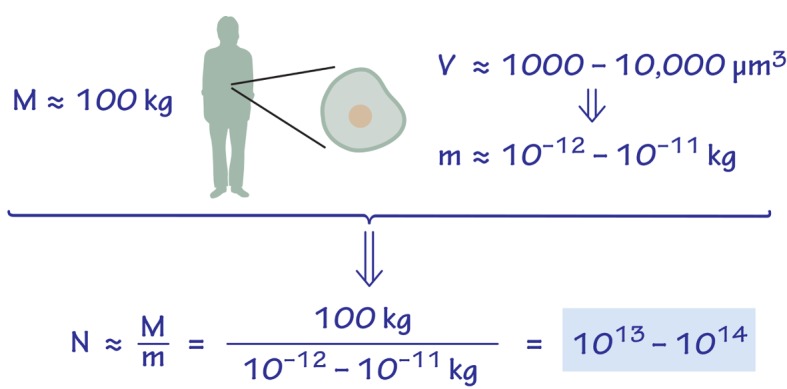
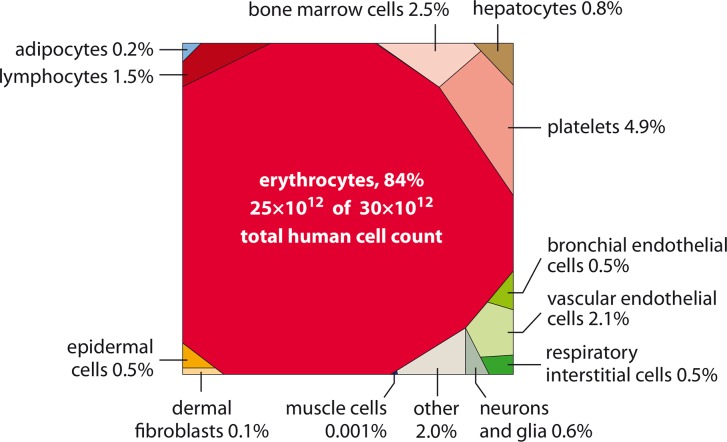
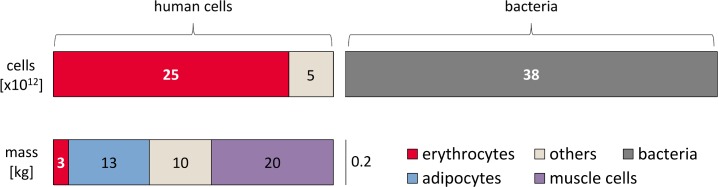
Reported values in the literature on the number of cells in the body differ by orders of magnitude and are very seldom supported by any measurements or calculations. Here, we integrate the most up-to-date information on the number of human and bacterial cells in the body. We estimate the total number of bacteria in the 70 kg "reference man" to be 3.8·1013. For human cells, we identify the dominant role of the hematopoietic lineage to the total count (≈90%) and revise past estimates to 3.0·1013 human cells. Our analysis also updates the widely-cited 10:1 ratio, showing that the number of bacteria in the body is actually of the same order as the number of human cells, and their total mass is about 0.2 kg.
Overview
The claims and statistics of this paper haven’t been checked yet.
Free: it reads the open-access text and checks the first 5 claims that cite a source we can check. Create a free account to check every claim.
Integrity signals
Registry
Cites
Statistics
Figures
Verification
Claims the paper makes
The claims and statistics of this paper haven’t been checked yet.
Free: it reads the open-access text and checks the first 5 claims that cite a source we can check. Create a free account to check every claim.
Claims other papers make about this one
Each is checked against this paper’s own text: does it say what the citing paper says it does?
The cited source doesn’t support the claim as written.
In the citing paper
“these microbes typically account for less than half of the weight of faecal solids 10 .”
From Human microbiome myths and misconceptions (2023) · cites this paper as [10]
Checked by a reasoning model — may be wrong.
Experimental — accuracy not yet measuredThe source backs part of the claim, not all of it — or backs it for a different population, condition or comparison.
In the citing paper
“Endotoxin is a lipopolysaccharide (LPS), constituting much of the outer membrane of gram-negative bacteria, present at high concentrations in gut, gums and skin and in other tissue during bacterial infection.”
From The endotoxin hypothesis of neurodegeneration (2019) · cites this paper as [6]
Experimental — accuracy not yet measuredThe source backs part of the claim, not all of it — or backs it for a different population, condition or comparison.
In the citing paper
“their gene count that exceeds the human genome’s gene count by ~100-fold and enables diverse metabolic programming”
From The microbiome and human cancer (2021) · cites this paper as [27]
Experimental — accuracy not yet measuredThe source backs part of the claim, not all of it — or backs it for a different population, condition or comparison.
In the citing paper
“The human gut microbiome contains ~3 × 10 13 bacteria, most of which are commensals (5).”
From The microbiome in cancer immunotherapy: Diagnostic tools and therapeutic strategies (2018) · cites this paper as [5]
Experimental — accuracy not yet measuredThe source backs part of the claim, not all of it — or backs it for a different population, condition or comparison.
In the citing paper
“there are trillions of microbes as numerous as human cells, that interact with the host constantly at numerous sites”
From The Influence of the Gut Microbiome on Cancer, Immunity, and Cancer Immunotherapy (2018) · cites this paper as Sender et al., 2016
Experimental — accuracy not yet measured
10 more claims about this paper
Create a free account to see every claim other papers make about this one.
Self-check
Percentages, sums and reported differences re-computed from the paper’s own numbers.
The self-check needs the paper’s full text.
Citations
Cites
A human gut microbial gene catalogue established by metagenomic sequencing
MetaHIT Consortium, Qin, J., Li, R., Raes, J., Arumugam, M., Burgdorf, K. S., Manichanh, C., Nielsen, T., Pons, N., Levenez, F., et al. (2010) · Nature · doi:10.1038/nature08821 · Cited by 11,624 · cited 1×
“Bacteria overwhelmingly outnumber eukaryotes and archaea in the human microbiome by 2–3 orders of magnitude [7,8].”
BackgroundHuman gut microbiome viewed across age and geography
Yatsunenko, T., Rey, F. E., Manary, M. J., Trehan, I., Dominguez-Bello, M. G., Contreras, M., Magris, M., Hidalgo, G., Baldassano, R. N., Anokhin, A. P., et al. (2012) · Nature · doi:10.1038/nature11053 · Cited by 7,815 · cited 1×
“Bacteria overwhelmingly outnumber eukaryotes and archaea in the human microbiome by 2–3 orders of magnitude [7,8].”
BackgroundAlberts, B., Johnson, A., Lewis, J., Morgan, D., Raff, M., Roberts, K., & Walter, P. (2017) · W.W. Norton eBooks · doi:10.1201/9781315735368 · Cited by 6,365
Turnbaugh, P. J., Ley, R. E., Hamady, M., Fraser-Liggett, C. M., Knight, R., & Gordon, J. I. (2007) · Nature · doi:10.1038/nature06244 · Cited by 6,091 · cited 1×
“One of the most fundamental and commonly cited figures in this growing field is the estimate that bacteria residing in the human body outnumber human cells by a factor of 10 or more (Bäckhed et al., 2005; Gill et al., 2006; Round and Mazmanian, 2010; Turnbaugh et al., 2007).”
BackgroundHost-Bacterial Mutualism in the Human Intestine
Bäckhed, F., Ley, R. E., Sonnenburg, J. L., Peterson, D. A., & Gordon, J. I. (2005) · Science · doi:10.1126/science.1104816 · Cited by 5,277
Metagenomic Analysis of the Human Distal Gut Microbiome
Gill, S. R., Pop, M., DeBoy, R. T., Eckburg, P. B., Turnbaugh, P. J., Samuel, B. S., Gordon, J. I., Relman, D. A., Fraser-Liggett, C. M., & Nelson, K. E. (2006) · Science · doi:10.1126/science.1124234 · Cited by 4,699 · cited 1×
“One of the most fundamental and commonly cited figures in this growing field is the estimate that bacteria residing in the human body outnumber human cells by a factor of 10 or more (Bäckhed et al., 2005; Gill et al., 2006; Round and Mazmanian, 2010; Turnbaugh et al., 2007).”
BackgroundCellular Scaling Rules for the Brains of Marsupials: Not as “Primitive” as Expected
Dos Santos, S. E., Porfirio, J., da Cunha, F. B., Manger, P. R., Tavares, W., Pessoa, L., Raghanti, M. A., Sherwood, C. C., & Herculano-Houzel, S. (2017) · Brain, Behavior and Evolution · doi:10.1159/000452856 · Cited by 2,642
MICROBIAL ECOLOGY OF THE GASTROINTESTINAL TRACT
Savage, D. C. (1977) · Annual Review of Microbiology · doi:10.1146/annurev.mi.31.100177.000543 · Cited by 2,436 · cited 5×
“Interestingly, those who read the original paper (Savage, 1977) find that it actually cites another paper for his estimate (Luckey, 1972).”
BackgroundInfluentialAzevedo, F. A. C., Carvalho, L. R. B., Grinberg, L. T., Farfel, J. M., Ferretti, R. E. L., Leite, R. E. P., Filho, W. J., Lent, R., & Herculano‐Houzel, S. (2009) · Journal of Comparative Neurology · doi:10.1002/cne.21974 · Cited by 2,337 · cited 1×
“However, a recent analysis [28] revisits this value and, after analyzing the variation across brain regions, concludes that the ratio is close to 1:1.”
BackgroundRound, J. L., & Mazmanian, S. K. (2010) · Proceedings of the National Academy of Sciences · doi:10.1073/pnas.0909122107 · Cited by 2,233 · cited 1×
“One of the most fundamental and commonly cited figures in this growing field is the estimate that bacteria residing in the human body outnumber human cells by a factor of 10 or more (Bäckhed et al., 2005; Gill et al., 2006; Round and Mazmanian, 2010; Turnbaugh et al., 2007).”
Background
Cited by
Items 401–500 of 1,042
Lagoumintzis, G., & Patrinos, G. P. (2023) · Human Genomics · doi:10.1186/s40246-023-00561-w · Cited by 132
“The human gastrointestinal (GI) tract harbors a vast number of bacteria (over 5–10 trillion), constituting a highly sophisticated ecosystem that plays a pivotal role in various essential biological processes [33].”
BackgroundGut Microbiota Composition Is Related to Cardiorespiratory Fitness in Healthy Young Adults
Durk, R. P., Castillo, E., Márquez-Magaña, L., Grosicki, G. J., Bolter, N. D., Lee, C. M., & Bagley, J. R. (2019) · International Journal of Sport Nutrition and Exercise Metabolism · doi:10.1123/ijsnem.2018-0024 · Cited by 131
“…Firmicutes; Bacteroidetes; VO2max; body composition; BodPod; nutrition INTRODUCTION The human body contains a vast number of bacteria cells (Sender et al., 2016) and the composition of bacteria in the gut (i.e., gut microbiota) is linked to a variety of physiological functions (Sommer et…”
BackgroundRole of the intestinal microbiome and its therapeutic intervention in cardiovascular disorder
Luqman, A., Hassan, A., Ullah, M., Naseem, S., Ullah, M., Zhang, L., Din, A. U., Ullah, K., Ahmad, W., & Wang, G. (2024) · Frontiers in Immunology · doi:10.3389/fimmu.2024.1321395 · Cited by 157
“A total of around 1,000 different species of intestinal microbes, comprising about 10 14 , and bacterial-to-human cell ratio varied between 10:1 and 1:1 (35).”
BackgroundMicrobiota-Derived Extracellular Vesicles as New Systemic Regulators
Badi, S. A., Moshiri, A., Fateh, A., Jamnani, F. R., Sarshar, M., Vaziri, F., & Siadat, S. D. (2017) · Frontiers in Microbiology · doi:10.3389/fmicb.2017.01610 · Cited by 141
Kumar, R., Sood, U., Gupta, V., Singh, M., Scaria, J., & Lal, R. (2019) · Indian Journal of Microbiology · doi:10.1007/s12088-019-00808-y · Cited by 149
Shi, J. T., Yang, G., You, Q., Sun, S., Chen, R., Lin, Z., Simal‐Gándara, J., & Lv, H. (2021) · Critical Reviews in Food Science and Nutrition · doi:10.1080/10408398.2021.2007353 · Cited by 144
Kim, J., An, J.-U., Kim, W., Lee, S., & Cho, S. (2017) · Gut Pathogens · doi:10.1186/s13099-017-0218-5 · Cited by 129
“It has been estimated that the gut microbiota of humans and animals consists of 1010–1014 microbial cells, a number roughly similar or 10 times higher than the number of host cells [1, 2].”
BackgroundEmerging pharmacotherapy for inflammatory bowel diseases
Luo, H., Cao, G., Luo, C., Tan, D., Vong, C. T., Xu, Y., Wang, S., Lu, H., Wang, Y., & Jing, W. (2022) · Pharmacological Research · doi:10.1016/j.phrs.2022.106146 · Cited by 138
Fecal microbiota variation across the lifespan of the healthy laboratory rat
Flemer, B., Gaci, N., Borrel, G., Sanderson, I. R., Chaudhary, P. P., Tottey, W., O'Toole, P. W., & Brugère, J.-F. (2017) · Gut Microbes · doi:10.1080/19490976.2017.1334033 · Cited by 128
“Higher animals are meta-organisms in which microbes roughly equal host cells.(1) The mammalian gastrointestinal tract (GIT) is home to a large and complex microbial community with distinct compositions in different animal species related to their anatomic specificities and habitual diet (frugivorous, herbivorous, foli…”
Grieneisen, L. E., Charpentier, M. J. E., Alberts, S. C., Blekhman, R., Bradburd, G., Tung, J., & Archie, E. A. (2019) · Proceedings of the Royal Society B: Biological Sciences · doi:10.1098/rspb.2019.0431 · Cited by 128
“First, mammalian feces contain one of the densest microbial communities on earth, with approximately 1011 microbes per gram [7].”
BackgroundMicrobial Interaction Network Inference in Microfluidic Droplets
Hsu, R. H., Clark, R. L., Tan, J. W., Ahn, J. C., Gupta, S., Romero, P. A., & Venturelli, O. S. (2019) · Cell Systems · doi:10.1016/j.cels.2019.06.008 · Cited by 135
“The population sizes of microbial consortia can range from less than ten cells in mixed species biofilm aggregates to 10(11) cells mL 1 in the human colon (Connell et al., 2014; Sender et al., 2016; Stoodley et al., 2001).”
Bifidobacterial Dialogue With Its Human Host and Consequent Modulation of the Immune System
Alessandri, G., Ossiprandi, M. C., MacSharry, J., van Sinderen, D., & Ventura, M. (2019) · Frontiers in Immunology · doi:10.3389/fimmu.2019.02348 · Cited by 128
“However, this number has been recently revised to a 1:1 ratio (3, 4).”
BackgroundProbiotics, Nutrition, and the Small Intestine
Judkins, T. C., Archer, D. L., Kramer, D. C., & Solch-Ottaiano, R. J. (2020) · Current Gastroenterology Reports · doi:10.1007/s11894-019-0740-3 · Cited by 149
The immune system and microbiome in pregnancy
Fuhler, G. M. (2020) · Best Practice & Research Clinical Gastroenterology · doi:10.1016/j.bpg.2020.101671 · Cited by 160
“While microbes may occasionally pose a pathogenic threat, the human body hosts over 1013 bacteria, in what is generally a mutually beneficial symbiosis [97].”
BackgroundGut microbiota regulates neuropathic pain: potential mechanisms and therapeutic strategy
Lin, B., Wang, Y., Zhang, P., Yuan, Y., Zhang, Y., & Chen, G. (2020) · The Journal of Headache and Pain · doi:10.1186/s10194-020-01170-x · Cited by 150
Cremonesi, P., Ceccarani, C., Curone, G., Severgnini, M., Pollera, C., Bronzo, V., Riva, F., Addis, M. F., Filipe, J., Amadori, M., et al. (2018) · PLoS ONE · doi:10.1371/journal.pone.0205054 · Cited by 136
“On their skin, in gut, oro-pharyngeal, urinary, and genital tracts, all animals host a broad diversity of microbial communities that, through intricate mutualistic interactions, have evolved with them and play crucial roles in their biology and health [3].”
BackgroundFrame, L. A., Costa, E., & Jackson, S. A. (2020) · Nutrition Reviews · doi:10.1093/nutrit/nuz106 · Cited by 141
“typical human being is made-up of more microbial cells than human cells.(3) The human microbiome is phyloge-”
BackgroundDrosophila as a model for the gut microbiome
Ludington, W. B., & Ja, W. W. (2020) · PLoS Pathogens · doi:10.1371/journal.ppat.1008398 · Cited by 141
“Mechanistic studies remain challenging in part due to the complexity of the mammalian gut microbiome, which can vary greatly between individuals and is composed of approximately 1,000 species of microorganisms [3].”
BackgroundThe Microbiome-Gut-Brain Axis and Resilience to Developing Anxiety or Depression under Stress
Bear, T., Dalziel, J., Coad, J., Roy, N., Butts, C., & Gopal, P. (2021) · Microorganisms · doi:10.3390/microorganisms9040723 · Cited by 126
“2 kg of human body weight and has around the same number of cells as human eukaryotic cells (recently revised estimate) [17].”
BackgroundEnteric neuroimmune interactions coordinate intestinal responses in health and disease
Wang, H., Foong, J. P. P., Harris, N. L., & Bornstein, J. C. (2021) · Mucosal Immunology · doi:10.1038/s41385-021-00443-1 · Cited by 154
Burnouf, T., Chou, M., Lundy, D. J., Chuang, E., Tseng, C., & Goubran, H. A. (2023) · Journal of Biomedical Science · doi:10.1186/s12929-023-00972-w · Cited by 152
“They are, after red blood cells (RBCs), the second most abundant cells in blood circulation with a number ranging (150–400) × 10 6 cells/mL in healthy human individuals [35], and account to close to 5% of total cells in the body [36].”
BackgroundTransforming growth factor β: a master regulator of the gut microbiota and immune cell interactions
Bauché, D., & Marie, J. C. (2017) · Clinical & Translational Immunology · doi:10.1038/cti.2017.9 · Cited by 126
Whisner, C. M., & Aktipis, A. (2019) · Current Nutrition Reports · doi:10.1007/s13668-019-0257-2 · Cited by 139
Herpes simplex encephalitis in a patient with a distinctive form of inherited IFNAR1 deficiency
Bastard, P., Manry, J., Chen, J., Rosain, J., Seeleuthner, Y., AbuZaitun, O., Lorenzo, L., Khan, T., Hasek, M. L., Hernandez, N., et al. (2021) · Journal of Clinical Investigation · doi:10.1172/jci139980 · Cited by 138
Lu, J., Zhang, S., Huang, Y., Qian, J., Tan, B., Qian, X., Jia, Z., Zou, X., Li, Y., & Yan, F. (2022) · Gut Microbes · doi:10.1080/19490976.2022.2126272 · Cited by 156
“5 × 10(12) oral bacteria per day from swallowed saliva.(13) The salivary microbiota composition in patients with periodontitis significantly differs from that in healthy individuals.”
BackgroundMicrobiome and diabetes: Where are we now?
Vallianou, N. G., Stratigou, T., & Tsagarakis, S. (2018) · Diabetes Research and Clinical Practice · doi:10.1016/j.diabres.2018.10.008 · Cited by 138
Microbiome or Infections: Amyloid-Containing Biofilms as a Trigger for Complex Human Diseases
Miller, A. L., Bessho, S., Grando, K. C. M., & Tükel, Ç. (2021) · Frontiers in Immunology · doi:10.3389/fimmu.2021.638867 · Cited by 141
Calder, P. C., Ortega, E. F., Meydani, S. N., Adkins, Y. C., Stephensen, C. B., Thompson, B., & Zwickey, H. L. (2022) · Advances in Nutrition · doi:10.1093/advances/nmac052 · Cited by 143
“The large intestine has the greatest number and diversity of bacterial species, estimated at 1011 bacteria/g of colonic contents (40).”
Bicknell, B. T., Liebert, A. D., Borody, T. J., Herkes, G., McLachlan, C. S., & Kiat, H. (2023) · International Journal of Molecular Sciences · doi:10.3390/ijms24119577 · Cited by 148
“protists, and fungi that colonise the lumen of the colon, as well as the intestinal walls and the mucus, with the majority of the cells being bacteria [6].”
LRLSHMDA: Laplacian Regularized Least Squares for Human Microbe–Disease Association prediction
Wang, F., Huang, Z.-A., Chen, X., Zhu, Z., Wen, Z., Zhao, J., & Yan, G. (2017) · Scientific Reports · doi:10.1038/s41598-017-08127-2 · Cited by 140
Phenotypic Changes Exhibited by E. coli Cultured in Space
Zea, L., Larsen, M., Estante, F., Qvortrup, K., Moeller, R., de Oliveira, S. D., Stodieck, L., & Klaus, D. M. (2017) · Frontiers in Microbiology · doi:10.3389/fmicb.2017.01598 · Cited by 155
Cheng, L., Qi, C., Zhuang, H., Fu, T., & Zhang, X. (2020) · Nucleic Acids Research · doi:10.1093/nar/gkaa511 · Cited by 139
Intestinal Flora as a Potential Strategy to Fight SARS-CoV-2 Infection
He, L.-H., Ren, L.-F., Li, J.-F., Wu, Y.-N., Li, X., & Zhang, L. (2020) · Frontiers in Microbiology · doi:10.3389/fmicb.2020.01388 · Cited by 124
Xenobiotic metabolism and transport in Caenorhabditis elegans
Hartman, J. H., Widmayer, S. J., Bergemann, C. M., King, D. E., Morton, K. S., Romersi, R. F., Jameson, L. E., Leung, M. C. K., Andersen, E. C., Taubert, S., et al. (2021) · Journal of Toxicology and Environmental Health Part B · doi:10.1080/10937404.2021.1884921 · Cited by 139
“The gut microbiome is the most abundant (National Academies of Sciences, Engineering, and Medicine 2018; Sender, Fuchs, and Milo 2016).”
BackgroundOrtega, M. A., Alvarez-Mon, M. A., García-Montero, C., Fraile-Martinez, O., Guijarro, L. G., Lahera, G., Monserrat, J., Valls, P., Mora, F., Rodríguez-Jiménez, R., et al. (2022) · Metabolites · doi:10.3390/metabo12010050 · Cited by 123
“The scientific bibliography alleges that the correct proportion of microbes with respect to human cells is approximately 1:1, being bacteria the most representative kingdom [4].”
BackgroundNonalcoholic Fatty Liver Disease and the Gut-Liver Axis: Exploring an Undernutrition Perspective
Bauer, K. C., Littlejohn, P. T., Ayala, V., Creus-Cuadros, A., & Finlay, B. B. (2022) · Gastroenterology · doi:10.1053/j.gastro.2022.01.058 · Cited by 139
Wu, D., He, Y., Yuan, Q., Wang, S., Gan, R., Hu, Y., & Zou, L. (2022) · Food Hydrocolloids · doi:10.1016/j.foodhyd.2022.107897 · Cited by 134
Quantification and three-dimensional microanatomical organization of the bone marrow
Nombela-Arrieta, C., & Manz, M. G. (2017) · Blood Advances · doi:10.1182/bloodadvances.2016003194 · Cited by 123
Gut Microbiota Are Disease-Modifying Factors After Traumatic Spinal Cord Injury
Kigerl, K. A., Mostacada, K., & Popovich, P. G. (2017) · Neurotherapeutics · doi:10.1007/s13311-017-0583-2 · Cited by 136
He, Y., Kosciolek, T., Tang, J., Zhou, Y., Li, Z., Ma, X., Zhu, Q., Yuan, N., Yuan, L., Li, C., et al. (2018) · European Psychiatry · doi:10.1016/j.eurpsy.2018.05.011 · Cited by 123
The role of the gut microbiota in health and cardiovascular diseases
Wang, L., Wang, S., Zhang, Q., He, C., Fu, C., & Wei, Q. (2022) · Molecular Biomedicine · doi:10.1186/s43556-022-00091-2 · Cited by 122
“The ratio of bacterial number to human cell number ranged from 10:1 to 1:1 [4].”
BackgroundDietary protein and the intestinal microbiota: An understudied relationship
Bartlett, A., & Kleiner, M. (2022) · iScience · doi:10.1016/j.isci.2022.105313 · Cited by 142
“However, there are still a large number of bacteria in the upper intestinal tract (103–104 bacteria/mL in the duodenum and jejunum, 108 bacteria/mL in the ileum) that may play a role in protein digestion (Sender et al., 2016).”
Li, Y., Liu, T., Yan, C., Xie, R., Guo, Z., Wang, S., Zhang, Y., Li, Z., Wang, B., & Cao, H. (2018) · Molecular Pharmaceutics · doi:10.1021/acs.molpharmaceut.8b00347 · Cited by 124
Leader of the SAC: molecular mechanisms of Mps1/TTK regulation in mitosis
Pachis, S. T., & Kops, G. J. P. L. (2018) · Open Biology · doi:10.1098/rsob.180109 · Cited by 125
“Given the approximately 3 10(13) cell divisions needed to make a human [7] and the roughly 50 billion cell divisions that take place in the human body every day, the necessity for a surveillance and correction system that ensures faithful chromosome segregation becomes apparent.”
BackgroundKårlund, A., Gómez-Gallego, C., Turpeinen, A. M., Palo-oja, O.-M., El-Nezami, H. S., & Kolehmainen, M. (2019) · Nutrients · doi:10.3390/nu11040829 · Cited by 165
Giuffrè, M., Campigotto, M., Campisciano, G., Comar, M., & Crocè, L. S. (2020) · American Journal of Physiology-Gastrointestinal and Liver Physiology · doi:10.1152/ajpgi.00161.2019 · Cited by 128
Antibiotic Resistance: From Pig to Meat
Monger, X. C., Gilbert, A.-A., Saucier, L., & Vincent, A. T. (2021) · Antibiotics · doi:10.3390/antibiotics10101209 · Cited by 154
The female reproductive tract microbiotas, inflammation, and gynecological conditions
Gholiof, M., Luca, E. A.-D., & Wessels, J. M. (2022) · Frontiers in Reproductive Health · doi:10.3389/frph.2022.963752 · Cited by 155
“Studies report that the human body hosts around 4 × 10¹³ bacteria, encompassing thousands of different bacterial species, with each site of the body having its own unique complement of microorganisms and communities: its microbiota (20).”
BackgroundMasse, K. E., & Lu, V. B. (2023) · Frontiers in Endocrinology · doi:10.3389/fendo.2023.1169624 · Cited by 120
“Interestingly, the distal small intestine and colon harbor the greatest density of PYY and GLP-1 releasing L-cells (41), paralleling the distribution of gut bacteria (42).”
BackgroundSkin barrier and microbiome in acne
Rocha, M., & Bagatin, E. (2017) · Archives of Dermatological Research · doi:10.1007/s00403-017-1795-3 · Cited by 138
Microbiota in obesity: interactions with enteroendocrine, immune and central nervous systems
Mulders, R. J., de Git, K. C. G., Schéle, E., Dickson, S. L., Sanz, Y., & Adan, R. A. H. (2018) · Obesity Reviews · doi:10.1111/obr.12661 · Cited by 120
“Intestinal microbiota is a complex ecosystem mainly composed of bacteria that colonize in the gastrointestinal tract and consist of at least as many bacterial cells as there are cells in the human body (14).”
BackgroundForensic Applications of Microbiomics: A Review
Robinson, J. M., Pasternak, Z., Mason, C. E., & Elhaik, E. (2021) · Frontiers in Microbiology · doi:10.3389/fmicb.2020.608101 · Cited by 137
“Microorganisms are abundant in and on the human body (microbial cells can outnumber or equal the total number of human somatic cells) (Noel et al., 2014; Sender et al., 2016; Vázquez-Baeza et al., 2018), in surrounding environments, and on objects associated with a crime (Desmond et al.”
BackgroundThe Gut Microbiome in Myalgic Encephalomyelitis (ME)/Chronic Fatigue Syndrome (CFS)
König, R. S., Albrich, W. C., Kahlert, C. R., Bahr, L. S., Löber, U., Vernazza, P., Scheibenbogen, C., & Forslund, S. K. (2022) · Frontiers in Immunology · doi:10.3389/fimmu.2021.628741 · Cited by 149
Role and Effective Therapeutic Target of Gut Microbiota in Heart Failure
Jia, Q., Li, H., Zhou, H., Zhang, X., Zhang, A., Xie, Y., Li, Y., Lv, S., & Zhang, J. (2019) · Cardiovascular Therapeutics · doi:10.1155/2019/5164298 · Cited by 129
Gut microbiome studies in CKD: opportunities, pitfalls and therapeutic potential
Krukowski, H., Valkenburg, S., Madella, A. M., Garssen, J., van Bergenhenegouwen, J., Overbeek, S. A., Huys, G. R. B., Raes, J., & Glorieux, G. (2022) · Nature Reviews Nephrology · doi:10.1038/s41581-022-00647-z · Cited by 141
Structural Variations of Vaginal and Endometrial Microbiota: Hints on Female Infertility
Riganelli, L., Iebba, V., Piccioni, M., Illuminati, I., Bonfiglio, G., Neroni, B., Calvo, L., Gagliardi, A., Levrero, M., Merlino, L., et al. (2020) · Frontiers in Cellular and Infection Microbiology · doi:10.3389/fcimb.2020.00350 · Cited by 118
“, 2018), with a coding capacity 150-fold higher than that of eukaryotic cells (Sender et al., 2016).”
BackgroundEncapsulation of bifidobacterium in alginate microgels improves viability and targeted gut release
Zhang, Z., Gu, M., You, X., Sela, D. A., Xiao, H., & McClements, D. J. (2021) · Food Hydrocolloids · doi:10.1016/j.foodhyd.2021.106634 · Cited by 125
Gut microbiota modulate CD8 + T cell immunity in gastric cancer through Butyrate/GPR109A/HOPX
Yu, X., Ou, J., Wang, L., Li, Z., Ren, Y., Xie, L., Chen, Z., Liang, J., Shen, G., Zou, Z., et al. (2024) · Gut Microbes · doi:10.1080/19490976.2024.2307542 · Cited by 151
Implications of Diet and The Gut Microbiome in Neuroinflammatory and Neurodegenerative Diseases
Hirschberg, S., Gisevius, B., Duscha, A., & Haghikia, A. (2019) · International Journal of Molecular Sciences · doi:10.3390/ijms20123109 · Cited by 117
“In humans, the microbiome of the gut, particularly of the colon, harbors the largest number of microorganisms [1].”
BackgroundCarotenoids and Their Health Benefits as Derived via Their Interactions with Gut Microbiota
Eroglu, A., Al’Abri, I. S., Kopec, R. E., Crook, N., & Bohn, T. (2022) · Advances in Nutrition · doi:10.1016/j.advnut.2022.10.007 · Cited by 138
“, 1010–1012), primarily as bacteria in the colon [120, 121].”
BackgroundKelsey, C. M., Prescott, S., McCulloch, J. A., Trinchieri, G., Valladares, T. L., Dreisbach, C., Alhusen, J., & Grossmann, T. (2021) · Brain, Behavior, and Immunity · doi:10.1016/j.bbi.2020.11.003 · Cited by 116
“Infancy represents a sensitive period in gut microbiome formation as the gut microbiome changes from a relatively sterile environment to a diverse ecosystem with over 3 × 10¹³ species of microorganisms (Cryan and Dinan, 2012; Sender et al., 2016).”
BackgroundQuantifying bias introduced by sample collection in relative and absolute microbiome measurements
Maghini, D. G., Dvorak, M., Dahlen, A., Roos, M., Doyle, B., Kuersten, S., & Bhatt, A. S. (2024) · Nature Biotechnology · doi:10.1038/s41587-023-01754-3 · Cited by 116
Microbial involvement in Alzheimer disease development and progression
Bulgart, H. R., Neczypor, E. W., Wold, L. E., & Mackos, A. R. (2020) · Molecular Neurodegeneration · doi:10.1186/s13024-020-00378-4 · Cited by 116
Species Deletions from Microbiome Consortia Reveal Key Metabolic Interactions between Gut Microbes
Gutiérrez, N., & Garrido, D. A. (2019) · mSystems · doi:10.1128/msystems.00185-19 · Cited by 138
“The gut microbiome is a complex microbial community characterized by a high cell density, reaching numbers similar to somatic cells (1).”
BackgroundGut Vibes in Parkinson's Disease: The Microbiota‐Gut‐Brain Axis
Bullich, C., Keshavarzian, A., Garssen, J., Kraneveld, A., & Perez‐Pardo, P. (2019) · Movement Disorders Clinical Practice · doi:10.1002/mdc3.12840 · Cited by 114
“8 × 10(13) microorganisms in the colon.(9) This bacterial colonization has a vital role in the develop-”
BackgroundNemkov, T. G., Reisz, J. A., Xia, Y., Zimring, J. C., & D’Alessandro, A. (2018) · Expert Review of Proteomics · doi:10.1080/14789450.2018.1531710 · Cited by 122
Bacteria-Host Crosstalk: Sensing of the Quorum in the Context of Pseudomonas aeruginosa Infections
Turkina, M. V., & Vikström, E. (2018) · Journal of Innate Immunity · doi:10.1159/000494069 · Cited by 148
The human-microbiome superorganism and its modulation to restore health
Salvucci, E. (2019) · International Journal of Food Sciences and Nutrition · doi:10.1080/09637486.2019.1580682 · Cited by 114
“Recently, it was estimated that this ratio is 1.3:1 (Sender et al. 2016) but counting just bacterial cells.”
BackgroundInfluentialOrtega, M. A., Fraile-Martínez, O., Naya, I., García-Honduvilla, N., Álvarez-Mon, M., Buján, J., Asúnsolo, Á., & de la Torre, B. (2020) · Nutrients · doi:10.3390/nu12092749 · Cited by 115
Nutrient metabolism and cancer in the in vivo context: a metabolic game of give and take
Altea‐Manzano, P., Cuadros, A. M., Broadfield, L. A., & Fendt, S. (2020) · EMBO Reports · doi:10.15252/embr.202050635 · Cited by 130
“CRC has been especially highlighted to have interactions with the gut microbiome, the single largest home of symbiotic microbes in the body (Sender et al , 2016).”
Toxicology and Microbiota: How Do Pesticides Influence Gut Microbiota? A Review
Giambò, F., Teodoro, M., Costa, C., & Fenga, C. (2021) · International Journal of Environmental Research and Public Health · doi:10.3390/ijerph18115510 · Cited by 119
“About 10–100 trillion symbiotic microbial cells live in the human intestine [19]; the intestinal microbiota’s main components are bacteria species taxonomically classified by genus, family, order, and phyla.”
BackgroundVerma, A., Bhagchandani, T., Rai, A., Nikita, N., Sardarni, U. K., Bhavesh, N. S., Gulati, S., Malik, R., & Tandon, R. (2024) · ACS Omega · doi:10.1021/acsomega.3c05846 · Cited by 136
Forensic Human Identification Using Skin Microbiomes
Schmedes, S. E., Woerner, A. E., & Budowle, B. (2017) · Applied and Environmental Microbiology · doi:10.1128/aem.01672-17 · Cited by 131
Lipopolysaccharides in food, food supplements, and probiotics: should we be worried?
Wassenaar, T. M., & Zimmermann, K. (2018) · European Journal of Microbiology and Immunology · doi:10.1556/1886.2018.00017 · Cited by 132
Intestinal Sensing by Gut Microbiota: Targeting Gut Peptides
Covasa, M., Stephens, R. W., Toderean, R., & Cobuz, C. (2019) · Frontiers in Endocrinology · doi:10.3389/fendo.2019.00082 · Cited by 112
“Degradation of PYY(1-36) into PYY(3-36) is an important step for control of food intake.”
BackgroundInfluentialThe roles of microbial products in the development of colorectal cancer: a review
Fang, Y., Yan, C., Zhao, Q., Xu, J., Liu, Z., Gao, J., Zhu, H., Dai, Z., Wang, D., & Tang, D. (2021) · Bioengineered · doi:10.1080/21655979.2021.1889109 · Cited by 130
“The colon also contains a minimum of two orders of magnitude more bacteria than any other organ [5].”
BackgroundThe gut microbiome in social anxiety disorder: evidence of altered composition and function
Butler, M., Bastiaanssen, T. F. S., Long-Smith, C. M., Mörkl, S., Berding, K., Ritz, N. L., Strain, C., Patangia, D. V., Patel, S. H., Stanton, C., et al. (2023) · Translational Psychiatry · doi:10.1038/s41398-023-02325-5 · Cited by 141
“8 ×10 13 [14] and that the collective genome of these bacterial cells vastly exceeds the amount of human DNA present in the body [15].”
BackgroundSex-dependent impact of Roundup on the rat gut microbiome
Lozano, V. L., Defarge, N., Rocque, L.-M., Mesnage, R., Hennequin, D., Cassier, R., de Vendômois, J. S., Panoff, J.-M., Séralini, G., & Amiel, C. (2017) · Toxicology Reports · doi:10.1016/j.toxrep.2017.12.005 · Cited by 122
“Human gut microbiome is inhabited by 10(13) −10(14) bacteria, more or less the same order as the number of human cells [1].”
BackgroundSun, M., Ma, K., Wen, J., Wang, G., Zhang, C., Li, Q., Bao, X., & Wang, H. (2020) · Journal of Alzheimer’s Disease · doi:10.3233/jad-190872 · Cited by 113
“However, recent calculations have determined the total number of bacterial cells to be approximately 3.8 × 10 13 , with 10 11 in the gastrointestinal (GI) tract, placing the above ratio at 1.3:1 [12].”
InfluentialProbiotics ameliorate intestinal pathophysiology in a mouse model of Alzheimer’s disease
Kaur, H., Nagamoto-Combs, K., Golovko, S., Golovko, M. Y., Klug, M. G., & Combs, C. K. (2020) · Neurobiology of Aging · doi:10.1016/j.neurobiolaging.2020.04.009 · Cited by 112
“The gut microbiota is comprised of microorganism species that live in the gastrointestinal tract and is the largest reservoir of microbes in the human body, containing about 1014 microbes (Sender et al., 2016).”
BackgroundTirelle, P., Breton, J., Riou, G., Déchelotte, P., Coëffier, M., & Ribet, D. (2020) · BMC Microbiology · doi:10.1186/s12866-020-02018-9 · Cited by 130
“0 × 10(13) bacteria per individual [1].”
Discovery and delivery strategies for engineered live biotherapeutic products
Heavey, M. K., Durmusoglu, D., Crook, N., & Anselmo, A. C. (2021) · Trends in biotechnology · doi:10.1016/j.tibtech.2021.08.002 · Cited by 127
Bacterial Infections and Cancer: Exploring This Association And Its Implications for Cancer Patients
Yusuf, K., Sampath, V., & Umar, S. (2023) · International Journal of Molecular Sciences · doi:10.3390/ijms24043110 · Cited by 135
“These microorganisms include bacteria, eukaryotes, archaea, fungi, and viruses [12,13].”
BackgroundD’Urso, F., & Broccolo, F. (2024) · Applied Sciences · doi:10.3390/app14198627 · Cited by 112
Zhu, C., Grandhi, R., Patterson, T., & Nicholson, S. (2018) · Brain Sciences · doi:10.3390/brainsci8060113 · Cited by 111
“With respect to the gut, the colon is the most colonized area within the human body [9,10].”
BackgroundIto, T., Sekizuka, T., Kishi, N., Yamashita, A., & Kuroda, M. (2018) · Gut Microbes · doi:10.1080/19490976.2018.1491265 · Cited by 121
Enterotype Variations of the Healthy Human Gut Microbiome in Different Geographical Regions
School of Basic Sciences, I. I. O. T. M., Mobeen, F., Sharma, V., School of Basic Sciences, I. I. O. T. M., Prakash, T., & School of Basic Sciences, I. I. O. T. M. (2018) · Bioinformation · doi:10.6026/97320630014560 · Cited by 112
Immune-Microbiota Interplay and Colonization Resistance in Infection
Leshem, A., Liwinski, T., & Elinav, E. (2020) · Molecular Cell · doi:10.1016/j.molcel.2020.03.001 · Cited by 129
C-Type Lectin Receptors in Host Defense Against Bacterial Pathogens
Mnich, M. E., van Dalen, R., & van Sorge, N. M. (2020) · Frontiers in Cellular and Infection Microbiology · doi:10.3389/fcimb.2020.00309 · Cited by 125
“The increased bacterial burden may be explained by defects in neutrophil-mediated clearance, as Mincle-deficient neutrophils show an impaired uptake of nonopsonized bacteria and impaired formation of neutrophilextracellular traps (Sharma et al., 2014, 2017).”
BackgroundExtended genomes: symbiosis and evolution
Hurst, G. D. D. (2017) · Interface Focus · doi:10.1098/rsfs.2017.0001 · Cited by 118
The role of the gut microbiome in the development of schizophrenia
Kelly, J. R., Minuto, C., Cryan, J. F., Clarke, G., & Dinan, T. G. (2021) · Schizophrenia Research · doi:10.1016/j.schres.2020.02.010 · Cited by 110
The human gut archaeome: identification of diverse haloarchaea in Korean subjects
Kim, J. Y., Whon, T. W., Lim, M. Y., Kim, Y. B., Kim, N., Kwon, M., Kim, J., Lee, S. H., Choi, H., Nam, I.-H., et al. (2020) · Microbiome · doi:10.1186/s40168-020-00894-x · Cited by 130
Restoration of dysbiotic human gut microbiome for homeostasis
Dixit, K. K., Chaudhari, D. S., Dhotre, D. P., Shouche, Y. S., & Saroj, S. D. (2021) · Life Sciences · doi:10.1016/j.lfs.2021.119622 · Cited by 128
Safety of pasteurised Akkermansia muciniphila as a novel food pursuant to Regulation (EU) 2015/2283
EFSA Panel on Nutrition, N. F. A. F. A. (., Turck, D., Bohn, T., Castenmiller, J., De Henauw, S., Hirsch‐Ernst, K. I., Maciuk, A., Mangelsdorf, I., McArdle, H. J., Naska, A., et al. (2021) · EFSA Journal · doi:10.2903/j.efsa.2021.6780 · Cited by 110
Can we ‘seize’ the gut microbiota to treat epilepsy?
De Caro, C., Iannone, L. F., Citraro, R., Striano, P., De Sarro, G., Constanti, A., Cryan, J. F., & Russo, E. (2019) · Neuroscience & Biobehavioral Reviews · doi:10.1016/j.neubiorev.2019.10.002 · Cited by 110
The nasal microbiome mirrors and potentially shapes olfactory function
Koskinen, K., Reichert, J. L., Hoier, S., Schachenreiter, J., Duller, S., Moissl‐Eichinger, C., & Schöpf, V. (2018) · Scientific Reports · doi:10.1038/s41598-018-19438-3 · Cited by 122
Invited Review: From nose to gut – the role of the microbiome in neurological disease
Bell, J. S., Spencer, J. I., Yates, R. L., Yee, S. A., Jacobs, B. M., & DeLuca, G. C. (2019) · Neuropathology and Applied Neurobiology · doi:10.1111/nan.12520 · Cited by 110
Mileto, S. J., Jardé, T., Childress, K. O., Jensen, J. L., Rogers, A. P., Kerr, G., Hutton, M. L., Sheedlo, M. J., Bloch, S. C., Shupe, J. A., et al. (2020) · Proceedings of the National Academy of Sciences · doi:10.1073/pnas.1915255117 · Cited by 109
“C homeostasis, mediated by a functional stem cell compartment and with a normal turnover rate of 3 to 5 d (1, 2), is partly modulated by the 10(14) bacteria in the colon (3).”
BackgroundNew Insights into the Immune System Using Dirty Mice
Hamilton, S. E., Badovinac, V. P., Beura, L. K., Pierson, M. J., Jameson, S. C., Masopust, D., & Griffith, T. S. (2020) · The Journal of Immunology · doi:10.4049/jimmunol.2000171 · Cited by 119
Ahlawat, S., Kumar, P., Mohan, H., Goyal, S., & Sharma, K. K. (2021) · Critical Reviews in Microbiology · doi:10.1080/1040841x.2021.1876631 · Cited by 119
Metadata
- Authors
- Sender, R., Fuchs, S., & Milo, R.
- Affiliations
- Weizmann Institute of Science (IL)
- Corresponding author
- Fuchs, Shai
- Milo, Ron
- Venue
- PLOS Biology
- Publisher
- Public Library of Science (PLoS)
- Published
- 2016-08-19
- Volume
- 14
- Issue
- 8
- Pages
- e1002533
- ISSN
- 1544-9173 (ISSN-L)
- 1545-7885
- PMC
- PMC4991899
- OpenAlex
- W2952564192
- Cited by
- 5,425
- References
- 88
- Citations by year
- 2026: 411 · 2025: 533 · 2024: 655 · 2023: 696 · 2022: 659 · 2021: 645 · 2020: 597 · 2019: 514 · 2018: 394 · 2017: 252 · 2016: 66
- FWCI
- 212.46
- Type
- journal article
- Language
- en
- Open access
- gold
- doi.org
- Licence
- Locations
- PLoS Biology (publishedVersion, cc-by)
- bioRxiv (Cold Spring Harbor Laboratory) (acceptedVersion, cc-by-nc-nd)
- Europe PMC (PubMed Central) (publishedVersion, cc-by)
- PubMed Central (publishedVersion, cc-by)
- PubMed (publishedVersion)
- DOAJ (DOAJ: Directory of Open Access Journals) (submittedVersion)
- Figshare (submittedVersion, cc-by)
- Funders
- Leona M. and Harry B. Helmsley Charitable Trust
- H2020 European Research Council (646827)
- Topics
- Life Sciences › Biochemistry, Genetics and Molecular Biology › Molecular Biology › Gut microbiota and health
- Physical Sciences › Environmental Science › Ecology › Microbial Community Ecology and Physiology
- Health Sciences › Dentistry › Periodontics › Oral microbiology and periodontitis research
- Keywords
- bacterial counts, human microbiome, hematopoietic lineage, reference man, microbial biomass, body cell mass
- MeSH terms
- Adult, Bacteria, Body Weights and Measures, Cell Count, Humans, Male, Organ Specificity, Bacterial Load, Microbiota
About these checks
Registry, retraction, Cites and statistics results are computed, not judged, with one exception: a printed reference that no index lists is read once by a model before it counts as a citation error. Claims are extracted by a model and kept only when their quote appears verbatim in the text; each cited source is then checked, with a model’s help, for whether it says what the claim relies on. Those verdicts can be wrong — read the claim’s quote and the cited source before relying on one.
Statistics and arithmetic are recomputed, not judged.
Confidence bands are shown only for fields calibrated on our annotated test set. None is calibrated yet, so no band is shown.
What counts as a claim ›How we measure confidence ›How we check this ›
Are you an author, or do you see a problem with this page? Request a review
Data sources
Bibliographic data: Semantic Scholar, OpenAlex, Crossref.
Contains information from the Semantic Scholar Academic Graph Datasets, made available under the ODC Attribution License (ODC-BY 1.0).
Semantic Scholar’s data is described in: Kinney, R., et al. (2023). The Semantic Scholar Open Data Platform. arXiv:2301.10140.
