

Revised Estimates for the Number of Human and Bacteria Cells in the Body
Open accessPublished version of a preprint
The DOI matches its Crossref record; 86 of the 88 references it cites were found in a registry or an index.
Abstract
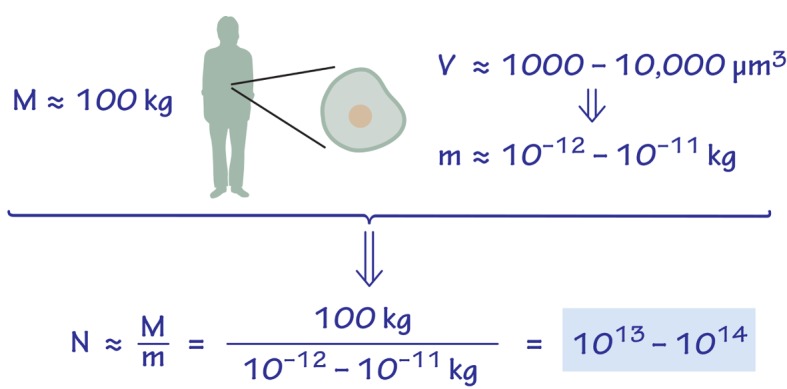
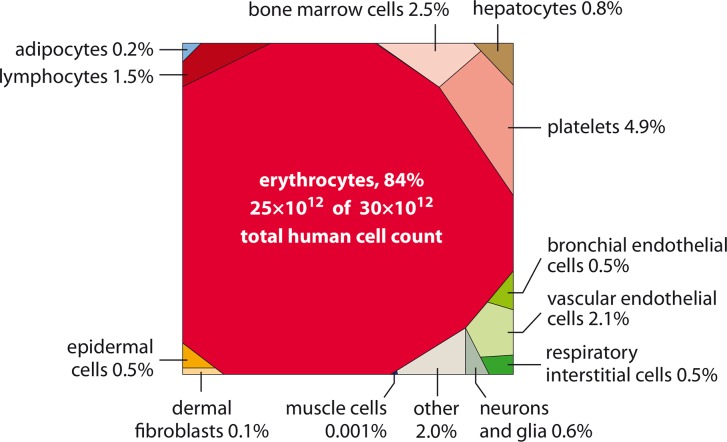
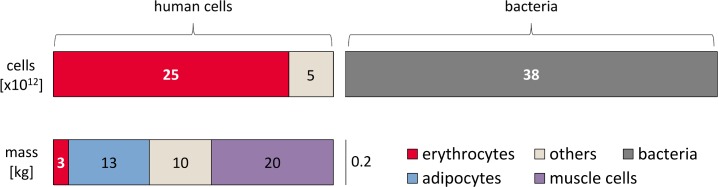
Reported values in the literature on the number of cells in the body differ by orders of magnitude and are very seldom supported by any measurements or calculations. Here, we integrate the most up-to-date information on the number of human and bacterial cells in the body. We estimate the total number of bacteria in the 70 kg "reference man" to be 3.8·1013. For human cells, we identify the dominant role of the hematopoietic lineage to the total count (≈90%) and revise past estimates to 3.0·1013 human cells. Our analysis also updates the widely-cited 10:1 ratio, showing that the number of bacteria in the body is actually of the same order as the number of human cells, and their total mass is about 0.2 kg.
Overview
The claims and statistics of this paper haven’t been checked yet.
Free: it reads the open-access text and checks the first 5 claims that cite a source we can check. Create a free account to check every claim.
Integrity signals
Registry
Cites
Statistics
Figures
Verification
Claims the paper makes
The claims and statistics of this paper haven’t been checked yet.
Free: it reads the open-access text and checks the first 5 claims that cite a source we can check. Create a free account to check every claim.
Claims other papers make about this one
Each is checked against this paper’s own text: does it say what the citing paper says it does?
The cited source doesn’t support the claim as written.
In the citing paper
“these microbes typically account for less than half of the weight of faecal solids 10 .”
From Human microbiome myths and misconceptions (2023) · cites this paper as [10]
Checked by a reasoning model — may be wrong.
Experimental — accuracy not yet measuredThe source backs part of the claim, not all of it — or backs it for a different population, condition or comparison.
In the citing paper
“Endotoxin is a lipopolysaccharide (LPS), constituting much of the outer membrane of gram-negative bacteria, present at high concentrations in gut, gums and skin and in other tissue during bacterial infection.”
From The endotoxin hypothesis of neurodegeneration (2019) · cites this paper as [6]
Experimental — accuracy not yet measuredThe source backs part of the claim, not all of it — or backs it for a different population, condition or comparison.
In the citing paper
“their gene count that exceeds the human genome’s gene count by ~100-fold and enables diverse metabolic programming”
From The microbiome and human cancer (2021) · cites this paper as [27]
Experimental — accuracy not yet measuredThe source backs part of the claim, not all of it — or backs it for a different population, condition or comparison.
In the citing paper
“The human gut microbiome contains ~3 × 10 13 bacteria, most of which are commensals (5).”
From The microbiome in cancer immunotherapy: Diagnostic tools and therapeutic strategies (2018) · cites this paper as [5]
Experimental — accuracy not yet measuredThe source backs part of the claim, not all of it — or backs it for a different population, condition or comparison.
In the citing paper
“there are trillions of microbes as numerous as human cells, that interact with the host constantly at numerous sites”
From The Influence of the Gut Microbiome on Cancer, Immunity, and Cancer Immunotherapy (2018) · cites this paper as Sender et al., 2016
Experimental — accuracy not yet measured
10 more claims about this paper
Create a free account to see every claim other papers make about this one.
Self-check
Percentages, sums and reported differences re-computed from the paper’s own numbers.
The self-check needs the paper’s full text.
Citations
Cites
A human gut microbial gene catalogue established by metagenomic sequencing
MetaHIT Consortium, Qin, J., Li, R., Raes, J., Arumugam, M., Burgdorf, K. S., Manichanh, C., Nielsen, T., Pons, N., Levenez, F., et al. (2010) · Nature · doi:10.1038/nature08821 · Cited by 11,624 · cited 1×
“Bacteria overwhelmingly outnumber eukaryotes and archaea in the human microbiome by 2–3 orders of magnitude [7,8].”
BackgroundHuman gut microbiome viewed across age and geography
Yatsunenko, T., Rey, F. E., Manary, M. J., Trehan, I., Dominguez-Bello, M. G., Contreras, M., Magris, M., Hidalgo, G., Baldassano, R. N., Anokhin, A. P., et al. (2012) · Nature · doi:10.1038/nature11053 · Cited by 7,815 · cited 1×
“Bacteria overwhelmingly outnumber eukaryotes and archaea in the human microbiome by 2–3 orders of magnitude [7,8].”
BackgroundAlberts, B., Johnson, A., Lewis, J., Morgan, D., Raff, M., Roberts, K., & Walter, P. (2017) · W.W. Norton eBooks · doi:10.1201/9781315735368 · Cited by 6,365
Turnbaugh, P. J., Ley, R. E., Hamady, M., Fraser-Liggett, C. M., Knight, R., & Gordon, J. I. (2007) · Nature · doi:10.1038/nature06244 · Cited by 6,091 · cited 1×
“One of the most fundamental and commonly cited figures in this growing field is the estimate that bacteria residing in the human body outnumber human cells by a factor of 10 or more (Bäckhed et al., 2005; Gill et al., 2006; Round and Mazmanian, 2010; Turnbaugh et al., 2007).”
BackgroundHost-Bacterial Mutualism in the Human Intestine
Bäckhed, F., Ley, R. E., Sonnenburg, J. L., Peterson, D. A., & Gordon, J. I. (2005) · Science · doi:10.1126/science.1104816 · Cited by 5,277
Metagenomic Analysis of the Human Distal Gut Microbiome
Gill, S. R., Pop, M., DeBoy, R. T., Eckburg, P. B., Turnbaugh, P. J., Samuel, B. S., Gordon, J. I., Relman, D. A., Fraser-Liggett, C. M., & Nelson, K. E. (2006) · Science · doi:10.1126/science.1124234 · Cited by 4,699 · cited 1×
“One of the most fundamental and commonly cited figures in this growing field is the estimate that bacteria residing in the human body outnumber human cells by a factor of 10 or more (Bäckhed et al., 2005; Gill et al., 2006; Round and Mazmanian, 2010; Turnbaugh et al., 2007).”
BackgroundCellular Scaling Rules for the Brains of Marsupials: Not as “Primitive” as Expected
Dos Santos, S. E., Porfirio, J., da Cunha, F. B., Manger, P. R., Tavares, W., Pessoa, L., Raghanti, M. A., Sherwood, C. C., & Herculano-Houzel, S. (2017) · Brain, Behavior and Evolution · doi:10.1159/000452856 · Cited by 2,642
MICROBIAL ECOLOGY OF THE GASTROINTESTINAL TRACT
Savage, D. C. (1977) · Annual Review of Microbiology · doi:10.1146/annurev.mi.31.100177.000543 · Cited by 2,436 · cited 5×
“Interestingly, those who read the original paper (Savage, 1977) find that it actually cites another paper for his estimate (Luckey, 1972).”
BackgroundInfluentialAzevedo, F. A. C., Carvalho, L. R. B., Grinberg, L. T., Farfel, J. M., Ferretti, R. E. L., Leite, R. E. P., Filho, W. J., Lent, R., & Herculano‐Houzel, S. (2009) · Journal of Comparative Neurology · doi:10.1002/cne.21974 · Cited by 2,337 · cited 1×
“However, a recent analysis [28] revisits this value and, after analyzing the variation across brain regions, concludes that the ratio is close to 1:1.”
BackgroundRound, J. L., & Mazmanian, S. K. (2010) · Proceedings of the National Academy of Sciences · doi:10.1073/pnas.0909122107 · Cited by 2,233 · cited 1×
“One of the most fundamental and commonly cited figures in this growing field is the estimate that bacteria residing in the human body outnumber human cells by a factor of 10 or more (Bäckhed et al., 2005; Gill et al., 2006; Round and Mazmanian, 2010; Turnbaugh et al., 2007).”
Background
Cited by
Items 201–300 of 1,042
Fungal-Bacterial Interactions in Health and Disease
Krüger, W., Vielreicher, S., Kapitan, M., Jacobsen, I., & Niemiec, M. (2019) · Pathogens · doi:10.3390/pathogens8020070 · Cited by 227
“Today, it is common knowledge that the human body contains as many microbes as the cells it consists of, and that the microbial communities are influenced by external and internal host factors such as food choices or genetics, respectively [7,8].”
Akkermansia muciniphila: biology, microbial ecology, host interactions and therapeutic potential
Ioannou, A., Berkhout, M. D., Geerlings, S. Y., & Belzer, C. (2025) · Nature Reviews Microbiology · doi:10.1038/s41579-024-01106-1 · Cited by 221
“The human gut harbours a complex community of trillions of microorganisms, including bacteria, archaea, eukaryotes and viruses, collectively termed the human gut microbiota 1,2 .”
Diabetes, Obesity, and Breast Cancer
Kang, C., LeRoith, D., & Gallagher, E. J. (2018) · Endocrinology · doi:10.1210/en.2018-00574 · Cited by 222
Jing, Y., Yu, Y., Bai, F., Wang, L., Yang, D., Zhang, C., Qin, C., Yang, M., Zhang, D., Zhu, Y., et al. (2021) · Microbiome · doi:10.1186/s40168-021-01007-y · Cited by 224
Wegierska, A. E., Charitos, I. A., Topi, S., Potenza, M. A., Montagnani, M., & Santacroce, L. (2022) · Sports Medicine · doi:10.1007/s40279-022-01696-x · Cited by 220
“Microbes are found primarily in five regions: the skin, nose, oral cavity, gastrointestinal tract, and urogenital tract [4].”
BackgroundInfluentialSphingolipids in host–microbial interactions
Heaver, S. L., Johnson, E. L., & Ley, R. E. (2018) · Current Opinion in Microbiology · doi:10.1016/j.mib.2017.12.011 · Cited by 221
“A human colonic microbiome consisting of 200 g of bacterial cells [36], a third of which are Bacteroides, will contain, based on cell hydrolyzable lipid content estimates [22], roughly 1 g of intestinal bacterial sphingolipids at a given time, in addition to the sphingolipids continuously released from these cells in…”
BackgroundMaking Sense of … the Microbiome in Psychiatry
Bastiaanssen, T. F. S., Cowan, C. S. M., Claesson, M. J., Dinan, T. G., & Cryan, J. F. (2019) · International Journal of Neuropsychopharmacology · doi:10.1093/ijnp/pyy067 · Cited by 222
Multi-omics data integration considerations and study design for biological systems and disease
Graw, S., Chappell, K., Washam, C. L., Gies, A., Bird, J., Robeson, M. S., & Byrum, S. D. (2020) · Molecular Omics · doi:10.1039/d0mo00041h · Cited by 220
Kollef, M. H., Torres, A., Shorr, A. F., Martin-Loeches, I., & Micek, S. T. (2021) · Critical Care Medicine · doi:10.1097/ccm.0000000000004783 · Cited by 217
In Sickness and in Health—What Does the Oral Microbiome Mean to Us? An Ecological Perspective
Marsh, P. D. (2018) · Advances in Dental Research · doi:10.1177/0022034517735295 · Cited by 218
“Humans have co-evolved with microorganisms, and it is now estimated that we are composed of equal numbers of prokaryotic and eukaryotic cells (Sender et al. 2016).”
BackgroundHenrich, T. J., Hatano, H., Bacon, O., Hogan, L. E., Rutishauser, R., Hill, A., Kearney, M. F., Anderson, E. M., Buchbinder, S. P., Cohen, S. E., et al. (2017) · PLOS Medicine · doi:10.1371/journal.pmed.1002417 · Cited by 216
“Assuming there are around 10(11) total body CD4+ T cells [39,40], these estimates collectively suggest there were only approximately a few hundred cells infected with replication-competent HIV provirus prior to treatment interruption.”
BackgroundObesity, diabetes, and the gut microbiome: an updated review
Singer-Englar, T., Barlow, G., & Mathur, R. (2019) · Expert Review of Gastroenterology & Hepatology · doi:10.1080/17474124.2019.1543023 · Cited by 214
“Eukarya by as much as three orders of magnitude [17].”
BackgroundFecal microbiota transplantation in disease therapy
Antushevich, H. (2020) · Clinica Chimica Acta · doi:10.1016/j.cca.2019.12.010 · Cited by 213
The potential application of probiotics and prebiotics for the prevention and treatment of COVID-19
Olaimat, A. N., Aolymat, I., Al-Holy, M., Ayyash, M., Abu Ghoush, M., Al-Nabulsi, A. A., Osaili, T., Apostolopoulos, V., Liu, S.-Q., & Shah, N. P. (2020) · npj Science of Food · doi:10.1038/s41538-020-00078-9 · Cited by 214
Microbial whole-cell biosensors: Current applications, challenges, and future perspectives
Moraskie, M., Roshid, M. H. O., O'Connor, G., Dikici, E., Zingg, J.-M., Deo, S., & Daunert, S. (2021) · Biosensors and Bioelectronics · doi:10.1016/j.bios.2021.113359 · Cited by 209
Chudzik, A., Orzyłowska, A., Rola, R., & Stanisz, G. J. (2021) · Biomolecules · doi:10.3390/biom11071000 · Cited by 209
“The majority of bacteria reside in the intestines [4].”
BackgroundDey, P. (2019) · Pharmacological Research · doi:10.1016/j.phrs.2019.104367 · Cited by 209
The interplay between Helicobacter pylori and gastrointestinal microbiota
Chen, C.-C., Liou, J.-M., Lee, Y.-C., Hong, T.-C., El-Omar, E. M., & Wu, M.-S. (2021) · Gut Microbes · doi:10.1080/19490976.2021.1909459 · Cited by 208
“The microbial component of the human digestive tract is at its highest in the colon, with nearly a 10(7)fold increase in number compared with the stomach.(91) The GI tract is a complex and dynamic network with interplay between intestinal epithelial cells, the immune system, food, host metabolism, and commensal microb…”
BackgroundLeo, F., Suvorava, T., Heuser, S. K., Li, J., LoBue, A., Barbarino, F., Piragine, E., Schneckmann, R., Hutzler, B., Good, M. E., et al. (2021) · Circulation · doi:10.1161/circulationaha.120.049606 · Cited by 208
“43 Thus, total RBC numbers may compensate for lower eNOS activity per cell.”
The Maternal Gut Microbiome During Pregnancy
Edwards, S. M., Cunningham, S. A., Dunlop, A. L., & Corwin, E. J. (2017) · MCN: The American Journal of Maternal/Child Nursing · doi:10.1097/nmc.0000000000000372 · Cited by 208
Overview and systematic review of studies of microbiome in schizophrenia and bipolar disorder
Nguyen, T. T., Kosciolek, T., Eyler, L. T., Knight, R., & Jeste, D. V. (2018) · Journal of Psychiatric Research · doi:10.1016/j.jpsychires.2018.01.013 · Cited by 205
“Humans, on average, harbor at least as many bacteria as the “human” cells in our bodies (Sender et al., 2016).”
Recent advances in nanotechnology for eradicating bacterial biofilm
Sahli, C., Moya, S. E., Lomas, J. S., Gravier-Pelletier, C., Briandet, R., & Hémadi, M. (2022) · Theranostics · doi:10.7150/thno.67296 · Cited by 206
“There are between 15 000 and 30 000 different species of bacteria in the human body, about 38 trillion bacteria in a 70 kg "reference" man, between 20 and 30 years old [9].”
BackgroundSpatial biology of cancer evolution
Seferbekova, Z., Lomakin, A., Yates, L. R., & Gerstung, M. (2023) · Nature Reviews Genetics · doi:10.1038/s41576-022-00553-x · Cited by 203
Identification and evaluation of the microbiome in the female and male reproductive tracts
Koedooder, R., Mackens, S., Budding, A., Fares, D., Blockeel, C., Laven, J., & Schoenmakers, S. (2019) · Human Reproduction Update · doi:10.1093/humupd/dmy048 · Cited by 204
Müller, W. E. G., Schröder, H. C., & Wang, X. (2019) · Chemical Reviews · doi:10.1021/acs.chemrev.9b00460 · Cited by 204
Processes in Microbial Ecology
Kirchman, D. L. (2018) · doi:10.1093/oso/9780198789406.001.0001 · Cited by 204
Chidambaram, S. B., Essa, M. M., Rathipriya, A. G., Bishir, M., Ray, B., Mahalakshmi, A. M., Tousif, A. H., Sakharkar, M. K., Kashyap, R. S., Friedland, R. P., et al. (2022) · Pharmacology & Therapeutics · doi:10.1016/j.pharmthera.2021.107988 · Cited by 204
Buret, A. G., Motta, J.-P., Allain, T., Ferraz, J., & Wallace, J. L. (2019) · Journal of Biomedical Science · doi:10.1186/s12929-018-0495-4 · Cited by 203
Advancing microbial sciences by individual-based modelling
Hellweger, F. L., Clegg, R. J., Clark, J. R., Plugge, C. M., & Kreft, J.-U. (2016) · Nature Reviews Microbiology · doi:10.1038/nrmicro.2016.62 · Cited by 202
Lamichhane, S., Sen, P., Dickens, A. M., Orešič, M., & Bertram, H. C. (2018) · Methods · doi:10.1016/j.ymeth.2018.04.029 · Cited by 201
Gut Bacteriophage: Current Understanding and Challenges
Sutton, T. D. S., & Hill, C. (2019) · Frontiers in Endocrinology · doi:10.3389/fendo.2019.00784 · Cited by 202
“The human gastrointestinal tract (GIT) is a complex environment containing billions of microorganisms (1).”
BackgroundUtilizing the gut microbiome in decompensated cirrhosis and acute-on-chronic liver failure
Trebicka, J., Bork, P., Krag, A., & Arumugam, M. (2021) · Nature Reviews Gastroenterology & Hepatology · doi:10.1038/s41575-020-00376-3 · Cited by 201
NOD1 and NOD2 in inflammation, immunity and disease
Mukherjee, T., Hovingh, E. S., Foerster, E. G., Abdel-Nour, M., Philpott, D. J., & Girardin, S. E. (2019) · Archives of Biochemistry and Biophysics · doi:10.1016/j.abb.2018.12.022 · Cited by 199
Kowarsky, M., Camunas-Soler, J., Kertesz, M., De Vlaminck, I., Koh, W., Pan, W., Martin, L., Neff, N. F., Okamoto, J., Wong, R. J., et al. (2017) · Proceedings of the National Academy of Sciences · doi:10.1073/pnas.1707009114 · Cited by 200
“There are roughly an order of magnitude more nonhuman cells than nucleated human cells in the body (18, 19); combining this observation with the average genome sizes of a human, bacterium, and virus (Gb, Mb, and kb, respectively) suggests that approximately 1% of DNA by mass in a human is derived from nonhost origins.”
BackgroundReproducible protocols for metagenomic analysis of human faecal phageomes
Shkoporov, A. N., Ryan, F. J., Draper, L. A., Forde, A., Stockdale, S. R., Daly, K. M., McDonnell, S. A., Nolan, J. A., Sutton, T. D. S., Dalmasso, M., et al. (2018) · Microbiome · doi:10.1186/s40168-018-0446-z · Cited by 200
“The majority of the microbial biomass of faeces is represented by bacteria (~ 10 13 bacterial cells with a total wet mass of 0.2 kg [1]), and so, it is not surprising that the bacterial component of the microbiome has received most attention over the years and has overshadowed the study of archaea,…”
InfluentialSundman, M. H., Chen, N.-K., Subbian, V., & Chou, Y.-H. (2017) · Brain, Behavior, and Immunity · doi:10.1016/j.bbi.2017.05.009 · Cited by 199
Programming Bugs: Microbiota and the Developmental Origins of Brain Health and Disease
Codagnone, M. G., Spichak, S., O’Mahony, S. M., O’Leary, O. F., Clarke, G., Stanton, C., Dinan, T. G., & Cryan, J. F. (2019) · Biological Psychiatry · doi:10.1016/j.biopsych.2018.06.014 · Cited by 198
“The human gut microbiota, consisting of trillions o f bacteria and weighing approximately 400 grams (10), and their genomes, have profound impact on physiology and behavior.”
BackgroundRussell, S., Milne, M. J., & Dey, C. (2017) · Accounting, Auditing & Accountability Journal · doi:10.1108/aaaj-07-2017-3010 · Cited by 197
“6 Indeed, recent scientific work estimates humans are a little less than half human cells, and a little more than half bacteria cells (Sender et al., 2016).”
BackgroundProbiotics in Autoimmune and Inflammatory Disorders
Liu, Y., Alookaran, J. J., & Rhoads, J. M. (2018) · Nutrients · doi:10.3390/nu10101537 · Cited by 197
“The argument is sometimes raised, “How can 1–100 billion colony-forming units (CFUs) of a probiotic outweigh the effects of 10–75 trillion commensals in the gut?”, noting a 1:1000 ratio of probiotic to commensal bacteria [117].”
BackgroundSmall Intestinal Bacterial Overgrowth: Clinical Features and Therapeutic Management
Rao, S. S. C., & Bhagatwala, J. (2019) · Clinical and Translational Gastroenterology · doi:10.14309/ctg.0000000000000078 · Cited by 198
The seminal microbiome in health and disease
Altmäe, S., Franasiak, J. M., & Mändar, R. (2019) · Nature Reviews Urology · doi:10.1038/s41585-019-0250-y · Cited by 195
Epigenetic Regulation at the Interplay Between Gut Microbiota and Host Metabolism
Miro-Blanch, J., & Yanes, O. (2019) · Frontiers in Genetics · doi:10.3389/fgene.2019.00638 · Cited by 195
“The direct transformation of dietary nutrients (Sharon et al., 2014) and secondary products of host metabolites such as primary bile acids (Wahlström et al., 2016) evidencies the strong interdependency between host and microbiota.”
BackgroundCheng, L., Qi, C., Zhuang, H., Fu, T., & Zhang, X. (2020) · Nucleic Acids Research · doi:10.1093/nar/gkz843 · Cited by 192
“According to the latest estimation, the number of bacteria cells in colon reaches 4 × 10¹³, which is approximately equal to the number of Human cells (3).”
BackgroundThe Burden of Carbohydrates in Health and Disease
Clemente-Suárez, V. J., Mielgo-Ayuso, J., Martín-Rodríguez, A., Ramos-Campo, D. J., Redondo-Flórez, L., & Tornero-Aguilera, J. F. (2022) · Nutrients · doi:10.3390/nu14183809 · Cited by 194
“The human body is made up of bacteria, viruses, protozoa, fungi, and archaea that live in balance, generating perfect body homeostasis, with a ratio of human: bacteria cells in the body close to 1:1, with bacteria cells being higher [27].”
BackgroundPossibilities of early life programming in broiler chickens via intestinal microbiota modulation
Rubio, L. A. (2019) · Poultry Science · doi:10.3382/ps/pey416 · Cited by 191
The role of oral bacteria in inflammatory bowel disease
Read, E., Curtis, M. A., & Neves, J. F. (2021) · Nature Reviews Gastroenterology & Hepatology · doi:10.1038/s41575-021-00488-4 · Cited by 193
Microbiome, Metabolome and Inflammatory Bowel Disease
Ahmed, I., Roy, B., Khan, S., Septer, S., & Umar, S. (2016) · Microorganisms · doi:10.3390/microorganisms4020020 · Cited by 193
The lung microbiome: progress and promise
Whiteside, S. A., McGinniss, J. E., & Collman, R. G. (2021) · Journal of Clinical Investigation · doi:10.1172/jci150473 · Cited by 183
“1 Introduction It is estimated that the human body contains roughly equal numbers of human and bacterial cells (1), and over the past decade studies of the human microbiome have expanded from the gut and other microbe-rich environments to sites previously considered sterile, such as the bladder (2), and the lung, the…”
BackgroundMetabolism and Colorectal Cancer
Sedlak, J. C., Yilmaz, Ö. H., & Roper, J. (2023) · Annual Review of Pathology: Mechanisms of Disease · doi:10.1146/annurev-pathmechdis-031521-041113 · Cited by 191
Experimental design and quantitative analysis of microbial community multiomics
Mallick, H., Ma, S., Franzosa, E. A., Vatanen, T., Morgan, X. C., & Huttenhower, C. (2017) · Genome Biology · doi:10.1186/s13059-017-1359-z · Cited by 192
“Another main driver of sampling methodology is biomass, as quantities of bacteria vary tremendously in various parts of the human body, from 10(11) bacteria on the skin to 10(14) in the colon [54].”
BackgroundMolecular link between dietary fibre, gut microbiota and health
Kumar, J., Rani, K., & Datt, C. (2020) · Molecular Biology Reports · doi:10.1007/s11033-020-05611-3 · Cited by 192
Elshahed, M. S., Miron, A., Aprotosoaie, A. C., & Farag, M. A. (2021) · Carbohydrate Polymers · doi:10.1016/j.carbpol.2020.117388 · Cited by 188
“Other tissues including heart, adipose tissue, kidney, and muscle metabolize the remainder of SCFAs. per individual (Huttenhower et al., 2012; Sender, Fuchs, & Milo, 2016; Qin et al., 2010).”
BackgroundMicrobiota and Lifestyle: A Special Focus on Diet
Redondo-Useros, N., Nova, E., González-Zancada, N., Díaz, L. E., Gómez-Martínez, S., & Marcos, A. (2020) · Nutrients · doi:10.3390/nu12061776 · Cited by 189
“Therefore, dysbiosis is a very important condition that requires consideration when studying any health disorder [12].”
BackgroundFrost, F., Kacprowski, T., Rühlemann, M., Pietzner, M., Bang, C., Franke, A., Nauck, M., Völker, U., Völzke, H., Dörr, M., et al. (2021) · Gut · doi:10.1136/gutjnl-2020-322753 · Cited by 187
Another renaissance for bile acid gastrointestinal microbiology
Ridlon, J. M., & Gaskins, H. R. (2024) · Nature Reviews Gastroenterology & Hepatology · doi:10.1038/s41575-024-00896-2 · Cited by 183
“Humans are composed of roughly a trillion mammalian cells and harbour an estimated equivalent number of microorganisms that dwarf us in gene content 33,34 .”
One health, fermented foods and gut microbiota
Bell, V., Ferrão, J., Pimentel, L., Pintado, M., & Fernandes, T. (2018) · Foods · doi:10.3390/foods7120195 · Cited by 188
“Indeed, although it is broadly mentioned that there are 10 times more cells from microorganisms in our bodies than there are human cells [10], this claim has been challenged, and others have estimated that the number of bacteria is similar to that of human cells [11].”
BackgroundInfluentialModern iron replacement therapy: clinical and pathophysiological insights
Girelli, D., Ugolini, S., Busti, F., Marchi, G., & Castagna, A. (2018) · International Journal of Hematology · doi:10.1007/s12185-017-2373-3 · Cited by 188
“An adult man is made of near 30 trillions (3 × 10¹³) cells, excluding the microbiome [8].”
BackgroundGut microbiota: An underestimated and unintended recipient for pesticide-induced toxicity
Yuan, X., Pan, Z., Jin, C., Ni, Y., Fu, Z., & Jin, Y. (2019) · Chemosphere · doi:10.1016/j.chemosphere.2019.04.088 · Cited by 188
Steroids, stress and the gut microbiome-brain axis
Tetel, M. J., de Vries, G. J., Melcangi, R. C., Panzica, G., & O'Mahony, S. M. (2018) · Journal of Neuroendocrinology · doi:10.1111/jne.12548 · Cited by 187
“Introduction Within each human gastrointestinal tract there is an exclusive combination of different communities of organisms, including bacteria, viruses, archaea, protozoa and fungi, which are collectively referred to as the gut microbiota and outnumber the total amount of human cells in the human body (1).”
The gut microbiota and its interactions with cardiovascular disease
Xu, H., Wang, X., Feng, W., Liu, Q., Zhou, S., Liu, Q., & Cai, L. (2020) · Microbial Biotechnology · doi:10.1111/1751-7915.13524 · Cited by 186
Seal, C. J., Courtin, C. M., Venema, K., & de Vries, J. (2021) · Comprehensive Reviews in Food Science and Food Safety · doi:10.1111/1541-4337.12728 · Cited by 185
“Approximately 5 × 10¹³ to 1014 bacteria inhabit the colon, which exceeds the number of cells in the human body by a factor of approximately 1.2 (Sender et al., 2016).”
BackgroundInfluentialShort Chain Fatty Acid Metabolism in Relation to Gut Microbiota and Genetic Variability
Ramos Meyers, G., Samouda, H., & Bohn, T. (2022) · Nutrients · doi:10.3390/nu14245361 · Cited by 184
The Gut-Brain Axis, the Human Gut Microbiota and Their Integration in the Development of Obesity
Bliss, E. S., & Whiteside, E. (2018) · Frontiers in Physiology · doi:10.3389/fphys.2018.00900 · Cited by 186
“Pumping iron”—how macrophages handle iron at the systemic, microenvironmental, and cellular levels
Nairz, M., Theurl, I., Swirski, F. K., & Weiss, G. (2017) · Pflügers Archiv - European Journal of Physiology · doi:10.1007/s00424-017-1944-8 · Cited by 178
Does Soil Contribute to the Human Gut Microbiome?
Blum, W. E. H., Zechmeister-Boltenstern, S., & Keiblinger, K. M. (2019) · Microorganisms · doi:10.3390/microorganisms7090287 · Cited by 184
“Colon (large intestine) 10 11 [29] 1011–1012 [30] Ileum (lower small intestine) 108 [29] Duodenum and jejunum (upper small intestine) 10 3–104 [29]”
Synergy and oxygen adaptation for development of next-generation probiotics
Khan, M. T., Dwibedi, C., Sundh, D., Pradhan, M., Kraft, J. D., Caesar, R., Tremaroli, V., Lorentzon, M., & Bäckhed, F. (2023) · Nature · doi:10.1038/s41586-023-06378-w · Cited by 180
Efficient nanocarriers of siRNA therapeutics for cancer treatment
Subhan, M. A., & Torchilin, V. P. (2019) · Translational Research · doi:10.1016/j.trsl.2019.07.006 · Cited by 183
Vitamin D Modulates Intestinal Microbiota in Inflammatory Bowel Diseases
Battistini, C., Ballan, R., Herkenhoff, M. E., Saad, S. M. I., & Sun, J. (2020) · International Journal of Molecular Sciences · doi:10.3390/ijms22010362 · Cited by 182
“There are approximately 3.8 × 10¹³ bacterial cells and about 100-fold the number of human genes, and the most representative phyla are Firmicutes, Bacteroidetes, Proteobacteria, and Actinobacteria [31–33].”
BackgroundInfluentialNew Insights Into the Cancer–Microbiome–Immune Axis: Decrypting a Decade of Discoveries
Jain, T., Sharma, P., Are, A. C., Vickers, S. M., & Dudeja, V. (2021) · Frontiers in Immunology · doi:10.3389/fimmu.2021.622064 · Cited by 183
The human cell count and size distribution
Hatton, I. A., Galbraith, E. D., Merleau, N. S. C., Miettinen, T. P., Smith, B. M., & Shander, J. A. (2023) · Proceedings of the National Academy of Sciences · doi:10.1073/pnas.2303077120 · Cited by 181
“Our data and methods build on prior work that estimated cell counts in approximately 20 tissue systems (16, 17).”
The developing gut microbiota and its consequences for health
Butel, M.-J., Waligora-Dupriet, A.-J., & Wydau-Dematteis, S. (2018) · Journal of Developmental Origins of Health and Disease · doi:10.1017/s2040174418000119 · Cited by 182
“8 10(13), showing that the number of bacteria is actually of the same order of human cells with a ratio close to 1/1.(1) Nevertheless, it does not decreased the major importance of the microbiome.”
BackgroundAssociation between the gut microbiota and mineral metabolism
Skrypnik, K., & Suliburska, J. (2018) · Journal of the Science of Food and Agriculture · doi:10.1002/jsfa.8724 · Cited by 182
Microbial Contribution to the Human Metabolome: Implications for Health and Disease
Van Treuren, W., & Dodd, D. (2020) · Annual Review of Pathology: Mechanisms of Disease · doi:10.1146/annurev-pathol-020117-043559 · Cited by 181
“Fungi and other eukaryotes likely represent a much smaller proportion, while viruses and phages are as abundant as bacteria, but their metabolic output is likely much lower (14).”
BackgroundThe interplay between host immune cells and gut microbiota in chronic inflammatory diseases
Kim, D., Zeng, M. Y., & Núñez, G. (2017) · Experimental & Molecular Medicine · doi:10.1038/emm.2017.24 · Cited by 181
Macroecological laws describe variation and diversity in microbial communities
Grilli, J. (2020) · Nature Communications · doi:10.1038/s41467-020-18529-y · Cited by 181
Beneficial Effects of Phenolic Compounds on Gut Microbiota and Metabolic Syndrome
Kasprzak-Drozd, K., Oniszczuk, T., Stasiak, M., & Oniszczuk, A. (2021) · International Journal of Molecular Sciences · doi:10.3390/ijms22073715 · Cited by 179
“The number of bacteria in the body is actually of the same order as the number of human cells [2].”
BackgroundDysbiosis Disrupts Gut Immune Homeostasis and Promotes Gastric Diseases
Toor, D., Wsson, M. K., Kumar, P., Karthikeyan, G., Kaushik, N. K., Goel, C., Singh, S., Kumar, A., & Prakash, H. (2019) · International Journal of Molecular Sciences · doi:10.3390/ijms20102432 · Cited by 177
“The number of bacterial cells inhabiting the GI tract is almost equal to the total number of cells in the human body, and their genomic content is approximately 10 times more than the human genome [6].”
BackgroundElectrospun ultrafine fibers for advanced face masks
Zhang, Z., Ji, D., He, H., & Ramakrishna, S. (2021) · Materials Science and Engineering: R: Reports · doi:10.1016/j.mser.2020.100594 · Cited by 180
Chen, F., Wang, Y., Wang, K., Chen, J., Jin, K., Peng, K., Chen, X., Liu, Z., Ouyang, J., Wang, Y., et al. (2023) · Frontiers in Pharmacology · doi:10.3389/fphar.2023.1166022 · Cited by 177
“Even so, gut microbiota and metabolites seem to remain relatively stable (Sender et al., 2016; McCoy et al., 2017).”
BackgroundIntestinal Microbiota Influences Non-intestinal Related Autoimmune Diseases
Opazo, M. C., Ortega-Rocha, E. M., Coronado-Arrázola, I., Bonifaz, L. C., Boudin, H., Neunlist, M., Bueno, S. M., Kalergis, A. M., & Riedel, C. A. (2018) · Frontiers in Microbiology · doi:10.3389/fmicb.2018.00432 · Cited by 179
“An adult of 70 kg in average has around 39 trillion of bacteria and 30 trillion of human cells (Sender et al., 2016) and at least 20% of the metabolites in the blood are derived from commensal bacteria (Rook et al., 2017).”
BackgroundCirculating tumor cell-blood cell crosstalk: Biology and clinical relevance
Pereira-Veiga, T., Schneegans, S., Pantel, K., & Wikman, H. (2022) · Cell Reports · doi:10.1016/j.celrep.2022.111298 · Cited by 175
Caio, G., Lungaro, L., Segata, N., Guarino, M., Zoli, G., Volta, U., & De Giorgio, R. (2020) · Nutrients · doi:10.3390/nu12061832 · Cited by 176
Interactions between gut microbiota and polyphenols: A mechanistic and metabolomic review
Cheng, H., Zhang, D., Wu, J., Liu, J., Zhou, Y., Tan, Y., Feng, W., & Peng, C. (2023) · Phytomedicine · doi:10.1016/j.phymed.2023.154979 · Cited by 170
Viral Infections, the Microbiome, and Probiotics
Harper, A., Vijayakumar, V., Ouwehand, A. C., ter Haar, J., Obis, D., Espadaler, J., Binda, S., Desiraju, S., & Day, R. (2021) · Frontiers in Cellular and Infection Microbiology · doi:10.3389/fcimb.2020.596166 · Cited by 177
“The human gastrointestinal (GI) tract alone contains 4 × 10(13) bacteria, slightly more than the total number of our own cells (Sender et al., 2016).”
BackgroundThe Role of the Gut Microbiota in the Pathogenesis of Diabetes
Bielka, W., Przezak, A., & Pawlik, A. (2022) · International Journal of Molecular Sciences · doi:10.3390/ijms23010480 · Cited by 176
“The number of bacterial cells was estimated to be about 10 times higher than the number of human cells [11], but nowadays it is known that the numbers of bacterial and human cells are similar [12].”
BackgroundCowan, C. S. M., Dinan, T. G., & Cryan, J. F. (2020) · Journal of Child Psychology and Psychiatry · doi:10.1111/jcpp.13156 · Cited by 176
Felizardo, R. J. F., Watanabe, I. K. M., Dardi, P., Rossoni, L. V., & Câmara, N. O. S. (2019) · Pharmacological Research · doi:10.1016/j.phrs.2019.01.019 · Cited by 175
Roles of the gut microbiota in the adaptive evolution of mammalian species
Moeller, A. H., & Sanders, J. G. (2020) · Philosophical Transactions of the Royal Society B · doi:10.1098/rstb.2019.0597 · Cited by 172
Epidemiology and Pathophysiology of Multiple Sclerosis
Ward, M., & Goldman, M. D. (2022) · Continuum · doi:10.1212/con.0000000000001136 · Cited by 174
Human microbiome myths and misconceptions
Walker, A. W., & Hoyles, L. (2023) · Nature Microbiology · doi:10.1038/s41564-023-01426-7 · Cited by 163
Viral communities of the human gut: metagenomic analysis of composition and dynamics
Aggarwala, V., Liang, G., & Bushman, F. D. (2017) · Mobile DNA · doi:10.1186/s13100-017-0095-y · Cited by 174
“For human stool, counts tend to range from 10(8) to 10(9) per gram [67] (our unpublished data); for comparison, the bacterial counts range from 10(10) to 10(11) [68].”
gutMGene: a comprehensive database for target genes of gut microbes and microbial metabolites
Cheng, L., Qi, C., Yang, H., Lu, M., Cai, Y., Fu, T., Ren, J., Jin, Q., & Zhang, X. (2022) · Nucleic Acids Research · doi:10.1093/nar/gkab786 · Cited by 174
“The human body is colonized by a large number of microbes, including up to 38 trillion bacteria, eukaryotes, viruses and archaea, most of which are present in the intestine (1,2).”
BackgroundDisturbances of the Gut Microbiota and Microbiota-Derived Metabolites in Inflammatory Bowel Disease
Hu, Y., Chen, Z., Xu, C., Kan, S., & Chen, D. (2022) · Nutrients · doi:10.3390/nu14235140 · Cited by 168
“However, the genetic diversity of gut microbiota is 100 times higher than that of human cells [11].”
BackgroundSnigdha, S., Ha, K., Tsai, P., Dinan, T. G., Bartos, J. D., & Shahid, M. (2022) · Pharmacology & Therapeutics · doi:10.1016/j.pharmthera.2021.107978 · Cited by 171
DNA-based memory devices for recording cellular events
Sheth, R. U., & Wang, H. H. (2018) · Nature Reviews Genetics · doi:10.1038/s41576-018-0052-8 · Cited by 172
Identification of mucin degraders of the human gut microbiota
Raimondi, S., Musmeci, E., Candeliere, F., Amaretti, A., & Rossi, M. (2021) · Scientific Reports · doi:10.1038/s41598-021-90553-4 · Cited by 171
The Role of Gut Dysbiosis in the Pathophysiology of Neuropsychiatric Disorders
Anand, N., Gorantla, V. R., & Chidambaram, S. B. (2022) · Cells · doi:10.3390/cells12010054 · Cited by 171
“Approximately 1013–1018 different microorganisms, including bacteria (1014, mostly anaerobic), archaea, fungi, and viruses, form the human microbiota [1,24].”
BackgroundThe Role of Probiotics in Skin Health and Related Gut–Skin Axis: A Review
Gao, T., Wang, X., Li, Y., & Ren, F. (2023) · Nutrients · doi:10.3390/nu15143123 · Cited by 169
Malnutrition and Gut Microbiota in Children
Iddrisu, I., Monteagudo-Mera, A., Poveda, C., Pyle, S., Shahzad, M., Andrews, S., & Walton, G. E. (2021) · Nutrients · doi:10.3390/nu13082727 · Cited by 167
“The human gastrointestinal tract harbours microbial populations consisting of 1013–1014 cells [11], but the density and composition differ markedly between compartments.”
BackgroundThe oral microbiome in the pathophysiology of cardiovascular disease
Tonelli, A., Lumngwena, E. N., & Ntusi, N. A. B. (2023) · Nature Reviews Cardiology · doi:10.1038/s41569-022-00825-3 · Cited by 167
Metadata
- Authors
- Sender, R., Fuchs, S., & Milo, R.
- Affiliations
- Weizmann Institute of Science (IL)
- Corresponding author
- Fuchs, Shai
- Milo, Ron
- Venue
- PLOS Biology
- Publisher
- Public Library of Science (PLoS)
- Published
- 2016-08-19
- Volume
- 14
- Issue
- 8
- Pages
- e1002533
- ISSN
- 1544-9173 (ISSN-L)
- 1545-7885
- PMC
- PMC4991899
- OpenAlex
- W2952564192
- Cited by
- 5,425
- References
- 88
- Citations by year
- 2026: 411 · 2025: 533 · 2024: 655 · 2023: 696 · 2022: 659 · 2021: 645 · 2020: 597 · 2019: 514 · 2018: 394 · 2017: 252 · 2016: 66
- FWCI
- 212.46
- Type
- journal article
- Language
- en
- Open access
- gold
- doi.org
- Licence
- Locations
- PLoS Biology (publishedVersion, cc-by)
- bioRxiv (Cold Spring Harbor Laboratory) (acceptedVersion, cc-by-nc-nd)
- Europe PMC (PubMed Central) (publishedVersion, cc-by)
- PubMed Central (publishedVersion, cc-by)
- PubMed (publishedVersion)
- DOAJ (DOAJ: Directory of Open Access Journals) (submittedVersion)
- Figshare (submittedVersion, cc-by)
- Funders
- Leona M. and Harry B. Helmsley Charitable Trust
- H2020 European Research Council (646827)
- Topics
- Life Sciences › Biochemistry, Genetics and Molecular Biology › Molecular Biology › Gut microbiota and health
- Physical Sciences › Environmental Science › Ecology › Microbial Community Ecology and Physiology
- Health Sciences › Dentistry › Periodontics › Oral microbiology and periodontitis research
- Keywords
- bacterial counts, human microbiome, hematopoietic lineage, reference man, microbial biomass, body cell mass
- MeSH terms
- Adult, Bacteria, Body Weights and Measures, Cell Count, Humans, Male, Organ Specificity, Bacterial Load, Microbiota
About these checks
Registry, retraction, Cites and statistics results are computed, not judged, with one exception: a printed reference that no index lists is read once by a model before it counts as a citation error. Claims are extracted by a model and kept only when their quote appears verbatim in the text; each cited source is then checked, with a model’s help, for whether it says what the claim relies on. Those verdicts can be wrong — read the claim’s quote and the cited source before relying on one.
Statistics and arithmetic are recomputed, not judged.
Confidence bands are shown only for fields calibrated on our annotated test set. None is calibrated yet, so no band is shown.
What counts as a claim ›How we measure confidence ›How we check this ›
Are you an author, or do you see a problem with this page? Request a review
Data sources
Bibliographic data: Semantic Scholar, OpenAlex, Crossref.
Contains information from the Semantic Scholar Academic Graph Datasets, made available under the ODC Attribution License (ODC-BY 1.0).
Semantic Scholar’s data is described in: Kinney, R., et al. (2023). The Semantic Scholar Open Data Platform. arXiv:2301.10140.
