

Revised Estimates for the Number of Human and Bacteria Cells in the Body
Open accessPublished version of a preprint
The DOI matches its Crossref record; 86 of the 88 references it cites were found in a registry or an index.
Abstract
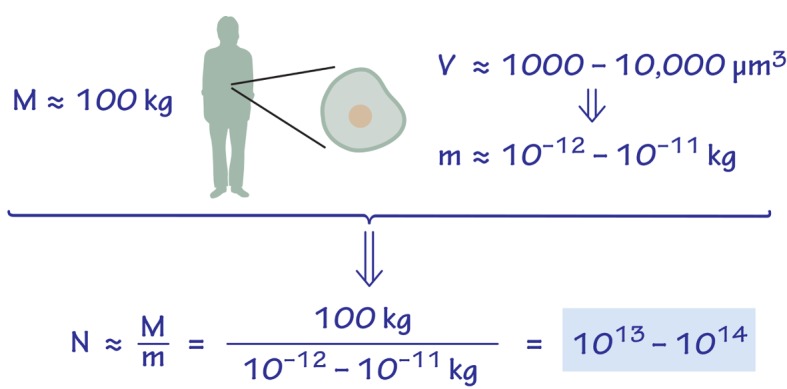
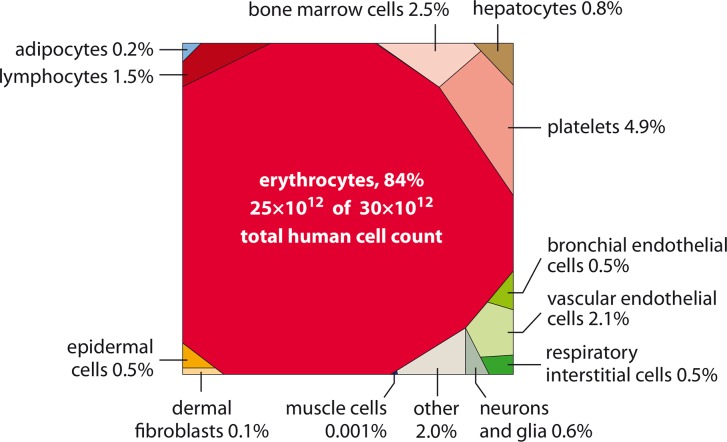
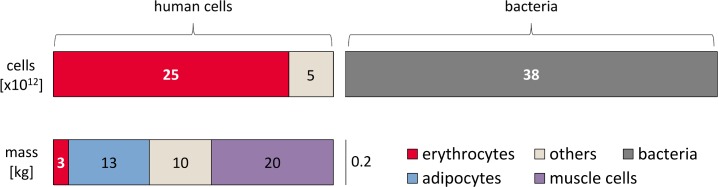
Reported values in the literature on the number of cells in the body differ by orders of magnitude and are very seldom supported by any measurements or calculations. Here, we integrate the most up-to-date information on the number of human and bacterial cells in the body. We estimate the total number of bacteria in the 70 kg "reference man" to be 3.8·1013. For human cells, we identify the dominant role of the hematopoietic lineage to the total count (≈90%) and revise past estimates to 3.0·1013 human cells. Our analysis also updates the widely-cited 10:1 ratio, showing that the number of bacteria in the body is actually of the same order as the number of human cells, and their total mass is about 0.2 kg.
Overview
The claims and statistics of this paper haven’t been checked yet.
Free: it reads the open-access text and checks the first 5 claims that cite a source we can check. Create a free account to check every claim.
Integrity signals
Registry
Cites
Statistics
Figures
Verification
Claims the paper makes
The claims and statistics of this paper haven’t been checked yet.
Free: it reads the open-access text and checks the first 5 claims that cite a source we can check. Create a free account to check every claim.
Claims other papers make about this one
Each is checked against this paper’s own text: does it say what the citing paper says it does?
The cited source doesn’t support the claim as written.
In the citing paper
“these microbes typically account for less than half of the weight of faecal solids 10 .”
From Human microbiome myths and misconceptions (2023) · cites this paper as [10]
Checked by a reasoning model — may be wrong.
Experimental — accuracy not yet measuredThe source backs part of the claim, not all of it — or backs it for a different population, condition or comparison.
In the citing paper
“Endotoxin is a lipopolysaccharide (LPS), constituting much of the outer membrane of gram-negative bacteria, present at high concentrations in gut, gums and skin and in other tissue during bacterial infection.”
From The endotoxin hypothesis of neurodegeneration (2019) · cites this paper as [6]
Experimental — accuracy not yet measuredThe source backs part of the claim, not all of it — or backs it for a different population, condition or comparison.
In the citing paper
“their gene count that exceeds the human genome’s gene count by ~100-fold and enables diverse metabolic programming”
From The microbiome and human cancer (2021) · cites this paper as [27]
Experimental — accuracy not yet measuredThe source backs part of the claim, not all of it — or backs it for a different population, condition or comparison.
In the citing paper
“The human gut microbiome contains ~3 × 10 13 bacteria, most of which are commensals (5).”
From The microbiome in cancer immunotherapy: Diagnostic tools and therapeutic strategies (2018) · cites this paper as [5]
Experimental — accuracy not yet measuredThe source backs part of the claim, not all of it — or backs it for a different population, condition or comparison.
In the citing paper
“there are trillions of microbes as numerous as human cells, that interact with the host constantly at numerous sites”
From The Influence of the Gut Microbiome on Cancer, Immunity, and Cancer Immunotherapy (2018) · cites this paper as Sender et al., 2016
Experimental — accuracy not yet measured
10 more claims about this paper
Create a free account to see every claim other papers make about this one.
Self-check
Percentages, sums and reported differences re-computed from the paper’s own numbers.
The self-check needs the paper’s full text.
Citations
Cites
A human gut microbial gene catalogue established by metagenomic sequencing
MetaHIT Consortium, Qin, J., Li, R., Raes, J., Arumugam, M., Burgdorf, K. S., Manichanh, C., Nielsen, T., Pons, N., Levenez, F., et al. (2010) · Nature · doi:10.1038/nature08821 · Cited by 11,624 · cited 1×
“Bacteria overwhelmingly outnumber eukaryotes and archaea in the human microbiome by 2–3 orders of magnitude [7,8].”
BackgroundHuman gut microbiome viewed across age and geography
Yatsunenko, T., Rey, F. E., Manary, M. J., Trehan, I., Dominguez-Bello, M. G., Contreras, M., Magris, M., Hidalgo, G., Baldassano, R. N., Anokhin, A. P., et al. (2012) · Nature · doi:10.1038/nature11053 · Cited by 7,815 · cited 1×
“Bacteria overwhelmingly outnumber eukaryotes and archaea in the human microbiome by 2–3 orders of magnitude [7,8].”
BackgroundAlberts, B., Johnson, A., Lewis, J., Morgan, D., Raff, M., Roberts, K., & Walter, P. (2017) · W.W. Norton eBooks · doi:10.1201/9781315735368 · Cited by 6,365
Turnbaugh, P. J., Ley, R. E., Hamady, M., Fraser-Liggett, C. M., Knight, R., & Gordon, J. I. (2007) · Nature · doi:10.1038/nature06244 · Cited by 6,091 · cited 1×
“One of the most fundamental and commonly cited figures in this growing field is the estimate that bacteria residing in the human body outnumber human cells by a factor of 10 or more (Bäckhed et al., 2005; Gill et al., 2006; Round and Mazmanian, 2010; Turnbaugh et al., 2007).”
BackgroundHost-Bacterial Mutualism in the Human Intestine
Bäckhed, F., Ley, R. E., Sonnenburg, J. L., Peterson, D. A., & Gordon, J. I. (2005) · Science · doi:10.1126/science.1104816 · Cited by 5,277
Metagenomic Analysis of the Human Distal Gut Microbiome
Gill, S. R., Pop, M., DeBoy, R. T., Eckburg, P. B., Turnbaugh, P. J., Samuel, B. S., Gordon, J. I., Relman, D. A., Fraser-Liggett, C. M., & Nelson, K. E. (2006) · Science · doi:10.1126/science.1124234 · Cited by 4,699 · cited 1×
“One of the most fundamental and commonly cited figures in this growing field is the estimate that bacteria residing in the human body outnumber human cells by a factor of 10 or more (Bäckhed et al., 2005; Gill et al., 2006; Round and Mazmanian, 2010; Turnbaugh et al., 2007).”
BackgroundCellular Scaling Rules for the Brains of Marsupials: Not as “Primitive” as Expected
Dos Santos, S. E., Porfirio, J., da Cunha, F. B., Manger, P. R., Tavares, W., Pessoa, L., Raghanti, M. A., Sherwood, C. C., & Herculano-Houzel, S. (2017) · Brain, Behavior and Evolution · doi:10.1159/000452856 · Cited by 2,642
MICROBIAL ECOLOGY OF THE GASTROINTESTINAL TRACT
Savage, D. C. (1977) · Annual Review of Microbiology · doi:10.1146/annurev.mi.31.100177.000543 · Cited by 2,436 · cited 5×
“Interestingly, those who read the original paper (Savage, 1977) find that it actually cites another paper for his estimate (Luckey, 1972).”
BackgroundInfluentialAzevedo, F. A. C., Carvalho, L. R. B., Grinberg, L. T., Farfel, J. M., Ferretti, R. E. L., Leite, R. E. P., Filho, W. J., Lent, R., & Herculano‐Houzel, S. (2009) · Journal of Comparative Neurology · doi:10.1002/cne.21974 · Cited by 2,337 · cited 1×
“However, a recent analysis [28] revisits this value and, after analyzing the variation across brain regions, concludes that the ratio is close to 1:1.”
BackgroundRound, J. L., & Mazmanian, S. K. (2010) · Proceedings of the National Academy of Sciences · doi:10.1073/pnas.0909122107 · Cited by 2,233 · cited 1×
“One of the most fundamental and commonly cited figures in this growing field is the estimate that bacteria residing in the human body outnumber human cells by a factor of 10 or more (Bäckhed et al., 2005; Gill et al., 2006; Round and Mazmanian, 2010; Turnbaugh et al., 2007).”
Background
Cited by
Items 501–600 of 1,042
Knuesel, T., & Mohajeri, M. H. (2021) · Nutrients · doi:10.3390/nu14010037 · Cited by 109
“0 × 1013), and by far more genes than its human host [11].”
BackgroundDiverse effects of gut-derived serotonin in intestinal inflammation
Shajib, M. S., Baranov, A., & Khan, W. I. (2017) · ACS Chemical Neuroscience · doi:10.1021/acschemneuro.6b00414 · Cited by 109
Antibiotic-induced acceleration of type 1 diabetes alters maturation of innate intestinal immunity
Zhang, X.-S., Li, J., Krautkramer, K. A., Badri, M., Battaglia, T., Borbet, T. C., Koh, H., Ng, S., Sibley, R. A., Li, Y., et al. (2018) · eLife · doi:10.7554/elife.37816 · Cited by 110
“The human gastrointestinal (GI) tract contains a microbiome of enormous cell number (Sender et al., 2016) and complexity (Lozupone et al.”
Immunity, microbiota and kidney disease
Knauf, F., Brewer, J. R., & Flavell, R. A. (2019) · Nature Reviews Nephrology · doi:10.1038/s41581-019-0118-7 · Cited by 124
Biodiversity of Gut Microbiota: Impact of Various Host and Environmental Factors
Anwar, H., Iftikhar, A., Muzaffar, H., Almatroudi, A., Allemailem, K. S., Navaid, S., Saleem, S., & Khurshid, M. (2021) · BioMed Research International · doi:10.1155/2021/5575245 · Cited by 131
Zhang, H., Jiang, F., Zhang, J., Wang, W., Li, L., & Yan, J. (2022) · International Journal of Biological Macromolecules · doi:10.1016/j.ijbiomac.2022.01.166 · Cited by 118
Association between Gut Dysbiosis and the Occurrence of SIBO, LIBO, SIFO and IMO
Banaszak, M., Górna, I., Woźniak, D., Przysławski, J., & Drzymała-Czyż, S. (2023) · Microorganisms · doi:10.3390/microorganisms11030573 · Cited by 139
“The latest research suggests roughly the same number of bacterial and human cells [5].”
BackgroundMutagenesis by Microbe: the Role of the Microbiota in Shaping the Cancer Genome
Barrett, M., Hand, C. K., Shanahan, F., Murphy, T., & O’Toole, P. W. (2020) · Trends in Cancer · doi:10.1016/j.trecan.2020.01.019 · Cited by 108
Bistoletti, M., Caputi, V., Baranzini, N., Marchesi, N., Filpa, V., Marsilio, I., Cerantola, S., Terova, G., Baj, A., Grimaldi, A., et al. (2019) · PLOS ONE · doi:10.1371/journal.pone.0212856 · Cited by 106
de Almeida, V. M., Galvão, I., & Vieira, A. T. (2019) · Journal of Interferon & Cytokine Research · doi:10.1089/jir.2019.0011 · Cited by 120
Kumari, M., Singh, P., Nataraj, B. H., Kokkiligadda, A., Naithani, H., Azmal Ali, S., Behare, P. V., & Nagpal, R. (2021) · Food Research International · doi:10.1016/j.foodres.2021.110716 · Cited by 107
Interplay between Cell Death and Cell Proliferation Reveals New Strategies for Cancer Therapy
Loftus, L. V., Amend, S. R., & Pienta, K. J. (2022) · International Journal of Molecular Sciences · doi:10.3390/ijms23094723 · Cited by 137
“Indeed, cell death is a vital aspect of developmental and homeostatic biology, amounting to a turnover of roughly one percent (around 330 billion) of our cells per day [6,7].”
BackgroundCukrowská, B., Sowińska, A., Bierła, J. B., Czarnowska, E., Rybak, A., & Grzybowska‐Chlebowczyk, U. (2017) · World Journal of Gastroenterology · doi:10.3748/wjg.v23.i42.7505 · Cited by 131
Bacteriophages of the Urinary Microbiome
Miller-Ensminger, T., Garretto, A., Brenner, J., Thomas-White, K. J., Zambom, A. Z., Wolfe, A. J., & Putonti, C. (2018) · Journal of Bacteriology · doi:10.1128/jb.00738-17 · Cited by 121
“Because the biomass of the urinary microbiota (35-37) exists at a substantially lower biomass than 98 the gut (38) and prior research has found that the frequency of lysogeny is inversely related to 99”
Stabilization of extensive fine-scale diversity by ecologically driven spatiotemporal chaos
Pearce, M. T., Agarwala, A., & Fisher, D. S. (2020) · Proceedings of the National Academy of Sciences · doi:10.1073/pnas.1915313117 · Cited by 135
“5, for realistic parameters: total population per island, N ≈ 10(13)—of order the number of human gut bacteria (66)—and K = 100 strains.”
BackgroundUnderstanding human health through metatranscriptomics
Ojala, T., Kankuri, E. M., & Kankainen, M. (2023) · Trends in Molecular Medicine · doi:10.1016/j.molmed.2023.02.002 · Cited by 120
Tunçil, Y. E., Thakkar, R., Marcia, A. D. R., Hamaker, B. R., & Lindemann, S. R. (2018) · Scientific Reports · doi:10.1038/s41598-018-34912-8 · Cited by 108
The Potential Influence of the Bacterial Microbiome on the Development and Progression of ADHD
Bull-Larsen, S., & Mohajeri, M. H. (2019) · Nutrients · doi:10.3390/nu11112805 · Cited by 106
“According to the latest study, this results in an approximately equal number of microbial compared to human cells in an individual [2].”
BackgroundHypoxia Inducible Factor-1α: The Curator of Gut Homeostasis
Kumar, T., Pandey, R., & Chauhan, N. S. (2020) · Frontiers in Cellular and Infection Microbiology · doi:10.3389/fcimb.2020.00227 · Cited by 106
“The human body is a permanent yet dynamic address to a variety of microorganisms living within and outside the human body (Sender et al., 2016).”
BackgroundDifferences in the gut microbiome and reduced fecal butyrate in elders with low skeletal muscle mass
Han, D., Wu, W., Liu, P., Yang, Y.-T., Hsu, H., Kuo, C., Wu, M., & Wang, T. (2022) · Clinical Nutrition · doi:10.1016/j.clnu.2022.05.008 · Cited by 115
Mills, S., Yang, B. K., Smith, G., Stanton, C., & Ross, R. P. (2023) · Gut Microbes · doi:10.1080/19490976.2023.2186098 · Cited by 126
“The human colon is recognized as one of the most densely populated ecosystems on earth with the bacterial component reported to reach 10(14) cells.(1) These microorganisms are intricately linked to host physiology and health since they perform several essential functions with consequences not only for the gastrointest…”
BackgroundFrom the intestinal flora to the microbiome
Domingo, J. J. S., & Sánchez, C. S. (2017) · Revista Española de Enfermedades Digestivas · doi:10.17235/reed.2017.4947/2017 · Cited by 165
Gut Microbiota, Dietary Phytochemicals, and Benefits to Human Health
Yin, R., Kuo, H. D., Hudlikar, R. R., Sargsyan, D., Li, S. N., Wang, L., Wu, R., & Kong, A. T. (2019) · Current Pharmacology Reports · doi:10.1007/s40495-019-00196-3 · Cited by 118
Dendritic Cell Subsets in Intestinal Immunity and Inflammation
Sun, T., Nguyen, A., & Gommerman, J. L. (2020) · The Journal of Immunology · doi:10.4049/jimmunol.1900710 · Cited by 105
“Added to this potential antigenic load, the human intestine is colonized by ∼10(13) bacteria (2).”
BackgroundProbiotics at War Against Viruses: What Is Missing From the Picture?
Tiwari, S. K., Dicks, L. M. T., Popov, I. V., Karaseva, A. B., Ermakov, A. M., Suvorov, A. N., Tagg, J. R., Weeks, R. M., & Chikindas, M. L. (2020) · Frontiers in Microbiology · doi:10.3389/fmicb.2020.01877 · Cited by 113
Kumari, N., KUMARI, R. R., Dua, A., Singh, M., Kumar, R., Singh, P., Duyar‐Ayerdi, S., Pradeep, S., Ojesina, A. I., & Kumar, R. (2024) · Molecular Nutrition & Food Research · doi:10.1002/mnfr.202300688 · Cited by 128
Pham, V. T., & Mohajeri, M. H. (2018) · Beneficial Microbes · doi:10.3920/bm2017.0164 · Cited by 125
Sethi, V., Vitiello, G. A., Saxena, D., Miller, G., & Dudeja, V. (2019) · Gastroenterology · doi:10.1053/j.gastro.2018.12.045 · Cited by 104
Li, H., Slone, J. D., Fei, L., & Huang, T. (2019) · Cells · doi:10.3390/cells8060608 · Cited by 116
Significance of the gut microbiome in multistep colorectal carcinogenesis
Mizutani, S., Yamada, T., & Yachida, S. (2020) · Cancer Science · doi:10.1111/cas.14298 · Cited by 118
Hickey, R. J., Modulevsky, D. J., Cuerrier, C. M., & Pelling, A. E. (2018) · ACS Biomaterials Science & Engineering · doi:10.1021/acsbiomaterials.8b00178 · Cited by 112
Interactions between Intestinal Microflora/Probiotics and the Immune System
Zhang, C., Wang, H., & Chen, T. (2019) · BioMed Research International · doi:10.1155/2019/6764919 · Cited by 124
“In general, each individual carries an average of 600,000 intestinal microbial genes [27, 28].”
BackgroundKoutzoumis, D. N., Vergara, M., Pino, J., Buddendorff, J., Khoshbouei, H., Mandel, R. J., & Torres, G. E. (2020) · Experimental Neurology · doi:10.1016/j.expneurol.2019.113159 · Cited by 102
Ha, J. Y., Choi, S.-Y., Lee, J. H., Hong, S.-H., & Lee, H.-J. (2020) · Frontiers in Molecular Biosciences · doi:10.3389/fmolb.2020.596366 · Cited by 102
Gut peptides and the microbiome: focus on ghrelin
Leeuwendaal, N. K., Cryan, J. F., & Schellekens, H. (2021) · Current Opinion in Endocrinology, Diabetes & Obesity · doi:10.1097/med.0000000000000616 · Cited by 101
Gut Microbiota, in the Halfway between Nutrition and Lung Function
Santo, C. E., Caseiro, C., Martins, M. J., Monteiro, R., & Brandão, I. (2021) · Nutrients · doi:10.3390/nu13051716 · Cited by 113
“8 × 10¹³ bacteria in the colon), where a diverse microbial community (bacteria, archaea, fungi and protists) resides, interacts with each other and the ost [4,5].”
BackgroundMontagnani, M., Bottalico, L., Potenza, M. A., Charitos, I. A., Topi, S., Colella, M., & Santacroce, L. (2023) · International Journal of Molecular Sciences · doi:10.3390/ijms241210322 · Cited by 120
“Greater permeability allows for the entry of pathogenic and bacterial antigens, causing subsequent immune responses that impair, even further, the intestinal microbiota (Figure 7) [2,6].”
BackgroundInfluentialParasite–microbiota interactions potentially affect intestinal communities in wild mammals
Aivelo, T., & Norberg, A. (2017) · Journal of Animal Ecology · doi:10.1111/1365-2656.12708 · Cited by 105
Clinical applications of gut microbiota in cancer biology
Wong, S. H., Kwong, T. N. Y., Wu, C.-Y., & Yu, J. (2019) · Seminars in Cancer Biology · doi:10.1016/j.semcancer.2018.05.003 · Cited by 100
Jama, H. A., Beale, A. L., Shihata, W., & Marques, F. Z. (2019) · Cardiovascular Research · doi:10.1093/cvr/cvz091 · Cited by 108
Current Concepts in Pharmacometabolomics, Biomarker Discovery, and Precision Medicine
Beger, R. D., Schmidt, M. A., & Kaddurah‐Daouk, R. (2020) · Metabolites · doi:10.3390/metabo10040129 · Cited by 120
“More recent analysis has put the ratio of human to microbial cells closer to 1:1 [101].”
BackgroundTrastoy, B., Naegeli, A., Anso, I., Sjögren, J., & Guerin, M. (2020) · Nature Communications · doi:10.1038/s41467-020-18696-y · Cited by 94
Settanni, C. R., Ianiro, G., Bibbò, S., Cammarota, G., & Gasbarrini, A. (2021) · Progress in Neuro-Psychopharmacology and Biological Psychiatry · doi:10.1016/j.pnpbp.2021.110258 · Cited by 102
Rao, J., Xie, R., Lin, L., Jiang, J., Du, L., Zeng, X., Li, G., Wang, C., & Qiao, Y. (2021) · European Journal of Neuroscience · doi:10.1111/ejn.15192 · Cited by 101
Wearable Biofuel Cells: Advances from Fabrication to Application
Wu, H., Zhang, Y., Kjøniksen, A., Zhou, X., & Zhou, X. (2021) · Advanced Functional Materials · doi:10.1002/adfm.202103976 · Cited by 114
Distinct patterns in the gut microbiota after surgical or medical therapy in obese patients
Medina, D. A., Pedreros, J. P., Turiel, D., Quezada, N., Pimentel, F., Escalona, A., & Garrido, D. (2017) · PeerJ · doi:10.7717/peerj.3443 · Cited by 101
“It consists of a dense community of microorganisms that matches 68 the number of cells of the human body (Sender et al., 2016).”
BackgroundRice, M. W., Pandya, J. D., & Shear, D. A. (2019) · Frontiers in Neurology · doi:10.3389/fneur.2019.00875 · Cited by 114
“2–1 kg of an adult’s bodyweight (18, 19), outnumbering mammalian cells by as much as 10:1, though more recent estimates indicate a ratio of ∼1:1 (18), and contains ∼100 fold more unique genes than the human genome (20).”
BackgroundThumann, T. A., Pferschy‐Wenzig, E., Moissl‐Eichinger, C., & Bauer, R. (2019) · Journal of Ethnopharmacology · doi:10.1016/j.jep.2019.112153 · Cited by 114
Di Lorenzo, F., Pither, M. D., Martufi, M., Scarinci, I., Guzmán-Caldentey, J., Łakomiec, E., Jachymek, W., Bruijns, S. C. M., Santamaría, S. M., Frick, J.-S., et al. (2020) · ACS Central Science · doi:10.1021/acscentsci.0c00791 · Cited by 101
Nascimento, J. C., Matheus, V. A., de Oliveira, R. B., Tada, S. F. S., & Collares‐Buzato, C. B. (2020) · Digestive Diseases and Sciences · doi:10.1007/s10620-020-06664-x · Cited by 113
The Human Gut Phageome: Origins and Roles in the Human Gut Microbiome
Townsend, E. M., Kelly, L., Muscatt, G., Box, J. D., Hargraves, N., Lilley, D., & Jameson, E. (2021) · Frontiers in Cellular and Infection Microbiology · doi:10.3389/fcimb.2021.643214 · Cited by 120
Ševčíková, A., Izoldova, N., Števurková, V., Kasperova, B., Chovanec, M., Čierniková, S., & Mego, M. (2022) · International Journal of Molecular Sciences · doi:10.3390/ijms23010488 · Cited by 112
“Moreover, other microorganisms including archea, eukaryotic organisms, viruses, and fungi significantly contribute to the stability and diversity of the human gut [39,40].”
BackgroundCOPD and Gut–Lung Axis: How Microbiota and Host Inflammasome Influence COPD and Related Therapeutics
Qu, L., Cheng, Q., Wang, Y., Mu, H., & Zhang, Y. (2022) · Frontiers in Microbiology · doi:10.3389/fmicb.2022.868086 · Cited by 116
Inchingolo, A. D., Malcangi, G., Semjonova, A., Inchingolo, A. M., Patano, A., Coloccia, G., Ceci, S., Marinelli, G., Pede, C. D., Ciocia, A. M., et al. (2022) · Children · doi:10.3390/children9071014 · Cited by 146
“Microbiota (MB) means the set of all microorganisms (bacteria, fungi, archaeobacteria, protozoa, and viruses) that, under precise physiological or pathological conditions and in a specific environment, live and colonize in symbiosis [2].”
BackgroundRed Blood Cell Metabolism In Vivo and In Vitro
D’Alessandro, A., Anastasiadi, A. T., Tzounakas, V. L., Nemkov, T. G., Reisz, J. A., Kriebardis, A. G., Zimring, J. C., Spitalnik, S. L., & Busch, M. P. (2023) · Metabolites · doi:10.3390/metabo13070793 · Cited by 113
“By recent estimates, the adult human body contains ~30 trillion cells [1,2].”
BackgroundGut microbiota-gonadal axis: the impact of gut microbiota on reproductive functions
Ashonibare, V. J., Akorede, B. A., Ashonibare, P. J., Akhigbe, T. M., & Akhigbe, R. E. (2024) · Frontiers in Immunology · doi:10.3389/fimmu.2024.1346035 · Cited by 117
“As the child is exposed to the world, the composition of its microbiome is in fl uenced by factors such as the birth and growth environment, nature, nutrition, other members of the family, pets among others (6).”
BackgroundEffect of Antibiotic Use on Outcomes with Systemic Therapies in Metastatic Renal Cell Carcinoma
Lalani, A.-K. A., Xie, W., Braun, D. A., Kaymakcalan, M., Bossé, D., Steinharter, J. A., Martini, D. J., Simantov, R., Lin, X., Wei, X. X., et al. (2020) · European Urology Oncology · doi:10.1016/j.euo.2019.09.001 · Cited by 100
“It is important to note that only 15% of bacteria grown from feces are estimated to be detectable using the currently available methods of metagenomics and 16S rRNA sequencing [33].”
MethodCitrate metabolism in red blood cells stored in additive solution‐3
D’Alessandro, A., Nemkov, T. G., Yoshida, T., Bordbar, A., Palsson, B. Ø., & Hansen, K. C. (2016) · Transfusion · doi:10.1111/trf.13892 · Cited by 104
Epigenetic and transgenerational mechanisms in infection-mediated neurodevelopmental disorders
Weber-Stadlbauer, U. (2017) · Translational Psychiatry · doi:10.1038/tp.2017.78 · Cited by 100
Dynamics of the oral microbiota as a tool to estimate time since death
Adserias‐Garriga, J., Quijada, N. M., Hernández, M., Rodríguez-Làzaro, D., Steadman, D. W., & Garcia-Gil, L. J. (2017) · Molecular Oral Microbiology · doi:10.1111/omi.12191 · Cited by 110
Gut microbiota modulation with traditional Chinese medicine: A system biology-driven approach
Yue, S., Wang, W., Yu, J., Chen, Y., Shi, X.-Q., Yan, D., Zhou, G., Zhang, L., Wang, C., Duan, J., et al. (2019) · Pharmacological Research · doi:10.1016/j.phrs.2019.104453 · Cited by 104
Carco, C., Young, W., Gearry, R. B., Talley, N. J., McNabb, W. C., & Roy, N. C. (2020) · Frontiers in Cellular and Infection Microbiology · doi:10.3389/fcimb.2020.00468 · Cited by 99
“The microbiota encompasses up to 500 transient and indigenous species, including bacteria, viruses, fungi and protozoa, and comprises up to 20 million genes (Sender et al., 2016).”
BackgroundDeshpande, R. P., Sharma, S., & Watabe, K. (2020) · Cancers · doi:10.3390/cancers12102983 · Cited by 108
“The human gut microbiome is composed of various microorganisms and reported to play an important role in human health and disease [156].”
BackgroundThe interplay between diet, gut microbes, and host epigenetics in health and disease
Shock, T., Badang, L., Ferguson, B. S., & Martinez, K. (2021) · The Journal of Nutritional Biochemistry · doi:10.1016/j.jnutbio.2021.108631 · Cited by 110
Impact of Protein Intake in Older Adults with Sarcopenia and Obesity: A Gut Microbiota Perspective
Prokopidis, K., Cervo, M. M., Gandham, A., & Scott, D. (2020) · Nutrients · doi:10.3390/nu12082285 · Cited by 99
“A recent study showed that the ratio of human to bacterial cells is almost 1:1 [47].”
BackgroundPedicord, V. A., Lockhart, A. A. K., Rangan, K. J., Craig, J. W., Loschko, J., Rogoz, A., Hang, H. C., & Mucida, D. (2016) · Science Immunology · doi:10.1126/sciimmunol.aai7732 · Cited by 99
Red blood cell proteomics update: is there more to discover?
D’Alessandro, A., Dzieciątkowska, M., Nemkov, T. G., & Hansen, K. C. (2017) · PubMed · doi:10.2450/2017.0293-16 · Cited by 106
Association between the gut and oral microbiome with obesity
Benahmed, A. G., Gasmi, A., Doşa, A., Chirumbolo, S., Mujawdiya, P. K., Aaseth, J., Dadar, M., & Bjørklund, G. (2020) · Anaerobe · doi:10.1016/j.anaerobe.2020.102248 · Cited by 114
The role of gut microbiota and metabolites in cancer chemotherapy
Li, S., Zhu, S., & Yu, J. (2023) · Journal of Advanced Research · doi:10.1016/j.jare.2023.11.027 · Cited by 114
Small intestinal microbiota: from taxonomic composition to metabolism
Yersin, S., & Vonaesch, P. (2024) · Trends in Microbiology · doi:10.1016/j.tim.2024.02.013 · Cited by 120
Gastrointestinal involvement of autism spectrum disorder: focus on gut microbiota
Settanni, C. R., Bibbò, S., Ianiro, G., Rinninella, E., Cintoni, M., Mele, M. C., Cammarota, G., & Gasbarrini, A. (2021) · Expert Review of Gastroenterology & Hepatology · doi:10.1080/17474124.2021.1869938 · Cited by 98
“Bacteria are the most representative members of the community of intestinal micro-organisms, since they are estimated to be approximately 10(13) cells in the whole body, with a ratio of bacterial to human cells of 1:1 approximately [28].”
BackgroundThe gut microbiota as a key regulator of visceral pain
O’Mahony, S. M., Dinan, T. G., & Cryan, J. F. (2016) · Pain · doi:10.1097/j.pain.0000000000000779 · Cited by 111
Sasaki, D., Sasaki, K., Ikuta, N., Yasuda, T., Fukuda, I., Kondo, A., & Osawa, R. (2018) · Scientific Reports · doi:10.1038/s41598-017-18877-8 · Cited by 98
Microbiome-based body fluid identification of samples exposed to indoor conditions
Dobay, A., Haas, C., Fucile, G., Downey, N., Morrison, H. G., Kratzer, A., & Arora, N. (2019) · Forensic Science International Genetics · doi:10.1016/j.fsigen.2019.02.010 · Cited by 108
Legrand, R., Lucas, N., Dominique, M., Azhar, S., Deroissart, C., Le Solliec, M.-A., Rondeaux, J., Nobis, S., Guérin, C., Léon, F., et al. (2020) · International Journal of Obesity · doi:10.1038/s41366-019-0515-9 · Cited by 98
Akkermansia muciniphila: A key player in gut microbiota-based disease modulation
Shaheen, N., Khursheed, W., Gurung, B., & Wang, S. (2025) · Microbiological Research · doi:10.1016/j.micres.2025.128317 · Cited by 115
Engineering mucus to study and influence the microbiome
Werlang, C. A., Cárcamo‐Oyarce, G., & Ribbeck, K. (2019) · Nature Reviews Materials · doi:10.1038/s41578-018-0079-7 · Cited by 107
Larson, P. J., Zhou, W., Santiago, A., Driscoll, S., Fleming, E., Voigt, A. Y., Chun, O. K., Grady, J. J., Kuchel, G. A., Robison, J. T., et al. (2022) · Nature Aging · doi:10.1038/s43587-022-00287-9 · Cited by 95
Prebiotic and Probiotic Modulation of the Microbiota–Gut–Brain Axis in Depression
Radford-Smith, D. E., & Anthony, D. C. (2023) · Nutrients · doi:10.3390/nu15081880 · Cited by 96
“On average, there are 10 commensal bacteria for every nucleated cell in the human body [9], the vast majority of which are concentrated in the colon (large intestine).”
BackgroundReframing anorexia nervosa as a metabo-psychiatric disorder
Bulik, C. M., Carroll, I. M., & Mehler, P. (2021) · Trends in Endocrinology & Metabolism · doi:10.1016/j.tem.2021.07.010 · Cited by 96
“3 ratio [21], with the gut microbiome (the cumulative genomes of the intestinal microbiota) outnumbering human genes 1000-fold [22].”
BackgroundForensic genetics and genomics: Much more than just a human affair
Arenas, M., Pereira, F., Oliveira, M. T. D. S., Pinto, N., Lopes, A. M., Gomes, V., Carracedo, Á., & Amorim, A. (2017) · PLoS Genetics · doi:10.1371/journal.pgen.1006960 · Cited by 113
Pathogens, faecal indicators and human-specific microbial source-tracking markers in sewage
García‐Aljaro, C., Blanch, A. R., Campos, C., Jofre, J. T., & Lucena, F. (2019) · Journal of Applied Microbiology · doi:10.1111/jam.14112 · Cited by 110
“Moreover, among the gut sections, the colon, with an estimated concentration exceeding 10(11) bacteria per ml and an average volume of 400 ml, is by far the main contributor to the human microbiota (Sender et al. 2016).”
BackgroundThe microbiome: Composition and locations
Kennedy, M. S., & Chang, E. B. (2020) · Progress in molecular biology and translational science · doi:10.1016/bs.pmbts.2020.08.013 · Cited by 144
Role of Gut Microbiota and Probiotics in Colorectal Cancer: Onset and Progression
Torres-Maravilla, E., Boucard, A.-S., Mohseni, A. H., Taghinezhad-S, S., Cortes-Perez, N. G., & Bermúdez-Humarán, L. G. (2021) · Microorganisms · doi:10.3390/microorganisms9051021 · Cited by 96
How important are fatty acids in human health and can they be used in treating diseases?
Dicks, L. M. T. (2024) · Gut Microbes · doi:10.1080/19490976.2024.2420765 · Cited by 109
Cognition, Information Fields and Hologenomic Entanglement: Evolution in Light and Shadow
Miller, W. B. (2016) · Biology · doi:10.3390/biology5020021 · Cited by 104
Metabolome–Microbiome Crosstalk and Human Disease
Lee‐Sarwar, K. A., Lasky-Su, J. A., Kelly, R. S., Litonjua, A. A., & Weiss, S. T. (2020) · Metabolites · doi:10.3390/metabo10050181 · Cited by 110
“The collective genomic contents (or microbiome) of the human population comprises upwards of 45 million non-redundant genes [1,2].”
BackgroundGut Microbiota and Colorectal Cancer Development: A Closer Look to the Adenoma-Carcinoma Sequence
Vacante, M., Ciuni, R., Basile, F., & Biondi, A. (2020) · Biomedicines · doi:10.3390/biomedicines8110489 · Cited by 107
“Overall, the number of these microorganisms has been calculated to exceed 1014, with a ratio of human:bacterial cells closer to 1:1 [10,11].”
BackgroundProbiotics in microbiome ecological balance providing a therapeutic window against cancer
Sehrawat, N., Yadav, M. K., Singh, M. P., Kumar, V., Sharma, V., & Sharma, A. K. (2020) · Seminars in Cancer Biology · doi:10.1016/j.semcancer.2020.06.009 · Cited by 105
Murray, E. R., Kemp, M., & Nguyen, T. T. (2022) · Archives of Clinical Neuropsychology · doi:10.1093/arclin/acac008 · Cited by 92
Genome‐wide association studies in Crohn's disease: Past, present and future
Verstockt, B., Smith, K. G. C., & Lee, J. C. (2018) · Clinical & Translational Immunology · doi:10.1002/cti2.1001 · Cited by 111
“It has been estimated that the human body contains ~40 trillion bacteria, of which the vast majority are located within the intestine.(59) This means that there are actually more bacteria in our bodies than human cells and illustrates why the intestine presents such a challenge to the immune”
BackgroundThe Microbiome and Eating Disorders
Seitz, J., Trinh, S., & Herpertz-Dahlmann, B. (2019) · Psychiatric Clinics of North America · doi:10.1016/j.psc.2018.10.004 · Cited by 94
The microbiome and lung cancer
Maddi, A., Sabharwal, A., Violante, T., Manuballa, S., Genco, R. J., Patnaik, S. K., & Yendamuri, S. (2019) · Journal of Thoracic Disease · doi:10.21037/jtd.2018.12.88 · Cited by 101
Anorexia nervosa: Gut microbiota-immune-brain interactions
Roubalová, R., Procházková, P., Papežová, H., Smitka, K., Bilej, M., & Tlaskalová-Hogenová, H. (2020) · Clinical Nutrition · doi:10.1016/j.clnu.2019.03.023 · Cited by 95
Therapeutic effect of baicalin on inflammatory bowel disease: A review
Wang, X., Xie, L., Long, J., Liu, K., Lu, J., Liang, Y., Cao, Y., Dai, X., & Li, X. (2021) · Journal of Ethnopharmacology · doi:10.1016/j.jep.2021.114749 · Cited by 99
Untangling human milk oligosaccharides and infant gut microbiome
Masi, A. C., & Stewart, C. J. (2021) · iScience · doi:10.1016/j.isci.2021.103542 · Cited by 110
“The gastrointestinal tract harbors the densest microbial community in the human body, with up to 1014 bacteria (Sender et al., 2016), and represents a vast interface where the immune system interacts with the outside world.”
BackgroundDodge, R., Jones, E. W., Zhu, H., Obadia, B., Martinez, D. J., Wang, C., Aranda-Díaz, A., Aumiller, K., Liu, Z., Voltolini, M., et al. (2023) · Nature Communications · doi:10.1038/s41467-023-36942-x · Cited by 93
The Impact of Textile Dyes on the Environment
Akter, T., Protity, A. T., Shaha, M., Mamun, M. A., & Hashem, A. (2023) · Smart nanomaterials technology · doi:10.1007/978-981-99-3901-5_17 · Cited by 122
The effects of gut microbiota on appetite regulation and the underlying mechanisms
Yu, M., Yu, B., & Chen, D. (2024) · Gut Microbes · doi:10.1080/19490976.2024.2414796 · Cited by 120
M cell-dependent antigen uptake on follicle-associated epithelium for mucosal immune surveillance
Nakamura, Y., Kimura, S., & Hase, K. (2018) · Inflammation and Regeneration · doi:10.1186/s41232-018-0072-y · Cited by 108
Metadata
- Authors
- Sender, R., Fuchs, S., & Milo, R.
- Affiliations
- Weizmann Institute of Science (IL)
- Corresponding author
- Fuchs, Shai
- Milo, Ron
- Venue
- PLOS Biology
- Publisher
- Public Library of Science (PLoS)
- Published
- 2016-08-19
- Volume
- 14
- Issue
- 8
- Pages
- e1002533
- ISSN
- 1544-9173 (ISSN-L)
- 1545-7885
- PMC
- PMC4991899
- OpenAlex
- W2952564192
- Cited by
- 5,425
- References
- 88
- Citations by year
- 2026: 411 · 2025: 533 · 2024: 655 · 2023: 696 · 2022: 659 · 2021: 645 · 2020: 597 · 2019: 514 · 2018: 394 · 2017: 252 · 2016: 66
- FWCI
- 212.46
- Type
- journal article
- Language
- en
- Open access
- gold
- doi.org
- Licence
- Locations
- PLoS Biology (publishedVersion, cc-by)
- bioRxiv (Cold Spring Harbor Laboratory) (acceptedVersion, cc-by-nc-nd)
- Europe PMC (PubMed Central) (publishedVersion, cc-by)
- PubMed Central (publishedVersion, cc-by)
- PubMed (publishedVersion)
- DOAJ (DOAJ: Directory of Open Access Journals) (submittedVersion)
- Figshare (submittedVersion, cc-by)
- Funders
- Leona M. and Harry B. Helmsley Charitable Trust
- H2020 European Research Council (646827)
- Topics
- Life Sciences › Biochemistry, Genetics and Molecular Biology › Molecular Biology › Gut microbiota and health
- Physical Sciences › Environmental Science › Ecology › Microbial Community Ecology and Physiology
- Health Sciences › Dentistry › Periodontics › Oral microbiology and periodontitis research
- Keywords
- bacterial counts, human microbiome, hematopoietic lineage, reference man, microbial biomass, body cell mass
- MeSH terms
- Adult, Bacteria, Body Weights and Measures, Cell Count, Humans, Male, Organ Specificity, Bacterial Load, Microbiota
About these checks
Registry, retraction, Cites and statistics results are computed, not judged, with one exception: a printed reference that no index lists is read once by a model before it counts as a citation error. Claims are extracted by a model and kept only when their quote appears verbatim in the text; each cited source is then checked, with a model’s help, for whether it says what the claim relies on. Those verdicts can be wrong — read the claim’s quote and the cited source before relying on one.
Statistics and arithmetic are recomputed, not judged.
Confidence bands are shown only for fields calibrated on our annotated test set. None is calibrated yet, so no band is shown.
What counts as a claim ›How we measure confidence ›How we check this ›
Are you an author, or do you see a problem with this page? Request a review
Data sources
Bibliographic data: Semantic Scholar, OpenAlex, Crossref.
Contains information from the Semantic Scholar Academic Graph Datasets, made available under the ODC Attribution License (ODC-BY 1.0).
Semantic Scholar’s data is described in: Kinney, R., et al. (2023). The Semantic Scholar Open Data Platform. arXiv:2301.10140.
