

Functional brain networks develop from a local to distributed organization
Open accessThe DOI matches its Crossref record; 103 of the 104 references it cites were found in a registry or an index.
Abstract
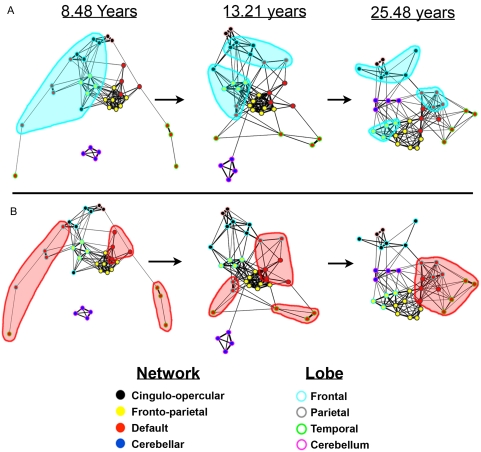
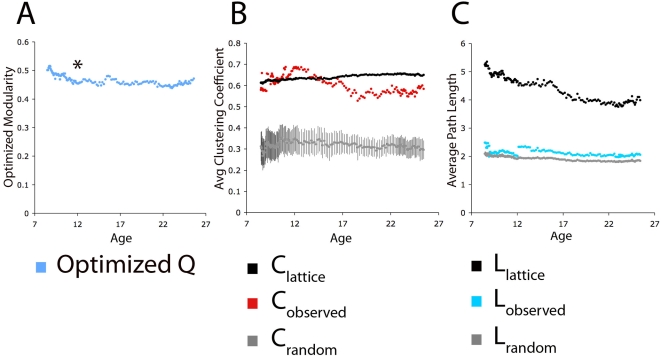
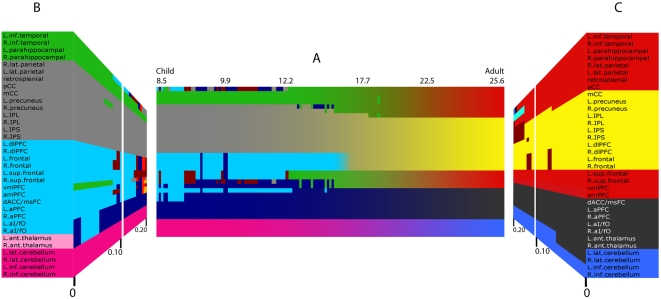
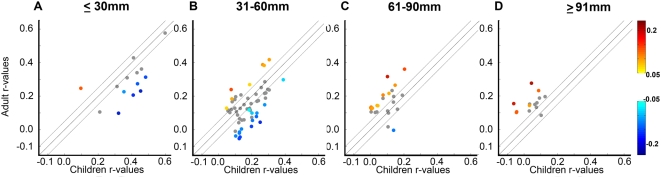
The mature human brain is organized into a collection of specialized functional networks that flexibly interact to support various cognitive functions. Studies of development often attempt to identify the organizing principles that guide the maturation of these functional networks. In this report, we combine resting state functional connectivity MRI (rs-fcMRI), graph analysis, community detection, and spring-embedding visualization techniques to analyze four separate networks defined in earlier studies. As we have previously reported, we find, across development, a trend toward 'segregation' (a general decrease in correlation strength) between regions close in anatomical space and 'integration' (an increased correlation strength) between selected regions distant in space. The generalization of these earlier trends across multiple networks suggests that this is a general developmental principle for changes in functional connectivity that would extend to large-scale graph theoretic analyses of large-scale brain networks. Communities in children are predominantly arranged by anatomical proximity, while communities in adults predominantly reflect functional relationships, as defined from adult fMRI studies. In sum, over development, the organization of multiple functional networks shifts from a local anatomical emphasis in children to a more "distributed" architecture in young adults. We argue that this "local to distributed" developmental characterization has important implications for understanding the development of neural systems underlying cognition. Further, graph metrics (e.g., clustering coefficients and average path lengths) are similar in child and adult graphs, with both showing "small-world"-like properties, while community detection by modularity optimization reveals stable communities within the graphs that are clearly different between young children and young adults. These observations suggest that early school age children and adults both have relatively efficient systems that may solve similar information processing problems in divergent ways.
Overview
The claims and statistics of this paper haven’t been checked yet.
Free: it reads the open-access text and checks the first 5 claims that cite a source we can check. Create a free account to check every claim.
Integrity signals
Registry
Cites
Statistics
Figures

Verification
Claims the paper makes
The claims and statistics of this paper haven’t been checked yet.
Free: it reads the open-access text and checks the first 5 claims that cite a source we can check. Create a free account to check every claim.
Claims other papers make about this one
Each is checked against this paper’s own text: does it say what the citing paper says it does?
The source backs part of the claim, not all of it — or backs it for a different population, condition or comparison.
In the citing paper
“Human neuroimaging studies have shown corresponding patterns of regional brain changes across development [12] with functional connectivity studies [13,14] suggesting refinement of local subcortical circuits precedes refinement of distal cortical ones.”
From Development of the emotional brain (2019) · cites this paper as [13]
Experimental — accuracy not yet measuredThe source backs part of the claim, not all of it — or backs it for a different population, condition or comparison.
In the citing paper
“A plausible temporal mechanism for the shifts in cognitive capacity from childhood to adulthood is a fine-tuning of circuits from subcortico-subcortical to cortico-subcortical to cortico-cortical consistent with postmortem animal studies of regional synaptic changes (Rakic et al., 1994) and functional connectivity studies (Fair et al., 2009) of refinement of local circuits preceding refinement of”
From Beyond simple models of adolescence to an integrated circuit-based account: A commentary (2016) · cites this paper as Fair et al., 2009
Experimental — accuracy not yet measuredThe source backs part of the claim, not all of it — or backs it for a different population, condition or comparison.
In the citing paper
“Evidence has converged on an executive attention network, with the anterior cingulate being the central structure, as the major network responsible for resolving cognitive conflicts (21, 22).”
From Multimodal imaging of the self-regulating developing brain (2012) · cites this paper as [21]
Experimental — accuracy not yet measuredThe source backs part of the claim, not all of it — or backs it for a different population, condition or comparison.
In the citing paper
“Prior work in fMRI using this modularity algorithm required that the researcher set an arbitrary threshold, or cutoff point, for what constitutes similarity between any two given individuals. Researchers would then arrive at thresholds by looking for consistency in community detection results at multiple thresholds (e.g., [2], [21], [22]).”
From Organizing Heterogeneous Samples Using Community Detection of GIMME-Derived Resting State Functional Networks (2014) · cites this paper as [22]
Experimental — accuracy not yet measuredThe source backs part of the claim, not all of it — or backs it for a different population, condition or comparison.
In the citing paper
“The functional network studies have consistently shown no statistical difference in global topological properties between children and adults”
From Developmental Changes in Organization of Structural Brain Networks (2013) · cites this paper as Fair et al. 2009
Experimental — accuracy not yet measured
5 more claims about this paper
Create a free account to see every claim other papers make about this one.
Self-check
Percentages, sums and reported differences re-computed from the paper’s own numbers.
The self-check needs the paper’s full text.
Citations
Cites
Controlling the False Discovery Rate: A Practical and Powerful Approach to Multiple Testing
Benjamini, Y., & Hochberg, Y. (1995) · Journal of the Royal Statistical Society Series B: Statistical Methodology · doi:10.1111/j.2517-6161.1995.tb02031.x · Cited by 109,482 · cited 1×
“To account for multiple comparisons the Benjamini and Hochberg False Discovery Rate [97] was applied.”
MethodCollective dynamics of ‘small-world’ networks
Watts, D. J., & Strogatz, S. H. (1998) · Nature · doi:10.1038/30918 · Cited by 43,060 · cited 1×
“long-range processes. It is this hybrid graph topology (i.e., high clustering coefficients and short path lengths) that matches the observed “small world” networks in many complex systems”
BackgroundModularity and community structure in networks
Newman, M. E. J. (2006) · Proceedings of the National Academy of Sciences · doi:10.1073/pnas.0601602103 · Cited by 12,256 · cited 5×
“As stated by Newman: ‘‘A good division of a graph into communities is not merely one in which there are few edges between communities; it is one in which there are fewer than expected edges between communities.”
BackgroundMethodInfluentialA default mode of brain function
Raichle, M. E., MacLeod, A. M., Snyder, A. Z., Powers, W. J., Gusnard, D. A., & Shulman, G. L. (2001) · Proceedings of the National Academy of Sciences · doi:10.1073/pnas.98.2.676 · Cited by 12,190 · cited 2×
“While the distinct function of the default mode network is often linked to internally directed mental activity [39], this notion continues to be debated [25,32,41–44].”
Functional connectivity in the motor cortex of resting human brain using echo‐planar mri
Biswal, B., Zerrin Yetkin, F., Haughton, V. M., & Hyde, J. S. (1995) · Magnetic Resonance in Medicine · doi:10.1002/mrm.1910340409 · Cited by 9,812
The human brain is intrinsically organized into dynamic, anticorrelated functional networks
Fox, M. D., Snyder, A. Z., Vincent, J. L., Corbetta, M., Van Essen, D. C., & Raichle, M. E. (2005) · Proceedings of the National Academy of Sciences · doi:10.1073/pnas.0504136102 · Cited by 8,553 · cited 3×
“Resting-state fcMRI analyses have repeatedly shown that these regions, along with associated medial temporal regions, are correlated at rest in adults [15,16,32,40].”
Distributed hierarchical processing in the primate cerebral cortex
Felleman, D. J., & Van Essen, D. C. (1991) · Cerebral Cortex · doi:10.1093/cercor/1.1.1 · Cited by 7,783 · cited 1×
“Increased myelination is thought to proceed from primary sensory and motor regions to association areas [68– 71], roughly following the hierarchical organization introduced by Felleman and Van Essen [72] (Note that while the most frequently referenced neuroanatomical changes that occur throughout development have been…”
BackgroundDissociable intrinsic connectivity networks for salience processing and executive control
Seeley, W. W., Menon, V., Schatzberg, A. F., Keller, J., Glover, G. H., Kenna, H., Reiss, A. L., & Greicius, M. D. (2007) · The Journal of Neuroscience · doi:10.1523/jneurosci.5587-06.2007 · Cited by 7,426 · cited 3×
“In addition, several previous findings using this technique [21,22,32] have now been replicated using continuous resting blocks [27,33,34] and other continuous resting data [89].”
BackgroundMethodFunctional connectivity in the resting brain: a network analysis of the default mode hypothesis
Greicius, M. D., Krasnow, B., Reiss, A. L., & Menon, V. (2003) · Proceedings of the National Academy of Sciences · doi:10.1073/pnas.0135058100 · Cited by 6,358 · cited 1×
“Resting-state fcMRI analyses have repeatedly shown that these regions, along with associated medial temporal regions, are correlated at rest in adults [15,16,32,40].”
BackgroundThe brainweb: phase synchronization and large-scale integration
Varela, F., Lachaux, J.-P., Rodriguez, E., & Martinerie, J. (2001) · Nature Reviews Neuroscience · doi:10.1038/35067550 · Cited by 4,761 · cited 1×
“In adults, spontaneous correlated activity has been suggested to be important for gating information flow [54], building internal representations [43,44,54], and maintaining mature network relationships [43,44,54].”
Background
Cited by
Items 901–1,000 of 1,003
Can the default-mode network be described with one spatial-covariance network?
Habeck, C. G., Steffener, J., Rakitin, B. C., & Stern, Y. (2012) · Brain Research · doi:10.1016/j.brainres.2012.05.050 · Cited by 15
The effects of injury to dynamic neural networks in the mature and developing brain
Stiles, J. (2012) · Developmental Psychobiology · doi:10.1002/dev.20628 · Cited by 19
Adolescent Emotional Maturation through Divergent Models of Brain Organization
Semper, J. V. O., Murillo, J. I., & Bernácer, J. (2016) · Frontiers in Psychology · doi:10.3389/fpsyg.2016.01263 · Cited by 21
An fMRI study of coherent visual motion processing in children and adults
Taylor, C. M., Olulade, O. A., Luetje, M. M., & Eden, G. F. (2018) · NeuroImage · doi:10.1016/j.neuroimage.2018.02.001 · Cited by 16
“Observation of greater local and within-network connectivity in children relative to adults is consistent with previous reports of developmental changes in functional connectivity (Betzel et al., 2014; Fair et al., 2007, 2009; Farrant and Uddin, 2015; Rubia, 2013).”
Gicas, K. M., Jones, A. A., Panenka, W. J., Giesbrecht, C. J., Lang, D. J., Vila‐Rodriguez, F., Leonova, O., Barr, A. M., Procyshyn, R. M., Su, W., et al. (2019) · PLoS ONE · doi:10.1371/journal.pone.0218201 · Cited by 16
Cortical temporal hierarchy is immature in middle childhood
Moraczewski, D., Nketia, J., & Redcay, E. (2020) · NeuroImage · doi:10.1016/j.neuroimage.2020.116616 · Cited by 19
Siniatchkin, M., Moehring, J., Kroeher, B., Galka, A., von Ondarza, G., Moeller, F., Wolff, S., Tagliazucchi, E., Steinmann, E., Boor, R., et al. (2018) · European Journal of Paediatric Neurology · doi:10.1016/j.ejpn.2018.07.001 · Cited by 14
Doganci, N., Iannotti, G. R., Coll, S. Y., & Ptak, R. (2023) · Cerebral Cortex · doi:10.1093/cercor/bhad352 · Cited by 14
“Distributed information processing leads to highly redundant representations throughout brain networks, which appears to contradict principles of neural efficiency (Fair et al. 2009; Anderson 2010; Pessoa 2014).”
BackgroundParticulate Matter Exposure and Default Mode Network Equilibrium During Early Adolescence
Zundel, C. G., Ely, S. L., Brokamp, C., Strawn, J. R., Jovanović, T., Ryan, P., & Marusak, H. A. (2024) · Brain Connectivity · doi:10.1089/brain.2023.0072 · Cited by 16
“…to re fi ne across adolescence; speci fi cally, within-network resting-state functional connectivity (rsFC) of the DMN increases over time, whereas between-network rsFC of the DMN and anticorre-lated networks decreases with increasing chronological age (Fair et al., 2009; Uddin et al., 2011).”
A light in the darkness: Early phases of development and the emergence of cognition
Cainelli, E., Stramucci, G., & Bisiacchi, P. S. (2025) · Developmental Cognitive Neuroscience · doi:10.1016/j.dcn.2025.101527 · Cited by 17
Brain states and hypnosis research
Posner, M. I., & Rothbart, M. K. (2011) · Consciousness and Cognition · doi:10.1016/j.concog.2009.11.008 · Cited by 13
Trujillo, L. T. (2019) · Entropy · doi:10.3390/e21010061 · Cited by 13
Oscillatory EEG Changes During Arithmetic Learning in Children
Soltanlou, M., Artemenko, C., Dresler, T., Fallgatter, A. J., Nuerk, H., & Ehlis, A. (2019) · Developmental Neuropsychology · doi:10.1080/87565641.2019.1586906 · Cited by 15
“…according to the Neural Efficiency Hypothesis (NEH), development of neural networks can be viewed as a progression from a segregated and localized mode of organization in children to a more integrated and distributed mode in adults (Dimitriadis et al., 2015; Fair et al., 2009; Sporns, 2011).”
BackgroundA Neuroscience Perspective on Emotional Development
Morales, S., & Fox, N. A. (2019) · Springer eBooks · doi:10.1007/978-3-030-17332-6_4 · Cited by 16
Makowski, C., Lewis, J. D., Khundrakpam, B. S., Tardif, C. L., Palaniyappan, L. K., Joober, R., MALLA, A. K., Shah, J. L., Bodnar, M. D., Chakravarty, M. M., et al. (2020) · Hippocampus · doi:10.1002/hipo.23215 · Cited by 17
“Over adolescence and early adulthood, there is increased communication between such hub regions and “non-hubs” (Cao et al., 2014; Gu et al., 2015), as well as more extensive interactions between regions that are distal to each other (Fair et al., 2009).”
BackgroundAltschuler, T. S., Molholm, S., Butler, J. S., Mercier, M. R., Brandwein, A. B., & Foxe, J. J. (2013) · NeuroImage · doi:10.1016/j.neuroimage.2013.12.029 · Cited by 13
“The use of resting-state fMRI as an index of functional connectivity suggests a shift in processing modes during the transition from late childhood to young adulthood, from segregated processing within local nodes to processing across more distributed nodes (Fair et al., 2009).”
BackgroundWitt, S. T., & Stevens, M. C. G. (2012) · NeuroImage · doi:10.1016/j.neuroimage.2012.05.007 · Cited by 14
The Teenage Brain: Functional Connectivity
Dosenbach, N. U. F., Petersen, S. E., & Schlaggar, B. L. (2013) · Current Directions in Psychological Science · doi:10.1177/0963721412474297 · Cited by 14
“Encouraged by prior studies (Fair et al., 2009; Fair et al., 2007) suggesting that functional-connectivity data contains a great amount of information about brain maturation, we applied MVPA to fcMRI data from subjects between the ages of 7 and 30 (Dosenbach et al.”
MethodSelf-citationIntrinsic Brain Activity and Resting State Networks
Snyder, A. Z. (2016) · Springer eBooks · doi:10.1007/978-1-4939-3474-4_133 · Cited by 14
Yang, T., Xie, W., Chen, C.-S., Altgassen, M., Wang, Y., Cheung, E. F. C., & Chan, R. C. K. (2017) · Journal of Experimental Child Psychology · doi:10.1016/j.jecp.2017.04.003 · Cited by 21
Danti, S., Handjaras, G., Cecchetti, L., Beuzeron-Mangina, H., Pietrini, P., & Ricciardi, E. (2017) · International Journal of Psychophysiology · doi:10.1016/j.ijpsycho.2017.10.002 · Cited by 15
Connecting Theory and Methods in Adolescent Brain Research
Beltz, A. M. (2018) · Journal of Research on Adolescence · doi:10.1111/jora.12366 · Cited by 14
“…of all brain networks implicated in adolescent development (e.g., triadic model, Ernst, Pine, & Hardin, 2006; for others, see Blakemore, 2008; Fair et al., 2009; Nelson, Leibenluft, McClure, & Pine, 2005) or of all connectivity methods used in adolescent research (e.g., machine learning,…”
BackgroundMethodPredictive connectome subnetwork extraction with anatomical and connectivity priors
Brown, C. J., Miller, S. P., Booth, B. G., Zwicker, J. G., GRUNAU, R. E., Synnes, A. R., Chau, V., & Hamarneh, G. (2018) · Computerized Medical Imaging and Graphics · doi:10.1016/j.compmedimag.2018.08.009 · Cited by 17
Cognitive behavioral markers of neurodevelopmental trajectories in rodents
Choy, K. H. C., Luo, J. K., Wannan, C., Laskaris, L., Merritt, A. H., Syeda, W. T., Sexton, P. M., Christopoulos, A., Pantelis, C., & Nithianantharajah, J. (2021) · Translational Psychiatry · doi:10.1038/s41398-021-01662-7 · Cited by 17
Greenwood, P. B., Hutton, J., Dudley, J. A., & Horowitz‐Kraus, T. (2018) · Brain and Cognition · doi:10.1016/j.bandc.2018.11.010 · Cited by 14
“Another possibility is that the developing brain is characterized by decreasing connectivity as functions gradually develop and functional and structural pathways become more efficient (Fair et al., 2007, 2009).”
Chmielewski, W. X., Roessner, V., & Beste, C. (2015) · Behavioural Brain Research · doi:10.1016/j.bbr.2015.05.054 · Cited by 14
“…is particularly interesting in the context of the well-known protracted development of medial prefrontal cortical networks during adolescence (e.g. Fair et al., 2009; Giorgio et al., 2010; Gogtay et al., 2004; Hämmerer et al., 2014; Sowell et al., 2003), because it suggests that a protracted…”
Extracting information from functional connectivity maps via function-on-scalar regression
Reiss, P. T., Mennes, M., Petkova, E., Huang, L., Hoptman, M. J., Biswal, B. B., Colcombe, S. J., Zuo, X., & Milham, M. P. (2011) · NeuroImage · doi:10.1016/j.neuroimage.2011.01.071 · Cited by 15
“4, and parallel results in the Supplementary material, especially for the PCC seed) may suggest a continuation, from early to mid-adulthood, of the shift toward a more distributed RSFC architecture that occurs from childhood to adulthood (Fair et al., 2007, 2009; Kelly et al., 2009).”
BackgroundJaeger, A., Selmeczy, D., O’Connor, A. R., Diaz, M., & Dobbins, I. G. (2012) · Neuropsychologia · doi:10.1016/j.neuropsychologia.2012.10.022 · Cited by 15
“…and parietal regions, along with their interconnections, reach maturity quite late (Olesen, Nagy, Westerberg, & Klingber, 2003; Supekar, Musen, & Menon, 2009; Fair et al., 2009) with gray matter thinning and increased axonal myelination occurring throughout adolescence (Gogtay et al., 2004).”
Wang, Z., Zeljic, K., Jiang, Q., Gu, Y., Wang, W., & Wang, Z. (2016) · Cerebral Cortex · doi:10.1093/cercor/bhw347 · Cited by 14
Brain and behavioral development
Wierenga, L. M., Oranje, B., & Durston, S. (2017) · Cambridge University Press eBooks · doi:10.1017/9781316216491.091 · Cited by 13
The Brain Basis Underlying the Transition from Adolescence to Adulthood
Luna, B., Ravindranath, O., Larsen, B., & Parr, A. C. (2022) · Cambridge University Press eBooks · doi:10.1017/9781108399838.008 · Cited by 14
Cerebellar and basal ganglia motor network predicts trait depression and hyperactivity
Jackson, T. B., & Bernard, J. A. (2022) · Frontiers in Behavioral Neuroscience · doi:10.3389/fnbeh.2022.953303 · Cited by 14
Reliability of energy landscape analysis of resting‐state functional MRI data
Khanra, P., Nakuci, J., Muldoon, S. F., Watanabe, T., & Masuda, N. (2024) · European Journal of Neuroscience · doi:10.1111/ejn.16390 · Cited by 16
“In addition to the whole-brain network, we used a separate 30-ROI coordinate system (Fair et al., 2009) and determined the multi-ROI DMN and CON.”
Hou, X., Liu, R., Zhou, Y., Guan, L., Zhou, J., Liu, J., Liu, M., Yuan, X., Feng, Y., Chen, X., et al. (2024) · Translational Psychiatry · doi:10.1038/s41398-024-02974-0 · Cited by 14
Functional connectivity of the pediatric brain
Argyropoulou, M. I., Xydis, V. G., & Astrakas, L. G. (2024) · Neuroradiology · doi:10.1007/s00234-024-03453-5 · Cited by 14
“Research indicates that the FC of a child’s brain becomes more similar to that of an adult as they age, with significant changes occurring during adolescence [ 5, 119].”
InfluentialLeptospirosis in West Malaysia--epidemiology and laboratory diagnosis.
Tan, D. S. K. (1979) · PubMed · Cited by 16
Learning through the ages: How the brain adapts to the social world across development
Nelson, E. E. (2017) · Cognitive Development · doi:10.1016/j.cogdev.2017.02.013 · Cited by 15
Lifespan Development of the Human Brain Revealed by Large-Scale Network Eigen-Entropy
Fan, Y., Zeng, L., Shen, H., Qin, J., Li, F., & Hu, D. (2017) · Entropy · doi:10.3390/e19090471 · Cited by 13
Resting‐state fMRI detects the effects of learning in short term: A visual search training study
Bueichekú, E., Miró‐Padilla, A., & Ávila, C. (2019) · Human Brain Mapping · doi:10.1002/hbm.24560 · Cited by 13
“The enhanced rs-FC possibly reflects better communication between these areas, either because the system has learned that these areas are likely to be coactivated (Fair et al., 2009; Lewis, Baldassarre, Committeri, Romani, & Corbetta, 2009), or, based on the environmental demands, the system is anticipating and predic…”
BackgroundBenso, F., Moretti, S., Bellazzini, V., Benso, E., Ardu, E., & Gazzellini, S. (2021) · Frontiers in Psychology · doi:10.3389/fpsyg.2021.647749 · Cited by 15
“During learning, the number and size of brain activations are reduced (Kelly and Garavan, 2005), and a significant increase in brain connections occurs with practice (Fair et al., 2009).”
BackgroundDesowska, A., Berde, C. B., & Cornelissen, L. (2022) · British Journal of Anaesthesia · doi:10.1016/j.bja.2022.05.033 · Cited by 13
Paz‐Alonso, P. M., Bunge, S. A., & Ghetti, S. (2014) · Oxford University Press eBooks · doi:10.1093/oxfordhb/9780199935291.013.003 · Cited by 24
Spatial variability of functional brain networks in early-blind and sighted subjects
Boldt, R., Seppä, M., Malinen, S., Tikka, P., Hari, R., & Carlson, S. (2014) · NeuroImage · doi:10.1016/j.neuroimage.2014.03.058 · Cited by 15
“In line with this hypothesis, the brain regions of children communicate locally with other regions, but with increasing age communication becomes more distributed as a result of experience-dependent processes (Fair et al., 2009; Satterthwaite et al., 2013).”
Honnorat, N., Satterthwaite, T. D., Gur, R. E., Gur, R. C., & Davatzikos, C. A. (2016) · Journal of Neuroscience Methods · doi:10.1016/j.jneumeth.2016.11.014 · Cited by 13
Solomon, M., Hogeveen, J., Libero, L. E., & Nordahl, C. W. (2017) · Biological Psychiatry Cognitive Neuroscience and Neuroimaging · doi:10.1016/j.bpsc.2017.06.002 · Cited by 14
Hao, X., Wang, X., Song, Y., Kong, X., & Liu, J. (2017) · Brain Structure and Function · doi:10.1007/s00429-017-1564-2 · Cited by 15
Association Between Age and Familial Risk for Alcoholism on Functional Connectivity in Adolescence
Vaidya, J. G., Elmore, A. L., Wallace, A. L., Langbehn, D. R., Kramer, J., Kuperman, S., & OʼLeary, D. S. (2019) · Journal of the American Academy of Child & Adolescent Psychiatry · doi:10.1016/j.jaac.2018.12.008 · Cited by 14
Jao, C., Soong, B., Wang, T., Wu, H., Lu, C., Wang, P.-S., & Wu, Y. (2019) · Entropy · doi:10.3390/e21030317 · Cited by 13
“The mature human brain is both structurally and functionally specialized, such that discrete areas of the cerebral cortex perform distinct types of information processing [4].”
Adebimpe, A., Routier, L., & Wallois, F. (2019) · Brain Topography · doi:10.1007/s10548-019-00713-z · Cited by 14
Morningstar, M. A., Mattson, W. I., Venticinque, J. S., Singer, S., Selvaraj, B., Hu, P., & Nelson, E. E. (2019) · Cognitive Affective & Behavioral Neuroscience · doi:10.3758/s13415-019-00742-y · Cited by 12
Brain status modeling with non-negative projective dictionary learning
Zhang, M., Desrosiers, C., Guo, Y., Khundrakpam, B. S., Al‐Sharif, N., Kiar, G., Valdes-Sosa, P. A., Poline, J., & Evans, A. C. (2019) · NeuroImage · doi:10.1016/j.neuroimage.2019.116226 · Cited by 14
Godfrey, J. R., Pincus, M., Kovacs-Balint, Z., Feczko, E., Earl, E., Miranda-Domínguez, Ó., Fair, D. A., Jones, S. R., Locke, J. L., Sánchez, M. M., et al. (2020) · Brain Behavior and Immunity · doi:10.1016/j.bbi.2020.03.030 · Cited by 11
Self-citationDazzan, P., Lawrence, A. J., Reinders, A. A. T. S., Egerton, A., van Haren, N. E. M., Merritt, K., Barker, G. J., Pérez‐Iglesias, R., Sendt, K.-V., Demjaha, A., et al. (2020) · Schizophrenia Bulletin · doi:10.1093/schbul/sbaa115 · Cited by 11
Quan, J., Ong, M., Bureau, J., Sim, L. W., Sanmugam, S., Malik, A. B. A., Wong, E. Q., Wong, J., Chong, Y. S., Saw, S., et al. (2017) · Brain and Cognition · doi:10.1016/j.bandc.2017.05.002 · Cited by 12
“Whether these same structures respectively underlie orienting and executive attention in infancy is unclear, in part due to the lack of adultlike differentiation between neural networks early in development (Fair et al., 2009).”
Jia, G., Hubbard, C. S., Hu, Z., Xu, J., Dong, Q., Niu, H., & Liu, H. (2023) · NeuroImage · doi:10.1016/j.neuroimage.2023.120225 · Cited by 11
Community detection in the human connectome: Method types, differences and their impact on inference
Brooks, S. J., Jones, V. O., Wang, H., Deng, C., Golding, S. G. H., Lim, J., Gao, J., Daoutidis, P., & Stamoulis, C. (2024) · Human Brain Mapping · doi:10.1002/hbm.26669 · Cited by 14
“This topological organization is optimized over a period of two decades of human development (Fair et al., 2009; Venon, 2013).”
Chen, L., Qiao, C., Ren, K., Qu, G., Calhoun, V. D., Stephen, J. M., Wilson, T. W., & Wang, Y. (2024) · NeuroImage · doi:10.1016/j.neuroimage.2024.120771 · Cited by 14
“As individuals age, discrete areas of the brain become integrated into functional networks to flexibly support a variety of cognitive functions (Stevens et al., 2009; Fair et al., 2009).”
Zhao, T., Zhang, Y., Li, Y., Wu, J., Wang, R., Lv, Q., Li, D., & Yan, L. (2024) · Frontiers in Psychiatry · doi:10.3389/fpsyt.2024.1404050 · Cited by 14
“Fair et al. highlighted the signi fi cance of network segregation in the brain and cognitive development during adolescence (37), with attentional performance potentially improving as the ECN becomes more segregated from other brain networks.”
BackgroundLo, H. K. Y., Fong, T. K. H., Cheung, T. C. C., Ngan, S. T. J., Lui, W. Y. V., Chan, W. C., Wong, C. S. M., Wong, T. K., & Cheng, C. P.-W. (2024) · Biomedicines · doi:10.3390/biomedicines12092081 · Cited by 14
“We used FreeSurfer version 7.2, available at http://surfer.nmr.mgh.harvard.edu (accessed on 25 August 2024), to estimate cortical thickness by reconstructing the interfaces of grey/white matter and the cortical surface, and then measuring the distance between these surfaces at multiple points…”
MethodInfluentialLei, T., Liao, X., Liang, X., Sun, L., Xia, M., Xia, Y., Zhao, T., Chen, X., Men, W., Wang, Y., et al. (2024) · PLoS Biology · doi:10.1371/journal.pbio.3002653 · Cited by 15
“Several studies have reported age-related changes in modular organization with development [15,16,23–25].”
BackgroundHerreras, E. B. (2024) · Brain Sciences · doi:10.3390/brainsci14121273 · Cited by 24
Lynn, A., Festa, E. K., Heindel, W. C., & Amso, D. (2019) · Journal of Experimental Child Psychology · doi:10.1016/j.jecp.2019.104732 · Cited by 13
Large-scale network topology reveals brain functional abnormality in Chinese dyslexic children
Zhang, J., Liu, L., Li, H., Feng, X., Zhang, M., Liu, L., Meng, X., & Ding, G. (2021) · Neuropsychologia · doi:10.1016/j.neuropsychologia.2021.107886 · Cited by 13
Li, Z., Hu, J., Wang, Z., You, R., & Cao, D. (2022) · Journal of Neuroimaging · doi:10.1111/jon.12978 · Cited by 11
Bottino, F., Lucignani, M., Pasquini, L., Mastrogiovanni, M., Gazzellini, S., Ritrovato, M., Longo, D., Figà-Talamanca, L., Rossi‐Espagnet, M. C., & Napolitano, A. (2022) · Frontiers in Neuroscience · doi:10.3389/fnins.2021.736524 · Cited by 13
The role of puberty on physical and brain development: A longitudinal study in male Rhesus Macaques
Kovacs-Balint, Z. A., Raper, J., Richardson, R., Gopakumar, A., Kettimuthu, K., Higgins, M. K., Feczko, E., Earl, E., Ethun, K. F., Li, L., et al. (2023) · Developmental Cognitive Neuroscience · doi:10.1016/j.dcn.2023.101237 · Cited by 15
Self-citationWager, J., Fabrizi, L., & Tham, S. W. (2023) · Pain · doi:10.1097/j.pain.0000000000002923 · Cited by 15
Expanding horizons in ergonomics research
Posner, M. I. (2011) · NeuroImage · doi:10.1016/j.neuroimage.2011.07.060 · Cited by 13
“Studies of changes in connectivity with development show that local connections dominant in children give way to longer connections more prominent in adults (Fair et al., 2009).”
BackgroundResting-State fMRI and Developmental Systems Neuroscience
Uddin, L. Q. (2011) · Frontiers in Neuroscience · doi:10.3389/fnins.2011.00014 · Cited by 10
“Functional connectivity measures derived from rsfMRI have been used to demonstrate age-related changes in the organization of networks across the whole brain (Fair et al., 2009; Supekar et al., 2009) as well as within specific systems (Kelly et al., 2009).”
MethodLanguage at rest: A longitudinal study of intrinsic functional connectivity in preterm children
Rowlands, M. A., Scheinost, D., Lacadie, C., Vohr, B. R., Li, F., Schneider, K. C., Constable, R. T., & Ment, L. R. (2016) · NeuroImage Clinical · doi:10.1016/j.nicl.2016.01.016 · Cited by 16
“Furthermore, this active loss of connections does not reflect an enhanced, “mature” brain (Fair et al., 2009; Stevens et al., 2009), but rather is associatedwith inferior cognitive performance.”
Datko, M., Gougelet, R. J., Huang, M., & Pineda, J. A. (2016) · Frontiers in Neuroscience · doi:10.3389/fnins.2016.00258 · Cited by 13
Developmental implications of children’s brain networks and learning
Chan, J. S. Y., Wang, Y., Yan, J. H., & Chen, H. (2016) · Reviews in the Neurosciences · doi:10.1515/revneuro-2016-0007 · Cited by 13
Information processes of task-switching and modality-shifting across development
Peng, A., Kirkham, N. Z., & Mareschal, D. (2018) · PLoS ONE · doi:10.1371/journal.pone.0198870 · Cited by 14
“less segregated) short-range networks [49,50].”
Unity and Diversity of Dysexecutive Syndromes
García-Barrera, M. A. (2019) · Springer eBooks · doi:10.1007/978-3-030-25077-5_1 · Cited by 17
Effects of tDCS on Brain Functional Network of Patients After Stroke
Wang, H., Yu, H., Liu, M., Xu, G., Guo, L., Wang, C., & Sun, C. (2020) · IEEE Access · doi:10.1109/access.2020.3037924 · Cited by 11
Discriminative Sparse Connectivity Patterns for Classification of fMRI Data
Eavani, H., Satterthwaite, T. D., Gur, R. E., Gur, R. C., & Davatzikos, C. A. (2014) · Lecture notes in computer science · doi:10.1007/978-3-319-10443-0_25 · Cited by 11
“These patterns are consistent with patterns of network segregation, whereby connectivity within certain major networks including the motor network and the default mode network increase with development [2,1].”
MethodResultYouth with Down syndrome display widespread increased functional connectivity during rest
Csumitta, K. D., Gotts, S. J., CLASEN, L. S., Martin, A. D., & Lee, N. (2022) · Scientific Reports · doi:10.1038/s41598-022-13437-1 · Cited by 14
Wei, Z., Alcauter, S., Jin, K., Peng, Z., & Gao, W. (2013) · Brain Connectivity · doi:10.1089/brain.2012.0125 · Cited by 11
“…findings, previous studies directly comparing school-aged children and adults during the resting state also showed no differences in their small-world properties (Fair et al., 2009; Supekar et al., 2009), suggesting that such high-level efficiency measures might have already matured at school age.”
Jiang, P., Tokariev, M., Aronen, E. T., Salonen, O. L. M., Ma, Y., Vuontela, V., & Carlson, S. (2014) · Brain and Cognition · doi:10.1016/j.bandc.2014.10.005 · Cited by 11
Development of Neural Networks Supporting Goal‐Directed Behavior
Johnson, E. L., Munro, S. E., & Bunge, S. A. (2013) · Wiley eBooks · doi:10.1002/9781118732373.ch2 · Cited by 14
Kim, J.-H., De Asis-Cruz, J., Krishnamurthy, D., & Limperopoulos, C. (2023) · eLife · doi:10.7554/elife.80878 · Cited by 10
“Spatial involving nature of neurodevelopment pattern during neonatal period, observed in our study, is largely in line with the trend in maturing brain system at older age that transit from ‘segregation’ into ‘integration,’ suggested by other studies ( Fair et al., 2009 ; Dosenbach et al., 2010 ).”
ResultEng, C. M., Vargas, R., Fung, H. L., Niemi, S. R., Pocsai, M., Fisher, A. V., & Thiessen, E. D. (2025) · Developmental Cognitive Neuroscience · doi:10.1016/j.dcn.2025.101570 · Cited by 10
“…functional networks are present after the third trimester of gestation and in newborn infants (Zhang et al., 2019), initial data from infants and children suggest that early-life functional connectivity is likely restricted to proximal brain regions (Fair et al., 2009; Gao et al., 2015).”
Duff, I. T., Krolick, K. N., Mahmoud, H., & Chidambaran, V. (2023) · Journal of Clinical Medicine · doi:10.3390/jcm12165176 · Cited by 17
Aberizk, K., Sefik, E., Yuan, Q. E., Cao, H., Addington, J., Bearden, C. E., Cadenhead, K. S., Cannon, T. D., Cornblatt, B. A., Keshavan, M. S., et al. (2025) · Schizophrenia Research · doi:10.1016/j.schres.2025.02.012 · Cited by 10
Horowitz‐Kraus, T., Woodburn, M., Rajagopal, A., Versace, A., Kowatch, R. A., Bertocci, M. A., Bebko, G. M., Almeida, J., Perlman, S. B., Travis, M. J., et al. (2018) · NeuroImage Clinical · doi:10.1016/j.nicl.2018.02.034 · Cited by 13
Cole, K. M., Wei, S.-M., Martinez, P. E., Nguyen, T., Gregory, M. D., Kippenhan, J. S., Kohn, P. D., Soldin, S. J., Nieman, L. K., Yanovski, J. A., et al. (2021) · NeuroImage · doi:10.1016/j.neuroimage.2021.117970 · Cited by 17
Gombos, F., Bódizs, R., Pótári, A., Bocskai, G., Berencsi, A., Szakács, H., & Kovács, I. (2022) · Scientific Reports · doi:10.1038/s41598-022-11098-8 · Cited by 10
Clark, S., Satterthwaite, T. D., King, T. Z., Morris, R. D., Zendehrouh, E., & Turner, J. A. (2022) · Developmental Cognitive Neuroscience · doi:10.1016/j.dcn.2022.101129 · Cited by 13
“…studies have demonstrated that between childhood and early adulthood, cerebellar nodes appeared to become more integrated into traditionally cortical large-scale networks (Dosenbach et al., 2010; Fair et al., 2007, 2009, 2013; Kolskår et al., 2018; Kundu et al., 2018; Solé-Padullés et al., 2016).”
BackgroundMethodResultInfluentialHypnosis as a lens to the development of attention
Raz, A. (2012) · Consciousness and Cognition · doi:10.1016/j.concog.2012.05.011 · Cited by 11
Visual Analysis of Integrated Resting State Functional Brain Connectivity and Anatomy
van Dixhoorn, A. F., Vissers, B. H., Ferrarini, L., Milles, J., & Botha, C. P. (2010) · Eurographics · doi:10.2312/vcbm/vcbm10/057-064 · Cited by 10
Neurometabolic and functional connectivity basis of prosocial behavior in early adolescence
Okada, N., Yahata, N., Koshiyama, D., Morita, K., Sawada, K., Kanata, S., Fujikawa, S., Sugimoto, N., Toriyama, R., Masaoka, M., et al. (2019) · Scientific Reports · doi:10.1038/s41598-018-38355-z · Cited by 11
Dimitriadis, S. I., Simos, P. G., Fletcher, J. M., & Papanicolaou, A. C. (2019) · Brain Sciences · doi:10.3390/brainsci9120380 · Cited by 11
“In the present data, CFCPAC was the predominant mode of fronto-temporal neuronal interactions undergoing significant development throughout late childhood and into early adulthood, consistent with their proposed crucial role for information encoding, inhibition, and hierarchical organization of cortical systems [15].”
BackgroundMethodExamining brain maturation during adolescence using graph Laplacian learning based Fourier transform
Wang, J., Xiao, L., Wilson, T. W., Stephen, J. M., Calhoun, V. D., & Wang, Y. (2020) · Journal of Neuroscience Methods · doi:10.1016/j.jneumeth.2020.108649 · Cited by 12
“A large number of studies have been conducted to uncover the changes in brain functional activity that occur throughout childhood and adolescence [4], [5], and to detect the functional difference between children and adult brain [6].”
BackgroundFunctional network estimation using multigraph learning with application to brain maturation study
Wang, J., Xiao, L., Hu, W., Qu, G., Wilson, T. W., Stephen, J. M., Calhoun, V. D., & Wang, Y. (2021) · Human Brain Mapping · doi:10.1002/hbm.25410 · Cited by 11
“Considerable research has been conducted to reveal the development of the brain from their functional activation differences throughout childhood and adolescence (Fair et al., 2009; Jolles, van Buchem, Crone, & Rombouts, 2010).”
BackgroundResultPediatric Applications of fMRI
Altman, N. R., & Bernal, B. (2011) · Springer eBooks · doi:10.1007/978-1-4419-0345-7_28 · Cited by 11
Monti, R. P., Anagnostopoulos, C., & Montana, G. (2017) · UCL Discovery (University College London) · Cited by 10
Castellanos, F. X., Cortese, S., & Proal, E. (2013) · Current topics in behavioral neurosciences · doi:10.1007/7854_2013_244 · Cited by 13
“A series of landmark analyses of age-related developmental effects were conducted using data largely extracted (n = 200 from a total N = 210) from interleaved experimental designs that contained task periods alternating with rest (Fair et al. 2007, 2008, 2009).”
MethodConservative and disruptive modes of adolescent change in brain functional connectivityPreprint
Váša, F., Romero-García, R., Kitzbichler, M. G., Seidlitz, J., Whitaker, K. J., Vaghi, M. M. S., Kundu, P., Patel, A. X., Fonagy, P., Dolan, R. J., et al. (2019) · bioRxiv (Cold Spring Harbor Laboratory) · doi:10.1101/604843 · Cited by 9
“The most replicable result of early studies of resting-state FC development was an observed increase in the strength of long-range connections accompanied by a decrease in the strength of short-range connections (Fair et al., 2007, 2009; Supekar et al., 2009; Dosenbach et al., 2010).”
BackgroundSystematic cross-sectional age-associations in global fMRI signal topography
Nomi, J. S., Bzdok, D., Li, J., Bolt, T., Chang, C., Kornfeld, S., Goodman, Z. T., Yeo, B. T. T., Spreng, R. N., & Uddin, L. Q. (2024) · Imaging Neuroscience · doi:10.1162/imag_a_00101 · Cited by 15
“These quadratic associations are similar to other age-FC trajectories that typically show a curvilinear pattern of network development, where within-network coupling increases while between-network coupling decreases until middle age ( Fair et al., 2009).”
ResultEarly life stress and functional network topology in children
Jeong, H. J., Reimann, G. E., Durham, E. L., Archer, C., Stier, A. J., Moore, T. M., Pines, J. R., Berman, M. G., & Kaczkurkin, A. N. (2024) · Developmental Cognitive Neuroscience · doi:10.1016/j.dcn.2024.101367 · Cited by 12
“Over the course of development, the functional organization of the brain is refined, wherein modules generally become more distinct/specialized and efficient with age (Baum et al., 2017; Fair et al., 2009; Gu et al., 2015; Hagmann et al., 2010; V ´ a ˇ sa et al., 2018).”
Metadata
- Authors
- Fair, D. A., Cohen, A. L., Power, J. D., Dosenbach, N. U. F., Church, J. A., Miezin, F. M., Schlaggar, B. L., & Petersen, S. E.
- Affiliations
- Oregon Health & Science University (US)
- Washington University in St. Louis (US)
- Corresponding author
- Fair, Damien A.
- Petersen, Steven E.
- ORCID
- Venue
- PLoS Computational Biology
- Publisher
- Public Library of Science (PLoS)
- Published
- 2009-05-01
- Volume
- 5
- Issue
- 5
- Pages
- e1000381
- ISSN
- 1553-734X (ISSN-L)
- 1553-7358
- PMC
- PMC2671306
- OpenAlex
- W2159549823
- Cited by
- 1,530
- References
- 104
- Citations by year
- 2026: 69 · 2025: 78 · 2024: 89 · 2023: 66 · 2022: 87 · 2021: 78 · 2020: 86 · 2019: 103 · 2018: 109 · 2017: 95 · 2016: 102 · 2015: 107 · 2014: 106 · 2013: 113 · 2012: 84
- FWCI
- 39.01
- Type
- journal article
- Language
- en
- Open access
- gold
- doi.org
- Locations
- PLoS Computational Biology (publishedVersion, cc-by)
- PubMed Central (publishedVersion, cc-by)
- PubMed (publishedVersion)
- Digital Commons@Becker (Washington University School of Medicine) (submittedVersion)
- RePEc: Research Papers in Economics (submittedVersion)
- DOAJ (DOAJ: Directory of Open Access Journals) (submittedVersion, cc-by-sa)
- Figshare (submittedVersion, cc-by)
- Funders
- National Science Foundation (0548890)
- Dana Foundation
- Wellcome Trust
- National Institutes of Health
- National Institute of Neurological Disorders and Stroke (R01NS046424, K02NS053425, F30NS062489, NS46424, NS 41255, NS062489, R21NS041255, NS053425)
- Topics
- Life Sciences › Neuroscience › Cognitive Neuroscience › Functional Brain Connectivity Studies
- Health Sciences › Medicine › Radiology, Nuclear Medicine and Imaging › Advanced Neuroimaging Techniques and Applications
- Physical Sciences › Physics and Astronomy › Statistical and Nonlinear Physics › Complex Network Analysis Techniques
- Keywords
- functional brain networks, brain development, resting-state functional connectivity, integration and segregation, community detection, small-world networks, graph theory, children and young adults, modularity optimization, cognitive development
- MeSH terms
- Adolescent, Adult, Brain, Child, Humans, Magnetic Resonance Imaging, Models, Neurological, Nerve Net, Neural Pathways
About these checks
Registry, retraction, Cites and statistics results are computed, not judged, with one exception: a printed reference that no index lists is read once by a model before it counts as a citation error. Claims are extracted by a model and kept only when their quote appears verbatim in the text; each cited source is then checked, with a model’s help, for whether it says what the claim relies on. Those verdicts can be wrong — read the claim’s quote and the cited source before relying on one.
Statistics and arithmetic are recomputed, not judged.
Confidence bands are shown only for fields calibrated on our annotated test set. None is calibrated yet, so no band is shown.
What counts as a claim ›How we measure confidence ›How we check this ›
Are you an author, or do you see a problem with this page? Request a review
Data sources
Bibliographic data: Semantic Scholar, OpenAlex, Crossref.
Contains information from the Semantic Scholar Academic Graph Datasets, made available under the ODC Attribution License (ODC-BY 1.0).
Semantic Scholar’s data is described in: Kinney, R., et al. (2023). The Semantic Scholar Open Data Platform. arXiv:2301.10140.
