

Functional brain networks develop from a local to distributed organization
Open accessThe DOI matches its Crossref record; 103 of the 104 references it cites were found in a registry or an index.
Abstract
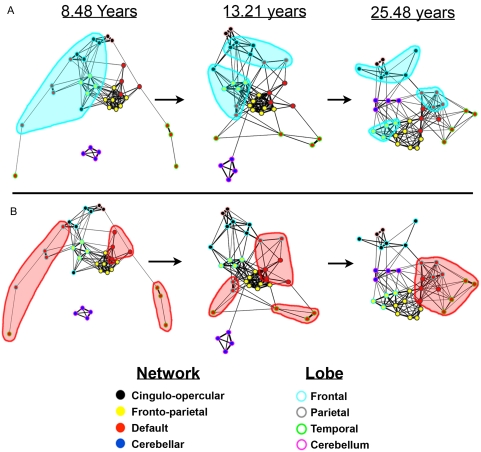
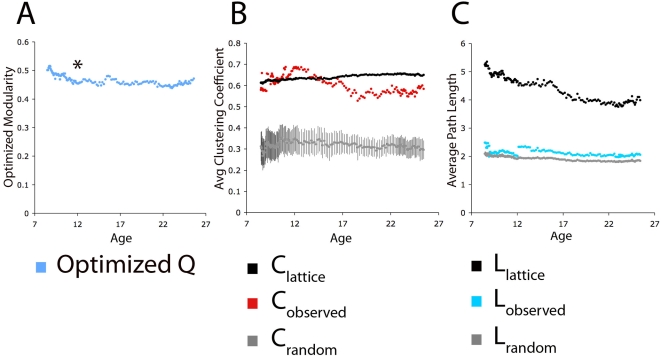
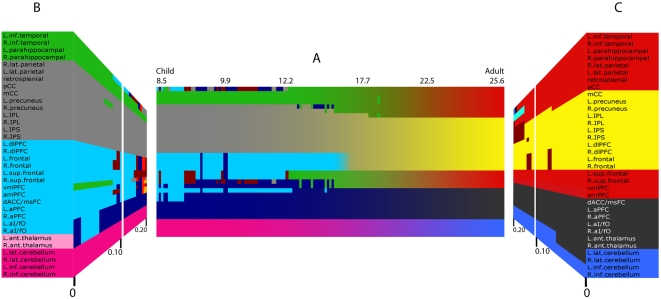
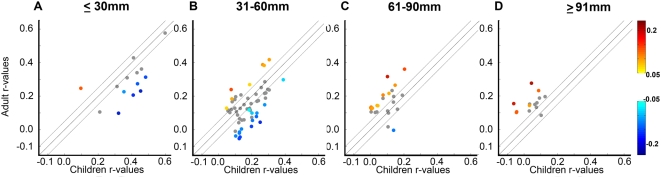
The mature human brain is organized into a collection of specialized functional networks that flexibly interact to support various cognitive functions. Studies of development often attempt to identify the organizing principles that guide the maturation of these functional networks. In this report, we combine resting state functional connectivity MRI (rs-fcMRI), graph analysis, community detection, and spring-embedding visualization techniques to analyze four separate networks defined in earlier studies. As we have previously reported, we find, across development, a trend toward 'segregation' (a general decrease in correlation strength) between regions close in anatomical space and 'integration' (an increased correlation strength) between selected regions distant in space. The generalization of these earlier trends across multiple networks suggests that this is a general developmental principle for changes in functional connectivity that would extend to large-scale graph theoretic analyses of large-scale brain networks. Communities in children are predominantly arranged by anatomical proximity, while communities in adults predominantly reflect functional relationships, as defined from adult fMRI studies. In sum, over development, the organization of multiple functional networks shifts from a local anatomical emphasis in children to a more "distributed" architecture in young adults. We argue that this "local to distributed" developmental characterization has important implications for understanding the development of neural systems underlying cognition. Further, graph metrics (e.g., clustering coefficients and average path lengths) are similar in child and adult graphs, with both showing "small-world"-like properties, while community detection by modularity optimization reveals stable communities within the graphs that are clearly different between young children and young adults. These observations suggest that early school age children and adults both have relatively efficient systems that may solve similar information processing problems in divergent ways.
Overview
The claims and statistics of this paper haven’t been checked yet.
Free: it reads the open-access text and checks the first 5 claims that cite a source we can check. Create a free account to check every claim.
Integrity signals
Registry
Cites
Statistics
Figures

Verification
Claims the paper makes
The claims and statistics of this paper haven’t been checked yet.
Free: it reads the open-access text and checks the first 5 claims that cite a source we can check. Create a free account to check every claim.
Claims other papers make about this one
Each is checked against this paper’s own text: does it say what the citing paper says it does?
The source backs part of the claim, not all of it — or backs it for a different population, condition or comparison.
In the citing paper
“Human neuroimaging studies have shown corresponding patterns of regional brain changes across development [12] with functional connectivity studies [13,14] suggesting refinement of local subcortical circuits precedes refinement of distal cortical ones.”
From Development of the emotional brain (2019) · cites this paper as [13]
Experimental — accuracy not yet measuredThe source backs part of the claim, not all of it — or backs it for a different population, condition or comparison.
In the citing paper
“A plausible temporal mechanism for the shifts in cognitive capacity from childhood to adulthood is a fine-tuning of circuits from subcortico-subcortical to cortico-subcortical to cortico-cortical consistent with postmortem animal studies of regional synaptic changes (Rakic et al., 1994) and functional connectivity studies (Fair et al., 2009) of refinement of local circuits preceding refinement of”
From Beyond simple models of adolescence to an integrated circuit-based account: A commentary (2016) · cites this paper as Fair et al., 2009
Experimental — accuracy not yet measuredThe source backs part of the claim, not all of it — or backs it for a different population, condition or comparison.
In the citing paper
“Evidence has converged on an executive attention network, with the anterior cingulate being the central structure, as the major network responsible for resolving cognitive conflicts (21, 22).”
From Multimodal imaging of the self-regulating developing brain (2012) · cites this paper as [21]
Experimental — accuracy not yet measuredThe source backs part of the claim, not all of it — or backs it for a different population, condition or comparison.
In the citing paper
“Prior work in fMRI using this modularity algorithm required that the researcher set an arbitrary threshold, or cutoff point, for what constitutes similarity between any two given individuals. Researchers would then arrive at thresholds by looking for consistency in community detection results at multiple thresholds (e.g., [2], [21], [22]).”
From Organizing Heterogeneous Samples Using Community Detection of GIMME-Derived Resting State Functional Networks (2014) · cites this paper as [22]
Experimental — accuracy not yet measuredThe source backs part of the claim, not all of it — or backs it for a different population, condition or comparison.
In the citing paper
“The functional network studies have consistently shown no statistical difference in global topological properties between children and adults”
From Developmental Changes in Organization of Structural Brain Networks (2013) · cites this paper as Fair et al. 2009
Experimental — accuracy not yet measured
5 more claims about this paper
Create a free account to see every claim other papers make about this one.
Self-check
Percentages, sums and reported differences re-computed from the paper’s own numbers.
The self-check needs the paper’s full text.
Citations
Cites
Controlling the False Discovery Rate: A Practical and Powerful Approach to Multiple Testing
Benjamini, Y., & Hochberg, Y. (1995) · Journal of the Royal Statistical Society Series B: Statistical Methodology · doi:10.1111/j.2517-6161.1995.tb02031.x · Cited by 109,482 · cited 1×
“To account for multiple comparisons the Benjamini and Hochberg False Discovery Rate [97] was applied.”
MethodCollective dynamics of ‘small-world’ networks
Watts, D. J., & Strogatz, S. H. (1998) · Nature · doi:10.1038/30918 · Cited by 43,060 · cited 1×
“long-range processes. It is this hybrid graph topology (i.e., high clustering coefficients and short path lengths) that matches the observed “small world” networks in many complex systems”
BackgroundModularity and community structure in networks
Newman, M. E. J. (2006) · Proceedings of the National Academy of Sciences · doi:10.1073/pnas.0601602103 · Cited by 12,256 · cited 5×
“As stated by Newman: ‘‘A good division of a graph into communities is not merely one in which there are few edges between communities; it is one in which there are fewer than expected edges between communities.”
BackgroundMethodInfluentialA default mode of brain function
Raichle, M. E., MacLeod, A. M., Snyder, A. Z., Powers, W. J., Gusnard, D. A., & Shulman, G. L. (2001) · Proceedings of the National Academy of Sciences · doi:10.1073/pnas.98.2.676 · Cited by 12,190 · cited 2×
“While the distinct function of the default mode network is often linked to internally directed mental activity [39], this notion continues to be debated [25,32,41–44].”
Functional connectivity in the motor cortex of resting human brain using echo‐planar mri
Biswal, B., Zerrin Yetkin, F., Haughton, V. M., & Hyde, J. S. (1995) · Magnetic Resonance in Medicine · doi:10.1002/mrm.1910340409 · Cited by 9,812
The human brain is intrinsically organized into dynamic, anticorrelated functional networks
Fox, M. D., Snyder, A. Z., Vincent, J. L., Corbetta, M., Van Essen, D. C., & Raichle, M. E. (2005) · Proceedings of the National Academy of Sciences · doi:10.1073/pnas.0504136102 · Cited by 8,553 · cited 3×
“Resting-state fcMRI analyses have repeatedly shown that these regions, along with associated medial temporal regions, are correlated at rest in adults [15,16,32,40].”
Distributed hierarchical processing in the primate cerebral cortex
Felleman, D. J., & Van Essen, D. C. (1991) · Cerebral Cortex · doi:10.1093/cercor/1.1.1 · Cited by 7,783 · cited 1×
“Increased myelination is thought to proceed from primary sensory and motor regions to association areas [68– 71], roughly following the hierarchical organization introduced by Felleman and Van Essen [72] (Note that while the most frequently referenced neuroanatomical changes that occur throughout development have been…”
BackgroundDissociable intrinsic connectivity networks for salience processing and executive control
Seeley, W. W., Menon, V., Schatzberg, A. F., Keller, J., Glover, G. H., Kenna, H., Reiss, A. L., & Greicius, M. D. (2007) · The Journal of Neuroscience · doi:10.1523/jneurosci.5587-06.2007 · Cited by 7,426 · cited 3×
“In addition, several previous findings using this technique [21,22,32] have now been replicated using continuous resting blocks [27,33,34] and other continuous resting data [89].”
BackgroundMethodFunctional connectivity in the resting brain: a network analysis of the default mode hypothesis
Greicius, M. D., Krasnow, B., Reiss, A. L., & Menon, V. (2003) · Proceedings of the National Academy of Sciences · doi:10.1073/pnas.0135058100 · Cited by 6,358 · cited 1×
“Resting-state fcMRI analyses have repeatedly shown that these regions, along with associated medial temporal regions, are correlated at rest in adults [15,16,32,40].”
BackgroundThe brainweb: phase synchronization and large-scale integration
Varela, F., Lachaux, J.-P., Rodriguez, E., & Martinerie, J. (2001) · Nature Reviews Neuroscience · doi:10.1038/35067550 · Cited by 4,761 · cited 1×
“In adults, spontaneous correlated activity has been suggested to be important for gating information flow [54], building internal representations [43,44,54], and maintaining mature network relationships [43,44,54].”
Background
Cited by
Items 101–200 of 1,003
Herbet, G., & Duffau, H. (2020) · Physiological Reviews · doi:10.1152/physrev.00033.2019 · Cited by 295
Assessing Executive Function in Preschoolers
Anderson, P. J., & Reidy, N. (2012) · Neuropsychology Review · doi:10.1007/s11065-012-9220-3 · Cited by 293
Brain Network Connectivity in Individuals with Schizophrenia and Their Siblings
Repovs, G., Csernansky, J. G., & Barch, D. M. (2011) · Biological Psychiatry · doi:10.1016/j.biopsych.2010.11.009 · Cited by 292
“Changes in how networks integrate and segregate from one another are an important feature of cognitive development (16,27,28).”
The nature of brain dysfunction in autism: Functional brain imaging studies
Minshew, N. J., & Keller, T. A. (2010) · Current Opinion in Neurology · doi:10.1097/wco.0b013e32833782d4 · Cited by 291
Developing Attention: Behavioral and Brain Mechanisms
Posner, M. I., Rothbart, M. K., Sheese, B. E., & Voelker, P. (2014) · Advances in Neuroscience · doi:10.1155/2014/405094 · Cited by 285
“As discussed previously, an increasingly popular way of tracing brain changes is to use resting state MRI to characterize how the brain changes in development [30, 59].”
BackgroundBelcher, B. R., Zink, J., Azad, A., Campbell, C. E., Chakravartti, S. P., & Herting, M. M. (2021) · Biological Psychiatry: Cognitive Neuroscience and Neuroimaging · doi:10.1016/j.bpsc.2020.08.005 · Cited by 281
When Is an Adolescent an Adult? Assessing Cognitive Control in Emotional and Nonemotional Contexts
Cohen, A. O., Breiner, K., Steinberg, L., Bonnie, R. J., Scott, E. S., Taylor-Thompson, K., Rudolph, M. D., Chein, J., Richeson, J. A., Heller, A. S., et al. (2016) · Psychological Science · doi:10.1177/0956797615627625 · Cited by 272
Self-citationDevelopmental connectomics from infancy through early childhood
Cao, M., Huang, H., & He, Y. (2017) · Trends in Neurosciences · doi:10.1016/j.tins.2017.06.003 · Cited by 284
“local proximity-based pattern to a more functional distribution pattern over the development period [22,23].”
Graham, A. M., Rasmussen, J. M., Rudolph, M. D., Heim, C. M., Gilmore, J. H., Styner, M., Potkin, S. G., Entringer, S., Wadhwa, P. D., Fair, D. A., et al. (2018) · Biological Psychiatry · doi:10.1016/j.biopsych.2017.05.027 · Cited by 282
Self-citationLiddle, E. B., Hollis, C., Batty, M. J., Groom, M. J., Totman, J. J., Liotti, M., Scerif, G., & Liddle, P. F. (2011) · Journal of Child Psychology and Psychiatry · doi:10.1111/j.1469-7610.2010.02333.x · Cited by 281
“While there is evidence from resting state functional connectivity studies that long-range connectivity within the DMN has a developmental trajectory that continues into the mid-twenties (Fair et al., 2009), there is also ICA evidence that a DMN network comprising the major adult regions (medial prefrontal cortex, pos…”
BackgroundConcepts and principles in the analysis of brain networks
Wig, G. S., Schlaggar, B. L., & Petersen, S. E. (2011) · Annals of the New York Academy of Sciences · doi:10.1111/j.1749-6632.2010.05947.x · Cited by 278
Self-citationTemporal and spatial evolution of brain network topology during the first two years of life
Gao, W., Gilmore, J. H., Giovanello, K. S., Smith, J. K., Shen, D., Zhu, H., & Lin, W. (2011) · PLoS ONE · doi:10.1371/journal.pone.0025278 · Cited by 272
“The observation of no significant changes between 1 yr and 2 yr olds in whole brain small-world properties echoes the findings by Supekar et al [6] and Fair et al[5], who also failed to detect significant whole brain efficiency changes when comparing schoolaged children with adults.”
BackgroundResultInfluentialNeuroanatomical Prerequisites for Language Functions in the Maturing Brain
Brauer, J., Anwander, A., & Friederici, A. D. (2011) · Cerebral Cortex · doi:10.1093/cercor/bhq108 · Cited by 272
Scott-Van Zeeland, A. A., Abrahams, B. S., Alvarez-Retuerto, A. I., Sonnenblick, L. I., Rudie, J. D., Ghahremani, D., Mumford, J. A., Poldrack, R. A., Dapretto, M., Geschwind, D. H., et al. (2010) · Science Translational Medicine · doi:10.1126/scitranslmed.3001344 · Cited by 252
Studying Brain Organization via Spontaneous fMRI Signal
Power, J. D., Schlaggar, B. L., & Petersen, S. E. (2014) · Neuron · doi:10.1016/j.neuron.2014.09.007 · Cited by 262
“…to report that short-distance functional connectivity MRI correlations were strong in children and tended to weaken over development, while long-distance correlations were weak in children and tended to strengthen over development (Fair et al., 2007, 2009; Kelly et al., 2009; Supekar et al., 2009).”
Self-citationConnectivity differences in brain networks
Zalesky, A., Cocchi, L., Fornito, A., Murray, M. M., & Bullmore, E. (2012) · NeuroImage · doi:10.1016/j.neuroimage.2012.01.068 · Cited by 260
“The goal of numerous studies has been to elucidate differences in these topological properties over developmental stages (Fair et al., 2009), in clinical conditions (eg.”
Posner, J., Park, C., & Wang, Z. (2014) · Neuropsychology Review · doi:10.1007/s11065-014-9251-z · Cited by 257
“Spontaneous neural activity strengthens synaptic connections across neural networks and thereby may maintain the coherence, or architecture, of these neural networks (Fair et al. 2007; Fair et al. 2009).”
BackgroundSatterthwaite, T. D., Wolf, D. H., Ruparel, K., Erus, G., Elliott, M. A., Eickhoff, S. B., Gennatas, E. D., Jackson, C., Prabhakaran, K., Smith, A., et al. (2013) · NeuroImage · doi:10.1016/j.neuroimage.2013.06.045 · Cited by 253
“Improved confound regression (Satterthwaite et al., 2013) included these 9 parameters as well as the temporal derivative, quadratic term, and temporal derivative of the quadratic of each (i.e., 36 regressors total; see Friston et al., 1996 for a similar application of quadratic motion regresssors…”
BackgroundMethodInfluentialResting-State Functional Connectivity Indexes Reading Competence in Children and Adults
Koyama, M. S., Di Martino, A., Zuo, X.-N., Kelly, C., Mennes, M., Jutagir, D. R., Castellanos, F. X., & Milham, M. P. (2011) · Journal of Neuroscience · doi:10.1523/jneurosci.4865-10.2011 · Cited by 253
“…not identical, neural networks while reading (Gaillard et al., 2003; Church et al., 2008; Turkeltaub et al., 2008), yet (2) developmental changes in functional networks continue beyond childhood (Fair et al., 2009; Kelly et al., 2009; Supekar et al., 2009; Dosenbach et al., 2010; Zuo et al., 2010).”
BackgroundThe development of brain network hubs
Oldham, S., & Fornito, A. (2019) · Developmental Cognitive Neuroscience · doi:10.1016/j.dcn.2018.12.005 · Cited by 250
Yan, C., Gong, G., Wang, J., Wang, D., Liu, D., Zhu, C., Chen, Z. J., Evans, A., Zang, Y., & He, Y. (2011) · Cerebral Cortex · doi:10.1093/cercor/bhq111 · Cited by 249
“(Achard and Bullmore 2007; Fair et al. 2009; Micheloyannis et al. 2009), it would be interesting to determine whether sex dimorphisms and brain size effects exist in other age groups and whether sex and brain size effects on cortical network parameters interact with age.”
BackgroundResultSripada, C. S., Kessler, D., & Angstadt, M. (2014) · Proceedings of the National Academy of Sciences · doi:10.1073/pnas.1407787111 · Cited by 244
Developmental Changes in Organization of Structural Brain Networks
Khundrakpam, B. S., Reid, A., Brauer, J., Carbonell, F., Lewis, J., Ameis, S., Karama, S., Lee, J., Chen, Z., Das, S., et al. (2013) · Cerebral Cortex · doi:10.1093/cercor/bhs187 · Cited by 234
“First, the fi ndings from functional studies must be interpreted cautiously as most of these functional studies have been done with limited ages and also with few regions of interest (ROIs) limited to select brain regions (Fair et al. 2008, 2009).”
BackgroundMethodInfluentialDong, H.-M., Margulies, D. S., Zuo, X.-N., & Holmes, A. J. (2021) · Proceedings of the National Academy of Sciences · doi:10.1073/pnas.2024448118 · Cited by 242
“For example, brain functions in infancy are characterized by the predominance of short-range connectivity (49, 50), which gradually transitions through childhood and adolescence as long-range network connections become increasingly evident (11, 51 – 56).”
The development of hub architecture in the human functional brain network
Hwang, K., Hallquist, M. N., & Luna, B. (2013) · Cerebral Cortex · doi:10.1093/cercor/bhs227 · Cited by 226
“Important refinements in brain connectivity continue to mature through adolescence, possibly supporting cognitive development (Fair et al. 2009; Kelly et al. 2009; Stevens et al. 2009; Asato et al. 2010; Dosenbach et al. 2010), and abnormal brain connectivity has been implicated in several psychiatric and developmenta…”
BackgroundInfluentialSmyser, C. D., Snyder, A. Z., & Neil, J. J. (2011) · NeuroImage · doi:10.1016/j.neuroimage.2011.02.073 · Cited by 240
Halperin, J. M., & Healey, D. M. (2011) · Neuroscience & Biobehavioral Reviews · doi:10.1016/j.neubiorev.2010.07.006 · Cited by 237
Sex differences in normal age trajectories of functional brain networks
Scheinost, D., Finn, E. S., Tokoglu, F., Shen, X., Papademetris, X., Hampson, M., & Constable, R. T. (2015) · Human Brain Mapping · doi:10.1002/hbm.22720 · Cited by 236
“Lesser connectivity for females in the visual network has been found previously (Filippi et al., 2013).”
BackgroundMethodInfluentialA brief history of the resting state: The Washington University perspective
Snyder, A. Z., & Raichle, M. E. (2012) · NeuroImage · doi:10.1016/j.neuroimage.2012.01.044 · Cited by 237
“NIL investigators have examined the development of RSNs in newborn (premature and term) infants (Smyser et al., 2010) and children (Fair et al., 2007, 2008, 2009, 2010).”
Circuitry of self-control and its role in reducing addiction
Tang, Y.-Y., Posner, M. I., Rothbart, M. K., & Volkow, N. D. (2015) · Trends in Cognitive Sciences · doi:10.1016/j.tics.2015.06.007 · Cited by 236
Training attentional control and working memory – Is younger, better?
Wass, S. V., Scerif, G., & Johnson, M. H. (2012) · Developmental Review · doi:10.1016/j.dr.2012.07.001 · Cited by 235
“…neuroscience is gradually eroding the idea that the postnatal functional development of the cortex unfolds in a mosaic-like manner, with static structure–function correspondences during development (Elman et al., 1996; Fair et al., 2008, 2009; Johnson, 2000, 2010; Karmiloff-Smith, 1992, 2009).”
BackgroundNetwork analysis of resting state EEG in the developing young brain: structure comes with maturation
Boersma, M., Smit, D. J. A., de Bie, H. M. A., Van Baal, G. C. M., Boomsma, D. I., de Geus, E. J. C., Delemarre‐van de Waal, H. A., & Stam, C. J. (2011) · Human Brain Mapping · doi:10.1002/hbm.21030 · Cited by 235
“Fair et al. performed a study in age groups of 8, 13, and 25 years of age and used rs-fcMRI BOLD correlations in 34 regions of interest to calculate graph characteristics [Fair et al., 2009].”
The future of Alzheimer's disease: The next 10 years
Hampel, H., Prvulovic, D., Teipel, S., Jessen, F., Luckhaus, C., Frölich, L., Riepe, M. W., Dodel, R., Leyhe, T., Bertram, L., et al. (2011) · Progress in Neurobiology · doi:10.1016/j.pneurobio.2011.11.008 · Cited by 235
Orienting of Attention: Then and Now
Posner, M. I. (2016) · Quarterly Journal of Experimental Psychology · doi:10.1080/17470218.2014.937446 · Cited by 233
“For example, even though infants at 7 months detect errors, we observed the ability to slow down behaviour following an error to develop between 3 and 4 years (Jones, Rothbart & Posner, 2003) Changes in connectivity in infancy and early childhood have been supported by resting state MRI studies (Fair et al., 2009) and…”
Emotion-dependent functional connectivity of the default mode network in adolescent depression
Ho, T. C., Connolly, C. G., Henje Blom, E., LeWinn, K. Z., Strigo, I. A., Paulus, M. P., Frank, G., Max, J. E., Wu, J., Chan, M., et al. (2015) · Biological Psychiatry · doi:10.1016/j.biopsych.2014.09.002 · Cited by 227
Developmental Differences in Medial Temporal Lobe Function during Memory Encoding
Ghetti, S., DeMaster, D. M., Yonelinas, A. P., & Bunge, S. A. (2010) · Journal of Neuroscience · doi:10.1523/jneurosci.3500-09.2010 · Cited by 230
“…in right DLPFC and left VLPFC. Preadolescence is a period of rapid change during which long-range projections begin to dominate over local ones (Fair et al., 2009); during this period, there may be temporary instability in brain networks, which might result in clearer regional patterns of…”
BackgroundImpact of puberty on the evolution of cerebral perfusion during adolescence
Satterthwaite, T. D., Shinohara, R. T., Wolf, D. H., Hopson, R. D., Elliott, M. A., Vandekar, S. N., Ruparel, K., Calkins, M. E., Roalf, D. R., Gennatas, E. D., et al. (2014) · Proceedings of the National Academy of Sciences · doi:10.1073/pnas.1400178111 · Cited by 227
Chen, J., Tam, A., Kebets, V., Orban, C., Ooi, L. Q. R., Asplund, C. L., Marek, S., Dosenbach, N. U. F., Eickhoff, S. B., Bzdok, D., et al. (2022) · Nature Communications · doi:10.1038/s41467-022-29766-8 · Cited by 224
Self-citationBrain anatomical networks in early human brain development
Fan, Y., Shi, F., Smith, J. K., Lin, W., Gilmore, J. H., & Shen, D. (2011) · NeuroImage · doi:10.1016/j.neuroimage.2010.07.025 · Cited by 225
“Interestingly, it has been demonstrated that the modularity of functional brain networks changes little over the age ranging from 8 to 25 years (Fair et al., 2009), while the functional brain network of old individuals displayed a relatively lower modularity than the brain network of young adults…”
BackgroundInfluentialDisrupted modular brain dynamics reflect cognitive dysfunction in Alzheimer's disease
de Haan, W., van der Flier, W. M., Koene, T., Smits, L. L., Scheltens, P., & Stam, C. J. (2012) · NeuroImage · doi:10.1016/j.neuroimage.2011.11.055 · Cited by 222
Understanding the role of puberty in structural and functional development of the adolescent brain
Goddings, A., Beltz, A., Peper, J. S., Crone, E. A., & Braams, B. R. (2019) · Journal of Research on Adolescence · doi:10.1111/jora.12408 · Cited by 219
“Normative developmental neuroimaging studies in humans generally report a better integration of structural and functional connectivity across adolescence (Bos et al., 2016; Fair et al., 2009; Sripada, Swain, Evans, Welsh, & Liberzon, 2014).”
BackgroundAssessment of system dysfunction in the brain through MRI-based connectomics
Filippi, M., van den Heuvel, M. P., Fornito, A., He, Y., Hulshoff Pol, H. E., Agosta, F., Comi, G., & Rocca, M. A. (2013) · The Lancet Neurology · doi:10.1016/s1474-4422(13)70144-3 · Cited by 215
Abbott, A. E., Nair, A., Keown, C. L., Datko, M., Jahedi, A., Fishman, I., & Müller, R.-A. (2016) · Cerebral Cortex · doi:10.1093/cercor/bhv191 · Cited by 214
“However, robust anticorrelations are not yet present in children (Fair et al. 2009; Dosenbach et al. 2010), consistent with our findings (Fig.”
ResultHuman Connectomics across the Life Span
Zuo, X.-N., He, Y., Betzel, R. F., Colcombe, S., Sporns, O., & Milham, M. P. (2017) · Trends in Cognitive Sciences · doi:10.1016/j.tics.2016.10.005 · Cited by 212
Stevens, A. A., Tappon, S. C., Garg, A., & Fair, D. A. (2012) · PLoS ONE · doi:10.1371/journal.pone.0030468 · Cited by 213
“We examined 34 brain regions (Table 1) that have been empirically identified in previous neuroimaging studies across a range of cognitive tasks [8,23,27,28].”
BackgroundMethodResultInfluentialSelf-citationDisruption of functional organization within the primary motor cortex in children with autism
Nebel, M. B., Joel, S. E., Muschelli, J., Barber, A. D., Caffo, B. S., Pekar, J. J., & Mostofsky, S. H. (2014) · Human Brain Mapping · doi:10.1002/hbm.22188 · Cited by 213
“…networks, correlated neural ensembles appear to develop locally first, with distributed networks arising in adolescence or early adulthood [Fair et al., 2009], suggesting a neurodevelopmental mechanism of overconnectivity followed by pruning or weakening of short-range functional…”
BackgroundThe impact of social disparity on prefrontal function in childhood.
Sheridan, M. A., Sarsour, K., Jutte, D., D'Esposito, M., & Boyce, W. T. (2012) · PLoS ONE · doi:10.1371/journal.pone.0035744 · Cited by 212
“It is well established that the PFC has a long developmental trajectory, extending into late adolescence, with gross changes in volume and connectivity beginning early in childhood and continuing through early adulthood [22,23,24,25].”
Multimodal imaging of the self-regulating developing brain
Fjell, A. M., Walhovd, K. B., Brown, T. T., Kuperman, J. M., Chung, Y., Hagler, D. J., Venkatraman, V., Roddey, J. C., Erhart, M., McCabe, C., et al. (2012) · Proceedings of the National Academy of Sciences · doi:10.1073/pnas.1208243109 · Cited by 212
Control networks and neuromodulators of early development.
Posner, M. I., Rothbart, M. K., Sheese, B. E., & Voelker, P. (2012) · Developmental Psychology · doi:10.1037/a0025530 · Cited by 211
“…the brain networks arising from studies of attention (e.g., Posner & Fan, 2008) and from developmental studies of resting fMRI connectivity (e.g., Fair et al., 2009; 2011) require a more careful examination of the behavioral landmarks related to the development of attention in infants and young…”
InfluentialVértes, P. E., & Bullmore, E. T. (2015) · Journal of Child Psychology and Psychiatry · doi:10.1111/jcpp.12365 · Cited by 197
“…distances tend to be strong in infants and weaken over development, while long-range edges tend to strengthen over development from birth to early adulthood (Fair et al., 2007, 2009; Gao et al., 2011; Kelly et al., 2009; Qin, Young, Supekar, Uddin, & Menon, 2012; Supekar, Musen, & Menon, 2009).”
BackgroundInfluentialBonhomme, V., Vanhaudenhuyse, A., Demertzi, A., Bruno, M.-A., Jaquet, O., Bahri, M. A., Plenevaux, A., Boly, M., Boveroux, P., Soddu, A., et al. (2016) · Anesthesiology · doi:10.1097/aln.0000000000001275 · Cited by 207
Cao, Q., Shu, N., An, L., Wang, P., Sun, L., Xia, M.-R., Wang, J.-H., Gong, G.-L., Zang, Y.-F., Wang, Y.-F., et al. (2013) · Journal of Neuroscience · doi:10.1523/jneurosci.4793-12.2013 · Cited by 207
Beyond simple models of adolescence to an integrated circuit-based account: A commentary
Casey, B., Galván, A., & Somerville, L. H. (2016) · Developmental Cognitive Neuroscience · doi:10.1016/j.dcn.2015.12.006 · Cited by 206
“…of circuits rom subcortico-subcortical to cortico-subcortical to corticoortical consistent with postmortem animal studies of regional ynaptic changes (Rakic et al., 1994) and functional connectivity tudies (Fair et al., 2009) of refinement of local circuits preceding efinement of distal ones.”
BackgroundOn the relationship between seed‐based and ICA‐based measures of functional connectivity
Joel, S. E., Caffo, B. S., van Zijl, P. C. M., & Pekar, J. J. (2011) · Magnetic Resonance in Medicine · doi:10.1002/mrm.22818 · Cited by 205
Graham, A. M., Rasmussen, J. M., Entringer, S., Ben Ward, E., Rudolph, M. D., Gilmore, J. H., Styner, M., Wadhwa, P. D., Fair, D. A., & Buss, C. (2019) · Biological Psychiatry · doi:10.1016/j.biopsych.2018.06.023 · Cited by 203
Self-citationFunctional connectivity hubs of the mouse brain
Liska, A., Galbusera, A., Schwarz, A. J., & Gozzi, A. (2015) · NeuroImage · doi:10.1016/j.neuroimage.2015.04.033 · Cited by 171
“…has topological features recapitulating the defining characteristics of complex networks (Watts and Strogatz, 1998), including the presence of functionally specialised modules encompassing well-characterised neurofunctional systems (Fair et al., 2009; Meunier et al., 2009; Power et al., 2011).”
Collin, G., & van den Heuvel, M. P. (2013) · The Neuroscientist · doi:10.1177/1073858413503712 · Cited by 198
Atypical Resting‐State Functional Connectivity of Affective Pain Regions in Chronic Migraine
Schwedt, T. J., Schlaggar, B. L., Mar, S., Nolan, T., Coalson, R. S., Nardos, B., Benzinger, T., & Larson‐Prior, L. J. (2013) · Headache: The Journal of Head and Face Pain · doi:10.1111/head.12081 · Cited by 196
Self-citationAlexander-Bloch, A., Lambiotte, R., Roberts, B., Giedd, J., Gogtay, N., & Bullmore, E. (2012) · NeuroImage · doi:10.1016/j.neuroimage.2011.11.035 · Cited by 196
“…partition of a group of subjects, which has in the past been solved by using the most representative subject in terms of NMI (Meunier et al., 2009b) or by finding the modular partition of a network based on the group mean functional connectivity matrix (Meunier et al., 2009a, Fair et al., 2009).”
InfluentialRudie, J. D., Shehzad, Z., Hernandez, L. M., Colich, N. L., Bookheimer, S. Y., Iacoboni, M., & Dapretto, M. (2012) · Cerebral Cortex · doi:10.1093/cercor/bhr171 · Cited by 195
“…functional integration) as well as reduced local (i.e., intralobar) positive connectivity among nodes in different networks (i.e., functional segregation; Fair, Dosenbach, et al. 2007; Fair et al. 2008, 2009; Kelly et al. 2009; Stevens et al. 2009; Supekar et al. 2009; Dosenbach et al. 2010).”
BackgroundResultDefining Individual-Specific Functional Neuroanatomy for Precision Psychiatry
Gratton, C., Kraus, B. T., Greene, D. J., Gordon, E. M., Laumann, T. O., Nelson, S. M., Dosenbach, N. U. F., & Petersen, S. E. (2020) · Biological Psychiatry · doi:10.1016/j.biopsych.2019.10.026 · Cited by 192
“Network approaches hold promise for providing concise descriptions of how complex systems like the brain change across the lifespan (49-51) and are disrupted in psychiatric disorders (52), and may help develop mechanistic theories for these alterations (52-54).”
BackgroundSelf-citationA challenging, unpredictable world for people with Autism Spectrum Disorder
Gomot, M., & Wicker, B. (2012) · International Journal of Psychophysiology · doi:10.1016/j.ijpsycho.2011.09.017 · Cited by 191
Clustering of Resting State Networks
Lee, M. H., Hacker, C. D., Snyder, A. Z., Corbetta, M., Zhang, D., Leuthardt, E. C., & Shimony, J. S. (2012) · PLoS ONE · doi:10.1371/journal.pone.0040370 · Cited by 190
“This view is supported by developmental [33] and learning studies [34,35].”
Development Trends of White Matter Connectivity in the First Years of Life
Yap, P.-T., Fan, Y., Chen, Y., Gilmore, J. H., Lin, W., & Shen, D. (2011) · PLoS ONE · doi:10.1371/journal.pone.0024678 · Cited by 190
Thomason, M. E., Grove, L. E., Lozon, T. A., Vila, A. M., Ye, Y., Nye, M. J., Manning, J. H., Pappas, A., Hernandez-Andrade, E., Yeo, L., et al. (2015) · Developmental Cognitive Neuroscience · doi:10.1016/j.dcn.2014.09.001 · Cited by 188
“The principal f stronger long-range neural connections with advancng age has been demonstrated previously in neonates Fransson et al., 2007; Gao et al., 2009), and across childood and adolescence (Fair et al., 2007, 2009; Hagmann t al., 2010; Kelly et al., 2009; Supekar et al., 2009).”
Functional immaturity of cortico-basal ganglia networks in Gilles de la Tourette syndrome
Worbe, Y., Malherbe, C., Hartmann, A., Pélégrini-Issac, M., Messé, A., Vidailhet, M., Lehéricy, S., & Benali, H. (2012) · Brain · doi:10.1093/brain/aws056 · Cited by 186
“Previous studies based on graph theory suggested a concurrent segregation and integration in brain networks during normal brain development (Fair et al., 2009) with a progressive weakening of short-range and a strengthening of long-range paths (Fair et al., 2009; Power et al., 2010).”
BackgroundLong-term influence of normal variation in neonatal characteristics on human brain development
Walhovd, K. B., Fjell, A. M., Brown, T. T., Kuperman, J. M., Chung, Y., Hagler, D. J., Roddey, J. C., Erhart, M., McCabe, C., Akshoomoff, N., et al. (2012) · Proceedings of the National Academy of Sciences · doi:10.1073/pnas.1208180109 · Cited by 187
Miskovic, V., Ma, X., Chou, C.-A., Fan, M., Owens, M., Sayama, H., & Gibb, B. E. (2015) · NeuroImage · doi:10.1016/j.neuroimage.2015.06.013 · Cited by 175
“…studies suggests that functional connectivity within several resting state brain networks progresses from a more local organization in childhood to an increasingly integrated and spatially distributed architecture in adolescence and young adulthood (Fair et al., 2007, 2009; Supekar et al., 2009).”
Functional brain connectivity at rest changes after working memory training
Jolles, D. D., van Buchem, M. A., Crone, E. A., & Rombouts, S. A. R. B. (2013) · Human Brain Mapping · doi:10.1002/hbm.21444 · Cited by 183
“On the other hand, it could be that activity-dependent plasticity is actually stronger during development, when functional networks are not yet fully specialized [e.g., Dosenbach et al., 2010; Fair et al., 2009; Jolles et al., 2011; Kelly et al., 2009; Littow et al., 2010; Supekar et al., 2009].”
BackgroundA pairwise maximum entropy model accurately describes resting-state human brain networks
Watanabe, T., Hirose, S., Wada, H., Imai, Y., Machida, T., Shirouzu, I., Konishi, S., Miyashita, Y., & Masuda, N. (2013) · Nature Communications · doi:10.1038/ncomms2388 · Cited by 181
A comprehensive study of whole-brain functional connectivity in children and young adults
Jolles, D. D., van Buchem, M. A., Crone, E. A., & Rombouts, S. A. R. B. (2011) · Cerebral Cortex · doi:10.1093/cercor/bhq104 · Cited by 181
“…that functional brain de- velopment is characterized by a transition from large un- differentiated systems to specialized neural networks (e.g., Fair et al. 2009) and they are in agreement with develop- mental differences in functional connectivity between other brain regions (Fair et al.…”
BackgroundMethodInfluentialThe Putative Visual Word Form Area Is Functionally Connected to the Dorsal Attention Network
Vogel, A. C., Miezin, F. M., Petersen, S. E., & Schlaggar, B. L. (2012) · Cerebral Cortex · doi:10.1093/cercor/bhr100 · Cited by 181
Self-citationCosta Dias, T. G., Wilson, V. B., Bathula, D. R., Iyer, S. P., Mills, K. L., Thurlow, B. L., Stevens, C. A., Musser, E. D., Carpenter, S. D., Grayson, D. S., et al. (2013) · European Neuropsychopharmacology · doi:10.1016/j.euroneuro.2012.10.015 · Cited by 180
Self-citationTraffic pollution exposure is associated with altered brain connectivity in school children
Pujol, J., Martínez-Vilavella, G., Macià, D., Fenoll, R., Alvarez-Pedrerol, M., Rivas, I., Forns, J., Blanco-Hinojo, L., Capellades, J., Querol, X., et al. (2016) · NeuroImage · doi:10.1016/j.neuroimage.2016.01.036 · Cited by 180
“In addition, pollution also was associated with stronger functional connectivity between the (medial frontal cortex) seed region and the frontal operculum at the lateral boundary of the DMN, indicating lower network segregation (Fair et al., 2009) (Fig.”
InfluentialRichards, J. M., Plate, R. C., & Ernst, M. (2013) · Neuroscience & Biobehavioral Reviews · doi:10.1016/j.neubiorev.2013.03.004 · Cited by 174
“The field is still very young, yet studies of resting state connectivity across development are starting to emerge (Fair et al., 2009; Stevens et al., 2009), providing important starting points for investigations of functionally constrained studies.”
BackgroundYaple, Z. A., Stevens, W. D., & Arsalidou, M. (2019) · NeuroImage · doi:10.1016/j.neuroimage.2019.03.074 · Cited by 179
“From a developmental perspective, the dorsal cingulate cortex may have a generic role in maintaining task rules and self-control (Fair et al., 2009; Arsalidou and Pascual-Leone, 2016; Arsalidou et al., 2018).”
BackgroundFrom maps to multi-dimensional network mechanisms of mental disorders
Braun, U., Schaefer, A., Betzel, R. F., Tost, H., Meyer-Lindenberg, A., & Bassett, D. S. (2018) · Neuron · doi:10.1016/j.neuron.2017.11.007 · Cited by 177
Connolly, C. G., Ho, T. C., Blom, E. H., LeWinn, K. Z., Sacchet, M. D., Tymofiyeva, O., Simmons, A. N., & Yang, T. T. (2017) · Journal of Affective Disorders · doi:10.1016/j.jad.2016.09.026 · Cited by 177
“Due to the observation that functional connectivity patterns of the brain can change over time (Fair et al., 2009; Power et al., 2010), age was included as a nuisance covariate and correction for multiple comparisons was subsequently performed (see below and supplement).”
BackgroundBehavioral Inhibition and Developmental Risk: A Dual-Processing Perspective
Henderson, H. A., Pine, D. S., & Fox, N. A. (2015) · Neuropsychopharmacology · doi:10.1038/npp.2014.189 · Cited by 177
Cao, M., He, Y., Dai, Z., Liao, X., Jeon, T., Ouyang, M., Chalak, L., Bi, Y., Rollins, N., Dong, Q., et al. (2016) · Cerebral Cortex · doi:10.1093/cercor/bhw038 · Cited by 176
Davey, C. G., Harrison, B. J., Yücel, M., & Allen, N. B. (2012) · Psychological Medicine · doi:10.1017/s0033291712000323 · Cited by 176
“These ‘ functional networks ’ closely parallel underlying axonal–anatomical connections, representing slow fluctuations of neuronal excitability that reflect both enduring and dynamic functional activities (Harrison et al. 2008b ; Fair et al. 2009 ; Shehzad et al. 2009).”
BackgroundFunctional Connectome of the Fetal Brain
Turk, E., van den Heuvel, M. I., Benders, M. J., de Heus, R., Franx, A., Manning, J. H., Hect, J. L., Hernandez-Andrade, E., Hassan, S. S., Romero, R., et al. (2019) · The Journal of Neuroscience · doi:10.1523/jneurosci.2891-18.2019 · Cited by 176
“Functional connectome development of older children and adolescents has been characterized by a reconfiguration from a modular into a more global integrated network during adult life (Fair et al., 2009; Power et al., 2010).”
BackgroundAsymmetric development of dorsal and ventral attention networks in the human brain
Farrant, K., & Uddin, L. Q. (2015) · Developmental Cognitive Neuroscience · doi:10.1016/j.dcn.2015.02.001 · Cited by 176
“Written informed consent was obtained from each participant.”
Chai, X. J., Ofen, N., Gabrieli, J. D. E., & Whitfield-Gabrieli, S. (2014) · Journal of Cognitive Neuroscience · doi:10.1162/jocn_a_00517 · Cited by 175
“It was proposed that long-range connections strengthen whereas short-range connections weaken during development (Fair et al., 2009; Supekar et al., 2009).”
BackgroundWu, K., Taki, Y., Sato, K., Hashizume, H., Sassa, Y., Takeuchi, H., Thyreau, B., He, Y., Evans, A. C., Li, X., et al. (2013) · PLoS ONE · doi:10.1371/journal.pone.0055347 · Cited by 174
“These results were also consistent with previous findings that the organization of multiple functional networks shifts from a local anatomical emphasis in children to a more distributed architecture in young adults, indicating the maturation process of the functional systems [59].”
BackgroundResultInfluentialAge‐related changes in topological organization of structural brain networks in healthy individuals
Wu, K., Taki, Y., Sato, K., Kinomura, S., Goto, R., Okada, K., Kawashima, R., He, Y., Evans, A. C., & Fukuda, H. (2012) · Human Brain Mapping · doi:10.1002/hbm.21232 · Cited by 172
“A recent study reported that the organization of multiple functional brain networks shifts from a local anatomical emphasis in children to a more distributed organization in young adults [Fair et al., 2009].”
BackgroundResultInfluentialThe Development of Executive Function
Müller, U., & Kerns, K. (2015) · Handbook of Child Psychology and Developmental Science · doi:10.1002/9781118963418.childpsy214 · Cited by 157
Impaired attention and network connectivity in childhood absence epilepsy
Killory, B. D., Bai, X., Negishi, M., Vega, C., Spann, M. N., Vestal, M., Guo, J., Berman, R., Danielson, N., Trejo, J., et al. (2011) · NeuroImage · doi:10.1016/j.neuroimage.2011.03.036 · Cited by 171
“Multiple publications (Fair et al., 2009, 2007; Supekar et al., 2009) have demonstrated that during development there is an increase in long-range connections (‘integration’) and a decrease in short-range connections (‘segregation’) involved in control networks.”
Maturing thalamocortical functional connectivity across development
Fair (2010) · Frontiers in Systems Neuroscience · doi:10.3389/fnsys.2010.00010 · Cited by 171
From simple graphs to the connectome: Networks in neuroimaging
Sporns, O. (2012) · NeuroImage · doi:10.1016/j.neuroimage.2011.08.085 · Cited by 170
“…have used graph methods to compare patterns of functional connectivity across individuals (e.g. Buckner et al., 2009), over developmental stages (e.g. Fair et al., 2009), in clinical conditions (e.g. van den Heuvel et al., 2010), or directly in relation to behavior (e.g. Bassett et al., 2011).”
Intact Bilateral Resting-State Networks in the Absence of the Corpus Callosum
Tyszka, J. M., Kennedy, D. P., Adolphs, R., & Paul, L. K. (2011) · The Journal of Neuroscience · doi:10.1523/jneurosci.1453-11.2011 · Cited by 169
“…callosum has its adult complement of axons but is not yet fully myelinated (Luders et al., 2010), and show progressive changes throughout childhood (Supekar et al., 2009), concomitant with changes in structural connectivity (Hagmann et al., 2010) and cognitive development (Fair et al., 2009).”
BackgroundDevelopmental changes in brain network hub connectivity in late adolescence
Baker, S. T. E., Lubman, D. I., Yucel, M., Allen, N. B., Whittle, S., Fulcher, B. D., Zalesky, A., & Fornito, A. (2015) · Journal of Neuroscience · doi:10.1523/jneurosci.5043-14.2015 · Cited by 168
“…of large-scale structural and functional neural networks involve the strengthening of long-range connections between distal brain regions (Fair et al., 2007, 2009; Kelly et al., 2009; Dosenbach et al., 2010; Hagmann et al., 2010; Dennis et al., 2013; for review, see Di Martino et al.,…”
BackgroundBrain Connectivity Analysis: A Short Survey
Lang, E. W., Tomé, A. M., Keck, I. R., Górriz-Sáez, J. M., & Puntonet, C. G. (2012) · Computational Intelligence and Neuroscience · doi:10.1155/2012/412512 · Cited by 168
“Such scale-free networks are especially relevant for functional network development [108].”
BackgroundDynamic graph metrics: Tutorial, toolbox, and tale
Sizemore, A. E., & Bassett, D. S. (2018) · NeuroImage · doi:10.1016/j.neuroimage.2017.06.081 · Cited by 165
“N C ] 3 0 M”
Lifespan age differences in working memory: A two-component framework
Sander, M. C., Lindenberger, U., & Werkle-Bergner, M. (2012) · Neuroscience & Biobehavioral Reviews · doi:10.1016/j.neubiorev.2012.06.004 · Cited by 164
Resting-state fMRI can reliably map neural networks in children
Thomason, M. E., Dennis, E. L., Joshi, A. A., Joshi, S. H., Dinov, I. D., Chang, C., Henry, M. L., Johnson, R. F., Thompson, P. M., Toga, A. W., et al. (2011) · NeuroImage · doi:10.1016/j.neuroimage.2010.11.080 · Cited by 163
“The present data set would have been useful for a developmental study, but there have already been important contributions in that area (Dosenbach et al., 2010; Fair et al., 2009; Fair et al., 2007; Kelly et al., 2009; Supekar et al., 2009).”
InfluentialEstimating time-varying brain connectivity networks from functional MRI time series
Monti, R. P., Hellyer, P., Sharp, D., Leech, R., Anagnostopoulos, C., & Montana, G. (2014) · NeuroImage · doi:10.1016/j.neuroimage.2014.07.033 · Cited by 162
“This allows for connectivity to be studied using a rich set of graph theoretic tools [Newman, 2003, Fornito et al., 2013] and has resulted in widespread use of graph theoretic techniques in neuroscience [Fair et al., 2009, Achard et al., 2006].”
MethodAls, H., Duffy, F. H., McAnulty, G., Butler, S. C., Lightbody, L., Kosta, S., Weisenfeld, N. I., Robertson, R., Parad, R. B., Ringer, S. A., et al. (2012) · Journal of Perinatology · doi:10.1038/jp.2011.201 · Cited by 165
Peak alpha frequency is a neural marker of cognitive function across the autism spectrum
Dickinson, A., DiStefano, C., Senturk, D., & Jeste, S. S. (2018) · European Journal of Neuroscience · doi:10.1111/ejn.13645 · Cited by 161
Maturation of the Language Network: From Inter- to Intrahemispheric Connectivities
Friederici, A. D., Brauer, J., & Lohmann, G. (2011) · PLoS ONE · doi:10.1371/journal.pone.0020726 · Cited by 160
Metadata
- Authors
- Fair, D. A., Cohen, A. L., Power, J. D., Dosenbach, N. U. F., Church, J. A., Miezin, F. M., Schlaggar, B. L., & Petersen, S. E.
- Affiliations
- Oregon Health & Science University (US)
- Washington University in St. Louis (US)
- Corresponding author
- Fair, Damien A.
- Petersen, Steven E.
- ORCID
- Venue
- PLoS Computational Biology
- Publisher
- Public Library of Science (PLoS)
- Published
- 2009-05-01
- Volume
- 5
- Issue
- 5
- Pages
- e1000381
- ISSN
- 1553-734X (ISSN-L)
- 1553-7358
- PMC
- PMC2671306
- OpenAlex
- W2159549823
- Cited by
- 1,530
- References
- 104
- Citations by year
- 2026: 69 · 2025: 78 · 2024: 89 · 2023: 66 · 2022: 87 · 2021: 78 · 2020: 86 · 2019: 103 · 2018: 109 · 2017: 95 · 2016: 102 · 2015: 107 · 2014: 106 · 2013: 113 · 2012: 84
- FWCI
- 39.01
- Type
- journal article
- Language
- en
- Open access
- gold
- doi.org
- Locations
- PLoS Computational Biology (publishedVersion, cc-by)
- PubMed Central (publishedVersion, cc-by)
- PubMed (publishedVersion)
- Digital Commons@Becker (Washington University School of Medicine) (submittedVersion)
- RePEc: Research Papers in Economics (submittedVersion)
- DOAJ (DOAJ: Directory of Open Access Journals) (submittedVersion, cc-by-sa)
- Figshare (submittedVersion, cc-by)
- Funders
- National Science Foundation (0548890)
- Dana Foundation
- Wellcome Trust
- National Institutes of Health
- National Institute of Neurological Disorders and Stroke (R01NS046424, K02NS053425, F30NS062489, NS46424, NS 41255, NS062489, R21NS041255, NS053425)
- Topics
- Life Sciences › Neuroscience › Cognitive Neuroscience › Functional Brain Connectivity Studies
- Health Sciences › Medicine › Radiology, Nuclear Medicine and Imaging › Advanced Neuroimaging Techniques and Applications
- Physical Sciences › Physics and Astronomy › Statistical and Nonlinear Physics › Complex Network Analysis Techniques
- Keywords
- functional brain networks, brain development, resting-state functional connectivity, integration and segregation, community detection, small-world networks, graph theory, children and young adults, modularity optimization, cognitive development
- MeSH terms
- Adolescent, Adult, Brain, Child, Humans, Magnetic Resonance Imaging, Models, Neurological, Nerve Net, Neural Pathways
About these checks
Registry, retraction, Cites and statistics results are computed, not judged, with one exception: a printed reference that no index lists is read once by a model before it counts as a citation error. Claims are extracted by a model and kept only when their quote appears verbatim in the text; each cited source is then checked, with a model’s help, for whether it says what the claim relies on. Those verdicts can be wrong — read the claim’s quote and the cited source before relying on one.
Statistics and arithmetic are recomputed, not judged.
Confidence bands are shown only for fields calibrated on our annotated test set. None is calibrated yet, so no band is shown.
What counts as a claim ›How we measure confidence ›How we check this ›
Are you an author, or do you see a problem with this page? Request a review
Data sources
Bibliographic data: Semantic Scholar, OpenAlex, Crossref.
Contains information from the Semantic Scholar Academic Graph Datasets, made available under the ODC Attribution License (ODC-BY 1.0).
Semantic Scholar’s data is described in: Kinney, R., et al. (2023). The Semantic Scholar Open Data Platform. arXiv:2301.10140.
