

Functional brain networks develop from a local to distributed organization
Open accessThe DOI matches its Crossref record; 103 of the 104 references it cites were found in a registry or an index.
Abstract
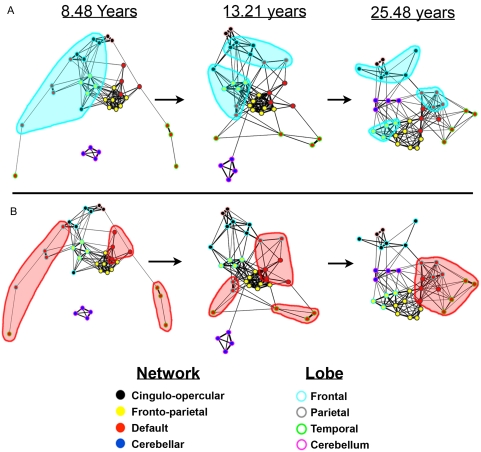
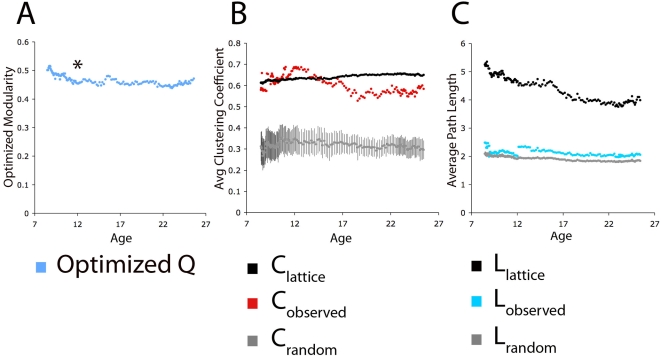
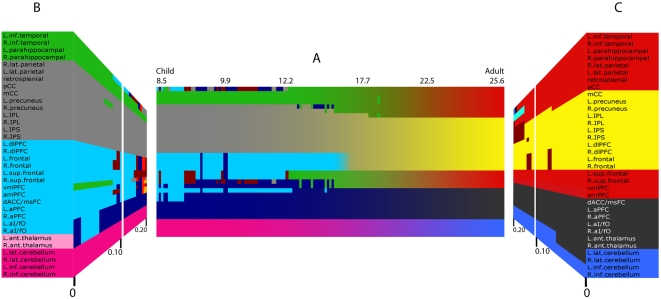
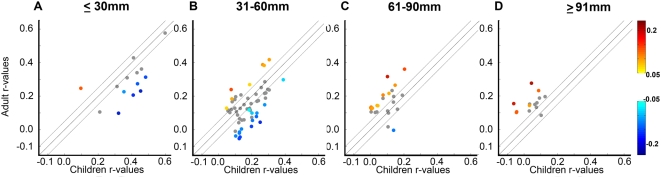
The mature human brain is organized into a collection of specialized functional networks that flexibly interact to support various cognitive functions. Studies of development often attempt to identify the organizing principles that guide the maturation of these functional networks. In this report, we combine resting state functional connectivity MRI (rs-fcMRI), graph analysis, community detection, and spring-embedding visualization techniques to analyze four separate networks defined in earlier studies. As we have previously reported, we find, across development, a trend toward 'segregation' (a general decrease in correlation strength) between regions close in anatomical space and 'integration' (an increased correlation strength) between selected regions distant in space. The generalization of these earlier trends across multiple networks suggests that this is a general developmental principle for changes in functional connectivity that would extend to large-scale graph theoretic analyses of large-scale brain networks. Communities in children are predominantly arranged by anatomical proximity, while communities in adults predominantly reflect functional relationships, as defined from adult fMRI studies. In sum, over development, the organization of multiple functional networks shifts from a local anatomical emphasis in children to a more "distributed" architecture in young adults. We argue that this "local to distributed" developmental characterization has important implications for understanding the development of neural systems underlying cognition. Further, graph metrics (e.g., clustering coefficients and average path lengths) are similar in child and adult graphs, with both showing "small-world"-like properties, while community detection by modularity optimization reveals stable communities within the graphs that are clearly different between young children and young adults. These observations suggest that early school age children and adults both have relatively efficient systems that may solve similar information processing problems in divergent ways.
Overview
The claims and statistics of this paper haven’t been checked yet.
Free: it reads the open-access text and checks the first 5 claims that cite a source we can check. Create a free account to check every claim.
Integrity signals
Registry
Cites
Statistics
Figures

Verification
Claims the paper makes
The claims and statistics of this paper haven’t been checked yet.
Free: it reads the open-access text and checks the first 5 claims that cite a source we can check. Create a free account to check every claim.
Claims other papers make about this one
Each is checked against this paper’s own text: does it say what the citing paper says it does?
The source backs part of the claim, not all of it — or backs it for a different population, condition or comparison.
In the citing paper
“Human neuroimaging studies have shown corresponding patterns of regional brain changes across development [12] with functional connectivity studies [13,14] suggesting refinement of local subcortical circuits precedes refinement of distal cortical ones.”
From Development of the emotional brain (2019) · cites this paper as [13]
Experimental — accuracy not yet measuredThe source backs part of the claim, not all of it — or backs it for a different population, condition or comparison.
In the citing paper
“A plausible temporal mechanism for the shifts in cognitive capacity from childhood to adulthood is a fine-tuning of circuits from subcortico-subcortical to cortico-subcortical to cortico-cortical consistent with postmortem animal studies of regional synaptic changes (Rakic et al., 1994) and functional connectivity studies (Fair et al., 2009) of refinement of local circuits preceding refinement of”
From Beyond simple models of adolescence to an integrated circuit-based account: A commentary (2016) · cites this paper as Fair et al., 2009
Experimental — accuracy not yet measuredThe source backs part of the claim, not all of it — or backs it for a different population, condition or comparison.
In the citing paper
“Evidence has converged on an executive attention network, with the anterior cingulate being the central structure, as the major network responsible for resolving cognitive conflicts (21, 22).”
From Multimodal imaging of the self-regulating developing brain (2012) · cites this paper as [21]
Experimental — accuracy not yet measuredThe source backs part of the claim, not all of it — or backs it for a different population, condition or comparison.
In the citing paper
“Prior work in fMRI using this modularity algorithm required that the researcher set an arbitrary threshold, or cutoff point, for what constitutes similarity between any two given individuals. Researchers would then arrive at thresholds by looking for consistency in community detection results at multiple thresholds (e.g., [2], [21], [22]).”
From Organizing Heterogeneous Samples Using Community Detection of GIMME-Derived Resting State Functional Networks (2014) · cites this paper as [22]
Experimental — accuracy not yet measuredThe source backs part of the claim, not all of it — or backs it for a different population, condition or comparison.
In the citing paper
“The functional network studies have consistently shown no statistical difference in global topological properties between children and adults”
From Developmental Changes in Organization of Structural Brain Networks (2013) · cites this paper as Fair et al. 2009
Experimental — accuracy not yet measured
5 more claims about this paper
Create a free account to see every claim other papers make about this one.
Self-check
Percentages, sums and reported differences re-computed from the paper’s own numbers.
The self-check needs the paper’s full text.
Citations
Cites
Controlling the False Discovery Rate: A Practical and Powerful Approach to Multiple Testing
Benjamini, Y., & Hochberg, Y. (1995) · Journal of the Royal Statistical Society Series B: Statistical Methodology · doi:10.1111/j.2517-6161.1995.tb02031.x · Cited by 109,482 · cited 1×
“To account for multiple comparisons the Benjamini and Hochberg False Discovery Rate [97] was applied.”
MethodCollective dynamics of ‘small-world’ networks
Watts, D. J., & Strogatz, S. H. (1998) · Nature · doi:10.1038/30918 · Cited by 43,060 · cited 1×
“long-range processes. It is this hybrid graph topology (i.e., high clustering coefficients and short path lengths) that matches the observed “small world” networks in many complex systems”
BackgroundModularity and community structure in networks
Newman, M. E. J. (2006) · Proceedings of the National Academy of Sciences · doi:10.1073/pnas.0601602103 · Cited by 12,256 · cited 5×
“As stated by Newman: ‘‘A good division of a graph into communities is not merely one in which there are few edges between communities; it is one in which there are fewer than expected edges between communities.”
BackgroundMethodInfluentialA default mode of brain function
Raichle, M. E., MacLeod, A. M., Snyder, A. Z., Powers, W. J., Gusnard, D. A., & Shulman, G. L. (2001) · Proceedings of the National Academy of Sciences · doi:10.1073/pnas.98.2.676 · Cited by 12,190 · cited 2×
“While the distinct function of the default mode network is often linked to internally directed mental activity [39], this notion continues to be debated [25,32,41–44].”
Functional connectivity in the motor cortex of resting human brain using echo‐planar mri
Biswal, B., Zerrin Yetkin, F., Haughton, V. M., & Hyde, J. S. (1995) · Magnetic Resonance in Medicine · doi:10.1002/mrm.1910340409 · Cited by 9,812
The human brain is intrinsically organized into dynamic, anticorrelated functional networks
Fox, M. D., Snyder, A. Z., Vincent, J. L., Corbetta, M., Van Essen, D. C., & Raichle, M. E. (2005) · Proceedings of the National Academy of Sciences · doi:10.1073/pnas.0504136102 · Cited by 8,553 · cited 3×
“Resting-state fcMRI analyses have repeatedly shown that these regions, along with associated medial temporal regions, are correlated at rest in adults [15,16,32,40].”
Distributed hierarchical processing in the primate cerebral cortex
Felleman, D. J., & Van Essen, D. C. (1991) · Cerebral Cortex · doi:10.1093/cercor/1.1.1 · Cited by 7,783 · cited 1×
“Increased myelination is thought to proceed from primary sensory and motor regions to association areas [68– 71], roughly following the hierarchical organization introduced by Felleman and Van Essen [72] (Note that while the most frequently referenced neuroanatomical changes that occur throughout development have been…”
BackgroundDissociable intrinsic connectivity networks for salience processing and executive control
Seeley, W. W., Menon, V., Schatzberg, A. F., Keller, J., Glover, G. H., Kenna, H., Reiss, A. L., & Greicius, M. D. (2007) · The Journal of Neuroscience · doi:10.1523/jneurosci.5587-06.2007 · Cited by 7,426 · cited 3×
“In addition, several previous findings using this technique [21,22,32] have now been replicated using continuous resting blocks [27,33,34] and other continuous resting data [89].”
BackgroundMethodFunctional connectivity in the resting brain: a network analysis of the default mode hypothesis
Greicius, M. D., Krasnow, B., Reiss, A. L., & Menon, V. (2003) · Proceedings of the National Academy of Sciences · doi:10.1073/pnas.0135058100 · Cited by 6,358 · cited 1×
“Resting-state fcMRI analyses have repeatedly shown that these regions, along with associated medial temporal regions, are correlated at rest in adults [15,16,32,40].”
BackgroundThe brainweb: phase synchronization and large-scale integration
Varela, F., Lachaux, J.-P., Rodriguez, E., & Martinerie, J. (2001) · Nature Reviews Neuroscience · doi:10.1038/35067550 · Cited by 4,761 · cited 1×
“In adults, spontaneous correlated activity has been suggested to be important for gating information flow [54], building internal representations [43,44,54], and maintaining mature network relationships [43,44,54].”
Background
Cited by
Items 701–800 of 1,003
Trevisi, G., Roujeau, T., & Duffau, H. (2016) · Child s Nervous System · doi:10.1007/s00381-016-3069-3 · Cited by 30
Development of effective connectivity in the core network for face perception
He, W., Garrido, M. I., Sowman, P. F., Brock, J., & Johnson, B. W. (2015) · Human Brain Mapping · doi:10.1002/hbm.22762 · Cited by 28
“From the small amount of work on cognitive brain development that has been done to date, a consensus has been reached that the establishment of functional brain networks undergoes a ‘local to distributed’ organising principle [Fair et al., 2009].”
BackgroundUnifying Inference of Meso-Scale Structures in Networks
Tunç, B., & Verma, R. (2015) · PLoS ONE · doi:10.1371/journal.pone.0143133 · Cited by 33
Brain network connectivity associated with anticipatory postural control in children and adults
Cignetti, F., Vaugoyeau, M., Decker, L. M., Grosbras, M., Girard, N. J., Chaix, Y., Péran, P., & Assaiante, C. (2018) · Cortex · doi:10.1016/j.cortex.2018.08.013 · Cited by 28
Lau, W. K., Leung, M.-K., & Zhang, R. (2020) · Progress in Neuro-Psychopharmacology and Biological Psychiatry · doi:10.1016/j.pnpbp.2020.109986 · Cited by 37
Functional Connectivity Predicts Individual Development of Inhibitory Control during Adolescence
Wang, H., Fan, L., Song, M., Liu, B., Wu, D., Jiang, R., Li, J., Li, A., Banaschewski, T., Bokde, A. L. W., et al. (2020) · Cerebral Cortex · doi:10.1093/cercor/bhaa383 · Cited by 29
Development of functional organization within the sensorimotor network across the perinatal period
Dall’Orso, S., Arichi, T., Fitzgibbon, S. P., Edwards, A. D., Burdet, E., & Muceli, S. (2022) · Human Brain Mapping · doi:10.1002/hbm.25785 · Cited by 29
“…are observed through infancy and into childhood, starting first within systems which relate to the processing related to primary sensory and motor functions, and later progressing to those though to subserve higher order functions (Cao et al., 2017; Fair et al., 2009; Huang et al., 2015).”
BackgroundPfister, H., Kaynig, V., Botha, C. P., Brückner, S., Dercksen, V. J., Hege, H., & Roerdink, J. B. T. M. (2014) · Mathematics and visualization · doi:10.1007/978-1-4471-6497-5_21 · Cited by 33
Neuroimaging signature of neuropsychiatric disorders
Worbe, Y. (2015) · Current Opinion in Neurology · doi:10.1097/wco.0000000000000220 · Cited by 32
Altered Integration of Structural Covariance Networks in Young Children With Type 1 Diabetes
Hosseini, S. M. H., Mazaika, P. K., Mauras, N., Buckingham, B. A., WEINZIMER, S. A., Tsalikian, E., White, N. H., & Reiss, A. L. (2016) · Human Brain Mapping · doi:10.1002/hbm.23293 · Cited by 29
“Previous data suggest that the organization of brain networks shifts from a local regularized arrangement in children to a more distributed and integrated network in adults, perhaps through development of long-range connections [Fair et al., 2009].”
BackgroundClark, D. B., Chung, T. A., Martin, C. S., Hasler, B. P., FitzGerald, D., Luna, B., Brown, S. A., Tapert, S. F., Brumback, T., Cummins, K. M., et al. (2017) · Frontiers in Behavioral Neuroscience · doi:10.3389/fnbeh.2017.00223 · Cited by 35
“The examination of network based brain activation patterns, using techniques such as resting state MRI, may show relationships between functional brain development and executive functioning difficulties (Fair et al., 2009; Casey et al., 2016).”
MethodNetwork-based approaches to examining stress in the adolescent brain
Ho, T. C., Dennis, E. L., Thompson, P. M., & Gotlib, I. H. (2018) · Neurobiology of Stress · doi:10.1016/j.ynstr.2018.05.002 · Cited by 28
Jiang, P., Vuontela, V., Tokariev, M., Lin, H., Aronen, E. T., Ma, Y., & Carlson, S. (2018) · PLoS ONE · doi:10.1371/journal.pone.0205690 · Cited by 33
“The finding of an adult-like network organization in 7-11-yearold children is in accordance with previous resting state fMRI studies using graph theory and showing that children older than seven years have similar resting state brain networks as adults with small-world clustering and average path lengths, suggesting t…”
BackgroundMethodResultIncreased segregation of functional networks in developing brains
He, W., Sowman, P. F., Brock, J., Etchell, A. C., Stam, C. J., & Hillebrand, A. (2019) · NeuroImage · doi:10.1016/j.neuroimage.2019.06.055 · Cited by 32
Mapping working memory-specific dysfunction using a transdiagnostic approach
Yaple, Z. A., Tolomeo, S., & Yu, R. (2021) · NeuroImage: Clinical · doi:10.1016/j.nicl.2021.102747 · Cited by 26
“…the frontoparietal executive network specifically operates as a rapid adaptive control system (Dosenbach et al., 2007, 2008; Velanova et al., 2008; Fair et al., 2009; Gratton et al., 2017), which can be distinguished into a left and right frontoparietal network operating during the pre-and…”
InfluentialEvolving brain network dynamics in early childhood: Insights from modular graph metrics
Song, Z., Jiang, Z., Zhang, Z., Wang, Y., Chen, Y., Tang, X., & Li, H. (2024) · NeuroImage · doi:10.1016/j.neuroimage.2024.120740 · Cited by 32
“…(dFC) is a powerful tool for investigating developmental patterns in children and adolescents, with a focus on network graph theory, dFC patterns, and modular analysis (Fan et al., 2021, Uddin et al., 2011, Fair et al., 2007, Dosenbach et al., 2010, Fair et al., 2009, Lei et al., 2022).”
BackgroundMethodResultGadElkarim, J., Schonfeld, D., Ajilore, O., Zhan, L., Zhang, A. F., Feusner, J. D., Thompson, P. M., Simon, T. J., Kumar, M. A., & Leow, A. (2012) · Lecture notes in computer science · doi:10.1007/978-3-642-33418-4_25 · Cited by 29
“Studying the structural organization of the brain communities has lately shed light on alterations related to aging [6, 7] as well as neuropsychiatric disorders such as schizophrenia [8-12].”
BackgroundNewsome, M. R., Scheibel, R. S., Mayer, A. R., Chu, Z. D., Wilde, E. A., Hanten, G. R., Steinberg, J. L., Lin, X., Li, X., Merkley, T. L., et al. (2013) · Journal of the International Neuropsychological Society · doi:10.1017/s1355617713000817 · Cited by 29
Steininger, S. C., Liu, X., Gietl, A. F., Wyss, M., Schreiner, S. J., Gruber, E., Treyer, V., Kälin, A. M., Leh, S. E., Buck, A., et al. (2014) · Frontiers in Aging Neuroscience · doi:10.3389/fnagi.2014.00052 · Cited by 27
“Processing of cognitive tasks has been shown to be associated with distinct neuronal systems whose activity is reflected by several functional networks of spatially distant brain regions, linked by synchronous BOLD activity both under challenge as well as at rest (Biswal et al., 1995; Woodward et al., 2006; Buckner et…”
BackgroundShang, J., Fisher, P., Bäuml, J., Daamen, M., Baumann, N., Zimmer, C., Bartmann, P., Boecker, H., Wolke, D., Sorg, C., et al. (2019) · Human Brain Mapping · doi:10.1002/hbm.24698 · Cited by 27
“, 2016), which may suggest early functional compensation that does not persist into adulthood or secondary disruption to development of functional networks (Fair et al., 2009).”
BackgroundGu, S., Xia, C. H., Ćirić, R., Moore, T. M., Gur, R. C., Gur, R. E., Satterthwaite, T. D., & Bassett, D. S. (2019) · Cerebral Cortex · doi:10.1093/cercor/bhz150 · Cited by 27
“Importantly, this finding is consistent with prior observations of increasing functional segregation of cognitive systems with age (Fair et al. 2009; Gu et al. 2015).”
ResultThe emergence of a theta social brain network during infancy
van der Velde, B., White, T. J. H., & Kemner, C. (2021) · NeuroImage · doi:10.1016/j.neuroimage.2021.118298 · Cited by 37
“This optimization process from a localized to an integrated brain network is already well underway during infancy (Fair et al., 2009; Huang et al., 2015; Tóth et al., 2017), possibly allowing for more complex behaviors to arise over the course of the first year of life.”
BackgroundSon, J. J., Schantell, M. D., Picci, G., Wang, Y., Stephen, J. M., Calhoun, V. D., Doucet, G. E., Taylor, B. K., & Wilson, T. W. (2023) · Developmental Cognitive Neuroscience · doi:10.1016/j.dcn.2023.101216 · Cited by 31
“Resting state networks are already apparent in the infant brain and the DMN is present but weakly connected in young children, with increasing within network connectivity in older children and even greater within network connectivity in adults (de Bie et al., 2012; Fair et al., 2009).”
Michael, C., Tillem, S., Sripada, C., Burt, S. A., Klump, K. L., & Hyde, L. W. (2023) · Developmental Cognitive Neuroscience · doi:10.1016/j.dcn.2023.101316 · Cited by 31
“Though our overall age-related findings are consistent with some studies, other research suggests that functional network segregation and small-worldness across the entire brain may be predominantly established prior to adolescence (Fair et al., 2009; Marek et al., 2015).”
ResultKrishnan, S., Leech, R., Mercure, E., Lloyd‐Fox, S., & Dick, F. (2014) · Cerebral Cortex · doi:10.1093/cercor/bhu120 · Cited by 31
“In addition, connections between the right frontal cortex and the precuneus appear to weaken, whereas those between the right frontal cortex and the anterior insula/frontal operculum strengthen (Fair et al. 2009).”
A Hybrid CPU-GPU Accelerated Framework for Fast Mapping of High-Resolution Human Brain Connectome
Wang, Y., Du, H., Xia, M., Ren, L., Xu, M., Xie, T., Gong, G., Xu, N., Yang, H., & He, Y. (2013) · PLoS ONE · doi:10.1371/journal.pone.0062789 · Cited by 28
Network Analysis: Applications for the Developing Brain
Chu, C. J., Kramer, M., Bianchi, M. T., Caviness, V. S., & Cash, S. S. (2011) · Journal of Child Neurology · doi:10.1177/0883073810385345 · Cited by 29
“The suggested decrease in long-distance connections over development appears to contrast with myelination patterns and EEG(68-70) and resting state functional connectivity MRI work above.(86,87,89) This discrepancy highlights the challenges in comparing functional networks defined by different measures of neuronal act…”
BackgroundContracted functional connectivity profiles in autism
Weber, C. F., Kebets, V., Benkarim, O. M., Larivière, S., Wang, Y., Ngo, A., Jiang, H., Chai, X. J., Park, B., Milham, M. P., et al. (2024) · Molecular Autism · doi:10.1186/s13229-024-00616-2 · Cited by 32
“Neuroimaging correlates of the typically developing connectome indicate marked shifts from local towards more distributed network patterns connections, while facilitating signaling across lobes and hemispheres [111, 112].”
BackgroundTrajectories of human brain functional connectome maturation across the birth transition
Ji, L., Menu, I., Majbri, A., Bhatia, T., Trentacosta, C. J., & Thomason, M. E. (2024) · PLoS Biology · doi:10.1371/journal.pbio.3002909 · Cited by 32
Witt, S. T., & Stevens, M. C. G. (2013) · Brain Imaging and Behavior · doi:10.1007/s11682-013-9224-5 · Cited by 26
“…evidence that while connectivity among more functionally disparate regions is still maturing during adolescence in other paradigmatic contexts (Fair et al. 2007, 2009), connectivity between frontal and more lower-level, primary sensory and motor regions appears to be largely in place by…”
Sparse Representation of Brain Aging: Extracting Covariance Patterns from Structural MRI
Su, L., Wang, L., Chen, F., Shen, H., Li, B., & Hu, D. (2012) · PLoS ONE · doi:10.1371/journal.pone.0036147 · Cited by 27
“In addition, the age-related shrinkage of brain regions is selective, and these regions can be functionally connected, which may underlie various cognitive functions [1,25,48].”
BackgroundFarah, R., & Horowitz‐Kraus, T. (2019) · Brain Connectivity · doi:10.1089/brain.2018.0625 · Cited by 26
“An additional study by the same group showed that some of the short-range functional connections (in the same network) increased in strength over aging (Fair et al., 2009).”
BackgroundLevman, J. E. D., MacDonald, P., Rowley, S., Stewart, N., Lim, A., Ewenson, B., Galaburda, A. M., & Takahashi, E. (2019) · Frontiers in Human Neuroscience · doi:10.3389/fnhum.2019.00075 · Cited by 30
“…is particularly challenging to assess imaging features of autism in a pediatric population, because of the structural changes between children and adults (Reiss et al., 1996; Casey et al., 1997; Thomas et al., 2001; Bunge et al., 2002; Gogtay et al., 2004; Fair et al., 2009; Supekar et al., 2009).”
BackgroundAdolescent sex differences in cortico-subcortical functional connectivity during response inhibition
Chung, Y. S., Calhoun, V. D., & Stevens, M. C. G. (2019) · Cognitive Affective & Behavioral Neuroscience · doi:10.3758/s13415-019-00718-y · Cited by 28
“…integration also may be reflected in a shift in the predominance of local to distributed but stronger strengths of circuit engagement from children to young adults with adolescents having intermediate changes (Cao et al., 2014; Fair et al., 2009; Fair et al., 2007; Supekar, Musen, & Menon, 2009).”
BackgroundEhlers, C. L., Wills, D. N., Desikan, A., Phillips, E., & Havstad, J. W. (2014) · Developmental Neuroscience · doi:10.1159/000358484 · Cited by 28
Functional network analysis reveals differences in the semantic priming task
Schinkel, S., Zamora‐López, G., Dimigen, O., Sommer, W., & Kurths, J. (2011) · Journal of Neuroscience Methods · doi:10.1016/j.jneumeth.2011.02.018 · Cited by 27
“In some studies a threshold is fixed and applied to all the networks (e.g. Fair et al., 2009) and in other studies the threshold is adapted such that all resulting functional networks all have the same number of links (e.g. Schindler et al., 2008).”
Alterations in resting-state local functional connectivity in obsessive-compulsive disorder
Hao, H., Chen, C., Mao, W., Xia, W., Yi, Z., Zhao, P., Pan, P., & Dai, Z. (2018) · Journal of Affective Disorders · doi:10.1016/j.jad.2018.10.112 · Cited by 28
Määttä, S., Säïsänen, L., Kallioniemi, E., Lakka, T. A., Lintu, N., Haapala, E. A., Koskenkorva, P., Niskanen, E. I., Ferreri, F., & Könönen, M. (2019) · Human Brain Mapping · doi:10.1002/hbm.24525 · Cited by 23
“In general, the developmental modifications in RS networks are characterized by a decrease in short-range connectivity and, conversely, an increase in longrange connectivity with development (Fair et al., 2007; Fair et al., 2009).”
BackgroundFair, D. A., Choi, A. H., Dosenbach, Y. B. L., Coalson, R. S., Miezin, F. M., Petersen, S. E., & Schlaggar, B. L. (2009) · Brain and Language · doi:10.1016/j.bandl.2009.09.001 · Cited by 27
Self-citationResting-State Functional Connectivity and Cognitive Impairment in Children with Perinatal Stroke
Ilves, N., Ilves, P., Laugesaar, R., Juurmaa, J., Männamaa, M., Lõo, S., Loorits, D., Tomberg, T., Kolk, A., Talvik, I., et al. (2016) · Neural Plasticity · doi:10.1155/2016/2306406 · Cited by 31
“However, there exist differences in functional connectivity in global RSN between infants and young children, on one hand, and adults, on the other, which are due to brain developmental progression in regional and network specialization [28, 29].”
BackgroundInfluentialDevelopment of segregation and integration of functional connectomes during the first 1,000 days
Li, Q., Xia, M., Zeng, D., Xu, Y., Sun, L., Liang, X., Xu, Z., Zhao, T., Liao, X., Yuan, H., et al. (2024) · Cell Reports · doi:10.1016/j.celrep.2024.114168 · Cited by 46
Cortical reorganisation of cerebral networks after childhood stroke: impact on outcome
Kornfeld, S., Rodríguez, J. A. D., Everts, R., Kaelin‐Lang, A., Wiest, R., Weisstanner, C., Mordasini, P., Steinlin, M. I., & Grunt, S. (2015) · BMC Neurology · doi:10.1186/s12883-015-0309-1 · Cited by 28
Ma, Z., Lu, B., Li, X., Mei, T., Guo, Y., Yang, L., Wang, H., Tang, X., Ji, Z.-Z., Liu, J., et al. (2021) · Autism · doi:10.1177/13623613211041904 · Cited by 28
“, 2015) in the framework of integration and dissociation theory for the developmental processes of networks (Fair et al., 2009; Power, Fair, Schlaggar, & Petersen, 2010).”
Echtermeyer, C., Han, C. E., Rotarska-Jagiela, A., Mohr, H. M., Uhlhaas, P. J., & Kaiser, M. (2011) · Frontiers in Neuroinformatics · doi:10.3389/fninf.2011.00010 · Cited by 25
“…y/o, 2 y/o, and adult), ↑ global efficiency, ↑ cost efficiency, a peak at 2 y/o in local efficiency and modularity, ↑ size of largest component in modules, changes in module assignment, and participation coefficient Fair et al. (2009) In rsFC (7–31 y/o), no significant changes in optimized…”
BackgroundInfluentialMultivariate analyses applied to fetal, neonatal and pediatric MRI of neurodevelopmental disorders
Levman, J. E. D., & Takahashi, E. (2015) · NeuroImage Clinical · doi:10.1016/j.nicl.2015.09.017 · Cited by 30
How Does Experience Shape Early Development? Considering the Role of Top-Down Mechanisms
Emberson, L. L. (2017) · Advances in child development and behavior · doi:10.1016/bs.acdb.2016.10.001 · Cited by 26
“Even though there is a clear developmental bias toward local, feedforward connections early in development compared with adults, and the development of global connections occurs well into adolescence (Fair et al., 2009), this does not mean that young infants cannot use their relatively weak global connections to exert…”
BackgroundDomhoff, G. W., & Schneider, A. (2018) · Dreaming · doi:10.1037/drm0000080 · Cited by 38
“…about the gradual sequential unfolding of cognitive and neural development, but it cannot be put forward in the case of a social simulation theory because there is no claim that everyday social interactions are somehow traumatic (Domhoff, 2018, Chapters 4–5; Fair et al., 2008, 2009; Nelson, 2005).”
BackgroundNetwork specialization during adolescence: Hippocampal effective connectivity in boys and girls
Riley, J. D., Chen, E. E., Winsell, J., Davis, E. P., Glynn, L. M., Baram, T. Z., Sandman, C. A., Small, S. L., & Solodkin, A. (2018) · NeuroImage · doi:10.1016/j.neuroimage.2018.04.013 · Cited by 24
“These findings are consistent with previous work that shows a progressive shift from local toward more distributed, long-range processing over the transition from childhood to adolescence (Fair et al., 2009).”
Far and wide: Associations between childhood socio-economic status and brain connectomics
Johnson, A., Bathelt, J., Akarca, D., Crickmore, G., & Astle, D. E. (2020) · Developmental Cognitive Neuroscience · doi:10.1016/j.dcn.2020.100888 · Cited by 30
“Indeed, given that the brain is organized into highly connected distributed networks (Cao et al., 2014; Fair et al., 2009; Richmond et al., 2016) it is likely that the impact of childhood environment will not be isolated to particular localized brain areas or circuits (Raizada and Kishiyama, 2010;…”
BackgroundBerchicci, M., Tamburro, G., & Comani, S. (2015) · Frontiers in Human Neuroscience · doi:10.3389/fnhum.2015.00039 · Cited by 29
“, and Fox, N. A. (2014). The infant EEG mu rhythm: methodological considerations and best practices.”
BackgroundThomson, P., Malpas, C. B., Vijayakumar, N., Johnson, K. A., Anderson, V. A., Efron, D., Hazell, P., & Silk, T. J. (2022) · Cognitive Affective & Behavioral Neuroscience · doi:10.3758/s13415-022-01017-9 · Cited by 25
Age-associated changes in rich-club organisation in autistic and neurotypical human brains
Watanabe, T., & Rees, G. E. (2015) · Scientific Reports · doi:10.1038/srep16152 · Cited by 23
Brain activations associated with scientific reasoning: a literature review
Nenciovici, L., Allaire‐Duquette, G., & Masson, S. (2018) · Cognitive Processing · doi:10.1007/s10339-018-0896-z · Cited by 25
Rosen, D. K., Price, R. B., & Silk, J. S. (2019) · Journal of Anxiety Disorders · doi:10.1016/j.janxdis.2019.04.003 · Cited by 31
Corr, R., Glier, S., Bizzell, J., Pelletier‐Baldelli, A., Campbell, A., Killian-Farrell, C., & Belger, A. (2022) · Biological Psychiatry Cognitive Neuroscience and Neuroimaging · doi:10.1016/j.bpsc.2022.03.003 · Cited by 32
“Furthermore, even though prior adolescent work has used these seeds (42,62,63), coordinates were based on adult research, and ROIs derived specifically from adolescent studies may yield different results (64).”
BackgroundCuriouser and curiouser: genetic disorders of cortical specialization
Mitchell, K. J. (2011) · Current Opinion in Genetics & Development · doi:10.1016/j.gde.2010.12.003 · Cited by 24
Gaffrey, M. S., Luby, J. L., & Barch, D. M. (2012) · Neurobiology of Disease · doi:10.1016/j.nbd.2012.06.012 · Cited by 25
Callous-Unemotional Traits and Developmental Pathways to the Disruptive Behavior Disorders
Frick, P. J., Blair, J., & Castellanos, F. X. (2013) · Springer eBooks · doi:10.1007/978-1-4614-7557-6_4 · Cited by 29
Yang, J., & Lee, J. (2016) · Autism · doi:10.1177/1362361316667056 · Cited by 27
“It is suggested that the intrinsic FC may reflect the functional specialization of the brain, which is formed by frequent co-activation during cognitive processes (Fair et al., 2007, 2009).”
BackgroundWang, X., Zhu, Q., Song, Y., & Liu, J. (2017) · Cerebral Cortex · doi:10.1093/cercor/bhx217 · Cited by 24
“Moreover, the behavioral relevance of the FC between the pSTS and other core face regions implies that the strengthened FC may be the remnant of their collaborative experience in recognizing faces during development (Fair et al. 2008, 2009; Joseph et al. 2012).”
BackgroundAssessing the robustness of cluster solutions obtained from sparse count matrices.
Gates, K. M., Fisher, Z. F., Arizmendi, C., Henry, T. R., Duffy, K. A., & Mucha, P. J. (2019) · Psychological Methods · doi:10.1037/met0000204 · Cited by 27
Dependence of connectivity on geometric distance in brain networks
Perinelli, A., Tabarelli, D., Miniussi, C., & Ricci, L. (2019) · Scientific Reports · doi:10.1038/s41598-019-50106-2 · Cited by 31
Chen, J.-Z., Tam, A., Kebets, V., Orban, C., Ooi, L. Q. R., Marek, S. A., Dosenbach, N. U. F., Eickhoff, S., Bzdok, D., Holmes, A., et al. (2020) · bioRxiv · doi:10.1101/2020.06.24.168724 · Cited by 24
“Whole-brain neurodevelopmental studies have shown that functional networks become more distributed throughout adolescence (Fair et al. 2009, Supekar et al. 2009, Power et al. 2010).”
BackgroundSelf-citationOn consciousness, resting state fMRI, and neurodynamics
Lundervold, A. (2010) · Nonlinear Biomedical Physics · doi:10.1186/1753-4631-4-s1-s9 · Cited by 24
“2), has therefore proven to be a useful probe for functional alterations in the brain as a consequence of changes in brain state, disease processes, neurodevelopment and aging, pharmacological interventions, and genetics [62-71].”
BackgroundProspective memory in children with attention deficit hyperactivity disorder: a review
Talbot, K.-D. S., Müller, U., & Kerns, K. A. (2017) · The Clinical Neuropsychologist · doi:10.1080/13854046.2017.1393563 · Cited by 24
“For example, studies involving individuals with ADHD have found evidence of atypical functional connections within the Default Mode Network (DMN) and between the DMN and other networks, independent of developmental stage (Fair et al., 2009, 2010; Posner, Park, & Wang, 2014; Tomasi & Volkov, 2012).”
BackgroundO’Hearn, K. M., & Lynn, A. (2023) · Frontiers in Human Neuroscience · doi:10.3389/fnhum.2022.957375 · Cited by 29
Dynamics of the Anatomical Changes That Occur in the Brains of Schoolchildren as They Learn to Read
Simon, G., Lanoë, C., Poirel, N., Rossi, S., Lubin, A., Pineau, A., & Houdé, O. (2013) · PLoS ONE · doi:10.1371/journal.pone.0081789 · Cited by 34
Executive attention impairment in adolescents with schizophrenia who have used cannabis
Epstein, K. A., & Kumra, S. (2014) · Schizophrenia Research · doi:10.1016/j.schres.2014.04.035 · Cited by 26
“As an exploratory aim, we examined whether performance on the executive attention component of the ANT was associated with surface area in the anterior cingulate cortex, the central structure of the executive attention network (Fair et al., 2009; Posner, 2012).”
MethodConnectome and Maturation Profiles of the Developing Mouse Brain Using Diffusion Tensor Imaging
Ingalhalikar, M., Parker, D., Ghanbari, Y., Smith, A. C. W., Hua, K., Mori, S., Abel, T. G., Davatzikos, C. A., & Verma, R. (2014) · Cerebral Cortex · doi:10.1093/cercor/bhu068 · Cited by 24
“In young mice, the brain network was relatively nonmodular; however with maturation, the modularity increased rapidly till it plateaued (Fair et al. 2009).”
BackgroundBrain Cortical Thickness Differences in Adolescent Females with Substance Use Disorders
Boulos, P. K., Dalwani, M. S., Tanabe, J., Mikulich‐Gilbertson, S. K., Banich, M. T., Crowley, T. J., & Sakai, J. T. (2016) · PLoS ONE · doi:10.1371/journal.pone.0152983 · Cited by 25
“Connectivity and activation in DMN regions are seen in children as young as 8 years of age, and adolescence represents a time of DMNmaturation [89].”
BackgroundBodmer, B., Mückschel, M., Roessner, V., & Beste, C. (2017) · Brain Structure and Function · doi:10.1007/s00429-017-1589-6 · Cited by 28
Gilchrist, C. P., Thompson, D. K., Kelly, C. E., Beare, R. J., Adamson, C. L., Dhollander, T., Lee, K. J., Treyvaud, K., Matthews, L. G., Tolcos, M., et al. (2021) · Biological Psychiatry Cognitive Neuroscience and Neuroimaging · doi:10.1016/j.bpsc.2021.10.003 · Cited by 24
Large-Scale Cortical Functional Organization and Speech Perception across the Lifespan
Sheppard, J. P., Wang, J.-P., & Wong, P. C. M. (2011) · PLoS ONE · doi:10.1371/journal.pone.0016510 · Cited by 25
Baghernezhad, S., & Daliri, M. R. (2024) · GeroScience · doi:10.1007/s11357-024-01128-w · Cited by 27
A function-based mapping of sensory integration along the cortical hierarchy
Wei, W., Benn, R. A., Scholz, R., Shevchenko, V., Klatzmann, U., Alberti, F., Chiou, R. Y.-C., Wassermann, D., Vanderwal, T., Smallwood, J., et al. (2024) · Communications Biology · doi:10.1038/s42003-024-07224-z · Cited by 32
Shafiei, G., Esper, N. B., Hoffmann, M. S., Ai, L., Chen, A. A., Cluce, J., Covitz, S. C., Giavasis, S., Lane, C., Mehta, K. P., et al. (2025) · Neuron · doi:10.1016/j.neuron.2025.08.026 · Cited by 54
Rajasilta, O., Häkkinen, S., Björnsdotter, M., Scheinin, N. M., Lehtola, S. J., Saunavaara, J. P., Parkkola, R. K., Lähdesmäki, T., Karlsson, L., Karlsson, H., et al. (2021) · Scientific Reports · doi:10.1038/s41598-021-98574-9 · Cited by 27
The impact of pubertal DHEA on the development of visuospatial oscillatory dynamics
Fung, M. H., Rahman, R. L., Taylor, B. K., Frenzel, M. R., Eastman, J. A., Wang, Y., Calhoun, V. D., Stephen, J. M., & Wilson, T. W. (2022) · Human Brain Mapping · doi:10.1002/hbm.25991 · Cited by 22
“…developmental changes in connectivity between bilateral prefrontal regions observed in the current study may suggest neural efficiency is improving at the network-scale, as functional networks shift from local to a more distributed organization over the course of development (Fair et al., 2009).”
BackgroundPolyneuro risk scores capture widely distributed connectivity patterns of cognition
Byington, N., Grimsrud, G. J., Mooney, M. A., Cordova, M., Doyle, O. J., Hermosillo, R. J. M., Earl, E., Houghton, A., Conan, G. M., Hendrickson, T. J., et al. (2023) · Developmental Cognitive Neuroscience · doi:10.1016/j.dcn.2023.101231 · Cited by 24
Self-citationA quantitative neural network approach to understanding aging phenotypes
Ash, J. A., & Rapp, P. R. (2014) · Ageing Research Reviews · doi:10.1016/j.arr.2014.02.001 · Cited by 20
Adolf, D., Weston, S., Baecke, S., Luchtmann, M., Bernarding, J., & Kropf, S. (2014) · Frontiers in Neuroinformatics · doi:10.3389/fninf.2014.00072 · Cited by 25
“Even without any specific stimulus, however, there is always some neuronal activity in the so-called default network (Fair et al., 2009).”
BackgroundKaushal, M., Oni-Orisan, A., Chen, G., Li, W., Leschke, J., Ward, D. B., Kalinosky, B. T., Budde, M. D., Schmit, B. D., Li, S., et al. (2017) · Brain Connectivity · doi:10.1089/brain.2016.0468 · Cited by 23
“…been proven by an increasing number of rs-fMRI studies to probe potential mechanisms involved in normal and diseased brain (Buckner et al., 2009; Fair et al., 2007, 2008, 2009; Gong et al., 2010; He et al., 2008; Liu et al., 2008; Micheloyannis et al., 2009; Stam et al., 2007; Supekar et al.,…”
Richards, T. L., Berninger, V. W., Yagle, K. J., Abbott, R. D., & Peterson, D. (2018) · Cogent Psychology · doi:10.1080/23311908.2018.1424680 · Cited by 24
“…Chen, & Evans, 2007; He, Chen, et al., 2009; Salvador et al., 2005); and (e) examination of the potential mechanisms involved in normal development (Fair et al., 2007, 2008, 2009; Supekar, Musen, & Menon, 2009), aging (Achard & Bullmore, 2007; Gong et al., 2009; Meunier, Achard, Morcom, &…”
Godfrey, J. R., Diaz, M. P., Pincus, M., Kovacs-Balint, Z., Feczko, E., Earl, E., Miranda-Domínguez, Ó., Fair, D. A., Sánchez, M. M., Wilson, M. E., et al. (2018) · Psychoneuroendocrinology · doi:10.1016/j.psyneuen.2018.03.008 · Cited by 21
“…in 6 directions, the global whole-brain signal, the ventricular and white matter functional signal (averaged from a ventricle- and a white matter mask, respectively), and their first-order derivatives (Fair et al., 2009; Fair et al., 2007; Fair et al., 2012; Miranda-Dominguez et al., 2014).”
BackgroundMethodInfluentialSelf-citationWestfall, D. R., Anteraper, S. A., Chaddock‐Heyman, L., Drollette, E. S., Raine, L. B., Whitfield, S., Kramer, A. F., & Hillman, C. H. (2020) · Journal of Clinical Medicine · doi:10.3390/jcm9103198 · Cited by 20
“Resting-state networks throughout development show a pattern of ‘segregation’ or decrease in functional connectivity between anatomically close regions and ‘integration’ or increase in functional connectivity across selected regions anatomically distant [38].”
BackgroundGender modulates the development of theta event related oscillations in adolescents and young adults
Chorlian, D. B., Rangaswamy, M., Manz, N., Kamarajan, C., Pandey, A. K., Edenberg, H. J., Kuperman, S., & Porjesz, B. (2015) · Behavioural Brain Research · doi:10.1016/j.bbr.2015.06.020 · Cited by 25
Motion correction and volumetric reconstruction for fetal functional magnetic resonance imaging data
Sobotka, D., Ebner, M., Schwartz, E., Nenning, K.-H., Taymourtash, A., Vercauteren, T., Ourselin, S., Kasprian, G., Prayer, D., Langs, G., et al. (2022) · NeuroImage · doi:10.1016/j.neuroimage.2022.119213 · Cited by 20
“While functional connectivity networks are well investigated in the adult’s [12, 13, 14, 15] and child’s brain [16, 17, 18, 19], recently new research for the fetal brain [20, 21, 22, 23, 24, 25, 26], preterm brain [27, 28] and neonatal brain [29] evolved.”
BackgroundNeural connectivity patterns explain why adolescents perceive the world as moving slow
Ghorbani, F., Zhou, X., Talebi, N., Roessner, V., Hommel, B., Prochnow, A., & Beste, C. (2024) · Communications Biology · doi:10.1038/s42003-024-06439-4 · Cited by 23
“Overall, there were 518 intervals with no changes, 278 intervals with only one change, 106 intervals with two changes, 52 intervals containing three changes, 29 intervals with four changes, and 4 intervals with fi ve situational changes.”
Yang, H., Wu, G., Li, Y., Xu, X., Cong, J., Xu, H., Ma, Y., Yang, L., Chen, R., Pines, A. R., et al. (2025) · Proceedings of the National Academy of Sciences · doi:10.1073/pnas.2420228122 · Cited by 27
“Previous studies have highlighted a ubiquitous decline in short - range FC strength and an increase in long - range connectivity strength during youth ( 20 , 61 ), both of which may contribute to the observed reduction in individual variability of FC among association networks.”
Matthews, M., & Fair, D. A. (2014) · Journal of Child Psychology and Psychiatry · doi:10.1111/jcpp.12335 · Cited by 21
Self-citationThe impact of long-term abacus training on modular properties of functional brain network
Xie, Y., Weng, J., Wang, C., Xu, T., Peng, X., & Chen, F. (2018) · NeuroImage · doi:10.1016/j.neuroimage.2018.08.057 · Cited by 22
“The shift in likely enhances functional connectivity between frequently involved brain regions during repeated AMC practice (Fair et al., 2009).”
Zoratto, F., Altabella, L., Tistarelli, N., Laviola, G., Adriani, W., & Canese, R. (2018) · Frontiers in Behavioral Neuroscience · doi:10.3389/fnbeh.2018.00208 · Cited by 21
“As a rule, those networks that mediate higher cognitive processes appear the last to mature (Giedd, 2008; Fair et al., 2009; Ernst et al., 2015).”
BackgroundGao, S., Ming, Y., Wang, J., Gu, Y., Ni, S., Lu, S., Zhang, R., Sun, J., Zhang, N., & Xu, X. (2020) · Frontiers in Psychiatry · doi:10.3389/fpsyt.2020.580570 · Cited by 23
Xu, F., Liu, M., Kim, S. Y., Ge, X., Zhang, Z., Tang, Y., Lin, X., Toga, A. W., Liu, S., & Kim, H. (2021) · Cerebral Cortex · doi:10.1093/cercor/bhab123 · Cited by 19
Reprint of: Mapping connectivity in the developing brain
Dennis, E. L., & Thompson, P. M. (2013) · International Journal of Developmental Neuroscience · doi:10.1016/j.ijdevneu.2013.11.005 · Cited by 22
Scariati, E., Schaer, M., Karahanoğlu, F. I., Schneider, M., Richiardi, J., Debbané, M., Ville, D. V. D., & Eliez, S. (2016) · Cortex · doi:10.1016/j.cortex.2016.06.004 · Cited by 20
“Studies performed in healthy populations consistently show the existence of three major modules: a posterior visual module, a central module and an anterior module (Fair et al., 2009; He et al., 2009; Meunier et al., 2009, Meunier et al., 2010).”
Storti, S. F., Galazzo, I. B., Montemezzi, S., Menegaz, G., & Pizzini, F. B. (2017) · Human Brain Mapping · doi:10.1002/hbm.23804 · Cited by 21
“To avoid the issue of arbitrary thresholding and given the lack of agreement in how treating negative correlations [Achard and Bullmore, 2007; Fair et al., 2009], our network analyses were conducted on fully connected graphs [Storti et al., 2016] with only positive weights.”
MethodToward a Neuroscience of Adult Cognitive Developmental Theory
Girgis, F., Lee, D. J., Goodarzi, A., & Ditterich, J. (2018) · Frontiers in Neuroscience · doi:10.3389/fnins.2018.00004 · Cited by 31
“As can be expected, these cognitive modules undergo significant changes throughout youth (Power et al., 2010; Satterthwaite et al., 2013) and adulthood (Fair et al., 2009; Kelly et al., 2009; Supekar et al., 2009; Tian and Ma, 2017).”
BackgroundMaturational Changes in Human Dorsal and Ventral Visual Networks
Ciesielski, K. T. R., Stern, M. E., Diamond, A. D., Khan, S., Busa, E., Goldsmith, T. E., van der Kouwe, A. J. W., Fischl, B. R., & Rosen, B. R. (2019) · Cerebral Cortex · doi:10.1093/cercor/bhz053 · Cited by 24
Resting‐state networks of the neonate brain identified using independent component analysis
Rajasilta, O., Tuulari, J. J., Björnsdotter, M., Scheinin, N. M., Lehtola, S. J., Saunavaara, J. P., Häkkinen, S., Merisaari, H., Parkkola, R. K., Lähdesmäki, T., et al. (2020) · Developmental Neurobiology · doi:10.1002/dneu.22742 · Cited by 28
“…in overall RSN topology and connectivity are accompanied by formidable reconfiguration of the functional cortical organization during development (Fair et al., 2009; Fransson, Aden, Blennow, & Lagercrantz, 2011; Gao, Alcauter, Elton, et al., 2015; Gao, Alcauter, Smith, et al., 2015; Zhang et …”
Background
Metadata
- Authors
- Fair, D. A., Cohen, A. L., Power, J. D., Dosenbach, N. U. F., Church, J. A., Miezin, F. M., Schlaggar, B. L., & Petersen, S. E.
- Affiliations
- Oregon Health & Science University (US)
- Washington University in St. Louis (US)
- Corresponding author
- Fair, Damien A.
- Petersen, Steven E.
- ORCID
- Venue
- PLoS Computational Biology
- Publisher
- Public Library of Science (PLoS)
- Published
- 2009-05-01
- Volume
- 5
- Issue
- 5
- Pages
- e1000381
- ISSN
- 1553-734X (ISSN-L)
- 1553-7358
- PMC
- PMC2671306
- OpenAlex
- W2159549823
- Cited by
- 1,530
- References
- 104
- Citations by year
- 2026: 69 · 2025: 78 · 2024: 89 · 2023: 66 · 2022: 87 · 2021: 78 · 2020: 86 · 2019: 103 · 2018: 109 · 2017: 95 · 2016: 102 · 2015: 107 · 2014: 106 · 2013: 113 · 2012: 84
- FWCI
- 39.01
- Type
- journal article
- Language
- en
- Open access
- gold
- doi.org
- Locations
- PLoS Computational Biology (publishedVersion, cc-by)
- PubMed Central (publishedVersion, cc-by)
- PubMed (publishedVersion)
- Digital Commons@Becker (Washington University School of Medicine) (submittedVersion)
- RePEc: Research Papers in Economics (submittedVersion)
- DOAJ (DOAJ: Directory of Open Access Journals) (submittedVersion, cc-by-sa)
- Figshare (submittedVersion, cc-by)
- Funders
- National Science Foundation (0548890)
- Dana Foundation
- Wellcome Trust
- National Institutes of Health
- National Institute of Neurological Disorders and Stroke (R01NS046424, K02NS053425, F30NS062489, NS46424, NS 41255, NS062489, R21NS041255, NS053425)
- Topics
- Life Sciences › Neuroscience › Cognitive Neuroscience › Functional Brain Connectivity Studies
- Health Sciences › Medicine › Radiology, Nuclear Medicine and Imaging › Advanced Neuroimaging Techniques and Applications
- Physical Sciences › Physics and Astronomy › Statistical and Nonlinear Physics › Complex Network Analysis Techniques
- Keywords
- functional brain networks, brain development, resting-state functional connectivity, integration and segregation, community detection, small-world networks, graph theory, children and young adults, modularity optimization, cognitive development
- MeSH terms
- Adolescent, Adult, Brain, Child, Humans, Magnetic Resonance Imaging, Models, Neurological, Nerve Net, Neural Pathways
About these checks
Registry, retraction, Cites and statistics results are computed, not judged, with one exception: a printed reference that no index lists is read once by a model before it counts as a citation error. Claims are extracted by a model and kept only when their quote appears verbatim in the text; each cited source is then checked, with a model’s help, for whether it says what the claim relies on. Those verdicts can be wrong — read the claim’s quote and the cited source before relying on one.
Statistics and arithmetic are recomputed, not judged.
Confidence bands are shown only for fields calibrated on our annotated test set. None is calibrated yet, so no band is shown.
What counts as a claim ›How we measure confidence ›How we check this ›
Are you an author, or do you see a problem with this page? Request a review
Data sources
Bibliographic data: Semantic Scholar, OpenAlex, Crossref.
Contains information from the Semantic Scholar Academic Graph Datasets, made available under the ODC Attribution License (ODC-BY 1.0).
Semantic Scholar’s data is described in: Kinney, R., et al. (2023). The Semantic Scholar Open Data Platform. arXiv:2301.10140.
