

Functional brain networks develop from a local to distributed organization
Open accessThe DOI matches its Crossref record; 103 of the 104 references it cites were found in a registry or an index.
Abstract
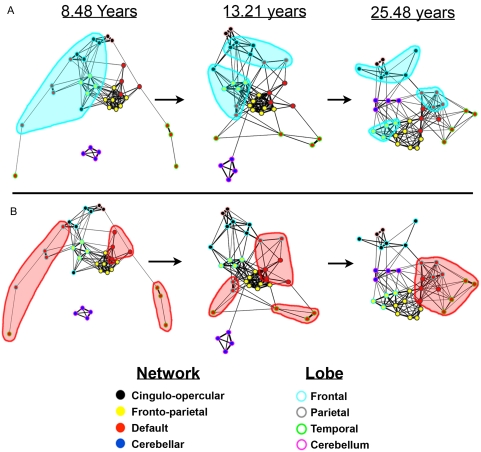
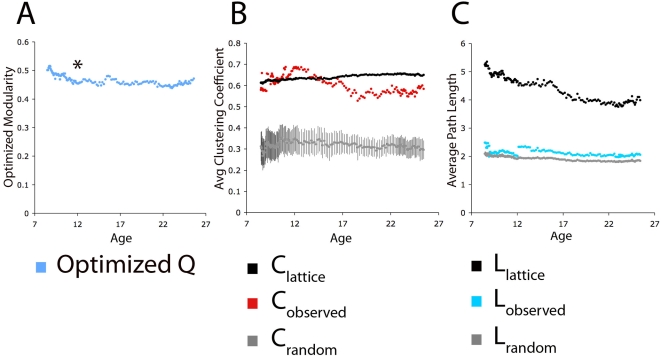
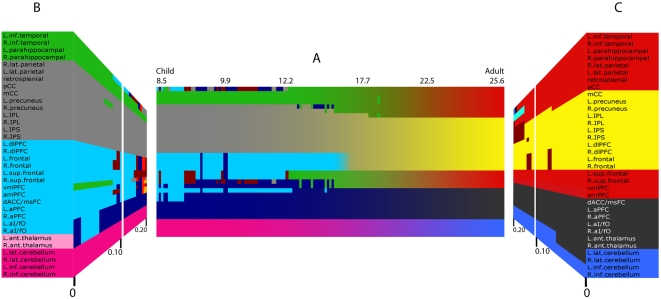
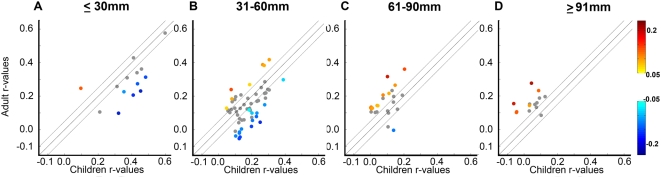
The mature human brain is organized into a collection of specialized functional networks that flexibly interact to support various cognitive functions. Studies of development often attempt to identify the organizing principles that guide the maturation of these functional networks. In this report, we combine resting state functional connectivity MRI (rs-fcMRI), graph analysis, community detection, and spring-embedding visualization techniques to analyze four separate networks defined in earlier studies. As we have previously reported, we find, across development, a trend toward 'segregation' (a general decrease in correlation strength) between regions close in anatomical space and 'integration' (an increased correlation strength) between selected regions distant in space. The generalization of these earlier trends across multiple networks suggests that this is a general developmental principle for changes in functional connectivity that would extend to large-scale graph theoretic analyses of large-scale brain networks. Communities in children are predominantly arranged by anatomical proximity, while communities in adults predominantly reflect functional relationships, as defined from adult fMRI studies. In sum, over development, the organization of multiple functional networks shifts from a local anatomical emphasis in children to a more "distributed" architecture in young adults. We argue that this "local to distributed" developmental characterization has important implications for understanding the development of neural systems underlying cognition. Further, graph metrics (e.g., clustering coefficients and average path lengths) are similar in child and adult graphs, with both showing "small-world"-like properties, while community detection by modularity optimization reveals stable communities within the graphs that are clearly different between young children and young adults. These observations suggest that early school age children and adults both have relatively efficient systems that may solve similar information processing problems in divergent ways.
Overview
The claims and statistics of this paper haven’t been checked yet.
Free: it reads the open-access text and checks the first 5 claims that cite a source we can check. Create a free account to check every claim.
Integrity signals
Registry
Cites
Statistics
Figures

Verification
Claims the paper makes
The claims and statistics of this paper haven’t been checked yet.
Free: it reads the open-access text and checks the first 5 claims that cite a source we can check. Create a free account to check every claim.
Claims other papers make about this one
Each is checked against this paper’s own text: does it say what the citing paper says it does?
The source backs part of the claim, not all of it — or backs it for a different population, condition or comparison.
In the citing paper
“Human neuroimaging studies have shown corresponding patterns of regional brain changes across development [12] with functional connectivity studies [13,14] suggesting refinement of local subcortical circuits precedes refinement of distal cortical ones.”
From Development of the emotional brain (2019) · cites this paper as [13]
Experimental — accuracy not yet measuredThe source backs part of the claim, not all of it — or backs it for a different population, condition or comparison.
In the citing paper
“A plausible temporal mechanism for the shifts in cognitive capacity from childhood to adulthood is a fine-tuning of circuits from subcortico-subcortical to cortico-subcortical to cortico-cortical consistent with postmortem animal studies of regional synaptic changes (Rakic et al., 1994) and functional connectivity studies (Fair et al., 2009) of refinement of local circuits preceding refinement of”
From Beyond simple models of adolescence to an integrated circuit-based account: A commentary (2016) · cites this paper as Fair et al., 2009
Experimental — accuracy not yet measuredThe source backs part of the claim, not all of it — or backs it for a different population, condition or comparison.
In the citing paper
“Evidence has converged on an executive attention network, with the anterior cingulate being the central structure, as the major network responsible for resolving cognitive conflicts (21, 22).”
From Multimodal imaging of the self-regulating developing brain (2012) · cites this paper as [21]
Experimental — accuracy not yet measuredThe source backs part of the claim, not all of it — or backs it for a different population, condition or comparison.
In the citing paper
“Prior work in fMRI using this modularity algorithm required that the researcher set an arbitrary threshold, or cutoff point, for what constitutes similarity between any two given individuals. Researchers would then arrive at thresholds by looking for consistency in community detection results at multiple thresholds (e.g., [2], [21], [22]).”
From Organizing Heterogeneous Samples Using Community Detection of GIMME-Derived Resting State Functional Networks (2014) · cites this paper as [22]
Experimental — accuracy not yet measuredThe source backs part of the claim, not all of it — or backs it for a different population, condition or comparison.
In the citing paper
“The functional network studies have consistently shown no statistical difference in global topological properties between children and adults”
From Developmental Changes in Organization of Structural Brain Networks (2013) · cites this paper as Fair et al. 2009
Experimental — accuracy not yet measured
5 more claims about this paper
Create a free account to see every claim other papers make about this one.
Self-check
Percentages, sums and reported differences re-computed from the paper’s own numbers.
The self-check needs the paper’s full text.
Citations
Cites
Controlling the False Discovery Rate: A Practical and Powerful Approach to Multiple Testing
Benjamini, Y., & Hochberg, Y. (1995) · Journal of the Royal Statistical Society Series B: Statistical Methodology · doi:10.1111/j.2517-6161.1995.tb02031.x · Cited by 109,482 · cited 1×
“To account for multiple comparisons the Benjamini and Hochberg False Discovery Rate [97] was applied.”
MethodCollective dynamics of ‘small-world’ networks
Watts, D. J., & Strogatz, S. H. (1998) · Nature · doi:10.1038/30918 · Cited by 43,060 · cited 1×
“long-range processes. It is this hybrid graph topology (i.e., high clustering coefficients and short path lengths) that matches the observed “small world” networks in many complex systems”
BackgroundModularity and community structure in networks
Newman, M. E. J. (2006) · Proceedings of the National Academy of Sciences · doi:10.1073/pnas.0601602103 · Cited by 12,256 · cited 5×
“As stated by Newman: ‘‘A good division of a graph into communities is not merely one in which there are few edges between communities; it is one in which there are fewer than expected edges between communities.”
BackgroundMethodInfluentialA default mode of brain function
Raichle, M. E., MacLeod, A. M., Snyder, A. Z., Powers, W. J., Gusnard, D. A., & Shulman, G. L. (2001) · Proceedings of the National Academy of Sciences · doi:10.1073/pnas.98.2.676 · Cited by 12,190 · cited 2×
“While the distinct function of the default mode network is often linked to internally directed mental activity [39], this notion continues to be debated [25,32,41–44].”
Functional connectivity in the motor cortex of resting human brain using echo‐planar mri
Biswal, B., Zerrin Yetkin, F., Haughton, V. M., & Hyde, J. S. (1995) · Magnetic Resonance in Medicine · doi:10.1002/mrm.1910340409 · Cited by 9,812
The human brain is intrinsically organized into dynamic, anticorrelated functional networks
Fox, M. D., Snyder, A. Z., Vincent, J. L., Corbetta, M., Van Essen, D. C., & Raichle, M. E. (2005) · Proceedings of the National Academy of Sciences · doi:10.1073/pnas.0504136102 · Cited by 8,553 · cited 3×
“Resting-state fcMRI analyses have repeatedly shown that these regions, along with associated medial temporal regions, are correlated at rest in adults [15,16,32,40].”
Distributed hierarchical processing in the primate cerebral cortex
Felleman, D. J., & Van Essen, D. C. (1991) · Cerebral Cortex · doi:10.1093/cercor/1.1.1 · Cited by 7,783 · cited 1×
“Increased myelination is thought to proceed from primary sensory and motor regions to association areas [68– 71], roughly following the hierarchical organization introduced by Felleman and Van Essen [72] (Note that while the most frequently referenced neuroanatomical changes that occur throughout development have been…”
BackgroundDissociable intrinsic connectivity networks for salience processing and executive control
Seeley, W. W., Menon, V., Schatzberg, A. F., Keller, J., Glover, G. H., Kenna, H., Reiss, A. L., & Greicius, M. D. (2007) · The Journal of Neuroscience · doi:10.1523/jneurosci.5587-06.2007 · Cited by 7,426 · cited 3×
“In addition, several previous findings using this technique [21,22,32] have now been replicated using continuous resting blocks [27,33,34] and other continuous resting data [89].”
BackgroundMethodFunctional connectivity in the resting brain: a network analysis of the default mode hypothesis
Greicius, M. D., Krasnow, B., Reiss, A. L., & Menon, V. (2003) · Proceedings of the National Academy of Sciences · doi:10.1073/pnas.0135058100 · Cited by 6,358 · cited 1×
“Resting-state fcMRI analyses have repeatedly shown that these regions, along with associated medial temporal regions, are correlated at rest in adults [15,16,32,40].”
BackgroundThe brainweb: phase synchronization and large-scale integration
Varela, F., Lachaux, J.-P., Rodriguez, E., & Martinerie, J. (2001) · Nature Reviews Neuroscience · doi:10.1038/35067550 · Cited by 4,761 · cited 1×
“In adults, spontaneous correlated activity has been suggested to be important for gating information flow [54], building internal representations [43,44,54], and maintaining mature network relationships [43,44,54].”
Background
Cited by
Items 201–300 of 1,003
Wang, L., Li, Y., Metzak, P., He, Y., & Woodward, T. S. (2010) · NeuroImage · doi:10.1016/j.neuroimage.2010.01.044 · Cited by 159
“Recent findings indicate that development and normal aging are also accompanied by alterations in topology of functional brain networks (Achard and Bullmore, 2007; Fair et al., 2009; Meunier et al., 2009; Supekar et al., 2009).”
BackgroundRedcay, E., Moran, J. M., Mavros, P. L., Tager-Flusberg, H., Gabrieli, J. D. E., & Whitfield-Gabrieli, S. (2013) · Frontiers in Human Neuroscience · doi:10.3389/fnhum.2013.00573 · Cited by 158
“…previous research with these same networks has demonstrated a developmental pattern of progressive increases in long-distance connectivity between nodes of the same network and concurrent decreases in connectivity between anatomically proximal nodes of distinct networks (Fair et al., 2008, 2009).”
BackgroundMethodResultInfluentialBoersma, M., Smit, D. J. A., Boomsma, D. I., De Geus, E. J. C., Delemarre-van de Waal, H. A., & Stam, C. J. (2013) · Brain Connectivity · doi:10.1089/brain.2012.0106 · Cited by 158
“Such studies showed that the child brain first develops strong local connectivity, which shifts gradually toward stronger long-distance connectivity with maturation (Barry et al., 2004; Fair et al., 2009; Lebel et al., 2008; Power et al., 2010; Supekar et al., 2009; Thatcher, 1992; van Baal et al., 2001; Yap et al., 2…”
InfluentialCognitive control in the self-regulation of physical activity and sedentary behavior
Buckley, J., Cohen, J. D., Kramer, A. F., McAuley, E., & Mullen, S. P. (2014) · Frontiers in Human Neuroscience · doi:10.3389/fnhum.2014.00747 · Cited by 157
“…research demonstrate that cognitive control emerges from multiple, distinct, functional brain networks that flexibly interact in the service of goal directed action (Bressler, 1995; Goldman-Rakic, 1995; McIntosh, 2000; Mesulam, 2005; Fuster, 2006; Fair et al., 2009; Bressler and Menon, 2010).”
BackgroundCollin, G., Scholtens, L. H., Kahn, R. S., Hillegers, M. H. J., & van den Heuvel, M. P. (2017) · Biological Psychiatry · doi:10.1016/j.biopsych.2017.06.013 · Cited by 158
“Healthy brain function is thought to depend on fl exible interactions among specialized neural circuits to support a diverse repertoire of cognitive and behavioral functions (63).”
Differential maturation of brain signal complexity in the human auditory and visual system
Lippe, S. (2009) · Frontiers in Human Neuroscience · doi:10.3389/neuro.09.048.2009 · Cited by 154
“More precisely, the changes in functional responses are thought to represent an increase in the integration within local neural ensembles together with more precise re-entrant interactions between distal ensembles (Thatcher et al., 2007; Fair et al., 2009).”
Imaging Functional and Structural Brain Connectomics in Attention-Deficit/Hyperactivity Disorder
Cao, M., Shu, N., Cao, Q., Wang, Y., & He, Y. (2014) · Molecular Neurobiology · doi:10.1007/s12035-014-8685-x · Cited by 173
Resting-state functional MRI studies on infant brains: A decade of gap-filling efforts
Zhang, H., Shen, D. G., & Lin, W. (2018) · NeuroImage · doi:10.1016/j.neuroimage.2018.07.004 · Cited by 175
Atypical Cross Talk Between Mentalizing and Mirror Neuron Networks in Autism Spectrum Disorder
Fishman, I., Keown, C. L., Lincoln, A. J., Pineda, J. A., & Müller, R.-A. (2014) · JAMA Psychiatry · doi:10.1001/jamapsychiatry.2014.83 · Cited by 152
Posner, M. I. (2012) · NeuroImage · doi:10.1016/j.neuroimage.2011.12.040 · Cited by 151
Brain Noise Is Task Dependent and Region Specific
Mišić, B., Mills, T., Taylor, M. J., & McIntosh, A. R. (2010) · Journal of Neurophysiology · doi:10.1152/jn.00648.2010 · Cited by 151
“Namely, in the age range similar to our sample resting state functional networks gradually reconfigure in a manner that intensifies global integration relative to local segregation, effectively shifting the balance from more local, short-distance information processing in children to more distributed processing in you…”
BackgroundMethodInfluentialPannekoek, J. N., van der Werff, S. J. A., Meens, P. H. F., van den Bulk, B. G., Jolles, D. D., Veer, I. M., van Lang, N. D. J., Rombouts, S. A. R. B., van der Wee, N. J. A., & Vermeiren, R. R. J. M. (2014) · Journal of Child Psychology and Psychiatry · doi:10.1111/jcpp.12266 · Cited by 150
“…were anatomically close to one another, and cohesive and more integrated networks were shown in adulthood with increased connectivity between areas that were spatially remote (Fair et al., 2007, Fair et al., 2008, Fair et al., 2009, Kelly et al., 2009, Supekar et al., 2009, Jolles et al., 2011).”
BackgroundMurty, V. P., Calabro, F., & Luna, B. (2016) · Neuroscience & Biobehavioral Reviews · doi:10.1016/j.neubiorev.2016.07.034 · Cited by 149
Toward Developmental Connectomics of the Human Brain
Cao, M., Huang, H., Peng, Y., Dong, Q., & He, Y. (2016) · Frontiers in Neuroanatomy · doi:10.3389/fnana.2016.00025 · Cited by 149
Ge, R., Downar, J., Blumberger, D. M., Daskalakis, Z. J., & Vila-Rodriguez, F. (2020) · Brain Stimulation · doi:10.1016/j.brs.2019.10.012 · Cited by 147
The “Task B problem” and other considerations in developmental functional neuroimaging
Church, J. A., Petersen, S. E., & Schlaggar, B. L. (2010) · Human Brain Mapping · doi:10.1002/hbm.21036 · Cited by 148
“Using graph-theory metrics [Honey et al., 2007; Karrer et al., 2008], putative network relationships can be discovered and directly compared between groups [Church et al., 2009; Fair et al., 2007a, 2009].”
BackgroundSelf-citationSeo, E. H., Lee, D. Y., Lee, J.-M., Park, J.-S., Sohn, B. K., Lee, D. S., Choe, Y. M., & Woo, J. I. (2013) · PLoS ONE · doi:10.1371/journal.pone.0053922 · Cited by 147
The development of multisensory speech perception continues into the late childhood years
Ross, L. A., Molholm, S., Blanco, D., Gomez‐Ramirez, M., Saint‐Amour, D., & Foxe, J. J. (2011) · European Journal of Neuroscience · doi:10.1111/j.1460-9568.2011.07685.x · Cited by 147
“It is of particular note that increased functional connectivity among more distant, as compared with local, cortical areas has also been observed (e.g., Fair et al., 2008, 2009; Kelly et al., 2009; Power et al., 2010).”
BackgroundTamnes, C. K., Walhovd, K. B., Grydeland, H., Holland, D., Østby, Y., Dale, A. M., & Fjell, A. M. (2013) · Journal of Cognitive Neuroscience · doi:10.1162/jocn_a_00434 · Cited by 146
“…development (Fair et al., 2007), possibly reflecting a shift either from a predominantly local organization in children to a more distributed architecture in adults (Dosenbach et al., 2010; Fair et al., 2009, 2010) or from diffuse to more focal activation patterns (Uddin, Supekar, & Menon, 2010).”
BackgroundPerry, A., Roberts, G., Mitchell, P. B., & Breakspear, M. (2019) · Molecular Psychiatry · doi:10.1038/s41380-018-0267-2 · Cited by 143
Fan, F., Liao, X., Lei, T., Zhao, T., Xia, M., Men, W., Wang, Y., Hu, M., Liu, J., Qin, S., et al. (2020) · NeuroImage · doi:10.1016/j.neuroimage.2020.117581 · Cited by 162
“During this period, the brain’s functional networks reconfigure from an anatomical-dominant structure to a distributed architecture (Fair et al., 2009), and functional hubs show strengthening connectivity strength (Hwang et al.”
Adolescent cognitive control and reward processing: Implications for risk taking and substance use
Geier, C. F. (2013) · Hormones and Behavior · doi:10.1016/j.yhbeh.2013.02.008 · Cited by 182
“Second, there is increased connectivity between functionally-related brain regions into adulthood (Fair et al., 2007, 2008b, 2009; Supekar et al., 2010).”
BackgroundResting-state networks in awake five- to eight-year old children
de Bie, H. M. A., Boersma, M., Adriaanse, S., Veltman, D. J., Wink, A. M., Roosendaal, S. D., Barkhof, F., Stam, C. J., Oostrom, K. J., Delemarre‐van de Waal, H. A., et al. (2012) · Human Brain Mapping · doi:10.1002/hbm.21280 · Cited by 143
The brain matures with stronger functional connectivity and decreased randomness of its network
Smit, D. J. A., Boersma, M., Schnack, H. G., Micheloyannis, S., Boomsma, D. I., Hulshoff Pol, H. E., Stam, C. J., & de Geus, E. J. C. (2012) · PLoS ONE · doi:10.1371/journal.pone.0036896 · Cited by 143
Resting state functional connectivity of five neural networks in bipolar disorder and schizophrenia
Mamah, D., Barch, D. M., & Repovš, G. (2013) · Journal of Affective Disorders · doi:10.1016/j.jad.2013.01.051 · Cited by 142
“While functional connectivity has been reported to increase from childhood into adulthood (Fair et al., 2009; Power et al., 2010; Dosenbach et al., 2010), betweennetwork connectivity weakens with age in favor of within-network connectivity (Dosenbach et al.”
BackgroundMethodInfluentialEnergy landscape analysis of neuroimaging data
Ezaki, T., Watanabe, T., Ohzeki, M., & Masuda, N. (2017) · Philosophical Transactions of the Royal Society A: Mathematical, Physical and Engineering Sciences · doi:10.1098/rsta.2016.0287 · Cited by 131
Cognitive Control in Adolescence: Neural Underpinnings and Relation to Self-Report Behaviors
Andrews-Hanna, J. R., Mackiewicz Seghete, K. L., Claus, E. D., Burgess, G. C., Ruzic, L., & Banich, M. T. (2011) · PLoS ONE · doi:10.1371/journal.pone.0021598 · Cited by 141
Lim, S., Han, C. E., Uhlhaas, P. J., & Kaiser, M. (2015) · Cerebral Cortex · doi:10.1093/cercor/bht333 · Cited by 140
Neural Signatures of Autism Spectrum Disorders: Insights into Brain Network Dynamics
Hernandez, L. M., Rudie, J. D., Green, S. A., Bookheimer, S. Y., & Dapretto, M. (2014) · Neuropsychopharmacology · doi:10.1038/npp.2014.172 · Cited by 163
“…such as modularity can be quantified (Bullmore and Sporns, 2009; Rubinov and Sporns, 2010) and compared across populations during development (eg, Fair et al, 2009; Hagmann et al, 2010), and in diseases such as schizophrenia (eg, Bassett et al, 2008) and Alzheimer’s disease (eg, Supekar et al,…”
BackgroundStevens, M. C. G. (2016) · Neuroscience & Biobehavioral Reviews · doi:10.1016/j.neubiorev.2016.07.027 · Cited by 161
Reorganization of Functional Networks in Mild Cognitive Impairment
Buldú, J. M., Bajo, R., Maestú, F., Castellanos, N., Leyva, I., Gil, P., Sendiña-Nadal, I., Almendral, J. A., Nevado, A., del-Pozo, F., et al. (2011) · PLoS ONE · doi:10.1371/journal.pone.0019584 · Cited by 139
Development of the Brain’s Functional Network Architecture
Vogel, A. C., Power, J. D., Petersen, S. E., & Schlaggar, B. L. (2010) · Neuropsychology Review · doi:10.1007/s11065-010-9145-7 · Cited by 139
“…forming networks with nodes of voxels (e.g., Buckner et al. 2009; Sepulcre et al. 2010; Fransson et al. 2010), pre-defined anatomical parcellations of voxels (e.g., He et al. 2009), or pre-defined regions of interest obtained from fMRI studies (e.g., Dosenbach et al. 2007; Fair et al. 2009).”
BackgroundMethodInfluentialSelf-citationAltered Network Topologies and Hub Organization in Adults with Autism: A Resting-State fMRI Study
Itahashi, T., Yamada, T., Watanabe, H., Nakamura, M., Jimbo, D., Shioda, S., Toriizuka, K., Kato, N., & Hashimoto, R. (2014) · PLoS ONE · doi:10.1371/journal.pone.0094115 · Cited by 139
Multiscale Structure–Function Gradients in the Neonatal Connectome
Larivière, S., Vos de Wael, R., Hong, S.-J., Paquola, C., Tavakol, S., Lowe, A. J., Schrader, D. V., & Bernhardt, B. C. (2020) · Cerebral Cortex · doi:10.1093/cercor/bhz069 · Cited by 139
Self-regulation: Brain, cognition, and development.
Berger, A. (2011) · American Psychological Association eBooks · doi:10.1037/12327-000 · Cited by 137
Monti, M. M., Lutkenhoff, E. S., Rubinov, M., Boveroux, P., Vanhaudenhuyse, A., Gosseries, O., Bruno, M.-A., Noirhomme, Q., Boly, M., & Laureys, S. (2013) · PLoS Computational Biology · doi:10.1371/journal.pcbi.1003271 · Cited by 138
“…[26–28], a technique that has been successfully employed to characterize and model dynamics within physical [29], biological [30] and social systems [31], and that has been shown to capture specific aspects of brain organization in the maturing, healthy adult, and pathological brain [32–36].”
Effects of network resolution on topological properties of human neocortex
Romero-García, R., Atienza, M., Clemmensen, L. K. H., & Cantero, J. L. (2011) · NeuroImage · doi:10.1016/j.neuroimage.2011.10.086 · Cited by 145
“Schemes derived from small-world architecture have demonstrated to grasp the essence of this biological organization (Fair et al., 2009; Hagmann et al., 2008).”
Modulation of the brain’s functional network architecture in the transition from wake to sleep
Larson-Prior, L. J., Power, J. D., Vincent, J. L., Nolan, T. S., Coalson, R. S., Zempel, J., Snyder, A. Z., Schlaggar, B. L., Raichle, M. E., & Petersen, S. E. (2011) · Progress in Brain Research · doi:10.1016/b978-0-444-53839-0.00018-1 · Cited by 137
“Community structure analysis: Like many other complex networks, the brain is organized into sets of modules (communities) which are represented graphically as a set of nodes whose within-group connectivity is greater than their between-group connectivity (Bullmore and Sporns, 2009; Fair et al., 2009; Lancichinetti et…”
BackgroundMethodInfluentialSelf-citationSearching for Signatures of Brain Maturity: What Are We Searching For?
Somerville, L. H. (2016) · Neuron · doi:10.1016/j.neuron.2016.10.059 · Cited by 165
“These connectivity-based shifts are thought to reflect a brain that is becoming more efficient in its in-network communication and more integrated in its cross-network communication (Fair et al., 2009).”
BackgroundConservative and disruptive modes of adolescent change in human brain functional connectivity
Váša, F., Romero-Garcia, R., Kitzbichler, M. G., Seidlitz, J., Whitaker, K. J., Vaghi, M. M., Kundu, P., Patel, A. X., Fonagy, P., Dolan, R. J., et al. (2020) · Proceedings of the National Academy of Sciences · doi:10.1073/pnas.1906144117 · Cited by 135
Information processing architecture of functionally defined clusters in the macaque cortex
Shen, K., Bezgin, G., Hutchison, R. M., Gati, J. S., Menon, R. S., Everling, S., & McIntosh, A. R. (2012) · The Journal of Neuroscience · doi:10.1523/jneurosci.2709-12.2012 · Cited by 123
Dajani, D. R., & Uddin, L. Q. (2016) · Autism Research · doi:10.1002/aur.1494 · Cited by 133
“The findings in TD individuals support the hypothesis that the development of local brain connections are emphasized in childhood, then later switch to support global connectivity [Fair et al., 2009].”
BackgroundImplications of newborn amygdala connectivity for fear and cognitive development at 6-months-of-age
Graham, A. M., Buss, C., Rasmussen, J. M., Rudolph, M. D., Demeter, D. V., Gilmore, J. H., Styner, M., Entringer, S., Wadhwa, P. D., & Fair, D. A. (2016) · Developmental Cognitive Neuroscience · doi:10.1016/j.dcn.2015.09.006 · Cited by 122
“…brain signal, regression of ventricular signal averaged from a ventricular region mask, regression of white matter signal averaged from a white matter mask and regression of first order derivative terms for the whole brain, ventricular, and white matter signals (Fair et al., 2007, 2009, 2012).”
Self-citationAssociations between Neighborhood SES and Functional Brain Network Development
Tooley, U. A., Mackey, A. P., Ciric, R., Ruparel, K., Moore, T. M., Gur, R. C., Gur, R. E., Satterthwaite, T. D., & Bassett, D. S. (2020) · Cerebral Cortex · doi:10.1093/cercor/bhz066 · Cited by 132
Wang, D., Li, M., Wang, M., Schoeppe, F., Ren, J., Chen, H., Öngür, D., Brady, R. O., Baker, J. T., & Liu, H. (2020) · Molecular Psychiatry · doi:10.1038/s41380-018-0276-1 · Cited by 131
Intrinsic Functional Brain Architecture Derived from Graph Theoretical Analysis in the Human Fetus
Thomason, M. E., Brown, J. A., Dassanayake, M. T., Shastri, R., Marusak, H. A., Hernandez-Andrade, E., Yeo, L., Mody, S., Berman, S., Hassan, S. S., et al. (2014) · PLoS ONE · doi:10.1371/journal.pone.0094423 · Cited by 130
“That is, characteristic functional brain subnetworks or ‘‘modules’’ emerge wherein spatially distant brain regions such as frontal and parietal regions, comprising the executive control network, and between medial prefrontal and parietal regions, comprising the default mode network, become more strongly connected [21].”
BackgroundCharacterizing heterogeneity in children with and without ADHD based on reward system connectivity
Costa Dias, T. G., Iyer, S. P., Carpenter, S. D., Cary, R. P., Wilson, V. B., Mitchell, S. H., Nigg, J. T., & Fair, D. A. (2015) · Developmental Cognitive Neuroscience · doi:10.1016/j.dcn.2014.12.005 · Cited by 130
“Connectivity preprocessing followed prior methods, well described and widely used in the imaging literature (Fair et al., 2007, 2008, 2009; Fox et al., 2005).”
MethodSelf-citationHemispheric lateralization of verbal and spatial working memory during adolescence
Nagel, B. J., Herting, M. M., Maxwell, E. C., Bruno, R., & Fair, D. (2013) · Brain and Cognition · doi:10.1016/j.bandc.2013.02.007 · Cited by 130
Self-citationAbbott, A. E., Linke, A. C., Nair, A., Jahedi, A., Alba, L. A., Keown, C. L., Fishman, I., & Müller, R. (2017) · Social Cognitive and Affective Neuroscience · doi:10.1093/scan/nsx129 · Cited by 147
“The emergence of long-range functional networks is consistent with a local to distributed pattern of connectivity across development (Fair et al., 2009).”
BackgroundA developmental neuroscience perspective on affect-biased attention
Morales, S., Fu, X., & Pérez‐Edgar, K. E. (2016) · Developmental Cognitive Neuroscience · doi:10.1016/j.dcn.2016.08.001 · Cited by 155
“Moreover, resting state connectivity in these areas steadily ncreases from infancy to childhood (Gao et al., 2009) and from hildhood to adolescence (Fair et al., 2009).”
Ippolito, G., Bertaccini, R., Tarasi, L., Gregorio, F. D., Trajkovic, J., Battaglia, S., & Romei, V. (2022) · Biomedicines · doi:10.3390/biomedicines10123189 · Cited by 151
“These results are in line with the aforementioned studies [187,220,221] suggesting that ASD individuals are associated with a shift from early white matter maturation during infancy to hypoconnectivity with aging.”
ResultTemporal Attention as a Scaffold for Language Development
de Diego-Balaguer, R., Martinez-Alvarez, A., & Pons, F. (2016) · Frontiers in Psychology · doi:10.3389/fpsyg.2016.00044 · Cited by 65
Physical Exercise Alleviates ADHD Symptoms: Regional Deficits and Development Trajectory
Archer, T., & Kostrzewa, R. M. (2011) · Neurotoxicity Research · doi:10.1007/s12640-011-9260-0 · Cited by 157
“Normal developmental trajectories are defined by consistent age-indexed improvements in cognitive control capacity from infancy through adolescence to adulthood (Archer et al. 2010a, b; Davidson et al. 2006; Fair et al. 2009; Stevens et al. 2009).”
BackgroundHerting, M. M., & Nagel, B. J. (2012) · Behavioural Brain Research · doi:10.1016/j.bbr.2012.05.012 · Cited by 125
“During adolescence, the brain continues to develop both structurally [29] and functionally [30, 31], with a number of changes seen in hippocampal volume between childhood and adulthood [32, 33].”
BackgroundClustering Coefficients for Correlation Networks
Masuda, N., Sakaki, M., Ezaki, T., & Watanabe, T. (2018) · Frontiers in Neuroinformatics · doi:10.3389/fninf.2018.00007 · Cited by 138
“In fact, the coordinates of the ROIs in the current data set were determined from participants aged 7–31 (Fair et al., 2009) so that they may not reflect functional ROIs in older adults (Chan et al.”
BackgroundMethodInfluentialTu, P., Hsieh, J., Li, C., Bai, Y.-M., & Su, T. (2011) · NeuroImage · doi:10.1016/j.neuroimage.2011.07.086 · Cited by 137
Shih, P., Keehn, B., Oram, J. K., Leyden, K. M., Keown, C. L., & Müller, R.-A. (2011) · Biological Psychiatry · doi:10.1016/j.biopsych.2011.03.040 · Cited by 123
Development of functional connectome gradients during childhood and adolescence
Xia, Y., Xia, M., Liu, J., Liao, X., Lei, T., Liang, X., Zhao, T., Shi, Z., Sun, L., Chen, X., et al. (2022) · Science Bulletin · doi:10.1016/j.scib.2022.01.002 · Cited by 123
Sun, Y., Yin, Q., Fang, R., Yan, X., Wang, Y., Bezerianos, A., Tang, H., Miao, F., & Sun, J. (2014) · PLoS ONE · doi:10.1371/journal.pone.0096505 · Cited by 122
“Several previous studies have demonstrated the evolution of modular organization in the human during infancy [17,18] and aging [19–21].”
BackgroundIdentifying basal ganglia divisions in individuals using resting-state functional connectivity MRI
Barnes (2010) · Frontiers in System Neuroscience · doi:10.3389/fnsys.2010.00018 · Cited by 122
Attention Deficit Hyperactivity Disorder
Matthews, M., Nigg, J. T., & Fair, D. A. (2013) · Current topics in behavioral neurosciences · doi:10.1007/978-3-662-45758-0_249 · Cited by 129
Self-citationA Monte Carlo evaluation of weighted community detection algorithms
Gates, K. M., Henry, T., Steinley, D., & Fair, D. A. (2016) · Frontiers in Neuroinformatics · doi:10.3389/fninf.2016.00045 · Cited by 106
“As seen in previous fMRI studies, the correlation matrices contain negative correlations and connection weights that span from near zero to very strong (Fair et al., 2009; Gates et al., 2014).”
BackgroundSelf-citationBarber, A. D., Caffo, B. S., Pekar, J. J., & Mostofsky, S. H. (2013) · Neuropsychologia · doi:10.1016/j.neuropsychologia.2012.11.011 · Cited by 121
Kostović, I., Judaš, M., & Sedmak, G. (2011) · International Journal of Developmental Neuroscience · doi:10.1016/j.ijdevneu.2010.09.005 · Cited by 121
The potential of infant fMRI research and the study of early life stress as a promising exemplar
Graham, A. M., Pfeifer, J. H., Fisher, P. A., Lin, W., Gao, W., & Fair, D. A. (2015) · Developmental Cognitive Neuroscience · doi:10.1016/j.dcn.2014.09.005 · Cited by 114
Self-citationUddin, L. Q. (2021) · Biological Psychiatry · doi:10.1016/j.biopsych.2020.05.010 · Cited by 116
“Studies of the whole-brain functional connectome demonstrate a trend towards ‘segregation’ (decrease in correlation strength between anatomically close regions) and ‘integration’ (increase in correlation strength between anatomically distant regions) across development (50,51).”
BackgroundSoto‐Icaza, P., Aboitiz, F., & Billeke, P. B. (2015) · Frontiers in Neuroscience · doi:10.3389/fnins.2015.00333 · Cited by 183
“Indeed, the development of brain networks indicates a decrease or segregation of local connectivity together with an increase in the connectivity between distant brain regions (Fair et al., 2009).”
Allocating structure to function: the strong links between neuroplasticity and natural selection
Anderson, M. L., & Finlay, B. L. (2014) · Frontiers in Human Neuroscience · doi:10.3389/fnhum.2013.00918 · Cited by 115
“F., and Oliva, A. (2008). Statistical learning using real-world scenes:”
BackgroundIntensive Reasoning Training Alters Patterns of Brain Connectivity at Rest
Mackey, A. P., Miller Singley, A. T., & Bunge, S. A. (2013) · The Journal of Neuroscience · doi:10.1523/jneurosci.4141-12.2013 · Cited by 119
“Correlations in spontaneous fluctuations of blood oxygenation level-dependent (BOLD) fMRI signal at rest are thought to reflect the prior history of coactivation of brain regions (Dosenbach et al., 2007; Seeley et al., 2007; Fair et al., 2009).”
Ripe for solution: Delayed development of multisensory processing in autism and its remediation
Beker, S., Foxe, J. J., & Molholm, S. (2018) · Neuroscience & Biobehavioral Reviews · doi:10.1016/j.neubiorev.2017.11.008 · Cited by 114
“As a result, functional networks become less localized and more distributed, and consequently, connectivity becomes stronger among distant anatomical regions (Fair et al., 2009).”
Paret, C., Goldway, N., Zich, C., Keynan, J. N., Hendler, T., Linden, D., & Cohen Kadosh, K. (2019) · NeuroImage · doi:10.1016/j.neuroimage.2019.116107 · Cited by 118
Predicting individual brain maturity using dynamic functional connectivity
Qin, J., Chen, S.-G., Hu, D., Zeng, L.-L., Fan, Y.-M., Chen, X.-P., & Shen, H. (2015) · Frontiers in Human Neuroscience · doi:10.3389/fnhum.2015.00418 · Cited by 117
The developing brain in a multitasking world
Rothbart, M. K., & Posner, M. I. (2015) · Developmental Review · doi:10.1016/j.dr.2014.12.006 · Cited by 115
“One of the brain networks that is known to be active during rest is the executive attention network (Dosenbach et al., 2007; Fair et al., 2009).”
BackgroundInfluentialCognitive Neuroscience of Attention From brain mechanisms to individual differences in efficiency
Rueda, M. R., Pozuelos, J. P., & Cómbita, L. M. (2015) · AIMS neuroscience · doi:10.3934/neuroscience.2015.4.183 · Cited by 152
Ibrahim, G. M., Cassel, D. B., Morgan, B. R., Smith, M. L., Otsubo, H., Ochi, A., Taylor, M. J., Rutka, J. T., Snead, O. C., & Doesburg, S. M. (2014) · Brain · doi:10.1093/brain/awu214 · Cited by 119
“…parametric maps, the set of spatial maps from the group-average analysis (which was used to establish coordinates for the important nodes of each network) was used to generate subject-specific versions of the spatial maps, and associated time series using dual regression (Filippini et al., 2009).”
Short-range connections in the developmental connectome during typical and atypical brain maturation
Ouyang, M., Kang, H., Detre, J. A., Roberts, T. P. L., & Huang, H. (2017) · Neuroscience & Biobehavioral Reviews · doi:10.1016/j.neubiorev.2017.10.007 · Cited by 116
“, 2014), the development of long-range FC mainly involved in global information integration occurs mostly after birth (e.g. Gao et al., 2009; Dosenbach et al., 2010; Fair et al., 2009; Supekar et al., 2009).”
BackgroundDecoding lifespan changes of the human brain using resting-state functional connectivity MRI
Wang, L., Su, L., Shen, H., & Hu, D. (2012) · PLoS ONE · doi:10.1371/journal.pone.0044530 · Cited by 115
“Previous studies have shown that the maturation of functional brain organization is characterized by simultaneously weakening of short-range functional connections and strengthening of longrange functional connections [12,14,23].”
BackgroundEffects of White Matter Injury on Resting State fMRI Measures in Prematurely Born Infants
Smyser, C. D., Snyder, A. Z., Shimony, J. S., Blazey, T. M., Inder, T. E., & Neil, J. J. (2013) · PLoS ONE · doi:10.1371/journal.pone.0068098 · Cited by 115
Tu, P., Lee, Y.-C., Chen, Y.-S., Li, C., & Su, T. (2013) · Schizophrenia Research · doi:10.1016/j.schres.2013.04.011 · Cited by 130
“A developmental fcMRI study (Fair et al., 2009) suggested that segregation between different large-scale networks develops gradually between adolescence and adulthood, and that segregation may support schizophrenia as a disorder characterized by an aberration of neural circuits during the…”
Kadosh, K. C., Luo, Q., Burca, C. D., Sokunbi, M. O., Feng, J., Linden, D. E. J., & Lau, J. Y. F. (2015) · NeuroImage · doi:10.1016/j.neuroimage.2015.09.070 · Cited by 124
Revealing the Hippocampal Connectome through Super-Resolution 1150-Direction Diffusion MRI
Maller, J. J., Welton, T., Middione, M. J., Callaghan, F. M., Rosenfeld, J. V., & Grieve, S. M. (2019) · Scientific Reports · doi:10.1038/s41598-018-37905-9 · Cited by 128
Li, M., Wang, D., Ren, J., Langs, G., Stoecklein, S., Brennan, B. P., Lu, J., Chen, H., & Liu, H. (2019) · PLOS Biology · doi:10.1371/journal.pbio.2007032 · Cited by 115
Fronto-Parietal Network Reconfiguration Supports the Development of Reasoning Ability
Wendelken, C., Ferrer, E., Whitaker, K. J., & Bunge, S. A. (2016) · Cerebral Cortex · doi:10.1093/cercor/bhv050 · Cited by 114
“The observed increases in fronto-parietal connectivity and decreases in intrafrontal and intraparietal connectivity fit into the pattern—well established in the literature (Fair et al. 2009; Supekar et al. 2009)”
BackgroundDynamical intrinsic functional architecture of the brain during absence seizures
Liao, W., Zhang, Z., Mantini, D., Xu, Q., Ji, G., Zhang, H., Wang, J., Wang, Z., Chen, G., Tian, L., et al. (2013) · Brain Structure and Function · doi:10.1007/s00429-013-0619-2 · Cited by 122
Energy landscapes of resting-state brain networks
Watanabe, T., Hirose, S., Wada, H., Imai, Y., Machida, T., Shirouzu, I., Konishi, S., Miyashita, Y., & Masuda, N. (2014) · Frontiers in Neuroinformatics · doi:10.3389/fninf.2014.00012 · Cited by 124
Functional connectivity in the developing brain: a longitudinal study from 4 to 9months of age
Damaraju, E., Caprihan, A., Lowe, J. R., Allen, E. A., Calhoun, V. D., & Phillips, J. P. (2014) · NeuroImage · doi:10.1016/j.neuroimage.2013.08.038 · Cited by 103
“It has been suggested that functional brain networks develop in a local to distributed fashion (Fair et al., 2009), and indeed the increased coherencewe found between The quality index (Iq) associated with each ICN is listed in parentheses adjacent to the component number.”
BackgroundHilger, K., Ekman, M., Fiebach, C. J., & Basten, U. (2016) · Intelligence · doi:10.1016/j.intell.2016.11.001 · Cited by 122
Nevalainen, P., Lauronen, L., & Pihko, E. (2014) · Frontiers in Human Neuroscience · doi:10.3389/fnhum.2014.00158 · Cited by 111
Impaired integration in psychopathy: A unified theory of psychopathic dysfunction.
Hamilton, R. K. B., Racer, K. H., & Newman, J. P. (2015) · Psychological Review · doi:10.1037/a0039703 · Cited by 126
“With age comes greater spontaneous correlated activity within developing brain networks such as the CoN and DMN (Fair et al., 2009).”
BackgroundThe Moral brain: a multidisciplinary perspective
Decety, J., & Wheatley, T. (2015) · Choice Reviews Online · doi:10.5860/choice.192126 · Cited by 110
Microstructural and Functional Connectivity in the Developing Preterm Brain
Lubsen, J., Vohr, B., Myers, E., Hampson, M., Lacadie, C., Schneider, K. C., Katz, K. H., Constable, R. T., & Ment, L. R. (2011) · Seminars in Perinatology · doi:10.1053/j.semperi.2010.10.006 · Cited by 109
Mills, K. L., Bathula, D., Dias, T. G. C., Iyer, S. P., Fenesy, M. C., Musser, E. D., Stevens, C. A., Thurlow, B. L., Carpenter, S. D., Nagel, B. J., et al. (2012) · Frontiers in Psychiatry · doi:10.3389/fpsyt.2012.00002 · Cited by 108
Self-citationKim, K., Kim, S.-W., Myung, W., Han, C. E., Fava, M., Mischoulon, D., Papakostas, G. I., Seo, S. W., Cho, H., Seong, J.-K., et al. (2017) · Scientific Reports · doi:10.1038/s41598-017-15926-0 · Cited by 107
Gates, K. M., Molenaar, P. C. M., Iyer, S. P., Nigg, J. T., & Fair, D. A. (2014) · PLoS ONE · doi:10.1371/journal.pone.0091322 · Cited by 107
“We selected 11 regions of interest based on prior work by Dosenbach and colleagues [22,39,40].”
MethodSelf-citationBorsook, D., Erpelding, N., Lebel, A., Linnman, C., Veggeberg, R., Grant, P. E., Buettner, C., Becerra, L. R., & Burstein, R. (2014) · Neurobiology of Disease · doi:10.1016/j.nbd.2014.03.008 · Cited by 117
Local brain connectivity and associations with gender and age
Lopez-Larson, M. P., Anderson, J. S., Ferguson, M. A., & Yurgelun-Todd, D. (2011) · Developmental Cognitive Neuroscience · doi:10.1016/j.dcn.2010.10.001 · Cited by 106
Developmental sex differences in resting state functional connectivity of amygdala sub-regions
Alarcón, G., Cservenka, A., Rudolph, M. D., Fair, D. A., & Nagel, B. J. (2015) · NeuroImage · doi:10.1016/j.neuroimage.2015.04.013 · Cited by 105
“Data processing followed commonly used procedures to reduce spurious noise and artifacts (Fair et al., 2007, 2009, 2012; Mills et al., 2012; Costa Dias et al., 2013).”
MethodSelf-citationfMRI Functional Connectivity Applied to Adolescent Neurodevelopment
Ernst, M., Torrisi, S., Balderston, N., Grillon, C., & Hale, E. A. (2015) · Annual Review of Clinical Psychology · doi:10.1146/annurev-clinpsy-032814-112753 · Cited by 105
“In agreement with previous work (Fair et al. 2009, Supekar et al. 2009), this study suggested that global brain organization appeared to be similar in both age groups but that significant sub-network reorganization takes place between childhood and adulthood, in line with an increased hierarchical…”
Xia, M., & He, Y. (2011) · Brain Connectivity · doi:10.1089/brain.2011.0062 · Cited by 105
“…aging (Gong et al., 2009a; Meunier et al., 2009a; Tomasi and Volkow, 2011a; Wang et al., 2010b; Wen et al., 2011b; Wu et al., 2011a), development (Fair et al., 2007, 2008, 2009; Gao et al., 2011; Supekar et al., 2009), gender effect (Gong et al., 2009a; Tian et al., 2011; Yan et al., 2011a),…”
The impact of poverty on the development of brain networks
Lipina, S. J., & Posner, M. I. (2012) · Frontiers in Human Neuroscience · doi:10.3389/fnhum.2012.00238 · Cited by 105
“Connectivity of these control systems develop over the early life of infants and young children, and lead to the ability to regulate other brain networks, thus exercising executive control over behavior (Fair et al., 2007, 2009, 2011; Gao et al., 2009; Posner et al., 2012).”
BackgroundInfluential
Metadata
- Authors
- Fair, D. A., Cohen, A. L., Power, J. D., Dosenbach, N. U. F., Church, J. A., Miezin, F. M., Schlaggar, B. L., & Petersen, S. E.
- Affiliations
- Oregon Health & Science University (US)
- Washington University in St. Louis (US)
- Corresponding author
- Fair, Damien A.
- Petersen, Steven E.
- ORCID
- Venue
- PLoS Computational Biology
- Publisher
- Public Library of Science (PLoS)
- Published
- 2009-05-01
- Volume
- 5
- Issue
- 5
- Pages
- e1000381
- ISSN
- 1553-734X (ISSN-L)
- 1553-7358
- PMC
- PMC2671306
- OpenAlex
- W2159549823
- Cited by
- 1,530
- References
- 104
- Citations by year
- 2026: 69 · 2025: 78 · 2024: 89 · 2023: 66 · 2022: 87 · 2021: 78 · 2020: 86 · 2019: 103 · 2018: 109 · 2017: 95 · 2016: 102 · 2015: 107 · 2014: 106 · 2013: 113 · 2012: 84
- FWCI
- 39.01
- Type
- journal article
- Language
- en
- Open access
- gold
- doi.org
- Locations
- PLoS Computational Biology (publishedVersion, cc-by)
- PubMed Central (publishedVersion, cc-by)
- PubMed (publishedVersion)
- Digital Commons@Becker (Washington University School of Medicine) (submittedVersion)
- RePEc: Research Papers in Economics (submittedVersion)
- DOAJ (DOAJ: Directory of Open Access Journals) (submittedVersion, cc-by-sa)
- Figshare (submittedVersion, cc-by)
- Funders
- National Science Foundation (0548890)
- Dana Foundation
- Wellcome Trust
- National Institutes of Health
- National Institute of Neurological Disorders and Stroke (R01NS046424, K02NS053425, F30NS062489, NS46424, NS 41255, NS062489, R21NS041255, NS053425)
- Topics
- Life Sciences › Neuroscience › Cognitive Neuroscience › Functional Brain Connectivity Studies
- Health Sciences › Medicine › Radiology, Nuclear Medicine and Imaging › Advanced Neuroimaging Techniques and Applications
- Physical Sciences › Physics and Astronomy › Statistical and Nonlinear Physics › Complex Network Analysis Techniques
- Keywords
- functional brain networks, brain development, resting-state functional connectivity, integration and segregation, community detection, small-world networks, graph theory, children and young adults, modularity optimization, cognitive development
- MeSH terms
- Adolescent, Adult, Brain, Child, Humans, Magnetic Resonance Imaging, Models, Neurological, Nerve Net, Neural Pathways
About these checks
Registry, retraction, Cites and statistics results are computed, not judged, with one exception: a printed reference that no index lists is read once by a model before it counts as a citation error. Claims are extracted by a model and kept only when their quote appears verbatim in the text; each cited source is then checked, with a model’s help, for whether it says what the claim relies on. Those verdicts can be wrong — read the claim’s quote and the cited source before relying on one.
Statistics and arithmetic are recomputed, not judged.
Confidence bands are shown only for fields calibrated on our annotated test set. None is calibrated yet, so no band is shown.
What counts as a claim ›How we measure confidence ›How we check this ›
Are you an author, or do you see a problem with this page? Request a review
Data sources
Bibliographic data: Semantic Scholar, OpenAlex, Crossref.
Contains information from the Semantic Scholar Academic Graph Datasets, made available under the ODC Attribution License (ODC-BY 1.0).
Semantic Scholar’s data is described in: Kinney, R., et al. (2023). The Semantic Scholar Open Data Platform. arXiv:2301.10140.
