

Functional brain networks develop from a local to distributed organization
Open accessThe DOI matches its Crossref record; 103 of the 104 references it cites were found in a registry or an index.
Abstract
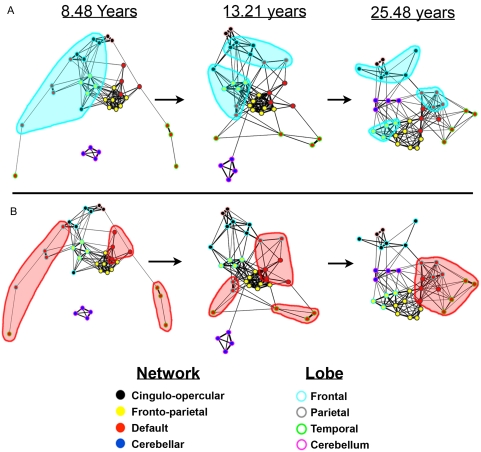
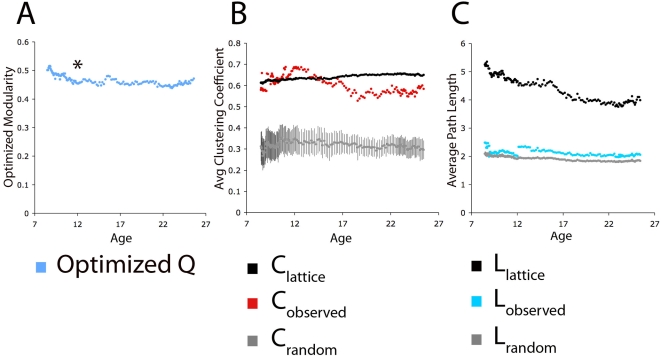
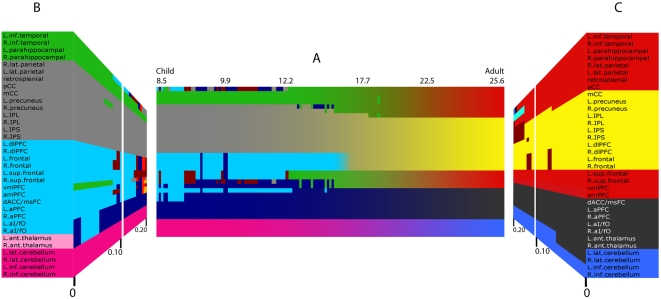
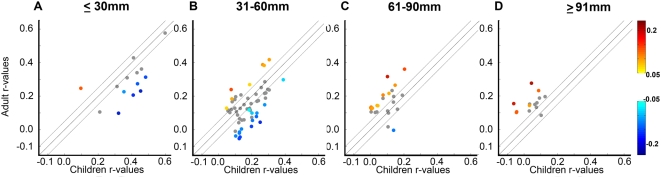
The mature human brain is organized into a collection of specialized functional networks that flexibly interact to support various cognitive functions. Studies of development often attempt to identify the organizing principles that guide the maturation of these functional networks. In this report, we combine resting state functional connectivity MRI (rs-fcMRI), graph analysis, community detection, and spring-embedding visualization techniques to analyze four separate networks defined in earlier studies. As we have previously reported, we find, across development, a trend toward 'segregation' (a general decrease in correlation strength) between regions close in anatomical space and 'integration' (an increased correlation strength) between selected regions distant in space. The generalization of these earlier trends across multiple networks suggests that this is a general developmental principle for changes in functional connectivity that would extend to large-scale graph theoretic analyses of large-scale brain networks. Communities in children are predominantly arranged by anatomical proximity, while communities in adults predominantly reflect functional relationships, as defined from adult fMRI studies. In sum, over development, the organization of multiple functional networks shifts from a local anatomical emphasis in children to a more "distributed" architecture in young adults. We argue that this "local to distributed" developmental characterization has important implications for understanding the development of neural systems underlying cognition. Further, graph metrics (e.g., clustering coefficients and average path lengths) are similar in child and adult graphs, with both showing "small-world"-like properties, while community detection by modularity optimization reveals stable communities within the graphs that are clearly different between young children and young adults. These observations suggest that early school age children and adults both have relatively efficient systems that may solve similar information processing problems in divergent ways.
Overview
The claims and statistics of this paper haven’t been checked yet.
Free: it reads the open-access text and checks the first 5 claims that cite a source we can check. Create a free account to check every claim.
Integrity signals
Registry
Cites
Statistics
Figures

Verification
Claims the paper makes
The claims and statistics of this paper haven’t been checked yet.
Free: it reads the open-access text and checks the first 5 claims that cite a source we can check. Create a free account to check every claim.
Claims other papers make about this one
Each is checked against this paper’s own text: does it say what the citing paper says it does?
The source backs part of the claim, not all of it — or backs it for a different population, condition or comparison.
In the citing paper
“Human neuroimaging studies have shown corresponding patterns of regional brain changes across development [12] with functional connectivity studies [13,14] suggesting refinement of local subcortical circuits precedes refinement of distal cortical ones.”
From Development of the emotional brain (2019) · cites this paper as [13]
Experimental — accuracy not yet measuredThe source backs part of the claim, not all of it — or backs it for a different population, condition or comparison.
In the citing paper
“A plausible temporal mechanism for the shifts in cognitive capacity from childhood to adulthood is a fine-tuning of circuits from subcortico-subcortical to cortico-subcortical to cortico-cortical consistent with postmortem animal studies of regional synaptic changes (Rakic et al., 1994) and functional connectivity studies (Fair et al., 2009) of refinement of local circuits preceding refinement of”
From Beyond simple models of adolescence to an integrated circuit-based account: A commentary (2016) · cites this paper as Fair et al., 2009
Experimental — accuracy not yet measuredThe source backs part of the claim, not all of it — or backs it for a different population, condition or comparison.
In the citing paper
“Evidence has converged on an executive attention network, with the anterior cingulate being the central structure, as the major network responsible for resolving cognitive conflicts (21, 22).”
From Multimodal imaging of the self-regulating developing brain (2012) · cites this paper as [21]
Experimental — accuracy not yet measuredThe source backs part of the claim, not all of it — or backs it for a different population, condition or comparison.
In the citing paper
“Prior work in fMRI using this modularity algorithm required that the researcher set an arbitrary threshold, or cutoff point, for what constitutes similarity between any two given individuals. Researchers would then arrive at thresholds by looking for consistency in community detection results at multiple thresholds (e.g., [2], [21], [22]).”
From Organizing Heterogeneous Samples Using Community Detection of GIMME-Derived Resting State Functional Networks (2014) · cites this paper as [22]
Experimental — accuracy not yet measuredThe source backs part of the claim, not all of it — or backs it for a different population, condition or comparison.
In the citing paper
“The functional network studies have consistently shown no statistical difference in global topological properties between children and adults”
From Developmental Changes in Organization of Structural Brain Networks (2013) · cites this paper as Fair et al. 2009
Experimental — accuracy not yet measured
5 more claims about this paper
Create a free account to see every claim other papers make about this one.
Self-check
Percentages, sums and reported differences re-computed from the paper’s own numbers.
The self-check needs the paper’s full text.
Citations
Cites
Controlling the False Discovery Rate: A Practical and Powerful Approach to Multiple Testing
Benjamini, Y., & Hochberg, Y. (1995) · Journal of the Royal Statistical Society Series B: Statistical Methodology · doi:10.1111/j.2517-6161.1995.tb02031.x · Cited by 109,482 · cited 1×
“To account for multiple comparisons the Benjamini and Hochberg False Discovery Rate [97] was applied.”
MethodCollective dynamics of ‘small-world’ networks
Watts, D. J., & Strogatz, S. H. (1998) · Nature · doi:10.1038/30918 · Cited by 43,060 · cited 1×
“long-range processes. It is this hybrid graph topology (i.e., high clustering coefficients and short path lengths) that matches the observed “small world” networks in many complex systems”
BackgroundModularity and community structure in networks
Newman, M. E. J. (2006) · Proceedings of the National Academy of Sciences · doi:10.1073/pnas.0601602103 · Cited by 12,256 · cited 5×
“As stated by Newman: ‘‘A good division of a graph into communities is not merely one in which there are few edges between communities; it is one in which there are fewer than expected edges between communities.”
BackgroundMethodInfluentialA default mode of brain function
Raichle, M. E., MacLeod, A. M., Snyder, A. Z., Powers, W. J., Gusnard, D. A., & Shulman, G. L. (2001) · Proceedings of the National Academy of Sciences · doi:10.1073/pnas.98.2.676 · Cited by 12,190 · cited 2×
“While the distinct function of the default mode network is often linked to internally directed mental activity [39], this notion continues to be debated [25,32,41–44].”
Functional connectivity in the motor cortex of resting human brain using echo‐planar mri
Biswal, B., Zerrin Yetkin, F., Haughton, V. M., & Hyde, J. S. (1995) · Magnetic Resonance in Medicine · doi:10.1002/mrm.1910340409 · Cited by 9,812
The human brain is intrinsically organized into dynamic, anticorrelated functional networks
Fox, M. D., Snyder, A. Z., Vincent, J. L., Corbetta, M., Van Essen, D. C., & Raichle, M. E. (2005) · Proceedings of the National Academy of Sciences · doi:10.1073/pnas.0504136102 · Cited by 8,553 · cited 3×
“Resting-state fcMRI analyses have repeatedly shown that these regions, along with associated medial temporal regions, are correlated at rest in adults [15,16,32,40].”
Distributed hierarchical processing in the primate cerebral cortex
Felleman, D. J., & Van Essen, D. C. (1991) · Cerebral Cortex · doi:10.1093/cercor/1.1.1 · Cited by 7,783 · cited 1×
“Increased myelination is thought to proceed from primary sensory and motor regions to association areas [68– 71], roughly following the hierarchical organization introduced by Felleman and Van Essen [72] (Note that while the most frequently referenced neuroanatomical changes that occur throughout development have been…”
BackgroundDissociable intrinsic connectivity networks for salience processing and executive control
Seeley, W. W., Menon, V., Schatzberg, A. F., Keller, J., Glover, G. H., Kenna, H., Reiss, A. L., & Greicius, M. D. (2007) · The Journal of Neuroscience · doi:10.1523/jneurosci.5587-06.2007 · Cited by 7,426 · cited 3×
“In addition, several previous findings using this technique [21,22,32] have now been replicated using continuous resting blocks [27,33,34] and other continuous resting data [89].”
BackgroundMethodFunctional connectivity in the resting brain: a network analysis of the default mode hypothesis
Greicius, M. D., Krasnow, B., Reiss, A. L., & Menon, V. (2003) · Proceedings of the National Academy of Sciences · doi:10.1073/pnas.0135058100 · Cited by 6,358 · cited 1×
“Resting-state fcMRI analyses have repeatedly shown that these regions, along with associated medial temporal regions, are correlated at rest in adults [15,16,32,40].”
BackgroundThe brainweb: phase synchronization and large-scale integration
Varela, F., Lachaux, J.-P., Rodriguez, E., & Martinerie, J. (2001) · Nature Reviews Neuroscience · doi:10.1038/35067550 · Cited by 4,761 · cited 1×
“In adults, spontaneous correlated activity has been suggested to be important for gating information flow [54], building internal representations [43,44,54], and maintaining mature network relationships [43,44,54].”
Background
Cited by
Items 601–700 of 1,003
Joint embedding: A scalable alignment to compare individuals in a connectivity space
Nenning, K., Xu, T., Schwartz, E., Arroyo, J., Wöehrer, A., Franco, A. R., Vogelstein, J. T., Margulies, D. S., Liu, H., Smallwood, J., et al. (2020) · NeuroImage · doi:10.1016/j.neuroimage.2020.117232 · Cited by 45
Seven Properties of Self-Organization in the Human Brain
Dresp, B. (2020) · Big Data and Cognitive Computing · doi:10.3390/bdcc4020010 · Cited by 51
“principles of long-range cortical-cortical functional connectivity. Early visual cortical areas such as V1 and V2 already show a functional organization beyond strictly local hierarchical connections [58,60]. The prefrontal, temporal, and limbic areas display “functional hubs” [56], projecting long-range connections a…”
BackgroundIntrinsic Brain Connectivity Related to Age in Young and Middle Aged Adults
Hampson, M., Tokoglu, F., Shen, X., Scheinost, D., Papademetris, X., & Constable, R. T. (2012) · PLoS ONE · doi:10.1371/journal.pone.0044067 · Cited by 39
Reduced Volume of the Arcuate Fasciculus in Adults with High-Functioning Autism Spectrum Conditions
Moseley, R. L., Correia, M., Baron‐Cohen, S., Юрьевич, Ш. Ю., Pulvermüller, F., & Mohr, B. (2016) · Frontiers in Human Neuroscience · doi:10.3389/fnhum.2016.00214 · Cited by 43
“…substantial changes in structural and functional connectivity of the brain (Mukherjee et al., 2002; Nagy et al., 2004; Barnea-Goraly et al., 2005; Fair et al., 2009; Asato et al., 2010), which might be another reason for lack of arcuate difference in the McGrath study (McGrath et al., 2013).”
BackgroundClinical subcategorization of minimally conscious state according to resting functional connectivity
Aubinet, C., Larroque, S. K., Heine, L., Martial, C., Majerus, S., Laureys, S., & Perri, C. D. (2018) · Human Brain Mapping · doi:10.1002/hbm.24303 · Cited by 43
Emergence and organization of adult brain function throughout child development
Yates, T. S., Ellis, C. T., & Turk‐Browne, N. B. (2020) · NeuroImage · doi:10.1016/j.neuroimage.2020.117606 · Cited by 43
Liu, J., Chen, Y., Stephens, R. L., Cornea, E. A., Goldman, B. D., Gilmore, J. H., & Gao, W. (2021) · Cortex · doi:10.1016/j.cortex.2021.02.005 · Cited by 44
Parcellation in Left Lateral Parietal Cortex Is Similar in Adults and Children
Barnes, K. A., Nelson, S. M., Cohen, A. L., Power, J. D., Coalson, R. S., Miezin, F. M., Vogel, A. C., Dubis, J. W., Church, J. A., Petersen, S. E., et al. (2012) · Cerebral Cortex · doi:10.1093/cercor/bhr189 · Cited by 38
“Structural connectivity (Asato et al. 2010) and functional connectivity (Fair et al. 2007, 2008, 2009; Stevens et al. 2009; Dosenbach et al. 2010 but see Supekar et al. 2010) differences throughout childhood and adolescent development have also been documented in LLPC.”
BackgroundMethodResultInfluentialSelf-citationSu, L., An, J., Ma, Q., Qiu, S., & Hu, D. (2015) · American Journal of Neuroradiology · doi:10.3174/ajnr.a4346 · Cited by 41
“Several age-related studies have reported that the weakening of shortrange connectivity and the strengthening of long-range connectivity during aging are driven by functional segregation and integration, respectively.(14,46,47) In addition, a published article reported that patients with mTLE demonstrated decreased lo…”
BackgroundDefault Mode Connectivity in Youth With Perinatally Acquired HIV
Herting, M. M., Uban, K. A., Williams, P. L., Gautam, P., Huo, Y., Malee, K., Yogev, R., Csernansky, J. G., Wang, L., Nichols, S., et al. (2015) · Medicine · doi:10.1097/md.0000000000001417 · Cited by 42
“In studies with typically developing healthy children, largescale networks show a number of age-related changes, with less within-network, but greater between-network connectivity reflective of a pattern of connectivity occurring earlier in development.(22,43,44) Interestingly, in this study, we found that PHIVþ youth…”
Khundrakpam, B. S., Lewis, J. D., Jeon, S., Kostopoulos, P., Medina, Y. I., Chouinard-Decorte, F., & Evans, A. C. (2017) · Cerebral Cortex · doi:10.1093/cercor/bhx317 · Cited by 37
“…our observation of increased maturational coupling between the medial posterior cortex and the medial prefrontal cortex is consistent with a pattern of developmental increase in connectivity between brain regions that have functional links in adults (Fair et al. 2008, 2009; Supekar et al. 2010).”
BackgroundTooley, U. A., Bassett, D. S., & Mackey, A. P. (2021) · NeuroImage · doi:10.1016/j.neuroimage.2021.118843 · Cited by 47
White, T., Muetzel, R., Schmidt, M., Langeslag, S. J. E., Jaddoe, V., Hofman, A., Calhoun, V. D., Verhulst, F. C., & Tiemeier, H. (2014) · Brain Connectivity · doi:10.1089/brain.2013.0195 · Cited by 38
“While there is evidence that children show similar brain networks as those obtained in adults (de Bie et al., 2012; Fair et al., 2009; Gordon et al., 2011; Jolles et al., 2011; Langeslag et al., 2013; Stevens et al., 2009; Supekar et al., 2010; Thomason et al., 2011), the stability of these…”
BackgroundMorin, E. L., Howell, B. R., Feczko, E., Earl, E., Pincus, M., Reding, K., Kovacs-Balint, Z. A., Meyer, J. S., Styner, M., Fair, D., et al. (2020) · Development and Psychopathology · doi:10.1017/s0954579420001133 · Cited by 37
“…signal of the ventricles and white matter (derived from manually drawn masks), and first-order derivatives of these signals, and (g) low-pass (f < 0.1 Hz) temporal filter (second order Butterworth filter) (Fair et al., 2007; Fair et al., 2009; Fair et al., 2012; Miranda-Dominguez et al., 2014b).”
BackgroundMethodSelf-citationDeveloping self-regulation in early childhood
Posner, M. I., Rothbart, M. K., & Tang, Y. (2013) · Trends in Neuroscience and Education · doi:10.1016/j.tine.2013.09.001 · Cited by 50
“Resting state studies have found that during infancy and early childhood most brain networks involve short connections between adjacent areas, but the long connections that underlie self-regulation develop slowly over childhood [8].”
BackgroundBrain functional network connectivity development in very preterm infants: The first six months
He, L., & Parikh, N. A. (2016) · Early Human Development · doi:10.1016/j.earlhumdev.2016.06.002 · Cited by 45
Farah, R., Ionta, S., & Horowitz‐Kraus, T. (2021) · Frontiers in Psychology · doi:10.3389/fpsyg.2021.708863 · Cited by 45
Anterior–posterior dissociation of the default mode network in dogs
Kyathanahally, S. P., Jia, H., Pustovyy, O. M., Waggoner, P., Beyers, R. J., Schumacher, J., Barrett, J., Morrison, E. E., Salibi, N., Denney, T. S., et al. (2014) · Brain Structure and Function · doi:10.1007/s00429-013-0700-x · Cited by 41
Multiscale Network Organization in the Human Brain
Bassett, D. S., & Siebenhühner, F. (2013) · Wiley eBooks · doi:10.1002/9783527671632.ch07 · Cited by 39
Bowman, L. C., Kovelman, I., Hu, X., & Wellman, H. M. (2015) · Frontiers in Human Neuroscience · doi:10.3389/fnhum.2015.00560 · Cited by 39
Functional brain network identification and fMRI augmentation using a VAE-GAN framework
Qiang, N., Gao, J., Dong, Q., Yue, H., Liang, H., Liu, L., Yu, J., Hu, J., Zhang, S., Ge, B., et al. (2023) · Computers in Biology and Medicine · doi:10.1016/j.compbiomed.2023.107395 · Cited by 47
Resting State Networks' Corticotopy: The Dual Intertwined Rings Architecture
Mesmoudi, S., Perlbarg, V., Rudrauf, D., Messe, A., Pinsard, B., Hasboun, D., Cioli, C., Marrelec, G., Toro, R., Benali, H., et al. (2013) · PLoS ONE · doi:10.1371/journal.pone.0067444 · Cited by 36
Lee, T., & Telzer, E. H. (2016) · Developmental Cognitive Neuroscience · doi:10.1016/j.dcn.2016.06.002 · Cited by 40
Pain Neuroimaging in Humans: A Primer for Beginners and Non-Imagers
Moayedi, M., Salomons, T. V., & Atlas, L. Y. (2018) · Journal of Pain · doi:10.1016/j.jpain.2018.03.011 · Cited by 45
Control networks of the frontal lobes
Marek, S. A., & Dosenbach, N. U. F. (2019) · Handbook of clinical neurology · doi:10.1016/b978-0-12-804281-6.00018-5 · Cited by 47
Self-citationProgressive Stabilization of Brain Network Dynamics during Childhood and Adolescence
Lei, T., Liao, X., Chen, X., Zhao, T., Xu, Y., Xia, M., Zhang, J., Xia, Y., Sun, X., Wei, Y., et al. (2021) · Cerebral Cortex · doi:10.1093/cercor/bhab263 · Cited by 41
The expanding horizons of network neuroscience: From description to prediction and control
Srivastava, P., Fotiadis, P., Parkes, L., & Bassett, D. S. (2022) · NeuroImage · doi:10.1016/j.neuroimage.2022.119250 · Cited by 42
“…2007; Achard et al., 2006; Bassett et al., 2011; Bassett et al., 2008; Bassett et al., 2006; Bertolero et al., 2015; Eguiluz et al., 2005; Fair et al., 2009; Gong et al., 2009; Hagmann et al., 2008; He et al., 2007; Moussa et al., 2011; Stam, 2004; Tijms et al., 2012; van den Heuvel et…”
Swingler, M. M., Perry, N. B., Calkins, S. D., & Bell, M. A. (2017) · Developmental Psychology · doi:10.1037/dev0000187 · Cited by 46
Brain and Cognitive Development
Stiles, J., Brown, T. T., Haist, F., & Jernigan, T. L. (2015) · Wiley eBooks · doi:10.1002/9781118963418.childpsy202 · Cited by 43
Development of modularity in the neural activity of childrenʼs brains
Chen, M., & Deem, M. W. (2015) · Physical Biology · doi:10.1088/1478-3975/12/1/016009 · Cited by 40
Belmonti, V., Cioni, G., & Berthoz, A. (2014) · Developmental Science · doi:10.1111/desc.12240 · Cited by 42
Network Structure among Brain Systems in Adult ADHD is Uniquely Modified by Stimulant Administration
Cary, R. P., Ray, S., Grayson, D. S., Painter, J. G., Carpenter, S. D., Maron, L. M., Sporns, O., Stevens, A. A., Nigg, J. T., & Fair, D. A. (2016) · Cerebral Cortex · doi:10.1093/cercor/bhw209 · Cited by 39
Self-citationAbnormal Functional Connectivity Between Default and Salience Networks in Pediatric Bipolar Disorder
Lopez-Larson, M. P., Shah, L. M., Weeks, H. R., King, J. B., Mallik, A. K., Yurgelun-Todd, D. A., & Anderson, J. S. (2016) · Biological Psychiatry Cognitive Neuroscience and Neuroimaging · doi:10.1016/j.bpsc.2016.10.001 · Cited by 39
“There is evidence that brain connectivity matures during development through integration of distant brain regions into more coherent functional networks and separation or segregation of distinct distributed brain networks(66, 67) with development of anticorrelations between the DMN and brain attentional networks inclu…”
BackgroundSzostakiwskyj, J. M. H., Willatt, S. E., Cortese, F., & Protzner, A. B. (2017) · PLoS ONE · doi:10.1371/journal.pone.0181894 · Cited by 41
Achterberg, M., Bakermans-Kranenburg, M. J., van Ijzendoorn, M. H., van der Meulen, M., Tottenham, N., & Crone, E. A. (2018) · NeuroImage · doi:10.1016/j.neuroimage.2018.03.076 · Cited by 35
Aboud, K. S., Huo, Y., Kang, H., Ealey, A., Resnick, S. M., Landman, B. A., & Cutting, L. E. (2018) · Human Brain Mapping · doi:10.1002/hbm.24359 · Cited by 36
“more distributed topologies in young adulthood (Fair et al., 2009).”
BackgroundNeuroimaging Findings in Adolescents and Young Adults with Anorexia Nervosa: A Systematic Review
Kappou, K., Ntougia, M., Kourtesi, A., Panagouli, E. D., Vlachopapadopoulou, E. A., Michalacos, S., Gonidakis, F., Mastorakos, G., Ψαλτοπούλου, Θ., Tsolia, M. N., et al. (2021) · Children · doi:10.3390/children8020137 · Cited by 42
Effects of prenatal opioid exposure on functional networks in infancy
Merhar, S. L., Jiang, W., Parikh, N. A., Yin, W., Zhou, Z., Tkach, J. A., Wang, L., Kline‐Fath, B. M., He, L., Braimah, A., et al. (2021) · Developmental Cognitive Neuroscience · doi:10.1016/j.dcn.2021.100996 · Cited by 39
“In the higher order networks, inter-network connections increase with age, due to the multimodal nature of these higher order functions (Bertolero et al., 2017, 2015; Fair et al., 2009).”
BackgroundWang, X., Song, Y., Zhen, Z., & Liu, J. (2016) · Human Brain Mapping · doi:10.1002/hbm.23145 · Cited by 44
“…history in facial expression tasks leads to strengthened intrinsic connectivity between the pSTS and other regions, and these regions maintain meaningful inherent interaction for better task performance even during resting-state [Fair et al., 2008; Fair et al., 2009; Fair et al., 2007].”
BackgroundPietto, M. L., Giovannetti, F., Segretin, M. S., Belloli, L. M. L., Lopez‐Rosenfeld, M., Goldin, A. P., Slezak, D. F., Kamienkowski, J. E., & Lipina, S. J. (2018) · Trends in Neuroscience and Education · doi:10.1016/j.tine.2018.11.004 · Cited by 40
Horowitz‐Kraus, T., Hutton, J., Phelan, K. J., & Holland, S. K. (2018) · Brain and Cognition · doi:10.1016/j.bandc.2018.01.003 · Cited by 38
Development of spatial orientation skills: an fMRI study
Murias, K., Slone, E., Tariq, S., & Iaria, G. (2019) · Brain Imaging and Behavior · doi:10.1007/s11682-018-0028-5 · Cited by 37
Altered brain white matter connectome in children and adolescents with prenatal alcohol exposure
Long, X., Little, G. E., Treit, S., Beaulieu, C., Gong, G., & Lebel, C. A. (2020) · Brain Structure and Function · doi:10.1007/s00429-020-02064-z · Cited by 36
Brooks, S. J., Parks, S. M., & Stamoulis, C. (2021) · Cerebral Cortex · doi:10.1093/cercor/bhab126 · Cited by 43
Disconnectome of the migraine brain: a “connectopathy” model
Silvestro, M., Tessitore, A., Caiazzo, G., di Clemente, F. S., Trojsi, F., Cirillo, M., Esposito, F., Tedeschi, G., & Russo, A. (2021) · The Journal of Headache and Pain · doi:10.1186/s10194-021-01315-6 · Cited by 37
Parental education, cognition and functional connectivity of the salience network
Čermáková, P., Chlapečka, A., Csajbók, Z., Andrýsková, L., Brázdil, M., & Marečková, K. (2023) · Scientific Reports · doi:10.1038/s41598-023-29508-w · Cited by 43
Dissociated multimodal hubs and seizures in temporal lobe epilepsy
Douw, L., Desalvo, M. N., Tanaka, N., Cole, A. J., Liu, H., Reinsberger, C., & Stufflebeam, S. M. (2015) · Annals of Clinical and Translational Neurology · doi:10.1002/acn3.173 · Cited by 37
Wang, H., Chen, C., & Fushing, H. (2012) · PLoS ONE · doi:10.1371/journal.pone.0045502 · Cited by 33
A hierarchical model of early brain functional network development
Gao, W. (2025) · Trends in Cognitive Sciences · doi:10.1016/j.tics.2025.04.001 · Cited by 53
A neuroscience perspective on sexual risk behavior in adolescence and emerging adulthood
Victor, E. C., & Hariri, A. R. (2016) · Development and Psychopathology · doi:10.1017/s0954579415001042 · Cited by 33
Zillé, P., Calhoun, V. D., Stephen, J. M., Wilson, T. W., & Wang, Y. (2017) · IEEE Transactions on Medical Imaging · doi:10.1109/tmi.2017.2721640 · Cited by 33
“A significant number of studies have been conducted to gain insight about the changes in brain functional activity that occur throughout childhood and adolescence [2], [3].”
BackgroundValidation of Network Communicability Metrics for the Analysis of Brain Structural Networks
Andreotti, J., Jann, K., Melie‐García, L., Giezendanner, S., Abela, E., Wiest, R., Dierks, T., & Federspiel, A. (2014) · PLoS ONE · doi:10.1371/journal.pone.0115503 · Cited by 34
“This idea is interesting, because even if we would generally expect information to flow through the most direct connections, it is also true that subnetworks in the brain may work in parallel when solving a specific task [8, 38].”
BackgroundGroote, S. D., Goudman, L., Peeters, R. R., Linderoth, B., Schuerbeek, P. V., Sunaert, S. G., Jaeger, M. D., Smedt, A. D., & Moens, M. (2019) · Neuromodulation Technology at the Neural Interface · doi:10.1111/ner.12954 · Cited by 33
Anderson, J. S., Zielinski, B. A., Nielsen, J. A., & Ferguson, M. A. (2013) · Human Brain Mapping · doi:10.1002/hbm.22251 · Cited by 33
“Given that temporal complexity of BOLD fluctuations was significantly associated with local connectivity, we also evaluated whether known network changes in fcMRI during late neurodevelopment [Dosenbach et al., 2010; Fair et al., 2007, 2009] may be associated with changes in power law exponent.”
Aberrant local striatal functional connectivity in attention‐deficit/hyperactivity disorder
von Rhein, D. T., Oldehinkel, M., Beckmann, C. F., Oosterlaan, J., Heslenfeld, D. J., Hartman, C. A., Hoekstra, P. J., Franke, B., Cools, R., Buitelaar, J. K., et al. (2016) · Journal of Child Psychology and Psychiatry · doi:10.1111/jcpp.12529 · Cited by 38
“…development or maturation of functional brain networks has been characterized by both a decrease in short-range, local connectivity strength (segregation) and a simultaneous increase in the strength of long-range, global functional connectivity (integration) (Fair et al., 2009; Kelly et al., 2009).”
Charting moment-to-moment brain signal variability from early to late childhood
Miskovic, V., Owens, M., Kuntzelman, K. M., & Gibb, B. E. (2016) · Cortex · doi:10.1016/j.cortex.2016.07.006 · Cited by 38
“…amplitude but more precisely coordinated (Liu, Woltering, & Lewis, 2014; Mathes, Khalaidovski, Wienke, Schmiedt-Fehr, & Basar-Eroglu, 2016; Papenberg, H€ammerer, Müller, Lindenberger, & Li, 2013; Uhlhaas et al., 2009) and globally integrated (Fair et al., 2009; Supekar, Musen, & Menon, 2009).”
Tao, J., Jiang, X., Wang, X., Liu, H., Qian, A., Yang, C., Chen, H., Li, J., Ye, Q., Wang, J., et al. (2017) · Frontiers in Psychiatry · doi:10.3389/fpsyt.2017.00246 · Cited by 35
Duan, J., Xia, M., Womer, F. Y., Chang, M., Yin, Z., Zhou, Q., Zhu, Y., Zhuang, L., Jiang, X., Wei, S., et al. (2019) · Human Brain Mapping · doi:10.1002/hbm.24518 · Cited by 36
Mixed-Effect Time-Varying Network Model and Application in Brain Connectivity Analysis
Zhang, J., Sun, W. W., & Li, L. (2019) · Journal of the American Statistical Association · doi:10.1080/01621459.2019.1677242 · Cited by 46
Individual Uniqueness in the Neonatal Functional Connectome
Wang, Q., Xu, Y., Zhao, T., Xu, Z., He, Y., & Liao, X. (2021) · Cerebral Cortex · doi:10.1093/cercor/bhab041 · Cited by 37
Altered motor network recruitment during finger tapping in boys with tourette syndrome
Roessner, V., Wittfoth, M., Schmidt‐Samoa, C., Rothenberger, A., Dechent, P., & Baudewig, J. (2011) · Human Brain Mapping · doi:10.1002/hbm.21240 · Cited by 39
Wass, S. V. (2021) · Developmental Review · doi:10.1016/j.dr.2021.100978 · Cited by 38
EEG Emotion Classification Based on Graph Convolutional Network
Fan, Z., Chen, F., Xia, X., & Liu, Y. (2024) · Applied Sciences · doi:10.3390/app14020726 · Cited by 37
Zhang, R., Murray, S. B., Duval, C. J., Wang, D. J. J., & Jann, K. (2024) · Psychiatry Research · doi:10.1016/j.psychres.2024.115794 · Cited by 35
“…increased functional connectivity is predominantly between anterior nodes of the network and one might speculate that this represents a developmental stage of the network of increased short-range connectivity before long-range distributed network connections are established (Fair et al., 2009).”
Liu, Y., Moser, J. S., & Aviyente, S. (2014) · IEEE Transactions on Biomedical Engineering · doi:10.1109/tbme.2013.2296778 · Cited by 34
Developmental Reorganization of the Cognitive Network in Pediatric Epilepsy
Garcia‐Ramos, C., Lin, J. J., Prabhakaran, V., & Hermann, B. P. (2015) · PLoS ONE · doi:10.1371/journal.pone.0141186 · Cited by 34
Scheuer, H., Alarcón, G., Demeter, D. V., Earl, E., Fair, D. A., & Nagel, B. J. (2017) · Psychiatry Research Neuroimaging · doi:10.1016/j.pscychresns.2017.05.012 · Cited by 36
Self-citationDevelopment of brain-wide connectivity architecture in awake rats
Ma, Z., Ma, Y., & Zhang, N. (2018) · NeuroImage · doi:10.1016/j.neuroimage.2018.05.009 · Cited by 34
“Importantly, these results provide strong evidence supporting a long-standing hypothesis in the literature that the brain development is accompanied by changed local segregation and distant integration (Fair et al., 2007, 2009).”
The emergence of long-range language network structural covariance and language abilities
Qi, T., Schaadt, G., Cafiero, R., Bräuer, J., Skeide, M. A., & Friederici, A. D. (2019) · NeuroImage · doi:10.1016/j.neuroimage.2019.02.014 · Cited by 34
Dufford, A. J., Evans, G. W., Dmitrieva, J., Swain, J. E., Liberzon, I., & Kim, P. (2020) · Human Brain Mapping · doi:10.1002/hbm.25031 · Cited by 33
“We know that a critical aspect of brain development is the gradual process of integration of information across brain regions and that more mature circuitry can communicate across distant brain regions with greater efficiency (Fair et al., 2007; Fair et al., 2009).”
Yang, F. N., Liu, T. T., & Wang, Z. (2022) · Human Brain Mapping · doi:10.1002/hbm.25772 · Cited by 34
Kaiser, A., Broeder, C. E., Cohen, J. R., Douw, L., Reneman, L., & Schrantee, A. (2022) · Human Brain Mapping · doi:10.1002/hbm.25981 · Cited by 33
“…adults display a more segregated architecture in the frontoparietal network, including the dorsal basal ganglia (i.e., caudate nucleus) (Fair et al., 2009), possibly through changes in the dopamine system in the frontal cortex (Rosenberg & Lewis, 1994; Lidow et al., 1991; Lidow &…”
BackgroundEarly pathogenic care and the development of ADHD-like symptoms
Dahmen, B., Puetz, V. B., Herpertz‐Dahlmann, B., & Konrad, K. (2012) · Journal of Neural Transmission · doi:10.1007/s00702-012-0809-8 · Cited by 40
Weber, A. M., Soreni, N., & Noseworthy, M. D. (2014) · Progress in Neuro-Psychopharmacology and Biological Psychiatry · doi:10.1016/j.pnpbp.2014.04.001 · Cited by 32
“RSNs in children are typically anatomically localized, with more globally distributed architecture appearing in late adolescence or young adulthood (Fair et al., 2009).”
BackgroundResultInfluentialSheese, B. E., Rothbart, M. K., Voelker, P., & Posner, M. I. (2012) · Child Development Research · doi:10.1155/2012/863242 · Cited by 36
“The frequent finding of increased variability of attention in children with ADHD may reflect their susceptibility to environmental influence, particularly during the time executive attention connectivity is developing [14].”
BackgroundInfluentialProtracted Development of the Proprioceptive Brain Network During and Beyond Adolescence
Cignetti, F., Fontan, A., Menant, J. C., Nazarian, B., Anton, J., Vaugoyeau, M., & Assaiante, C. (2016) · Cerebral Cortex · doi:10.1093/cercor/bhv323 · Cited by 39
“Further resting-state fMRI studies corroborate a shift from a more local arrangement of the networks in children to amore distributed organization in adults (Fair, Dosenbach, et al. 2007; Fair, Schlaggar, et al. 2007; Fair et al. 2009; Supekar et al. 2009).”
BackgroundResultThe Development of Visuospatial Processing
Stiles, J., Akshoomoff, N. A., & Haist, F. (2013) · Elsevier eBooks · doi:10.1016/b978-0-12-397267-5.00058-3 · Cited by 36
Zuo, M., Xu, Y., Zhang, X., Li, M., Jia, X., Niu, J., Li, D., Han, Y., & Yang, Y. (2019) · Frontiers in Neurology · doi:10.3389/fneur.2018.01177 · Cited by 30
“Previous studies have shown that normal brain development experiences local to holistic tissue patterns, which are important for revealing the neural mechanisms of cognition (24).”
BackgroundFractionating adaptive learning: A meta-analysis of the reversal learning paradigm
Yaple, Z. A., & Yu, R. (2019) · Neuroscience & Biobehavioral Reviews · doi:10.1016/j.neubiorev.2019.04.006 · Cited by 35
Functional connectivity of language networks after perinatal stroke
Carlson, H. L., Sugden, C., Brooks, B. L., & Kirton, A. (2019) · NeuroImage Clinical · doi:10.1016/j.nicl.2019.101861 · Cited by 32
“…magnetic resonance imaging (fMRI) confirms that strongly left-lateralized, perisylvian networks involving inferior frontal gyrus (IFG), superior temporal gyrus (STG) and middle temporal gyrus (MTG) often mediate key language processes (Ardila et al., 2016; Friederici, 2011; Poldrack et al., 1999).”
A graph theory study of resting-state functional connectivity in children with Tourette syndrome
Openneer, T. J. C., Marsman, J.-B. C., van der Meer, D., Forde, N. J., Akkermans, S. E. A., Naaijen, J., Buitelaar, J. K., Dietrich, A., & Hoekstra, P. J. (2020) · Cortex · doi:10.1016/j.cortex.2020.01.006 · Cited by 37
Fair, D. A., Dosenbach, N. U. F., Moore, A. H., Satterthwaite, T. D., & Milham, M. P. (2021) · Annual Review of Developmental Psychology · doi:10.1146/annurev-devpsych-121318-085124 · Cited by 35
“This FC pattern was due to the inhibition of nonspecific local spread and reinforcement of distal links, suggesting that cognition develops through modules and integration across networks (Bunge & Wright 2007, Fair et al. 2009, Uddin 2011, Uddin et al. 2011).”
BackgroundSelf-citationDynamic Systems Approaches: Cool Enough? Hot Enough?
Lewis, M. D. (2011) · Child Development Perspectives · doi:10.1111/j.1750-8606.2011.00190.x · Cited by 38
“At the developmental time scale, long-distance cortical networks converge from the interactions of component populations over many episodes of learning (e.g., Fair et al., 2009).”
BackgroundVaroquaux, G. P., Gramfort, A., Poline, J.-B., & Thirion, B. (2012) · Journal of Physiology-Paris · doi:10.1016/j.jphysparis.2012.01.001 · Cited by 35
Sporns, O. (2020) · doi:10.1093/med/9780198713005.003.0013 · Cited by 29
Hill, A. T., Bailey, N. W., Zomorrodi, R., Hadas, I., Kirkovski, M., Das, S., Lum, J. A. G., & Enticott, P. G. (2023) · Human Brain Mapping · doi:10.1002/hbm.26525 · Cited by 38
Reduced brain resting-state network specificity in infants compared with adults
Wylie, K., Rojas, D., Ross, R., Hunter, S., Maharajh, K., Cornier, M.-A., & Tregellas, J. (2014) · Neuropsychiatric Disease and Treatment · doi:10.2147/ndt.s63773 · Cited by 29
“…evidence strongly suggests that within a given network, children tend to exhibit reduced interregional connectivity compared with adults, 9,14,20,28 which is consistent with a developmental framework of increasing segregation and compartmentalization of brain regions and networks through…”
Larsen, B., Verstynen, T. D., Yeh, F.-C., & Luna, B. (2018) · Cerebral Cortex · doi:10.1093/cercor/bhx162 · Cited by 29
Ferradal, S. L., Gagoski, B. A., Jaimes, C. E., Yi, F., Carruthers, C., Vu, C., Litt, J. S., Larsen, R. J., Sutton, B. P., Grant, P. E., et al. (2018) · Cerebral Cortex · doi:10.1093/cercor/bhy028 · Cited by 32
Salvia, É., Tissier, C., Charron, S., Hérent, P., Vidal, J., Lion, S., Cassotti, M., Oppenheim, C., Houdé, O., Borst, G., et al. (2019) · Developmental Cognitive Neuroscience · doi:10.1016/j.dcn.2019.100664 · Cited by 33
“…the fronto-parietal and the cingulo-opercular networks, with decreased short-range connections (correlations between close regions, i.e., ‘segregation’) and increased long-range connections (correlations between distant regions, i.e., ‘integration’) during development (Fair et al., 2007, 2009).”
BackgroundConnectome development and a novel extension to the neurodevelopmental model of schizophrenia
Collin, G., & Keshavan, M. S. (2018) · Dialogues in Clinical Neuroscience · doi:10.31887/dcns.2018.20.2/gcollin · Cited by 32
Abnormal prediction error processing in schizophrenia and depression
Yaple, Z. A., Tolomeo, S., & Yu, R. (2021) · Human Brain Mapping · doi:10.1002/hbm.25453 · Cited by 29
“…and a frontal network may account for multiple executive operations independently or may operate together during a single cognitive process (Dosenbach et al., 2007; Dosenbach, Fair, Cohen, Schlaggar, & Petersen, 2008; Fair et al., 2009; Gratton et al., 2017; Velanova, Wheeler, & Luna, 2008).”
BackgroundGu, C., Liu, Z., & Woltering, S. (2022) · Brain Communications · doi:10.1093/braincomms/fcac054 · Cited by 31
Adhikari, M. H., Beharelle, A. R., Griffa, A., Hagmann, P., Solodkin, A., McIntosh, A. R., Small, S. L., & Deco, G. (2015) · Journal of Neuroscience · doi:10.1523/jneurosci.4560-14.2015 · Cited by 35
Liu, J., Zhao, L., Nan, J., Li, G., Xiong, S., von Deneen, K. M., Gong, Q., Liang, F., Qin, W., & Tian, J. (2013) · Experimental Neurology · doi:10.1016/j.expneurol.2013.04.012 · Cited by 34
Neural systems underlying motivated behavior in adolescence: Implications for preventive medicine
Richards, J., Plate, R. C., & Ernst, M. (2011) · Preventive Medicine · doi:10.1016/j.ypmed.2011.11.016 · Cited by 29
“Additionally, studies of resting state functional connectivity across development are emerging (Fair et al., 2009; Stevens et al., 2009), and may provide insight into the functional balance across the Triadic nodes in different contexts.”
BackgroundYip, S. W., & Potenza, M. N. (2016) · Clinical Psychology Review · doi:10.1016/j.cpr.2016.11.003 · Cited by 32
“…to increasingly distributed connectivity (characterized by long-range connections) during adolescence into adulthood (although the most dramatic changes occur during infancy and very early childhood) (Di Martino et al., 2014; Dosenbach et al., 2010; Fair et al., 2009; Satterthwaite et al., 2013).”
Breukelaar, I. A., Williams, L. M., Antees, C., Grieve, S. M., Foster, S., Gomes, L. J., & Korgaonkar, M. S. (2018) · Human Brain Mapping · doi:10.1002/hbm.24342 · Cited by 33
„Default-mode“-Netzwerk des Gehirns: Neurobiologie und klinische Bedeutung
Otti, A., Gündel, H., Wohlschläger, A., Zimmer, C., Sorg, C., & Noll‐Hussong, M. (2011) · Der Nervenarzt · doi:10.1007/s00115-011-3307-6 · Cited by 35
Altered functional connectivity in the fear network of firefighters with repeated traumatic stress
Jeong, H. S., Park, S., Dager, S. R., Lim, S. M., Lee, S. L., Hong, H., Ma, J., Ha, E., Hong, Y. S., Kang, I., et al. (2018) · The British Journal of Psychiatry · doi:10.1192/bjp.2018.260 · Cited by 31
Metadata
- Authors
- Fair, D. A., Cohen, A. L., Power, J. D., Dosenbach, N. U. F., Church, J. A., Miezin, F. M., Schlaggar, B. L., & Petersen, S. E.
- Affiliations
- Oregon Health & Science University (US)
- Washington University in St. Louis (US)
- Corresponding author
- Fair, Damien A.
- Petersen, Steven E.
- ORCID
- Venue
- PLoS Computational Biology
- Publisher
- Public Library of Science (PLoS)
- Published
- 2009-05-01
- Volume
- 5
- Issue
- 5
- Pages
- e1000381
- ISSN
- 1553-734X (ISSN-L)
- 1553-7358
- PMC
- PMC2671306
- OpenAlex
- W2159549823
- Cited by
- 1,530
- References
- 104
- Citations by year
- 2026: 69 · 2025: 78 · 2024: 89 · 2023: 66 · 2022: 87 · 2021: 78 · 2020: 86 · 2019: 103 · 2018: 109 · 2017: 95 · 2016: 102 · 2015: 107 · 2014: 106 · 2013: 113 · 2012: 84
- FWCI
- 39.01
- Type
- journal article
- Language
- en
- Open access
- gold
- doi.org
- Locations
- PLoS Computational Biology (publishedVersion, cc-by)
- PubMed Central (publishedVersion, cc-by)
- PubMed (publishedVersion)
- Digital Commons@Becker (Washington University School of Medicine) (submittedVersion)
- RePEc: Research Papers in Economics (submittedVersion)
- DOAJ (DOAJ: Directory of Open Access Journals) (submittedVersion, cc-by-sa)
- Figshare (submittedVersion, cc-by)
- Funders
- National Science Foundation (0548890)
- Dana Foundation
- Wellcome Trust
- National Institutes of Health
- National Institute of Neurological Disorders and Stroke (R01NS046424, K02NS053425, F30NS062489, NS46424, NS 41255, NS062489, R21NS041255, NS053425)
- Topics
- Life Sciences › Neuroscience › Cognitive Neuroscience › Functional Brain Connectivity Studies
- Health Sciences › Medicine › Radiology, Nuclear Medicine and Imaging › Advanced Neuroimaging Techniques and Applications
- Physical Sciences › Physics and Astronomy › Statistical and Nonlinear Physics › Complex Network Analysis Techniques
- Keywords
- functional brain networks, brain development, resting-state functional connectivity, integration and segregation, community detection, small-world networks, graph theory, children and young adults, modularity optimization, cognitive development
- MeSH terms
- Adolescent, Adult, Brain, Child, Humans, Magnetic Resonance Imaging, Models, Neurological, Nerve Net, Neural Pathways
About these checks
Registry, retraction, Cites and statistics results are computed, not judged, with one exception: a printed reference that no index lists is read once by a model before it counts as a citation error. Claims are extracted by a model and kept only when their quote appears verbatim in the text; each cited source is then checked, with a model’s help, for whether it says what the claim relies on. Those verdicts can be wrong — read the claim’s quote and the cited source before relying on one.
Statistics and arithmetic are recomputed, not judged.
Confidence bands are shown only for fields calibrated on our annotated test set. None is calibrated yet, so no band is shown.
What counts as a claim ›How we measure confidence ›How we check this ›
Are you an author, or do you see a problem with this page? Request a review
Data sources
Bibliographic data: Semantic Scholar, OpenAlex, Crossref.
Contains information from the Semantic Scholar Academic Graph Datasets, made available under the ODC Attribution License (ODC-BY 1.0).
Semantic Scholar’s data is described in: Kinney, R., et al. (2023). The Semantic Scholar Open Data Platform. arXiv:2301.10140.
