

Functional brain networks develop from a local to distributed organization
Open accessThe DOI matches its Crossref record; 103 of the 104 references it cites were found in a registry or an index.
Abstract
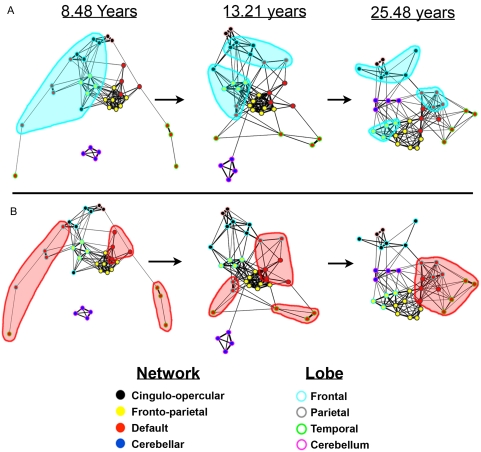
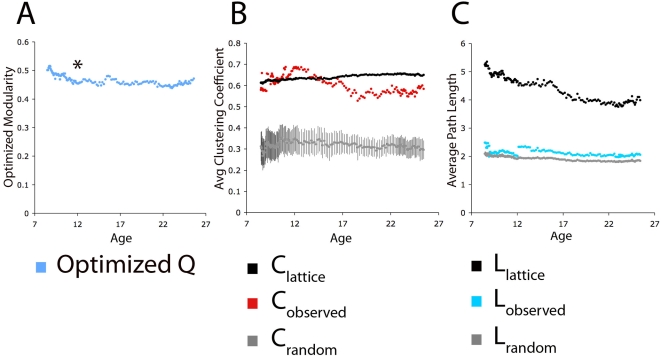
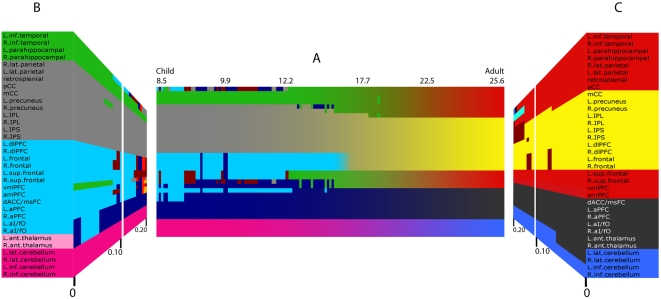
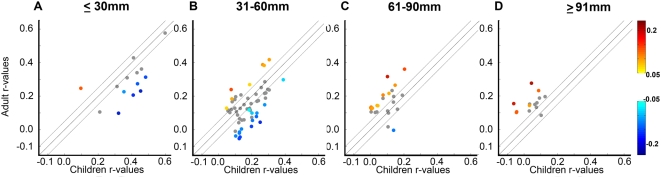
The mature human brain is organized into a collection of specialized functional networks that flexibly interact to support various cognitive functions. Studies of development often attempt to identify the organizing principles that guide the maturation of these functional networks. In this report, we combine resting state functional connectivity MRI (rs-fcMRI), graph analysis, community detection, and spring-embedding visualization techniques to analyze four separate networks defined in earlier studies. As we have previously reported, we find, across development, a trend toward 'segregation' (a general decrease in correlation strength) between regions close in anatomical space and 'integration' (an increased correlation strength) between selected regions distant in space. The generalization of these earlier trends across multiple networks suggests that this is a general developmental principle for changes in functional connectivity that would extend to large-scale graph theoretic analyses of large-scale brain networks. Communities in children are predominantly arranged by anatomical proximity, while communities in adults predominantly reflect functional relationships, as defined from adult fMRI studies. In sum, over development, the organization of multiple functional networks shifts from a local anatomical emphasis in children to a more "distributed" architecture in young adults. We argue that this "local to distributed" developmental characterization has important implications for understanding the development of neural systems underlying cognition. Further, graph metrics (e.g., clustering coefficients and average path lengths) are similar in child and adult graphs, with both showing "small-world"-like properties, while community detection by modularity optimization reveals stable communities within the graphs that are clearly different between young children and young adults. These observations suggest that early school age children and adults both have relatively efficient systems that may solve similar information processing problems in divergent ways.
Overview
The claims and statistics of this paper haven’t been checked yet.
Free: it reads the open-access text and checks the first 5 claims that cite a source we can check. Create a free account to check every claim.
Integrity signals
Registry
Cites
Statistics
Figures

Verification
Claims the paper makes
The claims and statistics of this paper haven’t been checked yet.
Free: it reads the open-access text and checks the first 5 claims that cite a source we can check. Create a free account to check every claim.
Claims other papers make about this one
Each is checked against this paper’s own text: does it say what the citing paper says it does?
The source backs part of the claim, not all of it — or backs it for a different population, condition or comparison.
In the citing paper
“Human neuroimaging studies have shown corresponding patterns of regional brain changes across development [12] with functional connectivity studies [13,14] suggesting refinement of local subcortical circuits precedes refinement of distal cortical ones.”
From Development of the emotional brain (2019) · cites this paper as [13]
Experimental — accuracy not yet measuredThe source backs part of the claim, not all of it — or backs it for a different population, condition or comparison.
In the citing paper
“A plausible temporal mechanism for the shifts in cognitive capacity from childhood to adulthood is a fine-tuning of circuits from subcortico-subcortical to cortico-subcortical to cortico-cortical consistent with postmortem animal studies of regional synaptic changes (Rakic et al., 1994) and functional connectivity studies (Fair et al., 2009) of refinement of local circuits preceding refinement of”
From Beyond simple models of adolescence to an integrated circuit-based account: A commentary (2016) · cites this paper as Fair et al., 2009
Experimental — accuracy not yet measuredThe source backs part of the claim, not all of it — or backs it for a different population, condition or comparison.
In the citing paper
“Evidence has converged on an executive attention network, with the anterior cingulate being the central structure, as the major network responsible for resolving cognitive conflicts (21, 22).”
From Multimodal imaging of the self-regulating developing brain (2012) · cites this paper as [21]
Experimental — accuracy not yet measuredThe source backs part of the claim, not all of it — or backs it for a different population, condition or comparison.
In the citing paper
“Prior work in fMRI using this modularity algorithm required that the researcher set an arbitrary threshold, or cutoff point, for what constitutes similarity between any two given individuals. Researchers would then arrive at thresholds by looking for consistency in community detection results at multiple thresholds (e.g., [2], [21], [22]).”
From Organizing Heterogeneous Samples Using Community Detection of GIMME-Derived Resting State Functional Networks (2014) · cites this paper as [22]
Experimental — accuracy not yet measuredThe source backs part of the claim, not all of it — or backs it for a different population, condition or comparison.
In the citing paper
“The functional network studies have consistently shown no statistical difference in global topological properties between children and adults”
From Developmental Changes in Organization of Structural Brain Networks (2013) · cites this paper as Fair et al. 2009
Experimental — accuracy not yet measured
5 more claims about this paper
Create a free account to see every claim other papers make about this one.
Self-check
Percentages, sums and reported differences re-computed from the paper’s own numbers.
The self-check needs the paper’s full text.
Citations
Cites
Controlling the False Discovery Rate: A Practical and Powerful Approach to Multiple Testing
Benjamini, Y., & Hochberg, Y. (1995) · Journal of the Royal Statistical Society Series B: Statistical Methodology · doi:10.1111/j.2517-6161.1995.tb02031.x · Cited by 109,482 · cited 1×
“To account for multiple comparisons the Benjamini and Hochberg False Discovery Rate [97] was applied.”
MethodCollective dynamics of ‘small-world’ networks
Watts, D. J., & Strogatz, S. H. (1998) · Nature · doi:10.1038/30918 · Cited by 43,060 · cited 1×
“long-range processes. It is this hybrid graph topology (i.e., high clustering coefficients and short path lengths) that matches the observed “small world” networks in many complex systems”
BackgroundModularity and community structure in networks
Newman, M. E. J. (2006) · Proceedings of the National Academy of Sciences · doi:10.1073/pnas.0601602103 · Cited by 12,256 · cited 5×
“As stated by Newman: ‘‘A good division of a graph into communities is not merely one in which there are few edges between communities; it is one in which there are fewer than expected edges between communities.”
BackgroundMethodInfluentialA default mode of brain function
Raichle, M. E., MacLeod, A. M., Snyder, A. Z., Powers, W. J., Gusnard, D. A., & Shulman, G. L. (2001) · Proceedings of the National Academy of Sciences · doi:10.1073/pnas.98.2.676 · Cited by 12,190 · cited 2×
“While the distinct function of the default mode network is often linked to internally directed mental activity [39], this notion continues to be debated [25,32,41–44].”
Functional connectivity in the motor cortex of resting human brain using echo‐planar mri
Biswal, B., Zerrin Yetkin, F., Haughton, V. M., & Hyde, J. S. (1995) · Magnetic Resonance in Medicine · doi:10.1002/mrm.1910340409 · Cited by 9,812
The human brain is intrinsically organized into dynamic, anticorrelated functional networks
Fox, M. D., Snyder, A. Z., Vincent, J. L., Corbetta, M., Van Essen, D. C., & Raichle, M. E. (2005) · Proceedings of the National Academy of Sciences · doi:10.1073/pnas.0504136102 · Cited by 8,553 · cited 3×
“Resting-state fcMRI analyses have repeatedly shown that these regions, along with associated medial temporal regions, are correlated at rest in adults [15,16,32,40].”
Distributed hierarchical processing in the primate cerebral cortex
Felleman, D. J., & Van Essen, D. C. (1991) · Cerebral Cortex · doi:10.1093/cercor/1.1.1 · Cited by 7,783 · cited 1×
“Increased myelination is thought to proceed from primary sensory and motor regions to association areas [68– 71], roughly following the hierarchical organization introduced by Felleman and Van Essen [72] (Note that while the most frequently referenced neuroanatomical changes that occur throughout development have been…”
BackgroundDissociable intrinsic connectivity networks for salience processing and executive control
Seeley, W. W., Menon, V., Schatzberg, A. F., Keller, J., Glover, G. H., Kenna, H., Reiss, A. L., & Greicius, M. D. (2007) · The Journal of Neuroscience · doi:10.1523/jneurosci.5587-06.2007 · Cited by 7,426 · cited 3×
“In addition, several previous findings using this technique [21,22,32] have now been replicated using continuous resting blocks [27,33,34] and other continuous resting data [89].”
BackgroundMethodFunctional connectivity in the resting brain: a network analysis of the default mode hypothesis
Greicius, M. D., Krasnow, B., Reiss, A. L., & Menon, V. (2003) · Proceedings of the National Academy of Sciences · doi:10.1073/pnas.0135058100 · Cited by 6,358 · cited 1×
“Resting-state fcMRI analyses have repeatedly shown that these regions, along with associated medial temporal regions, are correlated at rest in adults [15,16,32,40].”
BackgroundThe brainweb: phase synchronization and large-scale integration
Varela, F., Lachaux, J.-P., Rodriguez, E., & Martinerie, J. (2001) · Nature Reviews Neuroscience · doi:10.1038/35067550 · Cited by 4,761 · cited 1×
“In adults, spontaneous correlated activity has been suggested to be important for gating information flow [54], building internal representations [43,44,54], and maintaining mature network relationships [43,44,54].”
Background
Cited by
BrainNet Viewer: A Network Visualization Tool for Human Brain Connectomics
Xia, M., Wang, J., & He, Y. (2013) · PLoS ONE · doi:10.1371/journal.pone.0068910 · Cited by 4,106
The economy of brain network organization
Bullmore, E., & Sporns, O. (2012) · Nature Reviews Neuroscience · doi:10.1038/nrn3214 · Cited by 3,284
Toward discovery science of human brain function
Biswal, B. B., Mennes, M., Zuo, X.-N., Gohel, S., Kelly, C., Smith, S. M., Beckmann, C. F., Adelstein, J. S., Buckner, R. L., Colcombe, S., et al. (2010) · Proceedings of the National Academy of Sciences · doi:10.1073/pnas.0911855107 · Cited by 2,970
Self-citationNetwork-based statistic: identifying differences in brain networks
Zalesky, A., Fornito, A., & Bullmore, E. T. (2010) · NeuroImage · doi:10.1016/j.neuroimage.2010.06.041 · Cited by 2,750
“In the caseof functionalMRI, electroencephalography or magnetoencephalography, temporal correlations (Achard et al., 2006; Deuker et al., 2009; Fair et al., 2009; Hayasaka & Laurienti, 2010; Honey et al., 2009; Li et al., 2009) or mutual information (Bassett et al.”
BackgroundExperimental and theoretical approaches to conscious processing
Dehaene, S., & Changeux, J.-P. (2011) · Neuron · doi:10.1016/j.neuron.2011.03.018 · Cited by 2,573
Network hubs in the human brain
van den Heuvel, M. P., & Sporns, O. (2013) · Trends in Cognitive Sciences · doi:10.1016/j.tics.2013.09.012 · Cited by 2,123
Prediction of individual brain maturity using fMRI
Dosenbach, N. U. F., Nardos, B., Cohen, A. L., Fair, D. A., Power, J. D., Church, J. A., Nelson, S. M., Wig, G. S., Vogel, A. C., Lessov-Schlaggar, C. N., et al. (2010) · Science · doi:10.1126/science.1194144 · Cited by 2,183
Self-citationVan Dijk, K. R. A., Hedden, T., Venkataraman, A., Evans, K. C., Lazar, S. W., & Buckner, R. L. (2010) · Journal of Neurophysiology · doi:10.1152/jn.00783.2009 · Cited by 1,844
The connectomics of brain disorders
Fornito, A., Zalesky, A., & Breakspear, M. (2015) · Nature Reviews Neuroscience · doi:10.1038/nrn3901 · Cited by 1,734
Function in the human connectome: task-fMRI and individual differences in behavior
Barch, D. M., Burgess, G. C., Harms, M. P., Petersen, S. E., Schlaggar, B. L., Corbetta, M., Glasser, M. F., Curtiss, S., Dixit, S., Feldt, C., et al. (2013) · NeuroImage · doi:10.1016/j.neuroimage.2013.05.033 · Cited by 1,529
Self-citationDefault Mode Network Activity and Connectivity in Psychopathology
Whitfield-Gabrieli, S., & Ford, J. M. (2012) · Annual Review of Clinical Psychology · doi:10.1146/annurev-clinpsy-032511-143049 · Cited by 1,465
GRETNA: a graph theoretical network analysis toolbox for imaging connectomics
Wang, J., Wang, X., Xia, M., Liao, X., Evans, A., & He, Y. (2015) · Frontiers in Human Neuroscience · doi:10.3389/fnhum.2015.00386 · Cited by 1,422
“…Labeling atlas (AAL-90; Tzourio-Mazoyer et al., 2002) and Harvard-Oxford atlas (HOA-112; Kennedy et al., 1998; Makris et al., 1999) and the functionally defined Dos160 (Dosenbach et al., 2006, 2010), Crad-200 (Craddock et al., 2012), Power-264 (Power et al., 2011) and Fair-34 (Fair et al., 2009).”
The human connectome: a complex network
Sporns, O. (2011) · Annals of the New York Academy of Sciences · doi:10.1111/j.1749-6632.2010.05888.x · Cited by 1,394
Modular and hierarchically modular organization of brain networks
Meunier, D., Lambiotte, R., & Bullmore, E. T. (2010) · Frontiers in Neuroscience · doi:10.3389/fnins.2010.00200 · Cited by 1,156
“Two of these studies investigated the influence of normal aging on the modular structure: Meunier et al. (2009b) focused on the adult period (healthy controls from 25-to 65-years old); whereas Fair et al. (2009) focused on adolescence and early adulthood (healthy controls from 7-to 31-years old).”
BackgroundIndividual Variability in Functional Connectivity Architecture of the Human Brain
Mueller, S., Wang, D., Fox, M. D., Yeo, B. T. T., Sepulcre, J., Sabuncu, M. R., Shafee, R., Lu, J., & Liu, H. (2013) · Neuron · doi:10.1016/j.neuron.2012.12.028 · Cited by 1,141
“Functional development of the human brain is characterized by a general trend toward increases in connectivity across widely distributed regions, conceptualized as the development of a ‘local to distributed’ organization (Fair et al., 2009).”
BackgroundConsensus Paper: The Cerebellum's Role in Movement and Cognition
Koziol, L. F., Budding, D., Andreasen, N., D’Arrigo, S., Bulgheroni, S., Imamizu, H., Ito, M., Manto, M., Marvel, C., Parker, K., et al. (2014) · The Cerebellum · doi:10.1007/s12311-013-0511-x · Cited by 1,133
“This progress comes within the context of a larger movement toward understanding the human brain as functioning as an ensemble, rather than a fragmented collection of regions and abilities [258 – 261].”
BackgroundResting-State fMRI: A Review of Methods and Clinical Applications
Lee, M. H., Smyser, C. D., & Shimony, J. S. (2013) · American Journal of Neuroradiology · doi:10.3174/ajnr.a3263 · Cited by 1,129
Satterthwaite, T. D., Wolf, D. H., Loughead, J., Ruparel, K., Elliott, M. A., Hakonarson, H., Gur, R. C., & Gur, R. E. (2012) · NeuroImage · doi:10.1016/j.neuroimage.2011.12.063 · Cited by 1,125
“Our findings replicate prior reports of developing connectivity in youth (Dosenbach et al., 2010; Fair et al., 2009), demonstrating that increasing age is associated with enhanced long-range connectivity (primarily between the PCC and MPFC) and diminished out-of-network (primarily short-range)…”
BackgroundResultInfluentialStructure and function of complex brain networks
Sporns, O. (2013) · Dialogues in Clinical Neuroscience · doi:10.31887/dcns.2013.15.3/osporns · Cited by 932
Disease and the brain's dark energy
Zhang, D., & Raichle, M. E. (2010) · Nature Reviews Neurology · doi:10.1038/nrneurol.2009.198 · Cited by 912
Weight-conserving characterization of complex functional brain networks
Rubinov, M., & Sporns, O. (2011) · NeuroImage · doi:10.1016/j.neuroimage.2011.03.069 · Cited by 889
“For instance, recent characterizations partitioned complex resting-state functional MRI networks into modules which correspond to visual, attention, default mode and other “simple” networks (Fair et al., 2009; He et al., 2009; Meunier et al., 2009) and identified prominent central brain regions in heteromodal associat…”
BackgroundResultThe NKI-Rockland Sample: A Model for Accelerating the Pace of Discovery Science in Psychiatry
Nooner, K. B., Colcombe, S. J., Tobe, R. H., Mennes, M., Benedict, M. M., Moreno, A. L., Panek, L. J., Brown, S., Zavitz, S. T., Li, Q., et al. (2012) · Frontiers in Neuroscience · doi:10.3389/fnins.2012.00152 · Cited by 806
“…hopeful that normative assessments of brain development, maturation, and aging can be obtained (Evans and Brain Development Cooperative Group, 2006; Fair et al., 2007, 2008, 2009; Church et al., 2009a,b; Kelly et al., 2009; Dosenbach et al., 2010; Giedd and Rapoport, 2010; Zuo et al., 2010; Allen…”
BackgroundBetzel, R. F., Byrge, L., He, Y., Goñi, J., Zuo, X.-N., & Sporns, O. (2014) · NeuroImage · doi:10.1016/j.neuroimage.2014.07.067 · Cited by 807
“In contrast, aging studies have demonstrated the opposite effect, with RSNs exhibiting decreased FC (Andrews-Hanna et al., 2007; Ferreira and Busatto, 2013; Geerlings et al., 2014).”
ResultThe development of human functional brain networks
Power, J. D., Fair, D. A., Schlaggar, B. L., & Petersen, S. E. (2010) · Neuron · doi:10.1016/j.neuron.2010.08.017 · Cited by 751
Self-citationZuo, X.-N., Kelly, C., Adelstein, J. S., Klein, D. F., Castellanos, F. X., & Milham, M. P. (2010) · NeuroImage · doi:10.1016/j.neuroimage.2009.10.080 · Cited by 744
Interactive Specialization: A domain-general framework for human functional brain development?
Johnson, M. H. (2011) · Developmental Cognitive Neuroscience · doi:10.1016/j.dcn.2010.07.003 · Cited by 722
“However, the increase in functional connectivity during development may occur after the relevant long-range fibre bundles are in place (see Fair et al., 2009; Supekar et al., 2009 for discussion) suggesting that we still require an account of why functional connectivity may expand from local to…”
Farahani, F. V., Karwowski, W., & Lighthall, N. R. (2019) · Frontiers in Neuroscience · doi:10.3389/fnins.2019.00585 · Cited by 718
“Some have argued for little change in modularity during brain development (Fair et al., 2009) and aging (Meunier et al., 2009), while Cao et al. reported a linear downward trend (Cao et al., 2014b).”
BackgroundSchizophrenia, neuroimaging and connectomics
Fornito, A., Zalesky, A., Pantelis, C., & Bullmore, E. T. (2012) · NeuroImage · doi:10.1016/j.neuroimage.2011.12.090 · Cited by 716
“…cite this article as: Fornito, A., et al., Schizophrenia, neur j.neuroimage.2011.12.090 identified in functional imaging studies (Dosenbach et al., 2010; Fair et al., 2009) can more accurately define functionally homogeneous regions, but they are difficult to apply to structural imaging data.”
BackgroundInfluentialGraph theoretical modeling of brain connectivity
He, Y., & Evans, A. (2010) · Current Opinion in Neurology · doi:10.1097/wco.0b013e32833aa567 · Cited by 700
White matter maturation reshapes structural connectivity in the late developing human brain
Hagmann, P., Sporns, O., Madan, N., Cammoun, L., Pienaar, R., Wedeen, V. J., Meuli, R., Thiran, J.-P., & Grant, P. E. (2010) · Proceedings of the National Academy of Sciences · doi:10.1073/pnas.1009073107 · Cited by 700
Imaging brain development: The adolescent brain
Blakemore, S.-J. (2012) · NeuroImage · doi:10.1016/j.neuroimage.2011.11.080 · Cited by 649
Can structure predict function in the human brain?
Honey, C. J., Thivierge, J.-P., & Sporns, O. (2010) · NeuroImage · doi:10.1016/j.neuroimage.2010.01.071 · Cited by 629
“While diffusion-imaging based SC mapping is yet to be systematically assessed across the course of human brain development, several cross-sectional studies have examined the developmental trajectories of FC (Fair et al., 2007; Fair et al., 2009; Supekar et al., 2009).”
Developmental neurobiology of cognitive control and motivational systems.
Somerville, L. H., & Casey, B. (2010) · Current Opinion in Neurobiology · doi:10.1016/j.conb.2010.01.006 · Cited by 634
Dynamic functional reorganization of the motor execution network after stroke
Wang, L., Yu, C., Chen, H., Qin, W., He, Y., Fan, F., Zhang, Y., Wang, M., Li, K., Zang, Y., et al. (2010) · Brain · doi:10.1093/brain/awq043 · Cited by 629
Graph-based network analysis of resting-state functional MRI
Wang, J. (2010) · Frontiers in Systems Neuroscience · doi:10.3389/fnsys.2010.00016 · Cited by 614
Moment-to-moment brain signal variability: A next frontier in human brain mapping?
Garrett, D. D., Samanez-Larkin, G. R., MacDonald, S. W. S., Lindenberger, U., McIntosh, A. R., & Grady, C. L. (2013) · Neuroscience & Biobehavioral Reviews · doi:10.1016/j.neubiorev.2013.02.015 · Cited by 585
Nicotine and the adolescent brain
Yuan, M., Cross, S. J., Loughlin, S. E., & Leslie, F. M. (2015) · The Journal of Physiology · doi:10.1113/jp270492 · Cited by 623
“Other studies have implicated a lack of adolescent D2 receptor function in both risk-taking and anxiolytic behaviors, with negative correlations found between those behaviors and D2 receptor levels in the nucleus accumbens (Falco et al. 2014; Mitchell et al. 2014).”
BackgroundReconceptualizing functional brain connectivity in autism from a developmental perspective
Uddin, L. Q., Supekar, K., & Menon, V. (2013) · Frontiers in Human Neuroscience · doi:10.3389/fnhum.2013.00458 · Cited by 576
“More generally, several studies have demonstrated that over development, functional brain networks shift from a local anatomical emphasis to a more distributed architecture (Fair et al., 2009; Kelly et al., 2009).”
BackgroundUnderstanding complexity in the human brain
Bassett, D. S., & Gazzaniga, M. S. (2011) · Trends in Cognitive Sciences · doi:10.1016/j.tics.2011.03.006 · Cited by 572
“Furthermore, functional [16], structural [17] and connectivity [18,19] signatures of short-term development and longer-term aging are evident, supporting the view that brain organization dynamically changes over multiple temporal and spatial scales.”
The organization of physiological brain networks
Stam, C. J., & van Straaten, E. C. W. (2012) · Clinical Neurophysiology · doi:10.1016/j.clinph.2012.01.011 · Cited by 567
“In general, network studies of brain development are in agreement with the notion of a movement toward an optimal HMN organization (Boersma et al., 2011; Fair et al., 2009; Micheloyannis et al., 2009; Yap et al., 2011).”
BackgroundResultAn Integrative Model of the Maturation of Cognitive Control
Luna, B., Marek, S., Larsen, B., Tervo-Clemmens, B., & Chahal, R. (2015) · Annual Review of Neuroscience · doi:10.1146/annurev-neuro-071714-034054 · Cited by 550
“Small-world architecture refers to the optimal organization of connections that support highly clustered subnetworks integrating through selected dedicated pathways (Bassett & Bullmore 2006), supporting efficient local and global information processing (Fair et al. 2009, Sporns & Zwi 2004).”
BackgroundThe functional architecture of the infant brain as revealed by resting-state fMRI
Fransson, P., Åden, U., Blennow, M., & Lagercrantz, H. (2011) · Cerebral Cortex · doi:10.1093/cercor/bhq071 · Cited by 542
Brain hyperconnectivity in children with autism and its links to social deficits
Supekar, K., Uddin, L. Q., Khouzam, A., Phillips, J., Gaillard, W. D., Kenworthy, L. E., Yerys, B. E., Vaidya, C. J., & Menon, V. (2013) · Cell Reports · doi:10.1016/j.celrep.2013.10.001 · Cited by 538
“The distance between two regions was computed by calculating the Euclidean distance between centroids of those regions (Fair et al., 2009; Supekar et al., 2009).”
Developing Mechanisms of Self-Regulation in Early Life
Rothbart, M. K., Sheese, B. E., Rueda, M. R., & Posner, M. I. (2011) · Emotion Review · doi:10.1177/1754073910387943 · Cited by 538
“However, the connectivity data suggest that the cingulate is not connected to other networks to influence actions until later (Fair et al., 2009).”
BackgroundInfluentialNeural language networks at birth
Perani, D., Saccuman, M. C., Scifo, P., Anwander, A., Spada, D., Baldoli, C., Poloniato, A., Lohmann, G., & Friederici, A. D. (2011) · Proceedings of the National Academy of Sciences · doi:10.1073/pnas.1102991108 · Cited by 530
Uddin, L. Q., Supekar, K. S., Ryali, S., & Menon, V. (2011) · The Journal of Neuroscience · doi:10.1523/jneurosci.4465-11.2011 · Cited by 520
“…of functional and effective connectivity across core neurocognitive brain networks Although global functional brain organization is similar in children and adults, at the subnetwork level, connectivity undergoes significant reorganization with development (Fair et al., 2009; Supekar et al., 2009).”
BackgroundWhite matter development in adolescence: A DTI study
Asato, M. R., Terwilliger, R., Woo, J., & Luna, B. (2010) · Cerebral Cortex · doi:10.1093/cercor/bhp282 · Cited by 512
“Cerebral Cortex September 2010;20:2122--2131 doi:10.1093/cercor/bhp282 Advance Access publication January 5, 2010”
InfluentialA cross-disorder connectome landscape of brain dysconnectivity
van den Heuvel, M. P., & Sporns, O. (2019) · Nature Reviews Neuroscience · doi:10.1038/s41583-019-0177-6 · Cited by 462
Evaluation of ICA-AROMA and alternative strategies for motion artifact removal in resting state fMRI
Pruim, R. H. R., Mennes, M., Buitelaar, J. K., & Beckmann, C. F. (2015) · NeuroImage · doi:10.1016/j.neuroimage.2015.02.063 · Cited by 487
“…directly interfere with current hypotheses about local and long-distance functional connectivity in the context of neurodevelopment and Autism Spectrum Disorders (ASD; Courchesne and Pierce (2005), Fair et al. (2007, 2008, 2009), Kelly et al. (2009), Dosenbach et al. (2010), Power et al. (2010)).”
BackgroundDevelopment of the emotional brain
Casey, B. J., Heller, A. S., Gee, D. G., & Cohen, A. O. (2019) · Neuroscience Letters · doi:10.1016/j.neulet.2017.11.055 · Cited by 485
“These changes in brain circuitry are consistent with resting-state functional connectivity studies showing refinement of local circuits prior to distal connections [13], and task-based functional connectivity studies showing local subcortical coupling preceding enhanced pre-”
Self-citationTopological organization of the human brain functional connectome across the lifespan
Cao, M., Wang, J.-H., Dai, Z.-J., Cao, X.-Y., Jiang, L.-L., Fan, F.-M., Song, X.-W., Xia, M.-R., Shu, N., Dong, Q., et al. (2014) · Developmental Cognitive Neuroscience · doi:10.1016/j.dcn.2013.11.004 · Cited by 440
Alexander-Bloch, A. F., Gogtay, N., Meunier, D., Birn, R., Clasen, L., Lalonde, F., Lenroot, R., Giedd, J., & Bullmore, E. T. (2010) · Frontiers in Systems Neuroscience · doi:10.3389/fnsys.2010.00147 · Cited by 480
Grayson, D. S., & Fair, D. A. (2017) · NeuroImage · doi:10.1016/j.neuroimage.2017.01.079 · Cited by 411
“These trends pointed to coherent changes that involved a dampening of non-specific local spread of activity and strengthening of long-range links, thereby facilitating cognitive development (Bunge and Wright, 2007; Fair et al., 2009; Uddin, 2011; Uddin et al., 2011).”
BackgroundInfluentialSelf-citationThe Convergence of Maturational Change and Structural Covariance in Human Cortical Networks
Alexander-Bloch, A., Raznahan, A., Bullmore, E., & Giedd, J. (2013) · The Journal of Neuroscience · doi:10.1523/jneurosci.3554-12.2013 · Cited by 462
Fair, D. A., Nigg, J. T., Iyer, S., Bathula, D., Mills, K. L., Dosenbach, N. U. F., Schlaggar, B. L., Mennes, M., Gutman, D., Bangaru, S., et al. (2013) · Frontiers in Systems Neuroscience · doi:10.3389/fnsys.2012.00080 · Cited by 463
“Consistent with prior reports (Fair et al., 2007a, 2009; Kelly et al., 2009; Supekar et al., 2009; Dosenbach et al., 2010), we found that connections that became stronger with increasing age, or “grew-up,” tended to link distant regions (i.e., long-range connections).”
MethodResultSelf-citationDecreased interhemispheric functional connectivity in autism
Anderson, J. S., Druzgal, T. J., Froehlich, A., DuBray, M. B., Lange, N., Alexander, A. L., Abildskov, T., Nielsen, J. A., Cariello, A. N., Cooperrider, J. R., et al. (2011) · Cerebral Cortex · doi:10.1093/cercor/bhq190 · Cited by 438
“In other networks, a similar pattern is seen where correlated ensembles develop locally first, with distributed networks occurring in adolescence or early adulthood (Fair et al. 2009).”
BackgroundInfluentialDevelopmental changes in the structure of the social brain in late childhood and adolescence
Mills, K. L., Lalonde, F., Clasen, L. S., Giedd, J. N., & Blakemore, S.-J. (2014) · Social Cognitive and Affective Neuroscience · doi:10.1093/scan/nss113 · Cited by 452
“As various brain networks have been shown to change in both organization and connectivity strength across adolescence (Fair et al., 2007, 2008, 2009, 2010), the social brain network may also undergo reorganization during this period.”
BackgroundBrain Development During the Preschool Years
Brown, T. T., & Jernigan, T. L. (2012) · Neuropsychology Review · doi:10.1007/s11065-012-9214-1 · Cited by 449
“Across the same age range, this study and several others have suggested that, in general, linked resting functional networks shift from a predominantly “local” organization in young children to a more “distributed” architecture in young adults (Fair et al., 2009), with greater overall connectivity at older ages (Fair…”
BackgroundRommelse, N. N. J., Geurts, H. M., Franke, B., Buitelaar, J. K., & Hartman, C. A. (2011) · Neuroscience & Biobehavioral Reviews · doi:10.1016/j.neubiorev.2011.02.015 · Cited by 429
Small-world human brain networks: Perspectives and challenges
Liao, X., Vasilakos, A. V., & He, Y. (2017) · Neuroscience & Biobehavioral Reviews · doi:10.1016/j.neubiorev.2017.03.018 · Cited by 436
Weng, S.-J., Wiggins, J. L., Peltier, S. J., Carrasco, M., Risi, S., Lord, C., & Monk, C. S. (2010) · Brain Research · doi:10.1016/j.brainres.2009.11.057 · Cited by 431
Network-level structural covariance in the developing brain
Zielinski, B. A., Gennatas, E. D., Zhou, J., & Seeley, W. W. (2010) · Proceedings of the National Academy of Sciences · doi:10.1073/pnas.1003109107 · Cited by 405
Cognitive effort drives workspace configuration of human brain functional networks
Kitzbichler, M. G., Henson, R. N. A., Smith, M. L., Nathan, P. J., & Bullmore, E. T. (2011) · The Journal of Neuroscience · doi:10.1523/jneurosci.0440-11.2011 · Cited by 427
“Nervous systems also have the complementary topological property of modularity, meaning that the network is nearly decomposable (Simon, 1962) into a set of modules comprising nodes that are densely connected to each other and sparsely connected to nodes in other modules (Newman, 2006; Chen et al., 2008; Fair et al., 2…”
BackgroundThe Organization of Local and Distant Functional Connectivity in the Human Brain
Sepulcre, J., Liu, H., Talukdar, T., Martincorena, I., Yeo, B. T. T., & Buckner, R. L. (2010) · PLoS Computational Biology · doi:10.1371/journal.pcbi.1000808 · Cited by 424
“An expanded analysis of the phenomenon demonstrated that childhood development is characterized by a general trend toward increases in functional connectivity across widely distributed regions conceptualized as the development of a ‘local to distributed’ organization [70].”
BackgroundWang, J.-H., Zuo, X.-N., Gohel, S., Milham, M. P., Biswal, B. B., & He, Y. (2011) · PLoS ONE · doi:10.1371/journal.pone.0021976 · Cited by 416
“, [46,47]), the thresholding procedure was performed on both the whole correlation matrices consisting of positive and negative connections and positive correlation matrices consisting of only positive connections (i.”
MethodThe Neonatal Connectome During Preterm Brain Development
van den Heuvel, M. P., Kersbergen, K. J., de Reus, M. A., Keunen, K., Kahn, R. S., Groenendaal, F., de Vries, L. S., & Benders, M. J. N. L. (2015) · Cerebral Cortex · doi:10.1093/cercor/bhu095 · Cited by 386
“For commercial re-use, please contact journals. permissions@oup.com Cerebral Cortex September 2015;25:3000–3013 doi:10.1093/cercor/bhu095 Advance Access publication May 15, 2014 during adult life (Fair et al. 2007, 2009; Dosenbach et al. 2010; Power et al. 2010).”
BackgroundInfluentialEffect of alcohol use on the adolescent brain and behavior
Lees, B., Meredith, L. R., Kirkland, A. E., Bryant, B. E., & Squeglia, L. M. (2020) · Pharmacology Biochemistry and Behavior · doi:10.1016/j.pbb.2020.172906 · Cited by 411
Altered functional and structural brain network organization in autism
Rudie, J. D., Brown, J. A., Beck-Pancer, D., Hernandez, L. M., Dennis, E. L., Thompson, P. M., Bookheimer, S. Y., & Dapretto, M. (2013) · NeuroImage: Clinical · doi:10.1016/j.nicl.2012.11.006 · Cited by 411
“Structural and functional graph theoretical studies have begun to map how local and global network properties change during development (Fair et al., 2009; Hagmann et al., 2010), aging (e.g., Meunier et al., 2009) and in diseases such as schizophrenia (e.g., Bassett et al., 2008) and Alzheimer's…”
BackgroundInfluentialBaum, G. L., Ciric, R., Roalf, D. R., Betzel, R. F., Moore, T. M., Shinohara, R. T., Kahn, A. E., Vandekar, S. N., Rupert, P. E., Quarmley, M., et al. (2017) · Current Biology · doi:10.1016/j.cub.2017.04.051 · Cited by 401
“…become more distinct: connectivity within modules increases while connectivity between modules declines (Power et al., 2010; Fair et al., 2007; Fair et al., 2008; Fair et al., 2009; Dosenbach et al., 2010; Gu et al., 2015; Satterthwaite et al., 2013b; Supekar et al., 2009; Anderson et al., 2011).”
Linked Sex Differences in Cognition and Functional Connectivity in Youth
Satterthwaite, T. D., Wolf, D. H., Roalf, D. R., Ruparel, K., Erus, G., Vandekar, S., Gennatas, E. D., Elliott, M. A., Smith, A., Hakonarson, H., et al. (2015) · Cerebral Cortex · doi:10.1093/cercor/bhu036 · Cited by 381
Emergence of system roles in normative neurodevelopment
Gu, S., Satterthwaite, T. D., Medaglia, J. D., Yang, M., Gur, R. E., Gur, R. C., & Bassett, D. S. (2015) · Proceedings of the National Academy of Sciences · doi:10.1073/pnas.1502829112 · Cited by 338
Gabard-Durnam, L. J., Flannery, J., Goff, B., Gee, D. G., Humphreys, K. L., Telzer, E., Hare, T., & Tottenham, N. (2014) · NeuroImage · doi:10.1016/j.neuroimage.2014.03.038 · Cited by 372
“…that have characterized the development of positive resting-state connectivity as shifts from anatomically-local to more-distant but functionally relevant cortical connections as coupling within a network become better integrated (Fair et al., 2009; Supekar et al., 2009; Uddin et al., 2010).”
Nair, A., Treiber, J. M., Shukla, D. K., Shih, P., & Müller, R.-A. (2013) · Brain · doi:10.1093/brain/awt079 · Cited by 370
“The finding is consistent with maturation of increasingly specialized distributed networks in childhood and adolescence, in line with the theory of interactive specialization (Johnson, 2011) and evidence from functional neuroimaging (Fair et al., 2008, 2009; Supekar et al., 2009).”
Somerville, L. H., Bookheimer, S. Y., Buckner, R. L., Burgess, G. C., Curtiss, S. W., Dapretto, M., Elam, J. S., Gaffrey, M. S., Harms, M. P., Hodge, C., et al. (2018) · NeuroImage · doi:10.1016/j.neuroimage.2018.08.050 · Cited by 366
Self-citationAtypical default network connectivity in youth with attention-deficit/hyperactivity disorder
Fair, D. A., Posner, J., Nagel, B. J., Bathula, D., Dias, T. G. C., Mills, K. L., Blythe, M. S., Giwa, A., Schmitt, C. F., & Nigg, J. T. (2010) · Biological Psychiatry · doi:10.1016/j.biopsych.2010.07.003 · Cited by 354
Self-citationSimple models of human brain functional networks
Vértes, P. E., Alexander-Bloch, A. F., Gogtay, N., Giedd, J. N., Rapoport, J. L., & Bullmore, E. T. (2012) · Proceedings of the National Academy of Sciences · doi:10.1073/pnas.1111738109 · Cited by 357
Development of human brain cortical network architecture during infancy
Gao, W., Alcauter, S., Smith, J. K., Gilmore, J. H., & Lin, W. (2015) · Brain Structure and Function · doi:10.1007/s00429-014-0710-3 · Cited by 356
“While the above-mentioned studies have revealed the mature brain functional network architecture, our understanding of the early brain functional developmental process remains largely in the dark and deserves similar delineation (Power et al. 2010; Fair et al. 2008; Fair et al. 2009; Kelly et al. 2009; Supekar et al.…”
BackgroundUnraveling the Miswired Connectome: A Developmental Perspective
Di Martino, A., Fair, D. A., Kelly, C., Satterthwaite, T. D., Castellanos, F. X., Thomason, M. E., Craddock, R. C., Luna, B., Leventhal, B. L., Zuo, X.-N., et al. (2014) · Neuron · doi:10.1016/j.neuron.2014.08.050 · Cited by 353
“Specifically, in infancy (Fransson et al., 2011), and potentially prenatally (Thomason et al., 2014), communities tend to include anatomically proximal regions; with age, more distributed networks emerge (Fair et al., 2009).”
BackgroundSelf-citationA Parcellation Scheme for Human Left Lateral Parietal Cortex
Nelson, S. M., Cohen, A. L., Power, J. D., Wig, G. S., Miezin, F. M., Wheeler, M. E., Velanova, K., Donaldson, D. I., Phillips, J. S., Schlaggar, B. L., et al. (2010) · Neuron · doi:10.1016/j.neuron.2010.05.025 · Cited by 353
“Our module detection was performed with algorithms that optimize ‘‘modularity’’ (Fair et al., 2009; Newman, 2006; Newman and Girvan, 2004), a metric of modular structure in networks.”
MethodSelf-citationDevelopmental pathways to functional brain networks: emerging principles
Menon, V. (2013) · Trends in Cognitive Sciences · doi:10.1016/j.tics.2013.09.015 · Cited by 348
Functional resting-state networks are differentially affected in schizophrenia
Woodward, N. D., Rogers, B., & Heckers, S. (2011) · Schizophrenia Research · doi:10.1016/j.schres.2011.03.010 · Cited by 347
“There are prominent changes in the topography of RSNs and interactions between networks over the course of normal brain maturation (Fair et al., 2008; Fair et al., 2009; Stevens et al., 2009).”
BackgroundBrenhouse, H. C., & Andersen, S. L. (2011) · Neuroscience & Biobehavioral Reviews · doi:10.1016/j.neubiorev.2011.04.013 · Cited by 343
“In other words, development proceeds from a local to a more distributed network as different regions become more interconnected (Fair et al., 2009).”
BackgroundUddin, L. Q. (2010) · Frontiers in Systems Neuroscience · doi:10.3389/fnsys.2010.00021 · Cited by 343
“Taken together, the studies by Fair et al. (2007a, 2009), Kelly et al. (2009), and Supekar et al. (2009) suggest a developmental process of greater functional segregation in children and greater functional integration in adults at the whole-brain level, as well as in specifi c networks such as the…”
InfluentialAdolescent Tuning of Association Cortex in Human Structural Brain Networks
Váša, F., Seidlitz, J., Romero-Garcia, R., Whitaker, K. J., Rosenthal, G., Vértes, P. E., Shinn, M., Alexander-Bloch, A., Fonagy, P., Dolan, R. J., et al. (2018) · Cerebral Cortex · doi:10.1093/cercor/bhx249 · Cited by 340
“Early functional connectivity studies have reported increases in the strength of long-range and within-network functional connections (and decreases in the strength of short-range functional connections) (Fair et al. 2009; Supekar et al. 2009; Dosenbach et al. 2010).”
BackgroundSturman, D. A., & Moghaddam, B. (2011) · Neuroscience & Biobehavioral Reviews · doi:10.1016/j.neubiorev.2011.04.003 · Cited by 341
“…by a study that, using resting state functional connectivity MRI along with graph analyses, observed a shift from greater connectivity with anatomically proximal nodes to networks that were more extensively integrated across all nodes in adulthood regardless of distance (Fair et al., 2009).”
The contribution of network organization and integration to the development of cognitive control
Marek, S., Hwang, K., Foran, W., Hallquist, M. N., & Luna, B. (2015) · PLOS Biology · doi:10.1371/journal.pbio.1002328 · Cited by 337
The attentive brain: insights from developmental cognitive neuroscience
Amso, D., & Scerif, G. (2015) · Nature Reviews Neuroscience · doi:10.1038/nrn4025 · Cited by 332
Regional Homogeneity: A Multimodal, Multiscale Neuroimaging Marker of the Human Connectome
Jiang, L., & Zuo, X.-N. (2016) · The Neuroscientist · doi:10.1177/1073858415595004 · Cited by 326
The Default Mode Network in Healthy Individuals: A Systematic Review and Meta-Analysis
Mak, L. E., Minuzzi, L., MacQueen, G., Hall, G., Kennedy, S. H., & Milev, R. (2017) · Brain Connectivity · doi:10.1089/brain.2016.0438 · Cited by 326
“Some studies suggest that DMN regions are more sparsely functionally connected in children (Fair et al., 2009; Supekar et al., 2010).”
Diversity of the inferior frontal gyrus—A meta-analysis of neuroimaging studies
Liakakis, G., Nickel, J., & Seitz, R. J. (2011) · Behavioural Brain Research · doi:10.1016/j.bbr.2011.06.022 · Cited by 325
Multi-echo fMRI: A review of applications in fMRI denoising and analysis of BOLD signals
Kundu, P., Voon, V., Balchandani, P., Lombardo, M. V., Poser, B. A., & Bandettini, P. A. (2017) · NeuroImage · doi:10.1016/j.neuroimage.2017.03.033 · Cited by 321
“…have brought into question many of the compelling findings on brain function based on fMRI, for example, relating to human brain development (Fair et al., 2009). fMRI artifacts also reduce the statistical power of fMRI studies and lead to spurious findings, which has been associated with a…”
BackgroundSherman, L. E., Rudie, J. D., Pfeifer, J. H., Masten, C. L., McNealy, K., & Dapretto, M. (2014) · Developmental Cognitive Neuroscience · doi:10.1016/j.dcn.2014.08.002 · Cited by 322
The prefrontal cortex, pathological anxiety, and anxiety disorders
Kenwood, M. M., Kalin, N. H., & Barbas, H. (2022) · Neuropsychopharmacology · doi:10.1038/s41386-021-01109-z · Cited by 312
Distortions and disconnections: Disrupted brain connectivity in autism
Wass, S. (2011) · Brain and Cognition · doi:10.1016/j.bandc.2010.10.005 · Cited by 318
The neurobiology of the emotional adolescent: From the inside out
Guyer, A. E., Silk, J. S., & Nelson, E. E. (2016) · Neuroscience & Biobehavioral Reviews · doi:10.1016/j.neubiorev.2016.07.037 · Cited by 318
Alexander-Bloch, A. F., Vértes, P. E., Stidd, R., Lalonde, F., Clasen, L., Rapoport, J., Giedd, J., Bullmore, E. T., & Gogtay, N. (2013) · Cerebral Cortex · doi:10.1093/cercor/bhr388 · Cited by 315
Hwang, K., Velanova, K., & Luna, B. (2010) · The Journal of Neuroscience · doi:10.1523/jneurosci.2825-10.2010 · Cited by 314
Neural changes underlying the development of episodic memory during middle childhood
Ghetti, S., & Bunge, S. A. (2012) · Developmental Cognitive Neuroscience · doi:10.1016/j.dcn.2012.05.002 · Cited by 308
“The emergent educational neuroscience literature has only just begun to intersect with research on memory development (see Sander et al., 2012), and the time is ripe to explore the reciprocal relationships between episodic memory development over middle childhood and elementary school education.”
Immordino-Yang, M. H., Darling-Hammond, L., & Krone, C. R. (2019) · Educational Psychologist · doi:10.1080/00461520.2019.1633924 · Cited by 296
“The basic organization of these networks appears to be present at birth and to develop across the first decades of life (Fair et al., 2009; Hoff, Van den Heuvel, Benders, Kersbergen, & De Vries, 2013; Lin et al., 2008; Liu, Flax, Guise, Sukul, & Benasich, 2008; Supekar, Musen, & Menon, 2009), but…”
BackgroundGuye, M., Bettus, G., Bartolomei, F., & Cozzone, P. J. (2010) · Magnetic Resonance Materials in Physics, Biology and Medicine · doi:10.1007/s10334-010-0205-z · Cited by 299
“In this model, hubs growth with higher probability than nodes with low degree potentially explaining (at least in part) the mechanisms of preferential attachment and/or selective pruning that underlie functional networks development [31].”
Background
Metadata
- Authors
- Fair, D. A., Cohen, A. L., Power, J. D., Dosenbach, N. U. F., Church, J. A., Miezin, F. M., Schlaggar, B. L., & Petersen, S. E.
- Affiliations
- Oregon Health & Science University (US)
- Washington University in St. Louis (US)
- Corresponding author
- Fair, Damien A.
- Petersen, Steven E.
- ORCID
- Venue
- PLoS Computational Biology
- Publisher
- Public Library of Science (PLoS)
- Published
- 2009-05-01
- Volume
- 5
- Issue
- 5
- Pages
- e1000381
- ISSN
- 1553-734X (ISSN-L)
- 1553-7358
- PMC
- PMC2671306
- OpenAlex
- W2159549823
- Cited by
- 1,530
- References
- 104
- Citations by year
- 2026: 69 · 2025: 78 · 2024: 89 · 2023: 66 · 2022: 87 · 2021: 78 · 2020: 86 · 2019: 103 · 2018: 109 · 2017: 95 · 2016: 102 · 2015: 107 · 2014: 106 · 2013: 113 · 2012: 84
- FWCI
- 39.01
- Type
- journal article
- Language
- en
- Open access
- gold
- doi.org
- Locations
- PLoS Computational Biology (publishedVersion, cc-by)
- PubMed Central (publishedVersion, cc-by)
- PubMed (publishedVersion)
- Digital Commons@Becker (Washington University School of Medicine) (submittedVersion)
- RePEc: Research Papers in Economics (submittedVersion)
- DOAJ (DOAJ: Directory of Open Access Journals) (submittedVersion, cc-by-sa)
- Figshare (submittedVersion, cc-by)
- Funders
- National Science Foundation (0548890)
- Dana Foundation
- Wellcome Trust
- National Institutes of Health
- National Institute of Neurological Disorders and Stroke (R01NS046424, K02NS053425, F30NS062489, NS46424, NS 41255, NS062489, R21NS041255, NS053425)
- Topics
- Life Sciences › Neuroscience › Cognitive Neuroscience › Functional Brain Connectivity Studies
- Health Sciences › Medicine › Radiology, Nuclear Medicine and Imaging › Advanced Neuroimaging Techniques and Applications
- Physical Sciences › Physics and Astronomy › Statistical and Nonlinear Physics › Complex Network Analysis Techniques
- Keywords
- functional brain networks, brain development, resting-state functional connectivity, integration and segregation, community detection, small-world networks, graph theory, children and young adults, modularity optimization, cognitive development
- MeSH terms
- Adolescent, Adult, Brain, Child, Humans, Magnetic Resonance Imaging, Models, Neurological, Nerve Net, Neural Pathways
About these checks
Registry, retraction, Cites and statistics results are computed, not judged, with one exception: a printed reference that no index lists is read once by a model before it counts as a citation error. Claims are extracted by a model and kept only when their quote appears verbatim in the text; each cited source is then checked, with a model’s help, for whether it says what the claim relies on. Those verdicts can be wrong — read the claim’s quote and the cited source before relying on one.
Statistics and arithmetic are recomputed, not judged.
Confidence bands are shown only for fields calibrated on our annotated test set. None is calibrated yet, so no band is shown.
What counts as a claim ›How we measure confidence ›How we check this ›
Are you an author, or do you see a problem with this page? Request a review
Data sources
Bibliographic data: Semantic Scholar, OpenAlex, Crossref.
Contains information from the Semantic Scholar Academic Graph Datasets, made available under the ODC Attribution License (ODC-BY 1.0).
Semantic Scholar’s data is described in: Kinney, R., et al. (2023). The Semantic Scholar Open Data Platform. arXiv:2301.10140.
