

Functional brain networks develop from a local to distributed organization
Open accessThe DOI matches its Crossref record; 103 of the 104 references it cites were found in a registry or an index.
Abstract
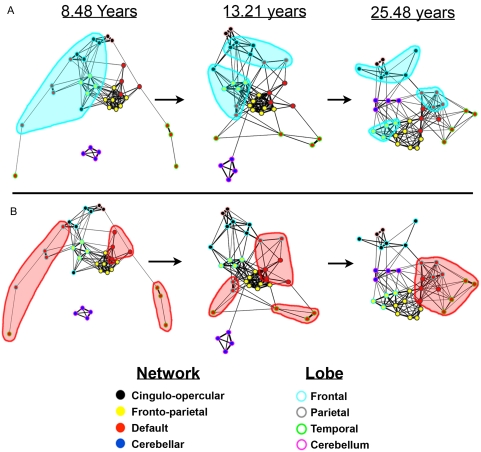
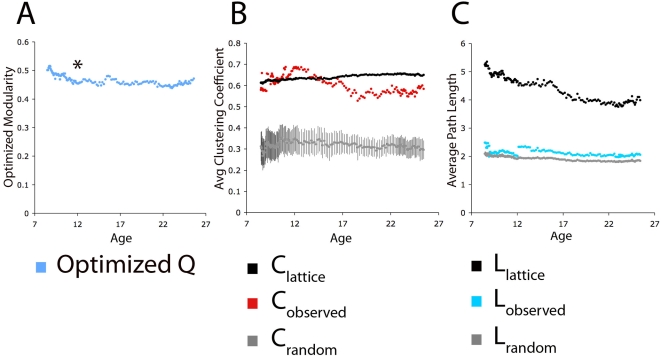
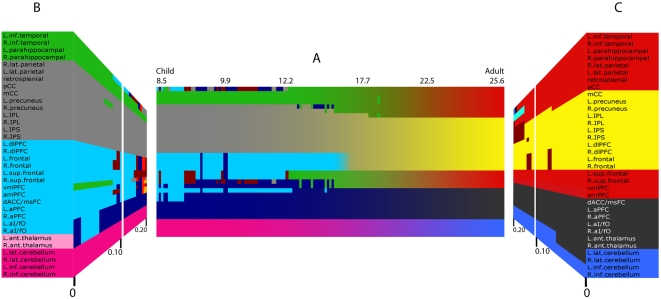
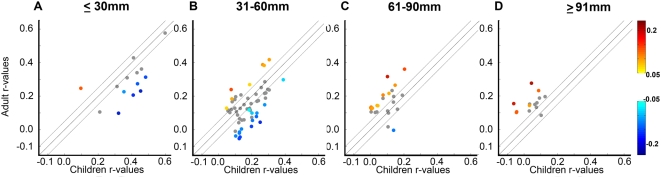
The mature human brain is organized into a collection of specialized functional networks that flexibly interact to support various cognitive functions. Studies of development often attempt to identify the organizing principles that guide the maturation of these functional networks. In this report, we combine resting state functional connectivity MRI (rs-fcMRI), graph analysis, community detection, and spring-embedding visualization techniques to analyze four separate networks defined in earlier studies. As we have previously reported, we find, across development, a trend toward 'segregation' (a general decrease in correlation strength) between regions close in anatomical space and 'integration' (an increased correlation strength) between selected regions distant in space. The generalization of these earlier trends across multiple networks suggests that this is a general developmental principle for changes in functional connectivity that would extend to large-scale graph theoretic analyses of large-scale brain networks. Communities in children are predominantly arranged by anatomical proximity, while communities in adults predominantly reflect functional relationships, as defined from adult fMRI studies. In sum, over development, the organization of multiple functional networks shifts from a local anatomical emphasis in children to a more "distributed" architecture in young adults. We argue that this "local to distributed" developmental characterization has important implications for understanding the development of neural systems underlying cognition. Further, graph metrics (e.g., clustering coefficients and average path lengths) are similar in child and adult graphs, with both showing "small-world"-like properties, while community detection by modularity optimization reveals stable communities within the graphs that are clearly different between young children and young adults. These observations suggest that early school age children and adults both have relatively efficient systems that may solve similar information processing problems in divergent ways.
Overview
The claims and statistics of this paper haven’t been checked yet.
Free: it reads the open-access text and checks the first 5 claims that cite a source we can check. Create a free account to check every claim.
Integrity signals
Registry
Cites
Statistics
Figures

Verification
Claims the paper makes
The claims and statistics of this paper haven’t been checked yet.
Free: it reads the open-access text and checks the first 5 claims that cite a source we can check. Create a free account to check every claim.
Claims other papers make about this one
Each is checked against this paper’s own text: does it say what the citing paper says it does?
The source backs part of the claim, not all of it — or backs it for a different population, condition or comparison.
In the citing paper
“Human neuroimaging studies have shown corresponding patterns of regional brain changes across development [12] with functional connectivity studies [13,14] suggesting refinement of local subcortical circuits precedes refinement of distal cortical ones.”
From Development of the emotional brain (2019) · cites this paper as [13]
Experimental — accuracy not yet measuredThe source backs part of the claim, not all of it — or backs it for a different population, condition or comparison.
In the citing paper
“A plausible temporal mechanism for the shifts in cognitive capacity from childhood to adulthood is a fine-tuning of circuits from subcortico-subcortical to cortico-subcortical to cortico-cortical consistent with postmortem animal studies of regional synaptic changes (Rakic et al., 1994) and functional connectivity studies (Fair et al., 2009) of refinement of local circuits preceding refinement of”
From Beyond simple models of adolescence to an integrated circuit-based account: A commentary (2016) · cites this paper as Fair et al., 2009
Experimental — accuracy not yet measuredThe source backs part of the claim, not all of it — or backs it for a different population, condition or comparison.
In the citing paper
“Evidence has converged on an executive attention network, with the anterior cingulate being the central structure, as the major network responsible for resolving cognitive conflicts (21, 22).”
From Multimodal imaging of the self-regulating developing brain (2012) · cites this paper as [21]
Experimental — accuracy not yet measuredThe source backs part of the claim, not all of it — or backs it for a different population, condition or comparison.
In the citing paper
“Prior work in fMRI using this modularity algorithm required that the researcher set an arbitrary threshold, or cutoff point, for what constitutes similarity between any two given individuals. Researchers would then arrive at thresholds by looking for consistency in community detection results at multiple thresholds (e.g., [2], [21], [22]).”
From Organizing Heterogeneous Samples Using Community Detection of GIMME-Derived Resting State Functional Networks (2014) · cites this paper as [22]
Experimental — accuracy not yet measuredThe source backs part of the claim, not all of it — or backs it for a different population, condition or comparison.
In the citing paper
“The functional network studies have consistently shown no statistical difference in global topological properties between children and adults”
From Developmental Changes in Organization of Structural Brain Networks (2013) · cites this paper as Fair et al. 2009
Experimental — accuracy not yet measured
5 more claims about this paper
Create a free account to see every claim other papers make about this one.
Self-check
Percentages, sums and reported differences re-computed from the paper’s own numbers.
The self-check needs the paper’s full text.
Citations
Cites
Controlling the False Discovery Rate: A Practical and Powerful Approach to Multiple Testing
Benjamini, Y., & Hochberg, Y. (1995) · Journal of the Royal Statistical Society Series B: Statistical Methodology · doi:10.1111/j.2517-6161.1995.tb02031.x · Cited by 109,482 · cited 1×
“To account for multiple comparisons the Benjamini and Hochberg False Discovery Rate [97] was applied.”
MethodCollective dynamics of ‘small-world’ networks
Watts, D. J., & Strogatz, S. H. (1998) · Nature · doi:10.1038/30918 · Cited by 43,060 · cited 1×
“long-range processes. It is this hybrid graph topology (i.e., high clustering coefficients and short path lengths) that matches the observed “small world” networks in many complex systems”
BackgroundModularity and community structure in networks
Newman, M. E. J. (2006) · Proceedings of the National Academy of Sciences · doi:10.1073/pnas.0601602103 · Cited by 12,256 · cited 5×
“As stated by Newman: ‘‘A good division of a graph into communities is not merely one in which there are few edges between communities; it is one in which there are fewer than expected edges between communities.”
BackgroundMethodInfluentialA default mode of brain function
Raichle, M. E., MacLeod, A. M., Snyder, A. Z., Powers, W. J., Gusnard, D. A., & Shulman, G. L. (2001) · Proceedings of the National Academy of Sciences · doi:10.1073/pnas.98.2.676 · Cited by 12,190 · cited 2×
“While the distinct function of the default mode network is often linked to internally directed mental activity [39], this notion continues to be debated [25,32,41–44].”
Functional connectivity in the motor cortex of resting human brain using echo‐planar mri
Biswal, B., Zerrin Yetkin, F., Haughton, V. M., & Hyde, J. S. (1995) · Magnetic Resonance in Medicine · doi:10.1002/mrm.1910340409 · Cited by 9,812
The human brain is intrinsically organized into dynamic, anticorrelated functional networks
Fox, M. D., Snyder, A. Z., Vincent, J. L., Corbetta, M., Van Essen, D. C., & Raichle, M. E. (2005) · Proceedings of the National Academy of Sciences · doi:10.1073/pnas.0504136102 · Cited by 8,553 · cited 3×
“Resting-state fcMRI analyses have repeatedly shown that these regions, along with associated medial temporal regions, are correlated at rest in adults [15,16,32,40].”
Distributed hierarchical processing in the primate cerebral cortex
Felleman, D. J., & Van Essen, D. C. (1991) · Cerebral Cortex · doi:10.1093/cercor/1.1.1 · Cited by 7,783 · cited 1×
“Increased myelination is thought to proceed from primary sensory and motor regions to association areas [68– 71], roughly following the hierarchical organization introduced by Felleman and Van Essen [72] (Note that while the most frequently referenced neuroanatomical changes that occur throughout development have been…”
BackgroundDissociable intrinsic connectivity networks for salience processing and executive control
Seeley, W. W., Menon, V., Schatzberg, A. F., Keller, J., Glover, G. H., Kenna, H., Reiss, A. L., & Greicius, M. D. (2007) · The Journal of Neuroscience · doi:10.1523/jneurosci.5587-06.2007 · Cited by 7,426 · cited 3×
“In addition, several previous findings using this technique [21,22,32] have now been replicated using continuous resting blocks [27,33,34] and other continuous resting data [89].”
BackgroundMethodFunctional connectivity in the resting brain: a network analysis of the default mode hypothesis
Greicius, M. D., Krasnow, B., Reiss, A. L., & Menon, V. (2003) · Proceedings of the National Academy of Sciences · doi:10.1073/pnas.0135058100 · Cited by 6,358 · cited 1×
“Resting-state fcMRI analyses have repeatedly shown that these regions, along with associated medial temporal regions, are correlated at rest in adults [15,16,32,40].”
BackgroundThe brainweb: phase synchronization and large-scale integration
Varela, F., Lachaux, J.-P., Rodriguez, E., & Martinerie, J. (2001) · Nature Reviews Neuroscience · doi:10.1038/35067550 · Cited by 4,761 · cited 1×
“In adults, spontaneous correlated activity has been suggested to be important for gating information flow [54], building internal representations [43,44,54], and maintaining mature network relationships [43,44,54].”
Background
Cited by
Items 501–600 of 1,003
Sato, J. R., Salum, G. A., Gadelha, A., Vieira, G., Zugman, A., Picon, F. A., Pan, P. M., Hoexter, M. Q., Anés, M., Moura, L. M., et al. (2015) · NeuroImage · doi:10.1016/j.neuroimage.2014.09.063 · Cited by 54
“…that such changes are a result of important refinements in complex neural dynamics and may ultimately reflect the organization of the human brain (Fair et al., 2009; Kelly et al., 2009; Stevens et al., 2009; Dosenbach et al., 2010; Blakemore, 2012). o Bangu, Santo André, SP, Brazil, The brain…”
InfluentialYu, X., Ferradal, S. L., Sliva, D. D., Dunstan, J., Carruthers, C., Sanfilippo, J. S., Zuk, J., Zöllei, L., Boyd, E. C., Gagoski, B. A., et al. (2021) · Cerebral Cortex · doi:10.1093/cercor/bhab230 · Cited by 65
“As maturation progresses, long-distance FC patterns among association cortices develop, coupled with the emergence of higher order cognitive functions such as executive function and language (Fair et al. 2009; Gu et al. 2015; Gao et al. 2015a, 2015b).”
BackgroundThe development of regional functional connectivity in preterm infants into early childhood
Lee, W., Morgan, B. R., Shroff, M. M., Sled, J. G., & Taylor, M. J. (2013) · Neuroradiology · doi:10.1007/s00234-013-1232-z · Cited by 64
van Soelen, I. L. C., Brouwer, R. M., Peper, J. S., van Leeuwen, M., Koenis, M. M. G., van Beijsterveldt, T. C. E. M., Swagerman, S. C., Kahn, R. S., Hulshoff Pol, H. E., & Boomsma, D. I. (2012) · Twin Research and Human Genetics · doi:10.1017/thg.2012.4 · Cited by 54
Network-dependent modulation of brain activity during sleep
Watanabe, T., Kan, S., Koike, T., Misaki, M., Konishi, S., Miyauchi, S., Miyahsita, Y., & Masuda, N. (2014) · NeuroImage · doi:10.1016/j.neuroimage.2014.04.079 · Cited by 57
“In the present study, we showed that the network activity, quantified by the basal brain activity (i.e., hi) and connection strength (i.e., |Jij|), in the DMN increases during SWS periods and decreases during REM periods, whereas the network activity in the FPN and SMN changes in the opposite pattern.”
InfluentialTime-dependence of graph theory metrics in functional connectivity analysis
Chiang, S., Cassese, A., Guindani, M., Vannucci, M., Yeh, H. J., Haneef, Z., & Stern, J. M. (2015) · NeuroImage · doi:10.1016/j.neuroimage.2015.10.070 · Cited by 59
“Various functional configurations may also exist in order to allow flexibility to support different cognitive functions (Fair et al., 2009).”
BackgroundRabinovitz, B. B., O'Neill, S., Rajendran, K., & Halperin, J. M. (2016) · Journal of Abnormal Psychology · doi:10.1037/abn0000093 · Cited by 53
Deep Collaborative Learning With Application to the Study of Multimodal Brain Development
Hu, W., Cai, B., Zhang, A., Calhoun, V. D., & Wang, Y. (2019) · IEEE Transactions on Biomedical Engineering · doi:10.1109/tbme.2019.2904301 · Cited by 58
“A number of studies [13], [42] have investigated how brain FC changes during adolescence and how it differs between different age groups, e.”
BackgroundFuchino, Y., Naoi, N., Shibata, M., Niwa, F., Kawai, M., Konishi, Y., Okanoya, K., & Myowa‐Yamakoshi, M. (2013) · PLoS ONE · doi:10.1371/journal.pone.0067432 · Cited by 55
“These studies have indicated that RSFC changes over an individual’s lifetime and there is a possibility that developmental changes of RSFC are affected by synapse formation, pruning, myelination, and experience (learning mechanisms) [24,36].”
BackgroundSensation‐to‐cognition cortical streams in attention‐deficit/hyperactivity disorder
Carmona, S., Hoekzema, E. A., Castellanos, F. X., García‐García, D., Lage‐Castellanos, A., Dijk, K. R. A. V., Navas-Sánchez, F. J., Martínez, K., Desco, M., & Sepulcre, J. (2015) · Human Brain Mapping · doi:10.1002/hbm.22790 · Cited by 64
“Maturation of brain networks entails progressing from local to distributed connectivity organization [Fair et al., 2009].”
BackgroundAltered Modular Organization of Structural Cortical Networks in Children with Autism
Shi, F., Wang, L., Peng, Z., Wee, C.-Y., & Shen, D. (2013) · PLoS ONE · doi:10.1371/journal.pone.0063131 · Cited by 51
“From the brain development point of view, it has been proposed that the early human brain prefers to integrate brain functions from regions that are anatomically close before favoring connections between further apart, otherwise known as local-to-distributed development [51].”
BackgroundA Review of Cognitive Outcomes in Children Following Perinatal Stroke
Murias, K., Brooks, B. L., Kirton, A., & Iaria, G. (2014) · Developmental Neuropsychology · doi:10.1080/87565641.2013.870178 · Cited by 52
“Data from resting state functional magnetic resonance imaging (fMRI) has shown that there is a progression from predominantly local connections to incorporation within larger scale networks throughout childhood (Fair et al., 2008, 2009).”
BackgroundSmit, D. J. A., de Geus, E. J. C., Boersma, M., Boomsma, D. I., & Stam, C. J. (2016) · Brain Connectivity · doi:10.1089/brain.2015.0359 · Cited by 57
“Similar findings of changes in (long-distance) connectivity have been reported (Dosenbach et al., 2010; Fair et al., 2009; Supekar et al., 2009).”
Dégeilh, F., Bernier, A., Leblanc, É., Daneault, V., & Beauchamp, M. H. (2018) · Developmental Cognitive Neuroscience · doi:10.1016/j.dcn.2018.06.003 · Cited by 54
Default mode network scaffolds immature frontoparietal network in cognitive development
Chen, M., He, Y., Lei, H. C., Xu, J., Tian, T., Peng, S., Zhao, G., Lu, J., Zhao, Y., Zhao, H., et al. (2022) · Cerebral Cortex · doi:10.1093/cercor/bhac414 · Cited by 61
Bonilha, L., Tabesh, A., Dabbs, K., Hsu, D., Stafstrom, C. E., Hermann, B. P., & Lin, J. J. (2014) · Human Brain Mapping · doi:10.1002/hbm.22428 · Cited by 57
“Indeed, functional modules within the brain are segregated into specialized regions, with the concurrent integration of these regions into a global network [Fair et al., 2009].”
BackgroundChildhood cognitive development as a skill
Klingberg, T. (2014) · Trends in Cognitive Sciences · doi:10.1016/j.tics.2014.06.007 · Cited by 62
Burrows, C. A., Laird, A. R., & Uddin, L. Q. (2016) · Developmental Science · doi:10.1111/desc.12400 · Cited by 51
Bagarinao, E., Watanabe, H., Maesawa, S., Mori, D., Hara, K., Kawabata, K., Yoneyama, N., Ohdake, R., Imai, K., Masuda, M., et al. (2017) · NeuroImage · doi:10.1016/j.neuroimage.2017.12.014 · Cited by 55
“However, this approach has been shown effective in previous other studies (Fair et al., 2009; Wu et al., 2013).”
Age-related changes in spatial and temporal features of resting state fMRI
Vij, S. G., Nomi, J. S., Dajani, D. R., & Uddin, L. Q. (2017) · NeuroImage · doi:10.1016/j.neuroimage.2018.02.066 · Cited by 50
Longitudinal functional brain network reconfiguration in healthy aging
Malagurski, B., Liem, F., Oschwald, J., Mérillat, S., & Jäncke, L. (2020) · Human Brain Mapping · doi:10.1002/hbm.25161 · Cited by 61
“Importantly, the architecture of these subnetworks has been shown to undergo important developmental and aging-related changes (Baum et al., 2017; Fair et al., 2009; Gu et al., 2015), with previous studies suggesting reduced functional segregation with advancing age (Cao et al., 2014; Chan, Park,…”
ResultAssociation of Childhood Violence Exposure With Adolescent Neural Network Density
Goetschius, L. G., Hein, T. C., McLanahan, S., Brooks-Gunn, J., McLoyd, V. C., Dotterer, H. L., Lopez‐Duran, N. L., Mitchell, C. M., Hyde, L. W., Monk, C. S., et al. (2020) · JAMA Network Open · doi:10.1001/jamanetworkopen.2020.17850 · Cited by 66
Subject identification using edge-centric functional connectivity
Jo, Y., Faskowitz, J., Esfahlani, F. Z., Sporns, O., & Betzel, R. F. (2021) · NeuroImage · doi:10.1016/j.neuroimage.2021.118204 · Cited by 61
Changes in Topological Organization of Functional PET Brain Network with Normal Aging
Liu, Z., Ke, L., Liu, H., Huang, W., & Hu, Z. (2014) · PLoS ONE · doi:10.1371/journal.pone.0088690 · Cited by 57
“Some recent studies reported that, along with the normal aging, small-world network showed changed topological efficiency [10,14,15,16].”
BackgroundBrain structural maturation and the foundations of cognitive behavioral development
Walhovd, K. B., Tamnes, C. K., & Fjell, A. M. (2014) · Current Opinion in Neurology · doi:10.1097/wco.0000000000000074 · Cited by 49
“Multimodal and network approaches show maturation from a local to distributed organization (6-8).”
BackgroundChurch, J. A., Wenger, K. K., Dosenbach, N. U. F., Miezin, F. M., Petersen, S. E., & Schlaggar, B. L. (2009) · Frontiers in Human Neuroscience · doi:10.3389/neuro.09.038.2009 · Cited by 54
Self-citationMüller-Oehring, E. M., Kwon, D., Nagel, B. J., Sullivan, E. V., Chu, W., Rohlfing, T., Prouty, D., Nichols, B. N., Poline, J.-B., Tapert, S. F., et al. (2018) · Cerebral Cortex · doi:10.1093/cercor/bhx014 · Cited by 50
“Findings on brain maturation of IFNs indicate shifts from spatially local to more widely distributed connectivity (Fair et al. 2007, 2008, 2009; Kelly et al. 2009; Jolles et al. 2011).”
BackgroundCao, H., McEwen, S. C., Forsyth, J. K., Gee, D. G., Bearden, C. E., Addington, J., Goodyear, B. G., Cadenhead, K. S., Mirzakhanian, H., Cornblatt, B. A., et al. (2018) · Cerebral Cortex · doi:10.1093/cercor/bhy032 · Cited by 54
“2011) and variations therein related to neural development (Fair et al. 2009), aging (Meunier et al.”
BackgroundToward a neural basis for peer-interaction: what makes peer-learning tick?
Clark, I., & Dumas, G. (2015) · Frontiers in Psychology · doi:10.3389/fpsyg.2015.00028 · Cited by 67
“, and Figueiredo, L. (2003). Patterns of intersubjectivity in the constitution of subjectivity: dimensions of otherness.”
BackgroundInfluentialA posterior-to-anterior shift of brain functional dynamics in aging
Zhang, H., Lee, A., & Qiu, A. (2017) · Brain Structure and Function · doi:10.1007/s00429-017-1425-z · Cited by 51
“We preserved only positive correlations in each network graph (Fair et al. 2009), and only considered the network graphs with sparsity ranging from 0.1 to 0.4 for the following analysis (Achard and Bullmore 2007).”
MethodInfluentialXie, W., Mallin, B. M., & Richards, J. E. (2018) · Developmental Science · doi:10.1111/desc.12703 · Cited by 57
Bhatt, R. R., Gupta, A., Mayer, E. A., & Zeltzer, L. K. (2019) · Pediatric Research · doi:10.1038/s41390-019-0689-9 · Cited by 62
Mishra, J., Sagar, R., Parveen, S., Kumaran, S., Modi, K., Maric, V., Ziegler, D., & Gazzaley, A. (2020) · Translational Psychiatry · doi:10.1038/s41398-020-0820-z · Cited by 49
Dynamics of Top‐Down Control and Motor Networks in Parkinson's Disease
Chen, L., Bédard, P., Hallett, M., & Horovitz, S. G. (2021) · Movement Disorders · doi:10.1002/mds.28461 · Cited by 55
Callard, F. J., & Margulies, D. S. (2011) · Subjectivity · doi:10.1057/sub.2011.11 · Cited by 56
Interhemispheric alpha-band hypoconnectivity in children with autism spectrum disorder
Dickinson, A. H., DiStefano, C., Lin, Y.-Y., Scheffler, A. W., Şentürk, D., & Jeste, S. (2018) · Behavioural Brain Research · doi:10.1016/j.bbr.2018.04.026 · Cited by 50
Wehrle, F. M., Michels, L., Guggenberger, R., Huber, R., Latal, B., Tuura, R., & Hagmann, C. F. (2018) · NeuroImage Clinical · doi:10.1016/j.nicl.2018.10.002 · Cited by 61
Wilkey, E. D., & Price, G. R. (2018) · Human Brain Mapping · doi:10.1002/hbm.24422 · Cited by 51
Using Developmental Science to Distinguish Adolescents and Adults Under the Law
Steinberg, L. D., & Icenogle, G. (2019) · Annual Review of Developmental Psychology · doi:10.1146/annurev-devpsych-121318-085105 · Cited by 55
Jasińska, K. K., Shuai, L., Lau, A. N.-L., Frost, S. J., Landi, N., & Pugh, K. R. (2020) · Developmental Science · doi:10.1111/desc.13041 · Cited by 58
“Increased long-range frontal to temporal reading task-related connectivity is thought to support higher cognitive engagement, and indeed, the pattern of increased long-range connectivity is generally observed over development (Fair et al., 2007, 2009).”
BackgroundStructural and functional connectivity in the default mode network in 22q11.2 deletion syndrome
Padula, M. C., Schaer, M., Scariati, E., Schneider, M., Ville, D. V. D., Debbané, M., & Eliez, S. (2015) · Journal of Neurodevelopmental Disorders · doi:10.1186/s11689-015-9120-y · Cited by 52
Research Updates in Neuroimaging Studies of Children Who Stutter
Chang, S. (2014) · Seminars in Speech and Language · doi:10.1055/s-0034-1382151 · Cited by 62
Hämmerer, D., Müller, V., & Li, S. (2014) · Neuroscience & Biobehavioral Reviews · doi:10.1016/j.neubiorev.2014.06.008 · Cited by 54
“Furthermore, connectivity analyses with resting state data have shown a general trend of more short-range, but less longrange connections in children as compared to younger adults (Fair et al., 2007, 2009).”
R. Dauvermann, M., Mukherjee, P., T. Moorhead, W., C. Stanfield, A., Fusar-Poli, P., M. Lawrie, S., & C. Whalley, H. (2012) · Current Pharmaceutical Design · doi:10.2174/138161212799316235 · Cited by 47
“In other words, the normative development in healthy subjects shifts from a circumscribed anatomical emphasis in children to a more distributed network in adults [41], which is characterised by both segregation (decreased short range connections) and integration (increased long Fig.”
BackgroundRobinson, L., Atlas, L. Y., & Wager, T. D. (2014) · NeuroImage · doi:10.1016/j.neuroimage.2014.12.034 · Cited by 50
“A growing body of work (Beckmann et al., 2005; De Luca et al., 2006; Damoiseaux et al., 2006; Ferrarini et al., 2009; Fair et al., 2009) has suggested that brain functional connectivity networks exhibit complex structure such that the whole-brain network can be represented as a collection of…”
Interplay of brain structure and function in neonatal congenital heart disease
Birca, A., Vakorin, V. A., Porayette, P., Madathil, S., Chau, V., Seed, M., Doesburg, S. M., Blaser, S., Nita, D. A., Sharma, R., et al. (2016) · Annals of Clinical and Translational Neurology · doi:10.1002/acn3.336 · Cited by 46
The New Tics study: A Novel Approach to Pathophysiology and Cause of Tic Disorders
BLACK, K. J., Kim, S., Schlaggar, B. L., & Greene, D. J. (2020) · Journal of Psychiatry and Brain Science · doi:10.20900/jpbs.20200012 · Cited by 47
“Group differences will be analyzed using graph analysis tools [111,112], including quantitative (network modularity [113]) and qualitative methods (Social Network Image Animator [114] with spring embedding algorithms as in ref.”
MethodSelf-citationDisrupted Brain Functional Organization in Epilepsy Revealed by Graph Theory Analysis
Song, J., Nair, V. A., Gaggl, W., & Prabhakaran, V. (2015) · Brain Connectivity · doi:10.1089/brain.2014.0308 · Cited by 50
“…anticorrelations with negative correlation coefficients) in graph-theory-based connectivity studies remains highly debated (Achard and Bullmore, 2009; Fair et al., 2009; Rubinov and Sporns, 2010) and may tend to decrease test-retest reliability of global network properties (Wang et al., 2011).”
Error processing network dynamics in schizophrenia
Becerril, K. E., Repovš, G., & Barch, D. M. (2010) · NeuroImage · doi:10.1016/j.neuroimage.2010.09.046 · Cited by 55
“This threshold was selected because it allows one to eliminate weak correlations that may obscure more physiologically relevant correlations, while still retaining a high degree of connections (Fair et al., 2009).”
BackgroundFunciones ejecutivas: nociones del desarrollo desde una perspectiva neuropsicológica
Herreras, E. B. (2026) · Acción Psicológica · doi:10.5944/ap.11.1.13789 · Cited by 168
Griffiths, K. R., Grieve, S. M., Kohn, M. R., Clarke, S., Williams, L. M., & Korgaonkar, M. S. (2016) · Translational Psychiatry · doi:10.1038/tp.2016.219 · Cited by 50
The Variability of Neural Responses to Naturalistic Videos Change with Age and Sex
Petroni, A., Cohen, S. S., Ai, L., Langer, N., Henin, S. E., Vanderwal, T., Milham, M. P., & Parra, L. C. (2018) · eNeuro · doi:10.1523/eneuro.0244-17.2017 · Cited by 57
Levman, J. E. D., Vasung, L., MacDonald, P., Rowley, S., Stewart, N., Lim, A., Ewenson, B., Galaburda, A. M., & Takahashi, E. (2018) · International Journal of Developmental Neuroscience · doi:10.1016/j.ijdevneu.2018.08.001 · Cited by 50
The contribution of brain imaging to the understanding of psychopathy
Pujol, J., Harrison, B. J., Contreras‐Rodríguez, O., & Cardoner, N. (2018) · Psychological Medicine · doi:10.1017/s0033291718002507 · Cited by 63
Using multiple short epochs optimises the stability of infant EEG connectivity parameters
Haartsen, R., van der Velde, B., Jones, E. J. H., Johnson, M. H., & Kemner, C. (2020) · Scientific Reports · doi:10.1038/s41598-020-68981-5 · Cited by 56
“In addition, developmental changes in connectivity strengths (both functional and structural) may also play a role here 70,73,74 .”
Functional Magnetic Resonance Imaging
Lin, A., & Way, H.-Y. M. (2014) · Elsevier eBooks · doi:10.1016/b978-0-12-386456-7.07610-3 · Cited by 51
Lüchinger, R., Michels, L., Martin, E., & Brandeis, D. (2012) · NeuroImage · doi:10.1016/j.neuroimage.2012.01.031 · Cited by 55
“In terms of development, the RSNs in awake children were found to be established as early as the age of 7–9 years (Fair et al., 2009; Supekar et al., 2009).”
BackgroundDevelopmental differences in higher-order resting-state networks in Autism Spectrum Disorder
Bos, D. J., van Raalten, T. R., Oranje, B., Smits, A. R., Kobussen, N. A., Belle, J. V., Rombouts, S. A. R. B., & Durston, S. (2014) · NeuroImage: Clinical · doi:10.1016/j.nicl.2014.05.007 · Cited by 45
Du, H., Liao, X., Lin, Q., Li, G., Chi, Y., Liu, X., Yang, H., Wang, Y., & Xia, M. (2015) · CNS Neuroscience & Therapeutics · doi:10.1111/cns.12431 · Cited by 46
Large-scale Cortical Network Properties Predict Future Sound-to-Word Learning Success
Sheppard, J. P., Wang, J.-P., & Wong, P. C. M. (2012) · Journal of Cognitive Neuroscience · doi:10.1162/jocn_a_00210 · Cited by 45
“…indicating disruptions in network properties over the course of development and senescence (Sheppard, Wang, & Wong, 2011; Wang et al., 2010; Fair et al., 2008, 2009) and in neurological disorders (Wang et al., 2009; Liu et al., 2008; Supekar, Menon, Rubin, Musen, & Greicius, 2008), the…”
Development of cortical motor circuits between childhood and adulthood: A navigated TMS‐HdEEG study
Määttä, S., Könönen, M., Kallioniemi, E., Lakka, T. A., Lintu, N., Lindi, V., Ferreri, F., Ponzo, D., & Säïsänen, L. (2017) · Human Brain Mapping · doi:10.1002/hbm.23545 · Cited by 51
Brain-Based Predictions of Psychiatric Illness–Linked Behaviors Across the Sexes
Dhamala, E., Ooi, L. Q. R., Chen, J., Ricard, J. A., Berkeley, E., Chopra, S., Qu, Y. L., Zhang, X.-H., Lawhead, C., Yeo, B. T. T., et al. (2023) · Biological Psychiatry · doi:10.1016/j.biopsych.2023.03.025 · Cited by 46
Chang, M. L. Y., & Lee, I. (2024) · PLOS mental health. · doi:10.1371/journal.pmen.0000022 · Cited by 80
Perry, N. B., Swingler, M. M., Calkins, S. D., & Bell, M. A. (2015) · Journal of Experimental Child Psychology · doi:10.1016/j.jecp.2015.08.007 · Cited by 61
Ortiz, E., Stingl, K. T., Muenssinger, J., Braun, C., Preissl, H. T., & Belardinelli, P. (2012) · Computational and Mathematical Methods in Medicine · doi:10.1155/2012/186353 · Cited by 55
“This substantial agreement with adult data suggests that, despite of the evidence that the functional brain networks tend to develop from a local configuration to more distributed patterns (a path from segregation to integration) [33], several large-scale network properties are established early in development [9].”
BackgroundResultDevelopmental heterochrony and the evolution of autistic perception, cognition and behavior
Crespi, B. J. (2013) · BMC Medicine · doi:10.1186/1741-7015-11-119 · Cited by 54
“Typical development from infancy to early adulthood involves a robustly characterized shift from relatively short-range to long-range connectivity, in association with early overproduction of neurons and synapses, differential pruning of relatively short-range connections, and increasing myelinization [45-48] (Figure…”
BackgroundNetwork-Level Connectivity Dynamics of Movie Watching in 6-Year-Old Children
Emerson, R. W., Short, S. J., Lin, W., Gilmore, J. H., & Gao, W. (2015) · Frontiers in Human Neuroscience · doi:10.3389/fnhum.2015.00631 · Cited by 53
Yeo, R. A., Ryman, S. G., van den Heuvel, M. P., de Reus, M. A., Jung, R. E., Pommy, J., Mayer, A. R., Ehrlich, S., Schulz, S. C., Morrow, E. M., et al. (2016) · Journal of the International Neuropsychological Society · doi:10.1017/s1355617715000867 · Cited by 44
Thompkins, A. M., Deshpande, G., Waggoner, P., & Katz, J. S. (2016) · Comparative Cognition & Behavior Reviews · doi:10.3819/ccbr.2016.110004 · Cited by 52
“Most importantly, though, the long-range connectivity between the anterior and posterior parts of the DMN is lacking in very young children and seems to develop with age in humans (Fair et al., 2009).”
BackgroundLiu, D., Duan, S., Zhang, J., Zhou, C., Liang, M., Yin, X., Wei, P., & Wang, J. (2016) · Frontiers in Human Neuroscience · doi:10.3389/fnhum.2016.00490 · Cited by 48
“It has been proposed that the normal brain development experiences a ‘‘local to remote’’ FC organization pattern with important implications for revealing the neural substrate of cognition (Fair et al., 2009).”
BackgroundRelationship of Trauma Symptoms to Amygdala‐Based Functional Brain Changes in Adolescents
Nooner, K. B., Mennes, M., Brown, S., Castellanos, F. X., Leventhal, B., Milham, M. P., & Colcombe, S. J. (2013) · Journal of Traumatic Stress · doi:10.1002/jts.21873 · Cited by 43
“Increased local and decreased long-range connectivity can be a hallmark of brain immaturity (Fair et al., 2009; Kelly et al., 2009).”
Functional brain networks are associated with both sex and gender in children
Dhamala, E., Bassett, D. S., Yeo, B. T. T., & Holmes, A. J. (2024) · Science Advances · doi:10.1126/sciadv.adn4202 · Cited by 49
“This change will be paralleled by structural and functional brain maturation ( 37 , 38 , 40 ).”
BackgroundPavuluri, M. N., Ellis, J. A., Wegbreit, E., Passarotti, A. M., & Stevens, M. C. G. (2011) · Behavioural Brain Research · doi:10.1016/j.bbr.2011.10.003 · Cited by 43
Saggar, M., Xie, H., Beaty, R. E., Stankov, A. D., Schreier, M., & Reiss, A. L. (2019) · NeuroImage · doi:10.1016/j.neuroimage.2019.03.080 · Cited by 53
The impact of musical experience on neural sound encoding performance
Aydın, S., Güdücü, Ç., Kutluk, F., Öniz, A., & Özgören, M. (2018) · Neuroscience Letters · doi:10.1016/j.neulet.2018.11.034 · Cited by 46
He, C., Cortés, J. M., Kang, X., Cao, J., Chen, H., Guo, X., Wang, R., Kong, L., Huang, X., Xiao, J., et al. (2021) · Human Brain Mapping · doi:10.1002/hbm.25434 · Cited by 46
“…small-worldness in MBNs is inconsistent with fMRI and DTI studies suggesting a continued development of the small-worldness in the infantile brain (Fair et al., 2009; Power et al., 2010; Van Den Heuvel et al., 2015), the present findings may provide complementary information on topological…”
ResultPérez‐Crespo, L., Kusters, M. S. W., López-Vicente, M., Lubczynska, M. J., Foraster, M., White, T. J. H., Hoek, G., Tiemeier, H. W., Muetzel, R. L., & Guxens, M. (2022) · Environment International · doi:10.1016/j.envint.2022.107275 · Cited by 43
Sidlauskaite, J., Caeyenberghs, K., Sonuga-Barke, E. J. S., Roeyers, H., & Wiersema, J. R. (2015) · NeuroImage Clinical · doi:10.1016/j.nicl.2015.10.001 · Cited by 46
“Studies suggest that the maturation of the normal brain is characterized by a local to distributed trajectory development, which is consistent with the idea of delayed network maturation in individuals with ADHD (Dosenbach et al., 2010; Fair et al., 2009).”
ResultWoodward, K., Gaxiola‐Valdez, I., Goodyear, B. G., & Federico, P. (2013) · Brain Connectivity · doi:10.1089/brain.2013.0178 · Cited by 45
“Brain connectivity continues to change throughout childhood and into adulthood (Casey et al., 2005; Fair et al., 2009); therefore, we believed it was important to study adult subjects.”
BackgroundThe Temporal-Spatial Encoding of Acupuncture Effects in the Brain
Qin, W., Bai, L., Dai, J., Liu, P., Dong, M., Liu, J., Sun, J., Yuan, K., Chen, P., Zhao, B., et al. (2011) · Molecular Pain · doi:10.1186/1744-8069-7-19 · Cited by 41
“Furthermore, a graphic theorybased complex network analysis (CNA) approach [35-39] was introduced to reveal how specific neural responses interacted with stimulation at different acupoints.”
MethodGuo, S., Palaniyappan, L. K., Yang, B., Liu, Z., Xue, Z., & Feng, J. (2013) · Schizophrenia Bulletin · doi:10.1093/schbul/sbt163 · Cited by 43
Insights into the Mechanisms of Absence Seizure Generation Provided by EEG with Functional MRI
Carney, P. W., & Jackson, G. D. (2014) · Frontiers in Neurology · doi:10.3389/fneur.2014.00162 · Cited by 43
“These changes occur between portions of the brain that are functionally related in adults (102).”
BackgroundJamieson, A. J., Harrison, B. J., Razi, A., & Davey, C. G. (2022) · Neuropsychopharmacology · doi:10.1038/s41386-021-01214-z · Cited by 41
New clues for the role of cerebellum in schizophrenia and the associated cognitive impairment
Faris, P. S., Pischedda, D., Palesi, F., & D'Angelo, E. U. (2024) · Frontiers in Cellular Neuroscience · doi:10.3389/fncel.2024.1386583 · Cited by 52
“The analysis of resting state (RS) networks implicated in cognitive control, task set maintenance, attention, and error processing (Fair et al., 2009) suggested that not only the cerebral cortex, primarily the prefrontal and limbic cortex , but also subcortical hubs, including cerebellum, thalamus,…”
BackgroundIyer, S. P., Shafran, I., Grayson, D., Gates, K., Nigg, J. T., & Fair, D. A. (2013) · NeuroImage · doi:10.1016/j.neuroimage.2013.02.054 · Cited by 41
“As noted above, here we compared the structure based on the Pearson's correlation and the structure that we obtain from pc() with 3 networks identified with community detection using the structural data (Fair et al., 2009; Newman, 2006).”
MethodSelf-citationAdolescent Maturation of Dopamine D1 and D2 Receptor Function and Interactions in Rodents
Dwyer, J. B., & Leslie, F. M. (2016) · PLOS ONE · doi:10.1371/journal.pone.0146966 · Cited by 41
“Age differences in CGE networks in the drug-free state paralleled that of functional connectivity in human imaging studies [4], progressing from local and diffuse adolescent networks to distributed and efficient adult networks.”
BackgroundA multisample study of longitudinal changes in brain network architecture in 4–13‐year‐old children
Wierenga, L. M., van den Heuvel, M. P., Oranje, B., Giedd, J. N., Durston, S., Peper, J. S., Brown, T. T., Crone, E. A., & The Pediatric Longitudinal Imaging, N. (2017) · Human Brain Mapping · doi:10.1002/hbm.23833 · Cited by 42
“…of the brain network is driven by a dual process of integration (increased neural synchrony as modeled by increased functional correlation strength) and segregation (decreased functional correlation strength) [Brown et al., 2005 ; Fair et al., 2009; Schlaggar et al., 2002 ; Supekar et al., 2009].”
Henry, T. R., Dichter, G. S., & Gates, K. M. (2017) · Biological Psychiatry Cognitive Neuroscience and Neuroimaging · doi:10.1016/j.bpsc.2017.10.006 · Cited by 45
Vidal, L. M., Martínez‐Garcia, M., Pretus, C., García‐García, D., Martínez, K., Janssen, J., Vilarroya, Ó., Castellanos, F. X., Desco, M., Sepulcre, J., et al. (2018) · Human Brain Mapping · doi:10.1002/hbm.24013 · Cited by 46
“…characterized by a “segregation” of anatomically close regions (i.e., decrease in correlation strength) and a simultaneous “integration” of distributed regions into mature functional networks (i.e., increase in correlation strength) (Fair et al., 2007, 2009, 2013; Supekar, Musen, & Menon, 2009).”
BackgroundDeveloping, mature, and unique functions of the child’s brain in reading and mathematics
Kersey, A. J., Wakim, K., Li, R., & Cantlon, J. F. (2019) · Developmental Cognitive Neuroscience · doi:10.1016/j.dcn.2019.100684 · Cited by 42
Rakesh, D., Allen, N. B., & Whittle, S. (2020) · Developmental Cognitive Neuroscience · doi:10.1016/j.dcn.2020.100775 · Cited by 46
Sleep, Noninvasive Brain Stimulation, and the Aging Brain: Challenges and Opportunities
Romanella, S. M., Roe, D. L., Paciorek, R., Cappon, D., Ruffini, G., Menardi, A., Rossi, A., Rossi, S., & Santarnecchi, E. (2020) · Ageing Research Reviews · doi:10.1016/j.arr.2020.101067 · Cited by 48
“On the other hand, the frontoparietal network (FPN), which consists of regions engaged during attentional cognitive tasks (Dosenbach et al., 2006; Fair et al., 2009), shows the opposite pattern of modulation.”
BackgroundSexually divergent development of depression-related brain networks during healthy human adolescence
Dorfschmidt, L., Bethlehem, R. A. I., Seidlitz, J., Váša, F., White, S. R., Romero-García, R., Kitzbichler, M. G., Aruldass, A. R., Morgan, S. E., Goodyer, I. M., et al. (2022) · Science Advances · doi:10.1126/sciadv.abm7825 · Cited by 45
Hirshfeld-Becker, D. R., Gabrieli, J. D. E., Shapero, B. G., Biederman, J., Whitfield-Gabrieli, S., & Chai, X. J. (2019) · Brain Connectivity · doi:10.1089/brain.2018.0646 · Cited by 40
“The DMN (MPFC and PCC), left and right DLPFC, and sgACC seeds were defined as 6-mm spheres around peak coordinates from literature (Fair et al., 2009; Kelly et al., 2009).”
MethodGlobal Network Organization of the Fetal Functional Connectome
De Asis-Cruz, J., Andersen, N., Kapse, K., Khrisnamurthy, D., Quistorff, J., Lopez, C., Vezina, G., & Limperopoulos, C. (2021) · Cerebral Cortex · doi:10.1093/cercor/bhaa410 · Cited by 40
“2014), children (Fair et al. 2009; Supekar et al. 2009), and adults (Achard et al.”
BackgroundThe Regulation of Task Performance: A Trans-Disciplinary Review
Clark, I., & Dumas, G. (2016) · Frontiers in Psychology · doi:10.3389/fpsyg.2015.01862 · Cited by 52
Lifespan Differences in Cortico-Striatal Resting State Connectivity
Bo, J., Lee, C.-M., Kwak, Y., Peltier, S., Bernard, J. A., Buschkuehl, M., Jaeggi, S. M., Wiggins, J. L., Jonides, J., Monk, C. S., et al. (2014) · Brain Connectivity · doi:10.1089/brain.2013.0155 · Cited by 45
“Within the last decade, a growing number of studies have utilized rs-fcMRI to explore changes in brain networks over development and aging, and have identified age differences in multiple brain networks, such as the default mode network (Fair et al., 2009), and motor and cognitive control networks (Fling et al.”
BackgroundN -Acetylcysteine for Nonsuicidal Self-Injurious Behavior in Adolescents: An Open-Label Pilot Study
Cullen, K. R., Klimes-Dougan, B., Westlund Schreiner, M., Carstedt, P., Marka, N., Nelson, K., Miller, M. J., Reigstad, K., Westervelt, A., Gunlicks-Stoessel, M., et al. (2018) · Journal of Child and Adolescent Psychopharmacology · doi:10.1089/cap.2017.0032 · Cited by 40
“Adolescence is a notable time period for significant brain development and refinement of neural connections (Giedd et al. 1999; Giorgio et al. 2008; Fair et al. 2009) and therefore represents an important window to prevent maladaptive behaviors from becoming ingrained.”
BackgroundGracia-Tabuenca, Z., Moreno, M. B., Barrios, F. A., & Alcauter, S. (2018) · NeuroImage · doi:10.1016/j.neuroimage.2018.03.051 · Cited by 41
“This finding supports that hemispheric lateralization grows along the transition between childhood to young adulthood, where brain functional networks become more segregated and efficient in terms of energy cost (Fair et al., 2009).”
Neural markers of depression risk predict the onset of depression
Shapero, B. G., Chai, X. J., Vangel, M. G., Biederman, J., Hoover, C., Whitfield, S., Gabrieli, J. D. E., & Hirshfeld‐Becker, D. R. (2019) · Psychiatry Research Neuroimaging · doi:10.1016/j.pscychresns.2019.01.006 · Cited by 55
Metadata
- Authors
- Fair, D. A., Cohen, A. L., Power, J. D., Dosenbach, N. U. F., Church, J. A., Miezin, F. M., Schlaggar, B. L., & Petersen, S. E.
- Affiliations
- Oregon Health & Science University (US)
- Washington University in St. Louis (US)
- Corresponding author
- Fair, Damien A.
- Petersen, Steven E.
- ORCID
- Venue
- PLoS Computational Biology
- Publisher
- Public Library of Science (PLoS)
- Published
- 2009-05-01
- Volume
- 5
- Issue
- 5
- Pages
- e1000381
- ISSN
- 1553-734X (ISSN-L)
- 1553-7358
- PMC
- PMC2671306
- OpenAlex
- W2159549823
- Cited by
- 1,530
- References
- 104
- Citations by year
- 2026: 69 · 2025: 78 · 2024: 89 · 2023: 66 · 2022: 87 · 2021: 78 · 2020: 86 · 2019: 103 · 2018: 109 · 2017: 95 · 2016: 102 · 2015: 107 · 2014: 106 · 2013: 113 · 2012: 84
- FWCI
- 39.01
- Type
- journal article
- Language
- en
- Open access
- gold
- doi.org
- Locations
- PLoS Computational Biology (publishedVersion, cc-by)
- PubMed Central (publishedVersion, cc-by)
- PubMed (publishedVersion)
- Digital Commons@Becker (Washington University School of Medicine) (submittedVersion)
- RePEc: Research Papers in Economics (submittedVersion)
- DOAJ (DOAJ: Directory of Open Access Journals) (submittedVersion, cc-by-sa)
- Figshare (submittedVersion, cc-by)
- Funders
- National Science Foundation (0548890)
- Dana Foundation
- Wellcome Trust
- National Institutes of Health
- National Institute of Neurological Disorders and Stroke (R01NS046424, K02NS053425, F30NS062489, NS46424, NS 41255, NS062489, R21NS041255, NS053425)
- Topics
- Life Sciences › Neuroscience › Cognitive Neuroscience › Functional Brain Connectivity Studies
- Health Sciences › Medicine › Radiology, Nuclear Medicine and Imaging › Advanced Neuroimaging Techniques and Applications
- Physical Sciences › Physics and Astronomy › Statistical and Nonlinear Physics › Complex Network Analysis Techniques
- Keywords
- functional brain networks, brain development, resting-state functional connectivity, integration and segregation, community detection, small-world networks, graph theory, children and young adults, modularity optimization, cognitive development
- MeSH terms
- Adolescent, Adult, Brain, Child, Humans, Magnetic Resonance Imaging, Models, Neurological, Nerve Net, Neural Pathways
About these checks
Registry, retraction, Cites and statistics results are computed, not judged, with one exception: a printed reference that no index lists is read once by a model before it counts as a citation error. Claims are extracted by a model and kept only when their quote appears verbatim in the text; each cited source is then checked, with a model’s help, for whether it says what the claim relies on. Those verdicts can be wrong — read the claim’s quote and the cited source before relying on one.
Statistics and arithmetic are recomputed, not judged.
Confidence bands are shown only for fields calibrated on our annotated test set. None is calibrated yet, so no band is shown.
What counts as a claim ›How we measure confidence ›How we check this ›
Are you an author, or do you see a problem with this page? Request a review
Data sources
Bibliographic data: Semantic Scholar, OpenAlex, Crossref.
Contains information from the Semantic Scholar Academic Graph Datasets, made available under the ODC Attribution License (ODC-BY 1.0).
Semantic Scholar’s data is described in: Kinney, R., et al. (2023). The Semantic Scholar Open Data Platform. arXiv:2301.10140.
