

Preferred Reporting Items for Systematic Reviews and Meta-Analyses: The PRISMA Statement
Open accessThe DOI matches its Crossref record; 40 of the 41 references it cites were found in a registry or an index; 2 of the 30 sources its claims cite were checked for support.
Abstract
se ha posicionado como un centro de referencia asistencial y académica, con la proyección de conformar clínicas o centros de excelencia.Para lograr este objetivo, es indispensable que realice y se ciña a sus propias guías de práctica clínica o estándares clínicos basados en la evidencia (ECBE), que permita una adecuada y estandarizada atención de pacientes aplicando la mejor evidencia médica disponible.La obesidad es una patología de alta prevalencia en la población general, siendo uno de los motivos de consulta más
Overview
CoChat Summary
## TL;DR
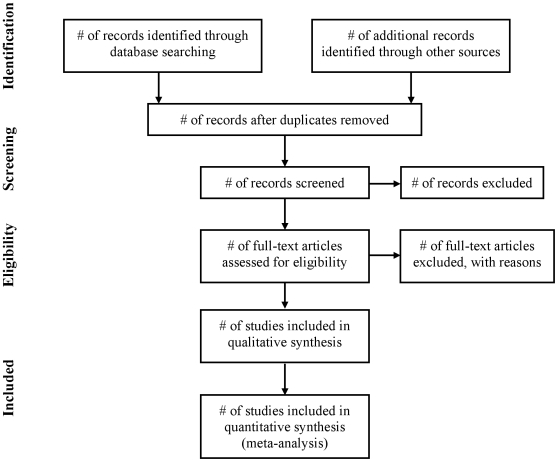
PRISMA is a reporting guideline that replaces QUOROM and provides a 27-item checklist plus a four-phase flow diagram to improve how systematic reviews and meta-analyses are reported. The paper argues that clearer reporting is needed because reporting quality had been suboptimal and often limited readers’ ability to judge review quality.
## Key findings
- The PRISMA Statement consists of a 27-item checklist and a four-phase flow diagram.
- The guideline was developed after a three-day meeting in Ottawa, Canada, in June 2005 with 29 participants including review authors, methodologists, clinicians, medical editors, and a consumer.
- The checklist was revised 11 times before group approval.
- The paper cites earlier evidence that reporting quality was poor: in one study of 83 meta-analyses, the number of adequately reported characteristics ranged from 1 to 14 (mean 7.7, SD 2.7); another study of 50 review articles found none met all eight explicit scientific criteria.
## Methods
- This is a guideline development / consensus paper, not an empirical effects study.
- The executive committee completed a systematic review of studies examining the quality of reporting of systematic reviews, plus a comprehensive literature search for methodological and other relevant articles.
- An international survey of review authors, consumers, and organizations using systematic reviews/meta-analyses was conducted; the Ottawa meeting informed revision of the QUOROM checklist and flow diagram.
## Limitations
- The paper states that no direct evidence was found to support retaining or adding some items, and some items were included because evidence from other domains was considered relevant.
- The paper says PRISMA is a living document and invites further comment, implying the guideline is not final or exhaustive.
- Evident from the text: the paper is a consensus/reporting guideline paper, so it does not test whether PRISMA improves reporting or review quality in practice.
Model-written summary. Check it against the paper before relying on it.
Integrity signals
Registry
Cites
Statistics
Figures
Verification
Claims the paper makes
1 Valid · 1 Not valid · 19 Not checked · 11 Own results and interpretations
The cited sources that could be checked couldn’t confirm or dispute this claim.
In the paper
“For studies included in a systematic review, a thorough assessment of the risk of bias requires both a “study-level” assessment (e.g., adequacy of allocation concealment) and, for some features, a newer approach called “outcome-level” assessment.”
§ Preferred Reporting Items for Systematic Reviews and Meta-Analyses: The PRISMA Statement > Introduction > Box 1: Conceptual Issues in the Evolution from QUOROM to PRISMA
What the sources say
- Could not verifycites [38] Guyatt GH Oxman AD Vist GE Kunz R Falck-Ytter Y 2008 GRADE: An emerging consensus on rating quality of evidence and strength of recommendations. BMJ 336 924 926 18436948 PMC2335261 sourceExperimental — accuracy not yet measured
Our copy of the BMJ 2008 GRADE overview paper lists the factors that downgrade quality of evidence (study limitations/risk of bias, inconsistency, indirectness, imprecision, reporting bias) in 'How does the GRADE system classify quality of evidence?' and Box 2, but no passage draws a study-level versus outcome-level distinction or describes an 'outcome-level' approach to risk of bias assessment. Searches for 'outcome-level assessment risk of bias', 'study level assessment allocation concealment', 'risk of bias assessment across domains outcome specific', and 'study limitations rated for each outcome' returned only the generic downgrade-factor and Box 1/Box 2 passages. The paper also does not credit the claim to another work, so misattribution cannot be established; the decisive text is simply absent from our copy. (LLM, conf=0.65)
plain- Asserted: passes — The authors put it forward as true.
- Checkable: passes — It can be checked against evidence.
- Load-bearing: passes — The paper’s conclusions depend on it.
- Based: passes — The paper gives a reason why it holds.
- Could not verify
The cited sources support only part of this claim — read each source’s verdict below.
In the paper
“Aside from Cochrane reviews, all of which should have a protocol, only about 10% of systematic reviewers report working from a protocol [22].”
§ Preferred Reporting Items for Systematic Reviews and Meta-Analyses: The PRISMA Statement > Introduction > Box 1: Conceptual Issues in the Evolution from QUOROM to PRISMA
What the sources say
- Partly supportedcites [22] Moher D Tetzlaff J Tricco AC Sampson M Altman DG 2007 Epidemiology and reporting characteristics of systematic reviews. PLoS Med 4 e78 doi: 10.1371/journal.pmed.0040078 17388659 PMC1831728 sourceExperimental — accuracy not yet measured
Moher et al. (Results, 'Reporting Characteristics Related to Potential for Bias') report that 'within the therapeutic review category almost every Cochrane review reported a protocol (122/125 [97.6%]), but only a small minority of non-Cochrane reviews did (10/88 [11.4%])' — so the ~10% figure and the near-universal Cochrane protocol coverage are both in the source. However, the 11.4% applies only to non-Cochrane *therapeutic* reviews, whereas the citing sentence generalises it to 'systematic reviewers' as a whole; our copy gives no overall non-Cochrane protocol rate (it states 46.3% of all 300 reviews reported a protocol, with therapeutic reviews more likely than other categories, and the per-category protocol figures sit in Table 3, which our copy does not reproduce numerically). The claim's scope therefore exceeds what this source reports. (LLM, conf=0.78)
plain- Asserted: passes — The authors put it forward as true.
- Checkable: passes — It can be checked against evidence.
- Load-bearing: passes — The paper’s conclusions depend on it.
- Based: passes — The paper gives a reason why it holds.
- Partly supported
In the paper
“A 1996 update of this study found little improvement [7].”
§ Preferred Reporting Items for Systematic Reviews and Meta-Analyses: The PRISMA Statement > Introduction
What the sources say
- Not checked yetcites [7] Sacks HS Reitman D Pagano D Kupelnick B 1996 Meta-analysis: An update. Mt Sinai J Med 63 216 224 8692168
plain- Asserted: passes — The authors put it forward as true.
- Checkable: passes — It can be checked against evidence.
- Load-bearing: passes — The paper’s conclusions depend on it.
- Based: passes — The paper gives a reason why it holds.
In the paper
“In 1987, Mulrow examined 50 review articles published in four leading medical journals in 1985 and 1986 and found that none met all eight explicit scientific criteria, such as a quality assessment of included studies [5].”
§ Preferred Reporting Items for Systematic Reviews and Meta-Analyses: The PRISMA Statement > Introduction
What the sources say
- Not checked yetcites [5] Mulrow CD 1987 The medical review article: State of the science. Ann Intern Med 106 485 488 3813259 source
plain- Asserted: passes — The authors put it forward as true.
- Checkable: passes — It can be checked against evidence.
- Load-bearing: passes — The paper’s conclusions depend on it.
- Based: passes — The paper gives a reason why it holds.
In the paper
“In 1996, to address the suboptimal reporting of meta-analyses, an international group developed a guidance called the QUOROM Statement (QUality Of Reporting Of Meta-analyses), which focused on the reporting of meta-analyses of randomized controlled trials [8].”
§ Preferred Reporting Items for Systematic Reviews and Meta-Analyses: The PRISMA Statement > Introduction
What the sources say
- Not checked yetcites [8] Moher D Cook DJ Eastwood S Olkin I Rennie D 1994 Improving the quality of reporting of meta-analysis of randomized controlled trials: The QUOROM statement. Lancet 354 1896 1900 10584742 source
plainstates a cause- Asserted: passes — The authors put it forward as true.
- Checkable: passes — It can be checked against evidence.
- Load-bearing: unclear — It is unclear whether the paper’s conclusions depend on it.
- Based: passes — The paper gives a reason why it holds.
7 more claims
Create a free account to see all 32 claims and to verify the 28 references still open.
- Probably not a substantial claim. 18
- It may state two separate claims as one. 9
Claims other papers make about this one
Each is checked against this paper’s own text: does it say what the citing paper says it does?
The cited source doesn’t support the claim as written.
In the citing paper
“This systematic review follows the MOOSE Guidelines for Meta-Analyses and Systematic Reviews of Observational Studies158.”
From A systematic review of worldwide causal and correlational evidence on digital media and democracy (2022) · cites this paper as [158]
Checked by a reasoning model — may be wrong.
Experimental — accuracy not yet measuredThe source backs part of the claim, not all of it — or backs it for a different population, condition or comparison.
In the citing paper
“To address the research aim, this study adopted a systematic literature review, following established methodological recommendations to ensure rigor, transparency, and replicability [20,21].”
From Sustainable Value Creation in Nonprofit Organizations: Processes, Determinants, and Strategic Dimensions (2026) · cites this paper as [20]
Experimental — accuracy not yet measuredThe source backs part of the claim, not all of it — or backs it for a different population, condition or comparison.
In the citing paper
“We first followed the PRISMA (Preferred Reporting Items for Systematic reviews and Meta-Analyses) (Moher etal., 2009) method to systematically review the literature.”
From Online peer feedback in higher education: A synthesis of the literature (2024) · cites this paper as Moher et al., 2009
Experimental — accuracy not yet measuredThe source backs part of the claim, not all of it — or backs it for a different population, condition or comparison.
In the citing paper
“The 'Preferred Reporting Items for Systematic Reviews and Meta-Analyses' (PRISMA) methodology was used to conduct a systematic literature review and qualitative synthesis (Moher et al., 2009).”
From AI adoption and diffusion in public administration: A systematic literature review and future research agenda (2023) · cites this paper as Moher et al., 2009
Experimental — accuracy not yet measuredThe source backs part of the claim, not all of it — or backs it for a different population, condition or comparison.
In the citing paper
“Compliance with GATHER is not an indicator of a study's quality.”
From Guidelines for accurate and transparent health estimates reporting: the GATHER statement (2016) · cites this paper as [12]
Experimental — accuracy not yet measured
203 more claims about this paper
Create a free account to see every claim other papers make about this one.
Citations
Cites
Liberati, A., Altman, D. G., Tetzlaff, J., Mulrow, C., Gøtzsche, P. C., Ioannidis, J. P. A., Clarke, M., Devereaux, P. J., Kleijnen, J., & Moher, D. (2009) · PLoS Medicine · doi:10.1371/journal.pmed.1000100 · Cited by 28,164
Self-citationGRADE: an emerging consensus on rating quality of evidence and strength of recommendations
Guyatt, G. H., Oxman, A. D., Vist, G. E., Kunz, R., Falck-Ytter, Y., Alonso-Coello, P., & Schünemann, H. J. (2008) · BMJ · doi:10.1136/bmj.39489.470347.ad · Cited by 23,305
Moher, D., Cook, D. J., Eastwood, S., Olkin, I., Rennie, D., & Stroup, D. F. (1999) · The Lancet · doi:10.1016/s0140-6736(99)04149-5 · Cited by 4,826
Self-citationThe Revised CONSORT Statement for Reporting Randomized Trials: Explanation and Elaboration
Altman, D. G., Schulz, K. F., Moher, D., Egger, M., Davidoff, F., Elbourne, D., Gøtzsche, P. C., Lang, T., & for the CONSORT Group (2001) · Annals of Internal Medicine · doi:10.7326/0003-4819-134-8-200104170-00012 · Cited by 3,835
Self-citationVandenbroucke, J. P., Elm, E. V., Altman, D. G., Gøtzsche, P. C., Mulrow, C. D., Pocock, S. J., Poole, C., Schlesselman, J. J., Egger, M., & initiative, F. T. S. (2007) · Annals of Internal Medicine · doi:10.7326/0003-4819-147-8-200710160-00010-w1 · Cited by 3,543
Self-citationTowards complete and accurate reporting of studies of diagnostic accuracy: The STARD Initiative.
Bossuyt, P. M., Reitsma, J. B., Bruns, D. E., Gatsonis, C. A., Glasziou, P. P., Irwig, L. M., Lijmer, J. G., Moher, D., Rennie, D., de Vet, H. C. W., et al. (2003) · Annals of Internal Medicine · doi:10.7326/0003-4819-138-1-200301070-00010 · Cited by 3,219
Self-citationChan, A.-W., Hróbjartsson, A., Haahr, M. T., Gøtzsche, P. C., & Altman, D. G. (2004) · JAMA · doi:10.1001/jama.291.20.2457 · Cited by 1,845 · cited 1×
“, publication bias) [28] as well as the more recently empirically demonstrated ‘‘outcome reporting bias’’ within individual studies [40,41] should be considered by authors when conducting a systematic review and reporting its results.”
Self-citationReplication validity of genetic association studies
Ioannidis, J. P. A., Ntzani, E. E., Trikalinos, T. A., & Contopoulos-Ioannidis, D. G. (2001) · Nature Genetics · doi:10.1038/ng749 · Cited by 1,832 · cited 1×
“For example, systematic reviews are now conducted to investigate cost-effectiveness [31], diagnostic [32] or prognostic questions [33], genetic associations [34], and policy making [35].”
The case of the misleading funnel plot
Lau, J., Ioannidis, J. P. A., Terrin, N., Schmid, C. H., & Olkin, I. (2006) · BMJ · doi:10.1136/bmj.333.7568.597 · Cited by 1,766 · cited 1×
“Even when the possibility of publication bias is assessed, there is no guarantee that systematic reviewers have assessed or interpreted it appropriately [30].”
Systematic reviews of evaluations of diagnostic and screening tests
Deeks, J. J. (2001) · BMJ · doi:10.1136/bmj.323.7305.157 · Cited by 1,340
Cited by
Items 101–200 of 4,903
Violan, C., Foguet-Boreu, Q., Flores-Mateo, G., Salisbury, C., Blom, J., Freitag, M., Glynn, L., Muth, C., & Valderas, J. M. (2014) · PLoS ONE · doi:10.1371/journal.pone.0102149 · Cited by 1,125
Physical Activity and the Prevention of Depression
Mammen, G., & Faulkner, G. (2013) · American Journal of Preventive Medicine · doi:10.1016/j.amepre.2013.08.001 · Cited by 1,122
Firth, J., Torous, J., Nicholas, J., Carney, R., Pratap, A., Rosenbaum, S., & Sarris, J. (2017) · World Psychiatry · doi:10.1002/wps.20472 · Cited by 1,097
Mitchell, A. J., Vancampfort, D., Sweers, K., van Winkel, R., Yu, W., & De Hert, M. (2013) · Schizophrenia Bulletin · doi:10.1093/schbul/sbr148 · Cited by 1,082
Chmielewska, B., Barratt, I., Townsend, R., Kalafat, E., van der Meulen, J., Gurol-Urganci, I., O'Brien, P., Morris, E., Draycott, T., Thangaratinam, S., et al. (2021) · The Lancet Global Health · doi:10.1016/s2214-109x(21)00079-6 · Cited by 1,092
Bujold, E., Roberge, S., Lacasse, Y., Bureau, M., Audibert, F., Marcoux, S., Forest, J.-C., & Giguère, Y. (2010) · Obstetrics & Gynecology · doi:10.1097/aog.0b013e3181e9322a · Cited by 1,092
The use of google trends in health care research: a systematic review
Nuti, S. V., Wayda, B., Ranasinghe, I., Wang, S., Dreyer, R. P., Chen, S. I., & Murugiah, K. (2014) · PLoS ONE · doi:10.1371/journal.pone.0109583 · Cited by 1,086
“[9] We included all studies that used Google Trends to answer research questions within the domain of health care.”
MethodCastagnoli, R., Votto, M., Licari, A., Brambilla, I., Bruno, R., Perlini, S., Rovida, F., Baldanti, F., & Marseglia, G. L. (2020) · JAMA Pediatrics · doi:10.1001/jamapediatrics.2020.1467 · Cited by 1,085
Sanders, M. R., Kirby, J. N., Tellegen, C. L., & Day, J. J. (2014) · Clinical Psychology Review · doi:10.1016/j.cpr.2014.04.003 · Cited by 1,077
Social Media Use for Health Purposes: Systematic Review
Chen, J., & Wang, Y. (2021) · Journal of Medical Internet Research · doi:10.2196/17917 · Cited by 1,073
Delphi Technique in Health Sciences: A Map
Niederberger, M., & Spranger, J. (2020) · Frontiers in Public Health · doi:10.3389/fpubh.2020.00457 · Cited by 1,072
“The presentation of the reviews is largely based on the PRISMA statement (45).”
Clarifying differences between review designs and methods
Gough, D., Thomas, J., & Oliver, S. (2012) · Systematic Reviews · doi:10.1186/2046-4053-1-28 · Cited by 1,063
Spijkerman, M. P. J., Pots, W. T. M., & Bohlmeijer, E. T. (2016) · Clinical Psychology Review · doi:10.1016/j.cpr.2016.03.009 · Cited by 975
“This studywas conducted in accordancewith the PRISMA statement for reporting systematic reviews and meta-analyses of studies that evaluate health care interventions (Moher et al., 2009).”
InfluentialChange in mental health after smoking cessation: systematic review and meta-analysis
Taylor, G., McNeill, A., Girling, A., Farley, A., Lindson-Hawley, N., & Aveyard, P. (2014) · BMJ · doi:10.1136/bmj.g1151 · Cited by 1,039
A catalogue of reporting guidelines for health research
Simera, I., Moher, D., Hoey, J., Schulz, K. F., & Altman, D. G. (2010) · European Journal of Clinical Investigation · doi:10.1111/j.1365-2362.2009.02234.x · Cited by 1,047
Self-citationCONSORT 2010 statement: Updated guidelines for reporting parallel group randomised trials
Schulz, K. F., Altman, D. G., & Moher, D. (2011) · International Journal of Surgery · doi:10.1016/j.ijsu.2011.09.004 · Cited by 1,044
Self-citationSleep disturbances increase the risk of dementia: a systematic review and meta-analysis
Shi, L., Chen, S.-J., Ma, M.-Y., Bao, Y.-P., Han, Y., Wang, Y.-M., Shi, J., Vitiello, M. V., & Lu, L. (2018) · Sleep Medicine Reviews · doi:10.1016/j.smrv.2017.06.010 · Cited by 1,009
Systematic review of greenhouse gas emissions for different fresh food categories
Clune, S., Crossin, E., & Verghese, K. (2017) · Journal of Cleaner Production · doi:10.1016/j.jclepro.2016.04.082 · Cited by 1,017
A systematic review of gamification in e-Health
Sardi, L., Idri, A., & Fernández-Alemán, J. L. (2017) · Journal of Biomedical Informatics · doi:10.1016/j.jbi.2017.05.011 · Cited by 1,015
Nilsen, P., & Bernhardsson, S. (2019) · BMC Health Services Research · doi:10.1186/s12913-019-4015-3 · Cited by 1,014
“for Systematic Reviews and Meta-Analyses (PRISMA) guidelines [20].”
Mindfulness-based interventions in schools—a systematic review and meta-analysis
Zenner, C., Herrnleben-Kurz, S., & Walach, H. (2014) · Frontiers in Psychology · doi:10.3389/fpsyg.2014.00603 · Cited by 999
Yung, R., & Khoo-Lattimore, C. (2019) · Current Issues in Tourism · doi:10.1080/13683500.2017.1417359 · Cited by 1,000
Galanis, P., Vraka, I., Fragkou, D., Bilali, A., & Kaitelidou, D. (2021) · Journal of Advanced Nursing · doi:10.1111/jan.14839 · Cited by 993
Effectiveness and safety of oral HIV preexposure prophylaxis for all populations
Fonner, V. A., Dalglish, S. L., Kennedy, C. E., Baggaley, R., O’Reilly, K. R., Koechlin, F. M., Rodolph, M., Hodges-Mameletzis, I., & Grant, R. M. (2016) · AIDS · doi:10.1097/qad.0000000000001145 · Cited by 993
Vancampfort, D., Firth, J., Schuch, F. B., Rosenbaum, S., Mugisha, J., Hallgren, M., Probst, M., Ward, P. B., Gaughran, F., De Hert, M., et al. (2017) · World Psychiatry · doi:10.1002/wps.20458 · Cited by 957
Shang, B., Liu, Y., Jiang, S.-J., & Liu, Y. (2015) · Scientific Reports · doi:10.1038/srep15179 · Cited by 985
Severe mental illness in 33 588 prisoners worldwide: systematic review and meta-regression analysis
Fazel, S., & Seewald, K. (2012) · British Journal of Psychiatry · doi:10.1192/bjp.bp.111.096370 · Cited by 985
Estimated global incidence of Japanese encephalitis:
Campbell, G., Hills, S., Fischer, M., Jacobson, J., Hoke, C., Hombach, J., Marfin, A., Solomon, T., Tsai, T., Tsui, V., et al. (2011) · Bulletin of the World Health Organization · doi:10.2471/blt.10.085233 · Cited by 985
The Global Prevalence of Anxiety Among Medical Students: A Meta-Analysis
Tian-Ci Quek, T., Wai-San Tam, W., X. Tran, B., Zhang, M., Zhang, Z., Su-Hui Ho, C., & Chun-Man Ho, R. (2019) · International Journal of Environmental Research and Public Health · doi:10.3390/ijerph16152735 · Cited by 990
“The selection process, based on the Preferred Reporting Items for Systematic Reviews and Meta-Analyses (PRISMA) guidelines [18], is detailed in Figure 1.”
Mair-Jenkins, J., Saavedra-Campos, M., Baillie, J. K., Cleary, P., Khaw, F.-M., Lim, W. S., Makki, S., Rooney, K. D., Convalescent Plasma Study Group, Nguyen-Van-Tam, J. S., et al. (2015) · Journal of Infectious Diseases · doi:10.1093/infdis/jiu396 · Cited by 983
Prevalence of chronic low back pain: systematic review
Meucci, R. D., Fassa, A. G., & Faria, N. M. X. (2015) · Revista de Saúde Pública · doi:10.1590/s0034-8910.2015049005874 · Cited by 976
The global prevalence of intimate partner homicide: a systematic review
Stöckl, H., Devries, K., Rotstein, A., Abrahams, N., Campbell, J., Watts, C., & Moreno, C. G. (2013) · The Lancet · doi:10.1016/s0140-6736(13)61030-2 · Cited by 955
The serotonin theory of depression: a systematic umbrella review of the evidence
Moncrieff, J., Cooper, R. E., Stockmann, T., Amendola, S., Hengartner, M. P., & Horowitz, M. A. (2023) · Molecular Psychiatry · doi:10.1038/s41380-022-01661-0 · Cited by 960
“E x tr a c t e d s u mm a r y e ff e c t s , c o n fi d e n c e i n t e r v a l s a n d m e a s u r e s o f s t a t i s t i c a l s i gn i fi c a n c e a r e r e p o rt e d .”
Panagioti, M., Geraghty, K., Johnson, J., Zhou, A., Panagopoulou, E., Chew-Graham, C., Peters, D., Hodkinson, A., Riley, R., & Esmail, A. (2018) · JAMA Internal Medicine · doi:10.1001/jamainternmed.2018.3713 · Cited by 951
RetractedBlackmore, R., Boyle, J. A., Fazel, M., Ranasinha, S., Gray, K. M., Fitzgerald, G., Misso, M., & Gibson-Helm, M. (2020) · PLOS Medicine · doi:10.1371/journal.pmed.1003337 · Cited by 949
Schoeppe, S., Alley, S., Van Lippevelde, W., Bray, N. A., Williams, S. L., Duncan, M. J., & Vandelanotte, C. (2016) · International Journal of Behavioral Nutrition and Physical Activity · doi:10.1186/s12966-016-0454-y · Cited by 949
“viewers, as is standard practice for high quality systematic review [23].”
BackgroundInfluentialGobbi, G., Atkin, T., Zytynski, T., Wang, S., Askari, S., Boruff, J., Ware, M., Marmorstein, N., Cipriani, A., Dendukuri, N., et al. (2019) · JAMA Psychiatry · doi:10.1001/jamapsychiatry.2018.4500 · Cited by 914
Huang, S.-C., Pareek, A., Seyyedi, S., Banerjee, I., & Lungren, M. P. (2020) · npj Digital Medicine · doi:10.1038/s41746-020-00341-z · Cited by 934
Bjelakovic, G., Nikolova, D., Gluud, L. L., Simonetti, R. G., & Gluud, C. (2012) · Cochrane Database of Systematic Reviews · doi:10.1002/14651858.cd007176.pub2 · Cited by 924
Milanović, Z., Sporiš, G., & Weston, M. (2015) · Sports Medicine · doi:10.1007/s40279-015-0365-0 · Cited by 923
Psychometric properties of the EQ-5D-5L: a systematic review of the literature
Feng, Y.-S., Kohlmann, T., Janssen, M. F., & Buchholz, I. (2021) · Quality of Life Research · doi:10.1007/s11136-020-02688-y · Cited by 917
Page, M. J., Moher, D., Bossuyt, P., Boutron, I., Hoffmann, T., mulrow, C., Shamseer, L., Tetzlaff, J., Akl, E., Brennan, S. E., et al. (2020) · doi:10.31222/osf.io/gwdhk · Cited by 916
Self-citationThe ecological importance of intraspecific variation
Des Roches, S., Post, D. M., Turley, N. E., Bailey, J. K., Hendry, A. P., Kinnison, M. T., Schweitzer, J. A., & Palkovacs, E. P. (2017) · Nature Ecology & Evolution · doi:10.1038/s41559-017-0402-5 · Cited by 916
The gut microbiota in anxiety and depression—A systematic review
Simpson, C. A., Diaz-Arteche, C., Eliby, D., Schwartz, O. S., Simmons, J. G., & Cowan, C. S. M. (2021) · Clinical Psychology Review · doi:10.1016/j.cpr.2020.101943 · Cited by 912
Quantifying Synergy: A Systematic Review of Mixture Toxicity Studies within Environmental Toxicology
Cedergreen, N. (2014) · PLoS ONE · doi:10.1371/journal.pone.0096580 · Cited by 912
Clinical information extraction applications: A literature review
Wang, Y., Wang, L., Rastegar-Mojarad, M., Moon, S., Shen, F., Afzal, N., Liu, S., Zeng, Y., Mehrabi, S., Sohn, S., et al. (2018) · Journal of Biomedical Informatics · doi:10.1016/j.jbi.2017.11.011 · Cited by 910
A Systematic Review and Meta-Analysis of Recovery in Schizophrenia
Jaaskelainen, E., Juola, P., Hirvonen, N., McGrath, J. J., Saha, S., Isohanni, M., Veijola, J., & Miettunen, J. (2013) · Schizophrenia Bulletin · doi:10.1093/schbul/sbs130 · Cited by 907
Repeatability and Reproducibility of Radiomic Features: A Systematic Review
Traverso, A., Wee, L., Dekker, A., & Gillies, R. (2018) · International Journal of Radiation Oncology*Biology*Physics · doi:10.1016/j.ijrobp.2018.05.053 · Cited by 903
Debunking: A Meta-Analysis of the Psychological Efficacy of Messages Countering Misinformation
Chan, M.-P. S., Jones, C. R., Hall Jamieson, K., & Albarracín, D. (2017) · Psychological Science · doi:10.1177/0956797617714579 · Cited by 898
Song, P., Zha, M., Yang, Q., Zhang, Y., Li, X., & Rudan, I. (2021) · Journal of Global Health · doi:10.7189/jogh.11.04009 · Cited by 896
Prevalence of temporomandibular joint disorders: a systematic review and meta-analysis
Valesan, L. F., Da-Cas, C. D., Réus, J. C., Denardin, A. C. S., Garanhani, R. R., Bonotto, D., Januzzi, E., & de Souza, B. D. M. (2021) · Clinical Oral Investigations · doi:10.1007/s00784-020-03710-w · Cited by 891
The effect of using Kahoot! for learning – A literature review
Wang, A. I., & Tahir, R. (2020) · Computers & Education · doi:10.1016/j.compedu.2020.103818 · Cited by 1,669
Interleukin‐6 in Covid‐19: A systematic review and meta‐analysis
Coomes, E. A., & Haghbayan, H. (2020) · Reviews in Medical Virology · doi:10.1002/rmv.2141 · Cited by 883
The Complications of Myopia: A Review and Meta-Analysis
Haarman, A. E. G., Enthoven, C. A., Tideman, J. W. L., Tedja, M. S., Verhoeven, V. J. M., & Klaver, C. C. W. (2020) · Investigative Opthalmology & Visual Science · doi:10.1167/iovs.61.4.49 · Cited by 881
Definition, Classification and Diagnosis of Diabetes, Prediabetes and Metabolic Syndrome
Punthakee, Z., Goldenberg, R., & Katz, P. (2018) · Canadian Journal of Diabetes · doi:10.1016/j.jcjd.2017.10.003 · Cited by 877
Network meta-analysis: an introduction for clinicians
Rouse, B., Chaimani, A., & Li, T. (2017) · Internal and Emergency Medicine · doi:10.1007/s11739-016-1583-7 · Cited by 875
Accuracy of clinical diagnosis of Parkinson disease: A systematic review and meta-analysis
Rizzo, G., Copetti, M., Arcuti, S., Martino, D., Fontana, A., & Logroscino, G. (2016) · Neurology · doi:10.1212/wnl.0000000000002350 · Cited by 870
Interventions with Family Caregivers of Cancer Patients: Meta-Analysis of Randomized Trials
Northouse, L. L., Katapodi, M. C., Song, L., Zhang, L., & Mood, D. W. (2010) · CA: A Cancer Journal for Clinicians · doi:10.3322/caac.20081 · Cited by 857
de Greeff, J. W., Bosker, R. J., Oosterlaan, J., Visscher, C., & Hartman, E. (2018) · Journal of Science and Medicine in Sport · doi:10.1016/j.jsams.2017.09.595 · Cited by 841
Joyce, S., Shand, F., Tighe, J., Laurent, S. J., Bryant, R. A., & Harvey, S. B. (2018) · BMJ Open · doi:10.1136/bmjopen-2017-017858 · Cited by 864
“MethODs search strategy A systematic search was carried out in accordance with the Preferred Reporting Items for Systematic Reviews and Meta-Analyses guidelines.(29) In June 2016, the following electronic databases were searched: Ovid Medline, Ovid EMBASE, PsycINFO and Ovid Cochrane Library.”
MethodImpact of COVID-19 on Mental Health in Adolescents: A Systematic Review
Jones, E. A. K., Mitra, A. K., & Bhuiyan, A. R. (2021) · International Journal of Environmental Research and Public Health · doi:10.3390/ijerph18052470 · Cited by 857
Reeve, E., Gnjidic, D., Long, J., & Hilmer, S. (2015) · British Journal of Clinical Pharmacology · doi:10.1111/bcp.12732 · Cited by 855
Schoenfeld, B. J., Grgic, J., Ogborn, D., & Krieger, J. W. (2017) · Journal of Strength and Conditioning Research · doi:10.1519/jsc.0000000000002200 · Cited by 851
“The systematic literature search of English-language journals was conducted in accordance with the Preferred Reporting Items for Systematic Reviews and Meta-Analyses (PRISMA) guidelines (30).”
MethodSohn, S. Y., Rees, P., Wildridge, B., Kalk, N. J., & Carter, B. (2019) · BMC Psychiatry · doi:10.1186/s12888-019-2350-x · Cited by 838
Efficacy of clear aligners in controlling orthodontic tooth movement: A systematic review
Rossini, G., Parrini, S., Castroflorio, T., Deregibus, A., & Debernardi, C. L. (2015) · The Angle Orthodontist · doi:10.2319/061614-436.1 · Cited by 844
The relationship between professional burnout and quality and safety in healthcare: a meta-analysis
Salyers, M. P., Bonfils, K. A., Luther, L., Firmin, R. L., White, D. A., Adams, E. L., & Rollins, A. L. (2017) · Journal of General Internal Medicine · doi:10.1007/s11606-016-3886-9 · Cited by 843
“We followed guidelines provided by the Preferred Reporting Items for Systematic Reviews and Meta-Analyses (PRISMA).(30) A systematic literature search of Ovid MEDLINE, PsycINFO, Web of Science, CINAHL, and ProQuest Dissertations & Theses was conducted to identify all studies involving health professionals, burnout, an…”
MethodLattie, E. G., Adkins, E. C., Winquist, N., Stiles-Shields, C., Wafford, Q. E., & Graham, A. K. (2019) · Journal of Medical Internet Research · doi:10.2196/12869 · Cited by 843
Autism spectrum disorders: a meta-analysis of executive function
Demetriou, E. A., Lampit, A., Quintana, D. S., Naismith, S. L., Song, Y. J. C., Pye, J. E., Hickie, I., & Guastella, A. J. (2018) · Molecular Psychiatry · doi:10.1038/mp.2017.75 · Cited by 841
The effect of loneliness on depression: A meta-analysis
Erzen, E., & Çikrikci, Ö. (2018) · International Journal of Social Psychiatry · doi:10.1177/0020764018776349 · Cited by 838
The Economic Costs of Type 2 Diabetes: A Global Systematic Review
Seuring, T., Archangelidi, O., & Suhrcke, M. (2015) · PharmacoEconomics · doi:10.1007/s40273-015-0268-9 · Cited by 837
Correll, C. U., Galling, B., Pawar, A., Krivko, A., Bonetto, C., Ruggeri, M., Craig, T. J., Nordentoft, M., Srihari, V. H., Guloksuz, S., et al. (2018) · JAMA Psychiatry · doi:10.1001/jamapsychiatry.2018.0623 · Cited by 826
Huang, W., Hew, K. F., & Fryer, L. K. (2022) · Journal of Computer Assisted Learning · doi:10.1111/jcal.12610 · Cited by 830
on behalf of the Council on Environment and Physical Activity (CEPA) – Older Adults working group, Barnett, D. W., Barnett, A., Nathan, A., Van Cauwenberg, J., & Cerin, E. (2017) · International Journal of Behavioral Nutrition and Physical Activity · doi:10.1186/s12966-017-0558-z · Cited by 828
A Meta-Analysis of Compassion-Based Interventions: Current State of Knowledge and Future Directions
Kirby, J. N., Tellegen, C. L., & Steindl, S. R. (2017) · Behavior Therapy · doi:10.1016/j.beth.2017.06.003 · Cited by 827
Chowdhury, S. R., Chandra Das, D., Sunna, T. C., Beyene, J., & Hossain, A. (2023) · eClinicalMedicine · doi:10.1016/j.eclinm.2023.101860 · Cited by 827
Health impact assessment of active transportation: A systematic review
Mueller, N., Rojas-Rueda, D., Cole-Hunter, T., de Nazelle, A., Dons, E., Gerike, R., Götschi, T., Int Panis, L., Kahlmeier, S., & Nieuwenhuijsen, M. (2015) · Preventive Medicine · doi:10.1016/j.ypmed.2015.04.010 · Cited by 823
Zaccaro, A., Piarulli, A., Laurino, M., Garbella, E., Menicucci, D., Neri, B., & Gemignani, A. (2018) · Frontiers in Human Neuroscience · doi:10.3389/fnhum.2018.00353 · Cited by 820
A literature review on green supply chain management: Trends and future challenges
Tseng, M.-L., Islam, M. S., Karia, N., Fauzi, F. A., & Afrin, S. (2019) · Resources, Conservation and Recycling · doi:10.1016/j.resconrec.2018.10.009 · Cited by 820
Prevalence of depression during the COVID-19 outbreak: A meta-analysis of community-based studies
Bueno-Notivol, J., Gracia-García, P., Olaya, B., Lasheras, I., López-Antón, R., & Santabárbara, J. (2021) · International Journal of Clinical and Health Psychology · doi:10.1016/j.ijchp.2020.07.007 · Cited by 820
Shi, L., & Lin, L. (2019) · Medicine · doi:10.1097/md.0000000000015987 · Cited by 818
Mobile Text Messaging for Health: A Systematic Review of Reviews
Hall, A. K., Cole-Lewis, H., & Bernhardt, J. M. (2015) · Annual Review of Public Health · doi:10.1146/annurev-publhealth-031914-122855 · Cited by 815
Exercise for improving balance in older people
Howe, T. E., Rochester, L., Neil, F., Skelton, D. A., & Ballinger, C. (2011) · Cochrane Database of Systematic Reviews · doi:10.1002/14651858.cd004963.pub3 · Cited by 809
Exercise interventions on health-related quality of life for cancer survivors
Mishra, S. I., Scherer, R. W., Geigle, P. M., Berlanstein, D. R., Topaloglu, O., Gotay, C. C., & Snyder, C. (2012) · Cochrane Database of Systematic Reviews · doi:10.1002/14651858.cd007566.pub2 · Cited by 808
Piet, J., & Hougaard, E. (2011) · Clinical Psychology Review · doi:10.1016/j.cpr.2011.05.002 · Cited by 807
Werner-Seidler, A., Perry, Y., Calear, A. L., Newby, J. M., & Christensen, H. (2017) · Clinical Psychology Review · doi:10.1016/j.cpr.2016.10.005 · Cited by 773
Strunz, E. C., Addiss, D. G., Stocks, M. E., Ogden, S., Utzinger, J., & Freeman, M. C. (2014) · PLoS Medicine · doi:10.1371/journal.pmed.1001620 · Cited by 795
Huang, W., Song, B., Liang, J., Niu, Q., Zeng, G., Shen, M., Deng, J., Luo, Y., Wen, X., & Zhang, Y. (2021) · Journal of Hazardous Materials · doi:10.1016/j.jhazmat.2020.124187 · Cited by 792
Global buffering of temperatures under forest canopies
De Frenne, P., Zellweger, F., Rodríguez-Sánchez, F., Scheffers, B. R., Hylander, K., Luoto, M., Vellend, M., Verheyen, K., & Lenoir, J. (2019) · Nature Ecology & Evolution · doi:10.1038/s41559-019-0842-1 · Cited by 787
Systematic Review and Meta-Analysis: Adolescent Depression and Long-Term Psychosocial Outcomes
Clayborne, Z. M., Varin, M., & Colman, I. (2019) · Journal of the American Academy of Child & Adolescent Psychiatry · doi:10.1016/j.jaac.2018.07.896 · Cited by 787
Zhai, L., Zhang, H., & Zhang, D. (2015) · Depression and Anxiety · doi:10.1002/da.22386 · Cited by 786
“METHODS LITERATURE SEARCH AND SELECTION We followed the PRISMA guidelines.[18] A search of the literature up to October 22, 2014 was performed using the databases of PubMed and Web of Science with the following free text terms: sleep combined with depression.”
MethodSocioeconomic Inequality and Caries: A Systematic Review and Meta-Analysis
Schwendicke, F., Dörfer, C. E., Schlattmann, P., Page, L. F., Thomson, W. M., & Paris, S. (2015) · Journal of Dental Research · doi:10.1177/0022034514557546 · Cited by 786
“Flowchart of the search process according to PRISMA guidelines (Moher et al. 2009).”
MethodSima, V., Gheorghe, I. G., Subić, J., & Nancu, D. (2020) · Sustainability · doi:10.3390/su12104035 · Cited by 786
Gómez-Ochoa, S. A., Franco, O. H., Rojas, L. Z., Raguindin, P. F., Roa-Díaz, Z. M., Wyssmann, B. M., Guevara, S. L. R., Echeverría, L. E., Glisic, M., & Muka, T. (2021) · American Journal of Epidemiology · doi:10.1093/aje/kwaa191 · Cited by 785
Carson, V., Lee, E.-Y., Hewitt, L., Jennings, C., Hunter, S., Kuzik, N., Stearns, J. A., Unrau, S. P., Poitras, V. J., Gray, C., et al. (2017) · BMC Public Health · doi:10.1186/s12889-017-4860-0 · Cited by 783
The CARE guidelines: consensus-based clinical case report guideline development
Gagnier, J. J., Kienle, G., Altman, D. G., Moher, D., Sox, H., & Riley, D. (2014) · Journal of Clinical Epidemiology · doi:10.1016/j.jclinepi.2013.08.003 · Cited by 782
Self-citationThe global burden of anxiety disorders in 2010
Baxter, A. J., Vos, T., Scott, K. M., Ferrari, A. J., & Whiteford, H. A. (2014) · Psychological Medicine · doi:10.1017/s0033291713003243 · Cited by 768
A methodology for systematic mapping in environmental sciences
James, K. L., Randall, N. P., & Haddaway, N. R. (2016) · Environmental Evidence · doi:10.1186/s13750-016-0059-6 · Cited by 769
“For example, using a similar template to that provided in CEE guidance for systematic review [17] or a PRISMA-type flow chart [54].”
MethodPage, M. J., & Moher, D. (2017) · Systematic Reviews · doi:10.1186/s13643-017-0663-8 · Cited by 769
“The guideline was renamed the PRISMA (Preferred Reporting Items for Systematic reviews and MetaAnalyses) Statement, and published in 2009 [11].”
Self-citationPage, M. J., Shamseer, L., Altman, D. G., Tetzlaff, J., Sampson, M., Tricco, A. C., Catalá-López, F., Li, L., Reid, E. K., Sarkis-Onofre, R., et al. (2016) · PLOS Medicine · doi:10.1371/journal.pmed.1002028 · Cited by 768
Self-citation
Metadata
- Authors
- Moher, D., Liberati, A., Tetzlaff, J., Altman, D. G., & The PRISMA Group
- Affiliations
- University of Ottawa (CA)
- University of Modena and Reggio Emilia (IT)
- Ottawa Hospital Research Institute (CA)
- University of Oxford (GB)
- Corresponding author
- Moher, David
- Venue
- PLoS Medicine
- Publisher
- Public Library of Science (PLoS)
- Published
- 2009-07-21
- Volume
- 6
- Issue
- 7
- Pages
- e1000097
- ISSN
- 1549-1277 (ISSN-L)
- 1549-1676
- PMC
- PMC2707599
- OpenAlex
- W4294215472
- Semantic Scholar
- 245831b1ba9fa32fdb224555b37533010af903e6
- Cited by
- 64,042
- References
- 41
- Citations by year
- 2026: 3275 · 2025: 4811 · 2024: 4970 · 2023: 5595 · 2022: 8235 · 2021: 11170 · 2020: 8000 · 2019: 5340 · 2018: 3973 · 2017: 2684 · 2016: 1906 · 2015: 1401 · 2014: 1097 · 2013: 786 · 2012: 421
- FWCI
- 18.63
- Type
- journal article
- Language
- en
- Open access
- gold
- doi.org
- Locations
- PLoS Medicine (publishedVersion, cc-by)
- PubMed Central (publishedVersion, cc-by)
- PubMed (publishedVersion)
- IRIS UNIMORE (University of Modena and Reggio Emilia) (submittedVersion, cc-by)
- RePEc: Research Papers in Economics (submittedVersion)
- Archivio Istituzionale della Ricerca (Universita Degli Studi Di Milano) (submittedVersion, other-oa)
- DOAJ (DOAJ: Directory of Open Access Journals) (submittedVersion, cc-by-sa)
- Figshare (submittedVersion, cc-by)
- University of Birmingham Research Portal (University of Birmingham) (submittedVersion, other-oa)
- Funders
- GlaxoSmithKline
- Health Services Research and Development
- Johns Hopkins University
- University of Ottawa
- University of Bern
- Ottawa Hospital Research Institute
- McMaster University
- Cancer Research UK
- University of Ioannina
- Johns Hopkins Bloomberg School of Public Health
- Canadian Institutes of Health Research
- Medical Research Council
- Care and Public Health Research Institute, Universiteit Maastricht
- Topics
- Social Sciences › Decision Sciences › Statistics, Probability and Uncertainty › Meta-analysis and systematic reviews
- Health Sciences › Medicine › Public Health, Environmental and Occupational Health › Clinical practice guidelines implementation
- Social Sciences › Sociology and Political Science › Delphi Technique in Research
- Keywords
- PRISMA statement, reporting guidelines, systematic reviews, meta-analysis, evidence-based care, obesity
- MeSH terms
- Humans, Terminology as Topic, Periodicals as Topic, Publishing, Quality Control, Review Literature as Topic, Meta-Analysis as Topic, Publication Bias, Evidence-Based Practice
About these checks
Registry, retraction, Cites and statistics results are computed, not judged, with one exception: a printed reference that no index lists is read once by a model before it counts as a citation error. Claims are extracted by a model and kept only when their quote appears verbatim in the text; each cited source is then checked, with a model’s help, for whether it says what the claim relies on. Those verdicts can be wrong — read the claim’s quote and the cited source before relying on one.
The claim verdicts this report counts are experimental: their accuracy is not yet measured.
A language model drew the claims from the paper on 2026-10-11, under version 3 of the claim definition (model deepseek-v4.1-flash, prompt extract-v3).
A second model labelled each claim on 2026-10-11 (model jev-1.13-20260917, definition revision gold-guideline-v0.2).
Cited sources are checked with a language model’s help (qwen3.8-omni-flash).
Statistics and arithmetic are recomputed, not judged.
Confidence bands are shown only for fields calibrated on our annotated test set. None is calibrated yet, so no band is shown.
What counts as a claim ›How we measure confidence ›How we check this ›
Are you an author, or do you see a problem with this page? Request a review
Data sources
Bibliographic data: Semantic Scholar, OpenAlex, Crossref.
Contains information from the Semantic Scholar Academic Graph Datasets, made available under the ODC Attribution License (ODC-BY 1.0).
Semantic Scholar’s data is described in: Kinney, R., et al. (2023). The Semantic Scholar Open Data Platform. arXiv:2301.10140.
