

Effects on coronary heart disease of increasing polyunsaturated fat in place of saturated fat: a systematic review and meta-analysis of randomized controlled trials.
Open accessThe DOI matches its Crossref record; 49 of the 49 references it cites were found in a registry or an index.
Abstract
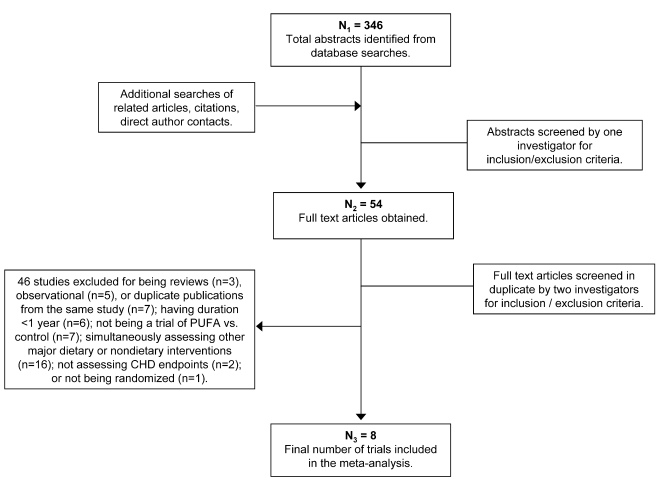
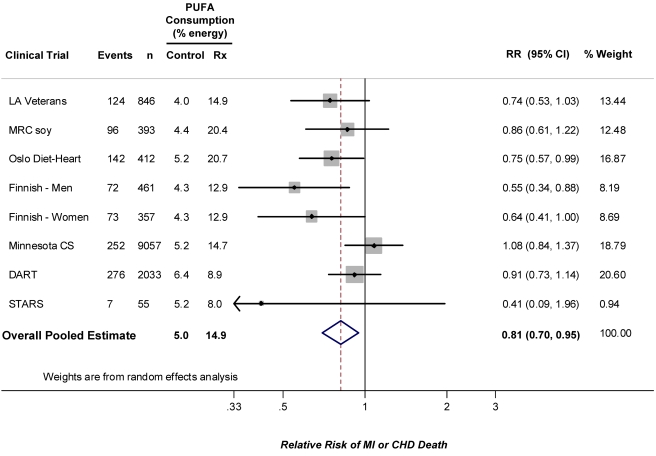
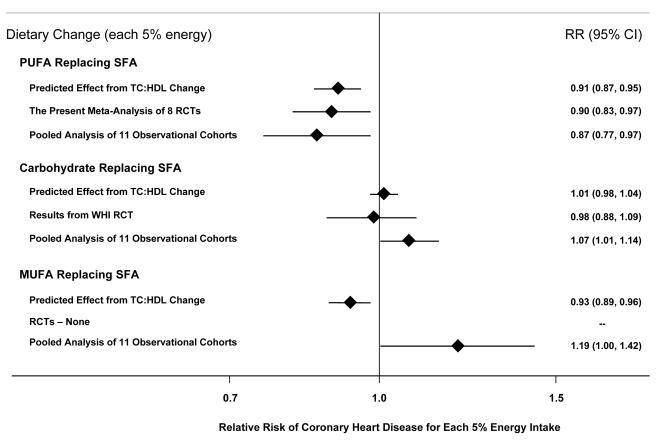
BACKGROUND: Reduced saturated fat (SFA) consumption is recommended to reduce coronary heart disease (CHD), but there is an absence of strong supporting evidence from randomized controlled trials (RCTs) of clinical CHD events and few guidelines focus on any specific replacement nutrient. Additionally, some public health groups recommend lowering or limiting polyunsaturated fat (PUFA) consumption, a major potential replacement for SFA. METHODS AND FINDINGS: We systematically investigated and quantified the effects of increased PUFA consumption, as a replacement for SFA, on CHD endpoints in RCTs. RCTs were identified by systematic searches of multiple online databases through June 2009, grey literature sources, hand-searching related articles and citations, and direct contacts with experts to identify potentially unpublished trials. Studies were included if they randomized participants to increased PUFA for at least 1 year without major concomitant interventions, had an appropriate control group, and reported incidence of CHD (myocardial infarction and/or cardiac death). Inclusions/exclusions were adjudicated and data were extracted independently and in duplicate by two investigators and included population characteristics, control and intervention diets, follow-up duration, types of events, risk ratios, and SEs. Pooled effects were calculated using inverse-variance-weighted random effects meta-analysis. From 346 identified abstracts, eight trials met inclusion criteria, totaling 13,614 participants with 1,042 CHD events. Average weighted PUFA consumption was 14.9% energy (range 8.0%-20.7%) in intervention groups versus 5.0% energy (range 4.0%-6.4%) in controls. The overall pooled risk reduction was 19% (RR = 0.81, 95% confidence interval [CI] 0.70-0.95, p = 0.008), corresponding to 10% reduced CHD risk (RR = 0.90, 95% CI = 0.83-0.97) for each 5% energy of increased PUFA, without evidence for statistical heterogeneity (Q-statistic p = 0.13; I(2) = 37%). Meta-regression identified study duration as an independent determinant of risk reduction (p = 0.017), with studies of longer duration showing greater benefits. CONCLUSIONS: These findings provide evidence that consuming PUFA in place of SFA reduces CHD events in RCTs. This suggests that rather than trying to lower PUFA consumption, a shift toward greater population PUFA consumption in place of SFA would significantly reduce rates of CHD. Please see later in the article for the Editors' Summary.
Overview
The claims and statistics of this paper haven’t been checked yet.
Free: it reads the open-access text and checks the first 5 claims that cite a source we can check. Create a free account to check every claim.
Integrity signals
Registry
Cites
Statistics
Figures
Verification
Claims the paper makes
The claims and statistics of this paper haven’t been checked yet.
Free: it reads the open-access text and checks the first 5 claims that cite a source we can check. Create a free account to check every claim.
Claims other papers make about this one
Each is checked against this paper’s own text: does it say what the citing paper says it does?
The cited source doesn’t support the claim as written.
In the citing paper
“In the presidential advisory of the AHA by Sacks et al. (27), the literature search strategy was not described, similarly to the study by Mozaffarian et al. (26)”
From Saturated Fat Restriction for Cardiovascular Disease Prevention: A Systematic Review and Meta-analysis of Randomized Controlled Trials (2025) · cites this paper as [26]
Checked by a reasoning model — may be wrong.
Experimental — accuracy not yet measuredThe source backs part of the claim, not all of it — or backs it for a different population, condition or comparison.
In the citing paper
“In order to get an overall estimate of the impact of dietary modifications on the CV risk, different meta-analyses have been performed, sometimes with inconsistent outcomes. 135,136”
From 2016 ESC/EAS Guidelines for the Management of Dyslipidaemias (2016) · cites this paper as [136]
Experimental — accuracy not yet measuredThe source backs part of the claim, not all of it — or backs it for a different population, condition or comparison.
In the citing paper
“For instance, total saturated fat, carbohydrate, and protein each appear relatively neutral for CHD; while effects of total monounsaturated fat remain uncertain (see below).21, 349”
From Dietary and Policy Priorities for Cardiovascular Disease, Diabetes, and Obesity: A Comprehensive Review (2016) · cites this paper as [349]
Experimental — accuracy not yet measuredThe source backs part of the claim, not all of it — or backs it for a different population, condition or comparison.
In the citing paper
“LA is also associated with significantly lower risk of CHD (Figure 7), whether in comparison to carbohydrate or saturated fat;350 and in meta-analysis of controlled clinical trials, consumption of n-6 rich vegetable oils, in place of animal fats, reduces CHD events (Figure 7).349”
From Dietary and Policy Priorities for Cardiovascular Disease, Diabetes, and Obesity: A Comprehensive Review (2016) · cites this paper as [349]
Experimental — accuracy not yet measuredThe source backs part of the claim, not all of it — or backs it for a different population, condition or comparison.
In the citing paper
“Notably, in these trials, the average intake of n-6 polyunsaturated fat was ~15% energy,349 higher than current guidelines that recommend up to 10-11% energy from polyunsaturated fat.370”
From Dietary and Policy Priorities for Cardiovascular Disease, Diabetes, and Obesity: A Comprehensive Review (2016) · cites this paper as [349]
Experimental — accuracy not yet measured
18 more claims about this paper
Create a free account to see every claim other papers make about this one.
Self-check
Percentages, sums and reported differences re-computed from the paper’s own numbers.
The self-check needs the paper’s full text.
Citations
Cites
Bias in meta-analysis detected by a simple, graphical test
Egger, M., Smith, G. D., Schneider, M., & Minder, C. (1997) · BMJ · doi:10.1136/bmj.315.7109.629 · Cited by 56,722 · cited 1×
“Potential for publication bias was assessed by visually inspecting a funnel plot of the treatment effect versus SE [30] and statistically using the Begg adjusted-rank correlation test [31].”
MethodMeta-analysis in clinical trials
DerSimonian, R., & Laird, N. (1986) · Controlled Clinical Trials · doi:10.1016/0197-2456(86)90046-2 · Cited by 39,552 · cited 3×
“Statistical Analysis The overall pooled effect was calculated using random effects meta-analysis, which accounts for heterogeneity in treatment effects among studies, using the methods of Dersimonian and Laird [28] with inverse-variance (SE) weighting.”
MethodOperating characteristics of a rank correlation test for publication bias
Begg, C. B., & Mazumdar, M. (1994) · Biometrics · doi:10.2307/2533446 · Cited by 16,955
Trumbo, P., Schlicker, S., Yates, A. A., & Poos, M. (2002) · Journal of the American Dietetic Association · doi:10.1016/s0002-8223(02)90346-9 · Cited by 5,993
Moher, D., Cook, D. J., Eastwood, S., Olkin, I., Rennie, D., & Stroup, D. F. (1999) · The Lancet · doi:10.1016/s0140-6736(99)04149-5 · Cited by 4,826
Moher, D., Pham, B., Jones, A., Cook, D. J., Jadad, A. R., Moher, M., Tugwell, P., & Klassen, T. P. (1998) · The Lancet · doi:10.1016/s0140-6736(98)01085-x · Cited by 3,560 · cited 2×
“We assessed study quality using the validated Jadad scale [27], which includes criteria relating to randomization, blinding, and withdrawals and dropouts that are together summed to generate an overall quality score between 0 and 5.”
BackgroundMethodSwinburn, B., Baba, N. H., Belhadj, M., Deurenberg‐Yap, M., Djazayery, A., Forrester, T., Galuska, D. A., Herman, S. T., James, W. P. T., Kabangu, J. R. M., et al. (2003) · World Health Organization eBooks · Cited by 3,453
Simopoulos, A. P. (2008) · Experimental Biology and Medicine · doi:10.3181/0711-mr-311 · Cited by 2,915 · cited 1×
“However, surprisingly, some scientists and organizations argue that consumption of n-6 PUFA, by far the predominant dietary PUFA, will actually increase CHD risk and have recommended reduced consumption [21–23], and the Institute of Medicine recommends only a relatively modest range of 5%–10% energy (%E) consumption f…”
BackgroundDanaei, G., Ding, E. L., Mozaffarian, D., Taylor, B., Rehm, J., Murray, C. J. L., & Ezzati, M. (2009) · PLoS Medicine · doi:10.1371/journal.pmed.1000058 · Cited by 2,860 · cited 1×
“need to be revisited, particularly as PUFA appears to be the primary evidence-based replacement for SFA. Finally, whereas on a population-level even a small shift from SFA to PUFA consumption would produce meaningful reductions in CHD risk, the relatively modest magnitude of plausible benefit (∼10% lower risk for 5%E…”
BackgroundSelf-citation
Cited by
Items 901–1,000 of 1,000
Introduction to Functional Meat Products
Naseem, Z., Mir, S. A., Naseem, S., & Akhter, S. (2024) · Springer eBooks · doi:10.1007/978-3-031-69868-2_6 · Cited by 2
Excessive Consumption of Fats and Cardiovascular Disease
Tan, B. L., & Norhaizan, M. E. (2024) · SpringerBriefs in food, health and nutrition · doi:10.1007/978-3-031-75319-0_7 · Cited by 3
The Role of Nutrition in Heart Disease Prevention
Kris‐Etherton, P. M., Fleming, J. A., Kroat, A., Skulas‐Ray, A. C., & Flock, M. R. (2014) · Elsevier eBooks · doi:10.1016/b978-0-12-801238-3.00030-1 · Cited by 2
Can Mediterranean Diet Counteract Metabolic Syndrome Diffusion?
Innocenti, A., Giampietro, C., Fusi, J., Galetta, F., Franzoni, F., & Giampietro, O. (2015) · Journal of Cardiology and Therapy · doi:10.17554/j.issn.2309-6861.2015.02.99 · Cited by 3
n-3 and n-6 Fatty Acids Reduce Risk for Cardiovascular Disease
Harris, W. S. (2015) · Springer eBooks · doi:10.1007/978-3-319-22431-2_14 · Cited by 4
Are current dietary guidelines relevant to subjects on cholesterol-lowering drugs?
Salter, A. M. (2019) · Proceedings of The Nutrition Society · doi:10.1017/s0029665119000685 · Cited by 2
Nutrition, aging, and requirements in the elderly
Elmadfa, I., & Meyer, A. L. (2020) · Elsevier eBooks · doi:10.1016/b978-0-12-818460-8.00005-8 · Cited by 3
Fats of Pigs of Different Breeds and Chemical Composition in the Diet of Animals
Bekenev, V. A., Магер, С. Н., Аришин, А. А., Merzlyakova, O. G., Kashtanova, E. V., Polonskaya, Y. V., Чегодаев, В. Г., Фролова, В. И., Bolshakova, I. V., Frolova, Y. V., et al. (2022) · The Natural Products Journal · doi:10.2174/2210315512666220610103331 · Cited by 2
Bowen‐Forbes, C. S., & Goldson-Barnaby, A. (2023) · Elsevier eBooks · doi:10.1016/b978-0-443-18657-8.00019-0 · Cited by 2
El-Alameey, I. R., Aljohani, R. N., Allhebi, S. A., Alahmadi, H. A., & Alsakrani, R. K. (2024) · Open Access Macedonian Journal of Medical Sciences · doi:10.3889/oamjms.2024.11743 · Cited by 3
“A meta-analysis of randomized control trials found a 10% reduction in chronic heart disease for each 5% of energy from fat and saturated fatty acids substituted for polyunsaturated fatty acids [52].”
BackgroundKhanal, B., Dhoubhadel, S. P., & Nayga, R. M. (2025) · Agribusiness · doi:10.1002/agr.22021 · Cited by 2
Temesgen, M. (2015) · Advances in life science and technology · Cited by 3
Coplanar PCB-induced inflammation and dietary interventions
Eske, K. (2013) · UKnowledge (University of Kentucky) · Cited by 2
Saturated fat and lipemia: importance of study design and triglyceride structure
Khosla, P., & Hayes, K. C. (2012) · American Journal of Clinical Nutrition · doi:10.3945/ajcn.112.037234 · Cited by 2
Insights and Perspectives on Dietary Modifications to Reduce the Risk of Cardiovascular Disease
Baer, D. J., Bradley, B. H. R., Kris‐Etherton, P. M., Mente, A., & Otto, M. D. O. (2014) · Advances in Nutrition · doi:10.3945/an.114.006510 · Cited by 4
“For example, when saturated fat is replaced with carbohydrate in the diet, heart disease risk does not change; when saturated fat is replaced with polyunsaturated fat in the diet, heart disease risk decreases (2).”
BackgroundResponse to Hoenselaar from Pedersen et al.
Pedersen, J. I., Norum, K. R., James, P., Brouwer, I. A., Katan, M., Clarke, R., Elmadfa, I., Kris‐Etherton, P. M., Kromhout, D., Margetts, B., et al. (2011) · British Journal Of Nutrition · doi:10.1017/s0007114511006593 · Cited by 2
“The randomised controlled trials included in the metaanalysis by Mozaffarian et al.(14) were designed to test the hypothesis that reducing cholesterol by diets low in SFA and high in PUFA would reduce the risk of CHD.”
MethodTalbot, G. (2016) · Elsevier eBooks · doi:10.1016/b978-0-08-100329-9.00006-2 · Cited by 4
Scientific evidence and daily food for a better life: Milan, 19 June 2015
Phillips, F., & Ruxton, C. H. S. (2016) · Public Health · doi:10.1016/j.puhe.2016.08.022 · Cited by 2
Cardioprotective whole-diet advice in cardiac rehabilitation
Parker, T., & Taylor, V. (2018) · British Journal of Cardiac Nursing · doi:10.12968/bjca.2018.13.9.428 · Cited by 2
The diet-heart hypothesis, obesity and diabetes
Rossouw, J. (2015) · South African Journal of Clinical Nutrition · doi:10.1080/16070658.2015.11734524 · Cited by 2
Dietas basadas en plantas y factores de riesgo cardio-metabólicos. ¿Qué dice la evidencia?
Morales, G. I., Ruíz, F., Bes‐Rastrollo, M., Schifferli, I., Muñoz, A., & Celedón-Celis, N. (2021) · Revista chilena de nutrición · doi:10.4067/s0717-75182021000300425 · Cited by 8
Role of dietary spices in modulating inflammation and oxidative stress
Oh, E. S., Petersen, K. H., Kris‐Etherton, P. M., & Rogers, C. J. (2021) · Elsevier eBooks · doi:10.1016/b978-0-12-823482-2.00005-4 · Cited by 2
Hébert, J. R. (2022) · Elsevier eBooks · doi:10.1016/b978-0-12-822130-3.00005-3 · Cited by 3
Dworatzek, P. D. N., Arcudi, K., Gougeon, R., Husein, N., Sievenpiper, J. L., & Williams, S. L. (2013) · Canadian Journal of Diabetes · doi:10.1016/j.jcjd.2013.07.048 · Cited by 4
The Honeybee (Apis mellifera L.) Is an Efficient Pollinator for Paeonia lactiflora Pall in the Field
Tian, L., Ren, J., Li, R., Di, N., Huang, X., Wang, S., Fang, X., & Xu, X. (2023) · Applied Sciences · doi:10.3390/app13021179 · Cited by 3
Kärberg, K., Forbes, A., & Lember, M. (2024) · Medicina · doi:10.3390/medicina60030438 · Cited by 3
“Still, an insufficient intake of PUFA is considered a crucial deficiency in inadequate diets, and therefore, increasing PUFA intake is more important than reducing the high intake of SFA [15].”
BackgroundTing, K. K. Y. (2024) · Frontiers in Nutrition · doi:10.3389/fnut.2024.1407108 · Cited by 2
Omega-6 fatty acids and cardiovascular disease: An update
Mozaffarian, D. (2012) · Nutrafoods · doi:10.1007/s13749-012-0035-x · Cited by 4
Self-citationAcides gras alimentaires et risque cardiovasculaire
Dallongeville, J. (2013) · Archives des Maladies du Coeur et des Vaisseaux - Pratique · doi:10.1016/s1261-694x(13)70458-9 · Cited by 4
Wynn, C., Williams, T., ALLEN, O. M., & Inserra, P. F. (2016) · Wageningen Academic Publishers eBooks · doi:10.3920/978-90-8686-821-6_10 · Cited by 2
Health Benefits of Dietary Tree Peony Seed Oil in a High Fat Diet Hamster Model
Zheng, Z., Han, J., Mao, Y., Xue Ming, T. A. N. G., Guan, Y., & Hu, Y. (2017) · Functional Foods in Health and Disease · doi:10.31989/ffhd.v7i2.313 · Cited by 2
“MUFA, monounsaturated fatty acids; PUFA, polyunsaturated fatty acids; HFD, high fat diets; CO, coconut oil; PSO, peony seed oil; NAFLD, non-alcoholic fatty liver disease; CVD, cardiovascular diseases; LDL, low-density lipoprotein; HDL, high-density lipoprotein; H&E, hematoxylin and eosin; RBC, red blood cells; ANOVA,…”
BackgroundInfluentialTakada, A., Shimizu, F., & Koba, S. (2019) · Food and Nutrition Sciences · doi:10.4236/fns.2019.106042 · Cited by 2
“Higher intakes of industrially-produced trans fatty acids (IP-TFA) [5] and of saturated fatty acids are associated with increased risk for CHD (coronary heart disease) [6] [7], and higher intakes of both the ω6 (n − 6) polyunsaturated fatty acids (PUFAs) and the n-3 PUFAs are associated with lower risk of CHD [8].”
BackgroundPerfil lipídico en leche de vacas en pastoreo de gramíneas en el trópico seco colombiano
Mojica-Rodríguez, J. E., Castro-Rincón, E., Carulla, J. E., & Aguilar, C. E. L. (2019) · Agronomía Mesoamericana · doi:10.15517/am.v30i2.34723 · Cited by 6
Peçanha, D. O., Huguenin, G. V. B., Lorenzo, A. D., & Tibiriçá, E. V. (2019) · Microvascular Research · doi:10.1016/j.mvr.2019.103962 · Cited by 2
Camel Meat Nutrient Content and Potential Health Benefits
Kadim, I. T., Purchas, R. W., Al-Amri, I. S., AlKindi, A. Y., & Abbas, G. (2019) · Practice, progress, and proficiency in sustainability · doi:10.4018/978-1-7998-1604-1.ch013 · Cited by 2
Leray, C. (2020) · OCL · doi:10.1051/ocl/2020018 · Cited by 2
Mincane fındık çeşidinde klon seleksiyonu: Yağ asitleri bileşimi
Turan, A. (2021) · Karadeniz Fen Bilimleri Dergisi · doi:10.31466/kfbd.962692 · Cited by 2
Li, F., Zhang, Q., Tong, Y., Jiang, J., & Liu, J. (2022) · Rapid Communications in Mass Spectrometry · doi:10.1002/rcm.9280 · Cited by 2
Sheridan, S., Draeger, L. B., & Keyserling, T. C. (2014) · Contemporary Clinical Trials · doi:10.1016/j.cct.2014.05.014 · Cited by 2
Dietary carbohydrate restriction: Compelling theory for further research
Fenton, C. J., & Fenton, T. R. (2015) · Nutrition · doi:10.1016/j.nut.2015.03.001 · Cited by 2
“Low-fat diets were recommended primarily based on compelling physiologic arguments – but more recent evidence from randomized controlled trials has since shown that dietary fat, except for trans fat, is not as dangerous to health as was once thought (2,3).”
BackgroundFish Oil vs Olive Oil for Postoperative Atrial Fibrillation—Reply
Mozaffarian, D., & Marchioli, R. (2013) · JAMA · doi:10.1001/jama.2013.673 · Cited by 2
Self-citationTaylor, C. G., & Zahradka, P. C. (2013) · Clinical Lipidology · doi:10.2217/clp.13.48 · Cited by 2
Two lipids in the diet, rather than cholesterol, are responsible for heart failure and stroke
Kummerow, F. A. (2014) · Clinical Lipidology · doi:10.2217/clp.14.4 · Cited by 3
Tennakoon, T. M. S. U. B. (2012) · NORA - Norwegian Open Research Archives · Cited by 2
Richard Hoffman PhD RNutr, F. R. S. A., & Gerber, M. (2011) · Wiley eBooks · doi:10.1002/9781118785027.ch11 · Cited by 2
Family-based dietary intervention in the STRIP study – influences on diet and diet-related attitudes
Talvia, S. S. (2013) · UTUPub (University of Turku) · Cited by 7
Prevention of Coronary Artery Disease through Diet
Yıldız, O., Seyrek, M., & Ulusoy, K. G. (2015) · InTech eBooks · doi:10.5772/61339 · Cited by 2
“indicated as the result of 8 randomised clinical trials that changing the energy intake from SFA to PUFA by 5% reduced the CAD risk by 10% [55].”
BackgroundDoes Dairy Food Have Effects on Cardiovascular Disease and Cardiometabolic Risk?
Benatar, J. R. (2017) · Elsevier eBooks · doi:10.1016/b978-0-12-809868-4.00020-0 · Cited by 1
Freire, I. V., dos Santos, D. P., Ribeiro, Í. J. S., dos Santos, C. S., Coqueiro, R. D. S., Casotti, C. A., & Pereira, R. (2021) · European Journal of Geriatrics and Gerontology · doi:10.4274/ejgg.galenos.2020.378 · Cited by 1
Chomo, P. A., Gyang, A. E., & Istifanus, J. B. (2023) · Science Journal of Analytical Chemistry · doi:10.11648/j.sjac.20231101.12 · Cited by 1
“3 and Figure 1 shows that the sample has 31.80% 9, 12-Octadecadienoic acid (Linoleic acid), it is the most predominant unsaturated fatty acid that is mostly needed in humans for biological processes [13].”
BackgroundInfluentialNutritional Aspects of Fats and Oils
Kirkhus, B., Skúladóttir, G. V., Lampi, A., & Nilsson, A. (2024) · Springer eBooks · doi:10.1007/978-3-031-46831-5_2 · Cited by 2
Gallazzi, L. F. M., Pérez, C. D., Rossetti, L., Cunzolo, S. A., Rizzo, S., & Descalzo, A. M. (2024) · Food Chemistry · doi:10.1016/j.foodchem.2024.141866 · Cited by 1
Oteyola, A. O., de Oliveira, I. M. S., de Almeida, J. M., Cardoso, L. C., Paula, T. D. M. D. E., Nogueira, J. M., Carvalho, J. C. D. S., Nogueira, H. M., Porto, B. L. S., Mota, A. P. L., et al. (2025) · Reproductive Toxicology · doi:10.1016/j.reprotox.2025.108836 · Cited by 1
Low-Carbohydrate Diet Score and Risk of Mortality: The Japan Collaborative Cohort Study
Sasakabe, T., Wakai, K., Kawai, S., Lin, Y., Hishida, A., Iso, H., Kikuchi, S., & Tamakoshi, A. (2025) · Journal of Nutrition · doi:10.1016/j.tjnut.2025.02.001 · Cited by 1
Al‐Mawali, A., Al-Harrasi, A., Pinto, A. D., Morsi, M. M., Balouchi, A., & Cappuccio, F. P. (2025) · BMC Nutrition · doi:10.1186/s40795-024-00987-y · Cited by 3
Chowdhury, N. S., Zaman, T. S., Chowdhury, R. N., Rahman, M. A., Alam, M. S., Akter, R., Samdani, M. N., Afrin, S. S., Tahsin, M. R., Aktar, F., et al. (2025) · Phytomedicine Plus · doi:10.1016/j.phyplu.2025.100824 · Cited by 1
Pescari, D., Mihuţa, M. S., Bena, A., & Stoian, D. (2025) · Nutrients · doi:10.3390/nu17121963 · Cited by 1
“In this dietary protocol, carbohydrates were predominantly replaced by healthy fats [38] and complete, bioavailable protein sources [39], while ensuring that the overall caloric intake remained isocaloric.”
Dietary Management of Atherogenic Dyslipidemia
Kim, S., Shin, M., & Krauss, R. M. (2025) · Current Atherosclerosis Reports · doi:10.1007/s11883-025-01335-6 · Cited by 3
Haber, M., Nasr, M. S., Etri, H. A., & Nasr, S. (2025) · Frontiers in Cardiovascular Medicine · doi:10.3389/fcvm.2025.1664802 · Cited by 2
Chhay, P., Zhu, D., Tang, O., Gray, M. P., Vernon, S. T., Bartolo, B. A. D., Kott, K. A., Grieve, S. M., Gibson, R. A., Psaltis, P. J., et al. (2026) · Scientific Reports · doi:10.1038/s41598-026-36845-z · Cited by 1
“Experimental evidence supports that LA can be metabolised into anti-inflammatory and vasodilatory lipid mediators, which may contribute to the observed inverse associations, although our cross-sectional data cannot establish causality 27 .”
Special issue: Lipids and their manipulation in animal‐derived foods
Givens, D. I. (2015) · European Journal of Lipid Science and Technology · doi:10.1002/ejlt.201500355 · Cited by 1
Van verzadigd naar onverzadigd vet
Hornstra, G., Grooten, H. N. A., & van Binsbergen, J. J. (2012) · Huisarts en Wetenschap · doi:10.1007/s12445-012-0035-5 · Cited by 1
The Nutrient Intake of Homeless Women of Grand Rapids, Michigan
Popma-Metsaars, E. D. (2014) · Language arts journal of Michigan · Cited by 1
Talbot, G. (2016) · Elsevier eBooks · doi:10.1016/b978-0-08-100329-9.00007-4 · Cited by 1
Borg, M., Svensson, M., Povlsen, J., Schmidt, E., Aalkjaer, C., Christensen, J., & Ivarsen, P. (2016) · BMC Nephrology · doi:10.1186/s12882-016-0393-5 · Cited by 1
Hariri, O. E., Bouchriti, N., Baamal, L., & Bengueddour, R. (2018) · International Journal of Pharma and Bio Sciences · doi:10.22376/ijpbs.2018.9.4.b89-101 · Cited by 1
The scientific report guiding the US dietary guidelines: is it scientific?
(2016) · BMJ · doi:10.1136/bmj.i6061 · Cited by 1
Nutritional and health value of plant-based meat alternatives
Craig, W. J., & Berardy, A. (2022) · Elsevier eBooks · doi:10.1016/b978-0-323-85838-0.00004-3 · Cited by 2
Fried, R., & Carlton, R. M. (2023) · CRC Press eBooks · doi:10.1201/b23284 · Cited by 2
Matar, A. M., Alharthi, A. S., Ayadi, M., Al-Garadi, M. A., & Aljumaah, R. S. (2023) · Animals · doi:10.3390/ani13081317 · Cited by 1
“[2] showed that palmitoleic acid (C16:1, PA) and CLA are metabolic health biomarkers and that FA and phospholipid levels are associated with insulin resistance, atherogenic dyslipidemia, and the development of type 2 diabetes.”
BackgroundCatapano, A. L. (2023) · Elsevier eBooks · doi:10.1016/b978-0-323-88286-6.00013-3 · Cited by 3
Galmés, S., Reynés, B., Domínguez-Flores, A., Terradas, S., Torres, A. M., & Palou, A. (2024) · Foods · doi:10.3390/foods13050761 · Cited by 1
Nutrient quality in dietary therapy for diabetes and diabetic kidney disease
Tsuruta, H., Sugahara, S., & Kume, S. (2024) · Journal of Diabetes Investigation · doi:10.1111/jdi.14208 · Cited by 1
“Replacing SFAs with PUFAs has been associated with a decrease in coronary artery disease 75 .”
MethodCiapponi, A., Bardach, A., Colaci, C., Cairoli, F. R., Argento, F., Korbenfeld, E. P., & Martí, S. G. (2024) · Revista Peruana de Medicina Experimental y Salud Pública · doi:10.17843/rpmesp.2024.411.13351 · Cited by 4
Tanislav, A. E., Ţibulcă, D., Mureşan, V., Mudura, E., & and Veterinary Medicine of Cluj Napoca, R. (2024) · Acta Scientiarum Polonorum Technologia Alimentaria · doi:10.17306/j.afs.001220 · Cited by 1
Investigation of the nutritional value of a whole camel meat product
Kenenbay, S., Kulimbetova, A. A., & Khamza, K. S. (2024) · The Journal of Almaty Technological University · doi:10.48184/2304-568x-2024-4-27-36 · Cited by 1
The association between dietary fatty acid intake and gallstone disease: a case-control study
Sadeghi, A., Raissi-Dehkordi, N., Ghorbani, M., Rastegar, R., Zali, M., Raissi-Dehkordi, N., Yari, Z., & Hekmatdoost, A. (2025) · Nutrition & Food Science · doi:10.1108/nfs-06-2024-0196 · Cited by 1
Procesos simples que disminuyen el contenido de sodio y nitritos en jamones
Franco‐Ávila, T., Yañez-Sánchez, I., Avila-Guerrero, A. P., Madera-Ibarra, C. T., Navarro-Gómez, L. G., & Gálvez-Gastélum, F. J. (2015) · Revista Española de Nutrición Humana y Dietética · doi:10.14306/renhyd.19.2.140 · Cited by 1
Clifton, P. M., & Keogh, J. B. (2014) · Current Opinion in Lipidology · doi:10.1097/mol.0000000000000136 · Cited by 1
Adeyemi, O. T., Osilesi, O., Adebawo, O. O., Onajobi, F. D., & Oyedemi, S. O. (2015) · Advances in Bioscience and Biotechnology · doi:10.4236/abb.2015.64028 · Cited by 2
“Serum cholesterol is a term that includes the total level of cholesterol that is found in the bloodstream, it includes identifying all types or classes of cholesterol that are found in the system [41].”
BackgroundVoeding bij diabetes mellitus type 2
van Wijland, H. (2013) · TvPO · doi:10.1007/s12503-013-0063-z · Cited by 1
Cut junk food, says NICE guidance on cardiovascular disease prevention
Capewell, S., & McPherson, K. (2010) · Heart · doi:10.1136/hrt.2010.207779 · Cited by 1
“This increases the shelf-life of cakes and biscuits but at a high price, because trans-fats substantially increase the risk of CVD and are classified as toxic by the WHO.7 Countries such as Denmark and Austria have therefore successfully banned trans-fats.1 Eliminating industrially produced trans-fats from processed f…”
BackgroundPrävention kardiovaskulärer Erkrankungen
Dawczynski, C., & Lorkowski, S. (2015) · CardioVasc · doi:10.1007/s15027-015-0660-6 · Cited by 1
Intérêt nutritionnel de la matière grasse laitière
Legrand, P. (2016) · Pratiques en nutrition · doi:10.1016/j.pranut.2016.06.007 · Cited by 1
Coronary heart disease: Epidemiology and prevention
Danaei, G., & Rahimi, K. (2010) · Oxford University Press eBooks · doi:10.1093/med/9780198746690.003.0365 · Cited by 1
Nutritional Management for Patients with Nausea and Vomiting and Gastroparesis or Dumping Syndrome
Stuart, P. S., & Hicks, D. C. (2016) · Springer eBooks · doi:10.1007/978-3-319-34076-0_11 · Cited by 2
OBSOLETE: Dietary Fat and Risk of Cardiovascular Disease
Iso, H. (2017) · Elsevier eBooks · doi:10.1016/b978-0-12-801238-3.99603-x · Cited by 1
Exclusion of Dietary Cholesterol from The Specific Food Restrictions: A Review in Indonesia
Zulkarnain, M. R. (2018) · Jurnal Sains Boga · doi:10.21009/jsb.001.1.01 · Cited by 2
“When PUFAs replace SFAs, the evidence from epidemiologic, clinical, and mechanistic studies are consistent that the risk of CHD is reduced (Mozaffarian et al, 2010).”
BackgroundSerial measures of circulating biomarkers of dairy fat: something is missing
Kahleová, H., & Barnard, N. D. (2018) · American Journal of Clinical Nutrition · doi:10.1093/ajcn/nqy277 · Cited by 1
Gama, A. P., Mwangwela, A. M., Gichohi‐Wainaina, W. N., & Adhikari, K. (2020) · Journal of the Science of Food and Agriculture · doi:10.1002/jsfa.10266 · Cited by 1
Análisis nutrimental de un recetario mexicano de cocina de 1943
Kuri-García, A., García-Plata, Y., Luján-Méndez, F., Martínez-Pérez, R. M., & Chávez‐Servín, J. L. (2020) · Estudios Sociales Revista de Alimentación Contemporánea y Desarrollo Regional · doi:10.24836/es.v30i55.856 · Cited by 1
Cardiovascular Disease and Lifestyle Modification
Sacks, F. M., & McManus, K. (2012) · Elsevier eBooks · doi:10.1016/b978-1-4557-0101-8.00026-6 · Cited by 2
Jawad, M. M. (2021) · Medical Science Journal for Advance Research · doi:10.46966/msjar.v2i1.14 · Cited by 1
The Bioactive Effects of Sesame Seeds on Atherosclerosis and Inflammation in Rats.
Ibrahim, H., Ahmed, L. A., & Mohammed, A. A. (2020) · Egyptian Journal of Nutrition and Health · doi:10.21608/ejnh.2020.166680 · Cited by 1
“In addition, the consumption of poly unsaturated fatty acids PUFA- and mono unsaturated fatty acids (MUFA) -rich oils may help decrease the fractions of circulating lipid levels, as well as the risk of cardiovascular diseases (CVD) (Mozaffarian et al., 2010).”
BackgroundAronow, W. S. (2021) · IntechOpen eBooks · doi:10.5772/intechopen.87280 · Cited by 1
de Nobrega, S. C., Cornejo, V., Leal-Witt, M. J., & Durán‐Agüero, S. (2021) · Revista chilena de nutrición · doi:10.4067/s0717-75182021000400640 · Cited by 4
Necesidades nutricionales e hídricas en el tenis
Sanchez, J., Ordóñez, F. M., Puyana, M. G., & Domínguez, R. (2017) · ITF Coaching & Sport Science Review · doi:10.52383/itfcoaching.v25i73.301 · Cited by 3
The Pathophysiological Aspects of Cerebral Diseases
Silva, H. C., Maia, R. C. L., de Vasconcelos, P. R. L., & de Azevedo, O. G. R. (2022) · IntechOpen eBooks · doi:10.5772/intechopen.101218 · Cited by 1
Welche Risikofaktoren gibt es und was kann man dagegen tun?
Hambrecht, R., & Wienbergen, H. (2021) · Springer eBooks · doi:10.1007/978-3-662-63467-7_2 · Cited by 1
Meisenberg, G., & Simmons, W. H. (2012) · Elsevier eBooks · doi:10.1016/b978-0-323-07155-0.00025-3 · Cited by 1
Metadata
- Authors
- Mozaffarian, D., Micha, R., & Wallace, S.
- Affiliations
- Brigham and Women's Hospital (US)
- Harvard University (US)
- Corresponding author
- Mozaffarian, Dariush
- Venue
- PLoS Medicine
- Publisher
- Public Library of Science (PLoS)
- Published
- 2010-03-23
- Volume
- 7
- Issue
- 3
- Pages
- e1000252
- ISSN
- 1549-1277 (ISSN-L)
- 1549-1676
- PMC
- PMC2843598
- OpenAlex
- W2097226936
- Cited by
- 1,215
- References
- 49
- Citations by year
- 2026: 32 · 2025: 52 · 2024: 59 · 2023: 63 · 2022: 69 · 2021: 80 · 2020: 81 · 2019: 76 · 2018: 76 · 2017: 74 · 2016: 98 · 2015: 105 · 2014: 85 · 2013: 89 · 2012: 77
- FWCI
- 9.42
- Type
- journal article
- Language
- en
- Open access
- gold
- doi.org
- Locations
- PLoS Medicine (publishedVersion, cc-by)
- PubMed Central (publishedVersion, cc-by)
- PubMed (publishedVersion)
- RePEc: Research Papers in Economics (publishedVersion)
- Digital Access to Scholarship at Harvard (DASH) (Harvard University) (submittedVersion, cc-by)
- DOAJ (DOAJ: Directory of Open Access Journals) (submittedVersion, cc-by-sa)
- Figshare (submittedVersion, cc-by)
- Funders
- Bill and Melinda Gates Foundation
- Chicago Community Trust
- GlaxoSmithKline
- World Health Organization
- National Institutes of Health
- U.S. Food and Drug Administration
- National Heart, Lung, and Blood Institute (R01HL085710)
- Topics
- Health Sciences › Nursing › Nutrition and Dietetics › Fatty Acid Research and Health
- Health Sciences › Medicine › Public Health, Environmental and Occupational Health › Nutritional Studies and Diet
- Health Sciences › Medicine › Cardiology and Cardiovascular Medicine › Lipoproteins and Cardiovascular Health
- Keywords
- polyunsaturated fatty acids, saturated fat replacement, coronary artery disease, myocardial infarction, cardiovascular mortality, dietary fat, cardiovascular risk reduction, study duration, meta-regression, dietary intervention trials, omega-3 fatty acids, omega-6 fatty acids, dietary guidelines, publication bias
- MeSH terms
- Coronary Disease, Dietary Fats, Fatty Acids, Fatty Acids, Unsaturated, Feeding Behavior, Humans, Meta-Analysis as Topic, Randomized Controlled Trials as Topic
About these checks
Registry, retraction, Cites and statistics results are computed, not judged, with one exception: a printed reference that no index lists is read once by a model before it counts as a citation error. Claims are extracted by a model and kept only when their quote appears verbatim in the text; each cited source is then checked, with a model’s help, for whether it says what the claim relies on. Those verdicts can be wrong — read the claim’s quote and the cited source before relying on one.
Statistics and arithmetic are recomputed, not judged.
Confidence bands are shown only for fields calibrated on our annotated test set. None is calibrated yet, so no band is shown.
What counts as a claim ›How we measure confidence ›How we check this ›
Are you an author, or do you see a problem with this page? Request a review
Data sources
Bibliographic data: Semantic Scholar, OpenAlex, Crossref.
Contains information from the Semantic Scholar Academic Graph Datasets, made available under the ODC Attribution License (ODC-BY 1.0).
Semantic Scholar’s data is described in: Kinney, R., et al. (2023). The Semantic Scholar Open Data Platform. arXiv:2301.10140.
