

Effects on coronary heart disease of increasing polyunsaturated fat in place of saturated fat: a systematic review and meta-analysis of randomized controlled trials.
Open accessThe DOI matches its Crossref record; 49 of the 49 references it cites were found in a registry or an index.
Abstract
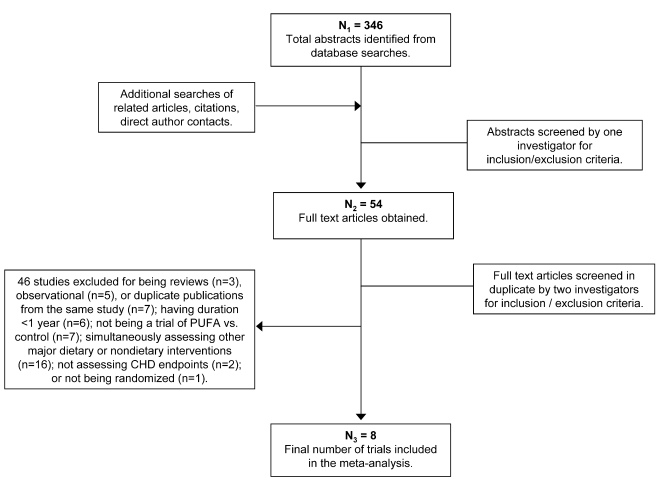
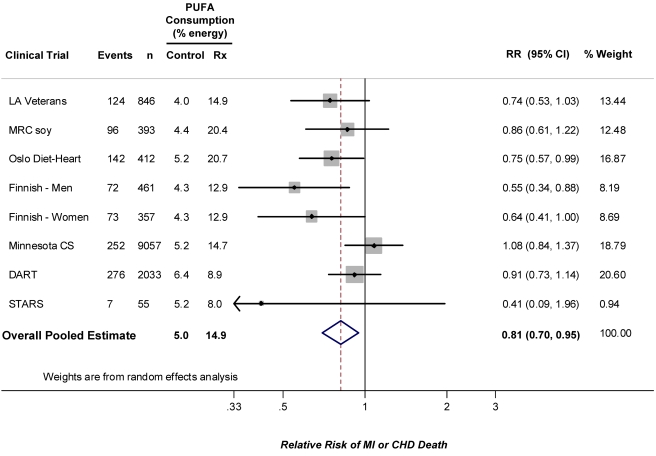
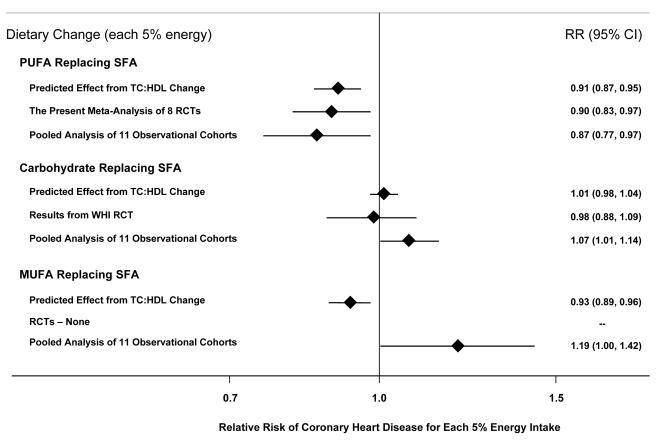
BACKGROUND: Reduced saturated fat (SFA) consumption is recommended to reduce coronary heart disease (CHD), but there is an absence of strong supporting evidence from randomized controlled trials (RCTs) of clinical CHD events and few guidelines focus on any specific replacement nutrient. Additionally, some public health groups recommend lowering or limiting polyunsaturated fat (PUFA) consumption, a major potential replacement for SFA. METHODS AND FINDINGS: We systematically investigated and quantified the effects of increased PUFA consumption, as a replacement for SFA, on CHD endpoints in RCTs. RCTs were identified by systematic searches of multiple online databases through June 2009, grey literature sources, hand-searching related articles and citations, and direct contacts with experts to identify potentially unpublished trials. Studies were included if they randomized participants to increased PUFA for at least 1 year without major concomitant interventions, had an appropriate control group, and reported incidence of CHD (myocardial infarction and/or cardiac death). Inclusions/exclusions were adjudicated and data were extracted independently and in duplicate by two investigators and included population characteristics, control and intervention diets, follow-up duration, types of events, risk ratios, and SEs. Pooled effects were calculated using inverse-variance-weighted random effects meta-analysis. From 346 identified abstracts, eight trials met inclusion criteria, totaling 13,614 participants with 1,042 CHD events. Average weighted PUFA consumption was 14.9% energy (range 8.0%-20.7%) in intervention groups versus 5.0% energy (range 4.0%-6.4%) in controls. The overall pooled risk reduction was 19% (RR = 0.81, 95% confidence interval [CI] 0.70-0.95, p = 0.008), corresponding to 10% reduced CHD risk (RR = 0.90, 95% CI = 0.83-0.97) for each 5% energy of increased PUFA, without evidence for statistical heterogeneity (Q-statistic p = 0.13; I(2) = 37%). Meta-regression identified study duration as an independent determinant of risk reduction (p = 0.017), with studies of longer duration showing greater benefits. CONCLUSIONS: These findings provide evidence that consuming PUFA in place of SFA reduces CHD events in RCTs. This suggests that rather than trying to lower PUFA consumption, a shift toward greater population PUFA consumption in place of SFA would significantly reduce rates of CHD. Please see later in the article for the Editors' Summary.
Overview
The claims and statistics of this paper haven’t been checked yet.
Free: it reads the open-access text and checks the first 5 claims that cite a source we can check. Create a free account to check every claim.
Integrity signals
Registry
Cites
Statistics
Figures
Verification
Claims the paper makes
The claims and statistics of this paper haven’t been checked yet.
Free: it reads the open-access text and checks the first 5 claims that cite a source we can check. Create a free account to check every claim.
Claims other papers make about this one
Each is checked against this paper’s own text: does it say what the citing paper says it does?
The cited source doesn’t support the claim as written.
In the citing paper
“In the presidential advisory of the AHA by Sacks et al. (27), the literature search strategy was not described, similarly to the study by Mozaffarian et al. (26)”
From Saturated Fat Restriction for Cardiovascular Disease Prevention: A Systematic Review and Meta-analysis of Randomized Controlled Trials (2025) · cites this paper as [26]
Checked by a reasoning model — may be wrong.
Experimental — accuracy not yet measuredThe source backs part of the claim, not all of it — or backs it for a different population, condition or comparison.
In the citing paper
“In order to get an overall estimate of the impact of dietary modifications on the CV risk, different meta-analyses have been performed, sometimes with inconsistent outcomes. 135,136”
From 2016 ESC/EAS Guidelines for the Management of Dyslipidaemias (2016) · cites this paper as [136]
Experimental — accuracy not yet measuredThe source backs part of the claim, not all of it — or backs it for a different population, condition or comparison.
In the citing paper
“For instance, total saturated fat, carbohydrate, and protein each appear relatively neutral for CHD; while effects of total monounsaturated fat remain uncertain (see below).21, 349”
From Dietary and Policy Priorities for Cardiovascular Disease, Diabetes, and Obesity: A Comprehensive Review (2016) · cites this paper as [349]
Experimental — accuracy not yet measuredThe source backs part of the claim, not all of it — or backs it for a different population, condition or comparison.
In the citing paper
“LA is also associated with significantly lower risk of CHD (Figure 7), whether in comparison to carbohydrate or saturated fat;350 and in meta-analysis of controlled clinical trials, consumption of n-6 rich vegetable oils, in place of animal fats, reduces CHD events (Figure 7).349”
From Dietary and Policy Priorities for Cardiovascular Disease, Diabetes, and Obesity: A Comprehensive Review (2016) · cites this paper as [349]
Experimental — accuracy not yet measuredThe source backs part of the claim, not all of it — or backs it for a different population, condition or comparison.
In the citing paper
“Notably, in these trials, the average intake of n-6 polyunsaturated fat was ~15% energy,349 higher than current guidelines that recommend up to 10-11% energy from polyunsaturated fat.370”
From Dietary and Policy Priorities for Cardiovascular Disease, Diabetes, and Obesity: A Comprehensive Review (2016) · cites this paper as [349]
Experimental — accuracy not yet measured
18 more claims about this paper
Create a free account to see every claim other papers make about this one.
Self-check
Percentages, sums and reported differences re-computed from the paper’s own numbers.
The self-check needs the paper’s full text.
Citations
Cites
Bias in meta-analysis detected by a simple, graphical test
Egger, M., Smith, G. D., Schneider, M., & Minder, C. (1997) · BMJ · doi:10.1136/bmj.315.7109.629 · Cited by 56,722 · cited 1×
“Potential for publication bias was assessed by visually inspecting a funnel plot of the treatment effect versus SE [30] and statistically using the Begg adjusted-rank correlation test [31].”
MethodMeta-analysis in clinical trials
DerSimonian, R., & Laird, N. (1986) · Controlled Clinical Trials · doi:10.1016/0197-2456(86)90046-2 · Cited by 39,552 · cited 3×
“Statistical Analysis The overall pooled effect was calculated using random effects meta-analysis, which accounts for heterogeneity in treatment effects among studies, using the methods of Dersimonian and Laird [28] with inverse-variance (SE) weighting.”
MethodOperating characteristics of a rank correlation test for publication bias
Begg, C. B., & Mazumdar, M. (1994) · Biometrics · doi:10.2307/2533446 · Cited by 16,955
Trumbo, P., Schlicker, S., Yates, A. A., & Poos, M. (2002) · Journal of the American Dietetic Association · doi:10.1016/s0002-8223(02)90346-9 · Cited by 5,993
Moher, D., Cook, D. J., Eastwood, S., Olkin, I., Rennie, D., & Stroup, D. F. (1999) · The Lancet · doi:10.1016/s0140-6736(99)04149-5 · Cited by 4,826
Moher, D., Pham, B., Jones, A., Cook, D. J., Jadad, A. R., Moher, M., Tugwell, P., & Klassen, T. P. (1998) · The Lancet · doi:10.1016/s0140-6736(98)01085-x · Cited by 3,560 · cited 2×
“We assessed study quality using the validated Jadad scale [27], which includes criteria relating to randomization, blinding, and withdrawals and dropouts that are together summed to generate an overall quality score between 0 and 5.”
BackgroundMethodSwinburn, B., Baba, N. H., Belhadj, M., Deurenberg‐Yap, M., Djazayery, A., Forrester, T., Galuska, D. A., Herman, S. T., James, W. P. T., Kabangu, J. R. M., et al. (2003) · World Health Organization eBooks · Cited by 3,453
Simopoulos, A. P. (2008) · Experimental Biology and Medicine · doi:10.3181/0711-mr-311 · Cited by 2,915 · cited 1×
“However, surprisingly, some scientists and organizations argue that consumption of n-6 PUFA, by far the predominant dietary PUFA, will actually increase CHD risk and have recommended reduced consumption [21–23], and the Institute of Medicine recommends only a relatively modest range of 5%–10% energy (%E) consumption f…”
BackgroundDanaei, G., Ding, E. L., Mozaffarian, D., Taylor, B., Rehm, J., Murray, C. J. L., & Ezzati, M. (2009) · PLoS Medicine · doi:10.1371/journal.pmed.1000058 · Cited by 2,860 · cited 1×
“need to be revisited, particularly as PUFA appears to be the primary evidence-based replacement for SFA. Finally, whereas on a population-level even a small shift from SFA to PUFA consumption would produce meaningful reductions in CHD risk, the relatively modest magnitude of plausible benefit (∼10% lower risk for 5%E…”
BackgroundSelf-citation
Cited by
Items 401–500 of 1,000
Saturated fat and heart disease
Katan, M., Brouwer, I. A., Clarke, R., Geleijnse, J. M., & Mensink, R. P. (2010) · American Journal of Clinical Nutrition · doi:10.3945/ajcn.2010.29692 · Cited by 35
de Goede, J., Verschuren, W. M. M., Boer, J. M. A., Verberne, L. D. M., Kromhout, D., & Geleijnse, J. M. (2013) · PLoS ONE · doi:10.1371/journal.pone.0059408 · Cited by 38
“Introduction Several reviews of prospective cohort studies and randomized trials suggest that the intake of n-6 and n-3 polyunsaturated fatty acids (PUFA) protect against coronary heart disease (CHD) [1,2,3,4].”
BackgroundDietary fat guidelines have no evidence base: where next for public health nutritional advice?
Harcombe, Z. (2016) · British Journal of Sports Medicine · doi:10.1136/bjsports-2016-096734 · Cited by 38
Lee, S.-H., Kim, C.-N., Ko, K.-B., Park, S., Kim, H.-K., Kim, J., & Ryu, Y. (2019) · Food Science of Animal Resources · doi:10.5851/kosfa.2019.e33 · Cited by 39
Type of vegetable oils used in cooking and risk of metabolic syndrome among Asian Indians
Lakshmipriya, N., Gayathri, R., Praseena, K., Vijayalakshmi, P., Geetha, G., Sudha, V., Krishnaswamy, K., Anjana, R. M., Henry, C. J., & Mohan, V. (2012) · International Journal of Food Sciences and Nutrition · doi:10.3109/09637486.2012.728197 · Cited by 38
“In line with the western recommendation to replace SFA with plant-based PUFA rich oils (Mozaffarian et al. 2010), the demand and supply of these LA-rich vegetable oils like sunflower spread even to developing economies (Suresh and Maurice 2006).”
BackgroundDietary fatty acids and peripheral artery disease in adults
Naqvi, A. Z., Davis, R. B., & Mukamal, K. J. (2012) · Atherosclerosis · doi:10.1016/j.atherosclerosis.2012.03.029 · Cited by 33
“[4] Mozaffarian D, Micha R, Wallace S.”
BackgroundZahradka, P. C., Neumann, S., Aukema, H. M., & Taylor, C. G. (2017) · The International Journal of Biochemistry & Cell Biology · doi:10.1016/j.biocel.2017.04.009 · Cited by 33
Tan, K., Lim, L., Peng, Y., & Cheong, K. (2023) · Food Chemistry X · doi:10.1016/j.fochx.2023.101034 · Cited by 51
Silver, H. J., Kang, H., Keil, C. D., Muldowney, J. A. S., Kocalis, H. E., Fazio, S., Vaughan, D. E., & Niswender, K. D. (2014) · Metabolism · doi:10.1016/j.metabol.2014.01.004 · Cited by 37
“Alternatively, high PUFA intake may improve endothelial function [12] and reduce coronary disease risk [9], although the type of PUFA could impact effects [13].”
BackgroundMetabolism of c9,t11-conjugated linoleic acid (CLA) in humans
Mele, M. C., Cannelli, G., Carta, G., Cordeddu, L., Melis, M. P., Murru, E., Stanton, C., & Banni, S. (2013) · Prostaglandins Leukotrienes and Essential Fatty Acids · doi:10.1016/j.plefa.2013.05.005 · Cited by 41
“There is a lot of controversy on the role of animal fat in the diet, on influencing risk factors for cardiovascular disease [24] and weight gain [25].”
BackgroundGamboa-Gamboa, T., Blanco‐Metzler, A., Vandevijvere, S., Ramírez‐Zea, M., & Kroker-Lobos, M. F. (2019) · Nutrients · doi:10.3390/nu11112738 · Cited by 43
Kowalska, K., Brodowski, J., Pokorska‐Niewiada, K., & Szczuko, M. (2020) · Nutrients · doi:10.3390/nu12102986 · Cited by 37
“The vegan diet is characterized by high folate content, positively influencing the correct functioning of hematopoietic and nervous systems [15].”
BackgroundKaneko, H., Itoh, H., Kiriyama, H., Kamon, T., Fujiu, K., Morita, K., Michihata, N., Jo, T., Takeda, N., Morita, H., et al. (2021) · Atherosclerosis · doi:10.1016/j.atherosclerosis.2021.01.022 · Cited by 36
Effects of culinary treatments on the lipid nutritional quality of fish and shellfish
Tan, K., Huang, L., Tan, K., Lim, L., Peng, Y., & Cheong, K. (2023) · Food Chemistry X · doi:10.1016/j.fochx.2023.100856 · Cited by 39
Campmans-Kuijpers, M. J. E., Sluijs, I., Nöthlings, U., Freisling, H., Overvad, K., Boeing, H., Masala, G., Panico, S., Tumino, R., Sieri, S., et al. (2015) · Clinical Nutrition · doi:10.1016/j.clnu.2015.08.003 · Cited by 35
“However, other meta-analyses showed that substitution 410 of SFAs with PUFAs was associated with a lower CHD mortality risk(18, 21).”
ResultMarangoni, F., Novo, G., Perna, G., Filardi, P. P., Pirelli, S., Ceroti, M., Querci, A., & Poli, A. (2013) · Atherosclerosis · doi:10.1016/j.atherosclerosis.2013.11.048 · Cited by 36
“Saturated and trans fatty acids (FA), notably, appear to increase such risk [2], while their replacement by monounsaturated (MUFA) and, especially, polyunsaturated (PUFA) fatty acids is considered to be protective [3,4].”
BackgroundDietary Fatty Acids: Is it Time to Change the Recommendations?
Nettleton, J. A., Lovegrove, J. A., Mensink, R. P., & Schwab, U. (2016) · Annals of Nutrition and Metabolism · doi:10.1159/000446865 · Cited by 38
Christensen, J. J., Arnesen, E., Rundblad, A., Telle‐Hansen, V. H., Narverud, I., Blomhoff, R., Bogsrud, M. P., Retterstøl, K., Ulven, S. M., & Holven, K. B. (2023) · Atherosclerosis · doi:10.1016/j.atherosclerosis.2023.117433 · Cited by 35
Leporq, B., Lambert, S. A., Ronot, M., Boucenna, I., Colinart, P., Cauchy, F., Vilgrain, V., Paradis, V., & BEERS, B. E. V. (2015) · Magnetic Resonance in Medicine · doi:10.1002/mrm.25895 · Cited by 37
Salter, A. M. (2012) · Animal Frontiers · doi:10.2527/af.2013-0004 · Cited by 43
Dominguez, L. J., Bes‐Rastrollo, M., Basterra-Gortari, F. J., Gea, A., Barbagallo, M., & Martínez‐González, M. Á. (2017) · Clinical Nutrition · doi:10.1016/j.clnu.2017.06.013 · Cited by 37
“Increased cardiovascular (CV) risk related to high consumption of red and processed meat has been linked to their high content of saturated fatty acids (SFA) [27].”
BackgroundTelle‐Hansen, V. H., Christensen, J. J., Ulven, S. M., & Holven, K. B. (2017) · Genes & Nutrition · doi:10.1186/s12263-017-0580-4 · Cited by 41
Dietary fats and cardiovascular health: a summary of the scientific evidence and current debate
Fattore, E., & Massa, E. (2018) · International Journal of Food Sciences and Nutrition · doi:10.1080/09637486.2018.1455813 · Cited by 38
“Another systematic review and meta-analysis of randomised controlled trials (RCTs) found benefits when PUFAs were substituted for SFAs (Mozaffarian et al. 2010).”
Mechanick, J. I., Marchetti, A. E., Hegazi, R. A. F., & Hamdy, O. (2020) · Nutrients · doi:10.3390/nu12123616 · Cited by 38
“Similarly, another analysis of pooled data from eight RCTs found that CHD risk declined by 10% for each 5% energy exchange of PUFA for SFA that was maintained for at least one year [19].”
MethodAtualização da Diretriz Brasileira de Hipercolesterolemia Familiar – 2021
Izar, M. C. D. O., Rocha, V. Z., Bertolami, A., Santos, R. D., Lottenberg, A. M., Assad, M. H. V., Saraiva, J. F. K., Chacra, A. P. M., Martinez, T. L. D. R., Bahia, L., et al. (2021) · Arquivos Brasileiros de Cardiologia · doi:10.36660/abc.20210788 · Cited by 68
Impact of omega-6 fatty acids on cardiovascular outcomes: A review.
Khandelwal, S., Kelly, L., Malik, R., Prabhakaran, D., & Reddy, S. (2013) · PubMed · Cited by 45
Voruganti, V. S., Higgins, P. B., Ebbesson, S. O. E., Kennish, J. M., Göring, H. H. H., Haack, K., Laston, S., Drigalenko, E. I., Wenger, C. R., Harris, W. S., et al. (2012) · Frontiers in Genetics · doi:10.3389/fgene.2012.00086 · Cited by 33
“In the GOCADAN study, 1214 individuals (all 18 years of age and older) were recruited from villages in the Norton Sound region on the northwestern coast of Alaska.”
BackgroundInfluentialDietary fatty acids and CD36-mediated cholesterol homeostasis: potential mechanisms
Uluğ, E., & Nergiz‐Unal, R. (2020) · Nutrition Research Reviews · doi:10.1017/s0954422420000128 · Cited by 36
“Potential effects of MUFA on CD36-related cholesterol homeostasis Fat component* Species Cells/tissues Total fat/MUFA (% energy) MUFA (mM) Main outcomes References Cholesterol absorption F1B hamster Intestine 26·7/20·7 NPC1L1 and ABCG5/G8 = (67) Cell line Caco-2 line 0·5 or 1 NPC1L1 and ACAT2 ↑ (66) 0·5 or 1 NPC1L1 ↓…”
BackgroundInfluentialThe association of work stress and night work with nutrient intake – a prospective cohort study
Hemiö, K., Lindström, J., Peltonen, M., Härmä, M., Viitasalo, K., & Puttonen, S. (2020) · Scandinavian Journal of Work Environment & Health · doi:10.5271/sjweh.3899 · Cited by 37
“An increase in saturated fat intake can be detrimental for health because it is an independent risk factor for coronary heart disease (38).”
BackgroundThe Effect of Diet on Cardiovascular Disease and Lipid and Lipoprotein Levels
Feingold, K. R. (2021) · Europe PMC (PubMed Central) · Cited by 65
de Abreu, A. M., Copetti, C. L. K., Hauschild, D. B., Pietro, P. F. D., & Wazlawik, E. (2022) · Clinical Nutrition · doi:10.1016/j.clnu.2022.02.013 · Cited by 32
Brassard, D., Arsenault, B. J., Boyer, M., Bernic, D., Tessier‐Grenier, M., Talbot, D. C., Tremblay, A., Levy, E. H., Asztalos, B. F., Jones, P. J. H., et al. (2018) · Journal of Nutrition · doi:10.1093/jn/nxy014 · Cited by 30
Evidence of adequacy of postpartum care for immigrant women.
Katz, D., & Gagnon, A. J. (2002) · PubMed · Cited by 32
Health, Wellbeing and Social Sciences
Fattore, G., & Agostoni, C. V. (2015) · Critical Reviews in Food Science and Nutrition · doi:10.1080/10408398.2015.1018041 · Cited by 29
“, 2010) and conflicting results recently emerged on the benefit of substituting SFA with PUFA on major cardiovascular outcomes (Mozaffarian et al., 2010; Ramsden et al., 2013; Rizos et al., 2013).”
BackgroundDairy Matrix Effects: Physicochemical Properties Underlying a Multifaceted Paradigm
Huppertz, T., Shkembi, B., Brader, L., & Geurts, J. M. W. (2024) · Nutrients · doi:10.3390/nu16070943 · Cited by 30
“Despite the fact that meta-analyses do not support these apparently oversimplistic extrapolations [7–12] and have been repeatedly challenged, generic recommendations on SFA intake have often remained and have not been considered on a product (group) basis.”
ResultBonafini, S., Tagetti, A., Gaudino, R., Cavarzere, P., Montagnana, M., Danese, E., Benati, M., Ramaroli, D. A., Raimondi, S., Giontella, A., et al. (2018) · European Journal of Nutrition · doi:10.1007/s00394-018-1677-2 · Cited by 30
Dietary fatty acids and bioactive fatty acid metabolites in alcoholic liver disease
Zirnheld, K. H., Warner, D. R., Warner, J. B., Hardesty, J., McClain, C. J., & Kirpich, I. (2019) · Liver Research · doi:10.1016/j.livres.2019.10.001 · Cited by 29
Zhang, X., Chen, M., Yan, E., Wang, Y., Ma, C., Zhang, P., & Yin, J. (2022) · Frontiers in Nutrition · doi:10.3389/fnut.2021.825495 · Cited by 34
Morgenstern, J., Rosella, L. C., Costa, A. P., & Anderson, L. N. (2022) · Applied Physiology, Nutrition, and Metabolism · doi:10.1139/apnm-2021-0502 · Cited by 33
Dietary Fats and Cardio-Metabolic Outcomes in a Cohort of Italian Adults
Currenti, W., Godos, J., Alanazi, A. M., Grosso, G., Cincione, R. I., Vignera, S. L., Buscemi, S., & Galvano, F. (2022) · Nutrients · doi:10.3390/nu14204294 · Cited by 31
“Data from previous epidemiological studies [42] and clinical trials [43] have shown that replacing SFA with PUFA and MUFA reduces the risk of combined CVD events, mainly lowering LDL-C and reducing inflammation.”
Kaikkonen, J., Kresanov, P., Ahotupa, M. O., Jula, A., Mikkilä, V., Viikari, J. S. A., Kähönen, M. A. P., Lehtimäki, T. J., & Raitakari, O. T. (2014) · Free Radical Research · doi:10.3109/10715762.2014.883071 · Cited by 30
Garsetti, M., Balentine, D. A., Zock, P. L., Blom, W. A. M., & Wanders, A. J. (2016) · International Journal of Food Sciences and Nutrition · doi:10.3109/09637486.2016.1161012 · Cited by 35
“These recommendations are supported by a large body of evidence on the benefits of replacing saturated fat with similar amounts of unsaturated fat for primary prevention of coronary heart disease (Mensink et al. 2003, Jakobsen et al. 2009; Mozaffarian et al. 2010; Farvid et al. 2014).”
BackgroundGrasas de la dieta y salud cardiovascular
Fernández, L. C., Serra, J. D., Álvarez, J. R. M., Alberich, R. S., & Pérez‐Jiménez, F. (2011) · Anales de Pediatría · doi:10.1016/j.anpedi.2010.12.005 · Cited by 40
It is time to revisit current dietary recommendations for saturated fat
Lamarche, B., & Couture, P. (2014) · Applied Physiology, Nutrition, and Metabolism · doi:10.1139/apnm-2014-0141 · Cited by 33
Tick front-of-pack label has a positive nutritional impact on foods sold in New Zealand
Thomson, R. K., McLean, R. M., Ning, S. X., & Mainvil, L. A. (2016) · Public Health Nutrition · doi:10.1017/s1368980016001208 · Cited by 31
Mazidi, M., Shekoohi, N., Katsiki, N., & Banach, M. (2021) · Archives of Medical Science · doi:10.5114/aoms/136070 · Cited by 45
“An earlier meta-analysis, including 60 clinical trials (43), and another one of 8 370 RCTs including 13,614 participants with 1,042 CHD events (13), reported that PUFA (including 371 omega-6) had positive effects on blood lipids and decreased CHD events.”
BackgroundPiernas, C., Harmer, G., & Jebb, S. A. (2022) · PLoS Medicine · doi:10.1371/journal.pmed.1003951 · Cited by 36
Dias, C. B., Wood, L. G., & Garg, M. L. (2016) · European Journal of Clinical Nutrition · doi:10.1038/ejcn.2015.213 · Cited by 32
Larsen, S. V., Holven, K. B., Ottestad, I. O., Dagsland, K. N., Myhrstad, M. C. W., & Ulven, S. M. (2018) · Genes & Nutrition · doi:10.1186/s12263-018-0600-z · Cited by 33
Polyunsaturated Fatty Acids and Atherosclerosis: Insights from Pre‐Clinical Studies
Ramji, D. P. (2018) · European Journal of Lipid Science and Technology · doi:10.1002/ejlt.201800029 · Cited by 28
Adriouch, S., Lelong, H., Kesse‐Guyot, E., Baudry, J., Lampuré, A., Galan, P., Herçberg, S., Touvier, M., & Fezeu, L. (2017) · Nutrients · doi:10.3390/nu9060546 · Cited by 32
“This could be considered as a good practice and can be a replacement for saturated fat [40].”
Impact of health and lifestyle food supplements on periodontal tissues and health
Spahr, A., & Divnic‐Resnik, T. (2022) · Periodontology 2000 · doi:10.1111/prd.12455 · Cited by 35
Vázquez-Mosquera, J. M., Fernández-Novo, A., de Mercado, E., Vázquez-Gómez, M., Gardón, J. C., Pacheco, J. L. P., Revilla‐Ruiz, Á., Patrón‐Collantes, R., Pérez-Solana, M. L., Villagrá, A., et al. (2023) · Animals · doi:10.3390/ani13050864 · Cited by 34
Insulin Resistance in Adolescents and Youth With Type 1 Diabetes: A Review of Problems and Solutions
Khadilkar, A. V., Oza, C. M., & Mondkar, S. (2023) · Clinical Medicine Insights Endocrinology and Diabetes · doi:10.1177/11795514231206730 · Cited by 35
Dietary management of dyslipidaemias. Is there any evidence for cardiovascular benefit?
Anagnostis, P. G., Paschou, S. Α., Goulis, D. G., Athyros, V. G., & Karagiannis, A. I. (2017) · Maturitas · doi:10.1016/j.maturitas.2017.11.011 · Cited by 29
Mora, R. L., Vanare, S. P., & Pegg, R. B. (2025) · European Journal of Lipid Science and Technology · doi:10.1002/ejlt.70044 · Cited by 26
Liu, Q., Matthan, N. R., Manson, J. E., Howard, B. V., Tinker, L. F., Neuhouser, M. L., Van Horn, L. V., Rossouw, J. E., Allison, M. A., Martin, L. W., et al. (2019) · Nutrients · doi:10.3390/nu11071672 · Cited by 26
Nutrigenetics and nutrigenomics—A personalized approach to nutrition
Ahluwalia, M. K. (2021) · Advances in genetics · doi:10.1016/bs.adgen.2021.08.005 · Cited by 31
Dietary fat and fatty foods in the prevention of non-communicable diseases: A review of the evidence
Schwingshackl, L., Heseker, H., Kiesswetter, E., & Koletzko, B. V. (2022) · Trends in Food Science & Technology · doi:10.1016/j.tifs.2022.08.002 · Cited by 32
Schwingshackl, L., Heseker, H., Kiesswetter, E., & Koletzko, B. V. (2022) · Trends in Food Science & Technology · doi:10.1016/j.tifs.2022.10.011 · Cited by 26
Cost-Effectiveness of a New Nordic Diet as a Strategy for Health Promotion
Jensen, J. D., Saxe, H., & Denver, S. (2015) · International Journal of Environmental Research and Public Health · doi:10.3390/ijerph120707370 · Cited by 32
“A systematic search for literature on associations between these dietary factors and health risks was conducted, and the findings were synthesized into relative risk figures [20–53] (Supplement Table S3).”
BackgroundRamsden, C. E., Hibbeln, J. R., & Majchrzak‐Hong, S. F. (2011) · World review of nutrition and dietetics · doi:10.1159/000327789 · Cited by 30
“Randomized Controlled Trials of Clinical CHD Outcomes Individual RCTs, and two meta-analyses of RCTs evaluating clinical CHD outcomes [1, 9] have been recently cited as providing ‘the most convincing data about the benefits of omega-6 PUFAs [7].”
BackgroundMethodInfluentialTurcot, V., Brunet, J., Daneault, C., Tardif, J., Rosiers, C. D., & Lettre, G. (2014) · Journal of Human Nutrition and Dietetics · doi:10.1111/jhn.12272 · Cited by 28
“Furthermore, replacing saturated FAs (SFAs) by n-3 and n-6 PUFAs reduces the IHD risk (Mozaffarian et al., 2010).”
The Questionable Benefits of Exchanging Saturated Fat With Polyunsaturated Fat
Ravnskov, U., DiNicolantonio, J. J., Harcombe, Z., Kummerow, F. A., Okuyama, H., & Worm, N. (2014) · Mayo Clinic Proceedings · doi:10.1016/j.mayocp.2013.11.006 · Cited by 27
Song, S. Z., Wu, J. P., Zhao, S., Casper, D. P., He, B., Liu, T., Lang, X., Gong, X., & Liu, L. S. (2017) · Journal of Animal Science · doi:10.2527/jas.2016.1235 · Cited by 27
Sasaki, M., Harada, S., Tsubota, K., Yasukawa, T., Takebayashi, T., Nishiwaki, Y., & Kawasaki, R. (2020) · Investigative Ophthalmology & Visual Science · doi:10.1167/iovs.61.3.23 · Cited by 26
Schubert, M., Erlenbusch, N., Wittland, S., Nikolay, S., Hetzer, B., & Matthäus, B. (2022) · European Journal of Lipid Science and Technology · doi:10.1002/ejlt.202200033 · Cited by 25
Lessons from the War on Dietary Fat
Walker, T. B., & Parker, M. J. (2014) · Journal of the American College of Nutrition · doi:10.1080/07315724.2013.870055 · Cited by 28
“[25] concluded that replacing SFA with polyunsaturated fat modestly lowers coronary heart disease risk, with a risk reduction of approximately 10% for a 5% energy substitution.”
BackgroundManipulation of lipids in animal‐derived foods: Can it contribute to public health nutrition?
Givens, D. I. (2015) · European Journal of Lipid Science and Technology · doi:10.1002/ejlt.201400427 · Cited by 29
Nutrient Signaling: Evolutionary Origins of the Immune-Modulating Effects of Dietary Fat
Alcock, J., Franklin, M. L., & Kuzawa, C. W. (2012) · The Quarterly Review of Biology · doi:10.1086/666828 · Cited by 28
“Increased risk of cardiovascular disease (Mozaffarian et al. 2010)”
The Contribution of Modern Margarine and Fat Spreads to Dietary Fat Intake
Patel, A. R., Lecerf, J., Schenker, S., & Dewettinck, K. (2016) · Comprehensive Reviews in Food Science and Food Safety · doi:10.1111/1541-4337.12198 · Cited by 32
Reyes-Padilla, E., Valenzuela‐Melendres, M., Camou, J. P., Sebranek, J. G., Alemán-Mateo, H., Dávila‐Ramírez, J. L., Cumplido‐Barbeitia, G., & González‐Ríos, H. (2017) · Meat Science · doi:10.1016/j.meatsci.2017.09.007 · Cited by 29
Virtanen, J. K. (2018) · Prostaglandins Leukotrienes and Essential Fatty Acids · doi:10.1016/j.plefa.2018.04.002 · Cited by 26
“AC CE PT ED M AN US CR IP T 28. S.K. Broste, Lifetable analysis of the Minnesota Coronary Survey: A thesis. University of Minnesota, 1981. 29. I.D. Frantz Jr, E.A. Dawson, P.L. Ashman, et al., Test of effect of lipid lowering by diet on cardiovascular risk. The Minnesota Coronary Survey, Arteriosclerosis 9 (1989) 129-…”
BackgroundCoconut Oil and Cardiovascular Disease Risk
Schwingshackl, L., & Schlesinger, S. (2023) · Current Atherosclerosis Reports · doi:10.1007/s11883-023-01098-y · Cited by 24
Wang, Y., Ning, Y., Yuan, C., Cui, B., Liu, G., & Zhang, Z. (2021) · Food & Function · doi:10.1039/d1fo01233a · Cited by 24
Konikowska, K., Bombała, W., Szuba, A., Różańska, D., & Regulska−Ilow, B. (2022) · Biomedicines · doi:10.3390/biomedicines10102487 · Cited by 26
Zelman, K. M. (2011) · Journal of the American Dietetic Association · doi:10.1016/j.jada.2011.03.026 · Cited by 24
Tapsell, L. C., Dunning, A., Warensjö, E., Lyons‐Wall, P., & Dehlsen, K. (2014) · Critical Reviews in Food Science and Nutrition · doi:10.1080/10408398.2011.642029 · Cited by 29
“A recent meta-analysis has shown that replacing dietary SFA with PUFA is important in reducing risk of coronary heart disease (Mozaffarian et al., 2010).”
BackgroundSaturated fatty acids are not off the hook
Dawczynski, C., Kleber, M. E., März, W., Jahreis, G., & Lorkowski, S. (2015) · Nutrition Metabolism and Cardiovascular Diseases · doi:10.1016/j.numecd.2015.09.010 · Cited by 27
Maffeis, C., Cendon, M., Tomasselli, F., Tommasi, M., Bresadola, I., Fornari, E., Morandi, A., & Olivieri, F. (2020) · European Journal of Clinical Nutrition · doi:10.1038/s41430-020-00822-0 · Cited by 26
Song, J., Kwon, N., Lee, M.-H., Ko, Y., Lee, J. H., & Kim, O. Y. (2014) · Clinical Biochemistry · doi:10.1016/j.clinbiochem.2014.01.005 · Cited by 25
“Higher levels of LA in blood or in the dietwere associatedwith lower inflammation and lower cardiovascular risk or mortality [28,29].”
BackgroundResultInvestigating cholesterol metabolism and ageing using a systems biology approach
Morgan, A. E., Mooney, K. M., Wilkinson, S. J., Pickles, N. A., & Auley, M. T. M. (2016) · Proceedings of The Nutrition Society · doi:10.1017/s0029665116002822 · Cited by 27
Anti-inflammatory activity of argan oil and its minor components
Menni, H. B., Belarbi, M., Menni, D. B., Bendiab, H. C., Kherraf, Y., Ksouri, R., Djebli, N., & Visioli, F. (2019) · International Journal of Food Sciences and Nutrition · doi:10.1080/09637486.2019.1650005 · Cited by 23
“(A) Control; (B) diclofenac; (C) argan oil 5 g/kg; (D) argan oil 8 g/kg; (E) argan oil’s unsaponifiable extract 10mg/kg; (F) argan oil’s unsaponifiable extract 15mg/kg. for the same 5% shift, a 10% lower risk of CHD could be expected (Mozaffarian et al. 2010).”
BackgroundLee, D. M., Sevits, K. J., Battson, M. L., Wei, Y., Cox‐York, K. A., & Gentile, C. L. (2019) · PLoS ONE · doi:10.1371/journal.pone.0226940 · Cited by 24
“Unlike saturated fatty acids, diets high in unsaturated fatty acids have been linked to reduced cardiovascular events and dysfunction [36].”
BackgroundNagy, E. S., Bakacs, M., Illés, É., Zentai, A., Lugasi, A., & Martos, É. (2012) · Orvosi Hetilap · doi:10.1556/oh.2012.29376 · Cited by 27
Nagai, T., Honda, Y., Sugano, Y., Nishimura, K., Nakai, M., Honda, S., Iwakami, N., Okada, A., Asaumi, Y., Aiba, T., et al. (2016) · PLoS ONE · doi:10.1371/journal.pone.0165841 · Cited by 25
Environmental co-benefits of health policies to reduce meat consumption: A narrative review
Bonnet, C., & Coinon, M. (2024) · Health Policy · doi:10.1016/j.healthpol.2024.105017 · Cited by 30
Role of dietary and nutritional interventions in ceramide-associated diseases
Wang, S., Jin, Z., Wu, B., Morris, A. J., & Deng, P. (2024) · Journal of Lipid Research · doi:10.1016/j.jlr.2024.100726 · Cited by 27
Sadeghi, R., Norouzzadeh, M., Rashedi, M. H., Jamshidi, S., Ahmadirad, H., Alemrajabi, M., Vafa, M., & Teymoori, F. (2025) · Journal of Translational Medicine · doi:10.1186/s12967-025-06336-2 · Cited by 27
“Similar to prior meta-analyses of prospective cohorts and earlier clinical trials that demonstrated a reduced risk of CVDs with higher omega-6 intake [52, 53], our findings also reveal a significant association between circulating omega-6 levels and CVD risk.”
Campo, Y. E. D., Cubillos, L., Vu, M. B., Aguirre, A. R., Reuland, D. S., & Keyserling, T. C. (2017) · Ethnicity and Health · doi:10.1080/13557858.2017.1346784 · Cited by 27
“…fish) and carbohydrates (fruits, vegetables, and whole grains) (Keyserling et al. 2016), consistent with the evolving literature on the importance of fat and carbohydrate quality in reducing CVD risk (Jakobsen et al. 2009, 2010; Mozaffarian, Micha, and Wallace 2010, 2011; Siri-Tarino et al. 2010).”
Overview of Risk Factors for Cardiovascular Disease
Rillamas‐Sun, E., Beasley, J. M., Hyde, E. T., & LaCroix, A. Z. (2012) · Elsevier eBooks · doi:10.1016/b978-0-12-384978-6.00062-5 · Cited by 22
Omega-6 polyunsaturated fatty acids: Is a broad cholesterol-lowering health claim appropriate?
Bazinet, R. P., & Chu, M. W. A. (2013) · Canadian Medical Association Journal · doi:10.1503/cmaj.130253 · Cited by 28
“97, for each change of 5% energy).(13) The American Heart Association and the media(14) have ascribed the noted beneficial effects to linoleic acid, at least in part.”
BackgroundHealth Significance of Fat Quality in the Diet
Nettleton, J. A., Villalpando, S., Cassani, R. S. L., & Elmadfa, I. (2013) · Annals of Nutrition and Metabolism · doi:10.1159/000353207 · Cited by 24
Macronutrient replacement options for saturated fat: effects on cardiovascular health
Flock, M. R., Fleming, J. A., & Kris‐Etherton, P. M. (2013) · Current Opinion in Lipidology · doi:10.1097/mol.0000000000000039 · Cited by 25
“A meta-analysis of eight randomized controlled trials (RCTs) reported each 5% calorie increase in PUFA as a replacement for SFA decreased coronary heart disease (CHD) events by 10% [8].”
BackgroundMethodFigueiredo, P. S., Cândido, C. J., Jaques, J. A., Nunes, Â. A., Caires, A. R. L., Michels, F. S., de Almeida, J. A., Filiú, W. F. D. O., Hiane, P. A., do Nascimento, V. A., et al. (2017) · Journal of the Science of Food and Agriculture · doi:10.1002/jsfa.8186 · Cited by 24
Katz, D. A., Graber, M. A., Lounsbury, P., Weg, M. W. V., Phillips, E. K., Clair, C., Horwitz, P. A., Cai, X., & Christensen, A. J. (2017) · Academic Emergency Medicine · doi:10.1111/acem.13231 · Cited by 25
“More recent evidence supports NCEP dietary recommendations for prevention of coronary heart disease.(30,31) Individuals with evidence of metabolic syndrome or glucose intolerance were strongly encouraged to lose 5% to 10% of their body weight.”
MethodSong, S., Shim, J. E., & Song, W. O. (2019) · Public Health Nutrition · doi:10.1017/s1368980018003701 · Cited by 25
“Replacing dietary SFA with other types of fat, especially cis-PUFA, has been reported to reduce CVD risk in several randomized controlled trials((34,35)) and observational studies((36)).”
Gaundal, L., Myhrstad, M. C. W., Leder, L., Byfuglien, M. G., Gjøvaag, T. F., Rud, I., Retterstøl, K., Holven, K. B., Ulven, S. M., & Telle‐Hansen, V. H. (2020) · British Journal Of Nutrition · doi:10.1017/s0007114520003402 · Cited by 23
“Small changes in cholesterol levels implemented early are associated with reduced risk of CVD later in life.”
InfluentialVyth, E. L., Hendriksen, M. A. H., Roodenburg, A. J. C., Steenhuis, I. H., Raaij, J. M. A. V., Verhagen, H., Brug, J., & Seidell, J. C. (2011) · European Journal of Clinical Nutrition · doi:10.1038/ejcn.2011.193 · Cited by 29
“Interestingly, there is a large body of evidence regarding the negative health effects of excessive SAFA intake on cholesterol levels and CHD, and the positive effects of replacing SAFA with PUFA (Mensink et al., 2003; Jakobsen et al., 2009; Mozaffarian et al., 2010).”
BackgroundInfluentialSuyoto, P. S. T. (2018) · Diabetes/Metabolism Research and Reviews · doi:10.1002/dmrr.3032 · Cited by 26
“Having a high proportion of fat in the diet was thought to contribute to the development of cardiovascular diseases, especially if the diet was rich in food sources of unhealthy fats, including trans‐fatty acid,(19) or the diet had a low unsaturated to saturated fat ratio.(20) Moreover, kidney function and loss of bon…”
Background
Metadata
- Authors
- Mozaffarian, D., Micha, R., & Wallace, S.
- Affiliations
- Brigham and Women's Hospital (US)
- Harvard University (US)
- Corresponding author
- Mozaffarian, Dariush
- Venue
- PLoS Medicine
- Publisher
- Public Library of Science (PLoS)
- Published
- 2010-03-23
- Volume
- 7
- Issue
- 3
- Pages
- e1000252
- ISSN
- 1549-1277 (ISSN-L)
- 1549-1676
- PMC
- PMC2843598
- OpenAlex
- W2097226936
- Cited by
- 1,215
- References
- 49
- Citations by year
- 2026: 32 · 2025: 52 · 2024: 59 · 2023: 63 · 2022: 69 · 2021: 80 · 2020: 81 · 2019: 76 · 2018: 76 · 2017: 74 · 2016: 98 · 2015: 105 · 2014: 85 · 2013: 89 · 2012: 77
- FWCI
- 9.42
- Type
- journal article
- Language
- en
- Open access
- gold
- doi.org
- Locations
- PLoS Medicine (publishedVersion, cc-by)
- PubMed Central (publishedVersion, cc-by)
- PubMed (publishedVersion)
- RePEc: Research Papers in Economics (publishedVersion)
- Digital Access to Scholarship at Harvard (DASH) (Harvard University) (submittedVersion, cc-by)
- DOAJ (DOAJ: Directory of Open Access Journals) (submittedVersion, cc-by-sa)
- Figshare (submittedVersion, cc-by)
- Funders
- Bill and Melinda Gates Foundation
- Chicago Community Trust
- GlaxoSmithKline
- World Health Organization
- National Institutes of Health
- U.S. Food and Drug Administration
- National Heart, Lung, and Blood Institute (R01HL085710)
- Topics
- Health Sciences › Nursing › Nutrition and Dietetics › Fatty Acid Research and Health
- Health Sciences › Medicine › Public Health, Environmental and Occupational Health › Nutritional Studies and Diet
- Health Sciences › Medicine › Cardiology and Cardiovascular Medicine › Lipoproteins and Cardiovascular Health
- Keywords
- polyunsaturated fatty acids, saturated fat replacement, coronary artery disease, myocardial infarction, cardiovascular mortality, dietary fat, cardiovascular risk reduction, study duration, meta-regression, dietary intervention trials, omega-3 fatty acids, omega-6 fatty acids, dietary guidelines, publication bias
- MeSH terms
- Coronary Disease, Dietary Fats, Fatty Acids, Fatty Acids, Unsaturated, Feeding Behavior, Humans, Meta-Analysis as Topic, Randomized Controlled Trials as Topic
About these checks
Registry, retraction, Cites and statistics results are computed, not judged, with one exception: a printed reference that no index lists is read once by a model before it counts as a citation error. Claims are extracted by a model and kept only when their quote appears verbatim in the text; each cited source is then checked, with a model’s help, for whether it says what the claim relies on. Those verdicts can be wrong — read the claim’s quote and the cited source before relying on one.
Statistics and arithmetic are recomputed, not judged.
Confidence bands are shown only for fields calibrated on our annotated test set. None is calibrated yet, so no band is shown.
What counts as a claim ›How we measure confidence ›How we check this ›
Are you an author, or do you see a problem with this page? Request a review
Data sources
Bibliographic data: Semantic Scholar, OpenAlex, Crossref.
Contains information from the Semantic Scholar Academic Graph Datasets, made available under the ODC Attribution License (ODC-BY 1.0).
Semantic Scholar’s data is described in: Kinney, R., et al. (2023). The Semantic Scholar Open Data Platform. arXiv:2301.10140.
