

Effects on coronary heart disease of increasing polyunsaturated fat in place of saturated fat: a systematic review and meta-analysis of randomized controlled trials.
Open accessThe DOI matches its Crossref record; 49 of the 49 references it cites were found in a registry or an index.
Abstract
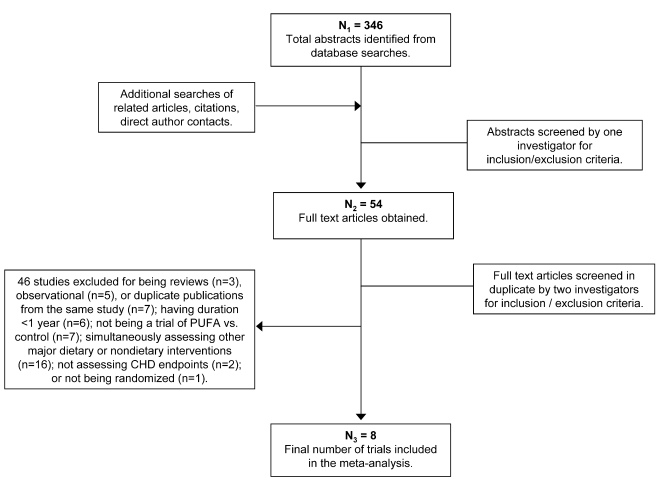
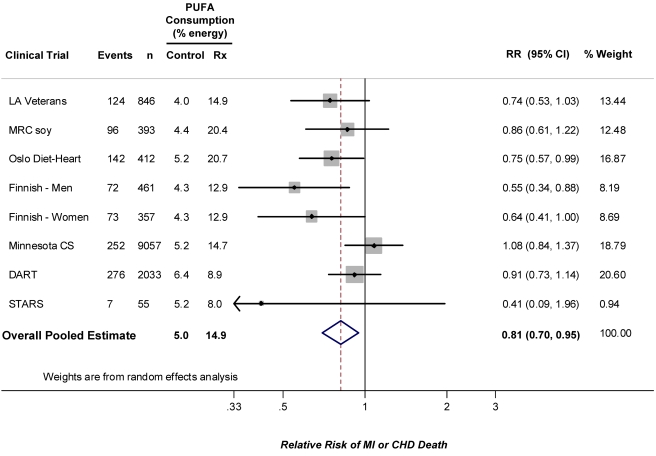
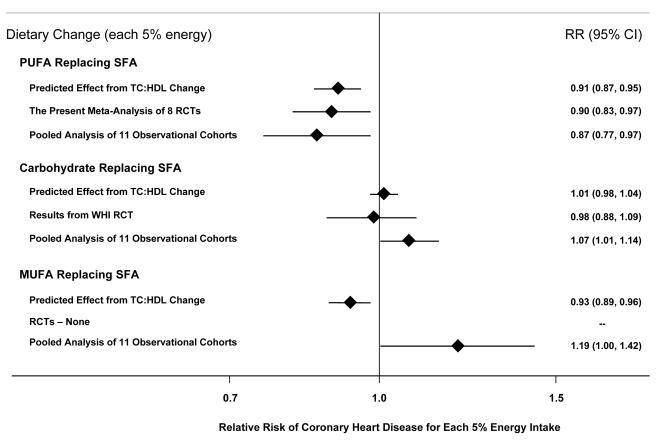
BACKGROUND: Reduced saturated fat (SFA) consumption is recommended to reduce coronary heart disease (CHD), but there is an absence of strong supporting evidence from randomized controlled trials (RCTs) of clinical CHD events and few guidelines focus on any specific replacement nutrient. Additionally, some public health groups recommend lowering or limiting polyunsaturated fat (PUFA) consumption, a major potential replacement for SFA. METHODS AND FINDINGS: We systematically investigated and quantified the effects of increased PUFA consumption, as a replacement for SFA, on CHD endpoints in RCTs. RCTs were identified by systematic searches of multiple online databases through June 2009, grey literature sources, hand-searching related articles and citations, and direct contacts with experts to identify potentially unpublished trials. Studies were included if they randomized participants to increased PUFA for at least 1 year without major concomitant interventions, had an appropriate control group, and reported incidence of CHD (myocardial infarction and/or cardiac death). Inclusions/exclusions were adjudicated and data were extracted independently and in duplicate by two investigators and included population characteristics, control and intervention diets, follow-up duration, types of events, risk ratios, and SEs. Pooled effects were calculated using inverse-variance-weighted random effects meta-analysis. From 346 identified abstracts, eight trials met inclusion criteria, totaling 13,614 participants with 1,042 CHD events. Average weighted PUFA consumption was 14.9% energy (range 8.0%-20.7%) in intervention groups versus 5.0% energy (range 4.0%-6.4%) in controls. The overall pooled risk reduction was 19% (RR = 0.81, 95% confidence interval [CI] 0.70-0.95, p = 0.008), corresponding to 10% reduced CHD risk (RR = 0.90, 95% CI = 0.83-0.97) for each 5% energy of increased PUFA, without evidence for statistical heterogeneity (Q-statistic p = 0.13; I(2) = 37%). Meta-regression identified study duration as an independent determinant of risk reduction (p = 0.017), with studies of longer duration showing greater benefits. CONCLUSIONS: These findings provide evidence that consuming PUFA in place of SFA reduces CHD events in RCTs. This suggests that rather than trying to lower PUFA consumption, a shift toward greater population PUFA consumption in place of SFA would significantly reduce rates of CHD. Please see later in the article for the Editors' Summary.
Overview
The claims and statistics of this paper haven’t been checked yet.
Free: it reads the open-access text and checks the first 5 claims that cite a source we can check. Create a free account to check every claim.
Integrity signals
Registry
Cites
Statistics
Figures
Verification
Claims the paper makes
The claims and statistics of this paper haven’t been checked yet.
Free: it reads the open-access text and checks the first 5 claims that cite a source we can check. Create a free account to check every claim.
Claims other papers make about this one
Each is checked against this paper’s own text: does it say what the citing paper says it does?
The cited source doesn’t support the claim as written.
In the citing paper
“In the presidential advisory of the AHA by Sacks et al. (27), the literature search strategy was not described, similarly to the study by Mozaffarian et al. (26)”
From Saturated Fat Restriction for Cardiovascular Disease Prevention: A Systematic Review and Meta-analysis of Randomized Controlled Trials (2025) · cites this paper as [26]
Checked by a reasoning model — may be wrong.
Experimental — accuracy not yet measuredThe source backs part of the claim, not all of it — or backs it for a different population, condition or comparison.
In the citing paper
“In order to get an overall estimate of the impact of dietary modifications on the CV risk, different meta-analyses have been performed, sometimes with inconsistent outcomes. 135,136”
From 2016 ESC/EAS Guidelines for the Management of Dyslipidaemias (2016) · cites this paper as [136]
Experimental — accuracy not yet measuredThe source backs part of the claim, not all of it — or backs it for a different population, condition or comparison.
In the citing paper
“For instance, total saturated fat, carbohydrate, and protein each appear relatively neutral for CHD; while effects of total monounsaturated fat remain uncertain (see below).21, 349”
From Dietary and Policy Priorities for Cardiovascular Disease, Diabetes, and Obesity: A Comprehensive Review (2016) · cites this paper as [349]
Experimental — accuracy not yet measuredThe source backs part of the claim, not all of it — or backs it for a different population, condition or comparison.
In the citing paper
“LA is also associated with significantly lower risk of CHD (Figure 7), whether in comparison to carbohydrate or saturated fat;350 and in meta-analysis of controlled clinical trials, consumption of n-6 rich vegetable oils, in place of animal fats, reduces CHD events (Figure 7).349”
From Dietary and Policy Priorities for Cardiovascular Disease, Diabetes, and Obesity: A Comprehensive Review (2016) · cites this paper as [349]
Experimental — accuracy not yet measuredThe source backs part of the claim, not all of it — or backs it for a different population, condition or comparison.
In the citing paper
“Notably, in these trials, the average intake of n-6 polyunsaturated fat was ~15% energy,349 higher than current guidelines that recommend up to 10-11% energy from polyunsaturated fat.370”
From Dietary and Policy Priorities for Cardiovascular Disease, Diabetes, and Obesity: A Comprehensive Review (2016) · cites this paper as [349]
Experimental — accuracy not yet measured
18 more claims about this paper
Create a free account to see every claim other papers make about this one.
Self-check
Percentages, sums and reported differences re-computed from the paper’s own numbers.
The self-check needs the paper’s full text.
Citations
Cites
Bias in meta-analysis detected by a simple, graphical test
Egger, M., Smith, G. D., Schneider, M., & Minder, C. (1997) · BMJ · doi:10.1136/bmj.315.7109.629 · Cited by 56,722 · cited 1×
“Potential for publication bias was assessed by visually inspecting a funnel plot of the treatment effect versus SE [30] and statistically using the Begg adjusted-rank correlation test [31].”
MethodMeta-analysis in clinical trials
DerSimonian, R., & Laird, N. (1986) · Controlled Clinical Trials · doi:10.1016/0197-2456(86)90046-2 · Cited by 39,552 · cited 3×
“Statistical Analysis The overall pooled effect was calculated using random effects meta-analysis, which accounts for heterogeneity in treatment effects among studies, using the methods of Dersimonian and Laird [28] with inverse-variance (SE) weighting.”
MethodOperating characteristics of a rank correlation test for publication bias
Begg, C. B., & Mazumdar, M. (1994) · Biometrics · doi:10.2307/2533446 · Cited by 16,955
Trumbo, P., Schlicker, S., Yates, A. A., & Poos, M. (2002) · Journal of the American Dietetic Association · doi:10.1016/s0002-8223(02)90346-9 · Cited by 5,993
Moher, D., Cook, D. J., Eastwood, S., Olkin, I., Rennie, D., & Stroup, D. F. (1999) · The Lancet · doi:10.1016/s0140-6736(99)04149-5 · Cited by 4,826
Moher, D., Pham, B., Jones, A., Cook, D. J., Jadad, A. R., Moher, M., Tugwell, P., & Klassen, T. P. (1998) · The Lancet · doi:10.1016/s0140-6736(98)01085-x · Cited by 3,560 · cited 2×
“We assessed study quality using the validated Jadad scale [27], which includes criteria relating to randomization, blinding, and withdrawals and dropouts that are together summed to generate an overall quality score between 0 and 5.”
BackgroundMethodSwinburn, B., Baba, N. H., Belhadj, M., Deurenberg‐Yap, M., Djazayery, A., Forrester, T., Galuska, D. A., Herman, S. T., James, W. P. T., Kabangu, J. R. M., et al. (2003) · World Health Organization eBooks · Cited by 3,453
Simopoulos, A. P. (2008) · Experimental Biology and Medicine · doi:10.3181/0711-mr-311 · Cited by 2,915 · cited 1×
“However, surprisingly, some scientists and organizations argue that consumption of n-6 PUFA, by far the predominant dietary PUFA, will actually increase CHD risk and have recommended reduced consumption [21–23], and the Institute of Medicine recommends only a relatively modest range of 5%–10% energy (%E) consumption f…”
BackgroundDanaei, G., Ding, E. L., Mozaffarian, D., Taylor, B., Rehm, J., Murray, C. J. L., & Ezzati, M. (2009) · PLoS Medicine · doi:10.1371/journal.pmed.1000058 · Cited by 2,860 · cited 1×
“need to be revisited, particularly as PUFA appears to be the primary evidence-based replacement for SFA. Finally, whereas on a population-level even a small shift from SFA to PUFA consumption would produce meaningful reductions in CHD risk, the relatively modest magnitude of plausible benefit (∼10% lower risk for 5%E…”
BackgroundSelf-citation
Cited by
Items 201–300 of 1,000
Dietary Fatty Acids and Inflammation: Focus on the n-6 Series
Poli, A., Agostoni, C. V., & Visioli, F. (2023) · International Journal of Molecular Sciences · doi:10.3390/ijms24054567 · Cited by 107
“intake), in turn greatly reducing CVD risk [27,28].”
BackgroundSchwingshackl, L., & Hoffmann, G. (2014) · BMJ Open · doi:10.1136/bmjopen-2013-004487 · Cited by 89
Nutrition Regulates Innate Immunity in Health and Disease
Nobs, S. P., Zmora, N., & Elinav, E. (2020) · Annual Review of Nutrition · doi:10.1146/annurev-nutr-120919-094440 · Cited by 102
“Such dietary regimens included calorie restriction (5) and supplementation with macronutrients, such as dietary fiber (20, 156) and unsaturated fatty acids (7, 124), and specific bioactive compounds, such as extra-virgin olive oil or nuts (47), tomato-based foods (59), and histidine (51).”
BackgroundNutritional Benefits from Fatty Acids in Organic and Grass-Fed Beef
Davis, H., Magistrali, A., Butler, G., & Stergiadis, S. (2022) · Foods · doi:10.3390/foods11050646 · Cited by 104
“Interventional and observational studies demonstrate that replacing SFAs in the diet with PUFAs significantly reduces cardiovascular disease (CVD) risk [52,62,69].”
BackgroundLenighan, Y. M., McNulty, B. A., & Roche, H. M. (2019) · Proceedings of The Nutrition Society · doi:10.1017/s0029665118002793 · Cited by 101
“For example, a meta-analysis including eight RCT (n 13 614) demonstrated that a 5 % replacement of SFA with PUFA resulted in a 10 % decrease in CHD risk (RR: 0·90; 95% CI 0·83, 0·97)((48)).”
Dietary Saturated Fats and Health: Are the U.S. Guidelines Evidence-Based?
Astrup, A. V., Teicholz, N., Magkos, F., Bier, D. M., Brenna, J. T., King, J. C., Mente, A., Ordovás, J. M., Volek, J. S., Yusuf, S., et al. (2021) · Nutrients · doi:10.3390/nu13103305 · Cited by 101
“By contrast, the 2015 DGAC had considered seven external review papers [37], yet there were some oversights in this 2015 review [38] For example, the 2015 DGAC excluded one paper with null findings on saturated fats [39] and instead relied heavily on a review paper [40] that included the Finnish Mental Hospital Study,…”
BackgroundJácome-Sosa, M., Borthwick, F., Mangat, R., Uwiera, R. R. E., Reaney, M. J. T., Shen, J., Quiroga, A. D., Jacobs, R. L., Lehner, R. S., Proctor, S. D., et al. (2014) · The Journal of Nutritional Biochemistry · doi:10.1016/j.jnutbio.2014.02.011 · Cited by 96
“The literature also documents that replacing SFA (specifically palmitic acid) with polyunsaturated fatty acids (PUFA) [16] or low-fat dairy products [17] lowers low-density lipoprotein/high-density lipoprotein (HDL) cholesterol and total/HDL cholesterolratios.”
Polyunsaturated Fatty Acids and Glycemic Control in Type 2 Diabetes
Telle‐Hansen, V. H., Gaundal, L., & Myhrstad, M. C. W. (2019) · Nutrients · doi:10.3390/nu11051067 · Cited by 97
A rheological analysis of structured water-in-olive oil emulsions
Lupi, F. R., Gabriele, D., de Cindio, B., Sánchez, M. C., & Gallegos, C. (2011) · Journal of Food Engineering · doi:10.1016/j.jfoodeng.2011.07.013 · Cited by 86
“Moreover, recent studies have confirmed that a greater consumption of polyunsaturated fatty acids, in place of TFAs, would significantly reduce rates of coronary heart disease (Mozaffarian et al., 2010).”
BackgroundFat, Sugar, Whole Grains and Heart Disease: 50 Years of Confusion
Temple, N. J. (2018) · Nutrients · doi:10.3390/nu10010039 · Cited by 109
“The findings from these trials have been generally interpreted as indicating that the risk of CHD can be reduced by partially replacing SFA with PUFA [14].”
BackgroundEffects of dyslipidaemia on monocyte production and function in cardiovascular disease
Rahman, M. S., Murphy, A. J., & Woollard, K. J. (2017) · Nature Reviews Cardiology · doi:10.1038/nrcardio.2017.34 · Cited by 96
Petersen, K. S., Maki, K. C., Calder, P. C., Belury, M. A., Messina, M. J., Kirkpatrick, C. F., & Harris, W. S. (2024) · British Journal Of Nutrition · doi:10.1017/s0007114524002459 · Cited by 105
Identification of a dietary pattern associated with greater cardiometabolic risk in adolescence
Appannah, G., Pot, G. K., Huang, R., Oddy, W. H., Beilin, L. J., Mori, T. A., Jebb, S. A., & Ambrosini, G. L. (2015) · Nutrition Metabolism and Cardiovascular Diseases · doi:10.1016/j.numecd.2015.04.007 · Cited by 98
Food Synergy: The Key to Balancing the Nutrition Research Effort
Jacobs, D. R., Tapsell, L. C., & Temple, N. J. (2011) · Public Health Reviews · doi:10.1007/bf03391648 · Cited by 83
Progressing Insights into the Role of Dietary Fats in the Prevention of Cardiovascular Disease
Zock, P. L., Blom, W. A. M., Nettleton, J. A., & Hornstra, G. (2016) · Current Cardiology Reports · doi:10.1007/s11886-016-0793-y · Cited by 88
“High-carbohydrate, low-fat diets also raise fasting blood TG levels compared with SAFA, MUFA, and PUFA.”
BackgroundAre refined carbohydrates worse than saturated fat?
Hu, F. B. (2010) · American Journal of Clinical Nutrition · doi:10.3945/ajcn.2010.29622 · Cited by 104
“For several decades, the diet-heart paradigm that high intake of saturated fat and cholesterol increases the risk of atherosclerosis and ischemic heart disease (IHD) has been the driving force behind national and international dietary recommendations for prevention of IHD (1).”
BackgroundInfluentialIggman, D., Gustafsson, I.-B., Berglund, L., Vessby, B., Marckmann, P., & Risérus, U. (2011) · Journal of Internal Medicine · doi:10.1111/j.1365-2796.2011.02383.x · Cited by 82
Flock, M. R., & Kris‐Etherton, P. M. (2012) · Current Opinion in Clinical Nutrition & Metabolic Care · doi:10.1097/mco.0b013e328359e6ac · Cited by 90
“[24] reported that for each 5% energy increase in PUFA as a replacement for SFA, CVD events decreased by 10%.”
Recent Advances in Preventive Cardiology and Lifestyle Medicine: A Themed Series
Franklin, B. A., & Cushman, M. (2011) · Circulation · doi:10.1161/circulationaha.110.981613 · Cited by 103
Virgin Coconut Oil and Its Potential Cardioprotective Effects
Babu, A. S., Veluswamy, S. K., Arena, R., Guazzi, M., & Lavie, C. J. (2014) · Postgraduate Medicine · doi:10.3810/pgm.2014.11.2835 · Cited by 78
Mahmud, N., Islam, J., Oyom, W., Adrah, K., Adegoke, S. C., & Tahergorabi, R. (2023) · Heliyon · doi:10.1016/j.heliyon.2023.e21500 · Cited by 94
“The connection between excessive fat consumption and the escalating incidence of non-communicable diseases like obesity, heart disease, and diabetes mellitus, compounded by the complexities surrounding oil absorption, emphasizes the pressing need to investigate this phenomenon [5].”
BackgroundOmega 6 fatty acids for the primary prevention of cardiovascular disease
Al-Khudairy, L., Hartley, L., Clar, C., Flowers, N., Hooper, L., & Rees, K. (2015) · Cochrane Database of Systematic Reviews · doi:10.1002/14651858.cd011094.pub2 · Cited by 79
Dietary Guidelines for Americans 2010: Implications for Cardiovascular Disease
Flock, M. R., & Kris‐Etherton, P. M. (2011) · Current Atherosclerosis Reports · doi:10.1007/s11883-011-0205-0 · Cited by 95
Chen, B., Seligman, B. J., Farquhar, J. W., & Goldhaber‐Fiebert, J. D. (2011) · Globalization and Health · doi:10.1186/1744-8603-7-45 · Cited by 94
“The significant and larger increases in IHD deaths due to palm oil consumption and lack of a similar significant effect for stroke are consistent with the underlying causes of IHD and stroke, respectively, as IHD is primarily due to atherosclerosis, a process influenced strongly by plasma cholesterol and LDL levels [4…”
BackgroundMummah, S. A., King, A. C., Gardner, C. D., & Sutton, S. (2016) · International Journal of Behavioral Nutrition and Physical Activity · doi:10.1186/s12966-016-0400-z · Cited by 77
“cant improvements in health outcomes such as reducing coronary heart disease [6, 7].”
BackgroundPanth, N., Abbott, K. A., Dias, C. B., Wynne, K., & Garg, M. L. (2018) · American Journal of Clinical Nutrition · doi:10.1093/ajcn/nqy167 · Cited by 83
Myhrstad, M. C. W., Slydahl, M., Hellmann, M., Garnweidner-Holme, L., Lundin, K. E. A., Henriksen, C., & Telle-Hansen, V. H. (2021) · Food & Nutrition Research · doi:10.29219/fnr.v65.6121 · Cited by 73
“Moreover, the exchange of saturated fat in the diet with mono- and polyunsaturated fat is preferable as unsaturated fat is associated with reduced risk of cardiovascular disease (33).”
BackgroundAlvheim, A. R., Torstensen, B. E., Lin, Y. H., Lillefosse, H. H., Lock, E., Madsen, L., Hibbeln, J. R., & Kjellevold, M. (2012) · British Journal Of Nutrition · doi:10.1017/s0007114512003364 · Cited by 91
“Dietary advice to replace saturated fat with PUFA to reduce the incidence of CVD((1,2)), and increasing use of vegetable oils, have led to a dramatic increase in the human consumption of linoleic acid (LA, 18 : 2n-6) during the twentieth century((3)).”
BackgroundRole of cis-Monounsaturated Fatty Acids in the Prevention of Coronary Heart Disease
Joris, P. J., & Mensink, R. P. (2016) · Current Atherosclerosis Reports · doi:10.1007/s11883-016-0597-y · Cited by 77
Improved utilization of fish waste by anaerobic digestion following omega-3 fatty acids extraction
Nges, I. A., Mbatia, B. N., & Björnsson, L. (2012) · Journal of Environmental Management · doi:10.1016/j.jenvman.2012.06.011 · Cited by 88
“PUFAs are mainly present in marine oils and are associatedwith several health benefits (Mozaffarian et al., 2010; Patel et al., 2010).”
BackgroundMeng, H., Matthan, N. R., Wu, D., Li, L., Rodríguez-Morató, J., Cohen, R., Galluccio, J. M., Dolnikowski, G. G., & Lichtenstein, A. H. (2019) · The American Journal of Clinical Nutrition · doi:10.1093/ajcn/nqz095 · Cited by 75
“Prostaglandins Leukot Essent Fatty Acids 2013;89(2-3):55-63.”
BackgroundThe scientific report guiding the US dietary guidelines: is it scientific?
Teicholz, N. (2015) · BMJ · doi:10.1136/bmj.h4962 · Cited by 75
Monnard, C. R., & Dulloo, A. G. (2021) · Obesity Reviews · doi:10.1111/obr.13197 · Cited by 86
Chen, W., Zhang, S., Hu, X., Chen, F., & Li, D. (2023) · Nutrients · doi:10.3390/nu15234898 · Cited by 89
“Therefore, replacing saturated and trans unsaturated fats with monounsaturated and polyunsaturated fats may be recommended to reduce the occurrence of clinical CHD events (Figure 2A) [16].”
BackgroundEmerging Nutrition Science on Fatty Acids and Cardiovascular Disease: Nutritionists' Perspectives
Kris-Etherton, P. M., & Fleming, J. A. (2015) · Advances in Nutrition · doi:10.3945/an.114.006981 · Cited by 75
“(5), replacing SFAs with PUFAs significantly decreased risk of CAD or associated mortality rates.”
BackgroundJovanovski, E., Li, D., Ho, H. V. T., Djedovic, V., Marques, A. D. C. R., Shishtar, E., Mejía, S. B., Sievenpiper, J. L., de Souza, R. J., Duvnjak, L. S., et al. (2017) · Medicine · doi:10.1097/md.0000000000006531 · Cited by 88
“In particular, polyunsaturated fats (PUFA) have been associated with reducing cardiovascular disease risk, however their benefits beyond improving the lipid profile remain inconclusive.([3,4])The Nutrition Evidence Library, which pools together available prospective cohort data, has reported that there is strong evide…”
BackgroundGupta, M., DeKelver, R. C., Palta, A., Clifford, C., Gopalan, S. M., Miller, J. C., Novak, S., DeSloover, D., Gachotte, D. J., Connell, J., et al. (2012) · Plant Biotechnology Journal · doi:10.1111/j.1467-7652.2012.00695.x · Cited by 82
“Abundant public health evidence connects a diet with reduced saturated fat content to lowered cardiovascular disease rate (Mazaffarian et al., 2010).”
BackgroundLukas, M., Rohn, H., Lettenmeier, M., Liedtke, C., & Wiesen, K. (2015) · Journal of Cleaner Production · doi:10.1016/j.jclepro.2015.02.070 · Cited by 104
Perspective: Are Large, Simple Trials the Solution for Nutrition Research?
Satija, A., Stampfer, M. J., Rimm, E. B., Willett, W., & Hu, F. B. (2018) · Advances in Nutrition · doi:10.1093/advances/nmy030 · Cited by 72
“Today, with evidence from both observational and experimental studies, we know that it is the type of fat consumed, not total fat intake, that ismost strongly predictive of cardiovascular risk (37, 38).”
Yuan, S., Bäck, M., Bruzelius, M., Mason, A. M., Burgess, S., & Larsson, S. C. (2019) · Nutrients · doi:10.3390/nu11123001 · Cited by 79
“In addition, evidence from short-term feeding trials indicates that replacement of SFAs with PUFAs or MUFAs lowers low-density lipoprotein cholesterol and triglyceride levels [5,6].”
BackgroundO´Flaherty, M., Flores-Mateo, G., Nnoaham, K., Lloyd-Williams, F., & Capewell, S. (2012) · Bulletin of the World Health Organization · doi:10.2471/blt.11.092643 · Cited by 71
Sasaki, M., Kawasaki, R., Rogers, S., Man, R. E. K., Itakura, K., Xie, J., Flood, V., Tsubota, K., Lamoureux, E., & Wang, J. J. (2015) · Investigative Opthalmology & Visual Science · doi:10.1167/iovs.15-17485 · Cited by 70
Exercise and diet in the management of nonalcoholic fatty liver disease
Mahady, S. E., & George, J. (2015) · Metabolism · doi:10.1016/j.metabol.2015.10.032 · Cited by 76
“[53] Mozaffarian D, Micha R, Wallace S.”
BackgroundBovenhuis, H., Visker, M. H. P. W., Poulsen, N. A., Sehested, J., van Valenberg, H. J. F., van Arendonk, J. A. M., Larsen, L. B., & Buitenhuis, B. (2016) · Journal of Dairy Science · doi:10.3168/jds.2015-10462 · Cited by 72
“Intake of n-3 C18:3 cis-9,cis-12,cis-15 FA, and Zn have been related to human health (e.g., Hambidge and Krebs, 2007; German et al., 2009; Mozaffarian et al., 2010).”
Wallström, P., Sonestedt, E., Hlebowicz, J., Ericson, U., Drake, I., Persson, M., Gullberg, B., Hedblad, B., & Wirfält, E. (2012) · PLoS ONE · doi:10.1371/journal.pone.0031637 · Cited by 68
“In our data, MUFA was strongly correlated with carbohydrates, SFA and to some extent with PUFA.”
BackgroundInfluentialPUFAs, Bone Mineral Density, and Fragility Fracture: Findings from Human Studies
Longo, A. B., & Ward, W. E. (2016) · Advances in Nutrition · doi:10.3945/an.115.009472 · Cited by 79
Effect of Gut Microbiota on Blood Cholesterol: A Review on Mechanisms
Deng, C., Pan, J., Zhu, H., & Chen, Z. (2023) · Foods · doi:10.3390/foods12234308 · Cited by 79
Dietary guidelines for saturated fatty acids are not supported by the evidence
Parodi, P. W. (2015) · International Dairy Journal · doi:10.1016/j.idairyj.2015.08.007 · Cited by 75
Lowering LDL-cholesterol through diet: potential role in the statin era
Bruckert, É., & Rosenbaum, D. H. (2011) · Current Opinion in Lipidology · doi:10.1097/mol.0b013e328340b8e7 · Cited by 75
A prospective study of the modified Atkins diet for adults with idiopathic generalized epilepsy
Kverneland, M., Selmer, K. K., Nakken, K. O., Iversen, P. O., & Taubøll, E. (2015) · Epilepsy & Behavior · doi:10.1016/j.yebeh.2015.10.021 · Cited by 69
Otto, M. C. D. O., Afshin, A., Micha, R., Khatibzadeh, S., Fahimi, S., Singh, G. M., Danaei, G., Sichieri, R., Monteiro, C. A., Louzada, M. L. D. C., et al. (2016) · PLoS ONE · doi:10.1371/journal.pone.0151503 · Cited by 91
“2% of total calories[20] IHD”
Self-citationPraagman, J., de Jonge, E. A. L., Jong, J. C. K., Beulens, J. W. J., Sluijs, I., Schoufour, J. D., Hofman, A., van der Schouw, Y. T., & Franco, O. H. (2016) · Arteriosclerosis Thrombosis and Vascular Biology · doi:10.1161/atvbaha.116.307578 · Cited by 70
Ha, K., Kim, K., Chun, O. K., Joung, H., & Song, Y. (2018) · European Journal of Clinical Nutrition · doi:10.1038/s41430-017-0031-8 · Cited by 74
“Because metabolic syndrome is a premorbid condition for CVD, determining the characteristics of metabolic abnormalities and the mechanisms that underlie its progression to CVD is important.”
BackgroundDietary saturated fat and heart disease: a narrative review
Heileson, J. L. (2019) · Nutrition Reviews · doi:10.1093/nutrit/nuz091 · Cited by 81
EFSA Panel on Nutrition, N. F. A. F. A. (., Turck, D., Bohn, T., Castenmiller, J. J. M., Henauw, S. D., Hirsch‐Ernst, K. I., Knutsen, H. K., Maciuk, A., Mangelsdorf, I., McArdle, H. J., et al. (2022) · EFSA Journal · doi:10.2903/j.efsa.2022.7259 · Cited by 89
“As expected by their fatty acid pro fi le, consumption of vegetable oils high in n-3 and n-6 PUFAs (e.g. sun fl ower oil, corn oil, soybean oil) in replacement of SFA-rich foods decreases blood LDL-cholesterol concentrations and CHD risk (Mozaffarian et al., 2010).”
Cherif, A., & Slama, A. (2022) · Journal of Food Quality · doi:10.1155/2022/6761029 · Cited by 73
Keyserling, T. C., Samuel-Hodge, C. D., Pitts, S. J., Garcia, B. A., Johnston, L. F., Gizlice, Z., Miller, C. L., Braxton, D. F., Evenson, K. R., Smith, J. C., et al. (2016) · BMC Public Health · doi:10.1186/s12889-016-3370-9 · Cited by 65
Posicionamento sobre o Consumo de Gorduras e Saúde Cardiovascular – 2021
Izar, M. C. D. O., Lottenberg, A. M., Giraldez, V. Z. R., Santos, R. D., Machado, R. M., Bertolami, A., Assad, M. H. V., Saraiva, J. F. K., Faludi, A. Á., Moreira, A. S. B., et al. (2021) · Arquivos Brasileiros de Cardiologia · doi:10.36660/abc.20201340 · Cited by 146
Chen, Y., Cai, Y., Wang, K., & Wang, Y. (2023) · Foods · doi:10.3390/foods12101985 · Cited by 79
“Previous studies have shown a posit ve association betwe n diet y saturated fa ty acids conten and cardiovascular di eas [29,30].”
BackgroundNafikov, R. A., Schoonmaker, J. P., Korn, K. T., Noack, K., Garrick, D. J., Koehler, K. J., Minick‐Bormann, J., Reecy, J. M., Spurlock, D. E., & Beitz, D. C. (2013) · Journal of Dairy Science · doi:10.3168/jds.2013-6703 · Cited by 75
Harcombe, Z., Baker, J. S., DiNicolantonio, J. J., Grace, F., & Davies, B. (2016) · Open Heart · doi:10.1136/openhrt-2016-000409 · Cited by 76
“They concluded that there was no evidence for bene fi t of reduced/modi fi ed fat diets in the secondary prevention of CHD. 9 Mozaffarian et al 10 reported evidence that consuming polyunsaturated fats in place of SFAs reduced CHD events, not mortality, in RCTs.”
BackgroundCalder, P. C., Dangour, A. D., Diekman, C. B., Eilander, A., Koletzko, B. V., Meijer, G. W., Mozaffarian, D., Niinikoski, H., Osendarp, S. J. M., Pietinen, P., et al. (2010) · European Journal of Clinical Nutrition · doi:10.1038/ejcn.2010.242 · Cited by 79
“Consistent with this, a meta-analysis of RCTs demonstrated similar reduction in CHD events when PUFA replaced saturated fat (for each 5%E, RR1⁄4 0.90, 95% CI1⁄40.83–0.97; Mozaffarian et al., 2010).”
ResultInfluentialSelf-citationHarris, M. M., Hutchins, A. M., & Fryda, L. (2017) · Journal of Medicinal Food · doi:10.1089/jmf.2016.0114 · Cited by 67
“While researchers have suggested that saturated fat may not be detrimental for health, 12,13 the most recent 2015 Dietary Guidelines for Americans still suggest limiting saturated fats, including tropical oils.”
Johns, D. J., Lindroos, A., Jebb, S. A., Sjöström, L., Carlsson, L. M. S., & Ambrosini, G. L. (2015) · Obesity · doi:10.1002/oby.20920 · Cited by 71
“yunsaturated fat intake for more than 1 year (7).”
BackgroundLong-Term Effects of Childhood Risk Factors on Cardiovascular Health During Adulthood
Shrestha, R., & Copenhaver, M. (2015) · Clinical Medicine Reviews in Vascular Health · doi:10.4137/cmrvh.s29964 · Cited by 79
Maki, K. C., Lawless, A. L., Kelley, K. M., Kaden, V. N., Geiger, C. J., & Dicklin, M. R. (2015) · Journal of Clinical Lipidology · doi:10.1016/j.jacl.2014.10.006 · Cited by 63
Host-microbial interactions in the metabolism of different dietary fats
Chadaideh, K. S., & Carmody, R. N. (2021) · Cell Metabolism · doi:10.1016/j.cmet.2021.04.011 · Cited by 67
“Saturated fats have been most often linked to cardiometabolic disease (Kratz et al., 2013; Micha and Mozaffarian, 2010), while the essential polyunsaturated fats that cannot be synthesized via de novo lipogenesis (Hulbert et al., 2014) do not appear to result in the same rates of chronic metabolic…”
BackgroundOmega-6 Fatty Acids and Cardiovascular Disease: Friend, Not Foe?
Harris, W. S., & Shearer, G. C. (2014) · Circulation · doi:10.1161/circulationaha.114.012534 · Cited by 71
Fatty Acids and Effects on In Vitro and In Vivo Models of Liver Steatosis
Vergani, L. (2017) · Current Medicinal Chemistry · doi:10.2174/0929867324666170518101334 · Cited by 65
Kim, O. Y., Lim, H. H., Lee, M. J., Kim, J. Y., & Lee, J. H. (2011) · Nutrition Metabolism and Cardiovascular Diseases · doi:10.1016/j.numecd.2011.06.006 · Cited by 68
Effect of interdisciplinary care on weight loss: a randomised controlled trial
Tapsell, L. C., Lonergan, M., Batterham, M. J., Neale, E. P., Martin, A., Thorne, R., Deane, F., & Peoples, G. (2017) · BMJ Open · doi:10.1136/bmjopen-2016-014533 · Cited by 62
Lamping, K. G., Nuno, D. W., Coppey, L. J., Holmes, A. J., Hu, S., Oltman, C. L., Norris, A. W., & Yorek, M. A. (2013) · Diabetes Obesity and Metabolism · doi:10.1111/dom.12004 · Cited by 60
“Although selected individuals may benefit from replacement of dietary saturated fats with MUFAs, there is increasing evidence that PUFAs are a better substitute as they improve lipid metabolism and insulin sensitivity [4,5].”
BackgroundBiandolino, F., Parlapiano, I., Denti, G., Nardo, V. D., & Prato, E. (2021) · Foods · doi:10.3390/foods10020416 · Cited by 59
“effects on blood cholesterol and other health‐related outcomes and, in particular, a reduction of cardiovascular risk factors (total cholesterol, LDL cholesterol and triglycerides) and increases in HDL (High‐Density Lipoprotein) cholesterol [38] have been observed.”
BackgroundInfluentialTonheim, L. E., Austad, E., Torheim, L. E., & Henjum, S. (2022) · Journal of Nutritional Science · doi:10.1017/jns.2022.6 · Cited by 65
“Although debated, reduction of saturated fat in the diet has been found to reduce risk of cardiometabolic diseases((33,34)).”
BackgroundPaniagua, J. A., Pérez‐Martínez, P., Gjelstad, I. M. F., Tierney, A. C., Delgado‐Lista, J., Defoort, C., Blaak, E. E., Risérus, U., Drevon, C. A., Kieć‐Wilk, B., et al. (2011) · Atherosclerosis · doi:10.1016/j.atherosclerosis.2011.07.003 · Cited by 67
“Lastly, although there is evidence that dietary fat need not be drastically reduced to provide protection from CVD [40], mainly when such diets are enriched in unsaturated fat [41] and vegetable protein, other well-conducted trials have demonstrated the beneficial effects of hypoenergetic low-fat diets and increasing…”
BackgroundCorreddu, F., Gaspa, G., Pulina, G., & Nudda, A. (2016) · Journal of Dairy Science · doi:10.3168/jds.2015-10108 · Cited by 66
“5%) are very interesting, considering that it has been shown that replacing dietary SFA with PUFA is likely to reduce the occurrence of coronary heart disease (Mozaffarian et al., 2010).”
BackgroundMoreira, P. V., Hyseni, L., Moubarac, J., Martins, A. P. B., Baraldi, L. G., Capewell, S., O’Flaherty, M., & Guzman-Castillo, M. (2017) · Public Health Nutrition · doi:10.1017/s1368980017002063 · Cited by 69
“Reduction of saturated fats has been a traditional strategy for prevention of CHD((24)) and certainly the proposed scenarios in the present study could contribute”
Cao, Z., Liu, Z., Zhang, H., Wang, J., & Ren, S. (2019) · Food Hydrocolloids · doi:10.1016/j.foodhyd.2019.105350 · Cited by 63
Quality of Chicken Fat by-Products: Lipid Profile and Colour Properties
Peña-Saldarriaga, L. M., Fernández‐López, J., & Pérez‐Álvarez, J. Á. (2020) · Foods · doi:10.3390/foods9081046 · Cited by 73
“However, some studies suggest that the role of saturated fat in heart diseases is complex because of the heterogeneous biological effects of different saturated fatty acids and the diversity of food sources [27,28], so that not all SFAs should be considered hypercholesterolemic.”
BackgroundSteur, M., Johnson, L., Sharp, S. J., Imamura, F., Sluijs, I., Key, T. J., Wood, A., Chowdhury, R., Guevara, M., Jakobsen, M. U., et al. (2021) · Journal of the American Heart Association · doi:10.1161/jaha.120.019814 · Cited by 63
Booth III, J. N., Colantonio, L. D., Howard, G., Safford, M. M., Banach, M., Reynolds, K., Cushman, M., & Muntner, P. (2016) · International Journal of Cardiology · doi:10.1016/j.ijcard.2016.01.001 · Cited by 53
“97).(5, 27) Furthermore, observational studies and RCTs demonstrate that higher adherence to a Mediterranean-style diet consisting of fruits, vegetables, whole grains, ocean fish and low in saturated fats, largely achievable by following the AHA recommended diet, has been associated with a lower ASCVD risk.”
Maki, K. C., Hasse, W., Dicklin, M. R., Bell, M., Buggia, M., Cassens, M. E., & Eren, F. (2018) · Journal of Nutrition · doi:10.1093/jn/nxy156 · Cited by 64
Coconuts and Health: Different Chain Lengths of Saturated Fats Require Different Consideration
Hewlings, S. J. (2020) · Journal of Cardiovascular Development and Disease · doi:10.3390/jcdd7040059 · Cited by 76
Yahay, M., Heidari, Z., Allameh, Z., & Amani, R. (2021) · Lipids in Health and Disease · doi:10.1186/s12944-021-01433-9 · Cited by 48
“Replacing saturated fatty acids (SFAs) with polyunsaturated fatty acids (PUFAs) can reduce insulin resistance resulting in improved lipid profile [16, 17].”
BackgroundStandl, M., Lattka, E., Stach, B., Koletzko, S., Bauer, C., Berg, A. V., Berdel, D., Krämer, U., Schaaf, B., Röder, S. W., et al. (2012) · PLoS ONE · doi:10.1371/journal.pone.0037780 · Cited by 60
“Among other factors, dietary polyunsaturated fatty acid (PUFA) intake can attenuate high blood lipid concentrations [8–10].”
BackgroundStroke and nutrition: a review of studies.
Foroughi, M., Akhavanzanjani, M., Maghsoudi, Z., Ghiasvand, R., Khorvash, F., & Askari, G. (2013) · PubMed Central · Cited by 67
McGranaghan, P., Kirwan, J., García-Rivera, M. A., Pieske, B. M., Edelmann, F., Blaschke, F., Appunni, S., Saxena, A., Rubens, M., Veledar, E., et al. (2021) · Metabolites · doi:10.3390/metabo11090621 · Cited by 57
Dairy and cardiovascular health: Friend or foe?
Markey, O., Vasilopoulou, D., Givens, D. I., & Lovegrove, J. A. (2014) · Nutrition Bulletin · doi:10.1111/nbu.12086 · Cited by 63
“There is good evidence that replacing SFA with cis-PUFA will reduce CVD mortality and risk markers, although there is less information on the effects of replacing SFA with cis-MUFA, mainly because few relevant randomised controlled trials have been performed (Mozaffarian et al. 2010).”
BackgroundPalm oil taxes and cardiovascular disease mortality in India: economic-epidemiologic model
Basu, S., Babiarz, K. S., Ebrahim, S., Vellakkal, S., Stuckler, D., & Goldhaber-Fiebert, J. D. (2013) · BMJ · doi:10.1136/bmj.f6048 · Cited by 54
Saturated Fats and Cardiovascular Disease: Interpretations Not as Simple as They Once Were
Bier, D. M. (2015) · Critical Reviews in Food Science and Nutrition · doi:10.1080/10408398.2014.998332 · Cited by 59
“…long-standing thesis that increased consumption of saturated fats is readily translated into greater cardiovascular risk (Siri-Tarino et al., 2010a; Siri-Tarino et al., 2010b; SiriTarino et al., 2010c; Mozaffarian et al., 2010; Astrup et al., 2011; Siri-Tarino, 2011; Sanders, 2012; Lawrence, 2013).”
BackgroundEssential polyunsaturated fatty acids, inflammation and mortality in dialysis patients
Huang, X., Stenvinkel, P., Qureshi, A. R., Risérus, U., Cederholm, T., Barany, P. F., Heimbürger, O., Lindholm, B., & Carrero, J. J. (2012) · Nephrology Dialysis Transplantation · doi:10.1093/ndt/gfs132 · Cited by 57
“Such strategies are being successfully tested in non-CKD individuals and previous controlled trials suggest cardiovascular benefits when substituting saturated fatty acids in the diet specifically for LA-rich PUFA [8, 39, 51], effects mostly mediated by anti-hyperlipidaemic mechanisms [8, 39, 51] but perhaps also by a…”
Backgroundthe EURODIAB Prospective Complications Study Group, Schoenaker, D. A. J. M., Toeller, M., Chaturvedi, N., Fuller, J. H., & Soedamah-Muthu, S. S. (2012) · Diabetologia · doi:10.1007/s00125-012-2550-0 · Cited by 54
Milk Fat Content and DGAT1 Genotype Determine Lipid Composition of the Milk Fat Globule Membrane
Argov-Argaman, N., Mida, K., Cohen, B.-C., Visker, M. H. P. W., & Hettinga, K. A. (2013) · PLoS ONE · doi:10.1371/journal.pone.0068707 · Cited by 54
“For example, the association between MFG size and fatty acid composition [29] and the relative concentration of PL [14] would be of interest to consumers’ plasma lipid profiles [4] and lipoprotein metabolism [2,3].”
BackgroundFood System Policy, Public Health, and Human Rights in the United States
Shannon, K., Kim, B. F., McKenzie, S. E., & Lawrence, R. S. (2015) · Annual Review of Public Health · doi:10.1146/annurev-publhealth-031914-122621 · Cited by 62
“Chronic conditions such as cardiovascular disease, type 2 diabetes, metabolic syndrome, and certain types of cancers have been associated with elevated intake of red meat and processed meat (29, 79, 85, 102, 103, 117, 142, 147), added sugars (11, 75, 96, 98, 197), saturated fats and trans fats (69, 83, 107, 134, 148),…”
BackgroundEpidemiology of Cardiovascular Disease
Duttaroy, A. K. (2018) · Wiley eBooks · doi:10.1002/9781119375913.ch2 · Cited by 54
A Scoping Review of Current Guidelines on Dietary Fat and Fat Quality
Schwingshackl, L., Zähringer, J., Beyerbach, J., Werner, S. S., Nagavci, B., Heseker, H., Koletzko, B., Meerpohl, J. J., & on behalf of the International Union of Nutritional Sciences (IUNS) Task force on Dietary Fat Quality (2021) · Annals of Nutrition and Metabolism · doi:10.1159/000515671 · Cited by 53
PPARγ Agonists Attenuate Palmitate-Induced ER Stress through Up-Regulation of SCD-1 in Macrophages
Ikeda, J., Ichiki, T., Takahara, Y., Kojima, H., Sankoda, C., Kitamoto, S., Tokunou, T., & Sunagawa, K. (2015) · PLoS ONE · doi:10.1371/journal.pone.0128546 · Cited by 57
“Dietary SFAs have been implicated in promoting the metabolic syndrome and atherosclerotic cardiovascular diseases [14].”
BackgroundFatty acids intake in the Mexican population. Results of the National Nutrition Survey 2006
Ramírez‐Silva, C. I., Villalpando, S., Moreno-Saracho, J. E., & Bernal-Medina, D. (2011) · Nutrition & Metabolism · doi:10.1186/1743-7075-8-33 · Cited by 60
“Assuming that such an increment in the intake of PUFAs will displace isocalorically a similar amount of carbohydrates, to enhance the protective effect on cardiovascular risk of PUFA, as suggested in a recent meta-analysis [39].”
Astrup, A. V., Bradley, B. H. R., Brenna, J. T., Delplanque, B., Ferry, M., & Torres‐Gonzalez, M. (2016) · Nutrients · doi:10.3390/nu8080463 · Cited by 59
“The results of this RCT and meta-analysis are inconsistent with the hypothesis that replacing saturated fat with a diet high in linoleic acid lowers all-cause mortality or the risk of death from CHD, despite lowering of serum cholesterol [51].”
BackgroundInfluentialLu, Y., Vaarhorst, A. A. M., Merry, A. H. H., Dollé, M. E. T., Hovenier, R., Imholz, S., Schouten, L. J., Heijmans, B. T., Müller, M. M., Slagboom, P. E., et al. (2012) · PLoS ONE · doi:10.1371/journal.pone.0041681 · Cited by 58
“As some of these RCTs also included n-3 PUFAs in addition to n-6 PUFAs [2,8], the effects specific to n-6 PUFAs, however, remain unclear.”
Background
Metadata
- Authors
- Mozaffarian, D., Micha, R., & Wallace, S.
- Affiliations
- Brigham and Women's Hospital (US)
- Harvard University (US)
- Corresponding author
- Mozaffarian, Dariush
- Venue
- PLoS Medicine
- Publisher
- Public Library of Science (PLoS)
- Published
- 2010-03-23
- Volume
- 7
- Issue
- 3
- Pages
- e1000252
- ISSN
- 1549-1277 (ISSN-L)
- 1549-1676
- PMC
- PMC2843598
- OpenAlex
- W2097226936
- Cited by
- 1,215
- References
- 49
- Citations by year
- 2026: 32 · 2025: 52 · 2024: 59 · 2023: 63 · 2022: 69 · 2021: 80 · 2020: 81 · 2019: 76 · 2018: 76 · 2017: 74 · 2016: 98 · 2015: 105 · 2014: 85 · 2013: 89 · 2012: 77
- FWCI
- 9.42
- Type
- journal article
- Language
- en
- Open access
- gold
- doi.org
- Locations
- PLoS Medicine (publishedVersion, cc-by)
- PubMed Central (publishedVersion, cc-by)
- PubMed (publishedVersion)
- RePEc: Research Papers in Economics (publishedVersion)
- Digital Access to Scholarship at Harvard (DASH) (Harvard University) (submittedVersion, cc-by)
- DOAJ (DOAJ: Directory of Open Access Journals) (submittedVersion, cc-by-sa)
- Figshare (submittedVersion, cc-by)
- Funders
- Bill and Melinda Gates Foundation
- Chicago Community Trust
- GlaxoSmithKline
- World Health Organization
- National Institutes of Health
- U.S. Food and Drug Administration
- National Heart, Lung, and Blood Institute (R01HL085710)
- Topics
- Health Sciences › Nursing › Nutrition and Dietetics › Fatty Acid Research and Health
- Health Sciences › Medicine › Public Health, Environmental and Occupational Health › Nutritional Studies and Diet
- Health Sciences › Medicine › Cardiology and Cardiovascular Medicine › Lipoproteins and Cardiovascular Health
- Keywords
- polyunsaturated fatty acids, saturated fat replacement, coronary artery disease, myocardial infarction, cardiovascular mortality, dietary fat, cardiovascular risk reduction, study duration, meta-regression, dietary intervention trials, omega-3 fatty acids, omega-6 fatty acids, dietary guidelines, publication bias
- MeSH terms
- Coronary Disease, Dietary Fats, Fatty Acids, Fatty Acids, Unsaturated, Feeding Behavior, Humans, Meta-Analysis as Topic, Randomized Controlled Trials as Topic
About these checks
Registry, retraction, Cites and statistics results are computed, not judged, with one exception: a printed reference that no index lists is read once by a model before it counts as a citation error. Claims are extracted by a model and kept only when their quote appears verbatim in the text; each cited source is then checked, with a model’s help, for whether it says what the claim relies on. Those verdicts can be wrong — read the claim’s quote and the cited source before relying on one.
Statistics and arithmetic are recomputed, not judged.
Confidence bands are shown only for fields calibrated on our annotated test set. None is calibrated yet, so no band is shown.
What counts as a claim ›How we measure confidence ›How we check this ›
Are you an author, or do you see a problem with this page? Request a review
Data sources
Bibliographic data: Semantic Scholar, OpenAlex, Crossref.
Contains information from the Semantic Scholar Academic Graph Datasets, made available under the ODC Attribution License (ODC-BY 1.0).
Semantic Scholar’s data is described in: Kinney, R., et al. (2023). The Semantic Scholar Open Data Platform. arXiv:2301.10140.
