

Effects on coronary heart disease of increasing polyunsaturated fat in place of saturated fat: a systematic review and meta-analysis of randomized controlled trials.
Open accessThe DOI matches its Crossref record; 49 of the 49 references it cites were found in a registry or an index.
Abstract
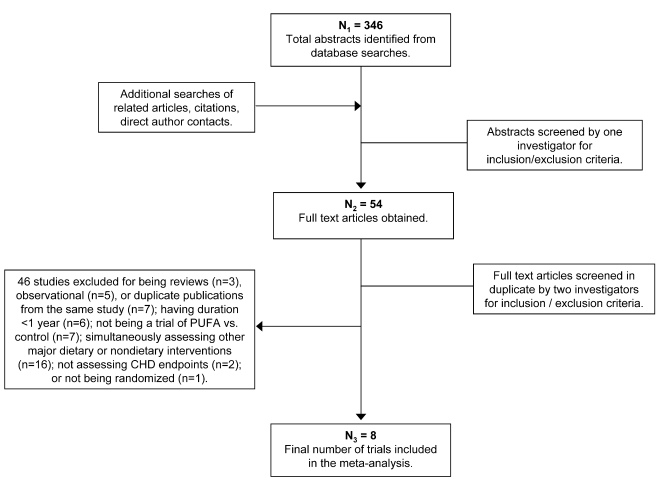
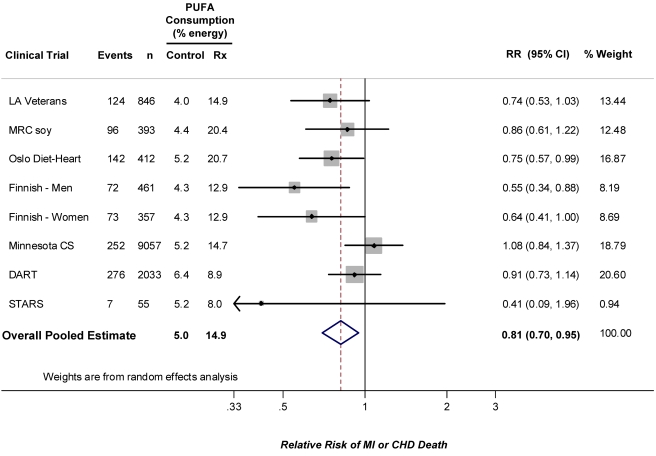
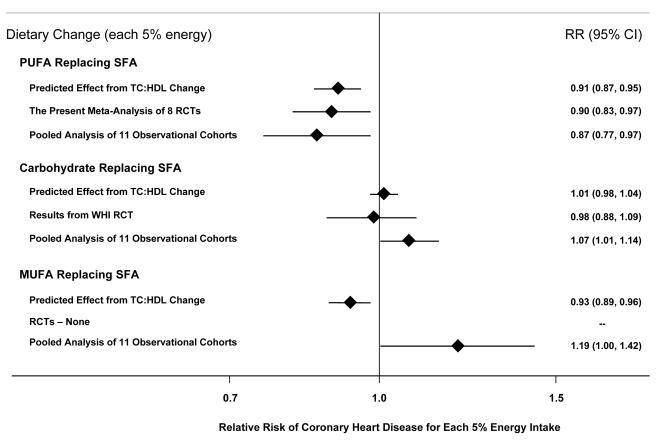
BACKGROUND: Reduced saturated fat (SFA) consumption is recommended to reduce coronary heart disease (CHD), but there is an absence of strong supporting evidence from randomized controlled trials (RCTs) of clinical CHD events and few guidelines focus on any specific replacement nutrient. Additionally, some public health groups recommend lowering or limiting polyunsaturated fat (PUFA) consumption, a major potential replacement for SFA. METHODS AND FINDINGS: We systematically investigated and quantified the effects of increased PUFA consumption, as a replacement for SFA, on CHD endpoints in RCTs. RCTs were identified by systematic searches of multiple online databases through June 2009, grey literature sources, hand-searching related articles and citations, and direct contacts with experts to identify potentially unpublished trials. Studies were included if they randomized participants to increased PUFA for at least 1 year without major concomitant interventions, had an appropriate control group, and reported incidence of CHD (myocardial infarction and/or cardiac death). Inclusions/exclusions were adjudicated and data were extracted independently and in duplicate by two investigators and included population characteristics, control and intervention diets, follow-up duration, types of events, risk ratios, and SEs. Pooled effects were calculated using inverse-variance-weighted random effects meta-analysis. From 346 identified abstracts, eight trials met inclusion criteria, totaling 13,614 participants with 1,042 CHD events. Average weighted PUFA consumption was 14.9% energy (range 8.0%-20.7%) in intervention groups versus 5.0% energy (range 4.0%-6.4%) in controls. The overall pooled risk reduction was 19% (RR = 0.81, 95% confidence interval [CI] 0.70-0.95, p = 0.008), corresponding to 10% reduced CHD risk (RR = 0.90, 95% CI = 0.83-0.97) for each 5% energy of increased PUFA, without evidence for statistical heterogeneity (Q-statistic p = 0.13; I(2) = 37%). Meta-regression identified study duration as an independent determinant of risk reduction (p = 0.017), with studies of longer duration showing greater benefits. CONCLUSIONS: These findings provide evidence that consuming PUFA in place of SFA reduces CHD events in RCTs. This suggests that rather than trying to lower PUFA consumption, a shift toward greater population PUFA consumption in place of SFA would significantly reduce rates of CHD. Please see later in the article for the Editors' Summary.
Overview
The claims and statistics of this paper haven’t been checked yet.
Free: it reads the open-access text and checks the first 5 claims that cite a source we can check. Create a free account to check every claim.
Integrity signals
Registry
Cites
Statistics
Figures
Verification
Claims the paper makes
The claims and statistics of this paper haven’t been checked yet.
Free: it reads the open-access text and checks the first 5 claims that cite a source we can check. Create a free account to check every claim.
Claims other papers make about this one
Each is checked against this paper’s own text: does it say what the citing paper says it does?
The cited source doesn’t support the claim as written.
In the citing paper
“In the presidential advisory of the AHA by Sacks et al. (27), the literature search strategy was not described, similarly to the study by Mozaffarian et al. (26)”
From Saturated Fat Restriction for Cardiovascular Disease Prevention: A Systematic Review and Meta-analysis of Randomized Controlled Trials (2025) · cites this paper as [26]
Checked by a reasoning model — may be wrong.
Experimental — accuracy not yet measuredThe source backs part of the claim, not all of it — or backs it for a different population, condition or comparison.
In the citing paper
“In order to get an overall estimate of the impact of dietary modifications on the CV risk, different meta-analyses have been performed, sometimes with inconsistent outcomes. 135,136”
From 2016 ESC/EAS Guidelines for the Management of Dyslipidaemias (2016) · cites this paper as [136]
Experimental — accuracy not yet measuredThe source backs part of the claim, not all of it — or backs it for a different population, condition or comparison.
In the citing paper
“For instance, total saturated fat, carbohydrate, and protein each appear relatively neutral for CHD; while effects of total monounsaturated fat remain uncertain (see below).21, 349”
From Dietary and Policy Priorities for Cardiovascular Disease, Diabetes, and Obesity: A Comprehensive Review (2016) · cites this paper as [349]
Experimental — accuracy not yet measuredThe source backs part of the claim, not all of it — or backs it for a different population, condition or comparison.
In the citing paper
“LA is also associated with significantly lower risk of CHD (Figure 7), whether in comparison to carbohydrate or saturated fat;350 and in meta-analysis of controlled clinical trials, consumption of n-6 rich vegetable oils, in place of animal fats, reduces CHD events (Figure 7).349”
From Dietary and Policy Priorities for Cardiovascular Disease, Diabetes, and Obesity: A Comprehensive Review (2016) · cites this paper as [349]
Experimental — accuracy not yet measuredThe source backs part of the claim, not all of it — or backs it for a different population, condition or comparison.
In the citing paper
“Notably, in these trials, the average intake of n-6 polyunsaturated fat was ~15% energy,349 higher than current guidelines that recommend up to 10-11% energy from polyunsaturated fat.370”
From Dietary and Policy Priorities for Cardiovascular Disease, Diabetes, and Obesity: A Comprehensive Review (2016) · cites this paper as [349]
Experimental — accuracy not yet measured
18 more claims about this paper
Create a free account to see every claim other papers make about this one.
Self-check
Percentages, sums and reported differences re-computed from the paper’s own numbers.
The self-check needs the paper’s full text.
Citations
Cites
Bias in meta-analysis detected by a simple, graphical test
Egger, M., Smith, G. D., Schneider, M., & Minder, C. (1997) · BMJ · doi:10.1136/bmj.315.7109.629 · Cited by 56,722 · cited 1×
“Potential for publication bias was assessed by visually inspecting a funnel plot of the treatment effect versus SE [30] and statistically using the Begg adjusted-rank correlation test [31].”
MethodMeta-analysis in clinical trials
DerSimonian, R., & Laird, N. (1986) · Controlled Clinical Trials · doi:10.1016/0197-2456(86)90046-2 · Cited by 39,552 · cited 3×
“Statistical Analysis The overall pooled effect was calculated using random effects meta-analysis, which accounts for heterogeneity in treatment effects among studies, using the methods of Dersimonian and Laird [28] with inverse-variance (SE) weighting.”
MethodOperating characteristics of a rank correlation test for publication bias
Begg, C. B., & Mazumdar, M. (1994) · Biometrics · doi:10.2307/2533446 · Cited by 16,955
Trumbo, P., Schlicker, S., Yates, A. A., & Poos, M. (2002) · Journal of the American Dietetic Association · doi:10.1016/s0002-8223(02)90346-9 · Cited by 5,993
Moher, D., Cook, D. J., Eastwood, S., Olkin, I., Rennie, D., & Stroup, D. F. (1999) · The Lancet · doi:10.1016/s0140-6736(99)04149-5 · Cited by 4,826
Moher, D., Pham, B., Jones, A., Cook, D. J., Jadad, A. R., Moher, M., Tugwell, P., & Klassen, T. P. (1998) · The Lancet · doi:10.1016/s0140-6736(98)01085-x · Cited by 3,560 · cited 2×
“We assessed study quality using the validated Jadad scale [27], which includes criteria relating to randomization, blinding, and withdrawals and dropouts that are together summed to generate an overall quality score between 0 and 5.”
BackgroundMethodSwinburn, B., Baba, N. H., Belhadj, M., Deurenberg‐Yap, M., Djazayery, A., Forrester, T., Galuska, D. A., Herman, S. T., James, W. P. T., Kabangu, J. R. M., et al. (2003) · World Health Organization eBooks · Cited by 3,453
Simopoulos, A. P. (2008) · Experimental Biology and Medicine · doi:10.3181/0711-mr-311 · Cited by 2,915 · cited 1×
“However, surprisingly, some scientists and organizations argue that consumption of n-6 PUFA, by far the predominant dietary PUFA, will actually increase CHD risk and have recommended reduced consumption [21–23], and the Institute of Medicine recommends only a relatively modest range of 5%–10% energy (%E) consumption f…”
BackgroundDanaei, G., Ding, E. L., Mozaffarian, D., Taylor, B., Rehm, J., Murray, C. J. L., & Ezzati, M. (2009) · PLoS Medicine · doi:10.1371/journal.pmed.1000058 · Cited by 2,860 · cited 1×
“need to be revisited, particularly as PUFA appears to be the primary evidence-based replacement for SFA. Finally, whereas on a population-level even a small shift from SFA to PUFA consumption would produce meaningful reductions in CHD risk, the relatively modest magnitude of plausible benefit (∼10% lower risk for 5%E…”
BackgroundSelf-citation
Cited by
Items 601–700 of 1,000
Sioen, I., Vyncke, K. E., Maeyer, M. D., Gerichhausen, M. J. W., & Henauw, S. D. (2013) · Lipids · doi:10.1007/s11745-013-3788-0 · Cited by 14
“In view of the prevention of cardiovascular diseases, replacement of SFA with a combination of omega-6 and omega-3 PUFA is an advisable health strategy, as increasing the PUFA intake and at the same time decreasing the SFA intakes (earlier reported as being too high [7]) has been proven to efficiently reduce serum cho…”
BackgroundHrnčiřík, K., & Zeelenberg, M. (2013) · Journal of the American Oil Chemists Society · doi:10.1007/s11746-013-2401-2 · Cited by 14
Polyunsaturated Fatty Acids: Health Impacts
Kus-Yamashita, M. M. M., Filho, J., Mcdonald, B., Ravacci, G. R., Rogero, M. M., Santos, R. D., Waitzberg, D. L., Reyes, M., Yehuda, S., Gierke, J., et al. (2016) · European Journal of Nutrition & Food Safety · doi:10.9734/ejnfs/2016/23018 · Cited by 16
“[44] (meta-analysis of eight clinical trials with 13,641 individuals, of which 1,042 had suffered”
BackgroundOki, É., Norde, M. M., Carioca, A. A. F., de Souza, J. M. P., Castro, I. A., Marchioni, D. M. L., Fisberg, R. M., & Rogero, M. M. (2017) · British Journal Of Nutrition · doi:10.1017/s0007114517001416 · Cited by 18
North, M. K., Zotte, A. D., & Hoffman, L. C. (2019) · Meat Science · doi:10.1016/j.meatsci.2019.107888 · Cited by 14
Effectiveness of Changes in Diet Composition on Reducing the Incidence of Cardiovascular Disease
Calabrese, I., & Riccardi, G. (2019) · Current Cardiology Reports · doi:10.1007/s11886-019-1176-y · Cited by 16
Fats in Foods: Current Evidence for Dietary Advice
Nettleton, J. A., Brouwer, I. A., Mensink, R. P., Diekman, C. B., & Hornstra, G. (2018) · Annals of Nutrition and Metabolism · doi:10.1159/000488006 · Cited by 15
Martínez, A. A. L., González, J. G. B., Castillo, S., Guerra, C. A. A., Rodríguez‐Rodríguez, J., & García-Márquez, E. (2020) · Journal of Food Science and Technology · doi:10.1007/s13197-020-04653-6 · Cited by 13
Nuotio, P., Lankinen, M. A., Meuronen, T., de Mello, V. D., Sallinen, T., Virtanen, K. A., Pihlajamäki, J., Laakso, M., & Schwab, U. (2024) · Atherosclerosis · doi:10.1016/j.atherosclerosis.2024.117562 · Cited by 15
Afaghi, A., Ziaee, A., & Afaghi, M. (2012) · Indian Journal of Endocrinology and Metabolism · doi:10.4103/2230-8210.103010 · Cited by 15
“[7] A meta-analysis of randomized control trials (RCTs) found a 10% reduction in chronic heart disease for each 5% of energy from SFAs substituted for PUFAs,[8] while no benefi ts have been found by substituting carbohydrates for SFAs.[8,9]”
MethodIndividual Fatty Acids in Cardiometabolic Disease
Chowdhury, R., Steur, M., Patel, P. S., & Franco, O. (2016) · Elsevier eBooks · doi:10.1016/b978-1-63067-036-8.00010-x · Cited by 11
Nutrition Interventions for Cardiovascular Disease
Jesus, J. M. D., Kahan, S. I., & Eckel, R. H. (2016) · Medical Clinics of North America · doi:10.1016/j.mcna.2016.06.007 · Cited by 16
Ognakossan, K. E., Mutungi, C. M., Otieno, T. O., Affognon, H., Sila, D. N., & Owino, W. (2018) · Food Security · doi:10.1007/s12571-018-0861-9 · Cited by 14
Dietary fat, salt, and sugar: a clinical perspective of the social catastrophe
Mukhopadhyay, S., Goswami, S., Mondal, S. A., & Dutta, D. (2020) · Elsevier eBooks · doi:10.1016/b978-0-12-816918-6.00003-2 · Cited by 22
Casperson, S. L., Conrad, Z., Raatz, S. K., Derner, J., Roemmich, J. N., Jahns, L., & Picklo, M. J. (2020) · Meat Science · doi:10.1016/j.meatsci.2020.108225 · Cited by 14
Nicol, K., Mansoorian, B., Latosińska, A., Koutroulaki, A., Mullen, B., & Combet, E. (2022) · European Journal of Nutrition · doi:10.1007/s00394-022-02810-5 · Cited by 14
Jin, D., Trichia, E., Islam, N., Lewington, S., & Lacey, B. (2023) · BMC Cardiovascular Disorders · doi:10.1186/s12872-023-03394-6 · Cited by 14
“These guidelines are based largely on evidence from randomized controlled trials of dietary intake of fats,[4, 5] but the effects of the different types of polyunsaturated fats (particularly omega-3 and omega-6), or of replacement of saturated fats with monounsaturated fats, remains unclear [4, 6, 7].”
The Role of Micronutrients and Macronutrients in Patients Hospitalized for Heart Failure
Trippel, T. D., Anker, S. D., & von Haehling, S. (2013) · Heart Failure Clinics · doi:10.1016/j.hfc.2013.05.001 · Cited by 14
Acides gras saturés et risque cardio-métabolique
Lecerf, J. (2016) · Médecine des Maladies Métaboliques · doi:10.1016/s1957-2557(16)30141-9 · Cited by 14
Cubillos, L., Campo, Y. E. D., Harbi, K., Keyserling, T. C., Samuel‐Hodge, C. D., & Reuland, D. S. (2017) · The Science of Diabetes Self-Management and Care · doi:10.1177/0145721717706030 · Cited by 16
“The English version of the intervention, described in detail elsewhere,(26) was designed to be culturally appropriate and individually tailored for residents of eastern North Carolina, with a major focus on improving consumption of high-quality dietary fats (polyunsaturated and monounsaturated fats primarily from plan…”
Saito, A., Matsumoto, M., Hyakutake, A., Saito, M., Okamoto, N., & Tsuji, M. (2019) · Journal of Nutritional Science · doi:10.1017/jns.2019.9 · Cited by 15
Dietary fatty acids and CHD: from specific recommendations to dietary patterns
Delarue, J. (2021) · Nutrition Research Reviews · doi:10.1017/s0954422420000293 · Cited by 13
“Mozaffarian et al.(45), in 2010, performed a meta-analysis of eight RCT (13 614 participants; 1042 CHD events; follow-up> 1 year).”
Neufingerl, N., Djuwita, R., Otten-Hofman, A., Nurdiani, R., Garczarek, U., Sulaeman, A., Zock, P. L., & Eilander, A. (2016) · British Journal Of Nutrition · doi:10.1017/s0007114515004845 · Cited by 16
“Recommended intake levels for total PUFA are higher – that is, 6−11 %E – because these are based on optimal intake to prevent chronic diseases (in particular CHD), as are the age-dependent minimum recommended intake levels for EPA+DHA of 150−250 mg/d(2).”
BackgroundInfluentialSaleh‐Ghadimi, S., Alizadeh, M., Vayghan, H. J., Darabi, M., Golmohammadi, A., & Kheirouri, S. (2020) · Genes & Nutrition · doi:10.1186/s12263-020-00665-1 · Cited by 14
“Moreover, an overall risk reduction has been reported by replacing saturated fatty acids with polyunsaturated fatty acids (PUFAs) [4].”
Ou, X., Wang, X., Zhao, B., Zhao, Y. C., Liu, H., Chang, Y., Wang, Z., Yang, W., Zhang, X., & Yu, K. (2023) · Frontiers in Plant Science · doi:10.3389/fpls.2023.1181861 · Cited by 13
“Replacing saturated fatty acid with PUFAs in daily diet has been shown to reduce the risks of several diseases such as coronary artery diseases or type 2 diabetes (Mozaffarian et al., 2010; Rajaram, 2014; Wang et al., 2016).”
BackgroundGriffin, B. A., & Lovegrove, J. A. (2024) · Proceedings of The Nutrition Society · doi:10.1017/s0029665124000107 · Cited by 14
Mao, Q., & Kong, Y. (2025) · Frontiers in Medicine · doi:10.3389/fmed.2024.1485695 · Cited by 12
Prathap, V., Yadav, P., Manorama, K., Ravichandran, G., Suresh, K., & Mathur, R. K. (2025) · Journal of Food Measurement & Characterization · doi:10.1007/s11694-025-03152-6 · Cited by 12
“On the other hand, monounsaturated (MUFAs) and polyun-saturated fatty acids (PUFAs) decreased the levels of blood and plasma cholesterol [6].”
Esteves, E. A., Oliveira, L. G., Pires, S. T., Batista, Â. G., Pinto, N. A. V. D., & Santana, R. C. (2010) · Food Research International · doi:10.1016/j.foodres.2010.12.005 · Cited by 12
Sadeghi, M., Simani, M., Mohammadifard, N., Talaei, M., Roohafza, H., Hassannejad, R., & Sarrafzadegan, N. (2021) · International Journal of Food Sciences and Nutrition · doi:10.1080/09637486.2021.1895725 · Cited by 13
“Available studies have indicated that either replacement of SFA or carbohydrate with n-6 PUFA would have cardiovascular benefits (Mozaffarian et al. 2010; Farvid et al. 2014).”
Naska, A., Ververis, E., Niforou, A., Pires, S. M., Poulsen, M., Jakobsen, L. S., Becker, N., Lohmann, M., Tesson, V., Fédérighi, M., et al. (2022) · EFSA Supporting Publications · doi:10.2903/sp.efsa.2022.en-7316 · Cited by 12
Aligning food-processing policies to promote healthier fat consumption in India
Downs, S., Thow, A. M., Ghosh‐Jerath, S., & Leeder, S. (2014) · Health Promotion International · doi:10.1093/heapro/dat094 · Cited by 23
“…by industry because it is cheap, ubiquitous and has preferable physical properties given the high saturated fat content (Downs et al., 2013), it is likely that its use as a replacement for transfats will result in only small health gains (Mozaffarian et al., 2010; Siri-Tarino et al., 2010).”
BackgroundThe Role of Diet in the Prevention and Treatment of Cardiovascular Disease
Richter, C. K., Skulas‐Ray, A. C., & Kris‐Etherton, P. M. (2017) · Elsevier eBooks · doi:10.1016/b978-0-12-802928-2.00027-8 · Cited by 15
Gomes-Dias, L., Hacke, A., Souza, E. D. S., Nath, S., Canesin, M. R., Vilella, O. V., Geloneze, B., Pallone, J. A. L., Cazarin, C. B. B., Blakeslee, J. J., et al. (2022) · Journal of Food Composition and Analysis · doi:10.1016/j.jfca.2022.104608 · Cited by 16
Primary Prevention of Cardiovascular Disease
Shah, S. (2011) · InnovAiT Education and inspiration for general practice · doi:10.1093/innovait/inr119 · Cited by 13
Mahé, G., Carsin, M., Zeeny, M., & Bosschere, J.-P. D. (2010) · Public Health Nutrition · doi:10.1017/s1368980010001862 · Cited by 13
“Lastly, Mozaffarian et al.(10) have even suggested that consuming PUFA in place of SFA reduces CHD events in randomized control trials.”
BackgroundUric acid and obesity-related phenotypes in postmenopausal women
Grygiel‐Górniak, B., Mosor, M., Marcinkowska, J., Przysławski, J., & Nowak, J. (2017) · Molecular and Cellular Biochemistry · doi:10.1007/s11010-017-3215-6 · Cited by 14
“Consuming polyunsaturated fat in place of saturated fat should be advised, because it reduces the risk of coronary heart disease [50] and, thus, should be advised for the analyzed groups of women.”
BackgroundDietary Fat and Risk of Cardiovascular Disease
Eshak, E. S., Yamagishi, K., & Iso, H. (2017) · Elsevier eBooks · doi:10.1016/b978-0-12-809657-4.99603-0 · Cited by 13
Mutavski, Z., Nastić, N. M., Fernández, N., Živković, J., Šavikin, K., Vujisić, L. V., Veberič, R., Medič, A., & Vidović, S. S. (2024) · Food and Bioprocess Technology · doi:10.1007/s11947-024-03636-1 · Cited by 11
“…diabetes (Palomer et al., 2018); reduced liver fat, with no signs of inflammation (Bjermo et al., 2012), and reduction of LDL cholesterol, which consequently leads to a significant reduction in the risk of cardiovascular diseases (Mozaffarian et al., 2010; Mensink & World Health Organization 2016).”
Kaikkonen, J., Jula, A., Mikkilä, V., Juonala, M., Viikari, J. S. A., Moilanen, T. P. S., Nikkari, T., Kähönen, M. A. P., Lehtimäki, T. J., & Raitakari, O. T. (2013) · Journal of Nutrition · doi:10.3945/jn.112.172866 · Cited by 14
“In addition, a recent meta-analysis (3) consisting of 8 intervention trials with 13,614 participants and 1042 CHD events found a 10% reduction in the CHD risk for each 5% of energy of increased PUFAs.”
BackgroundNarverud, I., Bogsrud, M. P., Øyri, L. K. L., Ulven, S. M., Retterstøl, K., Ueland, T., Mulder, M. T., van Lennep, J. E. R., Halvorsen, B. L., Aukrust, P., et al. (2019) · British Journal Of Nutrition · doi:10.1017/s0007114519001600 · Cited by 12
“(5; 6; 7; 8) Subjects with familial hypercholesterolemia (FH) are characterized by increased plasma levels of total- and LDL-cholesterol, accelerated atherosclerosis and increased risk of premature CVD, (19; 20) and may have higher Lp(a) levels than unaffected relatives.”
BackgroundInfluentialRamezani‐Jolfaie, N., Aghaei, S., Yazd, E. F., Moradi, A., Mozaffari–Khosravi, H., Amiri, M., Raeisi‐Dehkordi, H., Moghtaderi, F., Zimorovat, A., Ardakani, S. A. Y., et al. (2020) · Journal of Cardiovascular and Thoracic Research · doi:10.34172/jcvtr.2020.32 · Cited by 11
“Patients with type 2 diabetes had following criteria; (1) history of diabetes for at least 6 months or maximum 10 years (fasting blood glucose more than 126 mg/dL and/or HbA1c more than 6.”
BackgroundØyri, L. K. L., Bogsrud, M. P., Kristiansen, A. L., Myhre, J. B., Astrup, H., Retterstøl, K., Brekke, H. K., van Lennep, J. E. R., Andersen, L. F., & Holven, K. B. (2021) · Atherosclerosis · doi:10.1016/j.atherosclerosis.2021.04.017 · Cited by 11
“Contents lists available at ScienceDirect Atherosclerosis journal homepage: www.elsevier.com/locate/atherosclerosis https://doi.org/10.1016/j.atherosclerosis.2021.04.017 Received 17 March 2021; Received in revised form 17 April 2021; Accepted 28 April 2021 Atherosclerosis 326 (2021) 11–16 saturated fatty acids (SFA) i…”
BackgroundInfluentialWang, N. C., Bagheri, M., Olszewski, T., Friese, K. A., Smith, H., Robles, M. E., Wang, C., Brooks, A., Bordenstein, S. R., Ferguson, J. F., et al. (2021) · Nutrition Metabolism and Cardiovascular Diseases · doi:10.1016/j.numecd.2021.05.013 · Cited by 12
Belury, M. A., Raatz, S. K., & Conrad, Z. (2021) · American Journal of Clinical Nutrition · doi:10.1093/ajcn/nqab407 · Cited by 12
Impact of phosphine and of sulfuryl fluoride fumigation on walnut quality
Young, P., Luch, A., & Laux, P. (2022) · Journal of Stored Products Research · doi:10.1016/j.jspr.2022.102059 · Cited by 11
Lipid Metabolism, Metabolic Syndrome, and Cancer
Hu, F., Zhang, Y., & Song, Y. (2013) · InTech eBooks · doi:10.5772/51821 · Cited by 13
“There is also strong evidence collected by systematic review and meta-analysis of randomized controlled trials showing that consumption of polyunsaturated fat as a replacement for saturated fat alleviates coronary heart disease risk [46].”
Shang, X., Sanders, K. M., Scott, D. S., Khan, B., Hodge, A. M., Khan, N., English, D. R., Giles, G. G., & Ebeling, P. R. (2015) · Journal of Nutrition · doi:10.3945/jn.115.211789 · Cited by 11
“This may have confounded the association of animal-derived EPA plus DHA intake with AAC in our study because fresh and processed meat may have other components, such as saturated fats, that may be less healthy (42).”
BackgroundDietary lipid-induced changes in enzymes of hepatic lipid metabolism
de Catalfo, G. E. H., de Alaniz, M. J. T., & Marra, C. A. (2012) · Nutrition · doi:10.1016/j.nut.2012.07.012 · Cited by 13
“Because of the accepted link between the excessive consumption of saturated fats and coronary disease, several investigators have suggested that coconut oil should not be used on a regular basis by adults [24].”
Backgroundfor the Alpha Omega Trial Group, Soedamah‐Muthu, S. S., Geleijnse, J. M., Giltay, E. J., de Goede, J., Griep, L. M. O., Waterham, E., Teitsma-Jansen, A., Mulder, B. J. M., de Boer, M., et al. (2012) · Netherlands Heart Journal · doi:10.1007/s12471-012-0248-z · Cited by 11
“For dietary interventions, a recent meta-analysis demonstrated that each 5% increment in polyunsaturated fatty acid consumption reduced CHD risk by 10% in secondary prevention populations [18].”
MethodDowns, S., Thow, A. M., Ghosh‐Jerath, S., & Leeder, S. (2014) · Health Policy and Planning · doi:10.1093/heapol/czu031 · Cited by 14
“Although the WHO recommends replacement of both trans and saturated fat with unsaturated fats and metaanalyses have shown that replacement of both of these fats with unsaturated fats generated health benefits (Mozaffarian et al. 2010; Mozaffarian and Clarke 2009), this study suggests that palm oil may be regarded as h…”
BackgroundWhat the Latest Evidence Tells Us About Fat and Cardiovascular Health
Hayes, J., & Benson, G. A. (2016) · Diabetes Spectrum · doi:10.2337/diaspect.29.3.171 · Cited by 13
“Replacing SFAs with monounsaturated fats (MUFAs) yielded uncertain effects in the meta-analysis (12).”
BackgroundSpringmann, M. (2019) · Elsevier eBooks · doi:10.1016/b978-0-12-811660-9.00013-8 · Cited by 19
Øyri, L. K. L., Narverud, I., Bogsrud, M. P., Hansson, P., Leder, L., Byfuglien, M. G., Veierød, M. B., Thoresen, M., Ulven, S. M., & Holven, K. B. (2019) · Journal of Nutritional Science · doi:10.1017/jns.2019.25 · Cited by 14
“For every energy percentage of SFA that is replaced with PUFA, a 2–3 % risk reduction is seen in CHD((4)), providing strong evidence for the role of fat quality in CVD development((5,6)).”
Background“You Are What You Eat”: The Role of Dietary Macronutrients and Micronutrients in MAFLD
Gillespie, J. (2021) · Clinical Liver Disease · doi:10.1002/cld.1083 · Cited by 13
Jang, H. B., Hwang, J., Park, J. E., Oh, J. H., Ahn, Y., Kang, J., Park, K., Han, B., Kim, B., Park, S. I., et al. (2014) · Journal of Medical Genetics · doi:10.1136/jmedgenet-2014-102670 · Cited by 11
Exploring the Soyfood Controversy
Messina, M. J., & Messina, V. (2013) · Nutrition Today · doi:10.1097/nt.0b013e31828fff54 · Cited by 17
Evolution of human diet and microbiome-driven disease
Alcock, J., Carroll‐Portillo, A., Coffman, C. N., & Lin, H. C. (2021) · Current Opinion in Physiology · doi:10.1016/j.cophys.2021.06.009 · Cited by 10
Eurasian clinical practice guidelines for dietary management of cardiovascular diseases (2024)
Starodubova, A. V., Chazova, I. E., Tutelyan, V. A., Nikityuk, D. B., Pavlovskaya, E. V., Кislyak, O. A., Blinova, N. V., Brumberg, A. A. B., Bubnova, M. G., Varaeva, Y. R., et al. (2024) · Eurasian heart journal · doi:10.38109/2225-1685-2024-4-6-66 · Cited by 13
Duda-Seiman, C., Mititelu-Tarțău, L., Biriescu, S., Almășan, A.-L., Bitu, B.-O., Bucur, A., Luca, A., Hoinoiu, B., & Hoinoiu, T. (2025) · Foods · doi:10.3390/foods14122141 · Cited by 11
Rosa, M. L. D. (2012) · Pharmacology & Pharmacy · doi:10.4236/pp.2012.32031 · Cited by 11
“The dietary intake of ω-3 PUFAs is in fact inversely associated with cardiovascular disease morbidity/mortality in population studies [4].”
BackgroundDiet heart controversies – Quality of fat matters
Schwab, U., & Uusitupa, M. I. J. (2015) · Nutrition Metabolism and Cardiovascular Diseases · doi:10.1016/j.numecd.2015.03.009 · Cited by 12
“published a meta-analysis on long-term interventions with a conclusion that the replacement of SFAs by polyunsaturated fats results in lower risk of CHD [9].”
BackgroundMethodBethancourt, H. J., Kratz, M., & O’Connor, K. A. (2019) · British Journal Of Nutrition · doi:10.1017/s0007114519001533 · Cited by 10
Mahjourian, M., Anjom-Shoae, J., Mohammadi, M. A., Feinle‐Bisset, C., & Sadeghi, O. (2025) · Cancer Epidemiology · doi:10.1016/j.canep.2025.102768 · Cited by 10
Schenker, S. (2012) · Nutrition Bulletin · doi:10.1111/j.1467-3010.2011.01946.x · Cited by 10
English and Black Walnut Phenolic Antioxidant Activity in Vitro and Following Human Nut Consumption
Rorabaugh, J. M., Singh, A. P., Sherrell, I. M., Freeman, M., Vorsa, N., Fitschen, P. J., Malone, C. J., Maher, M. A., & Wilson, T. E. (2011) · Food and Nutrition Sciences · doi:10.4236/fns.2011.23026 · Cited by 16
Nicod, N. M., Parker, R. S., Giordano, E., Maestro, V., Dávalos, A., & Visioli, F. (2014) · The Journal of Nutritional Biochemistry · doi:10.1016/j.jnutbio.2014.10.002 · Cited by 12
“If this final step is impaired, HDL loaded with cholesterol will continue to circulate in plasma, as is seen in mice lacking SrbI which have increased HDL-C levels due to an increase in large APOA1 containing particles [39].”
BackgroundInfluentialNutrition, Diet Quality, and Cardiovascular Health
Wang, L., Sikand, G., & Wong, N. D. (2016) · Elsevier eBooks · doi:10.1016/b978-0-12-801816-3.00023-6 · Cited by 15
Dietary Fat: The Good, the Bad, and the Ugly
Pinheiro, M. M., & Wilson, T. E. (2017) · Springer eBooks · doi:10.1007/978-3-319-49929-1_24 · Cited by 10
Sharifi, M., Bashtani, M., Naserian, A. A., Farhangfar, H., Rasani, M., & Emami, A. (2019) · Italian Journal of Animal Science · doi:10.1080/1828051x.2019.1645622 · Cited by 11
“increase in PUFA and decrease in SFA), in the LL muscle – from GSO groups, when compared against the control group, are very interesting, indicating the fact that, replacing dietary SFA with PUFA is likely to reduce the occurrence of coronary heart disease (Mozaffarian et al. 2010).”
BackgroundResultConsumption of saturated fatty acids and coronary heart disease risk
Li, J., & Sun, Q. (2019) · International Journal of Cardiology · doi:10.1016/j.ijcard.2019.01.022 · Cited by 13
Toomer, O. T., Maharjan, P., Harding, K. L., Vu, T. C., Malheiros, R. D., Mian, M. A. R., Joseph, M., Read, Q. D., Oviedo-Rondon, E. O., & Anderson, K. E. (2024) · Poultry Science · doi:10.1016/j.psj.2024.104074 · Cited by 9
“…studies have shown that replacing that replacing 5% of the dietary energy derived from saturated fatty acids with linoleic acid reduces low-density lipoprotein serum cholesterol by up to 10%, with a signi fi cant reduction in cardiovascular risk (Mozaffarian et al. 2010; Mensink, 2016).”
BackgroundTang, J., Li, D., Zhang, J., Xie, X., Shi, S., Shi, J., Li, Y., Pang, J., & Wu, C. (2025) · Foods · doi:10.3390/foods14162760 · Cited by 9
“These fatty acids are known to elevate the risk of chronic diseases, obesity, and heart disease [47].”
Popiołek-Kalisz, J. (2025) · Trends in Cardiovascular Medicine · doi:10.1016/j.tcm.2025.08.007 · Cited by 15
Dietary Fatty Acids and Cardiovascular Health – An Ongoing Controversy
Mensink, R. P. (2011) · Annals of Nutrition and Metabolism · doi:10.1159/000325066 · Cited by 10
“More research is needed to define these effects. Overall, a reduction of saturated fatty acids is clearly important in the primary prevention of coronary heart disease, but the optimal substitute requires further study.Similar questions can be raised for the second proposition of this dinner debate on the optimal inta…”
Dominguez, L. J., & Barbagallo, M. (2017) · Elsevier eBooks · doi:10.1016/b978-0-12-811259-5.00003-2 · Cited by 9
Borschev, Y. Y., Burovenko, I. Y., Karaseva, A. B., Minasyan, S. M., Процак, Е. С., Borschev, V. Y., Semenova, N. Y., Borshchev, Y. Y., Suvorov, A. N., & Galagudza, M. M. (2021) · Medical Immunology (Russia) · doi:10.15789/1563-0625-eot-2166 · Cited by 9
Moghtaderi, F., Amiri, M., Raeisi‐Dehkordi, H., Zimorovat, A., Mohyadini, M., & Salehi‐Abargouei, A. (2022) · Phytotherapy Research · doi:10.1002/ptr.7381 · Cited by 10
Ahmadi‐Lahijani, M. J., & Moori, S. (2022) · Environmental challenges and solutions · doi:10.1007/978-3-030-92050-0_1 · Cited by 19
Sivakumar, G., Babu, A., Das, A., Bharti, D., Sahu, D., Pal, A., Patel, S. P., Mohanty, B., Pal, K., & Maji, S. (2023) · Crystal Growth & Design · doi:10.1021/acs.cgd.2c00974 · Cited by 9
Luick, M., Pechey, R., Harmer, G., Bandy, L., Jebb, S. A., & Piernas, C. (2023) · Appetite · doi:10.1016/j.appet.2023.106539 · Cited by 13
Arnesen, E., Laake, I., Veierød, M. B., & Retterstøl, K. (2024) · British Journal Of Nutrition · doi:10.1017/s0007114524001351 · Cited by 11
“The primary mechanism relating SFA to CVD is their adverse effects on serum LDL-cholesterol and apoB levels (8,69) .”
BackgroundInfluentialHan, S., Yan, C., Zhang, Z., Han, Y., Wang, Q., Cheng, S., Li, P., Wang, T., Gong, X., & Guo, J. (2025) · European Journal of Nutrition · doi:10.1007/s00394-025-03595-z · Cited by 10
Saturated Fat and Cardiovascular Disease: A Review of Current Evidence
O'Keeffe, M. M., & St‐Onge, M. (2013) · Current Cardiovascular Risk Reports · doi:10.1007/s12170-013-0295-z · Cited by 12
“Replacing SFA with n-3 PUFA may prove more beneficial in terms of CVD health than replacing the calories with refined carbohydrates [26].”
BackgroundMethodThe role of essential fatty acids in the control of coronary heart disease
Vedtofte, M. S., Jakobsen, M. U., Lauritzen, L., & Heitmann, B. L. (2012) · Current Opinion in Clinical Nutrition & Metabolic Care · doi:10.1097/mco.0b013e3283596834 · Cited by 9
“It should be noted though that the dietary recommendations are addressed on evidence from RCTs that do not address specific n-6 PUFA or linoleic acid intake but rather a mixture of both n-3 and n-6 PUFA. n-6 PUFA lowers both LDL-cholesterol and the total to HDL-cholesterol ratio, and the total to HDL-cholesterol ratio…”
BackgroundInfluentialRamel, A., Guðmundsdóttir, F., & Þórsdóttir, I. (2012) · European Journal of Clinical Nutrition · doi:10.1038/ejcn.2012.125 · Cited by 11
Ruxton, C. H. S. (2015) · International Journal of Food Sciences and Nutrition · doi:10.3109/09637486.2015.1126567 · Cited by 9
“A meta-analysis found contradictory evidence for the apparent CVD benefits of dietary fat reduction, except when polyunsaturated fat was increased at the expense of saturated fat (Mozaffarian et al., 2010).”
BackgroundHussey, B., Steel, R. P., Gyimah, B., Reynolds, J. C., Taylor, I. M., Lindley, M. R., & Mastana, S. S. (2021) · Molecular Genetics & Genomic Medicine · doi:10.1002/mgg3.1679 · Cited by 9
Downs, S., Thow, A. M., Ghosh‐Jerath, S., & Leeder, S. (2014) · Journal of Hunger & Environmental Nutrition · doi:10.1080/19320248.2014.908452 · Cited by 13
Wilson, N., Nghiem, N., & Foster, R. H. (2013) · PLoS ONE · doi:10.1371/journal.pone.0058539 · Cited by 12
“As well as the low sodium levels, these diets would also have other cardiovascular disease prevention aspects (compared to the typical New Zealand diet), such as the higher ratio of polyunsaturated to saturated fat intake [37], and possibly also the higher potassium intake (independent of sodium) [38].”
BackgroundGrasas de la dieta y salud cardiovascular
Fernández, L. C., Serra, J. D., Álvarez, J. R. M., Solà, R., & Pérez‐Jiménez, F. (2011) · Clínica e Investigación en Arteriosclerosis · doi:10.1016/s0214-9168(11)70001-8 · Cited by 25
Goo, S., Han, J., Nisbet, L. A., LeGrice, I. J., Taberner, A. J., & Loiselle, D. S. (2014) · Physiological Reports · doi:10.1002/phy2.272 · Cited by 9
“3 | e00272 Page 1 (Oh et al. 2005; Mozaffarian et al. 2010; Siri-Tarino et al. 2010; Acherjee et al. 2013), suggests that SFA-rich diets increase the risks of coronary vascular disease.”
Saturated fat and heart disease: The latest evidence
Hruby, A., & Hu, F. B. (2016) · Lipid Technology · doi:10.1002/lite.201600001 · Cited by 12
Li, J.-F., Peng, D.-Y., Ling, M., & Yin, Y. (2016) · Medical Science Monitor · doi:10.12659/msm.897104 · Cited by 9
“With advancing age, inflammatory deposits or atherosclerotic plaques coat the walls of arteries supplying blood and oxygen to the heart and consequently severely restrict blood supply, causing angina, and shortness of breath; plaques rupture or break, causing heart attack and myocardial infarction, which severely dimi…”
BackgroundNiswender, K. D., Fazio, S., Gower, B. A., & Silver, H. J. (2018) · Metabolism · doi:10.1016/j.metabol.2018.01.020 · Cited by 11
Lindblom, A., Ericsson, C., Hagstedt, T., Kjellstedt, A., Oscarsson, J., & Oakes, N. D. (2018) · PLoS ONE · doi:10.1371/journal.pone.0201367 · Cited by 9
Saturated fatty acid intake and cardiovascular risk
Sakata, Y., & Shimokawa, H. (2013) · European Heart Journal · doi:10.1093/eurheartj/eht057 · Cited by 10
“Among such substitutes examined, polyunsaturated fatty acids (PUFAs) are the most promising candidates to reduce CAD risk despite some controversies (Figure 1).(7) In populations consuming a Western diet, the replacement of 1% of energy from SFAs with PUFAs is associated with a reduction in CAD incidence of 2–3%.”
BackgroundDietary macronutrients, genetic variation, and progression of coronary atherosclerosis among women
Kalantarian, S., Rimm, E. B., Herrington, D. M., & Mozaffarian, D. (2014) · American Heart Journal · doi:10.1016/j.ahj.2014.01.001 · Cited by 8
Self-citationBerkowitz, L., Araneda, P., Cofré, G., Sara, D., Olsen, M., Urzúa, I., Pérez, D. D., & Rigotti, A. (2026) · Frontiers in Nutrition · doi:10.3389/fnut.2025.1728865 · Cited by 13
A Clinician’s Guide for Trending Cardiovascular Nutritional Controversies in 2026
Miller, M., Aggarwal, M., Allen, K., Bhattacharya, R., Dastmalchi, L. N., Kris‐Etherton, P. M., Klodas, E., Mozaffarian, D., Ostfeld, R. J., Petersen, K. S., et al. (2026) · JACC Advances · doi:10.1016/j.jacadv.2026.102591 · Cited by 11
Self-citation
Metadata
- Authors
- Mozaffarian, D., Micha, R., & Wallace, S.
- Affiliations
- Brigham and Women's Hospital (US)
- Harvard University (US)
- Corresponding author
- Mozaffarian, Dariush
- Venue
- PLoS Medicine
- Publisher
- Public Library of Science (PLoS)
- Published
- 2010-03-23
- Volume
- 7
- Issue
- 3
- Pages
- e1000252
- ISSN
- 1549-1277 (ISSN-L)
- 1549-1676
- PMC
- PMC2843598
- OpenAlex
- W2097226936
- Cited by
- 1,215
- References
- 49
- Citations by year
- 2026: 32 · 2025: 52 · 2024: 59 · 2023: 63 · 2022: 69 · 2021: 80 · 2020: 81 · 2019: 76 · 2018: 76 · 2017: 74 · 2016: 98 · 2015: 105 · 2014: 85 · 2013: 89 · 2012: 77
- FWCI
- 9.42
- Type
- journal article
- Language
- en
- Open access
- gold
- doi.org
- Locations
- PLoS Medicine (publishedVersion, cc-by)
- PubMed Central (publishedVersion, cc-by)
- PubMed (publishedVersion)
- RePEc: Research Papers in Economics (publishedVersion)
- Digital Access to Scholarship at Harvard (DASH) (Harvard University) (submittedVersion, cc-by)
- DOAJ (DOAJ: Directory of Open Access Journals) (submittedVersion, cc-by-sa)
- Figshare (submittedVersion, cc-by)
- Funders
- Bill and Melinda Gates Foundation
- Chicago Community Trust
- GlaxoSmithKline
- World Health Organization
- National Institutes of Health
- U.S. Food and Drug Administration
- National Heart, Lung, and Blood Institute (R01HL085710)
- Topics
- Health Sciences › Nursing › Nutrition and Dietetics › Fatty Acid Research and Health
- Health Sciences › Medicine › Public Health, Environmental and Occupational Health › Nutritional Studies and Diet
- Health Sciences › Medicine › Cardiology and Cardiovascular Medicine › Lipoproteins and Cardiovascular Health
- Keywords
- polyunsaturated fatty acids, saturated fat replacement, coronary artery disease, myocardial infarction, cardiovascular mortality, dietary fat, cardiovascular risk reduction, study duration, meta-regression, dietary intervention trials, omega-3 fatty acids, omega-6 fatty acids, dietary guidelines, publication bias
- MeSH terms
- Coronary Disease, Dietary Fats, Fatty Acids, Fatty Acids, Unsaturated, Feeding Behavior, Humans, Meta-Analysis as Topic, Randomized Controlled Trials as Topic
About these checks
Registry, retraction, Cites and statistics results are computed, not judged, with one exception: a printed reference that no index lists is read once by a model before it counts as a citation error. Claims are extracted by a model and kept only when their quote appears verbatim in the text; each cited source is then checked, with a model’s help, for whether it says what the claim relies on. Those verdicts can be wrong — read the claim’s quote and the cited source before relying on one.
Statistics and arithmetic are recomputed, not judged.
Confidence bands are shown only for fields calibrated on our annotated test set. None is calibrated yet, so no band is shown.
What counts as a claim ›How we measure confidence ›How we check this ›
Are you an author, or do you see a problem with this page? Request a review
Data sources
Bibliographic data: Semantic Scholar, OpenAlex, Crossref.
Contains information from the Semantic Scholar Academic Graph Datasets, made available under the ODC Attribution License (ODC-BY 1.0).
Semantic Scholar’s data is described in: Kinney, R., et al. (2023). The Semantic Scholar Open Data Platform. arXiv:2301.10140.
