

Effects on coronary heart disease of increasing polyunsaturated fat in place of saturated fat: a systematic review and meta-analysis of randomized controlled trials.
Open accessThe DOI matches its Crossref record; 49 of the 49 references it cites were found in a registry or an index.
Abstract
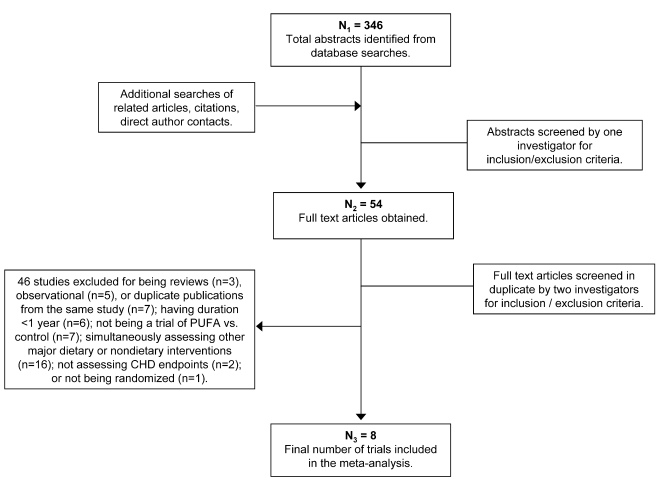
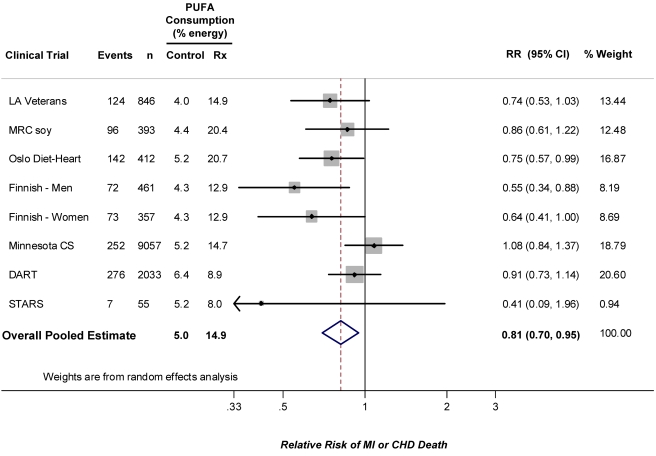
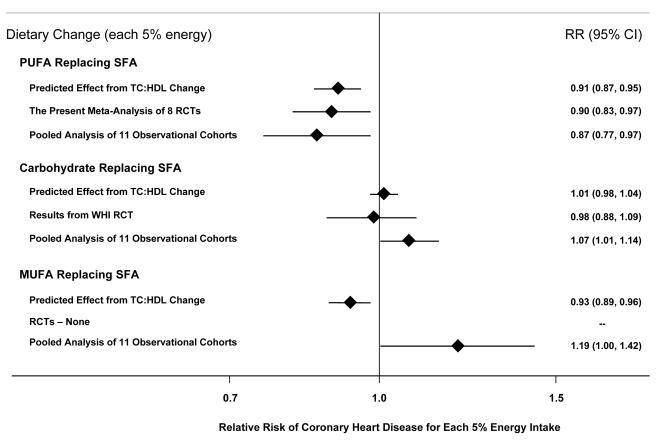
BACKGROUND: Reduced saturated fat (SFA) consumption is recommended to reduce coronary heart disease (CHD), but there is an absence of strong supporting evidence from randomized controlled trials (RCTs) of clinical CHD events and few guidelines focus on any specific replacement nutrient. Additionally, some public health groups recommend lowering or limiting polyunsaturated fat (PUFA) consumption, a major potential replacement for SFA. METHODS AND FINDINGS: We systematically investigated and quantified the effects of increased PUFA consumption, as a replacement for SFA, on CHD endpoints in RCTs. RCTs were identified by systematic searches of multiple online databases through June 2009, grey literature sources, hand-searching related articles and citations, and direct contacts with experts to identify potentially unpublished trials. Studies were included if they randomized participants to increased PUFA for at least 1 year without major concomitant interventions, had an appropriate control group, and reported incidence of CHD (myocardial infarction and/or cardiac death). Inclusions/exclusions were adjudicated and data were extracted independently and in duplicate by two investigators and included population characteristics, control and intervention diets, follow-up duration, types of events, risk ratios, and SEs. Pooled effects were calculated using inverse-variance-weighted random effects meta-analysis. From 346 identified abstracts, eight trials met inclusion criteria, totaling 13,614 participants with 1,042 CHD events. Average weighted PUFA consumption was 14.9% energy (range 8.0%-20.7%) in intervention groups versus 5.0% energy (range 4.0%-6.4%) in controls. The overall pooled risk reduction was 19% (RR = 0.81, 95% confidence interval [CI] 0.70-0.95, p = 0.008), corresponding to 10% reduced CHD risk (RR = 0.90, 95% CI = 0.83-0.97) for each 5% energy of increased PUFA, without evidence for statistical heterogeneity (Q-statistic p = 0.13; I(2) = 37%). Meta-regression identified study duration as an independent determinant of risk reduction (p = 0.017), with studies of longer duration showing greater benefits. CONCLUSIONS: These findings provide evidence that consuming PUFA in place of SFA reduces CHD events in RCTs. This suggests that rather than trying to lower PUFA consumption, a shift toward greater population PUFA consumption in place of SFA would significantly reduce rates of CHD. Please see later in the article for the Editors' Summary.
Overview
The claims and statistics of this paper haven’t been checked yet.
Free: it reads the open-access text and checks the first 5 claims that cite a source we can check. Create a free account to check every claim.
Integrity signals
Registry
Cites
Statistics
Figures
Verification
Claims the paper makes
The claims and statistics of this paper haven’t been checked yet.
Free: it reads the open-access text and checks the first 5 claims that cite a source we can check. Create a free account to check every claim.
Claims other papers make about this one
Each is checked against this paper’s own text: does it say what the citing paper says it does?
The cited source doesn’t support the claim as written.
In the citing paper
“In the presidential advisory of the AHA by Sacks et al. (27), the literature search strategy was not described, similarly to the study by Mozaffarian et al. (26)”
From Saturated Fat Restriction for Cardiovascular Disease Prevention: A Systematic Review and Meta-analysis of Randomized Controlled Trials (2025) · cites this paper as [26]
Checked by a reasoning model — may be wrong.
Experimental — accuracy not yet measuredThe source backs part of the claim, not all of it — or backs it for a different population, condition or comparison.
In the citing paper
“In order to get an overall estimate of the impact of dietary modifications on the CV risk, different meta-analyses have been performed, sometimes with inconsistent outcomes. 135,136”
From 2016 ESC/EAS Guidelines for the Management of Dyslipidaemias (2016) · cites this paper as [136]
Experimental — accuracy not yet measuredThe source backs part of the claim, not all of it — or backs it for a different population, condition or comparison.
In the citing paper
“For instance, total saturated fat, carbohydrate, and protein each appear relatively neutral for CHD; while effects of total monounsaturated fat remain uncertain (see below).21, 349”
From Dietary and Policy Priorities for Cardiovascular Disease, Diabetes, and Obesity: A Comprehensive Review (2016) · cites this paper as [349]
Experimental — accuracy not yet measuredThe source backs part of the claim, not all of it — or backs it for a different population, condition or comparison.
In the citing paper
“LA is also associated with significantly lower risk of CHD (Figure 7), whether in comparison to carbohydrate or saturated fat;350 and in meta-analysis of controlled clinical trials, consumption of n-6 rich vegetable oils, in place of animal fats, reduces CHD events (Figure 7).349”
From Dietary and Policy Priorities for Cardiovascular Disease, Diabetes, and Obesity: A Comprehensive Review (2016) · cites this paper as [349]
Experimental — accuracy not yet measuredThe source backs part of the claim, not all of it — or backs it for a different population, condition or comparison.
In the citing paper
“Notably, in these trials, the average intake of n-6 polyunsaturated fat was ~15% energy,349 higher than current guidelines that recommend up to 10-11% energy from polyunsaturated fat.370”
From Dietary and Policy Priorities for Cardiovascular Disease, Diabetes, and Obesity: A Comprehensive Review (2016) · cites this paper as [349]
Experimental — accuracy not yet measured
18 more claims about this paper
Create a free account to see every claim other papers make about this one.
Self-check
Percentages, sums and reported differences re-computed from the paper’s own numbers.
The self-check needs the paper’s full text.
Citations
Cites
Bias in meta-analysis detected by a simple, graphical test
Egger, M., Smith, G. D., Schneider, M., & Minder, C. (1997) · BMJ · doi:10.1136/bmj.315.7109.629 · Cited by 56,722 · cited 1×
“Potential for publication bias was assessed by visually inspecting a funnel plot of the treatment effect versus SE [30] and statistically using the Begg adjusted-rank correlation test [31].”
MethodMeta-analysis in clinical trials
DerSimonian, R., & Laird, N. (1986) · Controlled Clinical Trials · doi:10.1016/0197-2456(86)90046-2 · Cited by 39,552 · cited 3×
“Statistical Analysis The overall pooled effect was calculated using random effects meta-analysis, which accounts for heterogeneity in treatment effects among studies, using the methods of Dersimonian and Laird [28] with inverse-variance (SE) weighting.”
MethodOperating characteristics of a rank correlation test for publication bias
Begg, C. B., & Mazumdar, M. (1994) · Biometrics · doi:10.2307/2533446 · Cited by 16,955
Trumbo, P., Schlicker, S., Yates, A. A., & Poos, M. (2002) · Journal of the American Dietetic Association · doi:10.1016/s0002-8223(02)90346-9 · Cited by 5,993
Moher, D., Cook, D. J., Eastwood, S., Olkin, I., Rennie, D., & Stroup, D. F. (1999) · The Lancet · doi:10.1016/s0140-6736(99)04149-5 · Cited by 4,826
Moher, D., Pham, B., Jones, A., Cook, D. J., Jadad, A. R., Moher, M., Tugwell, P., & Klassen, T. P. (1998) · The Lancet · doi:10.1016/s0140-6736(98)01085-x · Cited by 3,560 · cited 2×
“We assessed study quality using the validated Jadad scale [27], which includes criteria relating to randomization, blinding, and withdrawals and dropouts that are together summed to generate an overall quality score between 0 and 5.”
BackgroundMethodSwinburn, B., Baba, N. H., Belhadj, M., Deurenberg‐Yap, M., Djazayery, A., Forrester, T., Galuska, D. A., Herman, S. T., James, W. P. T., Kabangu, J. R. M., et al. (2003) · World Health Organization eBooks · Cited by 3,453
Simopoulos, A. P. (2008) · Experimental Biology and Medicine · doi:10.3181/0711-mr-311 · Cited by 2,915 · cited 1×
“However, surprisingly, some scientists and organizations argue that consumption of n-6 PUFA, by far the predominant dietary PUFA, will actually increase CHD risk and have recommended reduced consumption [21–23], and the Institute of Medicine recommends only a relatively modest range of 5%–10% energy (%E) consumption f…”
BackgroundDanaei, G., Ding, E. L., Mozaffarian, D., Taylor, B., Rehm, J., Murray, C. J. L., & Ezzati, M. (2009) · PLoS Medicine · doi:10.1371/journal.pmed.1000058 · Cited by 2,860 · cited 1×
“need to be revisited, particularly as PUFA appears to be the primary evidence-based replacement for SFA. Finally, whereas on a population-level even a small shift from SFA to PUFA consumption would produce meaningful reductions in CHD risk, the relatively modest magnitude of plausible benefit (∼10% lower risk for 5%E…”
BackgroundSelf-citation
Cited by
Heart Disease and Stroke Statistics—2017 Update: A Report From the American Heart Association
Benjamin, E. J., Blaha, M. J., Chiuve, S. E., Cushman, M., Das, S. R., Deo, R., de Ferranti, S. D., Floyd, J., Fornage, M., Gillespie, C., et al. (2017) · Circulation · doi:10.1161/cir.0000000000000485 · Cited by 12,591
Self-citationLim, S. S., Vos, T., Flaxman, A. D., Danaei, G., Shibuya, K., Adair-Rohani, H., AlMazroa, M. A., Amann, M., Anderson, H. R., Andrews, K. G., et al. (2012) · The Lancet · doi:10.1016/s0140-6736(12)61766-8 · Cited by 11,805
Heart Disease and Stroke Statistics—2020 Update: A Report From the American Heart Association
Virani, S. S., Alonso, A., Benjamin, E. J., Bittencourt, M. S., Callaway, C. W., Carson, A. P., Chamberlain, A. M., Chang, A. R., Cheng, S., Delling, F. N., et al. (2020) · Circulation · doi:10.1161/cir.0000000000000757 · Cited by 9,175
Heart Disease and Stroke Statistics—2019 Update: A Report From the American Heart Association
Benjamin, E. J., Muntner, P., Alonso, A., Bittencourt, M. S., Callaway, C. W., Carson, A. P., Chamberlain, A. M., Chang, A. R., Cheng, S., Das, S. R., et al. (2019) · Circulation · doi:10.1161/cir.0000000000000659 · Cited by 9,036
Mach, F., Baigent, C., Catapano, A. L., Koskinas, K. C., Casula, M., Badimon, L., Chapman, M. J., De Backer, G. G., Delgado, V., Ference, B. A., et al. (2020) · European Heart Journal · doi:10.1093/eurheartj/ehz455 · Cited by 8,961
Heart Disease and Stroke Statistics—2012 Update: A Report From the American Heart Association
Writing Group Members, Roger, V. L., Go, A. S., Lloyd-Jones, D. M., Benjamin, E. J., Berry, J. D., Borden, W. B., Bravata, D. M., Dai, S., Ford, E. S., et al. (2012) · Circulation · doi:10.1161/cir.0b013e31823ac046 · Cited by 7,333
Self-citationHeart disease and stroke statistics-2018 update: a report from the american heart association
Benjamin, E. J., Virani, S. S., Callaway, C. W., Chamberlain, A. M., Chang, A. R., Cheng, S., Chiuve, S. E., Cushman, M., Delling, F. N., Deo, R., et al. (2018) · Circulation · doi:10.1161/cir.0000000000000558 · Cited by 7,146
Heart Disease and Stroke Statistics—2016 Update: A Report From the American Heart Association
Mozaffarian, D., Benjamin, E. J., Go, A. S., Arnett, D. K., Blaha, M. J., Cushman, M., Das, S. R., de Ferranti, S., Després, J.-P., Fullerton, H. J., et al. (2016) · Circulation · doi:10.1161/cir.0000000000000350 · Cited by 6,596
Self-citationHeart Disease and Stroke Statistics—2011 Update: A Report From the American Heart Association
Roger, V. L., Go, A. S., Lloyd-Jones, D. M., Adams, R. J., Berry, J. D., Brown, T. M., Carnethon, M. R., Dai, S., de Simone, G., Ford, E. S., et al. (2011) · Circulation · doi:10.1161/cir.0b013e3182009701 · Cited by 6,149
Self-citationHeart Disease and Stroke Statistics—2015 Update: A Report From the American Heart Association
Mozaffarian, D., Benjamin, E. J., Go, A. S., Arnett, D. K., Blaha, M. J., Cushman, M., de Ferranti, S., Després, J.-P., Fullerton, H. J., Howard, V. J., et al. (2015) · Circulation · doi:10.1161/cir.0000000000000152 · Cited by 5,797
Self-citationHeart Disease and Stroke Statistics—2013 Update: A Report From the American Heart Association
Go, A. S., Mozaffarian, D., Roger, V. L., Benjamin, E. J., Berry, J. D., Borden, W. B., Bravata, D. M., Dai, S., Ford, E. S., Fox, C. S., et al. (2013) · Circulation · doi:10.1161/cir.0b013e31828124ad · Cited by 5,292
Self-citationHeart Disease and Stroke Statistics—2014 Update: A Report From the American Heart Association
Go, A. S., Mozaffarian, D., Roger, V. L., Benjamin, E. J., Berry, J. D., Blaha, M. J., Dai, S., Ford, E. S., Fox, C. S., Franco, S., et al. (2014) · Circulation · doi:10.1161/01.cir.0000441139.02102.80 · Cited by 5,215
Self-citationMach, F., Baigent, C., Catapano, A. L., Koskinas, K. C., Casula, M., Badimon, L., Chapman, M. J., De Backer, G. G., Delgado, V., Ference, B. A., et al. (2019) · Atherosclerosis · doi:10.1016/j.atherosclerosis.2019.08.014 · Cited by 4,854
2016 ESC/EAS Guidelines for the Management of Dyslipidaemias
Catapano, A. L., Graham, I., De Backer, G., Wiklund, O., Chapman, M. J., Drexel, H., Hoes, A. W., Jennings, C. S., Landmesser, U., Pedersen, T. R., et al. (2016) · European Heart Journal · doi:10.1093/eurheartj/ehw272 · Cited by 3,162
Mozaffarian, D. (2016) · Circulation · doi:10.1161/circulationaha.115.018585 · Cited by 2,216
“LA is also associated with significantly lower risk of CHD (Figure 7), whether in comparison with carbohydrate or saturated fat(350); and, in meta-analysis of controlled clinical trials, consumption of n-6–rich vegetable oils, in place of animal fats, reduces CHD events (Figure 7).(349) Notably, in these latter trials…”
InfluentialSelf-citationTriglycerides and Cardiovascular Disease: A Scientific Statement From the American Heart Association
Miller, M., Stone, N. J., Ballantyne, C., Bittner, V., Criqui, M. H., Ginsberg, H. N., Goldberg, A. C., Howard, W. J., Jacobson, M. S., Kris-Etherton, P. M., et al. (2011) · Circulation · doi:10.1161/cir.0b013e3182160726 · Cited by 1,871
2016 ESC/EAS Guidelines for the Management of Dyslipidaemias
Catapano, A. L., Graham, I., De Backer, G., Wiklund, O., Chapman, M. J., Drexel, H., Hoes, A. W., Jennings, C. S., Landmesser, U., Pedersen, T. R., et al. (2016) · Atherosclerosis · doi:10.1016/j.atherosclerosis.2016.08.018 · Cited by 1,582
“In order to get an overall estimate of the impact of dietary modifications on the CV risk, different meta-analyses have been performed, sometimes with inconsistent outcomes.(135,136) This is due not only to methodological problems, particularly inadequate sample size or the short duration of many trials included in th…”
Backgroundde Souza, R. J., Mente, A., Maroleanu, A., Cozma, A. I., Ha, V., Kishibe, T., Uleryk, E., Budylowski, P., Schünemann, H., Beyene, J., et al. (2015) · BMJ · doi:10.1136/bmj.h3978 · Cited by 1,424
Global obesity: trends, risk factors and policy implications
Malik, V. S., Willett, W. C., & Hu, F. B. (2013) · Nature Reviews Endocrinology · doi:10.1038/nrendo.2012.199 · Cited by 1,408
Dietary fats and cardiovascular disease: a presidential advisory from the American Heart Association
Sacks, F. M., Lichtenstein, A. H., Wu, J. H. Y., Appel, L. J., Creager, M. A., Kris-Etherton, P. M., Miller, M., Rimm, E. B., Rudel, L. L., Robinson, J. G., et al. (2017) · Circulation · doi:10.1161/cir.0000000000000510 · Cited by 1,386
Functional Roles of Fatty Acids and Their Effects on Human Health
Calder, P. C. (2015) · Journal of Parenteral and Enteral Nutrition · doi:10.1177/0148607115595980 · Cited by 1,160
“This effect is consistent with an earlier meta-analysis that reported a 19% lower risk of CHD risk when saturated fatty acids were partly replaced with ω-6 PUFAs.(52) Khaw et al(23) found an inverse association between circulating linoleic acid and risk of incident CHD.”
ResultInfluentialDehghan, M., Mente, A., Zhang, X., Swaminathan, S., Li, W., Mohan, V., Iqbal, R., Kumar, R., Wentzel-Viljoen, E., Rosengren, A., et al. (2017) · The Lancet · doi:10.1016/s0140-6736(17)32252-3 · Cited by 1,101
Nicholls, S. J., Lincoff, A. M., Garcia, M., Bash, D., Ballantyne, C. M., Barter, P. J., Davidson, M. H., Kastelein, J. J. P., Koenig, W., McGuire, D. K., et al. (2020) · JAMA · doi:10.1001/jama.2020.22258 · Cited by 1,028
Self-citationMilk nutritional composition and its role in human health
Pereira, P. C. (2014) · Nutrition · doi:10.1016/j.nut.2013.10.011 · Cited by 806
“An excessive consumption of saturated fat had 317 been previously associated with increased cardiovascular disease risk (71,72).”
BackgroundKinoshita, M., Yokote, K., Arai, H., Iida, M., Ishigaki, Y., Ishibashi, S., Umemoto, S., Egusa, G., Ohmura, H., Okamura, T., et al. (2018) · Journal of Atherosclerosis and Thrombosis · doi:10.5551/jat.gl2017 · Cited by 813
Behavioral and Dietary Risk Factors for Noncommunicable Diseases
Ezzati, M., & Riboli, E. (2013) · New England Journal of Medicine · doi:10.1056/nejmra1203528 · Cited by 740
ESC/EAS Guidelines for the management of dyslipidaemias
Catapano, A. L., Reiner, Ž., De Backer, G., Graham, I., Taskinen, M.-R., Wiklund, O., Agewall, S., Alegria, E., Chapman, M. J., Durrington, P., et al. (2011) · Atherosclerosis · doi:10.1016/j.atherosclerosis.2011.06.028 · Cited by 706
Reduction in saturated fat intake for cardiovascular disease
Hooper, L., Martin, N., Abdelhamid, A., & Davey Smith, G. (2015) · Cochrane Database of Systematic Reviews · doi:10.1002/14651858.cd011737 · Cited by 704
Würtz, P., Havulinna, A. S., Soininen, P., Tynkkynen, T., Prieto-Merino, D., Tillin, T., Ghorbani, A., Artati, A., Wang, Q., Tiainen, M., et al. (2015) · Circulation · doi:10.1161/circulationaha.114.013116 · Cited by 677
JBS3 Board (2014) · Heart · doi:10.1136/heartjnl-2014-305693 · Cited by 608
Micha, R., Khatibzadeh, S., Shi, P., Fahimi, S., Lim, S., Andrews, K. G., Engell, R. E., Powles, J., Ezzati, M., Mozaffarian, D., et al. (2014) · BMJ · doi:10.1136/bmj.g2272 · Cited by 573
Self-citationComponents of a Cardioprotective Diet: New Insights
Mozaffarian, D., Appel, L. J., & Van Horn, L. (2011) · Circulation · doi:10.1161/circulationaha.110.968735 · Cited by 571
Self-citationFarvid, M. S., Ding, M., Pan, A., Sun, Q., Chiuve, S. E., Steffen, L. M., Willett, W. C., & Hu, F. B. (2014) · Circulation · doi:10.1161/circulationaha.114.010236 · Cited by 567
“Therefore, substitution of PUFAs for saturated fatty acids (SFAs) has been recommended to reduce CHD risk.(3,4) Previous studies have investigated the effects of n-3 PUFAs (including the long-chain n-3 and α-linolenic acid [ALA]) on CHD risk,(5,6) but the relation between intake of n-6 PUFAs and risk of CHD has been s…”
Saturated Fats and Health: A Reassessment and Proposal for Food-Based Recommendations
Astrup, A., Magkos, F., Bier, D. M., Brenna, J. T., de Oliveira Otto, M. C., Hill, J. O., King, J. C., Mente, A., Ordovas, J. M., Volek, J. S., et al. (2020) · Journal of the American College of Cardiology · doi:10.1016/j.jacc.2020.05.077 · Cited by 543
“Some meta-analyses find no evidence that reduction in saturated fat consumption may reduce CVD incidence or mortality (3–6), whereas others report a significant—albeit mild—beneficial effect (7,8).”
BackgroundPlant-based diets and cardiovascular health
Satija, A., & Hu, F. B. (2018) · Trends in Cardiovascular Medicine · doi:10.1016/j.tcm.2018.02.004 · Cited by 550
“In meta-analyses of RCTs, replacing saturated fatty acids with polyunsaturated fatty acids lowered total:HDL cholesterol ratio (29), as well as CHD risk (30) in a dose response manner, with similar results observed in prospective cohort studies (31).”
ResultMicha, R., & Mozaffarian, D. (2010) · Lipids · doi:10.1007/s11745-010-3393-4 · Cited by 543
“, in press [78] 902 Lipids (2010) 45:893–905”
BackgroundInfluentialSelf-citationLi, Y., Hruby, A., Bernstein, A. M., Ley, S. H., Wang, D. D., Chiuve, S. E., Sampson, L., Rexrode, K. M., Rimm, E. B., Willett, W. C., et al. (2015) · Journal of the American College of Cardiology · doi:10.1016/j.jacc.2015.07.055 · Cited by 539
Ramsden, C. E., Zamora, D., Leelarthaepin, B., Majchrzak-Hong, S. F., Faurot, K. R., Suchindran, C. M., Ringel, A., Davis, J. M., & Hibbeln, J. R. (2013) · BMJ · doi:10.1136/bmj.e8707 · Cited by 523
Saturated Fat Consumption and Risk of Coronary Heart Disease and Ischemic Stroke: A Science Update
Nettleton, J. A., Brouwer, I. A., Geleijnse, J. M., & Hornstra, G. (2017) · Annals of Nutrition and Metabolism · doi:10.1159/000455681 · Cited by 510
Soy, Soy Foods and Their Role in Vegetarian Diets
Rizzo, G., & Baroni, L. (2018) · Nutrients · doi:10.3390/nu10010043 · Cited by 498
“Abbreviations ADA American Dietetic Association APP alternate protein product BV biological value CHD coronary heart disease CVD cardiovascular disease DIAAS digestible indispensable amino acid score EFSA European Food Safety Authority EPIC European Prospective Investigation into Cancer and Nutrition ER oestrogen rece…”
BackgroundAnand, S. S., Hawkes, C., de Souza, R. J., Mente, A., Dehghan, M., Nugent, R., Zulyniak, M. A., Weis, T., Bernstein, A. M., Krauss, R. M., et al. (2015) · Journal of the American College of Cardiology · doi:10.1016/j.jacc.2015.07.050 · Cited by 507
“Meat is rich in protein, iron, zinc, and B vitamins, but can also contain significant amounts of cholesterol and saturated fatty acids, which raise LDL-C and lower triglyceride (157).”
BackgroundSelf-citationTrends in Dietary Quality Among Adults in the United States, 1999 Through 2010
Wang, D. D., Leung, C. W., Li, Y., Ding, E. L., Chiuve, S. E., Hu, F. B., & Willett, W. C. (2014) · JAMA Internal Medicine · doi:10.1001/jamainternmed.2014.3422 · Cited by 498
Bjermo, H., Iggman, D., Kullberg, J., Dahlman, I., Johansson, L., Persson, L., Berglund, J., Pulkki, K., Basu, S., Uusitupa, M., et al. (2012) · The American Journal of Clinical Nutrition · doi:10.3945/ajcn.111.030114 · Cited by 490
Astrup, A., Dyerberg, J., Elwood, P., Hermansen, K., Hu, F. B., Jakobsen, M. U., Kok, F. J., Krauss, R. M., Lecerf, J. M., LeGrand, P., et al. (2011) · The American Journal of Clinical Nutrition · doi:10.3945/ajcn.110.004622 · Cited by 487
“PUFAs for SFAs (20), and a meta-analysis of RCTs found a 10% reduction in CHD for each 5% of energy from SFAs substituted for PUFAs (13).”
BackgroundInfluentialRohrmann, S., Overvad, K., Bueno-de-Mesquita, H. B., Jakobsen, M. U., Egeberg, R., Tjønneland, A., Nailler, L., Boutron-Ruault, M.-C., Clavel-Chapelon, F., Krogh, V., et al. (2013) · BMC Medicine · doi:10.1186/1741-7015-11-63 · Cited by 454
“Both high saturated fat and cholesterol intake have been found to be related to the risk of coronary heart disease [2].”
BackgroundST-segment elevation myocardial infarction
Vogel, B., Claessen, B. E., Arnold, S. V., Chan, D., Cohen, D. J., Giannitsis, E., Gibson, C. M., Goto, S., Katus, H. A., Kerneis, M., et al. (2019) · Nature Reviews Disease Primers · doi:10.1038/s41572-019-0090-3 · Cited by 419
Association of Specific Dietary Fats With Total and Cause-Specific Mortality
Wang, D. D., Li, Y., Chiuve, S. E., Stampfer, M. J., Manson, J. E., Rimm, E. B., Willett, W. C., & Hu, F. B. (2016) · JAMA Internal Medicine · doi:10.1001/jamainternmed.2016.2417 · Cited by 439
Dietary linoleic acid and human health: Focus on cardiovascular and cardiometabolic effects
Marangoni, F., Agostoni, C., Borghi, C., Catapano, A. L., Cena, H., Ghiselli, A., La Vecchia, C., Lercker, G., Manzato, E., Pirillo, A., et al. (2020) · Atherosclerosis · doi:10.1016/j.atherosclerosis.2019.11.018 · Cited by 416
Saturated Fatty Acids and Risk of Coronary Heart Disease: Modulation by Replacement Nutrients
Siri-Tarino, P. W., Sun, Q., Hu, F. B., & Krauss, R. M. (2010) · Current Atherosclerosis Reports · doi:10.1007/s11883-010-0131-6 · Cited by 407
Position of the Academy of Nutrition and Dietetics: Dietary Fatty Acids for Healthy Adults
Vannice, G., & Rasmussen, H. (2014) · Journal of the Academy of Nutrition and Dietetics · doi:10.1016/j.jand.2013.11.001 · Cited by 409
(2017) · doi:10.3390/healthcare5020029 · Cited by 410
“Mozaffarian 2010 [47] Meta-analysis of randomized controlled trials 8 studies (n = 13,614) Median of all trials 4.”
BackgroundMethodThe 2015 Dutch food-based dietary guidelines
for the Committee Dutch Dietary Guidelines 2015, Kromhout, D., Spaaij, C. J. K., de Goede, J., & Weggemans, R. M. (2016) · European Journal of Clinical Nutrition · doi:10.1038/ejcn.2016.52 · Cited by 401
Reduced or modified dietary fat for preventing cardiovascular disease
Hooper, L., Summerbell, C. D., Thompson, R., Sills, D., Roberts, F. G., Moore, H. J., & Davey Smith, G. (2012) · Cochrane Database of Systematic Reviews · doi:10.1002/14651858.cd002137.pub3 · Cited by 379
Schwab, U., Lauritzen, L., Tholstrup, T., Haldorsson, T. I., Riserus, U., Uusitupa, M., & Becker, W. (2014) · Food & Nutrition Research · doi:10.3402/fnr.v58.25145 · Cited by 384
“Thus, the SR concluded that there is convincing evidence that partial replacement of SFA with mainly PUFA can reduce CVD events by around 10 20%, whereas the total amount of fat did not affect the CVD risk (67, 93, 94).”
BackgroundResultde Oliveira Otto, M. C., Mozaffarian, D., Kromhout, D., Bertoni, A. G., Sibley, C. T., Jacobs, D. R., & Nettleton, J. A. (2012) · The American Journal of Clinical Nutrition · doi:10.3945/ajcn.112.037770 · Cited by 364
“For example, although clinical trials showed that the replacement of SF with polyunsaturated fat reduced CHD risk (5), evidence has suggested that a modification of an SF-rich diet toward a carbohydrate-rich diet, which is the most common scenario in the United States and other populations, may have little effect on C…”
MethodSelf-citationReduction in saturated fat intake for cardiovascular disease
Hooper, L., Martin, N., Jimoh, O. F., Kirk, C., Foster, E., & Abdelhamid, A. S. (2020) · Cochrane Database of Systematic Reviews · doi:10.1002/14651858.cd011737.pub3 · Cited by 330
Marklund, M., Wu, J. H. Y., Imamura, F., Del Gobbo, L. C., Fretts, A., de Goede, J., Shi, P., Tintle, N., Wennberg, M., Aslibekyan, S., et al. (2019) · Circulation · doi:10.1161/circulationaha.118.038908 · Cited by 337
“Studyspecific estimates for hazard ratio (HR) per interquintile range (ie, range between the midpoint of the bottom quintile [10th percentile] and the top quintile [90th percentile]) of biomarker linoleic acid were pooled based on the following order: (1) adipose tissue, (2) erythrocyte phospholipid, (3) plasma phosph…”
MethodSelf-citationContributions of risk factors and medical care to cardiovascular mortality trends
Ezzati, M., Obermeyer, Z., Tzoulaki, I., Mayosi, B. M., Elliott, P., & Leon, D. A. (2015) · Nature Reviews Cardiology · doi:10.1038/nrcardio.2015.82 · Cited by 338
Del Gobbo, L. C., Falk, M. C., Feldman, R., Lewis, K., & Mozaffarian, D. (2015) · The American Journal of Clinical Nutrition · doi:10.3945/ajcn.115.110965 · Cited by 335
Self-citationDietary fat and cardiometabolic health: evidence, controversies, and consensus for guidance
Forouhi, N. G., Krauss, R. M., Taubes, G., & Willett, W. (2018) · BMJ · doi:10.1136/bmj.k2139 · Cited by 314
Viewpoint: Regulating meat consumption to improve health, the environment and animal welfare
Bonnet, C., Bouamra-Mechemache, Z., Réquillart, V., & Treich, N. (2020) · Food Policy · doi:10.1016/j.foodpol.2020.101847 · Cited by 312
“…meat consumption is characterized by a high content of cholesterol and saturated fatty acids, which are both associated with coronary heart disease (Mozaffarian et al., 2010) and diabetes (Micha et al., 2010; Wolk, 2017).4 Moreover, all meat intake is positively associated with weight gain…”
Okamura, T., Tsukamoto, K., Arai, H., Fujioka, Y., Ishigaki, Y., Koba, S., Ohmura, H., Shoji, T., Yokote, K., Yoshida, H., et al. (2024) · Journal of Atherosclerosis and Thrombosis · doi:10.5551/jat.gl2022 · Cited by 302
Vegetarian diets, low-meat diets and health: a review
McEvoy, C. T., Temple, N., & Woodside, J. V. (2012) · Public Health Nutrition · doi:10.1017/s1368980012000936 · Cited by 316
Guasch-Ferré, M., Babio, N., Martínez-González, M. A., Corella, D., Ros, E., Martín-Peláez, S., Estruch, R., Arós, F., Gómez-Gracia, E., Fiol, M., et al. (2015) · The American Journal of Clinical Nutrition · doi:10.3945/ajcn.115.116046 · Cited by 313
“Another recent pooled analysis of 8 RCTs concluded that the coronary heart disease risk is lowered by 10% for every 5% intake of energy from PUFAs replacing SFAs (17).”
BackgroundLiu, A. G., Ford, N. A., Hu, F. B., Zelman, K. M., Mozaffarian, D., & Kris-Etherton, P. M. (2017) · Nutrition Journal · doi:10.1186/s12937-017-0271-4 · Cited by 287
“Reproduced with permission from Mozaffarian et al. 2010 [30] mean follow-up of 4.8 years, consumption of a Mediterranean diet supplemented with either extra-virgin olive oil or nuts resulted in a 30% reduction in risk of myocardial infarction, stroke, or death (hazard ratio: 0.70; 95% CI: 0.54,…”
MethodInfluentialSelf-citationPayne, C. L. R., Scarborough, P., Rayner, M., & Nonaka, K. (2016) · European Journal of Clinical Nutrition · doi:10.1038/ejcn.2015.149 · Cited by 284
Zong, G., Li, Y., Wanders, A. J., Alssema, M., Zock, P. L., Willett, W. C., Hu, F. B., & Sun, Q. (2016) · BMJ · doi:10.1136/bmj.i5796 · Cited by 290
Khaw, K.-T., Friesen, M. D., Riboli, E., Luben, R., & Wareham, N. (2012) · PLoS Medicine · doi:10.1371/journal.pmed.1001255 · Cited by 291
“Trials substituting unsaturated fat for saturated fat, altering the ratios have reported more consistently reduction in cardiovascular disease [6,7], indicating that the balance between different fats is crucial.”
BackgroundCrimarco, A., Springfield, S., Petlura, C., Streaty, T., Cunanan, K., Lee, J., Fielding-Singh, P., Carter, M. M., Topf, M. A., Wastyk, H. C., et al. (2020) · The American Journal of Clinical Nutrition · doi:10.1093/ajcn/nqaa203 · Cited by 286
“This was consistent with the lower saturated fat and higher fiber and plant protein during the Plant phase, all of which have been established to lower LDL cholesterol (11, 14, 44).”
BackgroundResultHuth, P. J., & Park, K. M. (2012) · Advances in Nutrition · doi:10.3945/an.112.002030 · Cited by 281
“In addition, the evidence for replacing SF with MUFA is mixed and unclear (8).”
BackgroundInfluentialFatty acids in cardiovascular health and disease: A comprehensive update
Baum, S. J., Kris-Etherton, P. M., Willett, W. C., Lichtenstein, A. H., Rudel, L. L., Maki, K. C., Whelan, J., Ramsden, C. E., & Block, R. C. (2012) · Journal of Clinical Lipidology · doi:10.1016/j.jacl.2012.04.077 · Cited by 277
Ramsden, C. E., Hibbeln, J. R., Majchrzak, S. F., & Davis, J. M. (2010) · British Journal of Nutrition · doi:10.1017/s0007114510004010 · Cited by 275
“In a pooled analysis of seven dietary intervention trials that increased ‘polyunsaturated fat in place of saturated fat’, Mozaffarian et al.((7)) found a modest CHD risk reduction of about 10 % per 5 en % increase in ‘PUFA’ consumption.”
InfluentialUusitupa, M., Hermansen, K., Savolainen, M. J., Schwab, U., Kolehmainen, M., Brader, L., Mortensen, L. S., Cloetens, L., Johansson‐Persson, A., Önning, G., et al. (2013) · Journal of Internal Medicine · doi:10.1111/joim.12044 · Cited by 264
Siri-Tarino, P. W., Chiu, S., Bergeron, N., & Krauss, R. M. (2015) · Annual Review of Nutrition · doi:10.1146/annurev-nutr-071714-034449 · Cited by 268
“(124), estimated effects on CVD risk of replacing SFAs with CHOs based on changes in the TC:HDL-C ratio were neutral (RR: 1.”
BackgroundDisorders of lipid metabolism. Clinical Guidelines 2023
Ezhov, M. V., Kukharchuk, V. V., Sergienko, I. V., Alieva, A. S., Antsiferov, M. B., Ansheles, A. A., Arabidze, G. G., Aronov, D. M., Arutyunov, G. P., Akhmedzhanov, N. M., et al. (2023) · Russian Journal of Cardiology · doi:10.15829/1560-4071-2023-5471 · Cited by 219
Naude, C. E., Schoonees, A., Senekal, M., Young, T., Garner, P., & Volmink, J. (2014) · PLoS ONE · doi:10.1371/journal.pone.0100652 · Cited by 252
“Substitution of saturated fat with polyunsaturated fats reduces coronary heart disease risk [57,58], while substitution with high glycaemic index CHO increases risk [59].”
BackgroundAstrup, A. (2014) · The American Journal of Clinical Nutrition · doi:10.3945/ajcn.113.073015 · Cited by 247
Dietary Fat Intake and the Risk of Depression: The SUN Project
Sánchez-Villegas, A., Verberne, L., De Irala, J., Ruíz-Canela, M., Toledo, E., Serra-Majem, L., & Martínez-González, M. A. (2011) · PLoS ONE · doi:10.1371/journal.pone.0016268 · Cited by 244
“This change mainly consists in the replacement of polyunsaturated (PUFA) or monounsaturated fatty acids (MUFA) by saturated fats (SFA) and trans-unsaturated fats (TFA) [11].”
BackgroundInfluentialThe relation of saturated fatty acids with low-grade inflammation and cardiovascular disease
Ruiz-Núñez, B., Dijck-Brouwer, D. A. J., & Muskiet, F. A. J. (2016) · The Journal of Nutritional Biochemistry · doi:10.1016/j.jnutbio.2015.12.007 · Cited by 245
“whole grains, fruits and vegetables [217]”.”
MethodHauner, H., Bechthold, A., Boeing, H., Brönstrup, A., Buyken, A., Leschik-Bonnet, E., Linseisen, J., Schulze, M., Strohm, D., & Wolfram, G. (2012) · Annals of Nutrition and Metabolism · doi:10.1159/000335326 · Cited by 233
“A recently published meta-analysis of intervention studies [Mozaffarian et al., 2010] also showed that an exchange of SFA by PUFA results in a significantly lowered CHD risk.”
Reduction in saturated fat intake for cardiovascular disease
Hooper, L., Martin, N., Jimoh, O. F., Kirk, C., Foster, E., & Abdelhamid, A. S. (2020) · Cochrane Database of Systematic Reviews · doi:10.1002/14651858.cd011737.pub2 · Cited by 228
2023 Chinese guideline for lipid management
Li, J.-J., Zhao, S.-P., Zhao, D., Lu, G.-P., Peng, D.-Q., Liu, J., Chen, Z.-Y., Guo, Y.-L., Wu, N.-Q., Yan, S.-K., et al. (2023) · Frontiers in Pharmacology · doi:10.3389/fphar.2023.1190934 · Cited by 223
Coronary heart disease prevention: Nutrients, foods, and dietary patterns
Bhupathiraju, S. N., & Tucker, K. L. (2011) · Clinica Chimica Acta · doi:10.1016/j.cca.2011.04.038 · Cited by 225
“[28] noted an overall pooled risk reduction of 19% in the intervention groups (RR=0.”
BackgroundDietary Fat and Risk of Cardiovascular Disease: Recent Controversies and Advances
Wang, D. D., & Hu, F. B. (2017) · Annual Review of Nutrition · doi:10.1146/annurev-nutr-071816-064614 · Cited by 218
Schwingshackl, L., & Hoffmann, G. (2013) · Journal of the Academy of Nutrition and Dietetics · doi:10.1016/j.jand.2013.07.010 · Cited by 218
Impact of Nutritional Changes on Nonalcoholic Fatty Liver Disease
Perdomo, C. M., Frühbeck, G., & Escalada, J. (2019) · Nutrients · doi:10.3390/nu11030677 · Cited by 211
“A meta-analysis (8 randomized trials) [22] including 13,614 patients found a 10% risk reduction of coronary events (myocardial infarction and/or cardiac death) for every 5% of energy intake conferred by PUFAs after replacing saturated fats for at least 1 year in the general population.”
BackgroundMethodInfluentialScientistsʼ Warning on Climate Change and Medicinal Plants
Applequist, W. L., Brinckmann, J. A., Cunningham, A. B., Hart, R. E., Heinrich, M., Katerere, D. R., & van Andel, T. (2020) · Planta Medica · doi:10.1055/a-1041-3406 · Cited by 204
“At least according to current nutritional dogma, the latter effect could worsen the nutritional quality of the extracted oils (e.g., [116 – 118]), potentially reducing individuals ʼ ability to ameliorate or avoid chronic diseases, especially cardiovascular disease, by consuming healthful…”
BackgroundThe Short Overview on the Relevance of Fatty Acids for Human Cardiovascular Disorders
Shramko, V. S., Polonskaya, Y. V., Kashtanova, E. V., Stakhneva, E. M., & Ragino, Y. I. (2020) · Biomolecules · doi:10.3390/biom10081127 · Cited by 207
“In the past few years researchers have come to discordant conclusions about the relationship between dietary FA and risk of CVD [12,13,20].”
BackgroundFriend or Foe? The Role of Animal-Source Foods in Healthy and Environmentally Sustainable Diets
Beal, T., Gardner, C. D., Herrero, M., Iannotti, L. L., Merbold, L., Nordhagen, S., & Mottet, A. (2023) · The Journal of Nutrition · doi:10.1016/j.tjnut.2022.10.016 · Cited by 194
Plant-Based Diets for Cardiovascular Disease Prevention: All Plant Foods Are Not Created Equal
Hemler, E. C., & Hu, F. B. (2019) · Current Atherosclerosis Reports · doi:10.1007/s11883-019-0779-5 · Cited by 205
Omega-3 fatty acids and cardiovascular disease
von Schacky, C. (2007) · Current Opinion in Clinical Nutrition and Metabolic Care · doi:10.1097/mco.0b013e3280127af0 · Cited by 207
Current Evidence Supporting the Link Between Dietary Fatty Acids and Cardiovascular Disease
Hammad, S., Pu, S., & Jones, P. J. (2016) · Lipids · doi:10.1007/s11745-015-4113-x · Cited by 200
“One of the most frequently stated dietary recommendations for a healthier cardiovascular system is to reduce SFA intake [4, 13].”
BackgroundMethodInfluentialHuth, P. J., Fulgoni, V. L., Keast, D. R., Park, K., & Auestad, N. (2013) · Nutrition Journal · doi:10.1186/1475-2891-12-116 · Cited by 199
“Replacing SFA with PUFA, for example, significantly reduces cardiovascular disease risk, whereas the evidence for replacing SFA with carbohydrate or MUFA is less consistent and robust, suggesting that lowering risk may be more strongly related to increased intakes of PUFA rather than decreased SFA [25-27].”
BackgroundI Diretriz sobre o consumo de Gorduras e Saúde Cardiovascular
Santos, R., Gagliardi, A., Xavier, H., Magnoni, C., Cassani, R., Lottenberg, A., Casella Filho, A., Araújo, D., Cesena, F., Alves, R., et al. (2013) · Arquivos Brasileiros de Cardiologia · doi:10.5935/abc.2013s003 · Cited by 189
Schulze, M. B., Minihane, A. M., Saleh, R. N. M., & Risérus, U. (2020) · The Lancet Diabetes & Endocrinology · doi:10.1016/s2213-8587(20)30148-0 · Cited by 197
Khaw, K.-T., Sharp, S. J., Finikarides, L., Afzal, I., Lentjes, M., Luben, R., & Forouhi, N. G. (2018) · BMJ Open · doi:10.1136/bmjopen-2017-020167 · Cited by 194
“37–39 Indeed, while overall the evidence indicates the substitution of dietary saturated fats with polyunsaturated fats is beneficial for coronary heart disease risk 40 heterogeneity in findings from observational studies and trials may reflect different dietary sources of fats.”
BackgroundStroke Prevention - Medical and Lifestyle Measures
Sarikaya, H., Ferro, J., & Arnold, M. (2015) · European Neurology · doi:10.1159/000367652 · Cited by 189
Polyunsaturated fatty acids for the primary and secondary prevention of cardiovascular disease
Abdelhamid, A. S., Martin, N., Bridges, C., Brainard, J. S., Wang, X., Brown, T. J., Hanson, S., Jimoh, O. F., Ajabnoor, S. M., Deane, K. H., et al. (2018) · Cochrane Database of Systematic Reviews · doi:10.1002/14651858.cd012345.pub2 · Cited by 165
“The other systematic review, Mozaffarian 2010, also included seven trials replacing sat- 40Polyunsaturated fatty acids for the primary and secondary prevention of cardiovascular disease (Review) Copyright © 2018 The Cochrane Collaboration.”
BackgroundMethodResultInfluentialDietary recommendations for prevention of atherosclerosis
Riccardi, G., Giosuè, A., Calabrese, I., & Vaccaro, O. (2022) · Cardiovascular Research · doi:10.1093/cvr/cvab173 · Cited by 182
“These findings are consistent with those of a meta-analysis of RCTs showing that replacement of SFAs with omega-6 PUFAs induces a statistically significant reduction of CHD incidence (-24%).36 However, this meta-analysis includes mostly patients with pre-existing CVD and therefore the results may not be fully reproduc…”
Backgroundde Lorgeril, M., & Salen, P. (2012) · BMC Medicine · doi:10.1186/1741-7015-10-50 · Cited by 188
“Second, the validity of meta-analyses of clinical trials showing that CVD can be prevented by replacing SFAs with polyunsaturated fatty acids (PUFAs) has been questioned [3,4] because they omitted relevant trials with unfavorable outcomes (selection bias) and included others that were poorly designed (no randomization…”
Background
Metadata
- Authors
- Mozaffarian, D., Micha, R., & Wallace, S.
- Affiliations
- Brigham and Women's Hospital (US)
- Harvard University (US)
- Corresponding author
- Mozaffarian, Dariush
- Venue
- PLoS Medicine
- Publisher
- Public Library of Science (PLoS)
- Published
- 2010-03-23
- Volume
- 7
- Issue
- 3
- Pages
- e1000252
- ISSN
- 1549-1277 (ISSN-L)
- 1549-1676
- PMC
- PMC2843598
- OpenAlex
- W2097226936
- Cited by
- 1,215
- References
- 49
- Citations by year
- 2026: 32 · 2025: 52 · 2024: 59 · 2023: 63 · 2022: 69 · 2021: 80 · 2020: 81 · 2019: 76 · 2018: 76 · 2017: 74 · 2016: 98 · 2015: 105 · 2014: 85 · 2013: 89 · 2012: 77
- FWCI
- 9.42
- Type
- journal article
- Language
- en
- Open access
- gold
- doi.org
- Locations
- PLoS Medicine (publishedVersion, cc-by)
- PubMed Central (publishedVersion, cc-by)
- PubMed (publishedVersion)
- RePEc: Research Papers in Economics (publishedVersion)
- Digital Access to Scholarship at Harvard (DASH) (Harvard University) (submittedVersion, cc-by)
- DOAJ (DOAJ: Directory of Open Access Journals) (submittedVersion, cc-by-sa)
- Figshare (submittedVersion, cc-by)
- Funders
- Bill and Melinda Gates Foundation
- Chicago Community Trust
- GlaxoSmithKline
- World Health Organization
- National Institutes of Health
- U.S. Food and Drug Administration
- National Heart, Lung, and Blood Institute (R01HL085710)
- Topics
- Health Sciences › Nursing › Nutrition and Dietetics › Fatty Acid Research and Health
- Health Sciences › Medicine › Public Health, Environmental and Occupational Health › Nutritional Studies and Diet
- Health Sciences › Medicine › Cardiology and Cardiovascular Medicine › Lipoproteins and Cardiovascular Health
- Keywords
- polyunsaturated fatty acids, saturated fat replacement, coronary artery disease, myocardial infarction, cardiovascular mortality, dietary fat, cardiovascular risk reduction, study duration, meta-regression, dietary intervention trials, omega-3 fatty acids, omega-6 fatty acids, dietary guidelines, publication bias
- MeSH terms
- Coronary Disease, Dietary Fats, Fatty Acids, Fatty Acids, Unsaturated, Feeding Behavior, Humans, Meta-Analysis as Topic, Randomized Controlled Trials as Topic
About these checks
Registry, retraction, Cites and statistics results are computed, not judged, with one exception: a printed reference that no index lists is read once by a model before it counts as a citation error. Claims are extracted by a model and kept only when their quote appears verbatim in the text; each cited source is then checked, with a model’s help, for whether it says what the claim relies on. Those verdicts can be wrong — read the claim’s quote and the cited source before relying on one.
Statistics and arithmetic are recomputed, not judged.
Confidence bands are shown only for fields calibrated on our annotated test set. None is calibrated yet, so no band is shown.
What counts as a claim ›How we measure confidence ›How we check this ›
Are you an author, or do you see a problem with this page? Request a review
Data sources
Bibliographic data: Semantic Scholar, OpenAlex, Crossref.
Contains information from the Semantic Scholar Academic Graph Datasets, made available under the ODC Attribution License (ODC-BY 1.0).
Semantic Scholar’s data is described in: Kinney, R., et al. (2023). The Semantic Scholar Open Data Platform. arXiv:2301.10140.
