

Effects on coronary heart disease of increasing polyunsaturated fat in place of saturated fat: a systematic review and meta-analysis of randomized controlled trials.
Open accessThe DOI matches its Crossref record; 49 of the 49 references it cites were found in a registry or an index.
Abstract
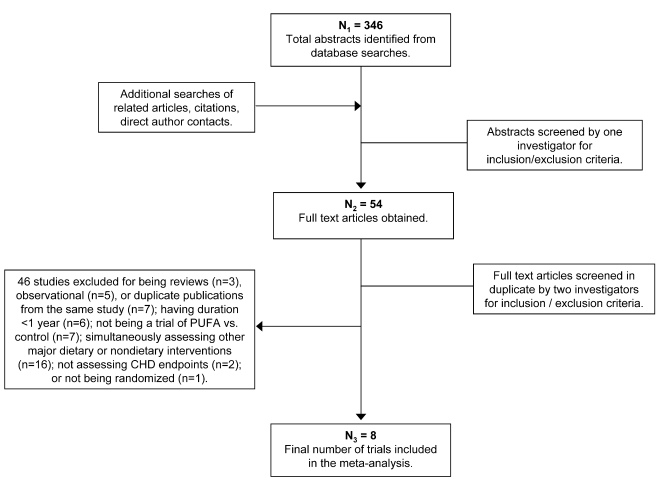
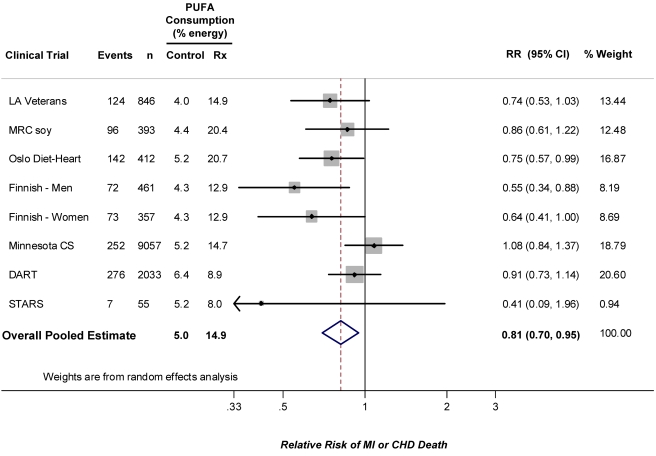
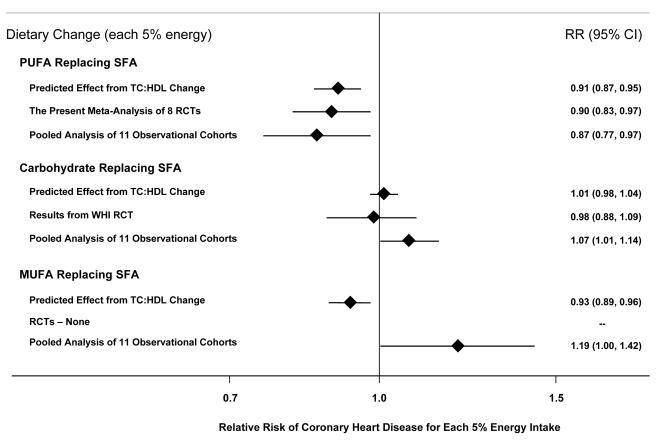
BACKGROUND: Reduced saturated fat (SFA) consumption is recommended to reduce coronary heart disease (CHD), but there is an absence of strong supporting evidence from randomized controlled trials (RCTs) of clinical CHD events and few guidelines focus on any specific replacement nutrient. Additionally, some public health groups recommend lowering or limiting polyunsaturated fat (PUFA) consumption, a major potential replacement for SFA. METHODS AND FINDINGS: We systematically investigated and quantified the effects of increased PUFA consumption, as a replacement for SFA, on CHD endpoints in RCTs. RCTs were identified by systematic searches of multiple online databases through June 2009, grey literature sources, hand-searching related articles and citations, and direct contacts with experts to identify potentially unpublished trials. Studies were included if they randomized participants to increased PUFA for at least 1 year without major concomitant interventions, had an appropriate control group, and reported incidence of CHD (myocardial infarction and/or cardiac death). Inclusions/exclusions were adjudicated and data were extracted independently and in duplicate by two investigators and included population characteristics, control and intervention diets, follow-up duration, types of events, risk ratios, and SEs. Pooled effects were calculated using inverse-variance-weighted random effects meta-analysis. From 346 identified abstracts, eight trials met inclusion criteria, totaling 13,614 participants with 1,042 CHD events. Average weighted PUFA consumption was 14.9% energy (range 8.0%-20.7%) in intervention groups versus 5.0% energy (range 4.0%-6.4%) in controls. The overall pooled risk reduction was 19% (RR = 0.81, 95% confidence interval [CI] 0.70-0.95, p = 0.008), corresponding to 10% reduced CHD risk (RR = 0.90, 95% CI = 0.83-0.97) for each 5% energy of increased PUFA, without evidence for statistical heterogeneity (Q-statistic p = 0.13; I(2) = 37%). Meta-regression identified study duration as an independent determinant of risk reduction (p = 0.017), with studies of longer duration showing greater benefits. CONCLUSIONS: These findings provide evidence that consuming PUFA in place of SFA reduces CHD events in RCTs. This suggests that rather than trying to lower PUFA consumption, a shift toward greater population PUFA consumption in place of SFA would significantly reduce rates of CHD. Please see later in the article for the Editors' Summary.
Overview
The claims and statistics of this paper haven’t been checked yet.
Free: it reads the open-access text and checks the first 5 claims that cite a source we can check. Create a free account to check every claim.
Integrity signals
Registry
Cites
Statistics
Figures
Verification
Claims the paper makes
The claims and statistics of this paper haven’t been checked yet.
Free: it reads the open-access text and checks the first 5 claims that cite a source we can check. Create a free account to check every claim.
Claims other papers make about this one
Each is checked against this paper’s own text: does it say what the citing paper says it does?
The cited source doesn’t support the claim as written.
In the citing paper
“In the presidential advisory of the AHA by Sacks et al. (27), the literature search strategy was not described, similarly to the study by Mozaffarian et al. (26)”
From Saturated Fat Restriction for Cardiovascular Disease Prevention: A Systematic Review and Meta-analysis of Randomized Controlled Trials (2025) · cites this paper as [26]
Checked by a reasoning model — may be wrong.
Experimental — accuracy not yet measuredThe source backs part of the claim, not all of it — or backs it for a different population, condition or comparison.
In the citing paper
“In order to get an overall estimate of the impact of dietary modifications on the CV risk, different meta-analyses have been performed, sometimes with inconsistent outcomes. 135,136”
From 2016 ESC/EAS Guidelines for the Management of Dyslipidaemias (2016) · cites this paper as [136]
Experimental — accuracy not yet measuredThe source backs part of the claim, not all of it — or backs it for a different population, condition or comparison.
In the citing paper
“For instance, total saturated fat, carbohydrate, and protein each appear relatively neutral for CHD; while effects of total monounsaturated fat remain uncertain (see below).21, 349”
From Dietary and Policy Priorities for Cardiovascular Disease, Diabetes, and Obesity: A Comprehensive Review (2016) · cites this paper as [349]
Experimental — accuracy not yet measuredThe source backs part of the claim, not all of it — or backs it for a different population, condition or comparison.
In the citing paper
“LA is also associated with significantly lower risk of CHD (Figure 7), whether in comparison to carbohydrate or saturated fat;350 and in meta-analysis of controlled clinical trials, consumption of n-6 rich vegetable oils, in place of animal fats, reduces CHD events (Figure 7).349”
From Dietary and Policy Priorities for Cardiovascular Disease, Diabetes, and Obesity: A Comprehensive Review (2016) · cites this paper as [349]
Experimental — accuracy not yet measuredThe source backs part of the claim, not all of it — or backs it for a different population, condition or comparison.
In the citing paper
“Notably, in these trials, the average intake of n-6 polyunsaturated fat was ~15% energy,349 higher than current guidelines that recommend up to 10-11% energy from polyunsaturated fat.370”
From Dietary and Policy Priorities for Cardiovascular Disease, Diabetes, and Obesity: A Comprehensive Review (2016) · cites this paper as [349]
Experimental — accuracy not yet measured
18 more claims about this paper
Create a free account to see every claim other papers make about this one.
Self-check
Percentages, sums and reported differences re-computed from the paper’s own numbers.
The self-check needs the paper’s full text.
Citations
Cites
Bias in meta-analysis detected by a simple, graphical test
Egger, M., Smith, G. D., Schneider, M., & Minder, C. (1997) · BMJ · doi:10.1136/bmj.315.7109.629 · Cited by 56,722 · cited 1×
“Potential for publication bias was assessed by visually inspecting a funnel plot of the treatment effect versus SE [30] and statistically using the Begg adjusted-rank correlation test [31].”
MethodMeta-analysis in clinical trials
DerSimonian, R., & Laird, N. (1986) · Controlled Clinical Trials · doi:10.1016/0197-2456(86)90046-2 · Cited by 39,552 · cited 3×
“Statistical Analysis The overall pooled effect was calculated using random effects meta-analysis, which accounts for heterogeneity in treatment effects among studies, using the methods of Dersimonian and Laird [28] with inverse-variance (SE) weighting.”
MethodOperating characteristics of a rank correlation test for publication bias
Begg, C. B., & Mazumdar, M. (1994) · Biometrics · doi:10.2307/2533446 · Cited by 16,955
Trumbo, P., Schlicker, S., Yates, A. A., & Poos, M. (2002) · Journal of the American Dietetic Association · doi:10.1016/s0002-8223(02)90346-9 · Cited by 5,993
Moher, D., Cook, D. J., Eastwood, S., Olkin, I., Rennie, D., & Stroup, D. F. (1999) · The Lancet · doi:10.1016/s0140-6736(99)04149-5 · Cited by 4,826
Moher, D., Pham, B., Jones, A., Cook, D. J., Jadad, A. R., Moher, M., Tugwell, P., & Klassen, T. P. (1998) · The Lancet · doi:10.1016/s0140-6736(98)01085-x · Cited by 3,560 · cited 2×
“We assessed study quality using the validated Jadad scale [27], which includes criteria relating to randomization, blinding, and withdrawals and dropouts that are together summed to generate an overall quality score between 0 and 5.”
BackgroundMethodSwinburn, B., Baba, N. H., Belhadj, M., Deurenberg‐Yap, M., Djazayery, A., Forrester, T., Galuska, D. A., Herman, S. T., James, W. P. T., Kabangu, J. R. M., et al. (2003) · World Health Organization eBooks · Cited by 3,453
Simopoulos, A. P. (2008) · Experimental Biology and Medicine · doi:10.3181/0711-mr-311 · Cited by 2,915 · cited 1×
“However, surprisingly, some scientists and organizations argue that consumption of n-6 PUFA, by far the predominant dietary PUFA, will actually increase CHD risk and have recommended reduced consumption [21–23], and the Institute of Medicine recommends only a relatively modest range of 5%–10% energy (%E) consumption f…”
BackgroundDanaei, G., Ding, E. L., Mozaffarian, D., Taylor, B., Rehm, J., Murray, C. J. L., & Ezzati, M. (2009) · PLoS Medicine · doi:10.1371/journal.pmed.1000058 · Cited by 2,860 · cited 1×
“need to be revisited, particularly as PUFA appears to be the primary evidence-based replacement for SFA. Finally, whereas on a population-level even a small shift from SFA to PUFA consumption would produce meaningful reductions in CHD risk, the relatively modest magnitude of plausible benefit (∼10% lower risk for 5%E…”
BackgroundSelf-citation
Cited by
Items 801–900 of 1,000
Innocenti, A., Franzoni, F., & Pruneti, C. A. (2021) · Journal of Basic & Applied Sciences · doi:10.6000/1927-5129.2014.10.14 · Cited by 6
“of saturated fat acids (SFA) intake is strictly related to both an improve of blood lipid profile and a CVR reduction [3, 5, 10, 16-22].”
BackgroundMethodResultInfluentialRole of Cardioprotective Diet in Acute Coronary Syndrome
Kang (2011) · Current Research in Medicine · doi:10.3844/amjsp.2011.98.103 · Cited by 5
“Recent evidence also support the consumption of polyunsaturated fats especially w-3 fatty acids, instead of saturated fa ts as a measure of decreasing coronary heart disease (Mozaffarian et al., 2010).”
BackgroundNurdin, N. M., Rimbawan, R., Martianto, D., & Martianto, D. (2016) · DOAJ (DOAJ: Directory of Open Access Journals) · Cited by 5
Further response from Hoenselaar
Hoenselaar, R. (2012) · British Journal Of Nutrition · doi:10.1017/s0007114512000402 · Cited by 6
“Pedersen et al. state that the randomised controlled trials included in the meta-analysis by Mozaffarian et al.(10) were designed to test the hypothesis that lowering blood cholesterol concentration by diets low in SFA and high in PUFA would reduce the risk in CHD.”
BackgroundMethodInfluentialThe evidence base for fat guidelines: a balanced diet
Bahl, R. (2015) · Open Heart · doi:10.1136/openhrt-2014-000229 · Cited by 5
Association of Dietary, Circulating, and Supplement Fatty Acids With Coronary Risk
Geleijnse, J. M., Brouwer, I. A., & Kromhout, D. (2014) · Annals of Internal Medicine · doi:10.7326/l14-5018-9 · Cited by 5
Toxicity and Safety of Fats and Oils
Feng, S., & Wang, Y. (2020) · Wiley eBooks · doi:10.1002/047167849x.bio059.pub2 · Cited by 5
Yang, Y., Wang, X., & Yang, W. (2024) · Journal of Dairy Science · doi:10.3168/jds.2024-25585 · Cited by 5
Chetia, J. R., Saranya, S., Sahu, S., & Seth, D. (2025) · Trends in Food Science & Technology · doi:10.1016/j.tifs.2025.104895 · Cited by 4
Fatty Acid Composition and Bioactive Profiles in the Aerial Parts of Cannabis sativa
Jacuńska, W., Biel, W., Tokarczyk, G., Biernacka, P., Bieńkiewicz, G., & Janda, K. (2025) · Molecules · doi:10.3390/molecules30091947 · Cited by 4
“However, recent research suggests that the influence of dietary fats on lipid metabolism and cardiovascular health is far more complex, involving multiple biochemical pathways and interactions that extend beyond simple fatty acid ratios [45–47].”
Bays, H. E., Varney, C., Alexander, L., Ng, J., Tondt, J., Weber, C., Christensen, S. M., Burridge, K., Brown, C., Bindlish, S., et al. (2026) · Obesity Pillars · doi:10.1016/j.obpill.2026.100283 · Cited by 4
Enhancing Brioche Bread with Emulsified Seed and Nut Oils: Nutritional and Sustainable Benefits
Martínez, E., Martínez‐Navarro, M. E., González, J. E. P., Rabadán, A., & Álvarez‐Ortí, M. (2024) · Applied Sciences · doi:10.3390/app142311382 · Cited by 4
Kastani, I. A., Soltani, P. K., Baltogiannis, G., Christou, G. A., Bairaktari, E. T., & Kostara, C. E. (2024) · Molecules · doi:10.3390/molecules30010036 · Cited by 5
Jo, S., Velankanni, P., Cam, N. D. T., Nguyen, C. H. B., Jeon, J.-Y., Kim, B., Lee, D.-H., Lee, C., & Park, J. (2025) · Journal of Microbiology and Biotechnology · doi:10.4014/jmb.2503.03021 · Cited by 4
“Among food components, saturated fats adversely affect vascular function, whereas unsaturated fats have been reported to lower blood pressure, improve arterial compliance in patients with type 2 diabetes and dyslipidemia, and reduce the risk of coronary heart disease [3-5].”
Hooper, L. (2010) · BMJ Evidence-Based Medicine · doi:10.1136/ebm1093 · Cited by 4
Sami lifestyle and health : epidemiological studies from northern Sweden
Nilsson, L. M. (2012) · Cited by 10
Prandini, A., Sigolo, S., Moschini, M., Giuberti, G., & Morlacchini, M. (2015) · Meat Science · doi:10.1016/j.meatsci.2015.12.010 · Cited by 4
Pan, L.-F., Chiu, S., Xiao, M.-F., Chen, C.-H., & Pan, L. (2017) · Computer Assisted Surgery · doi:10.1080/24699322.2017.1379149 · Cited by 4
“The quantified index derived on the basis of this algorithm is shown to provide a reliable proof for the clinical research [6,7].”
MethodThe Underutilization of Lifestyle Modifications in Primary Care Medicine
Lucas, J.-M. P., & Kozlowski, K. F. (2019) · Exercise Medicine · doi:10.26644/em.2019.003 · Cited by 5
“Unsaturated fats though have been shown to reduce cardiovascular disease risk [41].”
BackgroundMatsungo, T. M., & Siziba, L. P. (2020) · Elsevier eBooks · doi:10.1016/b978-0-12-817105-9.00001-x · Cited by 9
Martínez‐Carrillo, B. E., Mondragón-Velásquez, T., Ramírez‐Durán, N., Garrido, J. F. A., Valdés‐Ramos, R., López, A. L. G., & Castillo-Cardiel, J. A. (2022) · International Journal of Food Science · doi:10.1155/2022/3336941 · Cited by 4
“For example, SFA consumption increases LDL-c [59], BMI, and insulin resistance [60] causing cognitive decline and Alzheimer’s disease [61].”
BackgroundTafazoli, M., Fazeli, E., Dadgar, S., & Nematy, M. (2016) · PubMed Central · Cited by 7
Szot, W., Zając, J., Kostkiewicz, M., & Kolarzyk, E. (2015) · Advances in Clinical and Experimental Medicine · doi:10.17219/acem/34475 · Cited by 5
“According to the literature, the substitution of 1% of energy from saturated fats with poly-unsaturated fats resulted in 2–3% reduction of cardiovascular incidents [20, 23].”
BackgroundManaging Cardiovascular Complications in Diabetes
Betteridge, J. D., & Nicholls, S. J. (2014) · Wiley eBooks · doi:10.1002/9781118337967 · Cited by 6
Powell, L., & Wallace, E. C. (2020) · Elsevier eBooks · doi:10.1016/b978-0-323-43044-9.00079-0 · Cited by 8
Gotfredsen, J. L., Hoppe, C., Andersen, R., Andersen, E. W., Landberg, R., Overvad, K., & Tetens, I. (2020) · British Journal Of Nutrition · doi:10.1017/s0007114520005164 · Cited by 3
Domínguez‐López, I., Marhuenda‐Muñoz, M., Tresserra‐Rimbau, A., Hernáez, Á., Moreno, J. J., Martínez‐González, M. Á., Salas‐Salvadó, J., Corella, D., Fitó, M., Martínez, J. A., et al. (2021) · Molecular Nutrition & Food Research · doi:10.1002/mnfr.202100363 · Cited by 5
The Effects of Linoleic Acid Consumption on Lipid Risk Markers for Cardiovascular Disease
Froyen, E. (2022) · IntechOpen eBooks · doi:10.5772/intechopen.99894 · Cited by 5
Gali, K., Weidner, G., Smits, J. M., Beyersmann, J., & Spaderna, H. (2021) · Life · doi:10.3390/life11121438 · Cited by 4
“Psychosocial factors (depressive symptoms, psychosocial risk (includes depressive symptoms and social networks)), dietary habits (salty foods, PUFA + MUFA), physical activity, and smoking status were associated with at least one of the clinical outcomes at p < 0.1 in separate competing risks analyses adjusted for stan…”
ResultInfluentialSukarna, R. A., Nazliansyah, & Alinda, N. (2022) · Jurnal Pengabdian Masyarakat Bestari · doi:10.55927/jpmb.v1i5.1086 · Cited by 5
A multi-species direct-fed microbial supplement alters the milk lipidome of dairy cows
Oyebade, A., Taiwo, G. A., Idowu, M. D., Sidney, T. S., Vyas, D., & Ogunade, I. M. (2022) · JDS Communications · doi:10.3168/jdsc.2022-0244 · Cited by 5
“Polyunsaturated FA in milk and other dairy products are known to improve the health status of consumers, with health-promoting effects such as anticarcinogenic and antiatherosclerotic effects (Jensen, 2002; Micha and Mozaffarian, 2010).”
BackgroundShah, S. U., Waseem, T., Afridi, T., & Shah, M. I. (2022) · Pakistan Heart Journal · doi:10.47144/phj.v55i2.2331 · Cited by 4
Can breast cancer patients use soyafoods to help reduce risk of CHD?
Messina, M. J., Messina, V., & Jenkins, D. J. A. (2012) · British Journal Of Nutrition · doi:10.1017/s0007114512001900 · Cited by 6
Arnarson, A., Ólafsdóttir, A., Ramel, A., Martinsdóttir, E., Reykdal, Ó., Þórsdóttir, I., & Þorkelsson, G. (2011) · International Journal of Food Sciences and Nutrition · doi:10.3109/09637486.2011.589376 · Cited by 4
Specific role of dietary fat in modifying cardiovascular and locomotor activity 24-h rhythms
Barzel, B., Lim, K., Burke, S. L., Armitage, J. A., & Head, G. A. (2015) · Chronobiology International · doi:10.3109/07420528.2015.1032414 · Cited by 4
“In addition, it is suggested that the ratio between lipid species is of particular relevance to the risk of developing CVD (Mozaffarian et al., 2010).”
BackgroundInfluentialHet faillissement van de verzadigd vethypothese van cardiovasculaire ziektes
Muskiet, F. A. J., Muskiet, M. H. A., & Kuipers, R. S. (2012) · Pure Amsterdam UMC · Cited by 6
Twenty four year time trends in fats and cholesterol intake by adolescents. Warsaw Adolescents Study
Charzewska, J., Chwojnowska, Z., Wajszczyk, B., & Chabros, E. (2015) · Anthropological Review · doi:10.1515/anre-2015-0013 · Cited by 4
“Evidence is also available that substitution of SFA for polyunsaturated fatty acid (PUFA) may reverse those reactions (Mozaffarian et al. 2010).”
BackgroundDurante, G. D., Guimarães, L. V., Segri, N. J., Martins, M. S. A. S., & Malta, D. C. (2017) · Revista Brasileira em Promoção da saúde · doi:10.5020/18061230.2017.6165 · Cited by 4
Evidence favours an association between saturated fat intake and coronary heart disease
Mann, J., McLean, R. M., & Morenga, L. T. (2013) · BMJ · doi:10.1136/bmj.f6851 · Cited by 4
The importance of reducing SFA intake to limit CHD risk
Hoenselaar, R. (2011) · British Journal Of Nutrition · doi:10.1017/s0007114511006581 · Cited by 4
“CHD risk’, referring to a meta-analysis by Mozaffarian et al.((5)).”
BackgroundInfluentialCardiovascular Disease-Related Lifestyle Factors and Longevity
Chrysohoou, C. A., Stefanadis, C., Pitsavos, C. S., Panagiotakos, D. B., Das, U. N., & Giugliano, D. (2011) · Cardiology Research and Practice · doi:10.4061/2011/386892 · Cited by 5
Association of Specific Dietary Fats With Mortality—Reply
Wang, D. D., Willett, W. C., & Hu, F. B. (2016) · JAMA Internal Medicine · doi:10.1001/jamainternmed.2016.7137 · Cited by 4
An nLCA approach to support consumer meal decisions: a New Zealand case study of toppings on toast
Majumdar, S., McLaren, S. J., van der Pols, J. C., & Lister, C. E. (2024) · Frontiers in Sustainable Food Systems · doi:10.3389/fsufs.2024.1363565 · Cited by 4
Zhang, Z., Ding, L., Liang, Y., Hu, Y., & Zhu, Y. (2025) · Frontiers in Nutrition · doi:10.3389/fnut.2025.1468513 · Cited by 5
Sun, M., Jiang, D., Long, X., & Chen, X. (2025) · Lipids in Health and Disease · doi:10.1186/s12944-025-02745-w · Cited by 3
“A landmark meta-analysis of randomized controlled trials demonstrated that for every 5% increase in energy intake from PUFAs in place of SFAs, there is a 10% reduction in the risk of coronary heart disease events (HR: 0.90; 95% CI: 0.83, 0.97) [23].”
InfluentialSun, Q., & Hu, F. B. (2026) · Journal of Nutrition · doi:10.1016/j.tjnut.2026.101669 · Cited by 4
Effects of Various Foods Intakes on Plasma Levels of Trans Fatty Acids in Japanese Old Men
Shimizu, F., Ishii, Y., Ogawa, M., Takao, T., Koba, S., & Takada, A. (2018) · Food and Nutrition Sciences · doi:10.4236/fns.2018.97059 · Cited by 3
“Higher intakes of industrially-produced trans fatty acids (IP-TFA) [2] and of saturated fatty acids (SFAs) are associated with increased risk for CHD (coronary heart disease) [3] [4], and higher intakes of both the ω6 (n − 6) polyunsaturated fatty acids (PUFAs) and the n − 3 PUFAs are associated with lower risk of CHD…”
BackgroundSánchez-Nóchez, C. M., Ramírez‐Zea, M., Vandevijvere, S., & Kroker-Lobos, M. F. (2022) · Archives of Public Health · doi:10.1186/s13690-022-00928-w · Cited by 4
Llanquinao, J., Jara, C., Cortés-Díaz, D., Kerr, B., & Tapia‐Rojas, C. (2024) · Neurology International · doi:10.3390/neurolint16050080 · Cited by 3
“More importantly, consuming PUFAs instead of saturated fat reduces coronary heart disease and its comorbidities [2,59].”
BackgroundBeck, L., & Woo, J. G. (2024) · British Journal Of Nutrition · doi:10.1017/s0007114524001521 · Cited by 4
“Current recommendations to improve cardiovascular health focus on improving overall diet quality by replacing SFA with PUFA and increasing consumption of fish (a key source of PUFA), rather than solely reducing saturated fat or total fat intake (51,55) .”
BackgroundLiu, K., Xiong, Y., Fan, Y., Li, S., Wu, L., Chen, H., & Wang, X. (2024) · BMC Cardiovascular Disorders · doi:10.1186/s12872-024-04423-8 · Cited by 3
Geravand, F., Nasli‐Esfahani, E., Montazer, M., Jalalzadeh, M., & Azadbakht, L. (2025) · BMC Nutrition · doi:10.1186/s40795-025-01093-3 · Cited by 4
“PUFAs and MUFAs are considered to be healthier forms of dietary fats, while SFAs are generally associated with less favorable health outcomes [52–54].”
Effect of Dietary Fatty Acid Intake on Cardiovascular Disease
Joris, P. J., & Mensink, R. P. (2015) · Elsevier eBooks · doi:10.1016/b978-1-78242-247-1.00007-7 · Cited by 6
Minihane, A. M. (2017) · Nutrition Bulletin · doi:10.1111/nbu.12302 · Cited by 3
Han, K., Willams, K. J., & Goldberg, A. C. (2021) · Contemporary cardiology · doi:10.1007/978-3-030-78177-4_7 · Cited by 3
Palabıyık, E., Uğuz, H., Aşkın, H., Aşkın, S., & Akıncıoğlu, H. (2024) · Research in Agricultural Sciences · doi:10.17097/agricultureatauni.1418238 · Cited by 3
Can Omega-3 prevent the accidence of stroke: a mendelian randomization study
Xi, C., Zhang, J., Liu, H., Tao, S., Xie, Y., Liu, J., Tong, C., Tian, D., Ye, H., & Zhang, X. (2024) · Hereditas · doi:10.1186/s41065-024-00329-9 · Cited by 4
“…position in the carbon chain, leading to Omega-3, Omega-6, Omega-7, Omega-9, etc. Research shows PUFAs, through anti-inflammatory and anti-atherosclerosis actions [20] significantly reduce CVDS incidence [21, 22], including myocardial infarction [23], sudden cardiac death [24; 25], and stroke.”
BackgroundSowah, S. A., Koulman, A., Sharp, S. J., Imamura, F., Khaw, K., & Forouhi, N. G. (2024) · Journal of Lipid Research · doi:10.1016/j.jlr.2024.100681 · Cited by 4
“On the other hand, there are established causal effects of SFAs (mainly even-chain SFAs) on LDL-C, and of LDL-C on major CVDs, while substitution of SFAs for PUFAs or MUFAs is associated with a lower risk of cardiometabolic diseases (25, 26).”
Diet, the Control of Blood Lipids, and the Prevention of Heart Disease
Flock, M. R., & Kris‐Etherton, P. M. (2012) · Humana Press eBooks · doi:10.1007/978-1-61779-894-8_9 · Cited by 3
Norcross, R. G. (2015) · UKnowledge (University of Kentucky) · Cited by 3
Micronutriments et risque cardiovasculaire
Bonnefont‐Rousselot, D. (2012) · Nutrition Clinique et Métabolisme · doi:10.1016/j.nupar.2011.12.003 · Cited by 4
Porfírio, E., Henrique, V. S. M., & Reis, M. J. D. A. (2014) · Brazilian journal of food technology/Brazilian Journal of Food Technology · doi:10.1590/1981-6723.2913 · Cited by 3
Shaikh, T. H. S. T. H., Mahesar, S. A., Shah, S. N., Kori, A. H., Sherazi, S. T. H., & Lakho, S. A. (2017) · Ukrainian Food Journal · doi:10.24263/2304-974x-2017-6-1-8 · Cited by 3
“MUFA and PUFA substituted SFA [3] because MUFA lower the risk factors of CVD [4].”
BackgroundGoritschnig, J., Tadus, K., König, J. S., & Pignitter, M. (2020) · Molecules · doi:10.3390/molecules25020373 · Cited by 3
“Replacing saturated fatty acids (SFAs) with PUFAs has been linked to a reduction in cardiovascular events [1].”
BackgroundMita, T., Someya, Y., Osonoi, Y., Osonoi, T., Saito, M., Nakayama, S., Ishida, H., Sato, H., Gosho, M., & Watada, H. (2020) · Journal of Diabetes Investigation · doi:10.1111/jdi.13347 · Cited by 4
Kopčeková, J., Mrázová, J., Gažarová, M., & Habánová, M. (2020) · Potravinarstvo Slovak Journal of Food Sciences · doi:10.5219/1428 · Cited by 5
“Increased cardiovascular risk related to high consumption of red and processed meat has been linked to their high content of saturated fatty acids (SFA) and cholesterol (Mozaffarian et al., 2010; Rohrmann and Linseisen, 2016; Clonan, Roberts and Holdsworth, 2016).”
BackgroundMatsumoto, M., Hatamoto, Y., Sakamoto, A., Masumoto, A., Murayama, C., & Ikemoto, S. (2021) · Nutrients · doi:10.3390/nu13082838 · Cited by 3
“For saturated fatty acid, excessive intake has been reported to lead to obesity [43], impaired glucose tolerance [43], and cardiovascular disease [44], and it was the only nutrient in which higher milk intake resulted in a higher proportion of inadequate intake in the present study.”
BackgroundHeart-Healthy Diets and the Cardiometabolic Jackpot
Ormiston, C. K., Rosander, A. M., & Taub, P. R. (2022) · Medical Clinics of North America · doi:10.1016/j.mcna.2021.11.001 · Cited by 4
Sui, K., Yasrebi, A., Malonza, N., Jaffri, Z. H., Fisher, S. E., Seelenfreund, I., McGuire, B. D., Martinez, S. A., MacDonell, A. T., Tveter, K. M., et al. (2023) · Endocrinology · doi:10.1210/endocr/bqad059 · Cited by 4
Kroker-Lobos, M. F., Ramírez‐Zea, M., C, J. R. D. L., Alfaro, C. Z., Amador, N., Blanco‐Metzler, A., Francois, F. F., Gamboa-Gamboa, T., Hernández, A., Jensen, M., et al. (2023) · Archivos Latinoamericanos de Nutrición · doi:10.37527/2023.73.3.007 · Cited by 6
Questioning current recommendations on fatty acids and their role in heart health
Papadopoulou, E., & Stanner, S. A. (2014) · Nutrition Bulletin · doi:10.1111/nbu.12100 · Cited by 3
Holub, B. J., Mutch, D. M., Pierce, G. N., Rodriguez–Leyva, D., Aliani, M., Innis, S. M., Yan, W., Lamarche, B., Couture, P., & David, W. L. (2014) · Applied Physiology, Nutrition, and Metabolism · doi:10.1139/apnm-2013-0418 · Cited by 3
“6%–2% decrease in coronary heart disease death and events (Jakobsen et al. 2009; Katan 2009; Mozaffarian et al. 2010).”
BackgroundInfluentialLipoprotein Lipase in the Arterial Wall: Regulation by Dietary Fatty Acids
Chang, C. L. (2011) · doi:10.7916/d81r6xh3 · Cited by 5
Back to Back: Saturated fat has been unfairly demonised: Yes
Petousis‐Harris, H. (2011) · Journal of Primary Health Care · doi:10.1071/hc11317 · Cited by 4
Benatar, J. R. (2014) · Journal of Nutritional Disorders & Therapy · doi:10.4172/2161-0509.1000146 · Cited by 3
“Emerging evidence also suggests that a low fat diet may not be effective at reducing cardiovascular disease, compared to a diet where SFA is substituted with PUFAs [32,33].”
BackgroundMacronutrients and cardiovascular risk in a global context
Forouhi, N. G., Sattar, N. A., & Imamura, F. (2017) · The Lancet Diabetes & Endocrinology · doi:10.1016/s2213-8587(17)30285-1 · Cited by 4
Dugan, M. E. R., Gzyl, K. E., Rolland, D. C., & Vahmani, P. (2017) · Journal of the American Oil Chemists Society · doi:10.1007/s11746-017-3054-3 · Cited by 3
Assessing the diet quality of individuals with rheumatic conditions: a cross-sectional study
Carter, T., D'Cunha, N. M., Georgousopoulou, E. N., Isbel, S. T., Davey, R., Mellor, D. D., Kellett, J., McKune, A. J., & Naumovski, N. (2020) · Rheumatology International · doi:10.1007/s00296-020-04527-2 · Cited by 4
“Specifically, increasing mono- and polyunsaturated fatty acid consumption from foods such as olive, nuts, and fatty fish may reduce the rates of CVD and assist with pain reduction and/or functional improvements [10, 13, 14, 32].”
BackgroundThe Role of Diet in the Prevention and Treatment of Cardiovascular Disease
Skulas‐Ray, A. C., Flock, M. R., & Kris‐Etherton, P. M. (2012) · Elsevier eBooks · doi:10.1016/b978-0-12-391884-0.00029-9 · Cited by 5
Föger, B., Jennings, C. S., Pirillo, A., Tokgözoğlu, L. S., Pirro, M., & Catapano, A. L. (2020) · Atherosclerosis Supplements · doi:10.1016/j.atherosclerosissup.2021.01.005 · Cited by 4
Borg, S. Á., Joensen, A. M., Nielsen, M. R. S., Olsen, Á. W., Lolas, I. B. Y., Okkels, H., Lundbye‐Christensen, S., Schmidt, E. B., & Bork, C. S. (2023) · Journal of clinical lipidology · doi:10.1016/j.jacl.2023.06.003 · Cited by 3
Don’t disregard the essential distinction between PUFA species
Ramsden, C., Hibbeln, J., Majchrzak-Hong, S. F., & Davis, J. M. (2011) · British Journal of Nutrition · doi:10.1017/s0007114511001061 · Cited by 3
Fujioka, Y. (2018) · Journal of the Japanese Coronary Association · doi:10.7793/jcoron.24.003 · Cited by 3
What we substitute for saturated fat matters
Lichtenstein, A. H. (2013) · BMJ · doi:10.1136/bmj.f6844 · Cited by 3
n-6 Fatty acids and risk for CHD: consider all the evidence
Harris, W. S., Brouwer, I. A., & Mozaffarian, D. (2011) · British Journal Of Nutrition · doi:10.1017/s000711451100105x · Cited by 4
“in the soyabean oil trials and in prior meta-analyses of all PUFA trials((2)).”
BackgroundSelf-citationRe: More discrepancies around saturated fat and cardiovascular diseases
Hoenselaar, R. (2012) · Nutrition · doi:10.1016/j.nut.2012.04.009 · Cited by 4
Dairy fat: does it increase or reduce the risk of cardiovascular disease?
Givens, D. I., & Soedamah‐Muthu, S. S. (2016) · American Journal of Clinical Nutrition · doi:10.3945/ajcn.116.144766 · Cited by 4
“The results for CHD risk are in accordance with previously published pooled US cohort analyses that replaced the saturated fat with PUFAs (2), but also with meta-analyses of cohort studies (3) and a meta-analysis of 8 randomized controlled trials (RCTs) with “hard” CHD endpoints (4).”
ResultAssociation of Dietary, Circulating, and Supplement Fatty Acids With Coronary Risk
Morenga, L. T., Mann, J. I., & Skeaff, M. (2014) · Annals of Internal Medicine · doi:10.7326/l14-5018-5 · Cited by 3
Food and Condiments For the Twenty-First Century: Business, Science, and PolicyPreprint
Solomon, L. D. (2015) · SSRN Electronic Journal · doi:10.2139/ssrn.2630327 · Cited by 3
(2025) · JMA Journal · doi:10.31662/jmaj.2024-0324 · Cited by 2
“Given Mozaffarian et al. (26) did not describe their strategy for literature search, we could not follow their search and study selection strategy.”
InfluentialMatar, A. M., Al-Garadi, M. A., Aljumaah, R. S., Abid, I. F., & Ayadi, M. (2023) · Open Chemistry · doi:10.1515/chem-2023-0118 · Cited by 2
Liu, Q., Kong, Y., Kang, H., Jiang, Y. W., & Hao, X. (2025) · Clinical Nutrition · doi:10.1016/j.clnu.2025.03.020 · Cited by 2
Nilsen, D. W. T., Aarsetoey, H., Poenitz, V., Brügger‐Andersen, T., Harris, W. S., Staines, H., & Grundt, H. (2025) · Prostaglandins Leukotrienes and Essential Fatty Acids · doi:10.1016/j.plefa.2025.102684 · Cited by 3
RICGraph: A Recipe-Ingredient-Compound Graph for Estimating the Nutritional Value of Recipes
Yoshimaru, N., Kusu, K., Kimura, Y., & Hatano, K. (2025) · IEEE International Conference on Data Engineering Workshops (ICDEW) · doi:10.1109/icdew67478.2025.00039 · Cited by 2
“Previous studies have identified such nutritionally unbalanced diets as risk factors for chronic diseases, including obesity, diabetes, and cardiovascular disorders [2], [3].”
A systematic review of consumer responses to meat alternative labeling
JeongHun, J., & Lee, S. H. (2025) · Appetite · doi:10.1016/j.appet.2025.108375 · Cited by 4
Loayza, E., Peñarrieta, J. M., Achá, D., & Miranda, G. (2025) · Journal of Food Composition and Analysis · doi:10.1016/j.jfca.2025.108840 · Cited by 2
Prentice, R. L., Tinker, L. F., Neuhouser, M. L., Lampe, J. W., Raftery, D., Gowda, G. A. N., Song, X., Navarro, S. L., Huang, Y., Vasan, S., et al. (2026) · American Journal of Clinical Nutrition · doi:10.1016/j.ajcnut.2026.101197 · Cited by 3
“Subsequently, meta-analyses of cohort studies that also relied on self-reported dietary data have been variably supportive of any important role for these FA categories in relation to coronary artery disease, other cardiovascular diseases, or type 2 diabetes [3 – 6].”
Lv, Q., Wang, M., Wang, F., Tan, M., Su, W., Wang, H., & Cheng, S. (2026) · Food and Bioproducts Processing · doi:10.1016/j.fbp.2026.03.018 · Cited by 2
Sedin, Å., Landin‐Olsson, M., & Cloetens, L. (2022) · Nutrition and Health · doi:10.1177/02601060221105751 · Cited by 2
“Data have also suggested that a shift towards PUFA while reducing SFA consumption decreases the incidence of CVD (Mozaffarian et al., 2010).”
BackgroundInfluentialCaiman’s fat enriched with n-3 fatty acids: potential food supplement
Valli, F. E., Leiva, P. M. L., Lavandera, J. V., Contini, M. D. C., Gerstner, C., Piña, C. I., Simoncini, M. S., & González, M. A. (2023) · Tropical Animal Health and Production · doi:10.1007/s11250-023-03602-7 · Cited by 2
Metadata
- Authors
- Mozaffarian, D., Micha, R., & Wallace, S.
- Affiliations
- Brigham and Women's Hospital (US)
- Harvard University (US)
- Corresponding author
- Mozaffarian, Dariush
- Venue
- PLoS Medicine
- Publisher
- Public Library of Science (PLoS)
- Published
- 2010-03-23
- Volume
- 7
- Issue
- 3
- Pages
- e1000252
- ISSN
- 1549-1277 (ISSN-L)
- 1549-1676
- PMC
- PMC2843598
- OpenAlex
- W2097226936
- Cited by
- 1,215
- References
- 49
- Citations by year
- 2026: 32 · 2025: 52 · 2024: 59 · 2023: 63 · 2022: 69 · 2021: 80 · 2020: 81 · 2019: 76 · 2018: 76 · 2017: 74 · 2016: 98 · 2015: 105 · 2014: 85 · 2013: 89 · 2012: 77
- FWCI
- 9.42
- Type
- journal article
- Language
- en
- Open access
- gold
- doi.org
- Locations
- PLoS Medicine (publishedVersion, cc-by)
- PubMed Central (publishedVersion, cc-by)
- PubMed (publishedVersion)
- RePEc: Research Papers in Economics (publishedVersion)
- Digital Access to Scholarship at Harvard (DASH) (Harvard University) (submittedVersion, cc-by)
- DOAJ (DOAJ: Directory of Open Access Journals) (submittedVersion, cc-by-sa)
- Figshare (submittedVersion, cc-by)
- Funders
- Bill and Melinda Gates Foundation
- Chicago Community Trust
- GlaxoSmithKline
- World Health Organization
- National Institutes of Health
- U.S. Food and Drug Administration
- National Heart, Lung, and Blood Institute (R01HL085710)
- Topics
- Health Sciences › Nursing › Nutrition and Dietetics › Fatty Acid Research and Health
- Health Sciences › Medicine › Public Health, Environmental and Occupational Health › Nutritional Studies and Diet
- Health Sciences › Medicine › Cardiology and Cardiovascular Medicine › Lipoproteins and Cardiovascular Health
- Keywords
- polyunsaturated fatty acids, saturated fat replacement, coronary artery disease, myocardial infarction, cardiovascular mortality, dietary fat, cardiovascular risk reduction, study duration, meta-regression, dietary intervention trials, omega-3 fatty acids, omega-6 fatty acids, dietary guidelines, publication bias
- MeSH terms
- Coronary Disease, Dietary Fats, Fatty Acids, Fatty Acids, Unsaturated, Feeding Behavior, Humans, Meta-Analysis as Topic, Randomized Controlled Trials as Topic
About these checks
Registry, retraction, Cites and statistics results are computed, not judged, with one exception: a printed reference that no index lists is read once by a model before it counts as a citation error. Claims are extracted by a model and kept only when their quote appears verbatim in the text; each cited source is then checked, with a model’s help, for whether it says what the claim relies on. Those verdicts can be wrong — read the claim’s quote and the cited source before relying on one.
Statistics and arithmetic are recomputed, not judged.
Confidence bands are shown only for fields calibrated on our annotated test set. None is calibrated yet, so no band is shown.
What counts as a claim ›How we measure confidence ›How we check this ›
Are you an author, or do you see a problem with this page? Request a review
Data sources
Bibliographic data: Semantic Scholar, OpenAlex, Crossref.
Contains information from the Semantic Scholar Academic Graph Datasets, made available under the ODC Attribution License (ODC-BY 1.0).
Semantic Scholar’s data is described in: Kinney, R., et al. (2023). The Semantic Scholar Open Data Platform. arXiv:2301.10140.
