

Effects on coronary heart disease of increasing polyunsaturated fat in place of saturated fat: a systematic review and meta-analysis of randomized controlled trials.
Open accessThe DOI matches its Crossref record; 49 of the 49 references it cites were found in a registry or an index.
Abstract
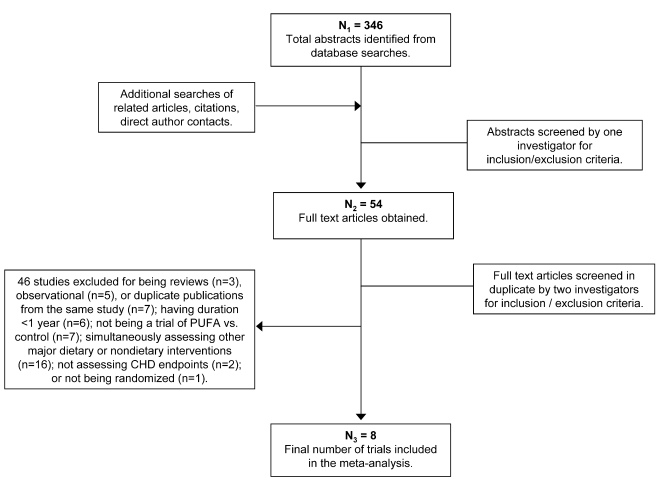
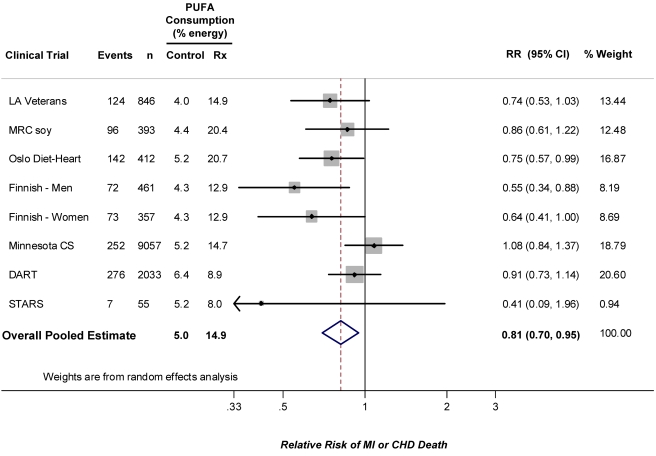
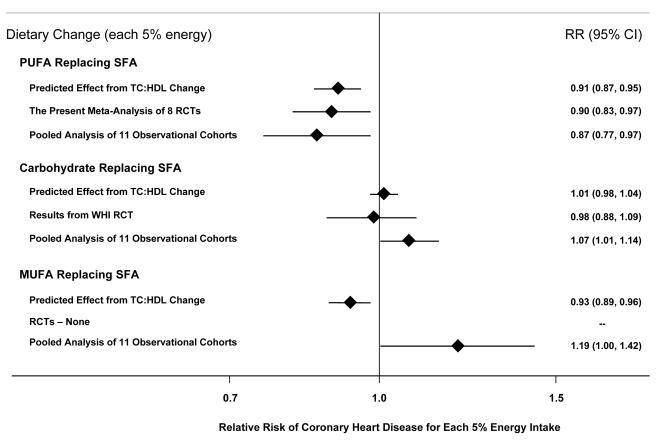
BACKGROUND: Reduced saturated fat (SFA) consumption is recommended to reduce coronary heart disease (CHD), but there is an absence of strong supporting evidence from randomized controlled trials (RCTs) of clinical CHD events and few guidelines focus on any specific replacement nutrient. Additionally, some public health groups recommend lowering or limiting polyunsaturated fat (PUFA) consumption, a major potential replacement for SFA. METHODS AND FINDINGS: We systematically investigated and quantified the effects of increased PUFA consumption, as a replacement for SFA, on CHD endpoints in RCTs. RCTs were identified by systematic searches of multiple online databases through June 2009, grey literature sources, hand-searching related articles and citations, and direct contacts with experts to identify potentially unpublished trials. Studies were included if they randomized participants to increased PUFA for at least 1 year without major concomitant interventions, had an appropriate control group, and reported incidence of CHD (myocardial infarction and/or cardiac death). Inclusions/exclusions were adjudicated and data were extracted independently and in duplicate by two investigators and included population characteristics, control and intervention diets, follow-up duration, types of events, risk ratios, and SEs. Pooled effects were calculated using inverse-variance-weighted random effects meta-analysis. From 346 identified abstracts, eight trials met inclusion criteria, totaling 13,614 participants with 1,042 CHD events. Average weighted PUFA consumption was 14.9% energy (range 8.0%-20.7%) in intervention groups versus 5.0% energy (range 4.0%-6.4%) in controls. The overall pooled risk reduction was 19% (RR = 0.81, 95% confidence interval [CI] 0.70-0.95, p = 0.008), corresponding to 10% reduced CHD risk (RR = 0.90, 95% CI = 0.83-0.97) for each 5% energy of increased PUFA, without evidence for statistical heterogeneity (Q-statistic p = 0.13; I(2) = 37%). Meta-regression identified study duration as an independent determinant of risk reduction (p = 0.017), with studies of longer duration showing greater benefits. CONCLUSIONS: These findings provide evidence that consuming PUFA in place of SFA reduces CHD events in RCTs. This suggests that rather than trying to lower PUFA consumption, a shift toward greater population PUFA consumption in place of SFA would significantly reduce rates of CHD. Please see later in the article for the Editors' Summary.
Overview
The claims and statistics of this paper haven’t been checked yet.
Free: it reads the open-access text and checks the first 5 claims that cite a source we can check. Create a free account to check every claim.
Integrity signals
Registry
Cites
Statistics
Figures
Verification
Claims the paper makes
The claims and statistics of this paper haven’t been checked yet.
Free: it reads the open-access text and checks the first 5 claims that cite a source we can check. Create a free account to check every claim.
Claims other papers make about this one
Each is checked against this paper’s own text: does it say what the citing paper says it does?
The cited source doesn’t support the claim as written.
In the citing paper
“In the presidential advisory of the AHA by Sacks et al. (27), the literature search strategy was not described, similarly to the study by Mozaffarian et al. (26)”
From Saturated Fat Restriction for Cardiovascular Disease Prevention: A Systematic Review and Meta-analysis of Randomized Controlled Trials (2025) · cites this paper as [26]
Checked by a reasoning model — may be wrong.
Experimental — accuracy not yet measuredThe source backs part of the claim, not all of it — or backs it for a different population, condition or comparison.
In the citing paper
“In order to get an overall estimate of the impact of dietary modifications on the CV risk, different meta-analyses have been performed, sometimes with inconsistent outcomes. 135,136”
From 2016 ESC/EAS Guidelines for the Management of Dyslipidaemias (2016) · cites this paper as [136]
Experimental — accuracy not yet measuredThe source backs part of the claim, not all of it — or backs it for a different population, condition or comparison.
In the citing paper
“For instance, total saturated fat, carbohydrate, and protein each appear relatively neutral for CHD; while effects of total monounsaturated fat remain uncertain (see below).21, 349”
From Dietary and Policy Priorities for Cardiovascular Disease, Diabetes, and Obesity: A Comprehensive Review (2016) · cites this paper as [349]
Experimental — accuracy not yet measuredThe source backs part of the claim, not all of it — or backs it for a different population, condition or comparison.
In the citing paper
“LA is also associated with significantly lower risk of CHD (Figure 7), whether in comparison to carbohydrate or saturated fat;350 and in meta-analysis of controlled clinical trials, consumption of n-6 rich vegetable oils, in place of animal fats, reduces CHD events (Figure 7).349”
From Dietary and Policy Priorities for Cardiovascular Disease, Diabetes, and Obesity: A Comprehensive Review (2016) · cites this paper as [349]
Experimental — accuracy not yet measuredThe source backs part of the claim, not all of it — or backs it for a different population, condition or comparison.
In the citing paper
“Notably, in these trials, the average intake of n-6 polyunsaturated fat was ~15% energy,349 higher than current guidelines that recommend up to 10-11% energy from polyunsaturated fat.370”
From Dietary and Policy Priorities for Cardiovascular Disease, Diabetes, and Obesity: A Comprehensive Review (2016) · cites this paper as [349]
Experimental — accuracy not yet measured
18 more claims about this paper
Create a free account to see every claim other papers make about this one.
Self-check
Percentages, sums and reported differences re-computed from the paper’s own numbers.
The self-check needs the paper’s full text.
Citations
Cites
Bias in meta-analysis detected by a simple, graphical test
Egger, M., Smith, G. D., Schneider, M., & Minder, C. (1997) · BMJ · doi:10.1136/bmj.315.7109.629 · Cited by 56,722 · cited 1×
“Potential for publication bias was assessed by visually inspecting a funnel plot of the treatment effect versus SE [30] and statistically using the Begg adjusted-rank correlation test [31].”
MethodMeta-analysis in clinical trials
DerSimonian, R., & Laird, N. (1986) · Controlled Clinical Trials · doi:10.1016/0197-2456(86)90046-2 · Cited by 39,552 · cited 3×
“Statistical Analysis The overall pooled effect was calculated using random effects meta-analysis, which accounts for heterogeneity in treatment effects among studies, using the methods of Dersimonian and Laird [28] with inverse-variance (SE) weighting.”
MethodOperating characteristics of a rank correlation test for publication bias
Begg, C. B., & Mazumdar, M. (1994) · Biometrics · doi:10.2307/2533446 · Cited by 16,955
Trumbo, P., Schlicker, S., Yates, A. A., & Poos, M. (2002) · Journal of the American Dietetic Association · doi:10.1016/s0002-8223(02)90346-9 · Cited by 5,993
Moher, D., Cook, D. J., Eastwood, S., Olkin, I., Rennie, D., & Stroup, D. F. (1999) · The Lancet · doi:10.1016/s0140-6736(99)04149-5 · Cited by 4,826
Moher, D., Pham, B., Jones, A., Cook, D. J., Jadad, A. R., Moher, M., Tugwell, P., & Klassen, T. P. (1998) · The Lancet · doi:10.1016/s0140-6736(98)01085-x · Cited by 3,560 · cited 2×
“We assessed study quality using the validated Jadad scale [27], which includes criteria relating to randomization, blinding, and withdrawals and dropouts that are together summed to generate an overall quality score between 0 and 5.”
BackgroundMethodSwinburn, B., Baba, N. H., Belhadj, M., Deurenberg‐Yap, M., Djazayery, A., Forrester, T., Galuska, D. A., Herman, S. T., James, W. P. T., Kabangu, J. R. M., et al. (2003) · World Health Organization eBooks · Cited by 3,453
Simopoulos, A. P. (2008) · Experimental Biology and Medicine · doi:10.3181/0711-mr-311 · Cited by 2,915 · cited 1×
“However, surprisingly, some scientists and organizations argue that consumption of n-6 PUFA, by far the predominant dietary PUFA, will actually increase CHD risk and have recommended reduced consumption [21–23], and the Institute of Medicine recommends only a relatively modest range of 5%–10% energy (%E) consumption f…”
BackgroundDanaei, G., Ding, E. L., Mozaffarian, D., Taylor, B., Rehm, J., Murray, C. J. L., & Ezzati, M. (2009) · PLoS Medicine · doi:10.1371/journal.pmed.1000058 · Cited by 2,860 · cited 1×
“need to be revisited, particularly as PUFA appears to be the primary evidence-based replacement for SFA. Finally, whereas on a population-level even a small shift from SFA to PUFA consumption would produce meaningful reductions in CHD risk, the relatively modest magnitude of plausible benefit (∼10% lower risk for 5%E…”
BackgroundSelf-citation
Cited by
Items 101–200 of 1,000
Feasibility of hydroxypropyl methylcellulose oleogel as an animal fat replacer for meat patties
Oh, I., Lee, J., Lee, H. G., & Lee, S. (2019) · Food Research International · doi:10.1016/j.foodres.2019.01.012 · Cited by 180
de Oliveira Otto, M. C., Wu, J. H. Y., Baylin, A., Vaidya, D., Rich, S. S., Tsai, M. Y., Jacobs, D. R., & Mozaffarian, D. (2013) · Journal of the American Heart Association · doi:10.1161/jaha.113.000506 · Cited by 180
“” Journal of the American Heart Association: Cardiovascular and Cerebrovascular Disease 2 (6): e000506.”
BackgroundSelf-citationA systematic review of the effect of dietary saturated and polyunsaturated fat on heart disease
Clifton, P. M., & Keogh, J. B. (2017) · Nutrition, Metabolism and Cardiovascular Diseases · doi:10.1016/j.numecd.2017.10.010 · Cited by 174
Dietary fats and cardiovascular disease: Putting together the pieces of a complicated puzzle
Michas, G., Micha, R., & Zampelas, A. (2014) · Atherosclerosis · doi:10.1016/j.atherosclerosis.2014.03.013 · Cited by 173
“by combining the results of 8 RCTs investigated the effects of consuming PUFA in place of SFA on CHD risk, and found that CHD risk was reduced by 10% for each 5% energy intake from PUFA replacing SFA [38].”
MethodSelf-citationDietary Fats and Health: Dietary Recommendations in the Context of Scientific Evidence
Lawrence, G. D. (2013) · Advances in Nutrition · doi:10.3945/an.113.003657 · Cited by 174
“Many clinical studies show that there are fewer coronary events when polyunsaturated oils replace saturated fats in the diet (61).”
BackgroundPraagman, J., Beulens, J. W., Alssema, M., Zock, P. L., Wanders, A. J., Sluijs, I., & van der Schouw, Y. T. (2016) · The American Journal of Clinical Nutrition · doi:10.3945/ajcn.115.122671 · Cited by 166
“The inverse association between the substitution of SFAwith PUFAs and IHD risk in our study conflicts with a consistent body of evidence from previous trials that investigated the effects on blood lipids (1) or IHD outcomes (32, 33), as well as evidence from cohort studies (13, 31, 34).”
Food Sources of Saturated Fat and the Association With Mortality: A Meta-Analysis
O’Sullivan, T. A., Hafekost, K., Mitrou, F., & Lawrence, D. (2013) · American Journal of Public Health · doi:10.2105/ajph.2013.301492 · Cited by 168
The effects of partial sleep deprivation on energy balance: a systematic review and meta-analysis
Al Khatib, H. K., Harding, S. V., Darzi, J., & Pot, G. K. (2017) · European Journal of Clinical Nutrition · doi:10.1038/ejcn.2016.201 · Cited by 167
Effects of oils and solid fats on blood lipids: a systematic review and network meta-analysis
Schwingshackl, L., Bogensberger, B., Benčič, A., Knüppel, S., Boeing, H., & Hoffmann, G. (2018) · Journal of Lipid Research · doi:10.1194/jlr.p085522 · Cited by 162
Dietary fats and cardiometabolic disease: mechanisms and effects on risk factors and outcomes
Wu, J. H. Y., Micha, R., & Mozaffarian, D. (2019) · Nature Reviews Cardiology · doi:10.1038/s41569-019-0206-1 · Cited by 165
Self-citationWang, Q., Afshin, A., Yakoob, M. Y., Singh, G. M., Rehm, C. D., Khatibzadeh, S., Micha, R., Shi, P., Mozaffarian, D., the Global Burden of Diseases Nutrition and Chronic Diseases Expert Group (NutriCoDE), et al. (2016) · Journal of the American Heart Association · doi:10.1161/jaha.115.002891 · Cited by 162
Self-citationLafortune, L., Martin, S., Kelly, S., Kuhn, I., Remes, O., Cowan, A., & Brayne, C. (2016) · PLOS ONE · doi:10.1371/journal.pone.0144405 · Cited by 165
Harcombe, Z., Baker, J. S., Cooper, S. M., Davies, B., Sculthorpe, N., DiNicolantonio, J. J., & Grace, F. (2015) · Open Heart · doi:10.1136/openhrt-2014-000196 · Cited by 165
“Although a number of reviews of RCTs have been undertaken,[8-10] no review has examined the RCT evidence available at the time dietary fat guidelines were introduced.”
BackgroundCan we improve the nutritional quality of meat?
Scollan, N. D., Price, E. M., Morgan, S. A., Huws, S. A., & Shingfield, K. J. (2017) · Proceedings of the Nutrition Society · doi:10.1017/s0029665117001112 · Cited by 164
“Can we improve the nutritional quality of meat? Proceedings of the Nutrition Society, 76(4), 603-618.”
BackgroundBenatar, J. R., Sidhu, K., & Stewart, R. A. H. (2013) · PLoS ONE · doi:10.1371/journal.pone.0076480 · Cited by 165
“Whilst the risk of cardiovascular disease is reduced when saturated fats are replaced by unsaturated fats [64], the reasons for this may be multifactorial.”
Te Morenga, L., & Montez, J. M. (2017) · PLOS ONE · doi:10.1371/journal.pone.0186672 · Cited by 157
Bioactive Compounds in Functional Meat Products
Pogorzelska-Nowicka, E., Atanasov, A. G., Horbańczuk, J. O., & Wierzbicka, A. (2018) · Molecules · doi:10.3390/molecules23020307 · Cited by 191
“Generally, the high contribution of animal fat in human diets linked with high cholesterol intake is believed to be associated with the occurrence of diet-related diseases such as coronary diseases [7].”
BackgroundHo, F. K., Gray, S. R., Welsh, P., Petermann-Rocha, F., Foster, H., Waddell, H., Anderson, J., Lyall, D., Sattar, N., Gill, J. M. R., et al. (2020) · BMJ · doi:10.1136/bmj.m688 · Cited by 160
Sun, Y., Neelakantan, N., Wu, Y., Lote-Oke, R., Pan, A., & van Dam, R. M. (2015) · The Journal of Nutrition · doi:10.3945/jn.115.210575 · Cited by 159
“(4) and risk of CAD events (5) when replacing polyunsaturated”
BackgroundRed and Processed Meats and Health Risks: How Strong Is the Evidence?
Qian, F., Riddle, M. C., Wylie‐Rosett, J., & Hu, F. B. (2020) · Diabetes Care · doi:10.2337/dci19-0063 · Cited by 191
“Notably, the Lyon Diet Heart Trial (37), the Prevención conDieta Mediterránea (PREDIMED) study (17), and ameta-analysis of eight RCTs assessing replacement of saturated fat (predominantly found in meat and high-fat dairy products) with polyunsaturated fat (38) demonstrated clear reduction of CVD risk, yet they were no…”
BackgroundDietary Factors and Risks of Cardiovascular Diseases: An Umbrella Review
Chareonrungrueangchai, K., Wongkawinwoot, K., Anothaisintawee, T., & Reutrakul, S. (2020) · Nutrients · doi:10.3390/nu12041088 · Cited by 153
“95) [54], while another meta-analysis of RCT found a non-significant effect (pooled RR = 1.”
BackgroundKim, Y., Keogh, J. B., & Clifton, P. M. (2017) · Nutrients · doi:10.3390/nu9111271 · Cited by 174
“Meta-analyses of prospective cohort studies showed that total dietary fibre consumption (average of 7 g/day) was inversely associated with the risk of CVD [184,185].”
InfluentialSimonetto, M., Infante, M., Sacco, R. L., Rundek, T., & Della-Morte, D. (2019) · Nutrients · doi:10.3390/nu11102279 · Cited by 153
Harika, R. K., Eilander, A., Alssema, M., Osendarp, S. J. M., & Zock, P. L. (2013) · Annals of Nutrition and Metabolism · doi:10.1159/000355437 · Cited by 155
Wilson, N., Nghiem, N., Mhurchú, C. N., Eyles, H. C., Baker, M. G., & Blakely, T. A. (2013) · PLoS ONE · doi:10.1371/journal.pone.0059648 · Cited by 191
Dietary fat types and 4‐year cognitive change in community‐dwelling older women
Okereke, O. I., Rosner, B. A., Kim, D. H., Kang, J. H., Cook, N. R., Manson, J. E., Buring, J. E., Willett, W. C., & Grodstein, F. (2012) · Annals of Neurology · doi:10.1002/ana.23593 · Cited by 157
Sioen, I., van Lieshout, L., Eilander, A., Fleith, M., Lohner, S., Szommer, A., Petisca, C., Eussen, S. R. B. M., Forsyth, S. J., Calder, P. C., et al. (2017) · Annals of Nutrition and Metabolism · doi:10.1159/000456723 · Cited by 177
Rapid mortality falls after risk-factor changes in populations
Capewell, S., & O'Flaherty, M. (2011) · The Lancet · doi:10.1016/s0140-6736(10)62302-1 · Cited by 149
Dworatzek, P. D. N., Arcudi, K., Gougeon, R., Husein, N., Sievenpiper, J. L., & Williams, S. L. (2013) · Canadian Journal of Diabetes · doi:10.1016/j.jcjd.2013.01.019 · Cited by 198
Palm oil and palmitic acid: a review on cardiovascular effects and carcinogenicity
Fattore, E., & Fanelli, R. (2013) · International Journal of Food Sciences and Nutrition · doi:10.3109/09637486.2013.768213 · Cited by 185
“Another systematic review and meta-analysis (Micha and Mozaffarian 2010; Mozaffarian et al. 2010) on randomized controlled trials confirmed these findings.”
BackgroundPolyunsaturated fatty acids for the primary and secondary prevention of cardiovascular disease
Abdelhamid, A. S., Martin, N., Bridges, C., Brainard, J. S., Wang, X., Brown, T. J., Hanson, S., Jimoh, O. F., Ajabnoor, S. M., Deane, K. H., et al. (2018) · Cochrane Database of Systematic Reviews · doi:10.1002/14651858.cd012345.pub3 · Cited by 145
Limitations of Observational Evidence: Implications for Evidence-Based Dietary Recommendations
Maki, K. C., Slavin, J. L., Rains, T. M., & Kris‐Etherton, P. M. (2014) · Advances in Nutrition · doi:10.3945/an.113.004929 · Cited by 164
“(61) found a 10% reduction in CHD risk (RR: 0.”
BackgroundNeelakantan, N., Seah, J. Y. H., & van Dam, R. M. (2020) · Circulation · doi:10.1161/circulationaha.119.043052 · Cited by 125
Olive Oil Consumption and Cardiovascular Risk in U.S. Adults
Guasch-Ferré, M., Liu, G., Li, Y., Sampson, L., Manson, J. E., Salas-Salvadó, J., Martínez-González, M. A., Stampfer, M. J., Willett, W. C., Sun, Q., et al. (2020) · Journal of the American College of Cardiology · doi:10.1016/j.jacc.2020.02.036 · Cited by 141
“These findings are consistent with evidence that substitution of fats high in SFAs or trans isomers, which increase low-density lipoprotein cholesterol, with fats higher in unsaturated fatty acids (UFAs) can be beneficial for CVD prevention (22).”
What is a healthy Nordic diet? Foods and nutrients in the NORDIET study
Adamsson, V., Reumark, A., Cederholm, T., Vessby, B., Risérus, U., & Johansson, G. (2012) · Food & Nutrition Research · doi:10.3402/fnr.v56i0.18189 · Cited by 142
Dietary fatty acids and cardiovascular disease
Salter, A. M. (2011) · animal · doi:10.1017/s1751731111002023 · Cited by 184
“No significant evidence for concluding that dietary SFA is associated with risk of CHD, stroke or total CVD. Mozaffarian et al. (2010) Effect of increasing PUFA in place of SFA on CHD endpoints.”
BackgroundSaturated Fatty Acid Chain Length and Risk of Cardiovascular Disease: A Systematic Review
Perna, M., & Hewlings, S. J. (2022) · Nutrients · doi:10.3390/nu15010030 · Cited by 156
“This is consistent with findings from other studies and is generally an accepted practice for reducing CVD risk [2,14,37,38].”
BackgroundResultFattore, E., Bosetti, C., Brighenti, F., Agostoni, C., & Fattore, G. (2014) · The American Journal of Clinical Nutrition · doi:10.3945/ajcn.113.081190 · Cited by 138
Pintus, S., Murru, E., Carta, G., Cordeddu, L., Batetta, B., Accossu, S., Pistis, D., Uda, S., Ghiani, M. E., Mele, M. L., et al. (2012) · British Journal Of Nutrition · doi:10.1017/s0007114512003224 · Cited by 158
“However, giving 90 g/d of cheese to hypercholesterolaemic subjects for longer periods would not have been advisable, due to its high content of saturated fat((5)).”
BackgroundGuimarães, J. T., Silva, E. K., Ranadheera, C. S., Moraes, J., Raices, R. S. L., Silva, M. C., Ferreira, M. D. S., Freitas, M. Q., Meireles, M. A. A., & da Cruz, A. G. (2019) · Ultrasonics Sonochemistry · doi:10.1016/j.ultsonch.2019.02.025 · Cited by 137
The Role of Diet and Nutritional Intervention for the Management of Patients with NAFLD
Francisco Barrera, M., & George, J. (2013) · Clinics in Liver Disease · doi:10.1016/j.cld.2013.09.009 · Cited by 150
Omega-6 fats for the primary and secondary prevention of cardiovascular disease
Hooper, L., Al-Khudairy, L., Abdelhamid, A. S., Rees, K., Brainard, J. S., Brown, T. J., Ajabnoor, S. M., O'Brien, A. T., Winstanley, L. E., Donaldson, D. H., et al. (2018) · Cochrane Database of Systematic Reviews · doi:10.1002/14651858.cd011094.pub3 · Cited by 134
“These observational data are supported by a meta-analysis of eight RCTs including 13,614 participants, which found that replacing saturated fatty acids by increasing PUFA consumption, including omega-6 fats, reduced the occurrence of CHD events (Mozaffarian 2010).”
MethodNutrition and Cardiovascular Disease—an Update
Bowen, K. J., Sullivan, V. K., Kris‐Etherton, P. M., & Petersen, K. S. (2018) · Current Atherosclerosis Reports · doi:10.1007/s11883-018-0704-3 · Cited by 175
Kris‐Etherton, P. M., & Krauss, R. M. (2020) · American Journal of Clinical Nutrition · doi:10.1093/ajcn/nqaa110 · Cited by 150
Omega-6 fats for the primary and secondary prevention of cardiovascular disease
Hooper, L., Al-Khudairy, L., Abdelhamid, A. S., Rees, K., Brainard, J. S., Brown, T. J., Ajabnoor, S. M., O'Brien, A. T., Winstanley, L. E., Donaldson, D. H., et al. (2018) · Cochrane Database of Systematic Reviews · doi:10.1002/14651858.cd011094.pub4 · Cited by 133
Li, J., Guasch‐Ferré, M., Li, Y., & Hu, F. B. (2020) · American Journal of Clinical Nutrition · doi:10.1093/ajcn/nqz349 · Cited by 146
“With respect to RCTs, although several meta-analyses came to divergent conclusions (5, 9, 35, 62), recent well-performed meta-analyses suggested that substituting n–6 PUFAs for SFAs or monounsaturated fat modestly reduced CAD risk (5, 62).”
ResultThe Role of Soy in Vegetarian Diets
Messina, M. J., & Messina, V. (2010) · Nutrients · doi:10.3390/nu2080855 · Cited by 162
“(CHD) [55,56].”
Dietary Fat and Heart Failure: Moving From Lipotoxicity to Lipoprotection
Stanley, W. C., Dabkowski, E. R., Júnior, R. F. R., & O’Connell, K. A. (2012) · Circulation Research · doi:10.1161/circresaha.111.253104 · Cited by 143
A Comprehensive Review of Health-Benefiting Components in Rapeseed Oil
Shen, J., Liu, Y., Wang, X., Bai, J., Lin, L., Luo, F., & Zhong, H. (2023) · Nutrients · doi:10.3390/nu15040999 · Cited by 140
Afshin, A., Micha, R., Khatibzadeh, S., Fahimi, S., Shi, P., Powles, J. W., Singh, G. M., Yakoob, M. Y., Abdollahi, M., Al-Hooti, S., et al. (2015) · BMJ Open · doi:10.1136/bmjopen-2014-006385 · Cited by 146
Self-citationMaki, K. C., Eren, F., Cassens, M. E., Dicklin, M. R., & Davidson, M. H. (2018) · Advances in Nutrition · doi:10.1093/advances/nmy038 · Cited by 142
“(34) also reported a significant reduction in total CAD risk with replacement of 5% of SFAs by PUFAs, but the magnitude of the reported effect was much smaller (RR: 0.”
BackgroundReduced or modified dietary fat for preventing cardiovascular disease
Hooper, L., Summerbell, C. D., Thompson, R., Sills, D., Roberts, F. G., Moore, H., & Davey Smith, G. (2011) · Cochrane Database of Systematic Reviews · doi:10.1002/14651858.cd002137.pub2 · Cited by 127
de Goede, J., Geleijnse, J. M., Ding, E. L., & Soedamah-Muthu, S. S. (2015) · Nutrition Reviews · doi:10.1093/nutrit/nuu060 · Cited by 124
Chiu, S., Williams, P. T., & Krauss, R. M. (2017) · PLOS ONE · doi:10.1371/journal.pone.0170664 · Cited by 127
Micha, R., Kalantarian, S., Wirojratana, P., Byers, T., Danaei, G., Elmadfa, I., Ding, E., Giovannucci, E., Powles, J., Smith-Warner, S., et al. (2012) · European Journal of Clinical Nutrition · doi:10.1038/ejcn.2011.147 · Cited by 123
“…the causal diet–disease relationships and supporting evidence will be the subject of a forthcoming paper, drawing on, for example, several recent or ongoing meta-analyses (Mozaffarian et al., 2006, 2010; World Cancer Research Fund/American Institute for Cancer Research, 2007; Micha et al., 2010).”
BackgroundSelf-citationSmed, S., Scarborough, P., Rayner, M., & Jensen, J. D. (2016) · European Journal of Clinical Nutrition · doi:10.1038/ejcn.2016.6 · Cited by 150
Milk fat: opportunities, challenges and innovation
Mohan, M. S., O’Callaghan, T. F., Kelly, P. M., & Hogan, S. A. (2020) · Critical Reviews in Food Science and Nutrition · doi:10.1080/10408398.2020.1778631 · Cited by 137
“…by reducing certain nutrients (most commonly PUFA) and increasing the SFA content in the diets (Hamley 2017; Hooper, Martin, and Abdelhamid 2015; Hooper, Martin, Abdelhamid, and Smith 2015; Jakobsen et al. 2009; Mozaffarian, Micha, and Wallace 2010; Ramsden et al. 2016; Skeaff and Miller 2009).”
BackgroundHamley, S. (2017) · Nutrition Journal · doi:10.1186/s12937-017-0254-5 · Cited by 145
“[19] for total mortality, Skeaff and Miller [14] obtained a near-significant result for total mortality, whereas Mozaffarian et al.”
BackgroundMethodInfluentialEilander, A., Harika, R. K., & Zock, P. L. (2015) · European Journal of Lipid Science and Technology · doi:10.1002/ejlt.201400513 · Cited by 138
Huth, P. J., Fulgoni, V. L. I., & Larson, B. T. (2015) · Advances in Nutrition · doi:10.3945/an.115.008979 · Cited by 133
“Interestingly, in a metaanalysis of the effects on CHD risk of consuming MUFAs in place of SFAs on the basis of changes in TC:HDL cholesterol from controlled clinical trials, researchers (60) estimated that replacing 5% of energy of SFAs with an equivalent amount of MUFAs was associated with a 7% reduction in CHD risk.”
Background2023 China Guidelines for Lipid Management
Li, J., Zhao, S., Zhao, D., Lü, G., Peng, D., Liu, J., Chen, Z., Guo, Y., Wu, N., Yan, S.-K., et al. (2023) · 老年心脏病学杂志:英文版 · doi:10.26599/1671-5411.2023.09.008 · Cited by 131
Dietary Trans Fatty Acids and Cardiovascular Disease Risk: Past and Present
Lichtenstein, A. H. (2014) · Current Atherosclerosis Reports · doi:10.1007/s11883-014-0433-1 · Cited by 124
Brassard, D., Tessier‐Grenier, M., Allaire, J., Rajendiran, E., She, Y., Ramprasath, V. R., Gigleux, I., Talbot, D. C., Levy, E. H., Tremblay, A., et al. (2017) · American Journal of Clinical Nutrition · doi:10.3945/ajcn.116.150300 · Cited by 130
Health, agricultural, and economic effects of adoption of healthy diet recommendations
Lock, K., Smith, R., Dangour, A. D., Keogh-Brown, M. R., Pigatto, G., Hawkes, C., Fisberg, R. M., & Chalabi, Z. (2010) · The Lancet · doi:10.1016/s0140-6736(10)61352-9 · Cited by 147
Dairy products and plasma cholesterol levels
Ohlsson, L. (2010) · Food & Nutrition Research · doi:10.3402/fnr.v54i0.5124 · Cited by 130
Manipulation of milk fatty acid composition in lactating cows: Opportunities and challenges
Kliem, K. E., & Shingfield, K. J. (2016) · European Journal of Lipid Science and Technology · doi:10.1002/ejlt.201400543 · Cited by 128
Palm oil and the heart: A review
Odia, O. J., Ofori, S., & Maduka, O. (2015) · World Journal of Cardiology · doi:10.4330/wjc.v7.i3.144 · Cited by 134
“This was based on the supposition that this reduces the risk of CHD events and fatal CHD despite the fact that they demonstrated no direct link between saturated fatty acids and CHD death [29-31] .”
Perspective: Randomized Controlled Trials Are Not a Panacea for Diet-Related Research
Hébert, J. R., Frongillo, E. A., Adams, S. A., Turner‐McGrievy, G. M., Hurley, T. G., Miller, D. R., & Ockene, I. S. (2016) · Advances in Nutrition · doi:10.3945/an.115.011023 · Cited by 129
“Although nutrition studies can use methods to carefully control what participants consume, such as housing participants in metabolic wards (136) or conducting feeding studies that provide prepared, pre-proportioned meals to participants (137), these methods are not real-world tests of diet.”
BackgroundFuture trends of processed meat products concerning perceived healthiness: A review
Badar, I. H., Liu, H., Chen, Q., Xia, X., & Kong, B. (2021) · Comprehensive Reviews in Food Science and Food Safety · doi:10.1111/1541-4337.12813 · Cited by 123
Livingstone, K. M., Lovegrove, J. A., & Givens, D. I. (2012) · Nutrition Research Reviews · doi:10.1017/s095442241200011x · Cited by 118
“Nonetheless, this conclusion is based on the previously mentioned meta-analysis((26)), in addition to a study that calculated risk using a spreadsheet model that included questionable assumptions on dietary behaviour((28)).”
BackgroundResultWang, H., Khor, T. O., Saw, C. L. L., Lin, W., Wu, T., Huang, Y. S., & Kong, A. T. (2010) · Molecular Pharmaceutics · doi:10.1021/mp100199m · Cited by 109
Chinese Guideline on the Primary Prevention of Cardiovascular Diseases
Chinese Society of Cardiology of Chinese Medical Association, C. D. P. A. R. C. O. C. A. O. R. M. (2021) · Cardiology Discovery · doi:10.1097/cd9.0000000000000025 · Cited by 133
Gjuladin-Hellon, T., Davies, I. G., Penson, P., & Amiri Baghbadorani, R. (2019) · Nutrition Reviews · doi:10.1093/nutrit/nuy049 · Cited by 108
Zhang, Y. ‐. P. (2013) · Energy Science & Engineering · doi:10.1002/ese3.2 · Cited by 122
“For example, negative effects of saturated fat are recently realized after its long utilization [96, 97].”
BackgroundThe Role of Lipids and Lipoproteins in Atherosclerosis
Linton, M. F., Yancey, P. G., Davies, S. S., Jerome, W. G., Linton, E. F., Song, W., Doran, A. C., & Vickers, K. C. (2015) · Europe PMC (PubMed Central) · Cited by 154
Nutrition and the risk of stroke
Hankey, G. J. (2011) · The Lancet Neurology · doi:10.1016/s1474-4422(11)70265-4 · Cited by 124
Shang, T., Liu, L., Zhou, J., Zhang, M., Hu, Q., Fang, M., Wu, Y., Yao, P., & Gong, Z. (2017) · Lipids in Health and Disease · doi:10.1186/s12944-017-0461-2 · Cited by 111
“[6] has been advocated as the main dietary strategy to prevent NAFLD caused by anti-inflammatory, antioxida-”
The role of dietary fatty acid intake in inflammatory gene expression: a critical review
Rocha, D. M. U. P., Bressan, J., & Hermsdorff, H. H. M. (2017) · Sao Paulo Medical Journal · doi:10.1590/1516-3180.2016.008607072016 · Cited by 118
Moreira, P. V. L., Baraldi, L. G., Moubarac, J.-C., Monteiro, C. A., Newton, A., Capewell, S., & O’Flaherty, M. (2015) · PLOS ONE · doi:10.1371/journal.pone.0118353 · Cited by 105
“This is supported by a recent meta-analysis of 8 randomized controlled trials concerning dietary modification [36] and by numerous observational studies [20,37,38].”
BackgroundMethodProcessed meat: the real villain?
Rohrmann, S., & Linseisen, J. (2016) · Proceedings of the Nutrition Society · doi:10.1017/s0029665115004255 · Cited by 102
“However, dietary intake of arachidonic acid does not appear to be related to the risk of stroke (59) and the association of dietary or circulating arachidonic acid with CHD is yet unclear (60 – 62) .”
InfluentialBurén, J., Ericsson, M., Damasceno, N., & Sjödin, A. (2021) · Nutrients · doi:10.3390/nu13030814 · Cited by 104
Miller, V., Micha, R., Choi, E., Karageorgou, D., Webb, P., & Mozaffarian, D. (2022) · JAMA Network Open · doi:10.1001/jamanetworkopen.2021.46705 · Cited by 103
Self-citationAkhlaghi, M. (2020) · Nutrition Research Reviews · doi:10.1017/s0954422419000155 · Cited by 99
Siciliano, C., Belsito, E. L., Marco, R. D., Gioia, M. L. D., Leggio, A., & Liguori, A. (2012) · Food Chemistry · doi:10.1016/j.foodchem.2012.08.058 · Cited by 118
Dietary guidelines and health—is nutrition science up to the task?
Mozaffarian, D., & Forouhi, N. G. (2018) · BMJ · doi:10.1136/bmj.k822 · Cited by 119
Self-citationDiet, lipids, and cardiovascular disease
Siri‐Tarino, P. W., & Krauss, R. M. (2016) · Current Opinion in Lipidology · doi:10.1097/mol.0000000000000310 · Cited by 114
“Both clinical trial [24] and epidemiological data [25 & ,26 & ] support the benefit on CVD outcomes of replacing SFAs with PUFAs.”
Kleber, M. E., Delgado, G. E., Lorkowski, S., März, W., & von Schacky, C. (2016) · Atherosclerosis · doi:10.1016/j.atherosclerosis.2016.06.049 · Cited by 110
Retterstøl, K., Svendsen, M., Narverud, I., & Holven, K. B. (2018) · Atherosclerosis · doi:10.1016/j.atherosclerosis.2018.10.013 · Cited by 97
“Several large association studies have, however, challenged the view that saturated fat increases the risk for CVD [15–17], while other studies find clear correlation with intake of SFA and risk of CVD [18,19].”
BackgroundSatheesh, N. K., & Fanta, S. W. (2020) · Cogent Food & Agriculture · doi:10.1080/23311932.2020.1811048 · Cited by 133
“Unsaturated and poly unsaturated fatty acids (PUFA) are reported to have numerous benefits like Page 16 of 31 preventing Coronary Heart Diseases (CHD) and deaths related to CHD (Mozaffarian et al., 2010).”
BackgroundThe Effect of Nutrition on Aging—A Systematic Review Focusing on Aging-Related Biomarkers
Leitão, C., Mignano, A., Estrela, M., Fardilha, M., Figueiras, A., Roque, F., & Herdeiro, M. T. (2022) · Nutrients · doi:10.3390/nu14030554 · Cited by 126
Beneficial effects of linoleic acid on cardiometabolic health: an update
Jackson, K. H., Harris, W. S., Belury, M. A., Kris‐Etherton, P. M., & Calder, P. C. (2024) · Lipids in Health and Disease · doi:10.1186/s12944-024-02246-2 · Cited by 116
“A 2011 meta-analysis of seven RCTs in which PUFA-rich vegetable oils replaced SFAs and the effects on coronary heart disease were examined found a 19% overall reduction in risk [55].”
MethodWolfram, G., Bechthold, A., Boeing, H., Ellinger, S., Hauner, H., Kroke, A., Leschik-Bonnet, E., Linseisen, J., Lorkowski, S., Schulze, M., et al. (2015) · Annals of Nutrition and Metabolism · doi:10.1159/000437243 · Cited by 94
Castellani, F., Vitali, A., Bernardi, N., Marone, E., Palazzo, F., Grotta, L., & Martino, G. (2017) · Journal of Dairy Science · doi:10.3168/jds.2017-12899 · Cited by 105
Iqbal, R., Dehghan, M., Mente, A., Rangarajan, S., Wielgosz, A. T., Avezum, Á., Serón, P., AlHabib, K. F., López-Jaramillo, P. A., Swaminathan, S., et al. (2021) · American Journal of Clinical Nutrition · doi:10.1093/ajcn/nqaa448 · Cited by 107
“Several meta-analyses of cohort studies have shown that higher intakes of SFAs were not associated with a higher risk of CVD (1–3) but may be associated with a lower risk of mortality and stroke (4, 5).”
BackgroundPoyato, C., Astiasarán, I., Barriuso, B., & Ansorena, D. (2015) · LWT · doi:10.1016/j.lwt.2015.02.004 · Cited by 93
Diet Quality, Saturated Fat and Metabolic Syndrome
Harrison, S. L., Couture, P., & Lamarche, B. (2020) · Nutrients · doi:10.3390/nu12113232 · Cited by 111
“recommendation to limit SFA intakes [5,6].”
Alvheim, A. R., Torstensen, B. E., Lin, Y. H., Lillefosse, H. H., Lock, E., Madsen, L., Frøyland, L., Hibbeln, J. R., & Kjellevold, M. (2013) · Lipids · doi:10.1007/s11745-013-3842-y · Cited by 105
“Current dietary guidelines recommend the replacement of saturated fat with polyunsaturated fat to reduce the incidence of cardiovascular disease [21, 22], and have increased the consumption of vegetable oils.”
Hoenselaar, R. (2011) · Nutrition · doi:10.1016/j.nut.2011.08.017 · Cited by 104
“Three meta-analyses of randomized trials were published from 2009 through 2010 [15,37,38] at approximately the same time as the EFSA report was published.”
MethodResultGeorge, E. S., Forsyth, A. K., Itsiopoulos, C., Nicoll, A., Ryan, M. C., Sood, S. S., Roberts, S. K., & Tierney, A. C. (2018) · Advances in Nutrition · doi:10.1093/advances/nmx007 · Cited by 103
“Extra virgin olive oil also contains higher concentrations of phenolic antioxidants than refined olive oil and seed oils (69).”
BackgroundVirtanen, J. K., Mursu, J., Tuomainen, T.-P., & Voutilainen, S. (2014) · Arteriosclerosis, Thrombosis, and Vascular Biology · doi:10.1161/atvbaha.114.304082 · Cited by 90
“The effect on CHD prevention of replacing SFA with PUFA has been investigated in dietary fat modification trials, mainly in the 1960s and 1970s.7 Although many of the trials had methodological limitations and most did not find statistically significant effects, a pooled analysis found a 10% lower CHD risk for each 5 E…”
BackgroundInfluential
Metadata
- Authors
- Mozaffarian, D., Micha, R., & Wallace, S.
- Affiliations
- Brigham and Women's Hospital (US)
- Harvard University (US)
- Corresponding author
- Mozaffarian, Dariush
- Venue
- PLoS Medicine
- Publisher
- Public Library of Science (PLoS)
- Published
- 2010-03-23
- Volume
- 7
- Issue
- 3
- Pages
- e1000252
- ISSN
- 1549-1277 (ISSN-L)
- 1549-1676
- PMC
- PMC2843598
- OpenAlex
- W2097226936
- Cited by
- 1,215
- References
- 49
- Citations by year
- 2026: 32 · 2025: 52 · 2024: 59 · 2023: 63 · 2022: 69 · 2021: 80 · 2020: 81 · 2019: 76 · 2018: 76 · 2017: 74 · 2016: 98 · 2015: 105 · 2014: 85 · 2013: 89 · 2012: 77
- FWCI
- 9.42
- Type
- journal article
- Language
- en
- Open access
- gold
- doi.org
- Locations
- PLoS Medicine (publishedVersion, cc-by)
- PubMed Central (publishedVersion, cc-by)
- PubMed (publishedVersion)
- RePEc: Research Papers in Economics (publishedVersion)
- Digital Access to Scholarship at Harvard (DASH) (Harvard University) (submittedVersion, cc-by)
- DOAJ (DOAJ: Directory of Open Access Journals) (submittedVersion, cc-by-sa)
- Figshare (submittedVersion, cc-by)
- Funders
- Bill and Melinda Gates Foundation
- Chicago Community Trust
- GlaxoSmithKline
- World Health Organization
- National Institutes of Health
- U.S. Food and Drug Administration
- National Heart, Lung, and Blood Institute (R01HL085710)
- Topics
- Health Sciences › Nursing › Nutrition and Dietetics › Fatty Acid Research and Health
- Health Sciences › Medicine › Public Health, Environmental and Occupational Health › Nutritional Studies and Diet
- Health Sciences › Medicine › Cardiology and Cardiovascular Medicine › Lipoproteins and Cardiovascular Health
- Keywords
- polyunsaturated fatty acids, saturated fat replacement, coronary artery disease, myocardial infarction, cardiovascular mortality, dietary fat, cardiovascular risk reduction, study duration, meta-regression, dietary intervention trials, omega-3 fatty acids, omega-6 fatty acids, dietary guidelines, publication bias
- MeSH terms
- Coronary Disease, Dietary Fats, Fatty Acids, Fatty Acids, Unsaturated, Feeding Behavior, Humans, Meta-Analysis as Topic, Randomized Controlled Trials as Topic
About these checks
Registry, retraction, Cites and statistics results are computed, not judged, with one exception: a printed reference that no index lists is read once by a model before it counts as a citation error. Claims are extracted by a model and kept only when their quote appears verbatim in the text; each cited source is then checked, with a model’s help, for whether it says what the claim relies on. Those verdicts can be wrong — read the claim’s quote and the cited source before relying on one.
Statistics and arithmetic are recomputed, not judged.
Confidence bands are shown only for fields calibrated on our annotated test set. None is calibrated yet, so no band is shown.
What counts as a claim ›How we measure confidence ›How we check this ›
Are you an author, or do you see a problem with this page? Request a review
Data sources
Bibliographic data: Semantic Scholar, OpenAlex, Crossref.
Contains information from the Semantic Scholar Academic Graph Datasets, made available under the ODC Attribution License (ODC-BY 1.0).
Semantic Scholar’s data is described in: Kinney, R., et al. (2023). The Semantic Scholar Open Data Platform. arXiv:2301.10140.
