

Effects on coronary heart disease of increasing polyunsaturated fat in place of saturated fat: a systematic review and meta-analysis of randomized controlled trials.
Open accessThe DOI matches its Crossref record; 49 of the 49 references it cites were found in a registry or an index.
Abstract
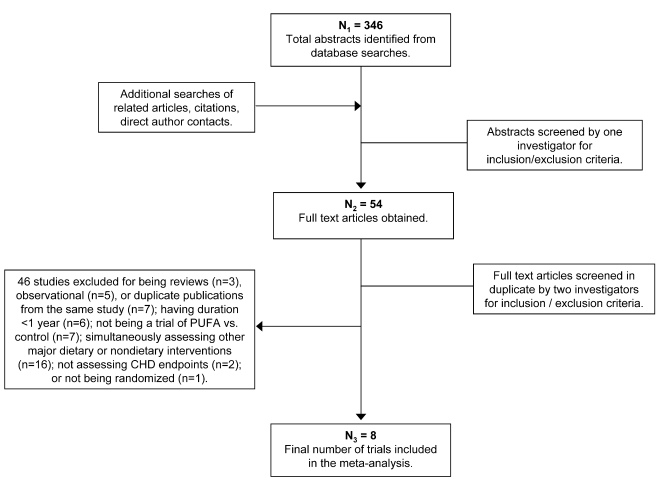
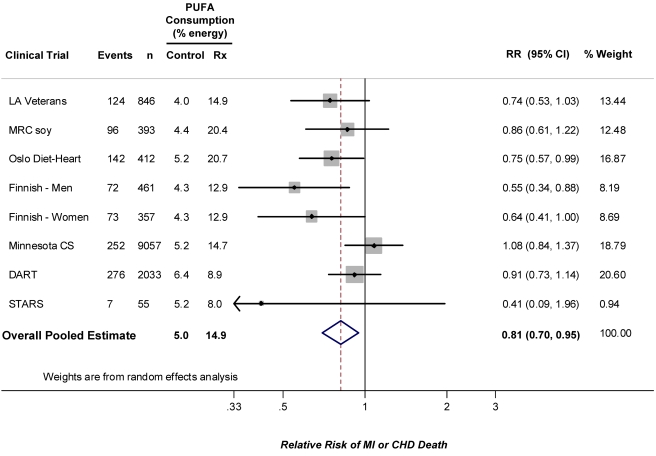
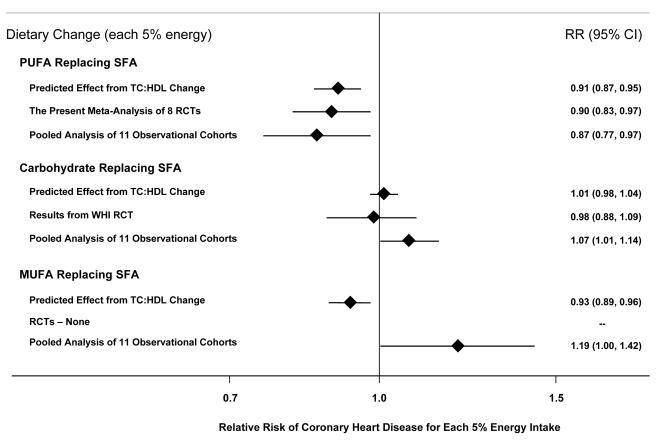
BACKGROUND: Reduced saturated fat (SFA) consumption is recommended to reduce coronary heart disease (CHD), but there is an absence of strong supporting evidence from randomized controlled trials (RCTs) of clinical CHD events and few guidelines focus on any specific replacement nutrient. Additionally, some public health groups recommend lowering or limiting polyunsaturated fat (PUFA) consumption, a major potential replacement for SFA. METHODS AND FINDINGS: We systematically investigated and quantified the effects of increased PUFA consumption, as a replacement for SFA, on CHD endpoints in RCTs. RCTs were identified by systematic searches of multiple online databases through June 2009, grey literature sources, hand-searching related articles and citations, and direct contacts with experts to identify potentially unpublished trials. Studies were included if they randomized participants to increased PUFA for at least 1 year without major concomitant interventions, had an appropriate control group, and reported incidence of CHD (myocardial infarction and/or cardiac death). Inclusions/exclusions were adjudicated and data were extracted independently and in duplicate by two investigators and included population characteristics, control and intervention diets, follow-up duration, types of events, risk ratios, and SEs. Pooled effects were calculated using inverse-variance-weighted random effects meta-analysis. From 346 identified abstracts, eight trials met inclusion criteria, totaling 13,614 participants with 1,042 CHD events. Average weighted PUFA consumption was 14.9% energy (range 8.0%-20.7%) in intervention groups versus 5.0% energy (range 4.0%-6.4%) in controls. The overall pooled risk reduction was 19% (RR = 0.81, 95% confidence interval [CI] 0.70-0.95, p = 0.008), corresponding to 10% reduced CHD risk (RR = 0.90, 95% CI = 0.83-0.97) for each 5% energy of increased PUFA, without evidence for statistical heterogeneity (Q-statistic p = 0.13; I(2) = 37%). Meta-regression identified study duration as an independent determinant of risk reduction (p = 0.017), with studies of longer duration showing greater benefits. CONCLUSIONS: These findings provide evidence that consuming PUFA in place of SFA reduces CHD events in RCTs. This suggests that rather than trying to lower PUFA consumption, a shift toward greater population PUFA consumption in place of SFA would significantly reduce rates of CHD. Please see later in the article for the Editors' Summary.
Overview
The claims and statistics of this paper haven’t been checked yet.
Free: it reads the open-access text and checks the first 5 claims that cite a source we can check. Create a free account to check every claim.
Integrity signals
Registry
Cites
Statistics
Figures
Verification
Claims the paper makes
The claims and statistics of this paper haven’t been checked yet.
Free: it reads the open-access text and checks the first 5 claims that cite a source we can check. Create a free account to check every claim.
Claims other papers make about this one
Each is checked against this paper’s own text: does it say what the citing paper says it does?
The cited source doesn’t support the claim as written.
In the citing paper
“In the presidential advisory of the AHA by Sacks et al. (27), the literature search strategy was not described, similarly to the study by Mozaffarian et al. (26)”
From Saturated Fat Restriction for Cardiovascular Disease Prevention: A Systematic Review and Meta-analysis of Randomized Controlled Trials (2025) · cites this paper as [26]
Checked by a reasoning model — may be wrong.
Experimental — accuracy not yet measuredThe source backs part of the claim, not all of it — or backs it for a different population, condition or comparison.
In the citing paper
“In order to get an overall estimate of the impact of dietary modifications on the CV risk, different meta-analyses have been performed, sometimes with inconsistent outcomes. 135,136”
From 2016 ESC/EAS Guidelines for the Management of Dyslipidaemias (2016) · cites this paper as [136]
Experimental — accuracy not yet measuredThe source backs part of the claim, not all of it — or backs it for a different population, condition or comparison.
In the citing paper
“For instance, total saturated fat, carbohydrate, and protein each appear relatively neutral for CHD; while effects of total monounsaturated fat remain uncertain (see below).21, 349”
From Dietary and Policy Priorities for Cardiovascular Disease, Diabetes, and Obesity: A Comprehensive Review (2016) · cites this paper as [349]
Experimental — accuracy not yet measuredThe source backs part of the claim, not all of it — or backs it for a different population, condition or comparison.
In the citing paper
“LA is also associated with significantly lower risk of CHD (Figure 7), whether in comparison to carbohydrate or saturated fat;350 and in meta-analysis of controlled clinical trials, consumption of n-6 rich vegetable oils, in place of animal fats, reduces CHD events (Figure 7).349”
From Dietary and Policy Priorities for Cardiovascular Disease, Diabetes, and Obesity: A Comprehensive Review (2016) · cites this paper as [349]
Experimental — accuracy not yet measuredThe source backs part of the claim, not all of it — or backs it for a different population, condition or comparison.
In the citing paper
“Notably, in these trials, the average intake of n-6 polyunsaturated fat was ~15% energy,349 higher than current guidelines that recommend up to 10-11% energy from polyunsaturated fat.370”
From Dietary and Policy Priorities for Cardiovascular Disease, Diabetes, and Obesity: A Comprehensive Review (2016) · cites this paper as [349]
Experimental — accuracy not yet measured
18 more claims about this paper
Create a free account to see every claim other papers make about this one.
Self-check
Percentages, sums and reported differences re-computed from the paper’s own numbers.
The self-check needs the paper’s full text.
Citations
Cites
Bias in meta-analysis detected by a simple, graphical test
Egger, M., Smith, G. D., Schneider, M., & Minder, C. (1997) · BMJ · doi:10.1136/bmj.315.7109.629 · Cited by 56,722 · cited 1×
“Potential for publication bias was assessed by visually inspecting a funnel plot of the treatment effect versus SE [30] and statistically using the Begg adjusted-rank correlation test [31].”
MethodMeta-analysis in clinical trials
DerSimonian, R., & Laird, N. (1986) · Controlled Clinical Trials · doi:10.1016/0197-2456(86)90046-2 · Cited by 39,552 · cited 3×
“Statistical Analysis The overall pooled effect was calculated using random effects meta-analysis, which accounts for heterogeneity in treatment effects among studies, using the methods of Dersimonian and Laird [28] with inverse-variance (SE) weighting.”
MethodOperating characteristics of a rank correlation test for publication bias
Begg, C. B., & Mazumdar, M. (1994) · Biometrics · doi:10.2307/2533446 · Cited by 16,955
Trumbo, P., Schlicker, S., Yates, A. A., & Poos, M. (2002) · Journal of the American Dietetic Association · doi:10.1016/s0002-8223(02)90346-9 · Cited by 5,993
Moher, D., Cook, D. J., Eastwood, S., Olkin, I., Rennie, D., & Stroup, D. F. (1999) · The Lancet · doi:10.1016/s0140-6736(99)04149-5 · Cited by 4,826
Moher, D., Pham, B., Jones, A., Cook, D. J., Jadad, A. R., Moher, M., Tugwell, P., & Klassen, T. P. (1998) · The Lancet · doi:10.1016/s0140-6736(98)01085-x · Cited by 3,560 · cited 2×
“We assessed study quality using the validated Jadad scale [27], which includes criteria relating to randomization, blinding, and withdrawals and dropouts that are together summed to generate an overall quality score between 0 and 5.”
BackgroundMethodSwinburn, B., Baba, N. H., Belhadj, M., Deurenberg‐Yap, M., Djazayery, A., Forrester, T., Galuska, D. A., Herman, S. T., James, W. P. T., Kabangu, J. R. M., et al. (2003) · World Health Organization eBooks · Cited by 3,453
Simopoulos, A. P. (2008) · Experimental Biology and Medicine · doi:10.3181/0711-mr-311 · Cited by 2,915 · cited 1×
“However, surprisingly, some scientists and organizations argue that consumption of n-6 PUFA, by far the predominant dietary PUFA, will actually increase CHD risk and have recommended reduced consumption [21–23], and the Institute of Medicine recommends only a relatively modest range of 5%–10% energy (%E) consumption f…”
BackgroundDanaei, G., Ding, E. L., Mozaffarian, D., Taylor, B., Rehm, J., Murray, C. J. L., & Ezzati, M. (2009) · PLoS Medicine · doi:10.1371/journal.pmed.1000058 · Cited by 2,860 · cited 1×
“need to be revisited, particularly as PUFA appears to be the primary evidence-based replacement for SFA. Finally, whereas on a population-level even a small shift from SFA to PUFA consumption would produce meaningful reductions in CHD risk, the relatively modest magnitude of plausible benefit (∼10% lower risk for 5%E…”
BackgroundSelf-citation
Cited by
Items 501–600 of 1,000
Bokharaeian, M., Ghoorchi, T., Toghdory, A., & Esfahani, I. J. (2023) · Applied Sciences · doi:10.3390/app132011605 · Cited by 23
Shewale, S. V., Boudyguina, E. Y., Zhu, X., Shen, L., Hutchins, P. M., Barkley, R. M., Murphy, R. C., & Parks, J. S. (2015) · Journal of Lipid Research · doi:10.1194/jlr.m059170 · Cited by 25
The importance of reducing SFA to limit CHD
Pedersen, J. I., James, P., Brouwer, I. A., Clarke, R., Elmadfa, I., Katan, M., Kris‐Etherton, P. M., Kromhout, D., Margetts, B., Mensink, R. P., et al. (2011) · British Journal Of Nutrition · doi:10.1017/s000711451100506x · Cited by 24
“Recent critics of the role of SFA have questioned the rigour of the early dietary trials of CVD prevention and questioned current public health policy on limiting the intake of SFA((8)); they suggest that more attention should be paid to increased intake of PUFA((9)).”
InfluentialHolme, I., Retterstøl, K., Norum, K. R., & Hjermann, I. (2016) · Journal of Internal Medicine · doi:10.1111/joim.12485 · Cited by 32
Polymorphisms in lipogenic genes and milk fatty acid composition in Holstein dairy cattle
Nafikov, R. A., Schoonmaker, J. P., Korn, K. T., Noack, K., Garrick, D. J., Koehler, K. J., Minick‐Bormann, J., Reecy, J. M., Spurlock, D. E., & Beitz, D. C. (2014) · Genomics · doi:10.1016/j.ygeno.2014.10.001 · Cited by 25
Tressou, J., Moulin, P., Vergès, B. L., Guillou, C. L., Simon, N., & Pasteau, S. (2016) · British Journal Of Nutrition · doi:10.1017/s000711451600413x · Cited by 27
“French SFA intake level is also high and replacing SFA with PUFA, including those from non-hydrogenated vegetable oil sources (ALA as well as LA), may be an efficient option in terms of cardioprotection objectives((9,26)).”
BackgroundWongpattananukul, S., Nungarlee, U., Ruangprach, A., Sulong, S., Sanporkha, P., Adisakwattana, S., & Ngamukote, S. (2022) · LWT · doi:10.1016/j.lwt.2022.113559 · Cited by 24
Future foods, dietary factors and healthspan
Li, K., Wang, C., Wang, Y., Fu, L., & Zhang, N. (2023) · Journal of Future Foods · doi:10.1016/j.jfutfo.2022.12.001 · Cited by 20
Biomimetic Metal–Organic Nanotubular Host for Straight-Chain Fatty Acids Recognition
Chang, R., Ye, H., Dong, X., Cao, X., & Sue, A. C. ‐. (2025) · Journal of the American Chemical Society · doi:10.1021/jacs.5c03334 · Cited by 21
Downs, S., Gupta, V., Ghosh‐Jerath, S., Lock, K., Thow, A. M., & Singh, A. (2013) · BMC Public Health · doi:10.1186/1471-2458-13-1139 · Cited by 27
“[1,23].”
Nutrients in Cheese and Their Effect on Health and Disease
Rashidinejad, A., Bremer, P. J., Birch, J., & Oey, I. (2017) · Elsevier eBooks · doi:10.1016/b978-0-12-809762-5.00014-0 · Cited by 34
Dietary Fat and Cardiovascular Disease: Ebb and Flow Over the Last Half Century
Lichtenstein, A. H. (2019) · Advances in Nutrition · doi:10.1093/advances/nmz024 · Cited by 22
“When the data were analyzed on the basis of PUFA replacing SFA, there was a positive relation between dietary SFA and CVD (Figure 4) (1, 8, 11).”
BackgroundMethodResultInfluentialLiao, L., Li, W., Liu, Y., Li, J.-P., Zhuang, X., & Liao, X. (2019) · Nutrition Metabolism and Cardiovascular Diseases · doi:10.1016/j.numecd.2019.09.013 · Cited by 21
Mert, K. U., Başaran, Ö., Mert, G. Ö., Doğan, V., Rencüzoğulları, İ., Özlek, B., Çinier, G., Şenol, U., Çelik, O., Özlek, E., et al. (2021) · European Journal of Clinical Investigation · doi:10.1111/eci.13528 · Cited by 25
Soy proteins modified using cavitation jet technology
Fan, Z., Xing, Y., Gao, Y., San, Y., Li, Z., Wang, Z., & Regenstein, J. M. (2024) · International Journal of Biological Macromolecules · doi:10.1016/j.ijbiomac.2024.134988 · Cited by 19
Smuts, C. M., & Wolmarans, P. (2013) · South African Journal of Clinical Nutrition · doi:10.1080/16070658.2013.12519344 · Cited by 37
Sheridan, S., Draeger, L. B., Pignone, M. P., Sloane, P. D., Samuel‐Hodge, C. D., Finkelstein, E. A., Gizlice, Z., Vu, M. B., Gitterman, D. P., Bangdiwala, S. I., et al. (2013) · Contemporary Clinical Trials · doi:10.1016/j.cct.2013.07.013 · Cited by 20
Dietary dilemmas over fats and cardiometabolic risk
Lovegrove, J. A. (2019) · Proceedings of The Nutrition Society · doi:10.1017/s0029665119000983 · Cited by 19
Effectiveness of Dietary Policies to Reduce Noncommunicable Diseases
Afshin, A., Micha, R., Webb, M., Capewell, S., Whitsel, L. P., Rubinstein, A. L., Prabhakaran, D., Suhrcke, M., & Mozaffarian, D. (2017) · World Bank, Washington, DC eBooks · doi:10.1596/978-1-4648-0518-9_ch6 · Cited by 20
Self-citationANTHROPOMETRIC PROFILE AND NUTRITIONAL INTAKE IN PATIENTS WITH EPILEPSY.
Fernandez, R. D. A., Corrêa, C., Bianchin, M. M., & Perry, I. D. S. (2015) · PubMed · doi:10.3305/nh.2015.32.2.9205 · Cited by 21
Sleep duration modifies effects of free ad libitum school meals on adiposity and blood pressure
Hjorth, M. F., Sjödin, A. M., Dalskov, S., Damsgaard, C. T., Michaelsen, K. F., Biltoft-Jensen, A. P., Andersen, R., Ritz, C., Chaput, J., & Astrup, A. V. (2015) · Applied Physiology, Nutrition, and Metabolism · doi:10.1139/apnm-2015-0319 · Cited by 23
“In addition, the improved blood pressure might also partly arise from the reduction in saturated fat intake (Mozaffarian et al. 2010).”
BackgroundSala‐Vila, A., Cofán, M., Núñez, I., Gilabert, R., Junyent, M., & Ros, E. (2010) · Atherosclerosis · doi:10.1016/j.atherosclerosis.2010.10.026 · Cited by 21
Torres, P., Pedrali, A., Bavaro, T., Ambrosini, S., Marrubini, G., Pappalardo, V., Massolini, G., Terreni, M., & Ubiali, D. (2014) · European Journal of Lipid Science and Technology · doi:10.1002/ejlt.201400201 · Cited by 20
Saturated fatty acids and coronary heart disease risk: the debate goes on
Williams, C. M., & Salter, A. M. (2016) · Current Opinion in Clinical Nutrition & Metabolic Care · doi:10.1097/mco.0000000000000248 · Cited by 21
Ingram, M. A., Stonehouse, W., Russell, K. G., Meyer, B. J., & Kruger, R. (2012) · Journal of Nutrition · doi:10.3945/jn.112.162313 · Cited by 24
“A timeframe of at least 3 mo between test-retest administrations is needed to minimize recollection (4,8,9,33).”
BackgroundFact sheet: nationwide trends in dietary intakes among Korean adults, 2013-2022
Oh, H., Jo, G., Kim, O. Y., Lim, H., Song, S., Choi, J., Bae, J. H., Jin, E., Kim, R., Lee, Y., et al. (2025) · The Korean Journal of Internal Medicine · doi:10.3904/kjim.2024.337 · Cited by 21
“In randomized controlled trials, replacing the energy intake of saturated fat with polyunsaturated fat decreased the incidence of cardiovascular disease [14,15].”
Dietary Fat and Sports Performance
Puglisi, M. (2019) · Nutrition and Enhanced Sports Performance · doi:10.1016/b978-0-12-813922-6.00047-3 · Cited by 10
HpeNet: Co-expression Network Database for de novo Transcriptome Assembly of Paeonia lactiflora Pall
Sheng, M., She, J., Xu, W., Yan, H., Su, Z., & Zhang, X. (2020) · Frontiers in Genetics · doi:10.3389/fgene.2020.570138 · Cited by 21
A New Evidence-Based Diet Score to Capture Associations of Food Consumption and Chronic Disease Risk
Jannasch, F., Nickel, D., Bergmann, M. M., & Schulze, M. B. (2022) · Nutrients · doi:10.3390/nu14112359 · Cited by 20
“Current evidence supports the part of the recommendation on oil intake, because health benefits due to the use of vegetable oil were concluded from various sources: Meta-analyses summarised results from dietary trials, where either the omega-3 polyunsaturated fatty acid (PUFA) α-linolenic acid, supplemented as linseed…”
BackgroundLaw, H. G., Khan, M. A., Zhang, W., Bang, H., Rood, J. C., Most, M. M., Lefevre, M., Berglund, L., & Enkhmaa, B. (2023) · Journal of Lipid Research · doi:10.1016/j.jlr.2023.100420 · Cited by 19
“Additional exclusion criteria for the participating offspring included (1) lack of parent–offspring relationship verified through initial genetic testing; (2) documented presence of atherosclerotic disease; (3) diabetes mellitus; (4) antihypertensive medication; (5) renal, hepatic, endocrine, gastrointestinal or other…”
BackgroundA General Review of Methodologies Used in the Determination of Cholesterol (C27H46O) Levels in Foods
Ndhlala, A. R., Yüksel, A. K., Çelebi, N., & Doğan, H. (2023) · Foods · doi:10.3390/foods12244424 · Cited by 22
“Although it has been stated that dietary fat intake has positive effects on human health, it is known to have a very significant effect on coronary heart disease [31].”
BackgroundCavallini, A., Torre, S., Usai, L., Casula, M., Fais, G., Nieri, P., Concas, A., & Lutzu, G. A. (2024) · Sustainable Chemistry and Pharmacy · doi:10.1016/j.scp.2024.101625 · Cited by 25
Milk and dairy products – a scoping review for Nordic Nutrition Recommendations 2023
Holven, K. B., & Sonestedt, E. (2024) · Food & Nutrition Research · doi:10.29219/fnr.v68.10486 · Cited by 32
Efficacy of Dietary Behavior Modification for Preserving Cardiovascular Health and Longevity
Pryde, M. M., & Kannel, W. B. (2010) · Cardiology Research and Practice · doi:10.4061/2011/820457 · Cited by 22
“Other trials have advised an intake of 15% [5].”
BackgroundWoodward, M., Tunstall-Pedoe, H., Batty, G. D., Tavendale, R., Hu, F. B., & Czernichow, S. (2011) · European Heart Journal · doi:10.1093/eurheartj/ehr036 · Cited by 20
Saturated and trans-fatty acids in UK takeaway food
Davies, I. G., Blackham, T., Jaworowska, A., Taylor, C. A., Ashton, M., & Stevenson, L. (2016) · International Journal of Food Sciences and Nutrition · doi:10.3109/09637486.2016.1144723 · Cited by 19
“risk and coronary heart disease (CHD) events (Flock et al., 2014; Mozaffarian et al., 2010).”
BackgroundElidottir, A. S., Halldorsson, T. I., Gunnarsdottir, I., & Ramel, A. (2016) · PLOS ONE · doi:10.1371/journal.pone.0156655 · Cited by 18
“However, it might still be beneficial for our individuals to place more emphasis on polyunsaturated fatty acid intake which have been shown to reduce risk for several diseases [30, 31, 37].”
BackgroundEmbree, G., Samuel‐Hodge, C. D., Johnston, L. F., Garcia, B. A., Gizlice, Z., Evenson, K. R., DeWalt, D. A., Ammerman, A. S., & Keyserling, T. C. (2017) · BMJ Open Diabetes Research & Care · doi:10.1136/bmjdrc-2016-000339 · Cited by 19
“2) Female 260 (77) 93 (75) 70 (79) 22 (65) 167 (78) 111 (85) 54 (65) Race African-American 219 (65) 89 (72) 130 (61) White 117 (35) 34 (28) 83 (39) Education, years ≤8 (middle school or less) 16 (5) 7 (6) 4 (5) 3 (9) 9 (4) 7 (5) 2 (2) 9–11 (some high school) 45 (13) 25 (20) 22 (25) 2 (6) 20 (9) 13 (10) 7 (8) 12 (high…”
Zhang, T., Si, B., Deng, K., Tu, Y., Zhou, C., & Diao, Q. (2017) · Journal of the Science of Food and Agriculture · doi:10.1002/jsfa.8511 · Cited by 18
Mölenberg, F. J. M., de Goede, J., Wanders, A. J., Zock, P. L., Kromhout, D., & Geleijnse, J. M. (2017) · American Journal of Clinical Nutrition · doi:10.3945/ajcn.117.157826 · Cited by 20
Reevaluating nutrition as a risk factor for cardio-metabolic diseases
López-Jaramillo, P. A., Otero, J. A., Camacho, P. A., Baldeon, M. E., & Fornasini, M. (2018) · Colombia medica · doi:10.25100/cm.v49i2.3840 · Cited by 23
Zhao, M., Chiriboga, D. E., Olendzki, B. C., Xie, B., Li, Y., McGonigal, L., Maldonado‐Contreras, A., & Ma, Y. (2018) · Nutrients · doi:10.3390/nu10101486 · Cited by 19
Kałucka, S., Kaleta, D., & Makowiec-Dąbrowska, T. (2019) · International Journal of Environmental Research and Public Health · doi:10.3390/ijerph16030501 · Cited by 21
“An unhealthy dietary behavior, more frequent consumption of SFA fat, instead of PUFA, is associated with a high risk of development of neoplastic diseases of prostate in men [46,47] and breast cancer in women [48].”
BackgroundMilk Fatty Acids Profile and the Impact on Human Health
Cucco, D. C. (2019) · Journal of Dairy & Veterinary Sciences · doi:10.19080/jdvs.2019.10.555779 · Cited by 19
“[59], once in a population level, a 5% change in the diet energy level coming from SFA to PUFA would reduce about 10% the risk of arterial coronary disease occurrence.”
BackgroundHuang, L., Neal, B. C., Dunford, E., Ma, G., Wu, J. H. Y., Crino, M., & Trevena, H. (2016) · Preventive Medicine Reports · doi:10.1016/j.pmedr.2016.08.002 · Cited by 18
“Saturated fat intake increases low density lipoprotein cholesterol levels, and replacement of saturated fats with polyunsaturated fats can lower the risk of coronary heart disease (Mozaffarian et al., 2010).”
BackgroundZhang, F., Ekine-Dzivenu, C. C., Vinsky, M., Basarab, J. A., Aalhus, J. L., Dugan, M. E. R., & LI, C. (2017) · Journal of Animal Science · doi:10.2527/jas.2017.1451 · Cited by 22
Pigsborg, K., Gürdeniz, G., Rangel-Huerta, Ó. D., Holven, K. B., Dragsted, L. O., & Ulven, S. M. (2022) · European Journal of Nutrition · doi:10.1007/s00394-021-02796-6 · Cited by 24
Jonsdottir, S. E., Brader, L., Gunnarsdóttir, I., Magnúsdóttir, Ó. K., Schwab, U., Kolehmainen, M., Risérus, U., Herzig, K., Cloetens, L., Helgegren, H., et al. (2013) · Food & Nutrition Research · doi:10.3402/fnr.v57i0.21391 · Cited by 21
“Thus, for each 5% increase in the proportion of energy obtained from PUFA when substituting SFA, the risk of CHD events was reduced by 10% (49).”
Weber, C., Harnack, L., Johnson, A. J., Jasthi, B., Pettit, J., & Stevenson, J. (2021) · Public Health Nutrition · doi:10.1017/s1368980021004511 · Cited by 20
“Further evidence supports that replacing SFA with PUFA reduces CHD incidences(25).”
BackgroundGrabia, M., Markiewicz‐Żukowska, R., Socha, K., Polkowska, A., Zasim, A., Boruch, K., & Bossowski, A. T. (2022) · Nutrients · doi:10.3390/nu14122435 · Cited by 17
Nwaru, B. I., Dierkes, J., Ramel, A., Arnesen, E., Þórisdóttir, B., Lamberg-Allardt, C. J. E., Söderlund, F., Bärebring, L., & Åkesson, A. (2022) · Food & Nutrition Research · doi:10.29219/fnr.v66.8629 · Cited by 19
Kraschnewski, J. L., Gold, A. D., Gizlice, Z., Johnston, L. F., Garcia, B. A., Samuel‐Hodge, C. D., & Keyserling, T. C. (2013) · Journal of Nutrition Education and Behavior · doi:10.1016/j.jneb.2012.10.008 · Cited by 19
“The authors selected this ratio because it is 1 of the 2 fat components of the Alternate Healthy Eating Index, which has been shown to predict chronic disease risk in men and women.(2,9,25,26) Testretest reliability of the DFQAmeasures between thebaseline and follow-up assessments were estimated using the Shrout and F…”
MethodGeng, T., Xia, L., Russo, S. B., Kamara, D., & Cowart, L. A. (2015) · Nutrition Research · doi:10.1016/j.nutres.2015.06.012 · Cited by 18
“It is well known that USFA can reduce the incidence of coronary artery disease and improve the metabolic status of patients with diabetes [6-8].”
BackgroundDamsgaard, C. T., Ritz, C., Dalskov, S., Landberg, R., Stark, K. D., Biltoft-Jensen, A. P., Tetens, I., Astrup, A. V., Michaelsen, K. F., & Lauritzen, L. (2015) · European Journal of Nutrition · doi:10.1007/s00394-015-1013-z · Cited by 21
Rathnayake, K. M., Weech, M., Jackson, K. G., & Lovegrove, J. A. (2018) · Nutrition Research Reviews · doi:10.1017/s0954422418000033 · Cited by 20
“The chronic effects of substitution of SFA with PUFA on fasting lipid levels have been extensively studied((83)), however, the acute effects are less well known.”
BackgroundYu, S., Dong, J., Zhou, W., Yang, R., Li, H., Zhao, H., Zhang, T., Guo, H., Wang, S., Zhang, C., et al. (2014) · Journal of Chromatography B · doi:10.1016/j.jchromb.2014.04.040 · Cited by 20
Gaeini, Z., Mirmiran, P., Bahadoran, Z., Aghayan, M., & Azizi, F. (2021) · Nutrition & Metabolism · doi:10.1186/s12986-021-00624-6 · Cited by 16
Huang, K., Liu, S., Yu, Y., Wu, B.-S., Lin, Z.-H., Zhu, C.-X., Song, D., Xue, Y., & Ji, K. (2023) · Ecotoxicology and Environmental Safety · doi:10.1016/j.ecoenv.2023.114701 · Cited by 17
A comprehensive review on strategies for replacing saturated fats in bakery products
Das, M., & Das, A. (2024) · Discover Food · doi:10.1007/s44187-024-00240-2 · Cited by 16
Wong, V. C. H., Maguire, J. L., Omand, J. A., Dai, D. W. H., Lebovic, G., Parkin, P. C., O’Connor, D. L., Birken, C. S., Birken, C. S., Maguire, J. L., et al. (2019) · The Journal of Pediatrics · doi:10.1016/j.jpeds.2019.03.047 · Cited by 17
Analysis of foreign technologies for the functional meat products’
Shishkina, D. I., & Sokolov, A. Y. (2018) · Proceedings of the Voronezh State University of Engineering Technologies · doi:10.20914/2310-1202-2018-2-189-194 · Cited by 16
Song, S., & Shim, J. E. (2019) · 대한지역사회영양학회지 · doi:10.5720/kjcn.2019.24.3.223 · Cited by 16
Dawczynski, C. (2021) · Frontiers in Nutrition · doi:10.3389/fnut.2020.608854 · Cited by 20
Park, S., Lee, S., Kim, Y., Lee, Y., Kang, M. W., Kim, K., Kim, Y. C., Han, S. S., Lee, H., Lee, J. P., et al. (2021) · Nutrients · doi:10.3390/nu13051490 · Cited by 20
Grujić-Milanović, J. D., Miloradović, Z., Mihailovic‐Stanojevic, N., Banjac, V. V., Vidosavljević, S., Ivanov, M., Karanović, D., Vajić, U.-J., & Jovović, D. (2021) · Biomedicine & Pharmacotherapy · doi:10.1016/j.biopha.2021.111691 · Cited by 16
Fat metabolism is associated with telomere length in six population-based studies
van der Spek, A., Karamujić‐Čomić, H., Pool, R., Bot, M., Beekman, M., Garmaeva, S., Arp, P., Henkelman, S., Liu, J., Alves, A. C., et al. (2021) · Human Molecular Genetics · doi:10.1093/hmg/ddab281 · Cited by 17
Turpeinen, A. M., & Merimaa, P. (2011) · Elsevier eBooks · doi:10.1533/9780857092557.3.383 · Cited by 17
Pu, S., Rodríguez‐Pérez, C., Ramprasath, V. R., Segura‐Carretero, A., & Jones, P. J. H. (2016) · Vascular Pharmacology · doi:10.1016/j.vph.2016.06.007 · Cited by 17
Pourrajab, B., Sharifi-Zahabi, E., Soltani, S., Shahinfar, H., & Shidfar, F. (2023) · Critical Reviews in Food Science and Nutrition · doi:10.1080/10408398.2022.2100314 · Cited by 15
“In randomized controlled trials (RCTs), intake of PUFAs instead of SFAs led to a reduction of coronary heart disease (CHD) events (Mozaffarian, Micha, and Wallace 2010).”
BackgroundISSFAL 2014 Debate: It Is Time to Update Saturated Fat Recommendations
Nettleton, J. A., Legrand, P., & Mensink, R. P. (2015) · Annals of Nutrition and Metabolism · doi:10.1159/000371585 · Cited by 18
Impulsivity and midlife cardiometabolic risk: The role of maladaptive health behaviors.
Emery, R. L., Levine, M. D., Creswell, K. G., Wright, A. G. C., Marsland, A. L., Matthews, K. A., Flory, J. D., & Manuck, S. B. (2020) · Health Psychology · doi:10.1037/hea0000884 · Cited by 16
Cognitive Factors Associated with Frequency of Eating Out and Eating Takeout among Latinas
García, S., Valencia, C., & Amaro, H. D. L. A. (2020) · Journal of the Academy of Nutrition and Dietetics · doi:10.1016/j.jand.2020.08.089 · Cited by 16
Samaniego, I., Espín, S., Quiroz, J., Rosales, C., Carrillo, W., Mena, P. R., & García‐Viguera, C. (2021) · International Journal of Food Sciences and Nutrition · doi:10.1080/09637486.2021.1884204 · Cited by 15
“Stearic acid (C18:0), one of the main SFA of cocoa fat, is considered a neutral FA with no atherogenic and cholesterogenic effects as it is rapidly desaturated in the body and transformed into oleic acid (Steinberg et al. 2003; Cooper et al. 2008; Mozaffarian et al. 2010; TorresMoreno et al. 2015).”
BackgroundZhang, Y., Guo, X., Gao, J., Wei, C., Zhao, S., Liu, Z., Sun, H., Wang, J., Liu, L., Li, Y., et al. (2021) · Annals of Medicine · doi:10.1080/07853890.2021.1937693 · Cited by 15
Winiarska‐Mieczan, A., Jachimowicz-Rogowska, K., Kwiecień, M., Kislova, S., Baranowska‐Wójcik, E., Zasadna, Z., Yanovych, D., & Kowalczuk-Vasilev, E. (2021) · Animals · doi:10.3390/ani11113115 · Cited by 15
“Copper has an influence on the systemic metabolism of lipids [19].”
Comparison of fatty acid profiles of two cultivated and wild marine fish from Mediterranean Sea
Amoussou, N., Marengo, M., Afé, O. H. I., Lejeune, P., Durieux, É., Douny, C., Scippo, M., & Gobert, S. (2022) · Aquaculture International · doi:10.1007/s10499-022-00861-3 · Cited by 23
Strategic nutrition: a vision for the twenty-first century
Temple, N. J. (2015) · Public Health Nutrition · doi:10.1017/s1368980014003292 · Cited by 18
“CVD It is generally accepted that removing SFA from the diet and replacing them with PUFA helps prevent CHD((15,16)).”
BackgroundPractical approaches to the nutritional management of nonalcoholic fatty liver disease
Freidoony, L., & Kong, I. D. (2014) · Integrative Medicine Research · doi:10.1016/j.imr.2014.09.003 · Cited by 21
Saturated Fat Controversy: Importance of Systematic Reviews and Meta-analyses
Szajewska, H., & Szajewski, T. (2015) · Critical Reviews in Food Science and Nutrition · doi:10.1080/10408398.2015.1018037 · Cited by 15
Grasas de la dieta y salud cardiovascular
Fernández, L. C., Serra, J. D., Álvarez, J. R. M., Alberich, R. S., & Jiménez, F. P. (2011) · Atención Primaria · doi:10.1016/j.aprim.2010.12.003 · Cited by 37
de Goede, J., Geleijnse, J. M., Boer, J. M. A., Kromhout, D., & Verschuren, W. M. M. (2011) · British Journal Of Nutrition · doi:10.1017/s0007114511003837 · Cited by 15
“On the basis of eight randomised trials, it has been shown that an increase in PUFA intake of 5 % of energy was significantly associated with a 10 % lower risk of coronary events((29)).”
BackgroundMethodInfluentialSupplementation with Cashew Nut and Cottonseed Meal to Modify Fatty Acid Content in Lamb Meat
Pereira, E. S., Mizubuti, I. Y., Oliveira, R. L., Pinto, A. P., Ribeiro, E. L. A., Gadelha, C. R. F., Campos, A. C. N., Pereira, M. F. D. S., Carneiro, M. S. D. S., de Arruda, P. C. L., et al. (2016) · Journal of Food Science · doi:10.1111/1750-3841.13395 · Cited by 15
Setting the Lipid Component of the Diet: A Work in Process
Razo-Olvera, F. M. D., Melgarejo-Hernández, M. A., Mehta, R., & Aguilar-Salinas, C. A. (2017) · Advances in Nutrition · doi:10.3945/an.116.013672 · Cited by 15
Amiri, M., Ghaneian, M. T., Sakhvidi, M. J. Z., Rahmanian, M., Nadjarzadeh, A., Moghtaderi, F., Raeisi‐Dehkordi, H., Zimorovat, A., Jafari, F., Reza, J. Z., et al. (2019) · PubMed Central · doi:10.22122/arya.v15i4.1940 · Cited by 20
“Mojgan Amiri (1) , Mohammad Taghi Ghaneian (2) , Mohammad Javad Zare-Sakhvidi (3) , Masoud Rahmanian (4) , Azadeh Nadjarzadeh (5) , Fatemeh Moghtaderi (1) , Hamidreza Raeisi-Dehkordi (1) , Alireza Zimorovat (1) , Fateme Jafari (1) , Javad Zavar-Reza (6) ,”
BackgroundBrown, C. L., Yang, T., Fitzsimmons, K. M., & Bolivar, R. B. (2014) · Agricultural Sciences · doi:10.4236/as.2014.512128 · Cited by 15
“A recent example is the claim that the consumption of tilapia is more dangerous to the health of the consumer than eating bacon [62], with little apparent regard for the hazards of ingesting saturated fats [63] accompanied by large quantities of sodium [64], and in contrast with the consistently favorable recommendati…”
ResultNutrition and metabolism: the changing face of the dairy-cardiovascular risk paradox
Nestel, P. J. (2011) · Current Opinion in Lipidology · doi:10.1097/mol.0b013e32834d5f3e · Cited by 14
“Unau Health | Lippincott Williams & Wilk cardiovascular events by substituting SFA with PUFA, mainly linoleic acid, may account for some of the putative adverse effect attributed to SFA [7,8].”
BackgroundInfluentialAgarwal, D., Ravi, P., Purohit, B. M., & Priya, H. (2021) · Nutrition Reviews · doi:10.1093/nutrit/nuab035 · Cited by 14
Prentice, R. L., Vasan, S., Tinker, L. F., Neuhouser, M. L., Navarro, S. L., Raftery, D., Gowda, G. A. N., Pettinger, M. B., Aragaki, A. K., Lampe, J. W., et al. (2023) · Journal of Nutrition · doi:10.1016/j.tjnut.2023.05.003 · Cited by 14
Replacement of milk fat by rapeseed oil stabilised emulsion in commercial yogurt
Kasprzak, M., Sady, M., Kruk, J., Bartkova, S., Sanka, I., Scheler, O., Jamróz, E., Berski, W., Onacik‐Gür, S., Szram, R., et al. (2023) · PeerJ · doi:10.7717/peerj.16441 · Cited by 15
“As the body of evidence that links high consumption of saturated lipids with cardiovascular disease events in adults continues to accumulate ( Mozaffarian, Micha & Wallace, 2010 ), to incorporate the likes of unsaturated lipids especially those obtained from plants so as to alleviate the negative…”
BackgroundAnton, S. D., Heekin, K., Simkins, C., & Acosta, A. J. (2013) · Journal of Chinese Integrative Medicine · doi:10.3736/jintegrmed2013002 · Cited by 16
Asakura, K., & Sasaki, S. (2017) · Public Health Nutrition · doi:10.1017/s1368980017002592 · Cited by 14
“Although this mortality is lower than 3250 K Asakura and S Sasaki Fat in take am o n g Jap an ese sch o o lch ild ren 3251 that in other countries (e.g. 167 deaths per 100 000 population per year in the USA in 2014(26); 383·4 deaths (circulatory disease) and 132 deaths (IHD only) per 100 000 population per year in the…”
BackgroundThe impact of dietary fatty acids on human adipose tissue
Petrus, P., & Arner, P. (2019) · Proceedings of The Nutrition Society · doi:10.1017/s0029665119000624 · Cited by 14
Field Performance of High Oleic Soybeans with Mutant FAD2‐1A and FAD2‐1B Genes in Tennessee
Darr, L., Cunicelli, M. J., Bhandari, H. S., Bilyeu, K., Chen, F., Hewezi, T., Li, Z., Sams, C. E., & Pantalone, V. R. (2019) · Journal of the American Oil Chemists Society · doi:10.1002/aocs.12306 · Cited by 14
Wu, F. L., Mao, L., Zhuang, P., Chen, X., Jiao, J., & Zhang, Y. (2020) · Clinical Nutrition · doi:10.1016/j.clnu.2020.03.031 · Cited by 15
Therapeutic potential of nutraceuticals to protect brain after stroke
Chelluboina, B., & Vemuganti, R. (2020) · Neurochemistry International · doi:10.1016/j.neuint.2020.104908 · Cited by 19
Nielsen, T. B., Würtz, A. M. L., Tjønneland, A. M., Overvad, K., & Dahm, C. C. (2021) · British Journal Of Nutrition · doi:10.1017/s0007114521001252 · Cited by 18
“Fatty fish contains n-3 PUFA, which are beneficial to cardiometabolic health and might have a beneficial effect in cancer prevention and treatment(23,25,26).”
BackgroundSchade, D. S., Gonzales, K. M., Kaminsky, N. I., Adolphe, A., Shey, L., & Eaton, R. P. (2021) · Endocrine Practice · doi:10.1016/j.eprac.2021.09.004 · Cited by 16
Self-reported health-related behaviors and dietary habits in patients with metabolic syndrome
Piotrowicz, K., Pałkowska-Goździk, E., Bartnikowska, E., Krzesiński, P., Stańczyk, A., Biecek, P., Skrobowski, A., & Gielerak, G. G. (2015) · Cardiology Journal · doi:10.5603/cj.a2015.0020 · Cited by 18
“It is well documented that the recommended consumption of PUFA lowers TC: high density lipoprotein ratio, improves insulin sensitivity, normalizes blood pressure and reduces systemic inflammation [27].”
BackgroundAustin, G. L., & Krueger, P. M. (2013) · Journal of Nutrition · doi:10.3945/jn.113.180067 · Cited by 15
Anderson, J. S., Nettleton, J. A., Hundley, W. G., Tsai, M. Y., Steffen, L. M., Lemaître, R. N., Siscovick, D. S., Lima, J. A. C., Prince, M. R., & Herrington, D. M. (2011) · Journal of Nutrition and Metabolism · doi:10.1155/2011/315134 · Cited by 16
“Contemporary work suggests that consumption of polyunsaturated fatty acids (PUFAs), in place of saturated fats, decreases the risk of cardiovascular disease (CVD) [1].”
Metadata
- Authors
- Mozaffarian, D., Micha, R., & Wallace, S.
- Affiliations
- Brigham and Women's Hospital (US)
- Harvard University (US)
- Corresponding author
- Mozaffarian, Dariush
- Venue
- PLoS Medicine
- Publisher
- Public Library of Science (PLoS)
- Published
- 2010-03-23
- Volume
- 7
- Issue
- 3
- Pages
- e1000252
- ISSN
- 1549-1277 (ISSN-L)
- 1549-1676
- PMC
- PMC2843598
- OpenAlex
- W2097226936
- Cited by
- 1,215
- References
- 49
- Citations by year
- 2026: 32 · 2025: 52 · 2024: 59 · 2023: 63 · 2022: 69 · 2021: 80 · 2020: 81 · 2019: 76 · 2018: 76 · 2017: 74 · 2016: 98 · 2015: 105 · 2014: 85 · 2013: 89 · 2012: 77
- FWCI
- 9.42
- Type
- journal article
- Language
- en
- Open access
- gold
- doi.org
- Locations
- PLoS Medicine (publishedVersion, cc-by)
- PubMed Central (publishedVersion, cc-by)
- PubMed (publishedVersion)
- RePEc: Research Papers in Economics (publishedVersion)
- Digital Access to Scholarship at Harvard (DASH) (Harvard University) (submittedVersion, cc-by)
- DOAJ (DOAJ: Directory of Open Access Journals) (submittedVersion, cc-by-sa)
- Figshare (submittedVersion, cc-by)
- Funders
- Bill and Melinda Gates Foundation
- Chicago Community Trust
- GlaxoSmithKline
- World Health Organization
- National Institutes of Health
- U.S. Food and Drug Administration
- National Heart, Lung, and Blood Institute (R01HL085710)
- Topics
- Health Sciences › Nursing › Nutrition and Dietetics › Fatty Acid Research and Health
- Health Sciences › Medicine › Public Health, Environmental and Occupational Health › Nutritional Studies and Diet
- Health Sciences › Medicine › Cardiology and Cardiovascular Medicine › Lipoproteins and Cardiovascular Health
- Keywords
- polyunsaturated fatty acids, saturated fat replacement, coronary artery disease, myocardial infarction, cardiovascular mortality, dietary fat, cardiovascular risk reduction, study duration, meta-regression, dietary intervention trials, omega-3 fatty acids, omega-6 fatty acids, dietary guidelines, publication bias
- MeSH terms
- Coronary Disease, Dietary Fats, Fatty Acids, Fatty Acids, Unsaturated, Feeding Behavior, Humans, Meta-Analysis as Topic, Randomized Controlled Trials as Topic
About these checks
Registry, retraction, Cites and statistics results are computed, not judged, with one exception: a printed reference that no index lists is read once by a model before it counts as a citation error. Claims are extracted by a model and kept only when their quote appears verbatim in the text; each cited source is then checked, with a model’s help, for whether it says what the claim relies on. Those verdicts can be wrong — read the claim’s quote and the cited source before relying on one.
Statistics and arithmetic are recomputed, not judged.
Confidence bands are shown only for fields calibrated on our annotated test set. None is calibrated yet, so no band is shown.
What counts as a claim ›How we measure confidence ›How we check this ›
Are you an author, or do you see a problem with this page? Request a review
Data sources
Bibliographic data: Semantic Scholar, OpenAlex, Crossref.
Contains information from the Semantic Scholar Academic Graph Datasets, made available under the ODC Attribution License (ODC-BY 1.0).
Semantic Scholar’s data is described in: Kinney, R., et al. (2023). The Semantic Scholar Open Data Platform. arXiv:2301.10140.
