

Effects on coronary heart disease of increasing polyunsaturated fat in place of saturated fat: a systematic review and meta-analysis of randomized controlled trials.
Open accessThe DOI matches its Crossref record; 49 of the 49 references it cites were found in a registry or an index.
Abstract
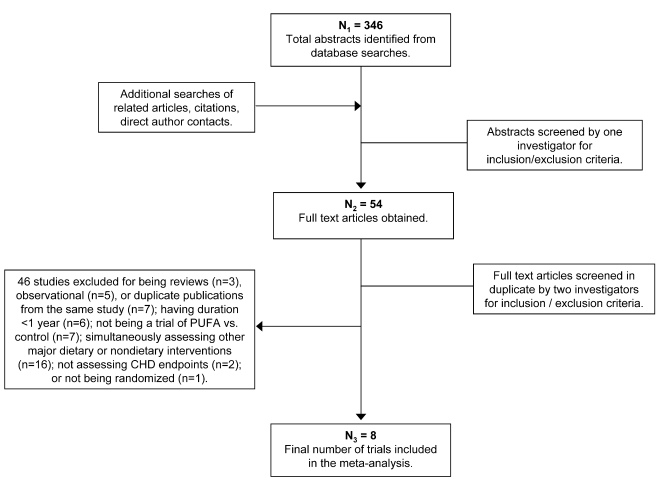
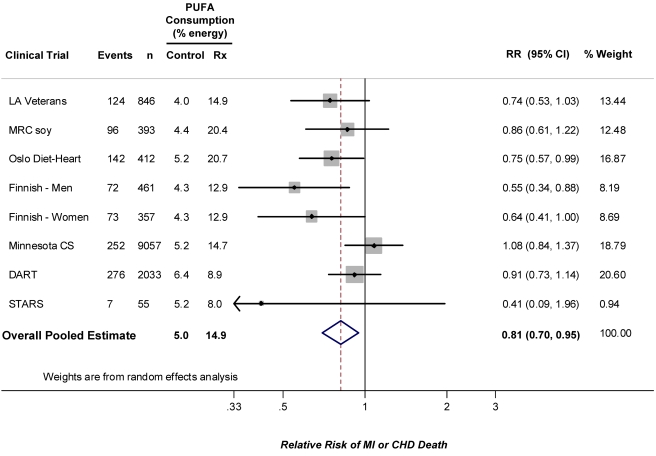
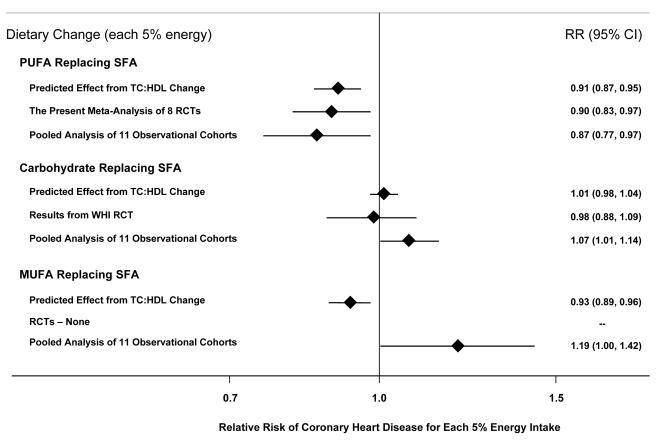
BACKGROUND: Reduced saturated fat (SFA) consumption is recommended to reduce coronary heart disease (CHD), but there is an absence of strong supporting evidence from randomized controlled trials (RCTs) of clinical CHD events and few guidelines focus on any specific replacement nutrient. Additionally, some public health groups recommend lowering or limiting polyunsaturated fat (PUFA) consumption, a major potential replacement for SFA. METHODS AND FINDINGS: We systematically investigated and quantified the effects of increased PUFA consumption, as a replacement for SFA, on CHD endpoints in RCTs. RCTs were identified by systematic searches of multiple online databases through June 2009, grey literature sources, hand-searching related articles and citations, and direct contacts with experts to identify potentially unpublished trials. Studies were included if they randomized participants to increased PUFA for at least 1 year without major concomitant interventions, had an appropriate control group, and reported incidence of CHD (myocardial infarction and/or cardiac death). Inclusions/exclusions were adjudicated and data were extracted independently and in duplicate by two investigators and included population characteristics, control and intervention diets, follow-up duration, types of events, risk ratios, and SEs. Pooled effects were calculated using inverse-variance-weighted random effects meta-analysis. From 346 identified abstracts, eight trials met inclusion criteria, totaling 13,614 participants with 1,042 CHD events. Average weighted PUFA consumption was 14.9% energy (range 8.0%-20.7%) in intervention groups versus 5.0% energy (range 4.0%-6.4%) in controls. The overall pooled risk reduction was 19% (RR = 0.81, 95% confidence interval [CI] 0.70-0.95, p = 0.008), corresponding to 10% reduced CHD risk (RR = 0.90, 95% CI = 0.83-0.97) for each 5% energy of increased PUFA, without evidence for statistical heterogeneity (Q-statistic p = 0.13; I(2) = 37%). Meta-regression identified study duration as an independent determinant of risk reduction (p = 0.017), with studies of longer duration showing greater benefits. CONCLUSIONS: These findings provide evidence that consuming PUFA in place of SFA reduces CHD events in RCTs. This suggests that rather than trying to lower PUFA consumption, a shift toward greater population PUFA consumption in place of SFA would significantly reduce rates of CHD. Please see later in the article for the Editors' Summary.
Overview
The claims and statistics of this paper haven’t been checked yet.
Free: it reads the open-access text and checks the first 5 claims that cite a source we can check. Create a free account to check every claim.
Integrity signals
Registry
Cites
Statistics
Figures
Verification
Claims the paper makes
The claims and statistics of this paper haven’t been checked yet.
Free: it reads the open-access text and checks the first 5 claims that cite a source we can check. Create a free account to check every claim.
Claims other papers make about this one
Each is checked against this paper’s own text: does it say what the citing paper says it does?
The cited source doesn’t support the claim as written.
In the citing paper
“In the presidential advisory of the AHA by Sacks et al. (27), the literature search strategy was not described, similarly to the study by Mozaffarian et al. (26)”
From Saturated Fat Restriction for Cardiovascular Disease Prevention: A Systematic Review and Meta-analysis of Randomized Controlled Trials (2025) · cites this paper as [26]
Checked by a reasoning model — may be wrong.
Experimental — accuracy not yet measuredThe source backs part of the claim, not all of it — or backs it for a different population, condition or comparison.
In the citing paper
“In order to get an overall estimate of the impact of dietary modifications on the CV risk, different meta-analyses have been performed, sometimes with inconsistent outcomes. 135,136”
From 2016 ESC/EAS Guidelines for the Management of Dyslipidaemias (2016) · cites this paper as [136]
Experimental — accuracy not yet measuredThe source backs part of the claim, not all of it — or backs it for a different population, condition or comparison.
In the citing paper
“For instance, total saturated fat, carbohydrate, and protein each appear relatively neutral for CHD; while effects of total monounsaturated fat remain uncertain (see below).21, 349”
From Dietary and Policy Priorities for Cardiovascular Disease, Diabetes, and Obesity: A Comprehensive Review (2016) · cites this paper as [349]
Experimental — accuracy not yet measuredThe source backs part of the claim, not all of it — or backs it for a different population, condition or comparison.
In the citing paper
“LA is also associated with significantly lower risk of CHD (Figure 7), whether in comparison to carbohydrate or saturated fat;350 and in meta-analysis of controlled clinical trials, consumption of n-6 rich vegetable oils, in place of animal fats, reduces CHD events (Figure 7).349”
From Dietary and Policy Priorities for Cardiovascular Disease, Diabetes, and Obesity: A Comprehensive Review (2016) · cites this paper as [349]
Experimental — accuracy not yet measuredThe source backs part of the claim, not all of it — or backs it for a different population, condition or comparison.
In the citing paper
“Notably, in these trials, the average intake of n-6 polyunsaturated fat was ~15% energy,349 higher than current guidelines that recommend up to 10-11% energy from polyunsaturated fat.370”
From Dietary and Policy Priorities for Cardiovascular Disease, Diabetes, and Obesity: A Comprehensive Review (2016) · cites this paper as [349]
Experimental — accuracy not yet measured
18 more claims about this paper
Create a free account to see every claim other papers make about this one.
Self-check
Percentages, sums and reported differences re-computed from the paper’s own numbers.
The self-check needs the paper’s full text.
Citations
Cites
Bias in meta-analysis detected by a simple, graphical test
Egger, M., Smith, G. D., Schneider, M., & Minder, C. (1997) · BMJ · doi:10.1136/bmj.315.7109.629 · Cited by 56,722 · cited 1×
“Potential for publication bias was assessed by visually inspecting a funnel plot of the treatment effect versus SE [30] and statistically using the Begg adjusted-rank correlation test [31].”
MethodMeta-analysis in clinical trials
DerSimonian, R., & Laird, N. (1986) · Controlled Clinical Trials · doi:10.1016/0197-2456(86)90046-2 · Cited by 39,552 · cited 3×
“Statistical Analysis The overall pooled effect was calculated using random effects meta-analysis, which accounts for heterogeneity in treatment effects among studies, using the methods of Dersimonian and Laird [28] with inverse-variance (SE) weighting.”
MethodOperating characteristics of a rank correlation test for publication bias
Begg, C. B., & Mazumdar, M. (1994) · Biometrics · doi:10.2307/2533446 · Cited by 16,955
Trumbo, P., Schlicker, S., Yates, A. A., & Poos, M. (2002) · Journal of the American Dietetic Association · doi:10.1016/s0002-8223(02)90346-9 · Cited by 5,993
Moher, D., Cook, D. J., Eastwood, S., Olkin, I., Rennie, D., & Stroup, D. F. (1999) · The Lancet · doi:10.1016/s0140-6736(99)04149-5 · Cited by 4,826
Moher, D., Pham, B., Jones, A., Cook, D. J., Jadad, A. R., Moher, M., Tugwell, P., & Klassen, T. P. (1998) · The Lancet · doi:10.1016/s0140-6736(98)01085-x · Cited by 3,560 · cited 2×
“We assessed study quality using the validated Jadad scale [27], which includes criteria relating to randomization, blinding, and withdrawals and dropouts that are together summed to generate an overall quality score between 0 and 5.”
BackgroundMethodSwinburn, B., Baba, N. H., Belhadj, M., Deurenberg‐Yap, M., Djazayery, A., Forrester, T., Galuska, D. A., Herman, S. T., James, W. P. T., Kabangu, J. R. M., et al. (2003) · World Health Organization eBooks · Cited by 3,453
Simopoulos, A. P. (2008) · Experimental Biology and Medicine · doi:10.3181/0711-mr-311 · Cited by 2,915 · cited 1×
“However, surprisingly, some scientists and organizations argue that consumption of n-6 PUFA, by far the predominant dietary PUFA, will actually increase CHD risk and have recommended reduced consumption [21–23], and the Institute of Medicine recommends only a relatively modest range of 5%–10% energy (%E) consumption f…”
BackgroundDanaei, G., Ding, E. L., Mozaffarian, D., Taylor, B., Rehm, J., Murray, C. J. L., & Ezzati, M. (2009) · PLoS Medicine · doi:10.1371/journal.pmed.1000058 · Cited by 2,860 · cited 1×
“need to be revisited, particularly as PUFA appears to be the primary evidence-based replacement for SFA. Finally, whereas on a population-level even a small shift from SFA to PUFA consumption would produce meaningful reductions in CHD risk, the relatively modest magnitude of plausible benefit (∼10% lower risk for 5%E…”
BackgroundSelf-citation
Cited by
Items 301–400 of 1,000
Li, S., Lin, K., Ma, P., Zhang, Z., Zhou, Y., Lu, S.-Y., Zhou, X. H., & Liu, S. (2013) · PLoS ONE · doi:10.1371/journal.pone.0055869 · Cited by 53
“Potentially, sufficient amounts of LA in the serum or diet could improve insulin sensitivity and reduce coronary heart disease risk or mortality [18,19].”
BackgroundRole of different dietary saturated fatty acids for cardiometabolic risk
Iggman, D., & Risérus, U. (2011) · Clinical Lipidology · doi:10.2217/clp.11.7 · Cited by 57
Contribution of Food Groups to Energy and Nutrient Intakes in Five Developed Countries
Auestad, N., Hurley, J., Fulgoni, V. L. I., & Schweitzer, C. (2015) · Nutrients · doi:10.3390/nu7064593 · Cited by 69
“note, recent reviews indicate that not all food sources of saturated fat are associated with increased risk for CVD [26–33].”
BackgroundLiu, L., Hu, Q., Wu, H., Xue, Y., Cai, L., Fang, M. X., Liu, Z., Yao, P., Wu, Y., & Gong, Z. (2016) · The Journal of Nutritional Biochemistry · doi:10.1016/j.jnutbio.2016.02.010 · Cited by 58
“While it has been advocated for many years that reducing dietary saturated fatty acid (SFA) intake [2] and replacing it with polyunsaturated fatty acids (PUFA) [3] is the main dietary strategy to prevent CVD owing to the antiinflammatory, antioxidative, hypolipidemic, antithrombotic and antihypertensive effects of PUF…”
BackgroundUS dietary guidelines: is saturated fat a nutrient of concern?
Harcombe, Z. (2018) · British Journal of Sports Medicine · doi:10.1136/bjsports-2018-099420 · Cited by 60
“24 Another of the significant findings came from the study of the impact of replacing saturated fat with polyunsaturated fat, 21 which was criticised 26 for excluding two studies that would have moderated this conclusion 27 28 and including a favourable, but non-randomised, non-controlled,…”
BackgroundResultInfluentialKorrapati, D., Jeyakumar, S. M., Putcha, U. K., Mendu, V. V. R., Ponday, L. R., Acharya, V., Koppala, S. R., & Vajreswari, A. (2018) · Clinical Nutrition · doi:10.1016/j.clnu.2018.12.026 · Cited by 56
Replacing Trans Fat: The Argument for Palm Oil with a Cautionary Note on Interesterification
Hayes, K. C., & Pronczuk, A. (2010) · Journal of the American College of Nutrition · doi:10.1080/07315724.2010.10719842 · Cited by 51
“Although unsaturated fats (especially essential fatty acids of n6 and n3 origin) favor energy metabolism and are desirable for health reasons [1,2], current evidence suggests that natural saturated fats do not introduce a risk for chronic disease, such as coronary heart disease (CHD), on their own, but rather reflect…”
BackgroundAlvanou, M. V., Feidantsis, K., Staikou, A., Apostolidis, A., Michaelidis, B., & Giantsis, I. (2023) · Microorganisms · doi:10.3390/microorganisms11051232 · Cited by 49
“Shellfish aquaculture’s intensification relies on the world’s strong appetite for shellfish; specifically, their rich valuable protein content and healthy profile of unsaturated fats [28], which, when substituting saturated fats (SFAs) and trans fats, decrease the risk of cardiovascular disease (CVD) [29,30].”
BackgroundStearic acid metabolism in human health and disease
Shen, X., Miao, S., Zhang, Y., Guo, X., Li, W., Mao, X., & Zhang, Q. (2024) · Clinical Nutrition · doi:10.1016/j.clnu.2024.12.012 · Cited by 61
Dietary n-6 polyunsaturated fatty acids and cardiovascular disease: Epidemiologic evidence
Wang, D. D. (2018) · Prostaglandins Leukotrienes and Essential Fatty Acids · doi:10.1016/j.plefa.2018.05.003 · Cited by 58
Huang, C., Chang, M.-T., Leu, H., Yin, W., Tseng, W.-K., Wu, Y., Lin, T., Yeh, H., Chang, K., Wang, J., et al. (2020) · Scientific Reports · doi:10.1038/s41598-020-65014-z · Cited by 57
Fatty acids from dairy and meat and their association with risk of coronary heart disease
Vissers, L. E. T., Rijksen, J., Boer, J. M. A., Verschuren, W. M. M., van der Schouw, Y. T., & Sluijs, I. (2018) · European Journal of Nutrition · doi:10.1007/s00394-018-1811-1 · Cited by 54
Jeong, H., Lee, J., Jo, Y., & Choi, M. (2022) · Food Hydrocolloids · doi:10.1016/j.foodhyd.2022.108407 · Cited by 52
Enkhmaa, B., Surampudi, P. N., Anuurad, E., & Berglund, L. (2015) · Europe PMC (PubMed Central) · Cited by 65
Association of Adipose Tissue Fatty Acids With Cardiovascular and All-Cause Mortality in Elderly Men
Iggman, D., Ärnlöv, J., Cederholm, T., & Risérus, U. (2016) · JAMA Cardiology · doi:10.1001/jamacardio.2016.2259 · Cited by 49
Ulven, S. M., Leder, L., Elind, E., Ottestad, I. O., Christensen, J. J., Telle‐Hansen, V. H., Skjetne, A. J., Raael, E., Sheikh, N. A., Holck, M., et al. (2016) · British Journal Of Nutrition · doi:10.1017/s0007114516003445 · Cited by 66
“Even though there is strong evidence that replacing SFA with PUFA will reduce the risk of CHD((9,10)), recent data have questioned this association((26,27)), and the intake of SFA has increased in the general population((28)).”
InfluentialFallaize, R., Carvalho-Wells, A. L., Tierney, A. C., Marín, C., Kieć‐Wilk, B., Dembinska-Kiec, A., Drevon, C. A., Defoort, C., López‐Miranda, J., Risérus, U., et al. (2017) · Scientific Reports · doi:10.1038/s41598-017-05802-2 · Cited by 56
Kromhout, D., Menotti, A., Alberti-Fidanza, A., Puddu, P. E., Hollman, P. C. H., Kafatos, A., Tolonen, H. K., Adachi, H., & Jacobs, D. R. (2018) · European Journal of Clinical Nutrition · doi:10.1038/s41430-018-0183-1 · Cited by 52
The confusion about dietary fatty acids recommendations for CHD prevention
Kromhout, D., Geleijnse, J. M., Menotti, A., & Jacobs, D. R. (2011) · British Journal Of Nutrition · doi:10.1017/s0007114511002236 · Cited by 58
Plasma fatty acids, oxylipins, and risk of myocardial infarction: the Singapore Chinese Health Study
Sun, Y. J., Koh, H. W. L., Choi, H., Koh, W., Yuan, J., Newman, J. W. I., Su, J., Fang, J., Ong, C. N., & van Dam, R. M. (2016) · Journal of Lipid Research · doi:10.1194/jlr.p066423 · Cited by 55
“also been associated with a lower cardiovascular risk (4, 5),”
BackgroundDarwesh, A. M., Sosnowski, D. K., Lee, T. Y., Keshavarz-Bahaghighat, H., & Seubert, J. M. (2019) · Chemico-Biological Interactions · doi:10.1016/j.cbi.2019.04.037 · Cited by 56
“CAD is a chronic inflammatory fibroproliferative disease characterized by abnormal lipid metabolism and buildup within the vascular wall of the coronary arteries associated with a potent inflammatory pathophysiological reaction [52-54].”
BackgroundInfluentialIggman, D., Rosqvist, F., Larsson, A. O., Ärnlöv, J., Beckman, L., Rudling, M. J., & Risérus, U. (2014) · Journal of the American Heart Association · doi:10.1161/jaha.114.001095 · Cited by 56
“with PUFA has been associated with moderately reduced risk in cohort studies and controlled trials.(4,5) However, it is unknown whether the type of dietary fat plays any role during energy excess and weight gain.”
BackgroundSaturated Fatty Acid Intake Is Associated with Total Mortality in a Nationwide Cohort Study
Zhuang, P., Cheng, L., Wang, J., Zhang, Y., & Jiao, J. (2018) · Journal of Nutrition · doi:10.1093/jn/nxy237 · Cited by 50
O'Keeffe, C., Kabir, Z., O'Flaherty, M., Walton, J., Capewell, S., & Perry, I. J. (2013) · BMJ Open · doi:10.1136/bmjopen-2013-002837 · Cited by 47
The Role of Copper as a Modifier of Lipid Metabolism
Burkhead, J. L., & Lutsenko, S. (2013) · InTech eBooks · doi:10.5772/51819 · Cited by 56
“Changes in the ratios of saturated and unsaturated fatty acids have been noted in copper deficiency, and a cardioprotective effect of increasing proportion of polyunsaturated fatty acids was proposed (59).”
BackgroundDiet and Nutrition Status of Mongolian Adults
Bromage, S., Tselmen, D., Lander, R. L., Tsolmon, S., Houghton, L. A., Enkhjargal, T., Gombo, N., Gibson, R. S., & Ganmaa, D. (2020) · Nutrients · doi:10.3390/nu12051514 · Cited by 57
Palm Oil and Health: A Case of Manipulated Perception and Misuse of Science
McNamara, D. J. (2010) · Journal of the American College of Nutrition · doi:10.1080/07315724.2010.10719840 · Cited by 48
“How did we reach the point where the last thing food manufacturers wanted to tell their customers was that their product contained ‘‘tropical oils,’’ or even worse ‘‘palm oil’’? Was the science so sound that everyone knew that palm oil was a contributor to high plasma cholesterol levels and coronary heart disease (CHD…”
BackgroundPérez, C., del Castillo, M. L. R., Gil, C., Blanch, G. P., & Flores, G. (2015) · Food & Function · doi:10.1039/c5fo00325c · Cited by 52
Exploring Gene-Environment Relationships in Cardiovascular Disease
Joseph, P. G., Paré, G., & Anand, S. S. (2012) · Canadian Journal of Cardiology · doi:10.1016/j.cjca.2012.10.009 · Cited by 55
Sesame fractions and lipid profiles: a systematic review and meta-analysis of controlled trials
Khalesi, S., Sofija, E., Nikbakht, E., & Khosravi‐Boroujeni, H. (2016) · British Journal Of Nutrition · doi:10.1017/s0007114515005012 · Cited by 50
“Increased plasma cholesterol levels and LDL-cholesterol concentrations are among the most important risk factors of CHD and stroke(2).”
BackgroundInfluentialTavernier, I., Moens, K., Heyman, B., Danthine, S., & Dewettinck, K. (2018) · Food Research International · doi:10.1016/j.foodres.2018.10.092 · Cited by 47
Niu, Y., Fang, H., Huo, T., Sun, X., Gong, Q., & Yu, L. L. (2019) · LWT · doi:10.1016/j.lwt.2019.109000 · Cited by 47
Kleber, M. E., Delgado, G. E., Dawczynski, C., Lorkowski, S., März, W., & von Schacky, C. (2018) · Journal of clinical lipidology · doi:10.1016/j.jacl.2018.01.007 · Cited by 50
Babalola, O. O., Akinnusi, E., Ottu, P. O., Bridget, K., Oyubu, G., Ajiboye, S. A., Adio, W. S., Amafili, C. C., Adebimpe, H. O., Nwokafor, C. V., et al. (2025) · Aspects of Molecular Medicine · doi:10.1016/j.amolm.2025.100072 · Cited by 58
Non-Systematic Review of Diet and Nutritional Risk Factors of Cardiovascular Disease in Obesity
Rychter, A. M., Ratajczak, A. E., Zawada, A. E., Dobrowolska, A., & Krela‐Kaźmierczak, I. (2020) · Nutrients · doi:10.3390/nu12030814 · Cited by 54
Schwab, U., Reynolds, A. N., Sallinen, T., Rivellese, A. A., & Risérus, U. (2021) · European Journal of Nutrition · doi:10.1007/s00394-021-02507-1 · Cited by 52
DiNicolantonio, J. J. (2014) · Open Heart · doi:10.1136/openhrt-2013-000032 · Cited by 45
“The recommendation for increasing polyunsaturated fat stems from pooled analyses of data looking at increasing Ω-3 and Ω-6 polyunsaturated fatty acids.(19) 20 However, a meta-analysis of randomised controlled trials showed that replacing a combination of trans-fats and saturated fats with Ω-6 polyunsaturated fats (wit…”
BackgroundShin, H. R., Song, S., Cho, J. A., & Ly, S. Y. (2022) · Nutrients · doi:10.3390/nu14051071 · Cited by 52
Harika, R. K., Cosgrove, M. C., Osendarp, S. J. M., Verhoef, P., & Zock, P. L. (2011) · British Journal Of Nutrition · doi:10.1017/s0007114511001528 · Cited by 56
“There is strong and convincing evidence that higher intakes of SFA and trans -fatty acids (TFA) and lower intakes of PUFA (mainly linoleic acid (LA; 18: 2 n -6) and a -linolenic acid (ALA; 18: 3 n -3)) have adverse effects on the blood lipid risk profile (12) and increase the risk of CHD (11,13) .”
Bitok, E., Jaceldo-Siegl, K., Rajaram, S., Serra-Mir, M., Roth, I., Feitas-Simoes, T., Ros, E., & Sabaté, J. (2017) · British Journal of Nutrition · doi:10.1017/s0007114517001957 · Cited by 43
“The same study also found no evidence for increased risk in long-term trials utilising PUFA consumption at levels as high as a mean 14·9% energy, suggesting that the current recommendation for an upper limit of PUFA consumption at 10% may need to be revised upwards((44)).”
BackgroundDrouin‐Chartier, J., Tremblay, A. J., Lépine, M.-C., Lemelin, V., Lamarche, B., & Couture, P. (2018) · American Journal of Clinical Nutrition · doi:10.1093/ajcn/nqx013 · Cited by 52
Ricci, C., Baumgartner, J., Zec, M. M., Kruger, H. S., & Smuts, C. M. (2018) · British Journal Of Nutrition · doi:10.1017/s0007114517003889 · Cited by 53
“The present study confirmed evidence from randomised control trials on the beneficial effect of polyunsaturated fat intake on cardiovascular function((18)).”
BackgroundResultMenotti, A., Puddu, P. E., Kromhout, D., Kafatos, A., & Tolonen, H. K. (2019) · European Journal of Preventive Cardiology · doi:10.1177/2047487318821250 · Cited by 47
Lemaître, R. N., King, I. B., Rice, K. M., McKnight, B., Sotoodehnia, N., Rea, T. D., Johnson, C. O., Raghunathan, T. E., Cobb, L. A., Mozaffarian, D., et al. (2014) · Prostaglandins Leukotrienes and Essential Fatty Acids · doi:10.1016/j.plefa.2014.07.010 · Cited by 47
“Meta-analyses have reported greater intake of linoleic acid is related to lower risk of coronary heart disease [32, 33].”
BackgroundSelf-citationChiofalo, B., Rosa, A. R. D., Presti, V. L., Chiofalo, V., & Liotta, L. (2020) · Animals · doi:10.3390/ani10060977 · Cited by 51
“Fats from ruminant products (milk, cheese, meat) are characterized by a category of fatty acids that are positively correlated with human health [13,14].”
BackgroundSanders, T. A. B. (2013) · Proceedings of The Nutrition Society · doi:10.1017/s0029665113003789 · Cited by 44
Bouillon, K., Singh‐Manoux, A., Jokela, M. M., Shipley, M. J., Batty, G. D., Brunner, E. J., Sabia, S., Tabák, Á. G., Akbaraly, T. N., Ferrie, J. E., et al. (2011) · Heart · doi:10.1136/hrt.2010.216309 · Cited by 51
“Such guidance, if successful in reducing ‘bad’ cholesterol in marketed foods, could, potentially, have a notable impact on the number of cardiovascular events at the population level, as is clear from the results from the recent meta-analysis of randomised controlled trials.”
Kastorini, C.-M., Critselis, E., Zota, D., Coritsidis, A., Nagarajan, M. K., Papadimitriou, E., Belogianni, K., Benetou, V., Linos, A., & on behalf of the Greek National Dietary Guidelines Scientific Team (2019) · Public Health Nutrition · doi:10.1017/s1368980019001034 · Cited by 50
Effects of fructooligosaccharide and soybean protein isolate in the microencapsulation of walnut oil
Lin, D., Xiao, L., Li, S., Qin, W., Loy, D. A., Chen, H., & Zhang, Q. (2021) · Industrial Crops and Products · doi:10.1016/j.indcrop.2021.114431 · Cited by 42
Yip, C. S. C., Crane, G. J., & Karnon, J. D. (2013) · International Journal of Public Health · doi:10.1007/s00038-013-0484-z · Cited by 53
Grasgruber, P., Sebera, M., Hrazdíra, E., Hřebíčková, S., & Cacek, J. (2016) · Food & Nutrition Research · doi:10.3402/fnr.v60.31694 · Cited by 45
“It is true that in clinical trials, the replacement of saturated fat with PUFAs decreases CVD risk (28, 48), but this evidence is not necessarily a proof of the harmful effect of saturated fat because PUFAs most effectively decrease total cholesterol: HDL ratio, LDL-cholesterol, and triglyceride…”
2016 ESC/EAS Guidelines for the Management of Dyslipidaemias
Catapano, A. L., Graham, I. M., Backer, G. D., Wiklund, O., Chapman, M. J., Drexel, H., Hoes, A. W., Jennings, C. S., Landmesser, U., Pedersen, T. R., et al. (2016) · Kardiologia Polska · doi:10.5603/kp.2016.0157 · Cited by 65
A short history of saturated fat: the making and unmaking of a scientific consensus
Teicholz, N. (2022) · Current Opinion in Endocrinology Diabetes and Obesity · doi:10.1097/med.0000000000000791 · Cited by 49
“Reviews that have focused on LDL-cholesterol have ignored the far more definitive, long-term outcomes of cardiovascular events and mortality [31,32].”
BackgroundStern, A. H., & Korn, L. R. (2011) · Environmental Health Perspectives · doi:10.1289/ehp.1002824 · Cited by 46
“…function when exposure occurs during gestation and possibly lactation (Cansev et al. 2009; Levant et al. 2010; Mozaffarian and Rimm 2006; Ryan et al. 2010) and with cardiovascular health in adulthood (Mozaffarian et al. 2010; Mozaffarian and Rimm 2006; Roth and Harris 2010; Siddiqui et al. 2009).”
BackgroundNutritional values and health benefits of dromedary camel meat
Kadim, I. T., Al-Amri, I. S., AlKindi, A. Y., & Haq, Q. M. I. (2022) · Animal Frontiers · doi:10.1093/af/vfac051 · Cited by 46
Gut Microbiota-Derived Metabolites in Atherosclerosis: Pathways, Biomarkers, and Targets
Tonch-Cerbu, A.-K., Boicean, A., Stoia, O., & Teodoru, M. (2025) · International Journal of Molecular Sciences · doi:10.3390/ijms26178488 · Cited by 47
“In contrast, trans fatty acids are strongly correlated with adverse cardiovascular outcomes and should be minimized in dietary practices [7].”
Can dietary changes rapidly decrease cardiovascular mortality rates?
Capewell, S., & O’Flaherty, M. (2011) · European Heart Journal · doi:10.1093/eurheartj/ehr049 · Cited by 47
Dietary fat intakes in Irish adults in 2011: how much has changed in 10 years?
Li, K., McNulty, B. A., Tiernery, A. M., Devlin, N. F. C., Joyce, T., Leite, J. C., Flynn, A., Walton, J., Brennan, L., Gibney, M. J., et al. (2016) · British Journal Of Nutrition · doi:10.1017/s0007114516000787 · Cited by 45
“with PUFA, rather than MUFA or carbohydrates, is deemed to prevent CHD and to reduce CHD incidence over a wide range of intakes((49,50)).”
O'Reilly, M. E., Lenighan, Y. M., Dillon, E., Kajani, S., Curley, S., Bruen, R., Byrne, R., Heslin, A. M., MOLONEY, A. P., Roche, H. M., et al. (2020) · Molecular Nutrition & Food Research · doi:10.1002/mnfr.201900599 · Cited by 51
The Impact of the Essential Fatty Acids (EFA) in Human Health
Arbex, A. K., Bizarro, V. R., Santos, J. C. S., Araújo, L. M. D. M., de Jesus, A. L. C., Fernandes, M. S. A., Salles, M. M., Rocha, D. R. T. W., & Marcadenti, A. (2015) · Open Journal of Endocrine and Metabolic Diseases · doi:10.4236/ojemd.2015.57013 · Cited by 46
“Randomized clinical trials and observational studies have provided consonant evidences regarding a strong association of the consumption of partially hydrogenated oils with an increase of cardiovascular risk factors and coronary heart disease [30] [31].”
BackgroundBersch-Ferreira, Â. C., Sampaio, G. R., Gehringer, M. O., Ross-Fernandes, M. B., Kovacs, C., da Silva, R. A., Pereira, J. L., Magnoni, D., Weber, B., & Rogero, M. M. (2016) · Nutrition · doi:10.1016/j.nut.2016.12.006 · Cited by 43
Lei, L., Huang, J., Zhang, L., Hong, Y., Hui, S., & Yang, J. (2022) · Frontiers in Nutrition · doi:10.3389/fnut.2022.935234 · Cited by 35
Ros, E., López‐Miranda, J., Picó, C., Rubio, M. Á., Babió, N., Sala‐Vila, A., Pérez‐Jiménez, F., Escrich, E., Bulló, M., Solanas, M., et al. (2015) · PubMed · doi:10.3305/nh.2015.32.2.9202 · Cited by 61
Virtanen, J. K., Wu, J. H. Y., Voutilainen, S., Mursu, J., & Tuomainen, T. (2018) · American Journal of Clinical Nutrition · doi:10.1093/ajcn/nqx063 · Cited by 42
Convincing evidence supports reducing saturated fat to decrease cardiovascular disease risk
Kris‐Etherton, P. M., Petersen, K. S., & Horn, L. V. (2018) · BMJ Nutrition Prevention & Health · doi:10.1136/bmjnph-2018-000009 · Cited by 47
Ulven, S. M., Christensen, J. J., Nygard, O. K., Svardal, A. M., Leder, L., Ottestad, I. O., Lysne, V., Laupsa‐Borge, J., Ueland, P. M., Midttun, Ø., et al. (2018) · American Journal of Clinical Nutrition · doi:10.1093/ajcn/nqy356 · Cited by 46
“CVD is associated with conditions of perturbed energy homeostasis and metabolism.”
BackgroundInfluentialTelle‐Hansen, V. H., Gaundal, L., Bastani, N. E., Rud, I., Byfuglien, M. G., Gjøvaag, T. F., Retterstøl, K., Holven, K. B., Ulven, S. M., & Myhrstad, M. C. W. (2022) · Lipids in Health and Disease · doi:10.1186/s12944-022-01702-1 · Cited by 47
A systematic review of the effect of yogurt consumption on chronic diseases risk markers in adults
Dumas, A., Lapointe, A., Dugrenier, M., Provencher, V., Lamarche, B., & Desroches, S. (2016) · European Journal of Nutrition · doi:10.1007/s00394-016-1341-7 · Cited by 44
“Dairy fatty acid content [51, 52], calcium [53–55] and vitamin D [56, 57] content, bioactive dairy peptides [58–60], as well as trans-palmitoleic acid [61, 62], are among dairy product components that have been shown to potentially influence the impact of yogurt on health outcomes.”
BackgroundVoruganti, V. S., Jorgensen, M. J., Kaplan, J. R., Kavanagh, K., Rudel, L. L., Temel, R. E., Fairbanks, L. A., & Comuzzie, A. G. (2013) · American Journal of Primatology · doi:10.1002/ajp.22125 · Cited by 39
“, 1999] and/or changing the type of fat [Mozaffarian et al., 2010; Rudel et al., 1995] on metabolic disease risk.”
BackgroundResultUltraprocessed Products as Food Fortification Alternatives: A Critical Appraisal from Latin America
Kroker-Lobos, M. F., Mazariegos, M., Guamuch, M., & Ramírez‐Zea, M. (2022) · Nutrients · doi:10.3390/nu14071413 · Cited by 44
Zinc and Fatty Acids in Depression
Irmisch, G., Schläfke, D., & Richter, J. (2010) · Neurochemical Research · doi:10.1007/s11064-010-0194-3 · Cited by 40
“Depressive and cardiovascular disorders often are comorbid [38, 39], and cardiovascular disorders are related to high proportions of saturated FAs like STE in food [ 40 ].”
BackgroundDietary fat intake and quality of life: the SUN project
Ruano, C., Henriquez, P., Bes-Rastrollo, M., Ruiz-Canela, M., del Burgo, C. L., & Sánchez-Villegas, A. (2011) · Nutrition Journal · doi:10.1186/1475-2891-10-121 · Cited by 37
“Vitality: vitality and energy feelings against tiredness or exhaustion Social Functioning: grade in which mental health problems can interfere with habitual social life Role Emotional: grade in which mental health problems can interfere with work activity or with other daily activities Mental Health: general mental he…”
BackgroundInfluentialBiological and pathophysiological roles of end-products of DHA oxidation
Yakubenko, V. P., & Byzova, T. V. (2016) · Biochimica et Biophysica Acta (BBA) - Molecular and Cell Biology of Lipids · doi:10.1016/j.bbalip.2016.09.022 · Cited by 39
“Indeed, selected studies have shown that consumption of n-3 PUFA instead of saturated fats may lower the risk and reduce complications of cardiovascular disease [3].”
BackgroundOmbrellaro, K. J., Perumal, N., Zeiher, J., Hoebel, J., Ittermann, T., Ewert, R., Dörr, M., Keil, T. O. P., Mensink, G., & Finger, J. D. (2018) · Sports Medicine - Open · doi:10.1186/s40798-018-0137-0 · Cited by 48
Lipidome Abnormalities and Cardiovascular Disease Risk in HIV Infection
Bowman, E., & Funderburg, N. (2019) · Current HIV/AIDS Reports · doi:10.1007/s11904-019-00442-9 · Cited by 44
Saturated fat: villain and bogeyman in the development of cardiovascular disease?
Valk, R., Hammill, J., & Grip, J. (2022) · European Journal of Preventive Cardiology · doi:10.1093/eurjpc/zwac194 · Cited by 46
Saturated fatty acids and type 2 diabetes: more evidence to re-invent dietary guidelines
Mozaffarian, D. (2014) · The Lancet Diabetes & Endocrinology · doi:10.1016/s2213-8587(14)70166-4 · Cited by 48
Self-citationSantos, S., Oliveira, A., Casal, S. I. P., & Lopes, C. M. M. (2013) · Nutrition · doi:10.1016/j.nut.2013.01.009 · Cited by 41
“Our findings are in agreement with a current systematic review and meta-analysis of randomized controlled trials, which provided evidence that consumption of PUFA in place of SFA lowers CHD risk [29].”
ResultMarkworth, J. F., Mitchell, C. J., D’Souza, R. F., Aasen, K. M. M., Durainayagam, B. R., Mitchell, S. M., Chan, A., Sinclair, A. J., Garg, M. L., & Cameron‐Smith, D. (2017) · Prostaglandins Leukotrienes and Essential Fatty Acids · doi:10.1016/j.plefa.2017.12.003 · Cited by 40
Mustiga, G. M., Morrissey, J., Stack, J. C., DuVal, A. E., Royaert, S., Jansen, J., Bizzotto, C. S., Dias, C. V., Mei, L., Cahoon, E. B., et al. (2019) · Frontiers in Plant Science · doi:10.3389/fpls.2019.01159 · Cited by 38
He, M., Tan, C. P., Xu, Y., & Liu, Y. (2020) · Food Research International · doi:10.1016/j.foodres.2020.109812 · Cited by 37
Kaikkonen, J., Jula, A., Viikari, J. S. A., Juonala, M., Hutri‐Kähönen, N., Kähönen, M. A. P., Lehtimäki, T. J., & Raitakari, O. T. (2020) · Journal of Nutrition · doi:10.1093/jn/nxaa409 · Cited by 43
Webster, C. M., Deline, M. L., & Watts, J. L. (2012) · Developmental Biology · doi:10.1016/j.ydbio.2012.10.002 · Cited by 45
“Diets rich in polyunsaturated fats, but lower in saturated fats, have numerous benefits including decreased incidence of atherosclerosis in humans (Erkkila et al., 2008; Mozaffarian et al., 2010).”
BackgroundMenotti, A., Kromhout, D., Puddu, P. E., Alberti-Fidanza, A., Hollman, P. C. H., Kafatos, A., Tolonen, H. K., Adachi, H., & Jacobs, D. R. (2017) · Annals of Medicine · doi:10.1080/07853890.2017.1372622 · Cited by 38
“fatty acids were replaced by polyunsaturated fatty acids [51] and the PRimary prEvention by DIey Figure 2.”
BackgroundChmelík, Z., Šnejdrlová, M., & Vrablík, M. (2019) · Nutrition Research · doi:10.1016/j.nutres.2019.09.006 · Cited by 39
Froyen, E. (2021) · Lipids in Health and Disease · doi:10.1186/s12944-021-01501-0 · Cited by 42
Contemporary issues regarding nutrition in cardiovascular rehabilitation
Lacroix, S., Cantin, J., & Nigam, A. (2016) · Annals of Physical and Rehabilitation Medicine · doi:10.1016/j.rehab.2016.07.262 · Cited by 43
“, which included 8 RCTs and no observational studies, demonstrated a 10% reduction in risk of CHD events per 5% increase in energy intake from PUFAs, with absence of heterogeneity among studies [29].”
BackgroundSeah, J. Y. H., Ong, C. N., Koh, W., Yuan, J., & van Dam, R. M. (2019) · Journal of Nutrition · doi:10.1093/jn/nxz164 · Cited by 34
Garonzi, C., Forsander, G., & Maffeis, C. (2021) · Nutrients · doi:10.3390/nu13082625 · Cited by 43
Dietary exposure to meat-related carcinogenic substances: is there a way to estimate the risk?
Trafiałek, J., & Kolanowski, W. (2014) · International Journal of Food Sciences and Nutrition · doi:10.3109/09637486.2014.917146 · Cited by 36
“of cardiovascular diseases (McAfee et al., 2010; Mozaffarian et al., 2010; Pan et al., 2012).”
BackgroundErythrocyte saturated fatty acids and systemic inflammation in adults
Mu, L., Mukamal, K. J., & Naqvi, A. Z. (2014) · Nutrition · doi:10.1016/j.nut.2014.04.020 · Cited by 38
“By contrast, a pooled analysis of 11 cohorts [3] and a meta-analysis of 8 randomized controlled trials [4] suggested that isocaloric replacement of SFAs with polyunsaturated FAs reduces coronary events and deaths.”
ResultQi, H., Liu, Z., Liu, B., Cao, H., Sun, W.-P., Yan, Y.-X., & Zhang, L. (2017) · Medicine · doi:10.1097/md.0000000000006417 · Cited by 30
Manoeuvring the physicochemical and nutritional properties of vegetable oils through blending
Sharma, K., Kumar, M., Lorenzo, J. M., Guleria, S., & Saxena, S. (2022) · Journal of the American Oil Chemists Society · doi:10.1002/aocs.12661 · Cited by 38
Haring, R., John, U., Völzke, H., Nauck, M. A., Dörr, M., Felix, S. B., & Wallaschofski, H. (2012) · Gender Medicine · doi:10.1016/j.genm.2012.10.007 · Cited by 35
Yakoob, M. Y., Micha, R., Khatibzadeh, S., Singh, G. M., Shi, P., Ahsan, H., Balakrishna, N., Brahmam, G. N. V., Chen, Y., Afshin, A., et al. (2016) · American Journal of Public Health · doi:10.2105/ajph.2016.303368 · Cited by 36
Self-citationGomes, R. S., Júnior, R. M., de Almeida, C. F., Chagas, R. R., de Oliveira, R. L., Delazari, F. T., & da Silva, D. J. H. (2020) · PLoS ONE · doi:10.1371/journal.pone.0230546 · Cited by 41
“Governments and health experts are interested in encouraging the consumption of unsaturated fatty acids rather than saturated ones, based on the consensus that this reduces the risk of cardiovascular diseases [85, 86, 87], and this vegetable not only has a high oil content, with the lipid fraction of its seeds reachin…”
BackgroundPoudyal, H., & Brown, L. (2015) · Progress in Lipid Research · doi:10.1016/j.plipres.2015.07.002 · Cited by 42
Blas, E. G., Mateo, R., Viñuela, J., Pérez‐Rodríguez, L., & Alonso‐Álvarez, C. (2013) · Physiological and Biochemical Zoology · doi:10.1086/671812 · Cited by 35
Biomarkers of Nutrient Bioactivity and Efficacy: A Route Toward Personalized Nutrition
Rubio‐Aliaga, I., Kochhar, S., & Silva‐Zolezzi, I. (2012) · Journal of Clinical Gastroenterology · doi:10.1097/mcg.0b013e3182548df2 · Cited by 40
“To leverage “personalization” in nutrition, it is necessary that we increase our understanding and capability to reliably evaluate three key aspects related to the biological effects exerted by food: (1) nutrient bioavailability (the amount of a nutrient or non-nutrient substance in food that gets into circulation in…”
BackgroundAceites y grasas: efectos en la salud y regulación mundial
Cabezas-Zábala, C. C., Hernández-Torres, B. C., & Vargas-Zárate, M. (2016) · Revista de la Facultad de Medicina · doi:10.15446/revfacmed.v64n4.53684 · Cited by 50
“En estas circunstancias, también se pueden alterar los marcadores de inflamación como la proteína C reactiva (PCR), la interleucina-6 (IL-6) y el factor de necrosis tumoral alfa (TNF-α); a su vez, los factores inflamatorios pueden jugar un papel importante en el desarrollo de diabetes, ateroesclerosis, ruptura de plac…”
Background
Metadata
- Authors
- Mozaffarian, D., Micha, R., & Wallace, S.
- Affiliations
- Brigham and Women's Hospital (US)
- Harvard University (US)
- Corresponding author
- Mozaffarian, Dariush
- Venue
- PLoS Medicine
- Publisher
- Public Library of Science (PLoS)
- Published
- 2010-03-23
- Volume
- 7
- Issue
- 3
- Pages
- e1000252
- ISSN
- 1549-1277 (ISSN-L)
- 1549-1676
- PMC
- PMC2843598
- OpenAlex
- W2097226936
- Cited by
- 1,215
- References
- 49
- Citations by year
- 2026: 32 · 2025: 52 · 2024: 59 · 2023: 63 · 2022: 69 · 2021: 80 · 2020: 81 · 2019: 76 · 2018: 76 · 2017: 74 · 2016: 98 · 2015: 105 · 2014: 85 · 2013: 89 · 2012: 77
- FWCI
- 9.42
- Type
- journal article
- Language
- en
- Open access
- gold
- doi.org
- Locations
- PLoS Medicine (publishedVersion, cc-by)
- PubMed Central (publishedVersion, cc-by)
- PubMed (publishedVersion)
- RePEc: Research Papers in Economics (publishedVersion)
- Digital Access to Scholarship at Harvard (DASH) (Harvard University) (submittedVersion, cc-by)
- DOAJ (DOAJ: Directory of Open Access Journals) (submittedVersion, cc-by-sa)
- Figshare (submittedVersion, cc-by)
- Funders
- Bill and Melinda Gates Foundation
- Chicago Community Trust
- GlaxoSmithKline
- World Health Organization
- National Institutes of Health
- U.S. Food and Drug Administration
- National Heart, Lung, and Blood Institute (R01HL085710)
- Topics
- Health Sciences › Nursing › Nutrition and Dietetics › Fatty Acid Research and Health
- Health Sciences › Medicine › Public Health, Environmental and Occupational Health › Nutritional Studies and Diet
- Health Sciences › Medicine › Cardiology and Cardiovascular Medicine › Lipoproteins and Cardiovascular Health
- Keywords
- polyunsaturated fatty acids, saturated fat replacement, coronary artery disease, myocardial infarction, cardiovascular mortality, dietary fat, cardiovascular risk reduction, study duration, meta-regression, dietary intervention trials, omega-3 fatty acids, omega-6 fatty acids, dietary guidelines, publication bias
- MeSH terms
- Coronary Disease, Dietary Fats, Fatty Acids, Fatty Acids, Unsaturated, Feeding Behavior, Humans, Meta-Analysis as Topic, Randomized Controlled Trials as Topic
About these checks
Registry, retraction, Cites and statistics results are computed, not judged, with one exception: a printed reference that no index lists is read once by a model before it counts as a citation error. Claims are extracted by a model and kept only when their quote appears verbatim in the text; each cited source is then checked, with a model’s help, for whether it says what the claim relies on. Those verdicts can be wrong — read the claim’s quote and the cited source before relying on one.
Statistics and arithmetic are recomputed, not judged.
Confidence bands are shown only for fields calibrated on our annotated test set. None is calibrated yet, so no band is shown.
What counts as a claim ›How we measure confidence ›How we check this ›
Are you an author, or do you see a problem with this page? Request a review
Data sources
Bibliographic data: Semantic Scholar, OpenAlex, Crossref.
Contains information from the Semantic Scholar Academic Graph Datasets, made available under the ODC Attribution License (ODC-BY 1.0).
Semantic Scholar’s data is described in: Kinney, R., et al. (2023). The Semantic Scholar Open Data Platform. arXiv:2301.10140.
