

The Effectiveness of Mobile-Health Technologies to Improve Health Care Service Delivery Processes: A Systematic Review and Meta-Analysis
Open accessThe DOI matches its Crossref record; 69 of the 70 references it cites were found in a registry or an index.
Abstract
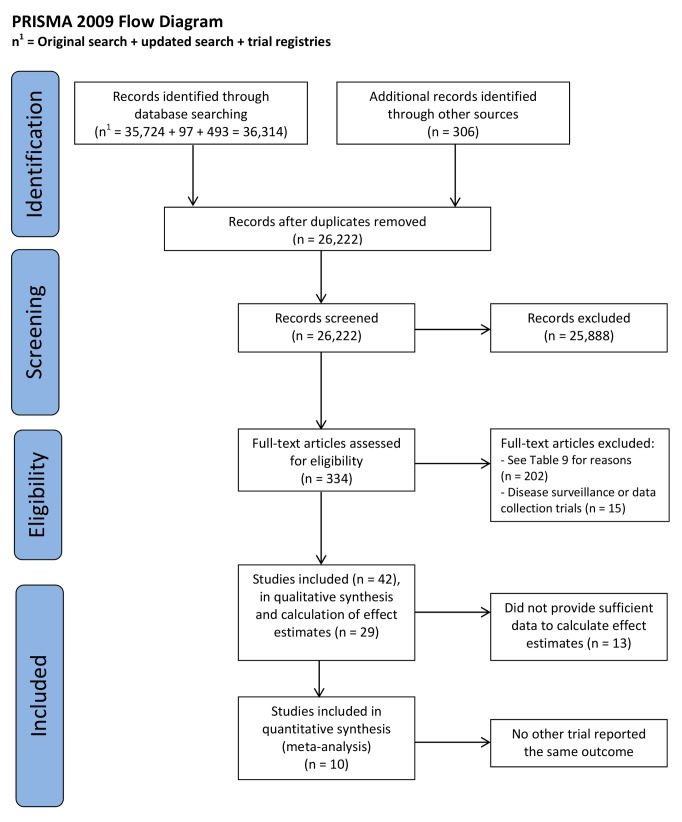
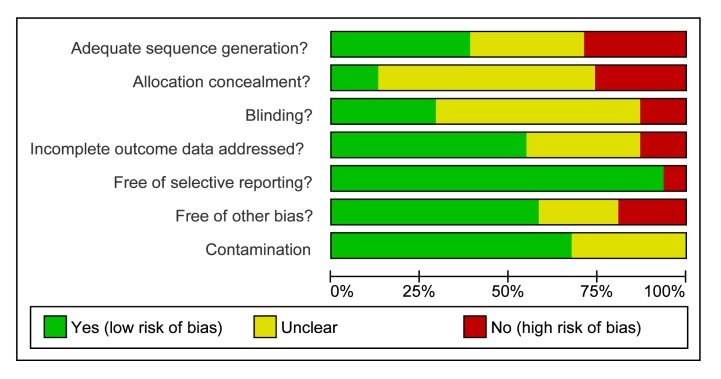
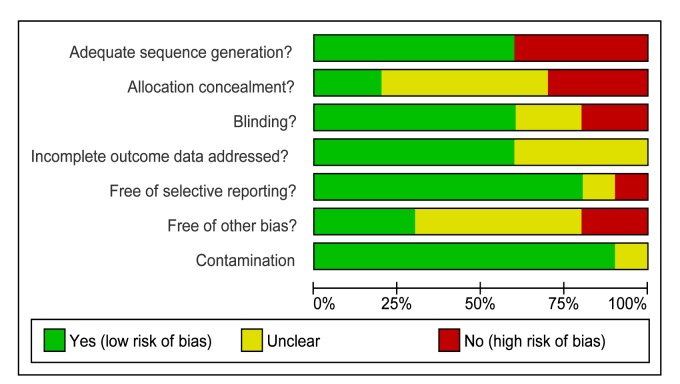
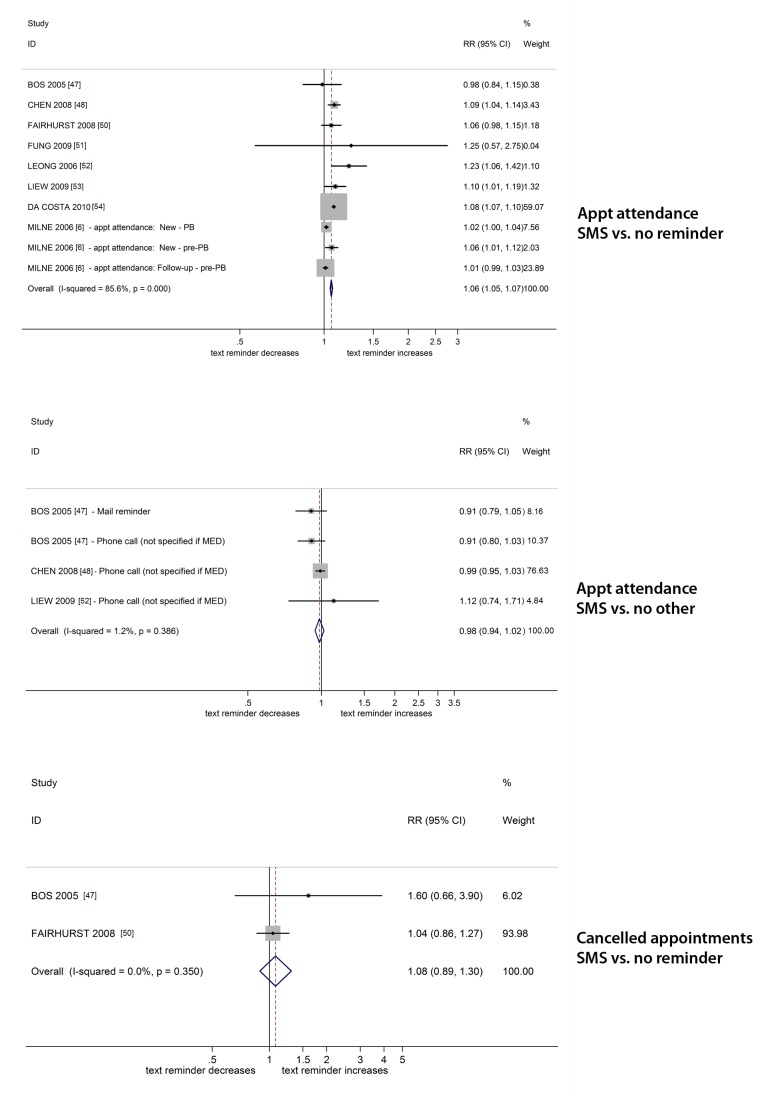
BACKGROUND: Mobile health interventions could have beneficial effects on health care delivery processes. We aimed to conduct a systematic review of controlled trials of mobile technology interventions to improve health care delivery processes. METHODS AND FINDINGS: We searched for all controlled trials of mobile technology based health interventions using MEDLINE, EMBASE, PsycINFO, Global Health, Web of Science, Cochrane Library, UK NHS HTA (Jan 1990-Sept 2010). Two authors independently extracted data on allocation concealment, allocation sequence, blinding, completeness of follow-up, and measures of effect. We calculated effect estimates and we used random effects meta-analysis to give pooled estimates. We identified 42 trials. None of the trials had low risk of bias. Seven trials of health care provider support reported 25 outcomes regarding appropriate disease management, of which 11 showed statistically significant benefits. One trial reported a statistically significant improvement in nurse/surgeon communication using mobile phones. Two trials reported statistically significant reductions in correct diagnoses using mobile technology photos compared to gold standard. The pooled effect on appointment attendance using text message (short message service or SMS) reminders versus no reminder was increased, with a relative risk (RR) of 1.06 (95% CI 1.05-1.07, I(2) = 6%). The pooled effects on the number of cancelled appointments was not significantly increased RR 1.08 (95% CI 0.89-1.30). There was no difference in attendance using SMS reminders versus other reminders (RR 0.98, 95% CI 0.94-1.02, respectively). To address the limitation of the older search, we also reviewed more recent literature. CONCLUSIONS: The results for health care provider support interventions on diagnosis and management outcomes are generally consistent with modest benefits. Trials using mobile technology-based photos reported reductions in correct diagnoses when compared to the gold standard. SMS appointment reminders have modest benefits and may be appropriate for implementation. High quality trials measuring clinical outcomes are needed. Please see later in the article for the Editors' Summary.
Overview
The claims and statistics of this paper haven’t been checked yet.
Free: it reads the open-access text and checks the first 5 claims that cite a source we can check. Create a free account to check every claim.
Integrity signals
Registry
Cites
Statistics
Figures
Verification
Claims the paper makes
The claims and statistics of this paper haven’t been checked yet.
Free: it reads the open-access text and checks the first 5 claims that cite a source we can check. Create a free account to check every claim.
Claims other papers make about this one
Each is checked against this paper’s own text: does it say what the citing paper says it does?
The source backs part of the claim, not all of it — or backs it for a different population, condition or comparison.
In the citing paper
“As per our knowledge, there has been no robust impact analysis of the m-health intervention from India [21].”
From Impact of m‐health application used by community health volunteers on improving utilisation of maternal, new‐born and child health care services in a rural area of Uttar Pradesh, India (2017) · cites this paper as [21]
Experimental — accuracy not yet measuredThe source backs part of the claim, not all of it — or backs it for a different population, condition or comparison.
In the citing paper
“Although low-cost mobile devices provide new and potentially transformative opportunities for all those working to improve health outcomes, nevertheless, to date, there is little evidence on mHealth interventions that have been implemented in LMICs and assessed in terms of specific outcomes.”
From Assessing the impact of mHealth interventions in low- and middle-income countries – what has been shown to work? (2014) · cites this paper as [7]
Experimental — accuracy not yet measuredIn the citing paper
“Another review, focused on the impact of SMS interventions, found that text messaging increased adherence to antiretroviral treatment with reductions in viral load and biochemically verified smoking cessation, yet these effects were “small and of borderline clinical importance” [9].”
From Impact of mHealth chronic disease management on treatment adherence and patient outcomes: a systematic review (2015) · cites this paper as [9]
In the citing paper
“The reported impact of mHealth interventions is mixed, with studies showing modest benefits for some clinical diagnosis and management support outcomes [9,10].”
From Impact of mHealth chronic disease management on treatment adherence and patient outcomes: a systematic review (2015) · cites this paper as [9]
In the citing paper
“One of the ways to generate demand is through quality counselling of pregnant women [21] and use of m-health with its associated audio visual support for improving the quality of counselling delivered through ASHAs.”
4 more claims about this paper
Create a free account to see every claim other papers make about this one.
Self-check
Percentages, sums and reported differences re-computed from the paper’s own numbers.
The self-check needs the paper’s full text.
Citations
Cites
Pharmacological interventions for somatoform disorders in adults
Kleinstäuber, M., Witthöft, M., Steffanowski, A., van Marwijk, H., Hiller, W., & Lambert, M. J. (2014) · Cochrane Database of Systematic Reviews · doi:10.1002/14651858.cd010628.pub2 · Cited by 11,335
Cochrane Handbook for Systematic Reviews of Interventions Version 5.0.1. The Cochrane Collaboration
Higgins, J. P. T., Green, S. R., & Higgins, J. P. T. (2008) · Cited by 7,259
Assessing the quality of controlled clinical trials
Jüni, P., Altman, D. G., & Egger, M. (2001) · BMJ · doi:10.1136/bmj.323.7303.42 · Cited by 3,309 · cited 1×
“Factors influencing heterogeneity of effect estimates include low trial quality, in particular inadequate allocation concealment [60], participant factors such as demographics or disease status, the setting (hospital, primary care), the intervention features (components, intensity, timing), the…”
Free, C., Phillips, G., Galli, L., Watson, L., Felix, L., Edwards, P., Patel, V., & Haines, A. (2013) · PLoS Medicine · doi:10.1371/journal.pmed.1001362 · Cited by 1,766 · cited 3×
“Other trials identified are reported elsewhere [13].”
InfluentialSelf-citationHealthcare via Cell Phones: A Systematic Review
Krishna, S., Boren, S. A., & Balas, E. A. (2009) · Telemedicine and e-Health · doi:10.1089/tmj.2008.0099 · Cited by 882 · cited 3×
“The review expands and updates the findings of earlier systematic reviews that focussed on specific devices, and/or specific functions, and/or specific health topics [8,11,58].”
Research Approaches to Mobile Use in the Developing World: A Review of the Literature
Donner, J. (2008) · The Information Society · doi:10.1080/01972240802019970 · Cited by 743 · cited 1×
“In low-income countries, mobile communication technology is the fastest growing sector of the communications industry and geographical coverage is high [4–7].”
Early Diagnosis of Cutaneous Melanoma: Revisiting the ABCD Criteria
Abbasi, N. R., Shaw, H. M., Rigel, D. S., Friedman, R. J., McCarthy, W. H., Osman, I., Kopf, A. W., & Polsky, D. (2004) · JAMA · doi:10.1001/jama.292.22.2771 · Cited by 668
Mobile phone messaging reminders for attendance at healthcare appointments
Gurol-Urganci, I., de Jongh, T., Vodopivec-Jamsek, V., Atun, R., & Car, J. (2013) · Cochrane Database of Systematic Reviews · doi:10.1002/14651858.cd007458.pub3 · Cited by 594 · cited 1×
“and Car that text messages can reduce missed appointments [8,59].”
Free, C., Phillips, G., Felix, L., Galli, L., Patel, V., & Edwards, P. (2010) · BMC Research Notes · doi:10.1186/1756-0500-3-250 · Cited by 539 · cited 1×
“We adhered to our published plan of investigation as outlined in the study protocol [12].”
Self-citationZurovac, D., Sudoi, R. K., Akhwale, W. S., Ndiritu, M., Hamer, D. H., Rowe, A. K., & Snow, R. W. (2011) · The Lancet · doi:10.1016/s0140-6736(11)60783-6 · Cited by 403 · cited 3×
“One high quality trial published since our literature search was completed shows benefits in adherence to malaria treatment guidelines [61].”
Influential
Research works printed but not linked: 4
- International Telecommunications Union (2010) The world in 2010: ICT facts and figures. International Telecommunication Union
- Ofcom (2009) The consumer experience: telecoms, internet and digital broadcasting 2009. Evaluation report
- McLeod TG, McNaughton DA, Hanson GJ, Borrud A (2006) Teaching geriatric functional assessment to internal medicine residents: A randomized trial of a personal digital assistant - Based tool. Journal of General Internal Medicine 21: 134– 135.16336621
- India adds 13.45 mn mobile users in Feb: TRAI. The Economic Times India
Cited by
Free, C., Phillips, G., Galli, L., Watson, L., Felix, L., Edwards, P., Patel, V., & Haines, A. (2013) · PLoS Medicine · doi:10.1371/journal.pmed.1001362 · Cited by 1,766
“A cu te d is e a se B o lle 20 09 [1 33 ] U H U L L L L”
Self-citationGlobal health 2035: a world converging within a generation
Jamison, D. T., Summers, L. H., Alleyne, G., Arrow, K. J., Berkley, S., Binagwaho, A., Bustreo, F., Evans, D., Feachem, R. G. A., Frenk, J., et al. (2013) · The Lancet · doi:10.1016/s0140-6736(13)62105-4 · Cited by 1,220
The impact of mHealth interventions: systematic review of systematic reviews
Marcolino, M. S., Oliveira, J. A. Q., D'Agostino, M., Ribeiro, A. L., Alkmim, M. B. M., & Novillo-Ortiz, D. (2018) · JMIR mHealth and uHealth · doi:10.2196/mhealth.8873 · Cited by 1,163
Hamine, S., Gerth-Guyette, E., Faulx, D., Green, B. B., & Ginsburg, A. S. (2015) · Journal of Medical Internet Research · doi:10.2196/jmir.3951 · Cited by 1,149
“Another review, focused on the impact of SMS interventions, found that text messaging increased adherence to antiretroviral treatment with reductions in viral load and biochemically verified smoking cessation, yet these effects were “small and of borderline clinical importance” [9].”
Mobile phone-based interventions for smoking cessation
Whittaker, R., McRobbie, H., Bullen, C., Rodgers, A., & Gu, Y. (2016) · Cochrane Database of Systematic Reviews · doi:10.1002/14651858.cd006611.pub4 · Cited by 1,079
[Global health 2035: a world converging within a generation].
Jamison, D. T. T., Summers, L. H., Alleyne, G. A. O., Arrow, K. J., Berkley, S., Binagwaho, A., Bustreo, F., Evans, D., Feachem, R. G., Frenk, J. M., et al. (2015) · PubMed · Cited by 944
Development and validation of the user version of the Mobile application rating scale (uMARS)
Stoyanov, S. R., Hides, L., Kavanagh, D. J., & Wilson, H. (2016) · JMIR mhealth and uhealth · doi:10.2196/mhealth.5849 · Cited by 872
Mobile-health: A review of current state in 2015
Silva, B. M. C., Rodrigues, J. J. P. C., de la Torre Díez, I., López-Coronado, M., & Saleem, K. (2015) · Journal of Biomedical Informatics · doi:10.1016/j.jbi.2015.06.003 · Cited by 871
“These services are having a great impact on healthcare industry and truly revolutionizing the healthcare delivery [35].”
BackgroundThe emerging field of mobile health
Steinhubl, S. R., Muse, E. D., & Topol, E. J. (2015) · Science Translational Medicine · doi:10.1126/scitranslmed.aaa3487 · Cited by 822
“Several recent meta-analyses and systematic reviews conclude that high-quality evidence is lacking for the use of mHealth to effect behavioral changes or to manage chronic diseases, inpatient care, or health care delivery ( 24 – 26 ).”
BackgroundInteractive telemedicine: effects on professional practice and health care outcomes
Flodgren, G., Rachas, A., Farmer, A. J., Inzitari, M., & Shepperd, S. (2015) · Cochrane Database of Systematic Reviews · doi:10.1002/14651858.cd002098.pub2 · Cited by 806
Poulter, N. R., Prabhakaran, D., & Caulfield, M. (2015) · The Lancet · doi:10.1016/s0140-6736(14)61468-9 · Cited by 672
Scaling Up mHealth: Where Is the Evidence?
Tomlinson, M., Rotheram-Borus, M. J., Swartz, L., & Tsai, A. C. (2013) · PLoS Medicine · doi:10.1371/journal.pmed.1001382 · Cited by 673
“Two recent systematic reviews [23,24] found modest and suggestive evidence for the benefits of mHealth technology, and while both reviews recommended implementation, they argued that high quality (and adequately powered) clinical trials that measure clinical outcomes are essential.”
Backgroundm-Health adoption by healthcare professionals: a systematic review
Gagnon, M.-P., Ngangue, P., Payne-Gagnon, J., & Desmartis, M. (2016) · Journal of the American Medical Informatics Association · doi:10.1093/jamia/ocv052 · Cited by 622
Labrique, A. B., Vasudevan, L., Kochi, E., Fabricant, R., & Mehl, G. (2013) · Global Health: Science and Practice · doi:10.9745/ghsp-d-13-00031 · Cited by 601
“engage 1 or more actors (such as a pregnant woman, a husband, family, community)—influences health behaviors, such as adherence to medication or use of health services.(3,14) The”
BackgroundMobile phone messaging reminders for attendance at healthcare appointments
Gurol-Urganci, I., de Jongh, T., Vodopivec-Jamsek, V., Atun, R., & Car, J. (2013) · Cochrane Database of Systematic Reviews · doi:10.1002/14651858.cd007458.pub3 · Cited by 594
Review and evaluation of mindfulness-based iPhone apps
Mani, M., Kavanagh, D. J., Hides, L., & Stoyanov, S. R. (2015) · JMIR mHealth and uHealth · doi:10.2196/mhealth.4328 · Cited by 495
“While Web-based interventions are gaining empirical support [12], mobile interventions are still in their infancy [13].”
BackgroundThe politics of reducing malnutrition: building commitment and accelerating progress
Gillespie, S., Haddad, L., Mannar, V., Menon, P., & Nisbett, N. (2013) · The Lancet · doi:10.1016/s0140-6736(13)60842-9 · Cited by 460
Health literacy in the eHealth era: A systematic review of the literature
Kim, H., & Xie, B. (2017) · Patient Education and Counseling · doi:10.1016/j.pec.2017.01.015 · Cited by 452
“Mobile Health (mHealth) represents a subset of eHealth and can be defined as “the use of mobile computing and communication technologies in health care and public health” [3].”
BackgroundLee, S. H., Nurmatov, U. B., Nwaru, B. I., Mukherjee, M., Grant, L., & Pagliari, C. (2016) · Journal of Global Health · doi:10.7189/jogh.06.010401 · Cited by 456
Remote Patient Monitoring via Non-Invasive Digital Technologies: A Systematic Review
Vegesna, A., Tran, M., Angelaccio, M., & Arcona, S. (2017) · Telemedicine and e-Health · doi:10.1089/tmj.2016.0051 · Cited by 404
Skills for disruptive digital business
Sousa, M. J., & Rocha, Á. (2019) · Journal of Business Research · doi:10.1016/j.jbusres.2017.12.051 · Cited by 403
Hall, C. S., Fottrell, E., Wilkinson, S., & Byass, P. (2014) · Global Health Action · doi:10.3402/gha.v7.25606 · Cited by 384
“An extensive review and meta-analysis of mHealth interventions aimed at improving healthcare delivery identified 42 controlled trials, but concluded that none delivered high-quality evidence and almost all were in high-income countries (7).”
BackgroundCane, J., Richardson, M., Johnston, M., Ladha, R., & Michie, S. (2015) · British Journal of Health Psychology · doi:10.1111/bjhp.12102 · Cited by 376
“The application of such classification systems is growing rapidly (e.g., Ara ujo-Soares, McIntyre, MacLennan, & Sniehotta, 2009; Chadwick &Benelam, 2013;Dombrowski et al., 2012; Free et al., 2013;Michie, Free,&West, 2012).”
BackgroundVirtual reality exposure therapy for social anxiety disorder: A randomized controlled trial.
Anderson, P. L., Price, M., Edwards, S. M., Obasaju, M. A., Schmertz, S. K., Zimand, E., & Calamaras, M. R. (2013) · Journal of Consulting and Clinical Psychology · doi:10.1037/a0033559 · Cited by 371
mHealth 2.0: Experiences, Possibilities, and Perspectives
Becker, S., Miron-Shatz, T., Schumacher, N., Krocza, J., Diamantidis, C., & Albrecht, U.-V. (2014) · JMIR mHealth and uHealth · doi:10.2196/mhealth.3328 · Cited by 354
“However, text message reminders were no more effective than postal or phone call reminders and texting reminders to patients who persistently missed appointments did not significantly change the number of cancelled appointments [28].”
BackgroundResultConsumer Mobile Health Apps: Current State, Barriers, and Future Directions
Kao, C., & Liebovitz, D. M. (2017) · PM&R · doi:10.1016/j.pmrj.2017.02.018 · Cited by 350
Engaging patients in decision-making and behavior change to promote prevention
Krist, A. H., Tong, S. T., Aycock, R. A., & Longo, D. R. (2017) · Information Services and Use · doi:10.3233/isu-170826 · Cited by 287
Bibliometric analysis of worldwide scientific literature in mobile - health: 2006–2016
Sweileh, W. M., Al-Jabi, S. W., AbuTaha, A. S., Zyoud, S. H., Anayah, F. M. A., & Sawalha, A. F. (2017) · BMC Medical Informatics and Decision Making · doi:10.1186/s12911-017-0476-7 · Cited by 319
Mobile Health Interventions for Improving Health Outcomes in Youth: A Meta-analysis
Fedele, D. A., Cushing, C. C., Fritz, A., Amaro, C. M., & Ortega, A. (2017) · JAMA Pediatrics · doi:10.1001/jamapediatrics.2017.0042 · Cited by 316
“Reviewsof theeffectivenessofmHealth interventionshave predominantly focused on adult populations.(5,8,9) These reviews suggest thatmHealth interventions appear to be promising for a number of health-related areas, including chronic illness management, adherence, and appointment attendance.”
BackgroundBig data analytics: Computational intelligence techniques and application areas
Iqbal, R., Doctor, F., More, B., Mahmud, S., & Yousuf, U. (2020) · Technological Forecasting and Social Change · doi:10.1016/j.techfore.2018.03.024 · Cited by 263
“Monitoring and delivering these services though personal (Harding, 2015), cloud based (Sultan,2014), m-Health (Free, 2013) and Internet of Things applications (Pang, 2015) will help to empower people to manage their health and life style more effectively, owing to reduced healthcare costs.”
(2018) · doi:10.2196/mhealth.8383 · Cited by 266
Andrade, R., Pereira, R., van Cingel, R., Staal, J. B., & Espregueira-Mendes, J. (2020) · British Journal of Sports Medicine · doi:10.1136/bjsports-2018-100310 · Cited by 264
Economic and social development along the urban–rural continuum: New opportunities to inform policy
Cattaneo, A., Adukia, A., Brown, D. L., Christiaensen, L., Evans, D. K., Haakenstad, A., McMenomy, T., Partridge, M., Vaz, S., & Weiss, D. J. (2022) · World Development · doi:10.1016/j.worlddev.2022.105941 · Cited by 200
Han, M., & Lee, E. (2018) · Healthcare Informatics Research · doi:10.4258/hir.2018.24.3.207 · Cited by 239
“For this reason, most consumers use mHealth apps without any concrete information about their effectiveness or harm and evidence of the effectiveness of mHealth has been inconclusive and not fully understood [4].”
BackgroundVashist, S., Schneider, E., & Luong, J. (2014) · Diagnostics · doi:10.3390/diagnostics4030104 · Cited by 244
“The personalized monitoring of health by the determination of weight, activity, sleep, heart rate, blood glucose diet and other parameters is immensely useful for the management of important chronic health conditions, such as diabetes, obesity, depression, ageing and mental health [1,39–57].”
BackgroundRouleau, G., Gagnon, M.-P., Côté, J., Payne-Gagnon, J., Hudson, E., & Dubois, C.-A. (2017) · Journal of Medical Internet Research · doi:10.2196/jmir.6686 · Cited by 244
“Impact of CDSSs, management, and communication systems were mixed, that is, positive effects were mentioned in seven reviews [15,17,41,44,49,55,56], negative effects were mentioned in five reviews [15,16,41,42,54], and no effect was documented in two reviews [16,55].”
InfluentialBeyond Self-Tracking and Reminders: Designing Smartphone Apps That Support Habit Formation
Stawarz, K., Cox, A. L., & Blandford, A. (2015) · Proceedings of the 33rd Annual ACM Conference on Human Factors in Computing Systems · doi:10.1145/2702123.2702230 · Cited by 237
Bogale, B., Mørkrid, K., O’Donnell, B., Ghanem, B., Abu Ward, I., Abu Khader, K., Isbeih, M., Frost, M., Baniode, M., Hijaz, T., et al. (2020) · BMC Medical Informatics and Decision Making · doi:10.1186/s12911-019-1002-x · Cited by 234
The global divide in data-driven farming
Mehrabi, Z., McDowell, M. J., Ricciardi, V., Levers, C., Martinez, J. D., Mehrabi, N., Wittman, H., Ramankutty, N., & Jarvis, A. (2020) · Nature Sustainability · doi:10.1038/s41893-020-00631-0 · Cited by 219
mHealth in the Wild: Using Novel Data to Examine the Reach, Use, and Impact of PTSD Coach
Owen, J. E., Jaworski, B. K., Kuhn, E., Makin-Byrd, K. N., Ramsey, K. M., & Hoffman, J. E. (2015) · JMIR Mental Health · doi:10.2196/mental.3935 · Cited by 216
“Mobile health (mHealth) refers to an interdisciplinary branch of eHealth, focused on utilizing mobile technologies for health improvement initiatives [2,3].”
DialBetics: A Novel Smartphone-based Self-management Support System for Type 2 Diabetes Patients
Waki, K., Fujita, H., Uchimura, Y., Omae, K., Aramaki, E., Kato, S., Lee, H., Kobayashi, H., Kadowaki, T., & Ohe, K. (2014) · Journal of Diabetes Science and Technology · doi:10.1177/1932296814526495 · Cited by 203
“Our results were consistent with previous reports showing the usefulness of diabetes-management by mobile phone.(13,14) The DialBetics group, which received evaluation of their health data when measured, and timely diet and exercise advice, had significantly improved HbA1c compared with that of the non-DialBetics pati…”
ResultWildevuur, S. E., & Simonse, L. W. (2015) · Journal of Medical Internet Research · doi:10.2196/jmir.3687 · Cited by 203
Stawarz, K., Preist, C., Tallon, D., Wiles, N., & Coyle, D. (2018) · Journal of Medical Internet Research · doi:10.2196/10120 · Cited by 198
“Studies have been conducted focusing on the development of mobile apps to support mental health [19-28], and more detailed reviews and analyses of existing research are also available [4,29-31].”
BackgroundPerspectives on the Evolution of Mobile (mHealth) Technologies and Application to Rehabilitation
Dicianno, B. E., Parmanto, B., Fairman, A. D., Crytzer, T. M., Yu, D. X., Pramana, G., Coughenour, D., & Petrazzi, A. A. (2015) · Physical Therapy · doi:10.2522/ptj.20130534 · Cited by 196
“8,9 One meta-analysis reviewed several trials and reported overall modest evidence that text messaging has a positive impact on self-management and outcomes in conditions such as diabetes, asthma, and hypertension.”
BackgroundDunleavy, G., Nikolaou, C. K., Nifakos, S., Atun, R., Law, G. C. Y., & Tudor Car, L. (2019) · Journal of Medical Internet Research · doi:10.2196/12937 · Cited by 181
“With a more robust and systematic methodology, this review collates new evidence published since these reviews were performed [18-21], providing a more comprehensive, focused and up-to-date evaluation of mLearning in health professions education.”
Miner, A., Kuhn, E., Hoffman, J. E., Owen, J. E., Ruzek, J. I., & Taylor, C. B. (2016) · Psychological Trauma: Theory, Research, Practice, and Policy · doi:10.1037/tra0000092 · Cited by 185
Mobile Health (m-Health) in Retrospect: The Known Unknowns
Istepanian, R. S. H. (2022) · International Journal of Environmental Research and Public Health · doi:10.3390/ijerph19073747 · Cited by 168
“Furthermore, this reoriented mobile health and interpretation is still being labeled as an emerging field without in depth understanding of the above important issues [5].”
BackgroundMobile applications in medical education: A systematic review and meta-analysis
Chandran, V. P., Balakrishnan, A., Rashid, M., Pai Kulyadi, G., Khan, S., Devi, E. S., Nair, S., & Thunga, G. (2022) · PLOS ONE · doi:10.1371/journal.pone.0265927 · Cited by 158
“Nevertheless, these results were not carefully checked, and there was no quantification in the effectiveness of mobile learning interventions [6].”
BackgroundEngaging Patients in Decision-Making and Behavior Change to Promote Prevention.
Krist, A. H., Tong, S. T., Aycock, R. A., & Longo, D. R. (2017) · PubMed · Cited by 407
Orr, J. A., & King, R. J. (2015) · Health Psychology Review · doi:10.1080/17437199.2015.1022847 · Cited by 174
Santarossa, S., Kane, D., Senn, C. Y., & Woodruff, S. J. (2018) · Journal of Medical Internet Research · doi:10.2196/jmir.8480 · Cited by 172
Daher, J., Vijh, R., Linthwaite, B., Dave, S., Kim, J., Dheda, K., Peter, T., & Pai, N. P. (2017) · BMJ Open · doi:10.1136/bmjopen-2017-017604 · Cited by 173
Kamal, A. K., Shaikh, Q., Pasha, O., Azam, I., Islam, M., Memon, A. A., Rehman, H., Akram, M. A., Affan, M., Nazir, S., et al. (2015) · BMC Neurology · doi:10.1186/s12883-015-0471-5 · Cited by 159
“SMS based interventions have shown modest effect [33–41].”
BackgroundIqbal, R., Doctor, F., More, B., Mahmud, S., & Yousuf, U. (2020) · Future Generation Computer Systems · doi:10.1016/j.future.2017.10.021 · Cited by 155
“Monitoring and delivering these services though personal (Harding, 2015), cloud based (Sultan,2014), mHealth (Free, 2013) and Internet of Things (IoT) applications (Pang, 2015) will help to empower people to manage their health and life style more effectively, owing to reduced healthcare costs.”
BackgroundBloomfield, G. S., Vedanthan, R., Vasudevan, L., Kithei, A., Were, M., & Velazquez, E. J. (2014) · Globalization and Health · doi:10.1186/1744-8603-10-49 · Cited by 154
“There have been a number of systematic reviews of the effectiveness of mHealth for improving adherence to clinic attendance [26], improving health care service delivery [27], and healthcare in general [28].”
BackgroundGoing Digital: A Survey on Digitalization and Large-Scale Data Analytics in Healthcare
Tresp, V., Marc Overhage, J., Bundschus, M., Rabizadeh, S., Fasching, P. A., & Yu, S. (2016) · Proceedings of the IEEE · doi:10.1109/jproc.2016.2615052 · Cited by 149
“Currently this exciting field is in a flux and opportunities, challenges and crucial factors for the widespread adoption are discussed in current research [86], [87], [88], [89].”
BackgroundOdeny, T. A., Bukusi, E. A., Cohen, C. R., Yuhas, K., Camlin, C. S., & McClelland, R. S. (2014) · AIDS · doi:10.1097/qad.0000000000000409 · Cited by 151
Electrospun polyetherimide electret nonwoven for bi-functional smart face mask
Cheng, Y., Wang, C., Zhong, J., Lin, S., Xiao, Y., Zhong, Q., Jiang, H., Wu, N., Li, W., Chen, S., et al. (2017) · Nano Energy · doi:10.1016/j.nanoen.2017.03.011 · Cited by 155
Peiris, D., Praveen, D., Johnson, C., & Mogulluru, K. (2014) · Journal of Cardiovascular Translational Research · doi:10.1007/s12265-014-9581-5 · Cited by 177
“Although the number of studies included in these reviews have been few in number, improvements have been observed in health care service delivery processes [10], behavior change (particularly smoking cessation) [10, 11], and use of geographic information systems to support improved health care [12].”
BackgroundGrainger, R., Townsley, H., White, B., Langlotz, T., & Taylor, W. J. (2017) · JMIR mHealth and uHealth · doi:10.2196/mhealth.6956 · Cited by 145
“Furthermore, there is some evidence that mHealth interventions such as smartphone apps may improve outcomes for people with other chronic diseases [7,13,14].”
BackgroundGonçalves-Bradley, D. C., J Maria, A. R., Ricci-Cabello, I., Villanueva, G., Fønhus, M. S., Glenton, C., Lewin, S., Henschke, N., Buckley, B. S., Mehl, G. L., et al. (2020) · Cochrane Database of Systematic Reviews · doi:10.1002/14651858.cd012927.pub2 · Cited by 145
Management of NCD in Low- and Middle-Income Countries
Checkley, W., Ghannem, H., Irazola, V., Kimaiyo, S., Levitt, N. S., Miranda, J. J., Niessen, L., Prabhakaran, D., Rabadán-Diehl, C., Ramirez-Zea, M., et al. (2014) · Global Heart · doi:10.1016/j.gheart.2014.11.003 · Cited by 141
“Mobile phones are common in LMICs, even among the poorest, but so far systematic reviews have shown effectiveness only for specific conditions, such as the use of text messaging for reminders [51,52].”
BackgroundMcLean, S. M., Booth, A., Gee, M., Salway, S., Cobb, M., Bhanbhro, S., & Nancarrow, S. (2016) · Patient Preference and Adherence · doi:10.2147/ppa.s93046 · Cited by 171
“Four reviews passed the Centre for Reviews and Dissemination SR quality threshold.(17,35,39,41) Two reviews did not pass the minimum standard for SRs.”
BackgroundSiegel, C., & Dorner, T. E. (2017) · International Journal of Medical Informatics · doi:10.1016/j.ijmedinf.2017.01.012 · Cited by 172
Smartphone breast applications – What's the evidence?
Mobasheri, M. H., Johnston, M., King, D., Leff, D., Thiruchelvam, P., & Darzi, A. (2014) · The Breast · doi:10.1016/j.breast.2014.07.006 · Cited by 137
“Clinical trials [6,16], structured in-depth critical appraisal [33,34], and vetting processes [35e37] have been proposed as potential solutions to the problem.”
BackgroundRono, H. K., Bastawrous, A., Macleod, D., Wanjala, E., Di Tanna, G. L., Weiss, H. A., & Burton, M. J. (2018) · The Lancet Global Health · doi:10.1016/s2214-109x(18)30244-4 · Cited by 132
“15 Previously, we developed and tested a smartphone application for Tumbling-E visual acuity testing (Peek Acuity app) to measure visual acuity in adults in Kenya.”
MethodPalmer, M., Sutherland, J., Barnard, S., Wynne, A., Rezel, E., Doel, A., Grigsby-Duffy, L., Edwards, S., Russell, S., Hotopf, E., et al. (2018) · PLOS ONE · doi:10.1371/journal.pone.0189801 · Cited by 136
Self-citationMobile phone-based interventions for improving contraception use
Smith, C., Gold, J., Ngo, T. D., Sumpter, C., & Free, C. (2015) · Cochrane Database of Systematic Reviews · doi:10.1002/14651858.cd011159.pub2 · Cited by 136
Self-citationLall, P., Rees, R., Law, G. C. Y., Dunleavy, G., Cotič, Ž., & Car, J. (2019) · Journal of Medical Internet Research · doi:10.2196/12895 · Cited by 138
“For example, a meta-analysis by Free et al [14] included 7 randomized controlled trials and investigated the educational outcomes associated with the use of personal digital assistants (PDAs) and portable media players in medical and nursing education.”
Adler, A. J., Prabhakaran, D., Bovet, P., Kazi, D. S., Mancia, G., Mungal-Singh, V., & Poulter, N. (2015) · Global Heart · doi:10.1016/j.gheart.2015.04.006 · Cited by 132
“Productivity losses are particularly pronounced in LMICs, where weaker health systems lead to higher rates of uncontrolled hypertension and stroke and a greater likelihood of complications in younger individuals [9].”
BackgroundPraveen, D., Patel, A., Raghu, A., Clifford, G. D., Maulik, P. K., Mohammad Abdul, A., Mogulluru, K., Tarassenko, L., MacMahon, S., & Peiris, D. (2014) · JMIR mHealth and uHealth · doi:10.2196/mhealth.3568 · Cited by 131
Substance Use Disorders and Telehealth in the COVID-19 Pandemic Era
Oesterle, T. S., Kolla, B., Risma, C. J., Breitinger, S. A., Rakocevic, D. B., Loukianova, L. L., Hall-Flavin, D. K., Gentry, M. T., Rummans, T. A., Chauhan, M., et al. (2020) · Mayo Clinic Proceedings · doi:10.1016/j.mayocp.2020.10.011 · Cited by 128
Heathers, J. A. J. (2013) · International Journal of Psychophysiology · doi:10.1016/j.ijpsycho.2013.05.017 · Cited by 133
Lund, S., Rasch, V., Hemed, M., Boas, I. M., Said, A., Said, K., Makundu, M. H., & Nielsen, B. B. (2014) · JMIR mhealth and uhealth · doi:10.2196/mhealth.2941 · Cited by 120
“The benefits of using mobile phone technology in health care systems in developing countries are diverse, and include improved reporting in health information systems, telemedicine providing care to populations otherwise deprived, and texting to improve adherence to treatment therapy [2,3].”
BackgroundResultInfluentialE-Learning for Medical Education in Sub-Saharan Africa and Low-Resource Settings: Viewpoint
Barteit, S., Jahn, A., Banda, S. S., Bärnighausen, T., Bowa, A., Chileshe, G., Guzek, D., Jorge, M. M., Lüders, S., Malunga, G., et al. (2019) · Journal of Medical Internet Research · doi:10.2196/12449 · Cited by 118
“Another limitation of this approach is that evidence from published medical e-learning studies cannot be used for comparison to other e-learning studies [12-14] and lessons that may have been learned from comparison are lost.”
Barata, J., da Cunha, P. R., & Stal, J. (2017) · Journal of Enterprise Information Management · doi:10.1108/jeim-09-2016-0156 · Cited by 152
Evolution and current status of mhealth research: a systematic review
Ali, E. E., Chew, L., & Yap, K. Y.-L. (2016) · BMJ Innovations · doi:10.1136/bmjinnov-2015-000096 · Cited by 119
“Moreover, health conditions addressed by mhealth interventions were broadly categorised into: non-specific conditions, non-communicable conditions (including risk factors and protective health behaviour); infectious diseases and other conditions (see online supplementary appendix 3).”
BackgroundGaletsi, P., Katsaliaki, K., & Kumar, S. (2022) · Technovation · doi:10.1016/j.technovation.2022.102598 · Cited by 150
Balakrishnan, R., Gopichandran, V., Chaturvedi, S., Chatterjee, R., Mahapatra, T., & Chaudhuri, I. (2016) · BMC Medical Informatics and Decision Making · doi:10.1186/s12911-016-0326-z · Cited by 116
“However when the mobile camera photos were used for diagnosis a reduction in correct diagnosis was observed [6].”
MethodVan Dijk, M. R., Huijgen, N. A., Willemsen, S. P., Laven, J. S., Steegers, E. A., & Steegers-Theunissen, R. P. (2016) · JMIR mHealth and uHealth · doi:10.2196/mhealth.5197 · Cited by 113
“Evidence is accumulating that mobile technology can effectively improve inadequate nutrition, lifestyle, and medication adherence [11].”
Mohammed, S., Glennerster, R., & Khan, A. J. (2016) · PLOS ONE · doi:10.1371/journal.pone.0162944 · Cited by 118
Chandler, J., Sox, L., Kellam, K., Feder, L., Nemeth, L., & Treiber, F. (2019) · International Journal of Environmental Research and Public Health · doi:10.3390/ijerph16071226 · Cited by 113
Yang, Q., & Van Stee, S. K. (2019) · JMIR mHealth and uHealth · doi:10.2196/11244 · Cited by 113
““The use of mobile computing and communication technologies in health care and public health” [10] is referred to as mHealth, a rapidly expanding branch within eHealth.”
Mtema, Z. J., Changalucha, J. J., Cleaveland, S., Elias, M., Ferguson, H. M., Halliday, J. E. B., Haydon, D. T., Jaswant, G., Kazwala, R. R., Killeen, G. F., et al. (2016) · PLoS Medicine · doi:10.1371/journal.pmed.1002002 · Cited by 126
“They can be used at low cost to deliver scalable interventions, to tailor and personalize care [2], and importantly, to support direct communication between frontline workers, programme managers, patients, and communities.”
BackgroundBigna, J. J. R., Noubiap, J. J. N., Kouanfack, C., Plottel, C. S., & Koulla-Shiro, S. (2014) · The Lancet Infectious Diseases · doi:10.1016/s1473-3099(14)70741-8 · Cited by 109
Recommendations for the role of social science research in One Health
Lapinski, M. K., Funk, J. A., & Moccia, L. T. (2014) · Social Science & Medicine · doi:10.1016/j.socscimed.2014.09.048 · Cited by 139
“A metaanalysis by Free et al. (2013) on the use of mobile apps for health promotion based on the analysis of 75 studies concludes that textbased (SMS) interventions can have utility for influencing certain health behaviors, but that there is a dearth of solid, statistically high-powered trials to…”
BackgroundEstimating Dynamic Treatment Regimes in Mobile Health Using V-Learning
Luckett, D. J., Laber, E. B., Kahkoska, A. R., Maahs, D. M., Mayer‐Davis, E. J., & Kosorok, M. R. (2019) · Journal of the American Statistical Association · doi:10.1080/01621459.2018.1537919 · Cited by 205
Mobile Tele-Mental Health: Increasing Applications and a Move to Hybrid Models of Care
Chan, S., Torous, J., Hinton, L., & Yellowlees, P. (2014) · Healthcare · doi:10.3390/healthcare2020220 · Cited by 108
“…shown to have modest benefits with no difference being found between text messaging reminders compared with other reminders via post or phone call [16] There are fewer published clinical trials devoted to evaluating smartphone applications, despite more than a decade of the smartphone ’ s…”
BackgroundLittle, A., Medhanyie, A., Yebyo, H., Spigt, M., Dinant, G.-J., & Blanco, R. (2013) · PLoS ONE · doi:10.1371/journal.pone.0077563 · Cited by 107
“been short-term or have covered a limited geography [3,4].”
BackgroundBloss, C. S., Wineinger, N. E., Peters, M., Boeldt, D. L., Ariniello, L., Kim, J. Y., Sheard, J., Komatireddy, R., Barrett, P., & Topol, E. J. (2016) · PeerJ · doi:10.7717/peerj.1554 · Cited by 107
“Many previous studies have shown improvements, but many others have shown none (Free et al., 2013a, b; Hamine et al., 2015; Karhula et al., 2015).”
ResultAssistant Manager, H. R. M. A. A., & Sultana, R. (2022) · doi:10.63125/7tkv8v34 · Cited by 110
An Analysis of WhatsApp Usage for Communication Between Consulting and Emergency Physicians
Gülaçtı, U., Lök, U., Hatipoğlu, S., & Polat, H. (2016) · Journal of Medical Systems · doi:10.1007/s10916-016-0483-8 · Cited by 116
“In meta-analysis, the use of SMS is modest benefits for clinical diagnosis and other health care [9].”
Impact of the Fourth Industrial Revolution on the Health Sector: A Qualitative Study
Castro, J., & Araújo, N. M. F. (2020) · Healthcare Informatics Research · doi:10.4258/hir.2020.26.4.328 · Cited by 122
“Mobile technologies will increase the number of people who are covered by diagnostic, treatment, and follow-up interventions, improving the access to healthcare [4].”
BackgroundA Chatbot-Based Coaching Intervention for Adolescents to Promote Life Skills: Pilot Study
Gabrielli, S., Rizzi, S., Carbone, S., & Donisi, V. (2020) · JMIR Human Factors · doi:10.2196/16762 · Cited by 105
“These solutions have the potential to be highly scalable, since almost three-quarters of adolescents (73%) have a mobile phone or have access to one [12]; as well, digital interventions have been proven to be effective at changing a range of health behaviors [13].”
BackgroundMobile Health in Oncology: A Patient Survey About App-Assisted Cancer Care
Kessel, K. A., Vogel, M. M., Kessel, C., Bier, H., Biedermann, T., Friess, H., Herschbach, P., von Eisenhart-Rothe, R., Meyer, B., Kiechle, M., et al. (2017) · JMIR mHealth and uHealth · doi:10.2196/mhealth.7689 · Cited by 104
“There is an ongoing debate on patients’ and health care professionals’ (HCPs) opinion on app technology and telemedicine [11].”
Müssener, U., Bendtsen, M., Karlsson, N., White, I. R., McCambridge, J., & Bendtsen, P. (2016) · JAMA Internal Medicine · doi:10.1001/jamainternmed.2015.8260 · Cited by 104
“At baseline, participants were smoking a median (range) of 63 (1-238) and 70 (2-280)”
BackgroundInterpretable Predictions of Clinical Outcomes with An Attention-based Recurrent Neural Network
Sha, Y., & Wang, M. D. (2017) · Proceedings of the 8th ACM International Conference on Bioinformatics, Computational Biology,and Health Informatics · doi:10.1145/3107411.3107445 · Cited by 97
“We choose gamma over the logarithmic range of [10-2, 1] and regularization penalty parameter C over the logarithmic range of [10-2, 10].”
BackgroundMethodMobile applications addressing violence against women: a systematic review
Eisenhut, K., Sauerborn, E., García‐Moreno, C., & Wild, V. (2020) · BMJ Global Health · doi:10.1136/bmjgh-2019-001954 · Cited by 121
Njoroge, M., Zurovac, D., Ogara, E. A. A., Chuma, J., & Kirigia, D. (2017) · BMC Research Notes · doi:10.1186/s13104-017-2416-0 · Cited by 100
“Implementers favour mobile health projects due to the high geographical coverage of the mobile network particularly in developing countries [57].”
BackgroundEffect of a Digital Social Media Campaign on Young Adult Smoking Cessation
Baskerville, N. B., Azagba, S., Norman, C., McKeown, K., & Brown, K. S. (2016) · Nicotine & Tobacco Research · doi:10.1093/ntr/ntv119 · Cited by 96
Metadata
- Authors
- Free, C., Phillips, G., Watson, L., Galli, L., Felix, L., Edwards, P., Patel, V., & Haines, A.
- Affiliations
- London School of Hygiene & Tropical Medicine (GB)
- University of Warwick (GB)
- Imperial College London (GB)
- Corresponding author
- Free, Caroline
- Venue
- PLoS Medicine
- Publisher
- Public Library of Science (PLoS)
- Published
- 2013-01-15
- Volume
- 10
- Issue
- 1
- Pages
- e1001363
- ISSN
- 1549-1277 (ISSN-L)
- 1549-1676
- PMC
- PMC3566926
- OpenAlex
- W1977977041
- Cited by
- 1,187
- References
- 70
- Citations by year
- 2026: 71 · 2025: 72 · 2024: 91 · 2023: 55 · 2022: 61 · 2021: 97 · 2020: 102 · 2019: 104 · 2018: 125 · 2017: 94 · 2016: 115 · 2015: 87 · 2014: 80 · 2013: 31
- FWCI
- 12.56
- Type
- journal article
- Language
- en
- Open access
- gold
- doi.org
- Locations
- PLoS Medicine (publishedVersion, cc-by)
- Europe PMC (PubMed Central) (publishedVersion, cc-by)
- PubMed Central (publishedVersion, cc-by)
- PubMed (publishedVersion)
- Research Explorer (The University of Manchester) (publishedVersion, other-oa)
- LSHTM Research Online (London School of Hygiene and Tropical Medicine) (acceptedVersion)
- DOAJ (DOAJ: Directory of Open Access Journals) (submittedVersion, cc-by-sa)
- Figshare (submittedVersion, cc-by)
- Funders
- Wellcome Trust (091834)
- National Institute for Health and Care Research
- Topics
- Health Sciences › Health Professions › General Health Professions › Mobile Health and mHealth Applications
- Health Sciences › Medicine › Public Health, Environmental and Occupational Health › Telemedicine and Telehealth Implementation
- Physical Sciences › Computer Science › Information Systems › Mobile Learning in Education
- Keywords
- mobile health, health care delivery, healthcare provider support, appointment attendance, appointment cancellation, diagnostic accuracy, disease management
- MeSH terms
- Clinical Trials as Topic, Communication, Health Personnel, Health Services, Humans, Bias, Treatment Outcome, Telemedicine, Disease Management, Biomedical Technology
About these checks
Registry, retraction, Cites and statistics results are computed, not judged, with one exception: a printed reference that no index lists is read once by a model before it counts as a citation error. Claims are extracted by a model and kept only when their quote appears verbatim in the text; each cited source is then checked, with a model’s help, for whether it says what the claim relies on. Those verdicts can be wrong — read the claim’s quote and the cited source before relying on one.
Statistics and arithmetic are recomputed, not judged.
Confidence bands are shown only for fields calibrated on our annotated test set. None is calibrated yet, so no band is shown.
What counts as a claim ›How we measure confidence ›How we check this ›
Are you an author, or do you see a problem with this page? Request a review
Data sources
Bibliographic data: Semantic Scholar, OpenAlex, Crossref.
Contains information from the Semantic Scholar Academic Graph Datasets, made available under the ODC Attribution License (ODC-BY 1.0).
Semantic Scholar’s data is described in: Kinney, R., et al. (2023). The Semantic Scholar Open Data Platform. arXiv:2301.10140.
