

Inter-Brain Synchronization during Social Interaction
Open accessThe DOI matches its Crossref record; 67 of the 68 references it cites were found in a registry or an index.
Abstract
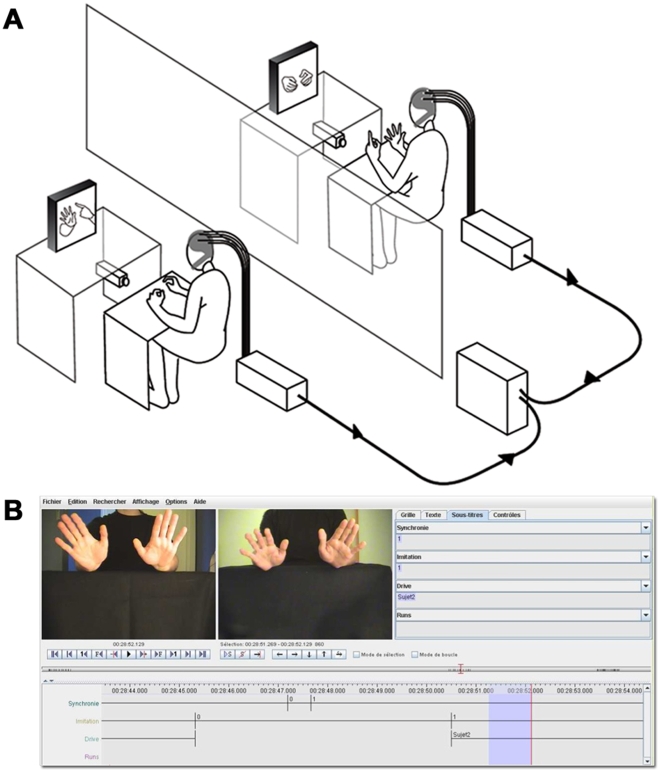
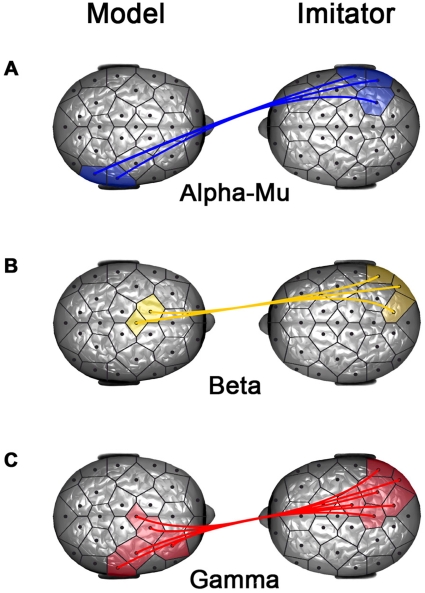
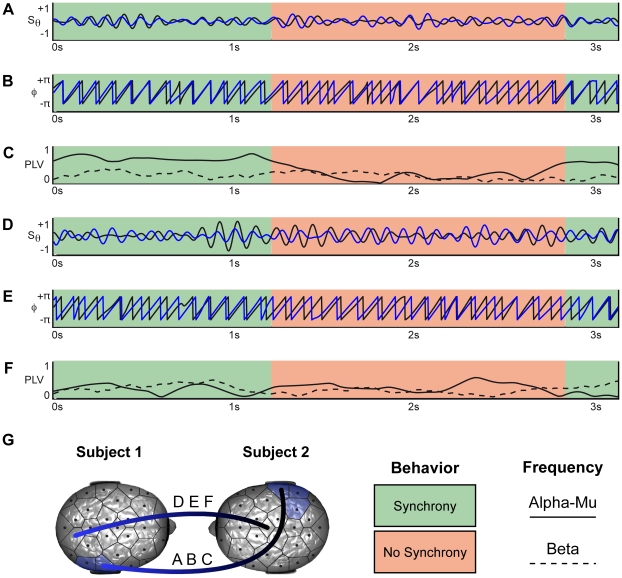
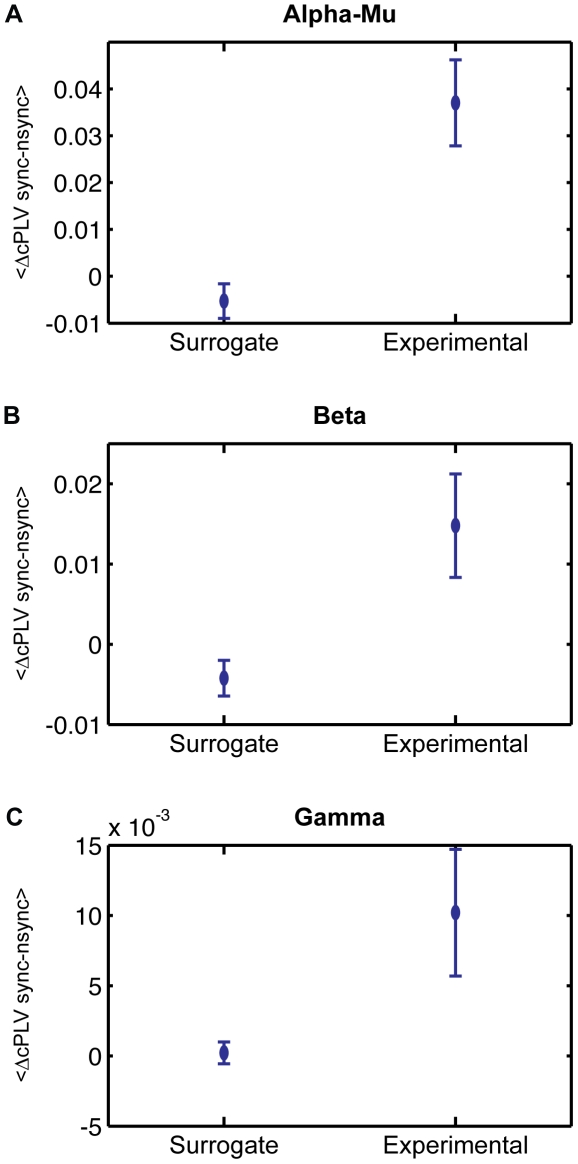
During social interaction, both participants are continuously active, each modifying their own actions in response to the continuously changing actions of the partner. This continuous mutual adaptation results in interactional synchrony to which both members contribute. Freely exchanging the role of imitator and model is a well-framed example of interactional synchrony resulting from a mutual behavioral negotiation. How the participants' brain activity underlies this process is currently a question that hyperscanning recordings allow us to explore. In particular, it remains largely unknown to what extent oscillatory synchronization could emerge between two brains during social interaction. To explore this issue, 18 participants paired as 9 dyads were recorded with dual-video and dual-EEG setups while they were engaged in spontaneous imitation of hand movements. We measured interactional synchrony and the turn-taking between model and imitator. We discovered by the use of nonlinear techniques that states of interactional synchrony correlate with the emergence of an interbrain synchronizing network in the alpha-mu band between the right centroparietal regions. These regions have been suggested to play a pivotal role in social interaction. Here, they acted symmetrically as key functional hubs in the interindividual brainweb. Additionally, neural synchronization became asymmetrical in the higher frequency bands possibly reflecting a top-down modulation of the roles of model and imitator in the ongoing interaction.
Overview
The claims and statistics of this paper haven’t been checked yet.
Free: it reads the open-access text and checks the first 5 claims that cite a source we can check. Create a free account to check every claim.
Integrity signals
Registry
Cites
Statistics
Figures

Verification
Claims the paper makes
The claims and statistics of this paper haven’t been checked yet.
Free: it reads the open-access text and checks the first 5 claims that cite a source we can check. Create a free account to check every claim.
Claims other papers make about this one
Each is checked against this paper’s own text: does it say what the citing paper says it does?
The check wasn’t confident either way, so it gives no verdict — never disputed.
In the citing paper
“The sample size was not determined a priori—each dataset's sample size was guided by prior work in their corresponding fields [38, 39, 40].”
From Interpersonal Synchronization of Autonomic Physiology via Mere Visual Contact (2026) · cites this paper as [38]
Experimental — accuracy not yet measured
Self-check
Percentages, sums and reported differences re-computed from the paper’s own numbers.
The self-check needs the paper’s full text.
Citations
Cites
A Mathematical Theory of Communication
Shannon, C. E. (1948) · Bell System Technical Journal · doi:10.1002/j.1538-7305.1948.tb01338.x · Cited by 88,486
The Mathematical Theory of Communication
Shannon, C. E., Weaver, W., & Wiener, N. (1950) · Physics Today · doi:10.1063/1.3067010 · Cited by 9,801
Nonparametric statistical testing of EEG- and MEG-data
Maris, E., & Oostenveld, R. (2007) · Journal of Neuroscience Methods · doi:10.1016/j.jneumeth.2007.03.024 · Cited by 8,496 · cited 1×
“Following previous studies [41,42], the resulting t-value matrices were then thresholded for absolute values larger than 2.”
The brainweb: phase synchronization and large-scale integration
Varela, F., Lachaux, J.-P., Rodriguez, E., & Martinerie, J. (2001) · Nature Reviews Neuroscience · doi:10.1038/35067550 · Cited by 4,761
Self-citationA mechanism for cognitive dynamics: neuronal communication through neuronal coherence.
Fries, P. (2005) · Trends in Cognitive Sciences · doi:10.1016/j.tics.2005.08.011 · Cited by 4,284 · cited 3×
“have been proposed as a key mechanism for information integration [28], temporal binding [51], flexible neuronal communication [34,52] and unified cognitive processes [45,53].”
InfluentialMeasuring phase synchrony in brain signals
Lachaux, J.-P., Rodriguez, E., Martinerie, J., & Varela, F. J. (1999) · Human Brain Mapping · doi:10.1002/(sici)1097-0193(1999)8:4<194::aid-hbm4>3.0.co;2-c · Cited by 3,798
Self-citationDynamic predictions: Oscillations and synchrony in top–down processing
Engel, A. K., Fries, P., & Singer, W. (2001) · Nature Reviews Neuroscience · doi:10.1038/35094565 · Cited by 3,454 · cited 1×
“Within one brain, synchronous neural oscillations have been previously observed in a range of processes such as conscious perception [44–46], working and long term memory [47,48], states of anticipation or attention [48,49] and empathy [50].”
Mathematical Theory of Communication
(2013) · Encyclopedia of Systems Biology · doi:10.1007/978-1-4419-9863-7_100015 · Cited by 3,290
Rizzolatti, G., & Arbib, M. A. (1998) · Trends in Neurosciences · doi:10.1016/s0166-2236(98)01260-0 · Cited by 2,858
Cortical mechanisms of human imitation
Iacoboni, M., Woods, R. P., Brass, M., Bekkering, H., Mazziotta, J. C., & Rizzolatti, G. (1999) · Science · doi:10.1126/science.286.5449.2526 · Cited by 2,683 · cited 1×
“Though imitation is commonly considered as a foundation for learning, socialization and communication [21,22], its use as a paradigm has been limited so far to test the direct matching hypothesis in an intraindividual perspective [23–27].”
Cited by
Items 201–300 of 963
Georgieva, S., Lester, S., Noreika, V., Yilmaz, M. N., Wass, S. V., & Leong, V. (2020) · Frontiers in Neuroscience · doi:10.3389/fnins.2020.00352 · Cited by 60
“However, across a number of neuroscience sub-fields, such as developmental and social neuroscience, the balance is beginning to shift in favor of EEG paradigms with greater ecological validity (for example, see Babiloni et al., 2007; Lindenberger et al., 2009; Dumas et al., 2010, 2011, 2014).”
BackgroundLi, L., Wang, H., Luo, H., Zhang, X., Zhang, R., & Li, X. (2020) · Frontiers in Human Neuroscience · doi:10.3389/fnhum.2020.00169 · Cited by 56
“…al., 2015, 2017; Osaka et al., 2015), teaching (Holper et al., 2013; Dikker et al., 2017; Zheng et al., 2018; Pan et al., 2020; Sun et al., 2020), imitation (Dumas et al., 2010; Holper et al., 2012; Pan et al., 2018), and communication (Stephens et al., 2010; Jiang et al., 2012; Dai et al., 2018).”
BackgroundHaresign, I. M., Phillips, E., Whitehorn, M., Goupil, L., Noreika, V., Leong, V., & Wass, S. V. (2022) · Developmental Cognitive Neuroscience · doi:10.1016/j.dcn.2022.101093 · Cited by 60
“Hyperscanning is a method of simultaneously acquiring neural activity from two or more individuals that allows insights into these questions (Dumas et al., 2010; Schilbach et al., 2013).”
MethodToward a quantitative description of the neurodynamic organizations of teams
Stevens, R. H., & Galloway, T. L. (2014) · Social Neuroscience · doi:10.1080/17470919.2014.883324 · Cited by 52
A comparative study on inter-brain synchrony in real and virtual environments using hyperscanning
Gumilar, I., Sareen, E., Bell, R. E., Stone, A., Hayati, A. F., Mao, J., Barde, A., Gupta, A., Dey, A., Lee, G., et al. (2020) · Computers & Graphics · doi:10.1016/j.cag.2020.10.003 · Cited by 57
Zhao, H., Li, Y., Wang, X., Kan, Y., Xu, S., & Duan, H. (2022) · Social Cognitive and Affective Neuroscience · doi:10.1093/scan/nsac005 · Cited by 49
“the brain-to-brain coupling in the MNS during interpersonal coordination and imitation (Dumas et al., 2010; Ménoret et al., 2014).”
BackgroundA practical guide to EEG hyperscanning in joint action research: from motivation to implementation
Zamm, A., Loehr, J. D., Vesper, C., Konvalinka, I., Kappel, S. L., Heggli, O. A., Vuust, P., & Keller, P. E. (2024) · Social Cognitive and Affective Neuroscience · doi:10.1093/scan/nsae026 · Cited by 58
“For example, many studies have reported inter-brain synchronization across alpha and mu oscillations (Dumas et al ., 2010; Goldstein et al ., 2018; Chen et al ., 2023); but occipital alpha amplitudes are suppressed when people attend to a visual stimulus (Bazanova and Vernon, 2014), just as the…”
BackgroundNinaus, M., Kober, S. E., Friedrich, E. V. C., Dunwell, I., de Freitas, S., Arnab, S., Ott, M., Kravčík, M., Lim, T., Louchart, S., et al. (2014) · International Journal of Technology Enhanced Learning · doi:10.1504/ijtel.2014.060022 · Cited by 54
Social synchronization of brain activity increases during eye-contact
Luft, C. D. B., Ζιώγα, Ι., Giannopoulos, A., Bona, G. D., Binetti, N., Civilini, A., Latora, V., & Mareschal, I. (2022) · Communications Biology · doi:10.1038/s42003-022-03352-6 · Cited by 62
Right brain-to-right brain psychotherapy: recent scientific and clinical advances
Schore, A. N. (2022) · Annals of General Psychiatry · doi:10.1186/s12991-022-00420-3 · Cited by 71
“2), Dumas and his colleagues offered a now classic dual EEG hyperscanning study of a spontaneous nonverbal social interaction between two adults, characterized by reciprocal communication and turn-taking [47].”
BackgroundNon-local mind from the perspective of social cognition
Chatel-Goldman, J., Schwartz, J., Jutten, C., & Congedo, M. (2013) · Frontiers in Human Neuroscience · doi:10.3389/fnhum.2013.00107 · Cited by 50
Levy, J., Lankinen, K., Hakonen, M., & Feldman, R. (2021) · Social Cognitive and Affective Neuroscience · doi:10.1093/scan/nsaa061 · Cited by 46
“The early hyperscanning studies typically addressed slow-paced social interactions, such as movement imitation of hand movement (Dumas et al., 2010).”
BackgroundRauchbauer, B., & Grosbras, M. (2020) · Neuroscience & Biobehavioral Reviews · doi:10.1016/j.neubiorev.2020.07.032 · Cited by 54
“during the execution of simple coordinated finger or hand movements (Dumas et al., 2010; Yun et al., 2012).”
Raising the bar: Can dual scanning improve our understanding of joint action?
Astolfi, L., Toppi, J., Ciaramidaro, A., Vogel, P., Freitag, C. M., & Siniatchkin, M. (2020) · NeuroImage · doi:10.1016/j.neuroimage.2020.116813 · Cited by 43
Bridging the gap between emotion and joint action
Bieńkiewicz, M. M. N., Smykovskyi, A., Olugbade, T., Janaqi, S., Camurri, A., Bianchi‐Berthouze, N., Björkman, M., & Bardy, B. G. (2021) · Neuroscience & Biobehavioral Reviews · doi:10.1016/j.neubiorev.2021.08.014 · Cited by 57
Chabin, T., Gabriel, D., Comte, A., Haffen, É., Moulin, T., & Pazart, L. (2021) · Annals of the New York Academy of Sciences · doi:10.1111/nyas.14711 · Cited by 53
Delaherche, E., Dumas, G., Nadel, J., & Chétouani, M. (2014) · Pattern Recognition Letters · doi:10.1016/j.patrec.2014.09.002 · Cited by 49
Self-citationAffiliative zygomatic synchrony in co-present strangers
Golland, Y., Mevorach, D., & Levit-Binnun, N. (2019) · Scientific Reports · doi:10.1038/s41598-019-40060-4 · Cited by 42
Naturalistic music and dance: Cortical phase synchrony in musicians and dancers
Poikonen, H., Toiviainen, P., & Tervaniemi, M. H. (2018) · PLoS ONE · doi:10.1371/journal.pone.0196065 · Cited by 47
“Recently, the collaborative aspect in music making has become a focus of neuroscience to elucidate the elements of social interaction [5,6].”
BackgroundCohesion and Joint Speech: Right Hemisphere Contributions to Synchronized Vocal Production
Jasmin, K. M., McGettigan, C., Agnew, Z. K., Lavan, N., Josephs, O., Cummins, F., & Scott, S. K. (2016) · Journal of Neuroscience · doi:10.1523/jneurosci.4075-15.2016 · Cited by 50
“Oscillations in right centroparietal cortex synchronize across the brains of participants (Dumas et al., 2010), and gamma power in parietal cortex is increased when they freely imitate each other’s hand (Dumas et al.”
BackgroundCarollo, A., Lim, M., Aryadoust, V., & Esposito, G. (2021) · Frontiers in Psychology · doi:10.3389/fpsyg.2021.701824 · Cited by 56
Osborne, N. (2012) · Annals of the New York Academy of Sciences · doi:10.1111/j.1749-6632.2012.06473.x · Cited by 48
Theories and Approaches to the Study of Conversation and Interactive Discourse
Horton, W. S. (2017) · Routledge eBooks · doi:10.4324/9781315687384-3 · Cited by 47
Gaze Cueing Effect in a Face-to-Face Situation
Lachat, F., Conty, L., Hugueville, L., & George, N. (2012) · Journal of Nonverbal Behavior · doi:10.1007/s10919-012-0133-x · Cited by 48
Periodic and Aperiodic Synchronization in Skilled Action
Cummins, F. (2011) · Frontiers in Human Neuroscience · doi:10.3389/fnhum.2011.00170 · Cited by 52
Critical diversity: Divided or united states of social coordination
Zhang, M., Kelso, J. A. S., & Tognoli, E. (2018) · PLOS ONE · doi:10.1371/journal.pone.0193843 · Cited by 41
Heart Rate Synchrony in Psychological Counseling: A Case Study
Kodama, K., Tanaka, S., Shimizu, D., Hori, K., & Matsui, H. (2018) · Psychology · doi:10.4236/psych.2018.97108 · Cited by 50
Toward Interactive Social Neuroscience: Neuroimaging Real‐World Interactions in Various Populations
Minagawa‐Kawai, Y., Xu, M., & Morimoto, S. (2018) · Japanese Psychological Research · doi:10.1111/jpr.12207 · Cited by 45
Liu, H., Zhao, C., Wang, F., & Zhang, D. (2021) · Social Cognitive and Affective Neuroscience · doi:10.1093/scan/nsab031 · Cited by 49
“coordinated finger movement (Dumas et al., 2010; Yun et al., 2012), joint key press (Mu et al.”
BackgroundResultNeural signatures of hand kinematics in leaders vs. followers: A dual-MEG study
Zhou, G., Bourguignon, M., Parkkonen, L. T., & Hari, R. (2015) · NeuroImage · doi:10.1016/j.neuroimage.2015.11.002 · Cited by 45
“In studies of social cognition, increasing attention is currently being paid to interacting individuals (Babiloni and Astolfi, 2014; Dumas et al., 2010, 2011, 2012; Schilbach et al., 2013; Sebanz et al., 2006).”
The Regulation of Task Performance: A Trans-Disciplinary Review
Clark, I., & Dumas, G. (2016) · Frontiers in Psychology · doi:10.3389/fpsyg.2015.01862 · Cited by 52
“This shared tension is correlated with coordination between brain activities of interactors while they interact (Jackson et al., 2006; Dumas et al., 2010).”
BackgroundSelf-citationDEEP: A dual EEG pipeline for developmental hyperscanning studies
Kayhan, E., Matthes, D., Haresign, I. M., Bánki, A., Michel, C., Langeloh, M., Wass, S. V., & Hoehl, S. (2022) · Developmental Cognitive Neuroscience · doi:10.1016/j.dcn.2022.101104 · Cited by 47
“…envelope correlation, power correlation, projected power correlation [PPC]); (ii) phase synchrony, captured by the Phase Locking Value (PLV) (Dumas et al., 2010; Lachaux et al., 1999) or circular correlation (CCorr); and (iii) coherency-based metrics measuring the similarity of both power…”
BackgroundBowsher-Murray, C., Gerson, S. A., Hagen, E. V. D., & Jones, C. R. G. (2022) · Frontiers in Psychology · doi:10.3389/fpsyg.2022.897015 · Cited by 51
Perception–action coupling and imitation in autism spectrum disorder
Nadel, J. (2015) · Developmental Medicine & Child Neurology · doi:10.1111/dmcn.12689 · Cited by 51
“When the adult returned to the still position 3 minutes later, the child did not focus on the objects but instead approached the adult, offered objects, and tried to interact with great signs of affection.(13) This response shows that children with ASD understand the social nature of an imitative exchange, expect the…”
BackgroundSelf-citationChildren’s synchrony and rhythmicity in imitation of peers: Toward a developmental model of empathy
Xavier, J., Tilmont, E., & Bonnot, O. (2013) · Journal of Physiology-Paris · doi:10.1016/j.jphysparis.2013.03.012 · Cited by 48
“Dumas et al. (2010) use hyper-scanning recordings to examine brain activity, including measures of neural synchronization between distant brain regions of interacting individuals through a free exchange of roles between the imitator and the model.”
BackgroundDai, R., Liu, R., Liu, T., Zong, Z., Xiao, X. N., Sun, P., Yu, X., Wang, D., & Zhu, C. (2018) · Social Cognitive and Affective Neuroscience · doi:10.1093/scan/nsy090 · Cited by 49
Zamm, A., Palmėr, C., Bauer, A. R., Bleichner, M. G., Demos, A. P., & Debener, S. (2021) · Frontiers in Human Neuroscience · doi:10.3389/fnhum.2021.717810 · Cited by 51
“It has been suggested that partners’ neural activity becomes coupled during temporal coordination in joint action (Tomlin et al., 2006; Tognoli et al., 2007; Dumas et al., 2010; Astolfi et al., 2011; Funane et al., 2011; Cui et al., 2012; Müller and Lindenberger, 2014; Lee, 2015).”
BackgroundExit from Synchrony in Joint Improvised Motion
Dahan, A., Noy, L., Hart, Y., Mayo, A., & Alon, U. S. (2016) · PLoS ONE · doi:10.1371/journal.pone.0160747 · Cited by 46
Alpha oscillations and their impairment in affective and post-traumatic stress disorders
Eidelman-Rothman, M., Lévy, J., & Feldman, R. (2016) · Neuroscience & Biobehavioral Reviews · doi:10.1016/j.neubiorev.2016.07.005 · Cited by 47
Szymanski, C., Müller, V., Brick, T. R., von Oertzen, T., & Lindenberger, U. (2017) · Frontiers in Human Neuroscience · doi:10.3389/fnhum.2017.00539 · Cited by 44
“Various forms of interpersonally coordinated actions, such as guitar play (Lindenberger et al., 2009; Sänger et al., 2012), gesturing (Dumas et al., 2010) or romantic kissing (Müller and Lindenberger, 2014), were associated with inter-brain synchronization processes predominantly in frequencies…”
BackgroundMusical interaction is influenced by underlying predictive models and musical expertise
Heggli, O. A., Konvalinka, I., Kringelbach, M. L., & Vuust, P. (2019) · Scientific Reports · doi:10.1038/s41598-019-47471-3 · Cited by 43
Balconi, M., & Fronda, G. (2020) · Brain Sciences · doi:10.3390/brainsci10010029 · Cited by 43
Teaching as a Dynamic Phenomenon with Interpersonal Interactions
Watanabe, K. (2013) · Mind Brain and Education · doi:10.1111/mbe.12011 · Cited by 41
Roth, D., Latoschik, M. E., Vogeley, K. T., & Bente, G. (2015) · i-com · doi:10.1515/icom-2015-0030 · Cited by 43
“…aspects of interpersonal synchronization represent a rising field and the biggest challenge for social psychology and social neuroscience (Chanel, Kivikangas and Ravaja 2012, Dumas et al. 2010, Lakens and Stel 2011, Lakin and Chartrand 2003, Sebanz, Bekkering and Knoblich 2006, Spapé et al. 2013).”
BackgroundPitfalls in Organizational Neuroscience: A Critical Review and Suggestions for Future Research
Jack, A. I., Rochford, K. C., Friedman, J. P., Passarelli, A. M., & Boyatzis, R. E. (2017) · Organizational Research Methods · doi:10.1177/1094428117708857 · Cited by 51
Therapeutic Potential of the miRNA–ATM Axis in the Management of Tumor Radioresistance
Rezaeian, A.-H., Khanbabaei, H., & Călin, G. A. (2020) · Cancer Research · doi:10.1158/0008-5472.can-19-1807 · Cited by 40
Transient brain networks underlying interpersonal strategies during synchronized action
Heggli, O. A., Konvalinka, I., Cabral, J., Brattico, E., Kringelbach, M. L., & Vuust, P. (2020) · Social Cognitive and Affective Neuroscience · doi:10.1093/scan/nsaa056 · Cited by 42
“Previous neurophysiology research has shown that leaders and followers in coupled interaction can be distinguished by a stronger suppression of frontal alpha activity in EEG among leaders; interbrain synchronization across alpha, beta and gamma band oscillations during imitation tasks; and differences in patterns of d…”
BackgroundInter-group conflict affects inter-brain synchrony during synchronized movements
Gamliel, H. N., Nevat, M., Gvirts, H. Z., Karklinsky, M., Han, S., & Shamay‐Tsoory, S. (2021) · NeuroImage · doi:10.1016/j.neuroimage.2021.118661 · Cited by 41
Hasegawa, C., Ikeda, T., Yoshimura, Y., Hiraishi, H., Takahashi, T., Furutani, N., Hayashi, N., Minabe, Y., Hirata, M., Asada, M., et al. (2016) · Scientific Reports · doi:10.1038/srep34977 · Cited by 41
Ayache, J., Connor, A. M., Marks, S., Kuss, D. J., Rhodes, D., Sumich, A. L., & Heym, N. (2021) · Frontiers in Psychology · doi:10.3389/fpsyg.2021.718237 · Cited by 47
Shehata, M. H., Cheng, M., Leung, A., Tsuchiya, N., Wu, D.-A. J., Tseng, C., Nakauchi, S., & Shimojo, S. (2021) · eNeuro · doi:10.1523/eneuro.0133-21.2021 · Cited by 62
“Group activities can enhance this synchrony during intense social states, body or speech coordination, music production, dancing, student-teacher interactions in classrooms, touch-mediated pain reduction, creativity in cooperative tasks, and even in socially interacting bats (Lindenberger et al., 2009; Dumas et al., 2…”
BackgroundTurk, E., Vroomen, J., Fonken, Y. M., Lévy, J., & van den Heuvel, M. I. (2022) · Developmental Psychobiology · doi:10.1002/dev.22221 · Cited by 43
“…enabling to keep up with the speed of social interaction, such as affective touch and gaze, with its millisecond precision (Dumas et al., 2010) and enables exploration of synchrony at the level of brain rhythms,…”
BackgroundCortical dynamics of human scalp EEG origins in a visually guided motor execution
Mizuhara, H. (2012) · NeuroImage · doi:10.1016/j.neuroimage.2012.05.072 · Cited by 42
“Therefore, this rhythm is often used to indicate activation of the sensorimotor cortex in studies on the mirror neuron system and on brain computer interfaces, etc. (Dumas et al., 2010; Orgs et al., 2008; Ulloa and Pineda, 2007). mpeting interests exist. rights reserved.”
Engagement: Looking beyond the mirror to understand action understanding
Reddy, V., & Uithol, S. (2015) · British Journal of Developmental Psychology · doi:10.1111/bjdp.12106 · Cited by 43
Donate or receive? Social hyperscanning application with fNIRS
Balconi, M., Fronda, G., & Vanutelli, M. E. (2019) · Current Psychology · doi:10.1007/s12144-019-00247-4 · Cited by 39
Tristan-Landin, S. B., Gonzalez‐Suarez, A. M., Jiménez-Valdés, R. J., & Garcia-Cordero, J. L. (2019) · PLoS ONE · doi:10.1371/journal.pone.0215114 · Cited by 34
Leader-employee emotional “interpersonal tuning”.An EEG coherence study
Balconi, M., Venturella, I., Fronda, G., & Vanutelli, M. E. (2019) · Social Neuroscience · doi:10.1080/17470919.2019.1696226 · Cited by 42
Interacting brains coming in sync through their minds: an interbrain neurofeedback study
Müller, V., Perdikis, D., Jeglinski-Mende, M. A., & Lindenberger, U. (2021) · Annals of the New York Academy of Sciences · doi:10.1111/nyas.14605 · Cited by 38
“Recently, it has been associated with, and linked to, oscillatory couplings between brains (Dumas et al., 2010; Lindenberger et al., 2009).”
BackgroundHierarchical nonlinear dynamics of human attention
Rabinovich, M. I., Tristan, I., & Varona, P. (2015) · Neuroscience & Biobehavioral Reviews · doi:10.1016/j.neubiorev.2015.04.001 · Cited by 44
Toward an embodied science of intersubjectivity: widening the scope of social understanding research
Paolo, E. A. D., & Jaegher, H. D. (2015) · Frontiers in Psychology · doi:10.3389/fpsyg.2015.00234 · Cited by 48
“We have more and better tools to explore the role of interactive phenomena and interpersonal histories in conjunction with individual processes (Dumas et al., 2010; Di Paolo and De Jaegher, 2012; Konvalinka and Roepstorff, 2012; Schilbach et al., 2013).”
Tadić, B., Andjelković, M., Boshkoska, B. M., & Levnajić, Z. (2016) · PLoS ONE · doi:10.1371/journal.pone.0166787 · Cited by 36
“The interbrain synchronisation, which is often observed during social communications [31, 32, 38, 39], is also expected in the analysed spoken communication experiment; in the present context, it is embedded in the structure of the entire multi-brain network.”
BackgroundAdaptive Empathy: A Model for Learning Empathic Responses in Response to Feedback
Shamay‐Tsoory, S., & Hertz, U. (2022) · Perspectives on Psychological Science · doi:10.1177/17456916211031926 · Cited by 43
The performance monitoring system is attuned to others’ actions during dyadic motor interactions
Moreau, Q., Tieri, G., Era, V., Aglioti, S. M., & Candidi, M. (2022) · Cerebral Cortex · doi:10.1093/cercor/bhac063 · Cited by 35
“Although great progress has been made towards “second-person” neuroscience, including the behavioral and neural tracking of several individuals interacting (Dumas et al. 2010; Sacheli et al. 2013; Schilbach et al. 2013; Lahnakoski et al. 2020; Boukarras et al. 2021), virtual reality has also gained interest in the stu…”
The Dynamic Brain in Action: Coordinative Structures, Criticality, and Coordination Dynamics
Kelso, J. A. S. (2014) · Wiley eBooks · doi:10.1002/9783527651009.ch4 · Cited by 40
Baillin, F., Lefebvre, A., Pedoux, A., Beauxis, Y., Engemann, D. A., Maruani, A., Amsellem, F., Kelso, J. A. S., Bourgeron, T., Delorme, R., et al. (2020) · Frontiers in Psychiatry · doi:10.3389/fpsyt.2020.510366 · Cited by 35
Self-citationHyperscanning literature after two decades of neuroscientific research: A scientometric review
Carollo, A., & Esposito, G. (2024) · Neuroscience · doi:10.1016/j.neuroscience.2024.05.045 · Cited by 54
“Notably, hyperscanning studies revealed that social exchanges are characterized by instances of synchronization in social partners ’ brain activity (e.g., Dumas et al., 2010). fNIRS seems to represent a good compromise between the strengths and pitfalls of fMRI and EEG.”
BackgroundBreathwork-induced psychedelic experiences modulate neural dynamics
Lewis-Healey, E., Tagliazucchi, E., Canales‐Johnson, A., & Bekinschtein, T. A. (2024) · Cerebral Cortex · doi:10.1093/cercor/bhae347 · Cited by 45
Building blocks of joint attention: Early sensitivity to having one’s own gaze followed
Rayson, H., Bonaiuto, J. J., Ferrari, P. F., Chakrabarti, B., & Murray, L. (2019) · Developmental Cognitive Neuroscience · doi:10.1016/j.dcn.2019.100631 · Cited by 39
“Additionally, attenuation in the alpha band is associated with a number of JA-relevant processes such as interpersonal synchronization (Dumas et al., 2010; Novembre et al., 2016), sustained attention (Xie et al.”
Neural tracking and integration of ‘self’ and ‘other’ in improvised interpersonal coordination
Varlet, M., Nozaradan, S., Nijhuis, P., & Keller, P. E. (2019) · NeuroImage · doi:10.1016/j.neuroimage.2019.116303 · Cited by 39
Norton, E. S., Manning, B. L., Harriott, E. M., Nikolaeva, J. I., Nyabingi, O. S., Fredian, K. M., Page, J. M., McWeeny, S., Krogh‐Jespersen, S., MacNeill, L. A., et al. (2022) · Developmental Psychobiology · doi:10.1002/dev.22240 · Cited by 38
“Though scientific advancements toward naturalistic neuroscience continue to provide meaningful information, we, and others (Bell, 2020;Dumas et al., 2010; Hari & Kujala, 2009; Konvalinka & Roepstorff, 2012; Markova et al., 2019; Nguyen et al., 2020; Rolison et al., 2015; Schilbach et al., 2013;…”
BackgroundKawasaki, M., Kitajo, K., & Yamaguchi, Y. (2018) · Neuropsychologia · doi:10.1016/j.neuropsychologia.2018.07.026 · Cited by 38
Parviainen, T. M., Lyyra, P., & Nokia, M. S. (2022) · Neuroscience & Biobehavioral Reviews · doi:10.1016/j.neubiorev.2022.104908 · Cited by 48
Neither Individualistic nor Interactionist
Paolo, E. A. D., & Jaegher, H. D. (2017) · The MIT Press eBooks · doi:10.7551/mitpress/9780262035552.003.0005 · Cited by 36
“Using dual EEG scanning during an imitation task with interactors visibly moving their hands and allowing spontaneous synchrony and turn-taking, Dumas et al. (2010) have found interbrain phase synchronization in the alpha-mu (8–12 Hz), beta (13–30 Hz) and gamma (31–48 Hz) bands.”
BackgroundGeneration WhatsApp: inter-brain synchrony during face-to-face and texting communication
Schwartz, L., Lévy, J., Hayut, O., Netzer, O., Endevelt–Shapira, Y., & Feldman, R. (2024) · Scientific Reports · doi:10.1038/s41598-024-52587-2 · Cited by 38
“We therefore conducted this analysis on the brain regions that are often reported in hyperscanning literature and include the frontal, central and parieto-temporal areas 13,20,43,50,51 .”
MethodEnhancing Brain–Computer Interface Performance by Incorporating Brain-to-Brain Coupling
Jia, T., Sun, J., McGeady, C., Ji, L., & Li, C. (2024) · Cyborg and Bionic Systems · doi:10.34133/cbsystems.0116 · Cited by 40
“The alpha band plays a role in synchronizing brain activity during nonverbal social interaction [28–30], and it is robust for measuring brain-to-brain coupling [28].”
Radical embodied cognitive neuroscience: addressing “grand challenges” of the mind sciences
Favela, L. H. (2014) · Frontiers in Human Neuroscience · doi:10.3389/fnhum.2014.00796 · Cited by 37
“Attempts are currently underway to model social interactions in a similar manner as the previous two sets of equations (e.g., Kelso et al., 2009; Dumas et al., 2010).”
ResultToward collective animal neuroscience
Sliwa, J. (2021) · Science · doi:10.1126/science.abm3060 · Cited by 32
Adaptive Measurement and Assessment
Barney, M., & Fisher, W. P. (2016) · Annual Review of Organizational Psychology and Organizational Behavior · doi:10.1146/annurev-orgpsych-041015-062329 · Cited by 41
Interpersonal educational neuroscience: A scoping review of the literature
Zhang, Y., Hu, Y., Ma, F., Cui, H., Cheng, X., & Pan, Y. (2024) · Educational Research Review · doi:10.1016/j.edurev.2024.100593 · Cited by 48
The motor-related brain activity that supports joint action: A review
Bolt, N. K., & Loehr, J. D. (2020) · Acta Psychologica · doi:10.1016/j.actpsy.2020.103218 · Cited by 36
Social Neuro AI: Social Interaction as the “Dark Matter” of AI
Bolotta, S., & Dumas, G. (2022) · Frontiers in Computer Science · doi:10.3389/fcomp.2022.846440 · Cited by 46
Self-citationTsoi, L., Burns, S. M., Falk, E. B., & Tamir, D. (2022) · Social and Personality Psychology Compass · doi:10.1111/spc3.12707 · Cited by 41
“…watching a movie together (Golland et al., 2015), semi-scripted elements like discussing experimenter-generated prompts (Spiegelhalder et al., 2014), or entirely unscripted elements like freely moving one’s hands with meaningless gestures (Dumas et al., 2010) or having an open ended conversation.”
Perceived live interaction modulates the developing social brain
Warnell, K. R., Moraczewski, D., & Redcay, E. (2016) · Social Cognitive and Affective Neuroscience · doi:10.1093/scan/nsw060 · Cited by 35
“Thus, unlike studies targeting the intersubject neural synchronization that emerges during interaction (e.g. Dumas et al. , 2010; Stephens et al. , 2010; Kawasaki et al. , 2013; Koike et al. , 2016), this paradigm was developed to specifically determine the effects of social-interactive context on…”
Dumas, G., Lefebvre, A., Zhang, M., Tognoli, E., & Kelso, J. A. S. (2017) · Springer eBooks · doi:10.1007/978-3-319-64334-2 · Cited by 32
Self-citationModeling the neurodynamic organizations and interactions of teams
Stevens, R. H., & Galloway, T. L. (2016) · Social Neuroscience · doi:10.1080/17470919.2015.1056883 · Cited by 29
“…where the behavior of one individual drives the behavior of others, i.e., an audience listening to a lecture; and reciprocal synchronization as seen in the repetitive speaker – listener couplings described by Baess et al. (2012) and Dumas, Nadel, Soussignan, Martinerie, and Garnero (2010).”
BackgroundNeurophysiological and behavioral synchronization in group-living and sleeping mice
Sotelo, M. I., Markunas, C., Kudlak, T., Kohtz, C., Vyssotski, A. L., Rothschild, G., & Eban-Rothschild, A. (2023) · Current Biology · doi:10.1016/j.cub.2023.11.065 · Cited by 36
Is artificial consciousness achievable? Lessons from the human brain
Farisco, M., Evers, K., & Changeux, J. (2024) · Neural Networks · doi:10.1016/j.neunet.2024.106714 · Cited by 61
Highlight Detection in Movie Scenes Through Inter-users, Physiological Linkage
Chênes, C., Chanel, G., Soleymani, M., & Pun, T. (2012) · Computer communications and networks · doi:10.1007/978-1-4471-4555-4_10 · Cited by 31
“For instance it has been demonstrated that inter-person brain signals synchronization occurs during imitation of the other [41].”
BackgroundSignes précoces d’autisme : d’où vient-on ? Où va-t-on ?
Saint‐Georges, C., Guinchat, V., Chamak, B., Apicella, F., Muratori, F., & Cohen, D. (2013) · Neuropsychiatrie de l Enfance et de l Adolescence · doi:10.1016/j.neurenf.2013.05.005 · Cited by 39
Groups and Emotional Arousal Mediate Neural Synchrony and Perceived Ritual Efficacy
Cho, P. S., Escoffier, N., Mao, Y., Ching, A. S. M., Green, C., Jong, J., & Whitehouse, H. (2018) · Frontiers in Psychology · doi:10.3389/fpsyg.2018.02071 · Cited by 31
Mehmood, F., Ayaz, Y., Ali, S., Amadeu, R. D. C., & Sadia, H. (2019) · IEEE Access · doi:10.1109/access.2019.2951366 · Cited by 31
“During the interaction with human or a robot partner, the study of states of brain’s different parts and bands of ASD child is also important [36].”
BackgroundMethodInfluentialHelp me if I can't: Social interaction effects in adult contextual word learning
Verga, L., & Kotz, S. A. (2017) · Cognition · doi:10.1016/j.cognition.2017.06.018 · Cited by 32
“…Schmidt, 2007; Vesper, van der Wel, Knoblich, & Sebanz, 2012) as well as in their neural activity (Dumas, Lachat, Martinerie, Nadel, & George, 2011; Dumas, Nadel, Soussignan, Martinerie, & Garnero, 2010; Hasson, Nir, Levy, Fuhrmann, & Malach, 2004; Jiang et al., 2012; Kawasaki, Yamada, Ushiku,…”
Cluster Synchronization of Diffusively Coupled Nonlinear Systems: A Contraction-Based Approach
Aminzare, Z., Dey, B., Davison, E. N., & Leonard, N. E. (2018) · Journal of Nonlinear Science · doi:10.1007/s00332-018-9457-y · Cited by 33
“In the human brain, synchronization at the neuronal or regional level can be beneficial, allowing for production of a vast range of behaviors (Dumas et al. 2010; MacLeod and Laurent 1996), or detrimental, causing disorders such as Parkinson’s disease (Chen et al.”
BackgroundSun, H., Verbeke, W. J. M. I., Pozharliev, R., Bagozzi, R. P., Babiloni, F., & Wang, L. (2019) · Social Neuroscience · doi:10.1080/17470919.2019.1566171 · Cited by 30
“…synchronicity which has become an important stream of research today given that the human base line has a rich social foundation rather than merely reflecting individuality in an observer or appraiser of facial expressions of conspecifics (e.g., Babiloni and Astolfi, 2014; Dumas et al., 2010).”
BackgroundBalconi, M., Cassioli, F., Fronda, G., & Vanutelli, M. E. (2019) · Neuropsychological Trends · doi:10.7358/neur-2019-026-bal2 · Cited by 32
Two-Person Approaches to Studying Social Interaction in Psychiatry: Uses and Clinical Relevance
Pan, Y., & Cheng, X. (2020) · Frontiers in Psychiatry · doi:10.3389/fpsyt.2020.00301 · Cited by 31
Balconi, M., Fronda, G., & Bartolo, A. (2020) · Journal of Motor Behavior · doi:10.1080/00222895.2020.1774490 · Cited by 29
“…a joint mental model including representations of the self and of the other inter-agents (Balconi et al., 2018b; Lindenberger et al., 2009) or even when two individuals are simply asked to produce the same gestures and the same mimic expressions (Dumas et al., 2010; Konvalinka et al., 2014).”
BackgroundCulture, Mind, and Brain: Emerging Concepts, Models, and Applications
(2020) · Cambridge University Press eBooks · doi:10.1017/9781108695374 · Cited by 32
Froese, T., Lenay, C., & Ikegami, T. (2012) · Frontiers in Human Neuroscience · doi:10.3389/fnhum.2012.00202 · Cited by 31
“Dual-EEG recording during imitative social interaction has already provided evidence of inter-brain synchronization, although some asynchrony also appears to be important for differentiation of roles (Dumas et al., 2010, 2012).”
BackgroundCulture in Mind – An Enactivist Account: Not Cognitive Penetration but Cultural Permeation
Hutto, D. D., Gallagher, S., Ilundáin‐Agurruza, J., & Hipólito, I. (2020) · Cambridge University Press eBooks · doi:10.1017/9781108695374.009 · Cited by 40
Metadata
- Authors
- Dumas, G., Nadel, J., Soussignan, R., Martinerie, J., & Garnero, L.
- Affiliations
- Centre National de la Recherche Scientifique (FR)
- Corresponding author
- Dumas, Guillaume
- Venue
- PLoS ONE
- Publisher
- Public Library of Science (PLoS)
- Published
- 2010-08-17
- Volume
- 5
- Issue
- 8
- Pages
- e12166
- ISSN
- 1932-6203 (ISSN-L)
- PMC
- PMC2923151
- OpenAlex
- W1986163111
- Cited by
- 966
- References
- 68
- Citations by year
- 2026: 73 · 2025: 80 · 2024: 68 · 2023: 55 · 2022: 78 · 2021: 106 · 2020: 127 · 2019: 53 · 2018: 54 · 2017: 57 · 2016: 42 · 2015: 31 · 2014: 54 · 2013: 35 · 2012: 33
- FWCI
- 38.29
- Type
- journal article
- Language
- en
- Open access
- gold
- doi.org
- Locations
- PLoS ONE (publishedVersion, cc-by)
- PubMed Central (publishedVersion, cc-by)
- PubMed (publishedVersion)
- HAL (submittedVersion, other-oa)
- HAL (submittedVersion)
- RePEc: Research Papers in Economics (submittedVersion)
- DOAJ (DOAJ: Directory of Open Access Journals) (submittedVersion, cc-by-sa)
- Topics
- Social Sciences › Psychology › Social Psychology › Action Observation and Synchronization
- Life Sciences › Neuroscience › Cognitive Neuroscience › Neural dynamics and brain function
- Life Sciences › Neuroscience › Cognitive Neuroscience › EEG and Brain-Computer Interfaces
- Keywords
- inter-brain synchrony, social interaction, interactional synchrony, spontaneous imitation, turn-taking, hyperscanning, top-down modulation, mirror neuron system
- MeSH terms
- Behavior, Brain, Electroencephalography, Female, Humans, Imitative Behavior, Interpersonal Relations, Male, Young Adult
About these checks
Registry, retraction, Cites and statistics results are computed, not judged, with one exception: a printed reference that no index lists is read once by a model before it counts as a citation error. Claims are extracted by a model and kept only when their quote appears verbatim in the text; each cited source is then checked, with a model’s help, for whether it says what the claim relies on. Those verdicts can be wrong — read the claim’s quote and the cited source before relying on one.
Statistics and arithmetic are recomputed, not judged.
Confidence bands are shown only for fields calibrated on our annotated test set. None is calibrated yet, so no band is shown.
What counts as a claim ›How we measure confidence ›How we check this ›
Are you an author, or do you see a problem with this page? Request a review
Data sources
Bibliographic data: Semantic Scholar, OpenAlex, Crossref.
Contains information from the Semantic Scholar Academic Graph Datasets, made available under the ODC Attribution License (ODC-BY 1.0).
Semantic Scholar’s data is described in: Kinney, R., et al. (2023). The Semantic Scholar Open Data Platform. arXiv:2301.10140.
