

Inter-Brain Synchronization during Social Interaction
Open accessThe DOI matches its Crossref record; 67 of the 68 references it cites were found in a registry or an index.
Abstract
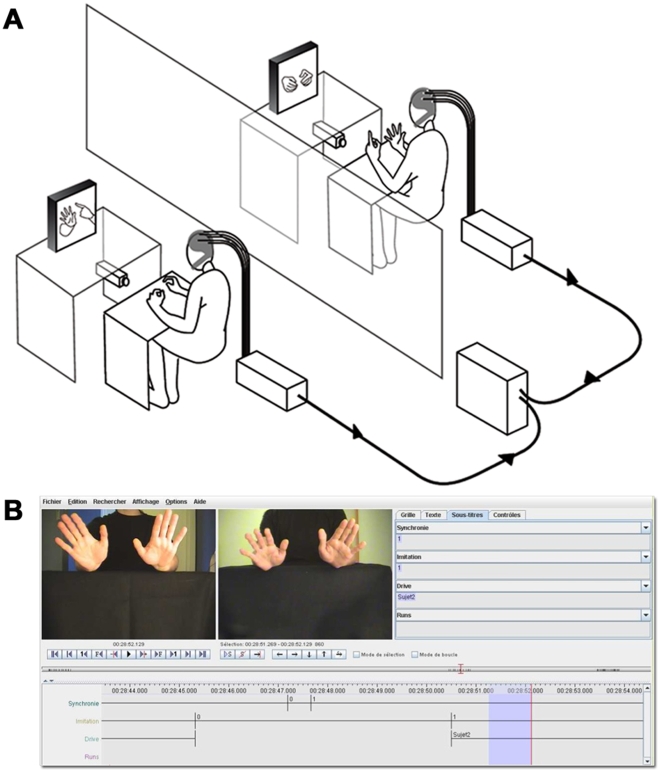
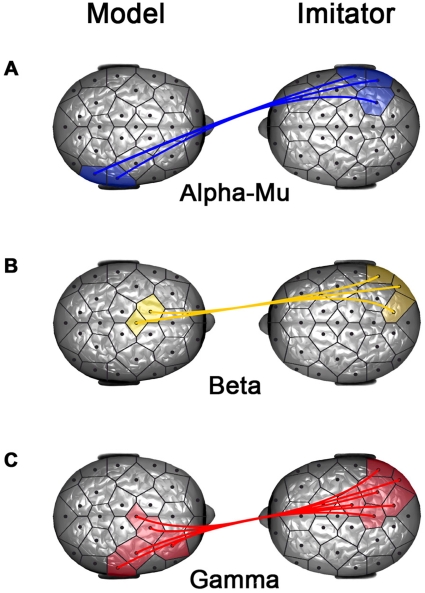
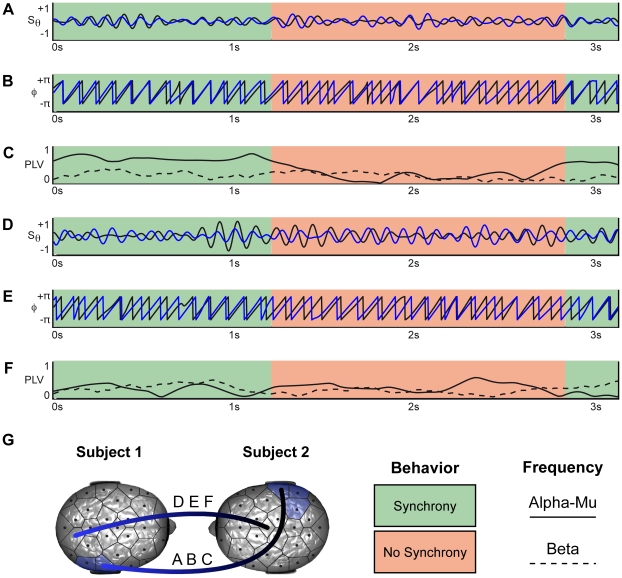
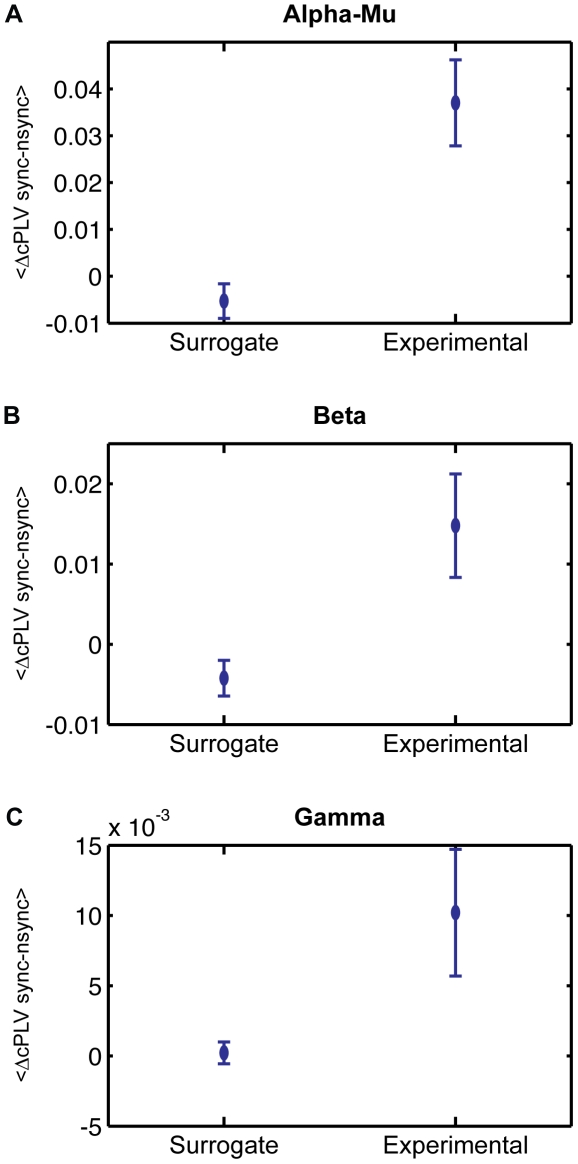
During social interaction, both participants are continuously active, each modifying their own actions in response to the continuously changing actions of the partner. This continuous mutual adaptation results in interactional synchrony to which both members contribute. Freely exchanging the role of imitator and model is a well-framed example of interactional synchrony resulting from a mutual behavioral negotiation. How the participants' brain activity underlies this process is currently a question that hyperscanning recordings allow us to explore. In particular, it remains largely unknown to what extent oscillatory synchronization could emerge between two brains during social interaction. To explore this issue, 18 participants paired as 9 dyads were recorded with dual-video and dual-EEG setups while they were engaged in spontaneous imitation of hand movements. We measured interactional synchrony and the turn-taking between model and imitator. We discovered by the use of nonlinear techniques that states of interactional synchrony correlate with the emergence of an interbrain synchronizing network in the alpha-mu band between the right centroparietal regions. These regions have been suggested to play a pivotal role in social interaction. Here, they acted symmetrically as key functional hubs in the interindividual brainweb. Additionally, neural synchronization became asymmetrical in the higher frequency bands possibly reflecting a top-down modulation of the roles of model and imitator in the ongoing interaction.
Overview
The claims and statistics of this paper haven’t been checked yet.
Free: it reads the open-access text and checks the first 5 claims that cite a source we can check. Create a free account to check every claim.
Integrity signals
Registry
Cites
Statistics
Figures

Verification
Claims the paper makes
The claims and statistics of this paper haven’t been checked yet.
Free: it reads the open-access text and checks the first 5 claims that cite a source we can check. Create a free account to check every claim.
Claims other papers make about this one
Each is checked against this paper’s own text: does it say what the citing paper says it does?
The check wasn’t confident either way, so it gives no verdict — never disputed.
In the citing paper
“The sample size was not determined a priori—each dataset's sample size was guided by prior work in their corresponding fields [38, 39, 40].”
From Interpersonal Synchronization of Autonomic Physiology via Mere Visual Contact (2026) · cites this paper as [38]
Experimental — accuracy not yet measured
Self-check
Percentages, sums and reported differences re-computed from the paper’s own numbers.
The self-check needs the paper’s full text.
Citations
Cites
A Mathematical Theory of Communication
Shannon, C. E. (1948) · Bell System Technical Journal · doi:10.1002/j.1538-7305.1948.tb01338.x · Cited by 88,486
The Mathematical Theory of Communication
Shannon, C. E., Weaver, W., & Wiener, N. (1950) · Physics Today · doi:10.1063/1.3067010 · Cited by 9,801
Nonparametric statistical testing of EEG- and MEG-data
Maris, E., & Oostenveld, R. (2007) · Journal of Neuroscience Methods · doi:10.1016/j.jneumeth.2007.03.024 · Cited by 8,496 · cited 1×
“Following previous studies [41,42], the resulting t-value matrices were then thresholded for absolute values larger than 2.”
The brainweb: phase synchronization and large-scale integration
Varela, F., Lachaux, J.-P., Rodriguez, E., & Martinerie, J. (2001) · Nature Reviews Neuroscience · doi:10.1038/35067550 · Cited by 4,761
Self-citationA mechanism for cognitive dynamics: neuronal communication through neuronal coherence.
Fries, P. (2005) · Trends in Cognitive Sciences · doi:10.1016/j.tics.2005.08.011 · Cited by 4,284 · cited 3×
“have been proposed as a key mechanism for information integration [28], temporal binding [51], flexible neuronal communication [34,52] and unified cognitive processes [45,53].”
InfluentialMeasuring phase synchrony in brain signals
Lachaux, J.-P., Rodriguez, E., Martinerie, J., & Varela, F. J. (1999) · Human Brain Mapping · doi:10.1002/(sici)1097-0193(1999)8:4<194::aid-hbm4>3.0.co;2-c · Cited by 3,798
Self-citationDynamic predictions: Oscillations and synchrony in top–down processing
Engel, A. K., Fries, P., & Singer, W. (2001) · Nature Reviews Neuroscience · doi:10.1038/35094565 · Cited by 3,454 · cited 1×
“Within one brain, synchronous neural oscillations have been previously observed in a range of processes such as conscious perception [44–46], working and long term memory [47,48], states of anticipation or attention [48,49] and empathy [50].”
Mathematical Theory of Communication
(2013) · Encyclopedia of Systems Biology · doi:10.1007/978-1-4419-9863-7_100015 · Cited by 3,290
Rizzolatti, G., & Arbib, M. A. (1998) · Trends in Neurosciences · doi:10.1016/s0166-2236(98)01260-0 · Cited by 2,858
Cortical mechanisms of human imitation
Iacoboni, M., Woods, R. P., Brass, M., Bekkering, H., Mazziotta, J. C., & Rizzolatti, G. (1999) · Science · doi:10.1126/science.286.5449.2526 · Cited by 2,683 · cited 1×
“Though imitation is commonly considered as a foundation for learning, socialization and communication [21,22], its use as a paradigm has been limited so far to test the direct matching hypothesis in an intraindividual perspective [23–27].”
Cited by
Items 501–600 of 963
Vanutelli, M. E., & Lucchiari, C. (2022) · Journal of Health and Medical Sciences · doi:10.31014/aior.1994.05.02.206 · Cited by 7
“It has been defined with terms like alignment, behavioral matching, interpersonal or interactional coordination, behavioral resonance, which all include the idea of a spatial and temporal synchrony (Cornejo et al., 2017; Dumas et al., 2010).”
BackgroundEmpathy aligns brains in synchrony
Schwartz, L., Lévy, J., Shapira, Y., Salomonski, C., Hayut, O., Zagoory‐Sharon, O., & Feldman, R. (2025) · iScience · doi:10.1016/j.isci.2025.112642 · Cited by 15
“…across participants in regions associated with social cognition and emotion processing, including the pre-frontal cortex, temporal areas, and TPJ 58–62 : In a dual-EEG study, interbrain synchrony emerged in temporal and central brain regions between romantic partners during naturalistic…”
Social Antecedents and Consequences of Behavioral Synchrony
Lakens, D., Schubert, T. W., & Paladino, M. P. (2016) · Cambridge University Press eBooks · doi:10.1017/cbo9781107279353.014 · Cited by 9
Neuromanagement e comunicazione
Venturella, I., & Crivelli, D. (2017) · RICERCHE DI PSICOLOGIA · doi:10.3280/rip2017-003002 · Cited by 8
Psychopathologie développementale : une esquisse d’état des lieux en 2017
Nadel, J. (2017) · Enfance · doi:10.3917/enf1.174.0523 · Cited by 9
Self-citationDumas, G., Gozé, T., & Micoulaud‐Franchi, J. (2020) · Behavioral and Brain Sciences · doi:10.1017/s0140525x19002735 · Cited by 11
Self-citationTowards Advanced Interfaces for Citizen Curation
Bruni, L. E., Daga, E., Damiano, R., Díaz-Kommonen, L., Kuflik, T., Lieto, A., Aldo Gangemi, A., Mulholland, P., Peroni, S., Pescarin, S., et al. (2021) · Open Research Online (The Open University) · doi:10.5281/zenodo.4626618 · Cited by 8
Computational methods in social neuroscience: recent advances, new tools and future directions
Parkinson, C. M. (2021) · Social Cognitive and Affective Neuroscience · doi:10.1093/scan/nsab073 · Cited by 9
“…(for a recent review, see Misaki et al. , 2021); others have examined inter-brain coupling in social contexts using electroencephalography (e.g. Dumas et al. , 2010; Dikker et al. , 2017; Goldstein et al. , 2018) and functional near-infrared spectroscopy (fNIRS) (for a recent review, see Burns…”
Partner similarity and social cognitive traits predict social interaction success among strangers
Dziura, S. L., Hosangadi, A., Shariq, D. A., Merchant, J. S., & Redcay, E. (2023) · Social Cognitive and Affective Neuroscience · doi:10.1093/scan/nsad045 · Cited by 12
“This behavioral and physiological coordination is also linked to neural synchrony, which suggests greater understanding among communicating partners (Dumas et al. , 2010; Holper et al. , 2012; Jiang et al. , 2012; Yun et al. , 2012; Schoot et al. , 2016; Djalovski et al. , 2021).”
BackgroundEnactivism and neonatal imitation: conceptual and empirical considerations and clarifications
Lodder, P., Rotteveel, M., & van Elk, M. (2014) · Frontiers in Psychology · doi:10.3389/fpsyg.2014.00967 · Cited by 12
“…therefore be to study the social interaction underlying imitation by using promising new second-person perspective techniques such as dual EEG (Dumas et al., 2010; Naeem et al., 2012). the implications for the enactivist theory in general and for the way it explains our intersubjective…”
Following during physically-coupled joint action engages motion area MT+/V5
Chauvigné, L. A. S., Belyk, M., & Brown, S. (2017) · Journal of Integrative Neuroscience · doi:10.3233/jin-170023 · Cited by 7
Paetzel, M., Varni, G., Hupont, I., Chétouani, M., Peters, C., & Castellano, G. (2017) · IEEE RO-MAN · doi:10.1109/roman.2017.8172361 · Cited by 7
Mutual Constitution of Culture and the Mind: Insights from Cultural Neuroscience
Kitayama, S., & Yu, Q. (2020) · Cambridge University Press eBooks · doi:10.1017/9781108695374.006 · Cited by 9
A unifying mechanism governing inter-brain neural relationship during social interactions
Zhang, W., Rose, M. C., & Yartsev, M. M. (2022) · eLife · doi:10.7554/elife.70493 · Cited by 10
“, 2017; Zhang and Yartsev, 2019) or coherence (Cui et al., 2012; Dikker et al., 2017; Dumas et al., 2010; Goldstein et al., 2018; Levy et al., 2017; Lindenberger et al., 2009; Montague et al., 2002; Mu et al., 2017; Stolk et al., 2014; Yang et al., 2020; Yun et al., 2012).”
BackgroundNeuroscience and technology enhanced learning
Howard‐Jones, P. A., Ott, M., van Leeuwen, T. H., & Smedt, B. D. (2011) · Lirias · Cited by 10
Using dual EEG to analyse event-locked changes in child-adult neural connectivityPreprint
Haresign, I. M., Phillips, E., Whitehorn, M., Goupil, L., & Wass, S. V. (2021) · bioRxiv (Cold Spring Harbor Laboratory) · doi:10.1101/2021.06.15.448573 · Cited by 8
“Hyper scanning is a method of simultaneously acquiring neural activity from two or more individuals that allows insights into this question (Dumas et al., 2010; Schilbach et al, 2013).”
MethodKoul, A., & Novembre, G. (2025) · Behavior Research Methods · doi:10.3758/s13428-024-02546-6 · Cited by 9
“The sample size of the original dataset (Koul et al., 2023a) was determined in advance based on previously published studies in the same field of research (Dumas et al., 2010; Goldstein et al., 2018; Hirsch et al., 2017; Noah et al., 2020).”
Effect of time delays on agents' interaction dynamics
Prépin, K., & Pélachaud, C. (2011) · Adaptive Agents and Multi-Agents Systems · doi:10.5555/2034396.2034419 · Cited by 7
Amidfar, M., & Kim, Y. (2020) · Current Psychiatry Research and Reviews · doi:10.2174/2666082216999201209130117 · Cited by 7
Ceccato, C., Pruss, E., Vrins, A., Prinsen, J., & Alimardani, M. (2023) · CHI Conference Extended Abstracts on Human Factors in Computing Systems (CHI EA) · doi:10.1145/3544549.3585910 · Cited by 14
“Previously, PLV has been found to correlate with interpersonal synchrony in various social and collaborative settings [14, 20, 55].”
BackgroundSynchrony as a tool to establish focus of attention for autonomous robots
Hasnain, S. K., Gaussier, P., & Mostafaoui, G. (2012) · IEEE/RSJ International Conference on Intelligent Robots and Systems (IROS) · doi:10.1109/iros.2012.6385912 · Cited by 7
Sadato, N. (2017) · Springer eBooks · doi:10.1007/978-4-431-56508-6_11 · Cited by 7
“However, this technique cannot capture mutual influence during the interaction, which may be represented by interindividual neural synchronization (Astolfi et al. 2010; Cui et al. 2012; Dumas et al. 2010; Jiang et al. 2012; Muller et al. 2013; Osaka et al. 2014; Saito et al. 2010; Sänger et al. 2013; Tanabe et al. 201…”
BackgroundEpilogue: Interdisciplinarity in the Study of Culture, Mind, and Brain
Kirmayer, L. J., Worthman, C. M., & Kitayama, S. (2020) · Cambridge University Press eBooks · doi:10.1017/9781108695374.028 · Cited by 9
Science, epistemology, and future prospects for psychoanalysis
Jalal, B., Settlage, B. L., & Ramachandran, V. S. (2014) · Neuropsychoanalysis · doi:10.1080/15294145.2014.976650 · Cited by 10
Aproximación Neurodinámica a la Cognición Social
Rodríguez, D. A. L., & Cárdenas, F. P. (2017) · Universitas Psychologica · doi:10.11144/javeriana.upsy15-5.ancs · Cited by 10
L’analyse cognitive, la psychologie numérique et la formation des enseignants à l’université
Finkel, A. (2017) · Pratiques Psychologiques · doi:10.1016/j.prps.2017.05.006 · Cited by 11
Neurodiversity as a Conceptual Lens and Topic of Cross-Cultural Study
Cascio, M. A. (2020) · Cambridge University Press eBooks · doi:10.1017/9781108695374.027 · Cited by 10
Tele and the social atom: The oeuvre of J. L. Moreno from the perspective of neuropsychology
Yaniv, D. (2014) · Zeitschrift für Psychodrama und Soziometrie · doi:10.1007/s11620-014-0225-1 · Cited by 10
Neurobiological Approaches to Interpersonal Coordination: Achievements and Pitfalls
Cornejo, C., Cuadros, Z., & Morales, R. (2017) · Springer eBooks · doi:10.1007/978-3-319-68421-5_4 · Cited by 8
Topographical and spectral signatures of infant and adult movement artifacts in naturalistic EEGPreprint
Georgieva, S., Lester, S., Yilmaz, M. N., Wass, S. V., & Leongi, V. (2017) · bioRxiv (Cold Spring Harbor Laboratory) · doi:10.1101/206029 · Cited by 7
Kameya, M., Hirosawa, T., Soma, D., Yoshimura, Y., An, K., Iwasaki, S., Tanaka, S., Yaoi, K., Sano, M., Miyagishi, Y., et al. (2024) · Frontiers in Psychiatry · doi:10.3389/fpsyt.2024.1419815 · Cited by 8
Lin, C., Lin, X., Lian, W., Zhang, W., & Peng, W. (2024) · Proceedings of the Royal Society B Biological Sciences · doi:10.1098/rspb.2024.1326 · Cited by 16
“[28] showed increased phase synchronization in α-μ, β and γ-bands during social imitation, with α-μ rhythm most robustly distinguishing behavioural synchronization from non-synchro-nization in the centroparietal regions of interacting partners.”
Is what I think what you think? Multilayer network-based inter-brain synchrony approach
Kim, H., Kim, S., Jun, S. C., & Nam, C. S. (2025) · Social Cognitive and Affective Neuroscience · doi:10.1093/scan/nsaf028 · Cited by 7
“…such as Coherence (Coh) (Bertollo et al. 2016, Balconi and Elide Vanutelli 2018, Coomans et al. 2021), Phase Locking Value (PLV) (Deng et al. 2022, Dumas et al. 2010, 2012:1, Gugnowska et al. 2022, Jahng et al. 2017, Perry et al. 2010, Yun et al. 2012), and Circular correlation coefficient(CCorr)…”
Collaborative rule learning promotes interbrain information alignment
Moerel, D., Grootswagers, T., Quek, G. L., Smit, S., & Varlet, M. (2025) · PLOS Biology · doi:10.1371/journal.pbio.3003479 · Cited by 4
“…of directly capturing the neural information alignment of both lower-and higher-level representations, including their underlying spatiotemporal dynamics, providing a deeper understanding of the sensory and cognitive processes converging between individuals during social interaction [9,10,27,49].”
Community Psychology: Getting to Work
McMillan, D. W. (2021) · Cambridge University Press eBooks · doi:10.1017/9781108678971.004 · Cited by 7
Romantic relationships attenuated competition between lovers: evidence from brain synchronization
Jia, S., Meng, Y., Gao, Y., Ao, L., Yang, L., Wang, H., & Liu, Y. (2024) · Cerebral Cortex · doi:10.1093/cercor/bhae028 · Cited by 7
Prépin, K., & Pélachaud, C. (2013) · Communications in computer and information science · doi:10.1007/978-3-642-29966-7_20 · Cited by 5
Campbell, S. R., & Pagé, P. (2012) · Neuroeducation · doi:10.24046/neuroed.20120101.115 · Cited by 8
Filippa, M., Monaci, M. G., Young, S., Grandjean, D., Nuti, G., & Nadel, J. (2020) · Frontiers in Psychology · doi:10.3389/fpsyg.2020.01087 · Cited by 8
Self-citationCulture, Self, and Agency: An Ecosocial View
Kirmayer, L. J., Gómez-Carrillo, A., Langlois‐Thérien, T., Ramstead, M. J. D., & Gold, I. (2020) · Cambridge University Press eBooks · doi:10.1017/9781108695374.012 · Cited by 7
Inter-brain synchronization is weakened by the introduction of external punishment
Li, J., Pan, J., Zhu, C., & Wang, Y. (2021) · Social Cognitive and Affective Neuroscience · doi:10.1093/scan/nsab124 · Cited by 6
Cortico-Cerebellar Neurodynamics During Social Interaction in Autism Spectrum Disorder
Gaudfernau, F., Lefebvre, A., Engemann, D. A., Pedoux, A., Bánki, A., Baillin, F., Landman, B., Maruani, A., Amsellem, F., Bourgeron, T., et al. (2022) · NeuroImage Clinical · doi:10.1016/j.nicl.2023.103465 · Cited by 10
Self-citationPerformance of synchronization in networks of chaotic systems under different PID coupling schemes
Parastesh, F., Dayani, Z., Bahramian, A., Jafari, S., & Chen, G. (2023) · Physica A Statistical Mechanics and its Applications · doi:10.1016/j.physa.2023.129087 · Cited by 6
The Synergy Zone: Connecting the Mind, Brain, and Heart for the Ideal Classroom Learning Environment
Zadina, J. N. (2023) · Brain Sciences · doi:10.3390/brainsci13091314 · Cited by 16
“Synchrony in mind and movement has been substantiated in more recent research using physiological measures [27,96,106].”
BackgroundResultBeyond neurophenomenology: A review of Colombetti's The Feeling Body
Froese, T. (2015) · New Ideas in Psychology · doi:10.1016/j.newideapsych.2015.01.007 · Cited by 6
Inter-brain Mutual Information in Social Interaction Tasks
Naeem, M., McGinnity, T. M., Watson, D. R., Wong‐Lin, K., Prasad, G., & Kelso, J. A. S. (2012) · International Workshop on Pattern Recognition in NeuroImaging · doi:10.1109/prni.2012.32 · Cited by 7
Forbes, C. E. (2014) · Group Processes & Intergroup Relations · doi:10.1177/1368430214546070 · Cited by 7
Borghini, G., Aricò, P., Flumeri, G. D., & Babiloni, F. (2017) · Biosystems & biorobotics · doi:10.1007/978-3-319-58598-7_3 · Cited by 9
The emerging frontier of interpersonal communication and neuroscience: scanning the social synapse
Wilcox, S., Hall, E. D., Holmstrom, A. J., & Schmälzle, R. (2020) · Annals of the International Communication Association · doi:10.1080/23808985.2020.1843366 · Cited by 6
“…are being explored are, for instance, teacher-to-student and student-to-student communication in classrooms, collective audience responses, and other joint tasks (Babiloni & Astolfi, 2014; Dikker et al., 2017; Dumas et al., 2010; Imhof et al., 2020; Schmälzle et al., 2015; Schmälzle & Grall, 2020).”
BackgroundApplications of Virtual Reality Technology in Brain Imaging Studies
Chou, Y., Carol, P. A., Madden, D. J., Allen, W., & Che, N.-K. (2012) · InTech eBooks · doi:10.5772/48445 · Cited by 9
“Among these responses some of the most interesting new observations made possible by hyperscanning are inter-brain synchronization or coherence [71, 72].”
Rodríguez, E., Martìnez, C., Díaz, M., Flores, J., Álvarez‐Ruf, J., Carla Crempien, C., Valdés, C., Campos-Arteaga, G., Artigas, C., Armijo, I., et al. (2018) · Studies in Psychology Estudios de Psicología · doi:10.1080/02109395.2017.1407902 · Cited by 5
“Bajo estos diversos enfoques para la neurociencia social subyace la noción de que los participantes están continuamente activos y modifican sus acciones durante la comunicación, generando así adaptaciones mutuas en una interacción coordinada (Dumas et al., 2010).”
BackgroundInfluentialBrain Oscillations in Human Communication
Rimmele, J., Groß, J., Molholm, S., & Keitel, A. (2018) · Frontiers research topics · doi:10.3389/978-2-88945-458-7 · Cited by 6
Alpha interbrain synchrony during mediated interpersonal touch
Park, W., Jamil, M. H., & Eid, M. A. (2024) · PLoS ONE · doi:10.1371/journal.pone.0300128 · Cited by 5
Relationship evolution shapes inter-brain synchrony in affective sharing: The role of self-expansion
Wang, D., Ren, Y., & Chen, W. (2024) · Brain Structure and Function · doi:10.1007/s00429-024-02841-0 · Cited by 8
“The temporoparietal junction (TPJ) is crucial for both intra-and inter-brain synchronization during social interactions, acting as a neural hub that facilitates spontaneous social exchanges (Dumas et al. 2010 ).”
Li, Q., Zimmermann, M., & Konvalinka, I. (2025) · Journal of Neuroscience Methods · doi:10.1016/j.jneumeth.2024.110355 · Cited by 9
Interpersonal brain synchronization in social pain contexts: an fNIRS-based exploration of empathy
Lian, T., Jiao, Z., Song, J., & Zhang, P. (2025) · Social Cognitive and Affective Neuroscience · doi:10.1093/scan/nsaf003 · Cited by 5
“Additionally, the time window or frequency band selected for IBS analysis may have impacted the results, as TPJ synchrony could depend on different temporal frequency characteristics (Dumas et al. 2010).”
Social interactions between attachment partners increase inter-brain plasticity
Schwartz, L., Lévy, J., Salomonski, C., Peleg, I., Hayut, O., Zagoory‐Sharon, O., & Feldman, R. (2025) · Brain Research · doi:10.1016/j.brainres.2025.149856 · Cited by 6
“These techniques have been implemented across multiple neuroimaging modalities, including fMRI (Koike et al., 2019), EEG (Djalovski et al., 2021; Dumas et al., 2010; Endevelt-Shapira et al., 2021; Leong et al., 2017; Schwartz et al., 2022), fNIRS (Cui et al., 2012; Jiang et al., 2015; Q. Liu, Cui,…”
Wavelet Transform Coherence: An Innovative Method to Investigate Social Interaction in NeuroIS
Léné, P., Karran, A. J., Labonté-LeMoyne, É., Sénécal, S., Frédette, M., Johnson, K., & Léger, P. (2019) · Lecture notes in information systems and organisation · doi:10.1007/978-3-030-28144-1_16 · Cited by 7
Cultural Priming Effects and the Human Brain
Han, S., & Northoff, G. (2020) · Cambridge University Press eBooks · doi:10.1017/9781108695374.011 · Cited by 7
Introduction: Co-constructing Culture, Mind, and Brain
Kirmayer, L. J., Worthman, C. M., & Kitayama, S. (2020) · Cambridge University Press eBooks · doi:10.1017/9781108695374.002 · Cited by 11
Vafaei, V., Akbarfam, A. J., & Kheiri, H. (2021) · International Journal of Systems Science · doi:10.1080/00207721.2020.1836282 · Cited by 5
“However, in the real world, chaos synchronisation CONTACT V. Vafaei v_vafaei@tabrizu.ac.ir can arise for distinct dimensions systems (Dumas et al., 2010; Vaidyanathan, 2016).”
BackgroundRusso, C., & Senese, V. P. (2023) · European Journal of Neuroscience · doi:10.1111/ejn.15890 · Cited by 6
“Indeed, longitudinal studies indicate that the bio-behavioural synchrony between caregiver and child is a predictor of emotional regulation, self-control and bonding security, management of stress and empathy in childhood and adolescence (Dumas et al., 2010; Feldman, 2006, 2015b, 2017).”
BackgroundA computational and multi-brain signature for aberrant social coordination in schizophrenia
Wang, Y., Wen, Y., Zheng, L., Ji, C., Lin, Z., & Pan, Y. (2024) · Progress in Neuro-Psychopharmacology and Biological Psychiatry · doi:10.1016/j.pnpbp.2024.111225 · Cited by 7
Measuring Affective Sharing between Two People by EEG Hyperscanning
Kinoshita, T., Tanaka, H., Yoshino, K., & Nakamura, S. (2019) · doi:10.1145/3351529.3360657 · Cited by 6
“In previous studies, inter-brain connectivity has been measured by correlation of EEG powers [12][13] or phase synchronization of EEG signals [10][8].”
MethodRitual and Religion as Social Technologies of Cooperation
Kavanagh, C. M., Jong, J., & Whitehouse, H. (2020) · Cambridge University Press eBooks · doi:10.1017/9781108695374.016 · Cited by 9
Rhythm in Art, Psychology and New Materialism
Minissale, G. (2021) · Cambridge University Press eBooks · doi:10.1017/9781108917216 · Cited by 12
Stevens, R. H., & Galloway, T. L. (2022) · Frontiers in Human Neuroscience · doi:10.3389/fnhum.2022.932468 · Cited by 6
“Simultaneous multi-brain recordings (hyperscanning) have often used the lower limits of neuroimaging technologies to document synchronized millisecond to seconds-long shifts in the EEG phase or amplitude (Lindenberger et al., 2009; Dumas et al., 2010; Hasson et al., 2012; Filho et al., 2016; Muller et al., 2021).”
MethodThe Cultural Brain as Historical Artifact
Boddice, R. (2020) · Cambridge University Press eBooks · doi:10.1017/9781108695374.018 · Cited by 10
Types of Integration in a Theory of Language
Rączaszek‐Leonardi, J. (2012) · Psychology of Language and Communication · doi:10.2478/v10057-012-0007-7 · Cited by 5
The Geometry of Behavioral and Brain Dynamics in Team Coordination
Dodel, S., Tognoli, E., & Kelso, J. A. S. (2013) · Lecture notes in computer science · doi:10.1007/978-3-642-39454-6_14 · Cited by 6
“Studies of brain activity during social interaction - but not team cognition - have found brain rhythms associated with social coordination [11], inter-brain coherence [12,13], inter-brain”
BackgroundDale, R. A. C. (2024) · doi:10.21428/e2759450.fe6e37e6 · Cited by 5
Maternal technoference decreases brain-to-brain synchrony during mother-infant interaction
van den Heuvel, M. I., Mosińska, A., Turk, E., & Alimardani, M. (2026) · Scientific Reports · doi:10.1038/s41598-026-37037-5 · Cited by 9
“Notably, we also conducted our analyses on using Phase Locking Values (PLV), since PLV values have been used in several other studies on brain-to-brain synchrony 45,75 .”
Flösch, K., Flaisch, T., Imhof, M. A., & Schupp, H. T. (2023) · Psychophysiology · doi:10.1111/psyp.14433 · Cited by 6
Behavioural Synchronisation between Dogs and Humans: Unveiling Interspecific Motor Resonance?
Lamontagne, A., & Gaunet, F. (2024) · Animals · doi:10.3390/ani14040548 · Cited by 9
Wang, H., & Li, L. (2024) · International Journal of Clinical and Health Psychology · doi:10.1016/j.ijchp.2024.100492 · Cited by 7
“…the impact of synchronized movement on inter-personal cooperation — such as fingertip movement (Yun, Watanabe, & Shimojo, 2012), gesture imitation (Dumas et al., 2010), and instrument playing (Lindenberger et al., 2009; Zamm et al., 2021) — near-infrared spectroscopy imaging technology offers…”
BackgroundNeuResonance: Exploring Feedback Experiences for Fostering the Inter-brain Synchronization
Dinh, J. N., Shrestha, S., Kim, Y.-J., Nishida, J., & Lee, M. (2025) · CHI Conference on Human Factors in Computing Systems · doi:10.1145/3706598.3713872 · Cited by 6
“3b, to track both linear and angular fast and large motion and reject them from our calculations, see Fig.”
Influential"Synchrony" as a Way to Choose an Interacting Partner
Hasnain, S. K., Gaussier, P., & Mostafaoui, G. (2012) · HAL · Cited by 4
Weissmark, M. S. (2020) · doi:10.1093/oso/9780190686345.001.0001 · Cited by 5
MacMahon, S. J. (2020) · ACCESS Contemporary Issues in Education · doi:10.46786/ac20.9176 · Cited by 14
Toward System Theoretical Foundations for Human–Autonomy Teams
Steinberg, M. L. (2021) · Springer eBooks · doi:10.1007/978-3-030-77283-3_5 · Cited by 4
“Synchrony” as a way to choose an interacting partner
Hasnain, S. K., Gaussier, P., & Mostafaoui, G. (2012) · IEEE International Conference on Development and Learning (ICDL) · doi:10.1109/devlrn.2012.6400882 · Cited by 8
“[7] revealed, using hyperscanning, the emergence of inter-brain synchronization across multiple frequency bands during social interaction (with a millisecond synchrony).”
Takeuchi, N. (2024) · Mathematical Biosciences & Engineering · doi:10.3934/mbe.2024226 · Cited by 9
Temperature Influences Immune Cell Development and Body Length in Purple Sea Urchin Larvae
Wilkins, E. M., Anderson, A., Buckley, K. M., & Strader, M. E. (2024) · Marine Environmental Research · doi:10.1016/j.marenvres.2024.106705 · Cited by 4
Veneziani, G., Luciani, F., Miceli, M., Spallaccini, S., Galli, F., Pezzuti, L., & Lai, C. (2024) · Computers in Human Behavior Reports · doi:10.1016/j.chbr.2024.100509 · Cited by 4
Neural decoding of competitive decision-making in Rock–Paper–Scissors
Moerel, D., Grootswagers, T., Chin, J. L. L., Ciardo, F., Nijhuis, P., Quek, G. L., Smit, S., & Varlet, M. (2025) · Social Cognitive and Affective Neuroscience · doi:10.1093/scan/nsaf101 · Cited by 8
Team Behaviors and Cognitive Cohesion in Complex Situations
Lamb, C., Lamb, J., Stevens, R., & Caras, A. (2014) · Lecture notes in computer science · doi:10.1007/978-3-319-07527-3_13 · Cited by 4
Semper, J. V. O. (2017) · Metafísica y persona · doi:10.24310/metyper.2016.v0i16.2684 · Cited by 12
EAR-EEG for Detecting Inter-Brain Synchronisation in Continuous Cooperative Multi-Person Scenarios
Hemakom, A., Goverdovsky, V., & Mandic, D. P. (2018) · IEEE International Conference on Acoustics Speech and Signal Processing · doi:10.1109/icassp.2018.8462347 · Cited by 4
“An fMRI device was employed for data acquisition in the first hyperscanning study [5], but due to its several limitations, including the size and cost, hyperscanning studies nowadays typically measure neuronal activity by recording electroencephalography (EEG) [1, 3, 4, 6].”
BackgroundMethodBehavioral implications of temporal lobe epilepsy on social contingency
Rini, J. F., & Ochoa, J. G. (2020) · Epilepsy & Behavior · doi:10.1016/j.yebeh.2020.107101 · Cited by 5
Neuroeconomics beyond the brain: some externalist notions of choice
Petracca, E. (2020) · Journal of Economic Methodology · doi:10.1080/1350178x.2020.1789690 · Cited by 5
The Reward of Musical Emotions and Expectations
Gold, B. P., & Zatorre, R. J. (2020) · Cambridge University Press eBooks · doi:10.1017/9781108695374.021 · Cited by 6
Intelligence artificielle : quelles applications pour la psychopathologie du développement ?
Cohen, D., Anzalone, S. M., & Chétouani, M. (2022) · Neuropsychiatrie de l Enfance et de l Adolescence · doi:10.1016/j.neurenf.2022.03.003 · Cited by 4
Zhang, J., Su, C., Zapała, D., Zhu, L., Cui, G., & Kong, W. (2019) · IEEE International Conference on Bioinformatics and Biomedicine (BIBM) · doi:10.1109/bibm47256.2019.8983380 · Cited by 4
“Related works have shown that the synchronous oscillations will be evoked when multiple subjects have social interactions [18]-[21], which may provide us with a ‘switch’ between resting and task states.”
BackgroundThe Neuroscience of Team Cooperation Versus Team Collaboration
Balters, S., Mayseless, N., Hawthorne, G., & Reiss, A. L. (2021) · Understanding innovation · doi:10.1007/978-3-030-62037-0_9 · Cited by 5
Infants Oscillatory Frequencies change during Free-Play
Smith, E. S., Elliott, D., Killick, R., Crawford, T. J., Kidby, S., & Reid, V. M. (2021) · Infant Behavior and Development · doi:10.1016/j.infbeh.2021.101612 · Cited by 8
Schultz-Romain, C., & Rey, V. (2014) · SHS Web of Conferences · doi:10.1051/shsconf/20140801062 · Cited by 4
Ghadiri, A., Habermacher, A., & Peters, T. A. (2012) · Management for professionals · doi:10.1007/978-3-642-30165-0_2 · Cited by 5
Critical Roles of Implicit Interpersonal Information in Communication
Kashino, M., Shimojo, S., & Watanabe, K. (2016) · Springer eBooks · doi:10.1007/978-4-431-55867-5_10 · Cited by 5
“, hyperscanning EEG) also showed that the right parietal area played a key role in non-verbal social coordination and movement synchrony [28, 29].”
BackgroundA Cross-Brain Interaction Platform Based on Neurofeedback Using Electroencephalogram
Zhang, R., & Zhao, X. (2018) · Lecture notes in computer science · doi:10.1007/978-3-319-91470-1_19 · Cited by 3
Vettel, J. M., Lauharatanahirun, N., Wasylyshyn, N., Roy, H., Fernandez, R., Cooper, N., Paul, A. M., O’Donnell, M. B., Johnson, T., Metcalfe, J., et al. (2018) · Advances in intelligent systems and computing · doi:10.1007/978-3-319-94223-0_12 · Cited by 5
“PLV estimates the similarity in phase between the two signals [12], where 1 equates with perfect phase 132 J.”
Background
Metadata
- Authors
- Dumas, G., Nadel, J., Soussignan, R., Martinerie, J., & Garnero, L.
- Affiliations
- Centre National de la Recherche Scientifique (FR)
- Corresponding author
- Dumas, Guillaume
- Venue
- PLoS ONE
- Publisher
- Public Library of Science (PLoS)
- Published
- 2010-08-17
- Volume
- 5
- Issue
- 8
- Pages
- e12166
- ISSN
- 1932-6203 (ISSN-L)
- PMC
- PMC2923151
- OpenAlex
- W1986163111
- Cited by
- 966
- References
- 68
- Citations by year
- 2026: 73 · 2025: 80 · 2024: 68 · 2023: 55 · 2022: 78 · 2021: 106 · 2020: 127 · 2019: 53 · 2018: 54 · 2017: 57 · 2016: 42 · 2015: 31 · 2014: 54 · 2013: 35 · 2012: 33
- FWCI
- 38.29
- Type
- journal article
- Language
- en
- Open access
- gold
- doi.org
- Locations
- PLoS ONE (publishedVersion, cc-by)
- PubMed Central (publishedVersion, cc-by)
- PubMed (publishedVersion)
- HAL (submittedVersion, other-oa)
- HAL (submittedVersion)
- RePEc: Research Papers in Economics (submittedVersion)
- DOAJ (DOAJ: Directory of Open Access Journals) (submittedVersion, cc-by-sa)
- Topics
- Social Sciences › Psychology › Social Psychology › Action Observation and Synchronization
- Life Sciences › Neuroscience › Cognitive Neuroscience › Neural dynamics and brain function
- Life Sciences › Neuroscience › Cognitive Neuroscience › EEG and Brain-Computer Interfaces
- Keywords
- inter-brain synchrony, social interaction, interactional synchrony, spontaneous imitation, turn-taking, hyperscanning, top-down modulation, mirror neuron system
- MeSH terms
- Behavior, Brain, Electroencephalography, Female, Humans, Imitative Behavior, Interpersonal Relations, Male, Young Adult
About these checks
Registry, retraction, Cites and statistics results are computed, not judged, with one exception: a printed reference that no index lists is read once by a model before it counts as a citation error. Claims are extracted by a model and kept only when their quote appears verbatim in the text; each cited source is then checked, with a model’s help, for whether it says what the claim relies on. Those verdicts can be wrong — read the claim’s quote and the cited source before relying on one.
Statistics and arithmetic are recomputed, not judged.
Confidence bands are shown only for fields calibrated on our annotated test set. None is calibrated yet, so no band is shown.
What counts as a claim ›How we measure confidence ›How we check this ›
Are you an author, or do you see a problem with this page? Request a review
Data sources
Bibliographic data: Semantic Scholar, OpenAlex, Crossref.
Contains information from the Semantic Scholar Academic Graph Datasets, made available under the ODC Attribution License (ODC-BY 1.0).
Semantic Scholar’s data is described in: Kinney, R., et al. (2023). The Semantic Scholar Open Data Platform. arXiv:2301.10140.
