

Inter-Brain Synchronization during Social Interaction
Open accessThe DOI matches its Crossref record; 67 of the 68 references it cites were found in a registry or an index.
Abstract
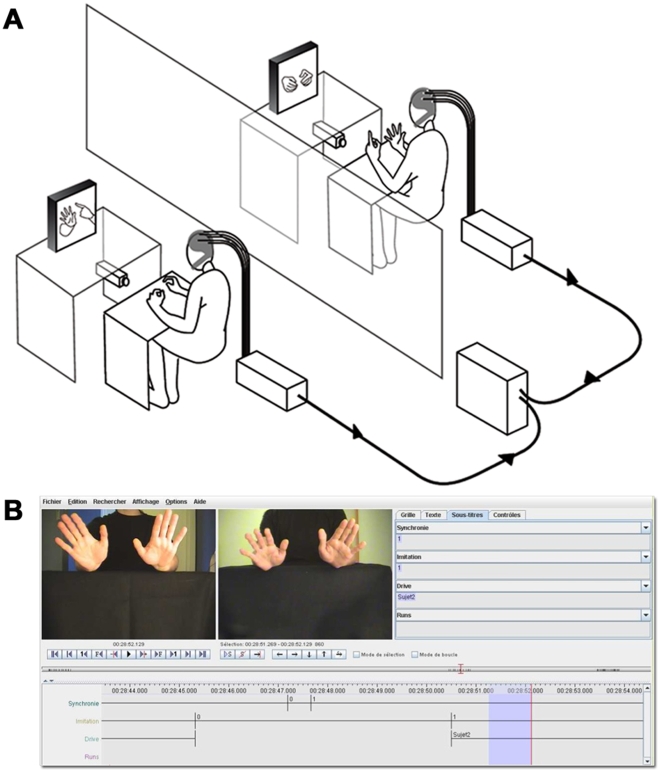
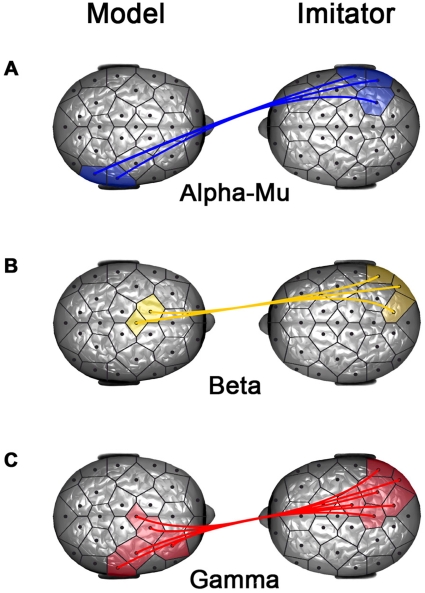
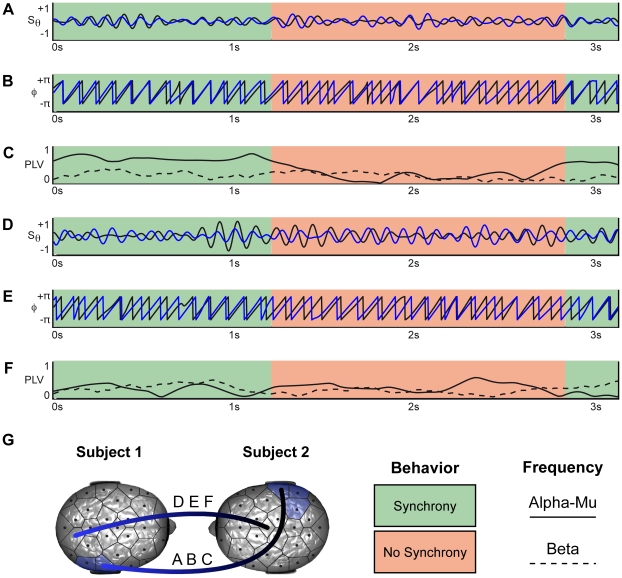
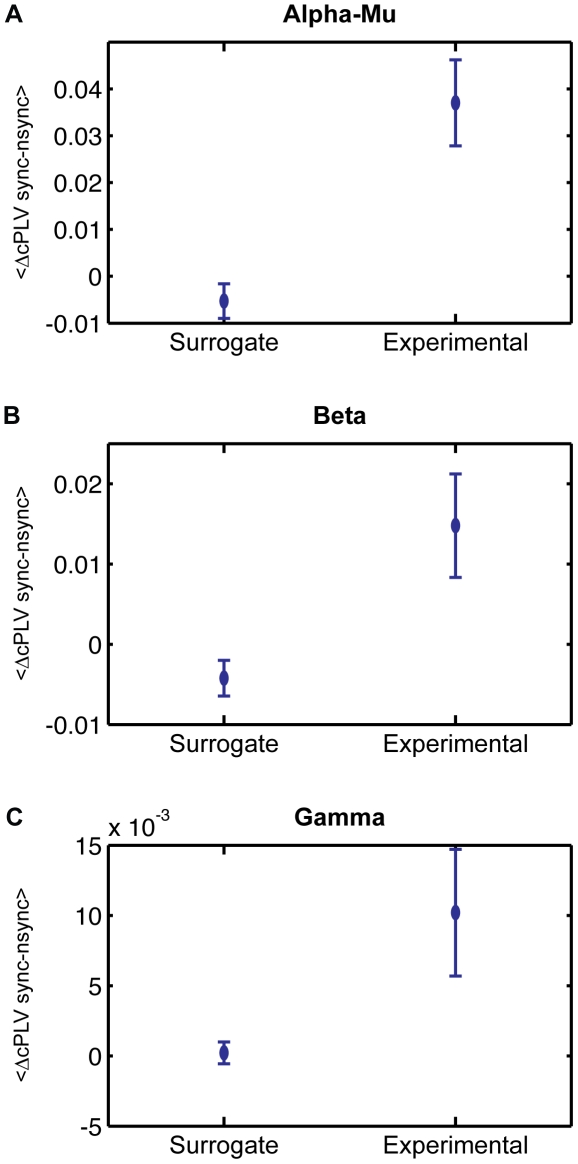
During social interaction, both participants are continuously active, each modifying their own actions in response to the continuously changing actions of the partner. This continuous mutual adaptation results in interactional synchrony to which both members contribute. Freely exchanging the role of imitator and model is a well-framed example of interactional synchrony resulting from a mutual behavioral negotiation. How the participants' brain activity underlies this process is currently a question that hyperscanning recordings allow us to explore. In particular, it remains largely unknown to what extent oscillatory synchronization could emerge between two brains during social interaction. To explore this issue, 18 participants paired as 9 dyads were recorded with dual-video and dual-EEG setups while they were engaged in spontaneous imitation of hand movements. We measured interactional synchrony and the turn-taking between model and imitator. We discovered by the use of nonlinear techniques that states of interactional synchrony correlate with the emergence of an interbrain synchronizing network in the alpha-mu band between the right centroparietal regions. These regions have been suggested to play a pivotal role in social interaction. Here, they acted symmetrically as key functional hubs in the interindividual brainweb. Additionally, neural synchronization became asymmetrical in the higher frequency bands possibly reflecting a top-down modulation of the roles of model and imitator in the ongoing interaction.
Overview
The claims and statistics of this paper haven’t been checked yet.
Free: it reads the open-access text and checks the first 5 claims that cite a source we can check. Create a free account to check every claim.
Integrity signals
Registry
Cites
Statistics
Figures

Verification
Claims the paper makes
The claims and statistics of this paper haven’t been checked yet.
Free: it reads the open-access text and checks the first 5 claims that cite a source we can check. Create a free account to check every claim.
Claims other papers make about this one
Each is checked against this paper’s own text: does it say what the citing paper says it does?
The check wasn’t confident either way, so it gives no verdict — never disputed.
In the citing paper
“The sample size was not determined a priori—each dataset's sample size was guided by prior work in their corresponding fields [38, 39, 40].”
From Interpersonal Synchronization of Autonomic Physiology via Mere Visual Contact (2026) · cites this paper as [38]
Experimental — accuracy not yet measured
Self-check
Percentages, sums and reported differences re-computed from the paper’s own numbers.
The self-check needs the paper’s full text.
Citations
Cites
A Mathematical Theory of Communication
Shannon, C. E. (1948) · Bell System Technical Journal · doi:10.1002/j.1538-7305.1948.tb01338.x · Cited by 88,486
The Mathematical Theory of Communication
Shannon, C. E., Weaver, W., & Wiener, N. (1950) · Physics Today · doi:10.1063/1.3067010 · Cited by 9,801
Nonparametric statistical testing of EEG- and MEG-data
Maris, E., & Oostenveld, R. (2007) · Journal of Neuroscience Methods · doi:10.1016/j.jneumeth.2007.03.024 · Cited by 8,496 · cited 1×
“Following previous studies [41,42], the resulting t-value matrices were then thresholded for absolute values larger than 2.”
The brainweb: phase synchronization and large-scale integration
Varela, F., Lachaux, J.-P., Rodriguez, E., & Martinerie, J. (2001) · Nature Reviews Neuroscience · doi:10.1038/35067550 · Cited by 4,761
Self-citationA mechanism for cognitive dynamics: neuronal communication through neuronal coherence.
Fries, P. (2005) · Trends in Cognitive Sciences · doi:10.1016/j.tics.2005.08.011 · Cited by 4,284 · cited 3×
“have been proposed as a key mechanism for information integration [28], temporal binding [51], flexible neuronal communication [34,52] and unified cognitive processes [45,53].”
InfluentialMeasuring phase synchrony in brain signals
Lachaux, J.-P., Rodriguez, E., Martinerie, J., & Varela, F. J. (1999) · Human Brain Mapping · doi:10.1002/(sici)1097-0193(1999)8:4<194::aid-hbm4>3.0.co;2-c · Cited by 3,798
Self-citationDynamic predictions: Oscillations and synchrony in top–down processing
Engel, A. K., Fries, P., & Singer, W. (2001) · Nature Reviews Neuroscience · doi:10.1038/35094565 · Cited by 3,454 · cited 1×
“Within one brain, synchronous neural oscillations have been previously observed in a range of processes such as conscious perception [44–46], working and long term memory [47,48], states of anticipation or attention [48,49] and empathy [50].”
Mathematical Theory of Communication
(2013) · Encyclopedia of Systems Biology · doi:10.1007/978-1-4419-9863-7_100015 · Cited by 3,290
Rizzolatti, G., & Arbib, M. A. (1998) · Trends in Neurosciences · doi:10.1016/s0166-2236(98)01260-0 · Cited by 2,858
Cortical mechanisms of human imitation
Iacoboni, M., Woods, R. P., Brass, M., Bekkering, H., Mazziotta, J. C., & Rizzolatti, G. (1999) · Science · doi:10.1126/science.286.5449.2526 · Cited by 2,683 · cited 1×
“Though imitation is commonly considered as a foundation for learning, socialization and communication [21,22], its use as a paradigm has been limited so far to test the direct matching hypothesis in an intraindividual perspective [23–27].”
Cited by
Items 601–700 of 963
Inter-brain synchronization in the practice of Tibetan monastic debatePreprint
van Vugt, M. K., Pollock, J., Johnson, B., Gyatso, K., Norbu, N., Lodroe, T., Gyaltsen, T., Aadhentsang, T., Thakchoe, J., Khechok, J., et al. (2018) · MindRxiv (OSF Preprints) · doi:10.31231/osf.io/f2ept · Cited by 5
Evolutionary dynamics of 1,976 lymphoid malignancies predict clinical outcomePreprint
Gabbutt, C., Duran‐Ferrer, M., Grant, H. E., Mallo, D., Nadeu, F., Househam, J., Villamor, N., Krali, O., Nordlund, J., Zenz, T., et al. (2023) · medRxiv · doi:10.1101/2023.11.10.23298336 · Cited by 4
Hu, Y., Zhang, R., Duan, Z., Liu, M., & Cheng, X. (2025) · NeuroImage · doi:10.1016/j.neuroimage.2025.121430 · Cited by 3
Women’s intuition as attunement: a biological and social perspective
Verma, S., & Kind, L. (. (2025) · Frontiers in Sociology · doi:10.3389/fsoc.2025.1542563 · Cited by 4
The generative role of noise in shaping social habits
James, M. M., Loh, C. L., Karelin, G., Weber, N., Shpurov, I., & Froese, T. (2025) · Cogent Arts and Humanities · doi:10.1080/23311983.2025.2562232 · Cited by 4
“…together, e.g. neuronal, endocrine, affective, sensorimotor, gestural, and linguistic; each of which might even have their own nested levels (see Mayo & Gordon 2020 for discussion; see also Cummins 2009, 2010, 2019; Dumas 2011; Dumas et al., 2010; Riley et al., 2011; schilbach et al., 2013).”
Viriyopase, A., & Narajeenron, K. (2025) · JMIR Medical Education · doi:10.2196/69725 · Cited by 2
Promoting Social Connectedness Through Interbrain Neurofeedback
Cheng, X., Zhang, R., Chen, P., Song, Z., Feng, C., Dikker, S., & Pan, Y. (2025) · Annals of the New York Academy of Sciences · doi:10.1111/nyas.70135 · Cited by 6
“Prior work has linked beta oscillations to motor simulation, top-down attention, and predictive coding [64], as well as joint action and shared intentionality in social contexts [47, 65].”
Robot-Mediated Physical Human–Human Interaction in Rehabilitation: A Position Paper
Vianello, L., Short, M. R., Manczurowsky, J., Küçüktabak, E. B., Tommaso, F. D., Noccaro, A., Bandini, L., Clark, S. J., Fiorenza, A., Lunardini, F., et al. (2025) · IEEE Reviews in Biomedical Engineering · doi:10.1109/rbme.2025.3632161 · Cited by 11
“Research has shown that inter-brain synchronization, particularly in regions associated with the mirror neuron system [70], increases during coordinated activities [71], [72].”
Towards Multi-Brain Decoding in Autism: A Self-Supervised Learning Approach
Ranjbaran, G., Moreau, Q., Dubois, A. E. E., & Dumas, G. (2026) · Neuroinformatics · doi:10.1007/s12021-025-09755-0 · Cited by 3
“This approach has unveiled inter-brain correlation (IBC) and inter-brain synchrony (IBS) in a wide range of social scenarios, including imitation (Dumas et al., 2010), mutual gaze (Leong et al., 2017), shared attention (Hirsch et al., 2017), deceptive interactions (Zhang et al., 2017a, b), verbal…”
Self-citationTesting the causal relationship between interpersonal closeness and inter-brain synchrony
Fornari, L., Janssen, T. W. P., Davidesco, I., Krabbendam, L., & van Atteveldt, N. (2026) · Scientific Reports · doi:10.1038/s41598-026-36958-5 · Cited by 4
“One candidate is motor synchrony, which emerges spontaneously in interaction and has been frequently associated with IBS 12,19 .”
Rhythms of interaction – the timescales of social coordination and why they matter
Hamilton, A. F. D. C., Southgate, V., Miskowiak, K. W., Bjertrup, A. J., Lomoriello, A. S., Felice, S. D., Liu, R., & Konvalinka, I. (2026) · Neuroscience & Biobehavioral Reviews · doi:10.1016/j.neubiorev.2026.106827 · Cited by 9
“…that neural signals measured with electroencephalography (EEG) and functional near infrared spectroscopy (fNIRS) are often synchronized at above-chance levels when people are engaged in a social interaction (Czeszumski et al., 2020; De Felice et al., 2025a; Dumas et al., 2010; Hakim et al., 2023).”
Brancazio, N. (2023) · Synthese · doi:10.1007/s11229-023-04192-5 · Cited by 6
“Other empirical work has confirmed and/or supplemented this work, demonstrating inter-brain synchronization in social interaction (Dumas et al., 2010) and music improvisation (Müller et al.”
ResultStudying naturalistic human communication using dual-EEG and audio-visual recordings
Mazzini, S., Holler, J., & Drijvers, L. (2023) · STAR Protocols · doi:10.1016/j.xpro.2023.102370 · Cited by 5
Brain-to-brain coupling forecasts future joint action outcomes
Markiewicz, R., Segaert, K., & Mazaheri, A. (2024) · iScience · doi:10.1016/j.isci.2024.110802 · Cited by 4
“Several EEG hyperscanning studies have reported inter-brain synchronous oscillatory patterns in joint action contexts, both in terms of oscillatory power as well as phase during fine motor coordination, 22,23 verbal coordination, 24 and other complex joint actions.”
Dispositional empathy as a driver of inter-individual neural phase synchrony
Falcon, M., Martikainen, S., Wikström, V., Makkonen, T., & Saarikivi, K. (2025) · Scientific Reports · doi:10.1038/s41598-025-01485-2 · Cited by 5
“The selection of ROIs matches prior and recent studies of inter-brain synchronization 5,10,46,47 .”
Alder, M.-L., Brakemeier, E., Dittmann, M. M., Dreyer, F., & Buchholz, M. B. (2016) · Psychotherapie Forum · doi:10.1007/s00729-015-0056-1 · Cited by 5
“Manche Forschungen sprechen von neuronaler Synchronisation (Abrams et al. 2013; Dumas et al. 2010; Hasson et al. 2012) und die Befunde sind nicht nur beeindruckend, sondern auch faszinierend.”
BackgroundDevelopmental Psychology: How Social Context Influences Infants’ Attention
Wass, S. V., & Leong, V. (2016) · Current Biology · doi:10.1016/j.cub.2016.03.051 · Cited by 3
Early warning signals in motion inference
Hart, Y., Vaziri-Pashkam, M., & Mahadevan, L. (2020) · PLoS Computational Biology · doi:10.1371/journal.pcbi.1007821 · Cited by 3
“Further studies of our experimental paradigm for social interactions in EEG setting (similar to Refs [40, 41]) could indicate if that is indeed the case.”
ResultBeing There: Foundations, Theory, Method
Worthman, C. M. (2020) · Cambridge University Press eBooks · doi:10.1017/9781108695374.007 · Cited by 3
ÖRGÜTSEL DAVRANIŞ LİTERATÜRÜNDE YENİ BİR PERSPEKTİF: NÖROBİLİM
İMAMOĞLU, S. Z., Latifoğlu, N., & İnce, H. (2021) · Doğuş Üniversitesi Dergisi · doi:10.31671/doujournal.972987 · Cited by 3
Studies of Interrelated Changes in Brain Activity During Social Interactions Using Hyperscanning
Павловна, М. Е., & Buianova, I. (2021) · Experimental Psychology (Russia) · doi:10.17759/exppsy.2021140411 · Cited by 3
Dual EEG alignment between participants during shared intentionality experiments
Myers, M. H., & Hossain, G. (2022) · Brain Research · doi:10.1016/j.brainres.2022.147986 · Cited by 5
Clinical Neuroscience Meets Second-Person Neuropsychiatry
Schilbach, L., & Lahnakoski, J. M. (2022) · Springer eBooks · doi:10.1007/978-3-031-08651-9_11 · Cited by 2
fNIRS Hyperscanning of Right-brain Synchronization between Therapist-client in Sandplay Therapy
Jang, M., Schore, A. N., Lee, S., Lee, Y., Kim, S.-M., & Kowen, M.-R. (2023) · Journal of Symbols & Sandplay Therapy · doi:10.12964/jsst.23002 · Cited by 4
Mello, C. A., Lewis, R. A., Brooks‐Kayal, A. R., Carlsen, J., Grabenstatter, H. L., & White, A. M. (2014) · Lecture notes in computer science · doi:10.1007/978-3-319-09891-3_22 · Cited by 4
“In a healthy human brain there is a precise interaction of neural activities that renders multiple types of normal oscillatory synchronization [1] [2] [3] [4].”
BackgroundInterpersonal EEG Synchrony While Listening to a Story Recorded Using Consumer-Grade EEG Devices
Thammasan, N., Brouwer, A.-M., Poel, M., & van Erp, J. B. F. (2019) · Lecture notes in information systems and organisation · doi:10.1007/978-3-030-28144-1_28 · Cited by 3
Modeling Dynamic Coupling in Social Interactions
Fairhurst, M. T. (2020) · Operator theory · doi:10.1007/978-3-030-44097-8_7 · Cited by 3
Sonker, P., Cherukalady, R., & Singaravel, M. (2021) · Chronobiology International · doi:10.1080/07420528.2021.1941075 · Cited by 4
“The various levels of social synchronization have been reported in fruit flies, honey bees, birds, bats, beavers, mice, and humans (Bovet and Oertli 1974; Dumas et al. 2010; Frisch and Koeniger 1994; Gwinner 1966; Marimuthu et al. 1981; Paul et al. 2015; Samuel et al. 2011).”
BackgroundLoh, C. L., & Froese, T. (2021) · IEEE Conference on Computational Intelligence in Bioinformatics and Computational Biology (CIBCB) · doi:10.1109/cibcb49929.2021.9562779 · Cited by 6
A test run of the free energy principle: All for naught?
Paolo, E. A. D. (2022) · Physics of Life Reviews · doi:10.1016/j.plrev.2022.05.001 · Cited by 3
Parada, F. J., & Palacios-García, I. (2022) · Adaptive Behavior · doi:10.1177/10597123221088874 · Cited by 4
“…et al., 2019; Gramann et al., 2021; Ladouce et al., 2019; Pin˜eyro Salvidegoitia et al., 2019) and/or multiple participants (Czeszumski et al., 2020; Dumas et al., 2010; Konvalinka & Roepstorff, 2012), the microbiome of the built environment (Mhuireach et al., 2021; Stamper et al., 2016), to name…”
BackgroundfractalRegression: An R package for multiscale regression and fractal analysesPreprint
Likens, A. D., & Wiltshire, T. J. (2023) · PsyArXiv (OSF Preprints) · doi:10.31234/osf.io/gq9vz · Cited by 3
Newman, L. A., Cao, M., Täuber, S., & van Vugt, M. K. (2024) · PsyArXiv (OSF Preprints) · doi:10.31234/osf.io/5vgp9 · Cited by 5
Li, J. (2025) · Natural Language Processing Journal · doi:10.1016/j.nlp.2025.100163 · Cited by 3
“…attribution, i.e., • Hinting Task: Successful hint interpretation requires integrating context, intent, and social norms. fMRI might show robust mPFC-TPJ connectivity (Frith and Frith, 2006), and EEG could reveal high gamma-band synchrony, indicating integrated processing (Dumas et al., 2010).”
Teacher-Student Inter-Brain and Behavioral Synchronies in Remote Education
You, J., Jung, M., Shin, Y., & Kim, K. K. (2025) · IEEE Access · doi:10.1109/access.2025.3569961 · Cited by 2
“Dumas et al. [27] recorded EEG data while instructing participants to replicate hand movements and observed that IBS was more pronounced when mimicking these movements.”
Sensory multi-brain stimulation enhances dyadic cooperative behavior
Leiva, I., Barraza, P., Rodríguez, E., & Dumas, G. (2025) · Social Cognitive and Affective Neuroscience · doi:10.1093/scan/nsaf104 · Cited by 8
Self-citationNelson, C. M., Wilson, S. C., McFadden, J., Almor, A., & Hudac, C. M. (2025) · Frontiers in Developmental Psychology · doi:10.3389/fdpys.2025.1644956 · Cited by 2
Narrative alignment: how ways of sharing personal stories modulate brain-to-brain synchronization
Wang, T., & Xu, X. (2025) · Cerebral Cortex · doi:10.1093/cercor/bhaf301 · Cited by 3
Inter-neural co-regulation before and after an interactive perturbation in mother-infant dyads
Capelli, E. S., Provenzi, L., Pili, M. P., Riva, V., Billeci, L., Cremaschi, G., D'Alfonso, S., Günay, Y., Roberti, E., & Borgatti, R. (2026) · Scientific Reports · doi:10.1038/s41598-026-36750-5 · Cited by 2
“PLV was selected as the index of INS to assess neural entrainment and its relationships with coordinated behavior 20 .”
Veneziani, G., Luciani, F., Giraldi, E., Campedelli, V., & Lai, C. (2026) · Annals of the New York Academy of Sciences · doi:10.1111/nyas.70217 · Cited by 3
“Moreover, previous studies found an increase in alpha band IBS during motor coordination tasks [ 111 ] and flight phases involving high cooperativity [ 40, 65 ].”
Integrating neural, physiological, and interoceptive measures in social interaction
Lettieri, G. (2026) · Frontiers in Neuroscience · doi:10.3389/fnins.2026.1771470 · Cited by 3
“Across neuroimaging modalities such as EEG, fNIRS, and fMRI, hyperscanning research has consistently shown that interacting partners exhibit temporally coupled neural activity (Dumas et al., 2010; Cui et al., 2012; Bilek et al., 2015).”
Müller, & Lindenberger, U. (2026) · Nonlinear Dynamics · doi:10.1007/s11071-025-12153-5 · Cited by 2
“Despite robust evidence linking neural synchronization to successful social interaction [2, 5, 7, 8, 13–18, 58] , We therefore included additional joint and solitary tasks—rest (eyes closed vs. eyes open), pendulum observation (simple vs. chaotic motion), and music listening (rhythmic vs.…”
Moffat, R., Dumas, G., & Cross, E. S. (2026) · PLoS Biology · doi:10.1371/journal.pbio.3003899 · Cited by 3
“Specifically, the alpha band may index joint attention and visual processing, while beta and theta bands may reflect joint encoding of sensorimotor information [37,63,64].”
Self-citationOrienting Cognitive Science to Evolution and Development
Brooks, P. J., & Ragir, S. (2013) · Topics in Cognitive Science · doi:10.1111/tops.12059 · Cited by 1
Konvalinka, I., Kompatsiari, K., & Li, Q. (2023) · Physics of Life Reviews · doi:10.1016/j.plrev.2023.09.017 · Cited by 4
Bonnaire, J., Dumas, G., & Cassell, J. (2024) · Frontiers in Neuroergonomics · doi:10.3389/fnrgo.2024.1290256 · Cited by 4
“It was first made for neuroscience in a visionary article by Hari and Kujala (2009), reiterated by Dumas et al. (2010), and Schilbach et al. (2013), and it has been echoed repeatedly since then, including in a recent special issue (Schirmer et al., 2021).”
BackgroundMethodSelf-citationSymbolic dynamics of joint brain states during dyadic coordination
Pinto, Í. L. D., Zhou, Z., Garcia, J. O., & Srinivasan, R. (2025) · Chaos An Interdisciplinary Journal of Nonlinear Science · doi:10.1063/5.0234902 · Cited by 3
“Measures like Partial Directed Coherence 9 and Phase Locking Value 10 are used to assess synchrony between different brain areas of different subjects 8 .”
MethodNew perspectives on autism: two equations to describe a complex disorder and envisage new treatments
Suare, B., & Jeune, M.-A. (2025) · Obstetrics Gynecology and Reproduction · doi:10.17749/2313-7347/ob.gyn.rep.2024.526 · Cited by 2
Usal, K. A., & Çakır, M. P. (2025) · European Journal of Neuroscience · doi:10.1111/ejn.70091 · Cited by 2
“In the literature, delta and theta coherence is related to cognitive synchronization and joint action (Balconi and Angioletti 2023; Bolt and Loehr 2021; Dumas et al. 2010; Moreau et al. 2022).”
InfluentialEffects of Human Avatar Representation in Virtual Reality on Inter-Brain Connections
Yigitbas, E., & Kaltschmidt, C. (2025) · Smart innovation, systems and technologies · doi:10.1007/978-981-96-1154-6_14 · Cited by 4
The rhythm of sensory input shapes audio‐visual temporal processing
Zamfira, D. A., Dona, G. D., Marsicano, G., Battista, M., Battaglini, L., & Ronconi, L. (2025) · British Journal of Psychology · doi:10.1111/bjop.70029 · Cited by 2
“…that impacts on cross-modal integration and could have cascade effects not only on behavioural performance but also on higher order cognition (Bauer et al., 2020; Doelling et al., 2014; Dumas et al., 2010; Lakatos et al., 2008, 2019; Ronconi et al., 2016; Wass et al., 2020; Yun et al., 2012).”
Imitation et plasticité du développement
Nadel, J. (2019) · Enfance · doi:10.3917/enf2.191.0133 · Cited by 6
Self-citationKeeping in Touch with Mental Health: The Orienting Reflex and Behavioral Outcomes from Calatonia
Blanchard, A. R., & Comfort, W. E. (2020) · Brain Sciences · doi:10.3390/brainsci10030182 · Cited by 2
Does machine-mediated interaction induce inter-brain synchrony? — A hyperscanning study
Hachmeister, N., Finke, A., & Ritter, H. J. (2014) · Annual International Conference of the IEEE Engineering in Medicine and Biology Society (EMBC) · doi:10.1109/embc.2014.6943766 · Cited by 2
Neurophysiological Indices of Human Social Interactions Between Humans and Robots
Smith, S. J., Stone, B. T., Ranatunga, T., Nel, K., Ramsøy, T. Z., & Berka, C. (2017) · Communications in computer and information science · doi:10.1007/978-3-319-58750-9_36 · Cited by 3
Capturing Context Is Not Enough: The Embodied Impact of Story and Emotion in Ethnographic Film
Lemelson, R., & Tucker, A. (2020) · Cambridge University Press eBooks · doi:10.1017/9781108695374.023 · Cited by 2
Gumilar, I., Barde, A., Hayati, A. F., Billinghurst, M., & Singh, S. (2021) · IEEE International Symposium on Mixed and Augmented Reality Adjunct (ISMAR-Adjunct) · doi:10.1109/ismar-adjunct54149.2021.00021 · Cited by 2
Stendel, M. S., Ramstead, M. J. D., & Veissière, S. P. L. (2020) · Cambridge University Press eBooks · doi:10.1017/9781108695374.026 · Cited by 2
Hari, R., & Puce, A. (2017) · Oxford University Press eBooks · doi:10.1093/med/9780190497774.003.0018 · Cited by 2
A Neuroscience Approach to Entrepreneur Pitch Outcomes
Heaton, S. (2023) · Emerald Group Publishing Limited eBooks · doi:10.1108/s2397-521020230000006007 · Cited by 2
Domain Adaptation for Pathologic Oscillations
Lewis, R. A., Mello, C. A., Ellenberger, J., & White, A. M. (2013) · Lecture notes in computer science · doi:10.1007/978-3-642-41218-9_40 · Cited by 2
Fusaroli, R., Bjørndahl, J. S., Roepstorff, A., & Tylén, K. (2015) · arXiv (Cornell University) · Cited by 2
Physiological Synchrony as Manifested in Dyadic Interactions
Rezaei, S. (2013) · TSpace (University of Toronto) · Cited by 4
Culture and Self–Other Overlap in Neural Circuits
Varnum, M. E. W., & Hampton, R. S. (2017) · Wiley eBooks · doi:10.1002/9781119181361.ch18 · Cited by 2
Parada, F. J., & Palacios-García, I. (2022) · doi:10.31234/osf.io/6gzn7 · Cited by 2
Two Styles of Social Neuroeconomics
Petracca, E. (2022) · OEconomia · doi:10.4000/oeconomia.12150 · Cited by 2
Frequency-Dependent Inter-Brain Synchrony is Modulated by Social Interaction in Freely Moving MicePreprint
Scaglione, A., Lucchesi, J., Mascaro, A. L. A., & Pavone, F. S. (2024) · bioRxiv (Cold Spring Harbor Laboratory) · doi:10.1101/2024.05.21.593536 · Cited by 4
“While similar practices are commonly conducted in humans in Hyperscanning studies 6,8,10,53,54 , social interaction experiments in animals are usually conducted recording one area in one of the interacting animal 2,3,36 or, in minor part, recording small homotopic areas in both animals 31,55 or…”
BackgroundAbendroth, J. A., Moural, T. W., Cruse, C., Hernandez, J. A., Wolfin, M. S., Baker, T. C., Alyokhin, A., & Zhu, F. (2025) · bioRxiv (Cold Spring Harbor Laboratory) · doi:10.1101/2025.04.29.651160 · Cited by 2
Hyperscanning and Interpersonal Neural Dynamics in Parenting Research
Esposito, G., & Carollo, A. (2026) · Parenting · doi:10.1080/15295192.2026.2652920 · Cited by 3
Neuroscience, Technology and Learning: Areas and Issues for Interdisciplinary Progress
Howard‐Jones, P. A., Ott, M., van Leeuwen, T. H., & Smedt, B. D. (2011) · HAL · Cited by 2
Suyono, T. A., Prasetyo, P. E. A., Shafira, E., Tanjung, F. Y., Syazwani, F., & Yudiana, W. (2020) · Jurnal Psikologi Sosial · doi:10.7454/jps.2020.14 · Cited by 1
The Neural Mechanisms Underlying Social Norms: Norm Detection, Punishment, and Compliance
Mu, Y., & Gelfand, M. J. (2020) · Cambridge University Press eBooks · doi:10.1017/9781108695374.015 · Cited by 2
Gaze and Heart Rate Synchronization in Computer-Mediated Collaboration
Wisiecka, K. (2021) · ACM Symposium on Eye Tracking Research and Applications (ETRA) · doi:10.1145/3450341.3457992 · Cited by 1
“They demonstrated that physiological synchronization facilitates sense of cooperation, trust, compassion and attitudes towards pro-social behaviors [McCraty 2017], as well as better performance in collaboration [Dumas et al. 2010].”
BackgroundTummala–Narra, P., Gonzalez, L. D., & Hailes, H. P. (2021) · Cambridge University Press eBooks · doi:10.1017/9781108678971.029 · Cited by 1
The Cambridge Handbook of Community Psychology: Interdisciplinary and Contextual Perspectives
(2021) · Cambridge University Press eBooks · doi:10.1017/9781108678971 · Cited by 4
Investigating the effect of synchronized movement on toddlers’ word learning
Bazhydai, M., Ke, H., Thomas, H., Wong, M. K. Y., & Westermann, G. (2022) · Frontiers in Psychology · doi:10.3389/fpsyg.2022.1008404 · Cited by 2
“Extending and enriching these behavioral findings, a new generation of studies using hyperscanning approaches shows that behavioral synchrony leads to inter-brain synchrony through brain coupling (Dumas et al., 2010; Hasson et al., 2012; Hu et al., 2017).”
BackgroundAvnor, Y., & Shamay‐Tsoory, S. (2025) · Journal of Affective Disorders · doi:10.1016/j.jad.2025.02.050 · Cited by 2
Collective decision making by embodied neural agents
Coucke, N., Heinrich, M. K., Cleeremans, A., Dorigo, M., & Dumas, G. (2025) · PNAS Nexus · doi:10.1093/pnasnexus/pgaf101 · Cited by 2
“Experimental studies with multiple animals or humans have suggested that coordination between brain dynamics of different agents, typically quantified in terms of inter-brain synchronization (IBS), might have an important role in supporting collective behaviors (75, 76).”
Self-citationVisionary Leadership Teams as Strategies for Industry Transformation
Nesbitt, B. L. (2025) · IGI Global eBooks · doi:10.4018/979-8-3373-2392-3.ch011 · Cited by 1
Balconi, M. (2025) · Social Neuroscience · doi:10.1080/17470919.2025.2561500 · Cited by 1
“The results show that while online interactions retain some cognitive aspects of communication (such as linguistic exchange), they reduce co-activation in brain areas related to joint attention, empathy, and a sense of presence (Dumas et al., 2010; Sato & Sato, 2025).”
Zhao, Y., Gui, H., Chin, T., Li, Y., Yue, Y., & Liu, Q. (2025) · Journal of Knowledge Management · doi:10.1108/jkm-11-2023-1060 · Cited by 1
Nonverbal synchrony in psychopathology: A review
Shaul-Tsoran, I., & Aderka, I. M. (2025) · Psychiatry Research · doi:10.1016/j.psychres.2025.116777 · Cited by 1
Stoyanova, V., Ashwin, C., Scarampi, C., Hijazy, M., Carter, F., Stothart, G., & Hinvest, N. S. (2025) · Frontiers in Human Neuroscience · doi:10.3389/fnhum.2025.1622203 · Cited by 1
“This predictability facilitates mutual prediction and shared control states, core ingredients for inter-brain alignment in natural interaction (Dumas et al., 2010; Hasson et al., 2012).”
Dynamic neural processing of self-other synchronization error in interpersonal coordination
Varlet, M., Nozaradan, S., & Keller, P. E. (2025) · iScience · doi:10.1016/j.isci.2025.114081 · Cited by 3
“47–53 We argue that these processes are complementary and that those revealed here, potentially more directly supported by sensory and motor regions, might reflect lower-level neural processes that have developed to enable rapid and continuous low-level movement adjustments required for finely…”
Key, A. P. F., Inman, A. J., Chambers, K., Ford, A., Kjeldsen, C. P., & Neel, M. L. (2025) · Psychophysiology · doi:10.1111/psyp.70188 · Cited by 1
“Phase locking value (PLV; five papers) characterizes the relative phase alignment of two signals (Tass et al. 1998; Dumas et al. 2010) at a particular time for a specific frequency band (Lachaux et al. 1999).”
Psilocybin-induced modulation of visual salience processing
Muller, S. L., Cavanna, F., de la Fuente, L. A., Bruno, N. M., D’Amelio, T. A., Pallavicini, C., & Tagliazucchi, E. (2025) · Neuroscience of Consciousness · doi:10.1093/nc/niaf060 · Cited by 2
Now is the time: operationalizing generative neurophenomenology through interpersonal methods
Monnier, A., Adel, L., & Dumas, G. (2025) · Neuroscience of Consciousness · doi:10.1093/nc/niaf052 · Cited by 4
“Graph-theoretic extensions, including bipartite graphs for inter-brain data (Dumas et al.2010),can further help in controlling multiple comparisons.”
Self-citationShort-term dynamic changes in interbrain synchrony during first social interaction between strangers
Atias, D., Markus, A., & Shamay‐Tsoory, S. (2026) · NeuroImage · doi:10.1016/j.neuroimage.2026.121752 · Cited by 2
Crivelli, D., & Balconi, M. (2026) · Frontiers in Sports and Active Living · doi:10.3389/fspor.2026.1751291 · Cited by 2
“This inter-brain synchronization is observed through methods like hyperscanning, which has shown that synchrony in brain activity can predict the efficacy of social interactions and shared tasks (20–23).”
Samraksha, N., Sangeetha, S. R., & Duraisamy, P. (2026) · Journal of Psychosexual Health · doi:10.1177/26318318261421672 · Cited by 1
“35,38 Hyper-brain modeling has been used to demonstrate emergent properties of dyadic interaction, such as joint attention, decision-making efficiency, and task performance improvement.”
Balconi, M., Rovelli, K., Magni, G., Genovese, L. A., Mauri, M., Sajno, E., Sansoni, M., Gaspari, S. D., Serino, S., Lernia, D. D., et al. (2026) · Trends in Neuroscience and Education · doi:10.1016/j.tine.2026.100281 · Cited by 1
Seeing Avatars During Social Interaction in VR May Enhance Inter-Brain Synchronization
Won, K., Pillette, L., Savalle, E., Argelaguet, F., Macé, M. J. ‐., & Lécuyer, A. (2026) · IEEE Transactions on Visualization and Computer Graphics · doi:10.1109/tvcg.2026.3671344 · Cited by 1
“…synchronization measured by phase locking value (PLV) between the right parietal regions of the model and imitator in the alpha-mu frequency band [21], meaning that the alpha-mu oscillation of the model was phase-locked in accordance with the alpha-mu oscillation of the imitator around the same…”
Li, Y., Li, S., Li, Y., Pang, X., Yi, C., Jiang, L., Yao, D., Wu, W., Li, F., & Xu, P. (2026) · Communications Biology · doi:10.1038/s42003-026-09854-x · Cited by 2
Li, Y., Li, S., Xie, J. X. J., Yao, D., Li, F., Xu, P., Wu, J., & Jiang, L. (2026) · NeuroImage · doi:10.1016/j.neuroimage.2026.121865 · Cited by 1
Schussel, L. (2026) · Frontiers in Cognition · doi:10.3389/fcogn.2026.1719931 · Cited by 1
“Far fewer studies are based on music, simulated training, behavioral mimicry, and differential tasks in naturalistic settings such as attending a concert or museum (Astolfi et al., 2011; Babiloni et al., 2012; Dikker et al., 2017; Dumas et al., 2010; Lindenberger et al., 2009; Sänger et al., 2012).”
Inter-Brain Correlates of Coparenting During the Lausanne Trilogue Play
Montecinos, M., Valenzuela, L., Soto, V., Muñoz, L., & Cortés, F. P. (2026) · The Journal of Genetic Psychology · doi:10.1080/00221325.2026.2680987 · Cited by 1
Linguistics and human brain: a perspective of computational neuroscience
Zhang, F., Chai, B., Wu, Y., Siok, W. T., & Wang, N. (2026) · Cognitive Neurodynamics · doi:10.1007/s11571-026-10496-2 · Cited by 7
“…that altered coupling, reduced stability of shared representations, and degraded decoding capacity may all be relevant to understanding pathological language processing (Hirsch et al. 2018; Dumas et al. 2010; Willett et al. 2023; Metzger et al. 2023; Spalding et al. 2025; Singh et al. 2025a).”
Rosso, M., Kerrebroeck, B. V., Keller, P. E., Leman, M., Maes, P., & Vuust, P. (2026) · Annals of the New York Academy of Sciences · doi:10.1111/nyas.70314 · Cited by 5
Jiang, L., Zou, Q., & Yu, S. (2026) · Biological Psychology · doi:10.1016/j.biopsycho.2026.109367 · Cited by 1
Varlet, M., Lenc, T., Nozaradan, S., Poeppel, D., & Keller, P. E. (2026) · PLoS Biology · doi:10.1371/journal.pbio.3003935 · Cited by 2
Metadata
- Authors
- Dumas, G., Nadel, J., Soussignan, R., Martinerie, J., & Garnero, L.
- Affiliations
- Centre National de la Recherche Scientifique (FR)
- Corresponding author
- Dumas, Guillaume
- Venue
- PLoS ONE
- Publisher
- Public Library of Science (PLoS)
- Published
- 2010-08-17
- Volume
- 5
- Issue
- 8
- Pages
- e12166
- ISSN
- 1932-6203 (ISSN-L)
- PMC
- PMC2923151
- OpenAlex
- W1986163111
- Cited by
- 966
- References
- 68
- Citations by year
- 2026: 73 · 2025: 80 · 2024: 68 · 2023: 55 · 2022: 78 · 2021: 106 · 2020: 127 · 2019: 53 · 2018: 54 · 2017: 57 · 2016: 42 · 2015: 31 · 2014: 54 · 2013: 35 · 2012: 33
- FWCI
- 38.29
- Type
- journal article
- Language
- en
- Open access
- gold
- doi.org
- Locations
- PLoS ONE (publishedVersion, cc-by)
- PubMed Central (publishedVersion, cc-by)
- PubMed (publishedVersion)
- HAL (submittedVersion, other-oa)
- HAL (submittedVersion)
- RePEc: Research Papers in Economics (submittedVersion)
- DOAJ (DOAJ: Directory of Open Access Journals) (submittedVersion, cc-by-sa)
- Topics
- Social Sciences › Psychology › Social Psychology › Action Observation and Synchronization
- Life Sciences › Neuroscience › Cognitive Neuroscience › Neural dynamics and brain function
- Life Sciences › Neuroscience › Cognitive Neuroscience › EEG and Brain-Computer Interfaces
- Keywords
- inter-brain synchrony, social interaction, interactional synchrony, spontaneous imitation, turn-taking, hyperscanning, top-down modulation, mirror neuron system
- MeSH terms
- Behavior, Brain, Electroencephalography, Female, Humans, Imitative Behavior, Interpersonal Relations, Male, Young Adult
About these checks
Registry, retraction, Cites and statistics results are computed, not judged, with one exception: a printed reference that no index lists is read once by a model before it counts as a citation error. Claims are extracted by a model and kept only when their quote appears verbatim in the text; each cited source is then checked, with a model’s help, for whether it says what the claim relies on. Those verdicts can be wrong — read the claim’s quote and the cited source before relying on one.
Statistics and arithmetic are recomputed, not judged.
Confidence bands are shown only for fields calibrated on our annotated test set. None is calibrated yet, so no band is shown.
What counts as a claim ›How we measure confidence ›How we check this ›
Are you an author, or do you see a problem with this page? Request a review
Data sources
Bibliographic data: Semantic Scholar, OpenAlex, Crossref.
Contains information from the Semantic Scholar Academic Graph Datasets, made available under the ODC Attribution License (ODC-BY 1.0).
Semantic Scholar’s data is described in: Kinney, R., et al. (2023). The Semantic Scholar Open Data Platform. arXiv:2301.10140.
