

Inter-Brain Synchronization during Social Interaction
Open accessThe DOI matches its Crossref record; 67 of the 68 references it cites were found in a registry or an index.
Abstract
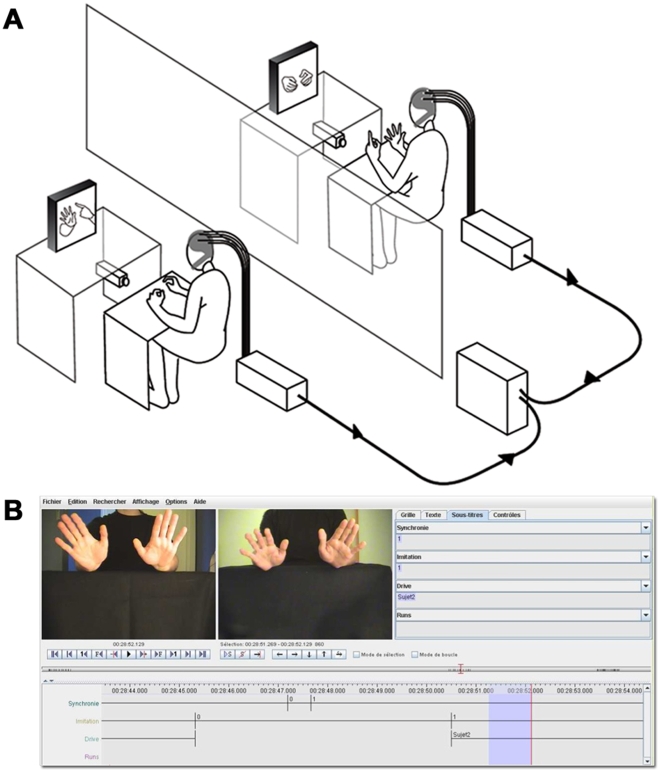
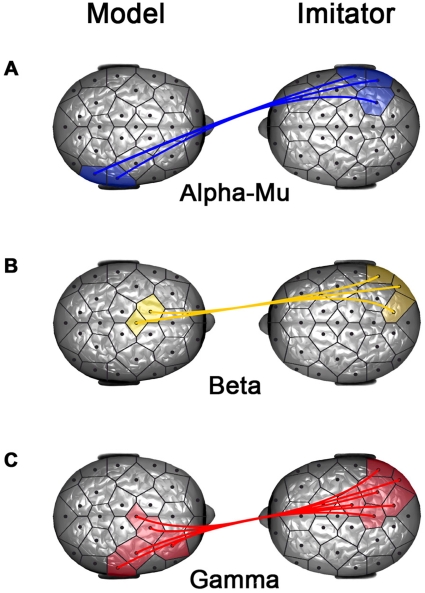
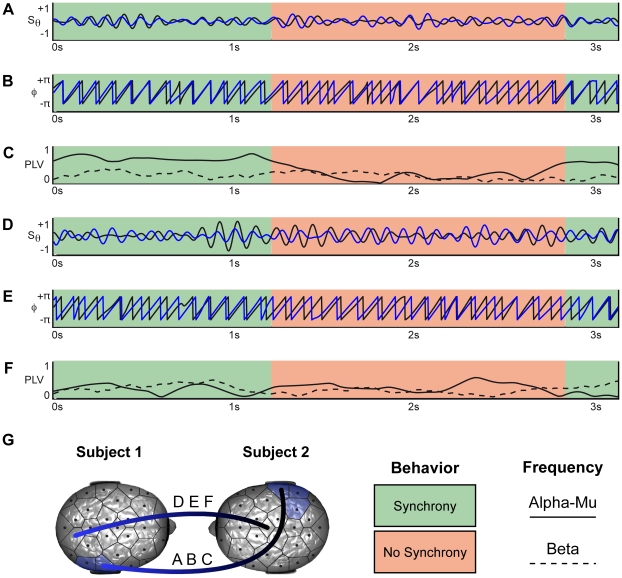
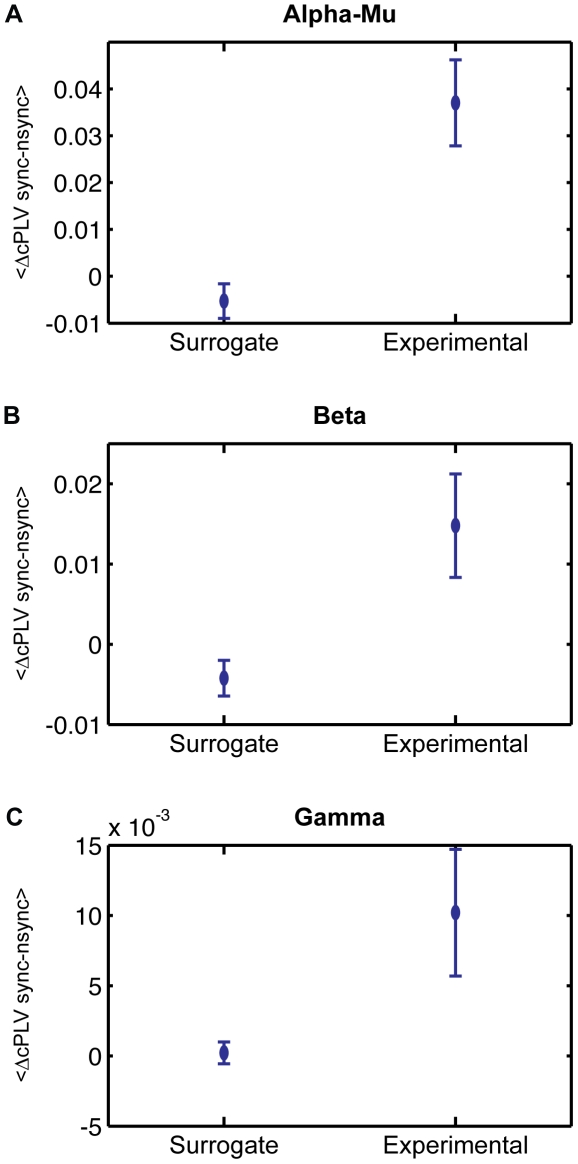
During social interaction, both participants are continuously active, each modifying their own actions in response to the continuously changing actions of the partner. This continuous mutual adaptation results in interactional synchrony to which both members contribute. Freely exchanging the role of imitator and model is a well-framed example of interactional synchrony resulting from a mutual behavioral negotiation. How the participants' brain activity underlies this process is currently a question that hyperscanning recordings allow us to explore. In particular, it remains largely unknown to what extent oscillatory synchronization could emerge between two brains during social interaction. To explore this issue, 18 participants paired as 9 dyads were recorded with dual-video and dual-EEG setups while they were engaged in spontaneous imitation of hand movements. We measured interactional synchrony and the turn-taking between model and imitator. We discovered by the use of nonlinear techniques that states of interactional synchrony correlate with the emergence of an interbrain synchronizing network in the alpha-mu band between the right centroparietal regions. These regions have been suggested to play a pivotal role in social interaction. Here, they acted symmetrically as key functional hubs in the interindividual brainweb. Additionally, neural synchronization became asymmetrical in the higher frequency bands possibly reflecting a top-down modulation of the roles of model and imitator in the ongoing interaction.
Overview
The claims and statistics of this paper haven’t been checked yet.
Free: it reads the open-access text and checks the first 5 claims that cite a source we can check. Create a free account to check every claim.
Integrity signals
Registry
Cites
Statistics
Figures

Verification
Claims the paper makes
The claims and statistics of this paper haven’t been checked yet.
Free: it reads the open-access text and checks the first 5 claims that cite a source we can check. Create a free account to check every claim.
Claims other papers make about this one
Each is checked against this paper’s own text: does it say what the citing paper says it does?
The check wasn’t confident either way, so it gives no verdict — never disputed.
In the citing paper
“The sample size was not determined a priori—each dataset's sample size was guided by prior work in their corresponding fields [38, 39, 40].”
From Interpersonal Synchronization of Autonomic Physiology via Mere Visual Contact (2026) · cites this paper as [38]
Experimental — accuracy not yet measured
Self-check
Percentages, sums and reported differences re-computed from the paper’s own numbers.
The self-check needs the paper’s full text.
Citations
Cites
A Mathematical Theory of Communication
Shannon, C. E. (1948) · Bell System Technical Journal · doi:10.1002/j.1538-7305.1948.tb01338.x · Cited by 88,486
The Mathematical Theory of Communication
Shannon, C. E., Weaver, W., & Wiener, N. (1950) · Physics Today · doi:10.1063/1.3067010 · Cited by 9,801
Nonparametric statistical testing of EEG- and MEG-data
Maris, E., & Oostenveld, R. (2007) · Journal of Neuroscience Methods · doi:10.1016/j.jneumeth.2007.03.024 · Cited by 8,496 · cited 1×
“Following previous studies [41,42], the resulting t-value matrices were then thresholded for absolute values larger than 2.”
The brainweb: phase synchronization and large-scale integration
Varela, F., Lachaux, J.-P., Rodriguez, E., & Martinerie, J. (2001) · Nature Reviews Neuroscience · doi:10.1038/35067550 · Cited by 4,761
Self-citationA mechanism for cognitive dynamics: neuronal communication through neuronal coherence.
Fries, P. (2005) · Trends in Cognitive Sciences · doi:10.1016/j.tics.2005.08.011 · Cited by 4,284 · cited 3×
“have been proposed as a key mechanism for information integration [28], temporal binding [51], flexible neuronal communication [34,52] and unified cognitive processes [45,53].”
InfluentialMeasuring phase synchrony in brain signals
Lachaux, J.-P., Rodriguez, E., Martinerie, J., & Varela, F. J. (1999) · Human Brain Mapping · doi:10.1002/(sici)1097-0193(1999)8:4<194::aid-hbm4>3.0.co;2-c · Cited by 3,798
Self-citationDynamic predictions: Oscillations and synchrony in top–down processing
Engel, A. K., Fries, P., & Singer, W. (2001) · Nature Reviews Neuroscience · doi:10.1038/35094565 · Cited by 3,454 · cited 1×
“Within one brain, synchronous neural oscillations have been previously observed in a range of processes such as conscious perception [44–46], working and long term memory [47,48], states of anticipation or attention [48,49] and empathy [50].”
Mathematical Theory of Communication
(2013) · Encyclopedia of Systems Biology · doi:10.1007/978-1-4419-9863-7_100015 · Cited by 3,290
Rizzolatti, G., & Arbib, M. A. (1998) · Trends in Neurosciences · doi:10.1016/s0166-2236(98)01260-0 · Cited by 2,858
Cortical mechanisms of human imitation
Iacoboni, M., Woods, R. P., Brass, M., Bekkering, H., Mazziotta, J. C., & Rizzolatti, G. (1999) · Science · doi:10.1126/science.286.5449.2526 · Cited by 2,683 · cited 1×
“Though imitation is commonly considered as a foundation for learning, socialization and communication [21,22], its use as a paradigm has been limited so far to test the direct matching hypothesis in an intraindividual perspective [23–27].”
Cited by
Items 101–200 of 963
Imaging the Social Brain by Simultaneous Hyperscanning during Subject Interaction
Astolfi, L., Toppi, J., De Vico Fallani, F., Vecchiato, G., Cincotti, F., Wilke, C., Yuan, H., Mattia, D., Salinari, S., He, B., et al. (2011) · IEEE Intelligent Systems · doi:10.1109/mis.2011.61 · Cited by 110
Ahn, S., Cho, H., Kwon, M., Kim, K., Kwon, H., Kim, B. S., Chang, W. S., Chang, J. W., & Jun, S. C. (2017) · Human Brain Mapping · doi:10.1002/hbm.23834 · Cited by 129
“Since then, many studies have found alpha suppression in the right centro-parietal region [Dumas et al., 2010, 2012b; Naeem et al., 2012a,b], but several others found that the brain regions suppressed varied according to the types of interaction paradigms.”
BackgroundResultDual brain stimulation enhances interpersonal learning through spontaneous movement synchrony
Pan, Y., Novembre, G., Song, B., Zhu, Y., & Hu, Y. (2021) · Social Cognitive and Affective Neuroscience · doi:10.1093/scan/nsaa080 · Cited by 109
“This was also inspired by previous work indicating that inter-brain synchronization in the theta band is associated with interpersonal imitation of movements (Dumas et al., 2010).”
BackgroundResultInfluentialJahng, J., Kralik, J. D., Hwang, D., & Jeong, J. (2017) · NeuroImage · doi:10.1016/j.neuroimage.2017.06.024 · Cited by 129
“…ranges of the neural processing (Astolfi et al., 2009, 2010, 2011; Babiloni et al., 2007a, 2007b; Chiu et al., 2008; De Vico Fallani et al., 2010; Dumas et al., 2010; Kawasaki et al., 2013; King-Casas et al., 2005; Logothetis and Wandell, 2004; Müller and Lindenberger, 2014; Müller et al., 2013;…”
InfluentialHyPyP: a Hyperscanning Python Pipeline for inter-brain connectivity analysis
Ayrolles, A., Brun, F., Chen, P., Djalovski, A., Beauxis, Y., Delorme, R., Bourgeron, T., Dikker, S., & Dumas, G. (2020) · Social Cognitive and Affective Neuroscience · doi:10.1093/scan/nsaa141 · Cited by 123
“asymmetric) roles of people engaged in the interaction (Dumas et al., 2010; Konvalinka et al., 2014).”
BackgroundSelf-citationCoordination Dynamics: A Foundation for Understanding Social Behavior
Tognoli, E., Zhang, M., Fuchs, A., Beetle, C., & Kelso, J. A. S. (2020) · Frontiers in Human Neuroscience · doi:10.3389/fnhum.2020.00317 · Cited by 130
“…to discrete dynamics is a building block for many diachronic social behaviors such as turn-taking in talks or mere conspecific observation (e.g., Dumas et al., 2010, 2014; Kawasaki et al., 2013; Tognoli and Kelso, 2015; Pérez et al., 2017) and is intimately linked to delayed coordination and…”
BackgroundPerception of social synchrony induces mother–child gamma coupling in the social brain
Levy, J., Goldstein, A., & Feldman, R. (2017) · Social Cognitive and Affective Neuroscience · doi:10.1093/scan/nsx032 · Cited by 109
“…coordination—during motor, emotional, speech or musical tasks— is straightforwardly reflected through the synchrony of lowfrequency neural oscillations (Dumas et al., 2010; Babiloni et al., 2012; Kawasaki et al., 2013; Müller et al., 2013; Konvalinka et al., 2014; Zhdanov et al., 2015).”
BackgroundResultInfluentialInterpersonal Coordination: Methods, Achievements, and Challenges
Cornejo, C., Cuadros, Z., Morales, R., & Mayor, J. P. (2017) · Frontiers in Psychology · doi:10.3389/fpsyg.2017.01685 · Cited by 128
“In EEG, synchrony between brains is typically measured in frequency domains by estimators such as the principal locking value (Dumas et al., 2010), inter-phase synchronization (Lindenberger et al., 2009) and partial directed coherence (Astolfi et al., 2010), a Granger causality-based measure in the…”
BackgroundMethodMirror Neuron System and Mentalizing System connect during online social interaction
Sperduti, M., Guionnet, S., Fossati, P., & Nadel, J. (2014) · Cognitive Processing · doi:10.1007/s10339-014-0600-x · Cited by 113
“For this part of the experiment, subjects were simply proposed to produce continuously hand gestures or to imitate the partner/experimenter’s gestures whenever they would like it (imitating condition).”
BackgroundSelf-citationNam, C. S., Choo, S., Huang, J., & Park, J. (2020) · Applied Sciences · doi:10.3390/app10196669 · Cited by 100
The Brain Behind the Response: Insights Into Turn-taking in Conversation From Neuroimaging
Bögels, S., & Levinson, S. C. (2017) · Research on Language and Social Interaction · doi:10.1080/08351813.2017.1262118 · Cited by 101
Individuality and Togetherness in Joint Improvised Motion
Hart, Y., Noy, L., Feniger-Schaal, R., Mayo, A. E., & Alon, U. (2014) · PLoS ONE · doi:10.1371/journal.pone.0087213 · Cited by 100
“Recent works have used similar interpersonal motor mimicry paradigms to study other facets of social interaction and togetherness [16,18,23,24].”
The role of gamma interbrain synchrony in social coordination when humans face territorial threats
Mu, Y., Han, S., & Gelfand, M. J. (2017) · Social Cognitive and Affective Neuroscience · doi:10.1093/scan/nsx093 · Cited by 98
“…EEG studies have shown that social coordination involves interbrain synchrony of the oscillatory activities in multiple bands, such as theta in speech coordination (Kawasaki et al., 2013), alpha in mental coordination (Mu et al., 2016) and beta in hand movement synchronization (Dumas et al., 2010).”
BackgroundMethodResultInfluentialOn the relationship of online and offline social cognition
Schilbach, L. (2014) · Frontiers in Human Neuroscience · doi:10.3389/fnhum.2014.00278 · Cited by 97
The Interpersonal Neurobiology of Intersubjectivity
Schore, A. N. (2021) · Frontiers in Psychology · doi:10.3389/fpsyg.2021.648616 · Cited by 146
Neurobehavioral Interpersonal Synchrony in Early Development: The Role of Interactional Rhythms
Marková, G., Nguyen, T., & Hoehl, S. (2019) · Frontiers in Psychology · doi:10.3389/fpsyg.2019.02078 · Cited by 110
Novembre, G., Sammler, D., & Keller, P. E. (2016) · Neuropsychologia · doi:10.1016/j.neuropsychologia.2016.07.027 · Cited by 91
“constructs: self-other entrainment (Tognoli et al., 2007; Dumas et al., 2010; Naeem et al., 2012a, Tognoli & Kelso 2014) and corepresentation (Sebanz et al.”
BackgroundMethodResultInfluentialLinson, A., Clark, A., Ramamoorthy, S., & Friston, K. (2018) · Frontiers in Robotics and AI · doi:10.3389/frobt.2018.00021 · Cited by 90
“There has been increasing interest in socially grounded neuroscience (e.g., Dumas et al., 2010; Dumas, 2011) and social robotics (Leite et al., 2013).”
BackgroundReciprocity and alignment: quantifying coupling in dynamic interactions
Dumas, G., & Fairhurst, M. T. (2021) · Royal Society Open Science · doi:10.1098/rsos.210138 · Cited by 88
“72 Moreover, brief phases of total desynchronization can also be observed 73 showing that even the absence of a social signal can become one, for example signaling boredom or the need for someone to take the lead in the interaction.”
BackgroundSelf-citationDavidesco, I., Laurent, E., Valk, H., West, T. V., Dikker, S., Milne, C., & Poeppel, D. (2023) · Psychological Science · doi:10.1177/09567976231163872 · Cited by 141
Demas, A. R., Oberstaller, J., DeBarry, J. D., Lucchi, N. W., Srinivasamoorthy, G., Sumari, D., Kabanywanyi, A. M., Villegas, L., Escalante, A. A., Kachur, S. P., et al. (2011) · Journal of Clinical Microbiology · doi:10.1128/jcm.02603-10 · Cited by 103
Content-specific coordination of listeners' to speakers' EEG during communication
Kuhlen, A. K., Allefeld, C., & Haynes, J.-D. (2012) · Frontiers in Human Neuroscience · doi:10.3389/fnhum.2012.00266 · Cited by 87
“…in various domains, for example, by observing individuals while they were playing a game of cards (Astolfi et al., 2010), tapping their fingers in synchrony (Tognoli et al., 2007), imitating each other’s hand movements (Dumas et al., 2010), or playing guitar together (Lindenberger et al., 2009).”
BackgroundResultToward a neural basis of interactive alignment in conversation
Menenti, L., Pickering, M. J., & Garrod, S. C. (2012) · Frontiers in Human Neuroscience · doi:10.3389/fnhum.2012.00185 · Cited by 112
“Promising approaches have been devised for non-linguistic live interaction (Newman-Norlund et al., 2007, 2008; Dumas et al., 2010, 2011; Redcay et al., 2010; Baess et al., 2012; Guionnet et al., 2012).”
BackgroundWhat does the interactive brain hypothesis mean for social neuroscience? A dialogue
De Jaegher, H., Di Paolo, E., & Adolphs, R. (2016) · Philosophical Transactions of the Royal Society B: Biological Sciences · doi:10.1098/rstb.2015.0379 · Cited by 84
Beyond synchrony: the capacity of fMRI hyperscanning for the study of human social interaction
Misaki, M., Kerr, K. L., Ratliff, E. L., Cosgrove, K. T., Simmons, W. K., Morris, A. S., & Bodurka, J. (2020) · Social Cognitive and Affective Neuroscience · doi:10.1093/scan/nsaa143 · Cited by 96
“…has incorporated a variety of tasks and expanded to different imaging modalities such as electroencephalogram (EEG; e.g. Babiloni et al., 2007; Dumas et al., 2010; Astolfi et al., 2011), functional near-infrared spectroscopy (fNIRS; e.g. Cui et al., 2012; Baker et al., 2016; Reindl et al.,…”
BackgroundTwo social brains: neural mechanisms of intersubjectivity
Vogeley, K. T. (2017) · Philosophical Transactions of the Royal Society B Biological Sciences · doi:10.1098/rstb.2016.0245 · Cited by 105
Neuroimaging for psychotherapy research: current trends.
Weingarten, C. P., & Strauman, T. J. (2015) · Psychotherapy Research · doi:10.1080/10503307.2014.883088 · Cited by 81
“…interbrain synchrony, such as synchronization of alpha-mu band EEG signals from parietal regions during a task of observing another’s hand movements (Dumas et al., 2010) and increased coherence of NIRS signals from the frontal regions of participants cooperating in a game (Cui et al., 2012).”
Background‘I Interact Therefore I Am’: The Self as a Historical Product of Dialectical Attunement
Bolis, D., & Schilbach, L. (2020) · Topoi · doi:10.1007/s11245-018-9574-0 · Cited by 81
“Building upon empirical frameworks of interpersonal research (e.g. Read Montague et al. 2001; Schilbach et al. 2006; Dumas et al. 2010; Barišic et al. 2013; Froese et al. 2015; Koike et al. 2016; Liu et al. 2016), two-person psychophysiology crucially allows for the empirical investigation and systematic manipulation…”
Neural correlates of non-verbal social interactions: A dual-EEG study
Ménoret, M., Varnet, L., Fargier, R., Cheylus, A., Curie, A., Portes, V. D., Nazir, T. A., & Paulignan, Y. (2013) · Neuropsychologia · doi:10.1016/j.neuropsychologia.2013.10.001 · Cited by 91
“According to Dumas et al. (2010), this coupling could represent different aspects of the social interaction, but they could not determine whether the coupling was simply due to synchronic movement or whether it could also represent anticipation of the other participant's action and turn taking.”
Real-time eye-to-eye contact is associated with cross-brain neural coupling in angular gyrus
Noah, J. A., Zhang, X., Dravida, S., Ono, Y., Naples, A., McPartland, J. C., & Hirsch, J. (2020) · Frontiers in Human Neuroscience · doi:10.3389/fnhum.2020.00019 · Cited by 80
Interpersonal similarity of autistic traits predicts friendship quality
Bolis, D., Lahnakoski, J. M., Seidel, D., Tamm, J., & Schilbach, L. (2021) · Social Cognitive and Affective Neuroscience · doi:10.1093/scan/nsaa147 · Cited by 79
“, 2014) and motor synchrony (Dumas et al., 2010), but also longer-scale perceived closeness (Bevilacqua et al.”
BackgroundHow relevant is social interaction in second language learning?
Verga, L., & Kotz, S. A. (2013) · Frontiers in Human Neuroscience · doi:10.3389/fnhum.2013.00550 · Cited by 111
“…oscillations of pairs of guitarists playing a melody together (Lindenberger et al., 2009); similarly, when pairs of participants are required to spontaneously imitate each others, their brain activity becomes synchronized in the alpha-mu band over right-centro-parietal regions (Dumas et al., 2010).”
BackgroundKoike, T., Sumiya, M., Nakagawa, E., Okazaki, S., & Sadato, N. (2019) · eneuro · doi:10.1523/eneuro.0284-18.2019 · Cited by 79
“The present study is also limited by its capacity to find interbrain synchronization only between homologous regions, but not between nonhomologous regions (i.e., frontoparietal synchronization; Dumas et al., 2010).”
BackgroundDifferential brain-to-brain entrainment while speaking and listening in native and foreign languages
Pérez, A., Dumas, G., Karadag, M., & Duñabeitia, J. A. (2018) · Cortex · doi:10.1016/j.cortex.2018.11.026 · Cited by 91
Self-citationSpontaneous dyadic behavior predicts the emergence of interpersonal neural synchrony
Koul, A., Ahmar, D., Iannetti, G. D., & Novembre, G. (2023) · NeuroImage · doi:10.1016/j.neuroimage.2023.120233 · Cited by 75
Empathy, mirror neurons and SYNC
Praszkier, R. (2014) · Mind & Society · doi:10.1007/s11299-014-0160-x · Cited by 114
“Moreover, Dumas et al. (2010), when EEG-scanning pairs of subjects imitating each other, discovered that states of interactional synchrony correlate with the emergence of an interbrain synchronizing network.8 The authors concluded that interbrain neural synchronizations can be seen as several…”
BackgroundFusaroli, R., Bjørndahl, J. S., Roepstorff, A., & Tylén, K. (2016) · Journal of Experimental Psychology: Human Perception and Performance · doi:10.1037/xhp0000207 · Cited by 76
Maternal chemosignals enhance infant-adult brain-to-brain synchrony
Endevelt-Shapira, Y., Djalovski, A., Dumas, G., & Feldman, R. (2021) · Science Advances · doi:10.1126/sciadv.abg6867 · Cited by 76
“This specific connectivity has been shown in another hyperscanning electroencephalography (EEG) study to underpin adult imitation and was found between the model’s right central and the imitator’s right temporal regions in the same electrodes (39).”
BackgroundSelf-citationThe coordination dynamics of social neuromarkers
Tognoli, E., & Kelso, J. A. S. (2015) · Frontiers in Human Neuroscience · doi:10.3389/fnhum.2015.00563 · Cited by 81
“…oscillations enter collective states of phase-locking and frequency coupling between the brains of interacting partners--a hypothesis that has been pursued by ourselves and others (e.g. Lindenberger et al., 2009; Dumas et al., 2010; see also Funane et al., 2011, for related hemodynamic account).”
Brain-to-Brain Coupling in the Gamma-Band as a Marker of Shared Intentionality
Barraza, P., Pérez, A., & Rodríguez, E. (2020) · Frontiers in Human Neuroscience · doi:10.3389/fnhum.2020.00295 · Cited by 77
Does the brain know who is at the origin of what in an imitative interaction?
Dumas, G., Martinerie, J., Soussignan, R., & Nadel, J. (2012) · Frontiers in Human Neuroscience · doi:10.3389/fnhum.2012.00128 · Cited by 74
“…et al., 2007; Lindenberger et al., 2009), inter-brain connectivity-related to decision-making (Astolfi et al., 2010), or inter-brain synchronization during imitative interaction (Dumas et al., 2010), but so far, to our own knowledge, they have not been devoted to study self-versus other-agency.”
InfluentialSelf-citationHyperscanning MEG for understanding mother–child cerebral interactions
Hirata, M., Ikeda, T., Kikuchi, M., Kimura, T., Hiraishi, H., Yoshimura, Y., & Asada, M. (2014) · Frontiers in Human Neuroscience · doi:10.3389/fnhum.2014.00118 · Cited by 73
“Regarding the analyses for mother–child cerebral interaction, we presently plan to use connectivity analyses methods, such as phase locking value analyses (Dumas et al., 2010, 2012) and partial directed coherence analyses, based on the Granger causality theory (Astolfi et al., 2010).”
BackgroundMethodThe functional architecture of human motivation: Personality systems interactions theory
Kühl, J., Quirin, M., & Koole, S. L. (2020) · Advances in motivation science · doi:10.1016/bs.adms.2020.06.001 · Cited by 102
Causative role of left aIPS in coding shared goals during human–avatar complementary joint actions
Sacheli, L. M., Candidi, M., Era, V., & Aglioti, S. M. (2015) · Nature Communications · doi:10.1038/ncomms8544 · Cited by 73
Tordjman, S., Celume, M.-P., Denis, L., Motillon, T., & Keromnes, G. (2019) · Neuroscience & Biobehavioral Reviews · doi:10.1016/j.neubiorev.2019.04.007 · Cited by 85
Music Performance As an Experimental Approach to Hyperscanning Studies
Acquadro, M., Congedo, M., & Riddeer, D. D. (2016) · Frontiers in Human Neuroscience · doi:10.3389/fnhum.2016.00242 · Cited by 85
Dolan, D., Jensen, H. J., Mediano, P. A. M., Molina-Solana, M., Rajpal, H., Rosas, F. E., & SLOBODA, J. A. (2018) · Frontiers in Psychology · doi:10.3389/fpsyg.2018.01341 · Cited by 87
Levels of naturalism in social neuroscience research
Fan, S., Monte, O. D., & Chang, S. W. C. (2021) · iScience · doi:10.1016/j.isci.2021.102702 · Cited by 96
Bolis, D., Dumas, G., & Schilbach, L. (2022) · Philosophical Transactions of the Royal Society B Biological Sciences · doi:10.1098/rstb.2021.0365 · Cited by 98
“In two decades, this new approach has not only demonstrated that social perception and social interaction were leading to different neural correlates [110–112] but also uncovered new interpersonal signatures: inter-brain synchronization [9,113].”
BackgroundSelf-citationSchilbach, L., & Redcay, E. (2025) · Annual Review of Psychology · doi:10.1146/annurev-psych-080123-101149 · Cited by 71
Interactive brains, social minds
Sänger, J., Lindenberger, U., & Müller, V. (2011) · Communicative & Integrative Biology · doi:10.4161/cib.17934 · Cited by 71
Reciprocal Imitation: Toward a Neural Basis of Social Interaction
Guionnet, S., Nadel, J., Bertasi, E., Sperduti, M., Delaveau, P., & Fossati, P. (2011) · Cerebral Cortex · doi:10.1093/cercor/bhr177 · Cited by 78
“In a hyperscanning study (Dumas et al. 2010), interbrain synchronies during an online imitative interaction between 2 partners were documented.”
BackgroundSelf-citationTackling the social cognition paradox through multi-scale approaches
Dumas, G., Kelso, J. A. S., & Nadel, J. (2014) · Frontiers in Psychology · doi:10.3389/fpsyg.2014.00882 · Cited by 82
“finding extends to interactive contexts where inter-brain synchronization emerges in multiple frequency bands (Dumas et al. 2010; Müller et al. 2013).”
BackgroundSelf-citationMEG dual scanning: a procedure to study real-time auditory interaction between two persons
Baess, P., Zhdanov, A., Mandel, A., Parkkonen, L., Hirvenkari, L., Mäkelä, J. P., Jousmäki, V., & Hari, R. (2012) · Frontiers in Human Neuroscience · doi:10.3389/fnhum.2012.00083 · Cited by 69
“…role in social interaction (Wilson and Wilson, 2005; Tognoli et al., 2007; Schroeder et al., 2008; Lindenberger et al., 2009; Scott et al., 2009; Dumas et al., 2010; Hasson et al., 2012) are very fast (5–20 Hz) compared with hemodynamic variations and can be only picked up by…”
BackgroundInfluentialEndogenous sources of interbrain synchrony in duetting pianists
Gugnowska, K., Novembre, G., Kohler, N., Villringer, A., Keller, P. E., & Sammler, D. (2022) · Cerebral Cortex · doi:10.1093/cercor/bhab469 · Cited by 78
“2018), and central and right posterior IBS in the alpha mu, beta, and gamma band (Dumas et al. 2010).”
InfluentialTheory of mind and decision science: Towards a typology of tasks and computational models
Rusch, T., Kumar, S., Doshi, P., Spezio, M., & Gläscher, J. P. (2020) · Neuropsychologia · doi:10.1016/j.neuropsychologia.2020.107488 · Cited by 99
“Hyperscanning recordings have successfully been conducted using fMRI and EEG and have revealed specific synchronizations between the neural activity of interacting partners during abstract communication and motion matching tasks (Dumas et al., 2010; Stolk et al., 2015).”
MethodThe intrapersonal and interpersonal consequences of interpersonal synchrony
Hu, Y., Cheng, X., Pan, Y., & Hu, Y. (2022) · Acta Psychologica · doi:10.1016/j.actpsy.2022.103513 · Cited by 96
We can work it out: an enactive look at cooperation
Fantasia, V., De Jaegher, H., & Fasulo, A. (2014) · Frontiers in Psychology · doi:10.3389/fpsyg.2014.00874 · Cited by 67
“Moreover, they can be related to neural activity (see e.g., Lindenberger et al., 2009; Dumas et al., 2010, 2012; Cui et al., 2012; Di Paolo and De Jaegher, 2012; Konvalinka and Roepstorff, 2012; Schilbach et al., 2013).”
BackgroundPast and future of near-infrared spectroscopy in studies of emotion and social neuroscience
Balconi, M., & Molteni, E. (2015) · Journal of Cognitive Psychology · doi:10.1080/20445911.2015.1102919 · Cited by 79
Multiple-Brain Connectivity During Third Party Punishment: an EEG Hyperscanning Study
Ciaramidaro, A., Toppi, J., Casper, C., Freitag, C. M., Siniatchkin, M., & Astolfi, L. (2018) · Scientific Reports · doi:10.1038/s41598-018-24416-w · Cited by 74
Studying parent-child interaction with hyperscanning
Nguyen, T., Bánki, A., Marková, G., & Hoehl, S. (2020) · Progress in brain research · doi:10.1016/bs.pbr.2020.05.003 · Cited by 86
Technologically-assisted communication attenuates inter-brain synchrony
Schwartz, L., Lévy, J., Endevelt–Shapira, Y., Djalovski, A., Hayut, O., Dumas, G., & Feldman, R. (2022) · NeuroImage · doi:10.1016/j.neuroimage.2022.119677 · Cited by 80
Self-citationSynchronization in human musical rhythms and mutually interacting complex systems
Hennig, H. (2014) · Proceedings of the National Academy of Sciences · doi:10.1073/pnas.1324142111 · Cited by 77
“4 for an overview), coordination of speech rhythm (25), social interactions (26), cortical phase synchronization while playing guitar in duets (27, 28), and improvisation in classical music performances (29).”
BackgroundElectrophysiological Research on Conversation and Discourse Processing
Holtgraves, T., Hoeks, J. C. J., & Brouwer, H. (2014) · Oxford University Press eBooks · doi:10.1093/oxfordhb/9780199838639.013.024 · Cited by 75
Dumas, G., Moreau, Q., Tognoli, E., & Kelso, J. A. S. (2020) · Cerebral Cortex · doi:10.1093/cercor/bhz308 · Cited by 65
“exchange of movement information during social interactions (Dumas et al. 2010; Novembre et al. 2016), the present EEG results exhibit decreases in high-alpha power over the superior aspect of right posterior parietal areas during social coordination in comparison to similar movement produced without a partner (Fig.”
ResultSelf-citationQuirin, M., Robinson, M. D., Rauthmann, J. F., Kühl, J., Read, S. J., Tops, M., & DeYoung, C. G. (2020) · European Journal of Personality · doi:10.1002/per.2295 · Cited by 85
Hyper-Brain Networks Support Romantic Kissing in Humans
Müller, V., & Lindenberger, U. (2014) · PLoS ONE · doi:10.1371/journal.pone.0112080 · Cited by 62
“Such elevated inter- and also intra-brain connectivity was previously found with guitar duets [7–10], during spontaneous imitation of hand movements [19,60], and during card playing [18,20].”
BackgroundYamazaki, S., Harata, M., Ueno, Y., Tsubouchi, M., Konagaya, K., Ogawa, Y., Isoyama, G., Otani, C., & Hoshina, H. (2020) · Scientific Reports · doi:10.1038/s41598-020-65955-5 · Cited by 68
Coordination dynamics in a socially situated nervous system
Coey, C. A., Varlet, M., & Richardson, M. J. (2012) · Frontiers in Human Neuroscience · doi:10.3389/fnhum.2012.00164 · Cited by 62
“It is also important to reiterate that the dynamical systems approach is not solely concerned with observed macro-level behavior, but is equally interested in uncovering the dynamic stabilities of more micro-level neural activity (e.g., Tognoli et al., 2007; Lindenberger et al., 2009; Dumas et al., 2010).”
BackgroundNeural correlates of online cooperation during joint force production
Abe, M., Koike, T., Okazaki, S., Sugawara, S. K., Takahashi, K., Watanabe, K., & Sadato, N. (2019) · NeuroImage · doi:10.1016/j.neuroimage.2019.02.003 · Cited by 70
“2c (RRID:SCR_013273) (Eickhoff et al., 2005), automated anatomical labeling (AAL; Tzourio-Mazoyer et al., 2002), and the Atlas of the Human Brain (Mai et al., 2016).”
Oxytocin selectively modulates brain response to stimuli probing social synchrony
Levy, J., Goldstein, A., Zagoory-Sharon, O., Weisman, O., Schneiderman, I., Eidelman-Rothman, M., & Feldman, R. (2016) · NeuroImage · doi:10.1016/j.neuroimage.2015.09.066 · Cited by 61
“…OT system (Bethlehem et al., 2013; Feldman, 2012; Meyer-Lindenberg et al., 2011; Rilling and Young, 2014; Yamasue et al., 2012) and alpha rhythms (Dumas et al., 2010; Ulloa and Pineda, 2007; Whitmarsh et al., 2011) for functioning of the social brain, here we demonstrate for the first time the…”
BackgroundInfluentialInterpersonal agreement and disagreement during face-to-face dialogue: An fNIRS investigation
Hirsch, J., Tiede, M., Zhang, X., Noah, J. A., Salama-Manteau, A., & Biriotti, M. (2021) · Frontiers in Human Neuroscience · doi:10.3389/fnhum.2020.606397 · Cited by 60
“Cross-Brain Coherence During Disagree and Agree Conditions As noted above, dynamic neural coupling has been proposed as a neural process that represents sharing of information between dyads during live interactions (Hasson et al., 2004, 2008; Dumas et al., 2010; Hasson and Frith, 2016; R Core Team, 2018).”
BackgroundLaroche, J., Berardi, A. M., & Brangier, E. (2014) · Frontiers in Psychology · doi:10.3389/fpsyg.2014.01180 · Cited by 60
“In this regard, spontaneous imitations of each other’s behavior entail the temporal coordination of brain dynamics themselves (Dumas et al., 2010; for reviews of inter-brain synchronization studies, see Dumas et al., 2011 and Konvalinka and Roepstorff, 2012).”
Connecting Brains and Bodies: Applying Physiological Computing to Support Social Interaction
Chanel, G., & Mühl, C. (2015) · Interacting with Computers · doi:10.1093/iwc/iwv013 · Cited by 60
“…a shared action representation relative to the goal of the action (Ménoret et al., 2014), some studies have found asymmetric components that were related to the role assignment, leader versus follower, during the interaction (Dumas et al., 2010; Konvalinka et al., 2014; Ménoret et al., 2014).”
BackgroundLeclère, C., Avril, M., Savelon, S. V., Bodeau, N., Achard, C., Missonnier, S., Keren, M., Feldman, R., Chétouani, M., & Cohen, D. (2016) · Translational Psychiatry · doi:10.1038/tp.2016.82 · Cited by 64
Hyperbrain network properties of guitarists playing in quartet
Müller, V., Sänger, J., & Lindenberger, U. (2018) · Annals of the New York Academy of Sciences · doi:10.1111/nyas.13656 · Cited by 70
“It can be seen that (1) temporal changes of strengths are oscillatory in nature and (2) the pairwise dynamic is different in different guitarist pairs, although the summary dynamic presented in the top row (strength between the brains) is quite similar in the four guitarists.”
BackgroundLefebvre, A., Delorme, R., Delanoë, C., Amsellem, F., Beggiato, A., Germanaud, D., Bourgeron, T., Toro, R., & Dumas, G. (2018) · Frontiers in Neuroscience · doi:10.3389/fnins.2018.00662 · Cited by 58
Self-citationChe, X., Cash, R. F. H., Chung, S. W., Bailey, N. W., Fitzgerald, P. B., & Fitzgibbon, B. M. (2019) · NeuroImage · doi:10.1016/j.neuroimage.2019.116053 · Cited by 64
The Interpersonal Neuroscience of Social Learning
Pan, Y., Novembre, G., & Olsson, A. (2021) · Perspectives on Psychological Science · doi:10.1177/17456916211008429 · Cited by 60
Stuldreher, I. V., Thammasan, N., van Erp, J. B. F., & Brouwer, A.-M. (2020) · Journal of Neural Engineering · doi:10.1088/1741-2552/aba87d · Cited by 58
“…been associated with a broad range of higher-level processes, such as memory encoding, emotional processing and stimulus preference (Furman et al 2007, Hasson et al 2008, Jääskeläinen et al 2008, Wilson et al 2008, Dumas et al 2010, Nummenmaa et al 2012, Dmochowski et al 2014, Ki et al 2016).”
BackgroundCross-Brain Neurofeedback: Scientific Concept and Experimental Platform
Duan, L. F., Liu, W., Dai, R., Li, R., Lu, C., Huang, Y., & Zhu, C.-Z. (2013) · PLoS ONE · doi:10.1371/journal.pone.0064590 · Cited by 59
Liao, Y., Acar, Z. A., Makeig, S., & Deák, G. O. (2015) · NeuroImage · doi:10.1016/j.neuroimage.2015.02.055 · Cited by 63
“Recent studies have begun to examine realtime brain activity during social interactions (Makeig et al., 2002; Dumas et al., 2010, 2011; Konvalinka and Roepstorff, 2012).”
BackgroundNeural mechanisms underlying interpersonal coordination: A review of hyperscanning research
Mu, Y., Cerritos, C., & Khan, F. (2018) · Social and Personality Psychology Compass · doi:10.1111/spc3.12421 · Cited by 68
Relational neuroscience: Insights from hyperscanning research
Felice, S. D., Chand, T., Croy, I., Engert, V., Goldstein, P., Holroyd, C. B., Kirsch, P., Krach, S., Ma, Y., Scheele, D., et al. (2024) · Neuroscience & Biobehavioral Reviews · doi:10.1016/j.neubiorev.2024.105979 · Cited by 86
“Hyperscanning research has revealed increased IBS over frontal and temporal brain areas during verbal communication (e.g., T. Nguyen et al., 2020), gestural communication (e.g., Dumas et al., 2010; Schip-pers et al., 2009), and social touch (e.g., Goldstein et al., 2018).”
Howard‐Jones, P. A., Ott, M., van Leeuwen, T. H., & Smedt, B. D. (2014) · Learning Media and Technology · doi:10.1080/17439884.2014.919321 · Cited by 73
“Electroencephalography (EEG) measures the electrical field near the scalp generated by neural processing, which generates at least four distinct rhythms (delta, theta, alpha, beta in order of diminishing wavelength).”
MethodInfluentialSteady Beat Sound Facilitates both Coordinated Group Walking and Inter-Subject Neural Synchrony
Ikeda, S., Nozawa, T., Yokoyama, R., Miyazaki, A., Sasaki, Y., Sakaki, K., & Kawashima, R. (2017) · Frontiers in Human Neuroscience · doi:10.3389/fnhum.2017.00147 · Cited by 64
“Most previous studies on social interactions have focused on interactive tasks wherein the subjects had some constraints on their motions (NIRS: Cui et al., 2012; Jiang et al., 2012; Cheng et al., 2015; Duan et al., 2015; EEG: Lindenberger et al., 2009; Astolfi et al., 2010; Dumas et al., 2010; Yun et al., 2012) becau…”
BackgroundInfluentialDynamic interpersonal neural synchronization underlying pain‐induced cooperation in females
Wang, C., Zhang, T., Shan, Z., Liu, J., Yuan, D., & Li, X. (2019) · Human Brain Mapping · doi:10.1002/hbm.24592 · Cited by 55
Shamay‐Tsoory, S. (2021) · The Neuroscientist · doi:10.1177/1073858421996682 · Cited by 58
Midline frontal and occipito-temporal activity during error monitoring in dyadic motor interactions
Moreau, Q., Candidi, M., Era, V., Tieri, G., & Aglioti, S. M. (2020) · Cortex · doi:10.1016/j.cortex.2020.01.020 · Cited by 53
Quiñones‐Camacho, L. E., Fishburn, F. A., Belardi, K. M., Williams, D. L., Huppert, T. J., & Perlman, S. B. (2021) · Autism Research · doi:10.1002/aur.2513 · Cited by 62
“…in ASD, especially in the TPJ, most of this work has not used an in vivo examination of the brain during real-time interactions, limiting the inferences that can be made about how neural processing might be disrupted during these interactions in ASD (Dumas et al., 2010; Rolison et al., 2015).”
BackgroundTaking two to tango: fMRI analysis of improvised joint action with physical contact
Chauvigné, L. A. S., Belyk, M., & Brown, S. (2018) · PLoS ONE · doi:10.1371/journal.pone.0191098 · Cited by 56
Reassessing “Praecox Feeling” in Diagnostic Decision Making in Schizophrenia: A Critical Review
Gozé, T., Moskalewicz, M., SCHWARTZ, M. A., Naudin, J., Micoulaud‐Franchi, J., & Cermolacce, M. (2018) · Schizophrenia Bulletin · doi:10.1093/schbul/sby172 · Cited by 53
Müller, V., Ohström, K.-R. P., & Lindenberger, U. (2021) · Neuroscience & Biobehavioral Reviews · doi:10.1016/j.neubiorev.2021.07.017 · Cited by 62
“668 In an EEG hyperscanning study on spontaneous imitation of hand movements, synchronized (similar movements) compared to non-synchronized (different movements) episodes showed significant inter-brain synchronization patterns among alpha-mu, beta, and gamma frequency bands (Dumas et al., 2010). Most interestingly, mo…”
BackgroundInfluentialEarly social communication through music: State of the art and future perspectives
Nguyen, T., Flaten, E., Trainor, L. J., & Novembre, G. (2023) · Developmental Cognitive Neuroscience · doi:10.1016/j.dcn.2023.101279 · Cited by 74
“First, when two or more people engage in a social context, their brain activity synchronizes (Czeszumski et al., 2020; Dumas et al., 2010; Hoehl et al., 2020).”
BackgroundRobots Learn to Recognize Individuals from Imitative Encounters with People and Avatars
Boucenna, S., Cohen, D., Meltzoff, A. N., Gaussier, P., & Chétouani, M. (2016) · Scientific Reports · doi:10.1038/srep19908 · Cited by 54
“Interpersonal temporal synchrony of the type occurring in mutual imitation is now considered as a social signal per se 5,6 and has been associated with both neural 39 and hormonal changes in humans 40,41 .”
BackgroundBrain-to-brain synchrony between students and teachers predicts learning outcomes
Davidesco, I., Laurent, E., Valk, H., West, T., Dikker, S., Milne, C., & Poeppel, D. (2019) · doi:10.1101/644047 · Cited by 50
“The alpha-band has also been shown to be the most robust frequency range for brain-to-brain synchrony (20).”
BackgroundPeng, W., Lou, W., Huang, X., Ye, Q., Tong, R. K., & Cui, F. (2021) · NeuroImage · doi:10.1016/j.neuroimage.2021.118249 · Cited by 58
“The synhronization between two brains was characterized as the coupling of ensorimotor 𝛼-oscillation phases, which can detect any adjustment of hythmicity of neuronal activity between two distant brain recordings Ahn et al., 2017 ; Dumas et al., 2010 ).”
BackgroundShared neural representations of syntax during online dyadic communication
Liu, W., Branigan, H. P., Zheng, L., Long, Y., Bai, X., Li, K., Zhao, H., Zhou, S., Pickering, M. J., & Lu, C. (2019) · NeuroImage · doi:10.1016/j.neuroimage.2019.05.035 · Cited by 55
Neuromanagement: the scientific approach to contemporary management
Parincu, A. M. T., Căpățînă, A., Varón, D. J., Bennet, P. F., & Recuerda, A. M. (2020) · Proceedings of the ... International Conference on Business Excellence · doi:10.2478/picbe-2020-0099 · Cited by 58
“Mirror neurons are neurons that help us connect with each other and facilitate interbrain synchronization throughout social interaction (Dumas et al., 2010).”
BackgroundToward a neural basis for peer-interaction: what makes peer-learning tick?
Clark, I., & Dumas, G. (2015) · Frontiers in Psychology · doi:10.3389/fpsyg.2015.00028 · Cited by 67
“As such, when dialog associated with someone else’s actions is listened to, the MNS is recruited (Molnar-Szakacs and Uddin, 2013), creating a “neural resonance” during an interaction (Dumas et al., 2010; Marchetti and Koster, 2014).”
BackgroundSelf-citation
Metadata
- Authors
- Dumas, G., Nadel, J., Soussignan, R., Martinerie, J., & Garnero, L.
- Affiliations
- Centre National de la Recherche Scientifique (FR)
- Corresponding author
- Dumas, Guillaume
- Venue
- PLoS ONE
- Publisher
- Public Library of Science (PLoS)
- Published
- 2010-08-17
- Volume
- 5
- Issue
- 8
- Pages
- e12166
- ISSN
- 1932-6203 (ISSN-L)
- PMC
- PMC2923151
- OpenAlex
- W1986163111
- Cited by
- 966
- References
- 68
- Citations by year
- 2026: 73 · 2025: 80 · 2024: 68 · 2023: 55 · 2022: 78 · 2021: 106 · 2020: 127 · 2019: 53 · 2018: 54 · 2017: 57 · 2016: 42 · 2015: 31 · 2014: 54 · 2013: 35 · 2012: 33
- FWCI
- 38.29
- Type
- journal article
- Language
- en
- Open access
- gold
- doi.org
- Locations
- PLoS ONE (publishedVersion, cc-by)
- PubMed Central (publishedVersion, cc-by)
- PubMed (publishedVersion)
- HAL (submittedVersion, other-oa)
- HAL (submittedVersion)
- RePEc: Research Papers in Economics (submittedVersion)
- DOAJ (DOAJ: Directory of Open Access Journals) (submittedVersion, cc-by-sa)
- Topics
- Social Sciences › Psychology › Social Psychology › Action Observation and Synchronization
- Life Sciences › Neuroscience › Cognitive Neuroscience › Neural dynamics and brain function
- Life Sciences › Neuroscience › Cognitive Neuroscience › EEG and Brain-Computer Interfaces
- Keywords
- inter-brain synchrony, social interaction, interactional synchrony, spontaneous imitation, turn-taking, hyperscanning, top-down modulation, mirror neuron system
- MeSH terms
- Behavior, Brain, Electroencephalography, Female, Humans, Imitative Behavior, Interpersonal Relations, Male, Young Adult
About these checks
Registry, retraction, Cites and statistics results are computed, not judged, with one exception: a printed reference that no index lists is read once by a model before it counts as a citation error. Claims are extracted by a model and kept only when their quote appears verbatim in the text; each cited source is then checked, with a model’s help, for whether it says what the claim relies on. Those verdicts can be wrong — read the claim’s quote and the cited source before relying on one.
Statistics and arithmetic are recomputed, not judged.
Confidence bands are shown only for fields calibrated on our annotated test set. None is calibrated yet, so no band is shown.
What counts as a claim ›How we measure confidence ›How we check this ›
Are you an author, or do you see a problem with this page? Request a review
Data sources
Bibliographic data: Semantic Scholar, OpenAlex, Crossref.
Contains information from the Semantic Scholar Academic Graph Datasets, made available under the ODC Attribution License (ODC-BY 1.0).
Semantic Scholar’s data is described in: Kinney, R., et al. (2023). The Semantic Scholar Open Data Platform. arXiv:2301.10140.
