

Inter-Brain Synchronization during Social Interaction
Open accessThe DOI matches its Crossref record; 67 of the 68 references it cites were found in a registry or an index.
Abstract
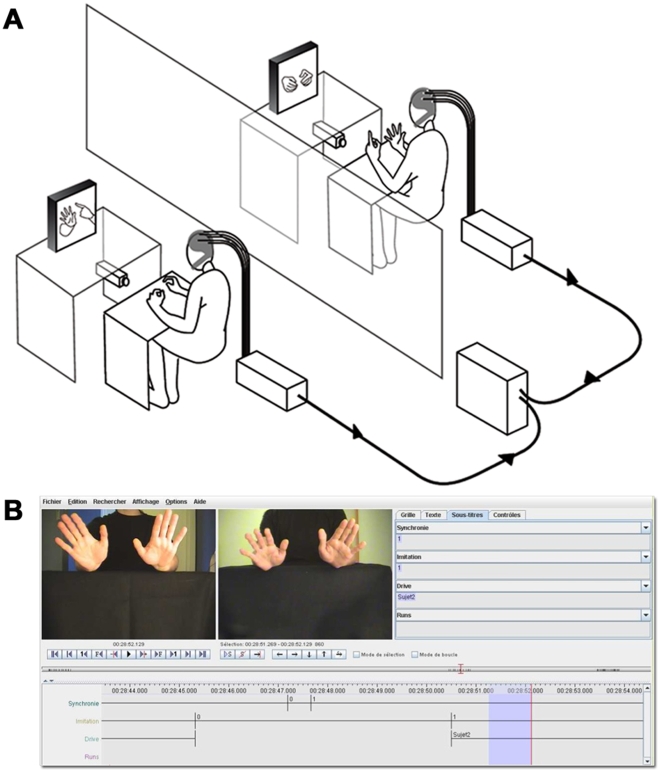
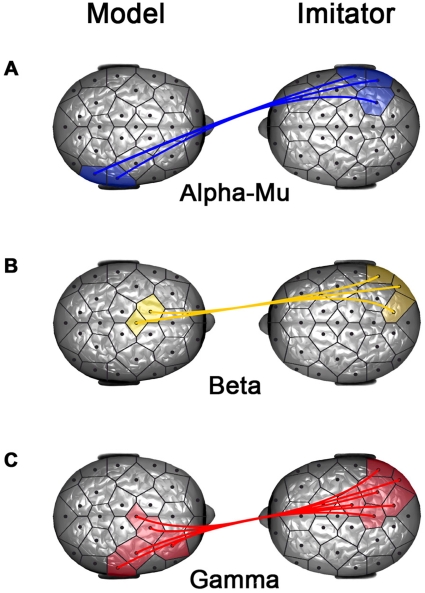
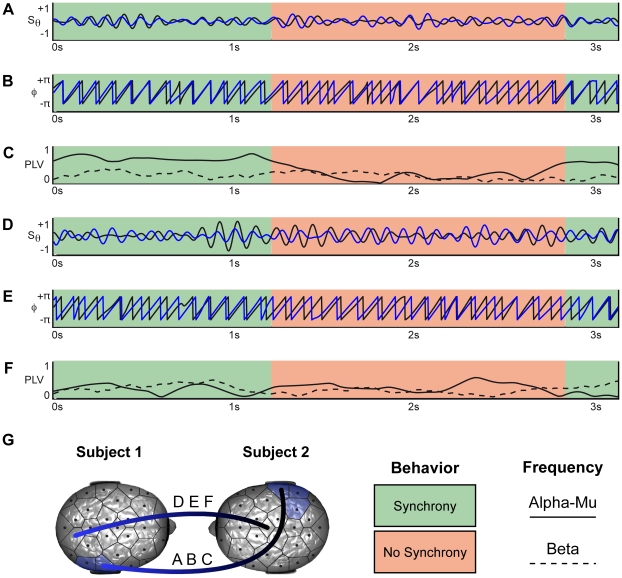
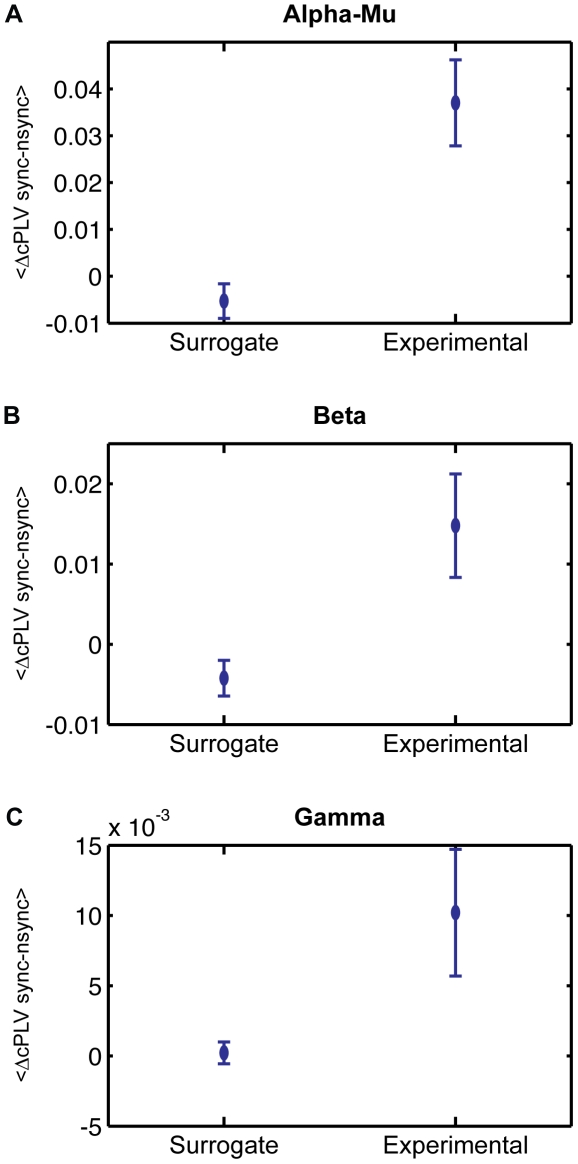
During social interaction, both participants are continuously active, each modifying their own actions in response to the continuously changing actions of the partner. This continuous mutual adaptation results in interactional synchrony to which both members contribute. Freely exchanging the role of imitator and model is a well-framed example of interactional synchrony resulting from a mutual behavioral negotiation. How the participants' brain activity underlies this process is currently a question that hyperscanning recordings allow us to explore. In particular, it remains largely unknown to what extent oscillatory synchronization could emerge between two brains during social interaction. To explore this issue, 18 participants paired as 9 dyads were recorded with dual-video and dual-EEG setups while they were engaged in spontaneous imitation of hand movements. We measured interactional synchrony and the turn-taking between model and imitator. We discovered by the use of nonlinear techniques that states of interactional synchrony correlate with the emergence of an interbrain synchronizing network in the alpha-mu band between the right centroparietal regions. These regions have been suggested to play a pivotal role in social interaction. Here, they acted symmetrically as key functional hubs in the interindividual brainweb. Additionally, neural synchronization became asymmetrical in the higher frequency bands possibly reflecting a top-down modulation of the roles of model and imitator in the ongoing interaction.
Overview
The claims and statistics of this paper haven’t been checked yet.
Free: it reads the open-access text and checks the first 5 claims that cite a source we can check. Create a free account to check every claim.
Integrity signals
Registry
Cites
Statistics
Figures

Verification
Claims the paper makes
The claims and statistics of this paper haven’t been checked yet.
Free: it reads the open-access text and checks the first 5 claims that cite a source we can check. Create a free account to check every claim.
Claims other papers make about this one
Each is checked against this paper’s own text: does it say what the citing paper says it does?
The check wasn’t confident either way, so it gives no verdict — never disputed.
In the citing paper
“The sample size was not determined a priori—each dataset's sample size was guided by prior work in their corresponding fields [38, 39, 40].”
From Interpersonal Synchronization of Autonomic Physiology via Mere Visual Contact (2026) · cites this paper as [38]
Experimental — accuracy not yet measured
Self-check
Percentages, sums and reported differences re-computed from the paper’s own numbers.
The self-check needs the paper’s full text.
Citations
Cites
A Mathematical Theory of Communication
Shannon, C. E. (1948) · Bell System Technical Journal · doi:10.1002/j.1538-7305.1948.tb01338.x · Cited by 88,486
The Mathematical Theory of Communication
Shannon, C. E., Weaver, W., & Wiener, N. (1950) · Physics Today · doi:10.1063/1.3067010 · Cited by 9,801
Nonparametric statistical testing of EEG- and MEG-data
Maris, E., & Oostenveld, R. (2007) · Journal of Neuroscience Methods · doi:10.1016/j.jneumeth.2007.03.024 · Cited by 8,496 · cited 1×
“Following previous studies [41,42], the resulting t-value matrices were then thresholded for absolute values larger than 2.”
The brainweb: phase synchronization and large-scale integration
Varela, F., Lachaux, J.-P., Rodriguez, E., & Martinerie, J. (2001) · Nature Reviews Neuroscience · doi:10.1038/35067550 · Cited by 4,761
Self-citationA mechanism for cognitive dynamics: neuronal communication through neuronal coherence.
Fries, P. (2005) · Trends in Cognitive Sciences · doi:10.1016/j.tics.2005.08.011 · Cited by 4,284 · cited 3×
“have been proposed as a key mechanism for information integration [28], temporal binding [51], flexible neuronal communication [34,52] and unified cognitive processes [45,53].”
InfluentialMeasuring phase synchrony in brain signals
Lachaux, J.-P., Rodriguez, E., Martinerie, J., & Varela, F. J. (1999) · Human Brain Mapping · doi:10.1002/(sici)1097-0193(1999)8:4<194::aid-hbm4>3.0.co;2-c · Cited by 3,798
Self-citationDynamic predictions: Oscillations and synchrony in top–down processing
Engel, A. K., Fries, P., & Singer, W. (2001) · Nature Reviews Neuroscience · doi:10.1038/35094565 · Cited by 3,454 · cited 1×
“Within one brain, synchronous neural oscillations have been previously observed in a range of processes such as conscious perception [44–46], working and long term memory [47,48], states of anticipation or attention [48,49] and empathy [50].”
Mathematical Theory of Communication
(2013) · Encyclopedia of Systems Biology · doi:10.1007/978-1-4419-9863-7_100015 · Cited by 3,290
Rizzolatti, G., & Arbib, M. A. (1998) · Trends in Neurosciences · doi:10.1016/s0166-2236(98)01260-0 · Cited by 2,858
Cortical mechanisms of human imitation
Iacoboni, M., Woods, R. P., Brass, M., Bekkering, H., Mazziotta, J. C., & Rizzolatti, G. (1999) · Science · doi:10.1126/science.286.5449.2526 · Cited by 2,683 · cited 1×
“Though imitation is commonly considered as a foundation for learning, socialization and communication [21,22], its use as a paradigm has been limited so far to test the direct matching hypothesis in an intraindividual perspective [23–27].”
Cited by
Items 301–400 of 963
Neural substrates for sharing intention in action during face-to-face imitation
Miyata, K., Koike, T., Nakagawa, E., Harada, T., Sumiya, M., Yamamoto, T., & Sadato, N. (2021) · NeuroImage · doi:10.1016/j.neuroimage.2021.117916 · Cited by 36
Zhang, L., Xu, X., Li, Z., Chen, L., & Feng, L. (2022) · Frontiers in Psychology · doi:10.3389/fpsyg.2022.835147 · Cited by 36
Resonance as a Design Strategy for AI and Social Robots
Lomas, D., Lin, A., Dikker, S., Förster, D., Lupetti, M. L., Huisman, G., Habekost, J., Beardow, C., Pandey, P., Ahmad, N., et al. (2022) · Frontiers in Neurorobotics · doi:10.3389/fnbot.2022.850489 · Cited by 35
“…though “syncing” (that is, synchronization) is intended purely as a figure of speech, human communication does link to measurable “inter-brain synchrony” (Dumas et al., 2010; Dikker et al., 2019; Czeszumski et al., 2020; Kingsbury and Hong, 2020; Dumas and Fairhurst, 2021; Moreau and Dumas, 2021).”
BackgroundDerix, J., Iljina, O., Schulze‐Bonhage, A., Aertsen, A., & Ball, T. (2012) · Frontiers in Human Neuroscience · doi:10.3389/fnhum.2012.00251 · Cited by 30
“, 2006), imitating others’ movements (Dumas et al., 2010), or collectively making music (Lindenberger et al.”
BackgroundVenuti, P., Bentenuto, A., Cainelli, S., Landi, I., Suvini, F., Tancredi, R., Igliozzi, R., & Muratori, F. (2016) · Health Psychology Report · doi:10.5114/hpr.2017.63985 · Cited by 32
Neural dynamics underlying emotional transmissions between individuals
Golland, Y., Levit‐Binnun, N., Hendler, T., & Lerner, Y. (2017) · Social Cognitive and Affective Neuroscience · doi:10.1093/scan/nsx049 · Cited by 30
“A series of previous studies have demonstrated that during verbal (Stephens et al., 2010) and non-verbal (Dumas et al., 2010; Konvalinka et al., 2011; Müller and Lindenberger, 2011; Schippers et al., 2010) communicative exchanges, the neural activity of interacting individuals becomes synchronized.”
BackgroundSocial signal processing for studying parent–infant interaction
Avril, M., Leclère, C., Savelon, S. V., Michelet, S., Achard, C., Missonnier, S., Keren, M., Cohen, D., & Chétouani, M. (2014) · Frontiers in Psychology · doi:10.3389/fpsyg.2014.01437 · Cited by 29
“The recent discovery of both biological correlates of behaviorally synchronic phenomena (Dumas et al., 2010) and statistical learning (Kuhl, 2003; Saffran, 2003) has validated the crucial value of studying synchrony during child development (Feldman, 2007; Cohen, 2012).”
BackgroundEEG-based approach for recognizing human social emotion perception
Zhu, L., Su, C., Zhang, J., Cui, G., Cichocki, A. S., Zhou, C., & Li, J. (2020) · Advanced Engineering Informatics · doi:10.1016/j.aei.2020.101191 · Cited by 28
EEG hyperscanning in motor rehabilitation: a position paper
Short, M. R., Hernandez-Pavon, J. C., Jones, A., & Pons, J. L. (2021) · Journal of NeuroEngineering and Rehabilitation · doi:10.1186/s12984-021-00892-6 · Cited by 27
Neural Synchrony and Network Dynamics in Social Interaction: A Hyper-Brain Cell Assembly Hypothesis
Müller, V. (2022) · Frontiers in Human Neuroscience · doi:10.3389/fnhum.2022.848026 · Cited by 31
Disorganized Communication and Social Dysfunction in Schizophrenia: Emerging Concepts and Methods
Olarewaju, E., Dumas, G., & Palaniyappan, L. K. (2023) · Current Psychiatry Reports · doi:10.1007/s11920-023-01462-4 · Cited by 31
“Participants were tasked to imitate hand movements while engaged in a leader–follower paradigm MEG Zhou et al. 2016 [87] Cooperation and competition (non-verbal): Dyads composed of various arrangements of clinical high-risk (CHR) and healthy controls (HC) engaged in cooperation and competition tasks (on a single compu…”
BackgroundMethodInfluentialSelf-citationMindful Attraction and Synchronization: Mindfulness and Regulation of Interpersonal Synchronicity
Haas, A. S., & Langer, E. J. (2014) · NeuroQuantology · doi:10.14704/nq.2014.12.1.728 · Cited by 37
“There is often a cognitive matching in conversation that results in simultaneous activity in identical areas of the brain during ‘coupled’ behavior (Guillaume et al., 2010; Lerner et al., 2011; Stephens et al., 2010).”
BackgroundFunctional Cortical Network in Alpha Band Correlates with Social Bargaining
Billeke, P. B., Zamorano, F. J., Chávez, M., Cosmelli, D. J., & Aboitiz, F. (2014) · PLoS ONE · doi:10.1371/journal.pone.0109829 · Cited by 27
“Thus social processing, like empathy [7] and imitation [8], has been shown to generate an increase in the connectivity among different brain areas.”
BackgroundThe Causal Inference of Cortical Neural Networks during Music Improvisations
Wan, X., Crüts, B., & Jensen, H. J. (2014) · PLoS ONE · doi:10.1371/journal.pone.0112776 · Cited by 30
“the correlation analysis of EEG [11] [14] and music performance [12] [13], but these investigations did not address the direction of causal influence between EEG channels.”
BackgroundTime-domain analysis of neural tracking of hierarchical linguistic structures
Zhang, W., & Ding, N. (2016) · NeuroImage · doi:10.1016/j.neuroimage.2016.11.016 · Cited by 29
“One is that different subjects are recorded simultaneously, with possible interactions with each other (Dumas et al., 2010; Hari and Kujala, 2009).”
Distinct social behavior and inter-brain connectivity in Dyads with autistic individuals
Moreau, Q., Brun, F., Ayrolles, A., Nadel, J., & Dumas, G. (2024) · Social Neuroscience · doi:10.1080/17470919.2024.2379917 · Cited by 32
“We show an increase of inter-brain synchrony during a more demanding social task in the lower band, in phase with previous results (Dumas et al., 2010; Konvalinka et al., 2014), and more IBS during the simultaneous passive viewing of videos in the high-alpha band.”
InfluentialSelf-citationDelta-band audience brain synchrony tracks engagement with live and recorded dance
Rai, L. A., Lee, H., Becke, E., Trenado, C., Abad-Hernando, S., Sperling, M., Vidaurre, D., Wald‐Fuhrmann, M., Richardson, D. C., Ward, J. A., et al. (2025) · iScience · doi:10.1016/j.isci.2025.112922 · Cited by 32
Griffioen, R. E., van der Steen, S., Cox, R. F. A., Verheggen, T., & Enders‐Slegers, M. (2019) · Animals · doi:10.3390/ani9100716 · Cited by 32
Hybrid Harmony: A Multi-Person Neurofeedback Application for Interpersonal Synchrony
Chen, P., Hendrikse, S. C. F., Sargent, K., Romani, M., Oostrik, M., Wilderjans, T. F., Koole, S. L., Dumas, G., Medine, D., & Dikker, S. (2021) · Frontiers in Neuroergonomics · doi:10.3389/fnrgo.2021.687108 · Cited by 30
“…as ensembles performing music, multiple people performing actions together, or carrying on a conversation (Babiloni et al., 2006; Tognoli et al., 2007; Dumas et al., 2010; Yun, 2013; Zamm et al., 2018b; see e.g., Hari et al., 2013; Babiloni and Astolfi, 2014; Czeszumski et al., 2020 for reviews).”
BackgroundMethodInfluentialSelf-citationLong, Y., Zhong, M., Aili, R., Zhang, H., Fang, X., & Lu, C. (2022) · Brain stimulation · doi:10.1016/j.brs.2022.12.009 · Cited by 30
Interactive social neuroscience to study autism spectrum disorder.
Rolison, M. J., Naples, A. J., & McPartland, J. C. (2015) · PubMed Central · Cited by 31
Putting reins on the brain. How the body and environment use it
Dotov, D. G. (2014) · Frontiers in Human Neuroscience · doi:10.3389/fnhum.2014.00795 · Cited by 33
Xavier, J., Magnat, J., Sherman, A. E., Gauthier, S., Cohen, D., & Chaby, L. (2016) · Journal of Physiology-Paris · doi:10.1016/j.jphysparis.2017.06.001 · Cited by 31
The neural oscillatory markers of phonetic convergence during verbal interaction
Mukherjee, S., Badino, L., Hilt, P. M., Tomassini, A., Inuggi, A., Fadiga, L., Nguyen, N., & D’Ausilio, A. (2018) · Human Brain Mapping · doi:10.1002/hbm.24364 · Cited by 28
Inter-brain Synchronization in the Practice of Tibetan Monastic Debate
van Vugt, M. K., Pollock, J., Johnson, B., Gyatso, K., Norbu, N., Lodroe, T., Gyaltsen, T., Phuntsok, L., Thakchoe, J., Khechok, J., et al. (2020) · Mindfulness · doi:10.1007/s12671-020-01338-1 · Cited by 32
Filho, E., & Tenenbaum, G. (2020) · Wiley eBooks · doi:10.1002/9781119568124.ch29 · Cited by 32
multiSyncPy: A Python package for assessing multivariate coordination dynamics
Hudson, D., Wiltshire, T. J., & Atzmueller, M. (2022) · Behavior Research Methods · doi:10.3758/s13428-022-01855-y · Cited by 31
“…al., 2020; Vilela Barbosa et al., 2012; Weusthoff et al., 2018), physiological sensors (Guastello & Peressini, 2017; Palumbo et al., 2017), neuroimaging devices (Dumas et al., 2010, 2011; Reindl et al., 2018), and sociometric sensors (Kozlowski, 2015; Montan-ari et al., 2018; Parker et al., 2018).”
BackgroundDieffenbach, M. C., Gillespie, G. S. R., Burns, S. M., McCulloh, I., Ames, D. L., Dagher, M. M., Falk, E. B., & Lieberman, M. D. (2020) · Social Cognitive and Affective Neuroscience · doi:10.1093/scan/nsaa115 · Cited by 32
“Recently, there has been growing interest in using portable neuroimaging, in combination with synchrony analyses, to understand social interactions in realworld settings (Dumas et al., 2010; Dikker et al., 2017).”
BackgroundAre the new mobile wireless EEG headsets reliable for the evaluation of musical pleasure?
Chabin, T., Gabriel, D., Haffen, É., Moulin, T., & Pazart, L. (2020) · PLoS ONE · doi:10.1371/journal.pone.0244820 · Cited by 27
Saul, M. A., He, X., Black, S., & Charles, F. (2022) · Frontiers in Psychology · doi:10.3389/fpsyg.2021.568921 · Cited by 26
“method is widely used in phase-synchrony experiments (Dumas et al., 2010; Yun et al., 2012; Hu et al., 2018).”
MethodLin, J.-F. L., Imada, T., Meltzoff, A. N., Hiraishi, H., Ikeda, T., Takahashi, T., Hasegawa, C., Yoshimura, Y., Kikuchi, M., Hirata, M., et al. (2022) · Cerebral Cortex · doi:10.1093/cercor/bhac330 · Cited by 30
“…et al. 2013; Kinreich et al. 2017; Zamm et al. 2018), coherence-based measures (Babiloni et al. 2006; Reindl et al. 2018), phase-locking values (Dumas et al. 2010; Yun et al. 2012; Pérez et al. 2017), phase lag index (Sanger et al. 2012; Ahn et al. 2018), and granger causality (Pan et al.…”
InfluentialAngioletti, L., & Balconi, M. (2022) · Frontiers in Neuroanatomy · doi:10.3389/fnana.2022.991522 · Cited by 26
“, 2012), including the centro-parietal areas (Dumas et al., 2010).”
Neurocomputational mechanisms of young children’s observational learning of delayed gratification
Zhao, H., Zhang, T., Cheng, T., Chen, C., Zhai, Y., Liang, X., Cheng, N., Long, Y., Li, Y., Wang, Z., et al. (2022) · Cerebral Cortex · doi:10.1093/cercor/bhac484 · Cited by 27
Konrad, K., Gerloff, C., Kohl, S. H., Mehler, D. M. A., Mehlem, L., Volbert, E. L., Komorek, M., Henn, A. T., Boecker, M., Weiß, E. O., et al. (2024) · Frontiers in Neuroscience · doi:10.3389/fnins.2024.1286130 · Cited by 37
The Subjective Sensation of Synchrony: An Experimental Study
Llobera, J., Charbonnier, C., Chagué, S., Preissmann, D., Antonietti, J., Ansermet, F., & Magistretti, P. J. (2016) · PLoS ONE · doi:10.1371/journal.pone.0147008 · Cited by 26
“It has also been shown that interbrain synchronization is present when two people are involved in a joint sensorial or sensorimotor task (see, for example, Dumas, Nadel [10]).”
BackgroundFelice, S. D., Hakim, U., Gunasekara, N., Pinti, P., Tachtsidis, I., & Hamilton, A. F. D. C. (2024) · Oxford Open Neuroscience · doi:10.1093/oons/kvae006 · Cited by 35
Collective dynamics on higher-order networks
Battiston, F., Bick, C., Lucas, M., Millán, A. P., Skardal, P. S., & Zhang, Y. (2026) · Nature Reviews Physics · doi:10.1038/s42254-025-00916-3 · Cited by 62
Dynamics in interbrain synchronization while playing a piano duet
Lender, A., Perdikis, D., Gruber, W. R., Lindenberger, U., & Müller, V. (2023) · Annals of the New York Academy of Sciences · doi:10.1111/nyas.15072 · Cited by 32
Capturing the ‘vibe’: an exploration of the conditions underpinning connected learning environments
MacMahon, S. J., Carroll, A., & Gillies, R. M. (2020) · Learning Environments Research · doi:10.1007/s10984-020-09312-3 · Cited by 24
Effects of acute psychosocial stress on interpersonal cooperation and competition in young women
Zhang, R., Zhou, X., Feng, D., Yuan, D., Li, S., Lu, C., & Li, X. (2021) · Brain and Cognition · doi:10.1016/j.bandc.2021.105738 · Cited by 25
On the Same Wavelengths: Emergence of Multiple Synchronies Among Multiple Agents
Hendrikse, S. C. F., Treur, J., Wilderjans, T. F., Dikker, S., & Koole, S. L. (2022) · Lecture notes in computer science · doi:10.1007/978-3-030-94548-0_5 · Cited by 23
Léné, P., Karran, A. J., Labonté-LeMoyne, É., Sénécal, S., Frédette, M., Johnson, K., & Léger, P. (2021) · Brain and Behavior · doi:10.1002/brb3.2270 · Cited by 27
Horesh, D., Hasson‐Ohayon, I., & Harwood‐Gross, A. (2021) · Brain Sciences · doi:10.3390/brainsci12010067 · Cited by 31
“This notion is supported by research into neural interactions between two “brains” [17] and the neural consequences of viewing behaviors or states in another.”
BackgroundFrom inter‐brain connectivity to inter‐personal psychiatry
Dumas, G. (2022) · World Psychiatry · doi:10.1002/wps.20987 · Cited by 24
Self-citationSened, H., Zilcha‐Mano, S., & Shamay‐Tsoory, S. (2022) · Frontiers in Human Neuroscience · doi:10.3389/fnhum.2022.955238 · Cited by 32
“While behavioral synchrony and neural synchrony are not identical, they have been shown to coincide (Dumas et al., 2010), with neural synchrony having a causal influence on behavioral synchrony (Novembre et al.”
BackgroundDyadic inter-brain EEG coherence induced by interoceptive hyperscanning
Balconi, M., & Angioletti, L. (2023) · Scientific Reports · doi:10.1038/s41598-023-31494-y · Cited by 28
Brain Signatures of Team Performance
Dodel, S., Cohn, J. V., Mersmann, J., Luu, P., Forsythe, C., & Jirsa, V. (2011) · Lecture notes in computer science · doi:10.1007/978-3-642-21852-1_35 · Cited by 26
Corrective jitter motion shows similar individual frequencies for the arm and the finger
Noy, L., Alon, U. S., & Friedman, J. (2015) · Experimental Brain Research · doi:10.1007/s00221-015-4204-1 · Cited by 24
Hasnain, S. K., Mostafaoui, G., & Gaussier, P. (2012) · Paladyn Journal of Behavioral Robotics · doi:10.2478/s13230-013-0111-y · Cited by 28
Using Synchrony-Based Neurofeedback in Search of Human Connectedness
Dikker, S., Montgomery, S. M., & Tunca, S. (2019) · Springer eBooks · doi:10.1007/978-3-030-14323-7_6 · Cited by 37
Mortality threat mitigates interpersonal competition: an EEG-based hyperscanning study
Zhou, X., Pan, Y., Zhang, R., Bei, L., & Li, X. (2021) · Social Cognitive and Affective Neuroscience · doi:10.1093/scan/nsab033 · Cited by 24
The role of reciprocity in dynamic interpersonal coordination of physiological rhythms
Konvalinka, I., Sebanz, N., & Knoblich, G. (2023) · Cognition · doi:10.1016/j.cognition.2022.105307 · Cited by 21
Zimmermann, M., Schultz-Nielsen, K., Dumas, G., & Konvalinka, I. (2024) · Imaging Neuroscience · doi:10.1162/imag_a_00350 · Cited by 34
“Temporal PLV ( Dumas et al., 2010) and adjusted circular correlation were calculated.”
BackgroundMethodInfluentialSelf-citationEEG of the Dancing Brain: Decoding Sensory, Motor, and Social Processes during Dyadic Dance
Bigand, F., Bianco, R., Abalde, S. F., Nguyen, T., & Novembre, G. (2025) · The Journal of Neuroscience · doi:10.1523/jneurosci.2372-24.2025 · Cited by 21
Shemyakina, N. V., & Nagornova, Z. V. (2021) · Human Physiology · doi:10.1134/s0362119721010126 · Cited by 23
Behavioral and Neural Variability of Naturalistic Arm Movements
Peterson, S. M., Singh, S. H., Wang, N. X. R., Rao, R. P. N., & Brunton, B. W. (2021) · eNeuro · doi:10.1523/eneuro.0007-21.2021 · Cited by 25
A comparative biology approach to DNN modeling of vision: A focus on differences, not similarities
Lonnqvist, B., Bornet, A., Doerig, A., & Herzog, M. H. (2021) · Journal of Vision · doi:10.1167/jov.21.10.17 · Cited by 21
Cheng, X., Guo, B., & Hu, Y. (2022) · Social Cognitive and Affective Neuroscience · doi:10.1093/scan/nsac022 · Cited by 24
“, 2014), motor imitating (Dumas et al., 2010; Holper et al., 2012), playing guitar (Sanger et al.”
Kurihara, Y., Takahashi, T., & Osu, R. (2022) · Scientific Reports · doi:10.1038/s41598-022-10049-7 · Cited by 29
Social and Affective Neuroscience of Everyday Human Interaction: From Theory to Methodology
Boggio, P. S., Wingenbach, T. S. H., Coêlho, M. L. D. S., Comfort, W. E., Marques, L. M., & Alves, M. V. (2022) · Springer eBooks · doi:10.1007/978-3-031-08651-9 · Cited by 31
Intra- and inter-brain synchrony oscillations underlying social adjustment
Vicente, U., Ara, A., & Marco‐Pallarés, J. (2023) · Scientific Reports · doi:10.1038/s41598-023-38292-6 · Cited by 28
Interpersonal Synchrony: From Social Perception to Social Interaction
Chétouani, M., Delaherche, E., Dumas, G., & Cohen, D. (2017) · Cambridge University Press eBooks · doi:10.1017/9781316676202.015 · Cited by 29
“(Dumas et al., 2010) use hyper-scanning recordings to examine brain activity, including measures of neural synchronization between distant brain regions of interacting individuals through a free exchange of roles between the imitator and the model.”
BackgroundSelf-citationPainter, D. R., Kim, J. J., Renton, A., & Mattingley, J. B. (2021) · Communications Biology · doi:10.1038/s42003-021-02319-3 · Cited by 21
Gendron, M., Mesquita, B., & Barrett, L. F. (2020) · Culture, Mind, and Brain · doi:10.1017/9781108695374.010 · Cited by 20
The Dialogue Between Two or More Brains: The “Hyperscanning” for Organization
Balconi, M., & Fronda, G. (2020) · Frontiers in Psychology · doi:10.3389/fpsyg.2020.598332 · Cited by 26
“In the light of this evidence, hyperscanning, therefore, proves to be an excellent technique for investigating inter-cerebral synchrony mechanisms and communicative and relational coordination (Dumas et al., 2010).”
BackgroundTHz irradiation inhibits cell division by affecting actin dynamics
Yamazaki, S., Ueno, Y., Hosoki, R., Saito, T., Idehara, T., Yamaguchi, Y., Otani, C., Ogawa, Y., Harata, M., & Hoshina, H. (2021) · PLoS ONE · doi:10.1371/journal.pone.0248381 · Cited by 25
Takeuchi, N., & Izumi, S. (2021) · Brain Sciences · doi:10.3390/brainsci11081095 · Cited by 28
Interpersonal neural synchrony when predicting others’ actions during a game of rock-paper-scissors
Kayhan, E., Nguyen, T., Matthes, D., Langeloh, M., Michel, C., Jiang, J., & Hoehl, S. (2022) · Scientific Reports · doi:10.1038/s41598-022-16956-z · Cited by 24
Autism and Socially Interactive Agents
Nadel, J., Grynszpan, O., & Martin, J. (2022) · ACM eBooks · doi:10.1145/3563659.3563673 · Cited by 22
“Knowing that brains synchronize during a synchronic action between two persons [Dumas et al. 2010], the protocol tests how far a virtual thumb is enough to test social attribution at the behavioral and brain levels.”
BackgroundSelf-citationNeural correlates of action monitoring and mutual adaptation during interpersonal motor coordination
Era, V., Boukarras, S., & Candidi, M. (2019) · Physics of Life Reviews · doi:10.1016/j.plrev.2019.01.022 · Cited by 19
“Most of the available experimental studies on motor interactions have used simplified forms of interpersonal interactions such as finger tapping, finger movements, imitation of finger/hand movements [10,21,14,12,13,4], with the advantage of using well controlled experimental set-ups that preserve critical features of…”
BackgroundSchore, A. N. (2019) · International Journal of Group Psychotherapy · doi:10.1080/00207284.2019.1682460 · Cited by 25
Washburn, A., Roman, I. R., Huberth, M., Gang, N., Dauer, T., Reid, W., Nanou, C., Wright, M., & Fujioka, T. (2019) · Frontiers in Neuroscience · doi:10.3389/fnins.2019.01088 · Cited by 26
Musical Meter Induces Interbrain Synchronization during Interpersonal Coordination
Hu, Y., Zhu, M., Liu, Y., Wang, Z., Cheng, X., Pan, Y., & Hu, Y. (2022) · eNeuro · doi:10.1523/eneuro.0504-21.2022 · Cited by 22
“Recent research on brain imaging has used the hyperscanning approach to simultaneously measure brain signals from two or more individuals (Montague, 2002) to explore the neural communication between the interactive partners (Dumas et al., 2010; Yun et al., 2012).”
BackgroundKang, K., Orlandi, S., Leung, J., Akter, M., Lorenzen, N., Chau, T. T., & Thaut, M. H. (2023) · European Journal of Neuroscience · doi:10.1111/ejn.16036 · Cited by 19
“Indeed, interbrain synchronization reflects a bidirectional attunement of one individual to another, which is likely a feature of vibrant social interactions where people assume complementary social roles (Dumas et al., 2010).”
BackgroundThe Role of Functional Near-Infrared Spectroscopy in Collaborative Research: A systematic Review
Wang, Y., Dong, Y., Leuk, J. S.-P., Zhai, X., Xu, C., Fu, Y., & Teo, W. (2023) · Educational Psychology Review · doi:10.1007/s10648-023-09836-z · Cited by 24
A novel qEEG measure of teamwork for human error analysis: An EEG hyperscanning study
Cha, K.-M., & Lee, H. (2018) · Nuclear Engineering and Technology · doi:10.1016/j.net.2018.11.009 · Cited by 25
Imaging Real-Time Tactile Interaction With Two-Person Dual-Coil fMRI
Renvall, V., Kauramäki, J., Malinen, S., Hari, R., & Nummenmaa, L. (2020) · Frontiers in Psychiatry · doi:10.3389/fpsyt.2020.00279 · Cited by 19
Development of social systems neuroscience using macaques
Isoda, M., Noritake, A., & Ninomiya, T. (2018) · Proceedings of the Japan Academy Series B · doi:10.2183/pjab.94.020 · Cited by 20
Inter-brain Synchrony and Eye Gaze Direction During Collaboration in VR
Gumilar, I., Barde, A., Sasikumar, P., Billinghurst, M., Hayati, A. F., Lee, G., Munarko, Y., Singh, S., & Momin, A. (2022) · CHI Conference Extended Abstracts on Human Factors in Computing Systems (CHI EA) · doi:10.1145/3491101.3519746 · Cited by 18
“The time series data acquired via this method can then be compared over the entire duration of the study, specific portions of the study or at discrete positions on the timeline to determine if the individuals in the study demonstrate inter-brain synchrony or not [8, 9].”
MethodHyperscanning and the Future of Neurosociology
TenHouten, W. D., Schussel, L., Gritsch, M. F., & Kaplan, C. D. (2022) · Sociological Methodology · doi:10.1177/00811750221128790 · Cited by 24
“Hyperscanning enables the simultaneous measurements of brain activity of all individuals engaged in a social interaction, which is a fundamental aspect of everyday life (Dumas et al. 2010) and a key concern of sociology.”
BackgroundMethodAssociations of Empathy with Teacher–Student Interactions: A Potential Ternary Model
Sun, B., Wang, Y., Ye, Q., & Pan, Y. (2023) · Brain Sciences · doi:10.3390/brainsci13050767 · Cited by 37
Unintentional entrainment effect in a context of Human Robot Interaction: An experimental study
Ansermin, E., Mostafaoui, G., Sargentini, X., & Gaussier, P. (2017) · IEEE RO-MAN · doi:10.1109/roman.2017.8172442 · Cited by 18
“From an ecological point of view, recent studies put forward milliseconds inter-brain synchronization during a social task [22].”
BackgroundBrain Synchrony in Competition and Collaboration During Multiuser Neurofeedback-Based Gaming
Luca, I. S., Putri, F. D., Ding, H., & Vučković, A. (2021) · Frontiers in Neuroergonomics · doi:10.3389/fnrgo.2021.749009 · Cited by 20
“These range from verbal interaction (Pérez et al., 2017; Ahn et al., 2018), leader-imitator (Dumas et al., 2010; Yun et al., 2012), joint attention and joint decision-making (Toppi et al., 2016; Hu et al., 2018), to teaching or playing music in a duet (Sänger et al., 2012; Müller et al., 2013).”
BackgroundInfluentialDual Logic and Cerebral Coordinates for Reciprocal Interaction in Eye Contact
Lee, R. F. (2015) · PLoS ONE · doi:10.1371/journal.pone.0121791 · Cited by 21
“Although EEG [2,3] and MEG [4] have been used for dyadic data acquisition, they are limited by their coarse spatial resolution.”
MethodBrain and intersubjectivity: a Hegelian hypothesis on the self-other neurodynamics
Marchetti, I., & Koster, E. H. W. (2014) · Frontiers in Human Neuroscience · doi:10.3389/fnhum.2014.00011 · Cited by 27
“…however, neuroscience is increasingly promoting research about how the “self” and the “other” are processed and represented at both intra- (Decety and Sommerville, 2003; Denny et al., 2012; Wagner et al., 2012; Molnar-Szakacs and Uddin, 2013) and inter-brain level (Dumas et al., 2010, 2012).”
BackgroundSenior, C., & Lee, N. J. (2013) · Frontiers in Human Neuroscience · doi:10.3389/fnhum.2013.00808 · Cited by 22
“Thus, it is quite easily conceivable that neuromarketing research may help to alleviate a range of social pathologies (Montague et al., 2002; Babiloni et al., 2007; Dumas et al., 2010; Babiloni and Astolfi, 2012; Tikka et al., 2012).”
Editorial: Brain Oscillations in Human Communication
Rimmele, J. M., Groß, J., Molholm, S., & Keitel, A. (2018) · Frontiers in Human Neuroscience · doi:10.3389/fnhum.2018.00039 · Cited by 21
“…and communication beyond the individual brain, by pursuing the hypothesis that social interaction results in the phase-locking Frontiers in Human Neuroscience | www.frontiersin.org 2 February 2018 | Volume 12 | Article 39 and coupling of neuronal activity across brains (e.g., Dumas et al., 2010).”
BackgroundStepping in time: Alpha‐mu and beta oscillations during a walking synchronization task
Scanlon, J. E. M., Jacobsen, N. S. J., Maack, M. C., & Debener, S. (2022) · NeuroImage · doi:10.1016/j.neuroimage.2022.119099 · Cited by 20
“5 Hz, because this cannot be accurately defined as either alpha or mu without source localization, similar to previous literature (Dumas et al., 2010; Naeem et al., 2012a).”
BackgroundResultInfluentialA neurodynamic model of inter-brain coupling in the gamma band
Moreau, Q., Adel, L., Douglas, C. L., Ranjbaran, G., & Dumas, G. (2022) · Journal of Neurophysiology · doi:10.1152/jn.00224.2022 · Cited by 24
Self-citationPredicting Moral Elevation Conveyed in Danmaku Comments Using EEGs
Bao, C., Hu, X., Zhang, D., Lv, Z., & Chen, J. (2023) · Cyborg and Bionic Systems · doi:10.34133/cbsystems.0028 · Cited by 20
“In previous EEGbased hyperscanning studies, the alphaband activities at right centro parietal regions showed interbrain synchrony when people interacted during joint actions [47].”
BackgroundLearning to Synchronously Imitate Gestures Using Entrainment Effect
Ansermin, E., Mostafaoui, G., Beaussé, N., & Gaussier, P. (2016) · Lecture notes in computer science · doi:10.1007/978-3-319-43488-9_20 · Cited by 19
“using hyper-scanning has revealed the emergence of millisecond inter-brain synchronization across multiple frequencies bands during social interactions (spontaneous exchanges between two participants of intransitive bi-manual movements [5]).”
BackgroundBraeutigam, S., Lee, N. J., & Senior, C. (2017) · Organizational Research Methods · doi:10.1177/1094428117692104 · Cited by 22
Teaching Machines to Recognize Neurodynamic Correlates of Team and Team Member Uncertainty
Stevens, R. H., & Galloway, T. L. (2019) · Journal of Cognitive Engineering and Decision Making · doi:10.1177/1555343419874569 · Cited by 18
Degeneracy and Complexity in Neuro-Behavioral Correlates of Team Coordination
Dodel, S., Tognoli, E., & Kelso, J. A. S. (2020) · Frontiers in Human Neuroscience · doi:10.3389/fnhum.2020.00328 · Cited by 21
“Our findings support the increasing evidence that inter-brain phase coherence plays a role in social interaction (Dumas et al., 2010; Cui et al., 2012; Dommer et al., 2012; Jiang et al., 2012; Sänger et al., 2012; Yun et al., 2012; Kawasaki et al., 2013).”
ResultTrendafilov, D., Schmitz, G. H., Hwang, T., Effenberg, A. O., & Polani, D. (2020) · Frontiers in Human Neuroscience · doi:10.3389/fnhum.2020.00185 · Cited by 21
“Similar observations were made by Dumas et al. (2010) in an imitation task, i.e., neuronal synchronization becomes asymmetric when one person is a leader and the other imitator.”
Intuitive human robot interaction based on unintentional synchrony: A psycho-experimental study
Hasnain, S. K., Mostafaoui, G., Salesse, R. N., Marín, L., & Gaussier, P. (2013) · IEEE International Conference on Development and Learning (ICDL) · doi:10.1109/devlrn.2013.6652569 · Cited by 20
“[18] using hyperscanning has revealed the emergence of inter- brain synchronization across multiple frequency bands during social interactions (spontaneous exchanges between two participants of intransitive bi-manual movements).”
BackgroundInter-brain neural dynamics in biological and artificial intelligence systems
Zhang, X., Phi, N. T., Li, Q., Gorzek, R. C., Zwingenberger, N., Huang, S., Zhou, J. L., Kingsbury, L., Raam, T., Wu, Y. E., et al. (2025) · Nature · doi:10.1038/s41586-025-09196-4 · Cited by 25
“Although previous studies showed that inter-brain dynamics may occur in certain frequency bands 33,34 , these measurements were typically derived from aggregated, unidimensional activity.”
van Vugt, M. K., Moye, A., Pollock, J., Johnson, B., Bonn‐Miller, M. O., Gyatso, K., Thakchoe, J., Phuntsok, L., Norbu, N., Lobsang, T., et al. (2019) · Progress in brain research · doi:10.1016/bs.pbr.2018.10.018 · Cited by 19
“Social connectedness may well be measurable by modern neuroscience methods ( Dumas et al., 2010).”
Richard, C., Karić, M. S., McConnell, M., Poole, J., Rupp, G., Fink, A., Meghdadi, A. H., & Berka, C. (2021) · Frontiers in Human Neuroscience · doi:10.3389/fnhum.2021.611886 · Cited by 20
“In a task where subjects take turns imitating nonsense hand gestures, greater synchronization is observed across multiple frequencies (Dumas et al., 2010; Kawasaki et al., 2013).”
BackgroundClassification of low-functioning and high-functioning autism using task-based EEG signals
Divya, B., Udayakumar, N., Yuvaraj, R., & Kavitha, A. (2023) · Biomedical Signal Processing and Control · doi:10.1016/j.bspc.2023.105074 · Cited by 16
Metadata
- Authors
- Dumas, G., Nadel, J., Soussignan, R., Martinerie, J., & Garnero, L.
- Affiliations
- Centre National de la Recherche Scientifique (FR)
- Corresponding author
- Dumas, Guillaume
- Venue
- PLoS ONE
- Publisher
- Public Library of Science (PLoS)
- Published
- 2010-08-17
- Volume
- 5
- Issue
- 8
- Pages
- e12166
- ISSN
- 1932-6203 (ISSN-L)
- PMC
- PMC2923151
- OpenAlex
- W1986163111
- Cited by
- 966
- References
- 68
- Citations by year
- 2026: 73 · 2025: 80 · 2024: 68 · 2023: 55 · 2022: 78 · 2021: 106 · 2020: 127 · 2019: 53 · 2018: 54 · 2017: 57 · 2016: 42 · 2015: 31 · 2014: 54 · 2013: 35 · 2012: 33
- FWCI
- 38.29
- Type
- journal article
- Language
- en
- Open access
- gold
- doi.org
- Locations
- PLoS ONE (publishedVersion, cc-by)
- PubMed Central (publishedVersion, cc-by)
- PubMed (publishedVersion)
- HAL (submittedVersion, other-oa)
- HAL (submittedVersion)
- RePEc: Research Papers in Economics (submittedVersion)
- DOAJ (DOAJ: Directory of Open Access Journals) (submittedVersion, cc-by-sa)
- Topics
- Social Sciences › Psychology › Social Psychology › Action Observation and Synchronization
- Life Sciences › Neuroscience › Cognitive Neuroscience › Neural dynamics and brain function
- Life Sciences › Neuroscience › Cognitive Neuroscience › EEG and Brain-Computer Interfaces
- Keywords
- inter-brain synchrony, social interaction, interactional synchrony, spontaneous imitation, turn-taking, hyperscanning, top-down modulation, mirror neuron system
- MeSH terms
- Behavior, Brain, Electroencephalography, Female, Humans, Imitative Behavior, Interpersonal Relations, Male, Young Adult
About these checks
Registry, retraction, Cites and statistics results are computed, not judged, with one exception: a printed reference that no index lists is read once by a model before it counts as a citation error. Claims are extracted by a model and kept only when their quote appears verbatim in the text; each cited source is then checked, with a model’s help, for whether it says what the claim relies on. Those verdicts can be wrong — read the claim’s quote and the cited source before relying on one.
Statistics and arithmetic are recomputed, not judged.
Confidence bands are shown only for fields calibrated on our annotated test set. None is calibrated yet, so no band is shown.
What counts as a claim ›How we measure confidence ›How we check this ›
Are you an author, or do you see a problem with this page? Request a review
Data sources
Bibliographic data: Semantic Scholar, OpenAlex, Crossref.
Contains information from the Semantic Scholar Academic Graph Datasets, made available under the ODC Attribution License (ODC-BY 1.0).
Semantic Scholar’s data is described in: Kinney, R., et al. (2023). The Semantic Scholar Open Data Platform. arXiv:2301.10140.
