

Inter-Brain Synchronization during Social Interaction
Open accessThe DOI matches its Crossref record; 67 of the 68 references it cites were found in a registry or an index.
Abstract
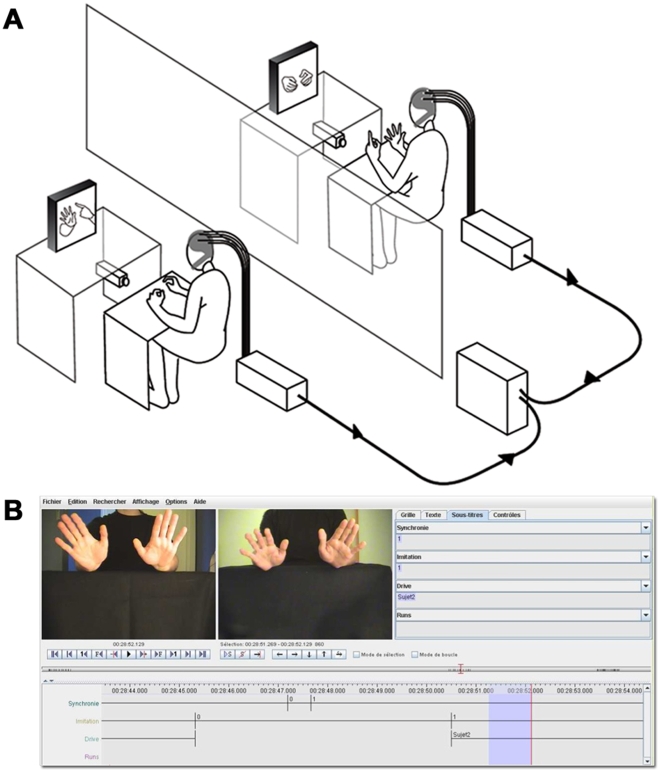
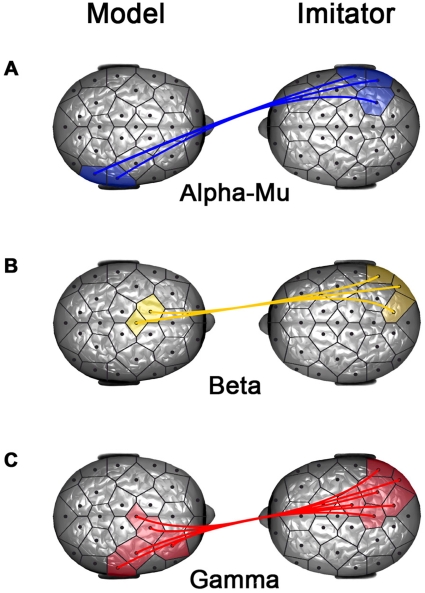
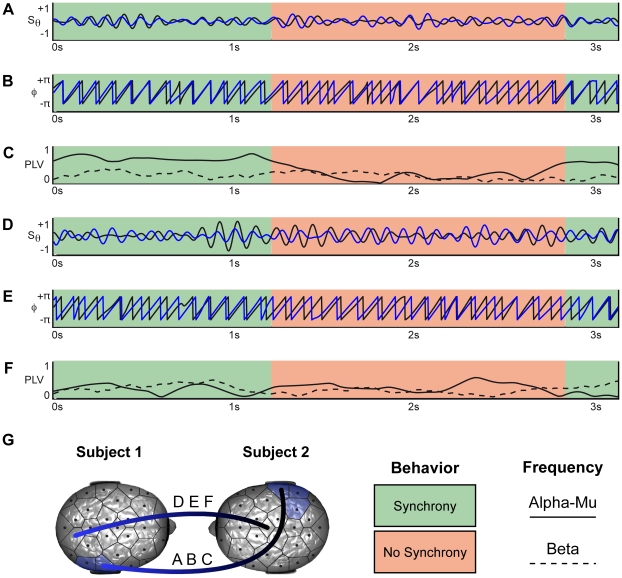
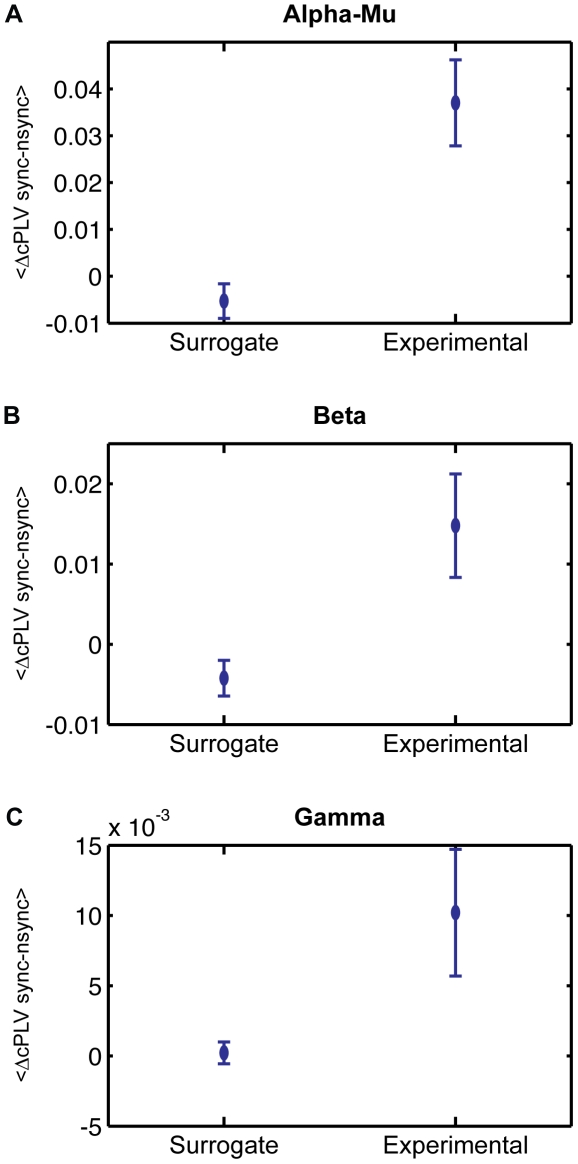
During social interaction, both participants are continuously active, each modifying their own actions in response to the continuously changing actions of the partner. This continuous mutual adaptation results in interactional synchrony to which both members contribute. Freely exchanging the role of imitator and model is a well-framed example of interactional synchrony resulting from a mutual behavioral negotiation. How the participants' brain activity underlies this process is currently a question that hyperscanning recordings allow us to explore. In particular, it remains largely unknown to what extent oscillatory synchronization could emerge between two brains during social interaction. To explore this issue, 18 participants paired as 9 dyads were recorded with dual-video and dual-EEG setups while they were engaged in spontaneous imitation of hand movements. We measured interactional synchrony and the turn-taking between model and imitator. We discovered by the use of nonlinear techniques that states of interactional synchrony correlate with the emergence of an interbrain synchronizing network in the alpha-mu band between the right centroparietal regions. These regions have been suggested to play a pivotal role in social interaction. Here, they acted symmetrically as key functional hubs in the interindividual brainweb. Additionally, neural synchronization became asymmetrical in the higher frequency bands possibly reflecting a top-down modulation of the roles of model and imitator in the ongoing interaction.
Overview
The claims and statistics of this paper haven’t been checked yet.
Free: it reads the open-access text and checks the first 5 claims that cite a source we can check. Create a free account to check every claim.
Integrity signals
Registry
Cites
Statistics
Figures

Verification
Claims the paper makes
The claims and statistics of this paper haven’t been checked yet.
Free: it reads the open-access text and checks the first 5 claims that cite a source we can check. Create a free account to check every claim.
Claims other papers make about this one
Each is checked against this paper’s own text: does it say what the citing paper says it does?
The check wasn’t confident either way, so it gives no verdict — never disputed.
In the citing paper
“The sample size was not determined a priori—each dataset's sample size was guided by prior work in their corresponding fields [38, 39, 40].”
From Interpersonal Synchronization of Autonomic Physiology via Mere Visual Contact (2026) · cites this paper as [38]
Experimental — accuracy not yet measured
Self-check
Percentages, sums and reported differences re-computed from the paper’s own numbers.
The self-check needs the paper’s full text.
Citations
Cites
A Mathematical Theory of Communication
Shannon, C. E. (1948) · Bell System Technical Journal · doi:10.1002/j.1538-7305.1948.tb01338.x · Cited by 88,486
The Mathematical Theory of Communication
Shannon, C. E., Weaver, W., & Wiener, N. (1950) · Physics Today · doi:10.1063/1.3067010 · Cited by 9,801
Nonparametric statistical testing of EEG- and MEG-data
Maris, E., & Oostenveld, R. (2007) · Journal of Neuroscience Methods · doi:10.1016/j.jneumeth.2007.03.024 · Cited by 8,496 · cited 1×
“Following previous studies [41,42], the resulting t-value matrices were then thresholded for absolute values larger than 2.”
The brainweb: phase synchronization and large-scale integration
Varela, F., Lachaux, J.-P., Rodriguez, E., & Martinerie, J. (2001) · Nature Reviews Neuroscience · doi:10.1038/35067550 · Cited by 4,761
Self-citationA mechanism for cognitive dynamics: neuronal communication through neuronal coherence.
Fries, P. (2005) · Trends in Cognitive Sciences · doi:10.1016/j.tics.2005.08.011 · Cited by 4,284 · cited 3×
“have been proposed as a key mechanism for information integration [28], temporal binding [51], flexible neuronal communication [34,52] and unified cognitive processes [45,53].”
InfluentialMeasuring phase synchrony in brain signals
Lachaux, J.-P., Rodriguez, E., Martinerie, J., & Varela, F. J. (1999) · Human Brain Mapping · doi:10.1002/(sici)1097-0193(1999)8:4<194::aid-hbm4>3.0.co;2-c · Cited by 3,798
Self-citationDynamic predictions: Oscillations and synchrony in top–down processing
Engel, A. K., Fries, P., & Singer, W. (2001) · Nature Reviews Neuroscience · doi:10.1038/35094565 · Cited by 3,454 · cited 1×
“Within one brain, synchronous neural oscillations have been previously observed in a range of processes such as conscious perception [44–46], working and long term memory [47,48], states of anticipation or attention [48,49] and empathy [50].”
Mathematical Theory of Communication
(2013) · Encyclopedia of Systems Biology · doi:10.1007/978-1-4419-9863-7_100015 · Cited by 3,290
Rizzolatti, G., & Arbib, M. A. (1998) · Trends in Neurosciences · doi:10.1016/s0166-2236(98)01260-0 · Cited by 2,858
Cortical mechanisms of human imitation
Iacoboni, M., Woods, R. P., Brass, M., Bekkering, H., Mazziotta, J. C., & Rizzolatti, G. (1999) · Science · doi:10.1126/science.286.5449.2526 · Cited by 2,683 · cited 1×
“Though imitation is commonly considered as a foundation for learning, socialization and communication [21,22], its use as a paradigm has been limited so far to test the direct matching hypothesis in an intraindividual perspective [23–27].”
Cited by
Items 401–500 of 963
Ciaramidaro, A., Toppi, J., Vogel, P., Freitag, C. M., Siniatchkin, M., & Astolfi, L. (2024) · NeuroImage · doi:10.1016/j.neuroimage.2024.120783 · Cited by 22
“…from coordination tasks (Shiraishi and Shimada, 2021, Dodel et al., 2020, Konvalinka et al., 2014, Dumas et al., 2020, Mu et al., 2016), imitation (Dumas et al., 2010), cooperation during social game (Zhang et al., 2019, Liu et al., 2021) to complex musical performance (Novembre et al., 2016,…”
BackgroundSimar, C., Cebolla, A.-M., Chartier, G., Petieau, M., Bontempi, G., Berthoz, A., & Cheron, G. A. (2020) · Frontiers in Neuroscience · doi:10.3389/fnins.2020.588357 · Cited by 19
“Hyperscanning EEG offers direct access to global electrical neural activity with an excellent temporal resolution that is necessary for assessing the brain dynamics of the interacting participants (Babiloni et al., 2006; Dumas et al., 2010; Barraza et al., 2019; Balconi et al., 2020).”
BackgroundSynchrony in Joint Action Is Directed by Each Participant’s Motor Control System
Noy, L., Weiser, N., & Friedman, J. (2017) · Frontiers in Psychology · doi:10.3389/fpsyg.2017.00531 · Cited by 19
“…social coordination can be challenging, in particular when the performed joint-action is open-ended, as in the case of jointly improvised motion (Dumas et al., 2010; Noy et al., 2011; Watanabe and Miwa, 2012; Noy, 2014; Hari et al., 2015; Gueugnon et al., 2016a; Feniger-Schaal and Lotan, 2017;…”
BackgroundComplexity Matching and Requisite VarietyPreprint
Mahmoodi, K., West, B. J., & Grigolini, P. (2018) · bioRxiv (Cold Spring Harbor Laboratory) · doi:10.1101/414755 · Cited by 19
“Crucial events and the brain: For the purposes of the present paper it is important to stress that there exists further research directed toward the foundations of social learning [22–25] that is even more closely connected to Ashby’s challenge of the regulator and the regulated sharing a common level of complexity.”
BackgroundCoomans, E. M., Geraedts, I. K., Deijen, J. B., Keeser, D., Pogarell, O. M., & Engelbregt, H. (2021) · Advances in Cognitive Psychology · doi:10.5709/acp-0334-7 · Cited by 18
The anatomy of friendship: neuroanatomic homophily of the social brain among classroom friends
D’Onofrio, P., Norman, L. J., Sudre, G. P., White, T. J. H., & Shaw, P. (2021) · Cerebral Cortex · doi:10.1093/cercor/bhab398 · Cited by 17
Face-to-face spatial orientation fine-tunes the brain for neurocognitive processing in conversation
Drijvers, L., & Holler, J. (2022) · iScience · doi:10.1016/j.isci.2022.105413 · Cited by 20
“, 2018; Mai and Wang, 2019)), and (3) showed differences in alpha and beta band synchrony suggestive of differences in social coordination, shared attentional and representation states (e.g., Dikker et al., 2021; Dumas et al., 2010; Pérez et al., 2019, 2017; Tognoli et al., 2007).”
BackgroundPseudo‐mutual gazing enhances interbrain synchrony during remote joint attention tasking
Chuang, C., & Hsu, H. (2023) · Brain and Behavior · doi:10.1002/brb3.3181 · Cited by 18
Algumaei, M. Y., Hettiarachchi, I. T., Farghaly, M., & Bhatti, A. (2023) · IEEE Access · doi:10.1109/access.2023.3332907 · Cited by 21
Computational EEG Analysis for Hyperscanning and Social Neuroscience
Zhang, D. (2018) · Biological and medical physics, biomedical engineering · doi:10.1007/978-981-13-0908-3_10 · Cited by 18
Explosive synchronization in network of mobile oscillators
Ling, X. G., Ju, W.-B., Guo, N., Wu, C.-Y., & Xiao-ming, X. (2020) · Physics Letters A · doi:10.1016/j.physleta.2020.126881 · Cited by 15
Culture, Mind, and Brain: Emerging Concepts, Models, and Applications
Kirmayer, L. J., Worthman, C. M., Kitayama, S., Lemelson, R., & Cummings, C. A. (2020) · Cited by 47
Bracken, B. K., Alexander, V., Zak, P. J., Romero, V. L., & Barraza, J. A. (2014) · Lecture notes in computer science · doi:10.1007/978-3-319-07527-3_1 · Cited by 20
“between right centro-prietal regions [3].”
The Neural Correlates of Social Cognition and Social Interaction
Schilbach, L. (2015) · Elsevier eBooks · doi:10.1016/b978-0-12-397025-1.00172-x · Cited by 18
Impact of heterogeneous delays on cluster synchronization
Jalan, S., & Singh, A. (2014) · Physical Review E · doi:10.1103/physreve.90.042907 · Cited by 14
Paranoia: From Passive Social-Threat Perception to Misattunement in Social Interaction
Hajdúk, M., Sasson, N. J., Park, S., & Pinkham, A. E. (2024) · Clinical Psychological Science · doi:10.1177/21677026231218639 · Cited by 18
“Neurophysiological studies using EEG hyper-scanning paradigms have shown that social partners synchronize their brain activity during social interactions and that the degree of synchrony is higher in people with higher social connectedness (Dumas et al., 2010; Kinreich et al., 2017).”
Caregiver-child neural synchrony: Magic, mirage, or developmental mechanism?
Roche, E. C., Redcay, E., & Romeo, R. R. (2024) · Developmental Cognitive Neuroscience · doi:10.1016/j.dcn.2024.101482 · Cited by 17
“EEG is far superior to fNIRS for detecting moment-to-moment changes in brain activity, and may be better able to examine relations between affective and physiological measures at similar timescales ( Dumas et al., 2010 ).”
Sened, H., Kaduri, K. G., Gamliel, H. N., Rafaeli, E., Zilcha‐Mano, S., & Shamay‐Tsoory, S. (2025) · Psychotherapy Research · doi:10.1080/10503307.2025.2451798 · Cited by 16
“Other studies have shown more directly that behavioral synchrony, which is associated with inter-brain synchrony (Dumas et al., 2010; Novembre et al., 2017), increases over the course of therapy (Galbu-sera et al., 2018; Venuti et al., 2017).”
Antonenko, P., Davis, R. O., Wang, J., & Celepkolu, M. (2019) · Mind Brain and Education · doi:10.1111/mbe.12187 · Cited by 20
“Team neurosynchrony was assessed by calculating phase synchrony of continuous alpha-band activity in the participants’ EEG using PLV, an established measure of across-brain neurosynchrony (Dumas et al., 2010; Linkenkaer-Hansen, Nikouline, Palva, & Ilmoniemi, 2001; Mu et al., 2016).”
BackgroundMethodInfluentialŠpiláková, B., Shaw, D. J., Czekóová, K., Mareček, R., & Brázdil, M. (2019) · Human Brain Mapping · doi:10.1002/hbm.24861 · Cited by 15
Cho, P. S., Escoffier, N., Mao, Y., Green, C. K., & Davis, R. (2020) · Social Neuroscience · doi:10.1080/17470919.2020.1727949 · Cited by 19
“Theta between-participant PLV has been associated with social interaction and coordination (Dumas et al., 2010; Lindenberger, Li, Gruber, & Muller, 2009; Yun et al., 2012).”
BackgroundResultInfluentialSocializing Sensorimotor Contingencies
Lübbert, A., Göschl, F., Krause, H., Schneider, T. R., Maÿe, A., & Engel, A. K. (2021) · Frontiers in Human Neuroscience · doi:10.3389/fnhum.2021.624610 · Cited by 16
Lende, D. H., Casper, B. I., Hoyt, K. B., & Collura, G. L. (2021) · Frontiers in Psychology · doi:10.3389/fpsyg.2021.509611 · Cited by 19
Don’t just think there, do something: A call for action in psychological science
Yaniv, D. (2014) · The Arts in Psychotherapy · doi:10.1016/j.aip.2014.03.005 · Cited by 16
Joint BSS as a natural analysis framework for EEG-hyperscanning
Chatel-Goldman, J., Congedo, M., & Phlypo, R. (2013) · IEEE International Conference on Acoustics Speech and Signal Processing · doi:10.1109/icassp.2013.6637843 · Cited by 16
“From a statistical point of view, making inferences from all pair-wise sensor synchronicity measures decreases statistical sensitivity and leads to ad hoc clustering procedures to reduce the data dimension (e.g. [8,9]).”
The Neurobiology of Affiliation; Maternal-Infant Bonding to Life Within Social Groups
Feldman, R. (2020) · Elsevier eBooks · doi:10.1016/b978-0-12-819641-0.00058-x · Cited by 14
A systematic review of hyperscanning in clinical encounters
Adel, L., Moses, L., Irvine, E., Greenway, K. T., Dumas, G., & Lifshitz, M. (2025) · Neuroscience & Biobehavioral Reviews · doi:10.1016/j.neubiorev.2025.106248 · Cited by 13
“Interpersonal neural synchrony (INS) refers to the temporal synchronization of neural signals across brains during real-time social interaction (Dumas et al., 2010).”
Self-citationDoi, H., Kato, M., Nishitani, S., & Shinohara, K. (2011) · The Journal of Physiological Sciences · doi:10.1007/s12576-011-0138-y · Cited by 14
“Recent electrophysiological studies [7, 8] go even further to reveal that synchrony emerges in the oscillation of brain waves as well as in the temporal structure of activity patterns when two persons are engaged in mutual interaction.”
BackgroundPrépin, K., & Pélachaud, C. (2011) · International Conference on Agents and Artificial Intelligence (ICAART) · doi:10.5220/0003140600250034 · Cited by 13
“In adult-adult interactions mediated by a technological device, synchrony and coupling between partners has been shown to emerge from the mutual attempt to interact with the other in both behavioral studies (Auvray et al., 2009) and cerebral activity studies (Dumas et al., 2010).”
BackgroundBeyond speaking: neurocognitive perspectives on language production in social interaction
Kuhlen, A. K., & Rahman, R. A. (2023) · Philosophical Transactions of the Royal Society B Biological Sciences · doi:10.1098/rstb.2021.0483 · Cited by 24
Boukarras, S., Ferri, D., Боргогни, Л., & Aglioti, S. M. (2024) · Frontiers in Integrative Neuroscience · doi:10.3389/fnint.2024.1321130 · Cited by 16
Inter-brain desynchronization in social interaction: a consequence of subjective involvement?
Froese, T., Loh, C. L., & Putri, F. D. (2024) · Frontiers in Human Neuroscience · doi:10.3389/fnhum.2024.1359841 · Cited by 15
Du, B., Zhang, W., Chen, L., Deng, X., Li, K., Lin, F., Jia, F., Su, S., & Tang, W. (2024) · Autism Research · doi:10.1002/aur.3205 · Cited by 15
“We used a revised version of the ELAN program (EUDICO Linguistic Annotator, https://archive. mpi.nl/tla/elan) to code the data (Dumas et al., 2010).”
Boyatzis, R. E. (2024) · doi:10.1093/9780197765142.001.0001 · Cited by 25
Sensitive infant care tunes a frontotemporal interbrain network in adolescence
Schwartz, L., Hayut, O., Lévy, J., Gordon, I., & Feldman, R. (2024) · Scientific Reports · doi:10.1038/s41598-024-73630-2 · Cited by 13
“Consistent with prior research, we divided the EEG cap into pre-defined areas of interest based on the research hypotheses 71,80,92,129 , resulting in a total of 4 ROIs that were examined in this study.”
MethodNeural Mechanisms of Social Emotion Perception: An EEG Hyper-Scanning Study
Zhu, L., Lotte, F., Cui, G., Li, J., Zhou, C., & Cichocki, A. S. (2018) · International Conference on Cyberworlds (CW) · doi:10.1109/cw.2018.00045 · Cited by 14
“Based on the pioneering explorations of Hyper-scanning in different specific fields, several experimental paradigms with hyperscanning methodology have been performed in the particular field including motor interactions [14], [15], [16], [17], game theory [8], [18], [19], [20] and economics [21], [22], [23] et al.”
BackgroundChabin, T., Tio, G., Comte, A., Joucla, C., Gabriel, D., & Pazart, L. (2020) · Frontiers in Psychology · doi:10.3389/fpsyg.2019.02954 · Cited by 16
“Moreover, the development of electroencephalographic (EEG) hyperscanning methods allows researchers to record EEG data on several participants simultaneously, providing an appropriate tool for the study of brain processes involved in social interactions (Dumas et al., 2010; Acquadro et al., 2016; Toppi et al., 2016; B…”
BackgroundExploring age-related changes in inter-brain synchrony during verbal communication
Dikker, S., Mech, E. N., Gwilliams, L., West, T. V., Dumas, G., & Federmeier, K. D. (2022) · The Psychology of learning and motivation/The psychology of learning and motivation · doi:10.1016/bs.plm.2022.08.003 · Cited by 18
Self-citationAngioletti, L., & Balconi, M. (2022) · Frontiers in Neuroergonomics · doi:10.3389/fnrgo.2022.1012810 · Cited by 15
“Modulations of the alpha rhythm have been consistently reported to be implicated both in self-other entrainment tasks associated with interpersonal coordination (Tognoli et al., 2007; Dumas et al., 2010; Konvalinka et al., 2014; Novembre et al., 2016) as well as during action observation (Caetano et al.”
BackgroundCosta‐Cordella, S., Grasso‐Cladera, A., & Parada, F. J. (2024) · Review of General Psychology · doi:10.1177/10892680231224399 · Cited by 13
“These interactions naturally lead to sensorimotor and physiological synchronization (Bell, 2020; Danyluck & Page-Gould, 2019; Dikker et al., 2017; Dumas et al., 2010; Heggli et al., 2020; Konvalinka et al., 2011; Reinero et al., 2021), which has implications for psychotherapy (Atzil-Slonim et al.,…”
BackgroundConnecting the Brain to Itself through an Emulation
Serruya, M. D. (2017) · Frontiers in Neuroscience · doi:10.3389/fnins.2017.00373 · Cited by 16
“…phase features of the recorded activity. at emulated cortices representing temporal and lateral parietal regions in the 6–12 Hz oscillatory range, both in terms of covarying amplitude (Dumas et al., 2010) and precise temporal phase synchronization (Lindenberger et al., 2009; Sänger et al., 2013).”
BackgroundIntroducing Social Breathing: A Model of Engaging in Relational Systems
Kaiser, N., & Butler, E. A. (2021) · Frontiers in Psychology · doi:10.3389/fpsyg.2021.571298 · Cited by 16
Towards a multi-brain perspective on communication in dialogue
Kuhlen, A. K., Allefeld, C., Anders, S., & Haynes, J. (2015) · Cambridge University Press eBooks · doi:10.1017/cbo9781107323667.009 · Cited by 15
A roadmap to computational social neuroscience
Tognoli, E., Dumas, G., & Kelso, J. A. S. (2017) · Cognitive Neurodynamics · doi:10.1007/s11571-017-9462-0 · Cited by 13
Self-citationDikker, S., Michalareas, G., Oostrik, M., Serafimaki, A., Kahraman, H. M., Struiksma, M. E., & Poeppel, D. (2019) · bioRxiv (Cold Spring Harbor Laboratory) · doi:10.1101/822320 · Cited by 13
Shehata, M. H., Cheng, M., Leung, A., Tsuchiya, N., Wu, D.-A. J., Tseng, C., Nakauchi, S., & Shinsuke Shimojo, A. (2020) · bioRxiv (Cold Spring Harbor Laboratory) · doi:10.1101/2020.06.17.157990 · Cited by 13
Social signalling as a framework for second-person neuroscience
Cañigueral, R., Krishnan-Barman, S., & Hamilton, A. F. D. C. (2022) · Psychonomic Bulletin & Review · doi:10.3758/s13423-022-02103-2 · Cited by 19
Empathy: From Perception to Understanding and Feeling Others' Emotions
Genzer, S., Adiva, Y. B., & Perry, A. (2023) · Cambridge University Press eBooks · doi:10.1017/9781009281072 · Cited by 31
It takes a village: A multi-brain approach to studying multigenerational family communication
Dikker, S., Brito, N. H., & Dumas, G. (2023) · Developmental Cognitive Neuroscience · doi:10.1016/j.dcn.2023.101330 · Cited by 15
Self-citationPapoutselou, E., Harrison, S. C., Mai, G., Buck, B., Patil, N. P., Wiggins, I. M., & Hartley, D. E. H. (2023) · European Journal of Neuroscience · doi:10.1111/ejn.16233 · Cited by 14
“Neural synchrony between pairs can be measured using hyperscan-ning, i.e., the simultaneous recording of brain activities of two or more individuals (Dumas et al., 2010).”
BackgroundRolison, M. J., Naples, A. J., Rutherford, H. J. V., & McPartland, J. C. (2020) · Frontiers in Psychiatry · doi:10.3389/fpsyt.2020.00246 · Cited by 15
Inter-Brain Synchronization During Sandplay Therapy: Individual Analyses
Akimoto, M., Tanaka, T., Itô, J., Kubota, Y., & Seiyama, A. (2021) · Frontiers in Psychology · doi:10.3389/fpsyg.2021.723211 · Cited by 15
“…functional MRI (fMRI; Stephens et al., 2010; Schippers and Keysers, 2011; Koike et al., 2016), electroencephalography (EEG; Astolfi et al., 2010; Dumas et al., 2010; Müller et al., 2013; Sänger et al., 2013; Konvalinka et al., 2014), and NIRS studies (Funane et al., 2011; Cui et al.,…”
An evaluation of inter-brain EEG coupling methods in hyperscanning studies
Xu, X., Kong, Q., Zhang, D., & Zhang, Y. (2022) · Cognitive Neurodynamics · doi:10.1007/s11571-022-09911-1 · Cited by 14
“To fully capture the rich spectral information in EEG signals, spectral coherence (Montague et al. 2002; Dikker et al. 2017; Reinero et al. 2021) and phase coupling methods have been frequently used as well (Lachaux et al. 1999; Dumas et al. 2010; Hu et al. 2018; Liu et al. 2021).”
Quantifying long-range correlations and 1/f patterns in a minimal experiment of social interaction
Bedía, M. G., Aguilera, M., mez, T. G., Larrode, D. G., & Arbeloa, F. J. S. (2014) · Frontiers in Psychology · doi:10.3389/fpsyg.2014.01281 · Cited by 13
“Multi-scale synchronization analysis employed for measuring inter-brain synchronization in social tasks appears to be a suitable candidate for extending the analysis presented here with multiscale synchronization analysis of behavioral dynamics (Dumas et al., 2010; Müller et al., 2013).”
BackgroundMethodLeadership and tempo perturbation affect coordination in medium-sized groups
Tunçgenç, B., Travers, E., & Fairhurst, M. T. (2021) · Scientific Reports · doi:10.1038/s41598-021-81504-0 · Cited by 12
Play along: effects of music and social interaction on word learning
Verga, L., Bigand, E., & Kotz, S. A. (2015) · Frontiers in Psychology · doi:10.3389/fpsyg.2015.01316 · Cited by 17
“Frontiers in Psychology | www.frontiersin.org 11 September 2015 | Volume 6 | Article 1316 interpreted within the framework of coupled oscillators (Wilson andWilson, 2005; Dumas et al., 2010; Demos et al., 2012).”
BackgroundNon-linear canonical correlation for joint analysis of MEG signals from two subjects
Campi, C., Parkkonen, L. T., Hari, R., & Hyvärinen, A. (2013) · Frontiers in Neuroscience · doi:10.3389/fnins.2013.00107 · Cited by 15
“The study of concurrent electrophysiological activity in interacting subjects has been investigated previously by electroencephalography (EEG), by recording from two persons simultaneously (“EEG hyperscanning”) (Babiloni et al., 2007; Dumas et al., 2010).”
Embodied Collaboration in Small Groups
Williamson, K., & Sutton, J. (2014) · Palgrave Macmillan UK eBooks · doi:10.1057/9780230369580_7 · Cited by 14
“Early findings include a tendency for the brain rhythms or frequencies of two people to synchronize when undertaking a shared task that requires mutual interaction (Dumas et al. 2010) and shifting differences in activation in specific brain regions of interest between senders and receivers of information in turn-takin…”
BackgroundRay, D., Roy, D., Sindhu, B., Sharan, P., & Banerjee, A. (2017) · Frontiers in Psychology · doi:10.3389/fpsyg.2017.01627 · Cited by 12
“, 2012) and frequency domain variances of GC like partial directed coherence (Dumas et al., 2010; Astolfi et al., 2011) have been undertaken in inter-brain analyses.”
BackgroundEmbodied metaphors and interpersonal synchrony in the digital age: the case of remote working
Magni, G., Genovese, L. A., Riva, G., & Repetto, C. (2025) · Frontiers in Psychology · doi:10.3389/fpsyg.2025.1648733 · Cited by 13
“…there are mirror neurons, which enable individuals to intuitively simulate and understand the actions and emotions of others (Rizzolatti et al., 2001; Dumas et al., 2010), and von Economo neurons, which are involved in high-level social cognition and intentional attunement (Allman et al., 2011).”
Azhari, A., Rai, A., & Chua, Y. H. V. (2025) · Brain Sciences · doi:10.3390/brainsci15101113 · Cited by 13
“Inter-brain synchrony (IBS), also known as interpersonal neural synchronization, refers to the alignment or temporal coupling of neural activities between two individuals engaged in social interactions or shared tasks [1,2].”
Directed causal effect with PCMCI in hyperscanning EEG time series
Silfwerbrand, L., Koike, Y., Nyström, P., & Gingnell, M. (2024) · Frontiers in Neuroscience · doi:10.3389/fnins.2024.1305918 · Cited by 17
Gui, Y., Cai, Z., Zhang, S., & Fan, X. (2025) · Computers & Education · doi:10.1016/j.compedu.2025.105266 · Cited by 19
Schaefer, L. V., & Bittmann, F. N. (2022) · Brain Sciences · doi:10.3390/brainsci12060703 · Cited by 12
The Interacting Body: Intra- and Interindividual Processes During Imitation
Nadel, J., & Dumas, G. (2014) · Journal of Cognitive Education and Psychology · doi:10.1891/1945-8959.13.2.163 · Cited by 13
Self-citationReciprocity and alignment: quantifying coupling in dynamic interactionsPreprint
Fairhurst, M. T., & Dumas, G. (2019) · PsyArXiv (OSF Preprints) · doi:10.31234/osf.io/nmg4x · Cited by 12
Self-citationVarlet, M., & Grootswagers, T. (2024) · Frontiers in Human Neuroscience · doi:10.3389/fnhum.2024.1385624 · Cited by 11
“For EEG and MEG, enabling access to neural processing at faster time scales, these analyses have also focused on the amplitude and phase of neural oscillations, with larger emphases on activity in the alpha (8–12 Hz) and beta (13–30 Hz) bands (Dumas et al., 2010; Goldstein et al., 2018).”
BackgroundMethodInterbrain neural correlates of self and other integration in joint statistical learning
Zheng, Z., & Wang, J. (2024) · npj Science of Learning · doi:10.1038/s41539-024-00280-4 · Cited by 12
“Among various hyperscanning approaches, hyperscanning with EEG allows us to capture the unfolding of time-locked inter-brain neural responses with superior temporal precision 26 – 28 .”
Chen, I., Hsu, H., Chen, C., Chang, M.-H., Wei, C.-S., & Chuang, C. (2025) · NeuroImage · doi:10.1016/j.neuroimage.2025.121217 · Cited by 12
“The electrodes were placed at F3, F4, T7, C3, C4, T8, P3, and P4, which covered all key regions in the study of interbrain synchrony and have been linked to ASD and social interaction (Djalovski et al., 2021; Dumas et al., 2010; Kinreich et al., 2017).”
Magyaródi, T., & Oláh, A. (2015) · Mentálhigiéné és Pszichoszomatika · doi:10.1556/0406.16.2015.3.4 · Cited by 18
SynKin: A Game for Intentionally Synchronizing Biosignals
Wikström, V., Makkonen, T., & Saarikivi, K. (2017) · CHI Conference Extended Abstracts on Human Factors in Computing Systems (CHI EA) · doi:10.1145/3027063.3053195 · Cited by 12
“Investigations in the relatively new field of two-brain neuro-science [10] have shown that inter-individual synchronization of brain rhythms occurs during interaction [4, 9] and increases as a result of cooperation, but not competition [3].”
BackgroundFeng, Y., Hemmeryckx, B., Frederix, L., Lox, M., Wu, J., Heggermont, W., Lu, H. R., Gallacher, D. J., Oyen, R., LIJNEN, H. R., et al. (2018) · Quantitative Imaging in Medicine and Surgery · doi:10.21037/qims.2018.09.05 · Cited by 10
Near-zero phase-lag hyperscanning in a novel wireless EEG system
Chuang, C., Lu, S.-W., Chao, Y., Peng, P.-H., Hsu, H., Hung, C.-C., Chang, C., & Jung, T. (2021) · Journal of Neural Engineering · doi:10.1088/1741-2552/ac33e6 · Cited by 10
“…estimate in connectivity analysis techniques that rely on measuring either amplitude or phase similarity, such as the phase-locking value (PLV) [24, 25], phase-locking index [26], coherence [27], imaginary coherence (ImgCoh) [28, 29], partial coherence [30], partial directed coherence [31],…”
Atilla, F., Alimardani, M., Kawamoto, T., & Hiraki, K. (2023) · Social Neuroscience · doi:10.1080/17470919.2023.2228545 · Cited by 10
The topology of interpersonal neural network in weak social ties
Kurihara, Y., Takahashi, T., & Osu, R. (2024) · Scientific Reports · doi:10.1038/s41598-024-55495-7 · Cited by 14
A motivation model for interaction between parent and child based on the need for relatedness
Ogino, M., NISHIKAWA, A., & Asada, M. (2013) · Frontiers in Psychology · doi:10.3389/fpsyg.2013.00618 · Cited by 12
“In future experiments, we plan to incorporate brain mechanisms, including the relationships among brain regions related to emotion, and to compare the theoretical model with brain activities during interactions (Dumas et al., 2010).”
BackgroundDemarcating the Realm of Cognition
Varga, S. (2018) · Journal for General Philosophy of Science · doi:10.1007/s10838-017-9375-y · Cited by 10
Nonverbal synchrony in psychotherapy: embodiment at the level of the dyad
Ramseyer, F. (2011) · BORIS (University Library Bern) · Cited by 16
Joufflineau, C., Vincent, C., & Bachrach, A. (2018) · Behavioral Sciences · doi:10.3390/bs8020024 · Cited by 18
“Thus, different studies show inter-individual neural synchronizations in situations of joint attention towards an external object or when individuals look into each other’s eyes [6], as well as in different forms of joint action such as mimicry [7].”
Disrupted joint action accounts for reduced likability of socially anxious individuals
Günak, M. M., Clark, D. M., & Lommen, M. J. J. (2019) · Journal of Behavior Therapy and Experimental Psychiatry · doi:10.1016/j.jbtep.2019.101512 · Cited by 14
Zimmermann, M., Lomoriello, A. S., & Konvalinka, I. (2022) · Royal Society Open Science · doi:10.1098/rsos.211352 · Cited by 14
The influence of individual social traits on robot learning in a human-robot interaction
Guedjou, H., Boucenna, S., Xavier, J., Cohen, D., & Chétouani, M. (2017) · IEEE RO-MAN · doi:10.1109/roman.2017.8172311 · Cited by 11
“Among them, inter-brain synchronization of alpha-mu bands between the right centro-parietal regions (areas involved in social interaction [1]) has been shown to emerge during hand movements coordination [2].”
BackgroundBehavioral and EEG Measures Show no Amplifying Effects of Shared Attention on Attention or Memory
Mairon, N., Nahum, M., Stolk, A., Knight, R. T., & Perry, A. (2020) · Scientific Reports · doi:10.1038/s41598-020-65311-7 · Cited by 12
Grasso‐Cladera, A., Costa‐Cordella, S., Mattoli-Sánchez, J., Vilina, E., Santander, V., Hiltner, S. E., & Parada, F. J. (2024) · Social Neuroscience · doi:10.1080/17470919.2024.2409758 · Cited by 16
“Especially, synchrony during social interaction is well documented in the brain (Dumas et al., 2010; Konvalinka et al., 2014) and ANS levels (Reindl et al., 2022; Sciaraffa et al., 2021); even when its mechanisms are still being studied (Fusaroli et al., 2016; Reindl et al., 2022).”
Intersubject correlation as a predictor of attention: a systematic review
Liu, Q., Lin, Y., & Zhang, W. (2025) · BMC Psychology · doi:10.1186/s40359-025-02879-7 · Cited by 12
“In reality, the relationship between ISC and attention is moderated by various factors, such as task type, social context, and individual differences [82, 83].”
Supercomplexity: bridging the gap between aesthetics and cognition
Bortolotti, A., Candeloro, G., Palumbo, R., & Sacco, P. L. (2025) · Frontiers in Neuroscience · doi:10.3389/fnins.2025.1552363 · Cited by 11
“…coordinated action, participants show synchronized activity in regions associated with social cognition and joint attention, with the strength of this synchronization predicting successful coordination (Dumas et al., 2010; Valencia and Froese, 2020; Shiraishi and Shimada, 2021; Zhou et al., 2022).”
Ronca, V., Castagneto‐Gissey, L., Bellini, M. I., Iodice, A., Aricò, P., Flumeri, G. D., Giorgi, A., Vozzi, A., Capotorto, R., Bonelli, S., et al. (2025) · Frontiers in Network Physiology · doi:10.3389/fnetp.2025.1608824 · Cited by 14
Neural Correlates of Group Versus Individual Problem Solving Revealed by fMRI
Шпуров, И. Ю., Vlasova, R., Rumshiskaya, A. D., Rozovskaya, R., Mershina, E. A., Sinitsyn, V. E., & Pechenkova, E. (2020) · Frontiers in Human Neuroscience · doi:10.3389/fnhum.2020.00290 · Cited by 9
“I want the world back”: Pandemic loneliness, bodies, and places
Parsons, M. A., Mason, K. A., Wurtz, H., & Willen, S. S. (2024) · Ethos · doi:10.1111/etho.12423 · Cited by 10
The Human Dynamic Clamp: A Probe for Coordination Across Neural, Behavioral, and Social Scales
Dumas, G., Lefebvre, A., Zhang, M., Tognoli, E., & Kelso, J. A. S. (2017) · Springer eBooks · doi:10.1007/978-3-319-64334-2_24 · Cited by 12
“Such social interaction also gives rise to neural coordination within and across brains (Tognoli et al. 2007; Dumas et al. 2010; Müller et al. 2013).”
BackgroundSelf-citationCheering Enhances Inter‐Brain Synchronization Between Sensorimotor Areas of Player and Observer
Koide, T., & Shimada, S. (2018) · Japanese Psychological Research · doi:10.1111/jpr.12202 · Cited by 10
Neuroanthropological Perspectives on Culture, Mind, and Brain
Lende, D. H., & Downey, G. (2020) · Cambridge University Press eBooks · doi:10.1017/9781108695374.014 · Cited by 10
From Micro to Macro: The Combination of Consciousness
Young, A., Robbins, I., & Shelat, S. (2022) · Frontiers in Psychology · doi:10.3389/fpsyg.2022.755465 · Cited by 15
Cross, Z. R., Chatburn, A., Melberzs, L., Temby, P., Pomeroy, D. E., Schlesewsky, M., & Bornkessel‐Schlesewsky, I. (2022) · Scientific Reports · doi:10.1038/s41598-022-20704-8 · Cited by 11
“We aimed to address the following research questions: (1) are there EEG-based correlates of 13 performance on simulated training tasks in a military context, and do these markers track performance 14 over time and increasing task difficulty? (2) In the case of an association between EEG-based markers 15 and task perfo…”
BackgroundResultLi, W., Xu, J., Chen, X., He, J., & Huang, Y. (2015) · IEEE Transactions on Neural Systems and Rehabilitation Engineering · doi:10.1109/tnsre.2015.2453311 · Cited by 10
Pitch-interval analysis of ‘periodic’ and ‘aperiodic’ Question+Answer pairs
Robledo, J. P., Hawkins, S., Cross, I. R. M., & Ogden, R. (2016) · Speech prosody · doi:10.21437/speechprosody.2016-220 · Cited by 14
Computational methods of brain-to-brain coupling during human interaction
Wang, Y., Yang, X., Yao, X., & Fu, C. (2020) · Chinese Science Bulletin (Chinese Version) · doi:10.1360/tb-2020-0642 · Cited by 8
“与合作互动假说不同 , 相似任务假说认 为 , 脑 - 脑耦合仅仅意味着两个或多个个体正在进行相 似的动作或认知任务 [23~28,35,63,78] , 脑 - 脑耦合反映的仅 仅是动作或任务需求的相似性而非个体间的心态同步 .”
Moreau, Q., Candidi, M., Era, V., Tieri, G., & Aglioti, S. M. (2018) · bioRxiv (Cold Spring Harbor Laboratory) · doi:10.1101/402149 · Cited by 9
“…individual planning, Kourtis et al., 2012) and in the time-frequency domain, reporting specific modulation in the Alpha/Mu band (8-13 Hz) during social interaction (Tognoli et al., 2007; Dumas et al., 2010; Naeem et al., 2012; Ménoret et al., 2014; Konvalinka et al., 2014; Novembre et al., 2016).”
BackgroundBrennan, S. E., Kuhlen, A. K., & Charoy, J. (2018) · Wiley eBooks · doi:10.1002/9781119170174.epcn305 · Cited by 12
Ogawa, Y., & Shimada, S. (2023) · Virtual Worlds · doi:10.3390/virtualworlds2020008 · Cited by 10
“This interpretation is also consistent with previous findings that showed inter-brain synchronization during mutual motor tasks [10].”
BackgroundResult
Metadata
- Authors
- Dumas, G., Nadel, J., Soussignan, R., Martinerie, J., & Garnero, L.
- Affiliations
- Centre National de la Recherche Scientifique (FR)
- Corresponding author
- Dumas, Guillaume
- Venue
- PLoS ONE
- Publisher
- Public Library of Science (PLoS)
- Published
- 2010-08-17
- Volume
- 5
- Issue
- 8
- Pages
- e12166
- ISSN
- 1932-6203 (ISSN-L)
- PMC
- PMC2923151
- OpenAlex
- W1986163111
- Cited by
- 966
- References
- 68
- Citations by year
- 2026: 73 · 2025: 80 · 2024: 68 · 2023: 55 · 2022: 78 · 2021: 106 · 2020: 127 · 2019: 53 · 2018: 54 · 2017: 57 · 2016: 42 · 2015: 31 · 2014: 54 · 2013: 35 · 2012: 33
- FWCI
- 38.29
- Type
- journal article
- Language
- en
- Open access
- gold
- doi.org
- Locations
- PLoS ONE (publishedVersion, cc-by)
- PubMed Central (publishedVersion, cc-by)
- PubMed (publishedVersion)
- HAL (submittedVersion, other-oa)
- HAL (submittedVersion)
- RePEc: Research Papers in Economics (submittedVersion)
- DOAJ (DOAJ: Directory of Open Access Journals) (submittedVersion, cc-by-sa)
- Topics
- Social Sciences › Psychology › Social Psychology › Action Observation and Synchronization
- Life Sciences › Neuroscience › Cognitive Neuroscience › Neural dynamics and brain function
- Life Sciences › Neuroscience › Cognitive Neuroscience › EEG and Brain-Computer Interfaces
- Keywords
- inter-brain synchrony, social interaction, interactional synchrony, spontaneous imitation, turn-taking, hyperscanning, top-down modulation, mirror neuron system
- MeSH terms
- Behavior, Brain, Electroencephalography, Female, Humans, Imitative Behavior, Interpersonal Relations, Male, Young Adult
About these checks
Registry, retraction, Cites and statistics results are computed, not judged, with one exception: a printed reference that no index lists is read once by a model before it counts as a citation error. Claims are extracted by a model and kept only when their quote appears verbatim in the text; each cited source is then checked, with a model’s help, for whether it says what the claim relies on. Those verdicts can be wrong — read the claim’s quote and the cited source before relying on one.
Statistics and arithmetic are recomputed, not judged.
Confidence bands are shown only for fields calibrated on our annotated test set. None is calibrated yet, so no band is shown.
What counts as a claim ›How we measure confidence ›How we check this ›
Are you an author, or do you see a problem with this page? Request a review
Data sources
Bibliographic data: Semantic Scholar, OpenAlex, Crossref.
Contains information from the Semantic Scholar Academic Graph Datasets, made available under the ODC Attribution License (ODC-BY 1.0).
Semantic Scholar’s data is described in: Kinney, R., et al. (2023). The Semantic Scholar Open Data Platform. arXiv:2301.10140.
