

Inferring Regulatory Networks from Expression Data Using Tree-Based Methods
Open accessThe DOI matches its Crossref record; 51 of the 53 references it cites were found in a registry or an index.
Abstract
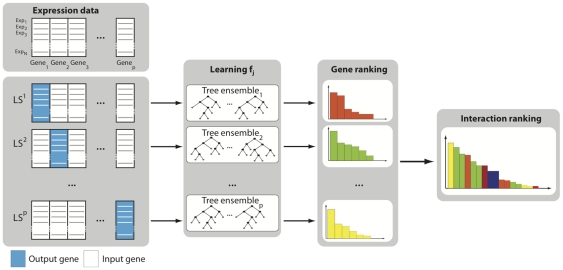
One of the pressing open problems of computational systems biology is the elucidation of the topology of genetic regulatory networks (GRNs) using high throughput genomic data, in particular microarray gene expression data. The Dialogue for Reverse Engineering Assessments and Methods (DREAM) challenge aims to evaluate the success of GRN inference algorithms on benchmarks of simulated data. In this article, we present GENIE3, a new algorithm for the inference of GRNs that was best performer in the DREAM4 In Silico Multifactorial challenge. GENIE3 decomposes the prediction of a regulatory network between p genes into p different regression problems. In each of the regression problems, the expression pattern of one of the genes (target gene) is predicted from the expression patterns of all the other genes (input genes), using tree-based ensemble methods Random Forests or Extra-Trees. The importance of an input gene in the prediction of the target gene expression pattern is taken as an indication of a putative regulatory link. Putative regulatory links are then aggregated over all genes to provide a ranking of interactions from which the whole network is reconstructed. In addition to performing well on the DREAM4 In Silico Multifactorial challenge simulated data, we show that GENIE3 compares favorably with existing algorithms to decipher the genetic regulatory network of Escherichia coli. It doesn't make any assumption about the nature of gene regulation, can deal with combinatorial and non-linear interactions, produces directed GRNs, and is fast and scalable. In conclusion, we propose a new algorithm for GRN inference that performs well on both synthetic and real gene expression data. The algorithm, based on feature selection with tree-based ensemble methods, is simple and generic, making it adaptable to other types of genomic data and interactions.
Overview
The claims and statistics of this paper haven’t been checked yet.
Free: it reads the open-access text and checks the first 5 claims that cite a source we can check. Create a free account to check every claim.
Integrity signals
Registry
Cites
Statistics
Figures
Verification
Claims the paper makes
The claims and statistics of this paper haven’t been checked yet.
Free: it reads the open-access text and checks the first 5 claims that cite a source we can check. Create a free account to check every claim.
Claims other papers make about this one
Each is checked against this paper’s own text: does it say what the citing paper says it does?
The source backs part of the claim, not all of it — or backs it for a different population, condition or comparison.
In the citing paper
“A limitation of GENIE3 is that TF information is required for it to perform better than random chance [113].”
From Gene co-expression analysis for functional classification and gene–disease predictions (2017) · cites this paper as [113]
Experimental — accuracy not yet measuredThe cited source says what the claim attributes to it.
In the citing paper
“Because of this second constraint, we cannot use pre-existing GRN inference algorithms, such as GENIE3 and GRNboost (refs. 7,51).”
From Dissecting cell identity via network inference and in silico gene perturbation (2023) · cites this paper as [51]
The cited source says what the claim attributes to it.
In the citing paper
“A major family of methods in this category is based on co-expression analysis (reviewed in [32]), and has been broadly used on bulk gene expression data (e.g. GENIE3 [33] and WGCNA [34], see [27, 35] for benchmark comparisons).”
From Mapping gene regulatory networks from single-cell omics data (2018) · cites this paper as [33]
The cited source says what the claim attributes to it.
In the citing paper
“GENIE3 incorporates TF information to construct a regulatory network by determining the TF expression pattern that best explains the expression of each of their target genes.”
From Gene co-expression analysis for functional classification and gene–disease predictions (2017) · cites this paper as [113]
Self-check
Percentages, sums and reported differences re-computed from the paper’s own numbers.
The self-check needs the paper’s full text.
Citations
Cites
Breiman, L. (2001) · Machine Learning · doi:10.1023/a:1010933404324 · Cited by 133,538
Classification and Regression Trees.
Gordon, A. D., Breiman, L., Friedman, J. H., Olshen, R. A., & Stone, C. J. (1984) · Biometrics · doi:10.2307/2530946 · Cited by 23,522
Classification and Regression Trees.
Ryzin, J. V., Breiman, L., Friedman, J. H., Olshen, R. A., & Stone, C. J. (1986) · Journal of the American Statistical Association · doi:10.2307/2288003 · Cited by 20,825
Breiman, L. (1996) · Machine Learning · doi:10.1007/bf00058655 · Cited by 16,325
Cluster analysis and display of genome-wide expression patterns
Eisen, M. B., Spellman, P. T., Brown, P. O., & Botstein, D. (1998) · Proceedings of the National Academy of Sciences · doi:10.1073/pnas.95.25.14863 · Cited by 16,184 · cited 1×
“Models based on the statistical analysis of dependencies between expression patterns have an intermediate complexity, and have already been successfully applied to the inference of large GRNs. Early models used correlation coefficients between expression patterns of all pairs of genes to infer “coexpression networks””
MethodClassification And Regression Trees
Breiman, L., Friedman, J. H., Olshen, R. A., & Stone, C. J. (2017) · doi:10.1201/9781315139470 · Cited by 11,417
Geurts, P., Ernst, D., & Wehenkel, L. (2006) · Machine Learning · doi:10.1007/s10994-006-6226-1 · Cited by 9,300 · cited 2×
“Empirical validations in [32] have shown that these two values of K were near-optimal in terms of predictive accuracy on several problems.”
BackgroundMethodSelf-citationThe Origins of Order: Self-Organization and Selection in Evolution
Kauffman, S. A. (1993) · doi:10.1093/oso/9780195079517.001.0001 · Cited by 7,855
The origins of order; self organization and selection in evolution
(1994) · International Journal of Biochemistry · doi:10.1016/0020-711x(94)90119-8 · Cited by 6,649
A review of feature selection techniques in bioinformatics
Saeys, Y., Inza, I., & Larrañaga, P. (2007) · Bioinformatics · doi:10.1093/bioinformatics/btm344 · Cited by 5,244
Research works printed but not linked: 3
- Cover TM Thomas JA 2006 Elements of Information Theory 2nd Edition Wiley-Interscience
- Faith JJ Hayete B Thaden JT Mogno I Wierzbowski J Supplemental website for: Large-scale mapping and validation of Escherichia coli transcriptional regulation from a compendium of expression profiles. http://gardnerlab.bu.edu/data/PLoS_2007/ PMC1764438 17214507
- Schäfer J Opgen-Rhein R Strimmer K 2006 Reverse engineering genetic networks using the GeneNet package. R News 6/ 5 50 53
Cited by
Items 901–1,000 of 1,008
Quantifying the Effects of Gyroless Flying of the Mars Express Spacecraft with Machine Learning
Petković, M., Lucas, L., Kocev, D., Džeroski, S., Boumghar, R., & Simidjievski, N. (2019) · IEEE International Conference on Space Mission Challenges for Information Technology · doi:10.1109/smc-it.2019.00006 · Cited by 10
“For this purpose, we use the Genie3 algorithm [7, 8].”
MethodPoorinmohammad, N., Hamedi, J., & Masoudi‐Nejad, A. (2020) · Scientific Reports · doi:10.1038/s41598-020-59731-8 · Cited by 10
An, S., He, K., Liu, F., Ding, Q., Wei, Y., Xia, Z., Duan, X., Huang, R., Li, B., Wang, H., et al. (2021) · Oncology Reports · doi:10.3892/or.2021.7945 · Cited by 11
“The combined mRNA and miRNA expression matrix was used as the input data, and the network was constructed using the default parameters in GENIE3.”
MethodInfluentialInferring the experimental design for accurate gene regulatory network inference
Seçilmiş, D., Hillerton, T., Nelander, S., & Sonnhammer, E. L. L. (2021) · Bioinformatics · doi:10.1093/bioinformatics/btab367 · Cited by 10
Network Inference of Transcriptional Regulation in Germinating Low Phytic Acid Soybean Seeds
DeMers, L. C., Raboy, V., Li, S., & Maroof, M. A. S. (2021) · Frontiers in Plant Science · doi:10.3389/fpls.2021.708286 · Cited by 11
Marin, P., Jaquet, A., Picarle, J., Fablet, M., Mérel, V., Delignette‐Muller, M. L., Ferrarini, M. G., Gibert, P., & Vieira, C. P. (2021) · Genome Biology and Evolution · doi:10.1093/gbe/evab208 · Cited by 12
Allouche, D., Cierco-Ayrolles, C., de Givry, S., Guillermin, G., Mangin, B., Schiex, T., Vandel, J., & Vignes, M. (2013) · Springer eBooks · doi:10.1007/978-3-642-45161-4_2 · Cited by 10
“These weights can then be normalized for each gene (Huynh-Thu et al. 2010).”
BackgroundMethodInfluentialGene Regulatory Network Inferences Using a Maximum-Relevance and Maximum-Significance Strategy
Liu, W., Zhu, W., Liao, B., & Chen, X. (2016) · PLoS ONE · doi:10.1371/journal.pone.0166115 · Cited by 9
Exploring candidate biological functions by Boolean Function Networks for Saccharomyces cerevisiae
Simak, M., Yeang, C., & Lu, H. H. (2017) · PLoS ONE · doi:10.1371/journal.pone.0185475 · Cited by 9
Ahn, H., Jo, K., Jeong, D., Pak, M., Hur, J., Jung, W., & Kim, S. (2019) · Frontiers in Plant Science · doi:10.3389/fpls.2019.00698 · Cited by 9
“Yip’s method (Yip et al., 2010) (for DREAM3) and GENIE3 (Huynh-Thu et al., 2010) (for DREAM4 and DREAM5) won the competitions.”
MethodSingh, N. K., Ahsen, M. E., Challapalli, N., Kim, H., White, M. A., & Vidyasagar, M. (2018) · IEEE Transactions on Molecular Biological and Multi-Scale Communications · doi:10.1109/tmbmc.2019.2933391 · Cited by 14
“Some of the recently developed methods such as GENIE3 [11] and bLARS [12] and ANOVA η2 [13] can infer directed weighted graphs.”
NIMCE: A Gene Regulatory Network Inference Approach Based on Multi Time Delays Causal Entropy
Feng, H., Zheng, R., Wang, J., Wu, F., & Li, M. (2020) · IEEE Transactions on Computational Biology and Bioinformatics · doi:10.1109/tcbb.2020.3029846 · Cited by 12
“To evaluate the performance of our method NIMCE, we compare it with other five approaches: GRNTE, clinde, GENIE3-lag, Jump3 and fastBMA [11], [12], [35], [36], [37].”
MethodWang, A., & Hai, R. (2020) · BMC Research Notes · doi:10.1186/s13104-020-05371-0 · Cited by 9
Effectiveness of Network Interdiction Strategies to Limit Contagion During a Pandemic
Roy, S., Biswas, P., & Ghosh, P. (2021) · IEEE Access · doi:10.1109/access.2021.3095252 · Cited by 9
“For any pair of zones u and v , we employ GENIE3 [37] inference model to leverage X in order to gauge how u influences v ( u (cid:54)= v ), and vice versa.”
MethodVIGLA-M: visual gene expression data analytics
Navas‐Delgado, I., García-Nieto, J., López-Camacho, E., Rybinski, M., Lavado-Valenzuela, R., Berciano‐Guerrero, M., & Aldana-Montes, J. F. (2019) · BMC Bioinformatics · doi:10.1186/s12859-019-2695-7 · Cited by 11
Dissecting and improving gene regulatory network inference using single-cell transcriptome data
Xue, L., Wu, Y., & Lin, Y. (2023) · Genome Research · doi:10.1101/gr.277488.122 · Cited by 12
“The output count matrices were then used for network inference using GENIE3.”
InfluentialBai, D., Mo, S., Zhang, R., Luo, Y., Gao, J., Yang, J. P., Wu, Q., Rahmani, H., Amariuta, T., Grotjahn, D., et al. (2026) · Nature Communications · doi:10.1038/s41467-026-69102-y · Cited by 15
“3b) (all P < 0.04, two-sided t -test with sample sizes of 5 and effect sizes greater than 2; see Supplementary Table 12).”
InfluentialQin, R., Zhao, Q., Gu, C., Wang, C., Zhang, L., & Zhang, H. (2023) · Scientific Reports · doi:10.1038/s41598-023-27779-x · Cited by 10
Spatially resolved gene regulatory networks in Asian rice ( Oryza sativa cv. Nipponbare) leaves
Robertson, S. M., & Wilkins, O. (2023) · The Plant Journal · doi:10.1111/tpj.16375 · Cited by 11
Bassler, K. E., Schmidleithner, L., Shakiba, M. H., Elmzzahi, T., Köhne, M., Floess, S., Scholz, R., Ohkura, N., Sadlon, T. J., Klee, K., et al. (2023) · Frontiers in Immunology · doi:10.3389/fimmu.2023.1107397 · Cited by 9
“In the present study, we applied the R package genie3 (41) for the prediction of the regulatory network of all present genes by setting the number of trees to 1000 and limit report.”
MethodA Sorghum F-Box Protein Induces an Oxidative Burst in the Defense AgainstColletotrichum sublineola
Wolf, E. S. A., Vela, S., Cuevas, H. E., & Vermerris, W. (2023) · Phytopathology · doi:10.1094/phyto-06-23-0184-r · Cited by 9
Xiong, M., Hu, J., Yao, M., Song, T., Zhao, L., Mou, B., Qian, Y., Zheng, M., Dong, Y., Wang, H., et al. (2023) · The FASEB Journal · doi:10.1096/fj.202301287rr · Cited by 8
Lei, Y., Huang, X., Guo, X., Chan, K. H. K., & Gao, L. (2024) · Briefings in Bioinformatics · doi:10.1093/bib/bbae334 · Cited by 10
“For comparison, we used DeepSEM [15], MI, GRN-Boost2 [9], GENIE3 [8] and DKGN [ 26], randomly selecting 25% of the edges as prior knowledge.”
MethodResultInfluentialReconstructing the regulatory programs underlying the phenotypic plasticity of neural cancers
Larsson, I., Held, F., Popova, G., Koc, A., Kundu, S., Jörnsten, R. J., & Nelander, S. (2024) · Nature Communications · doi:10.1038/s41467-024-53954-3 · Cited by 12
“Trans-ferring this strategy to the scRNA-seq setting, many methods to create GRNs exist, both adapted from methods applied to bulk RNA-seq data 21,22 or speci fi callydeveloped for scRNA-seq data 23 .”
MethodInvestigating biological nitrogen fixation via single-cell transcriptomics
Pereira, W. J., Conde, D., Perron, N., Schmidt, H. W., Dervinis, C., Venado, R. E., Ané, J., & Kirst, M. (2024) · Journal of Experimental Botany · doi:10.1093/jxb/erae454 · Cited by 11
“Examples of software to generate those networks are hdWGCNA (Morabito et al. , 2023) for co-expression networks, and scMNTI (Zhang et al. , 2023) and GENIE3 (Huynh-Thu et al. , 2010; Aibar et al. , 2017) for gene regulatory networks.”
Ahsen, M. E. (2025) · Mathematics · doi:10.3390/math13030420 · Cited by 10
Ruiz-Solaní, N., Alonso-Díaz, A., Capellades, M., Serrano-Ron, L., Ferro-Costa, M., Sánchez-Corrionero, Á., Rabissi, A., Argueso, C. T., Rubio‐Somoza, I., Laromaine, A., et al. (2025) · Science Advances · doi:10.1126/sciadv.adr1509 · Cited by 12
“To infer the GRNs, we used the GEne Network Inference with En-semble of trees (GENIE3 version 1.26.0, from Bioconductor) ( 86 , 87 ).”
InfluentialQuadratic graph attention network (Q-GAT) for robust construction of gene regulatory network
Zhang, H., An, X., He, Q., Yao, Y., Zhang, Y., Fan, F., & Teng, Y. (2025) · Neurocomputing · doi:10.1016/j.neucom.2025.129635 · Cited by 13
Wang, K., Li, Y., Liu, F., Luan, X., Wang, X., & Zhou, J. (2025) · BMC Bioinformatics · doi:10.1186/s12859-025-06116-1 · Cited by 14
“A number of methods for inferring GRNs based on traditional machine learning technologies have been developed to reconstruct GRNs, including GENIE3 [15] and GRNBoost2 [16].”
A near‐gapless genome assembly of Pseudocydonia sinensis uncovers unique phenylpropanoid pathways
Zhang, Y., Zhang, S., Guo, W., Zhang, Y., Chen, X., Yu, Q., Liu, Y., Sun, Y., Yu, K., Li, H., et al. (2025) · Plant Biotechnology Journal · doi:10.1111/pbi.70167 · Cited by 8
Novak, R., Lin, T., Kaushal, S., Sperry, M. M., Vigneault, F., Gardner, E., Loomba, S., Shcherbina, K., Keshari, V., Dinis, A., et al. (2025) · Communications Medicine · doi:10.1038/s43856-025-00975-8 · Cited by 27
“Using gene co-expression network analysis 25 , we also identi fi ed inter-connected gene sub-networks that are conserved across species and tissues in the MeCP2 de fi cient condition (Fig.”
Kadelka, C., & Hari, K. (2025) · PNAS Nexus · doi:10.1093/pnasnexus/pgaf228 · Cited by 10
“Many of these methods, e.g. the random forest-based GENIE3 (6), are able to infer directed networks.”
Wang, T., Pan, Y., Ju, F., Zheng, S., Liu, C., Min, Y., Jiang, Q., Liu, X., Xia, H., Liu, G., et al. (2025) · Nature Cell Biology · doi:10.1038/s41556-025-01755-1 · Cited by 12
“To investigate whether this is a broad challenge for GRN inference methods, we evaluated three alternative GRN inference approaches: GENIE3 29 , GRNBoost2 30 and RENGE 31 (Methods).”
InfluentialPark, B., Nicaise, A. M., Tsitsipatis, D., Pirvan, L., Žucha, D., Munteanu, A., Prasad, P., Larraz, M., Bulgaru, C., Kollyfas, R., et al. (2025) · Neuron · doi:10.1016/j.neuron.2025.09.022 · Cited by 12
Luo, Z. W., Zeng, Y., Qian, H., Zhao, H., Yu, Q. P., Bai, L., & Pan, L. (2025) · Journal of Agricultural and Food Chemistry · doi:10.1021/acs.jafc.5c10416 · Cited by 9
Cao, Y., Ma, J., Cheng, Z., Xia, L., Wang, L., Li, J., Zhang, X., Han, S., Tian, Y., Li, M., et al. (2025) · Plant Biotechnology Journal · doi:10.1111/pbi.70424 · Cited by 10
“These hub genes were used as regulators, with their targets predicted using the GENIE3 machine-learning method (gene network inference with ensemble of trees 3) in R (Huynh-Thu et al. 2010).”
Human immune aging clock identifies RUNX1 as a decelerator of T cell senescence
Ping, J., Qiao, Q., Gao, D.-D., Li, Y., Fan, Y., Tian, Y., Xiong, M., Zheng, Q., Jiang, B., Li, J., et al. (2026) · Immunity · doi:10.1016/j.immuni.2026.02.007 · Cited by 13
Modeling Signal Transduction from Protein Phosphorylation to Gene Expression
Cai, C., Chen, L., Jiang, X., & Lu, X. (2014) · Cancer Informatics · doi:10.4137/cin.s13883 · Cited by 8
fastBMA: scalable network inference and transitive reduction
Hung, L., Shi, K., Wu, M., Young, W. C., Raftery, A. E., & Yeung, K. Y. (2017) · GigaScience · doi:10.1093/gigascience/gix078 · Cited by 8
“We also compare fastBMA to other methodologies, GENIE3 [44] and Jump3 [45], which have demonstrated high accuracy on the simulated DREAM datasets.”
Biomarker Prioritisation and Power Estimation Using Ensemble Gene Regulatory Network Inference
Aziz, F., Acharjee, A., Williams, J. A., Russ, D., Bravo-Merodio, L., & Gkoutos, G. V. (2020) · International Journal of Molecular Sciences · doi:10.3390/ijms21217886 · Cited by 9
“They usually exploit the statistical dependencies between genes so as to estimate the likelihood of existence of an interaction between two genes [2,4].”
Ding, D., Liu, G., Gao, J., & Cao, M. (2022) · Disease Markers · doi:10.1155/2022/4030046 · Cited by 11
“15) [38] of R project was used to calculate the weight relationship among genes.”
MethodInferring causal gene regulatory network via GreyNet: From dynamic grey association to causation
Chen, G., & Liu, Z.-P. (2022) · Frontiers in Bioengineering and Biotechnology · doi:10.3389/fbioe.2022.954610 · Cited by 11
“The performances of bagging and gradient boosting comparisons are shown in We further compare our model with other seven state-of-the-art methods, including GENIE3-lag (Huynh-Thu, 2011), Jump3 (Huynh-Thu and Sanguinetti, 2015), SWING (Finkle et al., 2018), BTNET (Sungjoon et al., 2018), BiXGBoost (Zheng et al., 2018),…”
BackgroundResultWang, Y., Lee, H., Fear, J. M., Berger, I., Oliver, B., & Przytycka, T. M. (2022) · Communications Biology · doi:10.1038/s42003-022-04226-7 · Cited by 13
Influence network model uncovers relations between biological processes and mutational signatures
Amgalan, B., Wójtowicz, D., Kim, Y.-A., & Przytycka, T. M. (2023) · Genome Medicine · doi:10.1186/s13073-023-01162-x · Cited by 7
“Additionally, we included (5) the regression tree-based approach used by GENIE3 method [39] for the inference of Gene Regulatory Networks (GRN) [39, 40, 41].”
MethodEnsInfer: a simple ensemble approach to network inference outperforms any single method
Shen, B., Coruzzi, G. M., & Shasha, D. E. (2023) · BMC Bioinformatics · doi:10.1186/s12859-023-05231-1 · Cited by 13
“Thus, base network inference methods such as GENIE3 or Inferelator will work as Level 1 inference methods and individually predict whether some transcription factor TF regulates some target gene g by giving each possible edge a confidence score.”
MethodGauvrit, T., Benderradji, H., Pelletier, A., Aboulouard, S., Faivre, É., Carvalho, K., Deleau, A., Vallez, E., Launay, A., Bogdanova, A., et al. (2023) · Nutrients · doi:10.3390/nu15214691 · Cited by 9
“Differences between mean values were determined using two-tailed unpaired Student’s t -test, one sample t -test or two-way ANOVA followed by a post hoc Tukey’s multiple comparisons test using GraphPad Prism version 9.0.0 software. p -values < 0.05 were considered significant.”
MethodInfluentialDuan, S., Li, H., Wang, Z., Li, J., Huang, W., Fang, Z., Li, C., Zeng, Z., Sun, B., & Liu, Y. (2024) · Food & Function · doi:10.1039/d3fo03506a · Cited by 8
ZoomOut: Analyzing Multiple Networks as Single Nodes
Athanasiadis, E. I., Bourdakou, M. M., & Spyrou, G. M. (2015) · IEEE Transactions on Computational Biology and Bioinformatics · doi:10.1109/tcbb.2015.2424411 · Cited by 8
Zhu, F., Shi, L., Engel, J. D., & Guan, Y. (2015) · Bioinformatics · doi:10.1093/bioinformatics/btv186 · Cited by 9
Dimitrakopoulos, G. Ν., Balomenos, P., Vrahatis, A. G., Sgarbas, K., & Bezerianos, A. (2016) · Annual International Conference of the IEEE Engineering in Medicine and Biology Society (EMBC) · doi:10.1109/embc.2016.7592088 · Cited by 8
Modified Half-System Based Method for Reverse Engineering of Gene Regulatory Networks
Khan, A., Saha, G. K., & Pal, R. K. (2019) · IEEE Transactions on Computational Biology and Bioinformatics · doi:10.1109/tcbb.2019.2892450 · Cited by 11
Yang, A., Liu, L. G., Chen, M., Liu, F., You, H., Liu, L., Yang, H., Xun, Y., Liu, J., Wang, R., et al. (2019) · PubMed Central · Cited by 9
Integrated regulatory models for inference of subtype‐specific susceptibilities in glioblastoma
Liu, Y., Shi, N., Regev, A., He, S., & Hemann, M. T. (2020) · Molecular Systems Biology · doi:10.15252/msb.20209506 · Cited by 9
“…by GENIE3, another commonly used network inference tool that ranks TF-target regulatory edges using random forest regression importance metrics (Huynh-Thu et al , 2010) [utilized as part of the single-cell regulatory network construction pipeline SCENIC (Aibar et al , 2017)], we find that…”
MethodInfluentialTan, Y., Neto, F. B. D. L., & Braga-Neto, U. (2020) · IEEE Transactions on Computational Biology and Bioinformatics · doi:10.1109/tcbb.2020.3037090 · Cited by 8
“Here we compare PALLAS with the GENIE3 [27], TIGRESS [21], and Banjo [44] algorithms.”
MethodUnraveling Root Development Through Single-Cell Omics and Reconstruction of Gene Regulatory Networks
Serrano-Ron, L., Cabrera, J., Pérez-García, P., & Moreno-Risueno, M. Á. (2021) · Frontiers in Plant Science · doi:10.3389/fpls.2021.661361 · Cited by 10
“, transcriptional regulators), which may regulate other genes (Huynh-Thu et al., 2010).”
BackgroundThe Multiple Dimensions of Networks in Cancer: A Perspective
Axenie, C., Bauer, R., & Martínez, M. R. (2021) · Symmetry · doi:10.3390/sym13091559 · Cited by 10
Klaile, E., Prada, J. P., Klassert, T. E., Besemer, M., Bothe, A.-K., Durotin, A., Müller, M. M., Schmitt, V., Luther, C. H., Dittrich, M. T., et al. (2021) · Cellular Immunology · doi:10.1016/j.cellimm.2021.104459 · Cited by 9
Liu, Q., Li, J., Dong, M., Liu, M., & Chai, Y. (2022) · IEEE Transactions on Computational Biology and Bioinformatics · doi:10.1109/tcbb.2022.3144418 · Cited by 8
“To evaluate the performance of the proposed method, we compare the proposed method with the classical GRN inference method, namely GENIE3 [39], Jump3 [40], BiXGBoost [30] and UKF [24].”
MethodScalable reverse‐engineering of gene regulatory networks from time‐course measurements
Montefusco, F., Procopio, A., Bates, D. G., Amato, F., & Cosentino, C. (2022) · International Journal of Robust and Nonlinear Control · doi:10.1002/rnc.6044 · Cited by 9
“Also for dynGENIE3 we have used the suggested default parameters: random forest like method with a number of trees grown in the ensemble equal to 1000.”
MethodInfluentialLarge-Scale Integrative Analysis of Soybean Transcriptome Using an Unsupervised Autoencoder Model
Su, L., Xu, C., Zeng, S., Su, L., Joshi, T., Stacey, G. S., & Xu, D. H. (2022) · Frontiers in Plant Science · doi:10.3389/fpls.2022.831204 · Cited by 7
Hu, F., Ma, Y., Xu, Z., Zhang, S., Li, J., Sun, X., & Wu, J. (2022) · Frontiers in Cell and Developmental Biology · doi:10.3389/fcell.2022.803466 · Cited by 7
“The extracted TFs were used as input of the function “GENIE3” in the GENIE3 R package (Huynh-Thu et al., 2010) with no predefined target.”
MethodgpuZoo: Cost-effective estimation of gene regulatory networks using the Graphics Processing Unit
Guebila, M. B., Morgan, D. C., Glass, K., Kuijjer, M. L., DeMeo, D. L., & Quackenbush, J. F. (2022) · NAR Genomics and Bioinformatics · doi:10.1093/nargab/lqac002 · Cited by 7
Ensemble Regression Modelling for Genetic Network Inference
Gamage, H. N., Chetty, M., Shatte, A. B. R., & Hallinan, J. S. (2022) · IEEE Conference on Computational Intelligence in Bioinformatics and Computational Biology (CIBCB) · doi:10.1109/cibcb55180.2022.9863017 · Cited by 8
“…regression model-based approach based on feature selection and uses ensembles of random forests to select relevant regulators for each target gene [11]. dynGENIE3, the dynamical variant of GENIE3, is based on a semi-parametric model combined with ordinary differential equations (ODEs) and a…”
BackgroundMethodSingle Cell Transcriptomics to Understand HSC Heterogeneity and Its Evolution upon Aging
Hérault, L., Poplineau, M., Rémy, É., & Duprez, E. (2022) · Cells · doi:10.3390/cells11193125 · Cited by 10
Canales, J., Verdejo, J., & Calderini, D. F. (2023) · International Journal of Molecular Sciences · doi:10.3390/ijms242115593 · Cited by 22
“Hub regulators with the highest connectivity in each module were identified using the “get_hubs_grn” function of BioNERO R package [66], which implements three popular algorithms: GENIE3 [67], ARACNE [68], and CLR [69].”
MethodNetwork inference via adaptive optimal design
Stigter, J. D., & Molenaar, J. (2012) · BMC Research Notes · doi:10.1186/1756-0500-5-518 · Cited by 8
“The direction of an arrow then indicates a causal relationship [12].”
BackgroundGene Regulatory Network Inference from Systems Genetics Data Using Tree-Based Methods
Huynh‐Thu, V. A., Wehenkel, L. A., & Geurts, P. (2013) · Springer eBooks · doi:10.1007/978-3-642-45161-4_5 · Cited by 9
Self-citationAn integrated network of Arabidopsis growth regulators and its use for gene prioritization
Sabaghian, E., Drebert, Z. J., Inzé, D., & Saeys, Y. (2015) · Scientific Reports · doi:10.1038/srep17617 · Cited by 9
Mining the Enriched Subgraphs for Specific Vertices in a Biological Graph
Meysman, P., Saeys, Y., Sabaghian, E., Bittremieux, W., de Peer, Y. V., Goethals, B., & Laukens, K. (2016) · IEEE Transactions on Computational Biology and Bioinformatics · doi:10.1109/tcbb.2016.2576440 · Cited by 8
Functional networks inference from rule-based machine learning models
Lazzarini, N., Widera, P., Williamson, S. C., Heer, R., Krasnogor, N., & Bacardit, J. (2016) · BioData Mining · doi:10.1186/s13040-016-0106-4 · Cited by 10
Data mining approaches highlighted transcription factors that play role in thermo-priming
Izadi, F., Zarrini, H. N., Kiani, G., & Jelodar, N. B. (2017) · Plant Omics · doi:10.21475/poj.10.03.17.pne468 · Cited by 8
“In this context GENIE3 infers GRNs by decomposing of network recovery procedure to p steps that p is the number of genes and each step is consisting of identifying genes that regulates a given target gene (Huynh-Thu et al., 2010).”
BackgroundYang, J., Qin, Y., Zhang, T., Wang, F., Peng, L., Zhu, L., Yuan, D., Gao, P., Zhuang, J., Zhang, Z., et al. (2017) · Oncotarget · doi:10.18632/oncotarget.23148 · Cited by 12
“There are also methods to infer gene co-expression based on linear regression models [16] or tree based methods [17].”
MethodReverse Engineering Gene Regulatory Networks Using Graph Mining
Jiang, H., Turki, T., Zhang, S., & Wang, J. T. L. (2018) · Lecture notes in computer science · doi:10.1007/978-3-319-96136-1_27 · Cited by 9
Improving network inference algorithms using resampling methods
Colby, S., McClure, R., Overall, C. C., Renslow, R. S., & McDermott, J. (2018) · BMC Bioinformatics · doi:10.1186/s12859-018-2402-0 · Cited by 11
Li, X., Cheng, M., Tang, C. K., Zhu, X., Qi, K., Zhang, S., Wu, J., & Wang, P. (2021) · Plant Systematics and Evolution · doi:10.1007/s00606-021-01769-w · Cited by 8
Learning modular structures from network data and node variablesPreprint
Azizi, E., Galagan, J. E., & Airoldi, E. M. (2014) · arXiv (Cornell University) · doi:10.48550/arxiv.1405.2566 · Cited by 8
“lenge contests (Marbach et al., 2012) in inferring regulatory networks from gene expression only. These include Mutual Information between expression profiles (MI), CLR (Faith et al., 2007)and GENIE3 (Irrthum et al., 2010). We applied these on the above MTB expression data, and compared the inferred links to the gold s…”
SCHiRM: Single Cell Hierarchical Regression Model to detect dependencies in read count dataPreprint
Intosalmi, J., Mannerström, H., Hiltunen, S., & Lähdesmäki, H. J. (2018) · bioRxiv (Cold Spring Harbor Laboratory) · doi:10.1101/335695 · Cited by 8
“…make use of time (or pseudotime) alignment of cells (see e.g. Specht and Li, 2017; Sanchez-Castillo et al. , 2018; Papili Gao et al. , 2018) and only few approaches can be used to detect dependencies from static data using regression modeling (see e.g. Huynh-Thu et al. , 2010; Aibar et al. , 2017).”
MethodNon-submodular Function Maximization subject to a Matroid Constraint, with ApplicationsPreprint
Gatmiry, K., & Gomez-Rodriguez, M. (2018) · arXiv (Cornell University) · doi:10.48550/arxiv.1811.07863 · Cited by 22
“ular functions Tree-structured Gaussian graphical models. Gaussian graphical models (GGMs) are widely used in many applications, e.g., gene regulatory networks [Friedman et al., 2000, Friedman, 2004, Irrthum et al., 2010]. A GGM is typically characterized by means of the sparsity pattern of the inverse of its covarian…”
MethodLämmermann, N., Wulf, D., Chang, K. S., Wichmann, J., Jang, J., EonSeon, J., Bräutigam, A., Wobbe, L., & Kruse, O. (2020) · bioRxiv (Cold Spring Harbor Laboratory) · doi:10.1101/2020.02.10.942334 · Cited by 12
“Random forest based regression (Huynh-Thu et al., 2010) predicted interaction partners of LRS1 based on 976 transcriptome samples of wild-type Chlamydomonas reinhardtii in public databases (Supplemental Table 1).”
BackgroundMethodInfluentialBrownhill, E., Yabaji, S. M., Zhernovkov, V., Rukhlenko, O. S., Seidel, K., Bhattacharya, B., Chatterjee, S., Chen, H. A., Crossland, N. A., Bishai, W. R., et al. (2020) · bioRxiv (Cold Spring Harbor Laboratory) · doi:10.1101/2020.12.14.422743 · Cited by 5
Novel Populations of Lung Capillary Endothelial Cells and Their Functional SignificancePreprint
James, J., Dekan, A., Niihori, M., McClain, N., Varghese, M. V., Bharti, D., Lawal, O., Padilla‐Rodriguez, M., Yi, D., Dai, Z., et al. (2023) · Research Square · doi:10.21203/rs.3.rs-2887159/v1 · Cited by 8
Multiple transcription factors mediate acclimation of Chlamydomonas to light stressPreprint
Wulf, D., Krüger, F. J., Klages, L. J., Viehöver, P., Jin, E., Wobbe, L., Eisenhut, M., Kruse, O., Blifernez-Klassen, O., & Bräutigam, A. (2023) · bioRxiv (Cold Spring Harbor Laboratory) · doi:10.1101/2023.10.30.564712 · Cited by 8
“To homogenize the data range for plotting the weight cut-off of the GENIE3 was scaled log10 and then rescaled between 0 and 1.”
BackgroundMethodInfluentialgeneRNIB: a living benchmark for gene regulatory network inferencePreprint
Nourisa, J., Passemiers, A., Kalfon, J., Stock, M., Zeller‐Plumhoff, B., Cannoodt, R., Arnold, C., Tong, A., Hartford, J., Netea, M. G., et al. (2025) · bioRxiv (Cold Spring Harbor Laboratory) · doi:10.1101/2025.02.25.640181 · Cited by 13
“This method mirrors how several modern GRN inference techniques, such as GENIE3 [43], GRNBoost2 [21], and ENNET [44], build their regression models.”
Deciphering a global source of non-genetic heterogeneity in cancer cells
Zhang, J., Han, X., Ma, L., Xu, S., & Lin, Y. (2023) · Nucleic Acids Research · doi:10.1093/nar/gkad666 · Cited by 8
Falquet, M., Su, Z., Wyss, T., Ercolano, G., Trabanelli, S., & Jandus, C. (2023) · iScience · doi:10.1016/j.isci.2023.107728 · Cited by 8
SIGNET: transcriptome-wide causal inference for gene regulatory networks
Jiang, Z., Chen, C., Xu, Z., Wang, X., Zhang, M., & Zhang, D. (2023) · Scientific Reports · doi:10.1038/s41598-023-46295-6 · Cited by 11
“It allows users to quickly pick up the analysis and provides options for customization.”
BackgroundInference of Gene Regulatory Networks Based on Multi-view Hierarchical Hypergraphs
Wu, S., Jin, K., Tang, M., Xia, Y., & Gao, W. (2024) · Interdisciplinary Sciences Computational Life Sciences · doi:10.1007/s12539-024-00604-3 · Cited by 9
Approaches for Benchmarking Single-Cell Gene Regulatory Network Methods
Karamveer, K., & Uzun, Y. (2024) · Bioinformatics and Biology Insights · doi:10.1177/11779322241287120 · Cited by 12
“Machine learning based models such as Random Forests (GENIE3 6 and GRNBOOST2 117 ) and support vector machines are scalable for moderate data size (~2000 genes).”
Wang, H., Wang, Y., Zhou, J., Song, B., Tu, G., Nguyen, A., Su, J., Coenen, F., Wei, Z., Rigden, D. J., et al. (2024) · Cell Genomics · doi:10.1016/j.xgen.2024.100702 · Cited by 11
Fuenzalida‐Valdivia, I., Herrera‐Vásquez, A., Gangas, M. V., Sáez‐Vasquez, J., Álvarez, J. M., Meneses, C., & Blanco‐Herrera, F. (2024) · Molecular Plant Pathology · doi:10.1111/mpp.70044 · Cited by 7
“By employing the GENIE3 software (Huynh-Thu et al. 2010), we were able to identify a potential regulatory network wherein these TFs collectively regulate 860 DEGs (Figure 6a), with 397 genes exhibiting regulation by more than one of these WRKY TFs. Functionally enriched GO categories for these…”
TRIAGE: an R package for regulatory gene analysis
Zhao, Q., Shim, W. J., Sun, Y., Sinniah, E., Shen, S., Bodén, M., & Palpant, N. J. (2024) · Briefings in Bioinformatics · doi:10.1093/bib/bbaf004 · Cited by 8
Transformation of brain myeloid cell populations by SIV in rhesus macaques revealed by multiomics
Xu, X., Niu, M., Lamberty, B. G., Emanuel, K. M., Apostol, M. J. F., & Fox, H. S. (2025) · Communications Biology · doi:10.1038/s42003-024-07443-4 · Cited by 8
Causal network inference based on cross-validation predictability
Zhang, Y., Li, Q., Wang, J., Chang, X., Chen, L., & Liu, X. (2025) · Communications Physics · doi:10.1038/s42005-025-02091-4 · Cited by 13
Shining light on Arabidopsis regulatory networks integrating nitrogen use and photosynthesis
de Silva, K. K., Coelho, C., Gao, J., & Brooks, M. D. (2025) · The Plant Journal · doi:10.1111/tpj.70211 · Cited by 8
“We used four inference approaches: ARACNE (Margolin et al., 2006), CLR (Faith et al., 2007), GENIE3 (Huynh-Thu et al., 2010), and OutPredict (Cirrone et al., 2020) to infer networks (Figure S7).”
Zavala, M., Menares, M., Acevedo, O., Melo, M., Núñez, C., Arancibia-Guerra, C., Pedreschi, R., Donoso, J. M., Meisel, L. A., Maldonado, J. E., et al. (2025) · Horticulturae · doi:10.3390/horticulturae11060706 · Cited by 7
Avila, J. A., Benthal, J. T., Schafer, J. C., Flaherty, D. K., & Southard‐Smith, E. M. (2025) · Cellular and Molecular Gastroenterology and Hepatology · doi:10.1016/j.jcmgh.2025.101590 · Cited by 7
Zhang, W., Shao, B., Li, W., Guo, W., Lyu, J., Chen, G., Wang, C., & Liu, Z. (2025) · Briefings in Bioinformatics · doi:10.1093/bib/bbaf359 · Cited by 10
“These include GENIE3 [7], GRNBoost2 [10], SCODE [26], DeepSEM [14], CNNC [11], GNE [12], GENELink [15], GNNLink [16], along with the baseline methods of PCC and MI.”
Bhati, U., Sharma, A., Gupta, S., Kumar, A., Pradhan, U. K., & Shankar, R. (2025) · Current Plant Biology · doi:10.1016/j.cpb.2025.100521 · Cited by 8
KEGNI: knowledge graph enhanced framework for gene regulatory network inference
Li, P., Li, L., Nan, J., Chen, J., Sun, J., & Cao, Y. (2025) · Genome biology · doi:10.1186/s13059-025-03780-7 · Cited by 8
“Then, we compared the KEGNI and MAE with 8 established methods, including PIDC [8], GENIE3 [10], GRNBoost2 [11], scGeneRAI [12], Atten-tionGRN [16], SCODE [40], PPCOR [41], and SINCERITIES [42].”
Jiang, J., Chen, S., Tsou, T., McGinnis, C. S., Khazaei, T., Zhu, Q., Park, J. H., Strazhnik, I.-M., Vielmetter, J., Gong, Y., et al. (2026) · Cell · doi:10.1016/j.cell.2026.04.028 · Cited by 37
Metadata
- Authors
- Huynh-Thu, V. A., Irrthum, A., Wehenkel, L., & Geurts, P.
- Affiliations
- University of Liège (BE)
- Venue
- PLoS ONE
- Publisher
- Public Library of Science (PLoS)
- Published
- 2010-09-28
- Volume
- 5
- Issue
- 9
- Pages
- e12776
- ISSN
- 1932-6203 (ISSN-L)
- PMC
- PMC2946910
- OpenAlex
- W2076513103
- Cited by
- 2,131
- References
- 53
- Citations by year
- 2026: 237 · 2025: 273 · 2024: 274 · 2023: 241 · 2022: 225 · 2021: 194 · 2020: 146 · 2019: 120 · 2018: 95 · 2017: 79 · 2016: 59 · 2015: 63 · 2014: 53 · 2013: 36 · 2012: 25
- FWCI
- 9.24
- Type
- journal article
- Language
- en
- Open access
- gold
- doi.org
- Locations
- PLoS ONE (publishedVersion, cc-by)
- PubMed Central (publishedVersion, cc-by)
- PubMed (publishedVersion)
- RePEc: Research Papers in Economics (submittedVersion)
- DOAJ (DOAJ: Directory of Open Access Journals) (submittedVersion, cc-by-sa)
- Figshare (submittedVersion, cc-by)
- Open Repository and Bibliography (University of Liège) (submittedVersion)
- ORBi (University of Liège) (submittedVersion, other-oa)
- ORBi (University of Liège) (submittedVersion)
- Funders
- Fonds De La Recherche Scientifique - FNRS
- Fédération Wallonie-Bruxelles
- Topics
- Life Sciences › Biochemistry, Genetics and Molecular Biology › Molecular Biology › Gene Regulatory Network Analysis
- Life Sciences › Biochemistry, Genetics and Molecular Biology › Molecular Biology › Bioinformatics and Genomic Networks
- Life Sciences › Biochemistry, Genetics and Molecular Biology › Molecular Biology › Microbial Metabolic Engineering and Bioproduction
- Keywords
- GENIE3, random forest, extra trees, microarray gene expression, Escherichia coli, feature selection, network topology
- MeSH terms
- Algorithms, Escherichia coli, Gene Expression Regulation, Computational Biology, Oligonucleotide Array Sequence Analysis, Gene Regulatory Networks
About these checks
Registry, retraction, Cites and statistics results are computed, not judged, with one exception: a printed reference that no index lists is read once by a model before it counts as a citation error. Claims are extracted by a model and kept only when their quote appears verbatim in the text; each cited source is then checked, with a model’s help, for whether it says what the claim relies on. Those verdicts can be wrong — read the claim’s quote and the cited source before relying on one.
Statistics and arithmetic are recomputed, not judged.
Confidence bands are shown only for fields calibrated on our annotated test set. None is calibrated yet, so no band is shown.
What counts as a claim ›How we measure confidence ›How we check this ›
Are you an author, or do you see a problem with this page? Request a review
Data sources
Bibliographic data: Semantic Scholar, OpenAlex, Crossref.
Contains information from the Semantic Scholar Academic Graph Datasets, made available under the ODC Attribution License (ODC-BY 1.0).
Semantic Scholar’s data is described in: Kinney, R., et al. (2023). The Semantic Scholar Open Data Platform. arXiv:2301.10140.
