

Inferring Regulatory Networks from Expression Data Using Tree-Based Methods
Open accessThe DOI matches its Crossref record; 51 of the 53 references it cites were found in a registry or an index.
Abstract
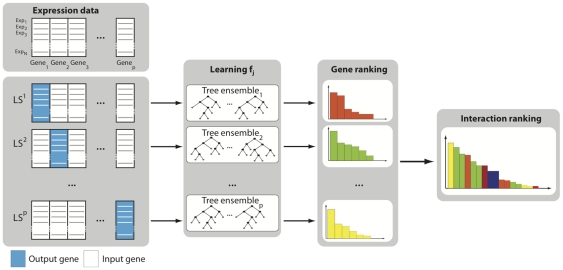
One of the pressing open problems of computational systems biology is the elucidation of the topology of genetic regulatory networks (GRNs) using high throughput genomic data, in particular microarray gene expression data. The Dialogue for Reverse Engineering Assessments and Methods (DREAM) challenge aims to evaluate the success of GRN inference algorithms on benchmarks of simulated data. In this article, we present GENIE3, a new algorithm for the inference of GRNs that was best performer in the DREAM4 In Silico Multifactorial challenge. GENIE3 decomposes the prediction of a regulatory network between p genes into p different regression problems. In each of the regression problems, the expression pattern of one of the genes (target gene) is predicted from the expression patterns of all the other genes (input genes), using tree-based ensemble methods Random Forests or Extra-Trees. The importance of an input gene in the prediction of the target gene expression pattern is taken as an indication of a putative regulatory link. Putative regulatory links are then aggregated over all genes to provide a ranking of interactions from which the whole network is reconstructed. In addition to performing well on the DREAM4 In Silico Multifactorial challenge simulated data, we show that GENIE3 compares favorably with existing algorithms to decipher the genetic regulatory network of Escherichia coli. It doesn't make any assumption about the nature of gene regulation, can deal with combinatorial and non-linear interactions, produces directed GRNs, and is fast and scalable. In conclusion, we propose a new algorithm for GRN inference that performs well on both synthetic and real gene expression data. The algorithm, based on feature selection with tree-based ensemble methods, is simple and generic, making it adaptable to other types of genomic data and interactions.
Overview
The claims and statistics of this paper haven’t been checked yet.
Free: it reads the open-access text and checks the first 5 claims that cite a source we can check. Create a free account to check every claim.
Integrity signals
Registry
Cites
Statistics
Figures
Verification
Claims the paper makes
The claims and statistics of this paper haven’t been checked yet.
Free: it reads the open-access text and checks the first 5 claims that cite a source we can check. Create a free account to check every claim.
Claims other papers make about this one
Each is checked against this paper’s own text: does it say what the citing paper says it does?
The source backs part of the claim, not all of it — or backs it for a different population, condition or comparison.
In the citing paper
“A limitation of GENIE3 is that TF information is required for it to perform better than random chance [113].”
From Gene co-expression analysis for functional classification and gene–disease predictions (2017) · cites this paper as [113]
Experimental — accuracy not yet measuredThe cited source says what the claim attributes to it.
In the citing paper
“Because of this second constraint, we cannot use pre-existing GRN inference algorithms, such as GENIE3 and GRNboost (refs. 7,51).”
From Dissecting cell identity via network inference and in silico gene perturbation (2023) · cites this paper as [51]
The cited source says what the claim attributes to it.
In the citing paper
“A major family of methods in this category is based on co-expression analysis (reviewed in [32]), and has been broadly used on bulk gene expression data (e.g. GENIE3 [33] and WGCNA [34], see [27, 35] for benchmark comparisons).”
From Mapping gene regulatory networks from single-cell omics data (2018) · cites this paper as [33]
The cited source says what the claim attributes to it.
In the citing paper
“GENIE3 incorporates TF information to construct a regulatory network by determining the TF expression pattern that best explains the expression of each of their target genes.”
From Gene co-expression analysis for functional classification and gene–disease predictions (2017) · cites this paper as [113]
Self-check
Percentages, sums and reported differences re-computed from the paper’s own numbers.
The self-check needs the paper’s full text.
Citations
Cites
Breiman, L. (2001) · Machine Learning · doi:10.1023/a:1010933404324 · Cited by 133,538
Classification and Regression Trees.
Gordon, A. D., Breiman, L., Friedman, J. H., Olshen, R. A., & Stone, C. J. (1984) · Biometrics · doi:10.2307/2530946 · Cited by 23,522
Classification and Regression Trees.
Ryzin, J. V., Breiman, L., Friedman, J. H., Olshen, R. A., & Stone, C. J. (1986) · Journal of the American Statistical Association · doi:10.2307/2288003 · Cited by 20,825
Breiman, L. (1996) · Machine Learning · doi:10.1007/bf00058655 · Cited by 16,325
Cluster analysis and display of genome-wide expression patterns
Eisen, M. B., Spellman, P. T., Brown, P. O., & Botstein, D. (1998) · Proceedings of the National Academy of Sciences · doi:10.1073/pnas.95.25.14863 · Cited by 16,184 · cited 1×
“Models based on the statistical analysis of dependencies between expression patterns have an intermediate complexity, and have already been successfully applied to the inference of large GRNs. Early models used correlation coefficients between expression patterns of all pairs of genes to infer “coexpression networks””
MethodClassification And Regression Trees
Breiman, L., Friedman, J. H., Olshen, R. A., & Stone, C. J. (2017) · doi:10.1201/9781315139470 · Cited by 11,417
Geurts, P., Ernst, D., & Wehenkel, L. (2006) · Machine Learning · doi:10.1007/s10994-006-6226-1 · Cited by 9,300 · cited 2×
“Empirical validations in [32] have shown that these two values of K were near-optimal in terms of predictive accuracy on several problems.”
BackgroundMethodSelf-citationThe Origins of Order: Self-Organization and Selection in Evolution
Kauffman, S. A. (1993) · doi:10.1093/oso/9780195079517.001.0001 · Cited by 7,855
The origins of order; self organization and selection in evolution
(1994) · International Journal of Biochemistry · doi:10.1016/0020-711x(94)90119-8 · Cited by 6,649
A review of feature selection techniques in bioinformatics
Saeys, Y., Inza, I., & Larrañaga, P. (2007) · Bioinformatics · doi:10.1093/bioinformatics/btm344 · Cited by 5,244
Research works printed but not linked: 3
- Cover TM Thomas JA 2006 Elements of Information Theory 2nd Edition Wiley-Interscience
- Faith JJ Hayete B Thaden JT Mogno I Wierzbowski J Supplemental website for: Large-scale mapping and validation of Escherichia coli transcriptional regulation from a compendium of expression profiles. http://gardnerlab.bu.edu/data/PLoS_2007/ PMC1764438 17214507
- Schäfer J Opgen-Rhein R Strimmer K 2006 Reverse engineering genetic networks using the GeneNet package. R News 6/ 5 50 53
Cited by
Items 801–900 of 1,008
Jimenez, D. V., Adusumilli, V. S., Stempel, M. H., Maday, S., Ming, G., Song, H., & Bond, A. M. (2024) · Cell Reports · doi:10.1016/j.celrep.2024.114339 · Cited by 13
Fang, S., Ji, M., Zhu, T., Wang, Y., Tang, X., Zhu, X., Yang, Z., Xu, C., Wang, H., & Li, P. (2024) · Agronomy · doi:10.3390/agronomy14071541 · Cited by 12
“The R package GENIE3, based on random-forest regression, was used to infer regulatory network mediating NO 3 − responses [68].”
Dietary caloric restriction protects experimental autoimmune uveitis by regulating Teff/Treg balance
Li, Z., Duan, R., Jiang, Q., Liu, J., Chen, J., Jiang, L., Wang, T., Li, H., Zhang, Y., Peng, X., et al. (2024) · iScience · doi:10.1016/j.isci.2024.111279 · Cited by 12
Tasis, A., Papaioannou, N. E., Grigoriou, M. E., Paschalidis, N., Loukogiannaki, C., Filia, A., Katsiki, K., Lamprianidou, E., Papadopoulos, V. P., Rimpa, C. M., et al. (2024) · Cancer Research Communications · doi:10.1158/2767-9764.crc-24-0310 · Cited by 12
Chen, L., Dautle, M., Gao, R., Zhang, S., & Chen, Y. (2025) · Briefings in Bioinformatics · doi:10.1093/bib/bbaf089 · Cited by 18
“Most early methods focused on static scRNA-seq data,including GENIE3 [8],GRNBoost2 [9],SCENIC [10],NLNET [11],PIDC [12],PPCOR [13],and SINCERA [14].”
Inferring gene regulatory networks by hypergraph generative model
Su, G., Wang, H., Zhang, Y., Coster, A. C., Wilkins, M. R., Cañete, P. F., Yu, D., Yang, Y., & Zhang, W. (2025) · Cell Reports Methods · doi:10.1016/j.crmeth.2025.101026 · Cited by 20
Li, Z., Ma, Y., Sun, W., Ding, P., Bu, Y., Qi, Y., Shi, T., Jia, C., Lei, B., & Ma, C. (2025) · PLANT PHYSIOLOGY · doi:10.1093/plphys/kiaf180 · Cited by 11
Model-to-crop conserved NUE Regulons enhance machine learning predictions of nitrogen use efficiency
Huang, J., Cheng, C., Brooks, M. D., Jeffers, T. L., Doner, N. M., Shih, H.-J. S., Frangos, S., Katari, M. S., & Coruzzi, G. M. (2025) · The Plant Cell · doi:10.1093/plcell/koaf093 · Cited by 13
“We also compared the performance of our DFG predictions of TF – target relationships, with networks inferred from 2 popular methods, GENIE3 (Huynh-Thu et al. 2010), dynGENIE3 (Huynh-Thu and Geurts 2018), or by correlation methods such as Pearson ’ s correlation coefficient.”
Gui, S., Rice, A. P., Chen, R., Wu, L., Liu, J., & Miao, H. (2017) · BMC Bioinformatics · doi:10.1186/s12859-017-1489-z · Cited by 10
“The well-known methods for static expression data include the Pearson correlation coefficient (PCC) and the mutual information (MI) methods [17, 18], the ARACNE algorithm [19] based on the data processing inequality concept [20], the context likelihood of relatedness (CLR) approach [21] that extends the relevance netw…”
MethodInfluentialMarkov chain Monte Carlo simulation of a Bayesian mixture model for gene network inference
Ko, Y., Kim, J., & Rodriguez‐Zas, S. L. (2019) · Genes & Genomics · doi:10.1007/s13258-019-00789-8 · Cited by 12
TRIMER: Transcription Regulation Integrated with Metabolic Regulation
Niu, P., Soto, M. J., Yoon, B.-J., Dougherty, E. R., Alexander, F. J., Blaby, I. K., & Qian, X. (2021) · iScience · doi:10.1016/j.isci.2021.103218 · Cited by 14
The HDAC9-associated risk locus promotes coronary artery disease by governing TWIST1
Ma, L., Bryce, N. S., Turner, A. W., Narzo, A. D., Rahman, K., Xu, Y., Ermel, R., Sukhavasi, K., d’Escamard, V., Chandel, N., et al. (2022) · PLoS Genetics · doi:10.1371/journal.pgen.1010261 · Cited by 13
“Regulatory networks were reconstructed using GENIE3, an algorithm inferring gene regulatory networks from expression data based on feature selection with tree-based ensemble methods, by using transcription factor and eQTL regulated genes as regulators [41].”
MethodWu, Y.-H., Huang, Y., Li, J., You, Z., Hu, P., Hu, L., Leung, V. C. M., & Du, Z. (2023) · PLoS Computational Biology · doi:10.1371/journal.pcbi.1011207 · Cited by 13
“The most commonly used biological data is gene expression data, and many classic transcriptional regulatory relationship prediction algorithms have been developed based on this type of data, including GENIE3 [12], NARROMI [13], TIGRESS [14], etc [15, 16].”
MethodUncovering Protein Networks in Cardiovascular Proteomics
Hasman, M., Mayr, M., & Theofilatos, K. (2023) · Molecular & Cellular Proteomics · doi:10.1016/j.mcpro.2023.100607 · Cited by 13
“Thus, Huynh-Tu and Geurts (33) proposed an adaptation, the dynamic GENIE3 (dynGENIE3), which can combine both steady-state and time series data as an input.”
MethodInfluentialGenomic and transcriptional characterization of early esophageal squamous cell carcinoma
Zhao, J., Jia, X., Li, Q., Zhang, H., Wang, J., Huang, S., Hu, Z., & Li, C. (2023) · BMC Medical Genomics · doi:10.1186/s12920-023-01588-7 · Cited by 12
Single-cell causal network inferred by cross-mapping entropy
Li, L., Xia, R., Chen, W., Zhao, Q., Tao, P., & Chen, L. (2023) · Briefings in Bioinformatics · doi:10.1093/bib/bbad281 · Cited by 15
Ciaccio, M. F., Chen, V. C., Jones, R. B., & Bagheri, N. (2015) · Integrative Biology · doi:10.1039/c5ib00065c · Cited by 13
Simple Connectome Inference from Partial Correlation Statistics in Calcium Imaging
Sutera, A., Joly, A., Franois-Lavet, V., Qiu, A., Louppe, G., Ernst, D., & Geurts, P. (2017) · The Springer series on challenges in machine learning · doi:10.1007/978-3-319-53070-3_2 · Cited by 20
Self-citationADANET: inferring gene regulatory networks using ensemble classifiers
Sławek, J., & Arodź, T. (2012) · ACM International Conference on Bioinformatics, Computational Biology, and Health Informatics (ACM-BCB) · doi:10.1145/2382936.2382992 · Cited by 13
“A good example is recently published GENIE3 [21] algorithm, which makes use of Regression Trees to score important transcription factors.”
MethodBiological Network Inference from Microarray Data, Current Solutions, and Assessments
Roy, S., & Guzzi, P. H. (2015) · Methods in molecular biology · doi:10.1007/7651_2015_284 · Cited by 12
Learning gene regulatory networks from gene expression data using weighted consensus
Fujii, C., Kuwahara, H., Yu, G., Guo, L., & Gao, X. (2016) · Neurocomputing · doi:10.1016/j.neucom.2016.02.087 · Cited by 12
Prophetic Granger Causality to infer gene regulatory networks
Carlin, D. E., Paull, E., Graim, K. S., Wong, C. K., Bivol, A., Ryabinin, P., Ellrott, K., Sokolov, A., & Stuart, J. M. (2017) · PLoS ONE · doi:10.1371/journal.pone.0170340 · Cited by 13
“To test its merits in an additional setting, we explored its use as an addendum to GENIE3 [31], a method that won the DREAM5 network inference challenge and has Prophetic Granger Causality”
MethodMuldoon, J. J., Yu, J. S., Fassia, M.-K. H., & Bagheri, N. (2019) · Bioinformatics · doi:10.1093/bioinformatics/btz105 · Cited by 13
Barley HISTIDINE KINASE 1 (HvHK1) coordinates transfer cell specification in the young endosperm
Hertig, C. W., Melzer, M., Rutten, T. L. M., Erbe, S., Hensel, G., Kumlehn, J., Weschke, W., Weber, H. H., & Thiel, J. (2020) · The Plant Journal · doi:10.1111/tpj.14875 · Cited by 11
Hartanto, M., Joosen, R. V. L., Snoek, B. L., Willems, L. A. J., Sterken, M. G., de Ridder, D., Hilhorst, H. W. M., Ligterink, W., & Nijveen, H. (2020) · G3 Genes Genomes Genetics · doi:10.1534/g3.120.401477 · Cited by 10
BrainNET: Inference of Brain Network Topology Using Machine Learning
Murugesan, G. K., Yogananda, C. G. B., Nalawade, S. S., Davenport, E. M., Wagner, B. C., Kim, W. H., & Maldjian, J. A. (2020) · Brain Connectivity · doi:10.1089/brain.2020.0745 · Cited by 11
“Recent work in machine learning approaches for inference of Gene Regulatory Networks (GRN) has demonstrated excellent performance [16-18].”
MethodInfluentialMcCoy, R. M., Julian, R., Kumar, S. R. V., Ranjan, R., Varala, K., & Li, Y. (2021) · Plants · doi:10.3390/plants10020364 · Cited by 14
“data [32], to infer the GRN for shoots and roots, separately (Figure 1A).”
BackgroundMethodInfluentialXu, Q., Li, G., Osorio, D., Zhong, Y., Yang, Y., Lin, Y.-T., Zhang, X., & Cai, J. J. (2022) · Genes · doi:10.3390/genes13020371 · Cited by 13
“In addition, PC regression constructs gene regulatory network that are weighted and directed, whereas GENIE3 only returns the associations between genes.”
ResultXuan, C., Wang, Y., Zhang, B., HanWen, W., Ding, T., & Gao, J. (2022) · Computers in Biology and Medicine · doi:10.1016/j.compbiomed.2022.106249 · Cited by 12
CRISPRi screen for enhancing heterologous α-amylase yield in Bacillus subtilis
Geissler, A. S., Fehler, A. O., Poulsen, L. D., González-Tortuero, E., Kallehauge, T. B., Alkan, F., Anthon, C., Seemann, S. E., Rasmussen, M., Breüner, A., et al. (2022) · Journal of Industrial Microbiology & Biotechnology · doi:10.1093/jimb/kuac028 · Cited by 13
Computational approaches to understand transcription regulation in development
van der Sande, M., Frölich, S., & van Heeringen, S. J. (2023) · Biochemical Society Transactions · doi:10.1042/bst20210145 · Cited by 12
Learning cell-specific networks from dynamics and geometry of single cells
Zhang, S. Y., & Stumpf, M. P. H. (2025) · Cell Systems · doi:10.1016/j.cels.2025.101399 · Cited by 16
“Instead, the goal of inferring undirected interactions in this setting has been addressed by a range of methods, of which GENIE3 [50] and PIDC [4] have been among the most successful [5].”
Jin, M., Aibar, S., Ge, Z., Chen, R., Aerts, S., & Mardon, G. (2016) · Developmental Biology · doi:10.1016/j.ydbio.2016.05.007 · Cited by 13
Kimura, S., Tokuhisa, M., & Okada, M. (2019) · Journal of Bioinformatics and Computational Biology · doi:10.1142/s021972001950015x · Cited by 14
Wu, Y.-C., Bansal, M. S., Rasmussen, M. D., Herrero, J., & Kellis, M. (2014) · bioRxiv (Cold Spring Harbor Laboratory) · doi:10.1101/005736 · Cited by 12
Tan, X., Worley, J., Turunen, M. M., Wong, K., Fernández, E. C., Paull, E., Jones, S. J., Wang, J., Noh, H., Salvatori, B., et al. (2021) · bioRxiv (Cold Spring Harbor Laboratory) · doi:10.1101/2021.06.28.449297 · Cited by 12
Cheng, J., Yan, L., Nie, Q. H., & Sun, X. (2022) · bioRxiv (Cold Spring Harbor Laboratory) · doi:10.1101/2022.06.27.497696 · Cited by 11
Abid, D., & Brent, M. R. (2023) · Bioinformatics · doi:10.1093/bioinformatics/btad038 · Cited by 9
Pavlou, M. A. S., Singh, K., Ravichandran, S., Halder, R., Nicot, N., Birck, C., Grandbarbe, L., del Sol, A., & Michelucci, A. (2023) · Cells · doi:10.3390/cells12060948 · Cited by 12
“First, we inferred gene regulatory networks (GRNs) at each time point by using the GRN inference tool GENIE3 [26], which utilizes random forest-based ensemble methods to identify regulatory links between genes.”
MethodYu, A., Zou, H., Li, P., Yao, X., Guo, J., Sun, R. Q., Wang, G., Xue-liang, X., & Liu, A. (2023) · International Journal of Molecular Sciences · doi:10.3390/ijms24076543 · Cited by 11
“Co-expression network analyses were performed through the R package GENIE3 based on the FPKM values of identified genes specifically expressed in immature and mature endocarp tissues [43].”
MethodDautle, M., Zhang, S., & Chen, Y. (2023) · International Journal of Molecular Sciences · doi:10.3390/ijms241713339 · Cited by 12
“GENIE3 [17] is a machine learning method that uses a random forest algorithm to identify the most important regulatory interactions between genes.”
MethodCross‐species single‐cell landscape of vertebrate pineal gland
Zheng, J., Song, W., Zhou, Y., Li, X., Wang, M., & Zhang, C. (2023) · Journal of Pineal Research · doi:10.1111/jpi.12927 · Cited by 10
“54,55 Gene co ‐ expression network was inferred using the functions “ sclink_cor, ” “ sclin-k_net, ” “ GENIE3, ” and “ getLinkList, ” and then refined with a correlation threshold of >0.1 and a p value cutoff of .05.”
MethodInfluentialFilia, A., Mitroulis, I., Loukogiannaki, C., Grigoriou, M., Banos, A., Sentis, G., Giannouli, S., Karali, V., Athanasiadis, E. I., Kokkinopoulos, I., et al. (2024) · Frontiers in Immunology · doi:10.3389/fimmu.2024.1383358 · Cited by 10
“GENIE3 identi fi es potential transcription factor (TF) targets that are coexpressed with those TFs.”
BackgroundDeepIMAGER: Deeply Analyzing Gene Regulatory Networks from scRNA-seq Data
Zhou, X., Pan, J., Chen, L., Zhang, S., & Chen, Y. (2024) · Biomolecules · doi:10.3390/biom14070766 · Cited by 13
“19 [7], PIDC v1.”
MethodInfluentialSystems genetic analysis of lignin biosynthesis in Populus tremula
Luomaranta, M., Seyfferth, C., Choudhary, S., Milhinhos, A., Kalman, T. A., Nilsson, O. R., Robinson, K. M., Street, N. R., & Tuominen, H. (2024) · New Phytologist · doi:10.1111/nph.19993 · Cited by 11
Restriction of innate Tγδ17 cell plasticity by an AP-1 regulatory axis
Parker, M. E., Mehta, N. U., Liao, T.-C., Tomaszewski, W. H., Snyder, S., Busch, J., & Ciofani, M. (2025) · Nature Immunology · doi:10.1038/s41590-025-02206-7 · Cited by 13
Ciaccio, M. F., Finkle, J. D., Xue, A. Y., & Bagheri, N. (2014) · Integrative and Comparative Biology · doi:10.1093/icb/icu037 · Cited by 11
“GENIE3 was performed using the same 48 variables (47 protein abundances þ temperature) and we specified two parameters as previously described (Irrthum et al. 2010), the number of trees (500), and the number of randomly selected variables for each node of a tree ( ffiffiffiffiffi 48 p ).”
MethodInfluentialMulti-label feature ranking with ensemble methods
Petković, M., Džeroski, S., & Kocev, D. (2020) · Machine Learning · doi:10.1007/s10994-020-05908-1 · Cited by 10
“This means that the other feature two feature ranking scores ( Genie3 and Random forest ) achieve their saturation points much earlier, i.e., 10 trees in an ensemble suffice.”
MethodInfluentialPirgazi, J., Olyaee, M. H., & Khanteymoori, A. (2021) · Journal of Bioinformatics and Computational Biology · doi:10.1142/s0219720021500025 · Cited by 10
Nakamichi, K., Akileswaran, L., Meirick, T. M., Lee, M. D., Chodosh, J., Rajaiya, J., Stroman, D. W., Wolf‐Yadlin, A., Jackson, Q. T., Holtz, W. B., et al. (2022) · Ophthalmology Science · doi:10.1016/j.xops.2022.100166 · Cited by 10
Relational tree ensembles and feature rankings
Petković, M., Ceci, M., Pio, G., Škrlj, B., Kersting, K., & Džeroski, S. (2022) · Knowledge-Based Systems · doi:10.1016/j.knosys.2022.109254 · Cited by 10
Inference of gene regulatory networks based on the Light Gradient Boosting Machine
Du, Z., Zhong, X., Wang, F., & Uversky, V. N. (2022) · Computational Biology and Chemistry · doi:10.1016/j.compbiolchem.2022.107769 · Cited by 10
Yang, H., Lim, H., Moon, H., Li, Q., Nam, S., Kim, J. H., & Choi, H. T. (2022) · Land · doi:10.3390/land11112098 · Cited by 14
“Using this principle, feature importance is one of the most commonly used methods for estimating variable importance because it is provided by most RF tools and is easily applicable [17,25].”
MethodZhu, X., Huang, Q., Luo, J., Kong, D., & Zhang, Y. (2023) · Computational and Structural Biotechnology Journal · doi:10.1016/j.csbj.2023.02.028 · Cited by 14
“GENIE3 [91], GRNBoost [115], LiPLike [93], and TIGRESS [92] are all based on this algorithm (Table 1).”
Multi-label classification via closed frequent labelsets and label taxonomies
Ferrandin, M., & Cerri, R. (2023) · Soft Computing · doi:10.1007/s00500-023-08048-5 · Cited by 10
Polyclonal lymphoid expansion drives paraneoplastic autoimmunity in neuroblastoma
Rosenberg, M. I., Greenstein, E., Buchkovich, M. L., Peres, A., Santoni‐Rugiu, E., Yang, L., Mikl, M., Vaksman, Z., Gibbs, D. L., Reshef, D., et al. (2023) · Cell Reports · doi:10.1016/j.celrep.2023.112879 · Cited by 12
“87,95 The top 20% of weighted connections among genes in the GENIE3 output were used to visualize the network of genes in each cluster, using Cytoscape.”
Decoding Human Biology and Disease Using Single-Cell Omics Technologies
Shi, Q., Chen, X., & Zhang, Z. (2023) · Genomics Proteomics & Bioinformatics · doi:10.1016/j.gpb.2023.06.003 · Cited by 13
“…methods that do not require pseudo-time-ordered cells as input have been reported to be generally more accurate [209], such as mutual information-based PIDC [210] and random forest-based GENIE3 [211], with the latter applied in SCENIC for the identification of genes co-expressing with TFs.”
MethodTjärnberg, A., Beheler-Amass, M., Jackson, C. A., Christiaen, L., Gresham, D., & Bonneau, R. (2024) · Genome biology · doi:10.1186/s13059-023-03134-1 · Cited by 12
“To test this assumption, we also benchmark against two state of the art methods using covariance of expression of a regulator to its targets, GRNBoost2 [37] and GENIE3 [34].”
MethodInferring Gene Regulatory Networks of Metabolic Enzymes Using Gradient Boosted Trees
Zhang, Y., Zhang, X., Lane, A. N., Fan, T. W. ‐., & Liu, J. (2019) · IEEE Journal of Biomedical and Health Informatics · doi:10.1109/jbhi.2019.2931997 · Cited by 12
“GENIE3 [18] and its descendant methods [19], [20] calculate the network by using ensemble of regression trees to perform the data regression.”
BackgroundMethodInfluentialKimura, S., Fukutomi, R., Tokuhisa, M., & Okada, M. (2020) · Frontiers in Genetics · doi:10.3389/fgene.2020.595912 · Cited by 11
Zhang, Y., Chen, Q., Gao, D., & Zou, Q. (2020) · IEEE International Conference on Bioinformatics and Biomedicine (BIBM) · doi:10.1109/bibm49941.2020.9313349 · Cited by 10
“• GENIE3 [23]: GENIE3 is an early method of applying RF to GRN inference problems.”
MethodGenetic program activity delineates risk, relapse, and therapy responsiveness in multiple myeloma
Wall, M. A., Turkarslan, S., Wu, W., Danziger, S. A., Reiss, D. J., Mason, M. J., Dervan, A., Trotter, M. W. B., Bassett, D. E., Hershberg, R. M., et al. (2021) · npj Precision Oncology · doi:10.1038/s41698-021-00185-0 · Cited by 12
Nakajima, N., Hayashi, T., Fujiki, K., Shirahige, K., Akiyama, T., Akutsu, T., & Nakato, R. (2021) · Nucleic Acids Research · doi:10.1093/nar/gkab601 · Cited by 10
Zhang, Z., Han, J., Song, L., & Zhang, X. (2026) · Bioinformatics · doi:10.1093/bioinformatics/btag324 · Cited by 15
“The dataset measures the spatial transcriptome of 84 genes from 3039 cells.”
Beier, S., Stiegler, M., Hitzenhammer, E., & Schmoll, M. (2022) · Current Research in Biotechnology · doi:10.1016/j.crbiot.2022.04.001 · Cited by 10
Identifying novel regulators of placental development using time-series transcriptome data
Vu, H. T. H., Kaur, H., Kies, K. R., Starks, R. R., & Tuteja, G. (2022) · Life Science Alliance · doi:10.26508/lsa.202201788 · Cited by 10
“STRING database (36) and GENIE3 (37) (see the Materials and Methods section).”
BackgroundAdjustment of spurious correlations in co-expression measurements from RNA-Sequencing data
Hsieh, P., Lopes‐Ramos, C. M., Zucknick, M., Sandve, G. K., Glass, K., & Kuijjer, M. L. (2023) · Bioinformatics · doi:10.1093/bioinformatics/btad610 · Cited by 10
“Another popular approach is to construct regression models that predict the expression of one gene based on the expression of all other genes or potential regulators, and then apply variable selection to identify dependencies between genes (Irrthum et al. 2010, Haury et al. 2012).”
BackgroundGeNOSA: inferring and experimentally supporting quantitative gene regulatory networks in prokaryotes
Chen, Y.-H., Yang, C.-D., Tseng, C., Huang, H., & Ho, S. (2015) · Bioinformatics · doi:10.1093/bioinformatics/btv075 · Cited by 10
Empirical Bayes conditional independence graphs for regulatory network recovery
Mahdi, R. N., Madduri, A. S., Wang, G., Strulovici‐Barel, Y., Salit, J., Hackett, N. R., Crystal, R. G., & Mezey, J. G. (2012) · Bioinformatics · doi:10.1093/bioinformatics/bts312 · Cited by 14
Gao, S., Xiang, C., Sun, C., Qin, K., & Lee, T. H. (2018) · International Conference on Control and Automation · doi:10.1109/icca.2018.8444221 · Cited by 15
“By contrast, model-free approaches relying on feature selection can avoid such high computational cost by greedily optimizing information-theoretic measures of co-variation between pairs of genes to detect the regulation dependencies in the network [7].”
BackgroundMethodInfluentialSharma, A., Bhattacharyya, D., Sharma, S., & Chauhan, R. S. (2021) · Genomics · doi:10.1016/j.ygeno.2021.07.024 · Cited by 10
Data-Driven and Knowledge-Based Algorithms for Gene Network Reconstruction on High-Dimensional Data
Abbaszadeh, O., Azarpeyvand, A., Khanteymoori, A., & Bahari, A. (2020) · IEEE Transactions on Computational Biology and Bioinformatics · doi:10.1109/tcbb.2020.3034861 · Cited by 9
“Some of these approaches can be categorized based on their mathematical modeling, for example: methods based on mutual information [4], [5], graphical models [6], [7], regression methods [8], [9], and ensemble learning [10], [11] (see [12] for a recent review).”
MethodRocher, F., Dou, S., Philippe, G., Martin‐Magniette, M., Label, P., Langin, T., & Bonhomme, L. (2024) · BMC Biology · doi:10.1186/s12915-024-01852-x · Cited by 13
“The TF regulation network of FHB responses and the effector regulation network were computed using the network_inference function of the DIANE R package [105] based on the GENIE3 R package [106].”
MethodComputational tools for plant genomics and breeding
Wang, H., Chen, M., Wei, X., Xia, R., Pei, D., Huang, X., & Han, B. (2024) · Science China Life Sciences · doi:10.1007/s11427-024-2578-6 · Cited by 9
“GENIE3 aims to construct a GRN by predicting the expression pattern of a target gene from the expression patterns of all the other input genes using random forests or extra trees (Huynh-Thu et al., 2010).”
Xu, C., Xia, P., Li, J., Lewis, K. B., Ciombor, K. K., Wang, L., Smith, J. J., Beauchamp, R. D., & Chen, X. (2024) · Cell Reports Medicine · doi:10.1016/j.xcrm.2024.101661 · Cited by 16
“48 It also has been demonstrated that compared with the genes selected by meta-analysis p values, highly connected hub genes in the network have more biological functional importance and are more predictive of outcome.”
Zhihang, H., Ezemaduka, A. N., Cai, H., Pan, Y., Gong, Y., Zhang, N., Xinrui, L., Shan, G., Guo-jun, L., Yang, J., et al. (2024) · Ecotoxicology and Environmental Safety · doi:10.1016/j.ecoenv.2024.117081 · Cited by 14
Scalable identification of lineage-specific gene regulatory networks from metacells with NetID
Wang, W., Wang, Y., Lyu, R., & Grün, D. (2024) · Genome biology · doi:10.1186/s13059-024-03418-0 · Cited by 9
“According to a previous benchmarking study, PIDC [4], GENIE3 [2], and GRNBoost2 [58] were the top performing methods on real datasets.”
MethodOtálora-Otálora, B. A., Payán‐Gómez, C., Rivera, J. J. L., Pedroza-Aconcha, N. B., Arboleda-Mojica, S. L., Aristizábal-Guzmán, C., Isaza-Ruget, M. A., & Álvarez, C. (2024) · Cells · doi:10.3390/cells14010001 · Cited by 12
“…of inflammatory disease GRNs based on variable selection with ensembles of regression trees, where the expression pattern of a target gene is predicted from the expression patterns of all the other genes (input genes), using tree-based ensemble methods like Random Forests or Extra-Trees [39].”
Bukhari, B., Guo, C., Sun, J. L., Han, Y., Lai, X., Lin, C., Wang, Y., & Fang, Y. (2025) · Plant Cell & Environment · doi:10.1111/pce.15492 · Cited by 13
Optimal transport reveals dynamic gene regulatory networks via gene velocity estimation
Zhao, W., Larschan, E., Sandstede, B., & Singh, R. (2025) · PLoS Computational Biology · doi:10.1371/journal.pcbi.1012476 · Cited by 14
“Time-stamped input Dynamical inference Predict signs Model-free GENIE3 [3] GRNBoost2 [32] SINCERITIES [7] HARISSA, CARDAMOM [11,12] OTVelo https://doi.org/10.1371/journal.pcbi.1012476.t002 and drosophila cell populations.”
InfluentialThe gene regulatory mechanisms shaping the heterogeneity of venom production in the Cape coral snake
Nachtigall, P. G., Hamilton, B. R., Kazandjian, T. D., Stincone, P., Petras, D., Casewell, N. R., & Undheim, E. A. B. (2025) · Genome biology · doi:10.1186/s13059-025-03602-w · Cited by 12
“We also calculated the TF-gene network adjacency weights using the random forest regression algorithm from the GENIE3 package [108].”
Pathway-level convergence: an underexplored aspect of convergent evolution
Hoitinga, P. K., & Birkeland, S. (2025) · Trends in Genetics · doi:10.1016/j.tig.2025.06.009 · Cited by 14
Shao, X., Chen, Y., Zhang, J., Zhang, X., Dai, Y., Peng, X., & Fan, X. (2025) · Chinese Journal of Natural Medicines · doi:10.1016/s1875-5364(25)60941-1 · Cited by 22
Zhu, Q., Gao, S., & Zhang, W. (2021) · Genes · doi:10.3390/genes12091351 · Cited by 11
“Tools such as ARACNE [25] and GENIE3 [26] attempt to construct gene regulatory networks (GRN) from co-expression networks.”
MethodGeneration of Realistic Gene Regulatory Networks by Enriching for Feed-Forward Loops
Zhivkoplias, E. K., Vavulov, O., Hillerton, T., & Sonnhammer, E. L. L. (2022) · Frontiers in Genetics · doi:10.3389/fgene.2022.815692 · Cited by 11
Cui, L., Li, H., Bian, J., Wang, G., & Liang, Y. (2023) · Briefings in Bioinformatics · doi:10.1093/bib/bbad011 · Cited by 9
Oubounyt, M., Elkjaer, M. L., Laske, T., Grønning, A. G. B., Moeller, M. J., & Baumbach, J. (2023) · NAR Genomics and Bioinformatics · doi:10.1093/nargab/lqad018 · Cited by 9
“GENIE3, GeneNet, and CLR all showed a pI around 50% in all cases (lowest 44.5% and highest 54.5%).”
MethodInfluentialAimone, C. D., Giauque, H., & Hawkes, C. V. (2023) · Phytobiomes Journal · doi:10.1094/pbiomes-01-22-0006-fi · Cited by 11
Network-based analysis identifies key regulatory transcription factors involved in skin aging
Wang, X., Ming, K., Wang, S., Wang, J., Li, P., Tian, R., Liu, S.-Y., Cheng, X., Chen, Y., Shi, W., et al. (2023) · Experimental Gerontology · doi:10.1016/j.exger.2023.112202 · Cited by 10
Single‐cell landscape analysis reveals systematic senescence in mammalian Down syndrome
Chen, Y., Xiao, Y., Zhang, Y., Wang, R., Wang, F., Gao, H., Liu, Y., Zhang, R., Sun, H., Zhou, Z., et al. (2023) · Clinical and Translational Medicine · doi:10.1002/ctm2.1310 · Cited by 9
Expression of cell-wall related genes is highly variable and correlates with sepal morphology
Hartasánchez, D. A., Kiss, A., Battu, V., Soraru, C., Delgado-Vaquera, A., Massinon, F., Brasó‐Vives, M., Mollier, C., Martin‐Magniette, M., Boudaoud, A., et al. (2023) · Peer Community Journal · doi:10.24072/pcjournal.327 · Cited by 10
Deciphering the decisive factors driving fate bifurcations in somatic cell reprogramming
Long, C., Li, H., Liang, P., Chao, L., Hong, Y., Zhang, J., Xi, Q., & Zuo, Y. (2023) · Molecular Therapy — Nucleic Acids · doi:10.1016/j.omtn.2023.102044 · Cited by 9
Shojaee, A., & Huang, S. C. (2023) · Briefings in Bioinformatics · doi:10.1093/bib/bbad370 · Cited by 13
“The simplicity of these models compared to existing tree ensemble-based methods [37] highlights the effectiveness of CICT features in achieving accurate GRN inference without excessive model complexity.”
Yang, Y., Dong, L., Li, Y., Huang, Y., & Zeng, X. (2024) · Journal of Cellular and Molecular Medicine · doi:10.1111/jcmm.18559 · Cited by 11
Minaeva, M., Domingo, J., Rentzsch, P., & Lappalainen, T. (2025) · NAR Genomics and Bioinformatics · doi:10.1093/nargab/lqae178 · Cited by 10
Netter: re-ranking gene network inference predictions using structural network properties
Ruyssinck, J., Demeester, P. M. A., Dhaene, T., & Saeys, Y. (2016) · BMC Bioinformatics · doi:10.1186/s12859-016-0913-0 · Cited by 12
“Three other methods use machine learning techniques to infer the network GENIE3 [10], NIMEFI [29] and TIGRESS [12].”
MethodGenetic Network Inference Using Hierarchical Structure
Kimura, S., Tokuhisa, M., & Okada, M. (2016) · Frontiers in Physiology · doi:10.3389/fphys.2016.00057 · Cited by 9
“Meanwhile, several investigators have proposed other inference methods that are capable of assigning confidence values to regulations without the use of the bootstrap method (see e.g., Huynh-Thu et al., 2010).”
MethodSemi-supervised network inference using simulated gene expression dynamics
Nguyen, P., & Braun, R. (2017) · Bioinformatics · doi:10.1093/bioinformatics/btx748 · Cited by 8
“Other approaches to determine causality between genes have been based on neural networks [12], probabilistic graphical models [13], Boolean networks [14], random forests [15], and partial least squares regression [16, 17].”
Parallel Algorithms for Inferring Gene Regulatory Networks: A Review
Abbaszadeh, O., Khanteymoori, A., & Azarpeyvand, A. (2018) · Current Genomics · doi:10.2174/1389202919666180601081718 · Cited by 9
“GENIE3 uses tree-based ensemble feature selection method for reverse engineering on multifactorial expression data and TINGe uses LARS feature selection.”
MethodZhang, W., Li, W., Zhang, J., & Wang, N. (2019) · Current Bioinformatics · doi:10.2174/1574893614666190104142228 · Cited by 9
Metadata
- Authors
- Huynh-Thu, V. A., Irrthum, A., Wehenkel, L., & Geurts, P.
- Affiliations
- University of Liège (BE)
- Venue
- PLoS ONE
- Publisher
- Public Library of Science (PLoS)
- Published
- 2010-09-28
- Volume
- 5
- Issue
- 9
- Pages
- e12776
- ISSN
- 1932-6203 (ISSN-L)
- PMC
- PMC2946910
- OpenAlex
- W2076513103
- Cited by
- 2,131
- References
- 53
- Citations by year
- 2026: 237 · 2025: 273 · 2024: 274 · 2023: 241 · 2022: 225 · 2021: 194 · 2020: 146 · 2019: 120 · 2018: 95 · 2017: 79 · 2016: 59 · 2015: 63 · 2014: 53 · 2013: 36 · 2012: 25
- FWCI
- 9.24
- Type
- journal article
- Language
- en
- Open access
- gold
- doi.org
- Locations
- PLoS ONE (publishedVersion, cc-by)
- PubMed Central (publishedVersion, cc-by)
- PubMed (publishedVersion)
- RePEc: Research Papers in Economics (submittedVersion)
- DOAJ (DOAJ: Directory of Open Access Journals) (submittedVersion, cc-by-sa)
- Figshare (submittedVersion, cc-by)
- Open Repository and Bibliography (University of Liège) (submittedVersion)
- ORBi (University of Liège) (submittedVersion, other-oa)
- ORBi (University of Liège) (submittedVersion)
- Funders
- Fonds De La Recherche Scientifique - FNRS
- Fédération Wallonie-Bruxelles
- Topics
- Life Sciences › Biochemistry, Genetics and Molecular Biology › Molecular Biology › Gene Regulatory Network Analysis
- Life Sciences › Biochemistry, Genetics and Molecular Biology › Molecular Biology › Bioinformatics and Genomic Networks
- Life Sciences › Biochemistry, Genetics and Molecular Biology › Molecular Biology › Microbial Metabolic Engineering and Bioproduction
- Keywords
- GENIE3, random forest, extra trees, microarray gene expression, Escherichia coli, feature selection, network topology
- MeSH terms
- Algorithms, Escherichia coli, Gene Expression Regulation, Computational Biology, Oligonucleotide Array Sequence Analysis, Gene Regulatory Networks
About these checks
Registry, retraction, Cites and statistics results are computed, not judged, with one exception: a printed reference that no index lists is read once by a model before it counts as a citation error. Claims are extracted by a model and kept only when their quote appears verbatim in the text; each cited source is then checked, with a model’s help, for whether it says what the claim relies on. Those verdicts can be wrong — read the claim’s quote and the cited source before relying on one.
Statistics and arithmetic are recomputed, not judged.
Confidence bands are shown only for fields calibrated on our annotated test set. None is calibrated yet, so no band is shown.
What counts as a claim ›How we measure confidence ›How we check this ›
Are you an author, or do you see a problem with this page? Request a review
Data sources
Bibliographic data: Semantic Scholar, OpenAlex, Crossref.
Contains information from the Semantic Scholar Academic Graph Datasets, made available under the ODC Attribution License (ODC-BY 1.0).
Semantic Scholar’s data is described in: Kinney, R., et al. (2023). The Semantic Scholar Open Data Platform. arXiv:2301.10140.
