

Inferring Regulatory Networks from Expression Data Using Tree-Based Methods
Open accessThe DOI matches its Crossref record; 51 of the 53 references it cites were found in a registry or an index.
Abstract
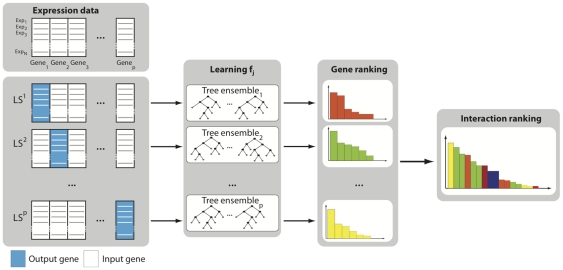
One of the pressing open problems of computational systems biology is the elucidation of the topology of genetic regulatory networks (GRNs) using high throughput genomic data, in particular microarray gene expression data. The Dialogue for Reverse Engineering Assessments and Methods (DREAM) challenge aims to evaluate the success of GRN inference algorithms on benchmarks of simulated data. In this article, we present GENIE3, a new algorithm for the inference of GRNs that was best performer in the DREAM4 In Silico Multifactorial challenge. GENIE3 decomposes the prediction of a regulatory network between p genes into p different regression problems. In each of the regression problems, the expression pattern of one of the genes (target gene) is predicted from the expression patterns of all the other genes (input genes), using tree-based ensemble methods Random Forests or Extra-Trees. The importance of an input gene in the prediction of the target gene expression pattern is taken as an indication of a putative regulatory link. Putative regulatory links are then aggregated over all genes to provide a ranking of interactions from which the whole network is reconstructed. In addition to performing well on the DREAM4 In Silico Multifactorial challenge simulated data, we show that GENIE3 compares favorably with existing algorithms to decipher the genetic regulatory network of Escherichia coli. It doesn't make any assumption about the nature of gene regulation, can deal with combinatorial and non-linear interactions, produces directed GRNs, and is fast and scalable. In conclusion, we propose a new algorithm for GRN inference that performs well on both synthetic and real gene expression data. The algorithm, based on feature selection with tree-based ensemble methods, is simple and generic, making it adaptable to other types of genomic data and interactions.
Overview
The claims and statistics of this paper haven’t been checked yet.
Free: it reads the open-access text and checks the first 5 claims that cite a source we can check. Create a free account to check every claim.
Integrity signals
Registry
Cites
Statistics
Figures
Verification
Claims the paper makes
The claims and statistics of this paper haven’t been checked yet.
Free: it reads the open-access text and checks the first 5 claims that cite a source we can check. Create a free account to check every claim.
Claims other papers make about this one
Each is checked against this paper’s own text: does it say what the citing paper says it does?
The source backs part of the claim, not all of it — or backs it for a different population, condition or comparison.
In the citing paper
“A limitation of GENIE3 is that TF information is required for it to perform better than random chance [113].”
From Gene co-expression analysis for functional classification and gene–disease predictions (2017) · cites this paper as [113]
Experimental — accuracy not yet measuredThe cited source says what the claim attributes to it.
In the citing paper
“Because of this second constraint, we cannot use pre-existing GRN inference algorithms, such as GENIE3 and GRNboost (refs. 7,51).”
From Dissecting cell identity via network inference and in silico gene perturbation (2023) · cites this paper as [51]
The cited source says what the claim attributes to it.
In the citing paper
“A major family of methods in this category is based on co-expression analysis (reviewed in [32]), and has been broadly used on bulk gene expression data (e.g. GENIE3 [33] and WGCNA [34], see [27, 35] for benchmark comparisons).”
From Mapping gene regulatory networks from single-cell omics data (2018) · cites this paper as [33]
The cited source says what the claim attributes to it.
In the citing paper
“GENIE3 incorporates TF information to construct a regulatory network by determining the TF expression pattern that best explains the expression of each of their target genes.”
From Gene co-expression analysis for functional classification and gene–disease predictions (2017) · cites this paper as [113]
Self-check
Percentages, sums and reported differences re-computed from the paper’s own numbers.
The self-check needs the paper’s full text.
Citations
Cites
Breiman, L. (2001) · Machine Learning · doi:10.1023/a:1010933404324 · Cited by 133,538
Classification and Regression Trees.
Gordon, A. D., Breiman, L., Friedman, J. H., Olshen, R. A., & Stone, C. J. (1984) · Biometrics · doi:10.2307/2530946 · Cited by 23,522
Classification and Regression Trees.
Ryzin, J. V., Breiman, L., Friedman, J. H., Olshen, R. A., & Stone, C. J. (1986) · Journal of the American Statistical Association · doi:10.2307/2288003 · Cited by 20,825
Breiman, L. (1996) · Machine Learning · doi:10.1007/bf00058655 · Cited by 16,325
Cluster analysis and display of genome-wide expression patterns
Eisen, M. B., Spellman, P. T., Brown, P. O., & Botstein, D. (1998) · Proceedings of the National Academy of Sciences · doi:10.1073/pnas.95.25.14863 · Cited by 16,184 · cited 1×
“Models based on the statistical analysis of dependencies between expression patterns have an intermediate complexity, and have already been successfully applied to the inference of large GRNs. Early models used correlation coefficients between expression patterns of all pairs of genes to infer “coexpression networks””
MethodClassification And Regression Trees
Breiman, L., Friedman, J. H., Olshen, R. A., & Stone, C. J. (2017) · doi:10.1201/9781315139470 · Cited by 11,417
Geurts, P., Ernst, D., & Wehenkel, L. (2006) · Machine Learning · doi:10.1007/s10994-006-6226-1 · Cited by 9,300 · cited 2×
“Empirical validations in [32] have shown that these two values of K were near-optimal in terms of predictive accuracy on several problems.”
BackgroundMethodSelf-citationThe Origins of Order: Self-Organization and Selection in Evolution
Kauffman, S. A. (1993) · doi:10.1093/oso/9780195079517.001.0001 · Cited by 7,855
The origins of order; self organization and selection in evolution
(1994) · International Journal of Biochemistry · doi:10.1016/0020-711x(94)90119-8 · Cited by 6,649
A review of feature selection techniques in bioinformatics
Saeys, Y., Inza, I., & Larrañaga, P. (2007) · Bioinformatics · doi:10.1093/bioinformatics/btm344 · Cited by 5,244
Research works printed but not linked: 3
- Cover TM Thomas JA 2006 Elements of Information Theory 2nd Edition Wiley-Interscience
- Faith JJ Hayete B Thaden JT Mogno I Wierzbowski J Supplemental website for: Large-scale mapping and validation of Escherichia coli transcriptional regulation from a compendium of expression profiles. http://gardnerlab.bu.edu/data/PLoS_2007/ PMC1764438 17214507
- Schäfer J Opgen-Rhein R Strimmer K 2006 Reverse engineering genetic networks using the GeneNet package. R News 6/ 5 50 53
Cited by
Items 401–500 of 1,008
Genomic analyses based on pulmonary adenocarcinoma in situ reveal early lung cancer signature
Li, D., Yang, W. E., Zhang, Y., Yang, J. Y., Guan, R., Xu, D. H., & Yang, M. Q. (2018) · BMC Medical Genomics · doi:10.1186/s12920-018-0413-3 · Cited by 30
“GEne Network Inference with Ensemble of trees (GENIE3) calculates the regulatory relationships between genes based on the expression patterns [19].”
BackgroundMethodGuo, D., Sheng, K., Zhang, Q., Li, P., Sun, H., Wang, Y., Lyu, X., Jia, Y., Wang, C., Wu, J., et al. (2024) · Cancer Letters · doi:10.1016/j.canlet.2024.216723 · Cited by 43
Gao, Z., Su, Y., Xia, J., Cao, R., Ding, Y., Zheng, C.-H., & Wei, P.-J. (2024) · Briefings in Bioinformatics · doi:10.1093/bib/bbae143 · Cited by 34
Li, W., He, K., Tang, L. F. P., Dai, S., Li, G., Lv, W., Guo, Y., An, S., Wu, G., Liu, D., et al. (2016) · Oncotarget · doi:10.18632/oncotarget.14286 · Cited by 35
“Reconstruction of tissue-specific transcriptional regulatory networks (including breast, blood and saliva) were used GENIE3 software [45].”
MethodConstruction of a hierarchical gene regulatory network centered around a transcription factor
Wei, H. (2017) · Briefings in Bioinformatics · doi:10.1093/bib/bbx152 · Cited by 34
BNC1 regulates cell heterogeneity in human pluripotent stem cell-derived epicardium
Gambardella, L., McManus, S. A., Moignard, V., Sebukhan, D., Delaune, A., Andrews, S., Bernard, W. G., Morrison, M. A., Riley, P. R., Göttgens, B., et al. (2019) · Development · doi:10.1242/dev.174441 · Cited by 33
Inference of gene regulatory networks using pseudo-time series data
Zhang, Y., Chang, X., & Liu, X. (2021) · Bioinformatics · doi:10.1093/bioinformatics/btab099 · Cited by 37
Li, Z., Sun, C., Wang, F., Wang, X., Zhu, J., Luo, L., Ding, X., Zhang, Y., Ding, P., Wang, H., et al. (2022) · Clinical and Translational Medicine · doi:10.1002/ctm2.689 · Cited by 36
Liu, R., Pisco, A. O., Braun, E., Linnarsson, S., & Zou, J. (2022) · Journal of Molecular Biology · doi:10.1016/j.jmb.2022.167606 · Cited by 40
Ensemble learning for detecting gene-gene interactions in colorectal cancer
Dorani, F., Hu, T., Woods, M. O., & Zhai, G. (2018) · PeerJ · doi:10.7717/peerj.5854 · Cited by 33
“Meanwhile, ensemble learning methods, especially the random forests algorithm, have been explored to search for and characterize combinatorial and non-linear interactions in microarray gene expression data (Huynh-Thu et al., 2010) and in GWAS data (Yoshida & Koike, 2011; Wright, Ziegler & König, 2016; Niel et al.”
MethodGene regulatory network inference based on causal discovery integrating with graph neural network
Feng, K., Jiang, H., Yin, C., & Sun, H. (2023) · Quantitative Biology · doi:10.1002/qub2.26 · Cited by 39
Wu, J., Wang, M.-M., Guan, Y.-J., Guo, W., Zhang, C., Wei, Y., Zhao, Z., Ma, H., Wang, L., Jiang, X., et al. (2024) · Genome biology · doi:10.1186/s13059-024-03454-w · Cited by 33
Condition-Specific Modeling of Biophysical Parameters Advances Inference of Regulatory Networks
Tchourine, K., Vogel, C., & Bonneau, R. (2018) · Cell Reports · doi:10.1016/j.celrep.2018.03.048 · Cited by 31
“This discrepancy is likely due to increased complexity of eukaryotic transcriptional regulation, but most existing inference methods, such as those based on random forest (Huynh-Thu et al., 2010; Petralia et al., 2015), cannot directly incorporate new parameters.”
Guo, Q., & Li, J. Y. H. (2019) · Development · doi:10.1242/dev.174284 · Cited by 29
“We first identified sets of genes that were co-expressed with transcription factors using the GENIE3 algorithm (Huynh-Thu et al., 2010).”
MethodInfluentialWu, T., Krishnamoorthi, S., Goh, H., Leong, R., Sanson, A. C., & Urano, D. (2020) · Journal of Experimental Botany · doi:10.1093/jxb/eraa108 · Cited by 29
Luo, Z., Zhou, Z., Li, Y., Tao, S., Hu, Z., Yang, J., Cheng, X., Hu, R., & Zhang, W. (2022) · BMC Plant Biology · doi:10.1186/s12870-022-03767-7 · Cited by 34
“By using tree-based methods [58], we generated inferring regulatory networks to study the regulatory relationship between TFs and DEGs by using 11 hub TFs in the pink or brown module as regulators.”
BackgroundMethodNSRGRN: a network structure refinement method for gene regulatory network inference
Liu, W., Yang, Y., Lü, X. C., Fu, X., Sun, R., Yang, L., & Li, P. (2023) · Briefings in Bioinformatics · doi:10.1093/bib/bbad129 · Cited by 33
DDGni: Dynamic delay gene-network inference from high-temporal data using gapped local alignment
Yalamanchili, H. K., Yan, B., Li, M. J., Qin, J., Zhao, Z., Chin, F. Y. L., & Wang, J. (2013) · Bioinformatics · doi:10.1093/bioinformatics/btt692 · Cited by 31
Ensembles of Extremely Randomized Trees for Multi-target Regression
Kocev, D., & Ceci, M. (2015) · Lecture notes in computer science · doi:10.1007/978-3-319-24282-8_9 · Cited by 38
“The Extra-Trees algorithm has been successfully applied to several practically relevant domains including computer vision [13] and gene network inference [14,15].”
MethodHow difficult is inference of mammalian causal gene regulatory networks?
Djordjevic, D., Yang, A., Zadoorian, A., Rungrugeecharoen, K., & Ho, J. W. K. (2014) · PLoS ONE · doi:10.1371/journal.pone.0111661 · Cited by 29
“Two such popular expression-based GRN inference algorithms are GENIE3 [19] and ARACNE [20].”
MethodRecent advances in exploring transcriptional regulatory landscape of crops
Huo, Q., Song, R., & Ma, Z. (2024) · Frontiers in Plant Science · doi:10.3389/fpls.2024.1421503 · Cited by 37
A single-cell transcriptomic census of mammalian olfactory epithelium aging
Li, W., Wu, T., Zhu, K., Ba, G., Liu, J., Zhou, P., Li, S., Wang, L., Liu, H., Ren, W., et al. (2024) · Developmental Cell · doi:10.1016/j.devcel.2024.07.020 · Cited by 38
Loers, J. U., & Vermeirssen, V. (2024) · Briefings in Bioinformatics · doi:10.1093/bib/bbae382 · Cited by 45
“…GRN inference relied exclusively on gene expression profiles for inferring statistical dependencies between genes, using e.g. mutual information (CLR [37], ARACNE [38]), random forest regression (GENIE3, [39]), ensemble methods (Inferelator [40]), and module network inference (LemonTree, [41], .”
BackgroundMethodLeveraging prior knowledge to infer gene regulatory networks from single-cell RNA-sequencing data
Stock, M., Losert, C., Zambon, M., Popp, N., Lubatti, G., Hörmanseder, E., Heinig, M., & Scialdone, A. (2025) · Molecular Systems Biology · doi:10.1038/s44320-025-00088-3 · Cited by 37
“An example of this approach is applying existing non-prior-based GRN inference methods, such as mutual information, Pearson correlation, Spearman Rank, or GENIE3 (Huynh-Thu et al, 2010), to gene expression data.”
bLARS: An Algorithm to Infer Gene Regulatory Networks
Singh, N. K., & Vidyasagar, M. (2015) · IEEE Transactions on Computational Biology and Bioinformatics · doi:10.1109/tcbb.2015.2450740 · Cited by 37
“This is a generalization of the formulations presented in previous work; see e.g. [7].”
MethodInfluentialA Comparative Study of Pairwise Learning Methods Based on Kernel Ridge Regression
Stock, M., Pahikkala, T., Airola, A., Baets, B. D., & Waegeman, W. (2018) · Neural Computation · doi:10.1162/neco_a_01096 · Cited by 35
“Kernel methods in particular have been extensively used – see e.g. Vert and Yamanishi (2005); Zaki et al. (2009); Huynh-Thu et al. (2010); van Laarhoven et al. (2011a); Cao et al. (2012); Liu and Yang (2015).”
MethodEetemadi, A., & Tagkopoulos, I. (2018) · Bioinformatics · doi:10.1093/bioinformatics/bty945 · Cited by 38
Single cell transcriptome dynamics from pluripotency to FLK1+ mesoderm
Zhao, H., & Choi, K. (2019) · Development · doi:10.1242/dev.182097 · Cited by 33
“Briefly, coding sequences of ETV2 or ETV2-mCherry were targeted into theRosa26 locus by homologous recombination using A2Lox ES cells carrying the TRE-loxPΔneo inducible target locus (Iacovino et al., 2009).”
MethodSun, X., Zhang, J., & Nie, Q. H. (2021) · PLoS Computational Biology · doi:10.1371/journal.pcbi.1008379 · Cited by 34
“Ensemble learning methods, such as GENIE3 (a tree-based ensemble learning method [16]), have been developed to infer gene regulatory relationships by viewing GRN reconstruction as a classification problem.”
MethodKBoost: a new method to infer gene regulatory networks from gene expression data
Iglesias-Martinez, L. F., Kegel, B. D., & Kölch, W. (2021) · Scientific Reports · doi:10.1038/s41598-021-94919-6 · Cited by 29
de Vries, N. J., Carlson, J., & Moscato, P. (2014) · PLoS ONE · doi:10.1371/journal.pone.0102768 · Cited by 37
“The design of the study has been motivated by scientific research which is data-driven, particularly in the area of reverse engineering biological networks from experimental data (see for instance [27]).”
BackgroundXiong, J., & Zhou, T. (2012) · PLoS ONE · doi:10.1371/journal.pone.0043819 · Cited by 29
“Therefore, such data are easier and less expensive to be obtained than other types of experimental data and are thus more common in practice [7].”
BackgroundInfluentialJoint Network Topology and Dynamics Recovery From Perturbed Stationary Points
Wai, H.-T., Scaglione, A., Barzel, B., & Leshem, A. (2019) · IEEE Transactions on Signal Processing · doi:10.1109/tsp.2019.2929471 · Cited by 32
“In addition to heuristics such as thresh-olding correlation matrices [5] or unsupervised learning [6]–[8], a disciplined method is to impose a graphical model as the latent model to the observed data.”
MethodKang, Y., Patel, N., Shively, C. A., Recio, P. S., Chen, X., Wranik, B. J., Kim, G., Mitra, R. D., McIsaac, R. S., & Brent, M. R. (2020) · Genome Research · doi:10.1101/gr.259655.119 · Cited by 32
“…many algorithms that attempt to infer TF-target relationships by processing gene expression data but not binding location data (e.g., Margolin et al. 2006; Faith et al. 2007; Huynh-Thu et al. 2010; Haury et al. 2012; Greenfield et al. 2013; Haynes et al. 2013; Roy et al. 2013; Kang et al. 2018).”
Biophysically motivated regulatory network inference: progress and prospects
(2016) · doi:10.1101/051847 · Cited by 29
Zeng, X., Wang, T., Yamaguchi, K., Hatakeyama, S., Yamazaki, S., Shimizu, E., Imoto, S., Furukawa, Y., Johmura, Y., & Nakanishi, M. (2024) · Molecular Metabolism · doi:10.1016/j.molmet.2024.101943 · Cited by 34
“The transcriptional regulatory network was examined using the SCENIC (version 1.3.1) work fl ow [23], speci fi cally employing the GENIE3 (version 1.18.0) [24] and RcisTarget (version 1.16.0) R packages, with default parameters.”
MethodInfluentialRewiring gene circuitry for plant improvement
Borowsky, A., & Bailey-Serres, J. N. (2024) · Nature Genetics · doi:10.1038/s41588-024-01806-7 · Cited by 33
“TFs and their targets are often coexpressed, and the cohort of TFs for which mRNA abundance, across time, tissues, developmental stages or conditions, best predicts the abundance of a target gene can be predicted as its regulators 17 .”
Genomic prediction with NetGP based on gene network and multi‐omics data in plants
Zhao, L., Tang, P., Luo, J., Liu, J., Peng, X., Shen, M., Wang, C., Zhao, J., Zhou, D., Fan, Z., et al. (2025) · Plant Biotechnology Journal · doi:10.1111/pbi.14577 · Cited by 34
Large scale gene regulatory network inference with a multi-level strategy
Wu, J., Zhao, X., Lin, Z., & Shao, Z. (2015) · Molecular BioSystems · doi:10.1039/c5mb00560d · Cited by 29
Chasman, D. A., Walters, K., Lopes, T. J. S., Eisfeld, A. J., Kawaoka, Y., & Roy, S. (2016) · PLoS Computational Biology · doi:10.1371/journal.pcbi.1005013 · Cited by 28
“Alternative methods either infer the regulators for individual genes [23] or for gene modules [13,24], but not both.”
MethodChronic myelomonocytic leukaemia stem cell transcriptomes anticipate disease morphology and outcome
Wiseman, D. H., Baker, S. M., Dongre, A. V., Gurashi, K., Storer, J. A., Somervaille, T. C. P., & Batta, K. (2020) · EBioMedicine · doi:10.1016/j.ebiom.2020.102904 · Cited by 28
“For further downstream analysis we identified genes available on RcisTarget database and ran GENIE3 [38] to identify potential targets for each transcription factor based on co-expression.”
MethodEnsembles of extremely randomized predictive clustering trees for predicting structured outputs
Kocev, D., Ceci, M., & Stepišnik, T. (2020) · Machine Learning · doi:10.1007/s10994-020-05894-4 · Cited by 31
“The gENiE3 algorithm has been heavily evaluated for single-target regression tasks (e.g., for gene regulatory network reconstruction) (Huynh-Thu et al. 2010).”
MethodInfluentialEnsemble Inference and Inferability of Gene Regulatory Networks
Ud-Dean, S. M. M., & Gunawan, R. (2014) · PLoS ONE · doi:10.1371/journal.pone.0103812 · Cited by 30
“In particular, we compared the rankings with those from top performing inference methods in DREAM4, namely the downranking method by Pinna et al. [27], GENIE3 [28] and TIGRESS [29].”
Salleh, F. H. M., Zainudin, S., & Arif, S. M. (2017) · Advances in Bioinformatics · doi:10.1155/2017/4827171 · Cited by 41
Chen, H., Ma, R., Zhou, B., Yang, X., Duan, F., & Wang, G. (2023) · Computers in Biology and Medicine · doi:10.1016/j.compbiomed.2023.107151 · Cited by 35
Trained immunity is regulated by T cell-induced CD40-TRAF6 signaling
Jacobs, M. M. E., Maas, R. J. F., Jonkman, I., Negishi, Y., Zamora, W. T., Yanginlar, C., van Heck, J., Matzaraki, V., Martens, J. H. A., Baltissen, M. P. A., et al. (2024) · Cell Reports · doi:10.1016/j.celrep.2024.114664 · Cited by 30
TIMEOR: a web-based tool to uncover temporal regulatory mechanisms from multi-omics data
Conard, A. M., Goodman, N., Hu, Y., Perrimon, N., Singh, R., Lawrence, C. E., & Larschan, E. (2021) · Nucleic Acids Research · doi:10.1093/nar/gkab384 · Cited by 29
“…data from a single time point (i.e. at steady-state) (Langfelder and Horvath, 2008; Villaverde et al., 2014; Wang et al., 2013; Zhang et al., 2016; Huynh-Thu et al., 2010; Bar-Joseph et al., 2003; Faith et al., 2007; Haury et al., 2012; Liu et al., 2016; Margolin et al., 2006; Kang et al., 2018).”
BackgroundAGRN: accurate gene regulatory network inference using ensemble machine learning methods
Alawad, D. M., Katebi, A., Kabir, M. W. U., & Hoque, M. T. (2023) · Bioinformatics Advances · doi:10.1093/bioadv/vbad032 · Cited by 31
“Huynh-Thu et al. developed the GENIE3 algorithm, which used tree-based methods, random forest or extra tree regression to infer GRN (Huynh-Thu, 2010).”
MethodExploring long non-coding RNA networks from single cell omics data
Zhao, X. F., Lan, Y., & Chen, D. (2022) · Computational and Structural Biotechnology Journal · doi:10.1016/j.csbj.2022.08.003 · Cited by 33
“…models underling these tools include Boolean networks [62], Bayesian networks [63], ordinary differential equations (ODEs) [64], the information theory [65], regression-based [66,67] or correlation-based models [65,68], and more recently machine learning methods [69] (reviewed in [70,71]).”
BackgroundscGRN: a comprehensive single-cell gene regulatory network platform of human and mouse
Huang, X., Song, C., Zhang, G., Li, Y., Zhao, Y., Zhang, Q., Zhang, Y., Fan, S., Zhao, J., Xie, L., et al. (2023) · Nucleic Acids Research · doi:10.1093/nar/gkad885 · Cited by 30
“The advent of next-generation sequencing technology has facilitated the massive de novo GRN inference from bulk TF-binding or transcriptomics data ( 10 ,15 ).”
BackgroundMethodA Single-Cell Transcriptomic Analysis of the Mouse Hippocampus After Voluntary Exercise
Methi, A., Islam, M. R., Kaurani, L., Sakib, M. S., Krüger, D. M., Pena, T., Burkhardt, S., Liebetanz, D., & Fischer, A. (2024) · Molecular Neurobiology · doi:10.1007/s12035-023-03869-9 · Cited by 33
“Briefly, this analysis was performed as follows: with the gene expression matrix as input, gene sets that were co-expressed with potential regulators or transcription factors (TFs) were identified using the GENIE3 algorithm (implemented using the GENIE3 R package (version 1.16.0} [55].”
InfluentialAn Integrated Approach to Reconstructing Genome-Scale Transcriptional Regulatory Networks
Imam, S., Noguera, D. R., & Donohue, T. J. (2015) · PLoS Computational Biology · doi:10.1371/journal.pcbi.1004103 · Cited by 28
“sphaeroides TRNmodel to others built from our gene expression compendium using the direct inference approaches CLR [9] and GENIE3 [10], and a module-base inference approach LeMoNe [82].”
MethodA novel method of gene regulatory network structure inference from gene knock-out expression data
Chen, X. '., Li, M., Zheng, R., Zhao, S., Wu, F., Li, Y., & Wang, J. (2019) · Tsinghua Science & Technology · doi:10.26599/tst.2018.9010097 · Cited by 29
“Various methods have been proposed for GRNs inference, such as regression-based methods [7–12] , ordinary differential equation-based methods [13–15] , Bayesian and dynamic Bayesian networks [16–21] , and state-space based methods [22,23] .”
Methodtuxnet : a simple interface to process RNA sequencing data and infer gene regulatory networks
Spurney, R. J., den Broeck, L. V., Clark, N. M., Fisher, A., Balaguer, M. A. D. L., & Sozzani, R. (2019) · The Plant Journal · doi:10.1111/tpj.14558 · Cited by 31
A machine learning framework for computationally expensive transient models
Kumar, P., Sinha, K., Nere, N. K., Shin, Y., Ho, R., Mlinar, L. B., & Sheikh, A. Y. (2020) · Scientific Reports · doi:10.1038/s41598-020-67546-w · Cited by 30
Gao, S., Dai, Y. D., & Rehman, J. (2021) · Genome Research · doi:10.1101/gr.265595.120 · Cited by 27
“…and its target genes are established by Pearson ’ s correlation (Specht and Li 2017), mutual information (Chan et al. 2017), or machine learning models, such as random forest (Huynh-Thu et al. 2010; Aibaret al. 2017; Moermanet al. 2019) and deep neural network (Yuan and Bar-Joseph 2019) models.”
A large-scale benchmark for network inference from single-cell perturbation data
Chevalley, M., Roohani, Y. H., Mehrjou, A., Leskovec, J., & Schwab, P. (2025) · Communications Biology · doi:10.1038/s42003-025-07764-y · Cited by 26
Integrated Exon Level Expression Analysis of Driver Genes Explain Their Role in Colorectal Cancer
Aziz, M. A., Periyasamy, S., Yousef, Z. A., AlAbdulkarim, I., Alotaibi, M. M., Alfahed, A., & Alasiri, G. A. (2014) · PLoS ONE · doi:10.1371/journal.pone.0110134 · Cited by 28
“Network analyses employed ‘GENIE3’, ‘IPA’ and ‘Cytoscape’.”
MethodIdentification of novel metastasis suppressor signaling pathways for breast cancer
Minn, A. J., Bevilacqua, E., Yun, J., & Rosner, M. R. (2012) · Cell Cycle · doi:10.4161/cc.20624 · Cited by 26
Veras, P. S. T., Ramos, P. I. P., & de Menezes, J. P. B. (2018) · Frontiers in Cellular and Infection Microbiology · doi:10.3389/fcimb.2018.00326 · Cited by 29
“, 2006), GENIE (Huynh-Thu et al., 2010), and the commercial alternative IPA (Krämer et al.”
BackgroundATEN: And/Or tree ensemble for inferring accurate Boolean network topology and dynamics
Shi, N., Zhu, Z., Tang, K., Parker, D., & He, S. (2019) · Bioinformatics · doi:10.1093/bioinformatics/btz563 · Cited by 30
Elucidation of Biological Networks across Complex Diseases Using Single-Cell Omics
Li, Y., Ma, A., Mathé, E. A., Li, L., Liu, B., & Ma, Q. (2020) · Trends in Genetics · doi:10.1016/j.tig.2020.08.004 · Cited by 26
“Presently, many GRN inference efforts have been performed via developing tools such as CSN [51], PIDC [50], GENIE3 [42], GRNBoost2 [83], Jump3 [44], SCODE [45], SINCERITIES [47], GRNVBEM [48], SCNS [49], and IRIS3 [54].”
BackgroundMethodInfluentialGene expression changes occurring at bolting time are associated with leaf senescence in Arabidopsis
Hinckley, W. E., & Brusslan, J. A. (2020) · Plant Direct · doi:10.1002/pld3.279 · Cited by 27
Gene Regulatory Network Inference using 3D Convolutional Neural Network
Fan, Y. B., & Ma, X. (2021) · Proceedings of the AAAI Conference on Artificial Intelligence · doi:10.1609/aaai.v35i1.16082 · Cited by 38
“Later, a method based on gradient boosting trees called GRNBoost2 was proposed and was aggregated with GENIE3 into a framework called Arboreto (Moerman et al. 2018).”
MethodRogers, J. D., Aguado, B. A., Watts, K. M., Anseth, K. S., & Richardson, W. J. (2022) · Proceedings of the National Academy of Sciences · doi:10.1073/pnas.2117323119 · Cited by 27
“…gene regulatory networks, as part of the dialogue for reverse engineering assessments and methods (DREAM4) in silico multifactorial challenge (55), and it provides several advantages over othercommoninferencealgorithms:1)Inferencecanbeperformedwithmini-mal assumptions of network topology, 2)…”
Street, N. R., Jansson, S., & Hvidsten, T. R. (2011) · BMC Plant Biology · doi:10.1186/1471-2229-11-13 · Cited by 28
“Both approaches employ common network inference methods (see e.g. [20-22]), but those that infer gene regulatory networks also typically integrate motif finding and detection of transcriptional modules [23,24].”
MethodInference of Transcription Regulatory Network in Low Phytic Acid Soybean Seeds
Redekar, N. R., Pilot, G., Raboy, V., Li, S., & Maroof, M. A. S. (2017) · Frontiers in Plant Science · doi:10.3389/fpls.2017.02029 · Cited by 29
“We implemented a computational pipeline for unsupervised gene regulatory network inference using five different methods: ARACNE (Margolin et al., 2006), Random Forest (Huynh-Thu et al., 2010), LARS (Haury et al., 2012), partial correlation (Schafer and Strimmer, 2005b), and context likelihood relatedness (CLR) (Faith…”
MethodInfluentialJahagirdar, S., Diez, M. S., & Saccenti, E. (2019) · Journal of Proteome Research · doi:10.1021/acs.jproteome.8b00781 · Cited by 26
Computational tools for inferring transcription factor activity
Hecker, D., Lauber, M., Ardakani, F. B., Ashrafiyan, S., Manz, Q., Kersting, J., Hoffmann, M., Schulz, M. H., & List, M. (2023) · PROTEOMICS · doi:10.1002/pmic.202200462 · Cited by 33
Zheng, R., Li, M., Chen, X., Zhao, S., Wu, F., Pan, Y. F., & Wang, J. (2019) · IEEE Transactions on Computational Biology and Bioinformatics · doi:10.1109/tcbb.2019.2900614 · Cited by 26
Castro, J. C., Valdés, I., González-García, L. N., Danies, G., Cañas-Duarte, S. J., Winck, F. V., López, C. E. Ñ., Restrepo, S., & Riaño‐Pachón, D. M. (2019) · Theoretical Biology and Medical Modelling · doi:10.1186/s12976-019-0103-7 · Cited by 26
Shared Blood Transcriptomic Signatures between Alzheimer’s Disease and Diabetes Mellitus
Lee, T., & Lee, H. (2021) · Biomedicines · doi:10.3390/biomedicines9010034 · Cited by 29
“Four GRNs for AD, CNAD, DM, and CNDM were constructed using 467 genes in the green module and 42 TF-related genes as candidate genes and regulators (input features of GENIE3), respectively.”
BackgroundMethodInfluentialZhang, Y., Song, C., Zhang, Y., Wang, Y., Feng, C., Chen, J., Wei, L., Pan, Q., Shang, D., Zhu, Y., et al. (2021) · Nucleic Acids Research · doi:10.1093/nar/gkab950 · Cited by 26
“Third, we performed GENIE3 (48) to identify human TcoF target genes by inputting The Cancer Genome Atlas (TCGA) cancer expression matrices (mouse TcoFs target genes were identified by inputting FANTOM5 mouse cell expression matrices) (Figure 1, upper left panel).”
BackgroundMethodInfluentialArenas‐M, A., Castillo, F. M., Godoy, D., Canales, J., & Calderini, D. F. (2021) · Plants · doi:10.3390/plants11010059 · Cited by 30
“The TF-target predictions between DEG genes were obtained from wheat GENIE3 [48], which uses a machine-learning approach to predict the strength of putative regulatory links between target genes and their putative regulators using gene expression data [92].”
MethodMathematical models to study the biology of pathogens and the infectious diseases they cause
Xavier, J. B., Monk, J. M., Poudel, S., Norsigian, C. J., Sastry, A. V., Liao, C., Bento, J., Suchard, M. A., Arrieta‐Ortiz, M. L., Peterson, E. J. R., et al. (2022) · iScience · doi:10.1016/j.isci.2022.104079 · Cited by 30
“The models describe the influence of transcription factors (TFs) on individual target genes or clusters of co-regulated genes and uses machine learning methods such as linear regression (Bonneau et al., 2006) and decision tree ensembles (Huynh-Thu et al., 2010), among others.”
MethodDisrupted myelination network in the cingulate cortex of Parkinson's disease
Xie, S., Yang, J., Huang, S., Fan, Y., Xu, T., He, J., Guo, J., Ji, X., Wang, Z., Li, P., et al. (2022) · IET Systems Biology · doi:10.1049/syb2.12043 · Cited by 27
Chen, Y., Zhang, X., Peng, X., Jin, Y., Ding, P., Xiao, J., Li, C., Wang, F., Chang, A., Yue, Q., et al. (2022) · Nucleic Acids Research · doi:10.1093/nar/gkac930 · Cited by 29
“transcriptional factors (TFs) and downstream targets were predicted using GENIE3 (39) and GO enrichment was performed using clusterProfiler (40).”
MethodPetralia, F., Song, W.-M., Tu, Z., & Wang, P. (2016) · Journal of Proteome Research · doi:10.1021/acs.jproteome.5b00925 · Cited by 25
Unsupervised Gene Network Inference with Decision Trees and Random Forests
Huynh‐Thu, V. A., & Geurts, P. (2018) · Methods in molecular biology · doi:10.1007/978-1-4939-8882-2_8 · Cited by 29
Self-citationRevealing Dynamic Mechanisms of Cell Fate Decisions From Single-Cell Transcriptomic Data
Zhang, J., Nie, Q. H., & Zhou, T. (2019) · Frontiers in Genetics · doi:10.3389/fgene.2019.01280 · Cited by 26
Lai, C., Moore, P., & Quon, C. Y. (1995) · PubMed · Cited by 27
Zhao, M., Li, J., Liu, X., Ma, K., Tang, J., & Guo, F. (2024) · Genome Research · doi:10.1101/gr.278439.123 · Cited by 28
Liu, F., Lü, Y., Wang, X., Sun, S., Pan, H., Wang, M., Wang, Z., Zhang, W., Ma, S., Sun, G., et al. (2023) · Protein & Cell · doi:10.1093/procel/pwad060 · Cited by 25
“Based on the DEGs across different cell types, GENIE3 (version 1.6.0) (Huynh-Thu et al., 2010) created gene regulatory networks.”
InfluentialSun, G., Fu, X., Zheng, Y., Hong, G., Liu, Z., Luo, B., Lei, J., Lv, D., Chang, M., Xiao, Y., et al. (2025) · Nature Aging · doi:10.1038/s43587-025-00896-0 · Cited by 33
Spatial fibroblast niches define Crohn’s fistulae
McGregor, C., Qin, X., Jagielowicz, M., Gupta, T., Yin, Z., Lentsch, V., Fawkner-Corbett, D., Lai, V. W., Castro, P. G., Bridges, E., et al. (2025) · Nature · doi:10.1038/s41586-025-09744-y · Cited by 35
“Next, a gene–gene correlation matrix was constructed for co-expression module detection using the GENIE3 algorithm 67 .”
Zhang, J., Zhu, W., Wang, Q., Gu, J., Huang, L. F., & Sun, X. (2019) · PLoS Computational Biology · doi:10.1371/journal.pcbi.1007435 · Cited by 26
“The performance of the DryNetMC with respect to GRN inference was compared with several existing methods, including PCC-based correlation network method (PCCNet) [31], tree-based ensemble learning methods (GENIE3 [32]), a dynamic Bayesian network method (GRENITS) [33], the ODE-LASSO method (OdeLasso) and the ODE model…”
MethodNetwork Modeling in Biology: Statistical Methods for Gene and Brain Networks
Wang, Y. X. R., Li, L., Li, J. J., & Huang, H. (2020) · Statistical Science · doi:10.1214/20-sts792 · Cited by 38
“As a result, the use of ensemble methods [86, 136] has been proposed to achieve more stable and accurate outcomes via bootstrapping and aggregation.”
MethodComHub: Community predictions of hubs in gene regulatory networks
Åkesson, J., Lubovac-Pilav, Z., Magnusson, R., & Gustafsson, M. (2021) · BMC Bioinformatics · doi:10.1186/s12859-021-03987-y · Cited by 27
MMFGRN: a multi-source multi-model fusion method for gene regulatory network reconstruction
He, W., Tang, J., Zou, Q., & Guo, F. (2021) · Briefings in Bioinformatics · doi:10.1093/bib/bbab166 · Cited by 25
Gómez-Cano, F., Chu, Y., Cruz‐Gomez, M., Abdullah, H., Lee, Y. S., Schnell, D. J., & Erich Grotewold, A. (2022) · The Plant Journal · doi:10.1111/tpj.15682 · Cited by 24
Montalban, E., Giralt, A., Taing, L., Schut, E. H. S., Supiot, L. F., Castell, L., Nakamura, Y., de Pins, B., Pelosi, A., Goutebroze, L., et al. (2022) · Molecular Psychiatry · doi:10.1038/s41380-022-01439-4 · Cited by 26
“For network inference we followed DREAM5 conclusions 29 and combined CLR 30 and GENIE3 31 , visualized with Cytoscape 32 ( Supplementary material : Network-Inference.”
Effect of imputation on gene network reconstruction from single-cell RNA-seq data
Ly, L.-H., & Vingron, M. (2022) · Patterns · doi:10.1016/j.patter.2021.100414 · Cited by 24
“We use the imputed and unimputed scRNA-seq data as input matrices for network reconstruction with PIDC, GENIE3, and GRNBoost2 using default parameters.”
MethodInfluentialXu, Y. G., Chen, J., Lü, A., Cheung, W. K., & Zhang, L. (2022) · Briefings in Bioinformatics · doi:10.1093/bib/bbac424 · Cited by 25
Cassan, O., Pimparé, L.-L., Dubos, C., Gojon, A., Bach, L., Lèbre, S., & Martin, A. (2023) · New Phytologist · doi:10.1111/nph.18788 · Cited by 27
Aging induces region-specific dysregulation of hormone synthesis in the primate adrenal gland
Wang, Q., Wang, X., Liu, B., Ma, S., Zhang, F., Sun, S., Jing, Y., Fan, Y., Ding, Y., Xiong, M., et al. (2024) · Nature Aging · doi:10.1038/s43587-024-00588-1 · Cited by 29
Reconstructing static and dynamic models of signaling pathways using Modular Response Analysis
Santra, T., Rukhlenko, O. S., Zhernovkov, V., & Kholodenko, B. Ν. (2018) · Current Opinion in Systems Biology · doi:10.1016/j.coisb.2018.02.003 · Cited by 32
PoLoBag: Polynomial Lasso Bagging for signed gene regulatory network inference from expression data
Roy, G. G., Geard, N. L., Verspoor, K. M., & He, S. (2020) · Bioinformatics · doi:10.1093/bioinformatics/btaa651 · Cited by 27
Devaney, J. L., Barrett, B., Barrett, F., Redmond, J. J., & O’Halloran, J. (2015) · PLoS ONE · doi:10.1371/journal.pone.0133583 · Cited by 26
Cortese, N., Carriero, R., Barbagallo, M., Putignano, A. R., Costa, G., Giavazzi, F., Grizzi, F., Pasqualini, F., Peano, C., Basso, G., et al. (2023) · Zenodo (CERN European Organization for Nuclear Research) · doi:10.5281/zenodo.10224041 · Cited by 36
Regulatory variation controlling architectural pleiotropy in maize
Bertolini, E., Rice, B. R., Braud, M., Yang, J., Hake, S., Strable, J., Lipka, A. E., & Eveland, A. L. (2025) · Nature Communications · doi:10.1038/s41467-025-56884-w · Cited by 28
Metadata
- Authors
- Huynh-Thu, V. A., Irrthum, A., Wehenkel, L., & Geurts, P.
- Affiliations
- University of Liège (BE)
- Venue
- PLoS ONE
- Publisher
- Public Library of Science (PLoS)
- Published
- 2010-09-28
- Volume
- 5
- Issue
- 9
- Pages
- e12776
- ISSN
- 1932-6203 (ISSN-L)
- PMC
- PMC2946910
- OpenAlex
- W2076513103
- Cited by
- 2,131
- References
- 53
- Citations by year
- 2026: 237 · 2025: 273 · 2024: 274 · 2023: 241 · 2022: 225 · 2021: 194 · 2020: 146 · 2019: 120 · 2018: 95 · 2017: 79 · 2016: 59 · 2015: 63 · 2014: 53 · 2013: 36 · 2012: 25
- FWCI
- 9.24
- Type
- journal article
- Language
- en
- Open access
- gold
- doi.org
- Locations
- PLoS ONE (publishedVersion, cc-by)
- PubMed Central (publishedVersion, cc-by)
- PubMed (publishedVersion)
- RePEc: Research Papers in Economics (submittedVersion)
- DOAJ (DOAJ: Directory of Open Access Journals) (submittedVersion, cc-by-sa)
- Figshare (submittedVersion, cc-by)
- Open Repository and Bibliography (University of Liège) (submittedVersion)
- ORBi (University of Liège) (submittedVersion, other-oa)
- ORBi (University of Liège) (submittedVersion)
- Funders
- Fonds De La Recherche Scientifique - FNRS
- Fédération Wallonie-Bruxelles
- Topics
- Life Sciences › Biochemistry, Genetics and Molecular Biology › Molecular Biology › Gene Regulatory Network Analysis
- Life Sciences › Biochemistry, Genetics and Molecular Biology › Molecular Biology › Bioinformatics and Genomic Networks
- Life Sciences › Biochemistry, Genetics and Molecular Biology › Molecular Biology › Microbial Metabolic Engineering and Bioproduction
- Keywords
- GENIE3, random forest, extra trees, microarray gene expression, Escherichia coli, feature selection, network topology
- MeSH terms
- Algorithms, Escherichia coli, Gene Expression Regulation, Computational Biology, Oligonucleotide Array Sequence Analysis, Gene Regulatory Networks
About these checks
Registry, retraction, Cites and statistics results are computed, not judged, with one exception: a printed reference that no index lists is read once by a model before it counts as a citation error. Claims are extracted by a model and kept only when their quote appears verbatim in the text; each cited source is then checked, with a model’s help, for whether it says what the claim relies on. Those verdicts can be wrong — read the claim’s quote and the cited source before relying on one.
Statistics and arithmetic are recomputed, not judged.
Confidence bands are shown only for fields calibrated on our annotated test set. None is calibrated yet, so no band is shown.
What counts as a claim ›How we measure confidence ›How we check this ›
Are you an author, or do you see a problem with this page? Request a review
Data sources
Bibliographic data: Semantic Scholar, OpenAlex, Crossref.
Contains information from the Semantic Scholar Academic Graph Datasets, made available under the ODC Attribution License (ODC-BY 1.0).
Semantic Scholar’s data is described in: Kinney, R., et al. (2023). The Semantic Scholar Open Data Platform. arXiv:2301.10140.
