

Inferring Regulatory Networks from Expression Data Using Tree-Based Methods
Open accessThe DOI matches its Crossref record; 51 of the 53 references it cites were found in a registry or an index.
Abstract
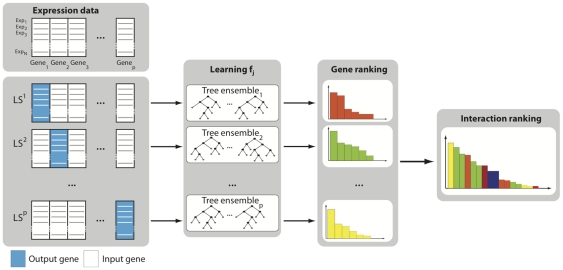
One of the pressing open problems of computational systems biology is the elucidation of the topology of genetic regulatory networks (GRNs) using high throughput genomic data, in particular microarray gene expression data. The Dialogue for Reverse Engineering Assessments and Methods (DREAM) challenge aims to evaluate the success of GRN inference algorithms on benchmarks of simulated data. In this article, we present GENIE3, a new algorithm for the inference of GRNs that was best performer in the DREAM4 In Silico Multifactorial challenge. GENIE3 decomposes the prediction of a regulatory network between p genes into p different regression problems. In each of the regression problems, the expression pattern of one of the genes (target gene) is predicted from the expression patterns of all the other genes (input genes), using tree-based ensemble methods Random Forests or Extra-Trees. The importance of an input gene in the prediction of the target gene expression pattern is taken as an indication of a putative regulatory link. Putative regulatory links are then aggregated over all genes to provide a ranking of interactions from which the whole network is reconstructed. In addition to performing well on the DREAM4 In Silico Multifactorial challenge simulated data, we show that GENIE3 compares favorably with existing algorithms to decipher the genetic regulatory network of Escherichia coli. It doesn't make any assumption about the nature of gene regulation, can deal with combinatorial and non-linear interactions, produces directed GRNs, and is fast and scalable. In conclusion, we propose a new algorithm for GRN inference that performs well on both synthetic and real gene expression data. The algorithm, based on feature selection with tree-based ensemble methods, is simple and generic, making it adaptable to other types of genomic data and interactions.
Overview
The claims and statistics of this paper haven’t been checked yet.
Free: it reads the open-access text and checks the first 5 claims that cite a source we can check. Create a free account to check every claim.
Integrity signals
Registry
Cites
Statistics
Figures
Verification
Claims the paper makes
The claims and statistics of this paper haven’t been checked yet.
Free: it reads the open-access text and checks the first 5 claims that cite a source we can check. Create a free account to check every claim.
Claims other papers make about this one
Each is checked against this paper’s own text: does it say what the citing paper says it does?
The source backs part of the claim, not all of it — or backs it for a different population, condition or comparison.
In the citing paper
“A limitation of GENIE3 is that TF information is required for it to perform better than random chance [113].”
From Gene co-expression analysis for functional classification and gene–disease predictions (2017) · cites this paper as [113]
Experimental — accuracy not yet measuredThe cited source says what the claim attributes to it.
In the citing paper
“Because of this second constraint, we cannot use pre-existing GRN inference algorithms, such as GENIE3 and GRNboost (refs. 7,51).”
From Dissecting cell identity via network inference and in silico gene perturbation (2023) · cites this paper as [51]
The cited source says what the claim attributes to it.
In the citing paper
“A major family of methods in this category is based on co-expression analysis (reviewed in [32]), and has been broadly used on bulk gene expression data (e.g. GENIE3 [33] and WGCNA [34], see [27, 35] for benchmark comparisons).”
From Mapping gene regulatory networks from single-cell omics data (2018) · cites this paper as [33]
The cited source says what the claim attributes to it.
In the citing paper
“GENIE3 incorporates TF information to construct a regulatory network by determining the TF expression pattern that best explains the expression of each of their target genes.”
From Gene co-expression analysis for functional classification and gene–disease predictions (2017) · cites this paper as [113]
Self-check
Percentages, sums and reported differences re-computed from the paper’s own numbers.
The self-check needs the paper’s full text.
Citations
Cites
Breiman, L. (2001) · Machine Learning · doi:10.1023/a:1010933404324 · Cited by 133,538
Classification and Regression Trees.
Gordon, A. D., Breiman, L., Friedman, J. H., Olshen, R. A., & Stone, C. J. (1984) · Biometrics · doi:10.2307/2530946 · Cited by 23,522
Classification and Regression Trees.
Ryzin, J. V., Breiman, L., Friedman, J. H., Olshen, R. A., & Stone, C. J. (1986) · Journal of the American Statistical Association · doi:10.2307/2288003 · Cited by 20,825
Breiman, L. (1996) · Machine Learning · doi:10.1007/bf00058655 · Cited by 16,325
Cluster analysis and display of genome-wide expression patterns
Eisen, M. B., Spellman, P. T., Brown, P. O., & Botstein, D. (1998) · Proceedings of the National Academy of Sciences · doi:10.1073/pnas.95.25.14863 · Cited by 16,184 · cited 1×
“Models based on the statistical analysis of dependencies between expression patterns have an intermediate complexity, and have already been successfully applied to the inference of large GRNs. Early models used correlation coefficients between expression patterns of all pairs of genes to infer “coexpression networks””
MethodClassification And Regression Trees
Breiman, L., Friedman, J. H., Olshen, R. A., & Stone, C. J. (2017) · doi:10.1201/9781315139470 · Cited by 11,417
Geurts, P., Ernst, D., & Wehenkel, L. (2006) · Machine Learning · doi:10.1007/s10994-006-6226-1 · Cited by 9,300 · cited 2×
“Empirical validations in [32] have shown that these two values of K were near-optimal in terms of predictive accuracy on several problems.”
BackgroundMethodSelf-citationThe Origins of Order: Self-Organization and Selection in Evolution
Kauffman, S. A. (1993) · doi:10.1093/oso/9780195079517.001.0001 · Cited by 7,855
The origins of order; self organization and selection in evolution
(1994) · International Journal of Biochemistry · doi:10.1016/0020-711x(94)90119-8 · Cited by 6,649
A review of feature selection techniques in bioinformatics
Saeys, Y., Inza, I., & Larrañaga, P. (2007) · Bioinformatics · doi:10.1093/bioinformatics/btm344 · Cited by 5,244
Research works printed but not linked: 3
- Cover TM Thomas JA 2006 Elements of Information Theory 2nd Edition Wiley-Interscience
- Faith JJ Hayete B Thaden JT Mogno I Wierzbowski J Supplemental website for: Large-scale mapping and validation of Escherichia coli transcriptional regulation from a compendium of expression profiles. http://gardnerlab.bu.edu/data/PLoS_2007/ PMC1764438 17214507
- Schäfer J Opgen-Rhein R Strimmer K 2006 Reverse engineering genetic networks using the GeneNet package. R News 6/ 5 50 53
Cited by
Items 201–300 of 1,008
Clark, N. M., Buckner, E., Fisher, A., Nelson, E. C., Nguyen, T. T., Simmons, A. R., Balaguer, M. A. D. L., Butler-Smith, T., Sheldon, P. J., Bergmann, D. C., et al. (2019) · Nature Communications · doi:10.1038/s41467-019-13132-2 · Cited by 70
Osorio, D., Zhong, Y., Li, G., Huang, J. Z., & Cai, J. J. (2020) · Patterns · doi:10.1016/j.patter.2020.100139 · Cited by 85
“Similarly, we tested the accuracy of other methods, including the Spearman correlation coefficient (SCC), mutual information (MI) [1], and GENIE3 (a random forest-based method [2, 7]).”
MethodSallam, A., Eltaher, S., Alqudah, A. M., Belamkar, V., & Baenziger, P. S. (2022) · Genomics · doi:10.1016/j.ygeno.2022.110358 · Cited by 64
Network-based approaches for modeling disease regulation and progression
Galindez, G., Sadegh, S., Baumbach, J., Kacprowski, T., & List, M. (2023) · Computational and Structural Biotechnology Journal · doi:10.1016/j.csbj.2022.12.022 · Cited by 79
“A popular approach is GENIE3, which builds ensembles of regression trees to predict the expression level of each target gene using the expression levels of TFs or other genes and subsequently aggregates the results to reconstruct the final GRN [54].”
BackgroundXu, J., Zhang, A., Liu, F., & Zhang, X. (2023) · Bioinformatics · doi:10.1093/bioinformatics/btad165 · Cited by 78
“Notably, these approaches have demonstrated remarkable efficiency in the age of bulk RNA-seq (Huynh-Thu et al. 2010; Zhang et al. 2012; Moerman et al. 2019).”
BackgroundSans, M., Makino, Y., Min, J., Rajapakshe, K., Yip-Schneider, M., Schmidt, C. M., Hurd, M. W., Burks, J. K., Gomez, J. A., Thege, F. I., et al. (2023) · Cancer Discovery · doi:10.1158/2159-8290.cd-22-1200 · Cited by 74
Salleh, F. H. M., Arif, S. M., Zainudin, S., & Firdaus‐Raih, M. (2015) · Computational Biology and Chemistry · doi:10.1016/j.compbiolchem.2015.04.012 · Cited by 69
Feature ranking for multi-target regression
Petković, M., Kocev, D., & Džeroski, S. (2019) · Machine Learning · doi:10.1007/s10994-019-05829-8 · Cited by 69
Gene regulatory network inference in single-cell biology
Akers, K., & Murali, T. M. (2021) · Current Opinion in Systems Biology · doi:10.1016/j.coisb.2021.04.007 · Cited by 77
Single‐nucleus RNA sequencing of plant tissues using a nanowell‐based system
Sunaga, D. Y., Muiño, J. M., Braeuning, C., Xu, X., Zong, M., Smaczniak, C., Yan, W., Fischer, C., Vidal, R. O., Kliem, M., et al. (2021) · The Plant Journal · doi:10.1111/tpj.15458 · Cited by 70
“GENIE3 (Huynh-Thu et al., 2010) was used to infer gene networks starting from the normalized expression data obtained from Seurat for each cluster independently, using the parameters nTrees=1000, and using as regulators the list of DNA binding proteins obtained from TAIR (www.arabidopsis.org).”
MethodInfluentialGRaNIE and GRaNPA : inference and evaluation of enhancer‐mediated gene regulatory networks
Kamal, A., Arnold, C., Claringbould, A., Moussa, R., Servaas, N. H., Kholmatov, M., Daga, N., Nogina, D., Mueller‐Dott, S., Reyes‐Palomares, A., et al. (2023) · Molecular Systems Biology · doi:10.15252/msb.202311627 · Cited by 63
“Several approaches have been proposed to infer bipartite TF-gene networks, for example based on co-expression in bulk (Huynh-Thu et al , 2010; Haynes et al , 2013), or single-cell expression data (Aibar et al , 2017; Moerman et al , 2019; preprint: Kamimoto et al , 2020), based on partial…”
BackgroundLegumeGRN: A Gene Regulatory Network Prediction Server for Functional and Comparative Studies
Wang, M., Verdier, J., Benedito, V. A., Tang, Y., Murray, J. D., Ge, Y., Becker, J. D., Carvalho, H. G., Rogers, C., Udvardi, M. K., et al. (2013) · PLoS ONE · doi:10.1371/journal.pone.0067434 · Cited by 68
“Based on the literature and previous comparisons of GRNs [9,25], we adopted GGM [12], coexpression [11], GENIE3 [21], TIGRESS [26] and CLR [16] as the major algorithms because of their good performances in each category of algorithms when testing over DREAM5 (Dialogue for Reverse Engineering Assessments and Methods) N…”
MethodInfluentialWani, N., & Raza, K. (2019) · Computational Biology and Chemistry · doi:10.1016/j.compbiolchem.2019.107120 · Cited by 65
“A comparative analysis of this approach with other state of the art methods viz, global silencing (Barzel & Barab´asi, 2013), network deconvolution (Feizi et al., 2013), Gaussian Graphical Models (GGM)(Sch¨afer & Strimmer, 2004; Kr¨amer et al., 2009; Chun et al., 2013), mutual information (ARACNE and CLR) (A. A. Margo…”
MethodInfluentialA closer look at cross-validation for assessing the accuracy of gene regulatory networks and models
Tabe-Bordbar, S., Emad, A., Zhao, S. D., & Sinha, S. (2018) · Scientific Reports · doi:10.1038/s41598-018-24937-4 · Cited by 63
“…the above scenario, with test samples being similar to (e.g., biological replicates of) training samples, then a model may perform well on test data without accurately learning TF-gene regulatory relationships, yielding strong CV performance but not so strong GRN inference, as was observed in 12 .”
Gene Regulatory Network Inference: Connecting Plant Biology and Mathematical Modeling
den Broeck, L. V., Gordon, M., Inzé, D., Williams, C., & Sozzani, R. (2020) · Frontiers in Genetics · doi:10.3389/fgene.2020.00457 · Cited by 66
A multi-omics atlas of the human retina at single-cell resolution
Liang, Q., Cheng, X., Wang, J., Owen, L. A., Shakoor, A., Lillvis, J. L., Zhang, C., Farkas, M. H., Kim, I. K., Li, Y., et al. (2023) · Cell Genomics · doi:10.1016/j.xgen.2023.100298 · Cited by 78
A Key Role for Apoplastic H 2 O 2 in Norway Spruce Phenolic Metabolism
Laitinen, T., Morreel, K., Delhomme, N., Gauthier, A., Schiffthaler, B., Nickolov, K., Brader, G., Lim, K., Teeri, T. H., Street, N. R., et al. (2017) · PLANT PHYSIOLOGY · doi:10.1104/pp.17.00085 · Cited by 71
“Eight gene network inference methods were run: ANOVA (Küffner et al., 2012), CLR (Faith et al., 2007), GeneNet (Opgen-Rhein and Strimmer, 2007), GENIE3 (Huynh-Thu et al., 2010), NARROMI (Zhang et al., 2013), Pearson, Spearman, and a modified implementation of TIGRESS (Haury et al., 2012); their results were aggregated…”
MethodMINI-EX: Integrative inference of single-cell gene regulatory networks in plants
Ferrari, C., Pérez, N. M., & Vandepoele, K. (2022) · Molecular Plant · doi:10.1016/j.molp.2022.10.016 · Cited by 70
A single-cell view on host immune transcriptional response to in vivo BCG-induced trained immunity
Li, W., Moorlag, S. J. C. F. M., Koeken, V. A. C. M., Röring, R. J., de Bree, L. C. J., Mourits, V. P., Gupta, M. K., Zhang, B., Fu, J., Zhang, Z., et al. (2023) · Cell Reports · doi:10.1016/j.celrep.2023.112487 · Cited by 64
Niri, M. F., Aslansefat, K., Haghi, S., Hashemian, M., Daub, R., & Marco, J. (2023) · Energies · doi:10.3390/en16176360 · Cited by 73
Single-cell spatial transcriptomic atlas of the whole mouse brain
Han, L., Liu, Z., Jing, Z., Liu, Y., Chang, H., Lei, J., Peng, Y., Wang, K., Xu, Y., Liu, W., et al. (2025) · Neuron · doi:10.1016/j.neuron.2025.02.015 · Cited by 85
Exploiting transfer learning for the reconstruction of the human gene regulatory network
Mignone, P., Pio, G., D’Elia, D., & Ceci, M. (2019) · Bioinformatics · doi:10.1093/bioinformatics/btz781 · Cited by 62
Li, W., Zhang, Z., Kumar, S., Botey-Bataller, J., Zoodsma, M., Ehsani, A., Zhan, Q., Alaswad, A., Zhou, L., Grondman, I., et al. (2025) · Nature Aging · doi:10.1038/s43587-025-00819-z · Cited by 80
PLAU inferred from a correlation network is critical for suppressor function of regulatory T cells
HeFeng, F. Q., Chen, H., Probst‐Kepper, M., Geffers, R., Eifes, S., del Sol, A., Schughart, K., Zeng, A., & Balling, R. (2012) · Molecular Systems Biology · doi:10.1038/msb.2012.56 · Cited by 66
Tripathi, R. K., & Wilkins, O. (2021) · Plant Cell & Environment · doi:10.1111/pce.14012 · Cited by 61
Loudya, N., Mishra, P., Takahagi, K., Uehara‐Yamaguchi, Y., Inoue, K., Bögre, L., Mochida, K., & López‐Juez, E. (2021) · Genome biology · doi:10.1186/s13059-021-02366-3 · Cited by 58
“Gene regulatory network (GRN) inference was performed using the R package GENIE3 [54], which can infer GRNs using a decision tree-based machine learning algorithm based on gene expression data.”
MethodInfluentialSkinnider, M. A., & Foster, L. J. (2021) · Nature Methods · doi:10.1038/s41592-021-01194-4 · Cited by 58
“63 ), which have been proposed for protein co-regulation analysis; 20 the profile correlation, which has been applied to analyze AP–MS data 5 ; and the distance correlation 64 , which has been proposed for the analysis of high-throughput datasets more generally 65,66 .”
MethodSingle-nucleus profiling unveils a geroprotective role of the FOXO3 in primate skeletal muscle aging
Jing, Y., Zuo, Y., Yu, Y., Sun, L., Yu, Z., Ma, S., Zhao, Q., Sun, G., Hu, H., Li, J., et al. (2022) · Protein & Cell · doi:10.1093/procel/pwac061 · Cited by 57
“The inference of regulatory network among the 1,824 aging-associated DEGs of monkey skeletal muscle was carried out by GENIE3 and GRNBoost in python 3.0 (Irrthum et al., 2010).”
MethodInfluentialFeizi, S., Quon, G., Recamonde‐Mendoza, M., Médard, M., Kellis, M., & Jadbabaie, A. (2019) · IEEE Transactions on Network Science and Engineering · doi:10.1109/tnse.2019.2913233 · Cited by 104
“The second method used is GENIE3 [79] (Gene Network Inference with Ensemble of Trees) which is a tree-based ensemble method that decomposes the network inference problem to several feature selection subproblems.”
MethodHistone H4 lysine 16 acetylation controls central carbon metabolism and diet-induced obesity in mice
Rodrigues, C. P., Chatterjee, A., Wiese, M., Stehlé, T., Szymanski, W. G., Shvedunova, M., & Akhtar, A. (2021) · Nature Communications · doi:10.1038/s41467-021-26277-w · Cited by 59
Guo, C., Wu, M., Huang, B., Zhao, R., Jin, L., Fu, B., Wang, P., Wang, D., Zheng, M., Fang, J., et al. (2022) · Genome Medicine · doi:10.1186/s13073-022-01049-3 · Cited by 58
“First, TF-gene coexpression modules were defined in a data-driven manner with GENIE3 [34, 35].”
MethodZhou, W., Gao, F., Romero-Wolf, M., Jo, S., & Rothenberg, E. V. (2022) · Science Immunology · doi:10.1126/sciimmunol.abm1920 · Cited by 56
Zhang, B., Zeng, K., Guan, R., Jiang, H., Qiang, Y., Zhang, Q., Yang, M. C., Deng, B., & Yang, Y. (2023) · Biomolecules · doi:10.3390/biom13020399 · Cited by 65
“A regulatory network based on the co-expression of regulatory factors and targets was constructed using the GENIE3 software package [21].”
MethodHerb, B. R., Glover, H. J., Bhaduri, A., Colantuoni, C., Bale, T. L., Siletti, K., Linnarsson, S., Hodge, R. D., Lein, E. S., Kriegstein, A. R., et al. (2023) · Science Advances · doi:10.1126/sciadv.adf6251 · Cited by 62
“In addition, we reconstructed a GRN model ( 73 ) to predict the target genes for 1317 TFs in each germinal zone and the key regulator TFs for each gene coexpression module.”
MethodCXCL4 Links Inflammation and Fibrosis by Reprogramming Monocyte-Derived Dendritic Cells in vitro
Silva‐Cardoso, S. C., Tao, W., Angiolilli, C., Lopes, A. P., Bekker, C. P. J., Devaprasad, A., Giovannone, B., van Laar, J. M., Cossu, M., Marut, W., et al. (2020) · Frontiers in Immunology · doi:10.3389/fimmu.2020.02149 · Cited by 55
“Gene Regulatory Network (GRN) Construction Based on Random Forest (RF) Algorithm To obtain potential transcription (co-)factor/regulators (TF) for each gene in a data-driven manner, we constructed a TF-target GRN using random forest machine learning algorithm [modified from (39, 40) and is part of RegEnrich package de…”
MethodAcute Myeloid Leukemia iPSCs Reveal a Role for RUNX1 in the Maintenance of Human Leukemia Stem Cells
Wesely, J., Kotini, A. G., Izzo, F., Luo, H., Yuan, H., Sun, J., Georgomanoli, M., Zviran, A., Deslauriers, A. G., Dusaj, N. N., et al. (2020) · Cell Reports · doi:10.1016/j.celrep.2020.107688 · Cited by 57
“5) was used to calculate the co-expression of transcription factors and target genes (Huynh-Thu et al., 2010), keeping genes with 3 molecules detected in at least 1% of the cells and also present in the RcisTarget (v.”
MethodWhole-genome Duplications and the Long-term Evolution of Gene Regulatory Networks in Angiosperms
Almeida‐Silva, F., & de Peer, Y. V. (2023) · Molecular Biology and Evolution · doi:10.1093/molbev/msad141 · Cited by 67
“GRNs were inferred using the GENIE3 algorithm (Huynh-Thu et al. 2010) as implemented in the R package BioNERO (Almeida-Silva and Venancio 2022).”
MethodLo, K., Raftery, A. E., Dombek, K. M., Zhu, J., Schadt, E. E., Bumgarner, R. E., & Yeung, K. Y. (2012) · BMC Systems Biology · doi:10.1186/1752-0509-6-101 · Cited by 63
“Others have built a regression tree for each target gene, using a compact set of regulators at each node [31-34].”
BackgroundBosco, A., Wiehler, S., & Proud, D. (2016) · BMC Genomics · doi:10.1186/s12864-016-2405-z · Cited by 56
“This latter limitation can be addressed using unbiased datadriven algorithms to infer the molecular drivers of the response [50].”
BackgroundData- and knowledge-based modeling of gene regulatory networks: an update
Linde, J., Schulze, S., Henkel, S. G., & Guthke, R. (2015) · EXCLI journal · doi:10.17179/excli2015-168 · Cited by 73
“ODE + + + Pinna et al., 2010 GA Directed Graph + - - Flassig et al., 2013 GA Directed Graph + - + GENIE3 Huynh-Thu et al., 2010 TBEM Directed Graph + - + Abbreviations: TD-ARACNE – TimeDelay-ARACNE; Main categories: MI – Mutual Information; BM – Boolean Modelling; PM – Probabilistic Modelling; PC – Partial Correlation…”
BackgroundMethodInfluentialThe Systems Architecture of Molecular Memory in Poplar after Abiotic Stress
Georgii, E., Kugler, K., Pfeifer, M., Vanzo, E. M., Block, K., Domagalska, M. A., Jud, W., AbdElgawad, H., Asard, H., Reinhardt, R., et al. (2019) · The Plant Cell · doi:10.1105/tpc.18.00431 · Cited by 63
“For each query gene, the top regulatory candidatesweredetermined from thegeneexpressiondataof each tissue separately using the R package GENIE3 version 1.2.1 (Huynh-Thu et al., 2010; Aibar et al., 2017).”
MethodInfluentialInformation Theory in Computational Biology: Where We Stand Today
Chanda, P., Costa, E., Hu, J. K., Sukumar, S., Hemert, J. V., & Walia, R. R. (2020) · Entropy · doi:10.3390/e22060627 · Cited by 62
“In addition to information theoretic methods, statistical methods such as Bayesian networks, tree based [42] and ordinary differential equation based [43] methods have been proposed to analyze gene expression data and reconstruct GRNs.”
MethodUsing Network-Based Machine Learning to Predict Transcription Factors Involved in Drought Resistance
Gupta, C., Ramegowda, V., Basu, S., & Pereira, A. (2021) · Frontiers in Genetics · doi:10.3389/fgene.2021.652189 · Cited by 58
Aging weakens Th17 cell pathogenicity and ameliorates experimental autoimmune uveitis in mice
Li, H., Zhu, L., Wang, R., Xie, L., Ren, J., Ma, S., Zhang, W., Liu, X., Huang, Z., Chen, B., et al. (2021) · Protein & Cell · doi:10.1007/s13238-021-00882-3 · Cited by 54
“According to the workflow (http://scenic.aertslab.org/), TF-binding motifs were performed with the GENIE3 packages (version 1.6.0) (Huynh-Thu et al., 2010) and the RcisTarget database (version 1.4.0) (Verfaillie et al., 2015) of the SCENIC (version 1.1.2.2) (Aibar et al., 2017).”
MethodInfluentialData-driven integration of genome-scale regulatory and metabolic network models
Imam, S., Schäuble, S., Brooks, A. N., Baliga, N. S., & Price, N. D. (2015) · Frontiers in Microbiology · doi:10.3389/fmicb.2015.00409 · Cited by 53
“…et al., 2011) to detection of evolutionary conservation among gene targets of related TFs (Novichkov et al., 2010) to data-driven approaches that reverse-engineer TRN topology from relative changes in gene expression (Bonneau et al., 2007; Faith et al., 2007; Huynh-Thu et al., 2010) (Table S1).”
BackgroundOn a fundamental structure of gene networks in living cells
Kravchenko‐Balasha, N., Levitzki, A., Goldstein, A. S., Rotter, V., Gross, A., Remacle, F., & Levine, R. D. (2012) · Proceedings of the National Academy of Sciences · doi:10.1073/pnas.1200790109 · Cited by 57
Gene regulatory network inference using PLS-based methods
Guo, S., Jiang, Q., Chen, L., & Guo, D. (2016) · BMC Bioinformatics · doi:10.1186/s12859-016-1398-6 · Cited by 61
Integration of single-cell multi-omics for gene regulatory network inference
Hu, X., Hu, Y., Wu, F., Leung, R. W. T., & Qin, J. (2020) · Computational and Structural Biotechnology Journal · doi:10.1016/j.csbj.2020.06.033 · Cited by 63
“In the model selection process, a coarse GRN is generated by GENIE3 [97] as prior knowledge, and Bayes’ factors are computed to select the ODE model from Bayesian model comparison through thermodynamic integration [17].”
MethodInfluentialLytrivi, M., Ghaddar, K., Lopes, M., Rosengren, V., Piron, A., Yi, X., Johansson, H. J., Lehtiö, J., Igoillo‐Esteve, M., Cunha, D. A., et al. (2020) · BMC Genomics · doi:10.1186/s12864-020-07003-0 · Cited by 61
“A similar approach has been proposed in GENIE3 [87].”
MethodPartitioning of gene expression among zebrafish photoreceptor subtypes
Ogawa, Y., & Corbo, J. C. (2021) · Scientific Reports · doi:10.1038/s41598-021-96837-z · Cited by 58
Li, C., Yang, L., Liu, Y., Xu, Z.-G., Gao, J., Huang, Y., Xu, J.-J., Fan, H., Kong, Y., Wei, Y. K., et al. (2022) · Cell Reports · doi:10.1016/j.celrep.2022.111236 · Cited by 59
Transcriptional Network Analysis Reveals Drought Resistance Mechanisms of AP2/ERF Transgenic Rice
Ahn, H., Jung, I., Shin, S.-J., Park, J., Rhee, S.-M., Kim, J., Jung, W., Kwon, H.-B., & Kim, S. (2017) · Frontiers in Plant Science · doi:10.3389/fpls.2017.01044 · Cited by 60
“…several groups based on the techniques used: regression (Haury et al., 2012), mutual information (Faith et al., 2007), correlation (Butte and Kohane, 2000), Bayesian networks (Statnikov and Aliferis, 2010), other approaches (Huynh-Thu et al., 2010), and meta predictors (Greenfield et al., 2010).”
BackgroundMethodKim, J., Jakobsen, S. T., Natarajan, K. N., & Won, K. (2020) · Nucleic Acids Research · doi:10.1093/nar/gkaa1014 · Cited by 62
“Among them, we performed benchmarking only for those algorithms that can implement large scale GRN reconstruction including SCODE (27), GENIE3 (45), GRNBOOST2 (46), SINCERITIES (29), LEAP (28), SCRIBE (30) and SCINGE (31), using the mESC scRNAseq dataset (32).”
MethodInfluentialGreenham, K., Sartor, R. C., Zorich, S., Lou, P., Mockler, T. C., & McClung, C. R. (2020) · eLife · doi:10.7554/elife.58993 · Cited by 78
“Since the GENIE3 algorithm associates target genes based on a TF being an activator or repressor, the target genes typically have several major expression patterns (Fig.”
MethodInfluentialLi, Y., Xu, Q., Ma, L., Wu, D., Gao, J., Chen, G., & Li, H. (2020) · Journal of Cellular and Molecular Medicine · doi:10.1111/jcmm.15607 · Cited by 54
Machine Learning-Based Identification of Colon Cancer Candidate Diagnostics Genes
Koppad, S., Annappa, B., Nash, K., Gkoutos, G. V., & Acharjee, A. (2022) · Biology · doi:10.3390/biology11030365 · Cited by 60
“Six different machine learning algorithms, namely, Adaboost [28], ExtraTrees [29], logistic regression [30,31], naïve Bayes (NB) classifier [32], random forest [33], and XG-Boost [34], were employed to develop models using the selected GEO datasets (GSE44861, GSE20916, and GSE113513).”
Walker, A. M., Cliff, A. M., Romero, J., Shah, M. B., Jones, P. C., Gazolla, J. G. F. M., Jacobson, D., & Kainer, D. (2022) · Computational and Structural Biotechnology Journal · doi:10.1016/j.csbj.2022.06.037 · Cited by 58
“Several implementations of RF-LOOP and RF-subLOOP exist, the best known being GEne Network Inference with Ensemble of trees (GENIE3) [4].”
BackgroundMethodspliceJAC: transition genes and state‐specific gene regulation from single‐cell transcriptome data
Bocci, F., Zhou, P., & Nie, Q. H. (2022) · Molecular Systems Biology · doi:10.15252/msb.202211176 · Cited by 59
“Furthermore, a second class of methods such as GINIE3 (Huynh-Thu et al, 2010) and GRNboost2 (Moerman et al, 2019) assumes steady state, similarly to spliceJAC; the lack of dynamical 8 of 15 Molecular Systems Biology 18: e11176 | 2022 2022 The Authors information provided by the unspliced/spliced…”
BackgroundMethodInfluentialSu, K., Katebi, A., Kohar, V., Clauss, B., Gordin, D., Qin, Z. S., Karuturi, R. K. M., Li, S., & Lu, M. (2022) · Genome biology · doi:10.1186/s13059-022-02835-3 · Cited by 54
Sarieva, K., Kagermeier, T., Khakipoor, S., Atay, E., Yentür, Z., Becker, K., & Mayer, S. (2023) · Molecular Psychiatry · doi:10.1038/s41380-023-01997-1 · Cited by 59
scPRINT: pre-training on 50 million cells allows robust gene network predictions
Kalfon, J., Samaran, J., Peyré, G., & Cantini, L. (2025) · Nature Communications · doi:10.1038/s41467-025-58699-1 · Cited by 100
“Developed originally for bulk transcriptional data, GENIE3 computes the regulatory network for each gene independently.”
InfluentialTranscriptional Roadmap to Seasonal Variation in Wood Formation of Norway Spruce
Jokipii‐Lukkari, S., Delhomme, N., Schiffthaler, B., Mannapperuma, C., Prestele, J., Nilsson, O. R., Street, N. R., & Tuominen, H. (2018) · PLANT PHYSIOLOGY · doi:10.1104/pp.17.01590 · Cited by 58
“Gene Network Inference Nine gene network inference methods were run: Anova (Küffner et al., 2012), Aracne2 (Margolin et al., 2006), CLR (Faith et al., 2007), GeneNet (Opgen-Rhein and Strimmer, 2007), GENIE3 (Huynh-Thu et al., 2010), NARROMI (Zhang et al., 2013), Pearson, Spearman, and a modified implementation of TIGR…”
MethodGamboa-Tuz, S. D., Pereira‐Santana, A., Zamora‐Briseño, J. A., Castaño, E., Espadas-Gil, F., Ayala-Sumuano, J. T., Keb-Llanes, M. A., Sánchez‐Teyer, L. F., & Rodríguez‐Zapata, L. C. (2018) · Scientific Reports · doi:10.1038/s41598-018-32904-2 · Cited by 69
Stevens, J., Steinmeyer, S. H., Bonfield, M., Peterson, L. S., Wang, T. C., Gray, J. K., Lewkowich, I. P., Xu, Y. J., Du, Y., Guo, M., et al. (2022) · Science Translational Medicine · doi:10.1126/scitranslmed.abl3981 · Cited by 50
Zemek, R. M., Chin, W. L., Fear, V. S., Wylie, B., Casey, T. H., Forbes, C., Tilsed, C. M., Boon, L., Guo, B. B., Bosco, A., et al. (2022) · Nature Communications · doi:10.1038/s41467-022-32567-8 · Cited by 55
McCalla, S. G., Siahpirani, A. F., Li, J., Pyne, S., Stone, M., Periyasamy, V., Shin, J., & Roy, S. (2023) · G3 Genes Genomes Genetics · doi:10.1093/g3journal/jkad004 · Cited by 58
Cortese, N., Carriero, R., Barbagallo, M., Putignano, A. R., Costa, G., Giavazzi, F., Grizzi, F., Pasqualini, F., Peano, C., Basso, G., et al. (2023) · Cancer Immunology Research · doi:10.1158/2326-6066.cir-22-0462 · Cited by 59
Fu, Y., Jarboe, L. R., & Dickerson, J. A. (2011) · BMC Bioinformatics · doi:10.1186/1471-2105-12-233 · Cited by 58
“And many DREAM winning algorithms, e.g. SACLR [20] and GENEI3 [23], have compared themselves with CLR on the M3D E. coli data and found comparable performance with CLR [20,23].”
MethodAghdam, R., Ganjali, M., Zhang, X., & Eslahchi, C. (2014) · Molecular BioSystems · doi:10.1039/c4mb00413b · Cited by 52
Acquaah-Mensah, G. K., Agu, N., Khan, T., & Gardner, A. (2015) · Journal of Alzheimer s Disease · doi:10.3233/jad-141731 · Cited by 52
Hotspots in the genomic architecture of field drought responses in wheat as breeding targets
IWGSC, T., Gálvez, S., Mérida-García, R., Camino, C., Borrill, P., Abrouk, M., Ramirez-Gonzalez, R. H., Biyiklioglu, S., Amil‐Ruíz, F., Dorado, G., et al. (2018) · Functional & Integrative Genomics · doi:10.1007/s10142-018-0639-3 · Cited by 52
“To identify putative regulators of dehydrin expression, we used a genie3 (Huynh-Thu et al. 2010) network, which predicts”
MethodEmploying core regulatory circuits to define cell identity
Almeida, N., Chung, M. W. H., Drudi, E. M., Engquist, E. N., Hamrud, E., Isaacson, A., Tsang, V. S. K., Watt, F. M., & Spagnoli, F. M. (2021) · The EMBO Journal · doi:10.15252/embj.2020106785 · Cited by 49
“GENIE3 is a machine learning method that infers GRNs by learning the complex co-expression relationships of TFs and candidate target genes (Huynh-Thu et al, 2010).”
Inference and Evolutionary Analysis of Genome-Scale Regulatory Networks in Large Phylogenies
Koch, C., Konieczka, J. H., Delorey, T. M., Lyons, A. M., Socha, A. L., Davis, K., Knaack, S., Thompson, D. A., O’Shea, E. K., Regev, A., et al. (2017) · Cell Systems · doi:10.1016/j.cels.2017.04.010 · Cited by 50
“Here, we use a dependency network representation because they can be relatively easily learned from observed expression data and can capture cyclic dependencies (Huynh-Thu et al., 2010; Heckerman et al., 2001).”
BackgroundMethodInfluentialThe Wheat GENIE3 Network Provides Biologically-Relevant Information in Polyploid Wheat
Harrington, S. A., Backhaus, A. E., Singh, A., Hassani‐Pak, K., & Uauy, C. (2020) · G3 Genes Genomes Genetics · doi:10.1534/g3.120.401436 · Cited by 53
Deep learning-based cell-specific gene regulatory networks inferred from single-cell multiome data
Xu, J., Lu, C., Jin, S., Meng, Y., Fu, X., Zeng, X., Nussinov, R., & Cheng, F. (2025) · Nucleic Acids Research · doi:10.1093/nar/gkaf138 · Cited by 61
“We then compared scMultiomeGRN with several state-of-the-art methods, including DeepTFni [ 25 ], DeepWalk [ 38 ], GENELink [ 39 ], scMTNI [ 40 ], SCRIP [ 41 ], and GENIE3 [ 42 ].”
InfluentialBellot, P., Olsen, C., Salembier, P., Oliveras, A., & Meyer, P. E. (2015) · BMC Bioinformatics · doi:10.1186/s12859-015-0728-4 · Cited by 59
“The GEne Network Inference with Ensemble of trees (Genie3) [30] algorithm uses the random forests [31] feature selection technique to solve a regression problem for each of the genes in the network.”
MethodSystems Biology Approaches for Host–Fungal Interactions: An Expanding Multi-Omics Frontier
Culibrk, L., Croft, C. A., & Tebbutt, S. J. (2016) · OMICS: A Journal of Integrative Biology · doi:10.1089/omi.2015.0185 · Cited by 48
“RNAi has been used to great effect in the study of fungi alone (Eslami et al., 2014; Kalleda et al., 2013) and in the context of interaction with a host ( Chen et al., 2015b; Hu et al., 2008; Qin et al., 2011; Stroschein-Stevenson et al., 2009).”
BackgroundMishina, T., Tabata, N., Hayashi, T., Yoshimura, M., Umeda, M., Mori, M., Ikawa, Y., Hamada, H., Nikaido, I., & Kitajima, T. S. (2021) · Aging Cell · doi:10.1111/acel.13428 · Cited by 51
Yan, Z., Yang, J. H., Wei, W.-T., Zhou, M., Mo, D.-X., Wan, X., Ma, R., Wu, M.-M., Huang, J.-H., Liu, Y.-J., et al. (2024) · Nature Communications · doi:10.1038/s41467-024-48261-w · Cited by 60
Midkine as a driver of age-related changes and increase in mammary tumorigenesis
Yan, P., Rojas-Jiménez, E. A., Li, Z., Bui, T. M., Seehawer, M., Nishida, J., Foidart, P., Stevens, L. E., Xie, Y., Gomez, M. M., et al. (2024) · Cancer Cell · doi:10.1016/j.ccell.2024.09.002 · Cited by 62
Federici, G., Gao, X., Slawek, J., Arodz, T., Shitaye, A., Wulfkuhle, J. D., De Maria, R., Liotta, L. A., & Petricoin, E. F. (2013) · Molecular Cancer Research · doi:10.1158/1541-7786.mcr-12-0690 · Cited by 47
“From the mRNA expression data, we inferred coexpression networks using ARACNe (13), CLR (14), MIRNET (15), C3NET (16), and GENIE3 (17).”
MethodDeng, W., Zhang, K., Busov, V. B., & Wei, H. (2017) · PLoS ONE · doi:10.1371/journal.pone.0171532 · Cited by 51
Cliff, A. M., Romero, J., Kainer, D., Walker, A. M., Furches, A., & Jacobson, D. (2019) · Genes · doi:10.3390/genes10120996 · Cited by 50
“…a matrix of gene expression data, there are a multitude of approaches for inferring which genes potentially regulate the expression of other genes, ranging in complexity from pairwise Pearson Correlations to advanced methods such as Aracne[13], Genie3[14], and dynamic Bayesian networks (DBNs)[15].”
MethodRazaghi‐Moghadam, Z., & Nikoloski, Z. (2020) · npj Systems Biology and Applications · doi:10.1038/s41540-020-0140-1 · Cited by 56
Identification of distinct and age‐dependent p16High microglia subtypes
Talma, N., Gerrits, E., Wang, B., Eggen, B. J. L., & Demaria, M. (2021) · Aging Cell · doi:10.1111/acel.13450 · Cited by 46
Peng, J., Sheng, A.-L., Xiao, Q., Shen, L., Ju, X.-C., Zhang, M., He, S., Wu, C., & Luo, Z. (2019) · Journal of Molecular Cell Biology · doi:10.1093/jmcb/mjy089 · Cited by 59
Machine learning applications for therapeutic tasks with genomics data
Huang, K., Xiao, C., Glass, L. M., Critchlow, C. W., Gibson, G. C., & Sun, J. (2021) · Patterns · doi:10.1016/j.patter.2021.100328 · Cited by 52
“2012), random forest (Huynh-Thu et al. 2010), and gradient boosting (Moerman et al.”
BackgroundLee, W., Hsiao, Y., & Hwang, W.-C. (2014) · BMC Systems Biology · doi:10.1186/1752-0509-8-5 · Cited by 51
“To be specific, in this set of experiments, the DREAM4 multifactorial network 1 with 100 nodes was used, and two well-known inference algorithms (GENIE3 [46] and TIGRESS [47]) were chosen for comparison.”
MethodDifferential Expression Analysis of RNA-seq Reads: Overview, Taxonomy, and Tools
Chowdhury, H. A., Bhattacharyya, D. K., & Kalita, J. K. (2018) · IEEE Transactions on Computational Biology and Bioinformatics · doi:10.1109/tcbb.2018.2873010 · Cited by 59
“Twowidely used tools to construct regulatory networks includeARACNE [161] andGENIE3 [162].”
MethodTranscriptional Networks of Microglia in Alzheimer’s Disease and Insights into Pathogenesis
Chew, G., & Petretto, E. G. (2019) · Genes · doi:10.3390/genes10100798 · Cited by 51
“This gene–gene connectivity can be quantified in a population sample based on different approaches (Figure 1), for example these include correlation analysis, mutual information (MI) [45–47], Bayesian methods [48], random forest [49], and regression-based methods [50].”
MethodAdversarial generation of gene expression data
Viñas, R., Andrés-Terré, H., Lió, P., & Bryson, K. (2021) · Bioinformatics · doi:10.1093/bioinformatics/btab035 · Cited by 53
noisyR : enhancing biological signal in sequencing datasets by characterizing random technical noise
Moutsopoulos, I., Maischak, L., Lauzikaite, E., Urbina, S. A. V., Williams, E. C., Drost, H., & Mohorianu, I. I. (2021) · Nucleic Acids Research · doi:10.1093/nar/gkab433 · Cited by 45
“We chose a subset of the GRN inference tools benchmarked by BEELINE (51): GENIE3 692 (52), GRNBoost2 (53), and PIDC (54).”
MethodXu, J., Qin, S., Yi, Y., Gao, H., Liu, X., Ma, F., & Guan, M. (2022) · International Journal of Molecular Sciences · doi:10.3390/ijms23179936 · Cited by 47
“Firstly, GEne Network Inference with Ensemble of trees (GENIE3) [38] was utilized to infer the co-expression modules between TFs and candidate target genes.”
MethodChen, H., Guo, J., Mishra, S. K., Robson, P., Niranjan, M., & Zheng, J. (2015) · Bioinformatics · doi:10.1093/bioinformatics/btu777 · Cited by 45
Ramšak, Ž., Coll, A., Stare, T., Tzfadia, O., Baebler, Š., de Peer, Y. V., & Gruden, K. (2018) · PLANT PHYSIOLOGY · doi:10.1104/pp.18.00450 · Cited by 49
Mall, R., Cerulo, L., Garofano, L., Frattini, V., Kunji, K. B., Bensmail, H., Sabedot, T. S., Noushmehr, H., Lasorella, A., Iavarone, A., et al. (2018) · Nucleic Acids Research · doi:10.1093/nar/gky015 · Cited by 49
Evolutionary Multitasking Multilayer Network Reconstruction
Wu, K., Wang, C., & Liu, J. (2021) · IEEE Transactions on Cybernetics · doi:10.1109/tcyb.2021.3090769 · Cited by 49
“Existing model-free methods obtain the presence and strength of a link between nodes by measuring the dependence from their time series in terms of correlations [3], maximum entropy distributions [4], mutual information [5], random forests [6], ensemble methods [7], and regression methods [8].”
MethodLogsdon, B. A., Perumal, T. M., Swarup, V., Wang, M., Funk, C., Gaiteri, C., Allen, M., Wang, X., Dammer, E., Srivastava, G., et al. (2019) · bioRxiv (Cold Spring Harbor Laboratory) · doi:10.1101/510420 · Cited by 44
Data-driven reverse engineering of signaling pathways using ensembles of dynamic models
Henriques, D., Villaverde, A. F., Rocha, M., Saez-Rodriguez, J., & Banga, J. R. (2017) · PLOS Computational Biology · doi:10.1371/journal.pcbi.1005379 · Cited by 44
A machine learning model for screening thermodynamic stable lead-free halide double perovskites
Liang, G.-Q., & Zhang, J. (2022) · Computational Materials Science · doi:10.1016/j.commatsci.2021.111172 · Cited by 44
Metadata
- Authors
- Huynh-Thu, V. A., Irrthum, A., Wehenkel, L., & Geurts, P.
- Affiliations
- University of Liège (BE)
- Venue
- PLoS ONE
- Publisher
- Public Library of Science (PLoS)
- Published
- 2010-09-28
- Volume
- 5
- Issue
- 9
- Pages
- e12776
- ISSN
- 1932-6203 (ISSN-L)
- PMC
- PMC2946910
- OpenAlex
- W2076513103
- Cited by
- 2,131
- References
- 53
- Citations by year
- 2026: 237 · 2025: 273 · 2024: 274 · 2023: 241 · 2022: 225 · 2021: 194 · 2020: 146 · 2019: 120 · 2018: 95 · 2017: 79 · 2016: 59 · 2015: 63 · 2014: 53 · 2013: 36 · 2012: 25
- FWCI
- 9.24
- Type
- journal article
- Language
- en
- Open access
- gold
- doi.org
- Locations
- PLoS ONE (publishedVersion, cc-by)
- PubMed Central (publishedVersion, cc-by)
- PubMed (publishedVersion)
- RePEc: Research Papers in Economics (submittedVersion)
- DOAJ (DOAJ: Directory of Open Access Journals) (submittedVersion, cc-by-sa)
- Figshare (submittedVersion, cc-by)
- Open Repository and Bibliography (University of Liège) (submittedVersion)
- ORBi (University of Liège) (submittedVersion, other-oa)
- ORBi (University of Liège) (submittedVersion)
- Funders
- Fonds De La Recherche Scientifique - FNRS
- Fédération Wallonie-Bruxelles
- Topics
- Life Sciences › Biochemistry, Genetics and Molecular Biology › Molecular Biology › Gene Regulatory Network Analysis
- Life Sciences › Biochemistry, Genetics and Molecular Biology › Molecular Biology › Bioinformatics and Genomic Networks
- Life Sciences › Biochemistry, Genetics and Molecular Biology › Molecular Biology › Microbial Metabolic Engineering and Bioproduction
- Keywords
- GENIE3, random forest, extra trees, microarray gene expression, Escherichia coli, feature selection, network topology
- MeSH terms
- Algorithms, Escherichia coli, Gene Expression Regulation, Computational Biology, Oligonucleotide Array Sequence Analysis, Gene Regulatory Networks
About these checks
Registry, retraction, Cites and statistics results are computed, not judged, with one exception: a printed reference that no index lists is read once by a model before it counts as a citation error. Claims are extracted by a model and kept only when their quote appears verbatim in the text; each cited source is then checked, with a model’s help, for whether it says what the claim relies on. Those verdicts can be wrong — read the claim’s quote and the cited source before relying on one.
Statistics and arithmetic are recomputed, not judged.
Confidence bands are shown only for fields calibrated on our annotated test set. None is calibrated yet, so no band is shown.
What counts as a claim ›How we measure confidence ›How we check this ›
Are you an author, or do you see a problem with this page? Request a review
Data sources
Bibliographic data: Semantic Scholar, OpenAlex, Crossref.
Contains information from the Semantic Scholar Academic Graph Datasets, made available under the ODC Attribution License (ODC-BY 1.0).
Semantic Scholar’s data is described in: Kinney, R., et al. (2023). The Semantic Scholar Open Data Platform. arXiv:2301.10140.
