

Inferring Regulatory Networks from Expression Data Using Tree-Based Methods
Open accessThe DOI matches its Crossref record; 51 of the 53 references it cites were found in a registry or an index.
Abstract
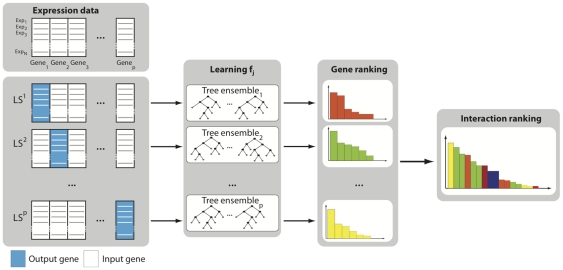
One of the pressing open problems of computational systems biology is the elucidation of the topology of genetic regulatory networks (GRNs) using high throughput genomic data, in particular microarray gene expression data. The Dialogue for Reverse Engineering Assessments and Methods (DREAM) challenge aims to evaluate the success of GRN inference algorithms on benchmarks of simulated data. In this article, we present GENIE3, a new algorithm for the inference of GRNs that was best performer in the DREAM4 In Silico Multifactorial challenge. GENIE3 decomposes the prediction of a regulatory network between p genes into p different regression problems. In each of the regression problems, the expression pattern of one of the genes (target gene) is predicted from the expression patterns of all the other genes (input genes), using tree-based ensemble methods Random Forests or Extra-Trees. The importance of an input gene in the prediction of the target gene expression pattern is taken as an indication of a putative regulatory link. Putative regulatory links are then aggregated over all genes to provide a ranking of interactions from which the whole network is reconstructed. In addition to performing well on the DREAM4 In Silico Multifactorial challenge simulated data, we show that GENIE3 compares favorably with existing algorithms to decipher the genetic regulatory network of Escherichia coli. It doesn't make any assumption about the nature of gene regulation, can deal with combinatorial and non-linear interactions, produces directed GRNs, and is fast and scalable. In conclusion, we propose a new algorithm for GRN inference that performs well on both synthetic and real gene expression data. The algorithm, based on feature selection with tree-based ensemble methods, is simple and generic, making it adaptable to other types of genomic data and interactions.
Overview
The claims and statistics of this paper haven’t been checked yet.
Free: it reads the open-access text and checks the first 5 claims that cite a source we can check. Create a free account to check every claim.
Integrity signals
Registry
Cites
Statistics
Figures
Verification
Claims the paper makes
The claims and statistics of this paper haven’t been checked yet.
Free: it reads the open-access text and checks the first 5 claims that cite a source we can check. Create a free account to check every claim.
Claims other papers make about this one
Each is checked against this paper’s own text: does it say what the citing paper says it does?
The source backs part of the claim, not all of it — or backs it for a different population, condition or comparison.
In the citing paper
“A limitation of GENIE3 is that TF information is required for it to perform better than random chance [113].”
From Gene co-expression analysis for functional classification and gene–disease predictions (2017) · cites this paper as [113]
Experimental — accuracy not yet measuredThe cited source says what the claim attributes to it.
In the citing paper
“Because of this second constraint, we cannot use pre-existing GRN inference algorithms, such as GENIE3 and GRNboost (refs. 7,51).”
From Dissecting cell identity via network inference and in silico gene perturbation (2023) · cites this paper as [51]
The cited source says what the claim attributes to it.
In the citing paper
“A major family of methods in this category is based on co-expression analysis (reviewed in [32]), and has been broadly used on bulk gene expression data (e.g. GENIE3 [33] and WGCNA [34], see [27, 35] for benchmark comparisons).”
From Mapping gene regulatory networks from single-cell omics data (2018) · cites this paper as [33]
The cited source says what the claim attributes to it.
In the citing paper
“GENIE3 incorporates TF information to construct a regulatory network by determining the TF expression pattern that best explains the expression of each of their target genes.”
From Gene co-expression analysis for functional classification and gene–disease predictions (2017) · cites this paper as [113]
Self-check
Percentages, sums and reported differences re-computed from the paper’s own numbers.
The self-check needs the paper’s full text.
Citations
Cites
Breiman, L. (2001) · Machine Learning · doi:10.1023/a:1010933404324 · Cited by 133,538
Classification and Regression Trees.
Gordon, A. D., Breiman, L., Friedman, J. H., Olshen, R. A., & Stone, C. J. (1984) · Biometrics · doi:10.2307/2530946 · Cited by 23,522
Classification and Regression Trees.
Ryzin, J. V., Breiman, L., Friedman, J. H., Olshen, R. A., & Stone, C. J. (1986) · Journal of the American Statistical Association · doi:10.2307/2288003 · Cited by 20,825
Breiman, L. (1996) · Machine Learning · doi:10.1007/bf00058655 · Cited by 16,325
Cluster analysis and display of genome-wide expression patterns
Eisen, M. B., Spellman, P. T., Brown, P. O., & Botstein, D. (1998) · Proceedings of the National Academy of Sciences · doi:10.1073/pnas.95.25.14863 · Cited by 16,184 · cited 1×
“Models based on the statistical analysis of dependencies between expression patterns have an intermediate complexity, and have already been successfully applied to the inference of large GRNs. Early models used correlation coefficients between expression patterns of all pairs of genes to infer “coexpression networks””
MethodClassification And Regression Trees
Breiman, L., Friedman, J. H., Olshen, R. A., & Stone, C. J. (2017) · doi:10.1201/9781315139470 · Cited by 11,417
Geurts, P., Ernst, D., & Wehenkel, L. (2006) · Machine Learning · doi:10.1007/s10994-006-6226-1 · Cited by 9,300 · cited 2×
“Empirical validations in [32] have shown that these two values of K were near-optimal in terms of predictive accuracy on several problems.”
BackgroundMethodSelf-citationThe Origins of Order: Self-Organization and Selection in Evolution
Kauffman, S. A. (1993) · doi:10.1093/oso/9780195079517.001.0001 · Cited by 7,855
The origins of order; self organization and selection in evolution
(1994) · International Journal of Biochemistry · doi:10.1016/0020-711x(94)90119-8 · Cited by 6,649
A review of feature selection techniques in bioinformatics
Saeys, Y., Inza, I., & Larrañaga, P. (2007) · Bioinformatics · doi:10.1093/bioinformatics/btm344 · Cited by 5,244
Research works printed but not linked: 3
- Cover TM Thomas JA 2006 Elements of Information Theory 2nd Edition Wiley-Interscience
- Faith JJ Hayete B Thaden JT Mogno I Wierzbowski J Supplemental website for: Large-scale mapping and validation of Escherichia coli transcriptional regulation from a compendium of expression profiles. http://gardnerlab.bu.edu/data/PLoS_2007/ PMC1764438 17214507
- Schäfer J Opgen-Rhein R Strimmer K 2006 Reverse engineering genetic networks using the GeneNet package. R News 6/ 5 50 53
Cited by
Items 301–400 of 1,008
Emerging landscape of molecular interaction networks: Opportunities, challenges and prospects
Panditrao, G., Bhowmick, R., Meena, C., & Sarkar, R. R. (2022) · Journal of Biosciences · doi:10.1007/s12038-022-00253-y · Cited by 57
Complex Analysis of Single-Cell RNA Sequencing Data
Khozyainova, A. A., Valyaeva, A. A., Arbatsky, M. S., Isaev, S. V., Iamshchikov, P. S., Volchkov, E., Sabirov, M. S., Zainullina, V. R., Chechekhin, V. I., Vorobev, R. S., et al. (2023) · Biochemistry (Moscow) · doi:10.1134/s0006297923020074 · Cited by 51
“GENIE3 was the original method developed for the regression-based construction of gene regulatory networks [92] and is still widely used for the construction of gene regulatory networks from the bulk RNA-seq and scRNA-seq data.”
MethodZhang, Y., Zhang, B., Lv, C., Zhang, N., Xing, K., Wang, Z., Lv, R., Yu, M., Xu, C., & Wang, Y. (2023) · Theranostics · doi:10.7150/thno.81407 · Cited by 51
“GENIE3 was used to construct a co-expression network and RcisTarget was used to identify regulons for each transcription factor [36].”
MethodGene regulatory networks in disease and ageing
Avila, P. U., Padvitski, T., Leote, A. C., Chen, H., Sáez-Rodríguez, J., Kann, M., & Beyer, A. (2024) · Nature Reviews Nephrology · doi:10.1038/s41581-024-00849-7 · Cited by 57
“Alternatively, more flexible, non-parametric regression models can be used: GENIE3 is based on variable selection with an ensemble of regression trees 160 .”
Qiao, L., Khalilimeybodi, A., Linden-Santangeli, N. J., & Rangamani, P. (2025) · Annual Review of Biomedical Engineering · doi:10.1146/annurev-bioeng-102723-065309 · Cited by 62
“We refer the readers to (17) for GENIE3 and to (18) for CLR. Schematic of network is adapted from Figure 1 of Reference (19).”
MethodLi, H., Zhang, Z., Squires, M., Chen, X. X., & Zhang, X. (2025) · Nature Methods · doi:10.1038/s41592-025-02651-0 · Cited by 78
Rotival, M., & Petretto, E. G. (2013) · Briefings in Functional Genomics · doi:10.1093/bfgp/elt030 · Cited by 51
“Complementary to the earlier-mentioned approaches, other methods such as GENIE3 [41], or ANOVA-based prediction [42] can combine prior knowledge of TFs with non-linear dependency measures to carry out direct inference of the relationships between the TF and its target genes, and ultimately derive TF-driven co-regulato…”
MethodAdabor, E. S., Acquaah-Mensah, G. K., & Oduro, F. T. (2014) · Journal of Biomedical Informatics · doi:10.1016/j.jbi.2014.08.010 · Cited by 46
“These measures are appropriate for examining the performance of algorithms for inferring transcriptional regulatory networks as used in [47,50].”
BackgroundMethodInfluentiallionessR: single sample network inference in R
Kuijjer, M. L., Hsieh, P., Quackenbush, J. F., & Glass, K. (2019) · BMC Cancer · doi:10.1186/s12885-019-6235-7 · Cited by 52
Magaletta, M. E., Lobo, M., Kernfeld, E. M., Aliee, H., Huey, J. D., Parsons, T. J., Theis, F. J., & Maehr, R. (2022) · Nature Communications · doi:10.1038/s41467-022-28067-4 · Cited by 43
Mapping functional transcription factor networks from gene expression data
Haynes, B. C., Maier, E. J., Kramer, M. H., Wang, P. I., Brown, H., & Brent, M. R. (2013) · Genome Research · doi:10.1101/gr.150904.112 · Cited by 55
“Alternatively, they can use multivariate predictor functions (Bonneau et al. 2006; Marbach et al. 2009; Huynh-Thu et al. 2010).”
BackgroundMethodInfluentialSinha, R., Induri, S. P., Peláez‐Vico, M. Á., Tukuli, A. R., Shostak, B., Zandalinas, S. I., Joshi, T., Fritschi, F., & Mittler, R. (2023) · The Plant Journal · doi:10.1111/tpj.16222 · Cited by 42
Bafna, M., Li, H., & Zhang, X. (2023) · Bioinformatics · doi:10.1093/bioinformatics/btad269 · Cited by 50
“CLARIFY performs better with an AUPRC ratio of 1.48 compared to Genie3’s 1.40 and CeSpGRN’s 1.33—a good result considering CLARIFY’s multiple other functions.”
MethodInfluentialZhu, W., Zhang, Z., Chen, J., Chen, X., Huang, L., Zhang, X., Huang, X., Ma, N., Xu, W., Yi, X., et al. (2024) · Signal Transduction and Targeted Therapy · doi:10.1038/s41392-024-01792-6 · Cited by 48
“58 Then the RcisTarget was used to identify the regulons each of which contained one TF and its target genes enriched for the motifs of the TF.”
MethodGupta, T., Antanaviciute, A., Lee, C. H.-J., Babu, R. O., Aulicino, A., Christoforidou, Z., Siejka-Zielińska, P., O’Brien‐Ball, C., Chen, H., Fawkner-Corbett, D., et al. (2024) · Cancer Cell · doi:10.1016/j.ccell.2024.04.010 · Cited by 52
“The remaining genes were used to compute a gene–gene correlation matrix for co-expression module detection using the random forest-based GENIE3; 74 the R package SCENIC 75 was used to perform transcription factor network analysis to detect co-expression modules enriched for target genes of each candidate TF from the R…”
Harnessing Diversity towards the Reconstructing of Large Scale Gene Regulatory Networks
Hase, T., Ghosh, S., Yamanaka, R., & Kitano, H. (2013) · PLoS Computational Biology · doi:10.1371/journal.pcbi.1003361 · Cited by 48
“, random forests based algorithm [26] (GENIE3) and two-way ANOVA based algorithm [27] (ANOVA).”
MethodENNET: inferring large gene regulatory networks from expression data using gradient boosting
Sławek, J., & Arodź, T. (2013) · BMC Systems Biology · doi:10.1186/1752-0509-7-106 · Cited by 49
“GENIE3 [28] employs Random Forest algo-rithm to score important transcription factors, utilizing the embedded relative importance measure of input variables as a ranking criterion.”
BackgroundMethodInfluentialA robust gene regulatory network inference method base on Kalman filter and linear regression
Pirgazi, J., & Khanteymoori, A. (2018) · PLoS ONE · doi:10.1371/journal.pone.0200094 · Cited by 45
Risk variants disrupting enhancers of T H 1 and T REG cells in type 1 diabetes
Gao, P., Uzun, Y., He, B., Salamati, S., Coffey, J., Tsalikian, E., & Tan, K. (2019) · Proceedings of the National Academy of Sciences · doi:10.1073/pnas.1815336116 · Cited by 46
“First, using a set of gold-standard TF-target pairs in embryonic stem cells, we found that TIPC outperforms four state-of-the-art methods based on Pearson correlation (BC), mutual information [context likelihood ratio (CLR) (21)], decision trees [gene network inference with ensemble of trees (GENIE3) (22)], and regres…”
scLink: Inferring Sparse Gene Co-Expression Networks from Single-Cell Expression Data
Li, W. V., & Li, Y. (2021) · Genomics Proteomics & Bioinformatics · doi:10.1016/j.gpb.2020.11.006 · Cited by 47
“GENIE3 decomposes the prediction of a gene network between p genes into p different regression problems, and uses tree-based ensemble methods to infer the edges between genes [23].”
BackgroundMethodWu, S., Yu, Y., Liu, C., Zhang, X., Zhu, P., Peng, Y., Yan, X., Li, Y., Peng, H., Li, Q., et al. (2022) · Cell Discovery · doi:10.1038/s41421-022-00394-2 · Cited by 46
A chromatin code for limb segment identity in axolotl limb regeneration
Kawaguchi, A., Wang, J., Knapp, D., Murawala, P., Nowoshilow, S., Masselink, W., Taniguchi‐Sugiura, Y., Fei, J., & Tanaka, E. M. (2024) · Developmental Cell · doi:10.1016/j.devcel.2024.05.002 · Cited by 48
Hu, Y., Hase, T., Li, H. P., Prabhakar, S., Kitano, H., Ng, S. K., Ghosh, S., & Wee, L. J. (2016) · BMC Genomics · doi:10.1186/s12864-016-3317-7 · Cited by 46
“…ie, GENIE3 is the winner of of DREAM4 (DREAM, Dialogue on Reverse Engineering Assessment and Methods) and DREAM5 network inference challenges [38, 47], while, in DREAM5, TIGRESS and CLR (and MRNET) are the best performer among regression techniques and that among mutual information techniques,…”
BackgroundMethodThe Human Cell Atlas: Technical approaches and challenges
Hon, C.-C., Shin, J. W., Carninci, P., & Stubbington, M. J. T. (2018) · Briefings in Functional Genomics · doi:10.1093/bfgp/elx029 · Cited by 43
Park, S., Kim, J. M., Shin, W., Han, S. W., Jeon, M., Jang, H. J., Jang, I., & Kang, J. (2018) · BMC Systems Biology · doi:10.1186/s12918-018-0547-0 · Cited by 46
“Then, we re-evaluated the baseline methods [6, 8, 15, 17, 18, 20, 22, 23] on the integrated dataset.”
MethodInfluentialIturria-Medina, Y., Carbonell, F. M., & Evans, A. C. (2018) · NeuroImage · doi:10.1016/j.neuroimage.2018.06.028 · Cited by 41
Time-Based Systems Biology Approaches to Capture and Model Dynamic Gene Regulatory Networks
Álvarez, J. M., Brooks, M. D., Swift, J., & Coruzzi, G. M. (2021) · Annual Review of Plant Biology · doi:10.1146/annurev-arplant-081320-090914 · Cited by 44
Network biology to uncover functional and structural properties of the plant immune system
Mishra, B., Kumar, N., & Mukhtar, M. S. (2021) · Current Opinion in Plant Biology · doi:10.1016/j.pbi.2021.102057 · Cited by 50
Chen, Y., Shen, J., Kasmani, M. Y., Topchyan, P., & Cui, W. (2021) · Cells · doi:10.3390/cells10082143 · Cited by 47
“First, the potential target genes of each TF were determined based on co-expression patterns using GENIE3 [22].”
MethodEvaluating the Reproducibility of Single-Cell Gene Regulatory Network Inference Algorithms
Kang, Y., Thieffry, D., & Cantini, L. (2021) · Frontiers in Genetics · doi:10.3389/fgene.2021.617282 · Cited by 41
“Of note, the first three algorithms are also the best performing in the benchmark of Pratapa et al. GEne Network Inference with Ensemble of Trees (GENIE3) (Huynh-Thu et al., 2010) is a tree-based network inference method.”
MethodEnhancing gene regulatory network inference through data integration with markov random fields
Banf, M., & Rhee, S. Y. (2017) · Scientific Reports · doi:10.1038/srep41174 · Cited by 51
“GRACE is freely available as R code, tutorial scripts as well as complementary datasets to generate the prioritized link predictions for D. melanogaster and A. thaliana at: https://github.com/mbanf/GRACE.”
Cell interactions, signals and transcriptional hierarchy governing placode progenitor induction
Hintze, M., Prajapati, R. S., Tambalo, M., Christophorou, N., Anwar, M., Grocott, T., & Streit, A. (2017) · Development · doi:10.1242/dev.147942 · Cited by 40
“Using the NanoString datasets we inferred a regulatory network using the GENIE3 algorithm (Huynh-Thu et al., 2010).”
Montes, C., Wang, P., Liao, C., Nolan, T. M., Song, G., Clark, N. M., Elmore, J. M., Guo, H., Bassham, D. C., Yin, Y., et al. (2022) · New Phytologist · doi:10.1111/nph.18404 · Cited by 46
“Network inference was achieved using a modified version of the GENIE3 random forest algorithm (Huynh-Thu et al., 2010) in the SC-ION pipeline V2.”
MethodThe use of machine learning to discover regulatory networks controlling biological systems
Erbe, R., Gore, J., Gemmill, K., Gaykalova, D. A., & Fertig, E. J. (2022) · Molecular Cell · doi:10.1016/j.molcel.2021.12.011 · Cited by 51
Li, L., Sun, L., Chen, G., Wong, C.-W., Ching, W., & Liu, Z.-P. (2023) · Bioinformatics · doi:10.1093/bioinformatics/btad256 · Cited by 44
“…[multiple regression model (Zhang et al. 2010), SINCERITIES (Papili Gao et al. 2018), and GNIPLR (Zhang et al. 2021)], tree-based method [GENIE3 (Huynh-Thu et al. 2010)], stability selection method [TIGRESS (Haury et al. 2012)], correlation-based method [ARACNE (Margolin et al. 2006) and CLR…”
MethodWindster, J. D., Kakiailatu, N. J. M., Kuil, L. E., Antanaviciute, A., Sacchetti, A., MacKenzie, K. C., Zink, J., Kan, T. W., Bindels, E. M., de Pater, E., et al. (2024) · Gastroenterology · doi:10.1053/j.gastro.2024.12.011 · Cited by 47
Yang, B., Xu, Y., Maxwell, A., Koh, W., Gong, P., & Zhang, C. (2018) · BMC Systems Biology · doi:10.1186/s12918-018-0635-1 · Cited by 42
Jin, T., Rehani, P., Ying, M., Huang, J., Liu, S., Roussos, P., & Wang, D. (2021) · Genome Medicine · doi:10.1186/s13073-021-00908-9 · Cited by 40
“In particular, given a cell-type GRN by scGRNom, we selected top K TFs per target gene (TG) to see if the TF-TG pairs were also predicted by PIDC, GENIE3, or GRNBoost2 (again picking top K TFs per TG).”
MethodInfluentialJiang, J., Lyu, P., Li, J., Huang, S., Tao, J., Blackshaw, S., Qian, J. X., & Wang, J. (2022) · iScience · doi:10.1016/j.isci.2022.105359 · Cited by 42
“According to the previous evaluation of the methods for network inference, we selected top performing method GENIE3 as the default method for network inference in IReNA [3,4].”
Single-cell dissection of aggression in honeybee colonies
Traniello, I. M., Bukhari, S. A., Dibaeinia, P., Serrano, G., Avalos, A., Cash-Ahmed, A. C., Sankey, A. L., Hernáez, M., Sinha, S., Zhao, S. D., et al. (2023) · Nature Ecology & Evolution · doi:10.1038/s41559-023-02090-0 · Cited by 46
Spatiotemporal gene expression and cellular dynamics of the developing human heart
Lázár, E., Mauron, R., Andrusivová, Ž., Foyer, J., He, M., Larsson, L., Shakari, N., Salas, S. M., Avenel, C., Sarıyar, S., et al. (2025) · Nature Genetics · doi:10.1038/s41588-025-02352-6 · Cited by 57
Nalluri, J. J., Barh, D., Azevedo, V., & Ghosh, P. (2017) · Scientific Reports · doi:10.1038/srep39684 · Cited by 41
“In this work, we adopted a strategy that takes a miRNA expression profile and uses six different network inference algorithms (CLR 33 , MRNETB 34 , Basic Correlation (Pearson and Spearman), DC 35 , GENIE3 36 ), each varying in their inference strategies, integrated with a consensus approach and graph intersection to i…”
MethodInfluentialLung adenocarcinoma pathology stages related gene identification
Sun, G., & Zhao, T. (2019) · Mathematical Biosciences & Engineering · doi:10.3934/mbe.2020038 · Cited by 44
Deep learning of gene relationships from single cell time-course expression data
Yuan, Y., & Bar‐Joseph, Z. (2021) · Briefings in Bioinformatics · doi:10.1093/bib/bbab142 · Cited by 43
Impact energy of particles in ball mills based on DEM simulations and data-driven approach
Jayasundara, C. T., & Zhu, H. P. (2021) · Powder Technology · doi:10.1016/j.powtec.2021.09.063 · Cited by 45
Constructing gene regulatory networks using epigenetic data
Sonawane, A. R., DeMeo, D. L., Quackenbush, J. F., & Glass, K. (2021) · npj Systems Biology and Applications · doi:10.1038/s41540-021-00208-3 · Cited by 49
“Therefore, we identi fi ed several commonly used expression-based network reconstruction approaches, including ARACNe 14 , CLR 15 , GENIE3 13 , and PANDA 18 .”
MethodKouzai, Y., Shimizu, M., Inoue, K., Uehara‐Yamaguchi, Y., Takahagi, K., Nakayama, R., Matsuura, T., Mori, I. C., Hirayama, T., Abdelsalam, S. S. H., et al. (2020) · The Plant Journal · doi:10.1111/tpj.14976 · Cited by 38
“A GRN analysis was performed using the R package GENIE3, which can infer GRNs using a tree-based machine learning algorithm from gene expression data (Huynh-Thu et al., 2010; Mochida et al., 2018).”
Studying stochastic systems biology of the cell with single-cell genomics data
Gorin, G., Vastola, J. J., & Pachter, L. S. (2023) · Cell Systems · doi:10.1016/j.cels.2023.08.004 · Cited by 51
“Therefore, we append a set of drift-like terms to the Fokker-Planck equation: construct the full master equation, we need to define a system of 𝑁 coupled equations.”
Peláez‐Vico, M. Á., Sinha, R., Induri, S. P., Lyu, Z., Venigalla, S. D., Vasireddy, D., Singh, P., Immadi, M. S., Pascual, L. S., Shostak, B., et al. (2023) · The Plant Journal · doi:10.1111/tpj.16570 · Cited by 41
System-level understanding of plant mineral nutrition in the big data era
Rouached, H., & Rhee, S. Y. (2017) · Current Opinion in Systems Biology · doi:10.1016/j.coisb.2017.07.008 · Cited by 42
Shang, L., Smith, J. A., & Zhou, X. (2020) · PLoS Genetics · doi:10.1371/journal.pgen.1008734 · Cited by 39
“(GEne Network Inference with Ensemble of trees) [61], can integrate gene expression data together with transcription factor information; though none of these methods can incorporate protein-protein interaction information as PANDA does.”
MethodSeidel, C., Zhernovkov, V., Cassidy, H., Kholodenko, B. Ν., Matallanas, D., Cosnier, F., & Gaté, L. (2020) · Nanotoxicology · doi:10.1080/17435390.2020.1851418 · Cited by 40
Duren, Z., Lu, W. S., Arthur, J. G., Shah, P., Xin, J., Meschi, F., Li, M. L., Nemec, C. M., Yin, Y., & Wong, W. H. (2021) · Nature Communications · doi:10.1038/s41467-021-25089-2 · Cited by 42
Biophysically Motivated Regulatory Network Inference: Progress and Prospects
Äijö, T., & Bonneau, R. (2016) · Human Heredity · doi:10.1159/000446614 · Cited by 30
SMGR: a joint statistical method for integrative analysis of single-cell multi-omics data
Song, Q., Zhu, X., Jin, L., Chen, M., Zhang, W., & Su, J. (2022) · NAR Genomics and Bioinformatics · doi:10.1093/nargab/lqac056 · Cited by 42
“Moreover, we use GENIE3 (37) to identify the upstream TFs based on the co-regulatory programs from SOMatic and SMGR respectively, since genes in a regulatory program are often regulated by the same upstream TFs.”
MethodInfluentialXia, K., Luo, P., Yu, J., He, S., Dong, L., Gao, F., Chen, X., Ye, Y., Gao, Y., Ma, Y., et al. (2024) · Human Reproduction · doi:10.1093/humrep/deae199 · Cited by 44
Bonev, B., Castelo‐Branco, G., Chen, F., Codeluppi, S., Corces, M. R., Fan, J., Heiman, M., Harris, K., Inoue, F., Kellis, M., et al. (2024) · Nature Neuroscience · doi:10.1038/s41593-024-01806-0 · Cited by 47
Ko, J., Gu, W., Lim, I., Zhou, T., & Bang, H. (2014) · PLoS ONE · doi:10.1371/journal.pone.0110094 · Cited by 41
“The weighted adjacency matrix was computed for each resampled gene set using GENIE3.”
MethodInfluentialBourdakou, M. M., Athanasiadis, E. I., & Spyrou, G. M. (2016) · Scientific Reports · doi:10.1038/srep20518 · Cited by 44
“In the third category, GENIE3 algorithm splits the problem of network construction between k genes into k regression sub-problems.”
MethodTrevers, K. E., Prajapati, R. S., Hintze, M., Stower, M. J., Strobl, A., Tambalo, M., Ranganathan, R., Moncaut, N., Khan, M. A. F., Stern, C. D., et al. (2017) · Proceedings of the National Academy of Sciences · doi:10.1073/pnas.1719674115 · Cited by 38
“All transcription factors from RNAseq with FPKM of ≥ 10 were used for predicting gene regulatory interactions using Genie3 (17).”
InfluentialZinati, Y., Takiddeen, A., & Emad, A. (2023) · doi:10.1101/2023.07.25.550225 · Cited by 36
Yan, M., Hu, J. R., Yuan, H., Xu, L., Liao, G., Jiang, Z., Zhu, J., Pang, B., Ping, Y., Zhang, Y., et al. (2021) · Molecular Therapy — Nucleic Acids · doi:10.1016/j.omtn.2021.10.011 · Cited by 36
Zinati, Y., Takiddeen, A., & Emad, A. (2024) · Nature Communications · doi:10.1038/s41467-024-48516-6 · Cited by 56
Visvanathan, A., Saulnier, O., Chen, C., Haldipur, P., Orisme, W., Delaidelli, A., Shin, S., Millman, J., Bryant, A., Abeysundara, N., et al. (2024) · Cell · doi:10.1016/j.cell.2024.06.011 · Cited by 41
Iglesias-Martinez, L. F., Kölch, W., & Santra, T. (2016) · Scientific Reports · doi:10.1038/srep37140 · Cited by 45
“For comparison, we have also provided the AUPR values of the networks reconstructed by several other state-of-the-art algorithms, e.g. Jump3 the lagged time variant of GENIE3 3 , CLR 26 , Inferelator 4 , G1DBN 27 , and ScanBMA 5 , which also claimed to have performed very well on the same datasets.”
Bioinformatics applied to biotechnology: A review towards bioenergy research
de Carvalho, L. M., Borelli, G., Camargo, A. P., de Assis, M. A., de Ferraz, S. M. F., Fiamenghi, M. B., José, J., Mofatto, L. S., Nagamatsu, S. T., Persinoti, G. F., et al. (2019) · Biomass and Bioenergy · doi:10.1016/j.biombioe.2019.02.016 · Cited by 44
Machine-Learning Analysis to Predict the Exciton Valley Polarization Landscape of 2D Semiconductors
Tanaka, K., Hachiya, K., Zhang, W., Matsuda, K., & Miyauchi, Y. (2019) · ACS Nano · doi:10.1021/acsnano.9b04220 · Cited by 35
Yang, L., Su, Z., Wang, Z., Li, Z., Shang, Z., Du, H., Liu, G., Qi, D., Yang, Z., Xu, Z., et al. (2021) · Cell Death and Disease · doi:10.1038/s41419-021-03552-8 · Cited by 39
A Probabilistic Model for Dirty Multi-task Feature Selection
Hernández-Lobato, D., Hernández-Lobato, J. M., Ghahramani, Z., et al. (2015) · Hispana · Cited by 60
One model fits all: Combining inference and simulation of gene regulatory networks
(2023) · doi:10.1371/journal.pcbi.1010962 · Cited by 35
Li, S., Liu, Y., Shen, L.-C., He, Y., Song, J., & Yu, D. (2024) · Briefings in Bioinformatics · doi:10.1093/bib/bbad529 · Cited by 44
Combinatorial prediction of therapeutic perturbations using causally inspired neural networks
Gonzalez, G., Lin, X., Herath, I. S., Veselkov, K., Bronstein, M. M., & Žitnik, M. (2025) · Nature Biomedical Engineering · doi:10.1038/s41551-025-01481-x · Cited by 60
“The training data for PDGrapher consist of two components: disease intervention data and treatment intervention data.”
Mahnič, A., Breskvar, M., Džeroski, S., Skok, P., Pintar, Š., & Rupnik, M. (2020) · Frontiers in Microbiology · doi:10.3389/fmicb.2020.00120 · Cited by 42
Improved detection of tumor suppressor events in single-cell RNA-Seq data
Teschendorff, A. E., & Wang, N. (2020) · npj Genomic Medicine · doi:10.1038/s41525-020-00151-y · Cited by 36
Jin, T., Nguyen, N. D., Talos, F., & Wang, D. (2020) · Bioinformatics · doi:10.1093/bioinformatics/btaa935 · Cited by 39
Causal network inference from gene transcriptional time-series response to glucocorticoids
Lu, J., Dumitrascu, B., McDowell, I. C., Jo, B., Barrera, A., Hong, L. K., Leichter, S. M., Reddy, T. E., & Engelhardt, B. E. (2021) · PLoS Computational Biology · doi:10.1371/journal.pcbi.1008223 · Cited by 45
Zhang, Y., Zou, D., Zhu, T., Xu, T., Chen, M., Niu, G., Zong, W., Pan, R., Jing, W., Sang, J., et al. (2021) · Nucleic Acids Research · doi:10.1093/nar/gkab878 · Cited by 39
“For bulk RNA-seq data, four tools were included for different analysis purposes, namely, differential expression analysis with limma (64), weighted gene co-expression network analysis with WGCNA (65), functional enrichment analysis with clusterProfiler (66), and gene regulatory network inference with GENIE3 (67).”
MethodWang, L., & Michoel, T. (2017) · PLoS Computational Biology · doi:10.1371/journal.pcbi.1005703 · Cited by 46
Graph Random Forest: A Graph Embedded Algorithm for Identifying Highly Connected Important Features
Tian, L., Wu, W., & Yu, T. (2023) · Biomolecules · doi:10.3390/biom13071153 · Cited by 43
“For instance, the GENIE3 algorithm applies random forest to infer GRNs by solving a regression model based on target genes and selecting the strongest predictor as the regulator [7].”
MethodA single-cell genomic atlas for maturation of the human cerebellum during early childhood
Ament, S. A., Cortes-Gutierrez, M., Herb, B. R., Mocci, E., Colantuoni, C., & McCarthy, M. M. (2023) · Science Translational Medicine · doi:10.1126/scitranslmed.ade1283 · Cited by 45
“We then fit a random forest regression model with GENIE3 ( 38 ) to predict each gene ’ s expression as a function of the transcription factors with putative binding sites in these regions.”
MethodIonescu, R.-B., Nicaise, A. M., Reisz, J. A., Williams, E. C., Prasad, P., Willis, C. M., Simões-Abade, M. B. C., Sbarro, L., Dzieciatkowska, M., Stephenson, D., et al. (2024) · Cell Stem Cell · doi:10.1016/j.stem.2024.09.014 · Cited by 34
Machine learning methods for gene regulatory network inference
Hegde, A., Nguyen, T., & Cheng, J. (2025) · Briefings in Bioinformatics · doi:10.1093/bib/bbaf470 · Cited by 50
“The DREAM dataset (https://www. synapse.org/syn3049712) supplies bulk RNA-seq profiles— average expression across mixed cells—for benchmarking GRN tools such as ARACNe and GENIE3, which infer edges from co-expression and MI (https://www.synapse.org/ Synapse:syn3049712/wiki/74630) [34, 71].”
InfluentialLiu, Z., Wu, H., Zhu, J., & Miao, H. (2014) · BMC Bioinformatics · doi:10.1186/1471-2105-15-336 · Cited by 36
“For this purpose, we consider the Pearson ’ s correlation coefficient (PCC) method, the mutual information (MI) method [27,28], and the best four algorithms in the DREAM challenge, including CLR [45], ARACNE [46], GENIE3 [47] and TIGRESS [48].”
MethodWang, Y., Cho, D.-Y., Lee, H., Fear, J. M., Oliver, B., & Przytycka, T. M. (2018) · Nature Communications · doi:10.1038/s41467-018-06382-z · Cited by 41
Barbosa, S., Niebel, B., Wolf, S., Mauch, K., & Takors, R. (2018) · Biosystems · doi:10.1016/j.biosystems.2018.10.008 · Cited by 39
Fast and Scalable Implementations of Influence Maximization Algorithms
Minutoli, M., Halappanavar, M. M., Kalyanaraman, A., Sathanur, A. V., McClure, R., & McDermott, J. (2019) · IEEE International Conference on Cluster Computing (CLUSTER) · doi:10.1109/cluster.2019.8890991 · Cited by 34
“We inferred feature co-expression networks for these datasets using a random forest method implemented in GENIE3 [22].”
MethodWidening the landscape of transcriptional regulation of green algal photoprotection
Arend, M., Yuan, Y., Ruiz‐Sola, M. Á., Omranian, N., Nikoloski, Z., & Petroutsos, D. (2023) · Nature Communications · doi:10.1038/s41467-023-38183-4 · Cited by 35
“The random forest-based network from GENIE3 was generated using the R Bioconductor implementation provided by the authors 66 .”
Patient-level proteomic network prediction by explainable artificial intelligence
Keyl, P., Bockmayr, M. L., Heim, D., Dernbach, G., Montavon, G., Müller, K., & Klauschen, F. (2022) · npj Precision Oncology · doi:10.1038/s41698-022-00278-4 · Cited by 45
Multi-Domain Sampling With Applications to Structural Inference of Bayesian Networks
Zhou, Q. (2011) · Journal of the American Statistical Association · doi:10.1198/jasa.2011.ap10346 · Cited by 38
“Among them, the Genie3 method (Huynh-Thu et al. 2010), based on random forests, was the best performer of one of the DREAM4 sub-challenges, while the Boot-Lasso (Allouche et al. 2013) was one of the key components of the best performing approach of one of the DREAM5 sub-challenges (Allouche et al.…”
MethodSingh, R., Wu, A. P., Mudide, A., & Berger, B. (2024) · Cell Systems · doi:10.1016/j.cels.2024.04.005 · Cited by 43
Faria, J. P., Overbeek, R., Xia, F., Rocha, M., Rocha, I., & Henry, C. S. (2013) · Briefings in Bioinformatics · doi:10.1093/bib/bbs071 · Cited by 44
“GENIE3 (GEne Network Inference with Ensemble of trees) [119] uses tree-based methods [137] decomposing the inference problem of p size into p distinct regression models.”
MethodInfluentialPast Roadblocks and New Opportunities in Transcription Factor Network Mapping
Brent, M. R. (2016) · Trends in Genetics · doi:10.1016/j.tig.2016.08.009 · Cited by 44
Multidimensional Integrative Genomics Approaches to Dissecting Cardiovascular Disease
Arneson, D. V., Shu, L., Tsai, B. L., Barrere‐Cain, R., Sun, C., & Yang, X. (2017) · Frontiers in Cardiovascular Medicine · doi:10.3389/fcvm.2017.00008 · Cited by 38
“Method category Brief description Advantages Limitations Representative tools Clustering/ dimensionality reduction-based approaches Transform data into common space through graph or kernel-based methods Easy to implement using common statistical techniques; retain withindata properties; robust to different units of me…”
Trébulle, P., Nicaud, J., Leplat, C., & Elati, M. (2017) · npj Systems Biology and Applications · doi:10.1038/s41540-017-0024-1 · Cited by 33
Computational biology approaches for mapping transcriptional regulatory networks
Saint‐André, V. (2021) · Computational and Structural Biotechnology Journal · doi:10.1016/j.csbj.2021.08.028 · Cited by 35
“Also, to reduce false positive and indirect targets found with GENIE3, SCENIC performs cis -regulatory motif analysis on each co-expression module, and only modules with significant motif enrichment of the correct upstream regulator are retained.”
MethodInfluentialXiao, P., Feng, J., Zhu, X.-T., & Gao, J. (2021) · Frontiers in Plant Science · doi:10.3389/fpls.2021.758187 · Cited by 34
Integrative Prioritization of Causal Genes for Coronary Artery Disease
Hao, K., Ermel, R., Sukhavasi, K., Cheng, H., Ma, L., Li, L., Amadori, L., Koplev, S., Franzén, O., d’Escamard, V., et al. (2021) · Circulation Genomic and Precision Medicine · doi:10.1161/circgen.121.003365 · Cited by 36
Zhu, W., Miao, X., Qian, J., Chen, S., Jin, Q., Li, M., Han, L., Zhong, W., Xie, D., Shang, X., et al. (2023) · Genome biology · doi:10.1186/s13059-023-02890-4 · Cited by 33
“These GRNs were constructed on the basis of the expression matrix using the classic software GENIE3 [115] with the random forest algorithm.”
MethodLim, N., Şenbabaoğlu, Y., Michailidis, G. C., & d’Alché–Buc, F. (2013) · Bioinformatics · doi:10.1093/bioinformatics/btt167 · Cited by 34
“In nonlinear nonparametric modeling, random forests and their variants, extra-trees (Huynh-Thu et al., 2010), have recently won the DREAM5 challenge devoted to static data by solving p regression problems.”
MethodKiani, N. A., Zenil, H., Olczak, J., & Tegner, J. N. (2016) · Seminars in Cell and Developmental Biology · doi:10.1016/j.semcdb.2016.01.012 · Cited by 36
Metadata
- Authors
- Huynh-Thu, V. A., Irrthum, A., Wehenkel, L., & Geurts, P.
- Affiliations
- University of Liège (BE)
- Venue
- PLoS ONE
- Publisher
- Public Library of Science (PLoS)
- Published
- 2010-09-28
- Volume
- 5
- Issue
- 9
- Pages
- e12776
- ISSN
- 1932-6203 (ISSN-L)
- PMC
- PMC2946910
- OpenAlex
- W2076513103
- Cited by
- 2,131
- References
- 53
- Citations by year
- 2026: 237 · 2025: 273 · 2024: 274 · 2023: 241 · 2022: 225 · 2021: 194 · 2020: 146 · 2019: 120 · 2018: 95 · 2017: 79 · 2016: 59 · 2015: 63 · 2014: 53 · 2013: 36 · 2012: 25
- FWCI
- 9.24
- Type
- journal article
- Language
- en
- Open access
- gold
- doi.org
- Locations
- PLoS ONE (publishedVersion, cc-by)
- PubMed Central (publishedVersion, cc-by)
- PubMed (publishedVersion)
- RePEc: Research Papers in Economics (submittedVersion)
- DOAJ (DOAJ: Directory of Open Access Journals) (submittedVersion, cc-by-sa)
- Figshare (submittedVersion, cc-by)
- Open Repository and Bibliography (University of Liège) (submittedVersion)
- ORBi (University of Liège) (submittedVersion, other-oa)
- ORBi (University of Liège) (submittedVersion)
- Funders
- Fonds De La Recherche Scientifique - FNRS
- Fédération Wallonie-Bruxelles
- Topics
- Life Sciences › Biochemistry, Genetics and Molecular Biology › Molecular Biology › Gene Regulatory Network Analysis
- Life Sciences › Biochemistry, Genetics and Molecular Biology › Molecular Biology › Bioinformatics and Genomic Networks
- Life Sciences › Biochemistry, Genetics and Molecular Biology › Molecular Biology › Microbial Metabolic Engineering and Bioproduction
- Keywords
- GENIE3, random forest, extra trees, microarray gene expression, Escherichia coli, feature selection, network topology
- MeSH terms
- Algorithms, Escherichia coli, Gene Expression Regulation, Computational Biology, Oligonucleotide Array Sequence Analysis, Gene Regulatory Networks
About these checks
Registry, retraction, Cites and statistics results are computed, not judged, with one exception: a printed reference that no index lists is read once by a model before it counts as a citation error. Claims are extracted by a model and kept only when their quote appears verbatim in the text; each cited source is then checked, with a model’s help, for whether it says what the claim relies on. Those verdicts can be wrong — read the claim’s quote and the cited source before relying on one.
Statistics and arithmetic are recomputed, not judged.
Confidence bands are shown only for fields calibrated on our annotated test set. None is calibrated yet, so no band is shown.
What counts as a claim ›How we measure confidence ›How we check this ›
Are you an author, or do you see a problem with this page? Request a review
Data sources
Bibliographic data: Semantic Scholar, OpenAlex, Crossref.
Contains information from the Semantic Scholar Academic Graph Datasets, made available under the ODC Attribution License (ODC-BY 1.0).
Semantic Scholar’s data is described in: Kinney, R., et al. (2023). The Semantic Scholar Open Data Platform. arXiv:2301.10140.
