

Inferring Regulatory Networks from Expression Data Using Tree-Based Methods
Open accessThe DOI matches its Crossref record; 51 of the 53 references it cites were found in a registry or an index.
Abstract
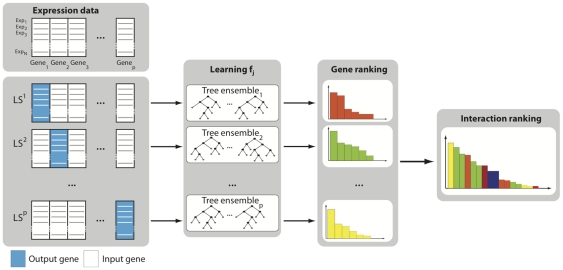
One of the pressing open problems of computational systems biology is the elucidation of the topology of genetic regulatory networks (GRNs) using high throughput genomic data, in particular microarray gene expression data. The Dialogue for Reverse Engineering Assessments and Methods (DREAM) challenge aims to evaluate the success of GRN inference algorithms on benchmarks of simulated data. In this article, we present GENIE3, a new algorithm for the inference of GRNs that was best performer in the DREAM4 In Silico Multifactorial challenge. GENIE3 decomposes the prediction of a regulatory network between p genes into p different regression problems. In each of the regression problems, the expression pattern of one of the genes (target gene) is predicted from the expression patterns of all the other genes (input genes), using tree-based ensemble methods Random Forests or Extra-Trees. The importance of an input gene in the prediction of the target gene expression pattern is taken as an indication of a putative regulatory link. Putative regulatory links are then aggregated over all genes to provide a ranking of interactions from which the whole network is reconstructed. In addition to performing well on the DREAM4 In Silico Multifactorial challenge simulated data, we show that GENIE3 compares favorably with existing algorithms to decipher the genetic regulatory network of Escherichia coli. It doesn't make any assumption about the nature of gene regulation, can deal with combinatorial and non-linear interactions, produces directed GRNs, and is fast and scalable. In conclusion, we propose a new algorithm for GRN inference that performs well on both synthetic and real gene expression data. The algorithm, based on feature selection with tree-based ensemble methods, is simple and generic, making it adaptable to other types of genomic data and interactions.
Overview
The claims and statistics of this paper haven’t been checked yet.
Free: it reads the open-access text and checks the first 5 claims that cite a source we can check. Create a free account to check every claim.
Integrity signals
Registry
Cites
Statistics
Figures
Verification
Claims the paper makes
The claims and statistics of this paper haven’t been checked yet.
Free: it reads the open-access text and checks the first 5 claims that cite a source we can check. Create a free account to check every claim.
Claims other papers make about this one
Each is checked against this paper’s own text: does it say what the citing paper says it does?
The source backs part of the claim, not all of it — or backs it for a different population, condition or comparison.
In the citing paper
“A limitation of GENIE3 is that TF information is required for it to perform better than random chance [113].”
From Gene co-expression analysis for functional classification and gene–disease predictions (2017) · cites this paper as [113]
Experimental — accuracy not yet measuredThe cited source says what the claim attributes to it.
In the citing paper
“Because of this second constraint, we cannot use pre-existing GRN inference algorithms, such as GENIE3 and GRNboost (refs. 7,51).”
From Dissecting cell identity via network inference and in silico gene perturbation (2023) · cites this paper as [51]
The cited source says what the claim attributes to it.
In the citing paper
“A major family of methods in this category is based on co-expression analysis (reviewed in [32]), and has been broadly used on bulk gene expression data (e.g. GENIE3 [33] and WGCNA [34], see [27, 35] for benchmark comparisons).”
From Mapping gene regulatory networks from single-cell omics data (2018) · cites this paper as [33]
The cited source says what the claim attributes to it.
In the citing paper
“GENIE3 incorporates TF information to construct a regulatory network by determining the TF expression pattern that best explains the expression of each of their target genes.”
From Gene co-expression analysis for functional classification and gene–disease predictions (2017) · cites this paper as [113]
Self-check
Percentages, sums and reported differences re-computed from the paper’s own numbers.
The self-check needs the paper’s full text.
Citations
Cites
Breiman, L. (2001) · Machine Learning · doi:10.1023/a:1010933404324 · Cited by 133,538
Classification and Regression Trees.
Gordon, A. D., Breiman, L., Friedman, J. H., Olshen, R. A., & Stone, C. J. (1984) · Biometrics · doi:10.2307/2530946 · Cited by 23,522
Classification and Regression Trees.
Ryzin, J. V., Breiman, L., Friedman, J. H., Olshen, R. A., & Stone, C. J. (1986) · Journal of the American Statistical Association · doi:10.2307/2288003 · Cited by 20,825
Breiman, L. (1996) · Machine Learning · doi:10.1007/bf00058655 · Cited by 16,325
Cluster analysis and display of genome-wide expression patterns
Eisen, M. B., Spellman, P. T., Brown, P. O., & Botstein, D. (1998) · Proceedings of the National Academy of Sciences · doi:10.1073/pnas.95.25.14863 · Cited by 16,184 · cited 1×
“Models based on the statistical analysis of dependencies between expression patterns have an intermediate complexity, and have already been successfully applied to the inference of large GRNs. Early models used correlation coefficients between expression patterns of all pairs of genes to infer “coexpression networks””
MethodClassification And Regression Trees
Breiman, L., Friedman, J. H., Olshen, R. A., & Stone, C. J. (2017) · doi:10.1201/9781315139470 · Cited by 11,417
Geurts, P., Ernst, D., & Wehenkel, L. (2006) · Machine Learning · doi:10.1007/s10994-006-6226-1 · Cited by 9,300 · cited 2×
“Empirical validations in [32] have shown that these two values of K were near-optimal in terms of predictive accuracy on several problems.”
BackgroundMethodSelf-citationThe Origins of Order: Self-Organization and Selection in Evolution
Kauffman, S. A. (1993) · doi:10.1093/oso/9780195079517.001.0001 · Cited by 7,855
The origins of order; self organization and selection in evolution
(1994) · International Journal of Biochemistry · doi:10.1016/0020-711x(94)90119-8 · Cited by 6,649
A review of feature selection techniques in bioinformatics
Saeys, Y., Inza, I., & Larrañaga, P. (2007) · Bioinformatics · doi:10.1093/bioinformatics/btm344 · Cited by 5,244
Research works printed but not linked: 3
- Cover TM Thomas JA 2006 Elements of Information Theory 2nd Edition Wiley-Interscience
- Faith JJ Hayete B Thaden JT Mogno I Wierzbowski J Supplemental website for: Large-scale mapping and validation of Escherichia coli transcriptional regulation from a compendium of expression profiles. http://gardnerlab.bu.edu/data/PLoS_2007/ PMC1764438 17214507
- Schäfer J Opgen-Rhein R Strimmer K 2006 Reverse engineering genetic networks using the GeneNet package. R News 6/ 5 50 53
Cited by
Items 101–200 of 1,008
Dedicated macrophages organize and maintain the enteric nervous system
Viola, M. F., Chavero‐Pieres, M., Modave, E., Delfini, M., Stakenborg, N., Cuende‐Estévez, M., Fabre, N., Appeltans, I., Martens, T., Vandereyken, K., et al. (2023) · Nature · doi:10.1038/s41586-023-06200-7 · Cited by 129
GRNdb: decoding the gene regulatory networks in diverse human and mouse conditions
Li, F., Li, Y., Ma, L., Xu, Q., Tan, F., & Chen, G. (2020) · Nucleic Acids Research · doi:10.1093/nar/gkaa995 · Cited by 124
“First, SCENIC employs GENIE3 (21) to detect the gene sets co-expressed with TFs, which has been demonstrated to be superior to other tools for GRN inference (22).”
MethodInference of Gene Regulatory Network from Single-Cell Transcriptomic Data Using pySCENIC
Kumar, N., Mishra, B., Athar, M., & Mukhtar, S. M. (2021) · Methods in molecular biology · doi:10.1007/978-1-0716-1534-8_10 · Cited by 146
Graph attention network for link prediction of gene regulations from single-cell RNA-sequencing data
Chen, G., & Liu, Z. (2022) · Bioinformatics · doi:10.1093/bioinformatics/btac559 · Cited by 136
Dictys: dynamic gene regulatory network dissects developmental continuum with single-cell multiomics
Wang, L., Trasanidis, N., Wu, T., Dong, G., Hu, M., Bauer, D. E., & Pinello, L. (2023) · Nature Methods · doi:10.1038/s41592-023-01971-3 · Cited by 137
Beyond differential expression: the quest for causal mutations and effector molecules
Hudson, N. J., Dalrymple, B. P., & Reverter, A. (2012) · BMC Genomics · doi:10.1186/1471-2164-13-356 · Cited by 131
“However, there are a number of alternate approaches in the literature [43-49].”
BackgroundLlonch, S., Barragán, M., Nieto, P., Mallol, A., Elosua-Bayés, M., Lorden, P., Ruiz, S., Zambelli, F., Heyn, H., Vassena, R., et al. (2021) · Aging Cell · doi:10.1111/acel.13360 · Cited by 127
Adamski, N. M., Borrill, P., Brinton, J., Harrington, S. A., Marchal, C., Bentley, A. R., Bovill, W. D., Cattivelli, L., Cockram, J., Contreras‐Moreira, B., et al. (2020) · eLife · doi:10.7554/elife.55646 · Cited by 129
The need for an integrated multi-OMICs approach in microbiome science in the food system
Ferrocino, I., Rantsiou, K., McClure, R., Kostic, T., de Souza, R. S. C., Lange, L., FitzGerald, J., Kriaa, A., Cotter, P., Maguin, E., et al. (2023) · Comprehensive Reviews in Food Science and Food Safety · doi:10.1111/1541-4337.13103 · Cited by 110
SERGIO: A Single-Cell Expression Simulator Guided by Gene Regulatory Networks
Dibaeinia, P., & Sinha, S. (2020) · Cell Systems · doi:10.1016/j.cels.2020.08.003 · Cited by 108
“, 2018), and found that in the absence of technical noise, a more general-purpose method - GENIE3 (Huynh-Thu et al., 2010) - outperforms these specialized methods; however, SINGE (Deshpande et al.”
Cheng, C., Li, Y., Varala, K., Bubert, J., Huang, J., Kim, G. J., Halim, J. Y., Arp, J. J., Shih, H.-J. S., Levinson, G., et al. (2021) · Nature Communications · doi:10.1038/s41467-021-25893-w · Cited by 123
Gene regulatory network reconstruction: harnessing the power of single-cell multi-omic data
Kim, D. J., Tran, A., Kim, H. J., Lin, Y., Yang, J. Y. H., & Yang, P. (2023) · npj Systems Biology and Applications · doi:10.1038/s41540-023-00312-6 · Cited by 131
“Regression-based methods, such as GENIE3, address this constraint by modeling gene expression as a function of multiple regulators, which may model regulatory relationships between regulators and target genes more accurately 44,45 .”
MethodMolecular mechanisms of lineage decisions in metabolite-specific T cells
Legoux, F. P., Gilet, J., Procopio, E., Echasserieau, K., Bernardeau, K., & Lantz, O. J. (2019) · Nature Immunology · doi:10.1038/s41590-019-0465-3 · Cited by 109
Alvisi, G., Termanini, A., Soldani, C., Portale, F., Carriero, R., Pilipow, K., Costa, G., Polidoro, M. A., Franceschini, B., Malenica, I., et al. (2022) · Journal of Hepatology · doi:10.1016/j.jhep.2022.05.043 · Cited by 122
Chang, Y., Fang, Y., Liu, J., Ye, T., Li, X., Tu, H., Ye, Y., Wang, Y., & Xiong, L. (2024) · Nature Communications · doi:10.1038/s41467-024-50229-9 · Cited by 117
Vignes, M., Vandel, J., Allouche, D., Ramadan-Alban, N., Cierco-Ayrolles, C., Schiex, T., Mangin, B., & de Givry, S. (2011) · PLoS ONE · doi:10.1371/journal.pone.0029165 · Cited by 116
“Before this, different existing inference techniques, such as kernel methods [47] and Random Forests [48], which have already been used in similar contexts [49,50], would be excellent candidates.”
MethodCao, Y., Ma, J., Han, S., Hou, M., Wei, X., Zhang, X., Zhang, Z. J., Sun, S., Ku, L., Tang, J., et al. (2023) · Plant Biotechnology Journal · doi:10.1111/pbi.14097 · Cited by 110
“Plant Biotechnology Journal published by Society for Experimental Biology and The Association of Applied Biologists and John Wiley & Sons Ltd., 21, 1839–1859 Table S9 148 key regulators and their predicted target genes in Fv-responsive co-expression modules identified by GENIE3.”
MethodInfluentialGRAND: a database of gene regulatory network models across human conditions
Guebila, M. B., Lopes‐Ramos, C. M., Weighill, D. A., Sonawane, A. R., Burkholz, R., Shamsaei, B., Platig, J., Glass, K., Kuijjer, M. L., & Quackenbush, J. F. (2021) · Nucleic Acids Research · doi:10.1093/nar/gkab778 · Cited by 120
“…growing volume of genomic and transcriptomic data in human health (9) and disease (10) has greatly facilitated the development of GRN inference methods using bulk tissue data (11–16) and single-cell data (17–23) and has provided the validation data necessary to refine and tune these methods.”
MethodClark, N. M., Nolan, T. M., Wang, P., Song, G., Montes, C., Valentine, C. T., Guo, H., Sozzani, R., Yin, Y., & Walley, J. W. (2021) · Nature Communications · doi:10.1038/s41467-021-26165-3 · Cited by 102
Almeida‐Silva, F., & Venâncio, T. M. (2021) · Functional & Integrative Genomics · doi:10.1007/s10142-021-00821-9 · Cited by 119
“Here, we implemented three widely used GRN inference algorithms: GENIE3 (Huynh-Thu et al., 2010), ARACNE (Margolin et al., 2006), and CLR (Faith et al., 2007).”
MethodWang, M., Song, W., Chen, M., Wang, Q., Zhou, X., Xu, P., Krek, A., Yoon, Y., Ho, L., Orr, M. E., et al. (2022) · Molecular Neurodegeneration · doi:10.1186/s13024-022-00517-z · Cited by 110
Shibata, M., Breuer, C., Kawamura, A., Clark, N. M., Rymen, B., Braidwood, L., Morohashi, K., Busch, W., Benfey, P. N., Sozzani, R., et al. (2018) · Development · doi:10.1242/dev.159707 · Cited by 111
“GENIE3 uses regression tree inference to build the GRN that best fits the experimental data.”
MethodInfluentialHu, Z., Mao, X., Chen, M., Wu, X., Zhu, T., Liu, Y., Zhang, Z., Fan, W., Xie, P., Yuan, S., et al. (2022) · Diabetes · doi:10.2337/db21-0551 · Cited by 109
Wang, F., Ding, P., Liang, X., Ding, X., Brandt, C. B., Sjöstedt, E., Zhu, J., Bolund, S., Zhang, L., de Rooij, L. P. M. H., et al. (2022) · Nature Communications · doi:10.1038/s41467-022-31388-z · Cited by 110
Xu, Q., Georgiou, G., Frölich, S., van der Sande, M., Veenstra, G. J. C., Zhou, H., & van Heeringen, S. J. (2021) · Nucleic Acids Research · doi:10.1093/nar/gkab598 · Cited by 95
“Our comparison with several established gene expression-based GRN approaches, such as PANDA (29), GRNBoost2 (similar to GENIE3) (27,108) and ARACNE (26) shows that these methods also result in low PR AUC values.”
BackgroundResultZhao, M., He, W., Tang, J., Zou, Q., & Guo, F. (2022) · Briefings in Bioinformatics · doi:10.1093/bib/bbab568 · Cited by 109
Cancer-selective metabolic vulnerabilities in MYC-amplified medulloblastoma
Gwynne, W. D., Suk, Y., Custers, S., Mikolajewicz, N., Chan, J. K., Zador, Z. E., Chafe, S. C., Zhai, K., Escudero, L., Zhang, C., et al. (2022) · Cancer Cell · doi:10.1016/j.ccell.2022.10.009 · Cited by 108
Gene Networks in Plant Biology: Approaches in Reconstruction and Analysis
Li, Y., Pearl, S. A., & Jackson, S. A. (2015) · Trends in Plant Science · doi:10.1016/j.tplants.2015.06.013 · Cited by 105
“It is worth noting that a team using random forest achieved the best overall score in the DREAM5 gene network reconstruction challenge [47,55].”
MethodA liver immune rheostat regulates CD8 T cell immunity in chronic HBV infection
Bosch, M., Kallin, N., Donakonda, S., Zhang, J. D., Wintersteller, H., Hegenbarth, S., Heim, K., Ramirez, C., Fürst, A., Lattouf, E. I., et al. (2024) · Nature · doi:10.1038/s41586-024-07630-7 · Cited by 97
“Applying the GENIE3 algorithm to infer transcriptional regulatory networks 29 , we confirmed enhanced transcriptional activity of CREM, as well as enhanced activities of TEAD1 and HEYl, both TGFβ-regulated transcription factors 30 but not TOX (Fig.”
Network Medicine in Pathobiology
Lee, L. Y.-H., & Loscalzo, J. (2019) · The American Journal of Pathology · doi:10.1016/j.ajpath.2019.03.009 · Cited by 95
“Huynh-Thu et al 57 approached the gene regulatory network inference problems by decomposing them as separate regression problems with respect to each of the target genes in the system (GENIE3).”
BackgroundNetwork‐based approaches for understanding gene regulation and function in plants
Ko, D. K., & Brandizzí, F. (2020) · The Plant Journal · doi:10.1111/tpj.14940 · Cited by 112
“In addition to GENIE3 described earlier, such algorithms include State-Space Models (SSMs) and Supervised Inference of Regulatory Networks (SIREN).”
BackgroundMethodInfluentialNetwork inference in systems biology: recent developments, challenges, and applications
Saint-Antoine, M., & Singh, A. (2020) · Current Opinion in Biotechnology · doi:10.1016/j.copbio.2019.12.002 · Cited by 110
“…• False positives for cascades • Bad detection of feed-forward loops, fan-ins, and fan-outs WGCNA [13] PGCNA [14] TIGRESS [15], GENIE3 [16], bLARS [17] [ [31] ARACNE [25], CLR [26], MRNET [27], PIDC [28] Algorithm Class Though simplistic, correlation networks can yield powerful…”
BackgroundMethodTsai, A. P., Dong, C., Lin, P. B.-C., Messenger, E. J., Casali, B. T., Moutinho, M., Liu, Y., Oblak, A. L., Lamb, B. T., Landreth, G. E., et al. (2022) · Genome Medicine · doi:10.1186/s13073-022-01022-0 · Cited by 99
“Due to the sparse nature of single-cell transcriptomic profiles, an ensemble tree-based algorithm, GENIE3, was used to reconstruct the co-expression module networks of PLCG2 [26], which calculates the coexpression pattern of PLCG2 and the expression pattern of the other 2469 genes that are expressed in more than 10% o…”
MethodCombinatorial prediction of marker panels from single‐cell transcriptomic data
Delaney, C., Schnell, A., Cammarata, L. V., Yao‐Smith, A., Regev, A., Kuchroo, V. K., & Singer, M. (2019) · Molecular Systems Biology · doi:10.15252/msb.20199005 · Cited by 91
“, 2019), while RF have been used for a variety of tasks in genomics (Irrthum et al., 2010).”
BackgroundUeda, Y., Ohtsuki, N., Kadota, K., Tezuka, A., Nagano, A. J., Kadowaki, T., Kim, Y., Miyao, M., & Yanagisawa, S. (2020) · New Phytologist · doi:10.1111/nph.16627 · Cited by 109
Computational systems biology in disease modeling and control, review and perspectives
Yue, R., & Dutta, A. (2022) · npj Systems Biology and Applications · doi:10.1038/s41540-022-00247-4 · Cited by 120
“A decision tree-based method Randomforest GENIE3 49 can be used to infer gene co-expression network by solving p (i.e., the number of genes) regression subproblems of identifying gene expression patterns and then grouping the genes.”
BackgroundMethodClercq, I. D., de Velde, J. V., Luo, X., Liu, L., Storme, V., Bel, M. V., Pottie, R., Vaneechoutte, D., Breusegem, F. V., & Vandepoele, K. (2021) · Nature Plants · doi:10.1038/s41477-021-00894-1 · Cited by 106
Single-cell transcriptomic Atlas of mouse cochlear aging
Sun, G., Zheng, Y., Fu, X., Zhang, W., Ren, J., Ma, S., Sun, S., He, X., Wang, Q., Ji, Z., et al. (2022) · Protein & Cell · doi:10.1093/procel/pwac058 · Cited by 131
“Transcriptional regulatory network analysis The transcriptional regulatory network analysis was performed with the GENIE3 (version 1.6.0) (Huynh-Thu et al., 2010) and RcisTarget (version 1.4.1) R packages of the SCENIC (version 1.1.2.2) (Aibar et al., 2017) workflow using default parameters.”
MethodInfluentialNetwork-based approaches for analysis of complex biological systems
Chasman, D. A., Siahpirani, A. F., & Roy, S. (2016) · Current Opinion in Biotechnology · doi:10.1016/j.copbio.2016.04.007 · Cited by 94
BiXGBoost: a scalable, flexible boosting-based method for reconstructing gene regulatory networks
Zheng, R., Li, M., Chen, X., Wu, F., Pan, Y. F., & Wang, J. (2018) · Bioinformatics · doi:10.1093/bioinformatics/bty908 · Cited by 92
Bravo González‐Blas, C., Quan, X., Duran‐Romaña, R., Taskiran, I. I., Koldere, D., Davie, K., Christiaens, V., Makhzami, S., Hulselmans, G., de Waegeneer, M., et al. (2020) · Molecular Systems Biology · doi:10.15252/msb.20209438 · Cited by 88
“…decision trees, in which the accessibility of the regions is used in the decision nodes and the gene expression is the value to predict; and the importance of each region is calculated based on how much the variance on the gene expression is reduced based on the split (Huynh-Thu et al , 2010).”
The enhancer and promoter landscape of human regulatory and conventional T-cell subpopulations
Schmidl, C., Hansmann, L., Lassmann, T., Balwierz, P. J., Kawaji, H., Itoh, M., Kawai, J., Nagao-Sato, S., Suzuki, H., Andreesen, R., et al. (2014) · Blood · doi:10.1182/blood-2013-02-486944 · Cited by 88
Chen, J., Cheong, C., Lan, L., Zhou, X., Liu, J., Lü, A., Cheung, W. K., & Zhang, L. (2021) · Briefings in Bioinformatics · doi:10.1093/bib/bbab325 · Cited by 101
“Aibar et al. later applied GENIE3 to reconstruct the global GRN for scRNA-seq and developed AUCell to score the active gene signatures for each cell [1].”
BackgroundMethodInfluentialCoordinated chemokine expression defines macrophage subsets across tissues
Li, X., Mara, A. B., Musial, S. C., Rawat, K., King, W. T., Kolling, F. W., Gerebtsov, N., & Jakubzick, C. (2024) · Nature Immunology · doi:10.1038/s41590-024-01826-9 · Cited by 100
“The transcription factor regulons prediction was performed using the pySCENIC default parameters (36, 37, 52).”
Michailidis, G. C., & d’Alché–Buc, F. (2013) · Mathematical Biosciences · doi:10.1016/j.mbs.2013.10.003 · Cited by 113
“Recent works explore the use of this concept in GRN inference [24,25].”
Ren, F., Wei, J., Chen, Q., Hu, M., Yu, L., Mi, J., Zhou, X., Qin, D., Wu, J., & Wu, A. (2025) · Acta Pharmaceutica Sinica B · doi:10.1016/j.apsb.2025.07.030 · Cited by 97
Comparison of Methods for Differential Co-expression Analysis for Disease Biomarker Prediction
Kakati, T., Bhattacharyya, D. K., Barah, P., & Kalita, J. K. (2019) · Computers in Biology and Medicine · doi:10.1016/j.compbiomed.2019.103380 · Cited by 93
Revealing dynamics of gene expression variability in cell state space
Grün, D. (2020) · Nature Methods · doi:10.1038/s41592-019-0632-3 · Cited by 86
Wang, J., Ma, A., Ma, Q., Xu, D. H., & Joshi, T. (2020) · Computational and Structural Biotechnology Journal · doi:10.1016/j.csbj.2020.10.022 · Cited by 98
“We chose the widely accepted random forest based unsupervised method GENIE3 as the representative unsupervised methods in comparison.”
MethodInfluentialRUNX1 and the endothelial origin of blood
Gao, L., Tober, J., Gao, P., Chen, C., Tan, K., & Speck, N. A. (2018) · Experimental Hematology · doi:10.1016/j.exphem.2018.10.009 · Cited by 85
Computational prediction of gene regulatory networks in plant growth and development
Haque, S., Ahmad, J., Clark, N. M., Williams, C., & Sozzani, R. (2018) · Current Opinion in Plant Biology · doi:10.1016/j.pbi.2018.10.005 · Cited by 97
Integrated Module and Gene-Specific Regulatory Inference Implicates Upstream Signaling Networks
Roy, S., Lagree, S., Hou, Z., Thomson, J. A., Stewart, R., & Gasch, A. P. (2013) · PLoS Computational Biology · doi:10.1371/journal.pcbi.1003252 · Cited by 85
“Our network inference approach, MERLIN, combines the two popular strategies of expressionbased network inference approaches described above: per-gene [18,19], and per-module [14] approaches.”
MethodA Debiased MDI Feature Importance Measure for Random ForestsPreprint
Li, X., Wang, Y., Basu, S., Kumbier, K., & Yu, B. (2019) · arXiv (Cornell University) · doi:10.48550/arxiv.1906.10845 · Cited by 163
“In particular, interpreting Random Forests (RFs) [2] and its variants [14, 28, 27, 29, 1, 12] has become an important area of research due to the wide ranging applications of RFs in various scientific areas, such as genome-wide association studies (GWAS) [7], gene expression microarray [13, 23], and gene regulatory ne…”
BackgroundMethodvan Bruggen, D., Pohl, F. B., Langseth, C. M., Kukanja, P., Lee, H., Albiach, A. M., Kabbe, M., Meijer, M., Linnarsson, S., Hilscher, M. M., et al. (2022) · Developmental Cell · doi:10.1016/j.devcel.2022.04.016 · Cited by 100
Li, W., Lou, X., Zha, Y., qin, Y., Zha, J., Hong, L., Xie, Z., Yang, S., Wang, C., An, J.-Z., et al. (2023) · eLife · doi:10.7554/elife.80479 · Cited by 78
“First, the gene co-expression network was identified via GENIE3 ( Huynh-Thu et al., 2010 ).”
Gene regulatory networks in plants: learning causality from time and perturbation
Krouk, G., Lingeman, J. M., Marshall‐Colón, A., Coruzzi, G. M., & Shasha, D. E. (2013) · Genome biology · doi:10.1186/gb-2013-14-6-123 · Cited by 101
Wang, H., Li, Y., Ryder, J. W., Hole, J. T., Ebert, P. J., Airey, D. C., Qian, H.-R., Logsdon, B., Fisher, A., Ahmed, Z., et al. (2018) · Molecular Neurodegeneration · doi:10.1186/s13024-018-0296-y · Cited by 83
“Briefly, nine distinct gene co-expression network inference methodologies were applied, including ARACNe [48], Genie3 [49], Tigress [50], Sparrow [51], Lasso [52], Ridge [52], mrnet [53], c3net [54], and WGCNA [55].”
MethodMachine Intelligence in Single-Cell Data Analysis: Advances and New Challenges
Liu, J., Fan, Z., Zhao, W., & Zhou, X. (2021) · Frontiers in Genetics · doi:10.3389/fgene.2021.655536 · Cited by 105
“Tools developed for the batch correction of microarray data such as ComBat and Limma have been applied to eliminate the influences of batches on scRNA-seq data (Jaakkola et al., 2017; Risso et al., 2018).”
MethodChen, Y., Guo, Y., Guan, P., Wang, Y., Wang, X., Wang, Z., Qin, Z., Ma, S., Xin, M., Hu, Z., et al. (2022) · Molecular Plant · doi:10.1016/j.molp.2022.12.019 · Cited by 93
Hi-C metagenome sequencing reveals soil phage–host interactions
Wu, R., Davison, M. R., Nelson, W. C., Smith, M. L., Lipton, M. S. W., Jansson, J. K., McClure, R., McDermott, J., & Hofmockel, K. (2023) · Nature Communications · doi:10.1038/s41467-023-42967-z · Cited by 91
“Three complementary network inference methods, context likelihood relatedness (CLR), random forest (GENIE3) and Pearson correlation coef fi cient, were used to construct community co-occurrence networks 20,21 .”
InfluentialBTR: training asynchronous Boolean models using single-cell expression data
Lim, C. Y., Wang, H., Woodhouse, S., Piterman, N., Wernisch, L., Fisher, J., & Göttgens, B. (2016) · BMC Bioinformatics · doi:10.1186/s12859-016-1235-y · Cited by 81
“The additional network inference algorithms included in the comparison are BestFit [29], ARACNE [30], CLR [31], bc3net [32], GeneNet [33] and Genie3 [34] (See Methods for brief details on the algorithms).”
MethodCharting plant gene functions in the multi-omics and single-cell era
Depuydt, T., Rybel, B. D., & Vandepoele, K. (2022) · Trends in Plant Science · doi:10.1016/j.tplants.2022.09.008 · Cited by 87
CellOracle: Dissecting cell identity via network inference and in silico gene perturbation
Kamimoto, K., Hoffmann, C. M., & Morris, S. A. (2020) · doi:10.1101/2020.02.17.947416 · Cited by 81
Zhou, S., Huang, Y., Liu, H., Zhou, X., Yuan, M., Hou, F., Wang, L., & Jiang, W. (2020) · Molecular Therapy — Nucleic Acids · doi:10.1016/j.omtn.2020.12.018 · Cited by 81
“Next, the co-expression analysis was performed to estimate the potential regulation strength between TFs and target genes.(48) Then, the TF-target gene pairs, which were significantly enriched with TF-binding motifs, were retained as real regulations in each subtype and normal epithelial cells.”
MethodMochida, K., Koda, S., Inoue, K., & Nishii, R. (2018) · Frontiers in Plant Science · doi:10.3389/fpls.2018.01770 · Cited by 96
Chen, T., Oh, S., Gregory, S., Shen, X., & Diehl, A. M. (2020) · JCI Insight · doi:10.1172/jci.insight.141024 · Cited by 79
“To establish correlations between these 2 data sets, we first used GENIE3 (33, 60) to correlate potential regulatory targets with transcription factors based on their coexpression profiles.”
MethodDetecting gene-gene interactions using a permutation-based random forest method
Li, J., Malley, J. D., Andrew, A. S., Karagas, M. R., & Moore, J. H. (2016) · BioData Mining · doi:10.1186/s13040-016-0093-5 · Cited by 84
“People have successfully developed tree-based meth-ods to infer gene regulatory networks [19].”
BackgroundTranscriptional regulatory networks underlying gene expression changes in Huntington's disease
Ament, S. A., Pearl, J. R., Cantle, J. P., Bragg, R. M., Skene, P. J., Coffey, S. R., Bergey, D. E., Wheeler, V. C., MacDonald, M. E., Baliga, N. S., et al. (2018) · Molecular Systems Biology · doi:10.15252/msb.20167435 · Cited by 78
“…transcription factor binding (Gerstein et al, 2012; Neph et al, 2012), as well as computational algorithms utilizing gene coexpression to infer regulatory relationships (Friedman et al, 2000; Bonneau et al, 2006; Margolin et al, 2006; Huynh-Thu et al, 2010; Marbach et al, 2012; Reiss et al, 2015).”
BackgroundAn integrative, multi‐scale, genome‐wide model reveals the phenotypic landscape of Escherichia coli
Carrera, J., Estrela, R., Luo, J., Rai, N., Tsoukalas, A., & Tagkopoulos, I. (2014) · Molecular Systems Biology · doi:10.15252/msb.20145108 · Cited by 77
“, 2010), GENIE3 (Huynh-Thu et al., 2010), and TIGRESS (Haury et al.”
Predicting gene regulatory links from single-cell RNA-seq data using graph neural networks
Mao, G., Pang, Z., Zuo, K., Wang, Q., Pei, X., Chen, X., & Liu, J. (2023) · Briefings in Bioinformatics · doi:10.1093/bib/bbad414 · Cited by 99
Cervantes-Pérez, S. A., Zogli, P., Amini, S., Thibivilliers, S., Tennant, S., Hossain, M. S., Xu, H., Meyer, I., Nooka, A., Ma, P., et al. (2024) · Plant Communications · doi:10.1016/j.xplc.2024.100984 · Cited by 88
“To predict TF–target interaction pairs from gene expression data and infer the GRN, we used our 28-dpi nodule sNucRNA-seq data and the GENIE3 tool (Huynh-Thu et al., 2010).”
Reverse Engineering of Genome-wide Gene Regulatory Networks from Gene Expression Data
Liu, Z.-P. (2015) · Current Genomics · doi:10.2174/1389202915666141110210634 · Cited by 86
Sagar, Pokrovskii, M. V., Herman, J. S., Naik, S., Sock, E., Zeis, P., Lausch, U., Wegner, M., Tanriver, Y., Littman, D. R., et al. (2020) · The EMBO Journal · doi:10.15252/embj.2019104159 · Cited by 86
“In order to investigate how these differentially expressed genes are integrated in fetal or adult GRNs, we applied the random forests-based GENIE3 algorithm (Huynh-Thu et al , 2010).”
Deep learning tackles single-cell analysis—a survey of deep learning for scRNA-seq analysis
Flores, M. A., Liu, Z., Zhang, T., Hasib, M. M., Chiu, Y., Ye, Z., Paniagua, K., Jo, S., Zhang, J., Gao, S., et al. (2021) · Briefings in Bioinformatics · doi:10.1093/bib/bbab531 · Cited by 80
Splicing neoantigen discovery with SNAF reveals shared targets for cancer immunotherapy
Li, G., Mahajan, S., Ma, S., Jeffery, E. D., Zhang, X., Bhattacharjee, A., Venkatasubramanian, M., Weirauch, M. T., Miraldi, E. R., Grimes, H. L., et al. (2024) · Science Translational Medicine · doi:10.1126/scitranslmed.ade2886 · Cited by 85
“To infer splicing factor activity, we turned to existing methods for transcription regulatory network inference, which rely on a defined set of target genes or regulons ( 58 , 59 ).”
MethodDistinct tissue-specific transcriptional regulation revealed by gene regulatory networks in maize
Huang, J., Zheng, J., Yuan, H. S., & McGinnis, K. M. (2018) · BMC Plant Biology · doi:10.1186/s12870-018-1329-y · Cited by 82
“The GENIE3 authors showed their methods were significant better than MRNET and CLR when taking directionality into account [24], and GENIE3 was the best performer of the DREAM5 challenge based on the unbiased evaluation from an independent group of evaluators [25].”
MethodInfluential(Differential) Co-Expression Analysis of Gene Expression: A Survey of Best Practices
Chowdhury, H. A., Bhattacharyya, D. K., & Kalita, J. K. (2019) · IEEE Transactions on Computational Biology and Bioinformatics · doi:10.1109/tcbb.2019.2893170 · Cited by 86
“ARACNE [89] and GENIE3 [63] are two widely used tools for GRN construction.”
MethodA single cell transcriptome atlas of the developing zebrafish hindbrain
Tambalo, M., Mitter, R., & Wilkinson, D. G. (2020) · Development · doi:10.1242/dev.184143 · Cited by 78
“…Wnt signals that act in a concentration-dependent manner to regulate expression of specific transcription factors (Dessaud et al., 2008, 2007; Hikasa and Sokol, 2013; Ikeya et al., 1997; Lee and Jessell, 1999; Liem et al., 1997; Panhuysen et al., 2004; Timmer et al., 2002; Ulloa and Martí, 2010).”
BackgroundMalaiya, S., Cortes-Gutierrez, M., Herb, B. R., Coffey, S. R., Legg, S. R. W., Cantle, J. P., Colantuoni, C., Carroll, J. B., & Ament, S. A. (2021) · Journal of Neuroscience · doi:10.1523/jneurosci.2074-20.2021 · Cited by 89
Zhang, L., Zhang, J., & Nie, Q. H. (2022) · Science Advances · doi:10.1126/sciadv.abl7393 · Cited by 81
“TF binding profiles ( 8 ) or coexpression patterns of genes ( 9 ) were also used to construct TRNs.”
Potier, D., Davie, K., Hulselmans, G., Naval Sanchez, M., Haagen, L., Huynh-Thu, V. A., Koldere, D., Celik, A., Geurts, P., Christiaens, V., et al. (2014) · Cell Reports · doi:10.1016/j.celrep.2014.11.038 · Cited by 74
Self-citationNetwork modeling of single-cell omics data: challenges, opportunities, and progresses
Blencowe, M., Arneson, D., Ding, J., Chen, Y.-W., Saleem, Z., & Yang, X. (2019) · Emerging Topics in Life Sciences · doi:10.1042/etls20180176 · Cited by 73
Meta Gene Regulatory Networks in Maize Highlight Functionally Relevant Regulatory Interactions
Zhou, P., Li, Z., Ellison, E. L., Gómez-Cano, F., Crisp, P. A., Noshay, J. M., Grotewold, E., Hirsch, C. N., Briggs, S. P., & Springer, N. M. (2020) · The Plant Cell · doi:10.1105/tpc.20.00080 · Cited by 74
“We evaluated several methods for GRN construction and found that the random forest approach (Huynh-Thu et al., 2010) provided the best performance (see Supplemental Figure 1 and Supplemental Methods for details).”
MethodCassan, O., Lèbre, S., & Martin, A. (2021) · BMC Genomics · doi:10.1186/s12864-021-07659-2 · Cited by 97
“This is typically achieved by using similarity measures such as correlation [12], information theory metrics [42, 43], or feature importances extracted from regression contexts [16].”
InfluentialSingle cell atlas for 11 non-model mammals, reptiles and birds
Chen, D., Sun, J. G., Zhu, J., Ding, X., Lan, T., Wang, X., Wu, W., Ou, Z., Zhu, L., Ding, P., et al. (2021) · Nature Communications · doi:10.1038/s41467-021-27162-2 · Cited by 73
Li, X., Kolling, F., Aridgides, D. S., Mellinger, D., Ashare, A., & Jakubzick, C. (2022) · Life Science Alliance · doi:10.26508/lsa.202201458 · Cited by 84
“The transcription factor regulons prediction was performed using the pySCENIC default parameters (33, 66, 67).”
BackgroundMethodPD-1 coinhibitory signals: the link between pathogenesis and protection
Kulpa, D. A., Lawani, M., Cooper, A., Peretz, Y., Ahlers, J., & Sékaly, R.-P. (2013) · Seminars in Immunology · doi:10.1016/j.smim.2013.02.002 · Cited by 70
“New bioinformatics tools and methods such as GENIE3 which uses random forests to construct trees to identify transcription factors whose expression levels at a given time can predict the expression levels of each target gene are needed to help overcome current limitations in identifying interdependence between pathway…”
MethodTillé, L., Cropp, D., Charmoy, M., Reichenbach, P., Andreatta, M., Wyss, T., Bodley, G., Crespo, I., Nassiri, S., Lourenço, J., et al. (2023) · Nature Immunology · doi:10.1038/s41590-023-01614-x · Cited by 84
Big data and artificial intelligence‐aided crop breeding: Progress and prospects
Zhu, W., Li, W., Zhang, H., & Li, L. (2024) · Journal of Integrative Plant Biology · doi:10.1111/jipb.13791 · Cited by 93
“The popular tool, GENIE3, uses tree ‐ based ensemble methods (RF or Extra ‐ Trees) to process gene expression matrix for constructing gene regulatory networks (GRNs) (Huynh ‐ Thu et al., 2010).”
Windowed Granger causal inference strategy improves discovery of gene regulatory networks
Finkle, J. D., Wu, J., & Bagheri, N. (2018) · Proceedings of the National Academy of Sciences · doi:10.1073/pnas.1710936115 · Cited by 78
“We implemented the SWING chassis and compared the performance of each SWING front-line method with its base method: SWING-RF vs. RF, SWING-LASSO vs. LASSO, and SWING-PLSR vs. PLSR.”
MethodInfluentialA Boolean network inference from time-series gene expression data using a genetic algorithm
Barman, S., & Kwon, Y. (2018) · Bioinformatics · doi:10.1093/bioinformatics/bty584 · Cited by 76
Inference of gene regulatory networks based on nonlinear ordinary differential equations
Ma, B., Fang, M., & Jiao, X. (2020) · Bioinformatics · doi:10.1093/bioinformatics/btaa032 · Cited by 80
Single-cell gene regulatory network prediction by explainable AI
Keyl, P., Bischoff, P., Dernbach, G., Bockmayr, M. L., Fritz, R., Horst, D. A., Blüthgen, N., Montavon, G., Müller, K., & Klauschen, F. (2023) · Nucleic Acids Research · doi:10.1093/nar/gkac1212 · Cited by 80
From time-series transcriptomics to gene regulatory networks: A review on inference methods
Marku, M., & Pancaldi, V. (2023) · PLoS Computational Biology · doi:10.1371/journal.pcbi.1011254 · Cited by 80
“Some inference methods based on decision-tree algorithms can be highlighted to have particularly good performance: dynGENIE3 (Huynh-Thu and Geurts, 2018) and Jump3 (Huynh-Thu and Sanguinetti, 2015), both being extensions of the steady-state method GENIE3 (Huynh-Thu et al., 2010) for time-series datasets.”
MethodInfluentialLi, H., Sun, Y., Hong, H., Huang, X., Tao, H., Huang, Q., Wang, L., Xu, K., Gan, J., Chen, H., et al. (2022) · Nature Machine Intelligence · doi:10.1038/s42256-022-00469-5 · Cited by 66
“DeepTFni is much faster than GENIE3, GRNBoost2 and SCENIC.”
ResultInfluentialArmaka, M., Konstantopoulos, D., Tzaferis, C., Lavigne, M. D., Σάκκου, Μ., Liakos, A., Sfikakis, P. P., Dimopoulos, M. A., Fousteri, M. I., & Kollias, G. A. (2022) · Genome Medicine · doi:10.1186/s13073-022-01081-3 · Cited by 75
“Briefly, initially co-expressed genes were grouped using the arboreto python tool [30, 31].”
MethodTan, Q. W., Lim, P. K., Chen, Z., Pasha, A., Provart, N. J., Arend, M., Nikoloski, Z., & Mutwil, M. (2023) · Nature Communications · doi:10.1038/s41467-023-36517-w · Cited by 75
Yuan, L., Zhao, L., Jiang, Y., Shen, Z., Zhang, Q., Zhang, M., Zheng, C.-H., & Huang, D.-S. (2024) · Briefings in Bioinformatics · doi:10.1093/bib/bbae526 · Cited by 74
“GENIE3 [11] or GRNBoost2[12] isthefirststep of SCENIC [13], which uses tree-based regressions to discover gene sets that are co-expressed with TFs.”
BackgroundMethodA prior-based integrative framework for functional transcriptional regulatory network inference
Siahpirani, A. F., & Roy, S. (2016) · Nucleic Acids Research · doi:10.1093/nar/gkw963 · Cited by 74
“The correlation of edges inferred by purely expression-based methods (MERLIN, PGG, TIGRESS and GENIE3) tend to have more significant KS-test P -value, which is likely because the selected TFs of a target gene are more predictive and correlated with the expression of the target gene if expression alone is used as a cri…”
MethodInfluentialNIMEFI: Gene Regulatory Network Inference using Multiple Ensemble Feature Importance Algorithms
Ruyssinck, J., Huynh‐Thu, V. A., Geurts, P., Dhaene, T., Demeester, P. M. A., & Saeys, Y. (2014) · PLoS ONE · doi:10.1371/journal.pone.0092709 · Cited by 76
Self-citation
Metadata
- Authors
- Huynh-Thu, V. A., Irrthum, A., Wehenkel, L., & Geurts, P.
- Affiliations
- University of Liège (BE)
- Venue
- PLoS ONE
- Publisher
- Public Library of Science (PLoS)
- Published
- 2010-09-28
- Volume
- 5
- Issue
- 9
- Pages
- e12776
- ISSN
- 1932-6203 (ISSN-L)
- PMC
- PMC2946910
- OpenAlex
- W2076513103
- Cited by
- 2,131
- References
- 53
- Citations by year
- 2026: 237 · 2025: 273 · 2024: 274 · 2023: 241 · 2022: 225 · 2021: 194 · 2020: 146 · 2019: 120 · 2018: 95 · 2017: 79 · 2016: 59 · 2015: 63 · 2014: 53 · 2013: 36 · 2012: 25
- FWCI
- 9.24
- Type
- journal article
- Language
- en
- Open access
- gold
- doi.org
- Locations
- PLoS ONE (publishedVersion, cc-by)
- PubMed Central (publishedVersion, cc-by)
- PubMed (publishedVersion)
- RePEc: Research Papers in Economics (submittedVersion)
- DOAJ (DOAJ: Directory of Open Access Journals) (submittedVersion, cc-by-sa)
- Figshare (submittedVersion, cc-by)
- Open Repository and Bibliography (University of Liège) (submittedVersion)
- ORBi (University of Liège) (submittedVersion, other-oa)
- ORBi (University of Liège) (submittedVersion)
- Funders
- Fonds De La Recherche Scientifique - FNRS
- Fédération Wallonie-Bruxelles
- Topics
- Life Sciences › Biochemistry, Genetics and Molecular Biology › Molecular Biology › Gene Regulatory Network Analysis
- Life Sciences › Biochemistry, Genetics and Molecular Biology › Molecular Biology › Bioinformatics and Genomic Networks
- Life Sciences › Biochemistry, Genetics and Molecular Biology › Molecular Biology › Microbial Metabolic Engineering and Bioproduction
- Keywords
- GENIE3, random forest, extra trees, microarray gene expression, Escherichia coli, feature selection, network topology
- MeSH terms
- Algorithms, Escherichia coli, Gene Expression Regulation, Computational Biology, Oligonucleotide Array Sequence Analysis, Gene Regulatory Networks
About these checks
Registry, retraction, Cites and statistics results are computed, not judged, with one exception: a printed reference that no index lists is read once by a model before it counts as a citation error. Claims are extracted by a model and kept only when their quote appears verbatim in the text; each cited source is then checked, with a model’s help, for whether it says what the claim relies on. Those verdicts can be wrong — read the claim’s quote and the cited source before relying on one.
Statistics and arithmetic are recomputed, not judged.
Confidence bands are shown only for fields calibrated on our annotated test set. None is calibrated yet, so no band is shown.
What counts as a claim ›How we measure confidence ›How we check this ›
Are you an author, or do you see a problem with this page? Request a review
Data sources
Bibliographic data: Semantic Scholar, OpenAlex, Crossref.
Contains information from the Semantic Scholar Academic Graph Datasets, made available under the ODC Attribution License (ODC-BY 1.0).
Semantic Scholar’s data is described in: Kinney, R., et al. (2023). The Semantic Scholar Open Data Platform. arXiv:2301.10140.
