

Inferring Regulatory Networks from Expression Data Using Tree-Based Methods
Open accessThe DOI matches its Crossref record; 51 of the 53 references it cites were found in a registry or an index.
Abstract
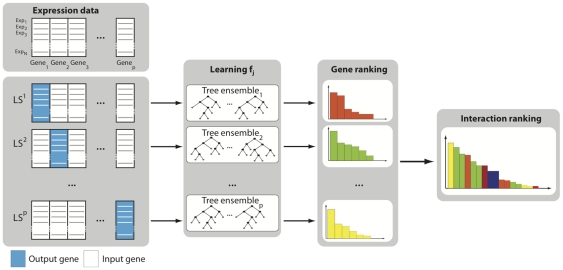
One of the pressing open problems of computational systems biology is the elucidation of the topology of genetic regulatory networks (GRNs) using high throughput genomic data, in particular microarray gene expression data. The Dialogue for Reverse Engineering Assessments and Methods (DREAM) challenge aims to evaluate the success of GRN inference algorithms on benchmarks of simulated data. In this article, we present GENIE3, a new algorithm for the inference of GRNs that was best performer in the DREAM4 In Silico Multifactorial challenge. GENIE3 decomposes the prediction of a regulatory network between p genes into p different regression problems. In each of the regression problems, the expression pattern of one of the genes (target gene) is predicted from the expression patterns of all the other genes (input genes), using tree-based ensemble methods Random Forests or Extra-Trees. The importance of an input gene in the prediction of the target gene expression pattern is taken as an indication of a putative regulatory link. Putative regulatory links are then aggregated over all genes to provide a ranking of interactions from which the whole network is reconstructed. In addition to performing well on the DREAM4 In Silico Multifactorial challenge simulated data, we show that GENIE3 compares favorably with existing algorithms to decipher the genetic regulatory network of Escherichia coli. It doesn't make any assumption about the nature of gene regulation, can deal with combinatorial and non-linear interactions, produces directed GRNs, and is fast and scalable. In conclusion, we propose a new algorithm for GRN inference that performs well on both synthetic and real gene expression data. The algorithm, based on feature selection with tree-based ensemble methods, is simple and generic, making it adaptable to other types of genomic data and interactions.
Overview
The claims and statistics of this paper haven’t been checked yet.
Free: it reads the open-access text and checks the first 5 claims that cite a source we can check. Create a free account to check every claim.
Integrity signals
Registry
Cites
Statistics
Figures
Verification
Claims the paper makes
The claims and statistics of this paper haven’t been checked yet.
Free: it reads the open-access text and checks the first 5 claims that cite a source we can check. Create a free account to check every claim.
Claims other papers make about this one
Each is checked against this paper’s own text: does it say what the citing paper says it does?
The source backs part of the claim, not all of it — or backs it for a different population, condition or comparison.
In the citing paper
“A limitation of GENIE3 is that TF information is required for it to perform better than random chance [113].”
From Gene co-expression analysis for functional classification and gene–disease predictions (2017) · cites this paper as [113]
Experimental — accuracy not yet measuredThe cited source says what the claim attributes to it.
In the citing paper
“Because of this second constraint, we cannot use pre-existing GRN inference algorithms, such as GENIE3 and GRNboost (refs. 7,51).”
From Dissecting cell identity via network inference and in silico gene perturbation (2023) · cites this paper as [51]
The cited source says what the claim attributes to it.
In the citing paper
“A major family of methods in this category is based on co-expression analysis (reviewed in [32]), and has been broadly used on bulk gene expression data (e.g. GENIE3 [33] and WGCNA [34], see [27, 35] for benchmark comparisons).”
From Mapping gene regulatory networks from single-cell omics data (2018) · cites this paper as [33]
The cited source says what the claim attributes to it.
In the citing paper
“GENIE3 incorporates TF information to construct a regulatory network by determining the TF expression pattern that best explains the expression of each of their target genes.”
From Gene co-expression analysis for functional classification and gene–disease predictions (2017) · cites this paper as [113]
Self-check
Percentages, sums and reported differences re-computed from the paper’s own numbers.
The self-check needs the paper’s full text.
Citations
Cites
Breiman, L. (2001) · Machine Learning · doi:10.1023/a:1010933404324 · Cited by 133,538
Classification and Regression Trees.
Gordon, A. D., Breiman, L., Friedman, J. H., Olshen, R. A., & Stone, C. J. (1984) · Biometrics · doi:10.2307/2530946 · Cited by 23,522
Classification and Regression Trees.
Ryzin, J. V., Breiman, L., Friedman, J. H., Olshen, R. A., & Stone, C. J. (1986) · Journal of the American Statistical Association · doi:10.2307/2288003 · Cited by 20,825
Breiman, L. (1996) · Machine Learning · doi:10.1007/bf00058655 · Cited by 16,325
Cluster analysis and display of genome-wide expression patterns
Eisen, M. B., Spellman, P. T., Brown, P. O., & Botstein, D. (1998) · Proceedings of the National Academy of Sciences · doi:10.1073/pnas.95.25.14863 · Cited by 16,184 · cited 1×
“Models based on the statistical analysis of dependencies between expression patterns have an intermediate complexity, and have already been successfully applied to the inference of large GRNs. Early models used correlation coefficients between expression patterns of all pairs of genes to infer “coexpression networks””
MethodClassification And Regression Trees
Breiman, L., Friedman, J. H., Olshen, R. A., & Stone, C. J. (2017) · doi:10.1201/9781315139470 · Cited by 11,417
Geurts, P., Ernst, D., & Wehenkel, L. (2006) · Machine Learning · doi:10.1007/s10994-006-6226-1 · Cited by 9,300 · cited 2×
“Empirical validations in [32] have shown that these two values of K were near-optimal in terms of predictive accuracy on several problems.”
BackgroundMethodSelf-citationThe Origins of Order: Self-Organization and Selection in Evolution
Kauffman, S. A. (1993) · doi:10.1093/oso/9780195079517.001.0001 · Cited by 7,855
The origins of order; self organization and selection in evolution
(1994) · International Journal of Biochemistry · doi:10.1016/0020-711x(94)90119-8 · Cited by 6,649
A review of feature selection techniques in bioinformatics
Saeys, Y., Inza, I., & Larrañaga, P. (2007) · Bioinformatics · doi:10.1093/bioinformatics/btm344 · Cited by 5,244
Research works printed but not linked: 3
- Cover TM Thomas JA 2006 Elements of Information Theory 2nd Edition Wiley-Interscience
- Faith JJ Hayete B Thaden JT Mogno I Wierzbowski J Supplemental website for: Large-scale mapping and validation of Escherichia coli transcriptional regulation from a compendium of expression profiles. http://gardnerlab.bu.edu/data/PLoS_2007/ PMC1764438 17214507
- Schäfer J Opgen-Rhein R Strimmer K 2006 Reverse engineering genetic networks using the GeneNet package. R News 6/ 5 50 53
Cited by
Items 501–600 of 1,008
Multi-omics-based insights into tomato adaptation to multifactorial stress combination
Pascual, L. S., Serna, E., Ghani, A., Lyu, Z., Immadi, M. S., Joshi, T., Verma, M. K., Rambla, J. L., Gómez‐Cadenas, ., Mittler, R., et al. (2025) · PLANT PHYSIOLOGY · doi:10.1093/plphys/kiaf519 · Cited by 32
“To identify targets of selected transcription factors, the R package GENIE3 1.18.0 (Huynh-Thu et al. 2010) was used, employing the Random Forest tree calculation method and a weight cutoff of 0.42, as described by Peláez-Vico et al. (2024).”
InfluentialA gene network regulated by FGF signalling during ear development
Anwar, M., Tambalo, M., Ranganathan, R., Grocott, T., & Streit, A. (2017) · Scientific Reports · doi:10.1038/s41598-017-05472-0 · Cited by 25
Tsai, M.-J., Wang, J.-R., Ho, S.-J., Shu, L.-S., Huang, W.-L., & Ho, S. (2020) · Bioinformatics · doi:10.1093/bioinformatics/btaa267 · Cited by 25
Hybrid Method Inference for the Construction of Cooperative Regulatory Network in Human
Chebil, I., Nicolle, R., Santini, G., Rouveirol, C., & Elati, M. (2014) · IEEE Transactions on NanoBioscience · doi:10.1109/tnb.2014.2316920 · Cited by 31
Improving Gene Regulatory Network Inference by Incorporating Rates of Transcriptional Changes
Desai, J. S., Sartor, R. C., Lawas, L. M. F., Jagadish, S. V. K., & Doherty, C. J. (2017) · Scientific Reports · doi:10.1038/s41598-017-17143-1 · Cited by 27
“( ) ( ) R P C S log (8) g g g 10 t t t = − ⋅”
Shannon entropy approach reveals relevant genes in Alzheimer’s disease
Monaco, A., Amoroso, N., Bellantuono, L., Lella, E., Lombardi, A., Monda, A., Tateo, A., Bellotti, R., & Tangaro, S. (2019) · PLoS ONE · doi:10.1371/journal.pone.0226190 · Cited by 24
“These possible links are then jointed over all genes to provide a ranking of interactions to build whole network [53].”
BackgroundMethodIshikawa, M., Sugino, S., Masuda, Y., Tarumoto, Y., Seto, Y., Taniyama, N., Wagai, F., Yamauchi, Y., Kojima, Y., Kiryu, H., et al. (2023) · Communications Biology · doi:10.1038/s42003-023-05594-4 · Cited by 22
“For example, GENIE3 9 is a leading method in this fi eld and boasts outstanding performance in the DREAM benchmark 10 and in the analysis of GRN inference from scRNA-seq data 11 .”
InfluentialA Network Approach to Wound Healing
Arodz, T., Bonchev, D., & Diegelmann, R. F. (2013) · Advances in Wound Care · doi:10.1089/wound.2012.0386 · Cited by 22
Svetlichnyy, D., Imrichova, H., Fiers, M., Kalender Atak, Z., & Aerts, S. (2015) · PLOS Computational Biology · doi:10.1371/journal.pcbi.1004590 · Cited by 22
“TFs target genes were selected either from curated TF perturbation gene signatures (MSigDB) [57] or from a GENIE3 [58] inferred co-expression network focused on melanoma (skin (77): GSE7553 [59], GSE28914 [60], GSE13355 [61]; primary melanoma (90): GSE7553 [62], GSE19293 [63], GSE23376; metastasis…”
MethodZheng, G., Xu, Y., Zhang, X., Liu, Z., Wang, Z., Chen, L., & Zhu, X. (2016) · BMC Bioinformatics · doi:10.1186/s12859-016-1324-y · Cited by 22
“…as Bayesian network [9 – 11], Boolean network [12, 13], linear and non-linear regression [14 – 18], differential equation [19, 20], information-theoretic approaches [21 – 26], probabilistic phylogeny network [27], part mutual information network [28], and probabilistic graphical models [29 – 32].”
BackgroundNetwork Inference from Single-Cell Transcriptomic Data
Todorov, H., Cannoodt, R., Saelens, W., & Saeys, Y. (2018) · Methods in molecular biology · doi:10.1007/978-1-4939-8882-2_10 · Cited by 29
Unified feature association networks through integration of transcriptomic and proteomic data
McClure, R., Wendler, J., Adkins, J., Swanstrom, J., Baric, R. S., Kaiser, B. L. D., Oxford, K. L., Waters, K. M., & McDermott, J. (2019) · PLoS Computational Biology · doi:10.1371/journal.pcbi.1007241 · Cited by 24
“…based metric [33], six additional mutual information methods in the MINET R package (ARACNE, CLR, MIM, MINET, MRNET, MRNETB) [43], and GENIE3, a random forest method that computes the links between each gene p and all other genes j -p as a function of the predictive nature of j -p on p [69].”
Cruz, F., Faria, J. P., Rocha, M., Rocha, I., & Dias, Ó. (2020) · Biochemical Society Transactions · doi:10.1042/bst20190840 · Cited by 22
Uncovering cancer gene regulation by accurate regulatory network inference from uninformative data
Seçilmiş, D., Hillerton, T., Morgan, D. C., Tjärnberg, A., Nelander, S., Nordling, T. E. M., & Sonnhammer, E. L. L. (2020) · npj Systems Biology and Applications · doi:10.1038/s41540-020-00154-6 · Cited by 27
Mall, R., Saad, M., Roelands, J. P., Rinchai, D., Kunji, K. B., Almeer, H., Hendrickx, W., Marincola, F. M., Ceccarelli, M., & Bedognetti, D. (2021) · Briefings in Bioinformatics · doi:10.1093/bib/bbab168 · Cited by 27
“This is one of the central problems in computational biology, and a plethora of techniques have been proposed, including mutual information-based method ARACNE [37] and treebased machine learning techniques such as GENIE [33] and regularized gradient boosting machine (RGBM) [17, 22, 41–44, 51].”
MethodLee, T., Lee, H., & Initiative, T. A. D. N. (2021) · Biomedicines · doi:10.3390/biomedicines9111525 · Cited by 22
“A GRN was constructed using GENIE3, a GRN inference algorithm with a tree-based ensemble method [48].”
MethodShuai, M., He, D., & Chen, X. (2021) · Statistical Applications in Genetics and Molecular Biology · doi:10.1515/sagmb-2021-0025 · Cited by 27
Identification of dynamic mass-action biochemical reaction networks using sparse Bayesian methods
Jiang, R., Singh, P., Wrede, F., Hellander, A., & Petzold, L. R. (2022) · PLoS Computational Biology · doi:10.1371/journal.pcbi.1009830 · Cited by 29
Systematic analysis of inflammation and pain pathways in a mouse model of gout
Fan, Y., Yang, J., Xie, S., He, J., Huang, S., Chen, J., Jiang, S., Yu, L., Zhou, Y., Cao, X., et al. (2022) · Molecular Pain · doi:10.1177/17448069221097760 · Cited by 28
Ansari, S. A., Dantoft, W., Ruiz‐Orera, J., Syed, A. P., Blachut, S., van Heesch, S., Hübner, N., & Uhlenhaut, N. H. (2022) · Computational and Structural Biotechnology Journal · doi:10.1016/j.csbj.2022.09.042 · Cited by 23
“The regulatory link generated by GENIE3 was ranked by a random forest algorithm [43].”
MethodDas, T., Kaur, H., Gour, P., Prasad, K., Lynn, A. M., Prakash, A., & Kumar, V. (2022) · Briefings in Bioinformatics · doi:10.1093/bib/bbac442 · Cited by 22
Lin, Z., & Ou-Yang, L. (2022) · Briefings in Bioinformatics · doi:10.1093/bib/bbac586 · Cited by 27
Network medicine: an approach to complex kidney disease phenotypes
Pandey, A. K., & Loscalzo, J. (2023) · Nature Reviews Nephrology · doi:10.1038/s41581-023-00705-0 · Cited by 24
A single-cell landscape of triptolide-associated testicular toxicity in mice
Zhang, W., Xia, S., Ou, J., Cao, M., Cheng, G., Li, Z., Wang, J., & Yang, C. (2023) · Journal of Pharmaceutical Analysis · doi:10.1016/j.jpha.2023.04.006 · Cited by 23
Quantum gene regulatory networks
Roman-Vicharra, C., & Cai, J. J. (2023) · npj Quantum Information · doi:10.1038/s41534-023-00740-6 · Cited by 33
Kalra, G., Lenz, D. R., Abdul‐Aziz, D., Hanna, C. W., Basu, M., Herb, B. R., Colantuoni, C., Milon, B. C., Saxena, M., Shetty, A. C., et al. (2023) · Cell Reports · doi:10.1016/j.celrep.2023.113421 · Cited by 27
“Briefly, we applied a random forest GRN reconstruction algorithm, GENIE3, 11 to predict target genes for transcription factors (TFs) using scRNA-seq data from clusters 4, 7, and 8.”
Transcriptome data are insufficient to control false discoveries in regulatory network inference
Kernfeld, E. M., Keener, R., Cahan, P., & Battle, A. J. (2024) · Cell Systems · doi:10.1016/j.cels.2024.07.006 · Cited by 31
OutPredict: multiple datasets can improve prediction of expression and inference of causality
Cirrone, J., Brooks, M. D., Bonneau, R., Coruzzi, G. M., & Shasha, D. E. (2020) · Scientific Reports · doi:10.1038/s41598-020-63347-3 · Cited by 24
BRANE Clust: Cluster-Assisted Gene Regulatory Network Inference Refinement
Pirayre, A., Couprie, C., Duval, L. C., & Pesquet, J.-C. (2017) · IEEE Transactions on Computational Biology and Bioinformatics · doi:10.1109/tcbb.2017.2688355 · Cited by 26
Li, H., Zhang, Z., Squires, M., Chen, X. X., & Zhang, X. (2022) · bioRxiv (Cold Spring Harbor Laboratory) · doi:10.1101/2022.10.15.512320 · Cited by 22
“The GRN used as input to scMultiSim is obtained as follows: GENIE3 [27] was used to obtain an inferred GRN from the dataset, then after looking at the output edge importance values, the top 200 edges were utilized to form a reference GRN.”
MethodInfluentialJiang, J., Chen, S., Tsou, T., McGinnis, C. S., Khazaei, T., Zhu, Q., Park, J. H., Strazhnik, I.-M., Vielmetter, J., Gong, Y., et al. (2023) · doi:10.1101/2023.04.19.537364 · Cited by 21
Biological nitrogen fixation maintains carbon/nitrogen balance and photosynthesis at elevated CO 2
Brooks, M. D., & Szeto, R. C. (2024) · Plant Cell & Environment · doi:10.1111/pce.14873 · Cited by 24
Dong, F., Yu, L., Feng, P.-D., Ren, J., Bai, X., Lin, J., Cao, D., Deng, Y.-T., Zhang, Y., Shen, H., et al. (2025) · Communications Biology · doi:10.1038/s42003-025-07506-0 · Cited by 28
Gao, S., Sun, C., Xiang, C., Qin, K., & Lee, T. H. (2020) · IEEE Transactions on Cybernetics · doi:10.1109/tcyb.2020.3022430 · Cited by 30
“Though the correlation or mutual information-based analysis methods can be adapted to single-cell data [9], they produce only a ranking of undirected gene interaction links [10].”
MethodAn integrated multi-omics approach to identify regulatory mechanisms in cancer metastatic processes
Ghaffari, S., Hanson, C. R., Schmidt, R. E., Bouchonville, K. J., Offer, S. M., & Sinha, S. (2021) · Genome biology · doi:10.1186/s13059-020-02213-x · Cited by 22
A hybrid model connecting regulatory interactions with stem cell divisions in the root
den Broeck, L. V., Spurney, R. J., Fisher, A., Schwartz, M., Clark, N. M., Nguyen, T. T., Madison, I., Gobble, M., Long, T. A., & Sozzani, R. (2021) · Quantitative Plant Biology · doi:10.1017/qpb.2021.1 · Cited by 23
“We inferred the causal relations by leveraging our transcriptome data with a regression tree algorithmRTP-STAR (Figure 2b) (Huynh- u et al., 2010; Spurney et al., 2020; Van den Broeck et al., 2020). e inferred network contained 20 nodes, of which four are TFs (Figure 2b). ese four TFs are as…”
MethodLuo, Q., Yu, Y., & Lan, X. (2021) · Briefings in Bioinformatics · doi:10.1093/bib/bbab547 · Cited by 23
Ohgushi, M., Taniyama, N., Vandenbon, A., & Eiraku, M. (2022) · Cell Reports · doi:10.1016/j.celrep.2022.110973 · Cited by 22
Liu, Y., Chen, W., Liu, X., Shi, J., Liu, N., Ren, H., Li, H., & Ulgiati, S. (2022) · Journal of Cleaner Production · doi:10.1016/j.jclepro.2022.133421 · Cited by 21
Kaul, H., Werschler, N., Jones, R. D., Siu, M. M., Tewary, M., Hagner, A., Östblom, J., Aguilar‐Hidalgo, D., & Zandstra, P. W. (2022) · Stem Cell Reports · doi:10.1016/j.stemcr.2022.10.004 · Cited by 26
Escorcia-Rodríguez, J. M., Gaytan-Nuñez, E., Hernandez-Benitez, E. M., Zorro-Aranda, A., Tello‐Palencia, M. A., & Freyre-González, J. A. (2023) · Frontiers in Genetics · doi:10.3389/fgene.2023.1143382 · Cited by 24
“…their TGs (i.e., GRNs) (Hecker et al., 2009): TIGRESS (Haury et al., 2012) and Statmodel (Zorro-Aranda et al., 2022) based on regression; GENIE3 (Huynh-Thu et al., 2010), and Inferelator (Bonneau et al., 2006) based on ensemble learning; and scanBMA (Young et al., 2014) and iterativeBMA (Annest…”
MethodLandscape and significance of human super enhancer-driven core transcription regulatory circuitry
Feng, C., Song, C., Jiang, Y., Zhao, J., Zhang, J., Wang, Y., Yin, M., Zhu, J., Ai, B., Wang, Q., et al. (2023) · Molecular Therapy — Nucleic Acids · doi:10.1016/j.omtn.2023.03.014 · Cited by 24
Seiðr: Efficient calculation of robust ensemble gene networks
Schiffthaler, B., van Zalen, E. M., Serrano, A. R., Street, N. R., & Delhomme, N. (2023) · Heliyon · doi:10.1016/j.heliyon.2023.e16811 · Cited by 21
“In the regression group, Seidr provides GENIE3 [14], TIGRESS [15], linear SVM (LLR) and Elastic Net ensembles (ELNET) [16], and PLSNET [17].”
MethodOpto-seq reveals input-specific immediate-early gene induction in ventral tegmental area cell types
Simon, R. C., Loveless, M. C., Yee, J. X., Goh, B., Cho, S. G., Nasir, Z., Hashikawa, K., Stuber, G. D., Zweifel, L. S., & Soden, M. E. (2024) · Neuron · doi:10.1016/j.neuron.2024.05.026 · Cited by 26
Systems genetics reveals key genetic elements of drought induced gene regulation in diploid potato
van Muijen, D., Anithakumari, A. M., Maliepaard, C. A., Visser, R. G. F., & van der Linden, C. G. (2016) · Plant Cell & Environment · doi:10.1111/pce.12744 · Cited by 25
Inference of cell type specific regulatory networks on mammalian lineages
Chasman, D. A., & Roy, S. (2017) · Current Opinion in Systems Biology · doi:10.1016/j.coisb.2017.04.001 · Cited by 27
“For each branch, a coarse skeleton regulatory network is inferred using GENIE3 [7], followed by detailed regulatory program learning using Gaussian Processes.”
MethodLee, J., Geng, S., Li, S., & Li, L. (2021) · Frontiers in Immunology · doi:10.3389/fimmu.2021.627036 · Cited by 28
“We choose random forest method because it has been demonstrated to have good performances for gene expression data analysis in several papers (59, 69, 70).”
MethodInferring Gene Regulatory Networks from Time-Series Expressions Using Random Forests Ensemble
Maduranga, D. A. K., Zheng, J., Mundra, P. A., & Rajapakse, J. C. (2013) · Lecture notes in computer science · doi:10.1007/978-3-642-39159-0_2 · Cited by 23
“They are, 1) extend the work of [15] to infer GRN from time-series gene expression data by developing random forest based MVAR approach and 2) introduce adjusted coefficient of determination to construct the structure of GRN.”
BackgroundMethodInfluentialEvaluation of the Common Molecular Basis in Alzheimer’s and Parkinson’s Diseases
Rana, P., Franco, E. F., Rao, Y., Syed, K., Barh, D., Azevedo, V., Ramos, R. T. J., & Ghosh, P. (2019) · International Journal of Molecular Sciences · doi:10.3390/ijms20153730 · Cited by 23
“We also used basic correlation-based network inference methods: (iii) Pearson and (iv) Spearman correlation, as well as (v) the distance correlation (DC)-based method and (vi) one regression-based gene network inference algorithm called the ensemble of trees (GENIE3) [125].”
MethodMapping the regulatory landscape of auditory hair cells from single-cell multi-omics data
Wang, S., Lee, M. P., Jones, S., Liu, J., & Waldhaus, J. (2021) · Genome Research · doi:10.1101/gr.271080.120 · Cited by 21
“The first step is to identify co-expression modules from scRNA-seq data using GENIE3 (Huynh-Thu et al. 2010).”
InfluentialInterpretable AI for inference of causal molecular relationships from omics data
Dibaeinia, P., Ojha, A., & Sinha, S. (2025) · Science Advances · doi:10.1126/sciadv.adk0837 · Cited by 28
“…(on a single dataset) benefits from incorporating nonlinear dependencies, and leading methods rely on ML approaches such as Regression Random Forests [GENIE3 ( 2 )] or Gradient Boosting Regression [GRNBoost2 ( 24 ) and ENNET ( 25 )] to achieve cutting-edge performance on standard benchmarks.”
Li, Y., Liu, X., Guo, L., Han, K., Fang, S., Wan, X., Wang, D., Xu, X., Jiang, L., Fan, G., et al. (2025) · Cell Systems · doi:10.1016/j.cels.2025.101243 · Cited by 21
Shannon, C. P., Chen, V., Takhar, M. M., Hollander, Z., Balshaw, R. F., McManus, B. M., Tebbutt, S. J., Sin, D. D., & Ng, R. T. (2016) · BMC Bioinformatics · doi:10.1186/s12859-016-1319-8 · Cited by 21
Trinh, H.-C., & Kwon, Y. (2021) · Bioinformatics · doi:10.1093/bioinformatics/btab295 · Cited by 25
EnGRaiN: a supervised ensemble learning method for recovery of large-scale gene regulatory networks
Aluru, M. R., Shrivastava, H., Chockalingam, S. P., Shivakumar, S., & Aluru, S. (2021) · Bioinformatics · doi:10.1093/bioinformatics/btab829 · Cited by 27
Fast and accurate gene regulatory network inference by normalized least squares regression
Hillerton, T., Seçilmiş, D., Nelander, S., & Sonnhammer, E. L. L. (2022) · Bioinformatics · doi:10.1093/bioinformatics/btac103 · Cited by 20
Su, E. Y., Spangler, A., Bian, Q., Kasamoto, J. Y., & Cahan, P. (2022) · Stem Cell Reports · doi:10.1016/j.stemcr.2021.12.018 · Cited by 19
“Finally, additional comparison of computational runtimes demonstrated that Epoch has the additional benefit of running magnitudes more efficiently than other methods including GRNBOOST2, PIDC, and GENIE3 (Supplementary Figure 3).”
MethodInfluentialGuo, S., Zhang, H., Chu, Y., Jiang, Q., & Ma, Y. (2022) · iMeta · doi:10.1002/imt2.20 · Cited by 21
“The widely applied GENIE3 [27] was implemented, which calculates the interaction by considering the nonlinear relationship of multiple species.”
MethodBoosting single-cell gene regulatory network reconstruction via bulk-cell transcriptomic data
Shu, H., Ding, F., Zhou, J., Xue, Y., Zhao, D. Y., Zeng, J., & Ma, J. (2022) · Briefings in Bioinformatics · doi:10.1093/bib/bbac389 · Cited by 24
A Machine Learning Approach to Simulate Gene Expression and Infer Gene Regulatory Networks
Zito, F., Cutello, V., & Pavone, M. F. (2023) · Entropy · doi:10.3390/e25081214 · Cited by 21
“One method used in this field is GENIE3 presented in [16] and its improvement called DynamicGENIE3 presented in [17].”
MethodMICA: a multi-omics method to predict gene regulatory networks in early human embryos
Alanis‐Lobato, G., Bartlett, T. E., Huang, Q., Simon, C., McCarthy, A., Elder, K. T., Snell, P., Christie, L., & Niakan, K. K. (2023) · Life Science Alliance · doi:10.26508/lsa.202302415 · Cited by 25
“For network inference, we compared the best performing strategy in the DREAM5 challenge, GENIE3 (Huynh-Thu et al, 2010), with a non-linear alternative based on MI (Faith et al, 2007), the Spearman ’ s rank correlation coef fi cient, and the L0L2 sparse regression method that we applied using recent…”
MethodA review on gene regulatory network reconstruction algorithms based on single cell RNA sequencing
Kim, H., Choi, H. K., Lee, D., & Kim, J. (2023) · Genes & Genomics · doi:10.1007/s13258-023-01473-8 · Cited by 25
“This algorithm decomposes the inference process into multiple regression problem, predicting the expression pattern of a target gene from the patterns of other input genes using tree-based ensemble methods (Huynh-Thu et al. 2010).”
Bernaola, N., Michiels, M., Larrañaga, P., & Bielza, C. (2023) · PLoS Computational Biology · doi:10.1371/journal.pcbi.1011443 · Cited by 26
Osorio, D., Capasso, A., Eckhardt, S. G., Giri, U. P., Somma, A. J., Pitts, T. M., Lieu, C. H., Messersmith, W. A., Bagby, S. M., Singh, H., et al. (2024) · Nature Computational Science · doi:10.1038/s43588-024-00597-5 · Cited by 27
“The use of data other than gene expression distinguishes SCORPION from most other methodologies (9, 29–39).”
MethodAnge, J. S., Weng, Y., Kaletsky, R. L., Stevenson, M. E., Moore, R. S., Zhou, S., & Murphy, C. T. (2024) · Cell Genomics · doi:10.1016/j.xgen.2024.100720 · Cited by 23
“We performed gene network analysis by calculating the regulatorystrength between all daf-2 significantlydifferentially expressed genes using tree-based ensemble methods (GENIE3 41 ) to investigate the co-regulation and interaction of these differentially expressed genes (Figure S7).”
Chen, X., Gu, J., Wang, X., Jung, J.-G., Wang, T., Hilakivi-Clarke, L. A., Clarke, R. C., & Xuan, J. (2017) · Bioinformatics · doi:10.1093/bioinformatics/btx827 · Cited by 21
Yu, H., Jiao, B., Lu, L., Wang, P., Chen, S., Liang, C., & Liu, W. (2018) · PLoS ONE · doi:10.1371/journal.pone.0192613 · Cited by 20
Okawa, S., Saltó, C., Ravichandran, S., Yang, S., Toledo, E. M., Arenas, E., & del Sol, A. (2018) · Nature Communications · doi:10.1038/s41467-018-05016-8 · Cited by 21
“A GRN for each cell subpopulation was inferred using the corresponding cell subpopulation single-cell RNA-seq data with four different algorithms, PCC, SCC, MRNET 43 , and random forest-based method (GENIE3 44 ).”
MethodIntrinsic-overlapping co-expression module detection with application to Alzheimer's Disease
Manners, H. N., Roy, S., & Kalita, J. K. (2018) · Computational Biology and Chemistry · doi:10.1016/j.compbiolchem.2018.10.014 · Cited by 23
Algebraic shortcuts for leave-one-out cross-validation in supervised network inference
Stock, M., Pahikkala, T., Airola, A., Waegeman, W., & Baets, B. D. (2018) · Briefings in Bioinformatics · doi:10.1093/bib/bby095 · Cited by 29
Integrated Inference and Analysis of Regulatory Networks from Multi-Level Measurements
Poultney, C. S., Greenfield, A., & Bonneau, R. (2012) · Methods in cell biology · doi:10.1016/b978-0-12-388403-9.00002-3 · Cited by 22
“We discuss our pipeline in the context of expression data (to describe our core model and prior work) and then develop a method that can integrate these four sources of information (Chen et al., 2008; Christley et al., 2009; De Smet and Marchal, 2010; Friedman and Nachman, 1999; Geier et al., 2007; Gevaert et al., 200…”
BackgroundMethodMa, Y., Li, Q., Tang, Y., Zhang, Z., Liu, R., Luo, Q., Wang, Y., Hu, J. H., Chen, Y., Li, Z., et al. (2024) · Cell Reports · doi:10.1016/j.celrep.2024.114460 · Cited by 19
Zhang, R., Shen, Z., Zhao, Z., Gu, X., Yan, T., Wei, W., Wu, C., Xia, J., Zhang, Y., Chen, S., et al. (2025) · Cell Reports · doi:10.1016/j.celrep.2025.115437 · Cited by 26
Scaling structural learning with NO-BEARS to infer causal transcriptome networks
Lee, H.-C., Danieletto, M., Miotto, R., Cherng, S. T., & Dudley, J. T. (2019) · Pacific Symposium on Biocomputing (PSB) · doi:10.1142/9789811215636_0035 · Cited by 59
Wu, K., Liu, J., Hao, X., Liu, P., & Shen, F. (2020) · IEEE Transactions on Evolutionary Computation · doi:10.1109/tevc.2020.3020423 · Cited by 26
“Awiderange of network inference methods have been developed to overcome this challenge, such as regression [3]–[6], mutual information [7], random forest [8], evolutionary algorithms (EAs) [9], [10], and many other methods [11].”
MethodData integration for inferring context-specific gene regulatory networks
Baur, B. A., Shin, J., Zhang, S., & Roy, S. (2020) · Current Opinion in Systems Biology · doi:10.1016/j.coisb.2020.09.005 · Cited by 23
“While there are a large number of mathematical formalisms to represent regulatory networks [16], we focus on statistical models, which include information-theoretic methods [17], dependency networks [18,19], Bayesian networks [20], and Gaussian graphical models [21].”
BackgroundScaling up SMEs’ credit scoring scope with LightGBM
Lextrait, B. (2022) · Applied Economics · doi:10.1080/00036846.2022.2095340 · Cited by 34
“Over the last two decades, litterature attempted in different ways to provide heuristic methods to quantify feature importance of ensemble models (Chebrolu, Abraham, and Thomas 2005; Daz-Uriarte and De Andres 2006; Strobl et al. 2008; Huynh-Thu et al. 2010; Chen and Guestrin 2016).”
MethodKazemi, E., Zargooshi, J., Kaboudi, M., Izadi, F., Motlagh, H.-R. M., Kahrizi, D., Khazaie, H., Mahaki, B., & Mohammadian, Y. (2021) · Cellular and Molecular Biology · doi:10.14715/cmb/2021.67.3.31 · Cited by 27
Inferring Gene Regulatory Networks From Single-Cell Transcriptomic Data Using Bidirectional RNN
Gan, Y., Hu, X., Zou, G., Yan, C., & Xu, G. (2022) · Frontiers in Oncology · doi:10.3389/fonc.2022.899825 · Cited by 21
“Using tree-based ensemble methods, the expression pattern of each target gene is predicted by the expression of all the other genes (9).”
MethodWilson, L. B., McClure, R., Waters, K. M., Simonich, M. T., & Tanguay, R. L. (2022) · Frontiers in Toxicology · doi:10.3389/ftox.2022.950503 · Cited by 22
“To infer networks the random forest algorithm GENIE3 was used (Huynh-Thu et al., 2010).”
MethodKane, H., LaMarche, N. M., Scannail, A. N., Garza, A., Koay, H., Azad, A. I., Kunkemoeller, B. H., Stevens, B., Brenner, M. B., & Lynch, L. (2022) · eLife · doi:10.7554/elife.76586 · Cited by 20
Moutsopoulos, I., Williams, E. C., & Mohorianu, I. I. (2022) · Briefings in Bioinformatics · doi:10.1093/bib/bbac591 · Cited by 15
Zhou, W., Jie, Q., Pan, T., Shi, J., Jiang, T., Zhang, Y., Ding, N., Xu, J., Ma, Y., & Li, Y. (2023) · Communications Biology · doi:10.1038/s42003-023-04457-2 · Cited by 23
Single-cell RNA sequencing identifies hippocampal microglial dysregulation in diet-induced obesity
Henn, R. E., Guo, K., Elzinga, S. E., Noureldein, M. H., Mendelson, F. E., Hayes, J. M., Rigan, D. M., Savelieff, M. G., Hur, J., & Feldman, E. L. (2023) · iScience · doi:10.1016/j.isci.2023.106164 · Cited by 20
Inferring single-cell gene regulatory network by non-redundant mutual information
Zeng, Y., He, Y., Zheng, R., & Li, M. (2023) · Briefings in Bioinformatics · doi:10.1093/bib/bbad326 · Cited by 25
Wang, Y., Chen, X., Zheng, Z., Huang, L., Xie, W., Wang, F., Zhang, Z., & Wong, K. (2024) · iScience · doi:10.1016/j.isci.2024.109352 · Cited by 33
Pirayre, A., Couprie, C., Bidard, F., Duval, L. C., & Pesquet, J.-C. (2015) · BMC Bioinformatics · doi:10.1186/s12859-015-0754-2 · Cited by 26
“The more recent GENIE3 (GEne Network Inference with Ensemble of trees) [13] and Jump3 [14] approaches prevent such a pitfall by avoiding assumptions on the data.”
BackgroundJo, J., Hwang, S., Kim, H. J., Hong, S., Lee, J. E., Lee, S.-G., Baek, A., Han, H., Lee, J. I., Lee, I., et al. (2016) · Nucleic Acids Research · doi:10.1093/nar/gkv1468 · Cited by 21
“To construct a transcriptional regulatory network between the two candidate genes, Pc4 and Zfp64, and 21 reprogramming marker genes, we employed the genie3 (33) R package with the same microarray data used for the clustering analysis.”
MethodShen, F., Liu, J., & Wu, K. (2020) · IEEE Transactions on Fuzzy Systems · doi:10.1109/tfuzz.2020.2975482 · Cited by 19
“value for the target node can be considered as a feature selection problem [46], [47].”
BackgroundRWRNET: A Gene Regulatory Network Inference Algorithm Using Random Walk With Restart
Liu, W., Sun, X., Li, P., Zhou, L., Lin, H. L., & Jiang, Y. (2020) · Frontiers in Genetics · doi:10.3389/fgene.2020.591461 · Cited by 22
A neuro-evolution approach to infer a Boolean network from time-series gene expressions
Barman, S., & Kwon, Y. (2020) · Bioinformatics · doi:10.1093/bioinformatics/btaa840 · Cited by 21
A variable gene family encoding nodule-specific cysteine-rich peptides in pea (Pisum sativum L.)
Андреевич, З. Е., Kliukova, M. S., Afonin, A. М., Gribchenko, E. S., Gordon, M. L., Sulima, A. S., Zhernakov, A. I., Алексеевна, К. О., Romanyuk, D. A., Kusakin, P. G., et al. (2022) · Frontiers in Plant Science · doi:10.3389/fpls.2022.884726 · Cited by 19
de Vries, N. J., Reis, R., & Moscato, P. (2015) · PLoS ONE · doi:10.1371/journal.pone.0122133 · Cited by 22
“This methodology is adopted from research in biological methods where ‘reverse-engineering’ a model from the data is a common and accepted practice [23].”
MethodAcquaah-Mensah, G. K., & Taylor, R. C. (2016) · Gene · doi:10.1016/j.gene.2016.03.045 · Cited by 22
Single-cell and spatial multiomic inference of gene regulatory networks using SCRIPro
Chang, Z., Xu, Y., Dong, X., Gao, Y., & Wang, C. (2024) · Bioinformatics · doi:10.1093/bioinformatics/btae466 · Cited by 22
“Traditional methods for inferring GRNs, such as GENIE3 (Huynh-Thu et al. 2010), LISA (Qin et al. 2020), GRNBoost2 (Moerman et al. 2019), TIGRESS (Haury et al. 2012), ppcor (Kim 2015), and NIMEFI (Ruyssinck et al. 2014), were primarily designed for bulk samples from mixed cell-type tissues.”
MethodA high-resolution model of gene expression during Gossypium hirsutum (cotton) fiber development
Grover, C. E., Jareczek, J. J., Swaminathan, S., Lee, Y., Howell, A. H., Rani, H., Arick, M. A., Leach, A. G., Miller, E. R., Yang, P., et al. (2025) · BMC Genomics · doi:10.1186/s12864-025-11360-z · Cited by 27
“…inference algorithms are known to exhibit biases [114], we used Seidr [89] to generate a crowd network employing 13 algorithms (see meth-ods), including the high performing GEne Network Inference with Ensemble of trees (GENIE3; [115, 116]) and Weighted Gene Coexpression Network Analysis (WGCNA).”
Pan, Q., Ding, L., Hladyshau, S., Yao, X., Zhou, J., Yan, L., Dhungana, Y., Shi, H., Qian, C., Dong, X., et al. (2025) · Nature Communications · doi:10.1038/s41467-025-59620-6 · Cited by 29
Synthetic Biology of Plants and Microbes for Agriculture, Environment, and Future Applications
Clauer, P. R., Nou, A., Toth, T., Yu, Q., Chemla, Y., Boo, A., Yoon, K. S., & Voigt, C. A. (2026) · Chemical Reviews · doi:10.1021/acs.chemrev.4c00687 · Cited by 24
Processing, visualising and reconstructing network models from single‐cell data
Woodhouse, S., Moignard, V., Göttgens, B., & Fisher, J. (2016) · Immunology & Cell Biology · doi:10.1038/icb.2015.102 · Cited by 18
Olivares-Yáñez, C., Sánchez, E., Pérez-Lara, G., Seguel, A., Camejo, P. Y., Larrondo, L. F., Vidal, E. A., & Canessa, P. (2021) · Computational and Structural Biotechnology Journal · doi:10.1016/j.csbj.2021.11.012 · Cited by 20
“To generate a reference GRN for B. cinerea and T. atroviride , we combined the TF-target information obtained by FIMO with regulatory interactions predicted by GENIE3 (v 1.14.0, running in R 4.1.0), a widely used expression-based GRN inference algorithm [9].”
MethodInfluential
Metadata
- Authors
- Huynh-Thu, V. A., Irrthum, A., Wehenkel, L., & Geurts, P.
- Affiliations
- University of Liège (BE)
- Venue
- PLoS ONE
- Publisher
- Public Library of Science (PLoS)
- Published
- 2010-09-28
- Volume
- 5
- Issue
- 9
- Pages
- e12776
- ISSN
- 1932-6203 (ISSN-L)
- PMC
- PMC2946910
- OpenAlex
- W2076513103
- Cited by
- 2,131
- References
- 53
- Citations by year
- 2026: 237 · 2025: 273 · 2024: 274 · 2023: 241 · 2022: 225 · 2021: 194 · 2020: 146 · 2019: 120 · 2018: 95 · 2017: 79 · 2016: 59 · 2015: 63 · 2014: 53 · 2013: 36 · 2012: 25
- FWCI
- 9.24
- Type
- journal article
- Language
- en
- Open access
- gold
- doi.org
- Locations
- PLoS ONE (publishedVersion, cc-by)
- PubMed Central (publishedVersion, cc-by)
- PubMed (publishedVersion)
- RePEc: Research Papers in Economics (submittedVersion)
- DOAJ (DOAJ: Directory of Open Access Journals) (submittedVersion, cc-by-sa)
- Figshare (submittedVersion, cc-by)
- Open Repository and Bibliography (University of Liège) (submittedVersion)
- ORBi (University of Liège) (submittedVersion, other-oa)
- ORBi (University of Liège) (submittedVersion)
- Funders
- Fonds De La Recherche Scientifique - FNRS
- Fédération Wallonie-Bruxelles
- Topics
- Life Sciences › Biochemistry, Genetics and Molecular Biology › Molecular Biology › Gene Regulatory Network Analysis
- Life Sciences › Biochemistry, Genetics and Molecular Biology › Molecular Biology › Bioinformatics and Genomic Networks
- Life Sciences › Biochemistry, Genetics and Molecular Biology › Molecular Biology › Microbial Metabolic Engineering and Bioproduction
- Keywords
- GENIE3, random forest, extra trees, microarray gene expression, Escherichia coli, feature selection, network topology
- MeSH terms
- Algorithms, Escherichia coli, Gene Expression Regulation, Computational Biology, Oligonucleotide Array Sequence Analysis, Gene Regulatory Networks
About these checks
Registry, retraction, Cites and statistics results are computed, not judged, with one exception: a printed reference that no index lists is read once by a model before it counts as a citation error. Claims are extracted by a model and kept only when their quote appears verbatim in the text; each cited source is then checked, with a model’s help, for whether it says what the claim relies on. Those verdicts can be wrong — read the claim’s quote and the cited source before relying on one.
Statistics and arithmetic are recomputed, not judged.
Confidence bands are shown only for fields calibrated on our annotated test set. None is calibrated yet, so no band is shown.
What counts as a claim ›How we measure confidence ›How we check this ›
Are you an author, or do you see a problem with this page? Request a review
Data sources
Bibliographic data: Semantic Scholar, OpenAlex, Crossref.
Contains information from the Semantic Scholar Academic Graph Datasets, made available under the ODC Attribution License (ODC-BY 1.0).
Semantic Scholar’s data is described in: Kinney, R., et al. (2023). The Semantic Scholar Open Data Platform. arXiv:2301.10140.
