

Inferring Regulatory Networks from Expression Data Using Tree-Based Methods
Open accessThe DOI matches its Crossref record; 51 of the 53 references it cites were found in a registry or an index.
Abstract
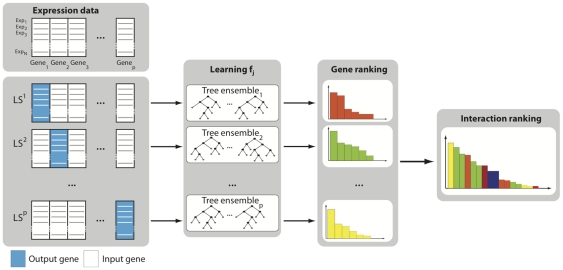
One of the pressing open problems of computational systems biology is the elucidation of the topology of genetic regulatory networks (GRNs) using high throughput genomic data, in particular microarray gene expression data. The Dialogue for Reverse Engineering Assessments and Methods (DREAM) challenge aims to evaluate the success of GRN inference algorithms on benchmarks of simulated data. In this article, we present GENIE3, a new algorithm for the inference of GRNs that was best performer in the DREAM4 In Silico Multifactorial challenge. GENIE3 decomposes the prediction of a regulatory network between p genes into p different regression problems. In each of the regression problems, the expression pattern of one of the genes (target gene) is predicted from the expression patterns of all the other genes (input genes), using tree-based ensemble methods Random Forests or Extra-Trees. The importance of an input gene in the prediction of the target gene expression pattern is taken as an indication of a putative regulatory link. Putative regulatory links are then aggregated over all genes to provide a ranking of interactions from which the whole network is reconstructed. In addition to performing well on the DREAM4 In Silico Multifactorial challenge simulated data, we show that GENIE3 compares favorably with existing algorithms to decipher the genetic regulatory network of Escherichia coli. It doesn't make any assumption about the nature of gene regulation, can deal with combinatorial and non-linear interactions, produces directed GRNs, and is fast and scalable. In conclusion, we propose a new algorithm for GRN inference that performs well on both synthetic and real gene expression data. The algorithm, based on feature selection with tree-based ensemble methods, is simple and generic, making it adaptable to other types of genomic data and interactions.
Overview
The claims and statistics of this paper haven’t been checked yet.
Free: it reads the open-access text and checks the first 5 claims that cite a source we can check. Create a free account to check every claim.
Integrity signals
Registry
Cites
Statistics
Figures
Verification
Claims the paper makes
The claims and statistics of this paper haven’t been checked yet.
Free: it reads the open-access text and checks the first 5 claims that cite a source we can check. Create a free account to check every claim.
Claims other papers make about this one
Each is checked against this paper’s own text: does it say what the citing paper says it does?
The source backs part of the claim, not all of it — or backs it for a different population, condition or comparison.
In the citing paper
“A limitation of GENIE3 is that TF information is required for it to perform better than random chance [113].”
From Gene co-expression analysis for functional classification and gene–disease predictions (2017) · cites this paper as [113]
Experimental — accuracy not yet measuredThe cited source says what the claim attributes to it.
In the citing paper
“Because of this second constraint, we cannot use pre-existing GRN inference algorithms, such as GENIE3 and GRNboost (refs. 7,51).”
From Dissecting cell identity via network inference and in silico gene perturbation (2023) · cites this paper as [51]
The cited source says what the claim attributes to it.
In the citing paper
“A major family of methods in this category is based on co-expression analysis (reviewed in [32]), and has been broadly used on bulk gene expression data (e.g. GENIE3 [33] and WGCNA [34], see [27, 35] for benchmark comparisons).”
From Mapping gene regulatory networks from single-cell omics data (2018) · cites this paper as [33]
The cited source says what the claim attributes to it.
In the citing paper
“GENIE3 incorporates TF information to construct a regulatory network by determining the TF expression pattern that best explains the expression of each of their target genes.”
From Gene co-expression analysis for functional classification and gene–disease predictions (2017) · cites this paper as [113]
Self-check
Percentages, sums and reported differences re-computed from the paper’s own numbers.
The self-check needs the paper’s full text.
Citations
Cites
Breiman, L. (2001) · Machine Learning · doi:10.1023/a:1010933404324 · Cited by 133,538
Classification and Regression Trees.
Gordon, A. D., Breiman, L., Friedman, J. H., Olshen, R. A., & Stone, C. J. (1984) · Biometrics · doi:10.2307/2530946 · Cited by 23,522
Classification and Regression Trees.
Ryzin, J. V., Breiman, L., Friedman, J. H., Olshen, R. A., & Stone, C. J. (1986) · Journal of the American Statistical Association · doi:10.2307/2288003 · Cited by 20,825
Breiman, L. (1996) · Machine Learning · doi:10.1007/bf00058655 · Cited by 16,325
Cluster analysis and display of genome-wide expression patterns
Eisen, M. B., Spellman, P. T., Brown, P. O., & Botstein, D. (1998) · Proceedings of the National Academy of Sciences · doi:10.1073/pnas.95.25.14863 · Cited by 16,184 · cited 1×
“Models based on the statistical analysis of dependencies between expression patterns have an intermediate complexity, and have already been successfully applied to the inference of large GRNs. Early models used correlation coefficients between expression patterns of all pairs of genes to infer “coexpression networks””
MethodClassification And Regression Trees
Breiman, L., Friedman, J. H., Olshen, R. A., & Stone, C. J. (2017) · doi:10.1201/9781315139470 · Cited by 11,417
Geurts, P., Ernst, D., & Wehenkel, L. (2006) · Machine Learning · doi:10.1007/s10994-006-6226-1 · Cited by 9,300 · cited 2×
“Empirical validations in [32] have shown that these two values of K were near-optimal in terms of predictive accuracy on several problems.”
BackgroundMethodSelf-citationThe Origins of Order: Self-Organization and Selection in Evolution
Kauffman, S. A. (1993) · doi:10.1093/oso/9780195079517.001.0001 · Cited by 7,855
The origins of order; self organization and selection in evolution
(1994) · International Journal of Biochemistry · doi:10.1016/0020-711x(94)90119-8 · Cited by 6,649
A review of feature selection techniques in bioinformatics
Saeys, Y., Inza, I., & Larrañaga, P. (2007) · Bioinformatics · doi:10.1093/bioinformatics/btm344 · Cited by 5,244
Research works printed but not linked: 3
- Cover TM Thomas JA 2006 Elements of Information Theory 2nd Edition Wiley-Interscience
- Faith JJ Hayete B Thaden JT Mogno I Wierzbowski J Supplemental website for: Large-scale mapping and validation of Escherichia coli transcriptional regulation from a compendium of expression profiles. http://gardnerlab.bu.edu/data/PLoS_2007/ PMC1764438 17214507
- Schäfer J Opgen-Rhein R Strimmer K 2006 Reverse engineering genetic networks using the GeneNet package. R News 6/ 5 50 53
Cited by
Items 701–800 of 1,008
Gene regulatory network inference as relaxed graph matching.
Weighill, D. A., Guebila, M. B., Lopes‐Ramos, C. M., Glass, K., Quackenbush, J. F., Platig, J., & Burkholz, R. (2021) · PubMed · Cited by 15
Gene co-expression network analysis in zebrafish reveals chemical class specific modules
Shankar, P., McClure, R., Waters, K. M., & Tanguay, R. L. (2021) · BMC Genomics · doi:10.1186/s12864-021-07940-4 · Cited by 18
“While these previous studies were in bacterial or human systems, we used similar methods like those we already published [43] to compare GENIE3 to other gene co-expression methods using the zebrafish data in this study.”
MethodInfluentialGRNbenchmark - a web server for benchmarking directed gene regulatory network inference methods
Seçilmiş, D., Hillerton, T., & Sonnhammer, E. L. L. (2022) · Nucleic Acids Research · doi:10.1093/nar/gkac377 · Cited by 18
“Eight well-known GRN inference methods: Least squares, LASSO (5), Ridge regression, ElasticNet (22), Z-score (23), GENIE3 (4), PLSNET (7), and TIGRESS (6), were run and made public on GRNbenchmark.”
BackgroundLei, J., Cai, Z., He, X., Zheng, W., & Liu, J. (2022) · Bioinformatics · doi:10.1093/bioinformatics/btac717 · Cited by 19
Kim, D.-C., Kang, M., Zhang, B., Wu, X., Liu, C., & Gao, J. (2014) · IEEE International Conference on Bioinformatics and Bioengineering (BIBE) · doi:10.1109/bibe.2014.71 · Cited by 15
“• ARACNE: [6] • GENIE3: top rank in DREAM 4 [7] • DCGRN: the proposed method”
BackgroundEmmert‐Streib, F., Dehmer, M., & Haibe‐Kains, B. (2014) · Frontiers in Genetics · doi:10.3389/fgene.2014.00299 · Cited by 14
NetProphet 2.0: mapping transcription factor networks by exploiting scalable data resources
Kang, Y., Liow, H.-H., Maier, E. J., & Brent, M. R. (2017) · Bioinformatics · doi:10.1093/bioinformatics/btx563 · Cited by 15
Prediction of TF-Binding Site by Inclusion of Higher Order Position Dependencies
Zhou, J., Lu, Q., Xu, R., Gui, L., & Wang, H. (2019) · IEEE Transactions on Computational Biology and Bioinformatics · doi:10.1109/tcbb.2019.2892124 · Cited by 15
“AUPR measures the similarity of the predictions to a known gold standard and is a more appropriate evaluation metric for extremely unbalanced datasets than AUC [37], [38].”
BackgroundLeveraging User-Friendly Network Approaches to Extract Knowledge From High-Throughput Omics Datasets
Ramos, P. I. P., Arge, L. W. P., Lima, N. C. B., Fukutani, K. F., & Queiroz, A. T. L. (2019) · Frontiers in Genetics · doi:10.3389/fgene.2019.01120 · Cited by 15
“(Huynh-Thu et al., 2010), mutual information (Margolin et al.”
Katebi, A., Ramirez, D., & Lu, M. (2021) · Computational and Systems Oncology · doi:10.1002/cso2.1021 · Cited by 16
“The authors benchmarked 12 network construction algorithms with several simulated and experimental datasets with known network topologies and identified PIDC [115], GENIE3 [116], and GrnBoost2 [117] as having the best overall performance.”
MethodZhao, B., Dai, K., Li, S., Zhang, G., Lv, W., Liu, W., Cai, Y., Wang, F., Zhou, H., Guan, D., et al. (2025) · iScience · doi:10.1016/j.isci.2025.112422 · Cited by 16
GRANet: a graph residual attention network for gene regulatory network inference
Zhou, J., Gong, N., Hu, Y., Yu, H. Z., Wang, G., & Wu, H. (2025) · Briefings in Bioinformatics · doi:10.1093/bib/bbaf349 · Cited by 16
Williams, E. C., Franzén, L., Lindvall, M. O., Hamm, G. R., Oag, S., Majumder, M. M., Denholm, J., Hamidinekoo, A., Morlanes, J. E., Vicari, M., et al. (2026) · Nature Communications · doi:10.1038/s41467-025-68003-w · Cited by 21
Loft, A., Rydbirk, R., Gammelmark, E., Hauwaert, E. L. V., Wernberg, C. W., Møller, A. F., Dam, T. V., Hassan, M. N., Maniyadath, B., Nielsen, R., et al. (2026) · Nature Metabolism · doi:10.1038/s42255-025-01433-4 · Cited by 18
“Regulons were identified using SCENIC 48,49 .”
Yang, B., & Bao, W. (2019) · IEEE Access · doi:10.1109/access.2019.2913084 · Cited by 18
“To test the validation of our method, LASSO [41], random forest (GENIE3) with parameters ’sqrt’ [42], ARACNE [43] and ODE [44] are also utilized to infer gene regulatory network with the same data.”
MethodSimiC enables the inference of complex gene regulatory dynamics across cell phenotypes
Peng, J., Serrano, G., Traniello, I. M., Calleja-Cervantes, M. E., Chembazhi, U. V., Bangru, S., Ezponda, T., Rodríguez-Madoz, J. R., Kalsotra, A., Prósper, F., et al. (2022) · Communications Biology · doi:10.1038/s42003-022-03319-7 · Cited by 14
Causal discovery in high-dimensional, multicollinear datasets
Jia, M., Yuan, D. Y., Lovelace, T. C., Hu, M., & Benos, P. V. (2022) · Frontiers in Epidemiology · doi:10.3389/fepid.2022.899655 · Cited by 17
Segura-Ortiz, A., García-Nieto, J., Aldana-Montes, J. F., & Navas‐Delgado, I. (2023) · Computers in Biology and Medicine · doi:10.1016/j.compbiomed.2023.106653 · Cited by 17
House, I. G., Derrick, E. B., Sek, K., Chen, A. X. Y., Li, J., Lai, J., Todd, K. L., Munoz, I., Michie, J., Chan, C. W., et al. (2023) · Cell Reports · doi:10.1016/j.celrep.2023.113014 · Cited by 17
Transcriptomic signatures of progressive and regressive liver fibrosis and portal hypertension
Petrenko, O., Königshofer, P., Brusilovskaya, K., Hofer, B., Bareiner, K., Simbrunner, B., Jühling, F., Baumert, T. F., Lupberger, J., Trauner, M., et al. (2024) · iScience · doi:10.1016/j.isci.2024.109301 · Cited by 20
Inferring gene regulatory networks from single-cell transcriptomics based on graph embedding
Gan, Y., Yu, J., Xu, G., Yan, C., & Zou, G. (2024) · Bioinformatics · doi:10.1093/bioinformatics/btae291 · Cited by 19
“GENIE3 is based on decision trees, which infer the regulatory interactions of each gene independently by an integrated tree-based approach (Huynh-Thu et al. 2010).”
Single-cell total-RNA profiling unveils regulatory hubs of transcription factors
Niu, Y., Luo, J., & Zong, C. C. (2024) · Nature Communications · doi:10.1038/s41467-024-50291-3 · Cited by 12
“To evaluate the performance of different approaches on identifying TF-gene regulation from our data, we employed GENIE3 22,30 , a non-parametric method, to compare with the regression-based method.”
Deep Learning in Gene Regulatory Network Inference: A Survey
Dong, J., Li, J., & Wang, F. (2024) · IEEE Transactions on Computational Biology and Bioinformatics · doi:10.1109/tcbb.2024.3442536 · Cited by 19
Perspective on recent developments and challenges in regulatory and systems genomics
Zeitlinger, J., Roy, S., Ay, F., Mathelier, A., Medina-Rivera, A., Mahony, S., Sinha, S. K., & Ernst, J. (2024) · Bioinformatics Advances · doi:10.1093/bioadv/vbaf106 · Cited by 22
“…and use probabilistic graphical models such as Bayesian networks and their extensions (Friedman et al. 2000, Segal et al. 2003) or dependency networks with linear (Greenfield et al. 2013, Siahpirani and Roy 2017) or non-linear regression models (Huynh-Thu et al. 2010, Baran et al. 2012) (Table 3).”
Yu, B., Xu, J., Li, S., Chen, C., Chen, R., Wang, L., Zhang, Y., & Wang, M. (2017) · Oncotarget · doi:10.18632/oncotarget.21268 · Cited by 17
“For the DREAM3 datasets, three algorithms were selected for deriving GRNs, such as ARACNE algorithm based on mutual information [62], GENIE3 algorithm based on random forest [67] and NARROMI algorithm based on recursive optimization algorithm.”
MethodJoshi, A., Beck, Y., & Michoel, T. (2015) · Journal of Computational Biology · doi:10.1089/cmb.2014.0290 · Cited by 15
“Additionally, multi-probe to gene mapping used median probe expression. c : Four methods were compared: Pearson correlation; Aracne; TIGRESS; GENIE3.”
MethodInfluentialXie, X., Hanson, C. R., & Sinha, S. (2019) · BMC Biology · doi:10.1186/s12915-019-0679-8 · Cited by 18
DeMers, L. C., Redekar, N. R., Kachroo, A., Tolin, S. A., Li, S., & Maroof, M. A. S. (2020) · PLoS ONE · doi:10.1371/journal.pone.0231658 · Cited by 16
Sinha, K., Murphy, E., Kumar, P., Springer, K. A., Ho, R., & Nere, N. K. (2021) · AAPS PharmSciTech · doi:10.1208/s12249-021-02083-x · Cited by 14
“Machine learning has been used to overcome challenges in other computationally intensive methods such as DFT (44) and CFD (45), as well in areas where fi rst principle models are limited such as systems biology (46) and bioinformatics (47).”
MethodCheng, M., Wu, L. L., Han, L., Huang, X., Lai, Y., Xu, J., Wang, S., Li, M., Zheng, H., Feng, W., et al. (2022) · Frontiers in Cell and Developmental Biology · doi:10.3389/fcell.2022.878346 · Cited by 17
Blanco, E., Curci, P. L., Manconi, A., Sarli, A., Zuluaga, D. L., & Sonnante, G. (2022) · Frontiers in Plant Science · doi:10.3389/fpls.2022.896945 · Cited by 16
Liu, Z., Zhai, M., Zhang, Q., Yang, T., Wan, Z., Li, J., Liu, X., Xu, B., Du, L., Chan, R., et al. (2022) · Frontiers in Cell and Developmental Biology · doi:10.3389/fcell.2022.1060298 · Cited by 14
“, 2020) transcription factors (TFs) were identified using the GENIE3 algorithm (Huynh-Thu et al., 2010).”
MethodSpectral Alignment of Networks
Feizi, S., Quon, G., Médard, M., Kellis, M., & Jadbabaie, A. (2015) · DSpace@MIT (Massachusetts Institute of Technology) · Cited by 18
Taruttis, F., Spang, R., & Engelmann, J. C. (2015) · Bioinformatics · doi:10.1093/bioinformatics/btv461 · Cited by 16
Characterization of Genetic Networks Associated with Alzheimer’s Disease
Zhang, B., Tran, L. M., Emilsson, V., & Zhu, J. (2015) · Methods in molecular biology · doi:10.1007/978-1-4939-2627-5_28 · Cited by 14
Wani, N., & Raza, K. (2021) · PeerJ Computer Science · doi:10.7717/peerj-cs.363 · Cited by 14
Mechanism-Centric Approaches for Biomarker Detection and Precision Therapeutics in Cancer
Yu, C. Y., & Mitrofanova, A. (2021) · Frontiers in Genetics · doi:10.3389/fgene.2021.687813 · Cited by 18
Spatiotemporal tracing of pandemic spread from infection data
Roy, S., Biswas, P., & Ghosh, P. (2021) · Scientific Reports · doi:10.1038/s41598-021-97207-5 · Cited by 14
Learning a Markov Logic network for supervised gene regulatory network inference
Brouard, C., Vrain, C., Dubois, J., Castel, D., Debily, M.-A., & d’Alché–Buc, F. (2013) · BMC Bioinformatics · doi:10.1186/1471-2105-14-273 · Cited by 18
“A powerful approach to regression and network inference based on an ensemble of randomized regression trees [13] has also proven to outperform competitors in inferring gene regulatory networks in recent DREAM competitions.”
Construction of an integrated gene regulatory network link to stress-related immune system in cattle
Behdani, E., & Bakhtiarizadeh, M. R. (2017) · Genetica · doi:10.1007/s10709-017-9980-z · Cited by 16
“These networks describe the relationships between genes and regulatory factors (Irrthum et al. 2010).”
BackgroundZhao, Z., Meng, T., Chen, X., Gao, F., Schatten, H., Ou, X., & Sun, Q. (2025) · Communications Biology · doi:10.1038/s42003-025-08277-4 · Cited by 18
Zhernovkov, V., Santra, T., Cassidy, H., Rukhlenko, O. S., Matallanas, D., Krstić, A., Kölch, W., Lobaskin, V., & Kholodenko, B. Ν. (2019) · Toxicological Sciences · doi:10.1093/toxsci/kfz151 · Cited by 15
Filter feature selection based Boolean Modelling for Genetic Network Inference
Gamage, H. N., Chetty, M., Shatte, A. B. R., & Hallinan, J. S. (2022) · Biosystems · doi:10.1016/j.biosystems.2022.104757 · Cited by 14
An integrated in silico-in vitro approach for identifying therapeutic targets against osteoarthritis
Lesage, R., Blanco, M. N. F., Narcisi, R., Welting, T. J. M., van Osch, G. J. V. M., & Geris, L. (2022) · BMC Biology · doi:10.1186/s12915-022-01451-8 · Cited by 17
Theoretical and computational tools to model multistable gene regulatory networks
Bocci, F., Jia, D., Nie, Q. H., Jolly, M. K., & Onuchic, J. N. (2023) · Reports on Progress in Physics · doi:10.1088/1361-6633/acec88 · Cited by 19
“First, steady state methods assume that Ẋ= 0 [84, 85].”
MethodWestfall, A. K., Gopalan, S. S., Perry, B. W., Adams, R. H. J., Saviola, A. J., Mackessy, S. P., & Castoe, T. A. (2023) · Genome Biology and Evolution · doi:10.1093/gbe/evad109 · Cited by 15
Oubounyt, M., Adlung, L., Patroni, F. M. D. S., Wenke, N. K., Maier, A., Hartung, M., Baumbach, J., & Elkjaer, M. L. (2023) · Bioinformatics · doi:10.1093/bioinformatics/btad644 · Cited by 15
“We map the GCN modules of interest by scanning for TF genes and feeding them into the GRN inference function using GRNBoost2, an algorithm for regulatory network inference using gradient boosting, based on the GENIE3 architecture (Moerman et al. 2019).”
MethodMolecular mechanisms reconstruction from single-cell multi-omics data with HuMMuS
Trimbour, R., Deutschmann, I. M., & Cantini, L. (2024) · Bioinformatics · doi:10.1093/bioinformatics/btae143 · Cited by 13
“GENIE3 and Pando have been excluded from this analysis as they did not provide an output allowing for this type of evaluation.”
MethodTrescher, S., Münchmeyer, J., & Leser, U. (2017) · BMC Systems Biology · doi:10.1186/s12918-017-0419-z · Cited by 17
“The approach of GENIE3 [59] which trains a random forest to predict target gene expression performed best and the integration of predictions from multiple inference methods showed robust and high performance across diverse data sets.”
BackgroundMethodJoint learning of multiple gene networks from single-cell gene expression data
Wu, N., Fu, Y., Ou-Yang, L., Zhu, Z., & Xie, W. (2020) · Computational and Structural Biotechnology Journal · doi:10.1016/j.csbj.2020.09.004 · Cited by 12
Giwa, A. O., Fatai, A. A., Gamieldien, J., Christoffels, A. G., & Bendou, H. (2020) · Oncotarget · doi:10.18632/oncotarget.27808 · Cited by 15
“The GENIE3 algorithm uses a Random Forest or Extra Randomized Trees approach to infer gene regulatory networks from gene expression data [82].”
MethodBais, A. S., Cerqueira, D. M., Clugston, A. S., Bodnar, A. J., Ho, J., & Kostka, D. (2021) · Scientific Reports · doi:10.1038/s41598-021-01790-6 · Cited by 15
Zorro-Aranda, A., Escorcia-Rodríguez, J. M., González-Kise, J. K., & Freyre-González, J. A. (2022) · Scientific Reports · doi:10.1038/s41598-022-06658-x · Cited by 15
PGRNIG: novel parallel gene regulatory network identification algorithm based on GPU
Yang, B., Bao, W., & Chen, B. (2022) · Briefings in Functional Genomics · doi:10.1093/bfgp/elac028 · Cited by 13
Angiogenesis goes computational – The future way forward to discover new angiogenic targets?
Subramanian, A., Zakeri, P., Mousa, M., Alnaqbi, H., Alshamsi, F. Y., Bettoni, L., Damiani, E., AlSafar, H. S., Saeys, Y., & Carmeliet, P. (2022) · Computational and Structural Biotechnology Journal · doi:10.1016/j.csbj.2022.09.019 · Cited by 14
“A landmark algorithm in this field has been the GENIE3 algorithm [73], which elegantly decomposes the network inference problem as a series of feature importance estimation problems.”
MethodHow to utilize comparative transcriptomics to dissect morphological diversity in plants
Li, S., Nakayama, H., & Sinha, N. R. (2023) · Current Opinion in Plant Biology · doi:10.1016/j.pbi.2023.102474 · Cited by 13
Simoes, R. D. M., Dalleau, S., Williamson, K. E., & Emmert‐Streib, F. (2015) · BMC Systems Biology · doi:10.1186/s12918-015-0165-z · Cited by 14
“Currently, a large arsenal of gene regulatory network inference methods have been developed [7-9].”
BackgroundbiRte: Bayesian inference of context-specific regulator activities and transcriptional networks
Fröhlich, H. (2015) · Bioinformatics · doi:10.1093/bioinformatics/btv379 · Cited by 15
Time-lagged Ordered Lasso for network inference
Nguyen, P., & Braun, R. (2018) · BMC Bioinformatics · doi:10.1186/s12859-018-2558-7 · Cited by 13
Inference of Gene Co-expression Networks from Single-Cell RNA-Sequencing Data
Lamere, A. T., & Li, J. (2019) · Methods in molecular biology · doi:10.1007/978-1-4939-9057-3_10 · Cited by 13
PlanExp: intuitive integration of complex RNA-seq datasets with planarian omics resources
Castillo-Lara, S., Pascual-Carreras, E., & Abril, J. F. (2019) · Bioinformatics · doi:10.1093/bioinformatics/btz802 · Cited by 15
Distributed Bayesian networks reconstruction on the whole genome scale
Frolova, A., & Wilczyński, B. (2018) · PeerJ · doi:10.7717/peerj.5692 · Cited by 13
Fernández, J. D., Navarro‐Payá, D., Santiago, A., Cerda, A., Canan, J., Contreras-Riquelme, S., Moyano, T. C., Landaeta-Sepúlveda, D., Melet, L., Canales, J., et al. (2025) · Plant Communications · doi:10.1016/j.xplc.2025.101499 · Cited by 13
“Raw gene counts for each organ, as well as the updated list of TFs, were provided as input to the GENIE3 algorithm (Huynh-Thu et al., 2010).”
InfluentialInterpretation, extrapolation and perturbation of single cells
Dimitrov, D., Schrod, S., Rohbeck, M., & Stegle, O. (2026) · Nature Reviews Genetics · doi:10.1038/s41576-025-00920-4 · Cited by 38
Han, Q., Wang, J., Luo, H., Li, L., Lu, X., Liu, A., Deng, Y., & Jiang, Y. (2021) · Aging · doi:10.18632/aging.202718 · Cited by 13
“After analyzing the weights between the paired proteins with GENIE3, we obtained the close regulatory relationships between viral proteins and host proteins in the cells.”
BackgroundInfluentialCRdb: a comprehensive resource for deciphering chromatin regulators in human
Zhang, Y., Zhang, Y., Song, C., Zhao, X., Ai, B., Wang, Y., Zhou, L., Zhu, J., Feng, C., Xu, L., et al. (2022) · Nucleic Acids Research · doi:10.1093/nar/gkac960 · Cited by 13
“(iii-iv) GENIE3 (53) and ARACNe (54) were used to identify human CR target genes by inputting the cancer expression matrix from The Cancer Genome Atlas (TCGA) (55).”
MethodZhao, Y. C., Cai, H., Ding, X., & Zhou, X. (2023) · Functional & Integrative Genomics · doi:10.1007/s10142-023-01056-6 · Cited by 12
“GENIE3 (Huynh-Thu et al.”
MethodSingle-cell transcriptomics reveals the brain evolution of web-building spiders
Jin, P., Zhu, B., Jia, Y., Zhang, Y., Wang, W., Shen, Y., Zhong, Y., Zheng, Y., Wang, Y., Tong, Y., et al. (2023) · Nature Ecology & Evolution · doi:10.1038/s41559-023-02238-y · Cited by 15
“16 to identify TFs that were predictive of the expression of terminal effector genes associated with the functions of brain neuron diversity 80,81 .”
Dubinkina, V. B., Bhogale, S. G., Hsieh, P.-H., Dibaeinia, P., Nambiar, A., Maslov, S., Yoshikuni, Y., & Sinha, S. (2023) · Microbiology Spectrum · doi:10.1128/spectrum.02536-23 · Cited by 12
“GENIE3 was separately run on tolerant and susceptible profiles using 71 pre-selected TFs as regulators.”
MethodInfluentialDevi, A., Masand, M., Sharma, B., Majeed, A., & Sharma, R. K. (2024) · Industrial Crops and Products · doi:10.1016/j.indcrop.2024.118504 · Cited by 14
Takase, H. M., Mishina, T., Hayashi, T., Yoshimura, M., Kuse, M., Nikaido, I., & Kitajima, T. S. (2024) · PLoS ONE · doi:10.1371/journal.pone.0311978 · Cited by 13
Integrating Prior Knowledge Using Transformer for Gene Regulatory Network Inference
Weng, G., Martin, P. C. N., Kim, H., & Won, K. (2024) · Advanced Science · doi:10.1002/advs.202409990 · Cited by 13
Wang, F., Yi, C., Chen, J., He, R., Liu, J., & Li, Y. (2025) · Nature Communications · doi:10.1038/s41467-025-64227-y · Cited by 14
A Clustering based Method Accelerating Gene Regulatory Network Reconstruction
Dimitrakopoulos, G. Ν., Maraziotis, I. A., Sgarbas, K., & Bezerianos, A. (2014) · Procedia Computer Science · doi:10.1016/j.procs.2014.05.183 · Cited by 13
Reconstructing directed gene regulatory network by only gene expression data
Zhang, L., Feng, X., Ng, Y. K., & Li, S. C. (2016) · BMC Genomics · doi:10.1186/s12864-016-2791-2 · Cited by 15
“This dataset is then used as the input for ARACNE, CLR, GENIE3, TIGRESS, and CBDN.”
MethodInfluentialLiu, E., Li, J., Kinnebrew, G. H., Zhang, P., Zhang, Y., Cheng, L., & Li, L. (2019) · IEEE Transactions on Computational Biology and Bioinformatics · doi:10.1109/tcbb.2019.2944826 · Cited by 12
PFBNet: a priori-fused boosting method for gene regulatory network inference
Che, D., Guo, S., Jiang, Q., & Chen, L. (2020) · BMC Bioinformatics · doi:10.1186/s12859-020-03639-7 · Cited by 12
SeqNet: An R Package for Generating Gene-Gene Networks and Simulating RNA-Seq Data
Grimes, T., & Datta, S. (2021) · Journal of Statistical Software · doi:10.18637/jss.v098.i12 · Cited by 14
“Twelve co-expression methods are considered: ARACNE (Margolin et al. 2006), BC3NET (de Matos Simoes and Emmert-Streib 2012), C3NET (Altay and Emmert-Streib 2010), CLR (Faith et al. 2007), DWLasso (Sulaimanov et al. 2018), GENIE3 (Huynh-Thu et al. 2010), glasso (Friedman et al. 2008), MRNET (Meyer et al. 2007), Pearson…”
BackgroundMethodInfluentialWang, X., Wang, B., Song, Z., Zhao, L., Ruan, W., Gao, Y., Jia, X., & Yi, K. (2021) · Planta · doi:10.1007/s00425-021-03790-2 · Cited by 14
Ensemble Learning Based Gene Regulatory Network Inference
Peignier, S., Sorin, B., & Calevro, F. (2021) · IEEE International Conference on Tools with Artificial Intelligence (ICTAI) · doi:10.1109/ictai52525.2021.00024 · Cited by 12
Inference on the structure of gene regulatory networks
Wang, Y., & Wang, Z. (2022) · Journal of Theoretical Biology · doi:10.1016/j.jtbi.2022.111055 · Cited by 19
“example, machine learning methods (such as the GENIE3 algorithm [20]) and Bayesian type methods are not covered.”
MethodInferring structural and dynamical properties of gene networks from data with deep learning
Chen, F., & Li, C. (2022) · NAR Genomics and Bioinformatics · doi:10.1093/nargab/lqac068 · Cited by 13
“We further compare DNN with other methods, including traditional Random Forest (11) and Boolean network (33,34), as well as the latest PCM (13) (Figure 2 B).”
InfluentialModularity and evolutionary constraints in a baculovirus gene regulatory network
Oliveira, J., Brito, A. F., Braconi, C. T., Freire, C. C. D. M., Iamarino, A., & Zanotto, P. M. D. A. (2013) · BMC Systems Biology · doi:10.1186/1752-0509-7-87 · Cited by 13
Qi, J., & Michoel, T. (2012) · Bioinformatics · doi:10.1093/bioinformatics/bts434 · Cited by 13
Decoding transcriptional states in cancer
Wouters, J., Atak, Z. K., & Aerts, S. (2017) · Current Opinion in Genetics & Development · doi:10.1016/j.gde.2017.01.003 · Cited by 13
Improving gene regulatory network structure using redundancy reduction in the MRNET algorithm
Liu, W., Zhu, W. Q., Liao, B., Chen, H., Ren, S., & Cai, L. (2017) · RSC Advances · doi:10.1039/c7ra01557g · Cited by 13
Liu, W., & Rajapakse, J. C. (2019) · BMC Systems Biology · doi:10.1186/s12918-019-0695-x · Cited by 15
D3GRN: a data driven dynamic network construction method to infer gene regulatory networks
Chen, X., Li, M., Zheng, R., Wu, F., & Wang, J. (2019) · BMC Genomics · doi:10.1186/s12864-019-6298-5 · Cited by 12
LogicNet: probabilistic continuous logics in reconstructing gene regulatory networks
Malekpour, S. A., Alizad-Rahvar, A. R., & Sadeghi, M. (2020) · BMC Bioinformatics · doi:10.1186/s12859-020-03651-x · Cited by 14
“Also, the LogicNet performance is compared to several state-of-the-art tools, i.e., PCA-CMI [3], ARACNe [5], Genie3 [29], Narromi [4], CN [30], and GRNTE [31].”
BackgroundMethodResultInfluentialDual-Stream Subspace Clustering Network for revealing gene targets in Alzheimer's disease
Chen, M., Jia, S., Xue, M., Huang, H., Xu, Z., Yang, D., Zhu, W., & Song, Q. (2022) · Computers in Biology and Medicine · doi:10.1016/j.compbiomed.2022.106305 · Cited by 13
Wouters, J., Atak, Z. K., Minnoye, L., Spanier, K. I., Waegeneer, M. D., González‐Blas, C. B., Mauduit, D., Davie, K., Hulselmans, G. J., Najem, A., et al. (2019) · bioRxiv (Cold Spring Harbor Laboratory) · doi:10.1101/715995 · Cited by 12
“We filtered this network for TF-target connections with a GENIE3 coexpression weight of at least 0.005 that recur in at least two subsets, and obtained a GRN with 910 connections of 146 TFs to 636 target genes.”
MethodInfluentialKamal, A., Arnold, C., Claringbould, A., Moussa, R., Servaas, N. H., Kholmatov, M., Daga, N., Nogina, D., Mueller-Dott, S., Reyes-Palomares, A., et al. (2021) · doi:10.1101/2021.12.18.473290 · Cited by 12
“Several approaches have been proposed to infer bi-partite TF-gene networks for example based on co-expression in bulk [8, 9], or single cell data [10–12], based on partial information decomposition [13], time-course data [14], or data curation [15–18].”
MethodTranscription factors mediating regulation of photosynthesisPreprint
Halpape, W., Wulf, D., Verwaaijen, B., Stasche, A. S., Zenker, S., Sielemann, J., Tschikin, S., Viehöver, P., Sommer, M., Weber, A. P. M., et al. (2023) · bioRxiv (Cold Spring Harbor Laboratory) · doi:10.1101/2023.01.06.522973 · Cited by 13
Johnson, Z., Anderson, D., Cheung, M. S., & Bohutskyi, P. (2025) · Frontiers in Microbiology · doi:10.3389/fmicb.2025.1569559 · Cited by 12
An Explainable Machine Learning Model for Early Prediction of Sepsis Using ICU Data
Nesaragi, N., & Patidar, S. (2021) · Infections and Sepsis Development · doi:10.5772/intechopen.98957 · Cited by 11
“So other methods are designed to compensate for the bias in feature selection using gain approach [33, 34].”
MethodPhosphoproteomics data-driven signalling network inference: Does it work?
Sriraja, L., Werhli, A. V., & Petsalaki, E. (2022) · Computational and Structural Biotechnology Journal · doi:10.1016/j.csbj.2022.12.010 · Cited by 11
“These fall in 6 different categories: pairwise association measures [13,14], linear regression [15], ordinary differential equations [16], ensemble approaches [17,18] and Bayesian networks [19].”
BackgroundBazyari, M. J., Saadat, Z., Firouzjaei, A. A., & Aghaee‐Bakhtiari, S. H. (2023) · Biochemistry and Biophysics Reports · doi:10.1016/j.bbrep.2023.101491 · Cited by 15
Gene Regulatory Networks in Coronary Artery Disease
Cheng, J. Y., Cheng, M., Lusis, A. J., & Yang, X. (2023) · Current Atherosclerosis Reports · doi:10.1007/s11883-023-01170-7 · Cited by 13
“GRN tools like GENIE3 that cater to bulk RNA sequencing (RNAseq) estimate TF activity at the tissue level [25].”
Chen, S., Huang, W., Wan, Q., Tang, Z., Xie, L., Zeng, F., Zheng, S., Li, Z., & Liu, X. (2024) · Journal of Translational Medicine · doi:10.1186/s12967-024-05077-y · Cited by 13
“For subsequent analysis, we identified genes in the RcisTarget database and conducted GENIE3 analysis [31] to determine potential targets of each transcription factor based on coexpression data.”
MethodAutomatic design of gene regulatory mechanisms for spatial pattern formation
Mousavi, R., & Lobo, D. (2024) · npj Systems Biology and Applications · doi:10.1038/s41540-024-00361-5 · Cited by 8
Metadata
- Authors
- Huynh-Thu, V. A., Irrthum, A., Wehenkel, L., & Geurts, P.
- Affiliations
- University of Liège (BE)
- Venue
- PLoS ONE
- Publisher
- Public Library of Science (PLoS)
- Published
- 2010-09-28
- Volume
- 5
- Issue
- 9
- Pages
- e12776
- ISSN
- 1932-6203 (ISSN-L)
- PMC
- PMC2946910
- OpenAlex
- W2076513103
- Cited by
- 2,131
- References
- 53
- Citations by year
- 2026: 237 · 2025: 273 · 2024: 274 · 2023: 241 · 2022: 225 · 2021: 194 · 2020: 146 · 2019: 120 · 2018: 95 · 2017: 79 · 2016: 59 · 2015: 63 · 2014: 53 · 2013: 36 · 2012: 25
- FWCI
- 9.24
- Type
- journal article
- Language
- en
- Open access
- gold
- doi.org
- Locations
- PLoS ONE (publishedVersion, cc-by)
- PubMed Central (publishedVersion, cc-by)
- PubMed (publishedVersion)
- RePEc: Research Papers in Economics (submittedVersion)
- DOAJ (DOAJ: Directory of Open Access Journals) (submittedVersion, cc-by-sa)
- Figshare (submittedVersion, cc-by)
- Open Repository and Bibliography (University of Liège) (submittedVersion)
- ORBi (University of Liège) (submittedVersion, other-oa)
- ORBi (University of Liège) (submittedVersion)
- Funders
- Fonds De La Recherche Scientifique - FNRS
- Fédération Wallonie-Bruxelles
- Topics
- Life Sciences › Biochemistry, Genetics and Molecular Biology › Molecular Biology › Gene Regulatory Network Analysis
- Life Sciences › Biochemistry, Genetics and Molecular Biology › Molecular Biology › Bioinformatics and Genomic Networks
- Life Sciences › Biochemistry, Genetics and Molecular Biology › Molecular Biology › Microbial Metabolic Engineering and Bioproduction
- Keywords
- GENIE3, random forest, extra trees, microarray gene expression, Escherichia coli, feature selection, network topology
- MeSH terms
- Algorithms, Escherichia coli, Gene Expression Regulation, Computational Biology, Oligonucleotide Array Sequence Analysis, Gene Regulatory Networks
About these checks
Registry, retraction, Cites and statistics results are computed, not judged, with one exception: a printed reference that no index lists is read once by a model before it counts as a citation error. Claims are extracted by a model and kept only when their quote appears verbatim in the text; each cited source is then checked, with a model’s help, for whether it says what the claim relies on. Those verdicts can be wrong — read the claim’s quote and the cited source before relying on one.
Statistics and arithmetic are recomputed, not judged.
Confidence bands are shown only for fields calibrated on our annotated test set. None is calibrated yet, so no band is shown.
What counts as a claim ›How we measure confidence ›How we check this ›
Are you an author, or do you see a problem with this page? Request a review
Data sources
Bibliographic data: Semantic Scholar, OpenAlex, Crossref.
Contains information from the Semantic Scholar Academic Graph Datasets, made available under the ODC Attribution License (ODC-BY 1.0).
Semantic Scholar’s data is described in: Kinney, R., et al. (2023). The Semantic Scholar Open Data Platform. arXiv:2301.10140.
