

Inferring Regulatory Networks from Expression Data Using Tree-Based Methods
Open accessThe DOI matches its Crossref record; 51 of the 53 references it cites were found in a registry or an index.
Abstract
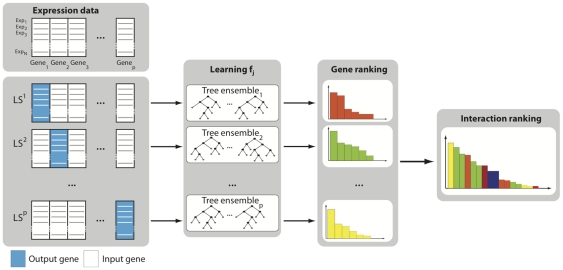
One of the pressing open problems of computational systems biology is the elucidation of the topology of genetic regulatory networks (GRNs) using high throughput genomic data, in particular microarray gene expression data. The Dialogue for Reverse Engineering Assessments and Methods (DREAM) challenge aims to evaluate the success of GRN inference algorithms on benchmarks of simulated data. In this article, we present GENIE3, a new algorithm for the inference of GRNs that was best performer in the DREAM4 In Silico Multifactorial challenge. GENIE3 decomposes the prediction of a regulatory network between p genes into p different regression problems. In each of the regression problems, the expression pattern of one of the genes (target gene) is predicted from the expression patterns of all the other genes (input genes), using tree-based ensemble methods Random Forests or Extra-Trees. The importance of an input gene in the prediction of the target gene expression pattern is taken as an indication of a putative regulatory link. Putative regulatory links are then aggregated over all genes to provide a ranking of interactions from which the whole network is reconstructed. In addition to performing well on the DREAM4 In Silico Multifactorial challenge simulated data, we show that GENIE3 compares favorably with existing algorithms to decipher the genetic regulatory network of Escherichia coli. It doesn't make any assumption about the nature of gene regulation, can deal with combinatorial and non-linear interactions, produces directed GRNs, and is fast and scalable. In conclusion, we propose a new algorithm for GRN inference that performs well on both synthetic and real gene expression data. The algorithm, based on feature selection with tree-based ensemble methods, is simple and generic, making it adaptable to other types of genomic data and interactions.
Overview
The claims and statistics of this paper haven’t been checked yet.
Free: it reads the open-access text and checks the first 5 claims that cite a source we can check. Create a free account to check every claim.
Integrity signals
Registry
Cites
Statistics
Figures
Verification
Claims the paper makes
The claims and statistics of this paper haven’t been checked yet.
Free: it reads the open-access text and checks the first 5 claims that cite a source we can check. Create a free account to check every claim.
Claims other papers make about this one
Each is checked against this paper’s own text: does it say what the citing paper says it does?
The source backs part of the claim, not all of it — or backs it for a different population, condition or comparison.
In the citing paper
“A limitation of GENIE3 is that TF information is required for it to perform better than random chance [113].”
From Gene co-expression analysis for functional classification and gene–disease predictions (2017) · cites this paper as [113]
Experimental — accuracy not yet measuredThe cited source says what the claim attributes to it.
In the citing paper
“Because of this second constraint, we cannot use pre-existing GRN inference algorithms, such as GENIE3 and GRNboost (refs. 7,51).”
From Dissecting cell identity via network inference and in silico gene perturbation (2023) · cites this paper as [51]
The cited source says what the claim attributes to it.
In the citing paper
“A major family of methods in this category is based on co-expression analysis (reviewed in [32]), and has been broadly used on bulk gene expression data (e.g. GENIE3 [33] and WGCNA [34], see [27, 35] for benchmark comparisons).”
From Mapping gene regulatory networks from single-cell omics data (2018) · cites this paper as [33]
The cited source says what the claim attributes to it.
In the citing paper
“GENIE3 incorporates TF information to construct a regulatory network by determining the TF expression pattern that best explains the expression of each of their target genes.”
From Gene co-expression analysis for functional classification and gene–disease predictions (2017) · cites this paper as [113]
Self-check
Percentages, sums and reported differences re-computed from the paper’s own numbers.
The self-check needs the paper’s full text.
Citations
Cites
Breiman, L. (2001) · Machine Learning · doi:10.1023/a:1010933404324 · Cited by 133,538
Classification and Regression Trees.
Gordon, A. D., Breiman, L., Friedman, J. H., Olshen, R. A., & Stone, C. J. (1984) · Biometrics · doi:10.2307/2530946 · Cited by 23,522
Classification and Regression Trees.
Ryzin, J. V., Breiman, L., Friedman, J. H., Olshen, R. A., & Stone, C. J. (1986) · Journal of the American Statistical Association · doi:10.2307/2288003 · Cited by 20,825
Breiman, L. (1996) · Machine Learning · doi:10.1007/bf00058655 · Cited by 16,325
Cluster analysis and display of genome-wide expression patterns
Eisen, M. B., Spellman, P. T., Brown, P. O., & Botstein, D. (1998) · Proceedings of the National Academy of Sciences · doi:10.1073/pnas.95.25.14863 · Cited by 16,184 · cited 1×
“Models based on the statistical analysis of dependencies between expression patterns have an intermediate complexity, and have already been successfully applied to the inference of large GRNs. Early models used correlation coefficients between expression patterns of all pairs of genes to infer “coexpression networks””
MethodClassification And Regression Trees
Breiman, L., Friedman, J. H., Olshen, R. A., & Stone, C. J. (2017) · doi:10.1201/9781315139470 · Cited by 11,417
Geurts, P., Ernst, D., & Wehenkel, L. (2006) · Machine Learning · doi:10.1007/s10994-006-6226-1 · Cited by 9,300 · cited 2×
“Empirical validations in [32] have shown that these two values of K were near-optimal in terms of predictive accuracy on several problems.”
BackgroundMethodSelf-citationThe Origins of Order: Self-Organization and Selection in Evolution
Kauffman, S. A. (1993) · doi:10.1093/oso/9780195079517.001.0001 · Cited by 7,855
The origins of order; self organization and selection in evolution
(1994) · International Journal of Biochemistry · doi:10.1016/0020-711x(94)90119-8 · Cited by 6,649
A review of feature selection techniques in bioinformatics
Saeys, Y., Inza, I., & Larrañaga, P. (2007) · Bioinformatics · doi:10.1093/bioinformatics/btm344 · Cited by 5,244
Research works printed but not linked: 3
- Cover TM Thomas JA 2006 Elements of Information Theory 2nd Edition Wiley-Interscience
- Faith JJ Hayete B Thaden JT Mogno I Wierzbowski J Supplemental website for: Large-scale mapping and validation of Escherichia coli transcriptional regulation from a compendium of expression profiles. http://gardnerlab.bu.edu/data/PLoS_2007/ PMC1764438 17214507
- Schäfer J Opgen-Rhein R Strimmer K 2006 Reverse engineering genetic networks using the GeneNet package. R News 6/ 5 50 53
Cited by
Items 601–700 of 1,008
Stroggilos, R., Frantzi, M., Zoidakis, J., Mokou, M., Moulavasilis, N., Mavrogeorgis, E., Melidi, A., Makridakis, M., STRAVODIMOS, K. G., Roubelakis, M. G., et al. (2022) · Cancers · doi:10.3390/cancers14102542 · Cited by 17
“Out of the 3108 × 3108 = 9,659,664 gene-pair weights calculated individually per condition (i.e., NAU and 5 BLCA stages), gene-pairs with the highest GENIE3 weights, which were also positively correlated based on the Spearman’s coefficient, were used to construct networks.”
MethodZhou, Q.-J., Liu, X., Zhang, L., Wang, R., Yin, T., Li, X., Li, G., He, Y., Ding, Z., Ma, P., et al. (2022) · National Science Review · doi:10.1093/nsr/nwac147 · Cited by 25
“We reconstructed dog hippocampal gene regulatory networks using GENIE3 software [52].”
MethodBai, B., Schiffthaler, B., van der Horst, S., Willems, L. A. J., Vergara, A., Karlström, J., Mähler, N., Delhomme, N., Bentsink, L., & Hanson, J. (2022) · Journal of Experimental Botany · doi:10.1093/jxb/erac394 · Cited by 18
“In brief, nine gene network inference methods were run: ANOVA (Küffner et al., 2012), Aracne2, CLR (Faith et al., 2007), GeneNet (Opgen-Rhein and Strimmer, 2007), GENIE3 (Huynh-Thu et al., 2010), NARROMI (Zhang et al., 2013), Pearson, Spearman, and a modified implementation of TIGRESS (Haury et al., 2012), and their r…”
MethodYang, X., Liu, X., Li, J., Zhang, P., Li, H., Chen, G., Zhang, W., Wang, T., Frazer, I. H., & Ni, G. (2022) · Cancers · doi:10.3390/cancers14235785 · Cited by 19
“The gene co-expression network was identified by GENIE3 [45].”
BackgroundFunctional annotation of proteins for signaling network inference in non-model species
den Broeck, L. V., Bhosale, D. K., Song, K., de Lima, C. F. F., Ashley, M. C. B., Zhu, T., Zhu, S., van de Cotte, B., Neyt, P., Ortiz, A. C., et al. (2023) · Nature Communications · doi:10.1038/s41467-023-40365-z · Cited by 20
Pérez, N. M., Ferrari, C., Engelhorn, J., Depuydt, T., Nelissen, H., Hartwig, T., & Vandepoele, K. (2023) · The Plant Journal · doi:10.1111/tpj.16483 · Cited by 20
Mahmood, O., Gibbs, C. S., Bonneau, R., & Cho, K. (2024) · Genome biology · doi:10.1186/s13059-024-03226-6 · Cited by 25
“Initial approaches to GRN inference relied on microarray technology [13–15], a hybridization-based method to measure the expression of thousands of genes simultaneously [16].”
MethodEnhancer-driven gene regulatory networks inference from single-cell RNA-seq and ATAC-seq data
Li, Y., Ma, A., Wang, Y., Guo, Q., Wang, C., Chen, S., Fu, H., Liu, B., & Ma, Q. (2024) · Briefings in Bioinformatics · doi:10.1093/bib/bbae369 · Cited by 22
“SCENIC is a framework developed to infer GRNs based 15 solely on scRNA-seq, by integrating three R packages: (i) GENIE3, to excavate potential TF-gene 16 relations based merely on gene coexpression (30); (ii) RcisTarget, to determine the direct TF17 gene relations via motif enrichment analysis (11); and (iii) AUCell,…”
Methodvan Dam, J. C. J., Schaap, P. J., dos Santos, V. A. P. M., & Diez, M. S. (2014) · BMC Systems Biology · doi:10.1186/s12918-014-0111-5 · Cited by 20
“Another class of methods use a combination of machine learning techniques to produce prioritized lists of transcription factors regulating each target gene [11,12].”
MethodGuo, W., Calixto, C. P. G., Τzioutziou, N. A., Lin, P., Waugh, R., Brown, J. W. S., & Zhang, R. (2017) · BMC Systems Biology · doi:10.1186/s12918-017-0440-2 · Cited by 20
Strategies and tools to improve crop productivity by targeting photosynthesis
Nuccio, M. L., Potter, L. K., Stiegelmeyer, S. M., Curley, J., Cohn, J., Wittich, P. E., Tan, X., Davis, J., Ni, J., Jon, T., et al. (2017) · Philosophical Transactions of the Royal Society B Biological Sciences · doi:10.1098/rstb.2016.0377 · Cited by 19
Machine Learning for Predicting Thermal Power Consumption of the Mars Express Spacecraft
Petković, M., Simidjievski, N., Boumghar, R., Breskvar, M., Džeroski, S., Kocev, D., Levatić, J., Lucas, L., Osojnik, A., & Ženko, B. (2019) · IEEE Aerospace and Electronic Systems Magazine · doi:10.1109/maes.2019.2915456 · Cited by 21
“For this purpose, we used the Genie3 algorithm [26], for which the motivation is the following.”
MethodiMTF-GRN: Integrative Matrix Tri-Factorization for Inference of Gene Regulatory Networks
Wani, N., & Raza, K. (2019) · IEEE Access · doi:10.1109/access.2019.2936794 · Cited by 18
“For example, GENIE3 [16] is based on variable selection with ensembles of regression trees and was a star performer in the DREAM4 challenge.”
MethodReconstructing dynamical networks via feature ranking
Leguia, M. G., Levnajić, Z., Todorovski, L., & Ženko, B. (2019) · Chaos An Interdisciplinary Journal of Nonlinear Science · doi:10.1063/1.5092170 · Cited by 19
Fuzzy Jaccard Index: A robust comparison of ordered lists
Petković, M., Škrlj, B., Kocev, D., & Simidjievski, N. (2021) · Applied Soft Computing · doi:10.1016/j.asoc.2021.107849 · Cited by 22
“For example, the top-ranked feature x (1) in the Genie3 ranking, has a rank of 5 in the RF ranking – Fuji can detect this by taking the relevance scores into the account.”
BackgroundMethodInfluentialAn Arabidopsis expression predictor enables inference of transcriptional regulators for gene modules
Geng, H., Wang, M., Gong, J., Xu, Y., & Ma, S. (2021) · The Plant Journal · doi:10.1111/tpj.15315 · Cited by 20
G2S3: A gene graph-based imputation method for single-cell RNA sequencing data
Wu, W., Dai, Q., Liu, Y., Yan, X., & Wang, Z. (2021) · PLoS Computational Biology · doi:10.1371/journal.pcbi.1009029 · Cited by 19
“We reconstructed GRNs using four methods, PIDC [38], GENIE3 [39], GRNBoost2 [40], and PPCOR [41], in the raw and imputed datasets.”
MethodJin, H., Kim, W., Yuan, M., Li, X., Yang, H., Li, M., Shi, M., Türkez, H., Uhlén, M., Zhang, C., et al. (2024) · Frontiers in Immunology · doi:10.3389/fimmu.2024.1446453 · Cited by 25
Li, X., Pan, L., Li, W., Liu, B., Xiao, C., Chew, V., Zhang, X., Wang, L., Ginhoux, F., Loscalzo, J., et al. (2025) · Cell Reports Medicine · doi:10.1016/j.xcrm.2025.101992 · Cited by 24
Multi-omic network inference from time-series data
Garcia, M. M., Aalto, A., Montanari, A. N., Skupin, A., & Gonçalves, J. M. (2025) · npj Systems Biology and Applications · doi:10.1038/s41540-025-00591-1 · Cited by 22
Ma, L., Chandel, N., Ermel, R., Sukhavasi, K., Hao, K., Ruusalepp, A., Björkegren, J., & Kovacic, J. C. (2020) · Atherosclerosis · doi:10.1016/j.atherosclerosis.2020.08.013 · Cited by 17
Reconstructing gene regulatory networks in single-cell transcriptomic data analysis
Dai, H., 200031,中国, 国., Jin, Q., Li, L., Chen, L., 201210,中国, 张., 100049,中国, 中., 201210,中国, 上., 310024,中国, 中. 杭., & 650223,中国, 中. 昆. (2020) · 动物学研究 · doi:10.24272/j.issn.2095-8137.2020.215 · Cited by 20
Inference of dynamic spatial GRN models with multi-GPU evolutionary computation
Mousavi, R., Konuru, S. H., & Lobo, D. (2021) · Briefings in Bioinformatics · doi:10.1093/bib/bbab104 · Cited by 15
Bobrovskikh, A. V., Doroshkov, A. V., Mazzoleni, S., Cartenì, F., Giannino, F., & Zubairova, U. S. (2021) · Frontiers in Genetics · doi:10.3389/fgene.2021.652974 · Cited by 18
“The authors have selected three promising methods with high computational accuracy on real data: partial information decomposition and context (PIDC) (Chan et al., 2017), gene network inference with the ensemble of trees (GENIE3) (Irrthum et al., 2010), and GRNBoost2 (Moerman et al., 2019).”
MethodZhang, A., Wei, Y., Shi, Y., Deng, X., Gao, J., Feng, Y., Zheng, D., Cheng, X., Li, Z., Wang, T., et al. (2021) · Frontiers in Plant Science · doi:10.3389/fpls.2021.761059 · Cited by 18
Gene Regulatory Network Inference as Relaxed Graph Matching
Weighill, D. A., Guebila, M. B., Lopes‐Ramos, C. M., Glass, K., Quackenbush, J. F., Platig, J., & Burkholz, R. (2021) · Proceedings of the AAAI Conference on Artificial Intelligence · doi:10.1609/aaai.v35i11.17230 · Cited by 27
Gao, Z., Yang, X., Chen, J., Rausher, M. D., & Shi, T. (2022) · PLANT PHYSIOLOGY · doi:10.1093/plphys/kiac522 · Cited by 18
Mao, G., Zeng, R., Peng, J., Zuo, K., Pang, Z., & Liu, J. (2022) · BMC Bioinformatics · doi:10.1186/s12859-022-05055-5 · Cited by 20
“To evaluate the effectiveness of our method on the datasets in Table 3, Serveral meth-ods are chosen as baselines as follows: • GENIE3 [36]: an approach to infer gene regulatory networks from gene expression data.”
BackgroundInfluentialLi, X., Xu, M. J., Chen, H., Fu, X., Wang, P., Chen, X., Gu, C., & Zhou, J. (2023) · npj Systems Biology and Applications · doi:10.1038/s41540-023-00267-8 · Cited by 19
“The studies on transcription regulation have been conducted for >30 years, and lots of landmark models have been designed 7 – 9 .”
Gao, Z., Tang, J., Xia, J., Zheng, C.-H., & Wei, P.-J. (2023) · IEEE Transactions on Computational Biology and Bioinformatics · doi:10.1109/tcbb.2023.3282212 · Cited by 19
“The most classical method is GENIE3 [31],”
InfluentialMulti-omics regulatory network inference in the presence of missing data
Henao, J., Lauber, M., Azevedo, M., Grekova, A., Theis, F. J., List, M., Ogris, C., & Schubert, B. (2023) · Briefings in Bioinformatics · doi:10.1093/bib/bbad309 · Cited by 18
“Hence, our reference networks are not suited for evaluating methods following different principles for inference as GENIE3 [57], or other nonlinear approaches such as ARACNe and their derivatives [7, 8].”
TRIM32 modulates pluripotency entry and exit by directly regulating Oct4 stability
Bahnassawy, L., Perumal, T. M., González-Cano, L., Hillje, A., Taher, L., Makałowski, W., Suzuki, Y., Fuellen, G., del Sol, A., & Schwamborn, J. C. (2015) · Scientific Reports · doi:10.1038/srep13456 · Cited by 19
Bagewadi, S., Raschka, T., Naz, M., Simoes, R. D. M., Senger, P., & Hofmann‐Apitius, M. (2017) · Journal of Alzheimer s Disease · doi:10.3233/jad-170011 · Cited by 24
“In the last few years, we have seen a swarm of methods that infer such networks based on co-expression, regulation, and causal information namely WGCNA [13], BC3Net [14], MRNET [15], ARACNE [16], GENIE3 [17], and CLR [18].”
MethodFeature Ranking for Multi-target Regression with Tree Ensemble Methods
Petković, M., Džeroski, S., & Kocev, D. (2017) · Lecture notes in computer science · doi:10.1007/978-3-319-67786-6_13 · Cited by 18
Foo, M. F. L., Gherman, I., Zhang, P., Bates, D. G., & Denby, K. (2018) · ACS Synthetic Biology · doi:10.1021/acssynbio.8b00037 · Cited by 18
Lesage, R., Kerkhofs, J., & Geris, L. (2018) · Frontiers in Bioengineering and Biotechnology · doi:10.3389/fbioe.2018.00165 · Cited by 21
Transcriptomic basis and evolution of the ant nurse-larval social interactome
Warner, M. R., Mikheyev, A. S., & Linksvayer, T. A. (2019) · PLoS Genetics · doi:10.1371/journal.pgen.1008156 · Cited by 16
Jansen, J. E., Gaffney, E. A., Wagg, J., & Coles, M. C. (2019) · Frontiers in Immunology · doi:10.3389/fimmu.2019.01283 · Cited by 22
“Examples of the many algorithms used to infer gene interaction networks from expression data [see for a comparison of methods (16)], include CLR (Context Likelihood of Relatedness) (17), ARACNe (Algorithm for the Reconstruction of Accurate Cellular Networks) (18) and GENIE3 (GEne Network Inference with Ensemble of tre…”
MethodYang, J., Bertolini, E., Braud, M., Preciado, J., Chepote, A., Jiang, H., & Eveland, A. L. (2021) · PLANT PHYSIOLOGY · doi:10.1093/plphys/kiab169 · Cited by 19
GRNUlar: A Deep Learning Framework for Recovering Single-Cell Gene Regulatory Networks
Shrivastava, H., Zhang, X., Song, L., & Aluru, S. (2022) · Journal of Computational Biology · doi:10.1089/cmb.2021.0437 · Cited by 24
“Several GRN reconstruction methods that were originally developed for bulk transcriptional data have been applied (Irrthum et al., 2010; Huynh-Thu and Sanguinetti, 2015; Kim, 2015; Moerman et al., 2019) or adapted (Chen et al., 2015; Lim et al., 2016; Hamey et al., 2017; Woodhouse et al., 2018) to…”
Jiang, X., & Zhang, X. (2022) · BMC Bioinformatics · doi:10.1186/s12859-022-04696-w · Cited by 23
“To show the superiority of RSNET method, the comparisons with some popular meth-ods including LASSO [36], LP [57], RO [45], GENIE3 [58], ARACNE and NARROMI [45] were implemented.”
MethodTemporal and spatial auxin responsive networks in maize primary roots
McReynolds, M. R., Dash, L., Montes, C., Draves, M. A., Lang, M. G., Walley, J. W., & Kelley, D. R. (2022) · Quantitative Plant Biology · doi:10.1017/qpb.2022.17 · Cited by 18
“Those input files were then used to analyze each ICA cluster by the SC-ION adapted version of the GENIE3 (Huynh-Thu et al., 2010) network inference algorithm, which output a table with the predicted regulator-target interactions as well as a numeric “weight” value for each pair indicating the…”
MethodReverse-engineering biological networks from large data setsPreprint
Natale, J. L., Hofmann, D., Hernández, D. G., & Nemenman, I. M. (2017) · bioRxiv (Cold Spring Harbor Laboratory) · doi:10.1101/142034 · Cited by 20
Seiðr: Efficient Calculation of Robust Ensemble Gene NetworksPreprint
Schiffthaler, B., van Zalen, E., Serrano, A. R., Street, N. R., & Delhomme, N. (2018) · bioRxiv (Cold Spring Harbor Laboratory) · doi:10.1101/250696 · Cited by 21
Novak, R., Lin, T., Kaushal, S., Sperry, M. M., Vigneault, F., Gardner, E., Loomba, S., Shcherbina, K., Keshari, V., Dinis, A., et al. (2022) · bioRxiv (Cold Spring Harbor Laboratory) · doi:10.1101/2022.03.20.485056 · Cited by 17
“Using gene co-expression network analysis (Huynh-Thu et al., 2010), we also identified interconnected gene sub-networks that are conserved across species and tissues in the MeCP2 deficient condition (Fig.”
BackgroundMethodInfluentialZhu, H., & Slonim, D. K. (2024) · Journal of Computational Biology · doi:10.1089/cmb.2024.0607 · Cited by 22
“Tree-based methods, such as GENIE3 [22], dynGENIE3 [21], and GRNBoost2 [36], rely on variable importance, a metric to rank variables while creating trees, to sort corresponding edges.”
MethodFodoulian, L., Boillat, M., Moulinier, M., Carleton, A., & Rodríguez, I. (2025) · Nature Communications · doi:10.1038/s41467-025-63138-2 · Cited by 22
Peng, T., & Zhan, Q. (2025) · npj Precision Oncology · doi:10.1038/s41698-025-01129-8 · Cited by 21
Prednisone Reprograms the Transcriptional Immune Cell Landscape in CNS Autoimmune Disease
Li, H., Gao, Y., Xie, L., Wang, R., Duan, R., Li, Z., Chen, B., Zhu, L., Wang, X., & Su, W. (2021) · Frontiers in Immunology · doi:10.3389/fimmu.2021.739605 · Cited by 17
“0) (16), as well as the RcisTarget database (version 1.”
BackgroundFast and accurate inference of gene regulatory networks through robust precision matrix estimation
Passemiers, A., Moreau, Y., & Raimondi, D. (2022) · Bioinformatics · doi:10.1093/bioinformatics/btac178 · Cited by 19
Ventre, E. (2021) · In Silico Biology · doi:10.3233/isb-210226 · Cited by 20
Knowledge of the perturbation design is essential for accurate gene regulatory network inference
Seçilmiş, D., Hillerton, T., Tjärnberg, A., Nelander, S., Nordling, T. E. M., & Sonnhammer, E. L. L. (2022) · Scientific Reports · doi:10.1038/s41598-022-19005-x · Cited by 19
An, Y., Huang, F., Tan, X., Zhu, S., Zhen, Y., Shang, Y., Ding, P., Li, D., & Wu, J. (2022) · Plastic & Reconstructive Surgery · doi:10.1097/prs.0000000000010083 · Cited by 22
Using single cell atlas data to reconstruct regulatory networks
Song, Q., Ruffalo, M., & Bar‐Joseph, Z. (2023) · Nucleic Acids Research · doi:10.1093/nar/gkad053 · Cited by 24
Subcellular spatially resolved gene neighborhood networks in single cells
Fang, Z., Ford, A. J., Hu, T., Zhang, N. Y., Mantalaris, A., & Coskun, A. F. (2023) · Cell Reports Methods · doi:10.1016/j.crmeth.2023.100476 · Cited by 17
“Statistical inference models have also been proposed to infer regulatory networks from single-cell transcriptomic profiles.(20,21) Spatial transcriptomics data has also been used to infer gene regulatory relationships.”
Streef, T. J., Groeneveld, E. J., van Herwaarden, T., Hjortnaes, J., Goumans, M., & Smits, A. M. (2023) · Stem Cell Reports · doi:10.1016/j.stemcr.2023.06.002 · Cited by 16
Prediction of protein-RNA interactions from single-cell transcriptomic data
Fiorentino, J., Armaos, A., Colantoni, A., & Tartaglia, G. G. (2024) · Nucleic Acids Research · doi:10.1093/nar/gkae076 · Cited by 20
“It is based on GENIE3 ( 65 ), a regression method initially designed for bulk transcriptomic data, but it is faster, thus it is more suited for scRNA-seq data.”
MethodNetwork analyses predict major regulators of resistance to early blight disease complex in tomato
Tominello-Ramirez, C., Hoyos, L. M., Oubounyt, M., & Stam, R. (2024) · BMC Plant Biology · doi:10.1186/s12870-024-05366-0 · Cited by 19
“1.20.0 [62] to infer a directed GRN of the entire input matrix of genes filtered for low-variance and low-expres-sion.”
BackgroundInfluentialLiu, J., Zhou, S., Ma, J., Zang, M., Liu, C., Liu, T., & Wang, Q. (2024) · Engineering Applications of Artificial Intelligence · doi:10.1016/j.engappai.2024.108938 · Cited by 21
AnomalGRN: deciphering single-cell gene regulation network with graph anomaly detection
Zhou, Z., Wei, J., Liu, M., Zhuo, L., Fu, X., & Zou, Q. (2025) · BMC Biology · doi:10.1186/s12915-025-02177-z · Cited by 23
“Vân et al. introduced GENIE3, a model leveraging ensemble learning to break down GRN inference into several regression tasks, thereby inferring GRN through the integration of multiple regression models [9].”
Structure identification for gene regulatory networks via linearization and robust state estimation
Xiong, J., & Zhou, T. (2014) · Automatica · doi:10.1016/j.automatica.2014.08.003 · Cited by 18
A Bayesian approach for structure learning in oscillating regulatory networks
Baños, D. T., Millar, A. J., & Sanguinetti, G. (2015) · Bioinformatics · doi:10.1093/bioinformatics/btv414 · Cited by 17
“Evidence suggests that a transcriptional network is an important VC The Author 2015.”
BackgroundLiu, L., & Liu, J. (2018) · Applied Soft Computing · doi:10.1016/j.asoc.2018.05.009 · Cited by 17
Deng, Y., Zenil, H., Tegner, J. N., & Kiani, N. A. (2017) · Bioinformatics · doi:10.1093/bioinformatics/btx501 · Cited by 19
“Mathematical gene regulation network (GRN) models range from logical models with only Boolean values to continuous ones including detailed biochemical interactions ([16, 12, 11, 7]).”
BackgroundBayeSuites: An open web framework for massive Bayesian networks focused on neuroscience
Michiels, M., Larrañaga, P., & Bielza, C. (2020) · Neurocomputing · doi:10.1016/j.neucom.2020.11.066 · Cited by 25
Tao, W., Radstake, T. R. D. J., & Pandit, A. (2022) · Communications Biology · doi:10.1038/s42003-021-02991-5 · Cited by 23
“For GRN, this ensemble regression tree-based method was initially described in GENIE3, which was the best performer in the DREAM4 In Silico Multifactorial challenge 21 .”
BackgroundMethodscSGL: kernelized signed graph learning for single-cell gene regulatory network inference
Karaaslanli, A., Saha, S., Aviyente, S., & Maiti, T. (2022) · Bioinformatics · doi:10.1093/bioinformatics/btac288 · Cited by 22
RegnANN: Reverse Engineering Gene Networks Using Artificial Neural Networks
Grimaldi, M., Visintainer, R., & Jurman, G. (2011) · PLoS ONE · doi:10.1371/journal.pone.0028646 · Cited by 21
“non-linearity), more recently general methods based on measures of dependency such as mutual information have been proposed [7].”
MethodMcClure, R., Sunkavalli, A., Balzano, P. M., Massari, P., Cho, C., Nauseef, W. M., Apicella, M. A., & Genco, C. A. (2020) · mSystems · doi:10.1128/msystems.00729-19 · Cited by 17
“The observation that the GENIE3 network was not able to identify all targets of Fur is likely due to some targets not responding under the conditions that were included in this study.”
InfluentialSupervised Learning of Gene Regulatory Networks
Razaghi‐Moghadam, Z., & Nikoloski, Z. (2020) · Current Protocols in Plant Biology · doi:10.1002/cppb.20106 · Cited by 17
Defining totipotency using criteria of increasing stringencyPreprint
Pósfai, E., Schell, J. P., Janiszewski, A., Rovic, I., Murray, A., Bradshaw, B., Pardon, T., Bakkali, M. E., Talón, I., Geest, N. D., et al. (2020) · bioRxiv (Cold Spring Harbor Laboratory) · doi:10.1101/2020.03.02.972893 · Cited by 16
Bi, X.-P., 深圳518083,中国, 深., BGI-Shenzhen, S., Zhang, G.-J., 650223,中国, 中. 昆., 650223,中国, 中. 昆., Villum Center for Biodiversity Genomics, S. F. E. A. E., Center for Excellence in Animal Evolution and Genetics, C. A. O. S., State Key Laboratory of Genetic Resources and Evolution, K. I. O. Z., & Villum Center for Biodiversity Genomics, S. F. E. A. E. (2021) · Zoological Research · doi:10.24272/j.issn.2095-8137.2021.066 · Cited by 15
Integrative gene regulatory network analysis discloses key driver genes of fibromuscular dysplasia
d’Escamard, V., Kadian‐Dodov, D. L., Ma, L., Lu, S., King, A., Xu, Y., Peng, S., Gangula, B. V., Zhou, Y., Thomas, A., et al. (2024) · Nature Cardiovascular Research · doi:10.1038/s44161-024-00533-w · Cited by 15
“https://doi.org/10.1038/s44161-024-00533-w The R package GENIE3 was used to infer gene regulatory networks from expression data using the machine learning tree-based ensemble method Random Forests 59 .”
InfluentialCo-option of plant gene regulatory network in nutrient responses during terrestrialization
Dong, Y., Krishnamoorthi, S., Tan, G. Z. H., Poh, Z. Y., & Urano, D. (2024) · Nature Plants · doi:10.1038/s41477-024-01851-4 · Cited by 15
“66) with the ‘random forest’ method and default parameters in R.”
Xu, X., Lin, H., Zhang, J., Burguener, G., Paraiso, F., Li, K., Tumelty, C., Li, C., Liu, Y., & Dubcovsky, J. (2025) · Genome biology · doi:10.1186/s13059-025-03811-3 · Cited by 21
“To investigate the interactions centered on TCP24 and FZP , we generated a gene regulatory network using GENIE3 [97], focusing on the 988 genes co-expressed with FZP (Additional file 2: Table S20) and/or TCP24 (Additional file 2: Table S21) in the scRNA-seq dataset.”
Gene regulatory networks: from correlative models to causal explanations
Maizels, R. J., & Briscoe, J. (2026) · Nature Reviews Genetics · doi:10.1038/s41576-026-00939-1 · Cited by 32
“Identify CREs (ChIP–seq and ATAC-seq)”
Nogami, M., Ishikawa, M., Doi, A., Sano, O., Sone, T., Akiyama, T., Aoki, M., Nakanishi, A., Ogi, K., Yano, M., et al. (2021) · Neurobiology of Disease · doi:10.1016/j.nbd.2021.105364 · Cited by 16
Validation of a high-confidence regulatory network for gene-to-NUE phenotype in field-grown rice
Shanks, C. M., Huang, J., Cheng, C., Shih, H.-J. S., Brooks, M. D., Álvarez, J. M., Araus, V., Swift, J., Henry, A., & Coruzzi, G. M. (2022) · Frontiers in Plant Science · doi:10.3389/fpls.2022.1006044 · Cited by 16
“This includes WGCNA (Langfelder and Horvath, 2008) for gene-to-phenotype correlation, GENIE3 (Huynh-Thu et al., 2010) for GRN inference and ConnecTF (Brooks et al.”
MethodInfluentialGReNaDIne: A Data-Driven Python Library to Infer Gene Regulatory Networks from Gene Expression Data
Schmitt, P., Sorin, B., Frouté, T., Parisot, N., Calevro, F., & Peignier, S. (2023) · Genes · doi:10.3390/genes14020269 · Cited by 19
“Unlike co-expression methods, these methods rely on functional gene annotation to identify TFs, and they infer directed links between TFs and their TGs [11].”
BackgroundMethodInfluentialwpLogicNet: logic gate and structure inference in gene regulatory networks
Malekpour, S. A., Shahdoust, M., Aghdam, R., & Sadeghi, M. (2023) · Bioinformatics · doi:10.1093/bioinformatics/btad072 · Cited by 16
Wu, C., Song, Y., Yu, Y., Xu, Q. R., Cui, X., Wang, Y., Wu, J., & Gu, H. F. (2023) · International Journal of Molecular Sciences · doi:10.3390/ijms241713502 · Cited by 17
“To avoid artificial co-variation, summarized counts (UMI count) were used as input data of GENIE3 (R version) to calculate the co-expression between TF and potential target gene through random forest models.”
InfluentialProinflammatory cytokines driving cardiotoxicity in COVID-19
Colzani, M., Bargehr, J., Mescia, F., Williams, E. C., Knight-Schrijver, V. R., Lee, J. C. M., Summers, C., Mohorianu, I. I., Smith, K. G. C., Lyons, P. A., et al. (2023) · Cardiovascular Research · doi:10.1093/cvr/cvad174 · Cited by 15
“33 The visualization, and community accessible overview were compiled using bulkAnalyseR.”
MethodHypergraph reconstruction from uncertain pairwise observations
Lizotte, S., Young, J.-G., & Allard, A. (2023) · Scientific Reports · doi:10.1038/s41598-023-48081-w · Cited by 32
“Gene regulatory networks, for instance, have been reconstructed with methods ranging from random forests 4 and support vector machine algorithms 5 to methods based on Pearson correlation in temporal windows 6 , hypothesis testing 7 , least angle regression 8 and ordinary differential equations 9 .”
Neural cell diversity in the light of single-cell transcriptomics
Moya, S. M. F., Ganesh, A. J., & Plass, M. (2023) · Transcription · doi:10.1080/21541264.2023.2295044 · Cited by 14
“Abundance of microglial cell populations changes with age and some subtypes appear exclusively after puberty or in aging [71,73,79,84].”
BackgroundDemko, V., Belova, T., Messerer, M., Hvidsten, T. R., Perroud, P., Ako, A. E., Johansen, W., Mayer, K., Olsen, O., & Lang, D. (2024) · Communications Biology · doi:10.1038/s42003-024-05933-z · Cited by 15
“To this end, we compiled 374 public and novel RNA-seq libraries and 1736 novel annotated regulators (see Supplementary Data S2 for full information) using therandomforest predictorofGENIE3 26 and calculated Pearson ’ s correlation coef fi cients between regulator and target gene expression levels.”
BackgroundMethodInfluentialLee, Y., Baek, J., Park, S., Kim, Y., Hwang, S. W., Lee, J. L., Park, S. H., Kim, J., Yang, S., Han, B., et al. (2024) · Journal of Autoimmunity · doi:10.1016/j.jaut.2024.103206 · Cited by 15
McDermott, J., Jacobs, J., Merrill, N. J., Mitchell, H. D., Arshad, O. A., McClure, R., Teeguarden, J., Gajula, R. P., Porter, K. I., Satterfield, B. C., et al. (2024) · Journal of Proteome Research · doi:10.1021/acs.jproteome.3c00418 · Cited by 15
Decoding the principle of cell-fate determination for its reverse control
Lee, J., Kim, N., & Cho, K. (2024) · npj Systems Biology and Applications · doi:10.1038/s41540-024-00372-2 · Cited by 18
Panahi, B. (2024) · PLoS ONE · doi:10.1371/journal.pone.0307248 · Cited by 17
“In the next step, the gene regulatory networks between top hub genes of non-preserved modules and identified TFs were inferred using ensemble of trees algorithm implemented in GENIE3 package version 3.19 [34].”
MethodInfluentialGCLink: a graph contrastive link prediction framework for gene regulatory network inference
Yu, W., Lin, Z., Lan, M., & Ou-Yang, L. (2025) · Bioinformatics · doi:10.1093/bioinformatics/btaf074 · Cited by 22
“These methods include three supervised learning methods, i.e. GENELink (Chen and Liu 2022), CNNC (Yuan and Bar-Joseph 2019), GNE (Kc et al. 2019), and three unsupervised learning methods, namely DeepSEM (Shu et al. 2021), GENIE3 (Huynh-Thu et al. 2010), and GRNBoost2 (Moerman et al. 2019).”
Bridging physiological and evolutionary time‐scales in a gene regulatory network
Marchand, G., Huynh‐Thu, V. A., Kane, N. C., Arribat, S., Varès, D., Rengel, D., Balzergue, S., Rieseberg, L. H., Vincourt, P., Geurts, P., et al. (2014) · New Phytologist · doi:10.1111/nph.12818 · Cited by 18
“The first method represents an extension of GENIE3 (Huynh-Thu et al., 2010) and was based on the random forest method (RF, (Breiman, 2001)).”
MethodSelf-citationA Bayesian framework that integrates heterogeneous data for inferring gene regulatory networks
Santra, T. (2014) · Frontiers in Bioengineering and Biotechnology · doi:10.3389/fbioe.2014.00013 · Cited by 17
“Although linear regression models are extensively used by network inference community due to ease of implementation, it was recently shown that tree-based regression models may be better suitable than linear regression models in network reconstruction problems (Huynh-Thu et al., 2010).”
MethodPinna, A., Heise, S., Flassig, R., de la Fuente, A., & Klamt, S. (2013) · BMC Systems Biology · doi:10.1186/1752-0509-7-73 · Cited by 23
“The different inference methodologies can be categorized based on the model formalism and the principle used for deriving interactions in a regulatory network: sparse regression [7], correlation-based approaches [8], z-score [9], mutual information [10,11], ANOVA-based analysis [12], Bayesian networks [13], Gaussian g…”
MethodPredicting Thermal Power Consumption of the Mars Express Satellite with Machine Learning
Breskvar, M., Kocev, D., Levatić, J., Osojnik, A., Petković, M., Simidjievski, N., Ženko, B., Boumghar, R., & Lucas, L. (2017) · IEEE International Conference on Space Mission Challenges for Information Technology · doi:10.1109/smc-it.2017.22 · Cited by 17
“For this purpose, we used the GENIE3 algorithm [7] that calculates the importance of a feature as a sum of variance reductions over the splits containing that feature in all trees in the random forest.”
MethodWei, J., Hu, X. T., Zou, X., & Tian, T. (2017) · BMC Medical Genomics · doi:10.1186/s12920-017-0312-z · Cited by 15
A generalized framework for controlling FDR in gene regulatory network inference
Morgan, D. C., Tjärnberg, A., Nordling, T. E. M., & Sonnhammer, E. L. L. (2018) · Bioinformatics · doi:10.1093/bioinformatics/bty764 · Cited by 14
Ahsen, M. E., Chun, Y., Grishin, A. V., Grishina, G. T., Stolovitzky, G. A., Pandey, G. S., & Bunyavanich, S. (2019) · Scientific Reports · doi:10.1038/s41598-019-49498-y · Cited by 16
“We also generated a GRN containing the same number of edges as the base ARACNE network using the GENIE3 algorithm 29 , and found that the two networks overlapped significantly (Fig.”
MethodFeature ranking for semi-supervised learning
Petković, M., Džeroski, S., & Kocev, D. (2022) · Machine Learning · doi:10.1007/s10994-022-06181-0 · Cited by 17
“Note that the basic versions of the Genie3 and Random Forest scores for classification and regression had been proposed earlier in Huynh-Thu et al. (2010) and Brei-man (2001), respectively.”
Sekula, M. N., Gaskins, J., & Datta, S. (2020) · BMC Bioinformatics · doi:10.1186/s12859-020-03707-y · Cited by 17
Fukuda, K., Muraoka, M., Kato, Y., & Saga, Y. (2021) · Biology of Reproduction · doi:10.1093/biolre/ioab065 · Cited by 17
Metadata
- Authors
- Huynh-Thu, V. A., Irrthum, A., Wehenkel, L., & Geurts, P.
- Affiliations
- University of Liège (BE)
- Venue
- PLoS ONE
- Publisher
- Public Library of Science (PLoS)
- Published
- 2010-09-28
- Volume
- 5
- Issue
- 9
- Pages
- e12776
- ISSN
- 1932-6203 (ISSN-L)
- PMC
- PMC2946910
- OpenAlex
- W2076513103
- Cited by
- 2,131
- References
- 53
- Citations by year
- 2026: 237 · 2025: 273 · 2024: 274 · 2023: 241 · 2022: 225 · 2021: 194 · 2020: 146 · 2019: 120 · 2018: 95 · 2017: 79 · 2016: 59 · 2015: 63 · 2014: 53 · 2013: 36 · 2012: 25
- FWCI
- 9.24
- Type
- journal article
- Language
- en
- Open access
- gold
- doi.org
- Locations
- PLoS ONE (publishedVersion, cc-by)
- PubMed Central (publishedVersion, cc-by)
- PubMed (publishedVersion)
- RePEc: Research Papers in Economics (submittedVersion)
- DOAJ (DOAJ: Directory of Open Access Journals) (submittedVersion, cc-by-sa)
- Figshare (submittedVersion, cc-by)
- Open Repository and Bibliography (University of Liège) (submittedVersion)
- ORBi (University of Liège) (submittedVersion, other-oa)
- ORBi (University of Liège) (submittedVersion)
- Funders
- Fonds De La Recherche Scientifique - FNRS
- Fédération Wallonie-Bruxelles
- Topics
- Life Sciences › Biochemistry, Genetics and Molecular Biology › Molecular Biology › Gene Regulatory Network Analysis
- Life Sciences › Biochemistry, Genetics and Molecular Biology › Molecular Biology › Bioinformatics and Genomic Networks
- Life Sciences › Biochemistry, Genetics and Molecular Biology › Molecular Biology › Microbial Metabolic Engineering and Bioproduction
- Keywords
- GENIE3, random forest, extra trees, microarray gene expression, Escherichia coli, feature selection, network topology
- MeSH terms
- Algorithms, Escherichia coli, Gene Expression Regulation, Computational Biology, Oligonucleotide Array Sequence Analysis, Gene Regulatory Networks
About these checks
Registry, retraction, Cites and statistics results are computed, not judged, with one exception: a printed reference that no index lists is read once by a model before it counts as a citation error. Claims are extracted by a model and kept only when their quote appears verbatim in the text; each cited source is then checked, with a model’s help, for whether it says what the claim relies on. Those verdicts can be wrong — read the claim’s quote and the cited source before relying on one.
Statistics and arithmetic are recomputed, not judged.
Confidence bands are shown only for fields calibrated on our annotated test set. None is calibrated yet, so no band is shown.
What counts as a claim ›How we measure confidence ›How we check this ›
Are you an author, or do you see a problem with this page? Request a review
Data sources
Bibliographic data: Semantic Scholar, OpenAlex, Crossref.
Contains information from the Semantic Scholar Academic Graph Datasets, made available under the ODC Attribution License (ODC-BY 1.0).
Semantic Scholar’s data is described in: Kinney, R., et al. (2023). The Semantic Scholar Open Data Platform. arXiv:2301.10140.
