

Wasted Food: U.S. Consumers' Reported Awareness, Attitudes, and Behaviors
Open accessThe DOI matches its Crossref record; 33 of the 34 references it cites were found in a registry or an index.
Abstract
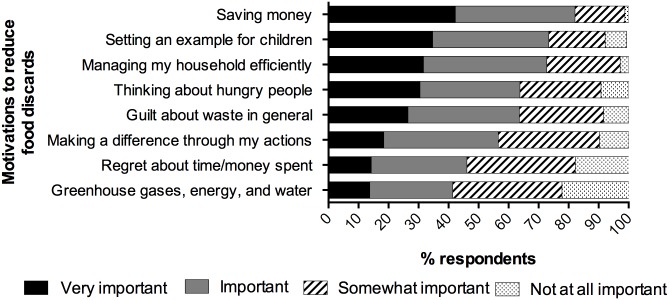
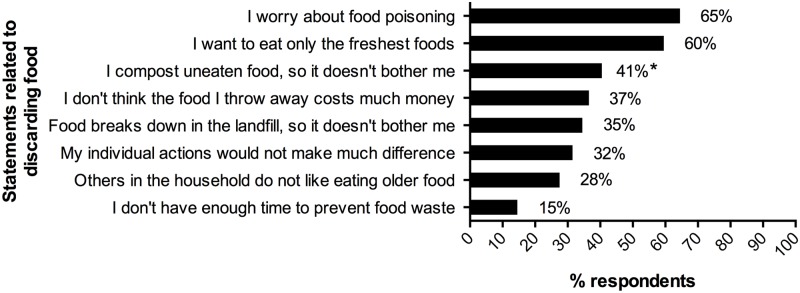
The U.S. wastes 31 to 40% of its post-harvest food supply, with a substantial portion of this waste occurring at the consumer level. Globally, interventions to address wasted food have proliferated, but efforts are in their infancy in the U.S. To inform these efforts and provide baseline data to track change, we performed a survey of U.S. consumer awareness, attitudes and behaviors related to wasted food. The survey was administered online to members of a nationally representative panel (N=1010), and post-survey weights were applied. The survey found widespread (self-reported) awareness of wasted food as an issue, efforts to reduce it, and knowledge about how to do so, plus moderately frequent performance of waste-reducing behaviors. Three-quarters of respondents said they discard less food than the average American. The leading motivations for waste reduction were saving money and setting an example for children, with environmental concerns ranked last. The most common reasons given for discarding food were concern about foodborne illness and a desire to eat only the freshest food. In some cases there were modest differences based on age, parental status, and income, but no differences were found by race, education, rural/urban residence or other demographic factors. Respondents recommended ways retailers and restaurants could help reduce waste. This is the first nationally representative consumer survey focused on wasted food in the U.S. It provides insight into U.S. consumers' perceptions related to wasted food, and comparisons to existing literature. The findings suggest approaches including recognizing that many consumers perceive themselves as being already-knowledgeable and engaged, framing messages to focus on budgets, and modifying existing messages about food freshness and aesthetics. This research also suggests opportunities to shift retail and restaurant practice, and identifies critical research gaps.
Overview
The claims and statistics of this paper haven’t been checked yet.
Free: it reads the open-access text and checks the first 5 claims that cite a source we can check. Create a free account to check every claim.
Integrity signals
Registry
Cites
Statistics
Figures
Verification
Claims the paper makes
The claims and statistics of this paper haven’t been checked yet.
Free: it reads the open-access text and checks the first 5 claims that cite a source we can check. Create a free account to check every claim.
Claims other papers make about this one
Each is checked against this paper’s own text: does it say what the citing paper says it does?
The source backs part of the claim, not all of it — or backs it for a different population, condition or comparison.
In the citing paper
“Survey respondents tend to substantially under-report their waste levels and in contrast to over-report their effort levels (Neff et al. 2015; Qi and Roe 2016; van Geffen et al. 2020).”
From COVID-19 virus outbreak lockdown: What impacts on household food wastage? (2020) · cites this paper as Neff et al. 2015
Experimental — accuracy not yet measuredThe source backs part of the claim, not all of it — or backs it for a different population, condition or comparison.
In the citing paper
“while previous survey work in the United States [30] show food waste reduction is perceived as pro-social by a majority and pro-environmental by more than 40% of respondents.”
From Household Food Waste: Multivariate Regression and Principal Components Analyses of Awareness and Attitudes among U.S. Consumers (2016) · cites this paper as [30]
Experimental — accuracy not yet measuredThe source backs part of the claim, not all of it — or backs it for a different population, condition or comparison.
In the citing paper
“Ethical considerations regarding a lack of food in other countries have been noted by a number of authors (Blichfeldt et al., 2015;Ganglbauer et al., 2013;Neff et al., 2015;Pearson et al., 2016).”
From Food waste matters - A systematic review of household food waste practices and their policy implications (2018) · cites this paper as Neff et al., 2015
Experimental — accuracy not yet measuredThe source backs part of the claim, not all of it — or backs it for a different population, condition or comparison.
In the citing paper
“Alternatively, consumers may believe their impact to be minimized because of composting food waste or feeding food surplus to their pets (Graham-Rowe et al., 2014;Neff et al., 2015).”
From Food waste matters - A systematic review of household food waste practices and their policy implications (2018) · cites this paper as Neff et al., 2015
Experimental — accuracy not yet measuredThe source backs part of the claim, not all of it — or backs it for a different population, condition or comparison.
In the citing paper
“Two studies in the U.S. have found a modest role of environmental concerns with only 40% (Neff et al., 2015) and 58.4% (Qi and Roe, 2016) of respondents expressing concerns about the environmental consequences associated with throwing away food.”
From Food waste matters - A systematic review of household food waste practices and their policy implications (2018) · cites this paper as Neff et al., 2015
Experimental — accuracy not yet measured
23 more claims about this paper
Create a free account to see every claim other papers make about this one.
Self-check
Percentages, sums and reported differences re-computed from the paper’s own numbers.
The self-check needs the paper’s full text.
Citations
Cites
Tversky, A., & Kahneman, D. (1974) · Science · doi:10.1126/science.185.4157.1124 · Cited by 28,810 · cited 1×
“For example, the estimate that 40% of all food is wasted would lead most people to say that they waste less than that [2,3,28].”
Judgment under Uncertainty: Heuristics and Biases
Tversky, A., & Kahneman, D. (1975) · Utility, Probability, and Human Decision Making · doi:10.1007/978-94-010-1834-0_8 · Cited by 22,650
Kollmuss, A., & Agyeman, J. (2002) · Environmental Education Research · doi:10.1080/13504620220145401 · Cited by 8,866
Social determinants of health inequalities
Marmot, M. (2005) · The Lancet · doi:10.1016/s0140-6736(05)71146-6 · Cited by 5,086
Bamberg, S., & Möser, G. (2007) · Journal of Environmental Psychology · doi:10.1016/j.jenvp.2006.12.002 · Cited by 4,140
World agriculture towards 2030/2050: the 2012 revision
Alexandratos, N., Bruinsma, J., Alexandratos, N., & Bruinsma, J. (2012) · RePEc: Research Papers in Economics · doi:10.22004/ag.econ.288998 · Cited by 3,093
Methods of coping with social desirability bias: A review
Nederhof, A. J. (1985) · European Journal of Social Psychology · doi:10.1002/ejsp.2420150303 · Cited by 2,340 · cited 1×
“The survey used anonymous administration and randomized question order to reduce bias [47].”
MethodObesity Stigma: Important Considerations for Public Health
Puhl, R. M., & Heuer, C. A. (2010) · American Journal of Public Health · doi:10.2105/ajph.2009.159491 · Cited by 1,917 · cited 1×
“Extensive evidence from public health and related fields shows limitations of the individual responsibility frame [42], and highlights that shame and blame can be counterproductive [43].”
BackgroundKummu, M., de Moel, H., Porkka, M., Siebert, S., Varis, O., & Ward, P. J. (2012) · Science of The Total Environment · doi:10.1016/j.scitotenv.2012.08.092 · Cited by 1,300 · cited 1×
“Wasted food in North America/Oceania also accounts for an estimated 35% of freshwater consumption, 31% of cropland, and 30% of fertilizer usage[8]; as well as 2% of U.”
Background(2002) · Medical Entomology and Zoology · Cited by 1,279
Cited by
Items 101–200 of 468
Hermanussen, H., Loy, J., & Egamberdiev, B. (2022) · International Journal of Environmental Research and Public Health · doi:10.3390/ijerph192114253 · Cited by 72
“Often the disposal of food causes a bad conscience [30,71].”
BackgroundEmotions and food waste behavior: Do habit and facilitating conditions matter?
Jabeen, F., Dhir, A., Islam, N., Talwar, S., & Papa, A. (2022) · Journal of Business Research · doi:10.1016/j.jbusres.2022.113356 · Cited by 80
Elimelech, E., Ert, E., & Ayalon, O. (2019) · Waste Management · doi:10.1016/j.wasman.2019.06.015 · Cited by 69
Household Food Waste and Inefficiencies in Food Production
Smith, T. A., & Landry, C. E. (2020) · American Journal of Agricultural Economics · doi:10.1111/ajae.12145 · Cited by 65
Food waste prevention behavior in the context of hedonic and utilitarian shopping value
Katt, F., & Meixner, O. (2020) · Journal of Cleaner Production · doi:10.1016/j.jclepro.2020.122878 · Cited by 70
Understanding and addressing waste of food in the Kingdom of Saudi Arabia
Baig, M. B., Gorski, I., & Neff, R. (2018) · Saudi Journal of Biological Sciences · doi:10.1016/j.sjbs.2018.08.030 · Cited by 71
Self-citationFood waste prevention in Athens, Greece: The effect of family characteristics
Abeliotis, K., Lasaridi, K., & Chroni, C. (2016) · Waste Management & Research The Journal for a Sustainable Circular Economy · doi:10.1177/0734242x16672318 · Cited by 75
“Understanding these behaviours can also help to plan prevention campaigns: which groups of people to focus on; channels of engagement; and design of campaign material (Neff et al., 2015; WRAP, 2009).”
BackgroundTourism and sustainable transformation: a discussion and application to tourism food consumption
Fennell, D. A., & Bowyer, E. (2020) · Tourism Recreation Research · doi:10.1080/02508281.2019.1694757 · Cited by 58
Vizzoto, F., Tessitore, S., Iraldo, F., & Testa, F. (2020) · Waste Management · doi:10.1016/j.wasman.2020.04.010 · Cited by 70
Consumption Behavior and Residential Food Waste during the COVID-19 Pandemic Outbreak in Brazil
Schmitt, V. G. H., Cequea, M. M., Neyra, J. M. V., & Ferasso, M. (2021) · Sustainability · doi:10.3390/su13073702 · Cited by 60
“Similarly, it was observed that awareness and behavior regarding the reduction in waste is in line with previous studies [29,33,34,58,59].”
BackgroundResultInfluentialAschemann‐Witzel, J., Giménez, A., Grønhøj, A., & Ares, G. (2019) · Journal of Consumer Affairs · doi:10.1111/joca.12291 · Cited by 67
Demand for Household Food Waste
Landry, C. E., & Smith, T. A. (2019) · Applied Economic Perspectives and Policy · doi:10.1093/aepp/ppy037 · Cited by 62
“Much of the literature on household food waste focuses on consumer attitudes, awareness, and perceptions (e.g., Neff, Spiker, and Truant 2015; Qi and Roe 2016) or investigates the role of information provisions, such as the effects of date labelling on individual perceptions and consumption…”
BackgroundPelt, A., Saint-Bauzel, R., Barbier, L., & Fointiat, V. (2020) · Resources Conservation and Recycling · doi:10.1016/j.resconrec.2020.105059 · Cited by 71
Environmental Concerns and Food Consumption: What Drives Consumers’ Actions to Reduce Food Waste?
Chen, H. S. (2019) · Journal of International Food & Agribusiness Marketing · doi:10.1080/08974438.2018.1520179 · Cited by 61
“Moreover, perhaps most consumers do not recognize environmental issues associated with food waste; research indicates that most consumers believe food scraps are biodegradable and ultimately break down in landfills (Neff et al., 2015; ReFed, 2016).”
BackgroundInfluentialHigher education and food waste: assessing current trends
Filho, W. L., Salvia, A. L., Davis, B. Y., Will, M., & Moggi, S. (2021) · International Journal of Sustainable Development & World Ecology · doi:10.1080/13504509.2020.1865474 · Cited by 63
“Research shows that reducing food waste can improve food security, reduce the amount of freshwater and fossil fuel used, and increase efficiency in resource use (Hall et al. 2009; Neff et al. 2015).”
BackgroundFanelli, R. M. (2019) · Sustainability · doi:10.3390/su11041183 · Cited by 63
Huang, C., & Tseng, H.-Y. (2020) · Sustainability · doi:10.3390/su12229784 · Cited by 64
Närvänen, E., Mesiranta, N., Saarijärvi, H., & Nevalainen, J. (2023) · International Journal of Consumer Studies · doi:10.1111/ijcs.12903 · Cited by 51
Amirudin, N. B., & Gim, T. T. (2019) · Resources Conservation and Recycling · doi:10.1016/j.resconrec.2019.05.011 · Cited by 61
Filimonau, V., Raximovich, M. U., Allonazarov, O., & Ермолаев, В. А. (2021) · Sustainable Production and Consumption · doi:10.1016/j.spc.2021.09.018 · Cited by 69
Thyberg, K., & Tonjes, D. (2015) · Systems · doi:10.3390/systems3030133 · Cited by 51
“Neff [42] suggests that budget-focused messages are useful because consumers may be likely to waste less if they realized how much money can be saved.”
BackgroundMu, W., Spaargaren, G., & Lansink, A. O. (2019) · Sustainability · doi:10.3390/su11051275 · Cited by 61
Exploring the Drivers behind Self-Reported and Measured Food Wastage
Elimelech, E., Ert, E., & Ayalon, O. (2019) · Sustainability · doi:10.3390/su11205677 · Cited by 56
Understanding Food Waste Produced by University Students: A Social Practice Approach
Ozanne, L. K., Ballantine, P. W., & McMaster, A. (2022) · Sustainability · doi:10.3390/su141710653 · Cited by 64
“A common factor that drives consumers to discard leftover food is the risk of foodborne illness and the desire to eat only the freshest foods, with some consumers using date labels to make decisions on when to discard food [42,78].”
BackgroundQuantifying the effects of food management routines on household food waste
Ananda, J., Karunasena, G. G., Kansal, M., Mitsis, A., & Pearson, D. H. (2023) · Journal of Cleaner Production · doi:10.1016/j.jclepro.2023.136230 · Cited by 60
Mureșan, I. C., Harun, R., Andreica, I., Chiciudean, G. O., Kovács, E., Oroian, C. F., Brata, A. M., & Dumitraş, D. E. (2022) · Agronomy · doi:10.3390/agronomy12030746 · Cited by 48
Chen, M. (2022) · British Food Journal · doi:10.1108/bfj-07-2021-0788 · Cited by 57
Determinants and Prevention Strategies for Household Food Waste: An Exploratory Study in Taiwan
Teng, C.-C. C., Chih, C., Yang, W.-J., & Chien, C.-H. (2021) · Foods · doi:10.3390/foods10102331 · Cited by 64
“This finding is similar to Neff et al. (2015), indicating that a majority of American consumers estimate their food waste as much lower than the amount indicated by national statistics [20].”
ResultFood Waste and Social Practices in Australian Households
Keegan, E., & Breadsell, J. K. (2021) · Sustainability · doi:10.3390/su13063377 · Cited by 56
“However, efforts to understand levels of food waste in Canada and the United States are in their infancy [26,36].”
BackgroundA Systems Approach to Food Loss and Solutions: Understanding Practices, Causes, and Indicators
Verma, M. V. D. B., Plaisier, C., van Wagenberg, C. P. A., & Achterbosch, T. J. (2019) · Sustainability · doi:10.3390/su11030579 · Cited by 56
“The reasons for a high processing loss in the developed world on the other hand seems more to do with consumer attitudes towards acceptability [92] than technical or institutional limitations affecting the processing sector.”
BackgroundCampbell, C. G., & Feldpausch, G. (2022) · Journal of Dairy Science · doi:10.3168/jds.2021-20994 · Cited by 56
Chia, D., Yap, C. C., Wu, S. L., Berezina, E. B., Aroua, M. K., & Gew, L. T. (2023) · Waste Management & Research The Journal for a Sustainable Circular Economy · doi:10.1177/0734242x231187559 · Cited by 59
“Among Norwegian, American and Mauritius households, the desire to save money and improve family financial management also limited food waste (Hebrok, 2018; Neff et al., 2015; Nunkoo et al., 2021).”
BackgroundInfluentialChalak, A., Abiad, M. G., Diab, M., & Nasreddine, L. (2019) · PLoS ONE · doi:10.1371/journal.pone.0225789 · Cited by 56
“While qualitative FLW research has been focusing mainly on explaining the ways in which societal practices contribute to the passage of food into waste, and conceptualize how multiple factors at different levels interrelate in the contribution to food waste [9], quantitative research has sought to complement this role…”
BackgroundTeng, C.-C. C., Wang, Y., & Chuang, C.-J. (2022) · International Journal of Hospitality Management · doi:10.1016/j.ijhm.2022.103309 · Cited by 54
Shahhosseini, M. R., & Nasr, A. K. (2024) · Journal of Travel & Tourism Marketing · doi:10.1080/10548408.2024.2306358 · Cited by 53
“While consumers are increasingly concerned about green consumption when dining out (Neff et al., 2015), in their review of green hospitality research, Kim et al. (2017) discovered that only 10% of studies focused on issues related to green restaurants, meaning this area is still in its early stages…”
BackgroundRecent Contributions of Agricultural Economics Research in the Field of Sustainable Development
Bertoni, D., Cavicchioli, D., Donzelli, F., Ferrazzi, G., Frisio, D. G., Pretolani, R., Ricci, E. C., & Ventura, V. (2018) · Agriculture · doi:10.3390/agriculture8120200 · Cited by 46
The Effect of Sell-by Dates on Purchase Volume and Food Waste
Yu, Y., & Jaenicke, E. C. (2018) · Food Policy · doi:10.1016/j.foodpol.2020.101879 · Cited by 47
Consumer Perceptions, Behaviors, and Knowledge of Food Waste in a Rural American State
Ahmed, S., Stewart, A. L., Smith, E., Warne, T., & Shanks, C. B. (2021) · Frontiers in Sustainable Food Systems · doi:10.3389/fsufs.2021.734785 · Cited by 48
Lagerkvist, C. J., Edenbrandt, A. K., Bolos, L. A., & Nayga, R. M. (2022) · Food Quality and Preference · doi:10.1016/j.foodqual.2022.104737 · Cited by 53
Household food waste: A meta-analysis
Hermanussen, H., & Loy, J. (2023) · Environmental Challenges · doi:10.1016/j.envc.2023.100809 · Cited by 51
Characteristics of food‐wasting consumers in the Czech Republic
Filipová, A., Mokrejšová, V., Šulc, Z., & Zeman, J. (2017) · International Journal of Consumer Studies · doi:10.1111/ijcs.12384 · Cited by 37
Sebbane, M., & Costa, S. (2018) · Resources Conservation and Recycling · doi:10.1016/j.resconrec.2018.04.015 · Cited by 49
Impacto de uma campanha para redução de desperdício de alimentos em um restaurante universitário
Borges, M. P., Souza, L. H. R., de Pinho, S., & de PINHO, L. (2019) · Engenharia Sanitaria e Ambiental · doi:10.1590/s1413-41522019187411 · Cited by 42
Tsalis, G., Jensen, B. B., Wakeman, S. W., & Aschemann‐Witzel, J. (2021) · Sustainability · doi:10.3390/su13074018 · Cited by 51
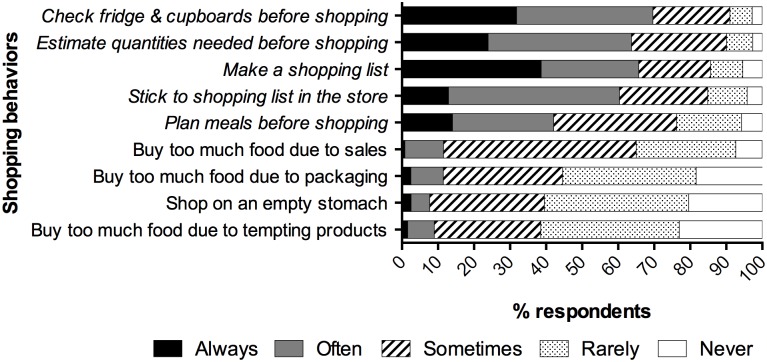
“Neff et al. (2015) Online survey n = 1010 USA A small percentage of respondents reported buying food on sale, but overall food waste is high.”
BackgroundFood waste tendencies: Behavioral response to cosmetic deterioration of food
Dusoruth, V., & Peterson, H. H. (2020) · PLoS ONE · doi:10.1371/journal.pone.0233287 · Cited by 49
“[43] note significant associations between food waste knowledge and demographics, where individuals aged 65 years or older reported greater knowledge of food waste, while households with children under 18 years of age expressed having less knowledge of food waste than other households.”
BackgroundConsumer responses to suboptimal food products
Cao, Y. F., & Miao, L. (2021) · Appetite · doi:10.1016/j.appet.2021.105205 · Cited by 45
Kolawole, O. A., Mishra, J., & Hussain, Z. (2021) · Industrial Marketing Management · doi:10.1016/j.indmarman.2021.01.006 · Cited by 56
Targeting Youths’ Intentions to Avoid Food Waste: Segmenting for Better Policymaking
Marek, E., & Wielicka‐Regulska, A. (2021) · Agriculture · doi:10.3390/agriculture11040284 · Cited by 46
“The elderly were more likely to plan their purchases and have more knowledge about food wastage [23,28] or may have experienced food shortages during World War II, as Visschers et al.”
BackgroundAschemann‐Witzel, J., Randers, L., & Pedersen, S. (2022) · Business Strategy and the Environment · doi:10.1002/bse.3202 · Cited by 48
Aschemann‐Witzel, J. (2018) · Journal of Food Products Marketing · doi:10.1080/10454446.2018.1472693 · Cited by 48
Some issues in the ethics of food waste
Roe, B. E., Qi, D., & Bender, K. E. (2020) · Physiology & Behavior · doi:10.1016/j.physbeh.2020.112860 · Cited by 52
Ferro, C., Ares, G., Aschemann‐Witzel, J., Curutchet, M. R., & Giménez, A. (2021) · Food Research International · doi:10.1016/j.foodres.2021.110861 · Cited by 44
Nguyen, T. T. T., Malek, L., Umberger, W. J., & O’Connor, P. (2023) · Sustainable Production and Consumption · doi:10.1016/j.spc.2023.11.003 · Cited by 47
Household Food Waste Solutions for Behavioral Economists and Marketers
Wansink, B. C. (2018) · Journal of Food Products Marketing · doi:10.1080/10454446.2018.1472694 · Cited by 45
“…date labels, “use by” labels, or “best purchased by” labels gives consumers a seemingly more objective reason to either toss an expired product or to eat it at their own risk (Qi & Roe, 2016; Wilson, Dahl, & Temple, 2016; Neff et al., 2015; Graham-Rowe et al., 2014; Quested et al., 2013a).”
BackgroundResponsible consumption: addressing individual food waste behavior
Ang, W.-Z., Narayanan, S., & Hong, M. (2021) · British Food Journal · doi:10.1108/bfj-03-2021-0328 · Cited by 45
Lebanese meal management practices and cultural constructions of food waste
Chammas, G., & Yehya, N. A. (2020) · Appetite · doi:10.1016/j.appet.2020.104803 · Cited by 45
Food Waste Knowledge, Attitudes, and Behavioral Intentions among University Students
Alattar, M., DeLaney, J., Morse, J., & Nielsen‐Pincus, M. (2020) · Journal of Agriculture Food Systems and Community Development · doi:10.5304/jafscd.2020.093.004 · Cited by 50
“Data Collection The survey instrument was designed to measure food-waste related attitudes, knowledge, intent, reported behaviors, and general sustainability beliefs (Graham-Rowe et al., 2014; Lipinski et al., 2013; Neff et al., 2015; Refsgaard & Magnussen, 2009).”
BackgroundMethodResultInfluentialCoşkun, A., & Filimonau, V. (2021) · Journal of Cleaner Production · doi:10.1016/j.jclepro.2021.129695 · Cited by 46
Nudging greater vegetable intake and less food waste: A field experiment
Qi, D., Li, R., Penn, J., Houghtaling, B., Prinyawiwatkul, W., & Roe, B. E. (2022) · Food Policy · doi:10.1016/j.foodpol.2022.102369 · Cited by 45
Consumers’ perceptions of food waste: A pilot study of U.S. students
Zepeda, L., & Balaine, L. (2017) · International Journal of Consumer Studies · doi:10.1111/ijcs.12376 · Cited by 43
The Impact of Social Norms on Suboptimal Food Consumption: A Solution for Food Waste
Stangherlin, I. D. C., de Barcellos, M. D., & Basso, K. (2018) · Journal of International Food & Agribusiness Marketing · doi:10.1080/08974438.2018.1533511 · Cited by 48
Niles, M. T. (2020) · Frontiers in Sustainable Food Systems · doi:10.3389/fsufs.2019.00123 · Cited by 44
Tsalis, G., Jensen, B. B., & Aschemann‐Witzel, J. (2023) · Waste Management · doi:10.1016/j.wasman.2023.10.032 · Cited by 42
Jia, L., Zhang, Y., & Qiao, G. (2022) · Foods · doi:10.3390/foods11193098 · Cited by 38
“The primary motivation for people with stronger price consciousness to reduce waste is to save money [86], so such consumers reduce food waste by having a stronger sense of PBC and BI.”
BackgroundDevelopment and validation of the motivation to avoid food waste scale
Ribbers, D., Geuens, M., Pandelaere, M., & van Herpen, E. (2022) · Global Environmental Change · doi:10.1016/j.gloenvcha.2022.102626 · Cited by 44
Consumer behaviour and household food waste in Greece
Theodoridis, P. K., Zacharatos, T., & Boukouvala, V. (2023) · British Food Journal · doi:10.1108/bfj-02-2023-0141 · Cited by 37
Food waste quantities and composition in Polish households
den Boer, J., Kobel, P., den Boer, E., & Obersteiner, G. (2023) · Waste Management & Research The Journal for a Sustainable Circular Economy · doi:10.1177/0734242x231155095 · Cited by 34
“When asked about a not socially admirable behaviour (food wastage), this form of self-reporting tends to both change the behaviour (actually waste less food) and to undermine the reporting results (report less than was actually wasted) and thus to underestimate the problem (Beretta et al., 2013; Neff et al., 2015; Sim…”
BackgroundAnalysis of drivers for anti-food waste behaviour - TISM and MICMAC approach
Poonia, A., Sindhu, S., Arya, V., & Panghal, A. (2021) · Journal of Indian Business Research · doi:10.1108/jibr-02-2021-0069 · Cited by 35
Cooper, A., Lion, R., Rodriguez-Sierra, O. E., Jeffrey, P., Thomson, D., Peters, K., Christopher, L., Zhu, M. J. H., Wistrand, L., van der Werf, P., et al. (2023) · Resources Conservation and Recycling · doi:10.1016/j.resconrec.2023.106986 · Cited by 40
The clean label trend: An ineffective heuristic that disserves both consumers and the food industry?
Chen, A. A., Kayrala, N., Trapeau, M., Aoun, M., & Bordenave, N. (2022) · Comprehensive Reviews in Food Science and Food Safety · doi:10.1111/1541-4337.13031 · Cited by 34
Bogevska, Z., Berjan, S., Bilali, H. E., Allahyari, M. S., Radosavac, A., & Davitkovska, M. (2021) · Socio-Economic Planning Sciences · doi:10.1016/j.seps.2021.101150 · Cited by 37
Food Waste Behaviour at the Consumer Level: Pilot Study on Czech Private Households
Kubíčková, L., Veselá, L., & Kormaňáková, M. (2021) · Sustainability · doi:10.3390/su132011311 · Cited by 35
Evaluation of a community-based food waste campaign using a national control group
Shu, Y., Booker, A., Karetny, J., O'Keefe, K., Rees, K., Schroder, L., & Roe, B. E. (2023) · Waste Management · doi:10.1016/j.wasman.2023.02.011 · Cited by 41
“…about food waste were assessed by respondent agreement with eleven statements (e.g., Throwing away food is bad for the environment) on a four-point scale (e.g., agree strongly, agree somewhat, … ) where most statements were adapted from previous studies (Neff et al., 2015; Qi and Roe, 2016).”
Environmental Sustainability of Fluid Milk Delivery Systems in the United States
Burek, J., Kim, D., Nutter, D. W., Selke, S. E. M., Auras, R. A., Cashman, S. A., Sauer, B. J., & Thoma, G. J. (2017) · Journal of Industrial Ecology · doi:10.1111/jiec.12531 · Cited by 31
“Americans dispose milk based on their senses (72%), use-by and sell-by date labels (39% and 22%, respectively), or if they had milk open for a long time inside or outside the refrigerator (18% and 12%, respectively) (Neff et al. 2015).”
BackgroundMetcalfe, J. J., McCaffrey, J., Schumacher, M., Kownacki, C., & Prescott, M. P. (2022) · Public Health Nutrition · doi:10.1017/s1368980022000660 · Cited by 38
Stockpiling and food worries: Changing habits and choices in the midst of COVID-19 pandemic
Amuakwa‐Mensah, F., Amuakwa-Mensah, S., Klege, R. A., & Adom, P. K. (2021) · Socio-Economic Planning Sciences · doi:10.1016/j.seps.2021.101181 · Cited by 33
Food waste interventions: Experimental evidence of the effectiveness of environmental messages
Bretter, C., Unsworth, K. L., Russell, S. V., Quested, T. E., Kaptan, G., & Doriza, A. (2023) · Journal of Cleaner Production · doi:10.1016/j.jclepro.2023.137596 · Cited by 38
Ng, S. W., Poti, J. M., & Popkin, B. M. (2016) · American Journal of Clinical Nutrition · doi:10.3945/ajcn.115.127944 · Cited by 30
“However, there have been no studies on racial/ethnic- or income-specific food wastage to date (25, 26).”
BackgroundA conceptual and empirical framework to analyze the economics of consumer food waste
Drábik, D., de Gorter, H., & Reynolds, C. J. (2019) · Resources Conservation and Recycling · doi:10.1016/j.resconrec.2019.06.008 · Cited by 36
The State of America’s Wasted Food and Opportunities to Make a Difference
Vogliano, C., & Brown, K. A. (2016) · Journal of the Academy of Nutrition and Dietetics · doi:10.1016/j.jand.2016.01.022 · Cited by 33
Examining Nutrition and Food Waste Trade-offs Using an Obesity Prevention Context
Ellison, B., & Prescott, M. P. (2021) · Journal of Nutrition Education and Behavior · doi:10.1016/j.jneb.2020.11.005 · Cited by 29
Food consumption and food waste behaviour in households in the context of the COVID-19 pandemic
Neyra, J. M. V., Cequea, M. M., Schmitt, V. G. H., & Ferasso, M. (2022) · British Food Journal · doi:10.1108/bfj-07-2021-0798 · Cited by 30
Estimating urban food waste at the local level: are good practices in food consumption persistent?
Cerciello, M., Agovino, M., & Garofalo, A. (2018) · Economia Politica · doi:10.1007/s40888-017-0089-8 · Cited by 28
Alattar, M., & Morse, J. (2021) · Foods · doi:10.3390/foods10030510 · Cited by 36
“” Attitudes towards food waste were measured with both cognitive and affective statements, including “Food waste does not bother me”, “My individual actions towards food waste do not make a difference”, “Composting stinks and is gross”, and “When I compost I feel like I’m contributing to the greater good” [40,43,44].”
BackgroundMethodInfluentialImpact of Messaging Strategy on Consumer Understanding of Food Date Labels
Turvey, C., Moran, M. B., Sacheck, J. M., Arashiro, A., Huang, Q., Heley, K. M., Johnston, E., & Neff, R. (2021) · Journal of Nutrition Education and Behavior · doi:10.1016/j.jneb.2021.03.007 · Cited by 35
Self-citationManika, D., Iacovidou, E., Canhoto, A. I., Pei, E., & Mach, K. (2022) · Journal of Cleaner Production · doi:10.1016/j.jclepro.2022.133449 · Cited by 33
Giménez, A., Ares, G., Chheang, S. L., & Jaeger, S. R. (2023) · Food Quality and Preference · doi:10.1016/j.foodqual.2023.104982 · Cited by 34
Nitzko, S., & Spiller, A. (2019) · Sustainability · doi:10.3390/su11174779 · Cited by 23
Patra, D., Leisnham, P. T., Tanui, C. K., & Pradhan, A. K. (2020) · Food Control · doi:10.1016/j.foodcont.2020.107307 · Cited by 34
Benyam, A., Rolfe, J. C., & Kinnear, S. H. W. (2020) · Journal of Cleaner Production · doi:10.1016/j.jclepro.2020.122485 · Cited by 33
Cequea, M. M., Neyra, J. M. V., Schmitt, V. G. H., & Ferasso, M. (2021) · Sustainability · doi:10.3390/su13147583 · Cited by 29
“For this reason, providing adequate information, especially through labels [54,65], on storage conditions after opening and expiration dates for safe consumption or disposal [7,13,41,54,66,67] is extremely critical because considering the expiration date and storage recommendations for store-bought food products reduc…”
BackgroundInfluentialEdmondson, D. E., Conroy, D. E., Romero‐Canyas, R., Tanenbaum, M. L., & Czajkowski, S. M. (2022) · Translational Behavioral Medicine · doi:10.1093/tbm/ibac030 · Cited by 36
Consumer preferences for visually sub-optimal food: Role of information framing and personal goals
Bolos, L. A., Lagerkvist, C. J., Edenbrandt, A. K., & Nayga, R. M. (2022) · Resources Conservation and Recycling · doi:10.1016/j.resconrec.2022.106426 · Cited by 28
Cerciello, M., Agovino, M., & Garofalo, A. (2018) · Environment Development and Sustainability · doi:10.1007/s10668-017-0080-0 · Cited by 37
“2015) and the main target of public policy (Quested et al. 2013; Monier et al. 2011; Neff et al. 2015).”
Backgroundvan der Werf, P., Larsen, K., Seabrook, J. A., & Gilliland, J. (2020) · Sustainability · doi:10.3390/su12177016 · Cited by 30
Food Waste Perception of Workplace Canteen Users—A Case Study
Pires, I. M. M., Machado, J., da Rocha, A. M. C. N., & Martins, M. L. (2022) · Sustainability · doi:10.3390/su14031324 · Cited by 30
“Considering that saving money was reported to be a primary motivator for food waste reduction, along with moral values [23], the variable price based on the amount of food served could be a solution in workplace canteens, as well as using smaller plate size [52].”
BackgroundHasan, Z., & Lateef, M. (2023) · Environmental Science and Pollution Research · doi:10.1007/s11356-023-30152-0 · Cited by 34
“Some social-cultural gatherings require the preparation of large quantities of food in order to symbolize charity, wealth, and social status, leading to significant food waste (Neff et al. 2015).”
Faith and Sustainability: Exploring Religiosity’s Impact on Intentions to Reduce Food Waste
Baran, T., Lupu, C., & Privitera, D. S. (2024) · Sustainability · doi:10.3390/su16114852 · Cited by 32
Hannibal, B., & Vedlitz, A. (2018) · Environmental Science & Policy · doi:10.1016/j.envsci.2018.06.012 · Cited by 28
Food waste prevention and reduction: Practices, cultural and personal determinants
Elimelech, E., Segal-Klein, H., Mintz, K. K., Katz‐Gerro, T., & Ayalon, O. (2024) · Appetite · doi:10.1016/j.appet.2024.107565 · Cited by 32
Metadata
- Authors
- Neff, R. A., Spiker, M. L., & Truant, P. L.
- Affiliations
- Johns Hopkins University (US)
- Corresponding author
- Neff, Roni A.
- Venue
- PLOS ONE
- Publisher
- Public Library of Science (PLoS)
- Published
- 2015-06-10
- Volume
- 10
- Issue
- 6
- Pages
- e0127881
- ISSN
- 1932-6203 (ISSN-L)
- PMC
- PMC4465675
- OpenAlex
- W591450021
- Cited by
- 461
- References
- 34
- Citations by year
- 2026: 34 · 2025: 36 · 2024: 40 · 2023: 38 · 2022: 58 · 2021: 62 · 2020: 61 · 2019: 50 · 2018: 35 · 2017: 24 · 2016: 19 · 2015: 3
- FWCI
- 36.05
- Type
- journal article
- Language
- en
- Open access
- gold
- doi.org
- Licence
- Locations
- PLoS ONE (publishedVersion, cc-by)
- Europe PMC (PubMed Central) (publishedVersion, cc-by)
- PubMed Central (publishedVersion, cc-by)
- PubMed (publishedVersion)
- RePEc: Research Papers in Economics (submittedVersion)
- DOAJ (DOAJ: Directory of Open Access Journals) (submittedVersion)
- Figshare (submittedVersion, cc-by)
- Funders
- Johns Hopkins University
- Università di Bologna
- Johns Hopkins Bloomberg School of Public Health
- Topics
- Life Sciences › Agricultural and Biological Sciences › Food Science › Food Waste Reduction and Sustainability
- Physical Sciences › Environmental Science › Ecology › Agriculture Sustainability and Environmental Impact
- Health Sciences › Medicine › Public Health, Environmental and Occupational Health › Food Security and Health in Diverse Populations
- Keywords
- food waste, consumer awareness, consumer attitudes, food freshness, food aesthetics, United States consumers
- MeSH terms
- Adult, Aged, Attitude, Awareness, Female, Food Supply, Humans, Health Knowledge, Attitudes, Practice, Male, Middle Aged, Surveys and Questionnaires, Social Behavior, United States, Waste Products
About these checks
Registry, retraction, Cites and statistics results are computed, not judged, with one exception: a printed reference that no index lists is read once by a model before it counts as a citation error. Claims are extracted by a model and kept only when their quote appears verbatim in the text; each cited source is then checked, with a model’s help, for whether it says what the claim relies on. Those verdicts can be wrong — read the claim’s quote and the cited source before relying on one.
Statistics and arithmetic are recomputed, not judged.
Confidence bands are shown only for fields calibrated on our annotated test set. None is calibrated yet, so no band is shown.
What counts as a claim ›How we measure confidence ›How we check this ›
Are you an author, or do you see a problem with this page? Request a review
Data sources
Bibliographic data: Semantic Scholar, OpenAlex, Crossref.
Contains information from the Semantic Scholar Academic Graph Datasets, made available under the ODC Attribution License (ODC-BY 1.0).
Semantic Scholar’s data is described in: Kinney, R., et al. (2023). The Semantic Scholar Open Data Platform. arXiv:2301.10140.
