

On Pixel-Wise Explanations for Non-Linear Classifier Decisions by Layer-Wise Relevance Propagation
Open accessThe DOI matches its Crossref record; 55 of the 56 references it cites were found in a registry or an index.
Abstract
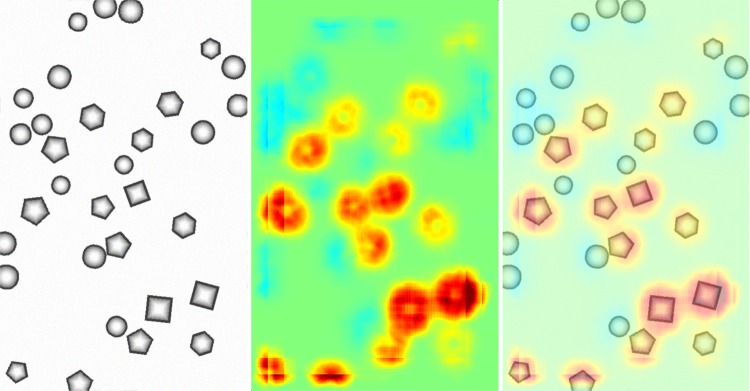
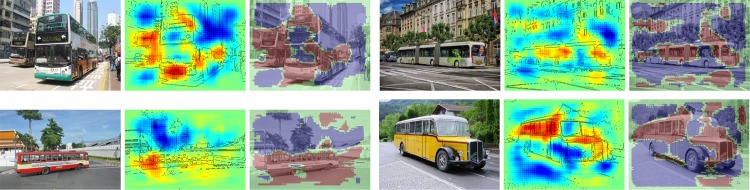
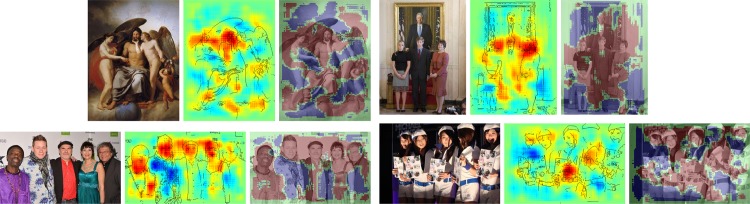
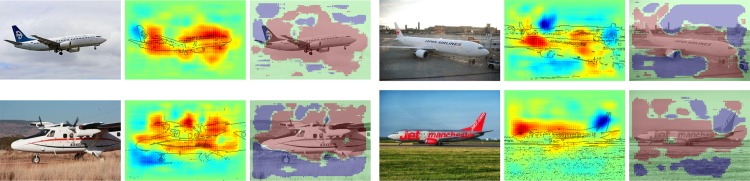
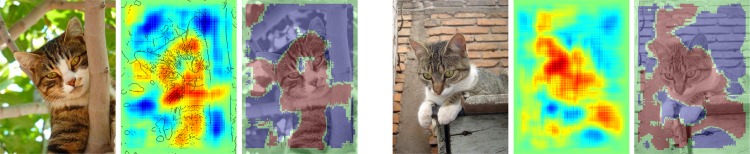
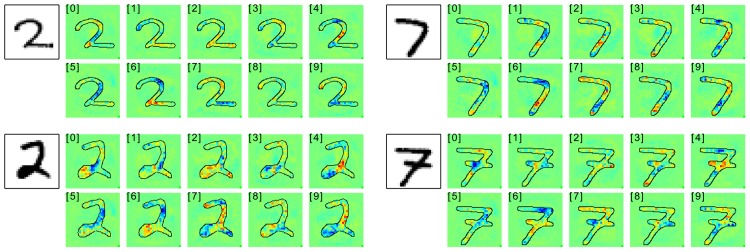
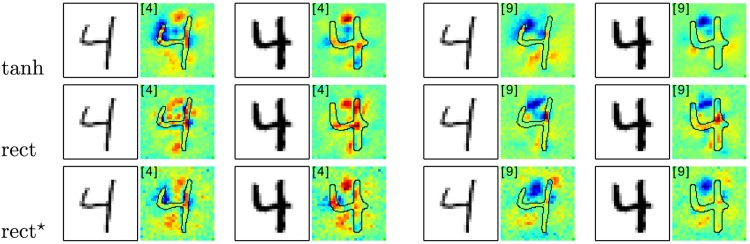
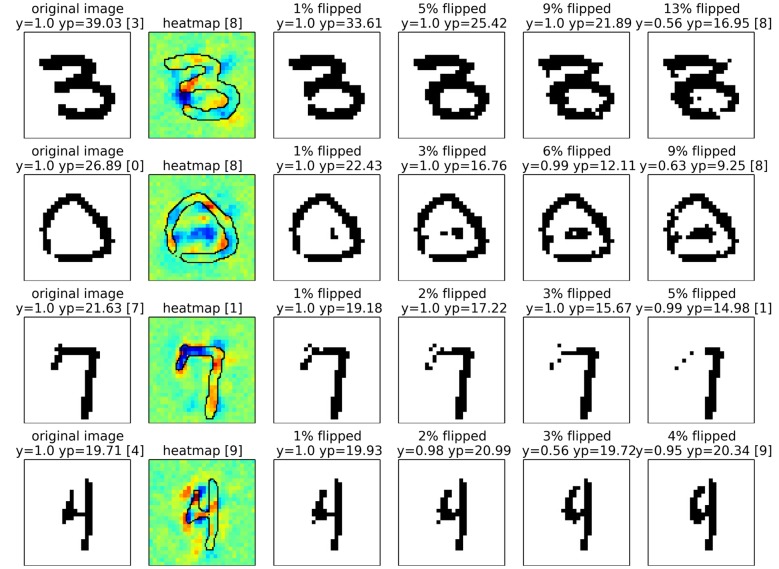
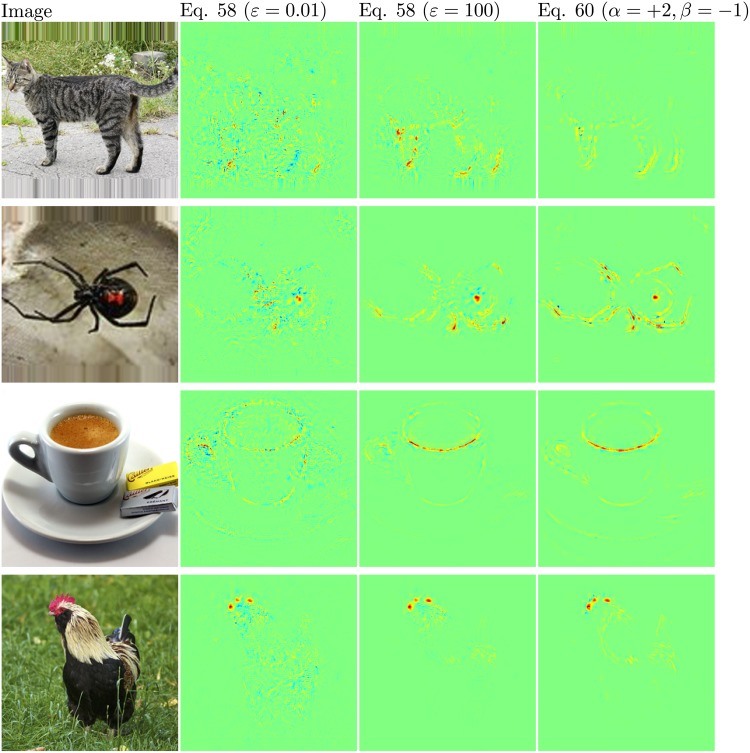
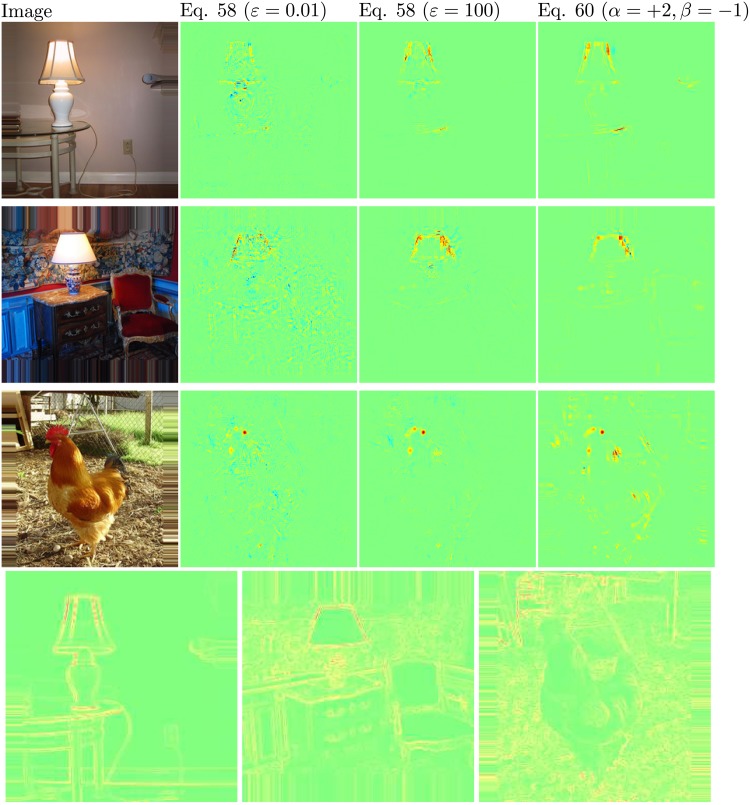
Understanding and interpreting classification decisions of automated image classification systems is of high value in many applications, as it allows to verify the reasoning of the system and provides additional information to the human expert. Although machine learning methods are solving very successfully a plethora of tasks, they have in most cases the disadvantage of acting as a black box, not providing any information about what made them arrive at a particular decision. This work proposes a general solution to the problem of understanding classification decisions by pixel-wise decomposition of nonlinear classifiers. We introduce a methodology that allows to visualize the contributions of single pixels to predictions for kernel-based classifiers over Bag of Words features and for multilayered neural networks. These pixel contributions can be visualized as heatmaps and are provided to a human expert who can intuitively not only verify the validity of the classification decision, but also focus further analysis on regions of potential interest. We evaluate our method for classifiers trained on PASCAL VOC 2009 images, synthetic image data containing geometric shapes, the MNIST handwritten digits data set and for the pre-trained ImageNet model available as part of the Caffe open source package.
Overview
The claims and statistics of this paper haven’t been checked yet.
Free: it reads the open-access text and checks the first 5 claims that cite a source we can check. Create a free account to check every claim.
Integrity signals
Registry
Cites
Statistics
Figures



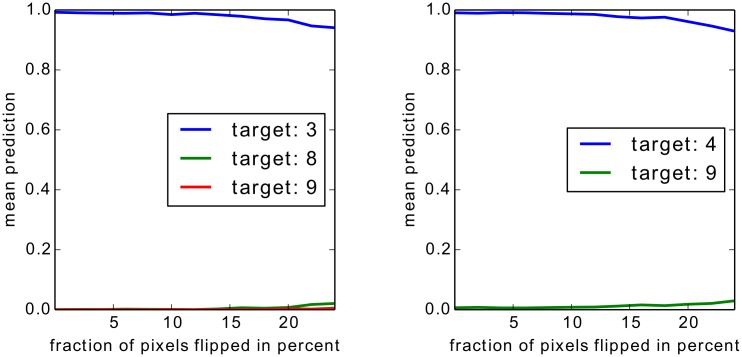
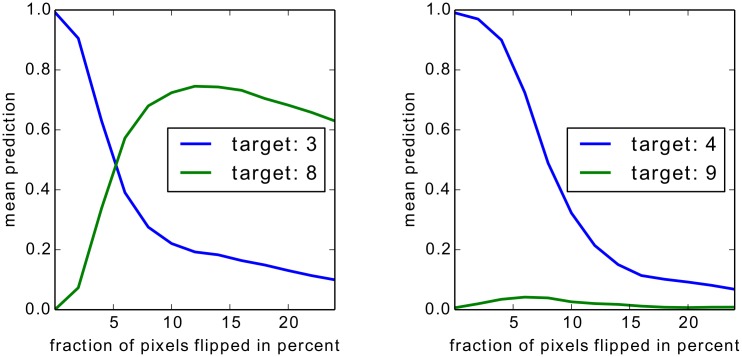
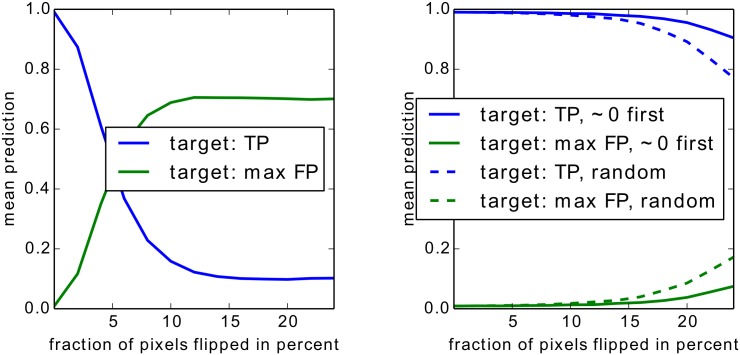
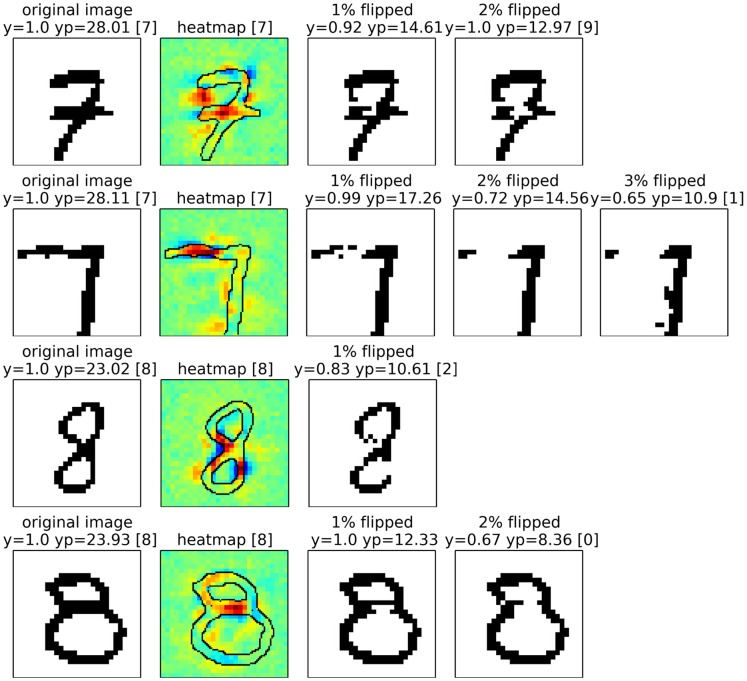
Verification
Claims the paper makes
The claims and statistics of this paper haven’t been checked yet.
Free: it reads the open-access text and checks the first 5 claims that cite a source we can check. Create a free account to check every claim.
Claims other papers make about this one
Each is checked against this paper’s own text: does it say what the citing paper says it does?
The source backs part of the claim, not all of it — or backs it for a different population, condition or comparison.
In the citing paper
“Barring a few exceptions (Caruana et al., 2015; Lundberg et al., 2018b; Ustun et al., 2019; Jesus et al., 2021), much of the existing work is designed and developed for benchmark classification problems, often with synthetic data and usually validated with user studies limited to users in research settings such as Amazon Mechanical Turk (AMT; Simonyan et al., 2013; Zeiler and Fergus, 2014; Bach et”
From Explainable machine learning for public policy: Use cases, gaps, and research directions (2023) · cites this paper as Bach et al., 2015
Experimental — accuracy not yet measuredThe cited source says what the claim attributes to it.
In the citing paper
“Unfortunately, most of the work in this area fails to meet these criteria, focusing only on benchmark ML problems and datasets (e.g., image classification on MNIST data, newsgroups data; Bach et al., 2015; Ribeiro et al., 2016, 2018; Shrikumar et al., 2017).”
From Explainable machine learning for public policy: Use cases, gaps, and research directions (2023) · cites this paper as Bach et al., 2015
In the citing paper
“LRP and DTD are capable of improving a model’s interpretability.”
From Survey of Explainable AI Techniques in Healthcare (2023) · cites this paper as [31]
Self-check
Percentages, sums and reported differences re-computed from the paper’s own numbers.
The self-check needs the paper’s full text.
Citations
Cites
ImageNet classification with deep convolutional neural networks
Krizhevsky, A., Sutskever, I., & Hinton, G. E. (2017) · Communications of the ACM · doi:10.1145/3065386 · Cited by 112,155 · cited 2×
“It is known from [21] that lower layers of deep networks which are very similar to the one from [60] used here may act like learned texture or gradient detectors.”
BackgroundDistinctive Image Features from Scale-Invariant Keypoints
Lowe, D. G. (2004) · International Journal of Computer Vision · doi:10.1023/b:visi.0000029664.99615.94 · Cited by 55,589
Learning representations by back-propagating errors
Rumelhart, D. E., Hinton, G. E., & Williams, R. J. (1986) · Nature · doi:10.1038/323533a0 · Cited by 31,892 · cited 2×
“The derivative @f(x)/@x(d) required for pixel-wise decomposition can be computed efficiently by reusing the network topology using the backpropagation algorithm [56].”
BackgroundMethodThe pascal visual object classes (VOC) challenge
Everingham, M., Van Gool, L., Williams, C. K. I., Winn, J., & Zisserman, A. (2010) · International Journal of Computer Vision · doi:10.1007/s11263-009-0275-4 · Cited by 19,599
Neural networks for pattern recognition
(1994) · Choice Reviews Online · doi:10.5860/choice.31-5500 · Cited by 18,538
Rapid object detection using a boosted cascade of simple features
Viola, P., & Jones, M. (2005) · Proceedings of the 2001 IEEE Computer Society Conference on Computer Vision and Pattern Recognition. CVPR 2001 · doi:10.1109/cvpr.2001.990517 · Cited by 18,300
Visualizing and understanding convolutional networks
Zeiler, M. D., & Fergus, R. (2014) · Lecture Notes in Computer Science · doi:10.1007/978-3-319-10590-1_53 · Cited by 15,839
Explaining and Harnessing Adversarial Examples
Goodfellow, I. J., Shlens, J., & Szegedy, C. (2014) · arXiv · doi:10.48550/arxiv.1412.6572 · Cited by 10,381 · cited 1×
“A different type of analysis for understanding neural networks deals with creating counter-intuitive examples, see for example the work in [24, 25].”
BackgroundIntriguing properties of neural networks
Szegedy, C., Zaremba, W., Sutskever, I., Bruna, J., Erhan, D., Goodfellow, I., & Fergus, R. (2013) · arXiv · doi:10.48550/arxiv.1312.6199 · Cited by 8,143 · cited 2×
“However, as noted in [24], this can lead to points of the input space that are perceptually equivalent to the original sample x and whose choice as a root would produce non-informative pixel-wise decompositions.”
BackgroundDeep Inside Convolutional Networks: Visualising Image Classification Models and Saliency Maps
Simonyan, K., Vedaldi, A., & Zisserman, A. (2013) · arXiv · doi:10.48550/arxiv.1312.6034 · Cited by 5,370 · cited 4×
“Besides deviating in the usage of a Taylor series, the work in [22] does not make use of the layer-wise propagation strategy for neural networks presented in this paper, which unlike a Taylor series does not rely on a local approximation.”
BackgroundMethodResultInfluential
Research works printed but not linked: 4
- Montavon G, Orr GB, Müller KR, editors. Neural Networks: Tricks of the Trade, Reloaded vol. 7700 of Lecture Notes in Computer Science (LNCS). 2nd ed Springer; 2012.
- Everingham M, Van Gool L, Williams CKI, Winn J, Zisserman A. The PASCAL Visual Object Classes Challenge 2010 (VOC2010) Results;. · DOI · Paper page
- Lanckriet GRG, Cristianini N, Bartlett PL, Ghaoui LE, Jordan MI. Learning the Kernel Matrix with Semidefinite Programming. Journal of Machine Learning Research. 2004; 5: 27– 72.
- Kloft M, Brefeld U, Sonnenburg S, Laskov P, Müller KR, Zien A. Efficient and Accurate Lp-norm Multiple Kernel Learning. Advances in Neural Information Processing Systems. 2009; 22(22): 997– 1005.
Cited by
Items 901–1,000 of 1,049
Revisiting Neuron Coverage for DNN Testing: A Layer-Wise and Distribution-Aware Criterion
Yuan, Y., Pang, Q., & Wang, S. (2023) · ACM/IEEE International Conference on Software Engineering: Companion Proceedings (ICSE-Companion) · doi:10.1109/icse48619.2023.00107 · Cited by 61
“In addition, its building block, the layer-wise propagation [2], is only applicable to discriminative models.”
BackgroundMethodBloch, L., & Friedrich, C. M. (2024) · Computers in Biology and Medicine · doi:10.1016/j.compbiomed.2024.108029 · Cited by 48
A Comprehensive Explanation Framework for Biomedical Time Series Classification
Ivaturi, P., Gadaleta, M., Pandey, A. C., Pazzani, M., Steinhubl, S. R., & Quer, G. (2021) · IEEE Journal of Biomedical and Health Informatics · doi:10.1109/jbhi.2021.3060997 · Cited by 46
The accuracy versus interpretability trade-off in fraud detection model
Nesvijevskaia, A., Ouillade, S., Guilmin, P., & Zucker, J. (2021) · Data & Policy · doi:10.1017/dap.2021.3 · Cited by 68
Grid Saliency for Context Explanations of Semantic Segmentation
Hoyer, L., Munoz, M., Katiyar, P., Khoreva, A., & Fischer, V. (2019) · neural information processing systems · doi:10.48550/arxiv.1907.13054 · Cited by 75
“Other methods [5, 23, 24] explore integrating network activations into their saliency maps.”
A Game Theoretic Approach to Class-wise Selective Rationalization
Chang, S., Zhang, Y., Yu, M., & Jaakkola, T. (2019) · arXiv (Cornell University) · doi:10.48550/arxiv.1910.12853 · Cited by 38
“Many of these methods utilize gradient information [6, 20, 25, 26, 27, 28], while techniques like local perturbations [11, 13, 16, 22] and Parzen window [7] have also been used to loose the requirement of differentiability.”
MethodSelf-Explaining Structures Improve NLP ModelsPreprint
Sun, Z., Fan, C. C., Han, Q., Sun, X., Meng, Y., Wu, F. Q., & Li, J. (2020) · arXiv (Cornell University) · doi:10.48550/arxiv.2012.01786 · Cited by 62
“A long-term criticism against deep learning models is the lack of interpretability (Simonyan et al., 2013; Bach et al., 2015a; Montavon et al., 2017; Kindermans et al., 2017).”
BackgroundInterpreting Deep Learning Models for Knowledge Tracing
Lu, Y., Wang, D., Chen, P., Meng, Q., & Yu, S. (2022) · International Journal of Artificial Intelligence in Education · doi:10.1007/s40593-022-00297-z · Cited by 50
“The LRP method is originally designed for the image classification models.”
MethodInfluentialBobowicz, M., Rygusik, M., Buler, J., Buler, R., Ferlin, M. A., Kwasigroch, A., Szurowska, E., & Grochowski, M. (2023) · Cancers · doi:10.3390/cancers15102704 · Cited by 61
Chen, L., Yue, D., Ding, X., Wang, Z., Choo, K. R., & Jin, H. (2023) · IEEE Transactions on Information Forensics and Security · doi:10.1109/tifs.2023.3293961 · Cited by 51
“Besides, combined with [10], it has : where R x i θ ( x i ) represents the relevance between input attribute x i θ and the output of the model f x i ( w ) .”
BackgroundMethodInfluentialHarren, T., Gutermuth, T., Grebner, C., Heßler, G., & Rarey, M. (2024) · Wiley Interdisciplinary Reviews Computational Molecular Science · doi:10.1002/wcms.1716 · Cited by 62
Rajpura, P., Cecotti, H., & Meena, Y. K. (2024) · Journal of Neural Engineering · doi:10.1088/1741-2552/ad6593 · Cited by 59
“Aellen et al (2021) et al 2021a, 2021b, 2022) approach interpretability by transforming sensor signals into the source space in the model.”
Liu, H., Wu, Y., Yu, Z., & Zhang, N. (2024) · IEEE Symposium on Security and Privacy (S&P) · doi:10.1109/sp54263.2024.00120 · Cited by 85
“These methods derive feature attribution maps by computing the gradient (or its variants) of the model prediction with respect to a given input [41], [42], [46].”
Challenges and Opportunities in the Clinical Translation of High-Resolution Spatial Transcriptomics
Pentimalli, T. M., Karaiskos, N., & Rajewsky, N. (2024) · Annual Review of Pathology Mechanisms of Disease · doi:10.1146/annurev-pathmechdis-111523-023417 · Cited by 59
“…intelligence (AI) can point to which image regions are relevant for gene expression predictions (e.g.,by generating explanatory heat maps) (142),the spatial agnostic nature of bulk RNA-seq limited both the interpretability and the validation of such tools, both of which are central to…”
Role of Explainable Artificial Intelligence Approaches in Cybersecurity
Bawane, N., & Nandan, D. (2024) · Lecture notes in electrical engineering · doi:10.1007/978-981-97-4359-9_22 · Cited by 51
Semi-Supervised Generative Adversarial Network for Gene Expression Inference
Ghasedi Dizaji, K., Wang, X., & Huang, H. (2018) · Proceedings of the 24th ACM SIGKDD International Conference on Knowledge Discovery & Data Mining · doi:10.1145/3219819.3220114 · Cited by 43
“The LRP method calculates the relevance score for each landmark gene, where higher relevance score shows more contribution in the overall prediction of the target gene expression.”
MethodSecurity and Privacy Issues in Deep Learning: A Brief Review
Ha, T., Dang, T. K., Le, T. H., & Truong, T. A. (2020) · SN Computer Science · doi:10.1007/s42979-020-00254-4 · Cited by 54
Shedding Light on the Black Box: Explaining Deep Neural Network Prediction of Clinical Outcomes
Shao, Y., Cheng, Y., Shah, R. U., Weir, C. R., Bray, B. E., & Zeng‐Treitler, Q. (2021) · Journal of Medical Systems · doi:10.1007/s10916-020-01701-8 · Cited by 50
Epistemic values in feature importance methods: Lessons from feminist epistemology
Hancox-Li, L., & Kumar, I. E. (2021) · Proceedings of the 2021 ACM Conference on Fairness, Accountability, and Transparency · doi:10.1145/3442188.3445943 · Cited by 35
“This axiom either goes unnamed [5] or appears under different names in different papers, such as “completeness” [76],”
BackgroundLee, M., Jeon, J., & Lee, H.-C. (2021) · Journal of Intelligent Manufacturing · doi:10.1007/s10845-021-01758-3 · Cited by 53
Decoupled Feature-Temporal CNN: Explaining Deep Learning-Based Machine Health Monitoring
Zhu, C., Chen, Z., Zhao, R., Wang, J., & Yan, R. (2021) · IEEE Transactions on Instrumentation and Measurement · doi:10.1109/tim.2021.3084310 · Cited by 52
“attribution maps of the input features, which are also called salience maps [13], [24]–[26].”
BackgroundUsing Simple, Explainable Neural Networks to Predict the Madden‐Julian Oscillation
Martin, Z., Barnes, E. A., & Maloney, E. D. (2022) · Journal of Advances in Modeling Earth Systems · doi:10.1029/2021ms002774 · Cited by 51
“To demonstrate how the classification ANN correctly captures regions of importance for predicting the MJO, we use an ANN explainability technique called layer-wise relevance propagation (LRP; Bach et al., 2015; Montavon et al., 2019; Samek et al., 2016).”
MethodTowards explainable AI for hyperspectral image classification in Edge Computing environments
Lucia, G. D., Lapegna, M., & Romano, D. (2022) · Computers & Electrical Engineering · doi:10.1016/j.compeleceng.2022.108381 · Cited by 49
Deep Model Transferability from Attribution Maps
Song, J., Chen, Y., Wang, X., Shen, C., & Song, M. (2019) · neural information processing systems · doi:10.48550/arxiv.1909.11902 · Cited by 67
“Existing attribution methods can be mainly divided into two groups, including perturbation- [38, 39, 40] and gradient-based [28, 3, 27, 30, 26, 18, 1] methods.”
BackgroundMethodInfluentialAkagi, T., Masuda, K., Kuwada, E., Takeshita, K., Kawakatsu, T., Ariizumi, T., Kubo, Y., Ushijima, K., & Uchida, S. (2022) · The Plant Cell · doi:10.1093/plcell/koac079 · Cited by 47
“Although DL predictions have been defined as a black box and difficult to explain, methods for feature visualization of DL predictions (often referred to as explainable artificial intelligence) have been recently developed (Bach et al., 2015; Selvaraju et al., 2017).”
Lee, Y., Jun, E., Choi, J. H., & Suk, H. (2022) · IEEE Journal of Biomedical and Health Informatics · doi:10.1109/jbhi.2022.3172549 · Cited by 52
“Specifically, weappliedLRP-αβ [26],[27],whichtreatspositiveandnegative contributions in an asymmetric manner instead of vanilla LRP, and obtained the relevance scores.”
BackgroundMethodEffects of AI and Logic-Style Explanations on Users’ Decisions Under Different Levels of Uncertainty
Cau, F. M., Hauptmann, H., Spano, L. D., & Tintarev, N. (2023) · ACM Transactions on Interactive Intelligent Systems · doi:10.1145/3588320 · Cited by 41
“Other famous methods that are not gradient based are SHAP [51], LIME [60], and LRP (Layer-wise Relevance Propagation) [7].”
MethodExplainable Machine Learning in Human Gait Analysis: A Study on Children With Cerebral Palsy
Slijepčević, D., Zeppelzauer, M., Unglaube, F., Kranzl, A., Breiteneder, C. J., & Horsak, B. (2023) · IEEE Access · doi:10.1109/access.2023.3289986 · Cited by 48
“Popular examples for such approaches are SmoothGrad [34], Grad-CAM [13], and Layer-wise Relevance Propagation (LRP) [35].”
MethodGonzález-Alday, R., García-Cuesta, E., Maojo, & Kulikowski, C. (2023) · Applied Sciences · doi:10.3390/app131910778 · Cited by 55
SHaRPose: Sparse High-Resolution Representation for Human Pose Estimation
An, X., Zhao, L., Gong, C., Wang, N., Wang, D., & Yang, J. J. (2024) · Proceedings of the AAAI Conference on Artificial Intelligence · doi:10.1609/aaai.v38i2.27826 · Cited by 64
“The framework is based on pure transformers and makes use of the correlation mining capabilities of Transformer (Bach et al. 2015; Chefer, Gur, and Wolf 2021; Liang et al. 2022) to identify significant image regions for keypoint detection.”
MethodInfluentialOneLog: towards end-to-end software log anomaly detection
Hashemi, S., & Mäntylä, M. (2024) · Automated Software Engineering · doi:10.1007/s10515-024-00428-x · Cited by 24
“…some algorithms have been proposed to interpret deep neural networks’ decision-making (Shrikumar et al. 2016; Winter 2002; Sundararajan et al. 2017; Bach et al. 2015; Shrikumar et al. 2017), especially in the computer vision field, we found their outcomes impractical for our study during our…”
Explainability and vision foundation models: A survey
Kazmierczak, R., Berthier, É., Frehse, G., & Franchi, G. (2025) · Information Fusion · doi:10.1016/j.inffus.2025.103184 · Cited by 62
Li, T., Chen, J., Liu, T., Sun, C., Zhao, Z., Chen, X., & Yan, R. (2025) · Reliability Engineering & System Safety · doi:10.1016/j.ress.2025.111935 · Cited by 64
Defining Explainable AI for Requirements Analysis
Sheh, R., & Monteath, I. (2018) · KI - Künstliche Intelligenz · doi:10.1007/s13218-018-0559-3 · Cited by 38
“Approaches that seek to explain such systems by highlighting saliency in the images [2] are helpful to at least detect and identify the problem.”
Deep Learning Approach for Enhanced Detection of Surface Plasmon Scattering
Moon, G., Son, T., Lee, H., & Kim, D. (2019) · Analytical Chemistry · doi:10.1021/acs.analchem.9b00683 · Cited by 45
Understanding Deep Neural Networks for Regression in Leaf Counting
Dobrescu, A., Giuffrida, M. V., & Tsaftaris, S. A. (2019) · IEEE/CVF Conference on Computer Vision and Pattern Recognition Workshops (CVPRW) · doi:10.1109/cvprw.2019.00316 · Cited by 53
“LRP [4] is a backwards propagation technique, designed as a method of explainability in deep neural networks.”
BackgroundMethodInfluentialInterpretability-Guided Content-Based Medical Image Retrieval
Silva, W., Poellinger, A., Cardoso, J. S., & Reyes, M. (2020) · Lecture notes in computer science · doi:10.1007/978-3-030-59710-8_30 · Cited by 59
“In that sense, interpretability methods [15], namely those which produce visual explanations in the form of saliency maps [2,12,13,16] appear as a suitable solution to find these relevant regions without supervision.”
MethodThe Computational Complexity of Understanding Binary Classifier Decisions
Wäldchen, S., Macdonald, J., Hauch, S., & Kutyniok, G. (2021) · Journal of Artificial Intelligence Research · doi:10.1613/jair.1.12359 · Cited by 92
“This has been pursued predominantly in the form of visual maps that assign an importance value to each input parameter (Bach et al., 2015; Erhan et al., 2009; Simonyan et al., 2014; Zeiler & Fergus, 2014).”
BackgroundSu, Y., Cheng, Z., Luo, P., Wu, J., Zhang, L., Liu, Q., & Wang, S. (2021) · Knowledge-Based Systems · doi:10.1016/j.knosys.2021.106819 · Cited by 57
Integrated Directional Gradients: Feature Interaction Attribution for Neural NLP Models
Sikdar, S., Bhattacharya, P., & Heese, K. (2021) · Annual Meeting of the Association for Computational Linguistics · doi:10.18653/v1/2021.acl-long.71 · Cited by 77
“The other set of methods usually backpropagates their custom relevance scores down to the input to identify relevance of an input feature (Bach et al., 2015; Shrikumar et al., 2017; Zhang et al., 2018).”
BackgroundSattarzadeh, S., Sudhakar, M., Lem, A., Mehryar, S., Plataniotis, K. N., Jang, J., Kim, H., Jeong, Y., Lee, S., & Bae, K. (2021) · Proceedings of the AAAI Conference on Artificial Intelligence · doi:10.1609/aaai.v35i13.17384 · Cited by 48
Linka, K., Reiter, N., Würges, J., Schicht, M., Bräuer, L., Cyron, C. J., Paulsen, F. P., & Budday, S. (2021) · Frontiers in Bioengineering and Biotechnology · doi:10.3389/fbioe.2021.704738 · Cited by 51
TS-MULE: Local Interpretable Model-Agnostic Explanations for Time Series Forecast Models
Schlegel, U., Vo, D. L., Keim, D. A., & Seebacher, D. (2021) · Communications in computer and information science · doi:10.1007/978-3-030-93736-2_1 · Cited by 66
The promise of explainable deep learning for omics data analysis: Adding new discovery tools to AI
Santorsola, M., & Lescai, F. (2023) · New Biotechnology · doi:10.1016/j.nbt.2023.06.002 · Cited by 49
Fairwashing Explanations with Off-Manifold Detergent
Anders, C. J., Pasliev, P., Dombrowski, A.-K., Müller, K., & Kessel, P. (2020) · arXiv (Cornell University) · doi:10.48550/arxiv.2007.09969 · Cited by 34
“Layer-wise Relevance Propagation (LRP): This method (Bach et al., 2015; Montavon et al., 2017) propagates relevance backwards through the network.”
MethodSelf-citationWhat went wrong and when? Instance-wise Feature Importance for Time-series Models
Tonekaboni, S., Joshi, S. D., Campbell, K. R., Duvenaud, D., & Goldenberg, A. (2020) · neural information processing systems · doi:10.48550/arxiv.2003.02821 · Cited by 114
“While more widely studied for image classification, (Bach et al., 2015; Fong & Vedaldi, 2017) these methods cannot be directly extended to time series models for obtaining precise importances over time.”
BackgroundMethodHealthcare Trust Evolution with Explainable Artificial Intelligence: Bibliometric Analysis
Dhiman, P., Bonkra, A., Kaur, A., Gulzar, Y., Hamid, Y., Mir, M. S., Soomro, A. B., & Elwasila, O. (2023) · Information · doi:10.3390/info14100541 · Cited by 48
“Model-specific XAI strives to give more precise and educational insights for that particular model or a specific group of related models by customizing explanations to the model’s complexities [10].”
BackgroundMethodGraph Neural Networks based Log Anomaly Detection and Explanation
Li, Z., Shi, J., & van Leeuwen, M. (2024) · ACM/IEEE International Conference on Software Engineering: Companion Proceedings (ICSE-Companion) · doi:10.1145/3639478.3643084 · Cited by 43
Uncertainty in XAI: Human Perception and Modeling Approaches
Chiaburu, T., Haußer, F., & Bießmann, F. (2024) · Machine Learning and Knowledge Extraction · doi:10.3390/make6020055 · Cited by 54
“Pixel Flipping [77], as the name suggests, is an occlusion strategy originating from and popular in the Computer Vision community.”
BackgroundMetasurface Enabled Multi‐Target and Multi‐Wavelength Diffraction Neural Networks
Chi, H., Zang, X., Zhang, T., Wang, G., Fan, Z., Zhu, Y., Chen, X., & Zhuang, S. (2024) · Laser & Photonics Review · doi:10.1002/lpor.202401178 · Cited by 46
Quantum-Chemical Insights from Interpretable Atomistic Neural Networks
Schütt, K. T., Gastegger, M., Tkatchenko, A., & Müller, K. (2019) · Lecture notes in computer science · doi:10.1007/978-3-030-28954-6_17 · Cited by 46
Self-citationJo̷rgensen, M., Mortensen, H. L., Meldgaard, S. A., Kolsbjerg, E. L., Jacobsen, T. L., Sørensen, K. H., & Hammer, B. (2019) · The Journal of Chemical Physics · doi:10.1063/1.5108871 · Cited by 44
Maximum entropy methods for extracting the learned features of deep neural networks
Finnegan, A., & Song, J. S. (2017) · PLOS Computational Biology · doi:10.1371/journal.pcbi.1005836 · Cited by 42
Towards Global Explanations of Convolutional Neural Networks With Concept Attribution
Wu, W., Su, Y., Chen, X., Zhao, S., King, I., Lyu, M. R., & Tai, Y.-W. (2020) · 2020 IEEE/CVF Conference on Computer Vision and Pattern Recognition (CVPR) · doi:10.1109/cvpr42600.2020.00868 · Cited by 40
“There is a vast body of work under this track, such as the gradient-based [36, 39, 35, 41, 38, 34, 28], structure-based [1, 24, 46, 51], proxy model-based [30, 23], and decision-based approach [8, 5, 53, 31, 6, 48, 46].”
BackgroundMultilabel Deep Learning-Based Side-Channel Attack
Zhang, L., Xing, X., Fan, J., Wang, Z., & Wang, S. (2020) · IEEE Transactions on Computer-Aided Design of Integrated Circuits and Systems · doi:10.1109/tcad.2020.3033495 · Cited by 43
“Recently, DL contribution methods, such as Saliency maps [41], layerwise relevance propagation (LRP) [42], and occlusion sensitivity analysis [43] are studied to detect POIs by Hettwer et al. , and they can also be powerful distinguishers in SCA context [44].”
MethodUnderstanding and Interpreting the Impact of User Context in Hate Speech Detection
Mosca, E., Wich, M., & Groh, G. (2021) · International Workshop on Natural Language Processing for Social Media (SocialNLP) · doi:10.18653/v1/2021.socialnlp-1.8 · Cited by 44
“, 2016) and LRP (Bach et al., 2015) as well as self-explanatory detectors (Risch et al.”
BackgroundMethod“An Error Occurred!” - Trust Repair With Virtual Robot Using Levels of Mistake Explanation
Hald, K., Weitz, K., André, E., & Rehm, M. (2021) · International Conference on Human-Agent Interaction (HAI) · doi:10.1145/3472307.3484170 · Cited by 57
“Various promising approaches have meanwhile been developed for these use-cases (the interested reader is referred here to works of e.g., [1, 30]).”
BackgroundFiltjens, B., Ginis, P., Nieuwboer, A., Slaets, P., & Vanrumste, B. (2022) · Journal of NeuroEngineering and Rehabilitation · doi:10.1186/s12984-022-01025-3 · Cited by 52
Knowledge-guided deep learning models of drug toxicity improve interpretation
Hao, Y., Romano, J. D., & Moore, J. H. (2022) · Patterns · doi:10.1016/j.patter.2022.100565 · Cited by 48
LeGrad: An Explainability Method for Vision Transformers via Feature Formation Sensitivity
Bousselham, W., Boggust, A., Chaybouti, S., Strobelt, H., & Kuehne, H. (2025) · IEEE/CVF International Conference on Computer Vision (ICCV) · doi:10.1109/iccv51701.2025.01891 · Cited by 65
“LeGrad generates relevancy maps that pinpoint the image regions most critical to a ViT’s prediction by targeting the self-attention mechanism at its core.”
Stylianou, P., & Weiglein, G. R. (2024) · The European Physical Journal C · doi:10.1140/epjc/s10052-024-12722-9 · Cited by 50
Marques-Silva, J. P., & Huang, X. (2024) · Communications of the ACM · doi:10.1145/3635301 · Cited by 73
CausalFormer: An Interpretable Transformer for Temporal Causal Discovery
Kong, L., Li, W., Yang, H., Zhang, Y., Guan, J., & Zhou, S. (2024) · IEEE Transactions on Knowledge and Data Engineering · doi:10.1109/tkde.2024.3484461 · Cited by 66
“4, layer-wised relevance propagation (LPR) [45] defines a decomposition-based interpretation method for deep classification models.”
Adversarial Attacks in Explainable Machine Learning: A Survey of Threats Against Models and Humans
Vadillo, J., Santana, R., & Lozano, J. A. (2024) · Wiley Interdisciplinary Reviews Data Mining and Knowledge Discovery · doi:10.1002/widm.1567 · Cited by 60
“…feature-based explanations (especially in the image domain) are activation or saliency maps, which highlight the most relevant parts of the input (Bach et al. 2015; Morch et al. 1995; Selvaraju et al. 2017; Simonyan, Vedaldi, and Zisserman 2014; Springenberg et al. 2015; Sundararajan, Taly, and…”
Semnani, P., Bogojeski, M., Bley, F., Zhang, Z., Wu, Q., Kneib, T., Herrmann, J., Weisser, C., Patcas, F., & Müller, K. (2024) · The Journal of Physical Chemistry C · doi:10.1021/acs.jpcc.4c05332 · Cited by 51
Self-citationBai, S., Nasir, S., Khan, R. A., Meyer, A., & Konik, H. (2025) · IEEE Access · doi:10.1109/access.2025.3639184 · Cited by 48
“GRAD-CAM [67] CAM [68] AGG-CAM [44] CBR [69] GLRP [17] ADR [26] LRP [70] PIMP [71] PDP [72] RF [73] √ √ √ √”
CNN-based small object detection and visualization with feature activation mapping
Menikdiwela, M., Nguyen, C. V., Li, H., & Shaw, M. E. (2017) · International Conference on Image and Vision Computing New Zealand (IVCNZ) · doi:10.1109/ivcnz.2017.8402455 · Cited by 45
“There are several methods to compute heat maps including “sensitivity analysis” based on neural network partial derivatives [2], [19], deconvolutional method [16] and “layer-wise relevance propagation” algorithm [1], [17].”
MethodDruggability Assessment in TRAPP Using Machine Learning Approaches
Yuan, J.-H., Han, S. B., Richter, S., Wade, R. C., & Kokh, D. B. (2020) · Journal of Chemical Information and Modeling · doi:10.1021/acs.jcim.9b01185 · Cited by 42
A novel normalized recurrent neural network for fault diagnosis with noisy labels
Nie, X., & Xie, G. (2020) · Journal of Intelligent Manufacturing · doi:10.1007/s10845-020-01608-8 · Cited by 43
Bass, C., da Silva, M., Sudre, C. H., Williams, L. Z. J., Sousa, H. S., Tudosiu, P.-D., Alfaro‐Almagro, F., Fitzgibbon, S. P., Glasser, M. F., Smith, S. M., et al. (2022) · IEEE Transactions on Medical Imaging · doi:10.1109/tmi.2022.3221890 · Cited by 53
“…or activations of the network, with respect to a given input image, and include approaches such as Gradient-weighted Class Activation Mapping (Grad-CAM) [18], SHAP [19], DeepTaylor [20], integrated gradients [21], guided backpropagation (backprop) [22], and Layer-wise backpropagation (LRP) [23].”
MethodHenriksen, A., Enni, S. A., & Bechmann, A. (2021) · Proceedings of the AAAI/ACM Conference on AI Ethics and Society · doi:10.1145/3461702.3462564 · Cited by 54
“After prolonged experimentation, they finally settled on Layer-wise Relevance Propagation [5] with deep Taylor decomposition [72].”
MethodLiterature Review of Deep Network Compression
Alqahtani, A., Xie, X., & Jones, M. W. (2021) · Informatics · doi:10.3390/informatics8040077 · Cited by 50
Xu, F., Jiang, L., He, W., Huang, G., Hong, Y., Tang, F., Lv, J. C., Lin, Y., Qin, Y., Lan, R., et al. (2021) · Frontiers in Medicine · doi:10.3389/fmed.2021.797616 · Cited by 46
IoT-Based Health Big-Data Process Technologies: A Survey
Yoo, H., Park, R. C., & Chung, K. (2021) · KSII Transactions on Internet and Information Systems · doi:10.3837/tiis.2021.03.009 · Cited by 42
“…the results of the black box model through experiments and observations as a separate statistical model There are two methodologies that can be used for explaining the operation of big-data-processing algorithms: sensitivity analysis (SA) [28] and layer-wise relevance propagation (LRP) [29].”
MethodXFlag: Explainable Fake News Detection Model on Social Media
Chien, S.-Y. J., Yang, C., & Yu, F. (2022) · International Journal of Human-Computer Interaction · doi:10.1080/10447318.2022.2062113 · Cited by 50
“…2019; Yang et al., 2019) that generate explanations by assigning a set of relevance scores to each input variable representing its contribution to the model prediction, such as LRP (Bach et al., 2015), SHAP (Lundberg & Lee, 2017), DeepSHAP (Chen et al., 2021), and DeepLIFT (Shrikumar et al., 2016).”
BackgroundMethodNetwork-based integration of multi-omics data for clinical outcome prediction in neuroblastoma
Wang, C., Lue, W., Kaalia, R., Kumar, P., & Rajapakse, J. C. (2022) · Scientific Reports · doi:10.1038/s41598-022-19019-5 · Cited by 51
“According to a unified framework comparing existing approaches proposed by M. 39 , and DeepLIFT 40 .”
MethodGebreyesus, Y., Dalton, D., Chiara, D. D., Chinnici, M., & Chinnici, A. (2024) · Electronics · doi:10.3390/electronics13091628 · Cited by 48
Li, N., Yang, J., Li, X., Shi, Y., & Wang, K. (2024) · PLoS ONE · doi:10.1371/journal.pone.0303421 · Cited by 51
“The introduction of algorithms such as LRP [54] and Grad-CAM [55] has played an important role in enhancing the explainability of existing deep learning models [56, 57].”
MethodDiscover-then-Name: Task-Agnostic Concept Bottlenecks via Automated Concept Discovery
Rao, S., Mahajan, S., Böhle, M., & Schiele, B. (2024) · Lecture notes in computer science · doi:10.1007/978-3-031-72980-5_26 · Cited by 114
Ante-Hoc Methods for Interpretable Deep Models: A Survey
Marino, A. D., Bevilacqua, V., Ciaramella, A., Falco, I. D., & Sannino, G. (2025) · ACM Computing Surveys · doi:10.1145/3728637 · Cited by 56
L-xaids: A LIME-based eXplainable AI framework for intrusion detection systems
Muhammad, A. E., Yow, K., Bačanin-Džakula, N., & Khan, M. A. (2025) · Cluster Computing · doi:10.1007/s10586-025-05326-9 · Cited by 52
Aravindkumar, A., Ramadoss, M., Ahmed, S. A. F., Sampath, V., & Lakshminarayanan, K. (2026) · Frontiers in Artificial Intelligence · doi:10.3389/frai.2026.1749527 · Cited by 52
“…Relevance Propagation (LRP), and related saliency techniques exploit internal network structure or gradients to produce relevance maps, particularly for convolutional neural networks in imaging tasks (Selvaraju et al., 2017; Sundararajan et al., 2017; Wachter et al., 2018; Bach et al., 2015).”
UNCERTAINTY MODELING AND INTERPRETABILITY IN CONVOLUTIONAL NEURAL NETWORKS FOR POLYP SEGMENTATION
Wickstrom, K., Kampffmeyer, M., & Jenssen, R. (2018) · 2018 IEEE 28th International Workshop on Machine Learning for Signal Processing (MLSP) · doi:10.1109/mlsp.2018.8516998 · Cited by 41
“Increasing network interpretability is an active field of research where Relevance Propagation [22] is a particularly interesting approach for future experimentation.”
BackgroundAutomated design of error-resilient and hardware-efficient deep neural networks
Schorn, C., Elsken, T., Vogel, S., Runge, A., Guntoro, A., & Ascheid, G. (2020) · Neural Computing and Applications · doi:10.1007/s00521-020-04969-6 · Cited by 48
AI for Explaining Decisions in Multi-Agent Environments
Kraus, S., Azaria, A., Fiosina, J., Greve, M., Hazon, N., Kolbe, L. M., Lembcke, T.-B., Muller, J. P., Schleibaum, S., & Vollrath, M. (2020) · Proceedings of the AAAI Conference on Artificial Intelligence · doi:10.1609/aaai.v34i09.7077 · Cited by 58
Towards Interpretability of Segmentation Networks by Analyzing DeepDreams
Couteaux, V., Nempont, O., Pizaine, G., & Isabelle Bloch, A. (2019) · Lecture notes in computer science · doi:10.1007/978-3-030-33850-3_7 · Cited by 42
“Thorough reviews [1, 7] extensively describe the field, among which so-called saliency methods are especially popular [4, 14, 16, 17].”
BackgroundRelevance aggregation for neural networks interpretability and knowledge discovery on tabular data
Grisci, B. I., Krause, M. J., & Dorn, M. (2021) · Information Sciences · doi:10.1016/j.ins.2021.01.052 · Cited by 46
Pruning CNN filters via quantifying the importance of deep visual representations
Alqahtani, A., Xie, X., Jones, M. W., & Essa, E. (2021) · Computer Vision and Image Understanding · doi:10.1016/j.cviu.2021.103220 · Cited by 47
Cofre-Martel, S., Droguett, E. L., & Modarres, M. (2021) · Shock and Vibration · doi:10.1155/2021/9937846 · Cited by 50
“In this regard, third-party software and packages have been developed, providing information on feature relevance for models’ predictions [22, 23].”
MethodAn uncertainty-aware, shareable, and transparent neural network architecture for brain-age modeling
Hahn, T., Ernsting, J., Winter, N. R., Holstein, V., Leenings, R., Beisemann, M., Fisch, L., Sarink, K., Emden, D., Opel, N., et al. (2022) · Science Advances · doi:10.1126/sciadv.abg9471 · Cited by 47
“Compared to other approaches to Explainability such as the visualization of the network weights using e.g. Layer-wise Relevance Propagation[25], occlusion-sensitivity mapping comes with the benefit of yielding relevant features for each individual.”
Improving Fault Tolerance for Reliable DNN Using Boundary-Aware Activation
Zhan, J., Sun, R., Jiang, W., Jiang, Y., Yin, X., & Zhuo, C. (2021) · IEEE Transactions on Computer-Aided Design of Integrated Circuits and Systems · doi:10.1109/tcad.2021.3129114 · Cited by 42
“Wecompare the modified DNN model with our proposed BReLU against the original DNN and six other fault-tolerance approaches, i.e., OpLRP [18], AxNN [16], LRP [17], Regularizer [15], ClipAct [19], and Ranger [20].”
BackgroundMethodAugmented Score-CAM: High resolution visual interpretations for deep neural networks
Ibrahim, R., & Shafiq, M. O. (2022) · Knowledge-Based Systems · doi:10.1016/j.knosys.2022.109287 · Cited by 48
NCGNN: Node-Level Capsule Graph Neural Network for Semisupervised Classification
Yang, R., Dai, W., Li, C., Zou, J., & Xiong, H. (2022) · IEEE Transactions on Neural Networks and Learning Systems · doi:10.1109/tnnls.2022.3179306 · Cited by 44
“In [47], several explanation techniques that are originally used for standard neural networks are applied to GNNs, such as Sensitivity Analysis [48], Guided Backpropagation [49], and Layer-wise Relevance Propagation [50].”
MethodOn the Soundness of XAI in Prognostics and Health Management (PHM)
Solis‐Martín, D., Galán‐Paez, J., & Borrego‐Díaz, J. (2023) · Information · doi:10.3390/info14050256 · Cited by 51
Explainable Reinforcement Learning via a Causal World Model
Yu, Z., Ruan, J., & Xing, D. (2023) · International Joint Conference on Artificial Intelligence · doi:10.24963/ijcai.2023/505 · Cited by 51
Deep-learning post-processing of short-term station precipitation based on NWP forecasts
Liu, Q., Lou, X., Yan, Z., Qi, Y., Jin, Y., Yu, S., Yang, X., Zhao, D., & Xia, J. (2023) · Atmospheric Research · doi:10.1016/j.atmosres.2023.107032 · Cited by 47
Salimparsa, M., Sedig, K., Lizotte, D. J., Abdullah, S. S., Chalabianloo, N., & Muanda, F. T. (2025) · Informatics · doi:10.3390/informatics12040119 · Cited by 39
Relation-Based Counterfactual Explanations for Bayesian Network Classifiers
Albini, E., Rago, A., Baroni, P., & Toni, F. (2020) · Proceedings of the Twenty-Ninth International Joint Conference on Artificial Intelligence · doi:10.24963/ijcai.2020/63 · Cited by 39
Xie, Z., Li, Y., Wang, F., Yang, J., Han, Z., Chen, L., Jiang, W., Zhou, H., Li, T., Tang, Z., et al. (2024) · doi:10.21203/rs.3.rs-5040961/v1 · Cited by 39
Regional Tree Regularization for Interpretability in Deep Neural Networks
Wu, M., Parbhoo, S., Hughes, M., Kindle, R., Celi, L., Zazzi, M., Roth, V., & Doshi-Velez, F. (2020) · Proceedings of the AAAI Conference on Artificial Intelligence · doi:10.1609/aaai.v34i04.6112 · Cited by 38
“Likewise, Layerwise-Relevance Propagation (LRP) (Binder et al., 2016; Bach et al., 2015) produces a heatmap of relevant information for prediction based on ag-gregating the weights of a neural network.”
Background
Metadata
- Authors
- Bach, S., Binder, A., Montavon, G., Klauschen, F., Müller, K.-R., & Samek, W.
- Affiliations
- Singapore University of Technology and Design (SG)
- Technische Universität Berlin (DE)
- Stiftung Charité (DE)
- Korea University (KR)
- Fraunhofer Institute for Telecommunications, Heinrich Hertz Institute (DE)
- Corresponding author
- Müller, Klaus-Robert
- Samek, Wojciech
- Venue
- PLOS ONE
- Publisher
- Public Library of Science (PLoS)
- Published
- 2015-07-10
- Volume
- 10
- Issue
- 7
- Pages
- e0130140
- ISSN
- 1932-6203 (ISSN-L)
- PMC
- PMC4498753
- OpenAlex
- W1787224781
- Cited by
- 4,524
- References
- 56
- Citations by year
- 2026: 347 · 2025: 628 · 2024: 653 · 2023: 648 · 2022: 566 · 2021: 647 · 2020: 489 · 2019: 299 · 2018: 145 · 2017: 63 · 2016: 27 · 2015: 6
- FWCI
- 78.76
- Type
- journal article
- Language
- en
- Open access
- gold
- doi.org
- Licence
- Locations
- PLoS ONE (publishedVersion, cc-by)
- PubMed Central (publishedVersion, cc-by)
- PubMed (publishedVersion)
- RePEc: Research Papers in Economics (submittedVersion)
- DOAJ (DOAJ: Directory of Open Access Journals) (submittedVersion, cc-by-sa)
- Publikationsdatenbank der Fraunhofer-Gesellschaft (Fraunhofer-Gesellschaft) (submittedVersion, other-oa)
- Fraunhofer-Publica (Fraunhofer-Gesellschaft) (submittedVersion)
- Refubium (Universitätsbibliothek der Freien Universität Berlin) (submittedVersion, cc-by)
- Universitätsbibliothek der FU Berlin Hochschulschriftenstelle u. Dokumentenserver (cc-by)
- Funders
- National Research Foundation
- Deutsche Forschungsgemeinschaft (01GQ1115)
- Bundesministerium für Bildung und Forschung (01 IS 14013 A, 01GQ1115)
- Bundesministerium für Wirtschaft und Technologie (01MQ07018)
- National Research Foundation of Korea (01IS14013A, BK21 program)
- Technische Universität Berlin
- Banting and Best Diabetes Centre, University of Toronto (01IS14013A)
- Topics
- Physical Sciences › Computer Science › Artificial Intelligence › Explainable Artificial Intelligence (XAI)
- Physical Sciences › Computer Science › Computer Vision and Pattern Recognition › Advanced Neural Network Applications
- Physical Sciences › Computer Science › Computer Vision and Pattern Recognition › Image Retrieval and Classification Techniques
- Keywords
- layer-wise relevance propagation, nonlinear classifiers, kernel-based classifiers, bag-of-words features, multilayer neural networks, heatmaps, image classification, black box, MNIST, ImageNet
- MeSH terms
- Algorithms, Artificial Intelligence, Humans, Image Processing, Computer-Assisted, Pattern Recognition, Automated
About these checks
Registry, retraction, Cites and statistics results are computed, not judged, with one exception: a printed reference that no index lists is read once by a model before it counts as a citation error. Claims are extracted by a model and kept only when their quote appears verbatim in the text; each cited source is then checked, with a model’s help, for whether it says what the claim relies on. Those verdicts can be wrong — read the claim’s quote and the cited source before relying on one.
Statistics and arithmetic are recomputed, not judged.
Confidence bands are shown only for fields calibrated on our annotated test set. None is calibrated yet, so no band is shown.
What counts as a claim ›How we measure confidence ›How we check this ›
Are you an author, or do you see a problem with this page? Request a review
Data sources
Bibliographic data: Semantic Scholar, OpenAlex, Crossref.
Contains information from the Semantic Scholar Academic Graph Datasets, made available under the ODC Attribution License (ODC-BY 1.0).
Semantic Scholar’s data is described in: Kinney, R., et al. (2023). The Semantic Scholar Open Data Platform. arXiv:2301.10140.
