

On Pixel-Wise Explanations for Non-Linear Classifier Decisions by Layer-Wise Relevance Propagation
Open accessThe DOI matches its Crossref record; 55 of the 56 references it cites were found in a registry or an index.
Abstract
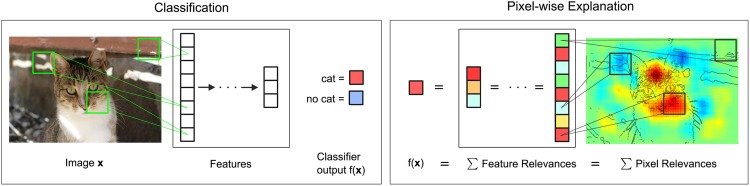
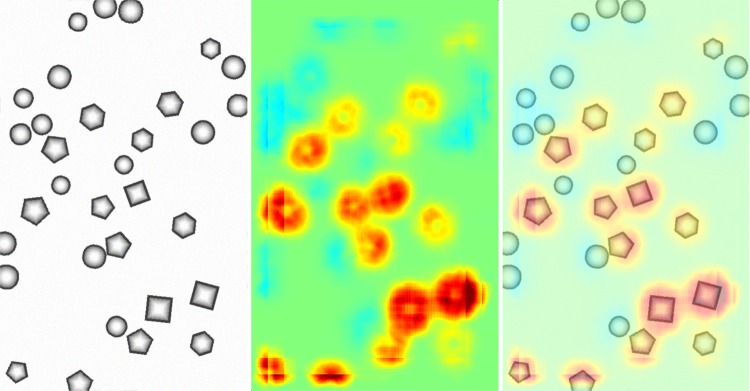
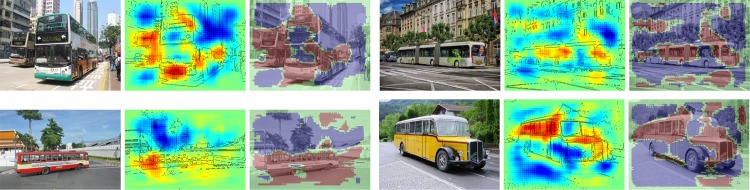
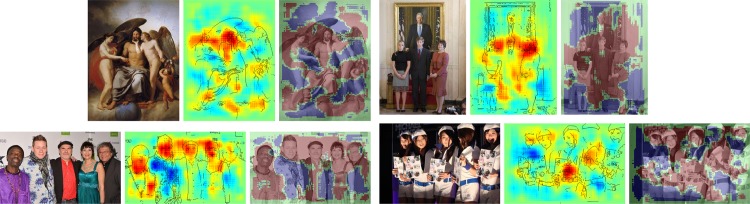
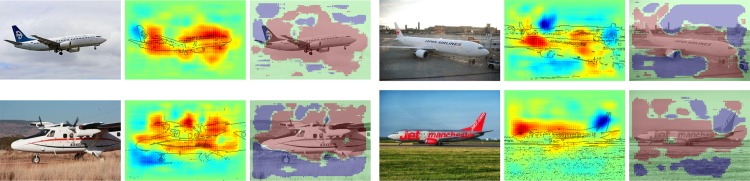
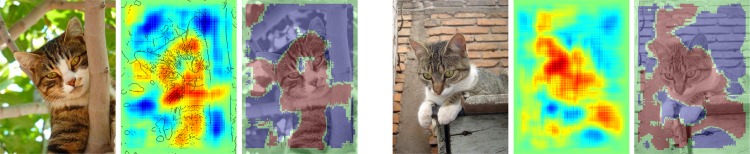
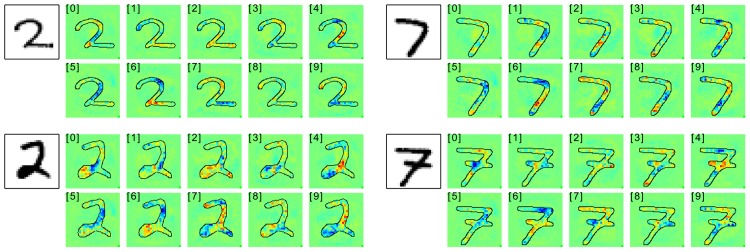
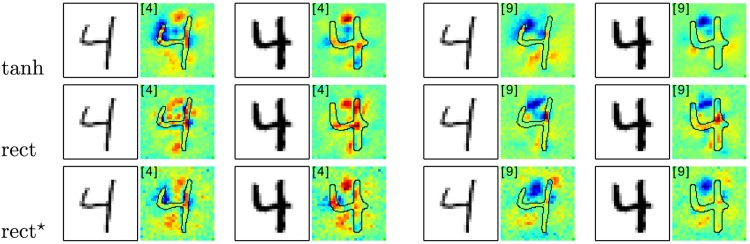
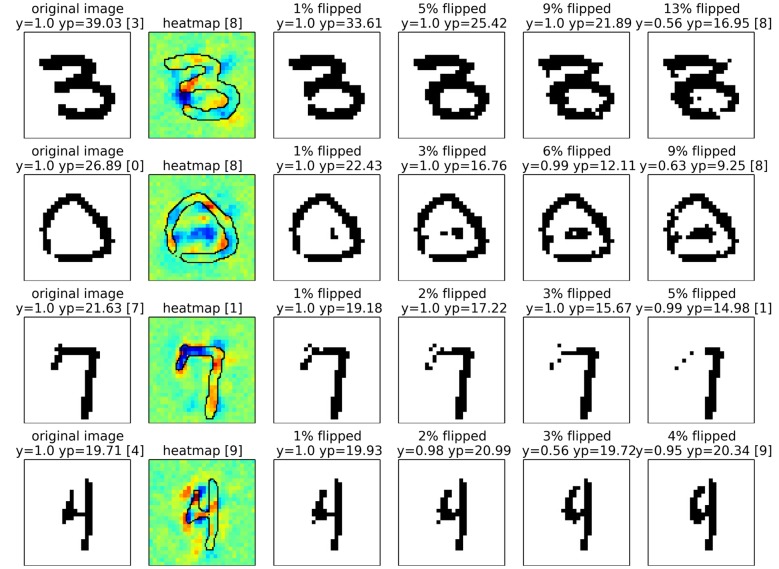
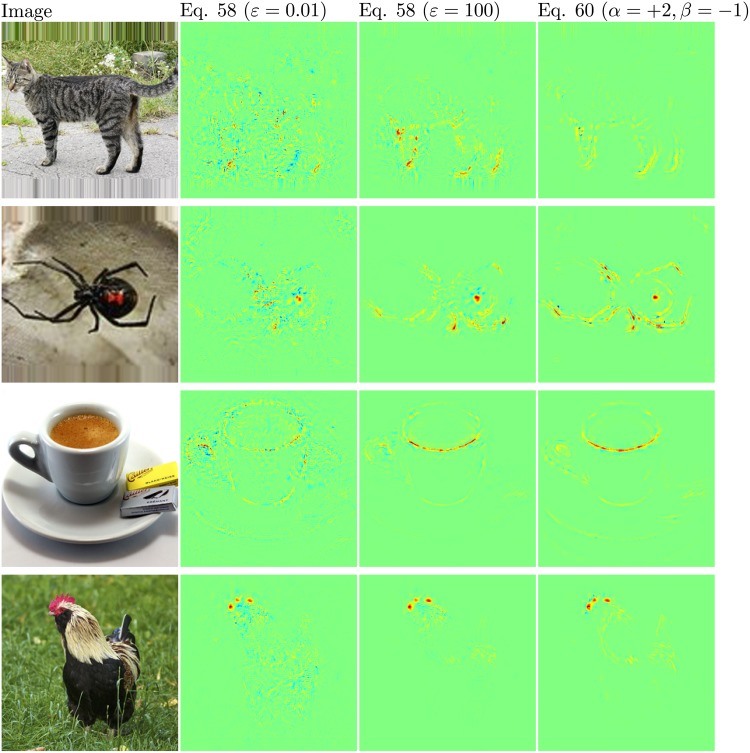
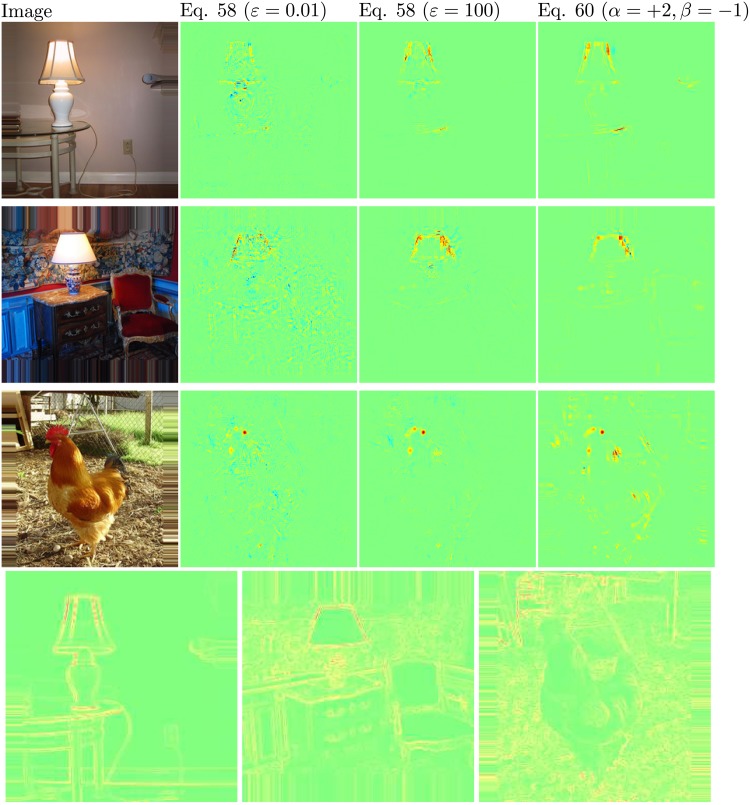
Understanding and interpreting classification decisions of automated image classification systems is of high value in many applications, as it allows to verify the reasoning of the system and provides additional information to the human expert. Although machine learning methods are solving very successfully a plethora of tasks, they have in most cases the disadvantage of acting as a black box, not providing any information about what made them arrive at a particular decision. This work proposes a general solution to the problem of understanding classification decisions by pixel-wise decomposition of nonlinear classifiers. We introduce a methodology that allows to visualize the contributions of single pixels to predictions for kernel-based classifiers over Bag of Words features and for multilayered neural networks. These pixel contributions can be visualized as heatmaps and are provided to a human expert who can intuitively not only verify the validity of the classification decision, but also focus further analysis on regions of potential interest. We evaluate our method for classifiers trained on PASCAL VOC 2009 images, synthetic image data containing geometric shapes, the MNIST handwritten digits data set and for the pre-trained ImageNet model available as part of the Caffe open source package.
Overview
The claims and statistics of this paper haven’t been checked yet.
Free: it reads the open-access text and checks the first 5 claims that cite a source we can check. Create a free account to check every claim.
Integrity signals
Registry
Cites
Statistics
Figures



Verification
Claims the paper makes
The claims and statistics of this paper haven’t been checked yet.
Free: it reads the open-access text and checks the first 5 claims that cite a source we can check. Create a free account to check every claim.
Claims other papers make about this one
Each is checked against this paper’s own text: does it say what the citing paper says it does?
The source backs part of the claim, not all of it — or backs it for a different population, condition or comparison.
In the citing paper
“Barring a few exceptions (Caruana et al., 2015; Lundberg et al., 2018b; Ustun et al., 2019; Jesus et al., 2021), much of the existing work is designed and developed for benchmark classification problems, often with synthetic data and usually validated with user studies limited to users in research settings such as Amazon Mechanical Turk (AMT; Simonyan et al., 2013; Zeiler and Fergus, 2014; Bach et”
From Explainable machine learning for public policy: Use cases, gaps, and research directions (2023) · cites this paper as Bach et al., 2015
Experimental — accuracy not yet measuredThe cited source says what the claim attributes to it.
In the citing paper
“Unfortunately, most of the work in this area fails to meet these criteria, focusing only on benchmark ML problems and datasets (e.g., image classification on MNIST data, newsgroups data; Bach et al., 2015; Ribeiro et al., 2016, 2018; Shrikumar et al., 2017).”
From Explainable machine learning for public policy: Use cases, gaps, and research directions (2023) · cites this paper as Bach et al., 2015
In the citing paper
“LRP and DTD are capable of improving a model’s interpretability.”
From Survey of Explainable AI Techniques in Healthcare (2023) · cites this paper as [31]
Self-check
Percentages, sums and reported differences re-computed from the paper’s own numbers.
The self-check needs the paper’s full text.
Citations
Cites
ImageNet classification with deep convolutional neural networks
Krizhevsky, A., Sutskever, I., & Hinton, G. E. (2017) · Communications of the ACM · doi:10.1145/3065386 · Cited by 112,155 · cited 2×
“It is known from [21] that lower layers of deep networks which are very similar to the one from [60] used here may act like learned texture or gradient detectors.”
BackgroundDistinctive Image Features from Scale-Invariant Keypoints
Lowe, D. G. (2004) · International Journal of Computer Vision · doi:10.1023/b:visi.0000029664.99615.94 · Cited by 55,589
Learning representations by back-propagating errors
Rumelhart, D. E., Hinton, G. E., & Williams, R. J. (1986) · Nature · doi:10.1038/323533a0 · Cited by 31,892 · cited 2×
“The derivative @f(x)/@x(d) required for pixel-wise decomposition can be computed efficiently by reusing the network topology using the backpropagation algorithm [56].”
BackgroundMethodThe pascal visual object classes (VOC) challenge
Everingham, M., Van Gool, L., Williams, C. K. I., Winn, J., & Zisserman, A. (2010) · International Journal of Computer Vision · doi:10.1007/s11263-009-0275-4 · Cited by 19,599
Neural networks for pattern recognition
(1994) · Choice Reviews Online · doi:10.5860/choice.31-5500 · Cited by 18,538
Rapid object detection using a boosted cascade of simple features
Viola, P., & Jones, M. (2005) · Proceedings of the 2001 IEEE Computer Society Conference on Computer Vision and Pattern Recognition. CVPR 2001 · doi:10.1109/cvpr.2001.990517 · Cited by 18,300
Visualizing and understanding convolutional networks
Zeiler, M. D., & Fergus, R. (2014) · Lecture Notes in Computer Science · doi:10.1007/978-3-319-10590-1_53 · Cited by 15,839
Explaining and Harnessing Adversarial Examples
Goodfellow, I. J., Shlens, J., & Szegedy, C. (2014) · arXiv · doi:10.48550/arxiv.1412.6572 · Cited by 10,381 · cited 1×
“A different type of analysis for understanding neural networks deals with creating counter-intuitive examples, see for example the work in [24, 25].”
BackgroundIntriguing properties of neural networks
Szegedy, C., Zaremba, W., Sutskever, I., Bruna, J., Erhan, D., Goodfellow, I., & Fergus, R. (2013) · arXiv · doi:10.48550/arxiv.1312.6199 · Cited by 8,143 · cited 2×
“However, as noted in [24], this can lead to points of the input space that are perceptually equivalent to the original sample x and whose choice as a root would produce non-informative pixel-wise decompositions.”
BackgroundDeep Inside Convolutional Networks: Visualising Image Classification Models and Saliency Maps
Simonyan, K., Vedaldi, A., & Zisserman, A. (2013) · arXiv · doi:10.48550/arxiv.1312.6034 · Cited by 5,370 · cited 4×
“Besides deviating in the usage of a Taylor series, the work in [22] does not make use of the layer-wise propagation strategy for neural networks presented in this paper, which unlike a Taylor series does not rely on a local approximation.”
BackgroundMethodResultInfluential
Research works printed but not linked: 4
- Montavon G, Orr GB, Müller KR, editors. Neural Networks: Tricks of the Trade, Reloaded vol. 7700 of Lecture Notes in Computer Science (LNCS). 2nd ed Springer; 2012.
- Everingham M, Van Gool L, Williams CKI, Winn J, Zisserman A. The PASCAL Visual Object Classes Challenge 2010 (VOC2010) Results;. · DOI · Paper page
- Lanckriet GRG, Cristianini N, Bartlett PL, Ghaoui LE, Jordan MI. Learning the Kernel Matrix with Semidefinite Programming. Journal of Machine Learning Research. 2004; 5: 27– 72.
- Kloft M, Brefeld U, Sonnenburg S, Laskov P, Müller KR, Zien A. Efficient and Accurate Lp-norm Multiple Kernel Learning. Advances in Neural Information Processing Systems. 2009; 22(22): 997– 1005.
Cited by
Items 101–200 of 1,049
Interpretable Counterfactual Explanations Guided by Prototypes
Van Looveren, A., & Klaise, J. (2021) · Lecture Notes in Computer Science · doi:10.1007/978-3-030-86520-7_40 · Cited by 346
Human-Centered Explainable AI (XAI): From Algorithms to User Experiences
Liao, Q. V., & Varshney, K. R. (2026) · Cambridge University Press eBooks · doi:10.1017/9781108872225.011 · Cited by 487
Understanding convolutional neural networks with a mathematical model
Kuo, C.-C. J. (2016) · Journal of Visual Communication and Image Representation · doi:10.1016/j.jvcir.2016.11.003 · Cited by 414
“Keywords: Convolutional Neural Network (CNN), Nonlinear Activation, RECOS Model, Rectified Linear Unit (ReLU), MNIST Dataset.”
BackgroundA Review of Taxonomies of Explainable Artificial Intelligence (XAI) Methods
Speith, T. (2022) · 2022 ACM Conference on Fairness Accountability and Transparency · doi:10.1145/3531146.3534639 · Cited by 337
“LRP [9] Pixel-Based / / Leveraging Structure Visual”
MethodLearning to Explain: An Information-Theoretic Perspective on Model Interpretation
Chen, J., Song, L., Wainwright, M. J., & Jordan, M. I. (2018) · arXiv (Cornell University) · doi:10.48550/arxiv.1802.07814 · Cited by 99
“…a locally additive model in order to explain the difference between the model output and some “reference” output in terms of the difference between the input and some “reference” input (Bach et al., 2015; Kindermans et al., 2016; Ribeiro et al., 2016; Lundberg & Lee, 2017; Shrikumar et al., 2017).”
BackgroundMethodInfluentialSchwalbe, G., & Finzel, B. (2024) · Data Mining and Knowledge Discovery · doi:10.1007/s10618-022-00867-8 · Cited by 328
“XAI for Visual Tasks Some of the earlier milestones for the current field of XAI were methods to explain input importance for models with image inputs [35], such as LIME [112] and LRP [12].”
BackgroundMethodInfluentialReal Time Image Saliency for Black Box Classifiers
Dabkowski, P., & Gal, Y. (2017) · arXiv (Cornell University) · doi:10.48550/arxiv.1705.07857 · Cited by 77
“Center Grad [12] Guid [13] LRP [1] CAM [20] Exc [18] Feed [2] Mask [3] [3] which recalculated originally reported results using few different mask thresholding techniques and achieved slightly lower error rates.”
BackgroundPruning neural networks without any data by iteratively conserving synaptic flow
Tanaka, H., Kunin, D., Yamins, D. L. K., & Ganguli, S. (2020) · neural information processing systems · doi:10.48550/arxiv.2006.05467 · Cited by 836
“Similar conservation properties have been noted in the neural network interpretability literature and have motivated the construction of interpretability methods such as Conductance [38] and Layer-wise Relevance Propagation [39], which have recently been modified for network pruning [9, 40].”
BackgroundBenchmarking and survey of explanation methods for black box models
Bodria, F., Giannotti, F., Guidotti, R., Naretto, F., Pedreschi, D., & Rinzivillo, S. (2023) · Data Mining and Knowledge Discovery · doi:10.1007/s10618-023-00933-9 · Cited by 264
“-LRP, Layer-wise Relevance Propagation [17] is a model specific method which produce posthoc local explanations for any type of data.”
BackgroundMethodInfluentialInterpreting Super-Resolution Networks with Local Attribution Maps
Gu, J., & Dong, C. (2021) · 2021 IEEE/CVF Conference on Computer Vision and Pattern Recognition (CVPR) · doi:10.1109/cvpr46437.2021.00908 · Cited by 361
Axiom-based Grad-CAM: Towards Accurate Visualization and Explanation of CNNs
Fu, R., Hu, Q., Dong, X., Guo, Y., Gao, Y., & Li, B. (2020) · Proceedings of the British Machine Vision Conference 2020 · doi:10.5244/c.34.146 · Cited by 288
Analysis of Explainers of Black Box Deep Neural Networks for Computer Vision: A Survey
Buhrmester, V., Münch, D., & Arens, M. (2021) · Machine Learning and Knowledge Extraction · doi:10.3390/make3040048 · Cited by 403
Interpretable deep neural networks for single-trial EEG classification
Sturm, I., Lapuschkin, S., Samek, W., & Müller, K.-R. (2016) · Journal of Neuroscience Methods · doi:10.1016/j.jneumeth.2016.10.008 · Cited by 374
Self-citationXu, Y., Quan, R., Xu, W., Huang, Y., Chen, X., & Liu, F. (2024) · Bioengineering · doi:10.3390/bioengineering11101034 · Cited by 310
Exploring chemical compound space with quantum-based machine learning
von Lilienfeld, O. A., Müller, K.-R., & Tkatchenko, A. (2020) · Nature Reviews Chemistry · doi:10.1038/s41570-020-0189-9 · Cited by 369
“[113, 122–124] and references therein).”
Self-citationToms, B. A., Barnes, E. A., & Ebert‐Uphoff, I. (2020) · Journal of Advances in Modeling Earth Systems · doi:10.1029/2019ms002002 · Cited by 311
“We note that while the LRP meth-ods presented by Bach et al. (2015) and Montavon et al. (2017) are one formulation of LRP, new formulations can be developed according to the more general guidelines posed within Bach et al. (2015).”
BackgroundMethodInfluentialTama, B. A., Vania, M., Lee, S., & Lim, S. (2023) · Artificial Intelligence Review · doi:10.1007/s10462-022-10293-3 · Cited by 345
“Based on layerwise relevance propagation (LRP) (Bach et al. 2015), Grezmak et al. (2019) introduce an interpretable CNN for gearbox fault diagnosis.”
BackgroundDeep Learning for Sequential Recommendation: Algorithms, Influential Factors, and Evaluations
Fang, H., Zhang, D., Shu, Y., & Guo, G. (2021) · ACM Transactions on Information Systems · doi:10.1145/3426723 · Cited by 287
“Noted that our survey sheds light on the second issue, and more ideas can be borrowed from those explanability studies towards deep learning networks [3, 46, 72, 88] For the first issue, there are mainly two categories of methods for explainable recommendation which tries to make users understand why such items or lis…”
BackgroundInsightful classification of crystal structures using deep learning
Ziletti, A., Kumar, D., Scheffler, M., & Ghiringhelli, L. M. (2018) · Nature Communications · doi:10.1038/s41467-018-05169-6 · Cited by 347
XGNN: Towards Model-Level Explanations of Graph Neural Networks
Yuan, H., Tang, J., Hu, X., & Ji, S. (2020) · Proceedings of the 26th ACM SIGKDD International Conference on Knowledge Discovery & Data Mining · doi:10.1145/3394486.3403085 · Cited by 272
“It applies several well-known image interpretation methods to graph models, such as sensitivity analysis (SA) [12], guided backpropagation (GBP) [33], and layer-wise relevance propagation (LRP) [3].”
BackgroundUnderstanding the role of individual units in a deep neural network
Bau, D., Zhu, J.-Y., Strobelt, H., Lapedriza, A., Zhou, B., & Torralba, A. (2020) · Proceedings of the National Academy of Sciences · doi:10.1073/pnas.1907375117 · Cited by 375
Current progress and open challenges for applying deep learning across the biosciences
Sapoval, N., Aghazadeh, A., Nute, M. G., Antunes, D. A., Balaji, A., Baraniuk, R., Barberan, C. J., Dannenfelser, R., Dun, C., Edrisi, M., et al. (2022) · Nature Communications · doi:10.1038/s41467-022-29268-7 · Cited by 359
“Methods that address the explainability question use more direct ways to gain insights from the NN function using their Taylor expansion 125 or Fourier transform 42,62 .”
MethodIslam, M. R., Ahmed, M. U., Barua, S., & Begum, S. (2022) · Applied Sciences · doi:10.3390/app12031353 · Cited by 311
Tripathy, K. P., & Mishra, A. K. (2024) · Journal of Hydrology · doi:10.1016/j.jhydrol.2023.130458 · Cited by 336
Explaining Recurrent Neural Network Predictions in Sentiment Analysis
Arras, L., Montavon, G., Müller, K.-R., & Samek, W. (2017) · Proceedings of the 8th Workshop on Computational Approaches to Subjectivity, Sentiment and Social Media Analysis · doi:10.18653/v1/w17-5221 · Cited by 361
“Another technique to compute relevances was proposed in (Bach et al., 2015) as the Layer-wise Rel-evance Propagation (LRP) algorithm.”
BackgroundMethodInfluentialSelf-citationŞAHiN, E., Arslan, N. N., & Özdemir, D. (2025) · Neural Computing and Applications · doi:10.1007/s00521-024-10437-2 · Cited by 278
An Explainable Machine Learning Framework for Intrusion Detection Systems
Wang, M., Zheng, K., Yang, Y., & Wang, X. (2020) · IEEE Access · doi:10.1109/access.2020.2988359 · Cited by 355
“Amareasinghe and Manic [27] used a method named Layer-wise Relevance Propagation (LRP) [43] to calculate input feature contributions and generated online and offline feedback for users to help them understand what features drove the predictions in IDSs.”
MethodS Band, S., Yarahmadi, A., Hsu, C.-C., Biyari, M., Sookhak, M., Ameri, R., Dehzangi, I., Chronopoulos, A. T., & Liang, H.-W. (2023) · Informatics in Medicine Unlocked · doi:10.1016/j.imu.2023.101286 · Cited by 297
Holzinger, A., Malle, B., Saranti, A., & Pfeifer, B. (2021) · Information Fusion · doi:10.1016/j.inffus.2021.01.008 · Cited by 352
“As a first step, Bach et al. (2015) [76] have used this for images as pixel-wise decomposition and demonstrated how this decomposition can be used as an xAI method in combination with a pixel-wise relevance propagation algorithm.”
MethodToward Human-Understandable, Explainable AI
Hagras, H. (2018) · Computer · doi:10.1109/mc.2018.3620965 · Cited by 350
“13 The second approach to XAI in Figure 1a is interpretable models , which are techniques for learning more structured and interpretable casual models that could apply to statistical models (for example, logistic regression models, naïve Bayes models, and so on), graphical models (such as hidden…”
MethodShapley additive explanations for NO2 forecasting
Vega García, M., & Aznarte, J. L. (2020) · Ecological Informatics · doi:10.1016/j.ecoinf.2019.101039 · Cited by 346
Seeing What a GAN Cannot GeneratePreprint
(2020) · DSpace@MIT (Massachusetts Institute of Technology) · Cited by 347
Mersha, M., Lam, K., Wood, J., AlShami, A. K., & Kalita, J. (2024) · Neurocomputing · doi:10.1016/j.neucom.2024.128111 · Cited by 237
“The relevance score determines the contributions of each pixel to the final model’s prediction [61, 109].”
BackgroundMethodInfluentialGe, W., Lin, X., & Yu, Y. (2019) · 2019 IEEE/CVF Conference on Computer Vision and Pattern Recognition (CVPR) · doi:10.1109/cvpr.2019.00315 · Cited by 317
“To better understand a trained deep neural network and obtain insights about this phenomenon, many techniques [1, 54, 2] have been proposed to visualize the intermediate results of deep networks.”
Machine learning for metal additive manufacturing: Towards a physics-informed data-driven paradigm
Guo, S., Agarwal, M., Cooper, C., Tian, Q., Gao, R. X., Guo, W., & Guo, Y. B. (2022) · Journal of Manufacturing Systems · doi:10.1016/j.jmsy.2021.11.003 · Cited by 309
A Survey of End-to-End Driving: Architectures and Training Methods
Tampuu, A., Matiisen, T., Semikin, M., Fishman, D., & Muhammad, N. (2022) · IEEE Transactions on Neural Networks and Learning Systems · doi:10.1109/tnnls.2020.3043505 · Cited by 291
Muhammad, D., & Bendechache, M. (2024) · Computational and Structural Biotechnology Journal · doi:10.1016/j.csbj.2024.08.005 · Cited by 258
Designing deep learning studies in cancer diagnostics
Kleppe, A., Skrede, O.-J., De Raedt, S., Liestøl, K., Kerr, D. J., & Danielsen, H. E. (2021) · Nature Reviews Cancer · doi:10.1038/s41568-020-00327-9 · Cited by 316
Higher-Order Explanations of Graph Neural Networks via Relevant Walks
Schnake, T., Eberle, O., Lederer, J., Nakajima, S., Schutt, K. T., Muller, K.-R., & Montavon, G. (2022) · IEEE Transactions on Pattern Analysis and Machine Intelligence · doi:10.1109/tpami.2021.3115452 · Cited by 259
“CNN predictions have so far mainly been explained using heatmaps highlighting pixels that are the most relevant for a given prediction [13], [16], [77].”
BackgroundMethodInfluentialSelf-citationOn the (In)fidelity and Sensitivity for Explanations
Yeh, C., Hsieh, C.-Y., Suggala, A. S., Inouye, D. I., & Ravikumar, P. (2019) · arXiv (Cornell University) · doi:10.48550/arxiv.1901.09392 · Cited by 60
“[28] use explanation continuity as an objective measure of explanations, and observe that discontinuities may occur for gradient-based explanations, while variants such as deep Taylor LRP [4] can achieve continuous explanations, as compared to simple gradient explanations.”
BackgroundInfluentialWhat Clinicians Want: Contextualizing Explainable Machine Learning for Clinical End Use
Tonekaboni, S., Joshi, S., McCradden, M. D., & Goldenberg, A. (2019) · arXiv · doi:10.48550/arxiv.1905.05134 · Cited by 318
“, 2008), LRP (Bach et al., 2015) (Yang et al.”
Bai, X., Wang, X., Liu, X., Liu, Q., Song, J., Sebe, N., & Kim, B. (2021) · Pattern Recognition · doi:10.1016/j.patcog.2021.108102 · Cited by 313
Generic Attention-model Explainability for Interpreting Bi-Modal and Encoder-Decoder Transformers
Chefer, H., Gur, S., & Wolf, L. (2021) · 2021 IEEE/CVF International Conference on Computer Vision (ICCV) · doi:10.1109/iccv48922.2021.00045 · Cited by 313
“Note that since VisualBERT [18] is based on pure selfattention, the difference between our method and the Transformer attribution [5] method stems from the choice of whether or not to use LRP [3] for head averaging in Eq.”
BackgroundMethodInfluentialTowards neural Earth system modelling by integrating artificial intelligence in Earth system science
Irrgang, C., Boers, N., Sonnewald, M., Barnes, E. A., Kadow, C., Staneva, J., & Saynisch-Wagner, J. (2021) · Nature Machine Intelligence · doi:10.1038/s42256-021-00374-3 · Cited by 308
Revealing Drivers of Haze Pollution by Explainable Machine Learning
Hou, L., Dai, Q., Song, C., Liu, B., Guo, F., Dai, T., Li, L., Liu, B., Bi, X., Zhang, Y., et al. (2022) · Environmental Science & Technology Letters · doi:10.1021/acs.estlett.1c00865 · Cited by 288
Survey on Explainable AI: From Approaches, Limitations and Applications Aspects
Yang, W., Wei, Y., Wei, H., Chen, Y., Huang, G., Li, X., Li, R., Yao, N., Wang, X., Gu, X., et al. (2023) · Human-Centric Intelligent Systems · doi:10.1007/s44230-023-00038-y · Cited by 240
LEMNA: Explaining Deep Learning based Security Applications
Guo, W., Mu, D., Xu, J., Su, P., Wang, G., & Xing, X. (2018) · Proceedings of the 2018 ACM SIGSAC Conference on Computer and Communications Security · doi:10.1145/3243734.3243792 · Cited by 287
“For example, the back-propagation methods including “saliency map” [3, 18, 54, 57] and activation difference propagation [53] require special operations on the convolutional layers and pooling layers of CNN, which do not exist in RNN or MLP 1.”
BackgroundMethodInfluentialArtificial Intelligence in manufacturing: State of the art, perspectives, and future directions
Gao, R. X., Krüger, J., Merklein, M., Möhring, H.-C., & Váncza, J. (2024) · CIRP Annals · doi:10.1016/j.cirp.2024.04.101 · Cited by 237
Human Trajectory Forecasting in Crowds: A Deep Learning Perspective
Kothari, P., Kreiss, S., & Alahi, A. (2022) · IEEE Transactions on Intelligent Transportation Systems · doi:10.1109/tits.2021.3069362 · Cited by 267
Magesh, P. R., Myloth, R. D., & Tom, R. J. (2020) · Computers in Biology and Medicine · doi:10.1016/j.compbiomed.2020.104041 · Cited by 295
Explaining the unique nature of individual gait patterns with deep learning
Horst, F., Lapuschkin, S., Samek, W., Müller, K.-R., & Schöllhorn, W. I. (2019) · Scientific Reports · doi:10.1038/s41598-019-38748-8 · Cited by 256
Self-citationExplainability Techniques for Graph Convolutional NetworksPreprint
Baldassarre, F., & Azizpour, H. (2019) · arXiv (Cornell University) · doi:10.48550/arxiv.1905.13686 · Cited by 411
“Recent methods for explainability have been developed within image or text domains (Bach et al., 2015; Springenberg et al., 2015; Ribeiro et al., 2016).”
BackgroundMethodInfluentialFrom ethical AI frameworks to tools: a review of approaches
Prem, E. (2023) · AI and Ethics · doi:10.1007/s43681-023-00258-9 · Cited by 242
Böhle, M., Eitel, F., Weygandt, M., & Ritter, K. (2019) · Frontiers in Aging Neuroscience · doi:10.3389/fnagi.2019.00194 · Cited by 291
“, weights) and neuron activations (Bach et al., 2015; Samek et al., 2015).”
explAIner: A Visual Analytics Framework for Interactive and Explainable Machine Learning
Spinner, T., Schlegel, U., Schafer, H., & El-Assady, M. (2019) · IEEE Transactions on Visualization and Computer Graphics · doi:10.1109/tvcg.2019.2934629 · Cited by 254
“Besides LIME as an example for surrogate models, we implemented several other model-based explainers, including Layer-Wise Relevance Propagation (LRP) and several gradient-based methods, such as Saliency and Deeplift [6, 68, 64].”
BackgroundMethodInfluentialOn the interpretability of machine learning-based model for predicting hypertension
Elshawi, R., Al-Mallah, M. H., & Sakr, S. (2019) · BMC Medical Informatics and Decision Making · doi:10.1186/s12911-019-0874-0 · Cited by 271
"What is relevant in a text document?": An interpretable machine learning approach
Arras, L., Horn, F., Montavon, G., Müller, K.-R., & Samek, W. (2017) · PLOS ONE · doi:10.1371/journal.pone.0181142 · Cited by 257
Self-citationPerspective on machine learning for advancing fluid mechanics
Brenner, M. P., Eldredge, J. D., & Freund, J. B. (2019) · Physical Review Fluids · doi:10.1103/physrevfluids.4.100501 · Cited by 292
“Such efforts might build on methods such as Layer-wise Relevance Propagation, which is a network analysis to deduce how it labels images [27].”
MethodGradient-Based Attribution Methods
Ancona, M., Ceolini, E., Öztireli, C., & Gross, M. (2019) · Lecture Notes in Computer Science · doi:10.1007/978-3-030-28954-6_9 · Cited by 252
“For example, αβ-LRP [4, 19] employs a backpropagation rule where the positive and negative information paths are weighted according to two different parameters, chosen by the user.”
BackgroundMethodInfluentialNazir, S., Dickson, D. M., & Akram, M. U. (2023) · Computers in Biology and Medicine · doi:10.1016/j.compbiomed.2023.106668 · Cited by 283
“[83].”
MethodRelation between prognostics predictor evaluation metrics and local interpretability SHAP values
Baptista, M. L., Goebel, K., & Henriques, E. M. P. (2022) · Artificial Intelligence · doi:10.1016/j.artint.2022.103667 · Cited by 270
“We have that the explanation function g(z′) can be decomposed as follows: g(z′) = φ0 + N∑ i=1 φi z ′ i, φi ∈R (5) where: N = number of input features in x, the instance vector g = explanation model z′ = coalition vector such that z′ ⊂ {0,1}N φi = decomposition factor Several methods match the definition in Equation (5…”
MethodInfluentialPitfalls in Machine Learning for Computer Security
Arp, D., Quiring, E., Pendlebury, F., Warnecke, A., Pierazzi, F., Wressnegger, C., Cavallaro, L., & Rieck, K. (2024) · Communications of the ACM · doi:10.1145/3643456 · Cited by 300
Towards Human-Centered Explainable AI: A Survey of User Studies for Model Explanations
Rong, Y., Leemann, T., Nguyen, T.-T., Fiedler, L., Qian, P., Unhelkar, V., Seidel, T., Kasneci, G., & Kasneci, E. (2024) · IEEE Transactions on Pattern Analysis and Machine Intelligence · doi:10.1109/tpami.2023.3331846 · Cited by 278
Pruning by explaining: A novel criterion for deep neural network pruning
Yeom, S.-K., Seegerer, P., Lapuschkin, S., Binder, A., Wiedemann, S., Müller, K.-R., & Samek, W. (2021) · Pattern Recognition · doi:10.1016/j.patcog.2021.107899 · Cited by 263
Self-citationKwak, N.-S., Müller, K.-R., & Lee, S.-W. (2017) · PLOS ONE · doi:10.1371/journal.pone.0172578 · Cited by 272
Self-citationInterpretable Basis Decomposition for Visual Explanation
Zhou, B., Sun, Y., Bau, D., & Torralba, A. (2018) · Lecture Notes in Computer Science · doi:10.1007/978-3-030-01237-3_8 · Cited by 260
“One is to identify the evidence that a network uses to make a specific decision by creating a heatmap that indicates which portions of an input are most salient to the decision [28, 2, 20].”
BackgroundBenchmarking saliency methods for chest X-ray interpretation
Saporta, A., Gui, X., Agrawal, A., Pareek, A., Truong, S. Q. H., Nguyen, C. D. T., Ngo, V.-D., Seekins, J., Blankenberg, F. G., Ng, A. Y., et al. (2022) · Nature Machine Intelligence · doi:10.1038/s42256-022-00536-x · Cited by 270
“In this work, we perform a systematic evaluation of seven common saliency methods in medical imaging (Grad-CAM 30 , Grad-CAM++ 31 , ‘integrated gradients’ 32 , Eigen-CAM 33 , DeepLIFT 34 , layer-wise relevance propagation (LRP) 35 and ‘occlusion’ 36 ) using three common CNN architectures (DenseNet121 37 , ResNet152 38…”
InfluentialExplainable Artificial Intelligence: a Systematic Review
Vilone, G., & Longo, L. (2020) · arXiv · doi:10.48550/arxiv.2006.00093 · Cited by 269
“Layer-Wise Relevance Propagation (LRP) [101] was developed as a model-agnostic solution to the problem of understanding image classification predictions by pixel-wise decomposition of nonlinear classifiers.”
MethodNeural Prototype Trees for Interpretable Fine-grained Image Recognition
Nauta, M., van Bree, R., & Seifert, C. (2021) · 2021 IEEE/CVF Conference on Computer Vision and Pattern Recognition (CVPR) · doi:10.1109/cvpr46437.2021.01469 · Cited by 269
“part-based methods [56, 61], saliency maps [6, 13, 60] or representer points [53].”
MethodSchulte-Sasse, R., Budach, S., Hnisz, D., & Marsico, A. (2021) · Nature Machine Intelligence · doi:10.1038/s42256-021-00325-y · Cited by 256
“The denominator implements the conservation property of LRP, that is, what has been received by a neuron must be redistributed to the lower layer in equal amount 32 .”
BackgroundMethodInfluentialGhaffarian, S., Taghikhah, F. R., & Maier, H. R. (2023) · International Journal of Disaster Risk Reduction · doi:10.1016/j.ijdrr.2023.104123 · Cited by 216
Seq2seq-Vis: A Visual Debugging Tool for Sequence-to-Sequence Models
Strobelt, H., Gehrmann, S., Behrisch, M., Perer, A., Pfister, H., & Rush, A. M. (2019) · IEEE Transactions on Visualization and Computer Graphics · doi:10.1109/tvcg.2018.2865044 · Cited by 239
The perils and pitfalls of explainable AI: Strategies for explaining algorithmic decision-making
de Bruijn, H., Warnier, M., & Janssen, M. (2022) · Government Information Quarterly · doi:10.1016/j.giq.2021.101666 · Cited by 264
Explaining the black-box model: A survey of local interpretation methods for deep neural networks
Liang, Y., Li, S., Yan, C., Li, M., & Jiang, C. (2021) · Neurocomputing · doi:10.1016/j.neucom.2020.08.011 · Cited by 253
Shapley value: from cooperative game to explainable artificial intelligence
Li, M., Sun, H., Huang, Y., & Chen, H. (2024) · Autonomous Intelligent Systems · doi:10.1007/s43684-023-00060-8 · Cited by 205
AI-enhanced blockchain technology: A review of advancements and opportunities
Ressi, D., Romanello, R., Piazza, C., & Rossi, S. (2024) · Journal of Network and Computer Applications · doi:10.1016/j.jnca.2024.103858 · Cited by 225
Bittig, H. C., Steinhoff, T., Claustre, H., Fiedler, B., Williams, N. L., Sauzède, R., Körtzinger, A., & Gattuso, J.-P. (2018) · Frontiers in Marine Science · doi:10.3389/fmars.2018.00328 · Cited by 235
“These modifications helped to give a more equal influence to the lon inputs (following Bach et al., 2015; data not shown) and to improve predictions in the subploar North Pacific.”
BackgroundMethodology for Efficient CNN Architectures in Profiling Attacks
Zaid, G., Bossuet, L., Habrard, A., & Venelli, A. (2019) · IACR Transactions on Cryptographic Hardware and Embedded Systems · doi:10.46586/tches.v2020.i1.1-36 · Cited by 197
Dai, E., Zhao, T., Zhu, H., Xu, J., Guo, Z., Liu, H., Tang, J., & Wang, S. (2024) · Machine Intelligence Research · doi:10.1007/s11633-024-1510-8 · Cited by 329
Gehrmann, S., Dernoncourt, F., Li, Y., Carlson, E. T., Wu, J. T., Welt, J., Foote, J., Moseley, E. T., Grant, D. W., Tyler, P. D., et al. (2018) · PLOS ONE · doi:10.1371/journal.pone.0192360 · Cited by 208
Explanation Methods in Deep Learning: Users, Values, Concerns and Challenges
Ras, G., van Gerven, M., & Haselager, P. (2018) · The Springer Series on Challenges in Machine Learning · doi:10.1007/978-3-319-98131-4_2 · Cited by 255
A Review on Explainable Artificial Intelligence for Healthcare: Why, How, and When?
Bharati, S., Mondal, M. R. H., & Podder, P. (2024) · IEEE Transactions on Artificial Intelligence · doi:10.1109/tai.2023.3266418 · Cited by 203
“Layerwiserelevancepropagation(LRP) [134],guidedbackpropagation(GBP)[135],SHapleyAdditive exPlanations(SHAP)[136],DeepLIFT[132],andotherXAI andIAImethodswerecomparedfordiagnosingophthalmic [137].”
Top-Down Neural Attention by Excitation Backprop
Zhang, J., Lin, Z., Brandt, J., Shen, X., & Sclaroff, S. (2016) · Lecture Notes in Computer Science · doi:10.1007/978-3-319-46493-0_33 · Cited by 237
Abnormality Detection and Localization in Chest X-Rays using Deep Convolutional Neural NetworksPreprint
Islam, M. T., Aowal, M. A., Minhaz, A. T., & Ashraf, K. M. (2017) · arXiv (Cornell University) · doi:10.48550/arxiv.1705.09850 · Cited by 292
Explainable AI for Time Series Classification: A Review, Taxonomy and Research Directions
Theissler, A., Spinnato, F., Schlegel, U., & Guidotti, R. (2022) · IEEE Access · doi:10.1109/access.2022.3207765 · Cited by 194
“Also, for every method, we report the name (if available), the reference, the publication year, and the code language with a hyperlink to the corresponding library.”
MethodTowards A Rigorous Evaluation Of XAI Methods On Time Series
Schlegel, U., Arnout, H., El-Assady, M., Oelke, D., & Keim, D. A. (2019) · 2019 IEEE/CVF International Conference on Computer Vision Workshop (ICCVW) · doi:10.1109/iccvw.2019.00516 · Cited by 187
“Many prominent XAI methods are tailored onto certain input types such as images, e.g., Saliency Maps [25], or text, e.g., layer-wise relevance propagation (LRP) [2].”
MethodAdaptive Laplace Mechanism: Differential Privacy Preservation in Deep Learning
Phan, N., Wu, X., Hu, H., & Dou, D. (2017) · 2017 IEEE International Conference on Data Mining (ICDM) · doi:10.1109/icdm.2017.48 · Cited by 217
“To achieve that, we inject Laplace noise into the computation of Layer-wise Relevance Propagation (LRP) [15] to estimate a differentially private relevance of each input feature to the model output.”
BackgroundMethodInfluentialSrikantamurthy, M. M., Rallabandi, V. P. S., Dudekula, D. B., Natarajan, S., & Park, J. (2023) · BMC Medical Imaging · doi:10.1186/s12880-023-00964-0 · Cited by 202
“DL models have already been developed using various methods such as class activation mapping [39], and layer-wise relevance propagation [40] including patch-based DL using a deep belief network [41] to separate out the localized features from the predictions.”
MethodAdversarial attacks and defenses in explainable artificial intelligence: A survey
Baniecki, H., & Biecek, P. (2024) · Information Fusion · doi:10.1016/j.inffus.2024.102303 · Cited by 170
Borys, K., Schmitt, Y. A., Nauta, M., Seifert, C., Krämer, N., Friedrich, C. M., & Nensa, F. (2023) · European Journal of Radiology · doi:10.1016/j.ejrad.2023.110786 · Cited by 233
Improving Pairwise Ranking for Multi-label Image Classification
Li, Y., Song, Y., & Luo, J. (2017) · 2017 IEEE Conference on Computer Vision and Pattern Recognition (CVPR) · doi:10.1109/cvpr.2017.199 · Cited by 217
“This may be seen as a trivial difference, but the bias term is crucial for getting numeric stability during optimization [2].”
BackgroundHohman, F., Park, H., Robinson, C., & Polo Chau, D. H. (2020) · IEEE Transactions on Visualization and Computer Graphics · doi:10.1109/tvcg.2019.2934659 · Cited by 213
“For example, layer-wise relevance propagation [3] could be used to seed our aggregation methods using relevance scores instead of neuron activations.”
MethodA deep neural network for image quality assessment
Bosse, S., Maniry, D., Wiegand, T., & Samek, W. (2016) · 2016 IEEE International Conference on Image Processing (ICIP) · doi:10.1109/icip.2016.7533065 · Cited by 223
“This motivates to continue working on a better understanding of the features driving the perception of image quality [20].”
BackgroundSelf-citationExplainability of Deep Vision-Based Autonomous Driving Systems: Review and Challenges
Zablocki, É., Ben-Younes, H., Pérez, P., & Cord, M. (2022) · International Journal of Computer Vision · doi:10.1007/s11263-022-01657-x · Cited by 227
“…improved versions (Simonyan et al., 2014; Oramas et al., 2019), Class ActivationMapping (CAM) (Zhou et al., 2016), Grad-CAM (Selvaraju et al., 2020), Layer-Wise Relevance Propagation (LRP) (Bach et al., 2015), deepLift (Shrikumar et al., 2017), and Integrated Gradients (Sundararajan et al., 2017).”
Explainability of deep vision-based autonomous driving systems: Review and challenges
Zablocki, É., Ben-Younes, H., Pérez, P., & Cord, M. (2021) · arXiv · doi:10.48550/arxiv.2101.05307 · Cited by 227
“…et al, 2014), Guided Backprop (Mahendran and Vedaldi, 2016), Class Activation Mapping (CAM) (Zhou et al, 2016), Grad-CAM (Selvaraju et al, 2020), Layer-Wise Relevance Propagation (LRP) (Bach et al, 2015), deepLift (Shrikumar et al, 2017) and Integrated Gradients (Sundararajan et al, 2017).”
MethodSharma, S., Henderson, J., & Ghosh, J. (2020) · Proceedings of the AAAI/ACM Conference on AI, Ethics, and Society · doi:10.1145/3375627.3375812 · Cited by 226
“Many methods that provide explain-ability [2] and robustness [18] require access to the model weights and internals.”
Analyzing Classifiers: Fisher Vectors and Deep Neural Networks
Lapuschkin, S., Binder, A., Montavon, G., Muller, K.-R., & Samek, W. (2016) · 2016 IEEE Conference on Computer Vision and Pattern Recognition (CVPR) · doi:10.1109/cvpr.2016.318 · Cited by 201
Self-citationUse HiResCAM instead of Grad-CAM for faithful explanations of convolutional neural networksPreprint
Draelos, R. L., & Carin, L. (2020) · arXiv (Cornell University) · doi:10.48550/arxiv.2011.08891 · Cited by 385
“While not originally formulated as a gradient-based explanation method, -LRP is in fact equivalent to Gradient ˚ Input where the gradient is calculated in a modified manner using the ratio between the output and input at each nonlinearity [18].”
BackgroundA Survey of Data-driven and Knowledge-aware eXplainable AI
Li, X.-H., Cao, C. C., Shi, Y., Bai, W., Gao, H., Qiu, L., Wang, C., Gao, Y., Zhang, S., Xue, X., et al. (2020) · IEEE Transactions on Knowledge and Data Engineering · doi:10.1109/tkde.2020.2983930 · Cited by 224
Retzlaff, C. O., Das, S., Wayllace, C., Mousavi, P., Afshari, M. P., Yang, T., Saranti, A., Angerschmid, A., Taylor, M. E., & Holzinger, A. (2024) · Journal of Artificial Intelligence Research · doi:10.1613/jair.1.15348 · Cited by 287
Metadata
- Authors
- Bach, S., Binder, A., Montavon, G., Klauschen, F., Müller, K.-R., & Samek, W.
- Affiliations
- Singapore University of Technology and Design (SG)
- Technische Universität Berlin (DE)
- Stiftung Charité (DE)
- Korea University (KR)
- Fraunhofer Institute for Telecommunications, Heinrich Hertz Institute (DE)
- Corresponding author
- Müller, Klaus-Robert
- Samek, Wojciech
- Venue
- PLOS ONE
- Publisher
- Public Library of Science (PLoS)
- Published
- 2015-07-10
- Volume
- 10
- Issue
- 7
- Pages
- e0130140
- ISSN
- 1932-6203 (ISSN-L)
- PMC
- PMC4498753
- OpenAlex
- W1787224781
- Cited by
- 4,524
- References
- 56
- Citations by year
- 2026: 347 · 2025: 628 · 2024: 653 · 2023: 648 · 2022: 566 · 2021: 647 · 2020: 489 · 2019: 299 · 2018: 145 · 2017: 63 · 2016: 27 · 2015: 6
- FWCI
- 78.76
- Type
- journal article
- Language
- en
- Open access
- gold
- doi.org
- Licence
- Locations
- PLoS ONE (publishedVersion, cc-by)
- PubMed Central (publishedVersion, cc-by)
- PubMed (publishedVersion)
- RePEc: Research Papers in Economics (submittedVersion)
- DOAJ (DOAJ: Directory of Open Access Journals) (submittedVersion, cc-by-sa)
- Publikationsdatenbank der Fraunhofer-Gesellschaft (Fraunhofer-Gesellschaft) (submittedVersion, other-oa)
- Fraunhofer-Publica (Fraunhofer-Gesellschaft) (submittedVersion)
- Refubium (Universitätsbibliothek der Freien Universität Berlin) (submittedVersion, cc-by)
- Universitätsbibliothek der FU Berlin Hochschulschriftenstelle u. Dokumentenserver (cc-by)
- Funders
- National Research Foundation
- Deutsche Forschungsgemeinschaft (01GQ1115)
- Bundesministerium für Bildung und Forschung (01 IS 14013 A, 01GQ1115)
- Bundesministerium für Wirtschaft und Technologie (01MQ07018)
- National Research Foundation of Korea (01IS14013A, BK21 program)
- Technische Universität Berlin
- Banting and Best Diabetes Centre, University of Toronto (01IS14013A)
- Topics
- Physical Sciences › Computer Science › Artificial Intelligence › Explainable Artificial Intelligence (XAI)
- Physical Sciences › Computer Science › Computer Vision and Pattern Recognition › Advanced Neural Network Applications
- Physical Sciences › Computer Science › Computer Vision and Pattern Recognition › Image Retrieval and Classification Techniques
- Keywords
- layer-wise relevance propagation, nonlinear classifiers, kernel-based classifiers, bag-of-words features, multilayer neural networks, heatmaps, image classification, black box, MNIST, ImageNet
- MeSH terms
- Algorithms, Artificial Intelligence, Humans, Image Processing, Computer-Assisted, Pattern Recognition, Automated
About these checks
Registry, retraction, Cites and statistics results are computed, not judged, with one exception: a printed reference that no index lists is read once by a model before it counts as a citation error. Claims are extracted by a model and kept only when their quote appears verbatim in the text; each cited source is then checked, with a model’s help, for whether it says what the claim relies on. Those verdicts can be wrong — read the claim’s quote and the cited source before relying on one.
Statistics and arithmetic are recomputed, not judged.
Confidence bands are shown only for fields calibrated on our annotated test set. None is calibrated yet, so no band is shown.
What counts as a claim ›How we measure confidence ›How we check this ›
Are you an author, or do you see a problem with this page? Request a review
Data sources
Bibliographic data: Semantic Scholar, OpenAlex, Crossref.
Contains information from the Semantic Scholar Academic Graph Datasets, made available under the ODC Attribution License (ODC-BY 1.0).
Semantic Scholar’s data is described in: Kinney, R., et al. (2023). The Semantic Scholar Open Data Platform. arXiv:2301.10140.
