

On Pixel-Wise Explanations for Non-Linear Classifier Decisions by Layer-Wise Relevance Propagation
Open accessThe DOI matches its Crossref record; 55 of the 56 references it cites were found in a registry or an index.
Abstract
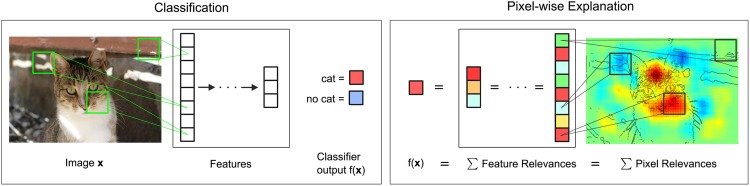
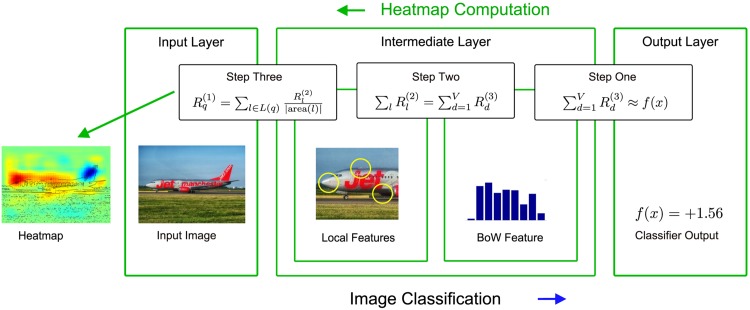
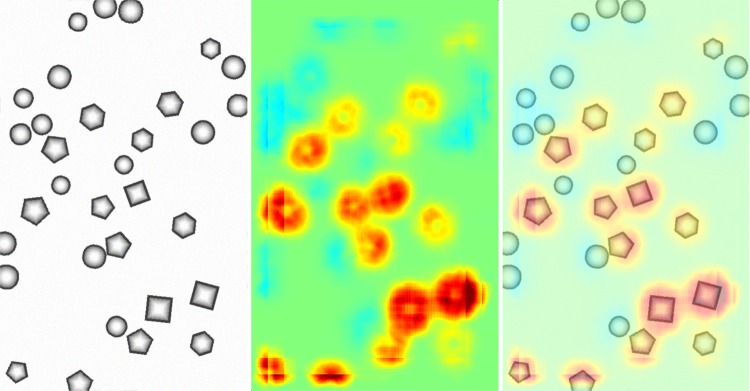
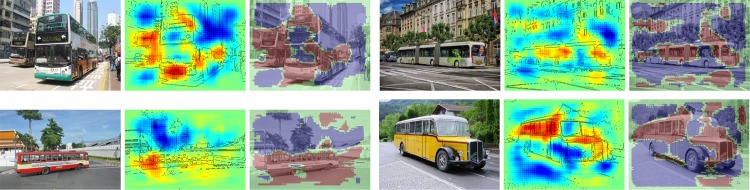
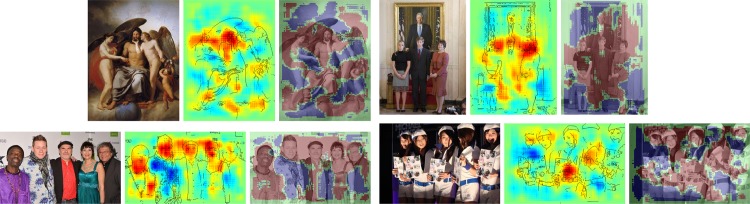
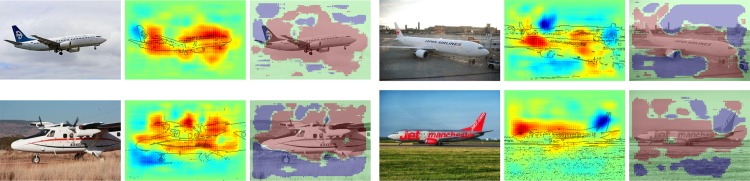
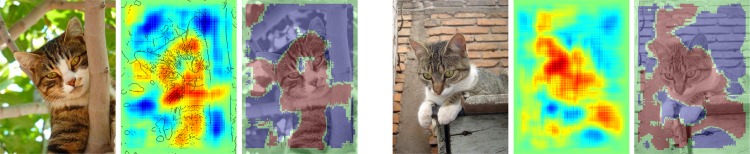
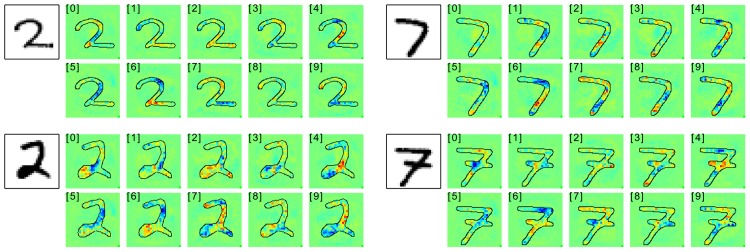
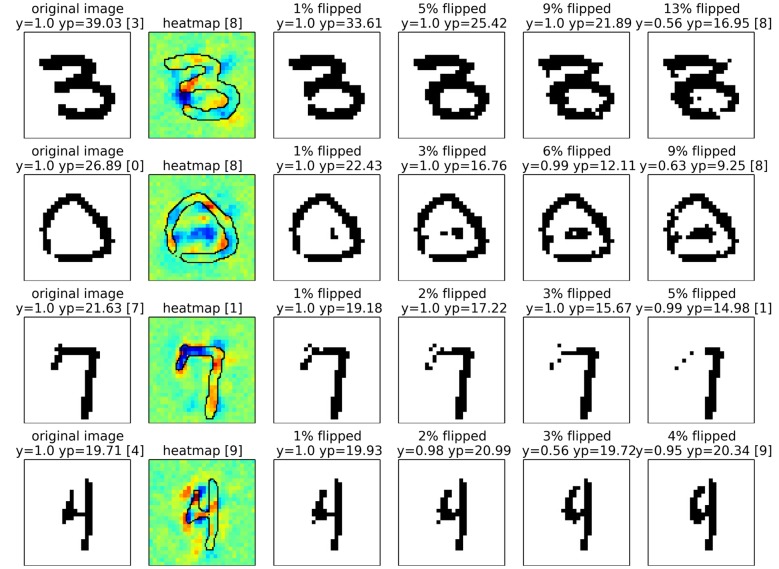
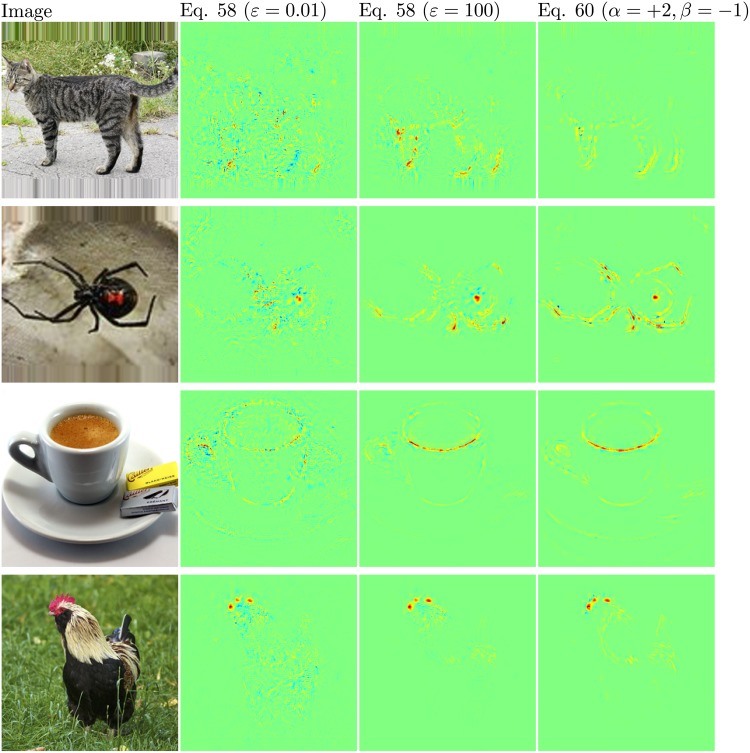
Understanding and interpreting classification decisions of automated image classification systems is of high value in many applications, as it allows to verify the reasoning of the system and provides additional information to the human expert. Although machine learning methods are solving very successfully a plethora of tasks, they have in most cases the disadvantage of acting as a black box, not providing any information about what made them arrive at a particular decision. This work proposes a general solution to the problem of understanding classification decisions by pixel-wise decomposition of nonlinear classifiers. We introduce a methodology that allows to visualize the contributions of single pixels to predictions for kernel-based classifiers over Bag of Words features and for multilayered neural networks. These pixel contributions can be visualized as heatmaps and are provided to a human expert who can intuitively not only verify the validity of the classification decision, but also focus further analysis on regions of potential interest. We evaluate our method for classifiers trained on PASCAL VOC 2009 images, synthetic image data containing geometric shapes, the MNIST handwritten digits data set and for the pre-trained ImageNet model available as part of the Caffe open source package.
Overview
The claims and statistics of this paper haven’t been checked yet.
Free: it reads the open-access text and checks the first 5 claims that cite a source we can check. Create a free account to check every claim.
Integrity signals
Registry
Cites
Statistics
Figures



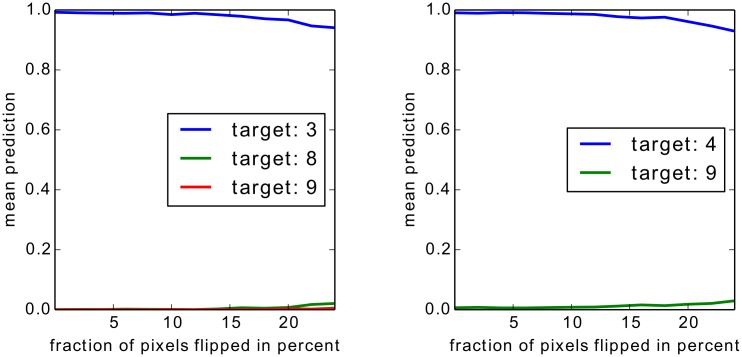
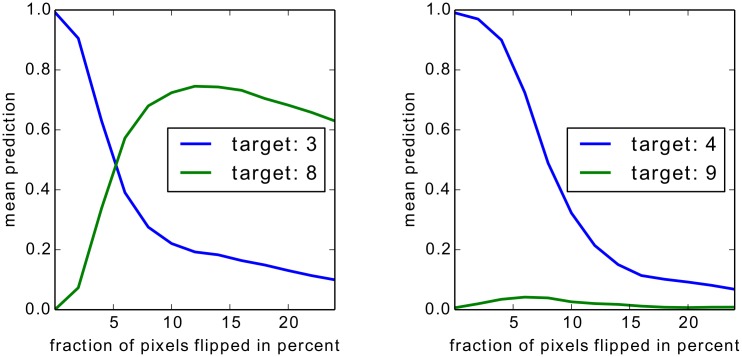
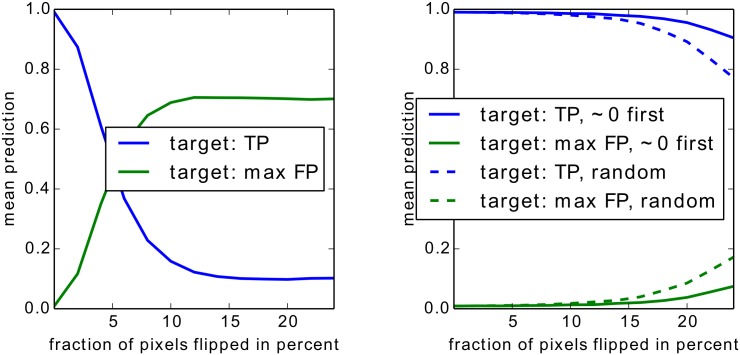
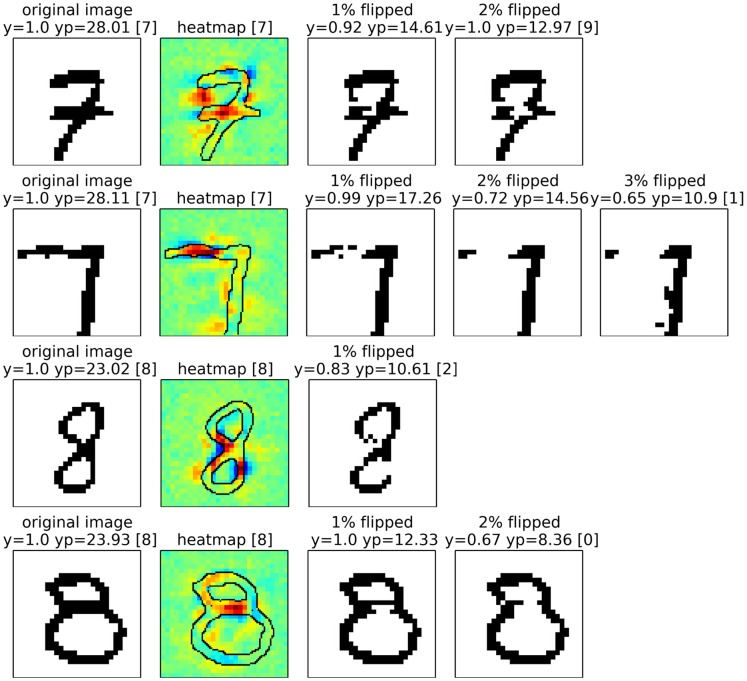
Verification
Claims the paper makes
The claims and statistics of this paper haven’t been checked yet.
Free: it reads the open-access text and checks the first 5 claims that cite a source we can check. Create a free account to check every claim.
Claims other papers make about this one
Each is checked against this paper’s own text: does it say what the citing paper says it does?
The source backs part of the claim, not all of it — or backs it for a different population, condition or comparison.
In the citing paper
“Barring a few exceptions (Caruana et al., 2015; Lundberg et al., 2018b; Ustun et al., 2019; Jesus et al., 2021), much of the existing work is designed and developed for benchmark classification problems, often with synthetic data and usually validated with user studies limited to users in research settings such as Amazon Mechanical Turk (AMT; Simonyan et al., 2013; Zeiler and Fergus, 2014; Bach et”
From Explainable machine learning for public policy: Use cases, gaps, and research directions (2023) · cites this paper as Bach et al., 2015
Experimental — accuracy not yet measuredThe cited source says what the claim attributes to it.
In the citing paper
“Unfortunately, most of the work in this area fails to meet these criteria, focusing only on benchmark ML problems and datasets (e.g., image classification on MNIST data, newsgroups data; Bach et al., 2015; Ribeiro et al., 2016, 2018; Shrikumar et al., 2017).”
From Explainable machine learning for public policy: Use cases, gaps, and research directions (2023) · cites this paper as Bach et al., 2015
In the citing paper
“LRP and DTD are capable of improving a model’s interpretability.”
From Survey of Explainable AI Techniques in Healthcare (2023) · cites this paper as [31]
Self-check
Percentages, sums and reported differences re-computed from the paper’s own numbers.
The self-check needs the paper’s full text.
Citations
Cites
ImageNet classification with deep convolutional neural networks
Krizhevsky, A., Sutskever, I., & Hinton, G. E. (2017) · Communications of the ACM · doi:10.1145/3065386 · Cited by 112,155 · cited 2×
“It is known from [21] that lower layers of deep networks which are very similar to the one from [60] used here may act like learned texture or gradient detectors.”
BackgroundDistinctive Image Features from Scale-Invariant Keypoints
Lowe, D. G. (2004) · International Journal of Computer Vision · doi:10.1023/b:visi.0000029664.99615.94 · Cited by 55,589
Learning representations by back-propagating errors
Rumelhart, D. E., Hinton, G. E., & Williams, R. J. (1986) · Nature · doi:10.1038/323533a0 · Cited by 31,892 · cited 2×
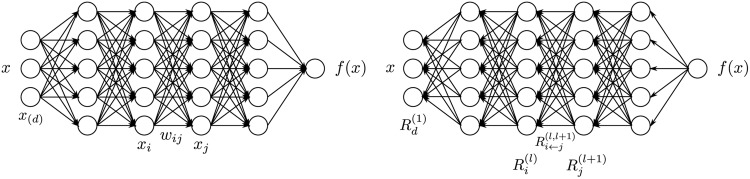
“The derivative @f(x)/@x(d) required for pixel-wise decomposition can be computed efficiently by reusing the network topology using the backpropagation algorithm [56].”
BackgroundMethodThe pascal visual object classes (VOC) challenge
Everingham, M., Van Gool, L., Williams, C. K. I., Winn, J., & Zisserman, A. (2010) · International Journal of Computer Vision · doi:10.1007/s11263-009-0275-4 · Cited by 19,599
Neural networks for pattern recognition
(1994) · Choice Reviews Online · doi:10.5860/choice.31-5500 · Cited by 18,538
Rapid object detection using a boosted cascade of simple features
Viola, P., & Jones, M. (2005) · Proceedings of the 2001 IEEE Computer Society Conference on Computer Vision and Pattern Recognition. CVPR 2001 · doi:10.1109/cvpr.2001.990517 · Cited by 18,300
Visualizing and understanding convolutional networks
Zeiler, M. D., & Fergus, R. (2014) · Lecture Notes in Computer Science · doi:10.1007/978-3-319-10590-1_53 · Cited by 15,839
Explaining and Harnessing Adversarial Examples
Goodfellow, I. J., Shlens, J., & Szegedy, C. (2014) · arXiv · doi:10.48550/arxiv.1412.6572 · Cited by 10,381 · cited 1×
“A different type of analysis for understanding neural networks deals with creating counter-intuitive examples, see for example the work in [24, 25].”
BackgroundIntriguing properties of neural networks
Szegedy, C., Zaremba, W., Sutskever, I., Bruna, J., Erhan, D., Goodfellow, I., & Fergus, R. (2013) · arXiv · doi:10.48550/arxiv.1312.6199 · Cited by 8,143 · cited 2×
“However, as noted in [24], this can lead to points of the input space that are perceptually equivalent to the original sample x and whose choice as a root would produce non-informative pixel-wise decompositions.”
BackgroundDeep Inside Convolutional Networks: Visualising Image Classification Models and Saliency Maps
Simonyan, K., Vedaldi, A., & Zisserman, A. (2013) · arXiv · doi:10.48550/arxiv.1312.6034 · Cited by 5,370 · cited 4×
“Besides deviating in the usage of a Taylor series, the work in [22] does not make use of the layer-wise propagation strategy for neural networks presented in this paper, which unlike a Taylor series does not rely on a local approximation.”
BackgroundMethodResultInfluential
Research works printed but not linked: 4
- Montavon G, Orr GB, Müller KR, editors. Neural Networks: Tricks of the Trade, Reloaded vol. 7700 of Lecture Notes in Computer Science (LNCS). 2nd ed Springer; 2012.
- Everingham M, Van Gool L, Williams CKI, Winn J, Zisserman A. The PASCAL Visual Object Classes Challenge 2010 (VOC2010) Results;. · DOI · Paper page
- Lanckriet GRG, Cristianini N, Bartlett PL, Ghaoui LE, Jordan MI. Learning the Kernel Matrix with Semidefinite Programming. Journal of Machine Learning Research. 2004; 5: 27– 72.
- Kloft M, Brefeld U, Sonnenburg S, Laskov P, Müller KR, Zien A. Efficient and Accurate Lp-norm Multiple Kernel Learning. Advances in Neural Information Processing Systems. 2009; 22(22): 997– 1005.
Cited by
Items 201–300 of 1,049
CLEVR-XAI: A benchmark dataset for the ground truth evaluation of neural network explanations
Arras, L., Osman, A., & Samek, W. (2022) · Information Fusion · doi:10.1016/j.inffus.2021.11.008 · Cited by 179
“correctly predicted Relevance Mass Accuracy & query color mean (std) median LRP [20] 0.”
BackgroundMethodInfluentialSelf-citationHolzinger, A., Dehmer, M., Emmert-Streib, F., Cucchiara, R., Augenstein, I., Ser, J. D., Samek, W., Jurisica, I., & Díaz-Rodríguez, N. (2022) · Information Fusion · doi:10.1016/j.inffus.2021.10.007 · Cited by 213
“…also called ‘‘decision understanding’’ (e.g., as done by methods such as Local Interpretable Model-Agnostic Explanations — LIME [192] or Layer-wise Relevance Propagation — LRP [193]), but also verifying and certifying the full model at a global scale, also called ‘‘model understanding’’ [194].”
MethodSelf-citationGe, W., Yang, S., & Yu, Y. (2018) · 2018 IEEE/CVF Conference on Computer Vision and Pattern Recognition · doi:10.1109/cvpr.2018.00139 · Cited by 210
A survey of visual analytics for Explainable Artificial Intelligence methods
Alicioglu, G., & Sun, B. (2022) · Computers & Graphics · doi:10.1016/j.cag.2021.09.002 · Cited by 221
“…Botari et al. [75], Baptista et al. [79], Lauritsen et al. [88] presented tabular data enhanced by DR techniques in a scatterplot. iForest [68] and DeepVID [72] represent data supported by DR techniques through color-coded classes in scatterplot along with the raw data to increase data exploration.”
BackgroundMethodInfluentialDeep learning, explained: Fundamentals, explainability, and bridgeability to process-based modelling
Razavi, S. (2021) · Environmental Modelling & Software · doi:10.1016/j.envsoft.2021.105159 · Cited by 201
Explainable AI for Bioinformatics: Methods, Tools and Applications
Karim, M. R., Islam, T., Shajalal, M., Beyan, O., Lange, C., Cochez, M., Rebholz-Schuhmann, D., & Decker, S. (2023) · Briefings in Bioinformatics · doi:10.1093/bib/bbad236 · Cited by 196
Detecting and interpreting myocardial infarction using fully convolutional neural networks
Strodthoff, N., & Strodthoff, C. (2019) · Physiological Measurement · doi:10.1088/1361-6579/aaf34d · Cited by 172
XRAI: Better Attributions Through Regions
Kapishnikov, A., Bolukbasi, T., Viegas, F., & Terry, M. (2019) · 2019 IEEE/CVF International Conference on Computer Vision (ICCV) · doi:10.1109/iccv.2019.00505 · Cited by 198
“, [24, 29, 14, 26, 3, 6]).”
MethodExplainable AI for clinical and remote health applications: A survey on tabular and time series data
Di Martino, F., & Delmastro, F. (2023) · Artificial Intelligence Review · doi:10.1007/s10462-022-10304-3 · Cited by 216
“Finally, Layer-wise Relevant Propagation (LRP) (Bach et al.”
MethodInfluentialLearning representations for the early detection of sepsis with deep neural networks
Kam, H. J., & Kim, H. Y. (2017) · Computers in Biology and Medicine · doi:10.1016/j.compbiomed.2017.08.015 · Cited by 218
Zhang, X., Han, L., Zhu, W., Sun, L., & Zhang, D. (2022) · IEEE Journal of Biomedical and Health Informatics · doi:10.1109/jbhi.2021.3066832 · Cited by 199
“Relevance Propagation (LRP) [40] and DeepTaylor [41].”
Interpretable machine learning: moving from mythos to diagnostics
Chen, V., Li, J., Kim, J. S., Plumb, G., & Talwalkar, A. (2022) · Communications of the ACM · doi:10.1145/3546036 · Cited by 203
“Currently, IML researchers typically develop and evaluate methods by focusing on quantifiable technical objectives, e.g., maximizing various notions of faithfulness or adherence to some desirable axioms (Lundberg & Lee, 2017; Sundararajan et al., 2017; Bach et al., 2015).”
Do Convolutional Neural Networks Learn Class Hierarchy?
Bilal, A., Jourabloo, A., Ye, M., Liu, X., & Ren, L. (2018) · IEEE Transactions on Visualization and Computer Graphics · doi:10.1109/tvcg.2017.2744683 · Cited by 199
“In contrast to input modification, the response is traced backwards to the input image by reversing the operations performed at each layer using various methods [4, 58, 60, 75].”
MethodDing, W., Abdel-Basset, M., Hawash, H., & Ali, A. M. (2022) · Information Sciences · doi:10.1016/j.ins.2022.10.013 · Cited by 183
Love, P. E. D., Fang, W., Matthews, J., Porter, S., Luo, H., & Ding, L. (2023) · Advanced Engineering Informatics · doi:10.1016/j.aei.2023.102024 · Cited by 167
“…by mapping back the output in the input space to determine the parts of the input that are discriminative on the output (Zeiler et al., 2011; Bach et al., 2015; Zhou et al., 2016); and (2) delving inside the network to interpret how the intermediate layers view the external environment…”
Kenny, E. M., Ford, C., Quinn, M., & Keane, M. T. (2021) · Artificial Intelligence · doi:10.1016/j.artint.2021.103459 · Cited by 211
A comprehensive review on financial explainable AI
Yeo, W. J., van der Heever, W., Mao, R., Cambria, E., Satapathy, R., & Mengaldo, G. (2025) · Artificial Intelligence Review · doi:10.1007/s10462-024-11077-7 · Cited by 281
“This work applies Layer-wise Relevance Propagation (LRP) [9], after transforming the clustering classifier into a neural network since LRP is designed to work specifically with neural network architectures.”
A causal framework for explaining the predictions of black-box sequence-to-sequence models
Alvarez-Melis, D., & Jaakkola, T. (2017) · Proceedings of the 2017 Conference on Empirical Methods in Natural Language Processing · doi:10.18653/v1/d17-1042 · Cited by 178
“, 2016), or directly modeling how influence propagates (Bach et al., 2015).”
BackgroundA Survey of Deep Learning for Scientific Discovery
Raghu, M., & Schmidt, E. (2020) · arXiv (Cornell University) · doi:10.48550/arxiv.2003.11755 · Cited by 56
“Another is DeepLIFT, which uses a reference input to compare activation differences [210], and yet another approach, Layer-wise Relevance Propagation [6] looks at computing relevance scores in a layerwise manner.”
MethodDeep learning-based tensile strength prediction in fused deposition modeling
Zhang, J., Wang, P., & Gao, R. X. (2019) · Computers in Industry · doi:10.1016/j.compind.2019.01.011 · Cited by 203
Dermatologist-like explainable AI enhances trust and confidence in diagnosing melanoma
Chanda, T., Hauser, K., Hobelsberger, S., Bucher, T.-C., Garcia, C. N., Wies, C., Kittler, H., Tschandl, P., Navarrete-Dechent, C., Podlipnik, S., et al. (2024) · Nature Communications · doi:10.1038/s41467-023-43095-4 · Cited by 182
“Besides the manner in which explanatory algorithms are tied into a DNN, XAI algorithms differ in whether they provide explanations globally, i.e., on dataset level 13,16 or class level 18,22 , or locally, i.e., for each image individually 11,12,14 – 16 , 23 .”
MethodBlack-box artificial intelligence: an epistemological and critical analysis
Carabantes, M. (2020) · AI & SOCIETY · doi:10.1007/s00146-019-00888-w · Cited by 170
Explainable AI under contract and tort law: legal incentives and technical challenges
Hacker, P., Krestel, R., Grundmann, S., & Naumann, F. (2020) · Artificial Intelligence and Law · doi:10.1007/s10506-020-09260-6 · Cited by 186
“Different models differ widely in the degree to which the decisive features and weights of the model can be extracted (Burrell 2016).”
BackgroundExplainable Deep Learning Methods in Medical Image Classification: A Survey
Patrício, C., Neves, J. C., & Teixeira, L. F. (2024) · ACM Computing Surveys · doi:10.1145/3625287 · Cited by 161
“Based on reviewed literature, it can be concluded that the go-to method for model interpretation in medical imaging is producing saliency maps using classical techniques such as Grad-CAM, Integrated Gradients, or LRP.”
MethodBastings, J., & Filippova, K. (2020) · Proceedings of the Third BlackboxNLP Workshop on Analyzing and Interpreting Neural Networks for NLP · doi:10.18653/v1/2020.blackboxnlp-1.14 · Cited by 150
Machine intelligence and the data-driven future of marine science
Malde, K., Handegard, N. O., Eikvil, L., & Salberg, A.-B. (2020) · ICES Journal of Marine Science · doi:10.1093/icesjms/fsz057 · Cited by 187
Allgaier, J., Mulansky, L., Draelos, R. L., & Pryss, R. (2023) · Artificial Intelligence in Medicine · doi:10.1016/j.artmed.2023.102616 · Cited by 170
A deep learning interpretable classifier for diabetic retinopathy disease grading
de la Torre, J., Valls, A., & Puig, D. (2020) · Neurocomputing · doi:10.1016/j.neucom.2018.07.102 · Cited by 191
“(cid:80) As the authors explain in [6], these constraints does not assure a unique way of splitting the score into the different nodes and does not guarantee the final score distribution to have a meaningful interpretation of the classifier prediction.”
BackgroundMethodInfluentialBridging observations, theory and numerical simulation of the ocean using machine learning
Sonnewald, M., Lguensat, R., Jones, D. C., Dueben, P. D., Brajard, J., & Balaji, V (2021) · Environmental Research Letters · doi:10.1088/1748-9326/ac0eb0 · Cited by 164
“XAI methods such as lay-erwise relevance propagation (LRP [10, 193]) have been gaining traction within the atmosphere [16, 17, 40, 246], and ocean, but making their application explicitly appropriate to oceanography, and indeed the physical sciences in general, may require targeted method…”
Transparency: Motivations and Challenges
Weller, A. (2019) · Lecture Notes in Computer Science · doi:10.1007/978-3-030-28954-6_2 · Cited by 198
Explainable Deep Reinforcement Learning: State of the Art and Challenges
Vouros, G. A. (2023) · ACM Computing Surveys · doi:10.1145/3527448 · Cited by 160
“Other methods, such as for instance Layer-wise Relevance Propagation (LRP) [34] and Neighborhood Compo516 nent Analysis (NCA) [8] can be used for addressing the model inspection problem for any of the constituent DRL 517 models, also providing (a) importance of features inM , and (b) reduction of predictors’ dimension…”
BackgroundMethodInfluentialLearning Image Matching by Simply Watching Video
Long, G., Kneip, L., Alvarez, J. M., Li, H., Zhang, X., & Yu, Q. (2016) · Lecture Notes in Computer Science · doi:10.1007/978-3-319-46466-4_26 · Cited by 188
“[2] employ gradient maps as a measure for the contribution of single pixels to nonlinear classifiers, thus helping to explain how decisions are made.”
MethodILDC for CJPE: Indian Legal Documents Corpus for Court Judgment Prediction and Explanation
Malik, V., Sanjay, R., Nigam, S. K., Ghosh, K., Guha, S. K., Bhattacharya, A., & Modi, A. (2021) · Annual Meeting of the Association for Computational Linguistics · doi:10.18653/v1/2021.acl-long.313 · Cited by 296
“In the class of attribution based methods, Layerwise Relevance Propagation (LRP) (Bach et al., 2015) and DeepLIFT (Shrikumar et al., 2017) methods did not work in our case.”
BackgroundMethodAdvancing Computational Toxicology by Interpretable Machine Learning
Jia, X., Wang, T., & Zhu, H. (2023) · Environmental Science & Technology · doi:10.1021/acs.est.3c00653 · Cited by 183
Artificial Intelligence in Skin Cancer Diagnostics: The Patients' Perspective
Jutzi, T. B., Krieghoff-Henning, E. I., Holland-Letz, T., Utikal, J. S., Hauschild, A., Schadendorf, D., Sondermann, W., Fröhling, S., Hekler, A., Schmitt, M., et al. (2020) · Frontiers in Medicine · doi:10.3389/fmed.2020.00233 · Cited by 196
“Due to the high complexity of the algorithms, a complete transparency of AI will probably not be possible, but it might be possible to explain the decisive influencing factors on individual decision steps within the algorithms (25, 26).”
BackgroundTowards Faithful Model Explanation in NLP: A Survey
Lyu, Q., Apidianaki, M., & Callison-Burch, C. (2024) · Computational Linguistics · doi:10.1162/coli_a_00511 · Cited by 120
“This type of evaluation has been widely adopted in both vision (Bach et al. 2015; Shrikumar, Greenside, and Kundaje 2017; Chen et al. 2018) and language (Arras et al. 2016; Chen et al. 2018; Serrano and Smith 2019; Jain and Wallace 2019; DeYoung et al. 2020; Atanasova et al. 2020).”
MethodInfluentialDeep learning for Alzheimer's disease diagnosis: A survey
Khojaste-Sarakhsi, M., Haghighi, S. S., Ghomi, S. M. T. F., & Marchiori, E. (2022) · Artificial Intelligence in Medicine · doi:10.1016/j.artmed.2022.102332 · Cited by 194
Abrol, A., Bhattarai, M., Fedorov, A., Du, Y., Plis, S., & Calhoun, V. (2020) · Journal of Neuroscience Methods · doi:10.1016/j.jneumeth.2020.108701 · Cited by 182
Interpreting Graph Neural Networks for NLP With Differentiable Edge MaskingPreprint
Schlichtkrull, M., Cao, N. D., & Titov, I. (2020) · arXiv (Cornell University) · doi:10.48550/arxiv.2010.00577 · Cited by 312
“(Bach et al., 2015) to the GNN setting.”
MethodNeural machine translation: A review of methods, resources, and tools
Tan, Z., Wang, S., Yang, Z., Chen, G., Huang, X., Sun, M., & Liu, Y. (2020) · AI Open · doi:10.1016/j.aiopen.2020.11.001 · Cited by 140
Explainable artificial intelligence in skin cancer recognition: A systematic review
Hauser, K., Kurz, A., Haggenmüller, S., Maron, R. C., von Kalle, C., Utikal, J. S., Meier, F., Hobelsberger, S., Gellrich, F. F., Sergon, M., et al. (2022) · European Journal of Cancer · doi:10.1016/j.ejca.2022.02.025 · Cited by 175
Ghasemi, A., Hashtarkhani, S., Schwartz, D. L., & Shaban‐Nejad, A. (2024) · Cancer Innovation · doi:10.1002/cai2.136 · Cited by 193
“LRP [124] is a local propagation ‐ based approach.”
BackgroundAn artificial intelligence life cycle: from conception to production
De Silva, D., & Alahakoon, D. (2022) · Patterns · doi:10.1016/j.patter.2022.100489 · Cited by 189
Prediction of turbulent heat transfer using convolutional neural networks
Kim, J., & Lee, C. (2020) · Journal of Fluid Mechanics · doi:10.1017/jfm.2019.814 · Cited by 194
“With the development of more sophisticated methods for analysing deep learning such as visualizations using deconvolution (Zeiler & Fergus 2014) and layerwise relevance propagation (Bach et al. 2015), we might have more opportunities to further understand the physics of turbulence.”
MethodPGM-Explainer: Probabilistic Graphical Model Explanations for Graph Neural Networks
Vu, M. N., & Thai, M. T. (2020) · neural information processing systems · doi:10.48550/arxiv.2010.05788 · Cited by 500
“Although generating explanations for Conventional Neural Networks (CNNs) has been addressed by many methods and standardized tool-kits, called explainers [15, 16, 17, 18, 19, 20, 21, 22, 23], the counterparts for GNNs are lacking.”
BackgroundMethodZihni, E., Madai, V. I., Livne, M., Galinovic, I., Khalil, A. A., Fiebach, J. B., & Frey, D. (2020) · PLOS ONE · doi:10.1371/journal.pone.0231166 · Cited by 187
“[25–27].”
Towards CRISP-ML(Q): A Machine Learning Process Model with Quality Assurance Methodology
Studer, S., Bui, T. B., Drescher, C., Hanuschkin, A., Winkler, L., Peters, S., & Müller, K. (2021) · Machine Learning and Knowledge Extraction · doi:10.3390/make3020020 · Cited by 491
Self-citationHägele, M., Seegerer, P., Lapuschkin, S., Bockmayr, M., Samek, W., Klauschen, F., Müller, K.-R., & Binder, A. (2020) · Scientific Reports · doi:10.1038/s41598-020-62724-2 · Cited by 165
“Several visual explanation methods have been successfully applied to natural images in computer vision [11, 12, 13, 14, 15, 16, 17, 18].”
BackgroundMethodInfluentialSelf-citationWickstrøm, K., Kampffmeyer, M., & Jenssen, R. (2020) · Medical Image Analysis · doi:10.1016/j.media.2019.101619 · Cited by 185
Borys, K., Schmitt, Y. A., Nauta, M., Seifert, C., Krämer, N., Friedrich, C. M., & Nensa, F. (2023) · European Journal of Radiology · doi:10.1016/j.ejrad.2023.110787 · Cited by 169
Explainable AI: current status and future directionsPreprint
Gohel, P., Singh, P., & Mohanty, M. (2021) · arXiv (Cornell University) · doi:10.48550/arxiv.2107.07045 · Cited by 248
“Popular instance-level explanation methods for image classification such as LIME [2], SHAP [3] and LRP [4], typically create feature importance rankings.”
MethodKim, B., Park, J., & Suh, J. (2020) · Decision Support Systems · doi:10.1016/j.dss.2020.113302 · Cited by 182
Artificial Intelligence Screening for Diabetic Retinopathy: the Real-World Emerging Application
Bellemo, V., Lim, G., Rim, T. H., Tan, G. S. W., Cheung, C. Y., Sadda, S., He, M.-G., Tufail, A., Lee, M. L., Hsu, W., et al. (2019) · Current Diabetes Reports · doi:10.1007/s11892-019-1189-3 · Cited by 176
Classification of Explainable Artificial Intelligence Methods through Their Output Formats
Vilone, G., & Longo, L. (2021) · Machine Learning and Knowledge Extraction · doi:10.3390/make3030032 · Cited by 152
“COLE uses saliency maps methods, such as LRP and DeepLift, to estimate these contributions.”
MethodInfluentialFrom attribution maps to human-understandable explanations through Concept Relevance Propagation
Achtibat, R., Dreyer, M., Eisenbraun, I., Bosse, S., Wiegand, T., Samek, W., & Lapuschkin, S. (2023) · Nature Machine Intelligence · doi:10.1038/s42256-023-00711-8 · Cited by 181
“CRP is an extension of LRP, which disentangles the relevance flows associated with concepts learned by the model via conditional backpropagation.”
BackgroundMethodInfluentialSelf-citationDeep Learning Based Tumor Type Classification Using Gene Expression Data
Lyu, B., & Haque, A. (2018) · Proceedings of the 2018 ACM International Conference on Bioinformatics, Computational Biology, and Health Informatics · doi:10.1145/3233547.3233588 · Cited by 165
Choice modelling in the age of machine learning - Discussion paper
van Cranenburgh, S., Wang, S., Vij, A., Pereira, F. C., & Walker, J. L. (2021) · Journal of Choice Modelling · doi:10.1016/j.jocm.2021.100340 · Cited by 221
“2009), Layer-wise Relevance Propagation (LRP) techniques (Bach et al. 2015), Local Interpretable Model-agnostic Explanations (LIME) (Ribeiro et al.”
MethodAudioMNIST: Exploring Explainable Artificial Intelligence for audio analysis on a simple benchmark
Becker, S., Vielhaben, J., Ackermann, M., Müller, K.-R., Lapuschkin, S., & Samek, W. (2024) · Journal of the Franklin Institute · doi:10.1016/j.jfranklin.2023.11.038 · Cited by 73
“We then use a popular post-hoc XAI method called layer-wise relevance propagation (LRP) [5] to inspect the which features in the input are influential for the final model prediction.”
MethodInfluentialSelf-citationInterpretable convolutional neural networks via feedforward design
Kuo, C.-C. J., Zhang, M., Li, S., Duan, J., & Chen, Y. (2019) · Journal of Visual Communication and Image Representation · doi:10.1016/j.jvcir.2019.03.010 · Cited by 163
A Review of Deep Learning Based Methods for Acoustic Scene Classification
Abeßer, J. (2020) · Applied Sciences · doi:10.3390/app10062020 · Cited by 169
“Techniques such as layer-wise relevance propagation (LRP) [89] allow interpreting neural networks by investigation the pixel-wise contributions of input features to classification decisions.”
BackgroundMadakumbura, G. D., Thackeray, C. W., Norris, J., Goldenson, N., & Hall, A. (2021) · Nature Communications · doi:10.1038/s41467-021-24262-x · Cited by 162
Wei, L., Niraula, D., Gates, E. D. H., Fu, J., Luo, Y., Nyflot, M. J., Bowen, S. R., El Naqa, I. M., & Cui, S. (2023) · The British Journal of Radiology · doi:10.1259/bjr.20230211 · Cited by 162
Interpretability and Explainability: A Machine Learning Zoo Mini-tour
Marcinkevičs, R., & Vogt, J. E. (2020) · arXiv (Cornell University) · doi:10.3929/ethz-b-000454597 · Cited by 78
Towards Best Practice in Explaining Neural Network Decisions with LRP
Kohlbrenner, M., Bauer, A., Nakajima, S., Binder, A., Samek, W., & Lapuschkin, S. (2020) · 2020 International Joint Conference on Neural Networks (IJCNN) · doi:10.1109/ijcnn48605.2020.9206975 · Cited by 145
“work interpretability, including applications of LRP [7], [11], [18], which finds its mathematical foundation in Deep Taylor Decomposition (DTD) [24].”
BackgroundMethodInfluentialSelf-citationBhati, D., Neha, F., & Amiruzzaman, M. (2024) · Journal of Imaging · doi:10.3390/jimaging10100239 · Cited by 217
“Layer-Wise Relevance Propagation (LRP), introduced by Bach et al. in 2015 [170], offers an alternative to gradient-based techniques like saliency mapping, guided backpropagation, and Grad-CAM.”
BackgroundKakogeorgiou, I., & Karantzalos, K. (2021) · International Journal of Applied Earth Observation and Geoinformation · doi:10.1016/j.jag.2021.102520 · Cited by 158
“Additionally, (Yessou et al., 2020) utilized Layer-wise Relevance Propagation ( LRP ) (Bach et al., 2015) heatmaps to explain the characteristics of the different loss functions that have been examined.”
MethodHemmerich, J., & Ecker, G. F. (2020) · WIREs Computational Molecular Science · doi:10.1002/wcms.1475 · Cited by 169
“For deep learning, layer wise relevance propagation 195 is a method that can calculate the contributions of the input features.”
MethodSynergistic Drug Combination Prediction by Integrating Multiomics Data in Deep Learning Models
Zhang, T., Zhang, L., Payne, P. R. O., & Li, F. (2021) · Methods in Molecular Biology · doi:10.1007/978-1-0716-0849-4_12 · Cited by 167
NeuralHydrology – Interpreting LSTMs in Hydrology
Kratzert, F., Herrnegger, M., Klotz, D., Hochreiter, S., & Klambauer, G. (2019) · Lecture Notes in Computer Science · doi:10.1007/978-3-030-28954-6_19 · Cited by 129
Toward a unified framework for interpreting machine-learning models in neuroimaging
Kohoutová, L., Heo, J., Cha, S., Lee, S., Moon, T., Wager, T. D., & Woo, C.-W. (2020) · Nature Protocols · doi:10.1038/s41596-019-0289-5 · Cited by 176
“…(e.g., recursive feature elimination (RFE) 63 ), methods using feature-wise decomposition of the prediction (e.g., layer-wise relevance propagation (LRP) 64 and Shapley values 65 ) and methods using perturbation or ‘ lesions ’ (omission) of features 47,66 – 68 , among many others (see Table 1).”
BackgroundMethodInfluentialMeli, R., Morris, G. M., & Biggin, P. C. (2022) · Frontiers in Bioinformatics · doi:10.3389/fbinf.2022.885983 · Cited by 155
“…used additional established methods for feature attribution — such as gradient computation, a modi fi ed version of layer-wise relevance propagation (Bach et al., 2015), and masking ( Š trumbelj et al., 2009; Szegedy et al., 2013) — combined with visualization of the protein-ligand complex, showing…”
MethodInterpretation and visualization techniques for deep learning models in medical imaging
Huff, D. T., Weisman, A. J., & Jeraj, R. (2021) · Physics in Medicine & Biology · doi:10.1088/1361-6560/abcd17 · Cited by 172
“Layer-wise relevance propagation—Layer-wise relevance propagation (LRP) was introduced by Bach et al. in 2015 (Bach et al., 2015).”
BackgroundMethodVisualizing and Understanding Neural Machine Translation
Ding, Y., Liu, Y., Luan, H., & Sun, M. (2017) · Proceedings of the 55th Annual Meeting of the Association for Computational Linguistics (Volume 1: Long Papers) · doi:10.18653/v1/p17-1106 · Cited by 168
“Our work is closely related to previous visualization approaches that compute the contribution of a unit at the input layer to the final decision at the output layer (Simonyan et al., 2014; Mahendran and Vedaldi, 2015; Nguyen et al., 2015; Girshick et al., 2014; Bach et al., 2015; Li et al., 2016).”
BackgroundMethodInfluentialWani, N. A., Kumar, R., Mamta, Bedi, J., & Rida, I. (2024) · Information Fusion · doi:10.1016/j.inffus.2024.102472 · Cited by 193
Eitel, F., Soehler, E., Bellmann-Strobl, J., Brandt, A. U., Ruprecht, K., Giess, R. M., Kuchling, J., Asseyer, S., Weygandt, M., Haynes, J.-D., et al. (2019) · NeuroImage: Clinical · doi:10.1016/j.nicl.2019.102003 · Cited by 171
“ing class representations and functions of individual neurons, others have developed methods to generate heatmaps based on the input data that indicate the importance or relevance of each pixel or voxel for the final classification decision [33, 60, 34].”
BackgroundMethodInfluentialPerturbation-Based Explanations of Prediction Models
Robnik-Šikonja, M., & Bohanec, M. (2018) · Human–Computer Interaction Series · doi:10.1007/978-3-319-90403-0_9 · Cited by 171
Explanations can be manipulated and geometry is to blame
Dombrowski, A.-K., Alber, M., Anders, C. J., Ackermann, M., Müller, K.-R., & Kessel, P. (2019) · arXiv · doi:10.48550/arxiv.1906.07983 · Cited by 171
“Figure 7 demonstrates that βsmoothing leads to better performance than the gradient method and to comparable performance with SmoothGrad on the pixel-flipping metric [5, 35].”
MethodSelf-citationA deep convolutional neural network for COVID-19 detection using chest X-rays
Bassi, P. R. A. S., & Attux, R. (2022) · Research on Biomedical Engineering · doi:10.1007/s42600-021-00132-9 · Cited by 111
“It decomposes the network prediction showing, in a heat map, how each input variable contributed to the output (Bach et al. (2015)).”
BackgroundA review of machine learning methods applied to structural dynamics and vibroacoustic
Cunha, B. Z., Droz, C., Zine, A., Foulard, S., & Ichchou, M. N. (2023) · Mechanical Systems and Signal Processing · doi:10.1016/j.ymssp.2023.110535 · Cited by 210
Black-box Explanation of Object Detectors via Saliency Maps
Petsiuk, V., Jain, R., Manjunatha, V., Morariu, V. I., Mehra, A., Ordóñez, V., & Saenko, K. (2021) · IEEE Computer Society Conference on Computer Vision and Pattern Recognition/Proceedings - IEEE Computer Society Conference on Computer Vision and Pattern Recognition/Proceedings · doi:10.1109/cvpr46437.2021.01128 · Cited by 247
“Gradients [35], Excitation Backprop [43] and Layer-wise Relevance Propagation [2].”
MethodLayer-Wise Relevance Propagation for Deep Neural Network Architectures
Binder, A., Bach, S., Montavon, G., Müller, K.-R., & Samek, W. (2016) · Lecture Notes in Electrical Engineering · doi:10.1007/978-981-10-0557-2_87 · Cited by 163
“One outcome in this field is layer-wise relevance propagation [1, 2].”
BackgroundMethodSelf-citationScoring of tumor-infiltrating lymphocytes: From visual estimation to machine learning
Klauschen, F., Müller, K.-R., Binder, A., Bockmayr, M., Hägele, M., Seegerer, P., Wienert, S., Pruneri, G., de Maria, S., Badve, S., et al. (2018) · Seminars in Cancer Biology · doi:10.1016/j.semcancer.2018.07.001 · Cited by 168
Self-citationBang, J.-S., Lee, M.-H., Fazli, S., Guan, C., & Lee, S.-W. (2022) · IEEE Transactions on Neural Networks and Learning Systems · doi:10.1109/tnnls.2020.3048385 · Cited by 166
“Studies have, however, been conducted to overcome this issue by decomposing these algorithms [31].”
MethodBeyond explaining: Opportunities and challenges of XAI-based model improvement
Weber, L., Lapuschkin, S., Binder, A., & Samek, W. (2023) · Information Fusion · doi:10.1016/j.inffus.2022.11.013 · Cited by 143
Self-citationExplaining deep neural networks: A survey on the global interpretation methods
Saleem, R., Yuan, B., Kurugöllü, F., Anjum, A., & Liu, L. (2022) · Neurocomputing · doi:10.1016/j.neucom.2022.09.129 · Cited by 222
Explainable artificial intelligence for cybersecurity: a literature survey
Charmet, F., Tanuwidjaja, H. C., Ayoubi, S., Gimenez, P.-F., Han, Y., Jmila, H., Blanc, G., Takahashi, T., & Zhang, Z. (2022) · Annals of Telecommunications · doi:10.1007/s12243-022-00926-7 · Cited by 167
“There are two main approaches to explain deep neural networks (DNNs): i) making parts of a DNN transparent—sensitivity analysis [104] and layer-wise relevance propagation (LRP) [15] are well-known methods, with superior performance for LRP to identify the most relevant pixels; ii) learning semantic graphs called expla…”
BackgroundEvaluating Explanation Methods for Deep Learning in Security
Warnecke, A., Arp, D., Wressnegger, C., & Rieck, K. (2020) · 2020 IEEE European Symposium on Security and Privacy (EuroS&P) · doi:10.1109/eurosp48549.2020.00018 · Cited by 127
“While the importance of the individual criteria depends on the particular task, we find that the methods IG [47] and LRP [5] comply best with all criteria and resemble general-purpose techniques for security systems.”
MethodOn the Privacy Risks of Model Explanations
Shokri, R., Strobel, M., & Zick, Y. (2021) · Proceedings of the 2021 AAAI/ACM Conference on AI, Ethics, and Society · doi:10.1145/3461702.3462533 · Cited by 111
“We analyze both backpropagation-based model explanations, with an emphasis on gradient-based methods (Baehrens et al. 2009; Klauschen et al. 2015; Shrikumar, Greenside, and Kundaje 2017b; Sliwinski, Strobel, and Zick 2019; Sundararajan, Taly, and Yan 2017) and perturbation-based methods (Ribeiro, Singh, and Guestrin 2…”
MethodDeepSig: deep learning improves signal peptide detection in proteins
Savojardo, C., Martelli, P. L., Fariselli, P., & Casadio, R. (2018) · Bioinformatics · doi:10.1093/bioinformatics/btx818 · Cited by 160
Jiang, R., Yin, X., Yang, P., Cheng, L., Hu, J., Jiao, Y., Wang, Y., Fu, X., Shang, L., Li, L., et al. (2024) · Nature Machine Intelligence · doi:10.1038/s42256-024-00868-w · Cited by 191
“Using the inherent properties of the SA mechanism, a method called Grad-Rollout, which is based on layer-wise relevance propagation in transformer 27,39 , was employed to interpret the ROI-level visualization.”
A Primer on the Inner Workings of Transformer-based Language ModelsPreprint
Ferrando, J., Sarti, G., Bisazza, A., & Costa‐jussà, M. R. (2024) · arXiv (Cornell University) · doi:10.48550/arxiv.2405.00208 · Cited by 218
A survey of surveys on the use of visualization for interpreting machine learning models
Chatzimparmpas, A., Martins, R. M., Jusufi, I., & Kerren, A. (2020) · Information Visualization · doi:10.1177/1473871620904671 · Cited by 150
“46 8.”
Transformers and genome language models
Consens, M. E., Dufault, C., Wainberg, M., Forster, D., Karimzadeh, M., Goodarzi, H., Theis, F. J., Moses, A. M., & Wang, B. (2025) · Nature Machine Intelligence · doi:10.1038/s42256-025-01007-9 · Cited by 196
“However, treating the attention mechanism within transformers as directly interpretable has drawbacks 92 (see ‘Limitations’ section).”
Evaluating saliency map explanations for convolutional neural networks: a user study
Alqaraawi, A., Schuessler, M., Weiß, P., Costanza, E., & Berthouze, N. (2020) · Proceedings of the 25th International Conference on Intelligent User Interfaces · doi:10.1145/3377325.3377519 · Cited by 163
“With LRP, saliency maps are not restricted to super-pixel patches but highlight contours of objects, which was preferred by most of our pilot study participants.”
BackgroundMethodInfluentialA survey of malware detection using deep learning
Bensaoud, A., Kalita, J. K., & Bensaoud, M. (2024) · Machine Learning with Applications · doi:10.1016/j.mlwa.2024.100546 · Cited by 224
“McLaughlin et al. [106] used LRP [107] and DeepLift [102] methods to identify the opcode sequences for most malware families, and they demonstrated that the CNN, while using the DAMD dataset, learned patterns from the underlying op-code representation.”
MethodExplainable Predictive Maintenance: A Survey of Current Methods, Challenges and Opportunities
Cummins, L., Sommers, A., Ramezani, S. B., Mittal, S., Jabour, J. E., Seale, M. A., & Rahimi, S. (2024) · IEEE Access · doi:10.1109/access.2024.3391130 · Cited by 209
“Marcato et al. [115] LRP was introduced by Bach et al. [151] as an explainable method that assumes that a classifier can be decomposed into several layers of computation.”
MethodUnderstanding autoencoders with information theoretic concepts
Yu, S., & Príncipe, J. C. (2019) · Neural Networks · doi:10.1016/j.neunet.2019.05.003 · Cited by 186
TimeSHAP: Explaining Recurrent Models through Sequence Perturbations
Bento, J., Saleiro, P., Cruz, A. F., Figueiredo, M. A. T., & Bizarro, P. (2021) · ACM SIGKDD Conference on Knowledge Discovery and Data Mining (KDD) · doi:10.1145/3447548.3467166 · Cited by 249
Explaining by Removing: A Unified Framework for Model Explanation
Covert, I., Lundberg, S., & Lee, S. (2020) · arXiv (Cornell University) · doi:10.48550/arxiv.2011.14878 · Cited by 116
“, 2017), more general propagation-based methods (e.g., Springenberg et al., 2014; Bach et al., 2015; Kindermans et al., 2017; Zhang et al., 2018), and inherently inter-”
BackgroundMethodLearning and Evaluating Representations for Deep One-class Classification
Sohn, K., Li, C., Yoon, J., Jin, M., & Pfister, T. (2020) · arXiv (Cornell University) · doi:10.48550/arxiv.2011.02578 · Cited by 96
“There have been efforts to visually explain the reason for model decisions of multi-class classifiers (Zeiler & Fergus, 2014; Bach et al., 2015; Zhou et al., 2016; Selvaraju et al., 2017; Sundararajan et al., 2017; Adebayo et al., 2018; Kapishnikov et al., 2019) using the gradients computed from the classifier.”
Method
Metadata
- Authors
- Bach, S., Binder, A., Montavon, G., Klauschen, F., Müller, K.-R., & Samek, W.
- Affiliations
- Singapore University of Technology and Design (SG)
- Technische Universität Berlin (DE)
- Stiftung Charité (DE)
- Korea University (KR)
- Fraunhofer Institute for Telecommunications, Heinrich Hertz Institute (DE)
- Corresponding author
- Müller, Klaus-Robert
- Samek, Wojciech
- Venue
- PLOS ONE
- Publisher
- Public Library of Science (PLoS)
- Published
- 2015-07-10
- Volume
- 10
- Issue
- 7
- Pages
- e0130140
- ISSN
- 1932-6203 (ISSN-L)
- PMC
- PMC4498753
- OpenAlex
- W1787224781
- Cited by
- 4,524
- References
- 56
- Citations by year
- 2026: 347 · 2025: 628 · 2024: 653 · 2023: 648 · 2022: 566 · 2021: 647 · 2020: 489 · 2019: 299 · 2018: 145 · 2017: 63 · 2016: 27 · 2015: 6
- FWCI
- 78.76
- Type
- journal article
- Language
- en
- Open access
- gold
- doi.org
- Licence
- Locations
- PLoS ONE (publishedVersion, cc-by)
- PubMed Central (publishedVersion, cc-by)
- PubMed (publishedVersion)
- RePEc: Research Papers in Economics (submittedVersion)
- DOAJ (DOAJ: Directory of Open Access Journals) (submittedVersion, cc-by-sa)
- Publikationsdatenbank der Fraunhofer-Gesellschaft (Fraunhofer-Gesellschaft) (submittedVersion, other-oa)
- Fraunhofer-Publica (Fraunhofer-Gesellschaft) (submittedVersion)
- Refubium (Universitätsbibliothek der Freien Universität Berlin) (submittedVersion, cc-by)
- Universitätsbibliothek der FU Berlin Hochschulschriftenstelle u. Dokumentenserver (cc-by)
- Funders
- National Research Foundation
- Deutsche Forschungsgemeinschaft (01GQ1115)
- Bundesministerium für Bildung und Forschung (01 IS 14013 A, 01GQ1115)
- Bundesministerium für Wirtschaft und Technologie (01MQ07018)
- National Research Foundation of Korea (01IS14013A, BK21 program)
- Technische Universität Berlin
- Banting and Best Diabetes Centre, University of Toronto (01IS14013A)
- Topics
- Physical Sciences › Computer Science › Artificial Intelligence › Explainable Artificial Intelligence (XAI)
- Physical Sciences › Computer Science › Computer Vision and Pattern Recognition › Advanced Neural Network Applications
- Physical Sciences › Computer Science › Computer Vision and Pattern Recognition › Image Retrieval and Classification Techniques
- Keywords
- layer-wise relevance propagation, nonlinear classifiers, kernel-based classifiers, bag-of-words features, multilayer neural networks, heatmaps, image classification, black box, MNIST, ImageNet
- MeSH terms
- Algorithms, Artificial Intelligence, Humans, Image Processing, Computer-Assisted, Pattern Recognition, Automated
About these checks
Registry, retraction, Cites and statistics results are computed, not judged, with one exception: a printed reference that no index lists is read once by a model before it counts as a citation error. Claims are extracted by a model and kept only when their quote appears verbatim in the text; each cited source is then checked, with a model’s help, for whether it says what the claim relies on. Those verdicts can be wrong — read the claim’s quote and the cited source before relying on one.
Statistics and arithmetic are recomputed, not judged.
Confidence bands are shown only for fields calibrated on our annotated test set. None is calibrated yet, so no band is shown.
What counts as a claim ›How we measure confidence ›How we check this ›
Are you an author, or do you see a problem with this page? Request a review
Data sources
Bibliographic data: Semantic Scholar, OpenAlex, Crossref.
Contains information from the Semantic Scholar Academic Graph Datasets, made available under the ODC Attribution License (ODC-BY 1.0).
Semantic Scholar’s data is described in: Kinney, R., et al. (2023). The Semantic Scholar Open Data Platform. arXiv:2301.10140.
