

On Pixel-Wise Explanations for Non-Linear Classifier Decisions by Layer-Wise Relevance Propagation
Open accessThe DOI matches its Crossref record; 55 of the 56 references it cites were found in a registry or an index.
Abstract
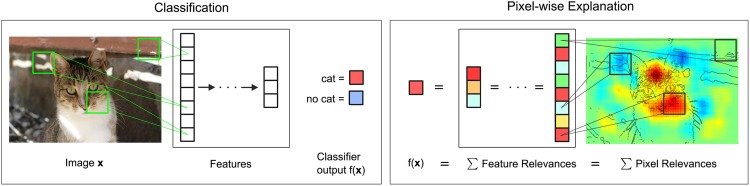
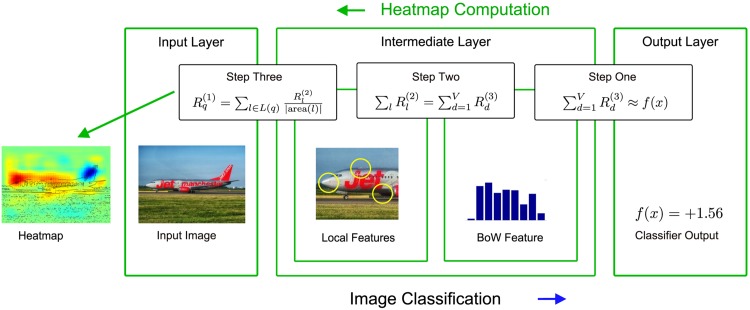
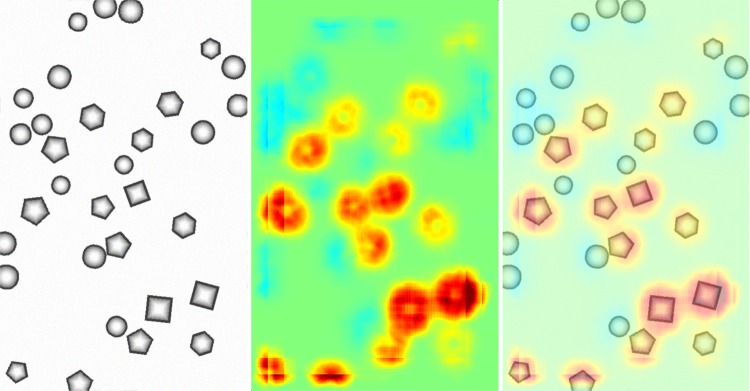
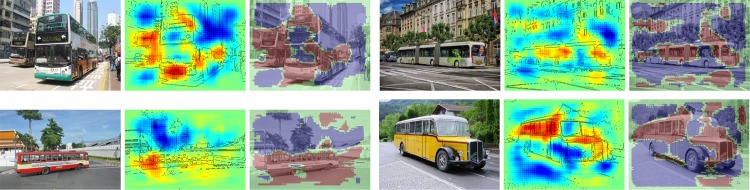
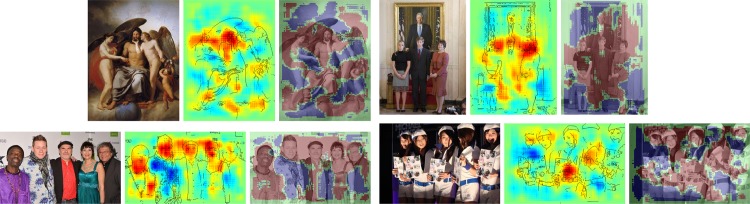
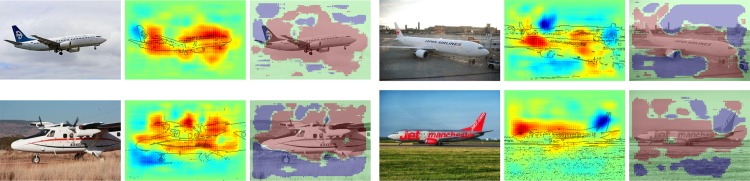
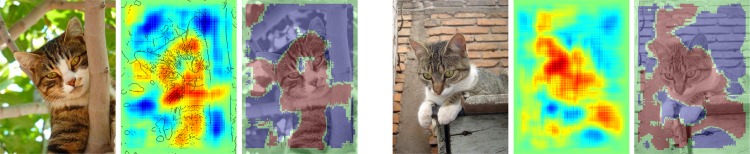
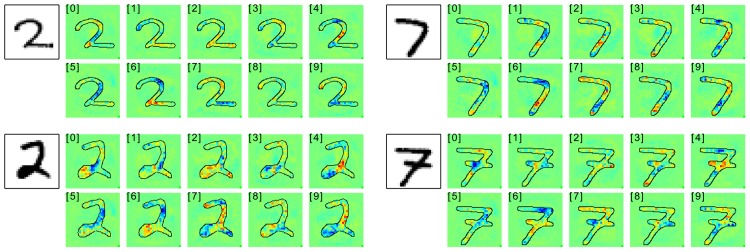
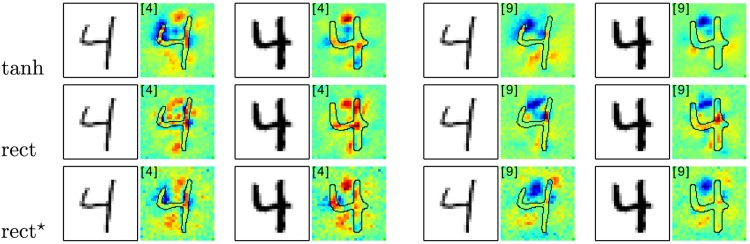
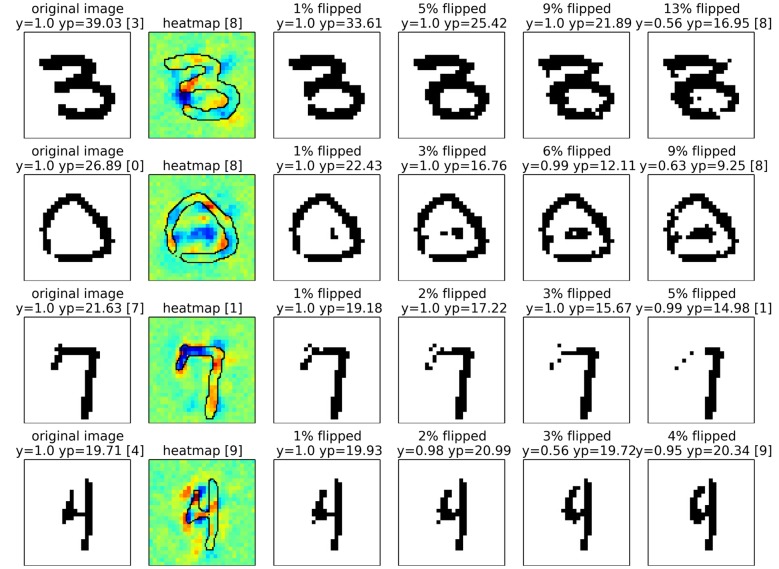
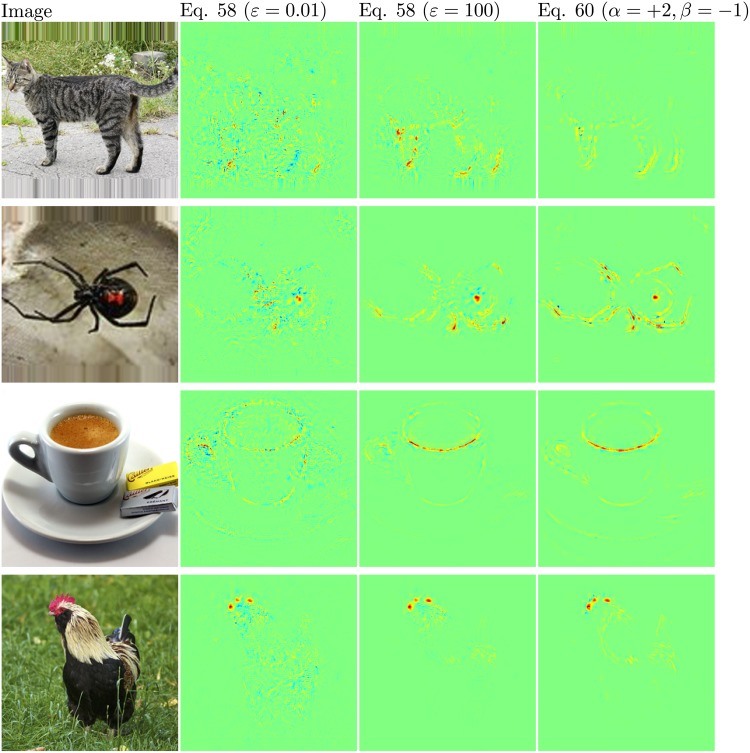
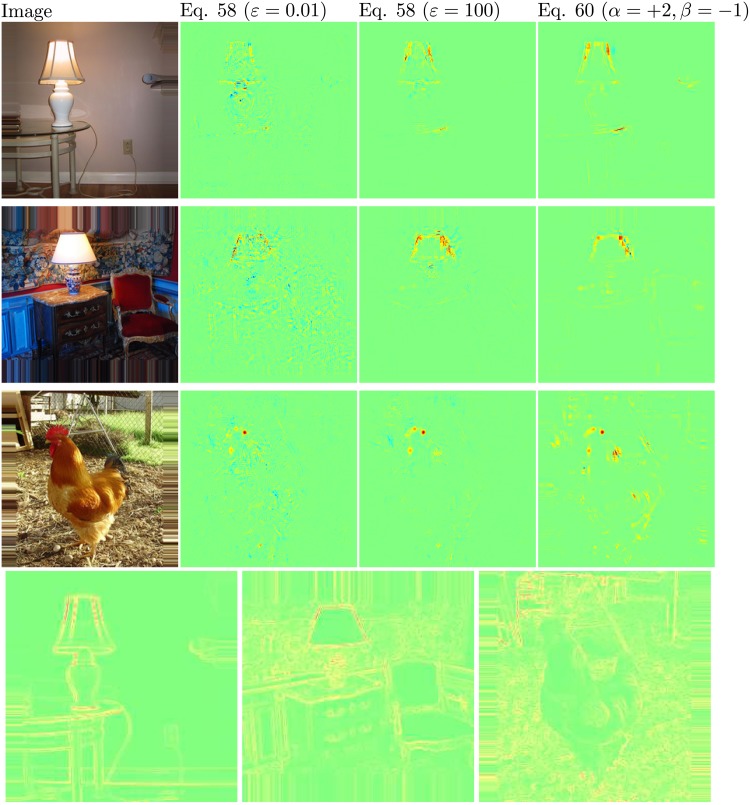
Understanding and interpreting classification decisions of automated image classification systems is of high value in many applications, as it allows to verify the reasoning of the system and provides additional information to the human expert. Although machine learning methods are solving very successfully a plethora of tasks, they have in most cases the disadvantage of acting as a black box, not providing any information about what made them arrive at a particular decision. This work proposes a general solution to the problem of understanding classification decisions by pixel-wise decomposition of nonlinear classifiers. We introduce a methodology that allows to visualize the contributions of single pixels to predictions for kernel-based classifiers over Bag of Words features and for multilayered neural networks. These pixel contributions can be visualized as heatmaps and are provided to a human expert who can intuitively not only verify the validity of the classification decision, but also focus further analysis on regions of potential interest. We evaluate our method for classifiers trained on PASCAL VOC 2009 images, synthetic image data containing geometric shapes, the MNIST handwritten digits data set and for the pre-trained ImageNet model available as part of the Caffe open source package.
Overview
The claims and statistics of this paper haven’t been checked yet.
Free: it reads the open-access text and checks the first 5 claims that cite a source we can check. Create a free account to check every claim.
Integrity signals
Registry
Cites
Statistics
Figures



Verification
Claims the paper makes
The claims and statistics of this paper haven’t been checked yet.
Free: it reads the open-access text and checks the first 5 claims that cite a source we can check. Create a free account to check every claim.
Claims other papers make about this one
Each is checked against this paper’s own text: does it say what the citing paper says it does?
The source backs part of the claim, not all of it — or backs it for a different population, condition or comparison.
In the citing paper
“Barring a few exceptions (Caruana et al., 2015; Lundberg et al., 2018b; Ustun et al., 2019; Jesus et al., 2021), much of the existing work is designed and developed for benchmark classification problems, often with synthetic data and usually validated with user studies limited to users in research settings such as Amazon Mechanical Turk (AMT; Simonyan et al., 2013; Zeiler and Fergus, 2014; Bach et”
From Explainable machine learning for public policy: Use cases, gaps, and research directions (2023) · cites this paper as Bach et al., 2015
Experimental — accuracy not yet measuredThe cited source says what the claim attributes to it.
In the citing paper
“Unfortunately, most of the work in this area fails to meet these criteria, focusing only on benchmark ML problems and datasets (e.g., image classification on MNIST data, newsgroups data; Bach et al., 2015; Ribeiro et al., 2016, 2018; Shrikumar et al., 2017).”
From Explainable machine learning for public policy: Use cases, gaps, and research directions (2023) · cites this paper as Bach et al., 2015
In the citing paper
“LRP and DTD are capable of improving a model’s interpretability.”
From Survey of Explainable AI Techniques in Healthcare (2023) · cites this paper as [31]
Self-check
Percentages, sums and reported differences re-computed from the paper’s own numbers.
The self-check needs the paper’s full text.
Citations
Cites
ImageNet classification with deep convolutional neural networks
Krizhevsky, A., Sutskever, I., & Hinton, G. E. (2017) · Communications of the ACM · doi:10.1145/3065386 · Cited by 112,155 · cited 2×
“It is known from [21] that lower layers of deep networks which are very similar to the one from [60] used here may act like learned texture or gradient detectors.”
BackgroundDistinctive Image Features from Scale-Invariant Keypoints
Lowe, D. G. (2004) · International Journal of Computer Vision · doi:10.1023/b:visi.0000029664.99615.94 · Cited by 55,589
Learning representations by back-propagating errors
Rumelhart, D. E., Hinton, G. E., & Williams, R. J. (1986) · Nature · doi:10.1038/323533a0 · Cited by 31,892 · cited 2×
“The derivative @f(x)/@x(d) required for pixel-wise decomposition can be computed efficiently by reusing the network topology using the backpropagation algorithm [56].”
BackgroundMethodThe pascal visual object classes (VOC) challenge
Everingham, M., Van Gool, L., Williams, C. K. I., Winn, J., & Zisserman, A. (2010) · International Journal of Computer Vision · doi:10.1007/s11263-009-0275-4 · Cited by 19,599
Neural networks for pattern recognition
(1994) · Choice Reviews Online · doi:10.5860/choice.31-5500 · Cited by 18,538
Rapid object detection using a boosted cascade of simple features
Viola, P., & Jones, M. (2005) · Proceedings of the 2001 IEEE Computer Society Conference on Computer Vision and Pattern Recognition. CVPR 2001 · doi:10.1109/cvpr.2001.990517 · Cited by 18,300
Visualizing and understanding convolutional networks
Zeiler, M. D., & Fergus, R. (2014) · Lecture Notes in Computer Science · doi:10.1007/978-3-319-10590-1_53 · Cited by 15,839
Explaining and Harnessing Adversarial Examples
Goodfellow, I. J., Shlens, J., & Szegedy, C. (2014) · arXiv · doi:10.48550/arxiv.1412.6572 · Cited by 10,381 · cited 1×
“A different type of analysis for understanding neural networks deals with creating counter-intuitive examples, see for example the work in [24, 25].”
BackgroundIntriguing properties of neural networks
Szegedy, C., Zaremba, W., Sutskever, I., Bruna, J., Erhan, D., Goodfellow, I., & Fergus, R. (2013) · arXiv · doi:10.48550/arxiv.1312.6199 · Cited by 8,143 · cited 2×
“However, as noted in [24], this can lead to points of the input space that are perceptually equivalent to the original sample x and whose choice as a root would produce non-informative pixel-wise decompositions.”
BackgroundDeep Inside Convolutional Networks: Visualising Image Classification Models and Saliency Maps
Simonyan, K., Vedaldi, A., & Zisserman, A. (2013) · arXiv · doi:10.48550/arxiv.1312.6034 · Cited by 5,370 · cited 4×
“Besides deviating in the usage of a Taylor series, the work in [22] does not make use of the layer-wise propagation strategy for neural networks presented in this paper, which unlike a Taylor series does not rely on a local approximation.”
BackgroundMethodResultInfluential
Research works printed but not linked: 4
- Montavon G, Orr GB, Müller KR, editors. Neural Networks: Tricks of the Trade, Reloaded vol. 7700 of Lecture Notes in Computer Science (LNCS). 2nd ed Springer; 2012.
- Everingham M, Van Gool L, Williams CKI, Winn J, Zisserman A. The PASCAL Visual Object Classes Challenge 2010 (VOC2010) Results;. · DOI · Paper page
- Lanckriet GRG, Cristianini N, Bartlett PL, Ghaoui LE, Jordan MI. Learning the Kernel Matrix with Semidefinite Programming. Journal of Machine Learning Research. 2004; 5: 27– 72.
- Kloft M, Brefeld U, Sonnenburg S, Laskov P, Müller KR, Zien A. Efficient and Accurate Lp-norm Multiple Kernel Learning. Advances in Neural Information Processing Systems. 2009; 22(22): 997– 1005.
Cited by
Items 1,001–1,049 of 1,049
Explainable AI for time series via Virtual Inspection Layers
Vielhaben, J., Lapuschkin, S., Montavon, G., & Samek, W. (2024) · Pattern Recognition · doi:10.1016/j.patcog.2024.110309 · Cited by 38
Self-citationResponsible AI by Design in Practice
Benjamins, R., Barbado, A., & Sierra, D. (2019) · arXiv · doi:10.48550/arxiv.1909.12838 · Cited by 38
FuXi-Extreme: Improving extreme rainfall and wind forecasts with diffusion model
Zhong, X., Chen, L., Liu, J., Lin, C., Qi, Y., & Li, H. (2024) · Science China Earth Sciences · doi:10.1007/s11430-023-1427-x · Cited by 37
“In our future work, we plan to leverage XML methods, such as layer-wise relevance propagation (LPR) [45], to gain insights into which weather variables and input patterns are most influential and to understand why FuXi-Extreme’s predictions show improvement compared to to those of FuXi for extreme…”
MethodLi, Y., Wang, F., Yang, J., Han, Z., Chen, L., Jiang, W., Zhou, H., Li, T., Tang, Z., Deng, J., et al. (2025) · Nature Communications · doi:10.1038/s41467-025-64894-x · Cited by 37
“This method combines the implementation invariance of gradients with the sensitivity of techniques such as LRP 74 or DeepLift 75 .”
DeePathNet: A Transformer-Based Deep Learning Model Integrating Multiomic Data with Cancer Pathways
Cai, Z., Poulos, R. C., Aref, A., Robinson, P. J., Reddel, R. R., & Zhong, Q. (2024) · Cancer Research Communications · doi:10.1158/2767-9764.crc-24-0285 · Cited by 36
Transformer-based deep learning integrates multi-omic data with cancer pathways
Cai, Z., Poulos, R. C., Aref, A., Robinson, P. J., Reddel, R. R., & Zhong, Q. (2022) · doi:10.1101/2022.10.27.514141 · Cited by 36
Global Aggregations of Local Explanations for Black Box models
van der Linden, I., Haned, H., & Kanoulas, E. (2019) · arXiv · doi:10.48550/arxiv.1907.03039 · Cited by 35
“w of the linear model can be directly interpreted as feature attri-butions between x , the feature input of the model, and x ′ The explanation model д ( x ′ ) is a linear model’s prediction on an instance f ( x ) as: where D is the input dimension of the instance explained. features in the input approximates the model…”
Do Not Trust Additive Explanations
Gosiewska, A., & Biecek, P. (2019) · arXiv · doi:10.48550/arxiv.1903.11420 · Cited by 34
“The SHapley Additive exPlanations ( SHAP ) (Lundberg and Lee, 2017) are unification of LIME and several other methods for local explanations, such as DeepLIFT (Shrikumar et al., 2017) and layer-wise relevance propagation (Bach et al., 2015).”
MethodVisualization of Supervised and Self-Supervised Neural Networks via Attribution Guided Factorization
Gur, S., Ali, A., & Wolf, L. (2020) · arXiv · doi:10.48550/arxiv.2012.02166 · Cited by 34
“2017) and (ii) relevance propagation methods (Bach et al. 2015; Nam et al. 2019; Gu, Yang, and Tresp 2018; Iwana, Kuroki, and Uchida 2019), which project high-level activations back to the input domain, mostly based on the deep Taylor decomposition by (Montavon et al.”
BackgroundMethodIENet: a robust convolutional neural network for EEG based brain-computer interfaces
Du, Y., & Liu, J. (2022) · Journal of Neural Engineering · doi:10.1088/1741-2552/ac7257 · Cited by 34
“The algorithms we use include ‘Gradient ∗ Input’ method [96], ‘DeepLIFT’ method with the Rescale rule and modified chain-rule [97], ‘Integ-rated Gradients’ method [98] and ‘ ε -LRP’ method with the modified chain-rule [99].”
MethodTiulpin, A., Klein, S., Bierma-Zeinstra, S. M. A., Thevenot, J., Rahtu, E., Meurs, J. V., Oei, E. H. G., & Saarakkala, S. (2019) · Scientific Reports · doi:10.1038/s41598-019-56527-3 · Cited by 31
Mitrovic, D., McComas, S. E., Alleva, C., Bonaccorsi, M., Drew, D., & Delemotte, L. (2023) · eLife · doi:10.7554/elife.84805 · Cited by 31
An adversarial attack approach for eXplainable AI evaluation on deepfake detection models
Gowrisankar, B., & Thing, V. L. L. (2024) · Computers & Security · doi:10.1016/j.cose.2023.103684 · Cited by 30
“LRP [4], Grad-CAM [5], LIME [6] and SHAP [7] are some popular XAI tools used in practice.”
MethodRozet, A., Kronish, I. M., Schwartz, J. E., & Davidson, K. W. (2019) · Journal of Medical Internet Research · doi:10.2196/12910 · Cited by 28
“Layer-wise relevance propagation (LRP) [11] was used to interpret our neural network models.”
Validating Automatic Concept-Based Explanations for AI-Based Digital Histopathology
Sauter, D., Lodde, G., Nensa, F., Schadendorf, D., Livingstone, E., & Kukuk, M. (2022) · Sensors · doi:10.3390/s22145346 · Cited by 26
Robustness Analysis of Deep Learning-Based Lung Cancer Classification Using Explainable Methods
Malafaia, M., Silva, F., Neves, I., Pereira, T., & Oliveira, H. P. (2022) · IEEE Access · doi:10.1109/access.2022.3214824 · Cited by 25
“The utilized explainable methods consisted on: Saliency Maps [25]; Integrated Gradients [26]; Layer-wise Relevance Propagation (LRP) [27] and Deep Learning Important Fea-Tures (DeepLIFT) [28].”
MethodAdaptive Differential Privacy Mechanism Based on Entropy Theory for Preserving Deep Neural Networks
Zhang, X., Yang, F., Guo, Y., Yu, H., Wang, Z., & Zhang, Q. (2023) · Mathematics · doi:10.3390/math11020330 · Cited by 24
A survey of post-hoc xai methods from a visualization perspective: Challenges and opportunities
Bhati, D., Amiruzzaman, M., Zhao, Y., Guercio, A., & Le, T. (2025) · IEEE Access · doi:10.1109/access.2025.3581136 · Cited by 24
“Specifically, PatternAttribution employs a class ‘signal’ estimator, trained on the first half of the ImageNet training dataset [1], to estimate the root point for DTD [49].”
Saliency Methods for Explaining Adversarial Attacks
Gu, J., & Tresp, V. (2019) · arXiv · doi:10.48550/arxiv.1908.08413 · Cited by 23
“In recent years, a large number of saliency methods have been proposed [1–14].”
BackgroundBinder, A., Weber, L., Lapuschkin, S., Montavon, G., Müller, K.-R., & Samek, W. (2023) · 2023 IEEE/CVF Conference on Computer Vision and Pattern Recognition (CVPR) · doi:10.1109/cvpr52729.2023.01549 · Cited by 21
Self-citationZhang, J., Petitjean, C., & Ainouz, S. (2022) · Journal of Imaging · doi:10.3390/jimaging8020023 · Cited by 21
“In our previous work [42], we showed, with a quantitative perturbation study, that the Layer-wise relevance propagation (LRP) method [43] was appropriate to explain CNN regression models for this application.”
MethodCLEVR-X: A Visual Reasoning Dataset for Natural Language Explanations
Salewski, L., Koepke, A. S., Lensch, H. P. A., & Akata, Z. (2022) · Lecture Notes in Computer Science · doi:10.1007/978-3-031-04083-2_5 · Cited by 20
“Decisions made by neural networks can be visually explained with visual attribution that is determined by introspecting trained networks and their features [46,57,43,8,58], by using input perturbations [42,14,15], or by training a probabilistic feature attribution model along with a task-specific CNN [30].”
Toms, B. A., Kashinath, K., Prabhat, & Yang, D. (2021) · Geoscientific Model Development · doi:10.5194/gmd-14-4495-2021 · Cited by 20
Using Captum to Explain Generative Language Models
Miglani, V., Yang, A., Markosyan, A. H., Garcia-Olano, D., & Kokhlikyan, N. (2023) · arXiv · doi:10.48550/arxiv.2312.05491 · Cited by 20
“Other popular gradient-based attribution methods include DeepLift and Layerwise Relevance Pro-pogation (LRP) (Shrikumar et al., 2017; Bach et al., 2015).”
MethodExplainable AI in human motion: A comprehensive approach to analysis, modeling, and generation
Olivas-Padilla, B. E., Manitsaris, S., & Glushkova, A. (2024) · Pattern Recognition · doi:10.1016/j.patcog.2024.110418 · Cited by 19
Explainable AI applications in the Medical Domain: a systematic review
Prentzas, N., Kakas, A., & Pattichis, C. S. (2023) · arXiv · doi:10.48550/arxiv.2308.05411 · Cited by 19
“…Grad-CAM [112],[113] L Feature contribution DeepLIFT [114] L Feature contribution Integrated Gradients [115] L Feature contribution LRP [26], [66], [116], [117] L Feature contribution Saliency maps [118], [119] L Feature contribution Perturbation-based attribution methods ( post-hoc ) Occlusion…”
MethodIt’s All in the Name: A Character-Based Approach to Infer Religion
Chaturvedi, R., & Chaturvedi, S. (2024) · Political Analysis · doi:10.1017/pan.2023.6 · Cited by 18
Contrastive Explanations for a Deep Learning Model on Time-Series Data
Labaien, J., Zugasti, E., & De Carlos, X. (2020) · Lecture Notes in Computer Science · doi:10.1007/978-3-030-59065-9_19 · Cited by 17
Thorn, A. (2022) · Current Opinion in Structural Biology · doi:10.1016/j.sbi.2022.102368 · Cited by 16
Rationales for Sequential Predictions
Vafa, K., Deng, Y., Blei, D., & Rush, A. (2021) · Proceedings of the 2021 Conference on Empirical Methods in Natural Language Processing · doi:10.18653/v1/2021.emnlp-main.807 · Cited by 14
“Some variations involve word embeddings (Denil et al., 2014); integrated gradients, to improve sensitivity (Sundararajan et al., 2017); and relevance-propagation to track each input’s contribution through the network (Bach et al., 2015; Voita et al., 2021).”
BackgroundToward Scalable and Unified Example-Based Explanation and Outlier Detection
Chong, P., Cheung, N.-M., Elovici, Y., & Binder, A. (2022) · IEEE Transactions on Image Processing · doi:10.1109/tip.2021.3127847 · Cited by 14
“To show evidence of similarity between the input sample and the prototypes in the pixel space, we use a posthoc explainability method, the Layer-wise Relevance Propagation (LRP) algorithm [3], [31] to compute a pair of LRP heatmaps for each pair of input-prototype.”
MethodSelf-citationLee, R. E., & Chan, P. Y. (2023) · Scientific Reports · doi:10.1038/s41598-023-45802-z · Cited by 13
“Bach et al. 8 developed layer-wise relevance propagation (LRP) to explain the decision-making of a convolutional neural network for each parameter of the input data.”
BackgroundLS-Tree: Model Interpretation When the Data Are Linguistic
Chen, J., & Jordan, M. (2020) · Proceedings of the AAAI Conference on Artificial Intelligence · doi:10.1609/aaai.v34i04.5749 · Cited by 14
Testing conditional independence in supervised learning algorithms
Watson, D. S., & Wright, M. N. (2021) · Machine Learning · doi:10.1007/s10994-021-06030-6 · Cited by 13
“…have been proposed for estimating importance in linear regression (Barber and Cand`es, 2015; Gr¨omping, 2007; Lindeman et al, 1980), random forests (Breiman, 2001; Kursa and Rudnicki, 2010; Strobl et al, 2008), and neural networks (Bach et al, 2015; Shrikumar et al, 2017; Sundararajan et al, 2017).”
BackgroundModel Tells You What to Discard: Adaptive KV Cache Compression for LLMs
Ge, S., Zhang, Y., Liu, L., Zhang, M., Han, J., & Gao, J. (2023) · arXiv · doi:10.48550/arxiv.2310.01801 · Cited by 13
“Voita et al. (2019) analyzed the self-attention heads in BERT using LRF (Bach et al., 2015) and characterized them into interpretable roles, one of which is attending adjacent tokens all the time.”
MethodYang, M., Liu, S., Hao, T., Ma, C., Chen, H., Li, Y., Wu, C., Xie, J., Qiu, H., Li, J., et al. (2024) · Artificial Intelligence in Medicine · doi:10.1016/j.artmed.2024.102785 · Cited by 10
Study on the Helpfulness of Explainable Artificial Intelligence
Labarta, T., Kulicheva, E., Froelian, R., Geißler, C., Melman, X., & von Klitzing, J. (2024) · Communications in Computer and Information Science · doi:10.1007/978-3-031-63803-9_16 · Cited by 8
“Following these restrictions, six XAI methods were selected: Layer-wise relevance propagation ( LRP ) [2,31], Gradient class activation mapping ( GradCAM ) [7,10], Local In-terpretable Model-Agnostic Explanations ( LIME ) [15], SHapley Additive exPla-nations ( SHAP ) [28,29,37,40], Integrated…”
MethodInterpretable and Differentially Private Predictions
Harder, F., Bauer, M., & Park, M. (2020) · Proceedings of the AAAI Conference on Artificial Intelligence · doi:10.1609/aaai.v34i04.5827 · Cited by 6
Machine Explanations and Human Understanding
Chen, C., Feng, S., Sharma, A., & Tan, C. (2022) · arXiv · doi:10.48550/arxiv.2202.04092 · Cited by 6
“[3] Sebastian Bach, Alexander Binder, Grégoire Montavon, Frederick Klauschen, Klaus-Robert Müller, and Wojciech Samek.”
BackgroundMethodDiscriminative attribution from paired images
Eckstein, N., Bukhari, H., Bates, A. S., Jefferis, G. S. X. E., & Funke, J. (2023) · Lecture Notes in Computer Science · doi:10.1007/978-3-031-25069-9_27 · Cited by 5
Detecting genetic interactions with visible neural networks
(2025) · doi:10.1038/s42003-025-08157-x · Cited by 5
“However, current methods for interpreting these networks, such as Layer-wise Relevance Propagation (15), Integrated Gradi-ents (16) and DeepLIFT (17), only provide the importance for each entity and do not provide insight in the nature of the relation between entities.”
MethodSanity Checks for Saliency Metrics
Tomsett, R., Harborne, D., Chakraborty, S., Gurram, P., & Preece, A. (2020) · Proceedings of the AAAI Conference on Artificial Intelligence · doi:10.1609/aaai.v34i04.6064 · Cited by 3
Detecting Genetic Interactions with Visible Neural Networks
van Hilten, A., Melograna, F., Fan, B., Niessen, W., van Steen, K., & Roshchupkin, G. (2024) · doi:10.1101/2024.02.27.582086 · Cited by 3
A Comparative Analysis of Non-gradient Methods of Class Activation Mapping
Chakraborty, M., Sardar, S., & Maulik, U. (2023) · Advances in Intelligent Systems and Computing · doi:10.1007/978-981-99-1472-2_16 · Cited by 2
Nomological Deductive Reasoning for Trustworthy, Human-Readable, and Actionable AI Outputs
Hakizimana, G., & Ledezma Espino, A. (2025) · Algorithms · doi:10.3390/a18060306 · Cited by 2
“Other XAI methods used to generate visual explanations include, but are not limited to, Layer-wise Relevance Propagation (LRP) [48], Integrated Gradients (IG) [49], Guided Back propagation [50], RISE [51], Class-Enhanced Attentive Response (CLEAR) [52], and Vision Transformer (ViT) [53].”
Interpreting pretrained speech models for automatic speech assessment of voice disorders
Lau, H. S., Huntly, M., Morgan, N., Iyenoma, A., Zeng, B., & Bashford, T. (2024) · Lecture notes in computer science · doi:10.1007/978-3-031-67278-1_5 · Cited by 2
Díaz-Rodríguez, N., Lamas, A., Sanchez, J., Franchi, G., Donadello, I., Tabik, S., Filliat, D., Cruz, P., Montes, R., & Herrera, F. (2022) · Information Fusion · doi:10.1016/j.inffus.2021.09.022 · Cited by 2
“LRP (layer-wise relevance propagation) : [5, 10] introduce a novel way to consider the operation done inside a neural architecture with the concept of relevance .”
BackgroundQuantitative Metrics for Evaluating Explanations of Video DeepFake Detectors
Baldassarre, F., Debard, Q., Pontiveros, G. F., & Wijaya, T. K. (2022) · arXiv · doi:10.48550/arxiv.2210.03683 · Cited by 1
“[8] Sebastian Bach, Alexander Binder, Grégoire Montavon, Frederick Klauschen, KlausRobert Müller, and Wojciech Samek.”
BackgroundMethod
Metadata
- Authors
- Bach, S., Binder, A., Montavon, G., Klauschen, F., Müller, K.-R., & Samek, W.
- Affiliations
- Singapore University of Technology and Design (SG)
- Technische Universität Berlin (DE)
- Stiftung Charité (DE)
- Korea University (KR)
- Fraunhofer Institute for Telecommunications, Heinrich Hertz Institute (DE)
- Corresponding author
- Müller, Klaus-Robert
- Samek, Wojciech
- Venue
- PLOS ONE
- Publisher
- Public Library of Science (PLoS)
- Published
- 2015-07-10
- Volume
- 10
- Issue
- 7
- Pages
- e0130140
- ISSN
- 1932-6203 (ISSN-L)
- PMC
- PMC4498753
- OpenAlex
- W1787224781
- Cited by
- 4,524
- References
- 56
- Citations by year
- 2026: 347 · 2025: 628 · 2024: 653 · 2023: 648 · 2022: 566 · 2021: 647 · 2020: 489 · 2019: 299 · 2018: 145 · 2017: 63 · 2016: 27 · 2015: 6
- FWCI
- 78.76
- Type
- journal article
- Language
- en
- Open access
- gold
- doi.org
- Licence
- Locations
- PLoS ONE (publishedVersion, cc-by)
- PubMed Central (publishedVersion, cc-by)
- PubMed (publishedVersion)
- RePEc: Research Papers in Economics (submittedVersion)
- DOAJ (DOAJ: Directory of Open Access Journals) (submittedVersion, cc-by-sa)
- Publikationsdatenbank der Fraunhofer-Gesellschaft (Fraunhofer-Gesellschaft) (submittedVersion, other-oa)
- Fraunhofer-Publica (Fraunhofer-Gesellschaft) (submittedVersion)
- Refubium (Universitätsbibliothek der Freien Universität Berlin) (submittedVersion, cc-by)
- Universitätsbibliothek der FU Berlin Hochschulschriftenstelle u. Dokumentenserver (cc-by)
- Funders
- National Research Foundation
- Deutsche Forschungsgemeinschaft (01GQ1115)
- Bundesministerium für Bildung und Forschung (01 IS 14013 A, 01GQ1115)
- Bundesministerium für Wirtschaft und Technologie (01MQ07018)
- National Research Foundation of Korea (01IS14013A, BK21 program)
- Technische Universität Berlin
- Banting and Best Diabetes Centre, University of Toronto (01IS14013A)
- Topics
- Physical Sciences › Computer Science › Artificial Intelligence › Explainable Artificial Intelligence (XAI)
- Physical Sciences › Computer Science › Computer Vision and Pattern Recognition › Advanced Neural Network Applications
- Physical Sciences › Computer Science › Computer Vision and Pattern Recognition › Image Retrieval and Classification Techniques
- Keywords
- layer-wise relevance propagation, nonlinear classifiers, kernel-based classifiers, bag-of-words features, multilayer neural networks, heatmaps, image classification, black box, MNIST, ImageNet
- MeSH terms
- Algorithms, Artificial Intelligence, Humans, Image Processing, Computer-Assisted, Pattern Recognition, Automated
About these checks
Registry, retraction, Cites and statistics results are computed, not judged, with one exception: a printed reference that no index lists is read once by a model before it counts as a citation error. Claims are extracted by a model and kept only when their quote appears verbatim in the text; each cited source is then checked, with a model’s help, for whether it says what the claim relies on. Those verdicts can be wrong — read the claim’s quote and the cited source before relying on one.
Statistics and arithmetic are recomputed, not judged.
Confidence bands are shown only for fields calibrated on our annotated test set. None is calibrated yet, so no band is shown.
What counts as a claim ›How we measure confidence ›How we check this ›
Are you an author, or do you see a problem with this page? Request a review
Data sources
Bibliographic data: Semantic Scholar, OpenAlex, Crossref.
Contains information from the Semantic Scholar Academic Graph Datasets, made available under the ODC Attribution License (ODC-BY 1.0).
Semantic Scholar’s data is described in: Kinney, R., et al. (2023). The Semantic Scholar Open Data Platform. arXiv:2301.10140.
