

On Pixel-Wise Explanations for Non-Linear Classifier Decisions by Layer-Wise Relevance Propagation
Open accessThe DOI matches its Crossref record; 55 of the 56 references it cites were found in a registry or an index.
Abstract
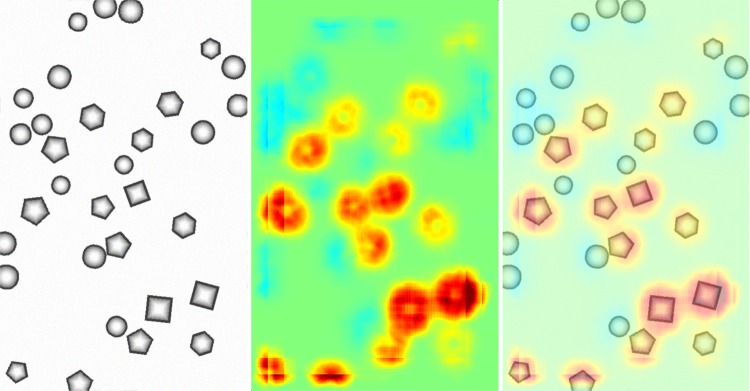
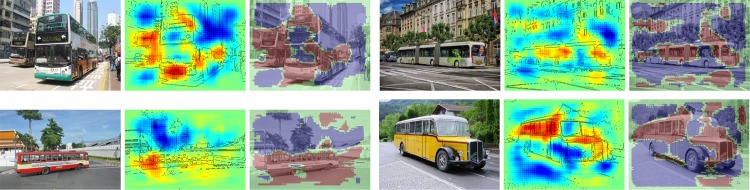
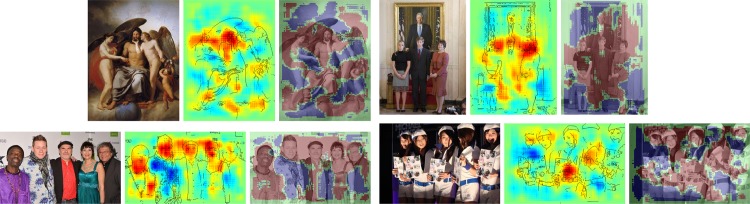
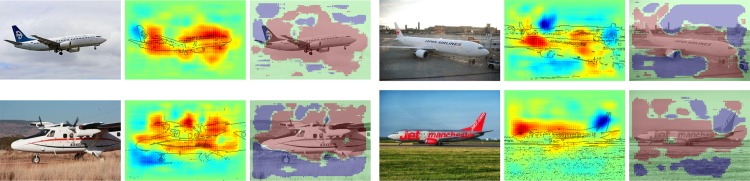
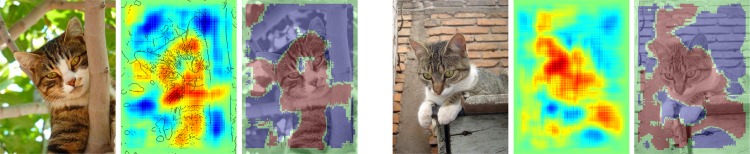
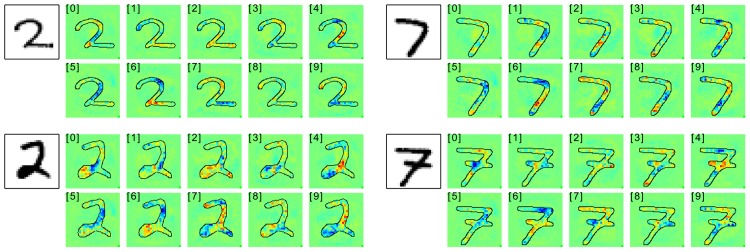
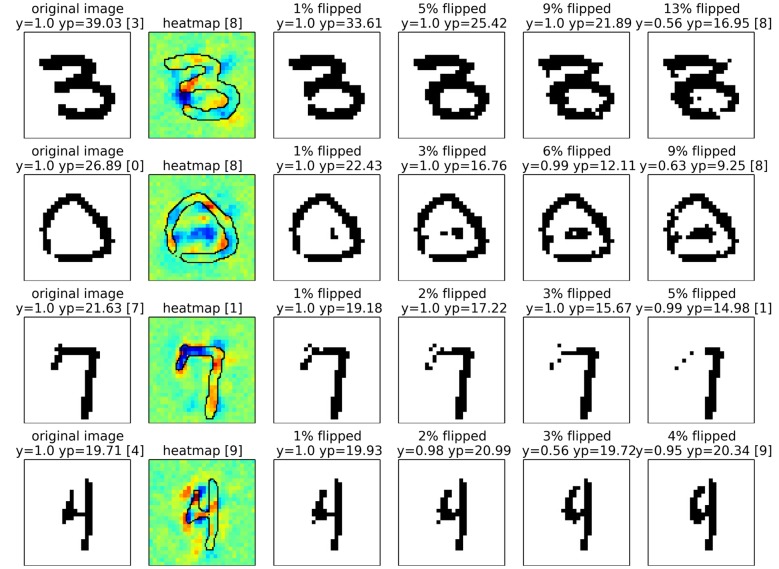
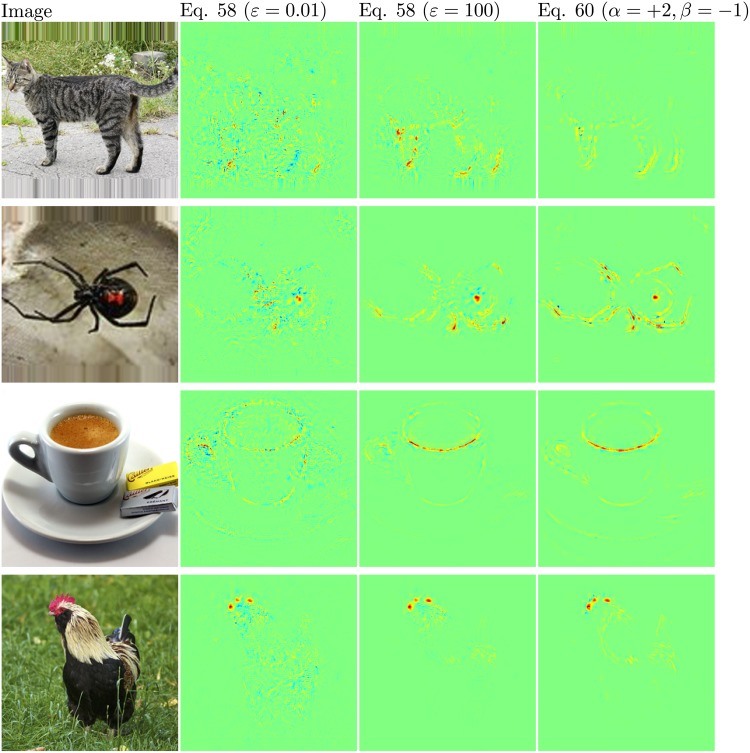
Understanding and interpreting classification decisions of automated image classification systems is of high value in many applications, as it allows to verify the reasoning of the system and provides additional information to the human expert. Although machine learning methods are solving very successfully a plethora of tasks, they have in most cases the disadvantage of acting as a black box, not providing any information about what made them arrive at a particular decision. This work proposes a general solution to the problem of understanding classification decisions by pixel-wise decomposition of nonlinear classifiers. We introduce a methodology that allows to visualize the contributions of single pixels to predictions for kernel-based classifiers over Bag of Words features and for multilayered neural networks. These pixel contributions can be visualized as heatmaps and are provided to a human expert who can intuitively not only verify the validity of the classification decision, but also focus further analysis on regions of potential interest. We evaluate our method for classifiers trained on PASCAL VOC 2009 images, synthetic image data containing geometric shapes, the MNIST handwritten digits data set and for the pre-trained ImageNet model available as part of the Caffe open source package.
Overview
The claims and statistics of this paper haven’t been checked yet.
Free: it reads the open-access text and checks the first 5 claims that cite a source we can check. Create a free account to check every claim.
Integrity signals
Registry
Cites
Statistics
Figures



Verification
Claims the paper makes
The claims and statistics of this paper haven’t been checked yet.
Free: it reads the open-access text and checks the first 5 claims that cite a source we can check. Create a free account to check every claim.
Claims other papers make about this one
Each is checked against this paper’s own text: does it say what the citing paper says it does?
The source backs part of the claim, not all of it — or backs it for a different population, condition or comparison.
In the citing paper
“Barring a few exceptions (Caruana et al., 2015; Lundberg et al., 2018b; Ustun et al., 2019; Jesus et al., 2021), much of the existing work is designed and developed for benchmark classification problems, often with synthetic data and usually validated with user studies limited to users in research settings such as Amazon Mechanical Turk (AMT; Simonyan et al., 2013; Zeiler and Fergus, 2014; Bach et”
From Explainable machine learning for public policy: Use cases, gaps, and research directions (2023) · cites this paper as Bach et al., 2015
Experimental — accuracy not yet measuredThe cited source says what the claim attributes to it.
In the citing paper
“Unfortunately, most of the work in this area fails to meet these criteria, focusing only on benchmark ML problems and datasets (e.g., image classification on MNIST data, newsgroups data; Bach et al., 2015; Ribeiro et al., 2016, 2018; Shrikumar et al., 2017).”
From Explainable machine learning for public policy: Use cases, gaps, and research directions (2023) · cites this paper as Bach et al., 2015
In the citing paper
“LRP and DTD are capable of improving a model’s interpretability.”
From Survey of Explainable AI Techniques in Healthcare (2023) · cites this paper as [31]
Self-check
Percentages, sums and reported differences re-computed from the paper’s own numbers.
The self-check needs the paper’s full text.
Citations
Cites
ImageNet classification with deep convolutional neural networks
Krizhevsky, A., Sutskever, I., & Hinton, G. E. (2017) · Communications of the ACM · doi:10.1145/3065386 · Cited by 112,155 · cited 2×
“It is known from [21] that lower layers of deep networks which are very similar to the one from [60] used here may act like learned texture or gradient detectors.”
BackgroundDistinctive Image Features from Scale-Invariant Keypoints
Lowe, D. G. (2004) · International Journal of Computer Vision · doi:10.1023/b:visi.0000029664.99615.94 · Cited by 55,589
Learning representations by back-propagating errors
Rumelhart, D. E., Hinton, G. E., & Williams, R. J. (1986) · Nature · doi:10.1038/323533a0 · Cited by 31,892 · cited 2×
“The derivative @f(x)/@x(d) required for pixel-wise decomposition can be computed efficiently by reusing the network topology using the backpropagation algorithm [56].”
BackgroundMethodThe pascal visual object classes (VOC) challenge
Everingham, M., Van Gool, L., Williams, C. K. I., Winn, J., & Zisserman, A. (2010) · International Journal of Computer Vision · doi:10.1007/s11263-009-0275-4 · Cited by 19,599
Neural networks for pattern recognition
(1994) · Choice Reviews Online · doi:10.5860/choice.31-5500 · Cited by 18,538
Rapid object detection using a boosted cascade of simple features
Viola, P., & Jones, M. (2005) · Proceedings of the 2001 IEEE Computer Society Conference on Computer Vision and Pattern Recognition. CVPR 2001 · doi:10.1109/cvpr.2001.990517 · Cited by 18,300
Visualizing and understanding convolutional networks
Zeiler, M. D., & Fergus, R. (2014) · Lecture Notes in Computer Science · doi:10.1007/978-3-319-10590-1_53 · Cited by 15,839
Explaining and Harnessing Adversarial Examples
Goodfellow, I. J., Shlens, J., & Szegedy, C. (2014) · arXiv · doi:10.48550/arxiv.1412.6572 · Cited by 10,381 · cited 1×
“A different type of analysis for understanding neural networks deals with creating counter-intuitive examples, see for example the work in [24, 25].”
BackgroundIntriguing properties of neural networks
Szegedy, C., Zaremba, W., Sutskever, I., Bruna, J., Erhan, D., Goodfellow, I., & Fergus, R. (2013) · arXiv · doi:10.48550/arxiv.1312.6199 · Cited by 8,143 · cited 2×
“However, as noted in [24], this can lead to points of the input space that are perceptually equivalent to the original sample x and whose choice as a root would produce non-informative pixel-wise decompositions.”
BackgroundDeep Inside Convolutional Networks: Visualising Image Classification Models and Saliency Maps
Simonyan, K., Vedaldi, A., & Zisserman, A. (2013) · arXiv · doi:10.48550/arxiv.1312.6034 · Cited by 5,370 · cited 4×
“Besides deviating in the usage of a Taylor series, the work in [22] does not make use of the layer-wise propagation strategy for neural networks presented in this paper, which unlike a Taylor series does not rely on a local approximation.”
BackgroundMethodResultInfluential
Research works printed but not linked: 4
- Montavon G, Orr GB, Müller KR, editors. Neural Networks: Tricks of the Trade, Reloaded vol. 7700 of Lecture Notes in Computer Science (LNCS). 2nd ed Springer; 2012.
- Everingham M, Van Gool L, Williams CKI, Winn J, Zisserman A. The PASCAL Visual Object Classes Challenge 2010 (VOC2010) Results;. · DOI · Paper page
- Lanckriet GRG, Cristianini N, Bartlett PL, Ghaoui LE, Jordan MI. Learning the Kernel Matrix with Semidefinite Programming. Journal of Machine Learning Research. 2004; 5: 27– 72.
- Kloft M, Brefeld U, Sonnenburg S, Laskov P, Müller KR, Zien A. Efficient and Accurate Lp-norm Multiple Kernel Learning. Advances in Neural Information Processing Systems. 2009; 22(22): 997– 1005.
Cited by
Items 301–400 of 1,049
Automatic sleep staging of EEG signals: recent development, challenges, and future directions
Phan, H., & Mikkelsen, K. B. (2022) · Physiological Measurement · doi:10.1088/1361-6579/ac6049 · Cited by 207
“, layer-wise relevance propagation [159,160], Deep Learning Important FeaTures (DeepLIFT) [161], and integrated gradients [162]) and perturbation-based methods (e.”
MethodToward Explainable Artificial Intelligence for Precision Pathology
Klauschen, F., Dippel, J., Keyl, P., Jurmeister, P., Bockmayr, M., Mock, A., Buchstab, O., Alber, M., Ruff, L., Montavon, G., et al. (2024) · Annual Review of Pathology: Mechanisms of Disease · doi:10.1146/annurev-pathmechdis-051222-113147 · Cited by 139
Self-citationXCM: An Explainable Convolutional Neural Network for Multivariate Time Series Classification
Fauvel, K., Lin, T., Masson, V., Fromont, É., & Termier, A. (2021) · Mathematics · doi:10.3390/math9233137 · Cited by 177
“, Gradient Explanation [36], Guided Backpropagation [37], ε-Layer-wise Relevance Propagation [38], Gradient Input [39], Integrated Gradients [40], DeepLift [41] and Grad-CAM [10]) calculate the gradient, or its variants, of a particular output with respect to the input using back-propagation to derive the contribution…”
BackgroundExplainable AI in Manufacturing and Industrial Cyber–Physical Systems: A Survey
Moosavi, S., Farajzadeh-Zanjani, M., Razavi‐Far, R., Palade, V., & Saif, M. (2024) · Electronics · doi:10.3390/electronics13173497 · Cited by 194
Theory-guided experimental design in battery materials research
Eng, A. Y. S., Soni, C. B., Lum, Y., Khoo, E., Yao, Z., Vineeth, S. K., Kumar, V., Lu, J. B., Johnson, C. S., Wolverton, C., et al. (2022) · Science Advances · doi:10.1126/sciadv.abm2422 · Cited by 174
“Examples of explainable artificial intelligence techniques include layer-wise relevance propagation ( 114 ), local interpretable model-agnostic explanations ( 115 ), deep Taylor decomposition ( 116 ), and Shapley additive explanations ( 117 ).”
Deep learning for precision agriculture: A bibliometric analysis
Coulibaly, S., Kamsu-Foguem, B., Kamissoko, D., & Traoré, D. (2022) · Intelligent Systems with Applications · doi:10.1016/j.iswa.2022.200102 · Cited by 206
Soft Proposal Networks for Weakly Supervised Object Localization
Zhu, Y., Zhou, Y., Ye, Q., Qiu, Q., & Jiao, J. (2017) · 2017 IEEE International Conference on Computer Vision (ICCV) · doi:10.1109/iccv.2017.204 · Cited by 156
Morphological and molecular breast cancer profiling through explainable machine learning
Binder, A., Bockmayr, M., Hägele, M., Wienert, S., Heim, D., Hellweg, K., Ishii, M., Stenzinger, A., Hocke, A., Denkert, C., et al. (2021) · Nature Machine Intelligence · doi:10.1038/s42256-021-00303-4 · Cited by 156
Self-citationSpliceRover: interpretable convolutional neural networks for improved splice site prediction
Zuallaert, J., Godin, F., Kim, M., Soete, A., Saeys, Y., & De Neve, W. (2018) · Bioinformatics · doi:10.1093/bioinformatics/bty497 · Cited by 149
Abdullah, T. A. A., Zahid, M. S. M., & Ali, W. (2021) · Symmetry · doi:10.3390/sym13122439 · Cited by 179
Restricting the Flow: Information Bottlenecks for AttributionPreprint
Schulz, K., Sixt, L., Tombari, F., & Landgraf, T. (2020) · arXiv (Cornell University) · doi:10.48550/arxiv.2001.00396 · Cited by 206
“With PatternAttribution, GuidedBP, and LRP, we include three methods with a modified backpropagation rule.”
BackgroundMethodResultInfluentialCRNN-Based Multiple DoA Estimation Using Acoustic Intensity Features for Ambisonics Recordings
Perotin, L., Serizel, R., Emmanuel Vincent, A., & Guérin, A. (2019) · IEEE Journal of Selected Topics in Signal Processing · doi:10.1109/jstsp.2019.2900164 · Cited by 180
“These rules were first designed for FF layers but remain applicable to convolutional and pooling layers [32].”
BackgroundInfluentialMachine learning for collective variable discovery and enhanced sampling in biomolecular simulation
Sidky, H., Chen, W., & Ferguson, A. L. (2020) · Molecular Physics · doi:10.1080/00268976.2020.1737742 · Cited by 148
Yang, Z., Zhang, W., & Feng, J. (2021) · Safety Science · doi:10.1016/j.ssci.2021.105522 · Cited by 166
A Survey on Deep Learning and Its Impact on Agriculture: Challenges and Opportunities
Albahar, M. A. (2023) · Agriculture · doi:10.3390/agriculture13030540 · Cited by 181
Artificial intelligence (AI)—it’s the end of the tox as we know it (and I feel fine)*
Kleinstreuer, N., & Härtung, T. (2024) · Archives of Toxicology · doi:10.1007/s00204-023-03666-2 · Cited by 179
Explore Spatio‐Temporal Learning of Large Sample Hydrology Using Graph Neural Networks
Sun, A. Y., Jiang, P., Mudunuru, M. K., & Chen, X. (2021) · Water Resources Research · doi:10.1029/2021wr030394 · Cited by 185
“…a feature mask that can extract the most important features from the inputs (Yuan et al., 2020); and (c) decomposition-based methods, which are also backpropagation methods, but seek to distribute the prediction score backward layer by layer to calculate the input relevance (Bach et al., 2015).”
On the Explainability of Natural Language Processing Deep Models
Zini, J. E., & Awad, M. (2023) · ACM Computing Surveys · doi:10.1145/3529755 · Cited by 120
“SHAP is proved to be a uniied measure that diferent methods such as LIME [88], Deep LIFT [99] and layer-wise relevance propagation [6] tried to approximate in the literature.”
BackgroundMethodInfluentialGraziani, M., Dutkiewicz, L., Calvaresi, D., Amorim, J. P., Yordanova, K., Vered, M., Nair, R., Abreu, P. H., Blanke, T., Pulignano, V., et al. (2023) · Artificial Intelligence Review · doi:10.1007/s10462-022-10256-8 · Cited by 126
“These techniques can produce data points that explain the behavior of the model (Kim et al. 2016; Lapuschkin et al. 2015), visualizations of internal features (Olah et al. 2017) or produce simpler models that approximate the model (Ribeiro et al. 2016; Lakkaraju et al. 2016; Lundberg and Lee 2017).”
Grezmak, J. E., Zhang, J., Wang, P. E., Loparo, K. A., & Gao, R. X. (2019) · IEEE Sensors Journal · doi:10.1109/jsen.2019.2958787 · Cited by 166
“Deconvnet [23], LRP [20] and DeepLIFT [24], which assign scores to each value representing their relative numerical”
BackgroundMethodExplaining Models by Propagating Shapley Values of Local Components
Chen, H., Lundberg, S., & Lee, S. (2020) · Studies in computational intelligence · doi:10.1007/978-3-030-53352-6_24 · Cited by 184
Deformable ProtoPNet: An Interpretable Image Classifier Using Deformable Prototypes
Donnelly, J. P., Barnett, A. J., & Chen, C. (2022) · IEEE Computer Society Conference on Computer Vision and Pattern Recognition/Proceedings - IEEE Computer Society Conference on Computer Vision and Pattern Recognition/Proceedings · doi:10.1109/cvpr52688.2022.01002 · Cited by 249
“Posthoc explanation techniques (e.g., model approximations using interpretable surrogates [26, 33], activation maximizations [9, 30, 48], saliency visualizations [1, 35, 36, 38–40, A Deformable ProtoPNet uses case-based reasoning with prototypes to build an inherently interpretable network .”
Interpretable machine learning for dementia: a systematic review
Martin, S. A., Townend, F. J., Barkhof, F., & Cole, J. H. (2023) · Alzheimer's & Dementia · doi:10.1002/alz.12948 · Cited by 149
“26 However, model-specific methods rely on assumptions about the underlying architecture such as the presence of convolutional layers to produce an explanation, which limits their use for comparing results across model types.”
MethodEthical machines: The human-centric use of artificial intelligence
Lepri, B., Oliver, N., & Pentland, A. (2021) · iScience · doi:10.1016/j.isci.2021.102249 · Cited by 149
“…(Casalicchio et al., 2018),: and (iii) layer-wise relevance propagation algorithm (i.e. this method decomposes the output of a deep neural network into the relevance scores of the input and at the same time keeps the total amount of relevance constant across the layers) (Bach et al., 2015).”
MethodInterpretations are useful: penalizing explanations to align neural networks with prior knowledge
Rieger, L., Singh, C., Murdoch, W. J., & Yu, B. (2019) · arXiv (Cornell University) · doi:10.48550/arxiv.1909.13584 · Cited by 95
“…2017; Selvaraju et al., 2016; Baehrens et al., 2010; Rieger & Hansen, 2019), decomposition-based (Murdoch & Szlam, 2017; Shrikumar et al., 2016; Bach et al., 2015) and others (Dabkowski & Gal, 2017; Fong & Vedaldi, 2017; Ribeiro et al., 2016; Zintgraf et al., 2017), with many similarities…”
Teaching solid mechanics to artificial intelligence—a fast solver for heterogeneous materials
Mianroodi, J. R., Siboni, N. H., & Raabe, D. (2021) · npj Computational Materials · doi:10.1038/s41524-021-00571-z · Cited by 172
Xu, D., Quan, W., Zhou, H., Sun, D., Baker, J. S., & Gu, Y. (2022) · Scientific Reports · doi:10.1038/s41598-022-07054-1 · Cited by 161
“More details can be found by referring to Lapuschkin et al 22 .”
BackgroundMethodInfluentialInterpretable Machine Learning: A brief survey from the predictive maintenance perspective
Vollert, S., Atzmueller, M., & Theissler, A. (2021) · IEEE International Conference on Emerging Technologies and Factory Automation (ETFA) · doi:10.1109/etfa45728.2021.9613467 · Cited by 175
Explainable Artificial Intelligence Methods in Combating Pandemics: A Systematic Review
Giuste, F., Shi, W., Zhu, Y., Naren, T., Isgut, M., Sha, Y., Tong, L., Gupte, M., & Wang, M. D. (2023) · IEEE Reviews in Biomedical Engineering · doi:10.1109/rbme.2022.3185953 · Cited by 128
“[54] is also used to find relevance scores for individual features in the input data by decomposing the output predictions of the DL models.”
MethodExplainability-driven model improvement for SOH estimation of lithium-ion battery
Wang, F., Zhao, Z., Zhai, Z., Shang, Z., Yan, R., & Chen, X. (2022) · Reliability Engineering & System Safety · doi:10.1016/j.ress.2022.109046 · Cited by 149
Interpretable and Fine-Grained Visual Explanations for Convolutional Neural Networks
Wagner, J., Köhler, J. M., Gindele, T., Hetzel, L., Wiedemer, J. T., & Behnke, S. (2019) · 2019 IEEE/CVF Conference on Computer Vision and Pattern Recognition (CVPR) · doi:10.1109/cvpr.2019.00931 · Cited by 144
“Other BBMs such as Layer-wise Relevance Propagation [4], DeepLift [37] or Excitation Backprop [49] utilize top-down relevancy propagation rules.”
MethodRUDDER: Return Decomposition for Delayed Rewards
Arjona-Medina, J. A., Gillhofer, M., Widrich, M., Unterthiner, T., Brandstetter, J., & Hochreiter, S. (2018) · arXiv (Cornell University) · doi:10.48550/arxiv.1806.07857 · Cited by 104
“We can use any contribution analysis method, but we specifically consider three methods: (A) differences of return predictions, (B) integrated gradients (IG) [40], and (C) layer-wise relevance propagation (LRP) [3].”
MethodFrom Clustering to Cluster Explanations via Neural Networks
Kauffmann, J., Esders, M., Ruff, L., Montavon, G., Samek, W., & Müller, K. (2022) · IEEE Transactions on Neural Networks and Learning Systems · doi:10.1109/tnnls.2022.3185901 · Cited by 161
“Explainable AI (XAI) has emerged as an important direction for machine learning, and excellent results have been reported in selected tasks such as explaining the predictions of popular DNN classifiers [16], [17], [18], [19], [20].”
BackgroundMethodInfluentialSelf-citationPark, Y., Kwon, B., Heo, J., Hu, X., Liu, Y., & Moon, T. (2020) · Environmental Pollution · doi:10.1016/j.envpol.2019.113395 · Cited by 139
Houdou, A., Badisy, I. E., Khomsi, K., Abdala, S. A., Abdulla, F. A., Najmi, H., Obtel, M., Belyamani, L., Ibrahimi, A., & Khalis, M. (2024) · Aerosol and Air Quality Research · doi:10.4209/aaqr.230151 · Cited by 164
“For more information on LRP, refer to the works of Bach et al. (2015) and Montavon et al. (2019).”
Finding and removing Clever Hans: Using explanation methods to debug and improve deep models
Anders, C. J., Weber, L., Neumann, D., Samek, W., Müller, K.-R., & Lapuschkin, S. (2022) · Information Fusion · doi:10.1016/j.inffus.2021.07.015 · Cited by 119
“We specifically use LRP as the attribution method underlying SpRAy, as this provided us with better results than other considered approaches (e.g., SmoothGrad, Integrated Gradients).”
BackgroundMethodInfluentialSelf-citationMC-LSTM: Mass-Conserving LSTMPreprint
Hoedt, P.-J., Kratzert, F., Klotz, D., Halmich, C., Holzleitner, M., Nearing, G., Hochreiter, S., & Klambauer, G. (2021) · arXiv (Cornell University) · doi:10.48550/arxiv.2101.05186 · Cited by 226
“Layerwise Relevance Propagation (LRP) (Bach et al., 2015) is similar to our approach with respect to the idea that the sum of a quantity, the relevanceQ is conserved over layers l.”
BackgroundInfluential“Let me explain!”: exploring the potential of virtual agents in explainable AI interaction design
Weitz, K., Schiller, D., Schlagowski, R., Huber, T., & André, E. (2021) · Journal on Multimodal User Interfaces · doi:10.1007/s12193-020-00332-0 · Cited by 119
“Another method to determine relevance is Layerwise-Relevance Propagation [2], which uses the intermediate results of the model during the prediction to calculate the contribution of each part of the input to the over-all prediction.”
MethodInfluentialLung cancer survival period prediction and understanding: Deep learning approaches
Doppalapudi, S., Qiu, R. G., & Badr, Y. (2020) · International Journal of Medical Informatics · doi:10.1016/j.ijmedinf.2020.104371 · Cited by 154
Interpretable machine learning for weather and climate prediction: A review
Yang, R., Hu, J., Li, Z., Mu, J., Yu, T., Xia, J., Li, X., Dasgupta, A., & Xiong, H. (2024) · Atmospheric Environment · doi:10.1016/j.atmosenv.2024.120797 · Cited by 139
Toward Explainable Artificial Intelligence for Regression Models: A methodological perspective
Letzgus, S., Wagner, P., Lederer, J., Samek, W., Müller, K., & Montavon, G. (2022) · IEEE Signal Processing Magazine · doi:10.1109/msp.2022.3153277 · Cited by 166
“…topic, several approaches have been developed, with different assumptions on the model structure, the level of access we have to the structure of the model, model accuracy requirements, explanation accuracy requirements, and the amount of available compute power [78], [10], [56], [79], [14].”
BackgroundMethodInfluentialSelf-citationExplainable artificial intelligence for education and training
Fiok, K., Farahani, F. V., Karwowski, W., & Ahram, T. (2022) · The Journal of Defense Modeling and Simulation: Applications, Methodology, Technology · doi:10.1177/15485129211028651 · Cited by 117
“25 In the XAI CNN field, researchers have recently proposed techniques that can provide class-wise explanations.”
MethodUsing Deep Learning Algorithms to Grade Hydronephrosis Severity: Toward a Clinical Adjunct
Smail, L. C., Dhindsa, K., Braga, L. H., Becker, S., & Sonnadara, R. R. (2020) · Frontiers in Pediatrics · doi:10.3389/fped.2020.00001 · Cited by 136
“We visualized regions of the HN US images that the CNN found important for five-way classification in a sample of images using layer-wise relevance propagation (21) from the DeepExplain toolbox (22).”
MethodToward Explainable Deep Neural Network Based Anomaly Detection
Amarasinghe, K., Kenney, K., & Manic, M. (2018) · 2018 11th International Conference on Human System Interaction (HSI) · doi:10.1109/hsi.2018.8430788 · Cited by 127
“To bound the scores, the αβ method [36] is used.”
BackgroundMethodUnderstanding and Comparing Deep Neural Networks for Age and Gender Classification
Samek, W., Binder, A., Lapuschkin, S., & Müller, K. (2017) · IEEE International Conference on Computer Vision Workshops · doi:10.1109/iccvw.2017.191 · Cited by 168
“The behaviour of LRP can be described by taking as example a single neuron j : That neuron receives a relevance quantity R j from neurons of the upper layer, which is to be redistributed to its input neurons i in the lower layer, proportionally to the contribution of i in the forward pass: Here, z ij is a quantity mea…”
BackgroundMethodInfluentialSelf-citationMeier, F., Köhler, N., Brunner, A., Wanka, J.-M. H., Voytik, E., Strauss, M. T., Theis, F. J., & Mann, M. (2021) · Nature Communications · doi:10.1038/s41467-021-21352-8 · Cited by 146
Explainable Convolutional Neural Networks: A Taxonomy, Review, and Future Directions
Ibrahim, R., & Shafiq, M. O. (2023) · ACM Computing Surveys · doi:10.1145/3563691 · Cited by 162
“Moreover, this model outperformed Grad-CAM and LRP models in terms of visualizations’ sharpness and perturbation curve metrics.”
MethodInfluentialExplainable Artificial Intelligence for Tabular Data: A Survey
Sahakyan, M., Aung, Z., & Rahwan, T. (2021) · IEEE Access · doi:10.1109/access.2021.3116481 · Cited by 135
Robust Explainability: A tutorial on gradient-based attribution methods for deep neural networks
Nielsen, I. E., Dera, D., Rasool, G., Ramachandran, R. P., & Bouaynaya, N. C. (2022) · IEEE Signal Processing Magazine · doi:10.1109/msp.2022.3142719 · Cited by 115
“Layer-Wise Relevance Propagation (LRP): LRP propagates relevance scores from the last layer of the network to the input using the “conservation property” [17].”
BackgroundMethodExplainable AI for Medical Data: Current Methods, Limitations, and Future Directions
Hossain, M. I., Zamzmi, G., Mouton, P. R., Salekin, M. S., Sun, Y., & Goldgof, D. B. (2025) · ACM Computing Surveys · doi:10.1145/3637487 · Cited by 185
“For example, if a pathologist is satisfied with the result of the XAI algorithm, then m h = m m is satisfied, meaning a congruence exists between humans and machines.”
InfluentialFooling Neural Network Interpretations via Adversarial Model Manipulation
Heo, J., Joo, S., & Moon, T. (2019) · arXiv (Cornell University) · doi:10.48550/arxiv.1902.02041 · Cited by 107
Understanding artificial intelligence ethics and safety
Leslie, D. (2019) · arXiv (Cornell University) · doi:10.48550/arxiv.1906.05684 · Cited by 134
DR|GRADUATE: uncertainty-aware deep learning-based diabetic retinopathy grading in eye fundus images
Araújo, T., Aresta, G., Mendonça, L., Penas, S., Maia, C., Carneiro, Â., Mendonça, A. M., & Campilho, A. (2020) · Medical Image Analysis · doi:10.1016/j.media.2020.101715 · Cited by 133
Guided Integrated Gradients: an Adaptive Path Method for Removing Noise
Kapishnikov, A., Venugopalan, S., Avci, B., Wedin, B., Terry, M. A., & Bolukbasi, T. (2021) · IEEE Computer Society Conference on Computer Vision and Pattern Recognition/Proceedings - IEEE Computer Society Conference on Computer Vision and Pattern Recognition/Proceedings · doi:10.1109/cvpr46437.2021.00501 · Cited by 221
“Back-propagation methods [29, 22, 4, 2] examine the gradients of the model with respect to an input instance to determine pixel-level attribution.”
Methodde Taillez, T., Kollmeier, B., & Meyer, B. T. (2018) · European Journal of Neuroscience · doi:10.1111/ejn.13790 · Cited by 153
“The use of NNs for envelope reconstruction enables the application of recently developed algorithms that focus on a better understanding of processing principles in NNs. Bach et al. (2015) introduced an algorithm that estimates the contribution (or relevance) of NN input values to a correct classi fi cation result.”
MethodInfluentialDo Feature Attribution Methods Correctly Attribute Features?
Zhou, Y., Booth, S., Ribeiro, M. T., & Shah, J. (2022) · Proceedings of the AAAI Conference on Artificial Intelligence · doi:10.1609/aaai.v36i9.21196 · Cited by 103
Interpretable Image Recognition by Constructing Transparent Embedding Space
Wang, J., Liu, H., Wang, X., & Jing, L. (2021) · IEEE/CVF International Conference on Computer Vision (ICCV) · doi:10.1109/iccv48922.2021.00093 · Cited by 194
Benchmarking Deep Learning Interpretability in Time Series PredictionsPreprint
Ismail, A. A., Gunady, M. K., Bravo, H. C., & Feizi, S. (2020) · arXiv (Cornell University) · doi:10.48550/arxiv.2010.13924 · Cited by 305
“[24, 9, 11, 6, 7, 25] estimate the importance of an input feature for a specified output.”
A survey on XAI and natural language explanations
Cambria, E., Malandri, L., Mercorio, F., Mezzanzanica, M., & Nobani, N. (2023) · Information Processing & Management · doi:10.1016/j.ipm.2022.103111 · Cited by 131
“Saliency Masking is similar to image heatmaps as they utilize an image as their basis, but instead of adding heatmaps of values, they partially mask/cover the image to communicate a specific message Ribeiro et al. (2016); Bach et al. (2015); Simonyan, Vedaldi and Zisserman (2014).”
MethodXAIR: A Systematic Metareview of Explainable AI (XAI) Aligned to the Software Development Process
Clement, T., Kemmerzell, N., Abdelaal, M., & Amberg, M. (2023) · Machine Learning and Knowledge Extraction · doi:10.3390/make5010006 · Cited by 131
Revisiting a Methodology for Efficient CNN Architectures in Profiling Attacks
Wouters, L., Arribas, V., Gierlichs, B., & Preneel, B. (2020) · IACR Transactions on Cryptographic Hardware and Embedded Systems · doi:10.46586/tches.v2020.i3.147-168 · Cited by 154
Parsazadeh, M., Sharma, S., & Dahotre, N. B. (2023) · Progress in Materials Science · doi:10.1016/j.pmatsci.2023.101102 · Cited by 144
Towards Explanation of DNN-based Prediction with Guided Feature Inversion
Du, M., Liu, N., Song, Q., & Hu, X. (2018) · Proceedings of the 24th ACM SIGKDD International Conference on Knowledge Discovery & Data Mining · doi:10.1145/3219819.3220099 · Cited by 118
“The object localization performance of the proposed method is compared with those of six state-of-the-art methods, including Grad [36], GuidedBP [39], LRP [2], Mask [11], CAM [48], and Real-time saliency [6].”
MethodDEEP MOTIF DASHBOARD: VISUALIZING AND UNDERSTANDING GENOMIC SEQUENCES USING DEEP NEURAL NETWORKS
LANCHANTIN, J., SINGH, R., WANG, B., & QI, Y. (2017) · Biocomputing 2017 · doi:10.1142/9789813207813_0025 · Cited by 122
“Many similar techniques later followed to understand convolutional models [17, 3].”
MethodPost-hoc explanation of black-box classifiers using confident itemsets
Moradi, M., & Samwald, M. (2021) · Expert Systems with Applications · doi:10.1016/j.eswa.2020.113941 · Cited by 118
Follow the Trail: Machine Learning for Fraud Detection in Fintech Applications
Stojanović, B., Božić, J., Hofer-Schmitz, K., Nahrgang, K., Weber, A., Badii, A., Sundaram, M., Jordan, E., & Runevic, J. (2021) · Sensors · doi:10.3390/s21051594 · Cited by 100
Timkey, W., & van Schijndel, M. (2021) · Conference on Empirical Methods in Natural Language Processing (EMNLP) · doi:10.18653/v1/2021.emnlp-main.372 · Cited by 249
“One popular technique is Layerwise Relevance Propagation (Bach et al., 2015) which has recently been used in Transformer-based models (Voita et al.”
MethodDeep learning acceleration of multiscale superresolution localization photoacoustic imaging
Kim, J., Kim, G., Li, L. S., Zhang, P., Kim, J. Y., Kim, Y., Kim, H. H., Wang, L. V., Lee, S., & Kim, C. (2022) · Light Science & Applications · doi:10.1038/s41377-022-00820-w · Cited by 137
“Saliency mapping algorithms (e.g., gradient-based class activation mapping 47 and layer-wise relevance propagation 48 ) can be utilized to better understand how the highly nonlinear 2D and 3D convolutional fi lters operate to reconstruct dense images from sparse.”
MethodIndicator Patterns of Forced Change Learned by an Artificial Neural Network
Barnes, E. A., Toms, B., Hurrell, J. W., Ebert‐Uphoff, I., Anderson, C., & Anderson, D. (2020) · Journal of Advances in Modeling Earth Systems · doi:10.1029/2020ms002195 · Cited by 71
Recommendations and future directions for supervised machine learning in psychiatry
Cearns, M., Hahn, T., & Baune, B. T. (2019) · Translational Psychiatry · doi:10.1038/s41398-019-0607-2 · Cited by 127
Park, S. J., Kim, G., Oh, Y., Seo, J. B., Lee, S. M., Kim, J. H., Moon, S.-J., Lim, J., & Ye, J. C. (2021) · Medical Image Analysis · doi:10.1016/j.media.2021.102299 · Cited by 139
“…of gradient propagation methods (Selvaraju et al., 2017; Smilkov et al., 2017; Srinivas and Fleuret, 2019) or attri-bution propagation methods (Bach et al., 2015; Gu et al., 2018), which rely on the heuristic propagation along attention graph or the obtained attention maps, the method in…”
Genome-wide prediction of cis-regulatory regions using supervised deep learning methods
Li, Y., Shi, W., & Wasserman, W. W. (2018) · BMC Bioinformatics · doi:10.1186/s12859-018-2187-1 · Cited by 125
“Combined with MLPs, CNNs, or RNNs, other newly published deep feature selection techniques, such as layer-wise relevance propagation [58] and class saliency extraction [59], might be useful to identify informative signal peaks for cis-regulatory elements of focus.”
BackgroundExplaining the Black-box Smoothly- A Counterfactual Approach
Singla, S., Eslami, M., Pollack, B., Wallace, S., & Batmanghelich, K. N. (2021) · Medical Image Analysis · doi:10.1016/j.media.2022.102721 · Cited by 156
Leslie, D. (2019) · Zenodo · doi:10.5281/zenodo.3240529 · Cited by 126
An attribution-based pruning method for real-time mango detection with YOLO network
Shi, R., Li, T., & Yamaguchi, Y. (2020) · Computers and Electronics in Agriculture · doi:10.1016/j.compag.2020.105214 · Cited by 132
Dhamdhere, K., Sundararajan, M., & Yan, Q. (2018) · arXiv (Cornell University) · doi:10.48550/arxiv.1805.12233 · Cited by 66
“…sum j j · ∂y j ∂x i , where j indexes the neurons in the layer. consequence is that conductances thus satisfy the Layerwise Conservation Principle [21], which says that “a network’s output activity is fully redistributed through the layers of a DNN onto the input variables, i.e., neither positive…”
BackgroundEXplainable Artificial Intelligence (XAI)—From Theory to Methods and Applications
Ortigossa, E. S., Gonçalves, T., & Nonato, L. G. (2024) · IEEE Access · doi:10.1109/access.2024.3409843 · Cited by 124
“Despite its simplicity, the approach lacks fine-grained sensitivity and is prone to noise within the gradients and neither the perturbation procedure, nor bias term were adequately specified [192].”
BackgroundInfluentialDeepClue: Visual Interpretation of Text-Based Deep Stock Prediction
Shi, L., Teng, Z., Wang, L., Zhang, Y., & Binder, A. (2019) · IEEE Transactions on Knowledge and Data Engineering · doi:10.1109/tkde.2018.2854193 · Cited by 120
“propagation [16], to extract the textual factors relevant”
BackgroundMethodInfluentialSelf-citationChereda, H., Bleckmann, A., Menck, K., Perera-Bel, J., Stegmaier, P., Auer, F., Kramer, F., Leha, A., & Beißbarth, T. (2021) · Genome Medicine · doi:10.1186/s13073-021-00845-7 · Cited by 119
Explainable Artificial Intelligence and Cardiac Imaging: Toward More Interpretable Models
Salih, A. M., Galazzo, I. B., Gkontra, P., Lee, A. M., Lekadir, K., Raisi‐Estabragh, Z., & Petersen, S. E. (2023) · Circulation Cardiovascular Imaging · doi:10.1161/circimaging.122.014519 · Cited by 149
Interpreting and Explaining Deep Neural Networks for Classification of Audio SignalsPreprint
Becker, S., Ackermann, M. R., Lapuschkin, S., Müller, K., & Samek, W. (2018) · arXiv (Cornell University) · Cited by 170
Self-citationDistinguishing Between Natural and Computer-Generated Images Using Convolutional Neural Networks
Quan, W., Wang, K., Yan, D.-M., & Zhang, X. (2018) · IEEE Transactions on Information Forensics and Security · doi:10.1109/tifs.2018.2834147 · Cited by 124
“Here, the CNN model does not use batch normalization due to the limitation of LRP toolbox.”
BackgroundMethodInfluentialInterpreting Adversarially Trained Convolutional Neural Networks
Zhang, T., & Zhu, Z. (2019) · ePrints Soton (University of Southampton) · doi:10.48550/arxiv.1905.09797 · Cited by 171
“…et al., 2018) perturbation-based methods (Zeiler & Fergus, 2014; Zintgraf et al., 2017) and gradient-based method (Erhan et al., 2009; Simonyan et al., 2013; Shrikumar et al., 2017; Sundararajan et al., 2017; Selvaraju et al., 2017; Zhou et al., 2016; Smilkov et al., 2017; Bach et al., 2015).”
An analysis of explainability methods for convolutional neural networks
Vonderhaar, L., Elvira, T., & Ochoa, O. (2022) · Engineering Applications of Artificial Intelligence · doi:10.1016/j.engappai.2022.105606 · Cited by 154
On generating trustworthy counterfactual explanations
Del Ser, J., Barredo-Arrieta, A., Díaz-Rodríguez, N., Herrera, F., Saranti, A., & Holzinger, A. (2024) · Information Sciences · doi:10.1016/j.ins.2023.119898 · Cited by 122
DeepAID: Interpreting and Improving Deep Learning-based Anomaly Detection in Security Applications
Han, D., Wang, Z., Chen, W., Zhong, Y., Wang, S., Zhang, H., Yang, J., Shi, X., & Yin, X. (2021) · Proceedings of the 2021 ACM SIGSAC Conference on Computer and Communications Security · doi:10.1145/3460120.3484589 · Cited by 121
Visualizing Deep Networks by Optimizing with Integrated Gradients
Qi, Z., Khorram, S., & Fuxin, L. (2020) · Proceedings of the AAAI Conference on Artificial Intelligence · doi:10.1609/aaai.v34i07.6863 · Cited by 146
Explaining Convolutional Neural Networks using Softmax Gradient Layer-wise Relevance Propagation
Iwana, B. K., Kuroki, R., & Uchida, S. (2019) · 2019 IEEE/CVF International Conference on Computer Vision Workshop (ICCVW) · doi:10.1109/iccvw.2019.00513 · Cited by 107
“For the qualitative evaluation, we compare SGLRP to the related methods of LRP [3] and CLRP [8] as well as a stateof-the-art pixel-wise visualization method, Guided GradCAM [26].”
BackgroundMethodInfluentialWeak lensing cosmology with convolutional neural networks on noisy data
Ribli, D., Pataki, B. Á., Zorrilla Matilla, J. M., Hsu, D., Haiman, Z., & Csabai, I. (2019) · Monthly Notices of the Royal Astronomical Society · doi:10.1093/mnras/stz2610 · Cited by 102
Incorporating Priors with Feature Attribution on Text Classification
Liu, F., & Avci, B. (2019) · Proceedings of the 57th Annual Meeting of the Association for Computational Linguistics · doi:10.18653/v1/p19-1631 · Cited by 91
“Another avenue is to incorporate different model attribution strategies such as DeepLRP (Bach et al., 2015) into the objective function.”
BackgroundMethodInfluentialA Survey of Explainable Artificial Intelligence (XAI) in Financial Time Series Forecasting
Arsenault, P.-D., Wang, S., & Patenaude, J.-M. (2025) · ACM Computing Surveys · doi:10.1145/3729531 · Cited by 162
“The relevance scores of neurons of each layer are computed from the weights of the layer and the relevance scores of the previous layer [4, 75].”
InfluentialHuman-Centered Explainable AI (XAI): From Algorithms to User Experiences
Liao, Q. V., & Varshney, K. R. (2021) · arXiv · doi:10.48550/arxiv.2110.10790 · Cited by 120
“To explain deep neural networks, many other algorithms can be used to identify important parts of input features based on gradient [91], propagation [13], occlusion [62], etc.”
Mertes, S., Huber, T., Weitz, K., Heimerl, A., & André, E. (2022) · Frontiers in Artificial Intelligence · doi:10.3389/frai.2022.825565 · Cited by 119
“[14, 15] introduced LRP, a model-specific approach that assigns a relevance value to each neuron in a neural network, measuring how relevant this neuron was for a particular prediction.”
Deep learning in biomedical data science
Baldi, P. (2018) · Annual Review of Biomedical Data Science · doi:10.1146/annurev-biodatasci-080917-013343 · Cited by 119
A Perspective on Explanations of Molecular Prediction Models
Wellawatte, G. P., Gandhi, H. A., Seshadri, A., & White, A. D. (2023) · Journal of Chemical Theory and Computation · doi:10.1021/acs.jctc.2c01235 · Cited by 140
Explaining Predictions of Non-Linear Classifiers in NLP
Arras, L., Horn, F., Montavon, G., Müller, K.-R., & Samek, W. (2016) · Proceedings of the 1st Workshop on Representation Learning for NLP · doi:10.18653/v1/w16-1601 · Cited by 91
“Layer-wise relevance propagation (Bach et al., 2015) is a newly introduced technique for obtaining these explanations.”
BackgroundMethodInfluentialSelf-citationHuang, Q., Peng, S., Deng, J., Zeng, H., Zhang, Z., Liu, Y., & Yuan, P. (2023) · Heliyon · doi:10.1016/j.heliyon.2023.e13883 · Cited by 150
Hierarchical interpretations for neural network predictionsPreprint
Singh, C., Murdoch, W. J., & Yu, B. (2018) · arXiv (Cornell University) · doi:10.48550/arxiv.1806.05337 · Cited by 127
“, 2010), decompositionbased (Murdoch & Szlam, 2017; Shrikumar et al., 2016; Bach et al., 2015) and others (Dabkowski & Gal, 2017; Fong & Vedaldi, 2017; Ribeiro et al.”
BackgroundSuresh, H., Gomez, S. R., Nam, K. K., & Satyanarayan, A. (2021) · Proceedings of the 2021 CHI Conference on Human Factors in Computing Systems · doi:10.1145/3411764.3445088 · Cited by 117
“Although some work seeks to develop formal or technical definitions of interpretability [36, 38, 47], and though the burgeoning set of interpretability techniques often do not name specific target users or tasks [9, 42, 100, 133, 137], there is a growing recognition for the need to approach this problem space in a hum…”
BackgroundDeepVID: Deep Visual Interpretation and Diagnosis for Image Classifiers via Knowledge Distillation
Wang, J., Gou, L., Zhang, W., Yang, H., & Shen, H. (2019) · IEEE Transactions on Visualization and Computer Graphics · doi:10.1109/tvcg.2019.2903943 · Cited by 135
“guided back-propagations [9], layer-wise relevance propagations [10], [11], and class activation maps [12].”
BackgroundMethod
Metadata
- Authors
- Bach, S., Binder, A., Montavon, G., Klauschen, F., Müller, K.-R., & Samek, W.
- Affiliations
- Singapore University of Technology and Design (SG)
- Technische Universität Berlin (DE)
- Stiftung Charité (DE)
- Korea University (KR)
- Fraunhofer Institute for Telecommunications, Heinrich Hertz Institute (DE)
- Corresponding author
- Müller, Klaus-Robert
- Samek, Wojciech
- Venue
- PLOS ONE
- Publisher
- Public Library of Science (PLoS)
- Published
- 2015-07-10
- Volume
- 10
- Issue
- 7
- Pages
- e0130140
- ISSN
- 1932-6203 (ISSN-L)
- PMC
- PMC4498753
- OpenAlex
- W1787224781
- Cited by
- 4,524
- References
- 56
- Citations by year
- 2026: 347 · 2025: 628 · 2024: 653 · 2023: 648 · 2022: 566 · 2021: 647 · 2020: 489 · 2019: 299 · 2018: 145 · 2017: 63 · 2016: 27 · 2015: 6
- FWCI
- 78.76
- Type
- journal article
- Language
- en
- Open access
- gold
- doi.org
- Licence
- Locations
- PLoS ONE (publishedVersion, cc-by)
- PubMed Central (publishedVersion, cc-by)
- PubMed (publishedVersion)
- RePEc: Research Papers in Economics (submittedVersion)
- DOAJ (DOAJ: Directory of Open Access Journals) (submittedVersion, cc-by-sa)
- Publikationsdatenbank der Fraunhofer-Gesellschaft (Fraunhofer-Gesellschaft) (submittedVersion, other-oa)
- Fraunhofer-Publica (Fraunhofer-Gesellschaft) (submittedVersion)
- Refubium (Universitätsbibliothek der Freien Universität Berlin) (submittedVersion, cc-by)
- Universitätsbibliothek der FU Berlin Hochschulschriftenstelle u. Dokumentenserver (cc-by)
- Funders
- National Research Foundation
- Deutsche Forschungsgemeinschaft (01GQ1115)
- Bundesministerium für Bildung und Forschung (01 IS 14013 A, 01GQ1115)
- Bundesministerium für Wirtschaft und Technologie (01MQ07018)
- National Research Foundation of Korea (01IS14013A, BK21 program)
- Technische Universität Berlin
- Banting and Best Diabetes Centre, University of Toronto (01IS14013A)
- Topics
- Physical Sciences › Computer Science › Artificial Intelligence › Explainable Artificial Intelligence (XAI)
- Physical Sciences › Computer Science › Computer Vision and Pattern Recognition › Advanced Neural Network Applications
- Physical Sciences › Computer Science › Computer Vision and Pattern Recognition › Image Retrieval and Classification Techniques
- Keywords
- layer-wise relevance propagation, nonlinear classifiers, kernel-based classifiers, bag-of-words features, multilayer neural networks, heatmaps, image classification, black box, MNIST, ImageNet
- MeSH terms
- Algorithms, Artificial Intelligence, Humans, Image Processing, Computer-Assisted, Pattern Recognition, Automated
About these checks
Registry, retraction, Cites and statistics results are computed, not judged, with one exception: a printed reference that no index lists is read once by a model before it counts as a citation error. Claims are extracted by a model and kept only when their quote appears verbatim in the text; each cited source is then checked, with a model’s help, for whether it says what the claim relies on. Those verdicts can be wrong — read the claim’s quote and the cited source before relying on one.
Statistics and arithmetic are recomputed, not judged.
Confidence bands are shown only for fields calibrated on our annotated test set. None is calibrated yet, so no band is shown.
What counts as a claim ›How we measure confidence ›How we check this ›
Are you an author, or do you see a problem with this page? Request a review
Data sources
Bibliographic data: Semantic Scholar, OpenAlex, Crossref.
Contains information from the Semantic Scholar Academic Graph Datasets, made available under the ODC Attribution License (ODC-BY 1.0).
Semantic Scholar’s data is described in: Kinney, R., et al. (2023). The Semantic Scholar Open Data Platform. arXiv:2301.10140.
